- Physics Lab Equipment
- Chemistry Lab Equipment
- Biology Lab Equipment
- Anatomical Lab Equipment
- Learning
- Educational Lab Equipment
- Magnets
- Agriculture
- Astronomy
- Earth Science
- Geography Lab Equipment
- Safety Lab Coat
- Laboratory
- Meteorological
- Electricity & Magnetism
- Heat
- School Lab Equipment
- Lab Glassware
- Science Lab Equipment
- Tvet Lab Equipment
- Robotics Kits Supplier and Manufacturer for Schools India
- Math Lab Equipment Manufacturers and Exporters in Ambala
- STEM Kits Manufacturers and Supplier India
- Engineering Lab Equipment
- Hospital Lab Equipment
- Water, Sanitation & Hygiene Supplies
- Cold Chain, Solar & Communication Equipment
- Nutrition
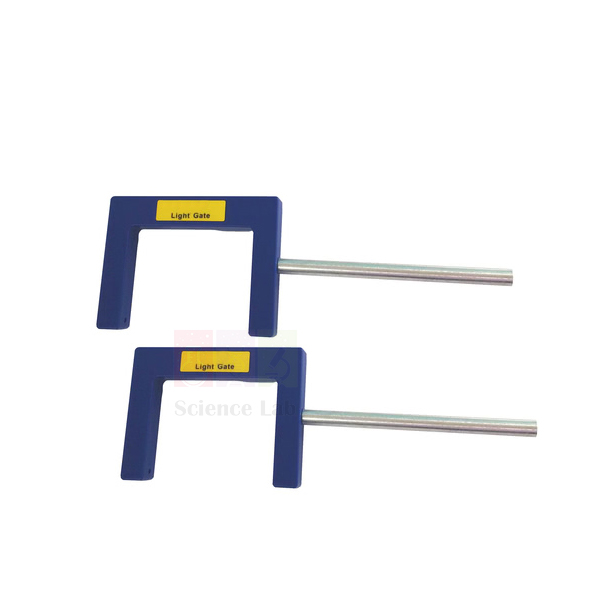
Light Gates/Timing Gates
Light Gates/Timing Gates (Product Code: SLE/PHY/230) is a pair of timer gates used to start and stop an electronic timer as a moving object passes, in school and college mechanics experiments. The two gates link to the timer through DIN connections, so the time between them is recorded electronically instead of with a hand-held stopwatch. They are supplied by Jain Scientific Equipments Pvt Ltd (ScienceLab), Ambala, India, for motion and acceleration practicals.
Key Details
| Parameter | Detail |
|---|---|
| Quantity | Pair of timer gates |
| Connection | DIN connections |
| Used with | A timer (ask us to confirm the match with your timer's inputs) |
| Typical use | Timing moving objects in speed, acceleration and free-fall experiments |
| Product code | SLE/PHY/230 |
| Supplied by | Jain Scientific Equipments Pvt Ltd (ScienceLab), Ambala, India |
What Are Light Gates/Timing Gates Used For?
A light gate senses the moment an object breaks its beam. With two gates set a measured distance apart, the timer records how long a trolley, air-track glider or falling object takes to travel between them, giving an average speed. Passing a card of known length through the gates lets students work out speed at each gate, and from the change in speed, the acceleration.
For reliable readings, mount both gates so the card or object crosses the beam cleanly, measure the gap between them carefully, and run a few trial passes before recording results. Electronic timing removes human reaction time from the measurement, which is why light gates are standard mechanics lab equipment in India for Newton's laws, momentum and free-fall practicals.
What to Specify When Ordering
- The timer you will connect the gates to, so we can confirm the DIN connections suit its inputs.
- The number of pairs needed for your practical groups.
- Whether a timer, track or trolley should be quoted with the gates.
Supplier
ScienceLab, the trading name of Jain Scientific Equipments Private Limited in Ambala, Haryana, supplies these light gates to schools, colleges, polytechnics and dealers in India and international markets. Tell us which timer your lab uses and we will help you put together a matching set of mechanics apparatus. Company information is on the ScienceLab company profile.
Related Physics Lab Equipment
Apparatus that is often timed with light gates:
- Millisecond Timer — a timer with input sockets for light gates and manual switches.
- Linear Air Track — a low-friction track whose gliders can be timed between gates.
- Dynamics Trolley, Plastic — a runway trolley for speed and acceleration runs.
- G By Freefall Apparatus and Timer — for measuring the acceleration due to gravity.
Find more apparatus in Physics Lab Equipment.
Frequently Asked Questions
How many gates are supplied as Light Gates/Timing Gates?
Light Gates/Timing Gates are supplied as a pair of timer gates with DIN connections. Using two gates lets students time an object between two points, which is the basis of most speed and acceleration measurements in school mechanics.
Which timer works with the Light Gates/Timing Gates?
The Light Gates/Timing Gates are made for use with a timer through DIN connections. Tell us the make and input sockets of your timer through the contact page, and we will confirm compatibility or suggest a suitable timer from our range.
What experiments can be done with Light Gates/Timing Gates?
Light Gates/Timing Gates can be used to measure the speed and acceleration of trolleys and air-track gliders, time collisions for momentum work, and record falling objects in acceleration-due-to-gravity experiments, wherever an electronic start and stop signal is more accurate than hand timing.
How should Light Gates/Timing Gates be positioned?
Position the Light Gates/Timing Gates so the moving object or its card passes cleanly through each beam, then measure the distance between the gates accurately. A few trial runs before recording help confirm the timer starts and stops as expected.
Who supplies the Light Gates/Timing Gates?
Jain Scientific Equipments Pvt Ltd (ScienceLab), Ambala, Haryana, supplies the Light Gates/Timing Gates to schools, colleges and dealers in India and international markets, and can quote them together with timers, tracks and trolleys.
What does a quotation for Light Gates/Timing Gates need?
A quotation for Light Gates/Timing Gates needs the number of pairs, the timer you will use and your delivery location. Send these through the contact page or the enquiry cart, and we will reply with price, availability and any compatibility notes.
Request a Quote
Send your enquiry for Light Gates/Timing Gates (SLE/PHY/230) through the ScienceLab contact page, or add them to the enquiry cart with any timer or track you need.
Last updated: 24 September 2026
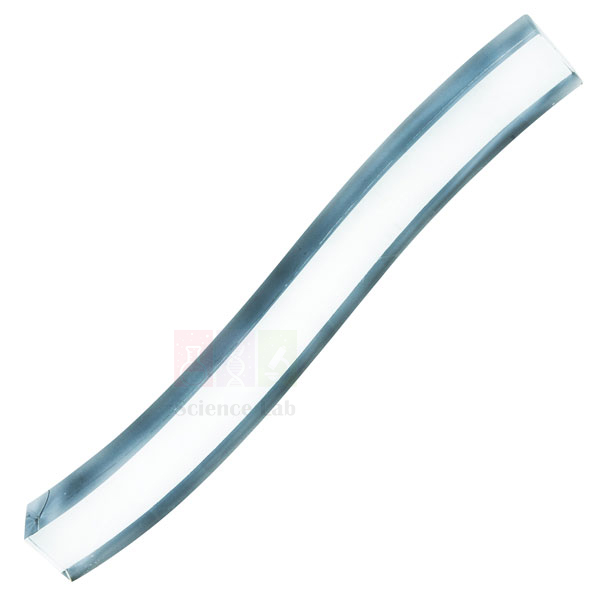
Light Guide Demonstrator
Light Guide Demonstrator (Product Code: SLE/PHY/231) is an S-shaped acrylic bar used to demonstrate total internal reflection and the principle behind optical fibres in school physics optics lessons. Measuring 220 x 20 x 20 mm, it is used with a raybox, and the bottom of the bar is painted white to aid visibility of the light path. It is made by Jain Scientific Equipments Pvt Ltd (ScienceLab), an OEM manufacturer, at its own factory in Ambala, India.
Specifications
| Parameter | Detail |
|---|---|
| Shape | 'S' shaped bar |
| Material | Acrylic |
| Dimensions | 220 x 20 x 20 mm |
| Finish | Bottom of the bar painted white to aid visibility |
| Light source | Used with a raybox (listed separately) |
| Demonstrates | Total internal reflection; principles of optical communications |
| Product code | SLE/PHY/231 |
| Manufacturer | Jain Scientific Equipments Pvt Ltd (ScienceLab) — OEM |
| Country of origin | India (made in Ambala, Haryana) |
What Is the Light Guide Demonstrator Used For?
When a raybox beam is directed into one end of the bar, the light does not leak out at the bends. Each time it meets the acrylic surface at a large enough angle it is totally internally reflected, so it zig-zags along the S-shape and emerges from the far end. Students can see that light can be guided around corners, which is exactly how optical fibres carry telephone and internet signals.
For the clearest view, dim the room lights and align the beam squarely with the end face; the white-painted base helps the reflected path stand out. Wipe the acrylic with a soft, clean cloth and store it where it will not be scratched, because surface marks let light escape. It is a simple, durable piece of optics lab equipment for school and college physics departments across India.
OEM Manufacturer
Jain Scientific Equipments Private Limited trades as ScienceLab and is the OEM (original equipment manufacturer) of the Light Guide Demonstrator. The company is incorporated under CIN U29309HR2020PTC087597, and production takes place at the company's licensed factory at 449, HSIIDC Industrial Area, Saha, Ambala (Factory Licence AMB-ONLINE-CHD-J-414). Because the demonstrator is made by the manufacturer itself rather than bought from a trader, schools, colleges, dealers and importers receive it factory-direct, and replacement bars or repeat orders can be discussed with us directly. Read more on the ScienceLab company profile.
Related Physics Lab Equipment
Items used alongside the light guide in optics practicals:
- Raybox, 12V — the ray light source needed to send a beam into the bar.
- Raybox Mirrored with Accessories — a raybox with channels for slit plates and colour filters.
- Prism – Acrylic, Set of 7 — includes a semi-circular block for critical-angle work.
- Prism – Glass Rectangular Block — for tracing refraction through glass.
- Light Energy Kit — activities on reflection, refraction and other properties of light.
Browse the complete Physics Lab Equipment range.
Frequently Asked Questions
What does the Light Guide Demonstrator show?
The Light Guide Demonstrator shows total internal reflection: light entering one end of the curved acrylic bar is reflected inside it and follows the S-shape to the other end. This helps students understand the principles of optical communications and how optical fibres guide light.
What size and material is the Light Guide Demonstrator?
The Light Guide Demonstrator is an S-shaped acrylic bar measuring 220 x 20 x 20 mm. The bottom of the bar is painted white to aid visibility, so the path of the light inside the bar is easier for a class to follow.
Is a raybox included with the Light Guide Demonstrator?
The Light Guide Demonstrator is the acrylic bar itself and is designed to be used with a raybox, which is listed as a separate product. If you need both, ask us through the contact page to quote the bar and a raybox together.
Who manufactures the Light Guide Demonstrator?
The Light Guide Demonstrator is manufactured by Jain Scientific Equipments Pvt Ltd (ScienceLab), the OEM, at its own licensed factory at Saha, Ambala, Haryana, India. Buyers deal directly with the maker for quotations, repeat orders and replacement bars.
How should the Light Guide Demonstrator be cared for?
Keep the Light Guide Demonstrator clean and scratch-free: wipe it with a soft cloth, avoid abrasive cleaners, and store it separately from metal apparatus. Scratches on the acrylic surface let light escape and weaken the total internal reflection effect.
Can the Light Guide Demonstrator be ordered in bulk for several labs?
Yes, the Light Guide Demonstrator can be quoted in class-set quantities for schools, institutions, dealers and importers in India and international markets. State the quantity and delivery location in your enquiry and the quotation will come directly from the manufacturer.
Request a Quote
For the Light Guide Demonstrator (SLE/PHY/231), send your requirement through the ScienceLab contact page or add it to the enquiry cart; quotations come straight from the manufacturer in Ambala.
Last updated: 24 September 2026
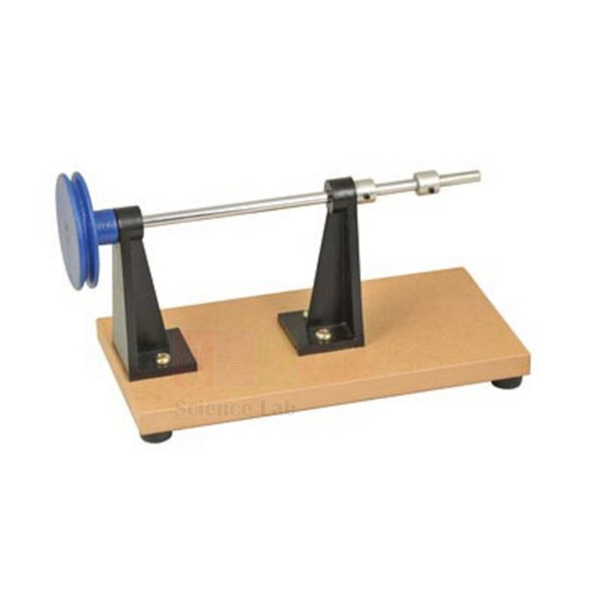
Line Shaft Unit
Line Shaft Unit (Product Code: SLE/PHY/232) is a base-mounted shaft and pulley unit used to show electrical energy being converted into potential energy, by winding up a weight on a cord, in school physics energy lessons. It is one of the separately available units of the Energy Transfer Kit, built on a 165 x 100 mm base with a 6 mm steel shaft and a 56 mm aluminium 'V' pulley. It is made by Jain Scientific Equipments Pvt Ltd (ScienceLab), an OEM manufacturer, at its own factory in Ambala, India.
Specifications
| Parameter | Detail |
|---|---|
| Kit | Energy Transfer Kit (units available separately) |
| Base size | 165 x 100 mm (common to all kit units) |
| Shaft | 6 mm steel |
| Pulley | 56 mm diameter aluminium 'V' pulley at one end |
| Opposite end | Cord anchoring collar |
| Terminals | Kit units have 4 mm socket terminals where appropriate |
| Demonstrates | Conversion of electrical energy to potential energy by winding up a weight on a cord |
| Product code | SLE/PHY/232 |
| Manufacturer | Jain Scientific Equipments Pvt Ltd (ScienceLab) — OEM |
| Country of origin | India (made in Ambala, Haryana) |
What Is the Line Shaft Unit Used For?
In an energy-transfer lesson, an electrically driven unit turns the line shaft through its V pulley. The cord, fixed by the anchoring collar, winds onto the turning shaft and lifts a weight, so the electrical energy put in ends up stored as gravitational potential energy of the raised mass. Students can note the mass and the height gained to calculate that stored energy, then compare it with the electrical energy supplied to discuss efficiency and losses.
Because every unit in the Energy Transfer Kit shares the same 165 x 100 mm base, the line shaft lines up neatly beside the other units on the bench, and teachers can build different chains of energy conversion from the same set. It is a practical piece of school physics lab equipment in India for teaching energy stores and transfers.
What to Specify When Ordering
- Which other Energy Transfer Kit units you need to drive or extend the line shaft.
- The number of Line Shaft Units per lab or per student group.
- Whether a weight and cord should be quoted, as these are not listed with the unit.
OEM Manufacturer
The Line Shaft Unit is produced by Jain Scientific Equipments Private Limited, trading as ScienceLab, which is the OEM (original equipment manufacturer) for its Energy Transfer Kit units. The company makes this apparatus at its own licensed factory in Saha, Ambala, Haryana, and supplies it factory-direct to schools, colleges, laboratory dealers and importers in India and international markets. If you need extra units to complete a kit, or spare parts later, ask the manufacturer directly. More about the company is on the ScienceLab profile page.
Related Physics Lab Equipment
Other units and items used with the line shaft:
- Handwheel Drive Unit — a hand-turned pulley drive from the same kit.
- Spring Unit — stores energy in a clock spring and can also wind a weight on a cord.
- Mounted Motor for Solar Cell — a small motor unit on the same base size for light-to-motion chains.
- Mass, Cast Alloy, Hanger — slotted masses that can serve as the load lifted on the cord.
See all Physics Lab Equipment.
Frequently Asked Questions
What does the Line Shaft Unit demonstrate?
The Line Shaft Unit demonstrates the conversion of electrical energy into potential energy. When the shaft is driven, a cord anchored at one end winds up and lifts a weight, showing students how energy supplied electrically can be stored in a raised mass.
What are the main dimensions of the Line Shaft Unit?
The Line Shaft Unit is built on a 165 x 100 mm base, like every Energy Transfer Kit unit. It has a 6 mm steel shaft carrying a 56 mm diameter aluminium 'V' pulley at one end and a cord anchoring collar at the other.
What drives the Line Shaft Unit?
The Line Shaft Unit is driven through its 56 mm V pulley by another unit, and it is intended for showing electrical energy turning into potential energy. Tell us which drive or motor unit you plan to use via the contact page and we will confirm the best arrangement.
Are a weight and cord included with the Line Shaft Unit?
A weight and cord are not listed as part of the Line Shaft Unit. Ask us when you enquire if you would like suitable masses and cord quoted with it, so the unit is ready for the winding experiment as soon as it arrives.
Who manufactures the Line Shaft Unit?
The Line Shaft Unit is manufactured by Jain Scientific Equipments Pvt Ltd (ScienceLab), the OEM, at its own licensed factory at Saha, Ambala, Haryana, India. Quotations, repeat orders and additional kit units are handled by the manufacturer itself.
Can other Energy Transfer Kit units be ordered with the Line Shaft Unit?
Yes. The Energy Transfer Kit is made up of separately available units, so the Line Shaft Unit can be ordered alone or together with drive, spring and motor units. List the units and quantities in your enquiry for a combined quotation.
Request a Quote
For the Line Shaft Unit (SLE/PHY/232), request a factory-direct quotation through the ScienceLab contact page or add it to the enquiry cart with the other kit units you need.
Last updated: 24 September 2026
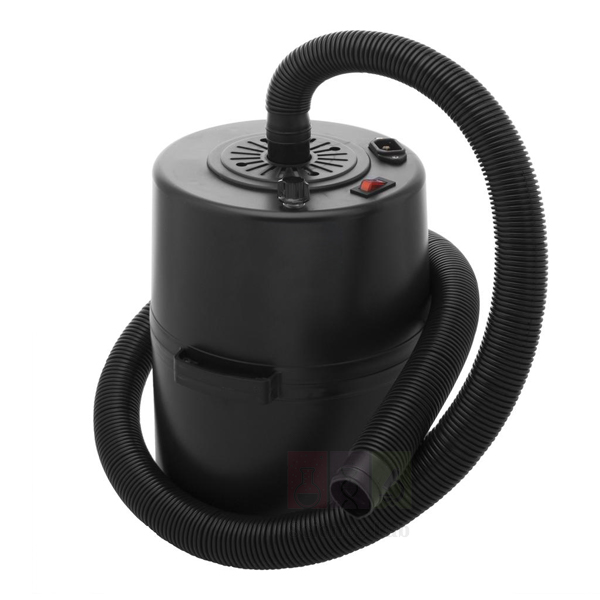
Linear Air Track Blower
Linear Air Track Blower (Product Code: SLE/PHY/233) is an electronically controlled air supply unit used to feed a steady flow of air to a linear air track in school and college mechanics laboratories. Its 700W motor runs on 220-240V 50Hz and delivers a constant volume and pressure through a flexible hose with a 30 mm internal diameter, helping experiments give more accurate results. It is supplied by Jain Scientific Equipments Pvt Ltd (ScienceLab), Ambala, India.
Specifications
| Parameter | Detail |
|---|---|
| Control | Electronically controlled |
| Motor | 220-240V 50Hz, 700W |
| Air delivery | Constant volume and pressure |
| Hose | Flexible hose for connection to the Linear Air Track |
| Hose internal diameter | 30 mm |
| Recommended for | Linear Air Track |
| Designed for | Laboratory use |
| Product code | SLE/PHY/233 |
| Supplied by | Jain Scientific Equipments Pvt Ltd (ScienceLab), Ambala, India |
What Is the Linear Air Track Blower Used For?
The blower is the air source that makes an air track work. Once the hose is attached to the track's inlet and the unit is switched on, air escapes through the small holes along the track and the gliders float on a thin cushion, so friction almost disappears. Students can then study Newton's laws, collisions and the conservation of momentum with results that are much closer to theory than on a normal runway.
Because the unit keeps the volume and pressure of air constant, the gliders ride at a steady height throughout each run, which makes repeated timings consistent. Check that the hose is pushed fully onto the track inlet, stand the blower where its airflow and vibration will not disturb the track, and switch it on before placing gliders. We act as a physics instruments supplier in India for schools that already own, or are buying, an air track.
What to Specify When Ordering
- Your mains supply; the motor is rated 220-240V 50Hz, so tell us if your site differs.
- The air track the blower will feed, so we can check the 30 mm hose suits its inlet.
- The number of blowers needed (usually one per track in use at the same time).
- Whether light gates or a timer should be quoted for glider experiments.
Supplier
Jain Scientific Equipments Private Limited, trading as ScienceLab in Ambala, Haryana, supplies the Linear Air Track Blower to schools, colleges, engineering institutes and dealers in India and international markets. We can quote the blower on its own as a replacement air source, or together with a track and timing equipment as a complete set-up. Visit the ScienceLab company profile to learn more about us.
Related Physics Lab Equipment
Complete an air-track workstation with:
- Linear Air Track — the track this blower is recommended for.
- Apparatus Air Track Part Kit — parts for building up air-track experiments.
- Light Gates/Timing Gates — a pair of gates for timing gliders electronically.
- Millisecond Timer — a timer with inputs for light gates.
View the whole Physics Lab Equipment category.
Frequently Asked Questions
What power supply does the Linear Air Track Blower need?
The Linear Air Track Blower has a 700W motor rated for 220-240V 50Hz mains. If your laboratory uses a different supply voltage or frequency, mention it in your enquiry so we can advise before you order.
Which air track does the Linear Air Track Blower suit?
The Linear Air Track Blower is recommended for use with the Linear Air Track and connects through a flexible hose with a 30 mm internal diameter. For another make of track, send us its inlet size through the contact page and we will check the fit.
Why does a constant air supply matter on an air track?
A constant air supply matters because it keeps gliders floating at a steady height. The Linear Air Track Blower delivers a constant volume and pressure, so friction stays low and even along the track and repeated measurements of speed and momentum give more accurate results.
Is a hose included with the Linear Air Track Blower?
Yes, the Linear Air Track Blower has a flexible hose for connection to the Linear Air Track. The hose has an internal diameter of 30 mm; ask us if you need a longer run or a spare hose quoted.
Who supplies the Linear Air Track Blower?
Jain Scientific Equipments Pvt Ltd (ScienceLab), Ambala, Haryana, supplies the Linear Air Track Blower to schools, colleges and dealers in India and international markets. It is a sourced electrical unit, and we can supply it with a matching air track and timing apparatus.
What should a quotation request for the Linear Air Track Blower include?
A quotation request for the Linear Air Track Blower should include the quantity, your mains supply, the air track it will serve and your delivery location. Send it through the contact page or the enquiry cart and we will reply with price and availability.
Request a Quote
To buy the Linear Air Track Blower (SLE/PHY/233), send an enquiry through the ScienceLab contact page or add it to the enquiry cart along with any track or timing items.
Last updated: 24 September 2026
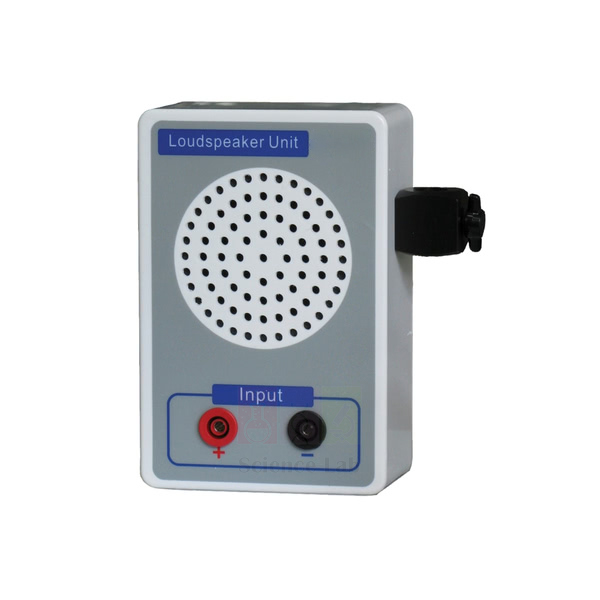
Loudspeaker Unit
Loudspeaker Unit (Product Code: SLE/PHY/234) is a boxed 75 mm loudspeaker used to turn the output of a signal generator or amplifier into audible sound for school physics experiments on sound and waves. The 8 ohm, 5W speaker is mounted in an ABS plastic box of 150 x 98 x 60 mm, with two 4 mm sockets for connection and a boss for retort stand mounting. It is supplied by Jain Scientific Equipments Pvt Ltd (ScienceLab), Ambala, India.
Specifications
| Parameter | Detail |
|---|---|
| Loudspeaker diameter | 75 mm |
| Resistance | 8 ohm |
| Nominal power | 5W |
| Housing | ABS plastic box |
| Box dimensions | 150 x 98 x 60 mm (depth 60 mm; described as about 150 x 100 x 60 mm) |
| Connections | Two 4 mm sockets |
| Mounting | Boss for retort stand mounting |
| Product code | SLE/PHY/234 |
| Supplied by | Jain Scientific Equipments Pvt Ltd (ScienceLab), Ambala, India |
What Is the Loudspeaker Unit Used For?
Connected to a signal generator with 4 mm leads, the unit lets a class hear how changing frequency changes pitch and how changing amplitude changes loudness. Teachers use it to explore the range of human hearing, to show interference patterns by driving two speakers from one source, and to supply sound for resonance-tube and standing-wave experiments.
The boss means the speaker can be clamped to a retort stand at any height and pointed exactly where it is needed, for example into the mouth of a tube or towards a microphone. Start each experiment at low amplitude and keep the drive within the speaker's 5W nominal rating. It is a handy item of physics lab equipment in India for any department teaching sound waves.
What to Specify When Ordering
- The quantity: one unit per bench, or two where interference experiments are planned.
- The signal generator or amplifier you will use, so we can check it suits an 8 ohm, 5W load.
- Whether retort stands or 4 mm connecting leads should be quoted as well.
Supplier
ScienceLab is the trading name of Jain Scientific Equipments Private Limited, based in Ambala, Haryana. We supply the Loudspeaker Unit to schools, colleges, teacher-training institutes and laboratory dealers in India and international markets, and can match it with a signal generator and stand so the set is ready for sound lessons. Company details are on the ScienceLab profile page.
Related Physics Lab Equipment
Items that work with the loudspeaker in sound experiments:
- Signal Generator & Amplifier — supplies sine, square and triangular signals to drive the speaker.
- Signal Generator and Amplifier — an alternative generator for frequency and pitch work.
- Retort Stand — for holding the unit by its boss at the right height.
- Resonance Apparatus with Brass Tube — for resonance experiments driven by a sound source.
- Tuning Fork on Resonance Box — a fixed-pitch source for comparing with the speaker.
More items are listed under Physics Lab Equipment.
Frequently Asked Questions
What are the specifications of the Loudspeaker Unit?
The Loudspeaker Unit has a 75 mm diameter speaker with 8 ohm resistance and 5W nominal power. It is mounted in an ABS plastic box measuring 150 x 98 x 60 mm, fitted with two 4 mm sockets and a boss for retort stand mounting.
How is the Loudspeaker Unit connected?
The Loudspeaker Unit connects through two 4 mm sockets on its ABS box, so standard 4 mm laboratory leads can link it to a signal generator or amplifier output. Check polarity is consistent when two units are used together.
Can the Loudspeaker Unit be mounted on a stand?
Yes, the Loudspeaker Unit comes with a boss for convenient retort stand mounting. Clamping it on a stand lets teachers set the height and direction of the speaker precisely, which is useful for resonance tubes and sound-measurement experiments.
What should drive the Loudspeaker Unit?
The Loudspeaker Unit should be driven by a signal generator or amplifier that suits an 8 ohm load, with the output kept within its 5W nominal power. Tell us your generator model via the contact page if you would like us to check the match.
Who supplies the Loudspeaker Unit?
Jain Scientific Equipments Pvt Ltd (ScienceLab), Ambala, Haryana, supplies the Loudspeaker Unit to schools, colleges and dealers in India and international markets, and can quote it together with signal generators, stands and leads.
How do I request a quotation for the Loudspeaker Unit?
To request a quotation for the Loudspeaker Unit, send the quantity, the generator you plan to use and your delivery location through the contact page or the enquiry cart. We will reply with price and availability for the unit and any matching items.
Request a Quote
Enquire about the Loudspeaker Unit (SLE/PHY/234) through the ScienceLab contact page, or add it to the enquiry cart with any generator or stand you need.
Last updated: 24 September 2026
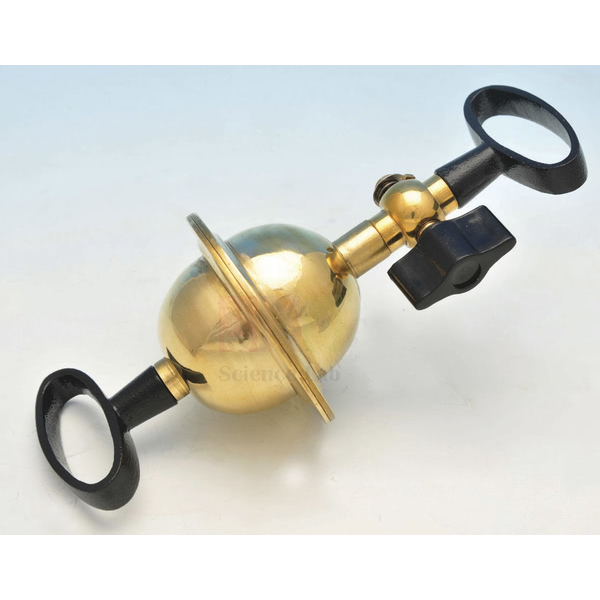
Magdeburg Hemisphere
Magdeburg Hemisphere (Product Code: SLE/PHY/235) is a brass hemisphere apparatus used to demonstrate the existence of atmospheric pressure in school and college physics lessons. It has a diameter of 75 mm and is fitted with a stopcock and handle, so air can be drawn out and the halves then resist being pulled apart. It is made by Jain Scientific Equipments Pvt Ltd (ScienceLab), an OEM manufacturer, at its own factory in Ambala, India, as educational physics lab equipment.
Specifications
| Parameter | Detail |
|---|---|
| Purpose | Demonstrating the existence of atmospheric pressure |
| Diameter | 75 mm |
| Material | Brass |
| Fittings | Stopcock and handle |
| Evacuation | Through the stopcock with a vacuum pump (listed separately) |
| Product code | SLE/PHY/235 |
| Manufacturer | Jain Scientific Equipments Pvt Ltd (ScienceLab) — OEM |
| Country of origin | India (made in Ambala, Haryana) |
What Is the Magdeburg Hemisphere Used For?
This apparatus recreates, on a bench scale, the famous 17th-century demonstration by Otto von Guericke in the town of Magdeburg. Wipe the rims clean and apply a thin film of vacuum grease, press the two halves together, and connect the stopcock to a vacuum pump. After pumping, close the stopcock and disconnect the pump: students will find the hemispheres very hard to separate, even though nothing seems to be holding them.
The explanation is that air outside pushes on the whole surface of the sphere, while there is very little air left inside to push back. Opening the stopcock lets air rush in and the halves come apart easily, which makes the role of atmospheric pressure obvious. Keep the rims free of dents and grit, and store the brass hemispheres dry so they continue to seal well between demonstrations.
What to Specify When Ordering
- The version: this brass 75 mm set with stopcock, or the larger plastic model with wooden handles.
- Whether a hand or electric vacuum pump and tubing should be quoted with it.
- The number of sets for demonstration or group practicals.
OEM Manufacturer
Jain Scientific Equipments Private Limited, which trades as ScienceLab, is the OEM (original equipment manufacturer) of this brass Magdeburg Hemisphere and makes it at its own licensed factory at Saha, Ambala, Haryana. The company is a registered MSME enterprise with manufacturing as its major activity (Udyam UDYAM-HR-01-0003714), and its export shipments are handled under Importer-Exporter Code AAECJ8618A (DGFT). Schools, colleges, dealers and importers buy directly from the maker, and repeat orders or replacement parts can be discussed with us at any time. See the ScienceLab company profile for more.
Related Physics Lab Equipment
Items needed or useful for air-pressure demonstrations:
- Magdeburg Hemisphere, Plastic — a larger plastic model with wooden handles.
- Vacuum Pump, Hand — a lightweight hand pump for evacuating the hemispheres.
- Vacuum Pump, Electric — a rotary pump for quicker evacuation.
- Vacuum Tubing — for connecting the stopcock to the pump.
- Bell In Glass Jar and Base — another vacuum demonstration using the same pumps.
Browse the full Physics Lab Equipment range.
Frequently Asked Questions
What does the Magdeburg Hemisphere demonstrate?
The Magdeburg Hemisphere demonstrates the existence of atmospheric pressure. Once air is pumped out through the stopcock, the pressure of the surrounding air holds the two brass halves together so firmly that students struggle to pull them apart.
What size and material is the Magdeburg Hemisphere?
This Magdeburg Hemisphere is made of brass with a diameter of 75 mm, and it is fitted with a stopcock and handle. A larger plastic model with wooden handles is also listed for schools that prefer a lighter version.
Is a vacuum pump needed with the Magdeburg Hemisphere?
Yes, a vacuum pump is needed to remove air through the stopcock of the Magdeburg Hemisphere. Hand and electric vacuum pumps are listed separately; ask us through the contact page to quote a pump and tubing with the hemispheres.
Who manufactures the Magdeburg Hemisphere?
The Magdeburg Hemisphere is manufactured by Jain Scientific Equipments Pvt Ltd (ScienceLab), the OEM, at its own licensed factory at Saha, Ambala, Haryana, India. Quotations, repeat orders and replacement parts come directly from the manufacturer.
How should the Magdeburg Hemisphere be looked after?
Keep the rims of the Magdeburg Hemisphere clean and undamaged, use a thin film of vacuum grease when demonstrating, and store the brass parts dry. Leaving the stopcock slightly open during storage prevents the halves from sticking together between lessons.
Can the Magdeburg Hemisphere be supplied in bulk or for export?
Yes, the Magdeburg Hemisphere can be supplied in quantity to schools, institutions, dealers and importers in India and international markets. Include quantities and delivery location in your enquiry, and the quotation will come straight from the manufacturer.
Request a Quote
For the brass Magdeburg Hemisphere (SLE/PHY/235), request a factory-direct price through the ScienceLab contact page or add it to the enquiry cart with any pump you need.
Last updated: 24 September 2026
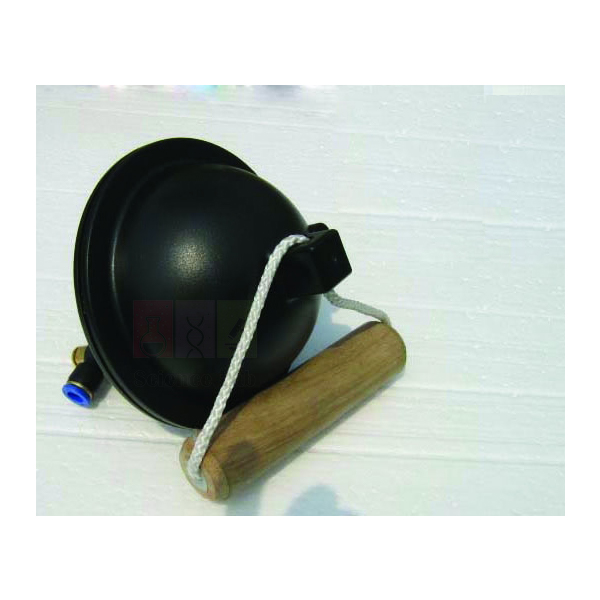
Magdeburg Hemisphere, Plastic
Magdeburg Hemisphere, Plastic (Product Code: SLE/PHY/236) is a plastic hemisphere model used to show the force of atmospheric pressure in school science and physics classes. At 120 mm in diameter it is a large, light model, and its wooden handles give students a firm grip when they try to pull the halves apart. It is made by Jain Scientific Equipments Pvt Ltd (ScienceLab), an OEM manufacturer, at its own factory in Ambala, India.
Specifications
| Parameter | Detail |
|---|---|
| Construction | Plastic model |
| Diameter | 120 mm |
| Handles | Wooden |
| Demonstrates | The effect of atmospheric pressure |
| Air removal | Method not stated; ask us to confirm before ordering |
| Product code | SLE/PHY/236 |
| Manufacturer | Jain Scientific Equipments Pvt Ltd (ScienceLab) — OEM |
| Country of origin | India (made in Ambala, Haryana) |
What Is the Plastic Magdeburg Hemisphere Used For?
This model turns an abstract idea into a tug-of-war. Once the air between the two halves is removed, two students each take a wooden handle and pull, and they find the hemispheres held together by the air pressing on them from outside. Letting air back in releases the halves at once, which shows clearly that it is the air, not any glue or catch, that was holding them.
Its 120 mm diameter gives a useful teaching point: the force from atmospheric pressure depends on the area it acts on, so a wider sphere is held more strongly than a smaller one. Plastic keeps the model light enough for younger pupils to handle. Keep the rims clean, avoid solvents and store it away from heat. It is a practical, lightweight option among physics lab equipment for schools in India.
What to Specify When Ordering
- The version: this 120 mm plastic model or the smaller brass set with stopcock.
- Whether you want us to confirm the air-removal method and quote a vacuum pump if needed.
- The number of models for classroom demonstrations or student groups.
OEM Manufacturer
ScienceLab is the trading name of Jain Scientific Equipments Private Limited, the OEM (original equipment manufacturer) that makes this plastic Magdeburg Hemisphere at its own licensed factory in Saha, Ambala, Haryana. Rather than passing through a chain of traders, the model goes factory-direct to schools, colleges, dealers and importers in India and international markets, and quotations are prepared by the manufacturer itself. For repeat orders or replacement handles, ask us. More details are on the ScienceLab profile page.
Related Physics Lab Equipment
Apparatus for a complete air-pressure lesson:
- Magdeburg Hemisphere — the smaller brass version with stopcock and handle.
- Vacuum Pump, Hand — a lightweight hand-operated pump for vacuum demonstrations.
- Vacuum Pump with Pressure Gauge — for evacuating air in gas-process experiments.
- Bell In Glass Jar and Base — shows that sound needs air to travel.
Explore more in Physics Lab Equipment.
Frequently Asked Questions
What size is the Magdeburg Hemisphere, Plastic?
The Magdeburg Hemisphere, Plastic has a diameter of 120 mm and is fitted with wooden handles. Its size makes it easy for a whole class to see, and the handles give pupils a secure grip during the pulling demonstration.
How does the plastic model differ from the brass Magdeburg Hemisphere?
The Magdeburg Hemisphere, Plastic is a larger 120 mm plastic model with wooden handles, while the brass version is smaller and fitted with a stopcock. Choose the plastic model for a lighter, bigger class demonstration and the brass set for use with a vacuum pump.
How is air removed from the Magdeburg Hemisphere, Plastic?
The method of removing air from the Magdeburg Hemisphere, Plastic is not stated on this page. Ask us through the contact page and we will confirm how the model you are quoted is used and whether a vacuum pump is required.
Why does the diameter of a Magdeburg hemisphere matter?
The diameter matters because the holding force comes from atmospheric pressure acting over the sphere's cross-sectional area. With its 120 mm diameter, the Magdeburg Hemisphere, Plastic presents a larger area than a smaller sphere, so more force is needed to separate the halves once the air is removed.
Who manufactures the Magdeburg Hemisphere, Plastic?
The Magdeburg Hemisphere, Plastic is manufactured by Jain Scientific Equipments Pvt Ltd (ScienceLab), the OEM, at its own licensed factory at Saha, Ambala, Haryana, India, and is supplied factory-direct to institutions, dealers and importers.
What should a quotation request for the Magdeburg Hemisphere, Plastic include?
A quotation request for the Magdeburg Hemisphere, Plastic should include the quantity, your delivery location and whether a vacuum pump or the brass version is also wanted. Send it through the contact page or the enquiry cart for a price from the manufacturer.
Request a Quote
Ask for a factory-direct quotation for the Magdeburg Hemisphere, Plastic (SLE/PHY/236) through the ScienceLab contact page, or add it to the enquiry cart.
Last updated: 24 September 2026
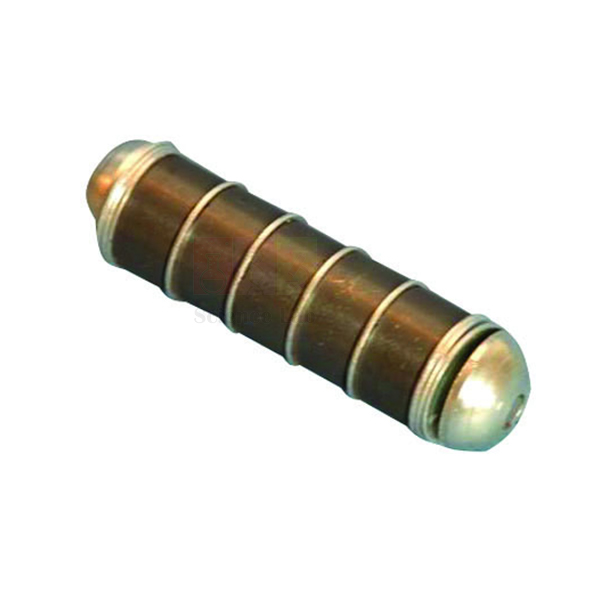
Magnetic Activity Kit
Magnetic Activity Kit (Product Code: SLE/MG/24) is a compact set of ferrite magnets and fittings used to demonstrate magnetic poles, levitation by repulsion and field strength in middle- and secondary-school science lessons. It contains 5 anisotropic ferrite magnets, a rod, screw-on caps and washers, with instructions, making it an easy-to-use magnetism experiment kit for Indian classrooms. It is made by Jain Scientific Equipments Pvt Ltd (ScienceLab), an OEM manufacturer, at its own factory in Ambala, India.
Specifications
| Parameter | Detail |
|---|---|
| Magnets | 5 anisotropic ferrite magnets |
| Other parts | Rod, screw-on caps and washers |
| Instructions | Included |
| Demonstrations | N and S poles; levitation by repulsion; strength and distance; making a stronger magnetic field; magnetic fields through liquids, solids and gases |
| Product code | SLE/MG/24 |
| Manufacturer | Jain Scientific Equipments Pvt Ltd (ScienceLab) — OEM |
| Country of origin | India (made in Ambala, Haryana) |
What Is the Magnetic Activity Kit Used For?
The kit walks students through the core ideas of magnetism with one small set of parts. They first identify the N and S pole of each magnet, then arrange the magnets on the rod with like poles facing so that each one hovers above the next — levitation by repulsion — with the screw-on caps keeping everything on the rod. Adding or removing magnets and watching the gaps change leads naturally into how magnetic force weakens with distance.
Stacking magnets together shows how to make a stronger magnetic field, and simple tests through water, a sheet of card or plain air show that magnetic fields pass through liquids, solids and gases. Anisotropic ferrite magnets are magnetised along a preferred direction, which gives them a strong pull for their size, but ferrite is brittle, so handle the magnets gently and do not let them snap together.
OEM Manufacturer
ScienceLab, the trading name of Jain Scientific Equipments Private Limited, is the OEM manufacturer of the Magnetic Activity Kit and assembles it at the company's own licensed factory at Saha, Ambala, Haryana, India. Schools, science centres, dealers and importers buy the kit directly from the manufacturer.
If a magnet chips or a cap goes missing, ask us about spares; replacement-part and repeat-order enquiries are handled by the manufacturer itself. See our company profile for more about the business.
Related Magnets
Magnets and aids that build on the activities in this kit:
- Magnets, Ring — ceramic ring magnets for floating-magnet experiments.
- Super Floating Magnets Set — for comparing the strength of different magnets.
- Economy Magnet Kit — a boxed starter set with bar, horseshoe and donut magnets.
- Compass Plotting (Clear) — helps students confirm which end is the N pole.
More magnetism apparatus is listed in the Magnets category.
Frequently Asked Questions
What is included in the Magnetic Activity Kit?
The Magnetic Activity Kit (SLE/MG/24) contains 5 anisotropic ferrite magnets, a rod, screw-on caps and washers, together with instructions that guide students through each magnetism demonstration.
What does "anisotropic ferrite" mean?
The magnets in the Magnetic Activity Kit are anisotropic ferrite, a ceramic magnet material magnetised along a preferred direction during production. This gives a stronger pull for its size than non-oriented ferrite, but the material is brittle and should not be dropped.
Which experiments can students do with the kit?
The Magnetic Activity Kit demonstrates N and S poles, levitation by repulsion, the link between magnetic strength and distance, how to make a stronger magnetic field, and how magnetic fields pass through liquids, solids and gases.
How is levitation by repulsion shown?
In the Magnetic Activity Kit, magnets are arranged on the rod with like poles facing, so each one pushes against the next and hovers in the air. The screw-on caps keep the magnets on the rod during the demonstration.
Who manufactures the Magnetic Activity Kit?
The Magnetic Activity Kit is manufactured by Jain Scientific Equipments Pvt Ltd (ScienceLab) as the OEM, at its own licensed factory in Saha, Ambala, Haryana, India, and supplied factory-direct to schools, dealers and importers.
How should the kit be stored?
Store the Magnetic Activity Kit with its magnets kept apart, away from computers, bank cards and other magnets. Avoid letting the ferrite magnets snap together, as the impact can chip their edges.
Can the kit be quoted for a whole school or for export?
Yes. ScienceLab quotes the Magnetic Activity Kit direct from the manufacturer for single classes, whole schools, dealers and importers in India and international markets. Share the number of kits and delivery city or port via the contact page.
Request a Quote
Quotations for the Magnetic Activity Kit come straight from the manufacturer. Tell us how many kits you need through our contact page, or add the kit to the enquiry cart with other magnetism items.
Last updated: 24 September 2026