- Physics Lab Equipment
- Chemistry Lab Equipment
- Biology Lab Equipment
- Anatomical Lab Equipment
- Learning
- Educational Lab Equipment
- Magnets
- Agriculture
- Astronomy
- Earth Science
- Geography Lab Equipment
- Safety Lab Coat
- Laboratory
- Meteorological
- Electricity & Magnetism
- Heat
- School Lab Equipment
- Lab Glassware
- Science Lab Equipment
- Tvet Lab Equipment
- Robotics Kits Supplier and Manufacturer for Schools India
- Math Lab Equipment Manufacturers and Exporters in Ambala
- STEM Kits Manufacturers and Supplier India
- Engineering Lab Equipment
- Hospital Lab Equipment
- Water, Sanitation & Hygiene Supplies
- Cold Chain, Solar & Communication Equipment
- Nutrition
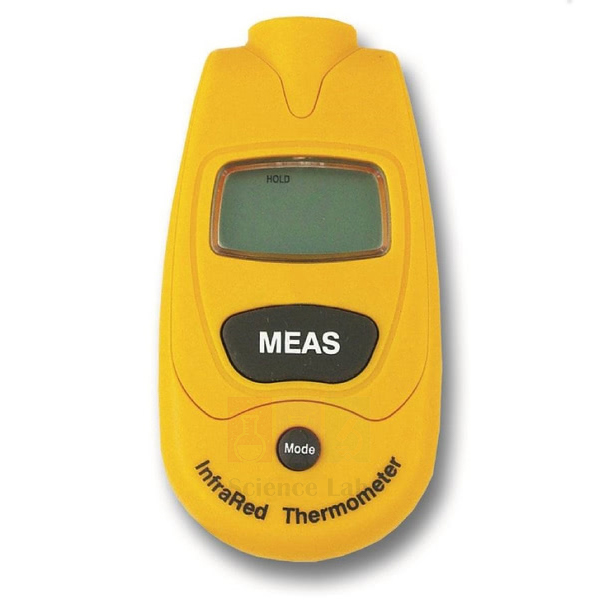
Thermometer, Infra Red, Hand Held
Thermometer, Infra Red, Hand Held (Product Code: SLE/CH/234) measures surface temperature from a distance, which makes it a safe choice whenever the object is too hot, moving or hazardous to touch — a hot plate, the side of a heated beaker or a running motor. It covers -35 to 230°C, with the display switchable between °C and °F, and reads in 0.1°C divisions. The instrument is manufactured by Jain Scientific Equipments Pvt Ltd (ScienceLab), Ambala, and is a compact addition to the laboratory instruments it supplies to schools, colleges and workshops in India and abroad.
Specifications
| Parameter | Detail |
|---|---|
| Type | Hand-held, non-contact infrared thermometer |
| Temperature range | -35 to 230°C (°C/°F switchable) |
| Accuracy | ±2% or ±2.0°C (±2.0°F) |
| Emissivity | 0.95 fixed |
| Wavelength | 5 to 14 µm |
| Divisions | 0.1°C |
| Distance to spot ratio | 1:1 |
| LCD dimensions | 14mm x 24mm |
| Product dimensions | 75mm x 40mm x 20mm |
| Supplied with | Wrist strap, clip-out stamp and storage pouch |
Typical Use
Teachers use a hand-held infrared thermometer to check a hot plate, water bath or heating block before students handle it, and to follow a cooling curve without disturbing the surface being measured. In physics and chemistry lessons it brings heat-transfer experiments to life: students can compare how quickly dark and shiny cans lose heat, see which insulating material keeps a container warmest, or map the temperature along a metal bar heated at one end. It is equally handy for checking the walls of a refrigerator or incubator and the casing of a motor in a technical workshop.
With a distance to spot ratio of 1:1, the measured spot is roughly as wide as the distance to the target, so hold the thermometer close to small objects. The fixed 0.95 emissivity suits most painted, matte, plastic and organic surfaces; bare shiny metal reads low, so cover a small patch with matte tape or paint for a truer value. Glass is opaque at these wavelengths, so aiming at a beaker gives the temperature of the glass wall, not the liquid inside — a useful teaching point for any class using analytical lab instruments.
Manufacturer
The infrared thermometer is offered under the ScienceLab name by Jain Scientific Equipments Private Limited, a manufacturer of teaching and laboratory apparatus based in Ambala, Haryana. Schools, colleges and training institutes can read more about the company on our company profile.
Related Chemistry Lab Equipment
Instruments that complement non-contact temperature measurement:
- Immersion Thermometer — measures the temperature inside a liquid, which an infrared unit cannot do
- Hot Plate Magnetic Stirrer — a heated surface whose temperature is often checked with this instrument
- Thermometer, Electronic, Max/Min — records the highest and lowest air temperatures over time
- Micro Burner — a small heat source for heat-transfer demonstrations
See the wider Chemistry Lab Equipment range for more measuring and heating apparatus.
Frequently Asked Questions
What comes with the thermometer?
It is supplied with a wrist strap, clip-out stamp and storage pouch. Battery details are not listed here; contact us to confirm before ordering.
How accurate is it?
The stated accuracy is ±2% or ±2.0°C (±2.0°F), with readings shown in 0.1°C divisions.
How far away can I measure from?
Any distance works, but the 1:1 distance to spot ratio means the area measured grows as you step back. For small targets, hold the thermometer close so the spot stays on the object.
Can it measure the temperature of a liquid in a beaker?
Only the surface it can see. Through glass it reads the glass wall; for the liquid itself, use an immersion thermometer or measure the open liquid surface.
Why do shiny metal surfaces give low readings?
Emissivity is fixed at 0.95, which matches most non-metallic surfaces. Polished metal emits less infrared, so a matte patch gives a more reliable reading.
Is a calibration certificate available?
Please discuss calibration certificate availability with us at the enquiry stage via our contact page.
Do you supply multiple units for a department?
Yes. Institutional and distributor orders for India and international markets are quoted on request.
Request a Quote
To request pricing, contact our sales team or add the hand-held infrared thermometer to the enquiry cart.
Last updated: 24 September 2026
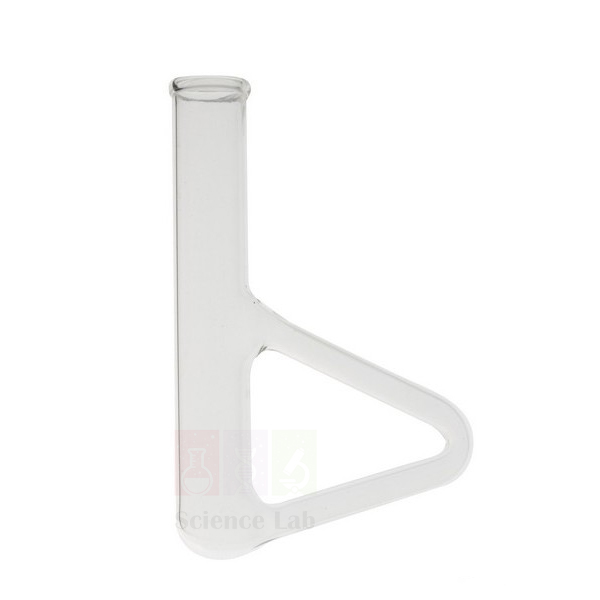
Thiele Tube
The Thiele Tube (Product Code: SLE/CH/235) is a clear borosilicate glass tube, 25mm in diameter and 150mm long, used for determining the melting point of organic compounds. In the classic Thiele design, heat applied to the side loop sets up convection currents in the bath liquid, giving the slow, even warming that a sharp melting-point reading needs without a stirrer. It is manufactured by Jain Scientific Equipments Pvt Ltd (ScienceLab), Ambala, for organic chemistry practicals in colleges, universities and pharmacy laboratories, and forms part of its chemistry lab glassware in India and for export.
Specifications
| Parameter | Detail |
|---|---|
| Material | Borosilicate glass |
| Colour | Clear |
| Diameter of tube | 25mm |
| Length | 150mm |
| Heat resistance | Heat resistant |
| Chemical resistance | Chemical resistant |
| Application | Determining the melting point of organic compounds |
Typical Use
For a melting-point determination, the tube is clamped by its neck to a retort stand and filled with a high-boiling bath liquid, such as liquid paraffin or silicone oil, to just above the upper junction of the side loop. A little of the powdered sample is packed into a capillary sealed at one end, the capillary is fixed to a thermometer so the sample sits beside the bulb, and the thermometer is lowered into the tube through a notched cork. Gentle heating of the side loop with a small flame then circulates the oil around the thermometer, and students record the range from the first droplet of liquid to a completely clear melt. A pure compound melts sharply, while impurities lower and broaden the range, which is why the Thiele tube remains a staple for identity and purity checks.
Slow the heating as the expected melting point approaches so the thermometer keeps pace with the sample. If a rubber ring is used to hold the capillary, keep it above the oil level where it will not soften. Let the bath cool completely before emptying or moving the tube. Well-kept borosilicate laboratory glassware of this kind gives consistent results over many practical sessions.
Manufacturer
The Thiele Tube is made by Jain Scientific Equipments Private Limited, known in laboratories as ScienceLab. The company operates from Ambala, Haryana, producing glassware and apparatus for chemistry teaching and routine analytical work. Our company profile has more about its background.
Related Chemistry Lab Equipment
Everything else needed for a Thiele tube melting-point setup:
- Capillary Tube — holds the packed sample beside the thermometer bulb
- Laboratory Thermometer — reads the bath temperature as the sample melts
- Micro Burner — a small, controllable flame for heating the side loop
- Three Prong Swivel Clamp — secures the tube to a retort stand
- Apparatus Melting Point — an alternative apparatus for melting-point work
Find more organic chemistry apparatus in our Chemistry Lab Equipment category.
Frequently Asked Questions
What are the dimensions of the tube?
The tube is 25mm in diameter and 150mm long, made from clear borosilicate glass.
Which liquid should be used in the bath?
The bath liquid is not supplied. Liquid paraffin or silicone oil is commonly chosen because it stays stable well above the melting points being measured; select one suited to your compounds.
Is a thermometer or capillary included?
No, the listing covers the glass tube only. Thermometers and capillaries are available separately from our range.
Can the tube be heated with a direct flame?
Yes, the borosilicate glass is heat resistant. Apply a small flame to the side loop, not the main column, and heat gradually.
How is the tube cleaned after use?
Allow it to cool, drain the oil into a labelled container, then wash with warm water and detergent (or a suitable solvent for stubborn oil), rinse and dry.
Can you quote for a full organic chemistry lab?
Yes. Send the list of apparatus and quantities through our contact page; we supply institutions in India and international markets.
Request a Quote
Contact us for pricing, or add the Thiele Tube to the enquiry cart along with capillaries and thermometers.
Last updated: 24 September 2026
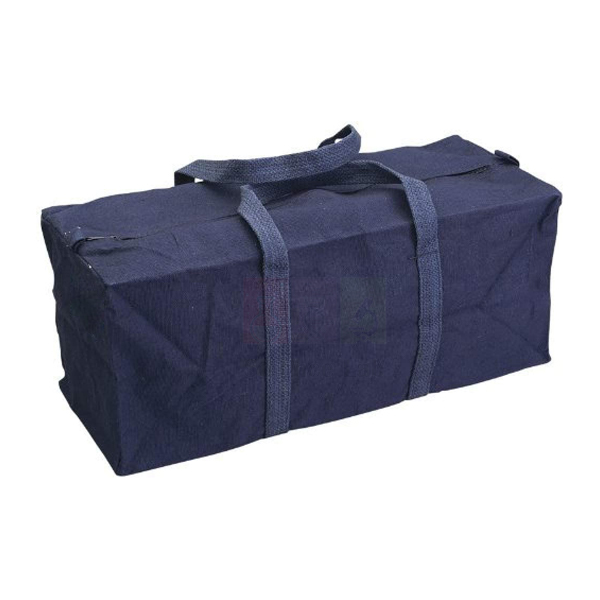
Tool Bag
Tool Bag (Product Code: SLE/CH/236) is a heavy-duty, water resistant canvas bag for carrying the hand tools, spare parts and small apparatus that laboratory technicians and teachers move between rooms, workshops and field sites. It closes with a heavy-duty zip, has wrap-around strap handles and measures 460 x 180 x 195 mm. The bag is manufactured by Jain Scientific Equipments Pvt Ltd (ScienceLab), Ambala, and is a practical support item for lab equipment maintenance in India's schools, colleges and technical institutes.
Specifications
| Parameter | Detail |
|---|---|
| Material | Heavy-duty water resistant canvas |
| Closure | Heavy-duty zip |
| Handles | Wrap-around strap handles |
| Dimensions | 460 x 180 x 195 mm |
| Packing | Packed in a polythene bag with display card |
Typical Use
A laboratory technician's day involves tightening boss heads and clamps, replacing fuses and leads, checking electrical apparatus with a multimeter and fixing loose fittings on benches. Keeping those tools together in one zipped canvas bag means they travel to the physics, chemistry and biology rooms as a set, rather than being borrowed and lost. The same bag is useful for field trips, carrying thermometers, sample bags, tape measures and notebooks to a pond or garden study, and for vocational and technical courses where each group needs its own tool set.
The water resistant canvas shrugs off splashes and light rain, but it is not designed to hold liquids, so keep chemicals in their own sealed containers. Avoid overfilling so the heavy-duty zip closes without strain, brush out dust and metal filings regularly, and let the bag air-dry if it gets wet. As part of a new school laboratory setup, one or two tool bags per department make routine upkeep far quicker.
Manufacturer
ScienceLab is the trade name of Jain Scientific Equipments Private Limited (CIN U29309HR2020PTC087597), an Ambala, Haryana company that manufactures at its licensed factory at 449, HSIIDC Industrial Area, Saha, Ambala (Factory Licence AMB-ONLINE-CHD-J-414). Our company profile describes the business in more detail.
Related Chemistry Lab Equipment
Tools and accessories that are commonly carried in or used alongside this bag:
- Tool Kit — the hand tools a technician keeps in the bag
- Digital Multimeter — for checking leads, fuses and electrical apparatus
- Fiberglass Tape Measure — measuring during bench layout or field work
- Hazard Warning Tape — marks off an area while maintenance is under way
- Box, Metal, Lockable, for Storage — a rigid, lockable option for storing tools and parts
More laboratory support items are listed in our Chemistry Lab Equipment category.
Frequently Asked Questions
How big is the bag?
It measures 460 x 180 x 195 mm, enough for a set of hand tools, a meter and small spares.
Is it waterproof?
It is made from water resistant canvas, which protects the contents from splashes and light rain. It is not intended to be submerged or to carry liquids.
Are tools included?
No, the product is the bag itself. Tools can be ordered separately, for example our Tool Kit.
How is the bag packed?
Each bag is packed in a polythene bag with a display card, which keeps it clean in storage and makes it easy for stores and distributors to display.
How should the canvas be cleaned?
Empty the bag, brush out dust, spot-clean marks with mild soap and water, and leave it open to dry in the air.
Can bags be printed with an institution's name?
Custom printing is not listed for this product. Contact us to discuss your requirement along with quantities.
Request a Quote
We supply schools, institutes and distributors in India and international markets. Contact us for a quotation or add the Tool Bag to the enquiry cart.
Last updated: 24 September 2026
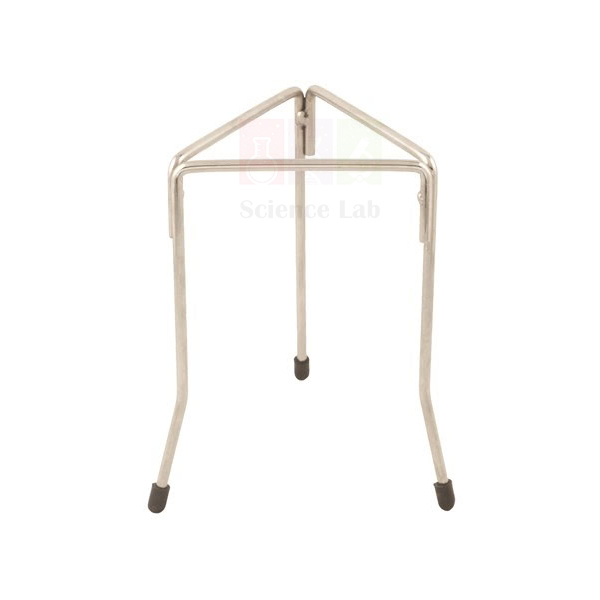
Tripod, Stainless Steel
Tripod, Stainless Steel (Product Code: SLE/CH/237) is a 200mm tall heating stand with a triangular stainless steel top of 125mm side length, steel legs and rubber feet. Placed over a Bunsen burner or spirit lamp, it supports a wire gauze with a beaker or flask, or a pipeclay triangle holding a crucible, at a steady working height. It is manufactured by Jain Scientific Equipments Pvt Ltd (ScienceLab), Ambala, and is a basic item of chemistry lab equipment in India for school and college practical benches.
Specifications
| Parameter | Detail |
|---|---|
| Material | Stainless steel |
| Top | Triangular, stainless steel |
| Side length of top | 125mm |
| Height | 200mm |
| Legs | Steel |
| Feet | Rubber |
| Colour | Silver |
Typical Use
The tripod is the base of most heating setups in a school laboratory. With a wire gauze on top it carries a beaker of water for a water bath, a flask being brought to the boil, or an evaporating dish concentrating a salt solution for crystallisation. With a pipeclay triangle in place of the gauze it holds a crucible for strong heating — burning magnesium ribbon, driving water from hydrated copper sulfate or finding the mass of a residue. The stainless steel construction resists the rust that plain steel tripods develop after repeated spills and heating, and the rubber feet help keep the tripod steady on the bench.
Check that your burner fits under the 200mm top with the flame just reaching the gauze, and stand the tripod on a heat-resistant mat. The metal stays hot long after the burner is turned off, so move it only once it has cooled or use tongs, and keep the rubber feet well clear of the flame. Crystallising a salt in an evaporating dish and heating a crucible, with crucible tongs close at hand, are standard school practicals built around this stand.
Manufacturer
This tripod comes from Jain Scientific Equipments Private Limited, the Ambala, Haryana company behind the ScienceLab brand, which produces heating supports, stands and bench apparatus for chemistry teaching. Visit our company profile to find out more.
Related Chemistry Lab Equipment
Items that make up a complete heating station with the tripod:
- Gauze Wire, Ceramic Centre — sits on the tripod top to spread heat under beakers and flasks
- Pipeclay Triangle — supports a crucible on the tripod for strong heating
- Bunsen Burner — the heat source placed underneath
- Crucible with lid — for heating solids on the pipeclay triangle
- Crucible Tong — lifts hot crucibles and dishes off the tripod
Complete the bench with more items from our Chemistry Lab Equipment range.
Frequently Asked Questions
How tall is the tripod and how big is the top?
It is 200mm tall with a triangular stainless steel top of 125mm side length.
Why choose stainless steel?
Stainless steel resists corrosion from spills and repeated heating, and it wipes clean easily, so the tripod keeps its appearance over years of use.
Is a wire gauze included?
No, the gauze and pipeclay triangle are sold separately. See the related items above.
Which burners fit underneath?
Any burner that fits under a 200mm top with the flame reaching the gauze. If you are unsure about a particular burner, ask us before ordering.
Can the rubber feet take heat?
The rubber feet are there for grip on the bench. Keep the burner flame under the centre of the top so it does not reach the feet.
Do you supply tripods for a whole laboratory?
Yes, class sets for schools and colleges in India and international markets are quoted on request via our contact page.
Request a Quote
For prices on single units or class sets, contact us or add the stainless steel tripod to the enquiry cart.
Last updated: 24 September 2026
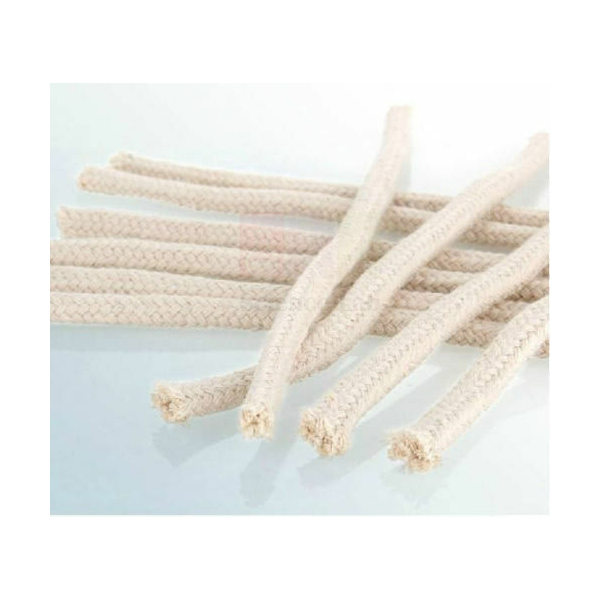
Wicks For Glass Spirit Burner
Wicks For Glass Spirit Burner (Product Code: SLE/CH/238) are replacement wicks that can be used with the Methylated Spirit Burner, packed ten to a pack so that a laboratory can keep every burner on the bench lighting cleanly through the school year. A fresh wick draws fuel evenly and gives a steady, clean flame, while a charred or shortened one produces a weak, smoky flame that slows down practical work. The wicks are supplied by Jain Scientific Equipments Pvt Ltd (ScienceLab), Ambala, as part of its range as a chemistry consumables supplier in India and for institutions abroad.
Key Details
| Parameter | Detail |
|---|---|
| Type | Replacement burner wicks |
| For use with | Methylated Spirit Burner (glass spirit burner) |
| Supplied as | Pack of 10 |
| Suitable for | School, college and teaching laboratories that use spirit burners for flame heating |
Typical Use
Spirit burners are the heat source of choice in rooms without a gas supply, in primary and middle-school science, and wherever a small, gentle flame is enough — warming a test tube, heating a small beaker on a tripod or running a simple heat-transfer demonstration. Over time the exposed end of the wick chars and shortens, and it eventually stops drawing fuel properly. Replacing it takes a minute: remove the cap and the wick holder, thread a new wick through the holder so that a short, even length stands above it, let the lower end soak in methylated spirit before lighting, and trim any frayed strands.
Only refill or re-wick a burner when the flame is out and the glass has cooled, keep the cap on when the burner is not in use to stop the fuel evaporating, and never let a wick burn dry. Keeping a pack of spare wicks with the lab consumables means a burner can be returned to service in the same lesson instead of being set aside.
Supplier
These wicks are supplied by Jain Scientific Equipments Private Limited, the company behind ScienceLab in Ambala, Haryana. The company keeps spares and consumables alongside its laboratory apparatus, so burners, lamps and other bench equipment can stay in service between larger orders. More information is on our company profile.
Related Chemistry Lab Equipment
Items used with a spirit burner in the same heating setup:
- Methylated Spirit — the fuel the wick draws up to the flame
- Glass Spirit Lamp — a glass-bodied spirit lamp; ask us to confirm wick fit before ordering
- Tripod, Stainless Steel — supports a beaker or dish above the flame
- Gauze Wire — spreads the flame's heat evenly under glassware
- Test Tube Holder (Peg Type) — holds a test tube safely over the spirit flame
Find burners, supports and other consumables in our Chemistry Lab Equipment category.
Frequently Asked Questions
How many wicks are in a pack?
Each pack contains 10 wicks.
Which burner do these wicks fit?
They can be used with the Methylated Spirit Burner. Wick dimensions are not listed here, so for any other burner or lamp please send us the wick holder details before ordering.
When should a wick be replaced?
Replace it when the exposed end is heavily charred or hardened, when it no longer reaches the fuel, or when the flame becomes small, uneven or smoky.
Can a wick be trimmed instead of replaced?
Yes, trimming away a lightly charred tip often restores an even flame. Once the wick is too short to reach the fuel, fit a new one.
Is fuel included?
No, the pack contains wicks only. Methylated spirit is available separately.
Can you supply wicks for several laboratories at once?
Yes. Multiple packs for schools, colleges and distributors in India and international markets are quoted on request.
Request a Quote
To order spare wicks, contact us with the number of packs, or add them to the enquiry cart with your other consumables.
Last updated: 24 September 2026
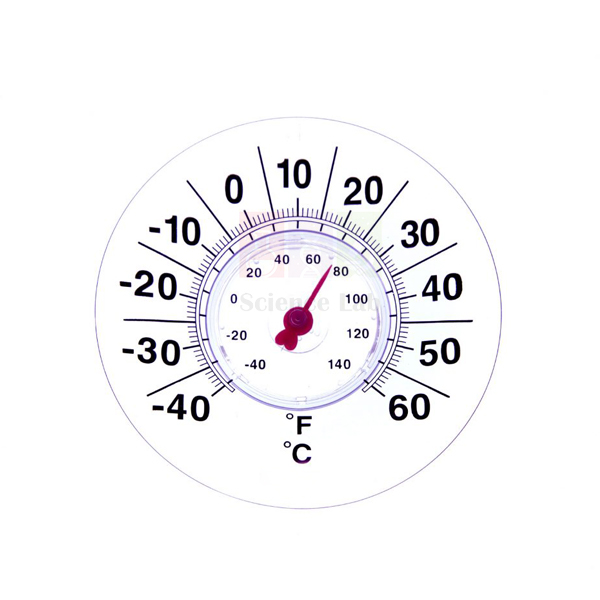
Window Thermometer, Large
Window Thermometer, Large (Product Code: SLE/CH/239) is a clear, flexible and virtually transparent thermometer, 80mm in diameter, that fixes to a window or glass door so the temperature on the other side of the glass can be read from inside the room. A centre suction attachment and electro-static technology hold it firmly in place, and its range of -50°C to 50°C covers everyday outdoor conditions. It is manufactured by Jain Scientific Equipments Pvt Ltd (ScienceLab), Ambala, and is a simple, visual piece of educational laboratory equipment in India for classrooms and school weather projects.
Specifications
| Parameter | Detail |
|---|---|
| Type | Clear, flexible, virtually transparent window thermometer |
| Fixing | Centre suction attachment; adheres to windows or glass doors using electro-static technology |
| Range | -50°C to 50°C |
| Diameter | 80mm |
| Stand-off from glass | Stands up to 20mm from the window |
| Design feature | Allows air to circulate around the thermometer to stop exaggerated readings caused by heat radiation through the glass |
Typical Use
Fixed to the outer face of a classroom window, the thermometer lets students take the outdoor temperature at the start of every lesson without leaving the room, building a daily weather log for geography, environmental studies or a science club. Placed beside an indoor thermometer, it makes the difference between inside and outside conditions obvious, which leads naturally into discussions of insulation, heat loss through glass and seasonal change. Its transparent body keeps the view through the window largely clear, so it can stay in place all year.
Because it stands up to 20mm off the glass, air moves around the thermometer and it is not simply reading the warmth of the pane itself. Choose a window that is shaded for most of the day and away from air-conditioner outlets or heater vents, and clean the glass before fixing for a secure hold. As a simple window-mounted instrument it pairs well with digital loggers when students compare instrument types.
Manufacturer
ScienceLab products such as this window thermometer are made by Jain Scientific Equipments Private Limited of Ambala, Haryana, which supplies schools, colleges and teaching laboratories under the ScienceLab trading name. The company profile gives an overview of the company.
Related Chemistry Lab Equipment
Instruments used together with a window thermometer in weather and temperature studies:
- Thermometer, Electronic, Max/Min — records the day's highest and lowest temperatures
- Digital Hygrometer - Thermometer — adds humidity readings to the weather log
- Psychrometer (with Thermometer) — a wet-and-dry method for measuring humidity
- Indoor/Outdoor Thermometer — compares inside and outside temperatures on one instrument
Browse the full Chemistry Lab Equipment range for more measuring instruments.
Frequently Asked Questions
What temperature range does it cover?
It reads from -50°C to 50°C.
How does it stay on the window?
It has a centre suction attachment and adheres to windows or glass doors using electro-static technology. Clean, dry glass gives the firmest hold.
Why does it stand away from the glass?
Standing up to 20mm from the window lets air circulate around the thermometer, which stops exaggerated readings caused by heat radiation through the glass.
How large is it?
The thermometer is 80mm in diameter, and its clear, flexible body sits close to the glass without blocking much of the view.
Which side of the window should it go on?
To read outdoor temperature from inside, fix it to the outside of the glass. Pick a window out of direct sun for the most representative readings.
How should it be cleaned?
Wipe it with a soft, damp cloth. Avoid solvents and abrasive cleaners, which can cloud the clear body.
Can schools order several units?
Yes. We quote for schools, colleges and distributors in India and international markets — contact us with your quantity.
Request a Quote
Ask for pricing through our contact page, or add the Window Thermometer, Large to the enquiry cart.
Last updated: 24 September 2026
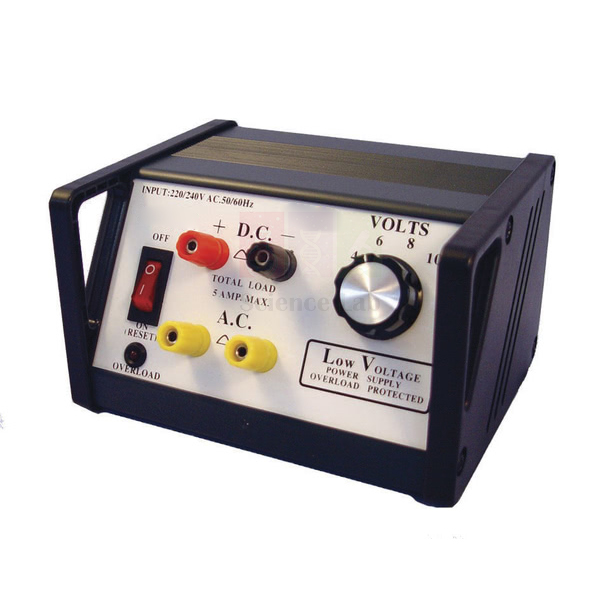
Power Supply, Stepped
Power Supply, Stepped (Product Code: SLE/PHY/116) is a low-voltage AC/DC bench supply used to power electricity, magnetism and heating experiments in school and college physics labs. It gives 2–12 V AC or DC in 6 steps from a 230 V AC, 50 Hz input, with a cooling fan and built-in microprocessor overload protection. It is supplied by Jain Scientific Equipments Pvt Ltd (ScienceLab), Ambala, India, as a power supply unit for lab use in India.
Specifications
| Parameter | Detail |
|---|---|
| Output | 2–12 V AC/DC in 6 steps |
| Input | 230 V AC, 50 Hz |
| Current | 5 A |
| Protection | Built-in microprocessor overload protection |
| Cooling | Cooling fan |
| Dimensions (W x H x D) | 180 x 110 x 145 mm |
| Product code | SLE/PHY/116 |
| Supplied by | Jain Scientific Equipments Pvt Ltd (ScienceLab), Ambala, India |
What Is the Stepped Power Supply Used For?
A stepped supply gives students fixed, repeatable voltages without the risk of over-turning a knob. Typical uses include lighting lamps in series and parallel circuits, driving electromagnets and small motors, running induction and transformer demonstrations on the AC output, and powering heating coils or electrolysis cells on DC.
Start on the lowest step and increase one step at a time, switching off before changing connections. Keep the total load within the 5 A current rating, and leave space around the case so the cooling fan can draw air. If the overload protection operates, remove the fault or reduce the load before switching back on.
What to Specify When Ordering
- Whether your experiments need the AC output, the DC output or both.
- Quantity — one per bench or one per demonstration table.
- Mains supply at the destination — the unit is listed for 230 V AC, 50 Hz input.
- Connecting leads and a meter, if your laboratory does not already have them.
Supplier
Jain Scientific Equipments Private Limited, which trades as ScienceLab, supplies the Power Supply, Stepped to schools, colleges and dealers from Ambala, Haryana, India. For vendor registration and import paperwork, the supplying company's Importer-Exporter Code is AAECJ8618A (DGFT) and its GSTIN is 06AAECJ8618A1ZT. Read more about the business on our company profile.
Related Physics Lab Equipment
Items commonly connected to this power supply:
- Rheostat — varies the current between the fixed voltage steps.
- Stackable Leads — connect the supply to circuit boards and apparatus.
- Standard Digital Multimeter — checks the actual voltage and current in the circuit.
- Power Supply Variable — an alternative when continuously adjustable voltage is needed.
- Induced Current Apparatus — a coil demonstration that runs from a low-voltage supply.
See all electricity apparatus in our Physics Lab Equipment category.
Frequently Asked Questions
What voltages does the Power Supply, Stepped provide?
The Power Supply, Stepped provides 2–12 V AC or DC in 6 steps, powered from a 230 V AC, 50 Hz mains input. Fixed steps make it easy for students to repeat readings at the same voltage in circuit experiments.
What is the current rating?
The Power Supply, Stepped is listed with a current of 5 A. Keep the combined load of lamps, coils or motors within this figure; the built-in microprocessor overload protection is there to guard the unit if a circuit draws too much.
Does it have overload protection and cooling?
Yes. The Power Supply, Stepped has built-in microprocessor overload protection and a cooling fan. Leave clear space around the case so air can circulate, and reduce the load if the protection operates during an experiment.
What are the dimensions of the unit?
The Power Supply, Stepped measures 180 x 110 x 145 mm (width x height x depth). That compact footprint lets it sit on a student bench beside the circuit board, meters and other apparatus without crowding the workspace.
Who supplies the Power Supply, Stepped?
The Power Supply, Stepped is supplied by Jain Scientific Equipments Pvt Ltd, trading as ScienceLab, from Ambala, Haryana, India. It can be quoted with leads, meters and electricity apparatus so your laboratory order comes from one supplier.
Can it be used outside India?
The Power Supply, Stepped is listed for a 230 V AC, 50 Hz input. Buyers in international markets should confirm that their mains supply matches before ordering; share your requirement through the contact page and we will advise with the quotation.
Request a Quote
To receive a quotation for the Power Supply, Stepped, contact ScienceLab or add it to the enquiry cart with the leads and meters you need.
Last updated: 24 September 2026
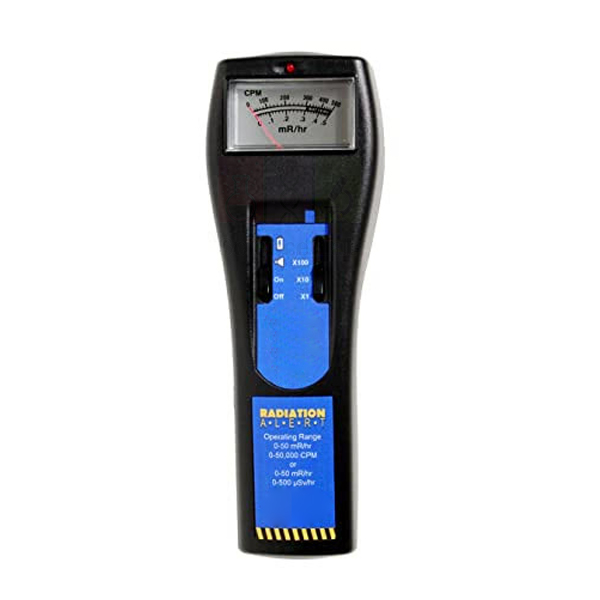
Geiger Counter
Geiger Counter (Product Code: SLE/PHY/119) is a compact, general-purpose radiation survey meter used to detect alpha, beta, gamma and X-radiation in school and college nuclear physics practicals. Physics teachers use it to make radioactive decay visible and audible, because a red count light flashes and a beep sounds with every event it detects across its 3 selectable ranges. It is supplied by Jain Scientific Equipments Pvt Ltd (ScienceLab), Ambala, India, as part of its nuclear physics lab equipment range.
Specifications
| Parameter | Detail |
|---|---|
| Instrument type | Compact, ergonomic, general-purpose survey meter |
| Radiation detected | Alpha, beta, gamma and X-rays |
| Measuring ranges | 3 selectable ranges |
| Linearity | More linear reading for gamma and X-rays above 40 keV |
| Event indication | Red count light flashes and a beep sounds with each event detected |
| Product code | SLE/PHY/119 |
| Supplied by | Jain Scientific Equipments Pvt Ltd (ScienceLab), Ambala, India |
What Is the Geiger Counter Used For?
In the physics laboratory the Geiger Counter is the quickest way to show students that ionising radiation can be detected and counted. A typical lesson starts by recording the background count in the room, then brings a sealed school source closer to show the count rising, and finally places sheets of paper, aluminium or lead between source and detector to compare how far alpha, beta and gamma radiation penetrate.
Because every detected event produces a flash and a beep, the meter also demonstrates that decay is random: students can listen to the irregular clicks and count them over fixed intervals. For any radiation experiment, keep sources in their storage containers when not in use, handle them with tongs, and follow your institution's radiation-safety rules.
Supplier
ScienceLab is the trading name of Jain Scientific Equipments Private Limited, an Ambala, Haryana company that supplies laboratory equipment to schools, colleges and institutions in India and international markets. The Geiger Counter is a sourced survey meter, and we can quote it together with the sealed sources, tube holder and scaler timer listed in our physics range. Read more about the company on our company profile.
Related Physics Lab Equipment
These items from our physics range are used in the same radioactivity lessons as the Geiger Counter:
- Sealed Radioactive Source, Americium — sealed school source for count-rate and absorption experiments.
- Sealed Radioactive Source, Strontium — a second sealed source for comparing penetration through absorbers.
- Sealed Radioactive Source, Cobalt — completes a set of sources for distance and shielding investigations.
- Scaler Timer — bench counter for timed counts when a GM tube is used instead of a survey meter.
- Geiger Muller Tube Holder — houses a GM tube and connects it to the scaler timer.
Browse the full Physics Lab Equipment range for more nuclear physics and electricity apparatus.
Frequently Asked Questions
What radiation does the Geiger Counter detect?
The Geiger Counter (SLE/PHY/119) detects alpha, beta, gamma and X-rays over 3 selectable ranges. Its reading is more linear for gamma and X-rays above 40 keV, which suits classroom comparisons of different sources and absorbers.
How does the Geiger Counter show that radiation has been detected?
The Geiger Counter signals each detected event in two ways: a red count light flashes and a beep sounds. This lets a whole class see and hear individual counts during a demonstration, even from the back of the room.
Are radioactive sources included with the Geiger Counter?
No radioactive sources are listed as part of the Geiger Counter; the product is the survey meter itself. Sealed americium, strontium and cobalt sources appear as separate products, so name any sources you need in your quotation request.
Who supplies the Geiger Counter?
The Geiger Counter is supplied by Jain Scientific Equipments Pvt Ltd (ScienceLab) of Ambala, Haryana, India. The company sources this survey meter and delivers it with its wider physics range to schools, colleges and institutional buyers in India and international markets.
Is a calibration certificate available for the Geiger Counter?
Calibration paperwork for the Geiger Counter is not part of the standard listing, so please raise it before ordering. Tell us through the contact page what documentation your institution needs and we will confirm what can be provided.
What should I include when requesting a quote for the Geiger Counter?
For a Geiger Counter quotation, state the quantity, the delivery address or destination country, and whether you also need sealed sources, a GM tube holder or a scaler timer. Orders for several laboratories can be combined in one enquiry.
Request a Quote
Send your Geiger Counter requirement through our contact page, or add it to the enquiry cart with other physics items so that we can prepare one combined quotation.
Last updated: 24 September 2026