- Physics Lab Equipment
- Chemistry Lab Equipment
- Biology Lab Equipment
- Anatomical Lab Equipment
- Learning
- Educational Lab Equipment
- Magnets
- Agriculture
- Astronomy
- Earth Science
- Geography Lab Equipment
- Safety Lab Coat
- Laboratory
- Meteorological
- Electricity & Magnetism
- Heat
- School Lab Equipment
- Lab Glassware
- Science Lab Equipment
- Tvet Lab Equipment
- Robotics Kits Supplier and Manufacturer for Schools India
- Math Lab Equipment Manufacturers and Exporters in Ambala
- STEM Kits Manufacturers and Supplier India
- Engineering Lab Equipment
- Hospital Lab Equipment
- Water, Sanitation & Hygiene Supplies
- Cold Chain, Solar & Communication Equipment
- Nutrition
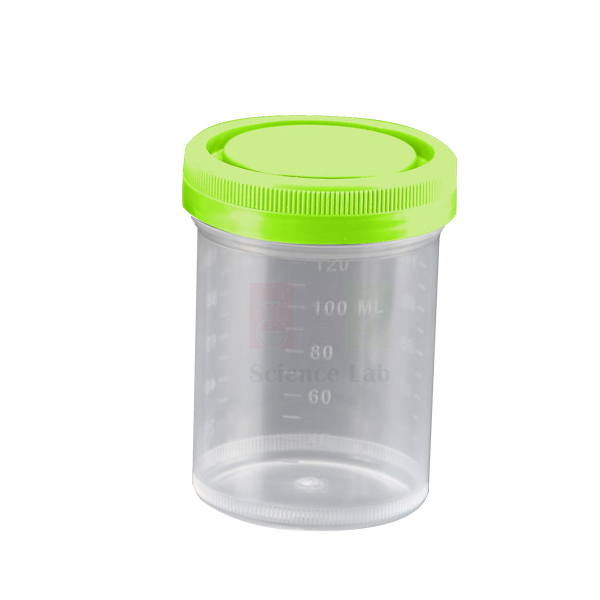
Specimen Container, PP
Specimen Container, PP (Product Code: SLE/P/45) is a 120 ml polypropylene container with an HDPE lid used to collect, store and transport specimens in clinical, pathology and teaching laboratories. Made from non-cytotoxic polypropylene and graduated on three sides, it has a ridged lid and base so it opens easily even when the user is wearing gloves. This lab consumable is supplied by Jain Scientific Equipments Pvt Ltd (ScienceLab), Ambala, India.
Specifications
| Parameter | Detail |
|---|---|
| Capacity | 120 ml |
| Container material | Non-cytotoxic polypropylene |
| Lid material | HDPE (high-density polyethylene) |
| Dimensions | 55 mm x 80 mm |
| Graduations | On three sides, for all-round viewing |
| Grip | Ridged lid and bottom for easy opening, even with gloves |
| Intended use | Specimen collection, storage and transportation |
| Product code | SLE/P/45 |
| Supplied by | Jain Scientific Equipments Pvt Ltd (ScienceLab), Ambala, India |
What Is a 120 ml PP Specimen Container Used For?
Laboratories use this container to receive samples, keep them closed during storage and send them on to another bench or laboratory. The graduations on three sides let staff read the approximate volume from any angle without turning the container round.
Label each container before filling, close the lid firmly and keep it upright during transport. Teaching labs also use such containers to hold collected biological or environmental samples for practical work, alongside other biology lab equipment. Follow your institution's rules for handling and disposing of clinical specimens.
What to Specify When Ordering
- The number of containers required.
- Whether this 120 ml container suits your samples, or a different type such as the Specimen Container, Universal 30ml or Specimen Container, Metal Cap.
- Whether sterile containers are needed; this listing does not state sterility, so ask us.
- The delivery location in India or abroad.
Supplier
Jain Scientific Equipments Private Limited trades as ScienceLab and supplies this specimen container together with the other laboratory plasticware it sources. Hospital laboratories, colleges, schools, dealers and importers can buy specimen containers and related items through one enquiry, with dispatch from Ambala. Learn more on the ScienceLab profile.
Related Scientific Lab Plasticware
Other sample containers that laboratories compare with this one.
- Specimen Container, Metal Cap — a 100 ml container with a lined metal cap.
- Specimen Container, Universal 30ml — a smaller screw-cap container listed as sterile.
- Container Sample 50 ml — a 50 ml sample container from the clinical laboratory range.
- Container with sc cap — a screw-cap container for storing samples and powders.
See every container and bottle in Scientific Lab Plasticware.
Frequently Asked Questions
What is the capacity of the Specimen Container, PP?
The Specimen Container, PP holds 120 ml and measures 55 mm x 80 mm. It is graduated on three sides, so the approximate sample volume can be read from any direction without turning the container round.
What materials is the container made from?
The Specimen Container, PP has a body of non-cytotoxic polypropylene and a lid of HDPE (high-density polyethylene). Both are common laboratory plastics for containers that are filled, stored and moved between benches or laboratories.
Is the container easy to open with gloves on?
Yes. The Specimen Container, PP has a ridged lid and a ridged bottom, giving a firm grip so it opens easily even when laboratory staff are wearing gloves. Hold the base while turning the lid to avoid spills.
Is the Specimen Container, PP sterile?
The description of the Specimen Container, PP does not state that it is sterile. If your application requires sterile containers, mention this when you enquire through the contact page, or consider the universal specimen container, which is listed as EO-sterilised.
Who supplies the Specimen Container, PP?
The Specimen Container, PP is supplied by Jain Scientific Equipments Pvt Ltd (ScienceLab) of Ambala, Haryana, India. The company sources it for laboratories, institutions, dealers and importers and handles quotations and dispatch directly.
What should my quotation request include?
For the Specimen Container, PP, state the number of containers, whether sterile supply is required, and the delivery location in India or abroad. Send it through the contact page or add the item to the enquiry cart to receive a quotation from ScienceLab.
Request a Quote
Enquire about the Specimen Container, PP through the contact page or add it to the enquiry cart, stating the quantity you need.
Last updated: 24 September 2026
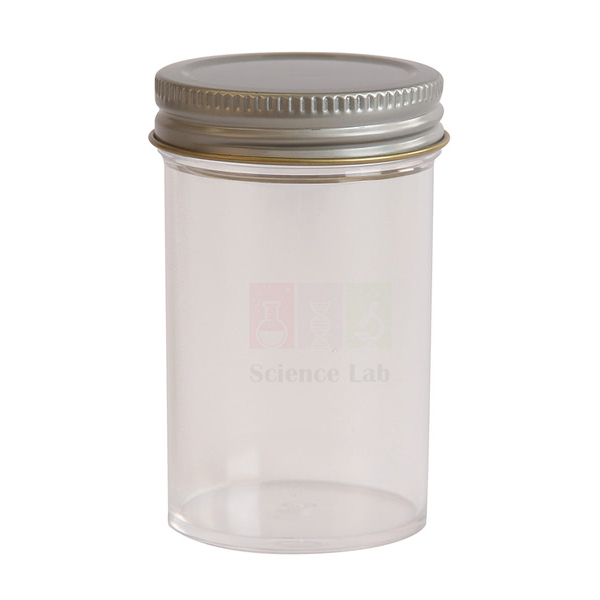
Specimen Container, Metal Cap
Specimen Container, Metal Cap (Product Code: SLE/P/46) is a 100 ml polystyrene container closed by a metal cap with a flowed-seal inert liner, used to collect and store samples in clinical and research laboratories. All its materials are non-cytotoxic, the lined cap is designed to give a leak-proof seal, and the container is for in vitro use only. It is supplied by Jain Scientific Equipments Pvt Ltd (ScienceLab), Ambala, India, as part of its range of laboratory consumables.
Specifications
| Parameter | Detail |
|---|---|
| Capacity | 100 ml |
| Container material | Virgin polystyrene |
| Cap | Metal cap with flowed-seal inert liner |
| Seal | Leak-proof seal from the lined metal cap |
| Material safety | All materials non-cytotoxic |
| Intended use | Sample collection and storage; for in vitro use only |
| Label options | No label, plain label or printed label (confirm when ordering) |
| Product code | SLE/P/46 |
| Supplied by | Jain Scientific Equipments Pvt Ltd (ScienceLab), Ambala, India |
What Is a Metal Cap Specimen Container Used For?
The container holds samples that must stay sealed while they are stored, with the lined metal cap guarding against leaks. Laboratories use it to receive specimens, keep reference samples and store small quantities of material for later testing or teaching.
Write the sample details on the label before filling, tighten the cap fully and store the container upright. Polystyrene is more brittle than polypropylene, so handle filled containers with care and avoid dropping them.
What to Specify When Ordering
- The number of containers.
- The label option you need: no label, plain label or printed label.
- Whether another type would suit better, such as the Specimen Container, PP or Specimen Container, Universal 30ml.
- The delivery location in India or abroad.
Supplier
ScienceLab is the trading name of Jain Scientific Equipments Private Limited, which supplies this metal-cap specimen container from Ambala, Haryana. The company sources the containers and quotes them alongside other sample-handling plasticware, so laboratories, institutions and dealers can place one consolidated order. See the ScienceLab profile for company details.
Related Scientific Lab Plasticware
Alternative containers and bottles for collecting and storing samples.
- Specimen Container, PP — a 120 ml polypropylene container with an HDPE lid.
- Specimen Container, Universal 30ml — a smaller screw-cap container listed as EO-sterilised.
- Universal Bottle PP Cap — a universal bottle with a polypropylene cap.
- Container Sample 50 ml — a 50 ml option listed under clinical laboratory supplies.
More sample bottles and containers are in the Scientific Lab Plasticware category.
Frequently Asked Questions
What is the capacity of the Specimen Container, Metal Cap?
The Specimen Container, Metal Cap holds 100 ml. It is made from virgin polystyrene and closed with a metal cap that carries a flowed-seal inert liner, giving a leak-proof closure for collected samples.
Why does the container use a lined metal cap?
On the Specimen Container, Metal Cap, the flowed-seal inert liner inside the metal cap presses against the rim to give a leak-proof seal, and the liner sits between the sample and the metal. Tighten the cap fully after filling.
What label options are listed?
The Specimen Container, Metal Cap is listed with three label options: no label, plain label and printed label. Tell us which option you need when you enquire, and we will confirm availability for your quantity.
What does "for in vitro use only" mean here?
The Specimen Container, Metal Cap is marked for in vitro use only, meaning it is intended for holding samples outside the body, such as collected specimens kept for storage and laboratory testing. It is not meant for use on or inside a patient.
Who supplies the Specimen Container, Metal Cap?
Jain Scientific Equipments Pvt Ltd (ScienceLab), based in Ambala, Haryana, India, supplies the Specimen Container, Metal Cap. The company sources it for laboratories, colleges, hospitals, dealers and importers and prepares quotations directly.
What do I need to include in an enquiry?
For the Specimen Container, Metal Cap, include the quantity, the label option you need (none, plain or printed) and the delivery location in India or abroad. Use the contact page or enquiry cart to receive a quotation.
Request a Quote
To get a quotation for the Specimen Container, Metal Cap, message us via the contact page or add it to the enquiry cart with your preferred label option.
Last updated: 24 September 2026
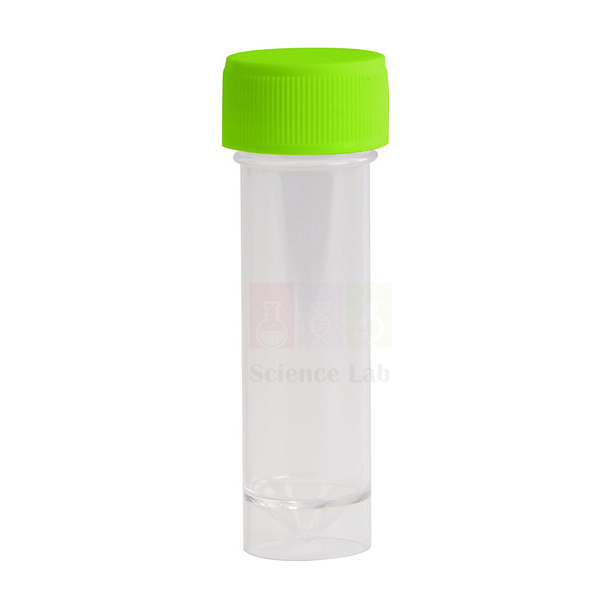
Specimen Container, Universal 30ml
Specimen Container, Universal 30ml (Product Code: SLE/P/47) is a sterile 30 ml polystyrene container with a polypropylene screw cap used to collect and hold samples in clinical, microbiology and research laboratories. Sterilised with ethylene oxide (EO) and measuring 30 mm x 92 mm, it has a leak-tight cap and is intended for in vitro use only. The sterile containers are supplied by Jain Scientific Equipments Pvt Ltd (ScienceLab), Ambala, India.
Specifications
| Parameter | Detail |
|---|---|
| Capacity | 30 ml |
| Container material | Virgin polystyrene |
| Lid material | Polypropylene screw cap |
| Dimensions | 30 mm x 92 mm |
| Sterility | Sterile; EO (ethylene oxide) |
| Seal | Leak-tight cap for a leak-proof seal |
| Intended use | In vitro use only |
| Product code | SLE/P/47 |
| Supplied by | Jain Scientific Equipments Pvt Ltd (ScienceLab), Ambala, India |
What Is a 30 ml Universal Container Used For?
Universal containers are an everyday sample pot in many laboratories: they receive a sample, stay sealed on the way to the bench and hold it until testing. Because this one is supplied sterile (EO), it can be opened and filled directly for work that calls for a sterile container, such as microbiology practicals.
Open the cap only when you are ready to fill, avoid touching the inside of the cap or rim, then screw it down firmly and label the container. Store it upright and follow your institution's procedures for handling and disposing of specimens.
What to Specify When Ordering
- How many sterile containers you need.
- Confirmation that the sterile 30 ml size is right, or whether a larger container such as the Specimen Container, PP suits your samples.
- The delivery location in India or abroad.
Supplier
Jain Scientific Equipments Private Limited, trading as ScienceLab, supplies this universal container to laboratories from Ambala, Haryana, India. It is one of several sample containers the company sources, so buyers can compare sizes and closures and order them together. For company background see the ScienceLab profile.
Related Scientific Lab Plasticware
Other containers and tubes used for collecting and splitting samples.
- Specimen Container, PP — a larger 120 ml container graduated on three sides.
- Specimen Container, Metal Cap — a 100 ml polystyrene container sealed by a lined metal cap.
- Universal Bottle PP Cap — a bottle-style alternative with a polypropylene cap.
- Micro Centrifuge Tube, 1.5ml — for dividing a sample into small aliquots.
Browse more containers in Scientific Lab Plasticware.
Frequently Asked Questions
Is the Specimen Container, Universal 30ml sterile?
Yes. The Specimen Container, Universal 30ml is listed as sterile, sterilised with EO (ethylene oxide). Keep the cap closed until you are ready to fill it, and avoid touching the inside of the cap or the rim.
What are the dimensions and capacity?
The Specimen Container, Universal 30ml holds 30 ml and measures 30 mm x 92 mm. If you need to check that it fits your racks, boxes or transport carriers, share their sizes when you enquire.
What is the container made of?
The Specimen Container, Universal 30ml has a polystyrene container and a polypropylene screw cap, both from virgin material. The leak-tight cap gives a leak-proof seal when it is screwed down firmly after filling.
How should filled containers be stored?
Store each filled Specimen Container, Universal 30ml upright with the screw cap fully tightened and the label facing outward. The container is intended for in vitro use only, so follow your laboratory's procedures for storing, transporting and disposing of specimens.
Who supplies the Specimen Container, Universal 30ml?
The Specimen Container, Universal 30ml is supplied by Jain Scientific Equipments Pvt Ltd (ScienceLab), Ambala, Haryana, India. The company sources the containers for laboratories, institutions, dealers and importers, and quotes them together with related sample containers on request.
How do I request a quotation?
To request a quotation for the Specimen Container, Universal 30ml, send the quantity and delivery location in India or abroad through the contact page, or add the item to the enquiry cart. Mention any other containers so they can be quoted together.
Request a Quote
Send your required quantity of the Specimen Container, Universal 30ml through the contact page, or use the enquiry cart to list it with other laboratory supplies.
Last updated: 24 September 2026
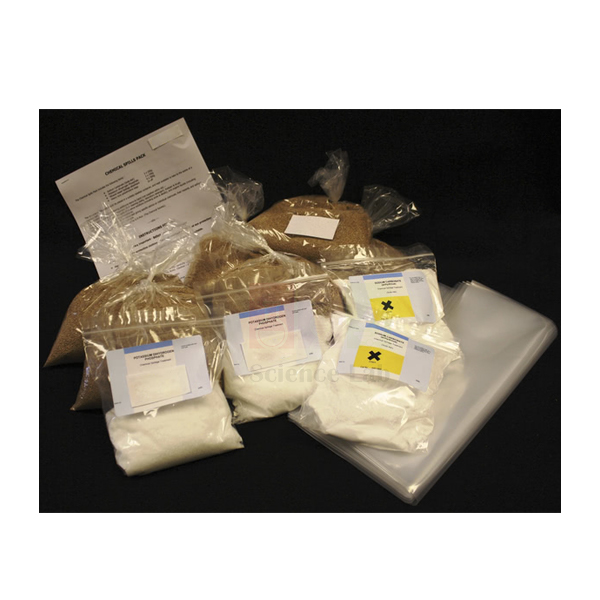
Spill Pack
Spill Pack (Product Code: SLE/CH/226) is a laboratory spill response pack made up of six containers of absorbent, each holding enough material to absorb a spillage of up to 500 cm³, the maximum volume recommended for storage in a laboratory. Ten stout polythene bags are included to collect and contain treated spillage before disposal, and two packets of soda ash allow absorbed acid spills to be neutralised and made safe. Full instructions come with the pack. It is a sensible safety stock for school chemistry labs, college preparation rooms and chemical stores, and it is supplied by Jain Scientific Equipments Pvt Ltd (ScienceLab), Ambala, India.
Specifications
| Parameter | Detail |
|---|---|
| Absorbent containers | 6 |
| Capacity per container | Absorbs a spillage of up to 500 cm³ |
| Absorbent | Kieselguhr, mineral absorbent |
| Neutraliser | Sodium carbonate (soda ash), two packets, for absorbed acid spills |
| Also contains | Potassium dihydrogen phosphate |
| Collection bags | 10 x heavy duty polythene bags |
| Documentation | Full instructions provided |
Typical Use
If a bottle of dilute acid breaks during a practical, the teacher clears the area, puts on gloves and eye protection, and covers the liquid with the contents of one absorbent container. When the kieselguhr has soaked up the spill, it is scooped into a heavy duty polythene bag, and for an acid spill the soda ash is then used, as the instructions describe, to neutralise the collected material before disposal. With six containers, one pack can cover more than one incident before it needs restocking, which makes it a practical safety companion to the chemistry lab equipment in a teaching block.
Store the pack near the chemical store or the main prep bench, where staff can reach it quickly, and go through the full instructions with technicians before it is needed. The potassium dihydrogen phosphate supplied in the pack should be used only as the instructions direct. Replace used containers and bags promptly, and dispose of bagged waste by the route your institution has approved.
Supplier
ScienceLab, the trading name of Jain Scientific Equipments Private Limited in Ambala, Haryana, supplies the Spill Pack as a safety consumable alongside the apparatus it manufactures. Vendor registration details for tender and purchase files: GSTIN 06AAECJ8618A1ZT; LEI 3358004HRD1JIVXKYX49. Visit the company profile for more about ScienceLab.
Related Laboratory Equipment
Protective equipment and storage that complete a spill-ready lab:
- Gloves W/o Powder Nitrile Disposable — hand protection while the absorbent is applied and bagged.
- Premium Safety Spectacles — eye protection for anyone dealing with the spill.
- Acid Spill Clean Up Kit — a dedicated kit for labs that mainly handle acids.
- Solvent Spill Clean Up Kit — for organic solvent spills.
- Acids Storage Cabinet — safer storage that reduces the chance of spills.
Explore further items in Chemistry Lab Equipment.
Frequently Asked Questions
How large a spill can the pack handle?
Each of the six containers holds enough absorbent for a spillage of up to 500 cm³.
What is included?
Six containers of absorbent (kieselguhr, a mineral absorbent), sodium carbonate (soda ash) in two packets, potassium dihydrogen phosphate, 10 heavy duty polythene bags and full instructions.
Why is soda ash included?
It neutralises acid spills after they have been absorbed and collected, so the waste is safer to dispose of.
Are gloves or goggles included?
No protective equipment is listed in the pack contents, so keep gloves and eye protection alongside it.
Can individual items be reordered?
Please ask through the contact page about replacement containers or bags.
Do you supply packs for multiple schools or export?
Yes. Share the product code SLE/CH/226, quantity and delivery locations; ScienceLab supplies institutions in India and international markets.
Request a Quote
For a quotation on the Spill Pack, contact us through the contact page or add it to the enquiry cart together with gloves and safety spectacles.
Last updated: 24 September 2026
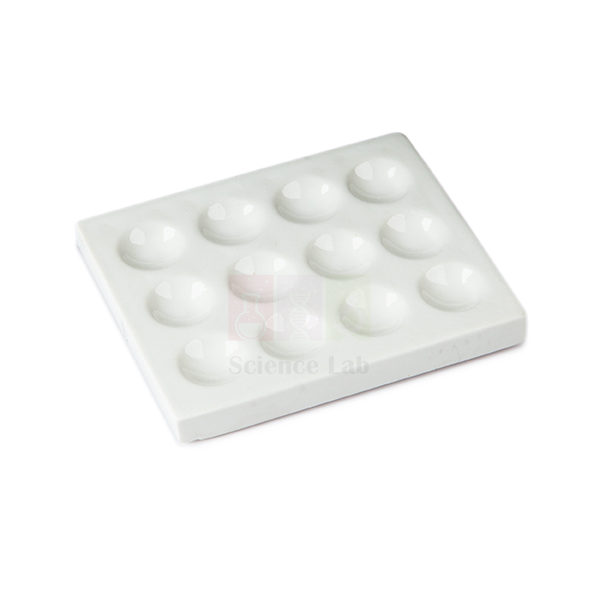
Spotting Tiles, Plastic
Spotting Tiles, Plastic (Product Code: SLE/CH/227) are white high-density polyethylene tiles, each moulded with 12 cavities that hold approximately 1.5ml with a top diameter of 21mm. The white surface makes small colour changes easy to see, so a few drops of reagent in each well are enough for spot tests, indicator comparisons and drop-scale reactions. Using drops instead of test tubes cuts chemical use and washing-up, which is why spotting tiles appear in almost every chemistry teaching kit for schools and colleges. They come in packs of 10 and are manufactured by Jain Scientific Equipments Pvt Ltd (ScienceLab), Ambala, India.
Specifications
| Parameter | Detail |
|---|---|
| Material | Polyethylene (high-density) |
| Colour | White |
| Number of cavities | 12 |
| Well volume | 1.5ml approx. |
| Top diameter of well | 21mm |
| Pack | Pack of 10 |
Typical Use
A class can place a drop of each test solution in a row of wells and add universal indicator to all of them, producing a colour series from acidic to alkaline on one tile. The same layout suits testing for starch with iodine, comparing the reaction of metals with dilute acid on a drop scale, or running confirmatory ion tests in a salt analysis sequence. With 12 wells per tile, a group can run a full set of samples alongside a control, and a pack of 10 tiles covers ten groups at once in a school chemistry lab.
Label the rows and columns on a sheet placed under the tile so results can be recorded, and add reagents with a dropper or microchemistry pipet to keep volumes small. Rinse the tile with water straight after use and clean the wells with a soft brush. Keep the tiles away from flames and hot plates, and do not place hot glassware on them.
Manufacturer
Spotting tiles in this range are produced by Jain Scientific Equipments Private Limited, the Ambala, Haryana manufacturer that sells its teaching apparatus as ScienceLab to schools, colleges and distributors. More about us is on the ScienceLab profile.
Related Chemistry Lab Equipment
Items used with spotting tiles in drop-scale chemistry:
- Plastic Microchemistry Pipets — deliver single drops into each well.
- Dropping Bottle — keeps reagents ready for dispensing drop by drop.
- Micro Test Plates — an alternative multi-well format for small-volume tests.
- Paper, Universal, pH 1-14 — checks the pH of solutions held in the wells.
- Universal pH Indicator — for colour-series comparisons across a row of wells.
For the complete catalogue, see Chemistry Lab Equipment.
Frequently Asked Questions
How many wells does each tile have?
Each tile has 12 cavities.
What volume does a well hold?
About 1.5ml per well, with a top diameter of 21mm.
How many tiles are in a pack?
There are 10 tiles in a pack.
Why white plastic rather than porcelain?
The white polyethylene gives the same clear background for colour changes, and plastic tiles are light and less likely to chip if dropped on a student bench.
Can the tiles be heated?
No. They are polyethylene, so keep them away from flames and hot plates and use them for room-temperature spot tests.
Which chemicals can be used in the wells?
They are intended for small quantities of typical school and college reagents. If you plan to use concentrated acids or organic solvents, please check with us through the contact page first.
Do you supply tiles in bulk for institutions or export?
Yes. Quote the product code SLE/CH/227 and the number of packs; we supply India and international markets.
Request a Quote
Request pricing for Spotting Tiles, Plastic through our contact page, or add packs to the enquiry cart with droppers and indicators for your practical sessions.
Last updated: 24 September 2026
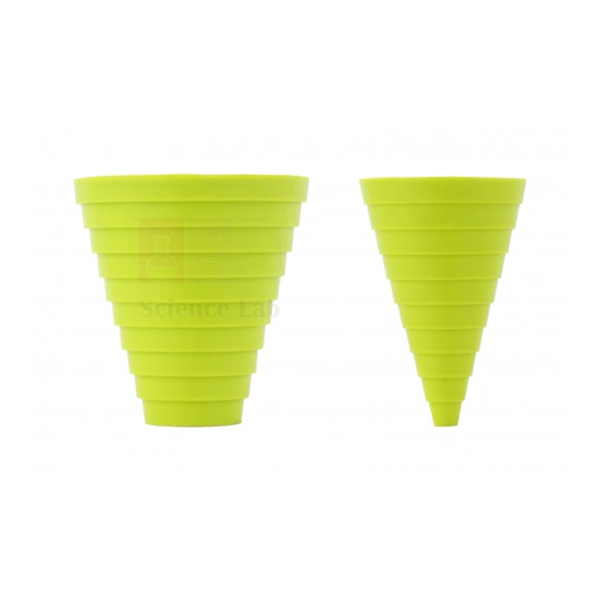
Steppa-Stoppa Large
Steppa-Stoppa Large (Product Code: SLE/CH/228) is a tapered, one-size-fits-many stopper made to replace the assortment of standard rubber stoppers most laboratories keep in a drawer. Moulded from blended polymer with an incremental taper, a single stopper closes any opening that falls between its narrow base and its wide upper end, so teachers and technicians no longer have to hunt for the right numbered bung. It is supplied by Jain Scientific Equipments Pvt Ltd (ScienceLab), Ambala, as part of its school chemistry lab equipment in India and for institutions overseas.
Specifications
| Parameter | Detail |
|---|---|
| Product type | Tapered stopper designed to replace standard rubber stoppers |
| Material | Blended polymer |
| Profile | Incremental taper to suit most applications, removing the need for multiple sized rubber stoppers |
| Dimensions | 20mm (base) x 48mm (top) x 52mm (length) |
| Sterilisation | Autoclavable |
| Pack size | Box of 10 stoppers |
| Accessory provided | Microfiber drying cloth (the stoppers grip most firmly when dry) |
| Size in this listing | Large (the stopper is also offered in a small size) |
Typical Use
In a teaching laboratory the large Steppa-Stoppa earns its place on conical flasks, wide tubes and reagent bottles that need closing between the steps of a practical — keeping a prepared solution covered overnight, stopping a flask of indicator from evaporating, or sealing a culture vessel before it goes into the autoclave. Because one tapered stopper covers a spread of neck sizes, a single box can serve a whole bench group, and stock-taking becomes far simpler than tracking a dozen rubber stopper sizes. It sits comfortably in a set of everyday lab equipment accessories alongside tongs, holders and racks.
Push the stopper into the opening with a slight twist until it seats, and do not force it further once it grips. Wipe both the stopper and the vessel neck with the microfiber cloth first, because the polymer holds most securely on a dry surface. As with any stopper, never close a vessel that is being heated or is still producing gas, and let autoclaved stoppers cool and dry before they go back into use.
Supplier
Steppa-Stoppa Large is supplied by Jain Scientific Equipments Private Limited, a company in Ambala, Haryana, that trades under the ScienceLab name. Alongside the laboratory apparatus it manufactures, the company sources practical bench accessories such as these stoppers, so that schools and colleges can complete a laboratory order through a single supplier. Read more about the business on our company profile.
Related Chemistry Lab Equipment
Items used with this stopper in the same practical or storage routine:
- Conical Flask — a common vessel for the stopper to close when solutions are stored between lessons
- Test Tube — wider tubes can be closed with the taper while samples wait for the next step
- Rubber Cork — the conventional option when a bored stopper is needed for tubing or a thermometer
- Autoclave Basket — keeps stoppers and small glassware together during sterilisation
See the complete Chemistry Lab Equipment range for more bench essentials.
Frequently Asked Questions
What is included in one box?
Ten large Steppa-Stoppa stoppers. A microfiber drying cloth is provided with the stoppers so they can be kept dry for a firm grip.
What size of opening does the large stopper fit?
It fits openings that fall along its taper, from 20mm at the base to 48mm at the wide end over a 52mm length. For narrower necks, ask us about the small size, which also comes in a box of 10.
Can the stoppers be autoclaved?
Yes. They are autoclavable, which suits microbiology and sterile-work sessions; allow them to cool and dry fully before refitting.
Is there a version with a hole for a delivery tube or thermometer?
A bored version is not listed for this product. For apparatus that needs glass tubing through the stopper, a bored rubber cork is the usual choice; contact us if you would like advice.
Why does a stopper sometimes slip out?
Moisture is the usual cause. The stoppers grip most firmly when dry, so wipe the stopper and the neck of the vessel with the drying cloth before fitting.
What should an institutional quotation request include?
List the number of boxes, whether you also need the small size, and your delivery location. We supply schools, colleges and distributors in India and international markets; send the details through our contact page.
Request a Quote
For pricing and availability, contact our team or add Steppa-Stoppa Large to the enquiry cart together with the rest of your laboratory list.
Last updated: 24 September 2026
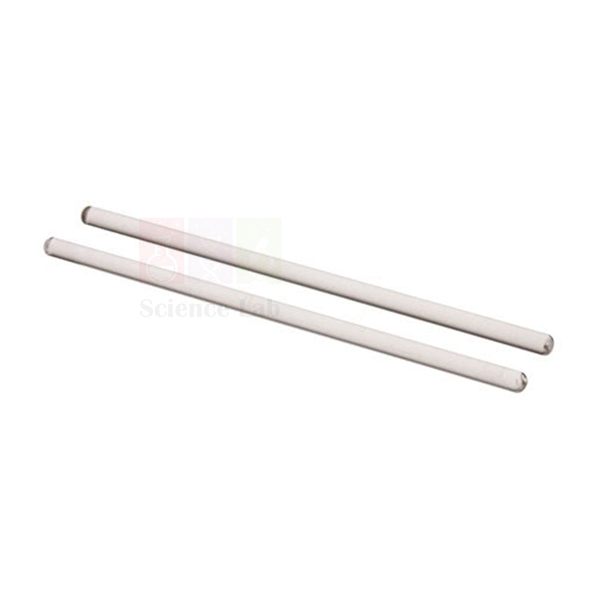
Stirring Rod, Glass
Stirring Rod, Glass (Product Code: SLE/CH/229) is a clear, 30cm glass rod for mixing solutions, dissolving solids and guiding liquids during transfer in chemistry practicals. Its 7mm diameter gives a sturdy feel in the hand for everyday bench work, and the glass is both heat resistant and chemical resistant. The rod is manufactured by Jain Scientific Equipments Pvt Ltd (ScienceLab), Ambala, and belongs to its range of chemistry lab glassware in India for schools, colleges and teaching laboratories abroad.
Specifications
| Parameter | Detail |
|---|---|
| Material | Glass |
| Function | Stirring; dual purpose |
| Diameter | 7mm |
| Length | 30cm |
| Colour | Clear |
| Heat resistance | Heat resistant |
| Chemical resistance | Chemical resistant |
Typical Use
Students reach for a glass stirring rod whenever a solid has to be dissolved, a precipitate broken up or a mixture kept uniform — preparing salt solutions, growing crystals, mixing reagents before a titration or stirring during a neutralisation. The 30cm length reaches the bottom of tall beakers and measuring cylinders while keeping fingers clear of the liquid. The same rod doubles as a pouring guide: held against the lip of a beaker, it lets a liquid run down its surface into a funnel without splashing, which is the standard technique taught for filtration and decanting. A drop taken on the tip can also be touched onto indicator paper to check pH.
Stir with a gentle circular motion rather than striking the walls of the vessel, which protects both the rod and the beaker from chipping. Rinse the rod with distilled water between reagents so one solution does not contaminate the next, and lay a hot rod on a clean, dry surface to cool instead of plunging it into cold water. These simple habits keep the rod in service for many terms and are worth building into any school chemistry lab equipment routine.
Manufacturer
This glass stirring rod is produced by Jain Scientific Equipments Private Limited, better known to schools and colleges by its trading name, ScienceLab. From its base in Ambala, Haryana, the company makes and supplies apparatus for teaching laboratories, from basic glassware to complete practical setups. Background on the company is available on our company profile page.
Related Chemistry Lab Equipment
Apparatus that is normally on the bench with a stirring rod:
- Glass Beaker — the vessel in which most dissolving and mixing is done
- Glass Funnel — receives liquid poured down the rod during filtration
- Filter Paper — completes the filtration setup with the funnel and rod
- Red Litmus Paper — test a solution by touching the rod tip to the paper
- Stirring Rod, Polypropylene — a plastic alternative where glass breakage is a concern
More glassware and bench apparatus is listed in our Chemistry Lab Equipment category.
Frequently Asked Questions
What are the dimensions of the rod?
It is 30cm long with a 7mm diameter, in clear glass.
Can it be used in hot solutions?
Yes. The glass is heat resistant, so it can stir warm or boiling solutions on a hot plate or over a burner. Avoid sudden temperature shocks, such as moving a hot rod straight into cold water.
Is the rod made of borosilicate glass?
The listing specifies heat-resistant, chemical-resistant glass; the exact glass grade is not stated here. Contact us if your purchase specification requires a particular glass type.
Are there any chemicals it should not be used with?
Glass in general is attacked by hydrofluoric acid and, slowly, by hot concentrated alkalis. For those, a polypropylene rod is the safer choice.
How should the rod be cleaned?
Rinse it straight after use with tap water and then distilled water, use a little laboratory detergent for stubborn residues, and leave it to dry on a rack or clean cloth.
How are rods supplied for a full class?
Pack quantities are not listed on this page, so quantities are quoted to your requirement. We supply schools, colleges and distributors across India and international markets — send us your list.
Request a Quote
To order glass stirring rods, contact us with the quantity required, or place them in the enquiry cart with the other items on your laboratory list.
Last updated: 24 September 2026
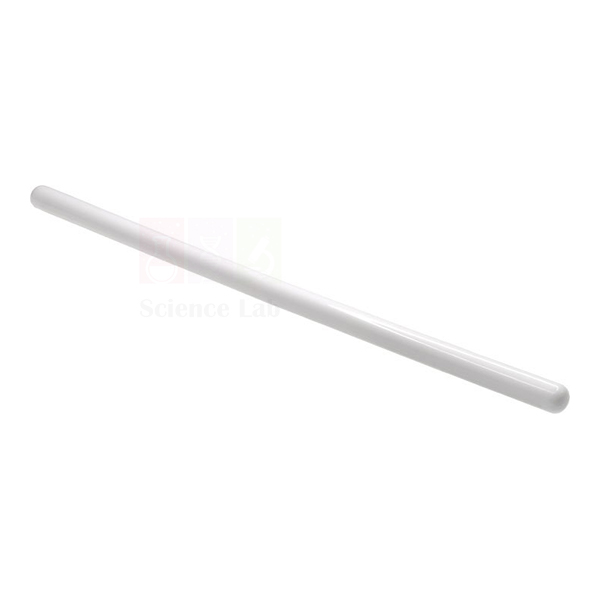
Stirring Rod, Polypropylene
Stirring Rod, Polypropylene (Product Code: SLE/P/48) is a white plastic rod, 7 mm in diameter and 250 mm long, used to stir and mix solutions in beakers and flasks in school and college laboratories. Made of chemical-resistant polypropylene, it gives younger students a plastic alternative to glass stirring rods. This school lab equipment is made by Jain Scientific Equipments Pvt Ltd (ScienceLab), an OEM manufacturer, at its own factory in Ambala, India.
Specifications
| Parameter | Detail |
|---|---|
| Material | Polypropylene |
| Colour | White |
| Diameter | 7 mm |
| Length | 250 mm |
| Chemical resistance | Chemical resistant |
| Use | Stirring solutions in the laboratory |
| Product code | SLE/P/48 |
| Manufacturer | Jain Scientific Equipments Pvt Ltd (ScienceLab) — OEM |
| Country of origin | India (made in Ambala, Haryana) |
What Is a Polypropylene Stirring Rod Used For?
Students use the rod to dissolve solids, mix reagents before a reaction and guide liquid down the rod when pouring from a beaker into a funnel or flask. The 250 mm length keeps the hand well above the rim of a typical beaker.
Stir gently with a circular motion rather than tapping the walls of the vessel, and rinse the rod before moving to a different solution. Very hot liquids and strong organic solvents can soften plastics, so use a glass rod for those jobs in the chemistry lab.
OEM Manufacturer
This stirring rod is produced by ScienceLab, the brand of Jain Scientific Equipments Private Limited, which acts as the OEM and supplies it directly from its own factory at Saha, Ambala, Haryana, India. The company is incorporated under CIN U29309HR2020PTC087597, and its production site at 449, HSIIDC Industrial Area, Saha holds Factory Licence AMB-ONLINE-CHD-J-414. Schools, colleges, dealers and importers receive quotations straight from the maker. Read the ScienceLab company profile.
Related Scientific Lab Plasticware
Items used together with a stirring rod when preparing solutions.
- Stirring Rod, Glass — a glass rod for hot liquids or solvents.
- Beaker, Polypropylene, Set of 4 — beakers in which solutions are stirred.
- Spatula, Polypropylene — to add solid chemicals before stirring.
- Polypropylene Conical Flask with Screw Cap — for mixing and storing prepared solutions.
Explore the wider Scientific Lab Plasticware range for beakers, flasks and bench tools.
Frequently Asked Questions
What size is the Stirring Rod, Polypropylene?
The Stirring Rod, Polypropylene is 7 mm in diameter and 250 mm long. That length suits stirring in beakers and flasks on a school bench while keeping fingers clear of the solution being mixed.
Is the plastic stirring rod chemical resistant?
Yes. The Stirring Rod, Polypropylene is made of chemical-resistant polypropylene and suits the common aqueous solutions used in teaching labs. For very hot liquids or strong organic solvents, use a glass stirring rod instead.
Why choose polypropylene instead of a glass stirring rod?
A Stirring Rod, Polypropylene does not shatter the way glass can when it is dropped or knocked against a beaker, which makes it practical for junior classes. A glass rod remains the better choice for high temperatures or solvents that affect plastics.
Who manufactures the Stirring Rod, Polypropylene?
The Stirring Rod, Polypropylene is manufactured by Jain Scientific Equipments Pvt Ltd (ScienceLab), the OEM, at its licensed factory at Saha, Ambala, Haryana, India. Buyers get quotations, repeat supplies and bulk orders direct from the manufacturer.
How should the stirring rod be cleaned?
Rinse the Stirring Rod, Polypropylene with water straight after use, wash it with a mild laboratory detergent if residue remains, and let it dry before storing. Rinse it between different solutions during a practical so one reagent is not carried into another.
Can I order stirring rods in bulk?
Yes. The Stirring Rod, Polypropylene can be ordered in bulk for schools, colleges and distributors across India and international markets. Send the number of rods and the delivery location through the contact page for a quotation from the manufacturer.
Request a Quote
Request a quotation for the Stirring Rod, Polypropylene via the contact page or the enquiry cart. As the manufacturer, ScienceLab replies with the quotation directly.
Last updated: 24 September 2026
