- Physics Lab Equipment
- Chemistry Lab Equipment
- Biology Lab Equipment
- Anatomical Lab Equipment
- Learning
- Educational Lab Equipment
- Magnets
- Agriculture
- Astronomy
- Earth Science
- Geography Lab Equipment
- Safety Lab Coat
- Laboratory
- Meteorological
- Electricity & Magnetism
- Heat
- School Lab Equipment
- Lab Glassware
- Science Lab Equipment
- Tvet Lab Equipment
- Robotics Kits Supplier and Manufacturer for Schools India
- Math Lab Equipment Manufacturers and Exporters in Ambala
- STEM Kits Manufacturers and Supplier India
- Engineering Lab Equipment
- Hospital Lab Equipment
- Water, Sanitation & Hygiene Supplies
- Cold Chain, Solar & Communication Equipment
- Nutrition
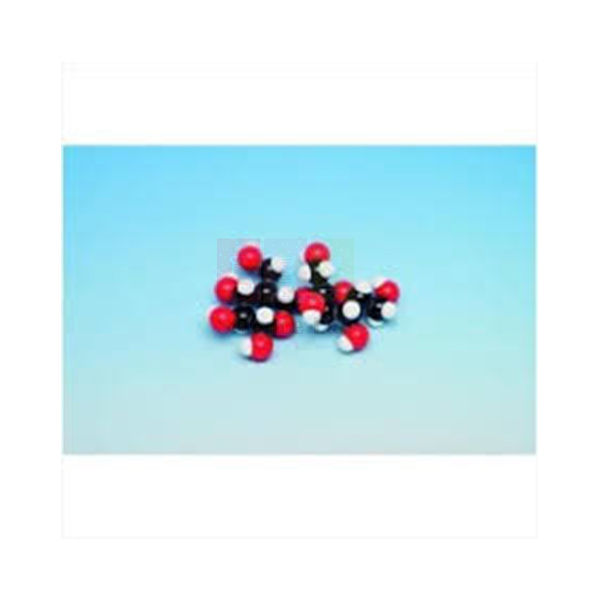
Molecular Model Set, 7 Amino Acid Collection
Molecular Model Set, 7 Amino Acid Collection (Product Code: SLE/Mo/18) is a compact molecular model set used to introduce the structure of amino acids in school and college biology and chemistry. With a collection of seven amino acids, it keeps an introductory lesson focused, and its precision-moulded parts join firmly and store in a compartment case. Jain Scientific Equipments Pvt Ltd (ScienceLab), an OEM manufacturer, makes the set at its own factory in Ambala, India.
Key Details
| Parameter | Detail |
|---|---|
| Collection | 7 amino acids (as named) |
| Listing reference | Amino Acid Collection Set 7 |
| Construction | Moulded parts with joining pieces designed for firmly constructed models |
| Moulds and materials | Precision-engineered |
| Storage | Durable storage case with compartments |
| Amino acids included and part count | Not listed here — ask us |
| Product code | SLE/Mo/18 |
| Manufacturer | Jain Scientific Equipments Pvt Ltd (ScienceLab) — OEM |
| Country of origin | India (made in Ambala, Haryana) |
What Is the 7 Amino Acid Model Set Used For?
A smaller selection lets a class concentrate on the backbone that all amino acids share — the amino group, the carboxyl group and the central carbon — before comparing a handful of different side chains. This suits a first lesson on proteins, where too many structures at once can overwhelm students.
Teachers can pair up models to demonstrate a condensation reaction forming a dipeptide, discuss how amino acids carry both acidic and basic groups, and ask students to predict which side chains would sit inside or outside a folded protein. Labelling each model with a small tag during the lesson helps students remember which is which.
OEM Manufacturer
ScienceLab is the name under which Jain Scientific Equipments Private Limited manufactures the Molecular Model Set, 7 Amino Acid Collection as the OEM (original equipment manufacturer). The set is produced at the company's own licensed factory at Saha, Ambala, Haryana, India.
Schools, colleges, dealers and importers order it directly from the manufacturer, which also answers questions about which amino acids the set contains. See the ScienceLab profile for more.
Related Molecule Models
Items that extend an introductory amino acid lesson:
- Molecular Model Set, 20 Amino Acid Collection — a larger collection for comparing more side chains.
- Polypeptide Molecular Model Kit — for linking units into a polypeptide chain.
- Protein Model — shows how amino acid chains fold into a protein.
- Molecular Model Set, Biochemistry — a broader set for general biochemistry.
Browse the Molecule range for more biomolecule models.
Frequently Asked Questions
Which amino acids are in the 7 Amino Acid Collection?
The listing for the Molecular Model Set, 7 Amino Acid Collection does not name the seven amino acids included. Ask us through the contact page and the list will be confirmed with your quotation so you can match it to your syllabus.
Is the 7 amino acid set enough for an introductory class?
Yes, the Molecular Model Set, 7 Amino Acid Collection is well suited to a first lesson on amino acids, as it shows the shared backbone and several side chains without overwhelming students. Larger courses may prefer the 20 amino acid set.
Will the amino acid models stay assembled?
Yes, the Molecular Model Set, 7 Amino Acid Collection has joining pieces designed so the models stay firmly constructed. They can be passed around the class during a lesson without falling apart.
Who manufactures the Molecular Model Set, 7 Amino Acid Collection?
The Molecular Model Set, 7 Amino Acid Collection is manufactured by Jain Scientific Equipments Pvt Ltd (ScienceLab) as the OEM at its own licensed factory in Saha, Ambala, Haryana, India, and quoted directly by the manufacturer.
How is the 7 amino acid set packed?
The Molecular Model Set, 7 Amino Acid Collection comes in a durable storage case with compartments for segregating its parts. This keeps the pieces organised between lessons and makes it easy to check that nothing is missing.
Can the 7 amino acid set be ordered for several classrooms?
Yes, the Molecular Model Set, 7 Amino Acid Collection can be quoted for several classrooms at once, for schools, colleges and dealers in India and international markets. Share the number of sets and the delivery location on the contact page.
Request a Quote
For a quotation on the Molecular Model Set, 7 Amino Acid Collection, write to us via the contact page or add the set to the enquiry cart. The manufacturer will respond directly.
Last updated: 24 September 2026