- Physics Lab Equipment
- Chemistry Lab Equipment
- Biology Lab Equipment
- Anatomical Lab Equipment
- Learning
- Educational Lab Equipment
- Magnets
- Agriculture
- Astronomy
- Earth Science
- Geography Lab Equipment
- Safety Lab Coat
- Laboratory
- Meteorological
- Electricity & Magnetism
- Heat
- School Lab Equipment
- Lab Glassware
- Science Lab Equipment
- Tvet Lab Equipment
- Robotics Kits Supplier and Manufacturer for Schools India
- Math Lab Equipment Manufacturers and Exporters in Ambala
- STEM Kits Manufacturers and Supplier India
- Engineering Lab Equipment
- Hospital Lab Equipment
- Water, Sanitation & Hygiene Supplies
- Cold Chain, Solar & Communication Equipment
- Nutrition
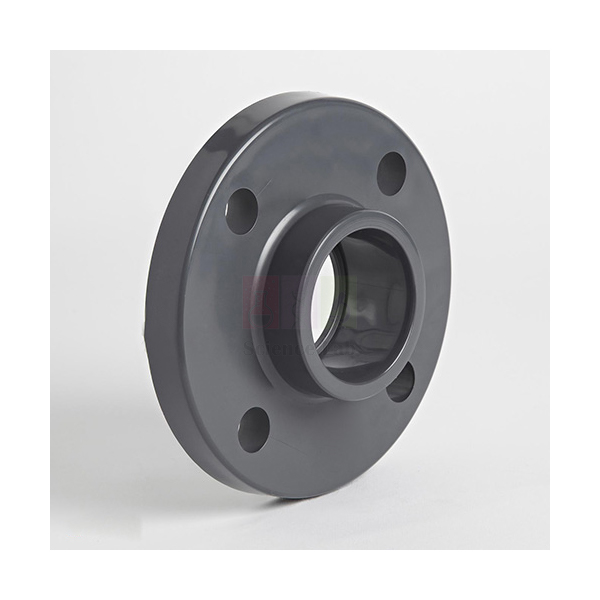
Coupler PVC, skt, rrj/flange, 200mm x 8"
Coupler PVC, skt, rrj/flange, 200mm x 8" (Product Code: SLE/WDF/30) is a uPVC flanged coupling used to connect a 200 mm outside-diameter PVC pipe to 8" nominal-diameter flanged G.I. fittings, valves or equipment on large water mains. One end is a rubber ring socket that the PVC pipe pushes into; the other is a flange that bolts to the metal side. It is supplied by Jain Scientific Equipments Pvt Ltd (ScienceLab), Ambala, India.
Specifications
| Parameter | Detail |
|---|---|
| Fitting type | Flanged coupling |
| PVC end | Rubber ring socket (rrj), for PVC pipe of 200 mm outside diameter |
| G.I. end | Flange, for G.I. fitting of 8" nominal diameter |
| Material | uPVC (un-plasticised polyvinyl chloride) |
| Pressure rating | 10 bar at 20°C |
| Suitable temperature range | 0 to 50°C |
| Product code | SLE/WDF/30 |
| Supplied by | Jain Scientific Equipments Pvt Ltd (ScienceLab), Ambala, India |
What Is the 200mm PVC Flanged Coupler Used For?
Large-bore mains usually meet valves, pump stations, meters and older metal pipework at a bolted flange. This coupling bridges the two systems: the 200 mm PVC pipe enters a rubber ring socket, so no solvent cement is used on that side, while the flange bolts to an 8" G.I. flange. Rubber ring joints also allow a little movement, which helps long mains cope with expansion and ground settlement.
Chamfer and clean the pipe spigot, apply a lubricant suitable for the rubber ring, and push the pipe home squarely without twisting the ring out of its groove. On the flange side, use a gasket between the faces and tighten the bolts evenly in a cross pattern. Confirm with us which gasket and bolt set you need, and keep service within 10 bar at 20°C.
What to Specify When Ordering
- PVC side: 200 mm outside-diameter pipe suitable for rubber ring jointing.
- Flange side: 8" nominal diameter; share your flange drilling standard so we can confirm it matches.
- Gasket, bolts and ring lubricant: say whether you need them sourced with the coupling.
- Quantity: one per flanged connection on the main.
Supplier
Jain Scientific Equipments Private Limited supplies this 200 mm flanged coupling under the ScienceLab name from Ambala, Haryana. The company sources large and small pipe fittings for water utilities, WASH programmes, institutions and contractors, and can combine them with its laboratory and hygiene ranges on one enquiry. The ScienceLab profile has more about the company.
Related Water, Sanitation & Hygiene Supplies
Items used on the same large main or at similar flanged connections:
- Elbow 90º Equal PVC, fxf, rrj, 200mm OD-P — a rubber-ring bend for the same 200 mm pipe.
- Coupler PVC Socket Solvent Cement Joint Flange, 110mm x 4" — a smaller flanged coupling for 110 mm solvent-weld pipe.
- Coupler PP Comp, HDPE 110mmxflng 4"O/ND-P — the flanged option for HDPE pipe.
- Pump Centrifugal, Diesel 50cbm/hr — pumping equipment for supply schemes; check its outlet connection before planning the fittings.
Explore the full Water, Sanitation & Hygiene Supplies range.
Frequently Asked Questions
What does the Coupler PVC, skt, rrj/flange, 200mm x 8" connect?
The Coupler PVC, skt, rrj/flange, 200mm x 8" connects a 200 mm outside-diameter PVC pipe, pushed into its rubber ring socket, to an 8" nominal-diameter flanged G.I. fitting, valve or piece of equipment bolted to its flange.
Does the 200mm rubber ring flanged coupler need solvent cement?
No. The PVC side of the 200mm rubber ring flanged coupler seals with a rubber ring, so the chamfered pipe is lubricated and pushed in rather than cemented. Solvent cement should not be used on rubber ring joints.
What pressure is the 200mm x 8" PVC flanged coupler rated for?
The 200mm x 8" PVC flanged coupler is rated 10 bar at 20°C and suits water between 0 and 50°C. PVC carries less pressure as temperature increases, so the main's design pressure should reflect the actual water temperature.
Is the Coupler PVC, skt, rrj/flange, 200mm x 8" suitable for drinking water?
Confirm with us before using the Coupler PVC, skt, rrj/flange, 200mm x 8" on a drinking-water main. Utilities and project engineers should describe the application through the contact page and ask what ScienceLab can confirm for the supplied batch.
Are gaskets and bolts included with the 200mm x 8" flanged coupler?
The product description for the 200mm x 8" flanged coupler does not list a gasket or bolt set, so please tell us through the contact page whether you need these sourced with the coupling and your flange drilling standard.
Who supplies the 200mm x 8" PVC flanged coupler?
Jain Scientific Equipments Pvt Ltd (ScienceLab), Ambala, Haryana, supplies the 200mm x 8" PVC flanged coupler to water projects, contractors, institutions and dealers in India and international markets, together with matching 200 mm fittings.
Request a Quote
Send the quantity of product code SLE/WDF/30, your flange standard and delivery location through the contact page, or add it to the enquiry cart with the rest of your mains fittings.
Last updated: 24 September 2026

Elbow 90º Equal PVC, fxf, rrj, 200mm OD-P
Elbow 90º Equal PVC, fxf, rrj, 200mm OD-P (Product Code: SLE/WDF/31) is a large-bore uPVC 90° elbow used to turn a 200 mm outside-diameter PVC water main through a right angle in buried or surface pipelines. Both ends are female rubber ring sockets, so pipes are lubricated and pushed in rather than cemented, which suits big-diameter mains laid in trenches. It is supplied by Jain Scientific Equipments Pvt Ltd (ScienceLab), Ambala, India.
Specifications
| Parameter | Detail |
|---|---|
| Fitting type | Elbow, 90°, equal |
| Ends | Female x female (fxf) |
| Joint | Rubber ring joint (rrj) |
| Pipe outside diameter | 200 mm (both ends) |
| Material | uPVC (un-plasticised polyvinyl chloride) |
| Pressure rating | 10 bar at 20°C |
| Suitable temperature range | 0 to 50°C |
| Product code | SLE/WDF/31 |
| Supplied by | Jain Scientific Equipments Pvt Ltd (ScienceLab), Ambala, India |
What Is the 200mm PVC Rubber Ring Elbow Used For?
Trunk mains of 200 mm follow roads, boundaries and site layouts, and every right-angle turn needs a bend of the same size. This elbow provides that turn with push-fit rubber ring sockets, which are quicker to make in a trench than solvent joints on large pipe and tolerate small movements caused by temperature change or settlement.
Because rubber ring joints are not designed to resist being pushed apart, the water pressure at a bend creates a thrust that the joints alone should not carry. Pressurised mains therefore normally have a concrete thrust block or other restraint at each bend, sized by the system designer. Chamfer and lubricate each spigot, push it fully home, and keep the main within 10 bar at 20°C.
What to Specify When Ordering
- Pipe size: 200 mm outside-diameter PVC suited to rubber ring joints.
- Angle: this item is a 90° bend; ask us if your route needs a different angle.
- Ring lubricant: say whether you need it sourced with the fittings.
- Quantity: one per right-angle turn on the route drawing.
Supplier
This 200 mm rubber ring elbow is supplied by Jain Scientific Equipments Private Limited, the Ambala, Haryana company that trades as ScienceLab. Its sourced pipeline range covers PVC, HDPE and G.I. fittings for water schemes, and buyers can handle them on the same enquiry as laboratory or hygiene products. More on the company is on its profile page.
Related Water, Sanitation & Hygiene Supplies
Fittings for the same large main and for other pipe materials:
- Coupler PVC, skt, rrj/flange, 200mm x 8" — links the 200 mm main to flanged valves or G.I. fittings.
- Bend 90º equal fxf GI 4" ND 14 Bar — a G.I. bend for threaded metal sections.
- Elbow PP Comp, HDPE 110mmxfthd 4" O/ND-P — an elbow for HDPE pipe with a threaded outlet.
- Elbow 90º, PVC scj/fthd, 40mm x 1¼"-P — a small solvent-weld elbow for service connections off the network.
View all fittings in Water, Sanitation & Hygiene Supplies.
Frequently Asked Questions
What pipe does the Elbow 90º Equal PVC, fxf, rrj, 200mm OD-P fit?
The Elbow 90º Equal PVC, fxf, rrj, 200mm OD-P fits PVC pipe of 200 mm outside diameter on both ends. Each female end has a rubber ring seal, so the chamfered, lubricated pipe is pushed in rather than solvent-cemented.
Does the 200mm PVC rubber ring elbow need a thrust block?
On a pressurised main, the 200mm PVC rubber ring elbow normally needs a thrust block or other restraint, because rubber ring joints are not designed to hold the thrust that water pressure creates at a bend. The system designer should size it.
What pressure is the 200mm PVC rubber ring elbow rated for?
The 200mm PVC rubber ring elbow (Elbow 90º Equal PVC, fxf, rrj, 200mm OD-P) is rated 10 bar at 20°C and suits water from 0 to 50°C. Warmer water lowers PVC's safe pressure, so allow for the service temperature.
Is the Elbow 90º Equal PVC, fxf, rrj, 200mm OD-P suitable for drinking water?
Please check drinking-water suitability of the Elbow 90º Equal PVC, fxf, rrj, 200mm OD-P with us for your application first. For a utility main or tender, raise the question through the contact page when requesting a quotation, and we will state what we can confirm for the batch.
Who supplies the 200mm PVC rubber ring elbow?
Jain Scientific Equipments Pvt Ltd (ScienceLab), Ambala, Haryana, supplies the 200mm PVC rubber ring elbow to water utilities, WASH programmes, contractors and dealers in India and international markets, together with other 200 mm fittings.
Request a Quote
Request a price for product code SLE/WDF/31 by sending the quantity and delivery location through the contact page, or add it to the enquiry cart with the other fittings for your main.
Last updated: 24 September 2026
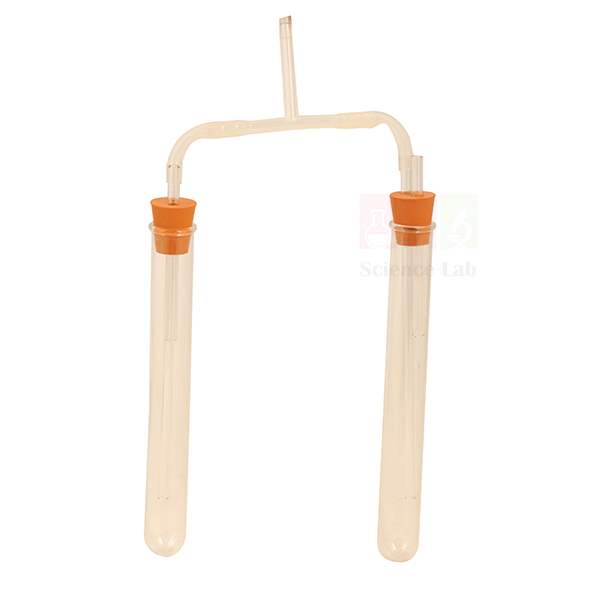
Respiration Apparatus
Respiration Apparatus (Product Code: SLE/BL/039) is a two-tube glass set-up used to compare inhaled and exhaled air in school biology lessons on respiration. It comprises two stoppered boiling tubes with one short and one long length of 5 mm glass tubing, joined by PVC tubing and a plastic T, and is listed for testing inhaled and exhaled air in small organisms. It is made by Jain Scientific Equipments Pvt Ltd (ScienceLab), an OEM manufacturer of biology lab equipment in India, at its own factory in Ambala.
Specifications
| Parameter | Detail |
|---|---|
| Tubes | Two boiling tubes, each with a stopper |
| Glass tubing | Two lengths, one short and one long, of 5 mm glass tubing |
| Connections | PVC tubing and plastic T |
| Purpose | Testing inhaled and exhaled air in small organisms |
| Product code | SLE/BL/039 |
| Manufacturer | Jain Scientific Equipments Pvt Ltd (ScienceLab) — OEM |
| Country of origin | India (made in Ambala, Haryana) |
What Is the Respiration Apparatus Used For?
Both tubes are part-filled with a carbon dioxide indicator such as limewater; in each stopper the long glass tube reaches below the liquid and the short one stays above it. The PVC tubing links the plastic T to the short tube of one boiling tube and the long tube of the other, so that air drawn in bubbles through the first tube on its way in and air breathed out bubbles through the second. Because exhaled air carries more carbon dioxide, the indicator in the "out" tube changes first — limewater turns milky, for example — giving a clear side-by-side comparison in a single lesson.
Before anyone breathes through the T-piece, the teacher should check which tube is which, since an assembly error can draw liquid towards the mouth. Breathe gently, use a clean mouthpiece for each person and rinse the tubes after the lesson. A standard item on any school lab instruments list, the apparatus also supports follow-on discussion of how the same comparison applies to other organisms that respire.
What to Specify When Ordering
- The number of sets — each has two stoppered boiling tubes, short and long 5 mm glass tubing, PVC tubing and a plastic T.
- Whether spare boiling tubes or bored stoppers should be quoted with the sets.
- Whether you need lime water or another carbon dioxide indicator, as none is listed with the apparatus.
OEM Manufacturer
Jain Scientific Equipments Private Limited, trading as ScienceLab from Ambala, Haryana, is the OEM (original equipment manufacturer) of the Respiration Apparatus and makes it at its own licensed factory at Saha, Ambala, India. Registered as an MSME under Udyam number UDYAM-HR-01-0003714, the company moves its overseas consignments under Importer-Exporter Code AAECJ8618A issued by the DGFT. Schools and dealers order factory-direct, and replacement glass tubing or stoppers can be requested from the maker — just ask us. Find out more on our company profile.
Related Biology Lab Equipment
Supplies and apparatus used with the respiration apparatus in the same practical:
- Lime Water — the indicator that turns milky with carbon dioxide
- Boiling Tube — spare tubes for replacements or extra sets
- Rubber stoppers with holes of different diameters — replacement bored stoppers
- Test Tube Stand (Wire Pattern) — keeps the two tubes upright during the test
- Respirometer — for measuring respiration rates quantitatively as a next step
Explore other respiration and physiology apparatus in the Biology Lab Equipment category.
Frequently Asked Questions
What parts make up the Respiration Apparatus?
The Respiration Apparatus comprises two boiling tubes, each with a stopper, and two lengths of 5 mm glass tubing, one short and one long, connected by PVC tubing and a plastic T. Together these let air be drawn in through one tube and breathed out through the other.
Is limewater or indicator supplied with the Respiration Apparatus?
No indicator is listed as part of the Respiration Apparatus. Lime Water is available separately in our range, and your syllabus may suggest another carbon dioxide indicator; mention it in your enquiry and we will add it to the quotation.
What diameter is the glass tubing of the Respiration Apparatus?
The glass tubing of the Respiration Apparatus is 5 mm. In use, the long length dips below the indicator liquid while the short length stays above it, so that air bubbles through the liquid in one direction only.
How should students breathe through the Respiration Apparatus?
Students should use the Respiration Apparatus only under teacher supervision: check the tube arrangement first, breathe gently and give each person a clean mouthpiece. Nobody should suck hard on the T-piece, because an assembly error can draw liquid towards the mouth.
Can I get spare tubes and stoppers for the Respiration Apparatus?
Boiling tubes and bored stoppers for the Respiration Apparatus are listed separately in our range, as shown above. For replacement 5 mm glass tubing, PVC tubing or plastic T-pieces, contact us and we will confirm what can be quoted.
Who manufactures the Respiration Apparatus?
Jain Scientific Equipments Pvt Ltd (ScienceLab) is the OEM manufacturer of the Respiration Apparatus (SLE/BL/039). It is made at the company's own licensed factory at Saha, Ambala, Haryana, India, and supplied factory-direct to schools, colleges, dealers and importers.
Do you supply the Respiration Apparatus in quantity and abroad?
Yes. ScienceLab supplies the Respiration Apparatus to schools, colleges and distributors in India and international markets. Share the number of sets and the delivery location on our contact page, and the quotation will come directly from the manufacturer.
Request a Quote
For a quotation on the Respiration Apparatus, reach us through the contact page or add it to the enquiry cart with the limewater and spares you need. Quotations come directly from the manufacturer.
Last updated: 24 September 2026
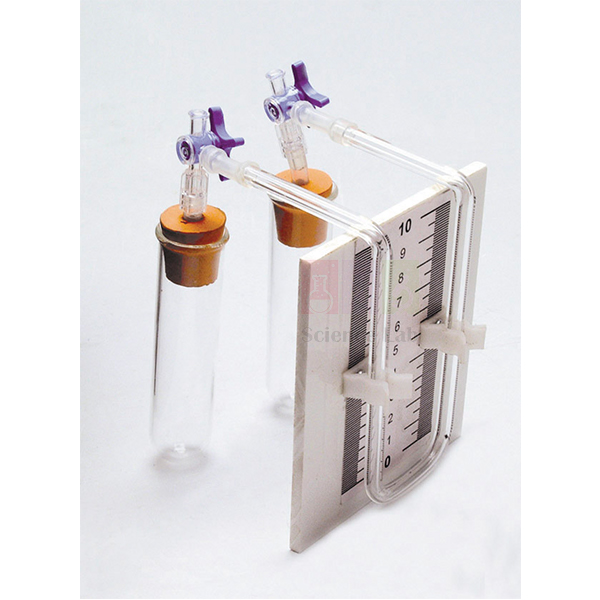
Respirometer
Respirometer (Product Code: SLE/BL/040) is a compact manometer apparatus used to compare the rates at which small organisms absorb or give off gases during respiration in school and college biology laboratories. Students set up two stoppered boiling tubes — one for the organisms, one acting as a control thermo-barometer — joined by three-way taps to a graduated manometer. It is made by Jain Scientific Equipments Pvt Ltd (ScienceLab), an OEM manufacturer, at its own factory in Ambala, India, among its biology lab equipment in India.
Specifications
| Parameter | Detail |
|---|---|
| Chambers | Two stoppered boiling tubes |
| Connection | Three-way taps to either limb of a graduated manometer |
| Experimental tube | Holds the organisms; fitted with a syringe for altering the manometer liquid level during set-up |
| Control tube | Acts as a control thermo-barometer |
| Organism support | Complete with wire baskets for supporting organisms |
| Working principle | CO2 given off by the respiring organisms is absorbed by potassium hydroxide in the experimental chamber, changing the liquid level in the manometer tube |
| Purpose | Comparing rates of absorption or evolution of gases by small organisms during respiration |
| Product code | SLE/BL/040 |
| Manufacturer | Jain Scientific Equipments Pvt Ltd (ScienceLab) — OEM |
| Country of origin | India (made in Ambala, Haryana) |
What Is the Respirometer Used For?
A typical practical places germinating seeds or small invertebrates such as woodlice on the wire basket of the experimental tube, above a layer of potassium hydroxide solution; the control tube is prepared the same way with inert material, such as glass beads, in place of living organisms. With the taps open, the syringe brings the manometer liquid to a starting level, then the taps are closed and timing begins. As the organisms take in oxygen and their carbon dioxide is absorbed, the gas volume in the experimental tube falls and the liquid moves along the graduated scale.
Readings taken at regular intervals give a rate that can be compared between species, temperatures or stages of germination. The thermo-barometer is what makes those comparisons fair: room temperature and air pressure act on both tubes equally, so only the organisms' gas exchange shows as a difference, and standing both tubes in one water bath helps further. Potassium hydroxide is corrosive, so wear eye protection, keep the organisms clear of the liquid and return live animals to their habitat — routine good practice for any biology lab setup in schools in India.
OEM Manufacturer
The Respirometer is built by Jain Scientific Equipments Private Limited, which trades as ScienceLab. The company is the OEM (original equipment manufacturer) of this apparatus and makes it at its own licensed factory at Saha, Ambala, Haryana, India, rather than buying it in from a trader. Schools, colleges, dealers and importers are supplied factory-direct, and if you later need replacement wire baskets or extra units for more benches, ask us — the request is handled by the manufacturer itself. More about the company is on our company profile.
Related Biology Lab Equipment
Chemicals and apparatus that complete a respiration-rate investigation:
- Potassium Hydroxide — the carbon dioxide absorbent for the experimental chamber
- Kit for Demonstrating Seed Respiration in Germination — a complementary seed respiration activity
- Water Bath — holds both tubes at a steady temperature during readings
- Volumeter Respirometer — an alternative respirometer design from the botany range
- Respiration Apparatus — a simpler qualitative test of inhaled and exhaled air
For more physiology apparatus, go to the Biology Lab Equipment category page.
Frequently Asked Questions
Who manufactures the Respirometer?
The Respirometer (SLE/BL/040) is manufactured by Jain Scientific Equipments Private Limited, trading as ScienceLab, which is the OEM and builds it at its own licensed factory at Saha, Ambala, Haryana, India. Quotations, repeat orders and spare-part requests go straight to the manufacturer.
Is potassium hydroxide supplied with the Respirometer?
No, potassium hydroxide is not listed as part of the Respirometer, which comes complete with wire baskets for supporting the organisms. The carbon dioxide absorbent can be ordered separately as Potassium Hydroxide from our chemical range.
What is the second tube of the Respirometer for?
The second boiling tube of the Respirometer acts as a control thermo-barometer. Because temperature and air-pressure changes affect both tubes equally, the difference shown on the graduated manometer reflects only the gas exchange of the organisms in the experimental tube.
What does the syringe on the Respirometer do?
The syringe fitted to the organism tube of the Respirometer alters the level of liquid in the manometer during set-up, so each run starts from a known reading before the three-way taps are closed and timing begins.
What is the scale range of the Respirometer's manometer?
The Respirometer's manometer is graduated, but its scale range and divisions are not stated in our product information. Please ask through the contact page and we will confirm the scale details for the units you are quoted.
Is a calibration certificate available for the Respirometer?
Calibration documentation for the Respirometer should be discussed with us before you order. Mention your requirement in the enquiry and we will advise what paperwork can be provided with the apparatus for your school, college or tender submission.
Can ScienceLab supply the Respirometer in bulk or for export?
Yes. ScienceLab supplies the Respirometer to schools, colleges, dealers and importers in India and international markets. Send the number of units, any reagents or water baths you need and the delivery location through the contact page for a factory-direct quotation.
Request a Quote
Quotations for the Respirometer come direct from the manufacturer. Write to us on the contact page with your quantity, or add the apparatus and its reagent to the enquiry cart.
Last updated: 24 September 2026
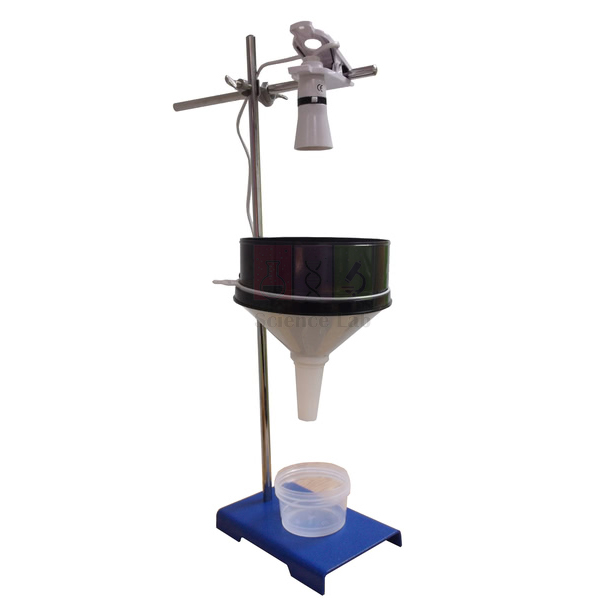
Tulgren Funnel
Tulgren Funnel (Product Code: SLE/BL/041) is a Tullgren-type extraction funnel used to drive small animals out of a soil or leaf-litter sample and into a collecting jar during ecology fieldwork and biology practicals. Schools and colleges add its 175mm funnel and 170mm sieve, 65mm deep, to their zoology lab equipment in India, with a 220V heating lamp held above the sample. It is manufactured by Jain Scientific Equipments Pvt Ltd (ScienceLab), an OEM manufacturer, at its own factory in Ambala, India.
Specifications
| Parameter | Detail |
|---|---|
| Funnel diameter | 175mm |
| Sieve diameter | 170mm |
| Sieve depth | 65mm |
| Meshes | Supplied with coarse and fine mesh |
| Sample support | Perforated plate |
| Mounting | Horizontal support rod and bosshead included |
| Heat source | 220V heating lamp held above the soil |
| Bulb required | Low wattage bulb: B22D, bayonet fitting 22mm diameter, 40 watt or less |
| Collection | Organisms are driven down through the funnel into a collecting jar |
| Product code | SLE/BL/041 |
| Manufacturer | Jain Scientific Equipments Pvt Ltd (ScienceLab) — OEM |
| Country of origin | India (made in Ambala, Haryana) |
What Is the Tullgren Funnel Used For?
Clamp the funnel to a stand with the supplied horizontal rod and bosshead, put a collecting jar under the spout, and spread the soil or leaf-litter sample on the perforated plate over the chosen mesh. Coarse mesh lets larger animals drop through freely, while fine mesh stops loose soil from falling into the jar with them. Switch on the lamp above the sample: as the surface warms and dries, mites, springtails, beetle larvae and other soil organisms move downwards and fall through the funnel. A little alcohol in the jar preserves specimens for counting; damp tissue keeps them alive for study and release.
Keep to a bulb of 40 watt or less as specified, because stronger heat can kill animals before they have time to move out. Position the lamp so it cannot touch the sample or any alcohol, and switch it off before handling the set-up. Running several funnels side by side lets a class compare habitats such as lawn, hedge and compost in one session, which makes this a practical centrepiece for an ecology science kit in India.
What to Specify When Ordering
- The number of funnels — one per group if the class will compare several habitats at once
- Whether you also need stands to take the supplied horizontal rod and bosshead
- A suitable low wattage B22D bayonet bulb of 40 watt or less for each funnel, and whether you want us to quote for bulbs
- Your mains voltage, since the heating lamp is specified at 220V
OEM Manufacturer
This funnel comes from Jain Scientific Equipments Private Limited, the company behind the ScienceLab name, which is the OEM (original equipment manufacturer) and produces it at its own licensed factory at Saha, Ambala, Haryana, India. Because the maker is also the seller, schools, colleges, dealers and importers deal directly with the factory for quotations, repeat batches and questions about spare meshes or fittings — just ask us. Read about the company on our company profile.
Related Biology Lab Equipment
Items that complete a soil-fauna extraction set-up:
- Retort Stand — a stand for mounting the funnel with the supplied rod and bosshead
- Garden Auger Soil — for collecting soil samples to load onto the sieve
- Quadrat — for choosing comparable sampling areas in the field
- Plastic Container with a Magnifying Glass Lid — for viewing extracted animals up close
- Stereo Binocular Microscope — for identifying mites, springtails and other small finds
Our Biology Lab Equipment category lists further fieldwork and laboratory items.
Frequently Asked Questions
What are the dimensions of the Tulgren Funnel?
The Tulgren Funnel has a funnel diameter of 175mm and a sieve diameter of 170mm, with a sieve depth of 65mm. That leaves room for a typical soil or leaf-litter sample spread over the coarse or fine mesh on the perforated plate.
Which bulb does the Tulgren Funnel need?
The Tulgren Funnel needs a low wattage bulb with a B22D bayonet fitting of 22mm diameter, rated at 40 watt or less, in its 220V heating lamp. Keeping to that rating warms the sample gently, so animals move down rather than dying in place.
Are a bulb and collecting jar included with the Tulgren Funnel?
The Tulgren Funnel is supplied with a horizontal support rod, a bosshead and coarse and fine mesh. Our product information states that a bulb is required but does not confirm that a bulb or jar is included, so please check with us when ordering.
Why does the Tulgren Funnel come with two meshes?
The Tulgren Funnel includes coarse and fine mesh so the sieve can match the sample: coarse mesh lets larger animals pass freely from crumbly material, while fine mesh holds back more loose soil and keeps the collecting jar cleaner for counting.
Can the Tulgren Funnel be used where the mains supply is not 220V?
The heating lamp for the Tulgren Funnel is specified at 220V. If your laboratory runs on a different mains voltage, contact us before ordering so we can advise on a suitable arrangement for your country or region.
How does the Tulgren Funnel differ from the Funnel Tullgren listing?
Both use the same heat-driven extraction principle. The Tulgren Funnel listing gives dimensions, a support rod, bosshead and two meshes, while Funnel Tullgren describes the method in more detail; compare both and ask us which suits your class.
Who manufactures the Tulgren Funnel?
Jain Scientific Equipments Private Limited, trading as ScienceLab, manufactures the Tulgren Funnel as the OEM at its own licensed factory at Saha, Ambala, Haryana, India. Schools, colleges, dealers and importers in India and international markets buy it direct from the manufacturer.
Request a Quote
Your quotation for the Tulgren Funnel comes straight from the manufacturer. Send your requirement through the contact page, or add the funnel with a stand and viewing equipment to the enquiry cart.
Last updated: 24 September 2026
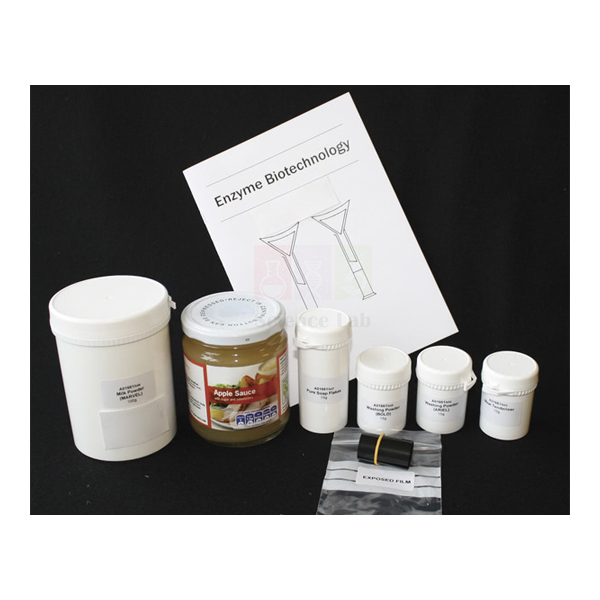
Enzyme Biotechnology Kit
Enzyme Biotechnology Kit (Product Code: SLE/BL/042) is a practical experiment kit used to show how industry uses enzymes, in senior secondary school and college biotechnology classes. Its four experiments cover enzymes in washing powders, pectinase in fruit juice production, rennet in cheese production and protease in meat tenderisers. It is supplied by Jain Scientific Equipments Pvt Ltd (ScienceLab), Ambala, India, as a biotechnology lab kit for schools and colleges.
Key Details
| Parameter | Detail |
|---|---|
| Type | Industrial enzyme experiment kit |
| Experiment 1 | Enzymes in washing powders |
| Experiment 2 | Demonstration of pectinase in fruit juice production |
| Experiment 3 | Rennet in cheese production |
| Experiment 4 | Protease in meat tenderisers |
| Learning focus | Use of enzymes by industry; enzyme-secreting micro-organisms have in most cases replaced more expensive traditional sources |
| Contents list | Available on request |
| Shelf life | Depends on the chemical, its grade and storage conditions — ask us for the expiry date of the batch you are quoted |
| Product code | SLE/BL/042 |
| Supplied by | Jain Scientific Equipments Pvt Ltd (ScienceLab), Ambala, India |
What Is the Enzyme Biotechnology Kit Used For?
Each experiment links a classroom test to a product students already know. With washing powders, they compare how biological detergent breaks down protein-based stains against a non-biological control. In the pectinase demonstration, fruit pulp treated with the enzyme releases more juice, and clearer juice, than untreated pulp. Rennet shows milk proteins clotting into curds — the first step in cheese making — and the meat tenderiser experiment shows a protease digesting a protein sample.
The set-ups make a good enzyme experiment kit for school coursework because variables such as temperature, enzyme concentration and time can each be changed and graphed. They also open a discussion of why industry now sources many enzymes from micro-organisms rather than from traditional sources such as animal tissue. Use a water bath to hold temperatures steady, measure volumes carefully for fair comparisons, and store the enzyme components as their labels direct when the kit arrives.
Supplier
Jain Scientific Equipments Private Limited, trading as ScienceLab in Ambala, Haryana, India, supplies the Enzyme Biotechnology Kit to schools, colleges and distributors, and can add the water baths, thermometers and glassware listed below to the same quotation. For vendor registration, the supplying company's GSTIN is 06AAECJ8618A1ZT and its Legal Entity Identifier (LEI) is 3358004HRD1JIVXKYX49. See our company profile for more.
Related Biology Lab Equipment
Reagents and apparatus that support the four enzyme experiments:
- Protease Enzyme (Dna Seperation) — an additional protease for extending the protein-digestion work
- Water Bath — keeps reaction tubes at a set temperature
- Digital Thermometer — for recording reaction temperatures
- Glass Measuring Cylinder — for measuring juice yield and reagent volumes
- Paper, Universal, pH 1-14 — for checking pH when testing its effect on enzyme activity
Find more biology kits and apparatus in the Biology Lab Equipment category.
Frequently Asked Questions
Which experiments does the Enzyme Biotechnology Kit cover?
The Enzyme Biotechnology Kit covers four industrial applications: enzymes in washing powders, a demonstration of pectinase in fruit juice production, rennet in cheese production and protease in meat tenderisers. Together they show students why industrial enzymes are a major growth area in biotechnology.
What is included in the Enzyme Biotechnology Kit?
A full contents list for the Enzyme Biotechnology Kit is not given on this page. Contact us and ScienceLab will send the contents list before you order, so you can see which glassware and apparatus your laboratory already has.
What is the shelf life of the enzymes in the Enzyme Biotechnology Kit?
Shelf life of the enzymes and reagents in the Enzyme Biotechnology Kit depends on the chemical, its grade and storage conditions; ask us for the expiry date of the batch you are quoted, and store each component as its label directs once the kit arrives.
How many students can use one Enzyme Biotechnology Kit?
The class size for one Enzyme Biotechnology Kit is not stated in our product details. Tell us how many groups you teach and how often the experiments run, and ScienceLab will advise how many kits to include in the quotation.
What extra equipment does the Enzyme Biotechnology Kit need?
Practicals with the Enzyme Biotechnology Kit usually need basic glassware, a way to hold temperatures steady, such as a water bath, and a thermometer. Check the contents list first so that you order only the apparatus your laboratory is missing.
Are replacement reagents available for the Enzyme Biotechnology Kit?
Replacement reagents for the Enzyme Biotechnology Kit are not listed separately on this page. Ask ScienceLab about refills for repeat classes; the expiry date of any batch supplied can be confirmed at the time of quotation.
Who supplies the Enzyme Biotechnology Kit?
The Enzyme Biotechnology Kit is supplied by Jain Scientific Equipments Pvt Ltd (ScienceLab), Ambala, Haryana, India. The company quotes it for schools, colleges and distributors in India and international markets, together with any water baths, thermometers or glassware needed for the experiments.
Request a Quote
Ask for pricing on the Enzyme Biotechnology Kit through our contact page, or add it to the enquiry cart with any extra glassware you need.
Last updated: 24 September 2026
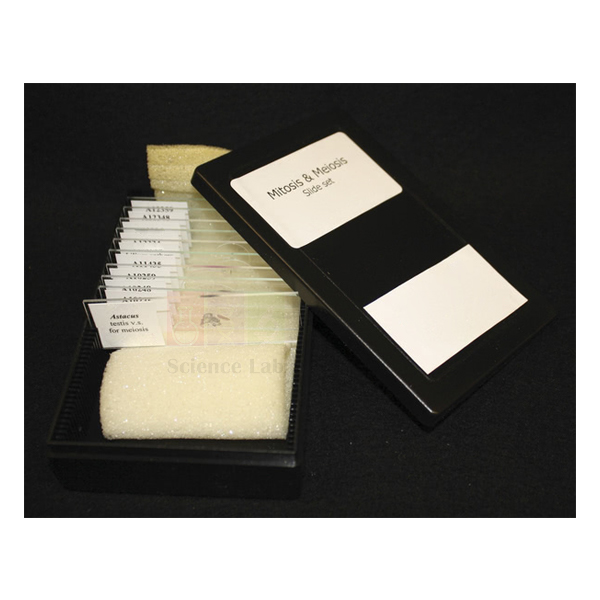
Mitosis & Meiosis Set, Microscope Slides
Mitosis & Meiosis Set, Microscope Slides (Product Code: SLE/PS/78) is a set of 10 prepared microscope slides used to compare mitosis and meiosis in plant and animal tissue during biology practicals. An onion root tip shows mitosis, five lily anther sections follow meiosis from early prophase to the second division, and crayfish and locust slides add animal material. It is supplied by Jain Scientific Equipments Pvt Ltd (ScienceLab), Ambala, India, as a microscope slides set for schools and colleges.
Specifications
| Parameter | Detail |
|---|---|
| Number of slides | 10 |
| Plant mitosis | Allium (onion) root tip LS |
| Plant meiosis | Lilium (lily) anthers TS – early prophase; late prophase; metaphase; late first division; second division |
| Animal testis | Astacus (crayfish) testis VS; Locust testis VS; Locust testis squash |
| Embryo | Locust embryo squash |
| Product code | SLE/PS/78 |
| Supplied by | Jain Scientific Equipments Pvt Ltd (ScienceLab), Ambala, India |
What Is a Mitosis and Meiosis Slide Set Used For?
Students first examine the onion root tip, where dividing cells show the stages of mitosis, then move to the five lily anther slides, which follow meiosis in sequence from early prophase to the second division. Seeing the stages in order lets them identify chromosome pairing, alignment and separation for themselves instead of relying only on textbook diagrams.
The animal slides widen the comparison: the crayfish and locust testis preparations show meiosis in developing sperm cells, while the locust embryo squash shows dividing cells in a growing animal. Ask students to draw each stage with labels and then list how the products of mitosis and meiosis differ in chromosome number.
Supplier
Jain Scientific Equipments Private Limited trades as ScienceLab from Ambala, Haryana, and supplies this ten-slide cell division set to schools, colleges, universities, dealers and importers in India and international markets. The set can be combined with other prepared slide collections, models and microscopes in a single order. Company details are on the ScienceLab profile.
Related Prepared Slides
Resources that support the same cell division lessons:
- Cell Division Slide Set of 9 — additional cell division slides for comparison.
- Microslide Meiosis — a lesson-based set focused on meiosis.
- Meiosis Model — a model to explain the stages before students look at slides.
- Basic Botany Slide (Set of 25) — wider plant material, including an onion root apex slide.
- Binocular Microscope 1000x mag — for viewing chromosomes at high magnification.
Explore all slide sets in the Prepared Slides category.
Frequently Asked Questions
Which slides are in the Mitosis & Meiosis Set, Microscope Slides?
The Mitosis & Meiosis Set, Microscope Slides contains 10 slides: Astacus testis VS, Allium root tip LS, five Lilium anther TS slides from early prophase to second division, Locust testis VS, Locust testis squash and Locust embryo squash.
Which slide in the set shows mitosis?
In the Mitosis & Meiosis Set, Microscope Slides, the Allium (onion) root tip LS is the main slide for mitosis, because the root tip is a region of rapid cell division. The Locust embryo squash also shows dividing cells in animal tissue.
Which stages of meiosis does the set show?
The five Lilium anther slides in the Mitosis & Meiosis Set, Microscope Slides show early prophase, late prophase, metaphase, late first division and the second division. Studying them in order lets students follow meiosis step by step.
What is a squash preparation?
A squash preparation, used for the locust testis and locust embryo slides in the Mitosis & Meiosis Set, Microscope Slides, is made by gently pressing tissue flat under a cover slip. This spreads the cells into a thin layer so chromosomes are easier to see.
Which courses is the Mitosis & Meiosis Set, Microscope Slides suited to?
The Mitosis & Meiosis Set, Microscope Slides suits senior school and undergraduate biology, where students compare the two types of cell division using plant and animal material. Teachers can also use it for class demonstrations at the microscope.
Who supplies the Mitosis & Meiosis Set, Microscope Slides?
The Mitosis & Meiosis Set, Microscope Slides (SLE/PS/78) is supplied by Jain Scientific Equipments Pvt Ltd (ScienceLab), Ambala, India. Institutions, dealers and importers in India and international markets can order single sets or several sets for parallel practical groups.
Request a Quote
Add the Mitosis & Meiosis Set, Microscope Slides to the enquiry cart or tell us through the contact page how many sets you need and where they should be delivered.
Last updated: 24 September 2026

Human Histology Slide Set of 25
Human Histology Slide Set of 25 (Product Code: SLE/PS/79) is a collection of 25 glass microscope slides of human tissues used to teach histology in college, allied health and senior school biology courses. It gives a varied cross-section of the body, from the cerebellum and spinal cord to the digestive tract, kidney and reproductive organs. It is supplied by Jain Scientific Equipments Pvt Ltd (ScienceLab), Ambala, India, among its prepared microscope slides.
Specifications
| Parameter | Detail |
|---|---|
| Number of slides | 25 |
| Slide type | Glass microscope slides |
| Coverage | A varied cross-section of human histology |
| Preparations | Sections; nerve in TS and LS, artery and vein in TS, scalp in VS |
| Product code | SLE/PS/79 |
| Supplied by | Jain Scientific Equipments Pvt Ltd (ScienceLab), Ambala, India |
Slides in the set, grouped by body system:
- Nervous system: Cerebellum, section; Spinal cord, section; Nerve, TS and LS.
- Circulation and lymphatic: Artery and vein, TS; Cardiac muscle, section; Lymph node, section; Spleen, section.
- Skin: Scalp, VS; Skin, heavily pigmented section.
- Muscle: Striated muscle, section.
- Digestive system: Oesophagus; Stomach, fundic portion; Duodenum; Ileum; Appendix; Colon; Liver; Pancreas (all sections).
- Endocrine and urinary: Thyroid gland, section; Kidney, section.
- Reproductive: Testis; Ovary; Uterus; Cervix; Mammary gland (all sections).
What Is a Human Histology Slide Set Used For?
The set lets students work system by system through human tissue types: nervous tissue in the cerebellum, spinal cord and nerve; the layered walls of artery and vein; the digestive tract from oesophagus to colon; and glandular organs such as the liver, pancreas and thyroid. Comparing striated muscle with cardiac muscle is a classic practical exercise that the set supports directly.
Scalp and heavily pigmented skin sections show the epidermis, hair follicles and pigment, while the testis, ovary, uterus, cervix and mammary gland slides support reproduction lessons. Locate each tissue layer at low power, switch to higher magnification to identify cell types, and record observations as labelled drawings.
Supplier
ScienceLab is the trading name of Jain Scientific Equipments Private Limited, Ambala, Haryana, India. The company supplies this human histology collection for teaching use to schools, colleges, universities, training institutes, dealers and importers in India and international markets, and can add microscopes or slide storage to the same order. More about the company is on the ScienceLab profile.
Related Prepared Slides
Slide sets and equipment that extend a histology course:
- Microslide Basic Human Histology — a lesson-based introduction to human tissues.
- Prepared Microscope Slide Set – Connective Tissues — adds connective tissue types.
- Prepared Microscope Slide Set – Digestion (Liver, Pancreas And Tongue) — a closer look at digestive organs.
- Histology Slide Scanner — digitise the sections for whole-class display.
- Unit System Slide Cabinet — flat, long-term storage for the collection.
Browse more collections in the Prepared Slides category.
Frequently Asked Questions
Which tissues are included in the Human Histology Slide Set of 25?
The Human Histology Slide Set of 25 covers nervous tissue, artery and vein, cardiac and striated muscle, lymph node, spleen, scalp and pigmented skin, the digestive tract from oesophagus to colon, liver, pancreas, thyroid, kidney, and reproductive organs including testis, ovary, uterus, cervix and mammary gland.
How are the slides in the Human Histology Slide Set of 25 prepared?
The Human Histology Slide Set of 25 consists of 25 glass microscope slides, mostly sections of a single organ. The nerve slide shows both transverse and longitudinal sections, the artery and vein slide is a transverse section, and the scalp is cut as a vertical section.
Which courses is the Human Histology Slide Set of 25 suited to?
The Human Histology Slide Set of 25 suits college biology, zoology and allied health teaching, as well as senior school courses covering human tissues. It gives a broad overview; departments needing more slides of one system can add topic sets from the same range.
What microscope is needed for the Human Histology Slide Set of 25?
The Human Histology Slide Set of 25 is examined with a compound light microscope, starting at low power to find the tissue and moving to high power for cell detail. The product details do not state a minimum magnification; ask us if you need a matching microscope.
How should the Human Histology Slide Set of 25 be stored?
Store the Human Histology Slide Set of 25 flat in a slide box or cabinet, away from direct sunlight and heat, which can fade stained sections over time. Wipe off any immersion oil with lens tissue after each use.
Who supplies the Human Histology Slide Set of 25?
The Human Histology Slide Set of 25 (SLE/PS/79) is supplied by Jain Scientific Equipments Pvt Ltd (ScienceLab), Ambala, India. Institutions, dealers and importers in India and international markets can order single sets or multiple sets for practical groups.
Request a Quote
Place the Human Histology Slide Set of 25 in the enquiry cart or send your requirement through the contact page, stating the number of sets and any microscopes or storage you want quoted.
Last updated: 24 September 2026