- Physics Lab Equipment
- Chemistry Lab Equipment
- Biology Lab Equipment
- Anatomical Lab Equipment
- Learning
- Educational Lab Equipment
- Magnets
- Agriculture
- Astronomy
- Earth Science
- Geography Lab Equipment
- Safety Lab Coat
- Laboratory
- Meteorological
- Electricity & Magnetism
- Heat
- School Lab Equipment
- Lab Glassware
- Science Lab Equipment
- Tvet Lab Equipment
- Robotics Kits Supplier and Manufacturer for Schools India
- Math Lab Equipment Manufacturers and Exporters in Ambala
- STEM Kits Manufacturers and Supplier India
- Engineering Lab Equipment
- Hospital Lab Equipment
- Water, Sanitation & Hygiene Supplies
- Cold Chain, Solar & Communication Equipment
- Nutrition
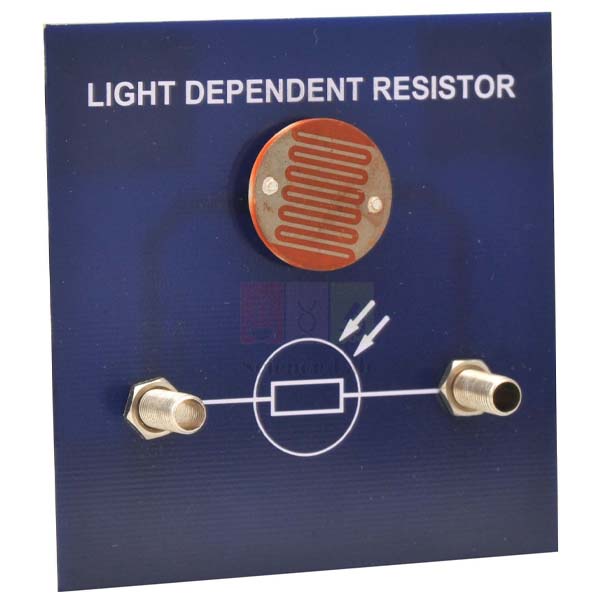
Simple Circuit Module Light Dependent Resistor Board
Simple Circuit Module Light Dependent Resistor Board (Product Code: SLE/PHY/79) is a board-mounted light dependent resistor from the Simple Circuit Modules range, used to add a light sensor to school electricity circuits. In normal room conditions its resistance is approximately 250 ohms, and shading it raises the resistance, so students can watch light level control a circuit. It is supplied by Jain Scientific Equipments Pvt Ltd (ScienceLab), Ambala, India.
Specifications
| Parameter | Detail |
|---|---|
| Module range | Simple Circuit Modules |
| Component | Light dependent resistor (LDR) on a module board |
| Resistance in normal room conditions | Approx. 250 ohms |
| Resistance when fully covered | Ask us to confirm for the current batch |
| Product code | SLE/PHY/79 |
| Supplied by | Jain Scientific Equipments Pvt Ltd (ScienceLab), Ambala, India |
What Is the LDR Circuit Module Used For?
Placed in series with a lamp or LED module and a few cells, the LDR board makes the light output change as students cover and uncover it, a direct way to show that resistance controls current. With a multimeter across it, groups can record resistance against the distance from a lamp and plot a graph, a common activity in OPTO electronics experiment kit lessons.
Because the resistor is already mounted, there are no fragile leads to bend and the module drops into a circuit alongside the other boards in the range. Take readings away from direct sunlight so results repeat from one group to the next, and compare the board with the bare component when explaining how sensors are built into real products.
What to Specify When Ordering
- Number of LDR boards needed
- Other Simple Circuit Modules to go with them, such as LED, lamp or switch boards
- Whether you need the fully covered resistance value confirmed before ordering
Supplier
Jain Scientific Equipments Private Limited, trading as ScienceLab, supplies this LDR board with the other boards in its Simple Circuit Modules range, so a school can assemble a matched set in one order. Institutions completing vendor forms can use the company's GSTIN 06AAECJ8618A1ZT and its Legal Entity Identifier 3358004HRD1JIVXKYX49. More about the company is on the ScienceLab profile.
Related Physics Lab Equipment
Boards and meters that complete a light-sensing circuit:
- Light Dependent Resistor — the bare component for soldered projects
- Simple Circuit Module LED Board Green — an indicator whose brightness the LDR can control
- Simple Circuit Module Lamp Holder — a lamp board for the same circuit
- Simple Circuit Module Push Switch — to switch the sensing circuit on and off
- Standard Digital Multimeter — to record resistance as light changes
Browse all items in Physics Lab Equipment.
Frequently Asked Questions
What is the resistance of the LDR board in normal light?
The Simple Circuit Module Light Dependent Resistor Board has a resistance of approximately 250 ohms in normal room conditions. The value rises as the resistor is shaded and falls in brighter light, which is how it senses light level in a circuit.
What is the LDR board's resistance when fully covered?
The listing for the Simple Circuit Module Light Dependent Resistor Board does not give a reliable covered value, so we do not quote one here. Ask us through the contact page and we will confirm the dark resistance of the boards currently supplied.
How is the LDR board used with other Simple Circuit Modules?
The Simple Circuit Module Light Dependent Resistor Board connects in series with lamp or LED boards and a cell supply, so shading the LDR dims the indicator. Adding a switch module lets students control the whole light-sensing circuit.
How is the board different from a loose LDR?
The Simple Circuit Module Light Dependent Resistor Board carries the LDR ready-mounted, so there are no thin leads to bend or break and it fits straight into module circuits. A loose LDR suits soldered projects and breadboards instead.
Who supplies the Simple Circuit Module Light Dependent Resistor Board?
The Simple Circuit Module Light Dependent Resistor Board is supplied by Jain Scientific Equipments Pvt Ltd (ScienceLab), Ambala, Haryana, India, together with the other boards in the Simple Circuit Modules range for schools and dealers.
Can the LDR board be ordered for a whole class?
Yes, the Simple Circuit Module Light Dependent Resistor Board can be ordered in class quantities with matching LED, lamp and switch modules. Send the quantities and delivery location through the enquiry cart or contact page to receive a quotation.
Request a Quote
Request a price for the Simple Circuit Module Light Dependent Resistor Board through the contact page, or add it to the enquiry cart with the other modules you need.
Last updated: 24 September 2026
905.jpg)
Jockey with Insulated Handle (Single)
Jockey with Insulated Handle (Single) (Product Code: SLE/PHY/80) is a hand-held contact probe used to find the balance point on the wire of a Wheatstone bridge or potentiometer in physics practicals. It is 100 mm long overall, with an insulated handle, a plated brass contact and a 4 mm plug terminal for connection to the circuit. It is made by Jain Scientific Equipments Pvt Ltd (ScienceLab), an OEM manufacturer, at its own factory in Ambala, India.
Specifications
| Parameter | Detail |
|---|---|
| Overall length | 100 mm |
| Handle | Insulated |
| Contact | Plated brass |
| Terminal | 4 mm plug |
| For use with | Wheatstone bridge and potentiometer work |
| Quantity | Single jockey |
| Product code | SLE/PHY/80 |
| Manufacturer | Jain Scientific Equipments Pvt Ltd (ScienceLab) — OEM |
| Country of origin | India (made in Ambala, Haryana) |
What Is the Insulated Jockey Used For?
In bridge and potentiometer experiments the jockey is the moving contact: the student touches it onto the resistance wire at different points until the galvanometer shows no deflection, then reads the balancing length from the scale. The 4 mm plug terminal pushes into a lead or socket, so the jockey links the wire to the galvanometer without a loose clip.
The insulated handle keeps fingers off the circuit and stops hand contact from disturbing the reading, which matters in any meter bridge lab in India where many students share the same apparatus. Tap the brass contact gently and lift it between trials rather than sliding it, since a dragged contact scores the wire. Wipe the tip clean if readings start to jump.
What to Specify When Ordering
- Number of jockeys (this listing is for a single jockey)
- The bridges or potentiometers they will be used with, if you also need those quoted
- Whether you prefer this plug-terminal jockey or a pencil (knife-edge) type
OEM Manufacturer
ScienceLab is the trading name of Jain Scientific Equipments Private Limited, the original equipment manufacturer of this jockey. It is produced at the company's own licensed factory at Saha, Ambala, Haryana, India, the same factory that makes the bridges and potentiometers it is used with, so labs can match jockeys to their apparatus through one manufacturer. Schools, dealers and importers order factory-direct, and repeat orders for spares are handled by the maker itself. See the company profile for more.
Related Physics Lab Equipment
Apparatus this jockey is used with:
- Wheatstone Bridge Four Gap — the bridge wire the jockey balances on
- Potentiometer — for emf comparison using the same jockey
- Meter Bridge — another slide-wire bridge that needs a jockey
- Moving Coil Galvanometer — shows the null point the jockey locates
- Pencil Jockey (Knife Edge Jockey) — an alternative knife-edge contact
The full list is in Physics Lab Equipment.
Frequently Asked Questions
How long is the Jockey with Insulated Handle?
The Jockey with Insulated Handle (Single) is 100 mm long overall. That length is easy to hold steady between finger and thumb while tapping the contact onto a bridge or potentiometer wire.
What type of terminal does the jockey have?
The Jockey with Insulated Handle (Single) has a 4 mm plug terminal, which fits standard 4 mm sockets and lead connectors. It connects the jockey to the galvanometer side of the circuit without crocodile clips.
Which apparatus is the Jockey with Insulated Handle used with?
The Jockey with Insulated Handle (Single) is made for Wheatstone bridge and potentiometer work, including metre bridges. It serves as the moving contact that finds the balance point along the resistance wire in these experiments.
Who manufactures the Jockey with Insulated Handle?
The Jockey with Insulated Handle (Single) is manufactured by Jain Scientific Equipments Pvt Ltd (ScienceLab), the OEM, at its own licensed factory in Saha, Ambala, Haryana, India, and is supplied factory-direct to labs and dealers.
Why does the jockey need an insulated handle?
The insulated handle on the Jockey with Insulated Handle (Single) keeps the user's hand out of the circuit. This prevents body contact from affecting the galvanometer reading and gives a firm, comfortable grip during repeated balance-point measurements.
Can jockeys be ordered as spares in quantity?
Yes, the Jockey with Insulated Handle (Single) can be ordered in quantity as spares for existing bridges and potentiometers. Send the number needed and your delivery location through the enquiry cart or contact page for a quotation from the manufacturer.
Request a Quote
Quotes for the Jockey with Insulated Handle (Single) come direct from the manufacturer — send your requirement through the contact page or the enquiry cart.
Last updated: 24 September 2026
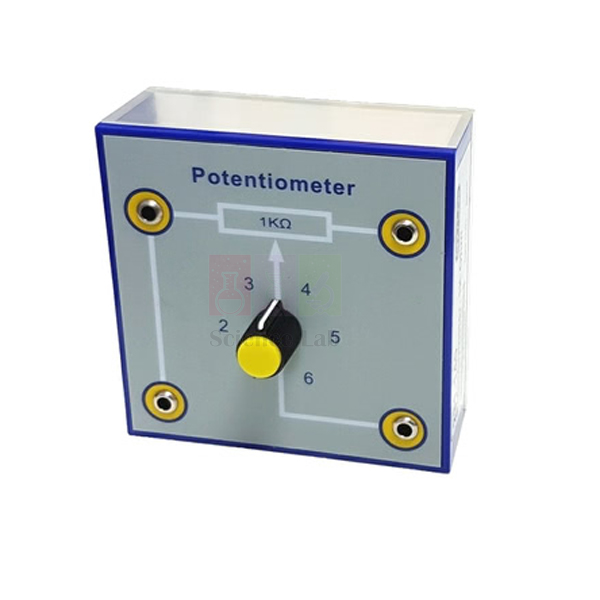
Potentiometer Module, 1 Kohm
Potentiometer Module, 1 Kohm (Product Code: SLE/PHY/81) is a 1 kΩ rotary linear potentiometer mounted on a channel box, used as a variable resistor or adjustable voltage divider in school electricity and electronics circuits. Connections are made through 4 mm sockets, and a fast-blow fuse protects the module when students connect it wrongly. It is supplied by Jain Scientific Equipments Pvt Ltd (ScienceLab), Ambala, India, to physics labs and dealers.
Specifications
| Parameter | Detail |
|---|---|
| Resistance value | 1 kΩ (the module is offered in a choice of values) |
| Potentiometer type | Rotary, linear |
| Mounting | Channel box |
| Connections | 4 mm sockets |
| Protection | Fast-blow fuse against wrong connection by students |
| Product code | SLE/PHY/81 |
| Supplied by | Jain Scientific Equipments Pvt Ltd (ScienceLab), Ambala, India |
What Is the Potentiometer Module Used For?
Wired with two of its sockets, the module acts as a variable resistor that dims a lamp or LED as the knob turns. Using all three sockets across a low-voltage supply, it becomes a voltage divider that gives a smoothly adjustable output, which students can measure with a voltmeter while they vary the load in Ohm law experiment kit set-ups.
Because the track is linear, equal turns of the knob give roughly equal changes in resistance, so students can relate knob position to the reading they see. If the module stops working after a wiring mistake, check the fast-blow fuse first. Keep supply voltages low and switch off before changing connections.
What to Specify When Ordering
- Resistance value — 1 kΩ for this listing, or another value from the range
- Number of modules for the class
- Spare fuses, and the fuse rating to be confirmed with us
- Leads with 4 mm plugs if your lab does not already have them
Supplier
This potentiometer module is supplied by Jain Scientific Equipments Private Limited, the company behind the ScienceLab name, as part of its range of plug-in circuit modules and physics instruments for schools and colleges. Orders can combine modules of different values with meters and power supplies. Company details are on the ScienceLab profile.
Related Physics Lab Equipment
Items used with the module in variable-resistance circuits:
- Potentiometer Module — the same module family, for other resistance values
- Simple Circuit Module LED Board Green — an LED load to dim with the module
- Standard Digital Multimeter — to measure the divider output and current
- Power Supply Variable — a low-voltage source for divider circuits
- Stackable Leads — leads for connecting the module into a circuit
More options are listed under Physics Lab Equipment.
Frequently Asked Questions
What resistance does the Potentiometer Module have?
The Potentiometer Module, 1 Kohm has a 1 kΩ rotary linear potentiometer. The module is offered in a choice of values, so state the resistance you need when ordering if another value suits your experiments better.
What does the fuse in the Potentiometer Module do?
The Potentiometer Module, 1 Kohm includes a fast-blow fuse that protects it when students connect it wrongly, for example directly across a supply. If the module stops responding, check and replace the fuse before assuming the potentiometer has failed.
How is the Potentiometer Module connected?
The Potentiometer Module, 1 Kohm connects through 4 mm sockets on its channel box. Use two sockets to wire it as a variable resistor, or all three across a supply to use it as an adjustable voltage divider.
What does linear mean for this potentiometer?
On the Potentiometer Module, 1 Kohm, linear means the resistance changes in proportion to how far the knob is turned. Students therefore see an even change in current or voltage as they rotate it, which makes readings easier to interpret.
Who supplies the Potentiometer Module, 1 Kohm?
The Potentiometer Module, 1 Kohm is supplied by Jain Scientific Equipments Pvt Ltd (ScienceLab), Ambala, Haryana, India, to schools, colleges and dealers in India and international markets, alongside meters and other circuit modules.
What should a quotation request for the module include?
A quotation request for the Potentiometer Module, 1 Kohm should give the number of modules, any other resistance values required, spare fuses and your delivery location. Send it through the enquiry cart or contact page for a combined quote.
Request a Quote
Price the Potentiometer Module, 1 Kohm through the contact page, or add it to the enquiry cart with any meters or leads you need.
Last updated: 24 September 2026
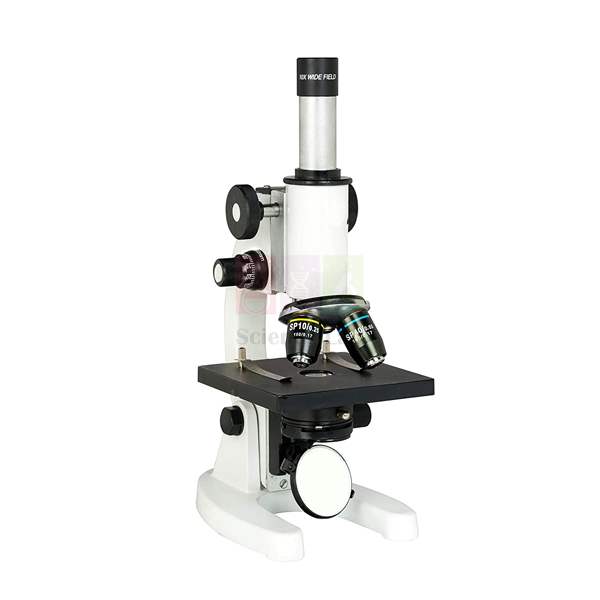
Student Microscope with Movable Condenser
Student Microscope with Movable Condenser (Product Code: SLE/M/18) is a student compound microscope whose condenser can be moved, used to teach slide observation and light control in school and college biology laboratories. Adjusting the condenser lets students see for themselves how the light reaching a specimen changes brightness and contrast, a step beyond fixed-condenser class models. It is supplied by Jain Scientific Equipments Pvt Ltd (ScienceLab), Ambala, India; please ask us for its current specification before ordering.
Key Details
| Parameter | Detail |
|---|---|
| Microscope type | Student compound microscope |
| Condenser | Movable, as the product name states |
| Magnification, optics, stage and lighting | Confirmed with your quotation – ask us for the current specification |
| Companion model | Student Microscope with Fixed Condenser (SLE/M/17) |
| Product code | SLE/M/18 |
| Supplied by | Jain Scientific Equipments Pvt Ltd (ScienceLab), Ambala, India |
What Is the Movable-Condenser Student Microscope Used For?
A student microscope of this kind is used for routine slide practicals, such as plant cells, cheek cells, leaf sections and prepared slides, in classes that also want students to learn correct illumination. The condenser gathers light from the source below the stage and focuses it on the specimen; being able to move it lets the user match that light to the objective in use.
A simple routine works well: focus the specimen at low power, then move the condenser until the field is evenly and comfortably lit. Bring it close to the slide when switching to high power, where more light is needed, and move it away for low-power or unstained mounts, where softer light often shows more detail. Teachers can pair it with the fixed-condenser model so students compare the two set-ups side by side.
Supplier
Jain Scientific Equipments Private Limited, which trades as ScienceLab from Ambala, Haryana, supplies this movable-condenser student microscope to schools, colleges, dealers and importers in India and international markets. Because the detailed specification is confirmed at quotation stage, our team will set out the optics, stage and lighting in writing so you can check them against your syllabus or tender. Read more on the ScienceLab company profile.
Related Laboratory Equipment
Items that support a student microscope practical:
- Student Microscope with Fixed Condenser — the fixed-condenser companion model, with a published specification.
- Microscope Slides Glass — plain slides for students' own mounts.
- Microscope Cover Slips — to protect wet mounts and the objective.
- Basic Botany Slide (Set of 25) — ready-made plant sections for class use.
- Magnifying Glass — for a first look at specimens before they go under the microscope.
All models are listed on the Microscope category page.
Frequently Asked Questions
What does the movable condenser on the Student Microscope with Movable Condenser do?
On the Student Microscope with Movable Condenser, the condenser can be moved to change how light is concentrated on the specimen. Moving it towards the slide suits high power, while moving it away gives softer light that can improve contrast on unstained mounts.
What magnification does the Student Microscope with Movable Condenser have?
The magnification, objectives and eyepieces of the Student Microscope with Movable Condenser are confirmed with each quotation. Please ask through the contact page and we will send the current specification so you can check it against your practical syllabus.
How does the Student Microscope with Movable Condenser differ from the fixed-condenser model?
The Student Microscope with Movable Condenser allows the condenser to be moved, while the Student Microscope with Fixed Condenser (SLE/M/17) keeps it at a set height. Ask us for both specifications if you want to compare the two before choosing.
Who supplies the Student Microscope with Movable Condenser?
The Student Microscope with Movable Condenser is supplied by Jain Scientific Equipments Private Limited, trading as ScienceLab, Ambala, Haryana, India. The company quotes schools, colleges, dealers and importers in India and international markets directly.
Can the Student Microscope with Movable Condenser be ordered for several school labs?
Yes, the Student Microscope with Movable Condenser can be quoted in quantities for several laboratories. State the number of units, the delivery addresses and any slides or cover slips needed, and the enquiry can be answered in one quotation.
What should a quotation request for the Student Microscope with Movable Condenser include?
Include product code SLE/M/18, the quantity of Student Microscope with Movable Condenser units, a request for the current specification, any accessories, and the delivery city or country, so the reply covers both the technical details and the supply terms.
Request a Quote
For the Student Microscope with Movable Condenser (SLE/M/18), contact us through the contact page or add it to the enquiry cart, and ask for the specification sheet with your quotation.
Last updated: 24 September 2026
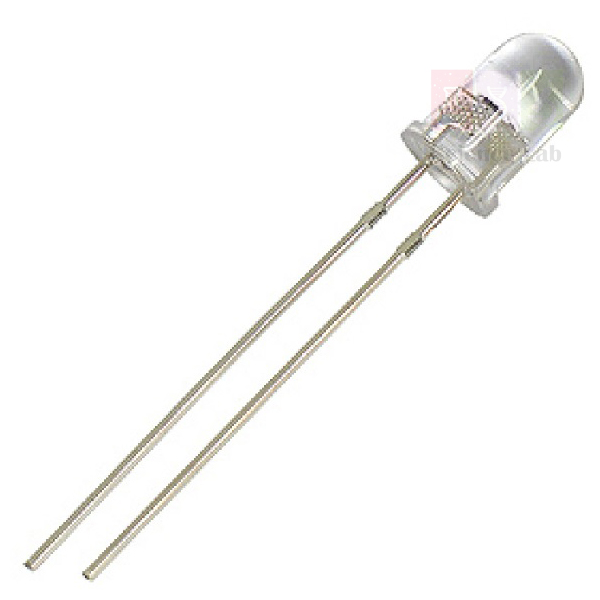
LED, 5 mm, White
LED, 5 mm, White (Product Code: SLE/PHY/82) is a standard 5 mm white light-emitting diode used as a light source and indicator in school electronics circuits, science projects and physics practicals. It comes in a pack of 100, enough to equip a whole class, and the same 5 mm LED is available in a range of colours. It is supplied by Jain Scientific Equipments Pvt Ltd (ScienceLab), Ambala, India.
Specifications
| Parameter | Detail |
|---|---|
| Type | Standard LED (light-emitting diode) |
| Size | 5 mm |
| Colour | White |
| Pack size | 100 LEDs |
| Other colours | Available in the same 5 mm range |
| Series resistor | Not listed as included — fit one in every circuit |
| Product code | SLE/PHY/82 |
| Supplied by | Jain Scientific Equipments Pvt Ltd (ScienceLab), Ambala, India |
What Is the 5 mm White LED Used For?
White LEDs give a clear, bright light, which makes them the natural choice when an experiment needs illumination rather than just an on/off signal. Students use them to light model houses and torches, to shine on a light dependent resistor in sensor experiments, and to compare the light and current of an LED with a filament bulb in LED characteristics experiment kit work.
A pack of 100 also covers science fair project kit needs in India's schools, where many pupils build lit displays at the same time. Always connect a suitable series resistor, observe polarity (the longer lead is usually the anode), and store the LEDs in their pack so the leads do not tangle or bend.
What to Specify When Ordering
- Number of packs of 100
- Any other colours from the 5 mm range, such as bright red or blue
- Whether you prefer board-mounted LED modules with a built-in resistor for younger classes
Supplier
ScienceLab, the trading name of Jain Scientific Equipments Private Limited, supplies these white LEDs with its range of components for school electronics and physics labs. The supplying company is registered as CIN U29309HR2020PTC087597 with GSTIN 06AAECJ8618A1ZT, details that tender and vendor-registration forms usually request. Read about the company on the ScienceLab profile.
Related Physics Lab Equipment
Other LEDs and parts for the same circuits:
- LED Bright Red — the same 5 mm LED in bright red
- LED Blue — a blue LED for colour-mixing and indicator work
- LED White — another white LED listing to compare
- Light Dependent Resistor — a sensor to test with the white LED as light source
- Simple Circuit Module LED Board Green — a board-mounted LED with its resistor fitted
Browse Physics Lab Equipment for more.
Frequently Asked Questions
How many LEDs are in a pack of LED, 5 mm, White?
Each pack of LED, 5 mm, White contains 100 standard 5 mm white LEDs. That is enough for a full class to build individual circuits, with spares left for replacements and project work.
Do the white LEDs need a resistor?
Yes, each LED, 5 mm, White needs a series resistor to limit the current, and resistors are not listed as part of the pack. Choose the value to suit your supply voltage, or ask us through the contact page for help.
How do I tell which way round to connect the LED?
An LED, 5 mm, White conducts in one direction only. The longer lead is normally the anode, which goes towards the positive side of the supply, and the flat edge on the rim usually marks the cathode. Reversed, the LED simply stays dark.
Are other colours available in the same 5 mm LED?
Yes, the standard 5 mm LED sold as LED, 5 mm, White is available in a range of colours, including bright red and blue listings. Mixed-colour orders can be quoted together, so state the number of packs of each colour in your enquiry.
Who supplies LED, 5 mm, White?
LED, 5 mm, White is supplied by Jain Scientific Equipments Pvt Ltd (ScienceLab), Ambala, Haryana, India. The company provides these LEDs as components for school electronics and physics labs in India and international markets.
Request a Quote
Send the number of packs through the contact page or add LED, 5 mm, White to the enquiry cart for a quotation.
Last updated: 24 September 2026
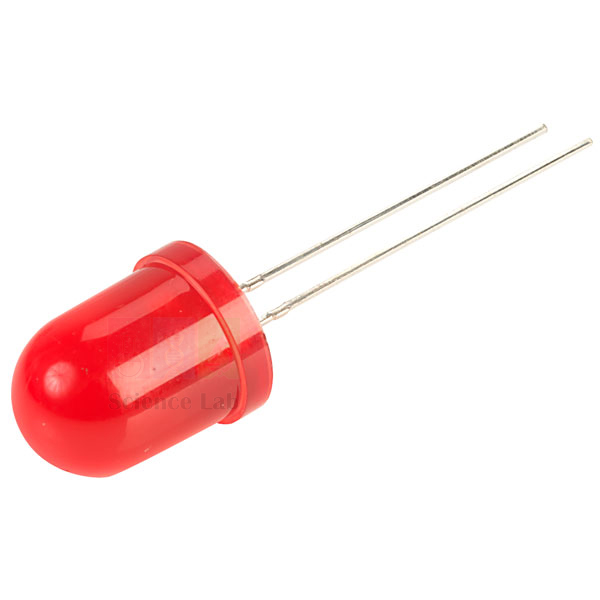
LED Bright Red
LED Bright Red (Product Code: SLE/PHY/83) is a standard 5 mm bright red light-emitting diode used as a status indicator and to teach diode polarity in school electronics and physics lessons. It is sold in a pack of 100, and the same 5 mm LED is offered in a range of colours for colour-coded circuits. It is supplied by Jain Scientific Equipments Pvt Ltd (ScienceLab), Ambala, India, for classroom and project use.
Specifications
| Parameter | Detail |
|---|---|
| Type | Standard LED, 5 mm |
| Colour | Bright red |
| Pack size | 100 |
| Range | Same 5 mm LED available in a range of colours |
| Product code | SLE/PHY/83 |
| Supplied by | Jain Scientific Equipments Pvt Ltd (ScienceLab), Ambala, India |
What Is the Bright Red LED Used For?
Red is the colour people read as "on" or "warning", so bright red LEDs are the usual choice for power indicators, alarm lights and the output lamps in logic gates experiment kit circuits, where a lit LED shows a logic 1. In a first diode lesson, students connect one each way round and see that it lights only when forward biased, a memorable demonstration of one-way conduction.
Paired with green LEDs, red ones let pupils build traffic-light models and two-colour polarity testers that show which way current is flowing. Fit a series resistor in every circuit, check the leads before soldering, and keep unused LEDs in the pack so the full 100 stay sorted by colour.
What to Specify When Ordering
- Number of packs of 100 bright red LEDs
- Other colours needed for colour-coded work, such as white or blue
- Whether a board-mounted red LED module would suit younger students better
Supplier
Jain Scientific Equipments Private Limited supplies these bright red LEDs under its ScienceLab name, as one of the stock components it provides to school electronics labs, teachers and dealers. They can be combined with white and blue LEDs and circuit modules in a single order. The company profile has more details.
Related Physics Lab Equipment
Useful with red LEDs in indicator and logic work:
- Simple Circuit Module LED Board Red — a red LED ready-mounted on a module board
- LED, 5 mm, White — white LEDs from the same 5 mm range
- LED Blue — for three-colour indicator circuits
- Logic Gate Apparatus — logic experiments where LEDs show the output state
- Battery Snap with Crocodile Clip — a quick way to power test circuits
See more items in Physics Lab Equipment.
Frequently Asked Questions
What size and quantity is the LED Bright Red pack?
The LED Bright Red is a standard 5 mm LED supplied in a pack of 100. The quantity suits a class set for diode and indicator experiments, with extra LEDs left over for projects and replacements.
How does the LED Bright Red show diode polarity?
The LED Bright Red conducts and glows only when its anode, usually the longer lead, is connected towards the positive supply. Reversing it leaves it dark, so students can see forward and reverse bias without needing a meter.
Can the LED Bright Red be connected straight to a battery?
No, the LED Bright Red should always have a series resistor to limit its current; connecting it directly to a battery can burn it out. Resistors are not listed with the pack, so ask us if you want suitable values quoted.
Is the LED Bright Red suitable for logic gate experiments?
Yes, the LED Bright Red is commonly used as an output indicator in logic gate experiments, lighting to show a high output. Check the gate circuit already has a current-limiting resistor for the LED before connecting it.
Who supplies the LED Bright Red?
The LED Bright Red is supplied by Jain Scientific Equipments Pvt Ltd (ScienceLab) of Ambala, Haryana, India, to schools, colleges and dealers in India and international markets, together with LEDs in other colours and circuit modules.
Request a Quote
To price the LED Bright Red, send the number of packs through the contact page or add it to the enquiry cart with any other colours.
Last updated: 24 September 2026
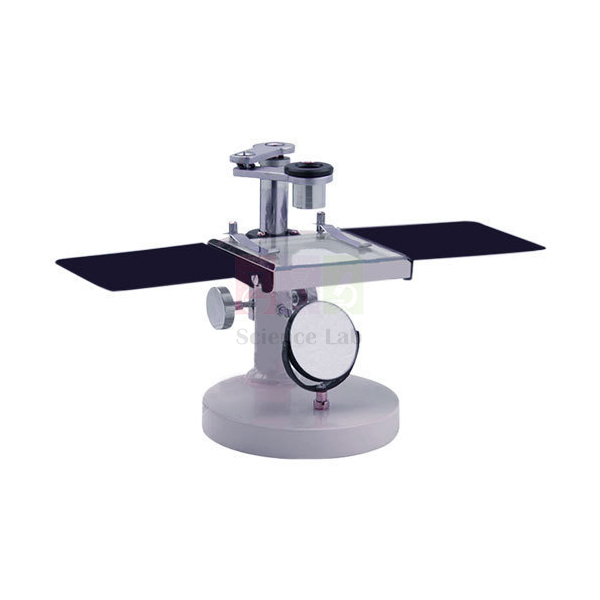
Dissecting Microscope
Dissecting Microscope (Product Code: SLE/M/19) is a low-power microscope with 10x and 20x lenses on a jointed arm, used for demonstrations, close study of small organisms and fine dissection work in school and college biology labs. Detachable rests on both sides of its 70 x 90 mm glass stage steady the hands during delicate cutting, and the high-eyepoint lenses suit spectacle wearers. It is supplied by Jain Scientific Equipments Pvt Ltd (ScienceLab), Ambala, India, alongside its dissection kit range.
Specifications
| Parameter | Detail |
|---|---|
| Intended work | Demonstrations, close study of small organisms, fine dissection |
| Lenses | High-eyepoint, 10x and 20x magnification, comfortable for spectacle wearers |
| Lens mounting | Jointed arm allowing the whole stage area to be scanned |
| Stage | Wide glass stage, 70 x 90 mm, with two spring clips |
| Illumination | Reversible substage mirror / opal-face illuminator, for daylight or artificial light |
| Focusing | Rack and pinion enclosed in the stage support pillar, knob on either side of the pinion spindle |
| Hand rests | Detachable, one on either side of the stage |
| Overall height | 180 mm |
| Case | Wooden storage and carrying case with fittings for lenses, hand rests and microscope |
| Product code | SLE/M/19 |
| Supplied by | Jain Scientific Equipments Pvt Ltd (ScienceLab), Ambala, India |
What Is the Dissecting Microscope Used For?
The Dissecting Microscope gives a magnified, upright view of specimens that are too thick or too delicate for a slide: flowers and their parts, seeds, small invertebrates and preserved material. The 10x lens shows the overall layout of a specimen, and the 20x lens brings out finer structures such as veins, hairs or mouthparts. With both hands resting on the detachable supports, a student can hold a needle and forceps steadily while watching the cut through the lens.
Swing the jointed arm across the stage to scan the specimen instead of repeatedly moving the specimen itself. Turn the reversible illuminator to its mirror side near a window, or to its opal face under a room lamp for softer, even light, and focus with whichever knob is nearer your free hand. After the class, the lenses, hand rests and microscope pack into the fitted wooden case, which keeps parts together for the next biology lab session.
Supplier
This dissecting microscope is supplied by Jain Scientific Equipments Private Limited, known by its trading name ScienceLab, from Ambala, Haryana. Schools, colleges, teacher-training institutes, dealers and importers in India and international markets often order it with dissecting kits, pans and needles as one practical package. Company details are on the ScienceLab profile page.
Related Laboratory Equipment
Tools and accessories for a dissection practical:
- Dissecting Kit (Economy) — the basic instruments a student needs at the microscope.
- Dissection Pan — holds larger specimens before and after viewing.
- Dissecting Needle — for teasing apart fine tissue under the lens.
- Dissecting Dishes — stainless-steel dishes with flanged edges for holding specimens during dissection.
- Bull Type Dissecting Microscope — a related model in the same range.
Browse further models on the Microscope category page.
Frequently Asked Questions
What magnification does the Dissecting Microscope give?
The Dissecting Microscope has two high-eyepoint lenses giving 10x and 20x magnification. They are mounted on a jointed arm, so the lens can be moved over any part of the 70 x 90 mm glass stage without disturbing the specimen.
Can spectacle wearers use the Dissecting Microscope?
Yes. The Dissecting Microscope uses high-eyepoint lenses, which can be used comfortably by students and teachers who wear spectacles, so they do not need to remove their glasses during a dissection.
What comes with the Dissecting Microscope?
The Dissecting Microscope comes with its 10x and 20x lenses, detachable hand rests for both sides of the stage, and a wooden storage and carrying case with fittings that hold the lenses, hand rests and microscope in place.
How is the specimen lit on the Dissecting Microscope?
The Dissecting Microscope has a reversible substage mirror with an opal face on the other side. It gives good lighting of objects in daylight or under artificial light, and no electrical connection is listed for the instrument.
How is the Dissecting Microscope focused?
The Dissecting Microscope focuses by a rack and pinion enclosed within the stage support pillar. A knob sits on either side of the pinion spindle, so both left- and right-handed users can focus while holding a tool in the other hand.
Who supplies the Dissecting Microscope?
The Dissecting Microscope is supplied by Jain Scientific Equipments Private Limited, which trades as ScienceLab from Ambala, Haryana, India, to schools, colleges, dealers and importers in India and international markets.
What should a quotation request for the Dissecting Microscope include?
A quotation request for the Dissecting Microscope should give product code SLE/M/19, the quantity, any dissecting kits, needles or pans to add, and the delivery city or country. One enquiry can then cover the whole dissection bench.
Request a Quote
Enquire about the Dissecting Microscope (SLE/M/19) through our contact page, or add it to the enquiry cart with the dissection tools you need.
Last updated: 24 September 2026
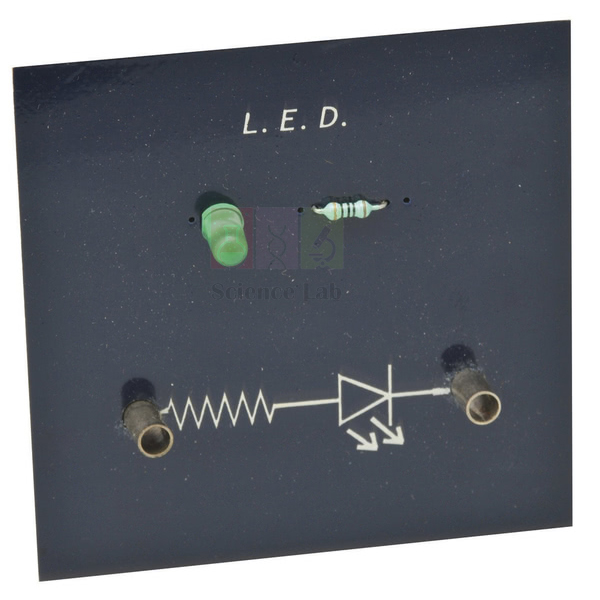
Simple Circuit Module LED Board Green
Simple Circuit Module LED Board Green (Product Code: SLE/PHY/84) is a board-mounted green light-emitting diode from the Simple Circuit Modules range, used as an indicator lamp in school electricity circuits. It carries a large LED with a series resistor of 220 ohms, so it can be used on potential differences of up to 6 V without adding a separate resistor. It is supplied by Jain Scientific Equipments Pvt Ltd (ScienceLab), Ambala, India.
Specifications
| Parameter | Detail |
|---|---|
| Module range | Simple Circuit Modules |
| LED | Large light-emitting diode, green |
| Series resistor | 220 ohms, fitted with the LED |
| Operating p.d. | Up to 6 V |
| Product code | SLE/PHY/84 |
| Supplied by | Jain Scientific Equipments Pvt Ltd (ScienceLab), Ambala, India |
What Is the Green LED Circuit Module Used For?
Younger students can drop the green LED board straight into a circuit with a few cells, because the 220 ohm resistor already limits the current. Connected one way it glows, and turned round it stays dark, which makes it a clear first demonstration of how a diode conducts in only one direction and a good starting point for LED characteristics experiment kit lessons.
Used alongside the red LED board, it shows which way current flows in a circuit or forms the "go" light in a traffic-light model. Keep the supply at 6 V or below, as listed, and add it to other boards in the range, such as a switch or light dependent resistor module, to build sensor and control circuits for an electricity experiment kit at school level.
What to Specify When Ordering
- Number of green LED boards
- Whether matching red LED boards are needed for polarity or traffic-light work
- Other Simple Circuit Modules, such as switch, buzzer or LDR boards, for complete circuits
Supplier
The green LED board is supplied by Jain Scientific Equipments Private Limited, trading as ScienceLab, as part of the Simple Circuit Modules range it offers to schools and dealers from Ambala, Haryana. Buyers can build a full module set from one quotation. Read more on the ScienceLab company profile.
Related Physics Lab Equipment
Modules that work alongside the green LED board:
- Simple Circuit Module LED Board Red — the red partner for polarity and traffic-light circuits
- Simple Circuit Module Light Dependent Resistor Board — lets light level control the LED
- Simple Circuit Module Push Switch — to switch the LED on and off
- Simple Circuit Module Buzzer — adds a sound output beside the light
- Potentiometer Module, 1 Kohm — to vary the LED brightness
Explore more in Physics Lab Equipment.
Frequently Asked Questions
What resistor is fitted on the LED Board Green?
The Simple Circuit Module LED Board Green has a 220 ohm series resistor with its large green LED. The resistor limits the current, so the board can be connected to classroom supplies without students having to choose and fit a resistor themselves.
What is the maximum voltage for the green LED board?
The Simple Circuit Module LED Board Green is listed for potential differences of up to 6 V. Keep the supply at or below this level, for example a small group of cells, so the LED and its 220 ohm resistor are not overloaded.
Why does the green LED board not light when connected?
If the Simple Circuit Module LED Board Green stays dark, it is most likely connected the wrong way round, because an LED conducts in one direction only. Reverse the connections, then check the cells and leads if it still does not light.
How is the LED board different from a loose LED?
The Simple Circuit Module LED Board Green carries a large LED with its 220 ohm resistor already fitted on a board, ready for module circuits. A loose 5 mm LED needs a separate resistor and suits soldered or breadboard projects instead.
Who supplies the Simple Circuit Module LED Board Green?
The Simple Circuit Module LED Board Green is supplied by Jain Scientific Equipments Pvt Ltd (ScienceLab), Ambala, Haryana, India, with the other boards in the Simple Circuit Modules range, for schools and dealers in India and international markets.
Request a Quote
For a quotation on the Simple Circuit Module LED Board Green, use the contact page or add it to the enquiry cart along with the other modules you need.
Last updated: 24 September 2026