- Physics Lab Equipment
- Chemistry Lab Equipment
- Biology Lab Equipment
- Anatomical Lab Equipment
- Learning
- Educational Lab Equipment
- Magnets
- Agriculture
- Astronomy
- Earth Science
- Geography Lab Equipment
- Safety Lab Coat
- Laboratory
- Meteorological
- Electricity & Magnetism
- Heat
- School Lab Equipment
- Lab Glassware
- Science Lab Equipment
- Tvet Lab Equipment
- Robotics Kits Supplier and Manufacturer for Schools India
- Math Lab Equipment Manufacturers and Exporters in Ambala
- STEM Kits Manufacturers and Supplier India
- Engineering Lab Equipment
- Hospital Lab Equipment
- Water, Sanitation & Hygiene Supplies
- Cold Chain, Solar & Communication Equipment
- Nutrition
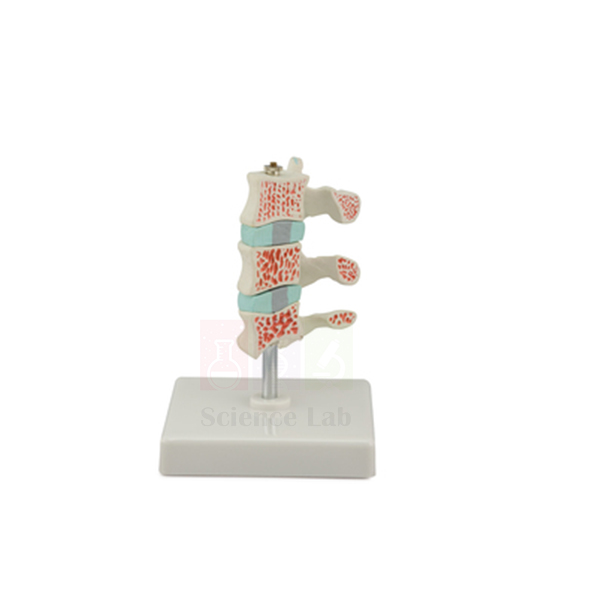
Human Advanced Osteoporosis Model
Human Advanced Osteoporosis Model (Product Code: SLE/A/66) sets three life-size vertebrae in a row: one healthy, one with first-stage pathological changes and one with advanced-stage changes. Seeing the stages together helps learners understand how osteoporosis weakens the spine step by step, which is why the model is used in medical, nursing, pharmacy and physiotherapy teaching as well as in patient counselling. It is made by Jain Scientific Equipments Pvt Ltd (ScienceLab), Ambala, a biology lab equipment supplier in India for education and healthcare training.
Specifications
| Parameter | Detail |
|---|---|
| Scale | Life size |
| Number of vertebrae | 3 |
| Vertebra 1 | Healthy vertebra |
| Vertebra 2 | Pathological changes at first stage |
| Vertebra 3 | Pathological changes at advanced stage |
| Size | 12 x 12 x 15 cm |
Typical Use
Osteoporosis is easier to explain when learners can compare a normal vertebra directly with diseased ones. A lecturer can ask students to describe the healthy vertebra first, then note what has changed at the first stage and how much further the advanced vertebra has deteriorated. This progression links well to discussions of risk factors, bone density testing, fracture risk and prevention through diet and exercise.
In pharmacy and pharmacology courses the model gives context to lectures on drugs used to treat bone loss, while in physiotherapy it supports advice on safe movement for patients with a fragile spine. Clinics and community health programmes also use it at counselling desks, and it fits neatly into a human biology model set for senior school classes studying the skeleton. Its compact size means it can sit on a desk permanently; wipe it occasionally with a dry cloth.
Manufacturer
Jain Scientific Equipments Private Limited, trading as ScienceLab, produces this osteoporosis model in Ambala, Haryana, alongside skeletal, organ and pathology models for teaching. Visit the company profile to learn more about the business.
Related Human Models
Pair this model with the following for a fuller lesson on bone health:
- Human Bone Structures Model — explains the internal structure that osteoporosis thins out.
- Economy Human Flexible Vertebral Column, Color Coded — shows where the affected vertebrae sit in the whole spine.
- Human Hip Joint Model — the hip is another common site of osteoporotic fracture.
- Microslide Animal Tissue Set 2 Muscle, Bone, Connective — prepared slides for viewing bone tissue under the microscope.
See more in the Human Models category.
Frequently Asked Questions
How many vertebrae does the Human Advanced Osteoporosis Model show?
Three: one healthy vertebra, one at the first stage of pathological change and one at an advanced stage.
Are the vertebrae life size?
Yes. The model is life size, and the whole set measures 12 x 12 x 15 cm.
Is it suitable for patient education?
Yes. The side-by-side stages are easy for non-specialists to understand, so clinics and physiotherapy practices use it when explaining bone loss.
Can the vertebrae be separated from each other?
The product details do not say whether the vertebrae are removable. Please check with us through the contact page if this matters for your use.
What material is it made from?
The material is not specified in the product details; we can confirm it with your quotation.
Do you ship to hospitals and colleges outside India?
Yes. We supply India and international markets; include the destination country in your enquiry so we can quote shipping.
Request a Quote
For a quotation on SLE/A/66, contact us through the contact page or list it in the enquiry cart together with any other bone or joint models you need.
Last updated: 24 September 2026
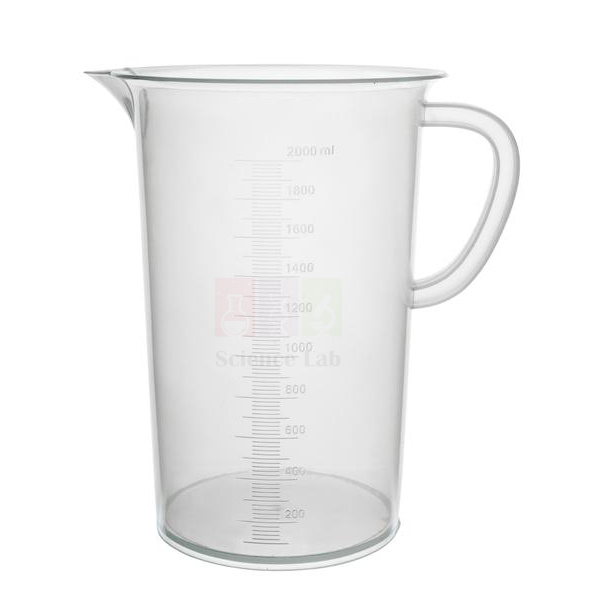
Pitcher, Polypropylene, 2000 ml
Pitcher, Polypropylene, 2000 ml (Product Code: SLE/GB/08) is the large member of our lab pitcher range: a two-litre polypropylene vessel shaped like a beaker, with a sturdy handle, a large pouring spout and graduations every 50 ml from 50 to 2000 ml. At roughly 17 cm tall and 14 cm across it carries enough liquid to fill several wash bottles or a small water bath in one trip, and it tolerates hot liquids provided it never meets an open flame. Manufactured by Jain Scientific Equipments Pvt Ltd (ScienceLab), Ambala, it suits chemistry prep rooms, biology labs and technical institutes looking for practical lab equipment for college use in India.
Specifications
| Parameter | Detail |
|---|---|
| Capacity | 2000 ml |
| Material | Polypropylene |
| Graduations | 50 ml intervals, 50 ml to 2000 ml |
| Approximate height | 17 cm |
| Approximate diameter | 14 cm |
| Pouring features | Sturdy handle and larger spout |
| Chemical resistance | Chemical resistant |
| Temperature use | Suitable for hot liquids; keep away from open flame |
Typical Use
The two-litre size is built for volume jobs: carrying distilled water from a still or carboy to the benches, making up a large batch of dilute solution that will later be divided among groups, filling aspirator bottles, or collecting used rinse water so it can be disposed of properly rather than poured at each bench. Technicians preparing media, buffers or cleaning solutions for a full class find one large pitcher quicker than several trips with small beakers.
A full pitcher is heavy, so hold it by the handle and steady the base with the other hand when pouring into a funnel. The 50 ml marks are meant for convenient dispensing; for solutions that need an exact concentration, measure the components in a cylinder or volumetric flask.
Manufacturer
Production of this pitcher is handled by Jain Scientific Equipments Private Limited, which operates in Ambala, Haryana under the ScienceLab name and ships labware across India and to international markets. See the company profile for more.
Related Laboratory Equipment
Storage and transfer items that fit the same bulk-handling routine:
- Pitcher, Polypropylene, 500 ml — the smaller pitcher for bench-level portions
- Aspirator Bottles — polypropylene storage bottles with a spigot to fill from the pitcher
- Carboy With Stop Cock — bulk water storage to draw from
- Plastic Funnel — guides the pour into bottles and flasks
- Measuring Jug, Polypropylene, Set of 4 — handled jugs in several sizes as an alternative
The Glassware Beaker category has further beakers and pitchers.
Frequently Asked Questions
What graduation interval does it have?
Marks run every 50 ml from 50 to 2000 ml, giving a quick visual read of fill level while pouring.
Should I choose this size or the smaller pitcher?
Pick the 2000 ml size for bulk transfer and batch preparation, and the smaller polypropylene pitcher for bench-level portions with finer markings. Many prep rooms keep both.
Can I pour boiling water into it?
It is designed to handle hot liquids, but it must never be heated in an open flame. Heat water separately and pour it in.
How much shelf space does it need?
Allow for a vessel about 17 cm tall and 14 cm in diameter, plus the handle.
Can I store solutions in it long term?
It is an open pouring vessel, so for storage transfer the solution to a closed, labelled bottle such as an aspirator or reagent bottle.
Is a warranty provided?
Terms are confirmed with each quotation — please contact us for current details.
Do you ship to institutions outside India?
Yes. We supply schools, colleges and distributors in India and international markets; include the destination and quantity in your enquiry.
Request a Quote
For pricing on the 2000 ml pitcher, get in touch or add it to your enquiry cart.
Last updated: 24 September 2026
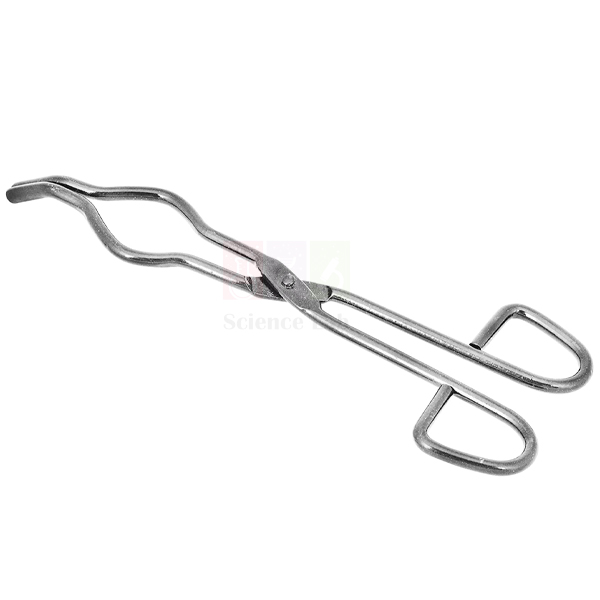
Crucible & Beaker Tongs
Crucible & Beaker Tongs (Product Code: SLE/GB/09) are 8 inch nickel plated steel tongs for picking up a hot crucible, evaporating dishes, flasks and small beakers during heating experiments. They keep fingers clear of the flame and of hot porcelain or glass in water-of-crystallisation practicals, evaporation to dryness and simple gravimetric work. Manufactured by Jain Scientific Equipments Pvt Ltd (ScienceLab), Ambala, they belong beside every Bunsen burner and are a standard line when buyers source crucible tongs for India lab benches.
Specifications
| Parameter | Detail |
|---|---|
| Material | Nickel plated steel |
| Length | 8 in |
| Handles | Hot crucibles, evaporating dishes, flasks and small beakers |
| Type | Hand-held laboratory tongs |
Typical Use
A classic use is heating hydrated copper sulphate in a crucible until its mass stops changing: the tongs lift the lid to check progress, move the hot crucible from the pipe-clay triangle to a heat-proof mat or desiccator to cool, and return it for another heating cycle. The same tongs take an evaporating dish off a tripod once a salt solution has been reduced, or steady the neck of a small flask while it is moved away from the burner.
Grip crucibles firmly around the body rather than by the rim, and keep the tips clean so that residues are not carried into a weighed sample. For larger hot beakers, a dedicated beaker tong with coated jaws gives a safer hold.
Manufacturer
The tongs are manufactured by Jain Scientific Equipments Private Limited, which trades as ScienceLab from Ambala, Haryana. For vendor registration, the company's Corporate Identity Number is U29309HR2020PTC087597, and its production site at 449, HSIIDC Industrial Area, Saha, Ambala operates under Factory Licence AMB-ONLINE-CHD-J-414. Our company profile gives further background.
Related Laboratory Equipment
Apparatus these tongs are most often used with during heating and weighing practicals:
- Crucible with lid — the vessel the tongs lift in and out of the flame
- Porcelain Dish (China Dish) — for evaporating solutions, moved with the tongs when hot
- Crucible Retort Ring — support ring for holding the crucible over the burner
- Vacuum Desiccator — where a hot crucible is placed to cool before weighing
- Beaker Tong — a larger tong with coated jaws for hot beakers
See the Glassware Beaker category for beakers and other handling accessories.
Frequently Asked Questions
What can these tongs pick up?
They are made for hot crucibles, evaporating dishes, flasks and small beakers — the items that are awkward or unsafe to hold by hand after heating.
How long are they?
8 inches, which keeps the hand a safe distance from the flame and the hot item while leaving good control.
Can I use them for large beakers?
They suit small beakers. For bigger, heavier beakers use our Beaker Tong, whose coated jaws are shaped to grip the beaker body.
How should I look after nickel plated tongs?
Let them cool, wipe off any spilled chemicals, and store them dry. Avoid leaving them in acid fumes, which can attack the plating over time.
Are they suitable for muffle furnace work?
Furnace-temperature suitability is not listed for these tongs; please contact us with your application before ordering.
What should I include in a quotation request?
The quantity, delivery location in India or abroad, and any matching crucibles or dishes you need; we will quote them together.
Request a Quote
Request prices by contacting us or by adding the tongs to your enquiry cart.
Last updated: 24 September 2026
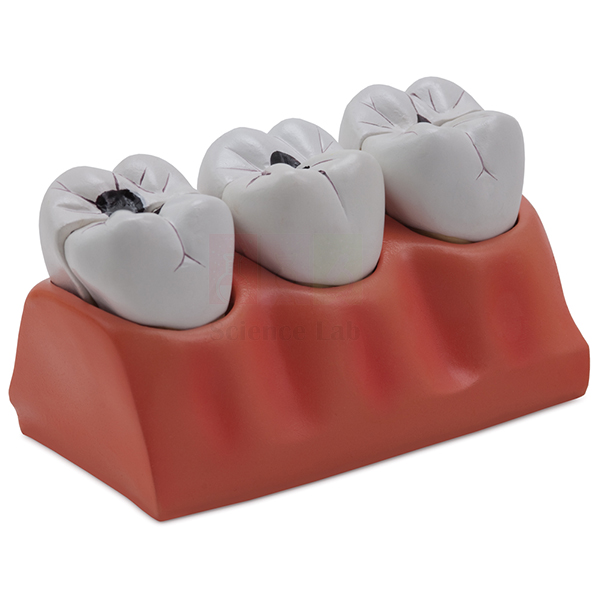
Dental Caries Model
Dental Caries Model (Product Code: SLE/A/67) enlarges three teeth to 4x life size, each seated in its socket, to show how dental caries progressively destroys tooth structure. The model can be taken apart into 7 parts, so students can look inside the teeth as well as at their surfaces. Dental, dental-hygiene and nursing tutors use it, and it is equally useful as a biology teaching aid for schools in India running oral-health lessons. It is made by Jain Scientific Equipments Pvt Ltd (ScienceLab), Ambala.
Specifications
| Parameter | Detail |
|---|---|
| Scale | 4x life size |
| Dissectible | Into 7 parts |
| Teeth | 3 teeth, seated in their sockets |
| Shows | Progressive deterioration of tooth structure by dental caries |
Typical Use
Tooth decay usually begins in the outer enamel and, if untreated, moves inward toward the dentine and the pulp. With three enlarged teeth showing successive degrees of damage, the model lets a tutor walk through that sequence and relate each step to symptoms such as sensitivity and pain, and to treatments ranging from a simple filling to more extensive work. Opening the dissectible parts shows the inside of the teeth, which is where the later stages become visible.
School health-education programmes use the model to show children why brushing, limiting sugary snacks and regular dental check-ups matter, while dental-hygiene students use it to practise explaining caries to patients. Store the 7 parts together after each lesson so none are lost, and clean them with a damp cloth rather than immersing them in water.
Manufacturer
The Dental Caries Model is produced by Jain Scientific Equipments Private Limited. The company operates under the ScienceLab name from Ambala, Haryana, making models for dental colleges, schools and health-training centres. Its background is described on the company profile.
Related Laboratory Equipment
For a complete oral-health or dentition lesson, these items work well with the caries model:
- Human Teeth (Denture) — shows the full set of teeth so students can name each type before studying decay.
- Human Teeth — an additional dentition model for group work.
- Human Skull — places the teeth within the upper and lower jaws.
- Human Tongue Model — completes a lesson on the mouth and the start of digestion.
- Mini Science Kit – Teeth and Eating — hands-on activities for younger students.
Find more anatomy teaching models in the Human Models category.
Frequently Asked Questions
How large is the Dental Caries Model compared with real teeth?
It is 4x life size, so details of the tooth structure are visible from a distance in a classroom.
How many parts does it come apart into?
7 parts, allowing the interior of the teeth to be examined.
How many teeth are shown?
Three teeth, each seated in its socket, illustrating the progressive stages of caries.
Is it suitable for primary and secondary schools?
Yes. Teachers use it for oral-hygiene and health-education lessons; for younger children, it is best handled by the teacher because of the small removable parts.
Is a stand, key or storage box included?
These are not listed in the product details. Please confirm the supplied accessories with us through the contact page.
Can a dental college order several units?
Yes. Send the required quantity and delivery location and we will quote for the full requirement.
Request a Quote
To get a quotation for SLE/A/67, reach our team on the contact page or put the model in your enquiry cart.
Last updated: 24 September 2026
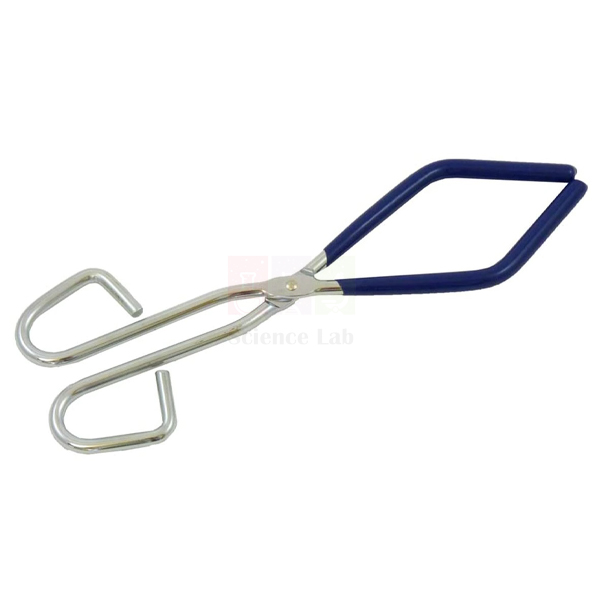
Beaker Tong
Beaker Tong (Product Code: SLE/GB/10) is a 25 cm (10 in) nickel-plated steel tong whose plastic coated jaws open up to 11 cm (4.5 in), sized to hold beakers from 100 ml up to 1000 ml when they are too hot to touch. It gives students and technicians a controlled way to move or pour a hot beaker instead of reaching for a cloth or bare hands. It is made by Jain Scientific Equipments Pvt Ltd (ScienceLab), Ambala, as a basic piece of chemistry lab equipment for schools in India as well as college practical halls and research prep rooms that heat liquids in beakers.
Specifications
| Parameter | Detail |
|---|---|
| Material | Nickel-plated steel |
| Overall length | 25 cm (10 in) |
| Jaws | Plastic coated |
| Maximum jaw opening | 11 cm (4.5 in) |
| Beaker size range | 100 ml to 1000 ml |
| Purpose | Handling hot beakers |
Typical Use
Picture a beaker of water brought to the boil on a gauze over a tripod stand, the usual heating set-up in school labs across India, for a solubility or heating-curve experiment. When the reading is done, the tong closes around the beaker body below the rim, lifts it clear of the gauze and sets it on a heat-proof mat, or tilts it to pour the hot solution into an evaporating dish for crystallisation. It is just as useful at a hot plate or when retrieving a beaker from a water bath.
Grip the beaker around its middle, keep it upright while moving and pour away from yourself and others. Keep the plastic-coated jaws out of the flame itself, and wipe them clean after each practical so they keep a good grip.
Manufacturer
ScienceLab, the trading name of Ambala-based Jain Scientific Equipments Private Limited, makes this tong alongside the beakers, burners and stands it is used with, so a complete heating station can be ordered from one Haryana supplier. Learn more on our company profile.
Related Laboratory Equipment
Complete the heating station with these items:
- Glass Beaker — borosilicate beakers to heat and handle with the tong
- Hot Plate General Purpose — a flameless heat source from which beakers are lifted
- Tripod Stand 200mm — supports the beaker and gauze above a burner
- Crucible & Beaker Tongs — for crucibles, dishes and very small beakers
- Safety Goggles — eye protection while pouring hot liquids
Browse beakers and more accessories in the Glassware Beaker category.
Frequently Asked Questions
Which beaker sizes does it hold?
Beakers from 100 ml up to 1000 ml. The jaws open to 11 cm, so check that very wide or unusually shaped vessels fit within that opening.
Why are the jaws plastic coated?
The coating gives a better grip on smooth glass and softens contact with the beaker wall. Because it is plastic, keep the jaws out of direct flame.
Can it lift crucibles too?
It is designed for beakers. For crucibles and evaporating dishes, use our Crucible & Beaker Tongs.
What is it made of?
Nickel-plated steel, 25 cm long. Rinse off any chemical splashes and dry it before storage to protect the plating.
Is a warranty offered?
Warranty terms are given with the quotation; please contact us to confirm them.
Can we order tongs for every bench in a new lab?
Yes. We supply schools, colleges and distributors in India and international markets — send the number of benches or units and your delivery address.
Request a Quote
Ask for pricing through our contact page or add the tong to your enquiry cart.
Last updated: 24 September 2026
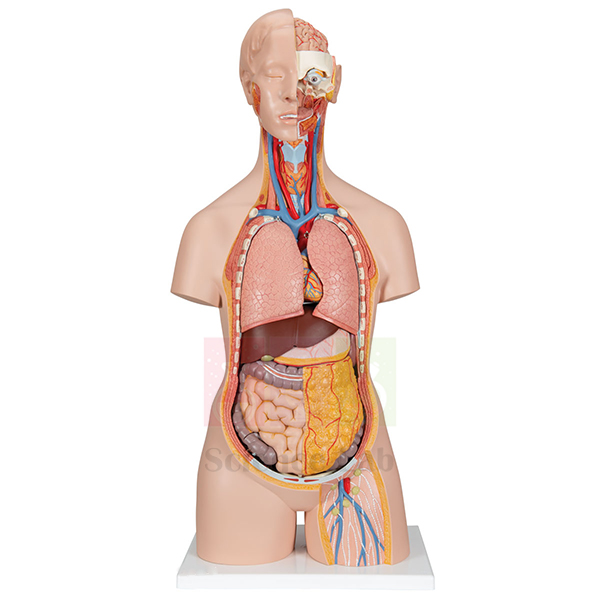
Human Muscular Torso with Head and Open Back Model
Human Muscular Torso with Head and Open Back Model (Product Code: SLE/A/68) is a life-size torso that combines the head, the musculature of the trunk and an open back in one large teaching piece. It separates into 32 parts and comes with interchangeable female and male genital organs (4 parts), so a single model can serve lessons on both sexes. Medical colleges, nursing schools, physiotherapy departments and senior science classes use it as a central demonstration model. It is made by Jain Scientific Equipments Pvt Ltd (ScienceLab), Ambala, and is among the most detailed of its human anatomical models.
Specifications
| Parameter | Detail |
|---|---|
| Model type | Muscular torso with head and open back |
| Scale | Life size |
| Number of parts | Separates into 32 parts |
| Genital organs | Interchangeable female and male genital organs (4 parts) |
| Size | 90 x 39 x 26 cm |
Typical Use
A torso of this size works best as the anchor of a systems-based course. The lecturer can start with the surface muscles of the trunk and head, then remove parts one at a time to move deeper, asking students to name each structure before it comes off and to replace the parts in the correct order afterwards. The open back gives access to the posterior side of the trunk, so back and spinal anatomy can be taught on the same model rather than on a separate piece.
Swapping the female and male genital organs lets the same torso support reproductive-system lessons for both sexes, which is economical for institutions buying school and college lab equipment on a fixed budget. With 32 parts, it is a good idea to keep a checklist beside the model and count the parts back in at the end of each practical; store it under a dust cover away from direct sunlight.
Manufacturer
Jain Scientific Equipments Private Limited makes this muscular torso under its ScienceLab brand in Ambala, Haryana, and supplies it to teaching hospitals, colleges and schools in India and international markets. You can find out more about the company on the profile page.
Related Human Models
These models complement a muscular torso in anatomy teaching:
- Human Muscular Figure Model — adds the limbs, so muscles of the whole body can be taught.
- Human Male and Female Torso Model, 20 Parts — an organ-focused torso for internal anatomy lessons.
- Human Head and Neck Model — detailed study of the head and neck region.
- Human Muscular Arm Model — covers the upper limb muscles that a torso leaves out.
Browse all options in the Human Models category.
Frequently Asked Questions
How many parts does the torso separate into?
32 parts, including interchangeable female and male genital organs made up of 4 parts.
What are the overall dimensions?
90 x 39 x 26 cm, at life size. Plan for a sturdy table or trolley when positioning it.
Can one model be used for both male and female anatomy?
Yes. The genital organs are interchangeable, so the torso can show either sex.
What is the model made from, and is a stand included?
Material and stand are not specified in the product details. Please ask through the contact page and we will confirm them with your quotation.
Is a key to the numbered structures supplied?
A key is not listed in the product details; let us know if you need one and we will advise on what is available.
How is a large model like this packed for shipping?
Packing depends on destination and quantity. Tell us the delivery address, in India or abroad, and we will explain packing and freight options.
Request a Quote
For price and lead time on SLE/A/68, write to us through the contact page or add it to your enquiry cart with the rest of your anatomy order.
Last updated: 24 September 2026
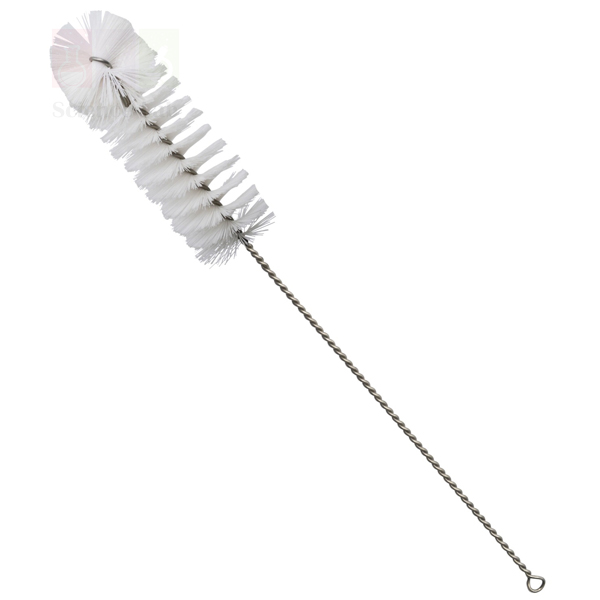
Beaker Brush
Beaker Brush (Product Code: SLE/GB/11) is a cleaning brush for beakers, with a 4 inch section of nylon bristles on an iron body, 14 inch long overall and 20 mm in diameter. The long stem reaches the base of large and tall beakers, while the nylon bristles scrub away dried residues, precipitates and indicator stains from the walls. It is supplied by Jain Scientific Equipments Pvt Ltd (ScienceLab), Ambala, as one of the everyday items it offers as a lab consumables supplier in India.
Specifications
| Parameter | Detail |
|---|---|
| Purpose | Cleaning beakers |
| Bristle material | Nylon |
| Bristle length | 4 inch |
| Body material | Iron |
| Overall length | 14 inch |
| Diameter | 20 mm |
Typical Use
Clean glassware is the starting point of reliable results, so a beaker brush sits at every lab sink. After a practical, rinse out the beaker, add warm water with a little laboratory detergent, scrub the base and walls with the brush using a twisting motion, then rinse with tap water followed by distilled water and leave the beaker upside down on a drying rack. The 4 inch bristle head covers a large area per stroke, which speeds up washing after a full class has used the glassware.
Avoid pushing the bare end of the stem against the glass, as metal can scratch or chip it. Rinse the brush after use and let it dry before storing, which keeps the iron body from rusting and the bristles in shape; replace it once the bristles splay or wear down.
Supplier
This brush is supplied by Jain Scientific Equipments Private Limited, which trades as ScienceLab from Ambala, Haryana, as part of the cleaning and consumable items it offers alongside its laboratory apparatus. For vendor registration, the company's details are GSTIN 06AAECJ8618A1ZT and Importer-Exporter Code AAECJ8618A from the DGFT, under which its export orders are handled. More is available in our company profile.
Related Laboratory Equipment
Other items for a well-equipped glassware washing station:
- Brush, Beaker, Nylon — an alternative nylon beaker brush
- Bottle Brush — for reagent and narrow-neck bottles
- Brush Test Tube — a narrower brush for test tubes
- Wash Bottle LDPE with Narrow Mouth — for the final distilled-water rinse
- Drying Rack — drains and dries glassware after washing
Find beakers and handling accessories in the Glassware Beaker category.
Frequently Asked Questions
What is it designed to clean?
Beakers. The 14 inch length and 20 mm diameter suit open-mouthed vessels; for narrow-neck bottles or test tubes a slimmer brush works better.
Will the bristles scratch glass?
Nylon bristles are the usual choice for glassware. Scratches normally come from the metal stem, so keep the tip from striking the glass.
How do I stop the brush rusting?
The body is iron, so rinse off detergent and chemicals after use and let the brush dry in the air before putting it away.
Which cleaning agent should I use with it?
Warm water with a mild laboratory detergent handles most residues. Stubborn deposits may need a specific cleaning solution chosen for that residue; ask your lab supervisor before using strong acids or solvents.
Can I order brushes in bulk for several labs?
Yes. Brushes are often ordered in quantity with other washing supplies; tell us how many you need and where they should be delivered.
Do you export cleaning consumables?
Yes, we supply institutions and distributors in India and international markets, usually as part of a wider glassware or apparatus order.
Request a Quote
For a quotation, contact us or add the brush to your enquiry cart together with other lab supplies.
Last updated: 24 September 2026
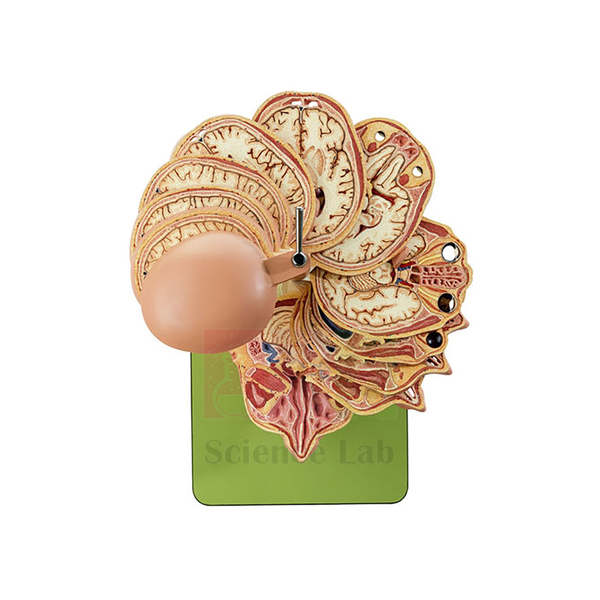
Horizontally Sectioned Model of the Human Head
Horizontally Sectioned Model of the Human Head (Product Code: SLE/A/69) is a life-size head cut into 10 horizontal sections, used to teach sectional anatomy in the same plane as CT and MR images in radiography, imaging-technology and medical courses. Mounted on a base and measuring 34 x 46 x 30 cm, it lets students match scan slices to real three-dimensional structures. It is made by Jain Scientific Equipments Pvt Ltd (ScienceLab), an OEM laboratory equipment manufacturer in India, at its own factory in Ambala.
Specifications
| Parameter | Detail |
|---|---|
| Type | Horizontally sectioned human head model |
| Scale | Life size |
| Number of sections | 10 horizontal sections |
| Section plane | Horizontal cross sections oriented in the usual plane for CT and MR imaging |
| Mounting | Mounted on a base |
| Size | 34 x 46 x 30 cm |
| Product code | SLE/A/69 |
| Manufacturer | Jain Scientific Equipments Pvt Ltd (ScienceLab) — OEM |
| Country of origin | India (made in Ambala, Haryana) |
What Is the Horizontally Sectioned Head Model Used For?
Students learning to read head CT or MRI often struggle to picture where a grey shape on the screen sits inside the skull. With this model, the tutor projects a scan slice and asks the group to find the matching level on the physical sections, then identify the same structures in both. Working down through the 10 slices builds the habit of reading sectional images from top to bottom in a consistent order.
The model also supports conventional anatomy teaching: comparing neighbouring slices shows how the brain, the air spaces and the soft tissues change from one level to the next. Because it sits on a base, it can stay on a demonstration bench in a radiology or anatomy department for self-study between lectures, which makes it practical biology lab equipment in India at pre-university level as well.
OEM Manufacturer
Imaging and anatomy departments buying this sectional head deal directly with its maker. Jain Scientific Equipments Private Limited, whose trading name is ScienceLab, is the OEM (original equipment manufacturer) and produces the model at its own licensed factory at Saha, Ambala, Haryana, India, supplying institutions, dealers and importers factory-direct.
Questions about a replacement section or a repeat order are handled by the manufacturer — ask us. Visit our profile page to learn more about the company.
Related Brain Models
Pair this sectional head with models that show the same anatomy in other planes or in whole form:
- Horizontally Sectioned Human Head Model — an alternative with 12 slices that can be rotated or removed
- Human Head Section Model — shows the head in median section, the plane used for sagittal images
- Human Brain Model in Head — helps students see the whole brain before studying it in slices
- Human Brain Model, 15 Parts — a dissectible brain for identifying the regions seen on each section
More head and brain models are listed in the Brain Models range.
Frequently Asked Questions
Why is the sectioning plane of this head model important?
The 10 slices of the Horizontally Sectioned Model of the Human Head follow the usual plane for CT and MR imaging, so each physical section can be compared directly with an axial scan image during radiography and anatomy teaching.
What are the overall dimensions of the horizontally sectioned head?
The Horizontally Sectioned Model of the Human Head is life size and measures 34 x 46 x 30 cm. If you need the packed size for shipping, ask us through the contact page and we will confirm it.
Does the horizontally sectioned head come on a base?
Yes. The Horizontally Sectioned Model of the Human Head is supplied mounted on a base, so it can stay on a demonstration bench or display shelf in an anatomy or radiology department for self-study.
How does it differ from the 12-section head model?
The Horizontally Sectioned Model of the Human Head has 10 horizontal sections aligned to the CT and MR plane and is base-mounted. The 12-section model has slices that can be rotated or removed and numbered structures, so choose by teaching priority.
Is a structure key supplied with this sectional head model?
A key is not listed for the Horizontally Sectioned Model of the Human Head in our product information. Please check with us through the contact page before ordering if labelled references are essential for your course.
Who manufactures the Horizontally Sectioned Model of the Human Head?
The Horizontally Sectioned Model of the Human Head is manufactured by Jain Scientific Equipments Pvt Ltd (ScienceLab), the OEM, at its own licensed factory at Saha, Ambala, Haryana, India, and is supplied factory-direct to colleges and distributors.
What should a college include when requesting a quotation?
When requesting a quotation for the Horizontally Sectioned Model of the Human Head, mention product code SLE/A/69, the quantity, the delivery address and whether your purchase office needs a proforma invoice.
Request a Quote
Ready to order or compare options? Send your requirement through our contact form, or place the model in the enquiry cart and submit it with the rest of your list. The manufacturer prepares every quotation itself.
Last updated: 24 September 2026