- Physics Lab Equipment
- Chemistry Lab Equipment
- Biology Lab Equipment
- Anatomical Lab Equipment
- Learning
- Educational Lab Equipment
- Magnets
- Agriculture
- Astronomy
- Earth Science
- Geography Lab Equipment
- Safety Lab Coat
- Laboratory
- Meteorological
- Electricity & Magnetism
- Heat
- School Lab Equipment
- Lab Glassware
- Science Lab Equipment
- Tvet Lab Equipment
- Robotics Kits Supplier and Manufacturer for Schools India
- Math Lab Equipment Manufacturers and Exporters in Ambala
- STEM Kits Manufacturers and Supplier India
- Engineering Lab Equipment
- Hospital Lab Equipment
- Water, Sanitation & Hygiene Supplies
- Cold Chain, Solar & Communication Equipment
- Nutrition
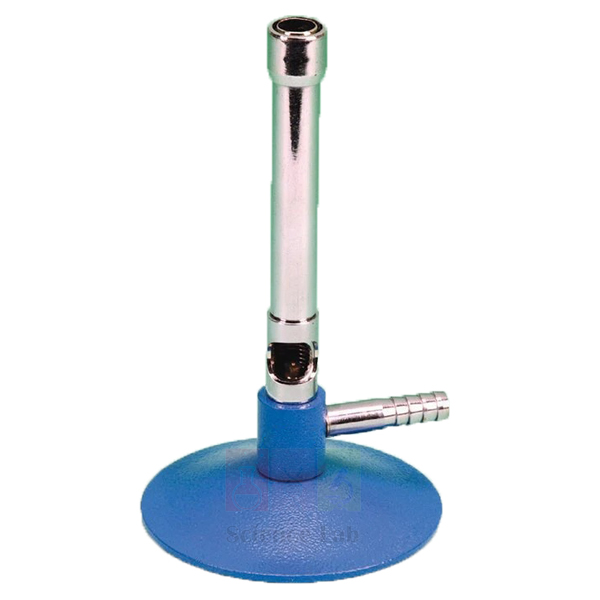
Micro Burner
Micro Burner (Product Code: SLE/CH/15) is a small gas burner with a narrow 9.5 mm burner tube and an overall height of just 100 mm, giving a compact, controllable flame for close-range heating. It suits students and technicians who need a gentle flame for tasks such as flaming inoculating loops, warming small samples or bending thin glass tubing. Produced by Jain Scientific Equipments Pvt Ltd (ScienceLab), Ambala, it is a practical addition to microbiology lab equipment and school chemistry benches alike.
Specifications
| Parameter | Detail |
|---|---|
| Type | Micro gas burner |
| Burner tube | Brass, nickel plated, 9.5 mm diameter |
| Air control | Rotatable air regulator |
| Base | Painted metal base |
| Overall height | 100 mm |
Typical Use
A micro burner earns its place where a full-size Bunsen flame would be wasteful or hard to control. In microbiology practicals it is kept beside the work area to sterilise loops and needles and to flame the mouths of culture tubes. In chemistry, the low profile lets it sit under small apparatus, while the smaller flame is well suited to flame tests, gently warming a watch glass or softening narrow glass tubing.
Turning the air regulator changes how much air mixes with the gas: open it for a hotter blue flame, close it down for a softer, visible flame that is easier to see on a busy bench. As with any chemistry lab equipment that uses gas, check the tubing for cracks before each session and keep paper and solvents well away from the flame.
Manufacturer
The Micro Burner is manufactured by Jain Scientific Equipments Private Limited, trading as ScienceLab from Ambala in Haryana, India. Our company profile gives an overview of the business and the laboratory ranges it produces.
Related Chemistry Lab Equipment
Products that go with a micro burner on the same bench:
- Bunsen Burner Tubing — connection tubing from the gas tap to the burner
- Bunsen Burner — a larger 12 mm tube burner when a bigger flame is needed
- Micro Bunsen Burner — an alternative small-flame burner from our Burners range
- Bunsen Burner Kit — a kit option for equipping a heating station
More heating and support apparatus is listed under Chemistry Lab Equipment.
Frequently Asked Questions
How is the Micro Burner different from a standard Bunsen burner?
Its burner tube is 9.5 mm across and the unit stands 100 mm tall, so it produces a smaller, more localised flame than a full-size Bunsen burner and fits under low apparatus.
Which gas does it run on?
Our product documentation for this item does not specify the gas type. Tell us whether your lab uses LPG or piped natural gas through the contact page and we will confirm suitability before you order.
Can the flame be adjusted?
Yes, the rotatable air regulator lets you change the air-gas mix, moving the flame from a soft luminous flame to a hotter non-luminous one.
Is gas tubing included?
The listing covers the burner itself. Tubing can be ordered separately, for example our Bunsen Burner Tubing.
How do I keep the burner working well?
Let it cool before handling, brush away soot or spilled material from the tube opening, and keep the painted base dry so it does not corrode.
What about warranty?
We confirm warranty terms in each quotation; contact us for details that apply to your order.
Can you supply a full lab or an overseas distributor?
Yes. We supply micro burners in class-set and wholesale quantities across India and to international markets.
Request a Quote
Send the quantity you need through our contact form, or add the Micro Burner to the enquiry cart and submit your list in one go.
Last updated: 24 September 2026
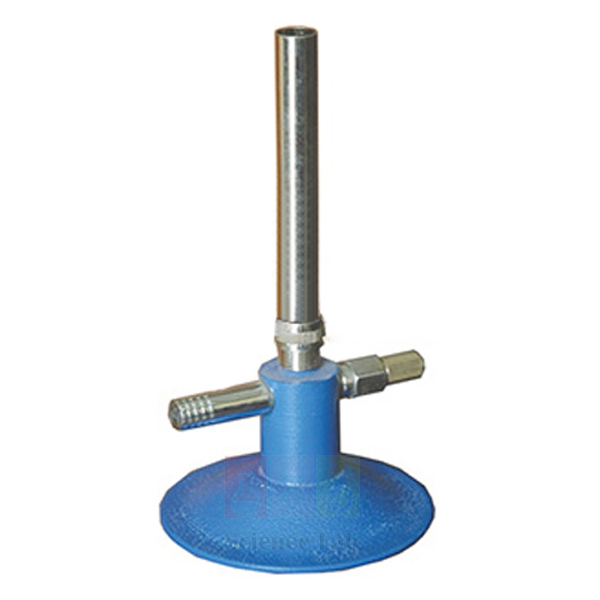
Bunsen Burner
Bunsen Burner (Product Code: SLE/CH/16) is a routine-heating gas burner built around a 12 mm nickel-plated brass tube, with a threaded needle valve to set flame intensity and a rotatable air regulator to shape the flame. It runs on either natural gas or LPG, so the same model can serve labs with piped supply and those using cylinders. Manufactured by Jain Scientific Equipments Pvt Ltd (ScienceLab), Ambala, it is a standard Bunsen burner for schools in India, colleges and training laboratories.
Specifications
| Parameter | Detail |
|---|---|
| Burner tube | Brass, nickel plated, 12 mm |
| Gas control | Rotary, threaded needle valve acting as flame intensity regulator |
| Air control | Rotatable air regulator |
| Gas inlet | Serrated inlet tube for secure tubing grip |
| Base | Coated metal base |
| Gas compatibility | Natural gas and LPG |
| Intended duty | Routine laboratory heating |
Typical Use
This burner is the everyday heat source of a chemistry practical: boiling water in a beaker on a tripod and gauze, heating solids in a test tube, evaporating solutions to crystallise a salt, and running the dry tests and flame tests of school salt analysis. Biology and physics classes use it too, for warming water baths or demonstrating heat transfer.
The needle valve is what sets this model apart from a basic burner. Students can open the valve a little for a small, steady flame or further for vigorous heating, while the air regulator switches between a yellow safety flame and the hot blue cone. The serrated inlet helps tubing stay on during use; push the tubing well over the serrations and inspect it regularly for cracks.
Manufacturer
Jain Scientific Equipments Private Limited produces this burner under its ScienceLab trading name at Ambala, Haryana, and supplies it to educational and research buyers. Learn more in our company profile.
Related Chemistry Lab Equipment
Useful companions for a Bunsen burner heating station:
- Rubber Pipe For Bunsen Burner — flexible gas connection from the tap to the serrated inlet
- Burner Bunsen With Stopcock — a version with a stopcock for complete gas shut-off at the burner
- Bunsen Burner with Flame Stabilizer — an alternative when a steadier flame is wanted
- Micro Burner — a compact burner for small, close-range heating tasks
Browse the wider Chemistry Lab Equipment range for stands, clamps and glassware to complete the setup.
Frequently Asked Questions
Can this Bunsen burner be used with LPG cylinders?
Yes. It is suitable for both natural gas and LPG, so it can be used with piped supply or cylinder installations.
What does the needle valve do?
The threaded needle valve regulates how much gas reaches the tube, letting you set the flame size precisely without adjusting the gas tap on the bench.
How do I get a hot blue flame instead of a yellow one?
Rotate the air regulator to open the air holes. More air gives a hotter, non-luminous blue flame; less air gives the cooler yellow flame used as a visible safety flame.
Is the rubber gas tubing part of the supply?
The listing is for the burner. Tubing is available separately, such as our Rubber Pipe For Bunsen Burner; please mention it in your enquiry if needed.
Does the burner need any maintenance?
Occasionally remove soot and spilled residue from the tube top, keep the needle valve free of grit, and replace any tubing that has hardened or cracked.
What warranty is offered?
Warranty cover is set out in our quotation; contact us to confirm the terms for your order.
What details do you need to quote for a school or college?
The number of burners, the gas type used in your lab, any tubing or stands required, and the delivery address in India or overseas.
Request a Quote
For prices on single units or a full class set, contact us or place the Bunsen Burner in your enquiry cart.
Last updated: 24 September 2026
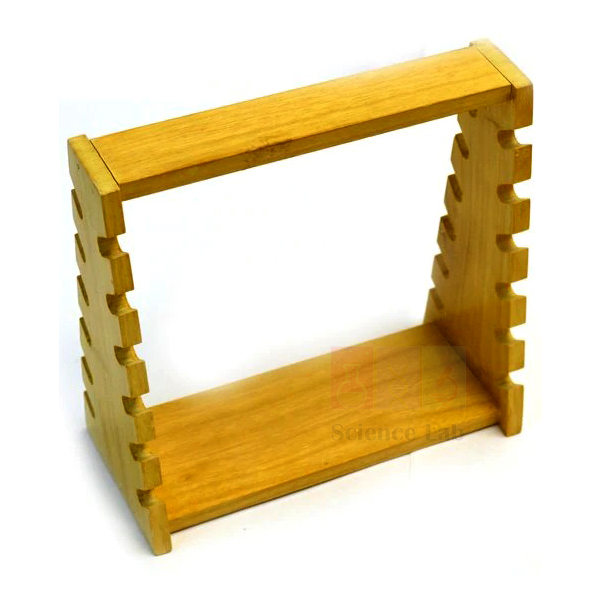
Pipette Stand
Pipette Stand (Product Code: SLE/CH/17) is a polished beech wood rest that holds up to 12 pipettes lying horizontally, six on each side, so clean pipettes stay off the bench and their tips stay uncontaminated between readings. It is aimed at chemistry teachers, lab technicians and students who carry out repeated measurements with volumetric or graduated pipettes. The stand is made by Jain Scientific Equipments Pvt Ltd (ScienceLab), Ambala, and forms part of our chemistry lab equipment for schools and colleges in India and overseas.
Specifications
| Parameter | Detail |
|---|---|
| Type | Horizontal pipette stand |
| Material | Beech wood, well polished |
| Capacity | Up to 12 pipettes |
| Arrangement | Pipettes rest horizontally, 6 on each side |
Typical Use
During volumetric analysis a pipette is picked up and put down many times — to rinse it, draw the aliquot, deliver it into the flask and repeat for concordant readings. Laying it flat on the bench risks rolling, breakage and a dirty tip. This stand gives each pipette a fixed horizontal place, and with six positions per side, two students or two groups can share one stand from opposite sides of a bench.
Horizontal storage also stops liquid left in the pipette from running into the bulb or the pipette filler. Label each position for a particular volume or reagent so pipettes are not mixed up between solutions, and wipe the polished wood dry if a drop is spilled on it.
Manufacturer
The stand is produced by Jain Scientific Equipments Private Limited, which operates under the ScienceLab name from Ambala, Haryana. The company is a registered MSME enterprise (Udyam UDYAM-HR-01-0003714), and its export consignments move under Importer-Exporter Code AAECJ8618A issued by the DGFT. Visit our company profile for background on the business.
Related Chemistry Lab Equipment
Other pipetting items used in the same titration workflow:
- Pipette Stand Foldable — holds pipettes upright and folds away when not in use
- Pipette Filler — draws liquid into the pipette without mouth pipetting
- Bulb Type, Pipette Filler — a simple squeeze-bulb option for student use
- Pipette Stand, Vertical — an upright alternative where drainage is preferred
The full Chemistry Lab Equipment category lists more stands and racks for glassware.
Frequently Asked Questions
How many pipettes does the stand take?
Up to 12, arranged horizontally with 6 on each side.
Why store pipettes horizontally rather than upright?
Lying flat, a pipette cannot tip over and any remaining liquid does not run up into the filler. Upright stands are better when you want wet pipettes to drain, so some labs keep one of each.
What is it made of?
Well-polished beech wood, which is light, easy to wipe and gentle on glass.
Will it take my pipette sizes?
The supported diameter range is not stated in our listing for this model. Send us the pipette volumes you use via the contact page and we will confirm fit.
How should the wooden stand be cleaned?
Wipe with a damp cloth and dry straight away. Do not soak it in water or leave acids and alkalis on the surface.
Is there a warranty?
Warranty terms are given with the quotation — ask us for the terms applicable to your order.
Can you supply pipette stands for many labs at once?
Yes. We handle multi-lab and distributor orders for customers in India and international markets; share quantities and delivery location for a quotation.
Request a Quote
Ask for pricing through our contact page or add the Pipette Stand to your enquiry cart.
Last updated: 24 September 2026
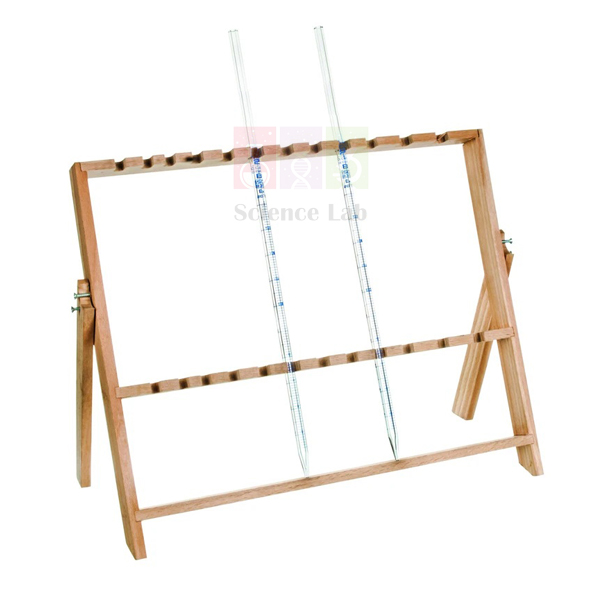
Pipette Stand Foldable
Pipette Stand Foldable (Product Code: SLE/CH/18) is a wooden stand that holds up to 12 pipettes upright, accepting stems from 6 mm to 12 mm in diameter, and folds down when the session is over. Made from well-polished beech wood, it suits laboratories where bench and cupboard space is tight, such as shared school labs and mobile teaching setups. It is manufactured by Jain Scientific Equipments Pvt Ltd (ScienceLab), Ambala, alongside our wider chemistry lab glassware and support range.
Specifications
| Parameter | Detail |
|---|---|
| Type | Foldable vertical pipette stand |
| Material | Beech wood, well polished |
| Capacity | Up to 12 pipettes, held vertically |
| Pipette diameter | 6 mm to 12 mm |
| Storage | Folds easily when not in use |
Typical Use
Holding pipettes vertically lets rinse water and reagent traces drain downward after washing, so pipettes are ready for the next titration practical rather than left lying wet on a tray. Twelve places are enough for a group to keep separate pipettes for acid, base and standard solutions, each in its own marked slot, which cuts down on cross-contamination in volumetric work.
The folding design is the practical difference from a fixed stand. At the end of the period the stand can be emptied, folded and slid into a drawer or lab kit box, making it handy for labs that are set up and packed away daily or for teachers who carry apparatus between classrooms. Check that each pipette falls within the 6–12 mm range so it sits securely.
Manufacturer
ScienceLab is the trading name of Jain Scientific Equipments Private Limited, an Ambala, Haryana company that makes educational and laboratory apparatus. Find out more on our company profile page.
Related Chemistry Lab Equipment
Items that pair with a vertical pipette stand:
- Pipette Stand — a fixed beech wood stand that rests 12 pipettes horizontally
- Pipette Controller — controlled aspiration and dispensing for repeated measurements
- Pipette Carousel Stand — a rotating option for storing pipettes on a central bench
- Pipette Stand, Polypropylene — a plastic alternative for wet or chemical-heavy areas
Explore more holders and racks in our Chemistry Lab Equipment category.
Frequently Asked Questions
Which pipette diameters fit this stand?
Pipettes from 6 mm to 12 mm in diameter. Stems thinner or thicker than that may not sit securely.
How many pipettes can it hold at once?
Up to 12, all standing vertically.
What is the advantage of the folding design?
It takes up far less room in storage, so the stand can be packed into a drawer or kit box between lessons and set up again in seconds.
Should pipettes go in tip down or tip up?
For draining after washing, most labs place them tip down; follow your own lab’s practice and keep tips clear of the bench surface.
How do I look after the beech wood?
Keep it dry, wipe off spills promptly, and avoid placing it near a burner or in a drying oven.
What warranty do you provide?
Terms are confirmed at quotation stage — please contact us for details.
Can I order these for export?
Yes, foldable pipette stands can be shipped to distributors and institutions in India and international markets; include quantity and destination in your enquiry.
Request a Quote
For a price on the Pipette Stand Foldable, reach us through the contact page or use the enquiry cart to send your full list.
Last updated: 24 September 2026
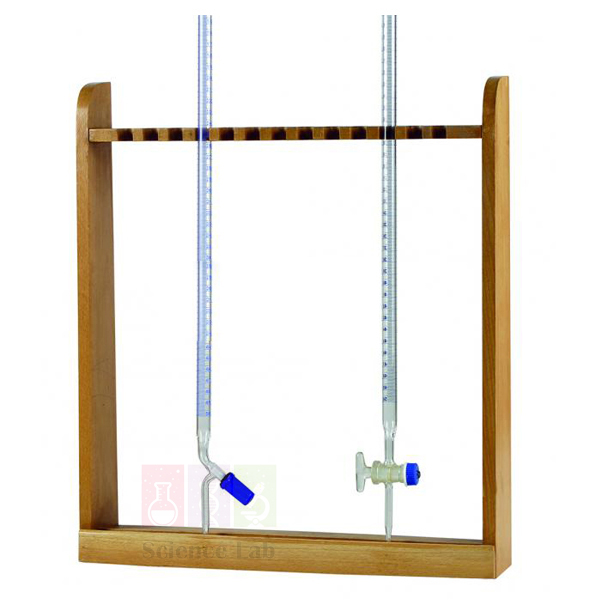
Burette Rack
Burette Rack (Product Code: SLE/CH/19) is a tiered storage frame in polished beech wood that keeps up to 13 burettes standing upright in vertical recesses along one side of its upper tier. It gives lab staff a single, orderly place to park a whole class set of burettes between titration sessions instead of laying them in drawers where stopcocks and tips get chipped. The rack is made by Jain Scientific Equipments Pvt Ltd (ScienceLab), Ambala, and belongs to our chemistry lab equipment for schools, colleges and quality-control labs in India and abroad.
Specifications
| Parameter | Detail |
|---|---|
| Type | Multi-burette storage rack |
| Construction | Tiered wooden frame |
| Material | Polished beech wood |
| Burette holding | Vertical recesses on one side of the upper tier |
| Capacity | Up to 13 burettes |
Typical Use
Burettes are long, fragile and easily damaged at the jet and stopcock. A rack like this is kept on a side bench or near the sink: after a titration class, students rinse their burettes and return them to the recesses, where they stand vertically and drain. At the start of the next volumetric analysis practical, the technician can see at a glance that all burettes are present and clean before handing them out to be mounted on a burette stand.
With capacity for 13, one rack covers a typical group practical. Because the recesses run along a single side, place the rack with that side facing the user so burettes can be lifted out without reaching across others. Keep the rack away from direct burner heat and wipe the polished wood if reagents drip onto it.
Manufacturer
This rack is manufactured by Jain Scientific Equipments Private Limited, known in the market as ScienceLab and based in Ambala, Haryana, India. Our company profile explains more about the company.
Related Chemistry Lab Equipment
Equipment that belongs to the same titration setup:
- Burette — the graduated glass tube the rack is designed to store
- Burette, Class-B, with PTFE Key Stopcock — a burette option with a non-greased PTFE key
- Brush Burette — a long brush for cleaning burettes before they go back on the rack
- Burette Stand and Funnel Stand — holds the burette in position during the titration itself
- Burette Racks — a hardwood holder for a single burette at the student bench
Visit our Chemistry Lab Equipment category for the complete range.
Frequently Asked Questions
How many burettes can the rack store?
Up to 13 burettes, each standing in its own vertical recess.
Is this rack used during titration, or only for storage?
It is mainly for storing and draining burettes. During the titration the burette is normally clamped on a burette stand so the flask can be swirled beneath it.
Will it take burettes of different capacities?
Our listing does not give recess dimensions for this model. Tell us which burettes you use through the contact page and we will confirm they fit.
What wood is used?
The frame is polished beech wood.
How do I keep the rack in good condition?
Let burettes drip over a sink or tray rather than onto the wood where possible, wipe up any spills, and keep the rack out of prolonged damp.
What is covered under warranty?
Warranty terms are provided in each quotation; please ask for them when you enquire.
What should we include in a tender or bulk request?
The number of racks, any burettes or stands to be bundled, and the delivery location in India or abroad — we will reply with a formal quotation.
Request a Quote
Please contact us for a quotation, or add the Burette Rack to your enquiry cart with the rest of your titration apparatus.
Last updated: 24 September 2026
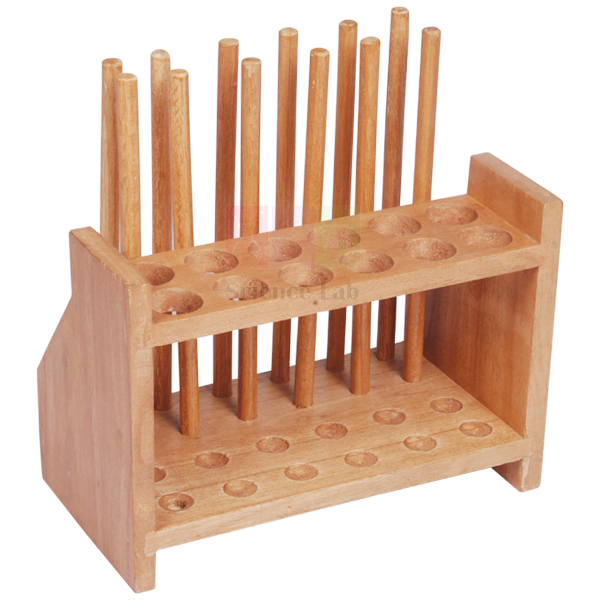
Test Tube Rack With Drying Pegs
Test Tube Rack With Drying Pegs (Product Code: SLE/CH/21) combines two jobs on one polished beech wood platform: two rows of holes to hold test tubes during an experiment, and 12 vertical pegs on which freshly washed tubes can be hung upside down to dry quickly. Having both on a single base saves bench space and keeps clean and in-use tubes together at each workstation. Made by Jain Scientific Equipments Pvt Ltd (ScienceLab), Ambala, it is a practical test tube rack for school labs in India, college practical rooms and teaching labs abroad.
Specifications
| Parameter | Detail |
|---|---|
| Type | Test tube rack with integrated drying pegs |
| Material | Beech wood, well polished |
| Tube holding | Two rows of holes |
| Drying pegs | 12 vertical pegs for quick drying of test tubes |
| Customisation | Can be made to individual preference on request |
Typical Use
In qualitative chemistry practicals students often work through a sequence of test-tube reactions, washing and reusing the same tubes several times in one session. With this rack, tubes in use stand in the two rows of holes while washed tubes are inverted on the pegs to drain, so nobody has to walk to a separate drying board. It works just as well in biology for food tests or enzyme experiments that use multiple tubes side by side.
Rinse tubes with distilled water before hanging them so they dry without marks, and leave space between wet tubes on the pegs to let air circulate. Because the rack is wooden, it should be kept away from open flames; place hot tubes back only after they have cooled a little. For labs with special needs, such as a different hole layout, the design can be customised, which makes it a flexible piece of chemistry lab equipment for schools setting up new benches.
Manufacturer
Jain Scientific Equipments Private Limited makes this rack under the ScienceLab brand in Ambala, Haryana, serving schools, colleges and dealers. More about us is available in our company profile.
Related Chemistry Lab Equipment
Items used with this rack during test-tube experiments:
- Test Tube — glass tubes to stock the rack and pegs
- Brush Test Tube — for scrubbing tubes before they go on the drying pegs
- Test Tube Holder — for gripping a tube while heating it over a burner
- Test Tube Racks — a simpler beech wood rack in 6 and 12 tube sizes without pegs
- Drying Rack — a dedicated rack for drying larger batches of glassware
See all racks, stands and holders under Chemistry Lab Equipment.
Frequently Asked Questions
How many drying pegs does the rack have?
Twelve vertical pegs, in addition to the two rows of holes for holding tubes upright.
How many test tubes fit in the holes?
The rack has two rows of holes; the number of holes per row and the hole diameter are not stated in our listing. Contact us with your tube size and we will confirm, or ask for a custom layout.
Can the design be changed for our lab?
Yes. The rack can be customised to individual preference; describe the layout you need when you enquire.
What is the benefit over a plain test tube rack?
It adds drying pegs on the same platform, so washing and reuse of tubes happen at the workstation without a separate drying board.
How should the rack be cleaned?
Wipe it with a damp cloth and dry it; do not immerse the wooden rack or leave corrosive spills on it.
Which warranty terms apply?
These are confirmed in our quotation for your order — please ask when you request pricing.
Do you deliver in bulk to institutions and overseas buyers?
Yes, we supply schools, colleges and distributors in India and international markets.
Request a Quote
For pricing or a custom version, contact us or add this rack to your enquiry cart.
Last updated: 24 September 2026
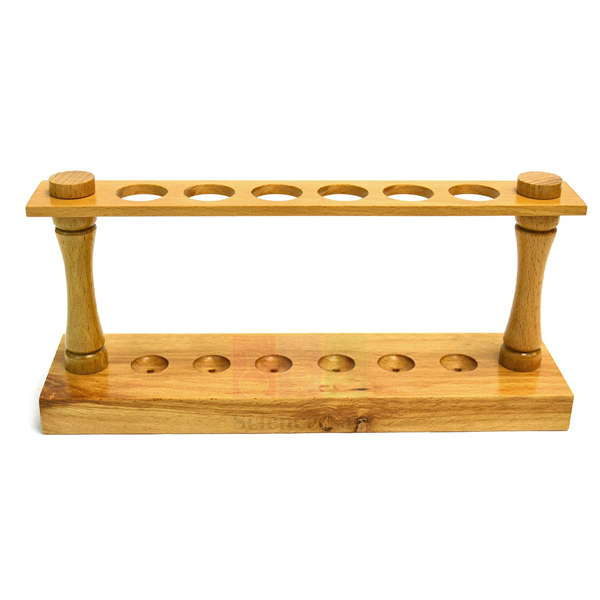
Test Tube Racks
Test Tube Racks (Product Code: SLE/CH/20) are sturdy beech wood racks offered in two sizes — for 6 tubes or for 12 tubes — with a carefully polished finish that helps the wood resist damage from everyday spills. They give each student or group a stable place to stand test tubes during reactions, observations and waiting steps. The racks are made by Jain Scientific Equipments Pvt Ltd (ScienceLab), Ambala, as part of our educational lab equipment for schools and colleges in India and international markets.
Specifications
| Parameter | Detail |
|---|---|
| Type | Wooden test tube rack |
| Material | Beech wood, robust build |
| Available sizes | 6 tubes and 12 tubes |
| Finish | Finely polished to minimise damage from spills |
| Customisation | Can be made to individual preference on request |
Typical Use
Choosing between the two sizes is mostly about how the class is organised. The 6-tube rack suits an individual student doing a short sequence of tests, such as the preliminary tests in salt analysis or a set of indicator colour changes. The 12-tube rack suits a pair or small group running comparisons side by side — for example a reactivity series, a set of food tests or a dilution series where each tube needs to stay in order.
Many schools buy a mix: a 6-tube rack for each student position and a few 12-tube racks for demonstrations and group work. Keep the racks dry after washing up, stand hot tubes on a heat-resistant mat for a moment before returning them, and label positions with a marker strip when the order of tubes matters.
Manufacturer
These racks are manufactured by Jain Scientific Equipments Private Limited, trading as ScienceLab in Ambala, Haryana. For purchase departments and tender buyers who need vendor registration details, the company’s GSTIN is 06AAECJ8618A1ZT and its Legal Entity Identifier is 3358004HRD1JIVXKYX49. Our company profile has more information.
Related Chemistry Lab Equipment
Products commonly ordered with test tube racks:
- Test Tube 12 x 100 mm — glass test tubes for stocking student racks
- Test Tube Holder, Metal — for holding a tube safely while heating
- Brush, Bristle Test Tube Fan Shape — for cleaning tubes after the practical
- Test Tube Rack With Drying Pegs — a version with 12 drying pegs built in
- Test Tube Stand 3 Tier — a tiered alternative for larger numbers of tubes
Find more in our Chemistry Lab Equipment range.
Frequently Asked Questions
Which sizes are available?
Two: a rack for 6 test tubes and a rack for 12 test tubes. Please state the size and quantity of each in your enquiry.
What hole diameter do the racks have?
Hole size is not specified in our current listing. Share the outer diameter of your test tubes via the contact page and we will confirm fit or suggest a customised version.
Can you make a rack with a different layout?
Yes, the racks can be customised to your preference, for example to suit a particular tube count or bench arrangement.
Are wooden racks suitable for chemical work?
Yes for routine school and college use — the polished finish is meant to limit damage from spills. Wipe spills promptly and avoid prolonged contact with strong acids.
Is warranty offered?
Warranty terms are included in our quotation; ask us for the terms that apply.
What does a school need to send for a quotation?
The number of 6-tube and 12-tube racks, any customisation, and your delivery address. Tender buyers can request our registration details at the same time.
Can racks be supplied to overseas distributors?
Yes, we export to distributors and institutions in international markets as well as supplying across India.
Request a Quote
To order Test Tube Racks, send your requirements through our contact page or add them to the enquiry cart.
Last updated: 24 September 2026
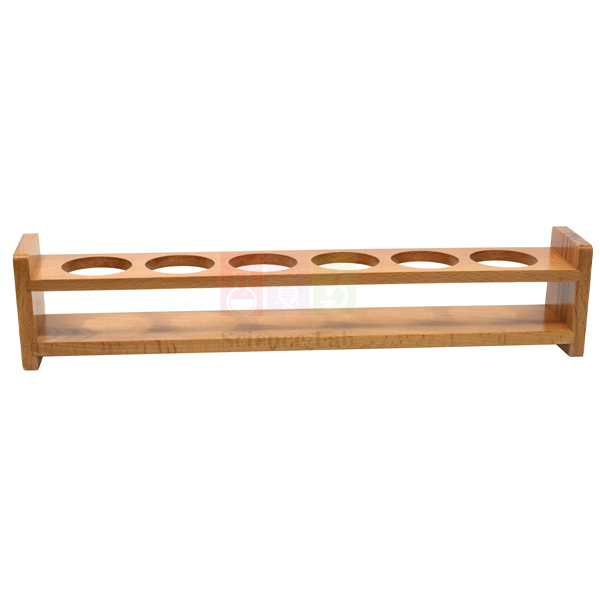
Bottle Stand
Bottle Stand (Product Code: SLE/CH/22) is a polished beech wood holder with 45 mm diameter holes sized for 60 ml dropping bottles, supplied in a 6-hole or a 12-hole version. It keeps a bench set of indicators and test reagents upright, together and in a fixed order, so bottles are not knocked over or mixed up during practicals. The stand is manufactured by Jain Scientific Equipments Pvt Ltd (ScienceLab), Ambala, for school chemistry lab equipment sets and college teaching labs.
Specifications
| Parameter | Detail |
|---|---|
| Type | Reagent / dropping bottle stand |
| Material | Beech wood, well polished |
| Hole diameter | 45 mm |
| Suitable bottles | 60 ml dropping bottles |
| Versions | 6 holes or 12 holes |
Typical Use
A bottle stand turns a loose collection of reagent bottles into an organised bench kit. Teachers typically fill a 6-hole stand with the essentials for acid-base indicator work — phenolphthalein, methyl orange, litmus and universal indicator — and a 12-hole stand with the wider range of test solutions used in salt analysis or food tests. Each group gets an identical stand, which makes it easy to check that every bottle has come back at the end of the lesson.
Keeping bottles in fixed positions also helps students find the right reagent quickly and reduces the chance of dropper mix-ups. Write the reagent name on the wood beside each hole or on a strip along the edge, wipe up drips so stains do not build up on the polish, and store the stand away from heat sources.
Manufacturer
The Bottle Stand is made by Jain Scientific Equipments Private Limited, a laboratory apparatus maker based in Ambala, Haryana, whose products are sold under the ScienceLab name. Read our company profile to learn more.
Related Chemistry Lab Equipment
Bottles and related items for filling the stand:
- Bottle Dropping — glass dropping bottles for indicators and test reagents
- Amber Dropping Bottle — for light-sensitive solutions such as silver nitrate
- Dropping Bottle — a plastic option for less breakable student sets
- Bottle Reagent, W.M. Glass — stock bottles for refilling the dropping bottles
Our Chemistry Lab Equipment category lists further stands and bench accessories.
Frequently Asked Questions
Which bottles fit the Bottle Stand?
It is designed for 60 ml dropping bottles; the holes are 45 mm in diameter. Before ordering other bottles, check that their outer diameter suits a 45 mm hole.
How many bottles does it hold?
Choose the 6-hole version for a compact indicator set or the 12-hole version for a fuller reagent kit.
Are dropping bottles included with the stand?
The listing is for the stand. Bottles are available separately — mention them in your enquiry if you want a complete set.
Can it be used for other small containers?
Any container that sits securely in a 45 mm hole can be used, but the stand is sized with 60 ml dropping bottles in mind.
How do I clean the stand?
Wipe with a slightly damp cloth, dry it at once and avoid soaking the wood. Clean indicator stains early before they set.
What about warranty?
We state warranty terms in the quotation; contact us if you need them in advance.
Can we order stands for a whole school or a distributor network?
Yes. Tell us how many 6-hole and 12-hole stands you need and the delivery destination in India or abroad.
Request a Quote
Request pricing through our contact page or add the Bottle Stand to your enquiry cart together with bottles.
Last updated: 24 September 2026