- Physics Lab Equipment
- Chemistry Lab Equipment
- Biology Lab Equipment
- Anatomical Lab Equipment
- Learning
- Educational Lab Equipment
- Magnets
- Agriculture
- Astronomy
- Earth Science
- Geography Lab Equipment
- Safety Lab Coat
- Laboratory
- Meteorological
- Electricity & Magnetism
- Heat
- School Lab Equipment
- Lab Glassware
- Science Lab Equipment
- Tvet Lab Equipment
- Robotics Kits Supplier and Manufacturer for Schools India
- Math Lab Equipment Manufacturers and Exporters in Ambala
- STEM Kits Manufacturers and Supplier India
- Engineering Lab Equipment
- Hospital Lab Equipment
- Water, Sanitation & Hygiene Supplies
- Cold Chain, Solar & Communication Equipment
- Nutrition
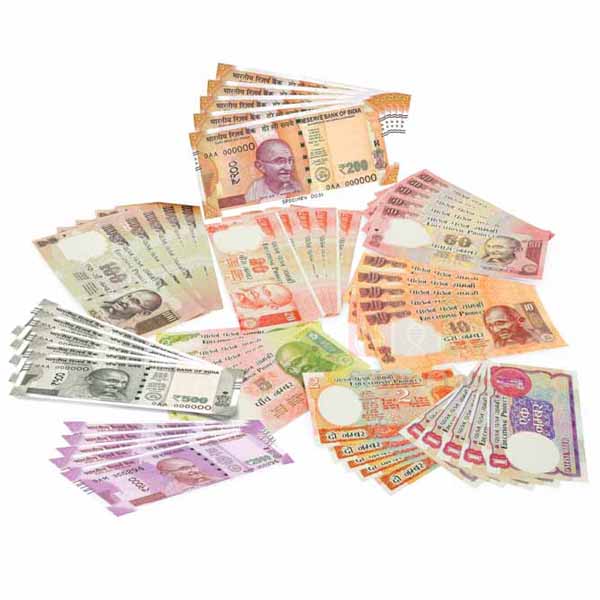
Dummy Currency Notes
Dummy Currency Notes (Product Code: SLE/MAT/71) is a realistic play money set used to teach money handling and everyday arithmetic through shop role-play in primary classrooms. The set contains dummy currency notes from 1 to 2000, so children can act as customer and seller, transact amounts and combine different notes to pay a given sum. It is supplied by Jain Scientific Equipments Pvt Ltd (ScienceLab), Ambala, India, alongside its junior lab kit range for primary schools.
Key Details
| Parameter | Detail |
|---|---|
| Type | Realistic play money set |
| Denominations | Dummy currency notes from 1 to 2000 |
| Activities | Acting as customer and seller; transacting with amounts; combining various notes to pay an amount |
| Learning focus | Money handling and everyday arithmetic through play |
| Product code | SLE/MAT/71 |
| Supplied by | Jain Scientific Equipments Pvt Ltd (ScienceLab), Ambala, India |
What Are Dummy Currency Notes Used For?
The classic activity is a class shop: items get price labels, one child pays with the notes and another checks the amount and gives change. Children soon discover there are several ways to make the same amount, and comparing those combinations builds addition, subtraction and mental arithmetic in a setting they recognise from real life.
Start with small amounts and a few denominations, then widen the range as confidence grows. Keeping the notes sorted by denomination in trays or envelopes speeds up setting out and tidying away. Children enjoy role-play with realistic notes, and the set pairs naturally with other educational lab equipment in India for early number work.
Supplier
Jain Scientific Equipments Private Limited, which trades as ScienceLab, supplies Dummy Currency Notes from Ambala, Haryana, India. The company sources the set and handles quotations, order coordination and dispatch for schools, colleges, institutions and dealers across India and international markets, so money resources can be ordered together with other maths lab items. Read about the company on our company profile.
Related Maths Lab Equipment
Items that complete a classroom money corner:
- Dummy Coins — lets children pay and give change with notes and coins together.
- Currency — another money resource listed in our primary range.
- Calculator Simple/Hand — for checking totals once mental calculation is done.
See more in our Maths Lab Equipment category.
Frequently Asked Questions
Which denominations are included in Dummy Currency Notes?
Dummy Currency Notes cover denominations from 1 to 2000. The exact denomination list and the number of notes per set are not itemised in our catalogue description, so please ask through our contact page before ordering.
How are Dummy Currency Notes used in class?
Dummy Currency Notes are used in role-play where children act as customer and seller, transact with amounts and combine various notes to pay a given sum, which builds addition, subtraction and money-handling skills in a realistic setting.
Can Dummy Currency Notes be used with coins?
Yes, Dummy Currency Notes can be used together with our Dummy Coins so that children work with notes and coins in the same shop role-play. Ask us to quote both items together when you send your enquiry.
Which age group are Dummy Currency Notes suitable for?
Dummy Currency Notes suit pre-primary and primary children who are learning to recognise money, count amounts and make simple payments, and older pupils can use the higher denominations for larger totals and change problems.
Who supplies Dummy Currency Notes?
Dummy Currency Notes are supplied by Jain Scientific Equipments Pvt Ltd (ScienceLab), Ambala, Haryana, India, which quotes and dispatches them to schools, institutions and dealers in India and international markets.
What details are needed to quote Dummy Currency Notes?
To quote Dummy Currency Notes we need the product code SLE/MAT/71, the number of sets and the delivery location. Send these through the contact page or add the item to the enquiry cart to start your request.
Request a Quote
To request a price for Dummy Currency Notes, write to us through the contact page or add them to the enquiry cart along with any related money resources.
Last updated: 24 September 2026
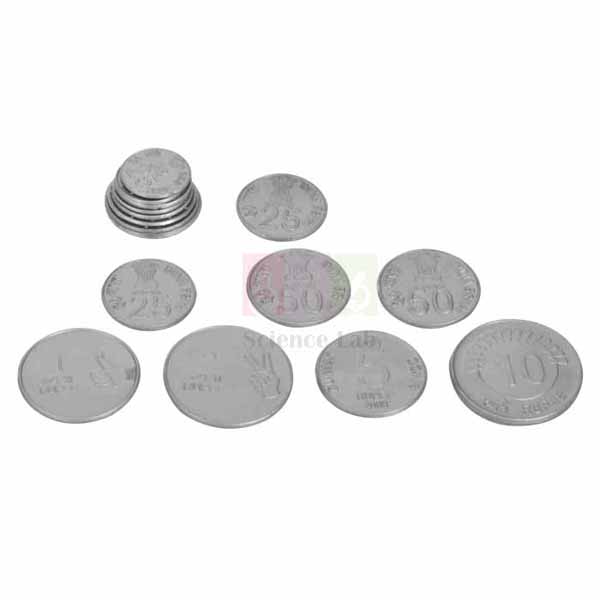
Dummy Coins
Dummy Coins (Product Code: SLE/MAT/72) is a set of eight play coins used to teach money handling, coin recognition and adding or subtracting amounts in primary maths lessons. Teachers use it for buyer-and-seller role play, and the set spans six denominations from 25 paise to 10 rupees, each coin 2.5 cm across. It is made by Jain Scientific Equipments Pvt Ltd (ScienceLab), an OEM manufacturer, at its own factory in Ambala, India, as part of its mathematics lab kits.
Specifications
| Parameter | Detail |
|---|---|
| Coins per set | 8 |
| Denominations | 25 paise and 50 paise (2 pieces each); 1 rupee, 2 rupee, 5 rupee and 10 rupee (1 piece each) |
| Coin diameter | 2.5 cm (25 mm) |
| Learning focus | Currency awareness, making an amount from a combination of coins, addition and subtraction, everyday money transactions |
| Typical activity | Buyer-and-seller role play with real amounts |
| Product code | SLE/MAT/72 |
| Manufacturer | Jain Scientific Equipments Pvt Ltd (ScienceLab) — OEM |
| Country of origin | India (made in Ambala, Haryana) |
What Are Dummy Coins Used For?
Dummy coins turn an abstract sum into something a child can hold. In a pretend shop, one learner prices an item, another pays with a mix of coins, and together they work out the change — practising addition and subtraction with real denominations instead of bare numbers. Asking pupils to find different coin combinations for the same amount builds number sense and early problem-solving.
Because each set holds only eight coins, many classrooms plan one set per pair or small group so that every child handles the money. Counting the coins back into their set after each lesson keeps sets complete, and the same coins work later for word problems about spending, saving and change.
What to Specify When Ordering
- Number of sets needed (each set contains 8 coins).
- Whether the standard denomination mix — two each of 25 and 50 paise, one each of 1, 2, 5 and 10 rupees — suits your lesson plan.
- Other maths aids, such as dummy currency notes, that should be quoted on the same order.
- Delivery location, for a single school or school lab equipment bulk supply to several sites.
OEM Manufacturer
Dummy Coins are produced by ScienceLab, the trading name of Jain Scientific Equipments Private Limited, which is the OEM (original equipment manufacturer) of this money-teaching set. The sets are made at the company’s own licensed factory at Saha, Ambala, Haryana, India, and go factory-direct to schools, teacher-training institutes, dealers and importers instead of passing through a trader. For repeat orders or extra coins, ask us — the manufacturer handles them itself. Read more on the ScienceLab company profile.
Related Maths Lab Equipment
Money lessons usually draw on a few other maths aids for counting and checking totals:
- Dummy Currency Notes — paper-money companion for purchases paid with notes.
- Calculator Simple/Hand — lets older pupils check the totals they worked out with coins.
- Abacus Desk/Table — supports the addition and subtraction behind giving change.
- Place Value Mat with Stacking Counters — builds the place-value sense that money sums depend on.
See the full Maths Lab Equipment range for more classroom maths manipulatives.
Frequently Asked Questions
What is included in the Dummy Coins set?
The Dummy Coins set (SLE/MAT/72) contains 8 coins: two 25 paise, two 50 paise, and one each of the 1 rupee, 2 rupee, 5 rupee and 10 rupee denominations. Every coin measures 2.5 cm in diameter, a comfortable size for young hands.
Which classes are Dummy Coins suited to?
Dummy Coins suit early-years and primary classes where children first learn to recognise currency, make up amounts and add or subtract money. Older pupils can reuse the same set for word problems on change and budgeting. As with any small classroom pieces, supervise very young children during use.
Who manufactures the Dummy Coins?
Dummy Coins are manufactured by Jain Scientific Equipments Pvt Ltd, trading as ScienceLab, which is the OEM for this set. Production takes place at the company’s own factory at Saha, Ambala, Haryana, India, and every quotation comes straight from the manufacturer.
Can Dummy Coins be used with dummy currency notes?
Yes. Dummy Coins cover small values up to a 10 rupee coin, so schools often pair them with ScienceLab’s Dummy Currency Notes. Using both lets children act out realistic purchases in which a note is handed over and the change is returned in coins.
How should Dummy Coins be stored between lessons?
Keep each set of Dummy Coins in its own bag or box and count the eight coins back after every lesson so that no group runs short. Wipe the coins with a dry or slightly damp cloth when they need cleaning, and store them away from direct heat.
What should a quotation request for Dummy Coins include?
For a Dummy Coins quotation, state the number of sets (each holds 8 coins), any other maths items for the same order, and the delivery location in India or abroad. Send these details through the ScienceLab contact page or the enquiry cart.
Are Dummy Coins available in bulk for schools and export?
Yes. ScienceLab supplies Dummy Coins in quantities for single classrooms, whole schools, education projects, dealers and importers, in India and international markets. Share your quantity and destination on the contact page and the manufacturer will quote directly.
Request a Quote
To order Dummy Coins (SLE/MAT/72), send your quantity and delivery details through our contact page or add the item to the enquiry cart. Quotations come direct from the manufacturer in Ambala.
Last updated: 24 September 2026
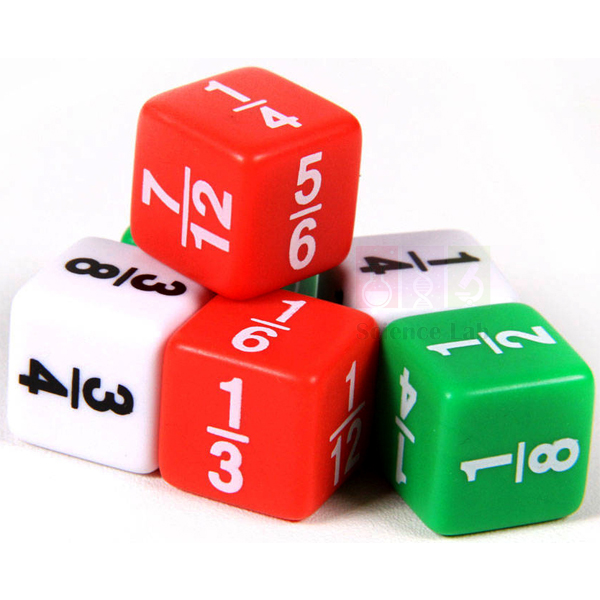
Fraction Dice
Fraction Dice (Product Code: SLE/MAT/73) is a set of six small dice used to teach fractional relationships through roll-and-compare games in school maths lessons. Primary and middle-school teachers use it on its own or with existing fraction kits, and the set covers the fractions 1/2, 1/3, 1/4, 1/5, 1/6, 1/8 and 1/12 on dice 5/8 inch (about 16 mm) in size. It is made by Jain Scientific Equipments Pvt Ltd (ScienceLab), an OEM manufacturer, at its own factory in Ambala, India.
Specifications
| Parameter | Detail |
|---|---|
| Dice per set | 6 |
| Die size | 5/8 inch (about 16 mm) |
| Fractions covered | 1/2, 1/3, 1/4, 1/5, 1/6, 1/8 and 1/12 |
| Teaching use | Fractional relationships; add-on for existing kits that need a variety of fractions |
| Product code | SLE/MAT/73 |
| Manufacturer | Jain Scientific Equipments Pvt Ltd (ScienceLab) — OEM |
| Country of origin | India (made in Ambala, Haryana) |
What Are Fraction Dice Used For?
Rolling a fraction instead of a whole number gives children a quick reason to compare and order fractions. In a simple two-player game, each pupil rolls, the pair decide whose fraction is larger and explain why — for instance, that one third beats one quarter because the whole is shared among fewer parts. Older pupils can roll two dice and add, subtract or find a common denominator for the results.
The dice also slot into fraction kits a school already owns whenever an activity needs a random choice of fraction, turning a fraction-wall or fraction-circle lesson into a game. Working in small groups keeps every child rolling and reasoning, which is why many schools keep a few sets with their mathematics lab equipment.
What to Specify When Ordering
- Number of sets required (each set holds 6 dice).
- Whether the dice will be used alone or with an existing fraction kit, so the fractions suit your activities.
- Any other fraction or probability aids to be quoted on the same order.
OEM Manufacturer
ScienceLab, the trading name of Jain Scientific Equipments Private Limited, is the original equipment manufacturer (OEM) of these Fraction Dice. They are produced at the company’s own licensed factory at Saha, Ambala, Haryana, India, so schools, distributors and importers deal with the maker itself rather than a reseller. The company is a registered MSME whose major activity is manufacturing (Udyam UDYAM-HR-01-0003714), and export consignments move under Importer-Exporter Code AAECJ8618A (DGFT). Company background is on the ScienceLab profile page.
Related Maths Lab Equipment
These items extend the fraction and chance work that starts with the dice:
- Designer Fraction — another fraction aid for building and comparing the parts rolled on the dice.
- Non Magnetic Fraction Disc — foam fraction circles for modelling a rolled fraction as part of a whole.
- Probability Kit — carries dice games on into chance and probability lessons.
- Plastic Dice — ordinary number dice for mixed games with whole numbers and fractions.
More classroom maths aids are listed under Maths Lab Equipment.
Frequently Asked Questions
Which fractions are on the Fraction Dice?
The Fraction Dice set (SLE/MAT/73) covers the fractions 1/2, 1/3, 1/4, 1/5, 1/6, 1/8 and 1/12 across its six dice. If you need the exact face layout of each die for a lesson plan, ask us through the contact page before ordering.
How many Fraction Dice are in a set, and how big are they?
Each Fraction Dice set contains 6 dice, and every die measures 5/8 inch, which is about 16 mm. The small size keeps the dice easy to roll on a desk and quick to share within a group of pupils.
Can Fraction Dice be used with other fraction kits?
Yes. Fraction Dice teach fractional relationships on their own and also add variety to existing kits that need a range of fractions, such as fraction circles or fraction strips, turning those materials into roll-and-compare games for the class.
Who manufactures the Fraction Dice?
Fraction Dice are manufactured by Jain Scientific Equipments Pvt Ltd, trading as ScienceLab, which is the OEM for this item. They are made at the company’s own factory at Saha, Ambala, Haryana, India, and buyers receive quotations directly from the manufacturer.
Which pupils are Fraction Dice suitable for?
Fraction Dice suit primary and middle-school pupils learning to name, compare and combine fractions. Younger learners use one die to decide which fraction is larger, while older pupils roll two dice and add or subtract the results. Supervise young children, because the dice are small.
What should a Fraction Dice quotation request include?
When requesting a Fraction Dice quotation, give the number of sets (six dice per set), any fraction or probability aids to be quoted alongside, and the delivery address in India or overseas. Both the contact page and the enquiry cart reach the manufacturer directly.
Are Fraction Dice supplied in bulk and for export?
Yes. ScienceLab supplies Fraction Dice for single classrooms, school groups, education programmes, distributors and importers in India and international markets. Send your quantity and destination through the contact page for a quotation from the manufacturer.
Request a Quote
For Fraction Dice (SLE/MAT/73) pricing, write to us on the contact page or place the item in the enquiry cart with your quantity. You will receive a quotation direct from the manufacturer.
Last updated: 24 September 2026
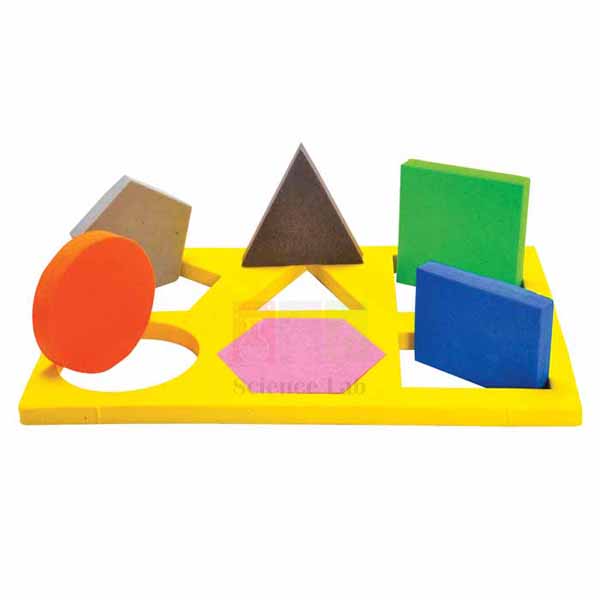
2D Shapes
2D Shapes (Product Code: SLE/MAT/74) is a shape-matching teaching aid used to introduce two-dimensional geometry — shape names, properties and construction — to young children in pre-primary and primary classrooms. Teachers use it for play-way activities in which learners match and fit the right shapes, making an early geometry topic hands-on. It is made by Jain Scientific Equipments Pvt Ltd (ScienceLab), an OEM manufacturer, at its own factory in Ambala, India.
Key Details
| Parameter | Detail |
|---|---|
| Topic | Two-dimensional (plane) shapes |
| Activity | Matching and fixing the right shapes |
| Learning outcomes | Shape names and properties; understanding how shapes are constructed |
| Teaching approach | Hands-on, play-way learning for young children |
| Contents and material | Not listed in the product description — ask us for details |
| Product code | SLE/MAT/74 |
| Manufacturer | Jain Scientific Equipments Pvt Ltd (ScienceLab) — OEM |
| Country of origin | India (made in Ambala, Haryana) |
What Is the 2D Shapes Set Used For?
Young children learn shapes fastest when they can hold them. With this set, a teacher names a shape, asks a child to find it and fit it into place, then talks about what makes it that shape — how many sides, how many corners, straight edges or curved. Matching tasks like these turn a vital early maths topic into a game little learners want to repeat.
Once the names are secure, the same pieces support sorting by property, simple pattern-making and discussion of how a shape is built from its sides and corners. Short, frequent sessions in small groups suit pre-primary and early primary classes, and the set leads naturally on to shape templates and pattern blocks in later years.
OEM Manufacturer
The 2D Shapes set is manufactured by ScienceLab — the brand of Jain Scientific Equipments Private Limited — acting as OEM (original equipment manufacturer). It is produced at the company’s licensed factory in Saha, Ambala, Haryana, India, and supplied straight from the factory to pre-schools, primary schools, teacher-training colleges, dealers and importers. For matching items or repeat sets for more classrooms, ask us and the manufacturer will respond directly. Learn more on the company profile.
Related Maths Lab Equipment
Early geometry lessons often continue with these aids:
- Primary Shapes Template Set — for tracing and drawing the shapes children have learned to match.
- Attribute Blocks — for sorting and classifying shapes by their attributes.
- Plastic Pattern Blocks — for building patterns and pictures from plane shapes.
- Geometric Shapes Building Set — for constructing shapes once their names are familiar.
Explore the complete Maths Lab Equipment range for more early-years and primary maths aids.
Frequently Asked Questions
What does the 2D Shapes set teach?
The 2D Shapes set (SLE/MAT/74) teaches young children the names and properties of two-dimensional shapes through matching and fitting activities. It also helps them understand how shapes are constructed, laying a foundation for later work on perimeter, area and symmetry.
Which shapes and how many pieces does the 2D Shapes set include?
The product description of the 2D Shapes set does not list the individual shapes, piece count or material. Please ask us through the contact page for the current contents before ordering, so that the set can be matched to your curriculum.
Which age group is the 2D Shapes set suitable for?
The 2D Shapes set is intended for little learners in pre-primary and early primary classes who are meeting geometrical shapes for the first time. Its play-way matching format keeps them engaged while they learn names and properties. Supervise young children with any small classroom pieces.
Who manufactures the 2D Shapes set?
The 2D Shapes set is manufactured by Jain Scientific Equipments Pvt Ltd, trading as ScienceLab, the OEM for this teaching aid. It is made at the company’s own factory at Saha, Ambala, Haryana, India, and quotations are issued directly by the manufacturer.
How can teachers use the 2D Shapes set in a lesson?
Teachers typically name a shape, ask a child to find and fit it, then discuss its sides and corners. The 2D Shapes set also supports sorting games, pattern-making and quick recall quizzes, so one set serves several short activities across a term.
What should a 2D Shapes quotation request include?
For a 2D Shapes quotation, state the number of sets you need, the classes or schools they are for, any related early-maths aids to include, and the delivery location in India or abroad. Send the request through the contact page or the enquiry cart.
Is the 2D Shapes set available in bulk and for export?
Yes. ScienceLab supplies the 2D Shapes set for single classrooms, school chains, pre-school programmes, dealers and importers across India and international markets. Share your quantity and destination on the contact page for a direct quotation from the manufacturer.
Request a Quote
Request a price for 2D Shapes (SLE/MAT/74) through our contact page, or add it to the enquiry cart together with other maths items. The quotation comes straight from the manufacturer.
Last updated: 24 September 2026
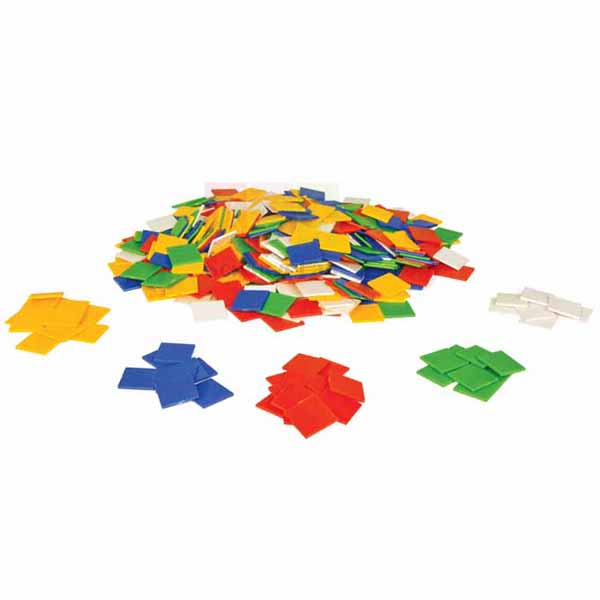
Colour Tile
Colour Tile (Product Code: SLE/MAT/75) is a set of multicoloured plastic square tiles used to teach area, perimeter, counting and patterns in school maths lessons. Teachers from pre-primary to middle school use the tiles because one versatile set covers colour recognition, sorting, number operations and measurement of shapes. It is made by Jain Scientific Equipments Pvt Ltd (ScienceLab), an OEM manufacturer, at its own factory in Ambala, India.
Key Details
| Parameter | Detail |
|---|---|
| Material | Plastic |
| Tile shape | Square |
| Colours | Multicoloured |
| Main topics | Area and perimeter |
| Other concepts | Colour recognition, sorting, counting, patterns, number operations |
| Tile size and quantity | Not listed in the product description — ask us |
| Product code | SLE/MAT/75 |
| Manufacturer | Jain Scientific Equipments Pvt Ltd (ScienceLab) — OEM |
| Country of origin | India (made in Ambala, Haryana) |
What Are Colour Tiles Used For?
Square tiles make area and perimeter visible. A pupil builds a rectangle, counts the tiles inside it to find the area in square units, then counts the tile edges around the outside for the perimeter. Rearranging the same tiles into a new shape shows that two figures can share an area yet have different perimeters — a discovery that stays with children far longer than a formula alone.
Younger children start with the colours: naming them, sorting tiles into groups, counting each group and continuing repeating patterns. As skills grow, the tiles become counters for addition and subtraction and rows-and-columns arrays for early multiplication, so a single set of these mathematics lab kits serves several years of the curriculum.
OEM Manufacturer
Colour Tiles are made by ScienceLab, the trading name of Jain Scientific Equipments Private Limited, which is the OEM (original equipment manufacturer) of this maths manipulative rather than a reseller. Production takes place at the company’s own licensed factory at Saha, Ambala, Haryana, India, and schools, NGOs, distributors and importers buy directly from that factory. Extra tiles for classroom sets and repeat orders are handled by the manufacturer itself — just ask us. Company details are on the ScienceLab profile.
Related Maths Lab Equipment
To take area, pattern and counting work further, schools often add:
- Double Sided Geoboard — compares tile-built areas with shapes stretched on a pin grid.
- Interlocking Cubes — moves pupils from flat area to counting volume in cubes.
- Graph Board — for plotting and recording tile shapes on a grid.
- Base Ten Blocks — extends counting into place value and larger number operations.
Browse all Maths Lab Equipment for more hands-on maths resources.
Frequently Asked Questions
What are Colour Tiles made of?
Colour Tiles (SLE/MAT/75) are multicoloured square tiles made of plastic. The smooth plastic is easy to wipe clean, and the square shape lets tiles sit edge to edge without gaps, which is exactly what area and perimeter activities need.
How do Colour Tiles help teach area and perimeter?
With Colour Tiles, pupils build a shape, count the tiles inside it for the area in square units and count the outer edges for the perimeter. Rearranging the same tiles shows that equal areas can have different perimeters, backing the formulas with hands-on evidence.
What size are Colour Tiles, and how many come in a set?
The product description of Colour Tiles does not state the tile size, the number of tiles or the exact colours included. Contact us through the contact page and we will confirm the current specification of the set before you place an order.
Which age groups can use Colour Tiles?
Colour Tiles work across a wide range: young children use them for colour recognition, sorting, counting and patterns, while older pupils use them for number operations, area and perimeter. That versatility lets one set serve pre-primary through middle-school maths lessons.
Who manufactures Colour Tiles?
Colour Tiles are manufactured by Jain Scientific Equipments Pvt Ltd, trading as ScienceLab, the OEM of this product. They are made at the company’s own factory at Saha, Ambala, Haryana, India, and every quotation is prepared directly by the manufacturer.
What should a Colour Tile quotation request include?
A Colour Tile quotation request should state how many sets you need, which classes will use them, any related maths aids to include, and the delivery city or country. Use the ScienceLab contact page or add the item to the enquiry cart.
Can Colour Tiles be ordered in bulk or for export?
Yes. ScienceLab supplies Colour Tiles in classroom and whole-school quantities to schools, education projects, distributors and importers in India and international markets. Send your requirement through the contact page to receive a quotation from the manufacturer.
Request a Quote
Ask for a Colour Tile (SLE/MAT/75) quotation on our contact page or collect it with other items in the enquiry cart. Prices are quoted direct by the manufacturer.
Last updated: 24 September 2026
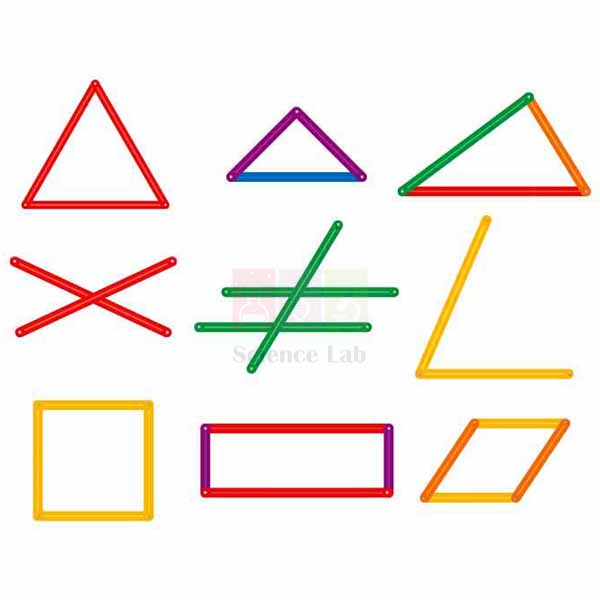
Geo Geometry Sticks
Geo Geometry Sticks (Product Code: SLE/MAT/76) is a set of snap-together sticks used to build polygons and explore plane geometry in school maths classrooms. Pupils work with them on a desk or on a magnetic board, and teachers use them to investigate angles, the triangle inequality theorem and the mid-point theorem. It is made by Jain Scientific Equipments Pvt Ltd (ScienceLab), an OEM manufacturer, at its own factory in Ambala, India.
Key Details
| Parameter | Detail |
|---|---|
| Joining method | Sticks snap together |
| Working surface | Desk or magnetic board |
| Stick lengths | Activities compare shapes built from equal-length and different-length sticks |
| Topics | Plane geometry, polygons, triangle inequality theorem, mid-point theorem, angles |
| Teacher use | Measurement of angles; construction and analysis of shapes |
| Stick count and material | Not listed in the product description — ask us |
| Product code | SLE/MAT/76 |
| Manufacturer | Jain Scientific Equipments Pvt Ltd (ScienceLab) — OEM |
| Country of origin | India (made in Ambala, Haryana) |
What Are Geo Geometry Sticks Used For?
Geo Geometry Sticks let pupils build a polygon, test it and rebuild it in seconds. For the triangle inequality theorem, learners try to snap three sticks into a triangle and find that it only closes when the two shorter sides together are longer than the third. Building polygons first from equal sticks and then from mixed lengths shows how side lengths change a shape and its angles.
For the mid-point theorem, pupils build a triangle, locate the mid-points of two sides and compare the segment joining them with the third side — parallel to it and half as long. Teachers also use the sticks for measuring angles and analysing quadrilaterals, with shapes laid out on desks or shown on a magnetic board to the whole class, making them a practical part of any school maths lab.
OEM Manufacturer
ScienceLab — legally Jain Scientific Equipments Private Limited — is the OEM (original equipment manufacturer) of Geo Geometry Sticks. The sets come from the company’s own licensed factory at Saha, Ambala, Haryana, India, so maths departments, teacher-training institutes, dealers and importers receive their quotation from the maker, not a middleman. For additional sticks or repeat classroom sets, ask us. The ScienceLab company profile has more background.
Related Maths Lab Equipment
Geometry work with the sticks links naturally to these items:
- Anglegs Transparent Student Set — another polygon-building set for exploring sides and angles.
- Geometric Shapes Building Set — for constructing further shapes and comparing their properties.
- Geometrical Instruments Set — for formal constructions on paper after the hands-on stage.
- Professional Protractor — for measuring the angles formed where sticks meet.
The full Maths Lab Equipment range lists more geometry and measurement aids.
Frequently Asked Questions
How do Geo Geometry Sticks join together?
Geo Geometry Sticks (SLE/MAT/76) snap together, so learners can join them into polygons and take them apart again quickly. Shapes can be built flat on a desk or on a magnetic board, letting a teacher show the class what pupils are building individually.
Which theorems can Geo Geometry Sticks demonstrate?
Geo Geometry Sticks are suited to investigating the triangle inequality theorem and the mid-point theorem, as well as angle concepts. Pupils compare polygons built from equal-length and different-length sticks to see how side lengths decide whether and how a shape closes.
How many sticks are in a Geo Geometry Sticks set, and what lengths?
The product description of Geo Geometry Sticks does not list the number of sticks, their exact lengths or the material. Please ask us through the contact page for the current set contents so that you can plan activities and class quantities.
Who manufactures Geo Geometry Sticks?
Geo Geometry Sticks are manufactured by Jain Scientific Equipments Pvt Ltd, trading as ScienceLab, which is the OEM for this product. Manufacturing takes place at the company’s own factory at Saha, Ambala, Haryana, India, and quotations come directly from the manufacturer.
Which classes are Geo Geometry Sticks suitable for?
Geo Geometry Sticks suit upper-primary and secondary pupils studying plane geometry, polygons, angles and triangle properties. Teachers also use them for magnetic-board demonstrations when introducing the construction and analysis of shapes to a whole class.
What should a Geo Geometry Sticks quotation request include?
To quote for Geo Geometry Sticks, we need the number of sets, the classes that will use them, any related geometry items such as protractors, and the delivery location in India or abroad. Send these details through the contact page or the enquiry cart.
Are Geo Geometry Sticks supplied in bulk and for export?
Yes. ScienceLab supplies Geo Geometry Sticks for individual classrooms, whole schools, maths labs, distributors and importers across India and international markets. Use the contact page to share quantities and receive a quotation from the manufacturer.
Request a Quote
To price Geo Geometry Sticks (SLE/MAT/76) for your school, use the contact page or add them to the enquiry cart. Your quotation is prepared directly by the manufacturer.
Last updated: 24 September 2026
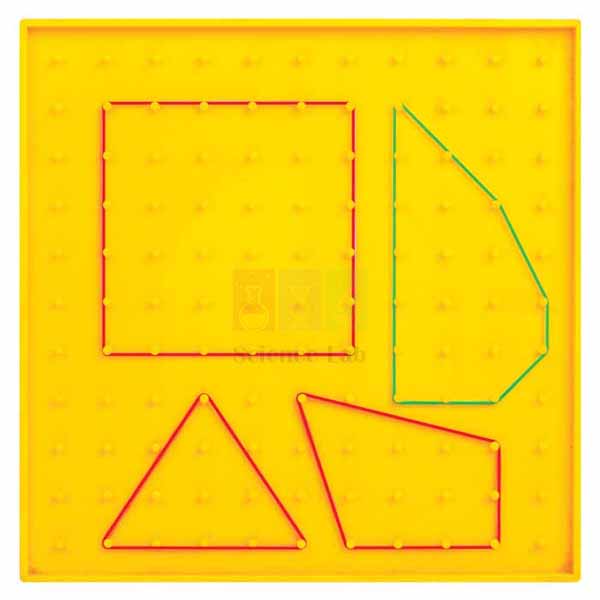
Double Sided Geoboard
Double Sided Geoboard (Product Code: SLE/MAT/77) is a plastic pin board used with rubber bands to explore shapes, area, perimeter, symmetry, angles and coordinates in school maths lessons. Its distinguishing feature is two layouts in one board — an 11 x 11 pin grid on one side and a 24-pin circular pattern on the other — so a class can move from grid work to circle geometry without changing equipment. It is made by Jain Scientific Equipments Pvt Ltd (ScienceLab), an OEM manufacturer, at its own factory in Ambala, India.
Specifications
| Parameter | Detail |
|---|---|
| Material | Plastic |
| Side one | 11 x 11 pin grid |
| Side two | 24-pin circular pattern |
| Used with | Rubber bands (inclusion not stated — ask us) |
| Topics | Shapes, designs, spatial relationships, angles, fractions, area, perimeter, symmetry, coordinates |
| Product code | SLE/MAT/77 |
| Manufacturer | Jain Scientific Equipments Pvt Ltd (ScienceLab) — OEM |
| Country of origin | India (made in Ambala, Haryana) |
What Is the Double Sided Geoboard Used For?
Stretching rubber bands between pins lets pupils draw shapes they can change instantly. On the square side, the 11 x 11 grid supports counting-unit area and perimeter, reflection across a line of symmetry and plotting points as coordinates. A favourite task is the area of a triangle: pupils complete the triangle into a rectangle, see that it is half of that rectangle, and then verify the answer with the formula.
Turn the board over and the 24-pin circular pattern opens up circle work — chords, regular polygons whose corners sit on the circle, angles and fractions of a circle. Having both layouts on one board saves storage space in a school maths lab and keeps each pupil working on the same familiar tool throughout a geometry unit.
What to Specify When Ordering
- Number of boards — one per pupil or one per pair is common for class work.
- Whether rubber bands should be quoted along with the boards.
- Any single-layout geoboards (isometric or assorted) needed for the same lab.
OEM Manufacturer
ScienceLab, the trading name of Jain Scientific Equipments Private Limited, is the OEM (original equipment manufacturer) of the Double Sided Geoboard. Boards are produced at the company’s own licensed factory at Saha, Ambala, Haryana, India, and supplied from there to schools, maths labs, dealers and importers without a trading intermediary. Institutional buyers completing vendor registration can use the company’s GSTIN 06AAECJ8618A1ZT and LEI 3358004HRD1JIVXKYX49. For repeat orders, ask us — the manufacturer handles them directly. See the ScienceLab profile for more.
Related Maths Lab Equipment
Other boards and kits that extend geoboard lessons:
- 10 Isometric Grid Pattern Geoboard — an isometric layout for triangle- and hexagon-based shapes.
- 5 Assorted Geoboards — several layouts for rotating group activities.
- Coordinate Board — dedicated plotting of ordered pairs once grid work is familiar.
- Circle Kit — further circle geometry beyond the 24-pin side.
Find more boards and manipulatives in Maths Lab Equipment.
Frequently Asked Questions
What is on each side of the Double Sided Geoboard?
The Double Sided Geoboard (SLE/MAT/77) has an 11 x 11 pin grid on one side and a 24-pin circular pattern on the other. The grid side suits area, perimeter, symmetry and coordinates, while the circular side supports angles, fractions and circle geometry.
Are rubber bands included with the Double Sided Geoboard?
The product description of the Double Sided Geoboard says shapes are made with rubber bands but does not state whether bands are supplied with the board. Mention rubber bands in your enquiry and we will confirm what can be included in the quotation.
What is the Double Sided Geoboard made of?
The Double Sided Geoboard is made of plastic, which is easy to wipe clean after lessons. Remove the rubber bands after use and store the boards flat so that the pins and the bands both stay in good condition from one term to the next.
How does the Double Sided Geoboard help find the area of a triangle?
On the Double Sided Geoboard, pupils complete a triangle into a rectangle with rubber bands, find the rectangle’s area by counting squares and halve it. They then verify the result with the area-of-a-triangle formula, linking hands-on counting to the formula.
Who manufactures the Double Sided Geoboard?
The Double Sided Geoboard is manufactured by Jain Scientific Equipments Pvt Ltd, trading as ScienceLab, the OEM of this product. It is made at the company’s own factory at Saha, Ambala, Haryana, India, and schools and dealers receive quotations directly from the manufacturer.
What should a Double Sided Geoboard quotation request include?
A Double Sided Geoboard quotation needs the number of boards, whether rubber bands should be quoted, any other geoboards or maths aids for the same order, and the delivery location in India or abroad. Send the details through the contact page or the enquiry cart.
Is the Double Sided Geoboard available in bulk and for export?
Yes. ScienceLab supplies the Double Sided Geoboard in classroom sets and larger quantities to schools, education projects, distributors and importers across India and international markets. Share your requirement on the contact page for a quotation from the manufacturer.
Request a Quote
Send your Double Sided Geoboard (SLE/MAT/77) requirement through the contact page or add it to the enquiry cart. Quotations are issued directly by the manufacturer in Ambala.
Last updated: 24 September 2026
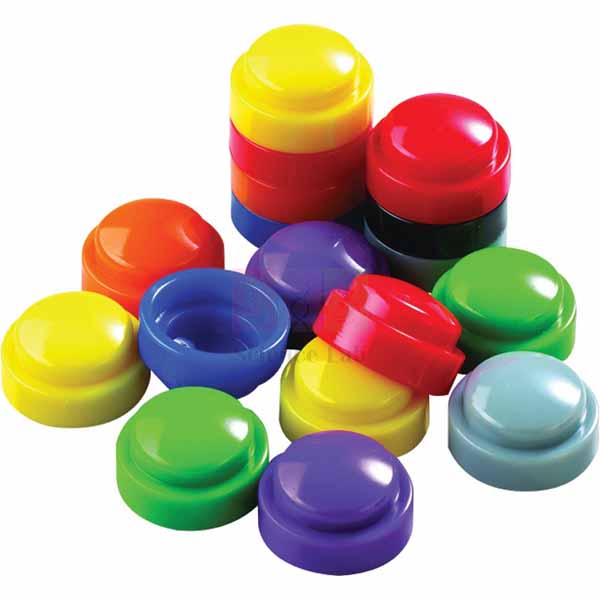
Stacking Counters
Stacking Counters (Product Code: SLE/MAT/78) is a set of plastic counters used for sorting, counting, comparing numbers and early arithmetic in pre-primary and primary maths lessons. Teachers choose them because the counters come in 5 colours and stack into towers, making number size, grouping and multiplication visible; each counter is 2 cm in diameter. They are made by Jain Scientific Equipments Pvt Ltd (ScienceLab), an OEM manufacturer, at its own factory in Ambala, India.
Specifications
| Parameter | Detail |
|---|---|
| Material | Plastic |
| Colours | 5 |
| Counter diameter | 2 cm (20 mm) |
| Key feature | Counters stack on one another |
| Concepts | Sorting, counting, basic arithmetic operations, number patterns, comparing and ordering numbers, grouping, multiplication |
| Counters per pack | Not listed in the product description — ask us |
| Product code | SLE/MAT/78 |
| Manufacturer | Jain Scientific Equipments Pvt Ltd (ScienceLab) — OEM |
| Country of origin | India (made in Ambala, Haryana) |
What Are Stacking Counters Used For?
Because they stack, these counters turn numbers into towers children can see and compare. A tower of seven stands visibly taller than a tower of four, so comparing and ordering numbers becomes a matter of looking, and the gap between two towers is a subtraction problem made physical. Sorting by the five colours gives young learners an easy first classification task before counting begins.
For grouping and multiplication, pupils build several towers of equal height and count the total, seeing multiplication as repeated addition. Colour patterns within a stack introduce number patterns and sequences, and the compact 2 cm size keeps a full class set manageable on small desks — a practical choice for mathematics lab kits in the early years.
OEM Manufacturer
Stacking Counters come from ScienceLab — Jain Scientific Equipments Private Limited — as the OEM (original equipment manufacturer). They are made at the company’s own licensed factory in Saha, Ambala, Haryana, India, and supplied factory-direct to schools, play schools, NGOs, distributors and importers. Because the maker supplies them itself, extra counters for classroom sets and repeat orders can simply be requested from us. Company background is on the ScienceLab profile page.
Related Maths Lab Equipment
Counting and number-sense lessons often combine the counters with:
- Place Value Mat with Stacking Counters — adds a mat for place-value work with stacked counters.
- Integer Counters — counters for introducing positive and negative numbers later on.
- Sorting Ring — for grouping counters by colour or number during sorting tasks.
- Interlocking Cubes — another hands-on counting aid for patterns and measurement.
All counting and number aids are grouped under Maths Lab Equipment.
Frequently Asked Questions
What size and colours are the Stacking Counters?
Stacking Counters (SLE/MAT/78) are plastic counters 2 cm in diameter, supplied in 5 colours. The colours support sorting and pattern work, while the stacking design lets children build towers to compare, group and order numbers.
How many Stacking Counters come in a pack?
The product description of Stacking Counters does not state how many counters come in a pack or how many there are of each colour. Tell us how many you need per class through the contact page and we will confirm the pack contents in our quotation.
How do Stacking Counters help teach multiplication?
With Stacking Counters, pupils build equal towers — for example three towers of four — and count the total, seeing multiplication as repeated addition. Rearranging the same counters into different equal groups also introduces factors and early division.
Which age group are Stacking Counters suitable for?
Stacking Counters suit pre-primary and primary children learning to sort, count, compare and order numbers, and later to add, subtract and multiply. Because the counters are small, young children should use them under adult supervision.
Who manufactures Stacking Counters?
Stacking Counters are manufactured by Jain Scientific Equipments Pvt Ltd, trading as ScienceLab, the OEM for this counting aid. Production is at the company’s own factory at Saha, Ambala, Haryana, India, and quotations are sent directly by the manufacturer.
What should a Stacking Counters quotation request include?
To quote for Stacking Counters, we need the total number of counters or classroom sets required, whether a place value mat is also wanted, and the delivery location in India or abroad. Send your request through the contact page or the enquiry cart.
Can Stacking Counters be ordered in bulk or for export?
Yes. ScienceLab supplies Stacking Counters in quantities for single classrooms, entire schools, education projects, distributors and importers in India and international markets. Share your requirement on the contact page for a quotation from the manufacturer.
Request a Quote
For Stacking Counters (SLE/MAT/78), send the quantity you need via the contact page or add the item to the enquiry cart. The manufacturer will quote you directly.
Last updated: 24 September 2026