- Physics Lab Equipment
- Chemistry Lab Equipment
- Biology Lab Equipment
- Anatomical Lab Equipment
- Learning
- Educational Lab Equipment
- Magnets
- Agriculture
- Astronomy
- Earth Science
- Geography Lab Equipment
- Safety Lab Coat
- Laboratory
- Meteorological
- Electricity & Magnetism
- Heat
- School Lab Equipment
- Lab Glassware
- Science Lab Equipment
- Tvet Lab Equipment
- Robotics Kits Supplier and Manufacturer for Schools India
- Math Lab Equipment Manufacturers and Exporters in Ambala
- STEM Kits Manufacturers and Supplier India
- Engineering Lab Equipment
- Hospital Lab Equipment
- Water, Sanitation & Hygiene Supplies
- Cold Chain, Solar & Communication Equipment
- Nutrition
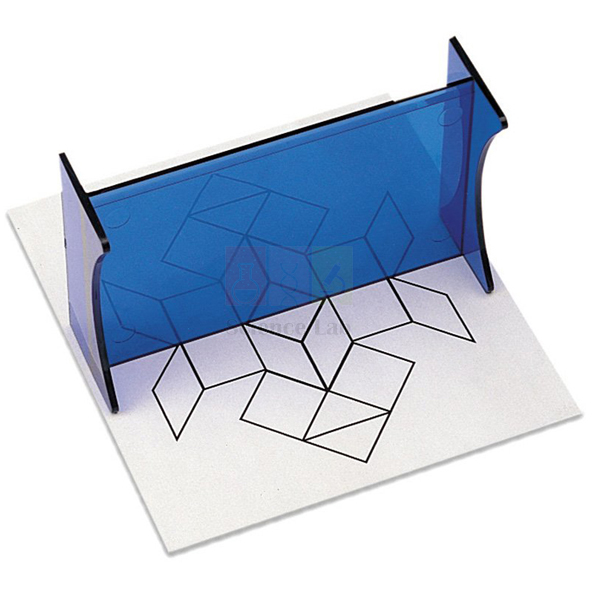
Geo Reflector Mirror
Geo Reflector Mirror (Product Code: SLE/MAT/44) is a see-through plastic reflector used to explore reflection, symmetry and congruence in school geometry lessons. It comes as a set of 24 Geo Reflectors with a teaching guide, so a whole class can work in pairs or small groups at the same time. The set is made by Jain Scientific Equipments Pvt Ltd (ScienceLab), an OEM manufacturer of educational lab equipment in India, at its own factory in Ambala.
Key Details
| Parameter | Detail |
|---|---|
| Set quantity | 24 Geo Reflectors |
| Surface | See-through plastic with special reflective qualities |
| Included | Teaching guide |
| Concepts | Geometry, symmetry and congruence through viewing, moving and drawing images |
| Product code | SLE/MAT/44 |
| Manufacturer | Jain Scientific Equipments Pvt Ltd (ScienceLab) — OEM |
| Country of origin | India (made in Ambala, Haryana) |
What Is the Geo Reflector Mirror Used For?
A Geo Reflector is held upright on paper beside a shape. Because its plastic is both reflective and see-through, a pupil sees the reflected image of the shape and, at the same time, the paper behind the reflector, so the image can be traced exactly where it appears. Line symmetry, reflection and congruent figures can then be checked by drawing rather than by guessing.
Typical activities include finding lines of symmetry in letters and polygons, completing half-drawn figures, and sliding the reflector to test whether two shapes are congruent. The teaching guide in the set helps teachers who are planning these lessons for the first time, and a set of 24 fits easily into a school maths lab setup.
OEM Manufacturer
Jain Scientific Equipments Private Limited, trading as ScienceLab, is the original equipment manufacturer of the Geo Reflector Mirror set and makes it at its own licensed factory at Saha, Ambala, Haryana, India. Schools, teacher-training centres and distributors who order from ScienceLab deal with the maker, not a trader, so questions about repeat sets or replacement reflectors go to the people who produce them. See the ScienceLab company profile for more about the company.
Related Maths Lab Equipment
These geometry aids work well alongside the Geo Reflector Mirror:
- Geo Geometry Sticks — build polygons to reflect and test for symmetry.
- Geometrical Instruments Set — measure angles and lengths to confirm that reflected figures are congruent.
- Coordinate Board — extend reflection work to points and shapes on coordinate axes.
- Advanced Geometry — continue to further geometry topics.
Explore the rest of the Maths Lab Equipment range for more geometry and shape resources.
Frequently Asked Questions
How many reflectors are in the Geo Reflector Mirror set?
The Geo Reflector Mirror set contains 24 Geo Reflectors, enough for a class to work in pairs or small groups. A teaching guide is included in the set to help teachers plan symmetry and reflection activities.
How is a Geo Reflector Mirror different from an ordinary mirror?
A Geo Reflector Mirror has a see-through plastic surface with reflective qualities, so pupils see the reflected image and the paper behind it together. An ordinary mirror is opaque, so its image cannot be traced in place in the same way.
Which geometry topics does the Geo Reflector Mirror support?
The Geo Reflector Mirror supports intuitive work on geometry, symmetry and congruence. Pupils view, move and draw images to find lines of symmetry, complete reflected figures and compare shapes to decide whether they are congruent.
How should the Geo Reflector Mirror be cleaned?
Clean each Geo Reflector Mirror with a soft, damp cloth and dry it gently, avoiding abrasive pads that could scratch the plastic. Storing the reflectors flat and away from sharp instruments keeps the surface clear for accurate tracing.
Who manufactures the Geo Reflector Mirror?
The Geo Reflector Mirror is manufactured by Jain Scientific Equipments Pvt Ltd (ScienceLab), the OEM, at its licensed factory in Saha, Ambala, Haryana, India. Buyers receive quotations and after-sales answers straight from the manufacturer.
Can the Geo Reflector Mirror be ordered for several schools or for export?
Yes. The Geo Reflector Mirror can be quoted for one classroom, several schools under a single order, or dealers and importers in India and international markets. State the number of sets and the delivery destination when you ask for a quotation.
Request a Quote
Request a price for the Geo Reflector Mirror set on the ScienceLab contact page or add it to the enquiry cart. As the manufacturer, ScienceLab quotes you directly.
Last updated: 24 September 2026
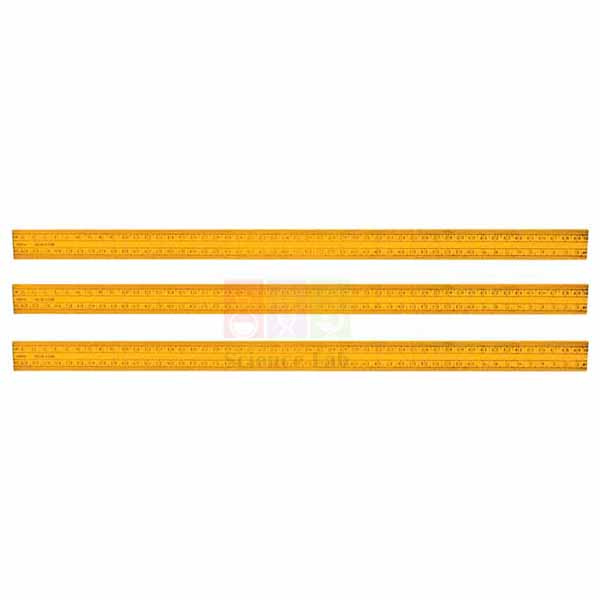
Half Meter Scale
Half Meter Scale (Product Code: SLE/MAT/45) is a wooden ruler used to measure any length up to half a metre in school maths and science classrooms. Its markings run up to 50 cm, a handy length between a short desk ruler and a full metre stick. The scale is made by Jain Scientific Equipments Pvt Ltd (ScienceLab), an OEM and scientific lab equipment manufacturer in Ambala, India, at its own factory there.
Specifications
| Parameter | Detail |
|---|---|
| Material | Wood |
| Marked length | Up to 50 cm |
| Measuring range | Any length up to half a metre |
| Product code | SLE/MAT/45 |
| Manufacturer | Jain Scientific Equipments Pvt Ltd (ScienceLab) — OEM |
| Country of origin | India (made in Ambala, Haryana) |
What Is the Half Meter Scale Used For?
The Half Meter Scale is used for everyday length measurement in the maths lab: measuring books, desks and cut-out shapes, drawing long straight lines on charts, and checking edges that are too long for a short desk ruler. In mensuration lessons pupils record the measured sides and use them to work out perimeter and area.
For accurate readings, lay the scale flat against the object, line up the zero mark with one end, and read the marking with your eye directly above it to avoid parallax error. Lengths longer than half a metre can be measured by marking the end point and moving the scale along, which is itself a useful lesson on how measurement errors add up.
OEM Manufacturer
ScienceLab is the trading name of Jain Scientific Equipments Private Limited, the original equipment manufacturer of this Half Meter Scale. The company makes it at its own licensed factory in Saha, Ambala, Haryana, and sells factory-direct to schools, colleges, dealers and importers. Visit the ScienceLab company profile to learn more about the company.
Related Maths Lab Equipment
For measuring tasks shorter or longer than half a metre, these items complete the set:
- Folding Meter Stick — for lengths up to a full metre that still fold away for storage.
- Meter Stick, White — a full-length metre stick for longer measurements.
- Windup Meter Tapes — for measuring room, corridor and field distances.
- T-Square — for drawing straight and perpendicular lines on charts.
- Geometrical Instruments Set — for smaller constructions on paper.
See the complete Maths Lab Equipment category for more measuring and drawing tools.
Frequently Asked Questions
What length does the Half Meter Scale measure?
The Half Meter Scale measures any length up to half a metre. It is marked up to 50 cm, so longer objects are measured by marking the end point and moving the scale along, then adding the readings together.
What is the Half Meter Scale made of?
The Half Meter Scale is made of wood. A wooden scale is rigid enough to rule straight lines and lies flat on a desk, which makes it a practical classroom measuring tool for pupils and teachers alike.
What are the smallest divisions on the Half Meter Scale?
The smallest graduation interval of the Half Meter Scale is not listed on this page. Please ask through the contact page and ScienceLab will confirm the marking details before you place an order.
Is a calibration certificate available for the Half Meter Scale?
The Half Meter Scale is a classroom measuring scale, and no calibration certificate is listed with it. If your institution needs traceable calibration documents, please discuss the requirement with ScienceLab before ordering so it can be confirmed in writing.
Who manufactures the Half Meter Scale?
The Half Meter Scale is manufactured by Jain Scientific Equipments Pvt Ltd (ScienceLab), which is the OEM and produces it at its own licensed factory in Saha, Ambala, Haryana, India, for buyers across India and abroad.
How should a school order Half Meter Scales in quantity?
To order Half Meter Scales in quantity, send the number required, the delivery address and whether the order is for a school, tender or resale. ScienceLab quotes directly as the manufacturer for buyers in India and international markets.
Request a Quote
Send your Half Meter Scale requirement through the ScienceLab contact page or add the scale to the enquiry cart. You will receive a quotation from the manufacturer, not a middleman.
Last updated: 24 September 2026
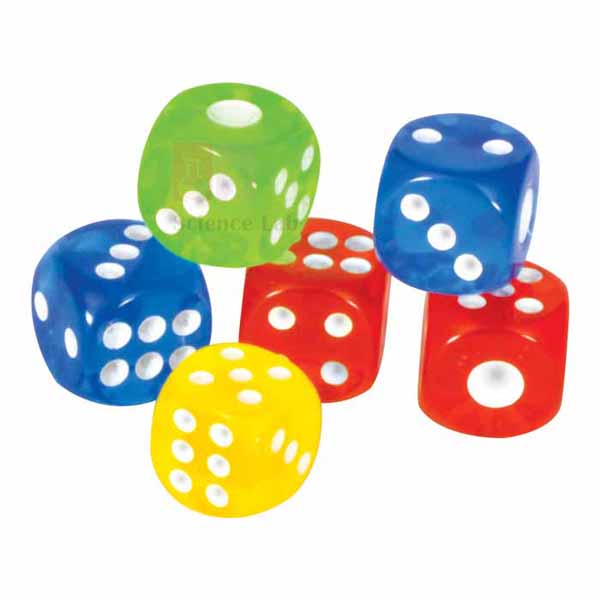
Transparent Dice
Transparent Dice (Product Code: SLE/MAT/46) are see-through cast acrylic dice used to generate random numbers for probability, counting and number games in school maths lessons. They have rounded corners and come in three sizes, 1¼ inch, 2 inch and 2¾ inch, and five colours: green, blue, yellow, red and clear. They are made by Jain Scientific Equipments Pvt Ltd (ScienceLab), an OEM lab equipment manufacturer in India, at its own factory in Ambala.
Specifications
| Parameter | Detail |
|---|---|
| Material | Transparent cast acrylic |
| Corners | Rounded |
| Sizes | 1¼ inch, 2 inch, 2¾ inch |
| Colours | Green, blue, yellow, red and clear |
| Product code | SLE/MAT/46 |
| Manufacturer | Jain Scientific Equipments Pvt Ltd (ScienceLab) — OEM |
| Country of origin | India (made in Ambala, Haryana) |
What Are Transparent Dice Used For?
Transparent Dice are used wherever a lesson needs a fair, random outcome: probability experiments, number games, mental-arithmetic practice and board games. Pupils roll a die many times, tally the results and compare how often each face appears with the theoretical probability.
The larger sizes are easy for a teacher to hold up during a demonstration and for the whole class to read, while the smallest size suits group games at a desk. Using different colours lets pupils roll two or more dice together and still keep each result separate, a simple way to introduce combined events and sample spaces.
What to Specify When Ordering
- Size: 1¼ inch, 2 inch or 2¾ inch, or a mix of sizes
- Colour: green, blue, yellow, red, clear, or assorted
- Quantity per class, group or pupil
- Whether the order is for a school, a tender or resale
OEM Manufacturer
Jain Scientific Equipments Private Limited (CIN U29309HR2020PTC087597), which trades as ScienceLab, is the original equipment manufacturer of these Transparent Dice. The dice are made at the company’s licensed factory at 449, HSIIDC Industrial Area, Saha, Ambala, which operates under Factory Licence AMB-ONLINE-CHD-J-414. Buying from the manufacturer means your choice of size and colour is confirmed by the maker itself, and repeat orders come from the same source. Read more on the ScienceLab company profile.
Related Maths Lab Equipment
Other dice and probability resources from the same range:
- Plastic Dice — a plain plastic option for board games and number practice.
- Fraction Dice — for rolling fractions instead of whole numbers.
- Integer Dice — for practising operations with positive and negative numbers.
- Probability Kit — a fuller probability set with a spinner, coins, cards and marbles.
Find more games and manipulatives in the Maths Lab Equipment category.
Frequently Asked Questions
What sizes do the Transparent Dice come in?
Transparent Dice are available in three sizes: 1¼ inch, 2 inch and 2¾ inch. The larger dice suit teacher demonstrations at the front of the class, while the smaller size is convenient for pupils rolling dice at their desks.
Which colours are available for the Transparent Dice?
Transparent Dice are offered in green, blue, yellow, red and clear. Mixing colours in one lesson helps pupils keep track of several dice rolled at once, for example when recording combined outcomes in a probability experiment.
What material are the Transparent Dice made from?
The Transparent Dice are made of transparent cast acrylic with rounded corners. The rounded corners help the dice tumble freely when rolled and make them comfortable for young hands, and the acrylic can be wiped clean with a damp cloth.
How many Transparent Dice should a class order?
The number of Transparent Dice depends on the activity: one or two per group for probability experiments, or one per pupil for individual games. State your class size and preferred sizes and colours, and ScienceLab will quote the quantity you need.
Who manufactures the Transparent Dice?
Transparent Dice are manufactured by Jain Scientific Equipments Pvt Ltd (ScienceLab), the OEM, at its own licensed factory in Saha, Ambala, Haryana, India. Quotations and repeat orders are handled by the manufacturer itself.
Are Transparent Dice available for export orders?
Yes. Transparent Dice can be quoted for schools, dealers and importers in India and international markets. Include the sizes, colours, quantities and delivery country in your enquiry so the quotation matches your order exactly.
Request a Quote
To get a quotation for Transparent Dice, list the sizes, colours and quantities on the ScienceLab contact page or use the enquiry cart. Quotes are issued directly by the manufacturer.
Last updated: 24 September 2026
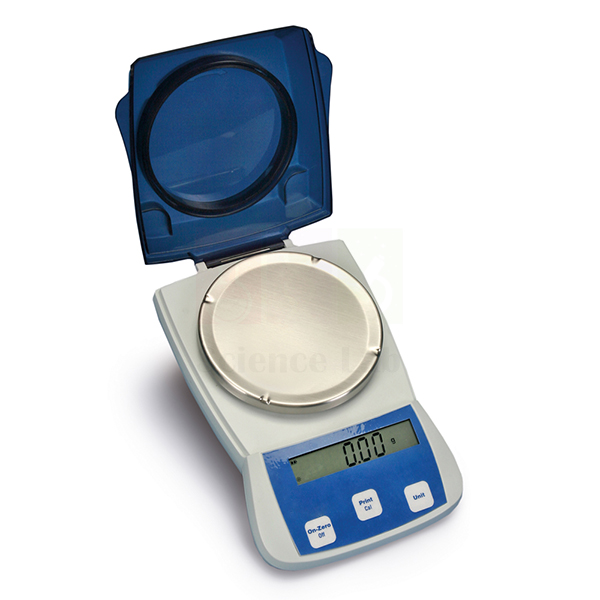
Electronic Balances
Electronic Balances (Product Code: SLE/ME/02) is a range of digital laboratory balances used to weigh samples quickly and precisely in school, college and institutional laboratories. Buyers choose from three models — 150 g x 0.01 g, 300 g x 0.1 g and 3000 g x 0.1 g — each with a hinged draftshield, LCD display, RS232 interface and gram or newton weighing modes, making it a flexible digital weighing balance for India and export labs. They are supplied by Jain Scientific Equipments Pvt Ltd (ScienceLab), Ambala, India.
Specifications
| Parameter | Detail |
|---|---|
| Models (capacity x readability) | 150 g x 0.01 g; 300 g x 0.1 g; 3000 g x 0.1 g |
| Display | LCD |
| Weighing modes | 2 — grams (g) and newtons (N) |
| Draftshield | Hinged, for more accurate weighing |
| Interface | RS232 |
| Keypad | Splash-proof; balance is calibrated from the keypad |
| Pan and body | Stainless-steel pan; sturdy body |
| Load cell protection | 200 lb |
| Power | AC adapter included; can switch to 4 AA batteries (not supplied) in the field |
| Transport | Travel protection lock |
| Security | Lockable with an optional balance security device, sold separately |
| Dimensions | 139 x 228 x 63 mm |
| Product code | SLE/ME/02 |
| Supplied by | Jain Scientific Equipments Pvt Ltd (ScienceLab), Ambala, India |
What Are Electronic Balances Used For?
Electronic balances give a direct digital reading, so students spend lesson time on the experiment rather than on reading beams. The 150 g x 0.01 g model suits weighing small quantities of chemicals for standard solutions; the 300 g x 0.1 g model covers general class practicals; and the 3000 g x 0.1 g model takes larger samples such as soil, water-filled containers or physics apparatus. The newton mode lets physics classes read weight directly as a force.
The hinged draftshield reduces the effect of air currents on small readings, while the splash-proof keypad and stainless-steel pan cope with everyday lab handling. With the AC adapter on the bench or AA batteries outdoors, the same balance serves field studies too. Engage the travel protection lock before carrying it, and recalibrate from the keypad after moving it to a new bench.
What to Specify When Ordering
- Model: 150 g x 0.01 g, 300 g x 0.1 g or 3000 g x 0.1 g.
- Number of balances for each model.
- Whether you need the optional balance security device, which is sold separately.
- Whether AA batteries should be arranged for field use, since they are not supplied with the balance.
Supplier
ScienceLab — Jain Scientific Equipments Private Limited — supplies these Electronic Balances from Ambala, Haryana, India, to schools, colleges, laboratories, dealers and importers. The company sources the balances for its customers and can quote them alongside the rest of a laboratory’s weighing and measuring equipment in one enquiry. For company background, see the ScienceLab profile.
Related Measuring Equipment
Items commonly ordered with a digital balance:
- Plastic Weighing Boats — keep powders off the stainless-steel pan and pour them cleanly.
- Weighing Paper — a disposable weighing surface for small dry samples.
- Electronic Pocket Scales — a smaller, portable option for quick checks.
- Triple Beam Balance — a mechanical balance for benches without a power point.
Compare other instruments under Measuring and Balances.
Frequently Asked Questions
Which models of Electronic Balances are available?
Electronic Balances (SLE/ME/02) come in three models: 150 g capacity with 0.01 g readability, 300 g with 0.1 g readability, and 3000 g with 0.1 g readability. Choose the 0.01 g model for small chemical quantities and the larger models for general or bulk weighing.
How are the Electronic Balances powered?
Electronic Balances include an AC adapter for bench use and can also run on 4 AA batteries in the field. The batteries are not supplied, so arrange them separately if you plan to use the balance away from a power point.
Can the Electronic Balances connect to a computer?
Electronic Balances have an RS232 interface hookup, which is the usual route for sending readings to a computer or printer, given a compatible cable and software at your end. Ask us through the contact page if you need details for a particular setup.
What weighing modes do the Electronic Balances offer?
Electronic Balances offer 2 weighing modes: grams (g) and newtons (N). The newton mode displays the weight of a sample as a force, which helps in physics lessons on gravity and forces, while grams serve chemistry and biology work.
Is a calibration certificate available with the Electronic Balances?
Electronic Balances are calibrated by the user from the keypad. The product description does not mention a calibration certificate, so if your laboratory or tender needs one, please discuss it with us through the contact page before ordering.
Can the Electronic Balances be locked against theft?
Yes. Electronic Balances are lockable with an optional balance security device, which is sold separately and is not part of the standard balance. If you need it, mention it in your enquiry so that it can be included in the quotation.
Who supplies the Electronic Balances?
Electronic Balances are supplied by Jain Scientific Equipments Pvt Ltd, trading as ScienceLab, from Ambala, Haryana, India. Schools, colleges, laboratories, dealers and importers in India and international markets can ask for a quotation through the contact page or the enquiry cart.
Request a Quote
Tell us the model and quantity of Electronic Balances (SLE/ME/02) you need through the contact page, or add them to the enquiry cart for a quotation.
Last updated: 24 September 2026
Plastic Dice
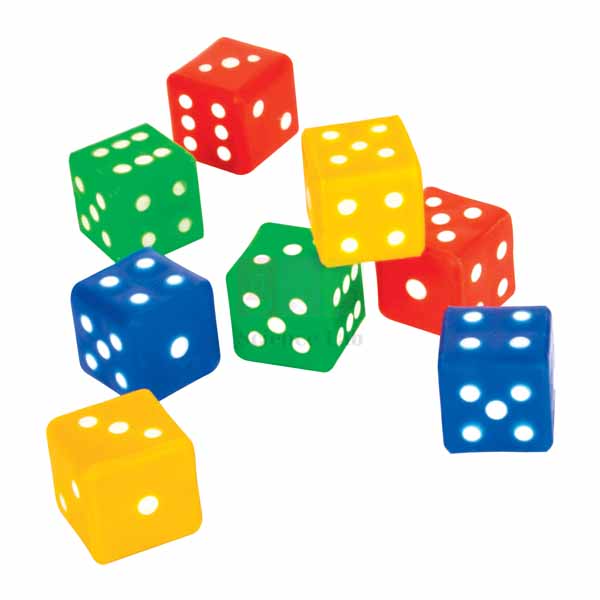
Plastic Dice (Product Code: SLE/MAT/47) are everyday plastic dice used to turn number practice into games for addition, subtraction, integers and probability in school maths lessons. Pupils use them to play board games and to create random numbers for practice questions, which keeps drill work lively. They are made by Jain Scientific Equipments Pvt Ltd (ScienceLab), an OEM manufacturer of lab equipment for schools, at its own factory in Ambala, India.
Key Details
| Parameter | Detail |
|---|---|
| Material | Plastic |
| Uses | Board games; practice in probability, addition, subtraction and integers |
| Size and pack quantity | Please confirm in your enquiry |
| Product code | SLE/MAT/47 |
| Manufacturer | Jain Scientific Equipments Pvt Ltd (ScienceLab) — OEM |
| Country of origin | India (made in Ambala, Haryana) |
What Are Plastic Dice Used For?
Plastic Dice make simple resources into games. Two dice rolled together give numbers to add or subtract, and treating one die as positive and the other as negative turns the same roll into an integer question. Recording many rolls builds a frequency table for a first lesson on probability.
Teachers often pair dice with counters, number lines or game boards so that each roll moves a pupil forward or back. Because the dice are plastic, they are light and easy to wash after shared use, which suits busy classrooms where the same set passes between many groups.
OEM Manufacturer
Plastic Dice in this listing are made by Jain Scientific Equipments Private Limited, trading as ScienceLab, as the original equipment manufacturer. Manufacturing is carried out at the company’s own licensed factory in Saha, Ambala, Haryana, and orders go straight from the factory to schools, coaching centres, dealers and importers. For company background, see the ScienceLab company profile.
Related Maths Lab Equipment
Use these with Plastic Dice to build complete number games:
- Transparent Dice — cast acrylic dice in three sizes and five colours.
- Fraction Dice — for fraction games and comparisons.
- Integer Board Game — a ready-made game using dice and counters for integer addition and subtraction.
- Integer Counters — two-colour chips to model the integer sums a roll produces.
The Maths Lab Equipment category lists more games and hands-on resources for number work.
Frequently Asked Questions
What are the Plastic Dice made of?
The Plastic Dice are made of plastic, which keeps them light, easy to handle and simple to wash after shared classroom use. For a see-through acrylic option in several colours and sizes, ScienceLab also makes Transparent Dice.
Which maths topics can Plastic Dice support?
Plastic Dice support board games and practice in probability, addition, subtraction and integers. Teachers use the rolled numbers to set quick questions, run tally-chart experiments and play number games that keep pupils engaged.
What size and quantity are the Plastic Dice?
The size and pack quantity of the Plastic Dice are not listed on this page. Tell ScienceLab how many dice you need and for which age group through the contact page, and the details will be confirmed in the quotation.
How are Plastic Dice different from Transparent Dice?
Plastic Dice are a general-purpose plastic option for games and number work, while Transparent Dice are made of transparent cast acrylic with rounded corners in three sizes and five colours. Choose by the activity and the look you need.
Who manufactures the Plastic Dice?
The Plastic Dice are manufactured by Jain Scientific Equipments Pvt Ltd (ScienceLab), the OEM, at its licensed factory at Saha, Ambala, Haryana, India. Buyers deal directly with the manufacturer for quotations and repeat orders.
Can Plastic Dice be ordered in bulk?
Yes. Plastic Dice can be quoted in classroom quantities or in bulk for several schools, dealers and importers in India and international markets. Share the quantity and delivery location through the contact page to receive a quotation.
Request a Quote
Enquire about Plastic Dice on the ScienceLab contact page, or collect them with other items in the enquiry cart and send one enquiry. The manufacturer replies with the quotation.
Last updated: 24 September 2026
Linking Cubes
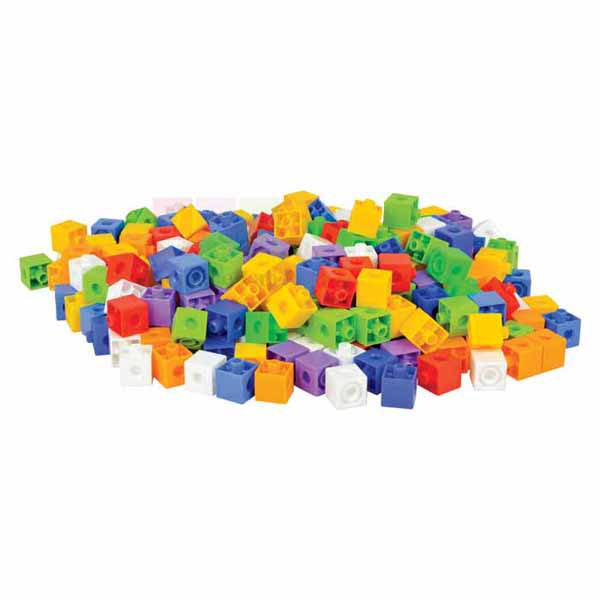
Linking Cubes (Product Code: SLE/MAT/48) are connecting cube manipulatives used to build, count and measure in early-years and school maths lessons. They connect easily, so the same set moves from counting and sorting with toddlers to place value, patterns, area and volume with older pupils. They are made by Jain Scientific Equipments Pvt Ltd (ScienceLab), an OEM manufacturer of educational science equipment, at its own factory in Ambala, India.
Key Details
| Parameter | Detail |
|---|---|
| Type | Linking (connecting) cubes |
| Handling | Easy to connect, stack and build |
| Concepts | Counting, place value, measurement, number operations, sorting, patterns, algebra and mensuration |
| Also explores | Numbers, area, volume and geometry |
| Early-years benefit | Supports motor skill development in toddlers |
| Product code | SLE/MAT/48 |
| Manufacturer | Jain Scientific Equipments Pvt Ltd (ScienceLab) — OEM |
| Country of origin | India (made in Ambala, Haryana) |
What Are Linking Cubes Used For?
Linking Cubes let children see numbers as objects they can join and break apart. Young learners build trains of cubes to count, compare lengths and repeat patterns, while pushing cubes together builds finger strength and hand control.
Older pupils use the same cubes for place value by grouping trains of ten, for measuring length in cube units, and for mensuration by building cuboids to count volume and covering flat faces to find area. In algebra lessons, growing cube patterns help pupils write a general rule for any term in the pattern.
OEM Manufacturer
Jain Scientific Equipments Private Limited, known by its trading name ScienceLab, manufactures Linking Cubes as the OEM at its own licensed factory in Saha, Ambala, Haryana, India. Pre-schools, primary schools, special educators, distributors and importers can order from the factory rather than a middleman, and questions about replacement cubes for incomplete sets go straight to the maker. More details are on the ScienceLab company profile.
Related Maths Lab Equipment
These items extend Linking Cubes into place value and fine-motor work:
- Interlocking Cubes — 2 cm cubes for similar counting, pattern and measurement activities.
- Base Ten Blocks — the next step from grouped cubes to formal place value.
- Beads – Bobbles & Laces — a threading and counting activity for young learners.
- Maths Kit Junior — a wider set of maths resources for junior classes.
Browse the Maths Lab Equipment range for more manipulatives for early and primary maths.
Frequently Asked Questions
What can children learn with Linking Cubes?
Linking Cubes support counting, place value, measurement, number operations, sorting, patterns, algebra and mensuration. Pupils can also use them to explore numbers, area, volume and geometry, so one set serves many topics across different class levels.
Are Linking Cubes suitable for toddlers?
Linking Cubes are easy to connect and support motor skill development in toddlers, which makes them useful in early-years settings. As with any small manipulative, young children should use Linking Cubes under adult supervision.
What is the cube size and number of cubes in a set of Linking Cubes?
The cube size and pack quantity of Linking Cubes are not stated on this page. Please ask through the contact page and ScienceLab will confirm the details and suggest a quantity for your class.
How are Linking Cubes different from Interlocking Cubes?
Linking Cubes and Interlocking Cubes are both joining-cube manipulatives in ScienceLab’s maths range. Linking Cubes are described for counting, place value, algebra and mensuration at all levels, while Interlocking Cubes are listed as 2 cm cubes; ask ScienceLab which suits your lessons.
Who manufactures Linking Cubes?
Linking Cubes are manufactured by Jain Scientific Equipments Pvt Ltd (ScienceLab), the OEM, at its own licensed factory at Saha, Ambala, Haryana, India. Quotations, repeat orders and requests for replacement cubes are handled by the manufacturer.
Can Linking Cubes be ordered for many classrooms?
Yes. Linking Cubes can be quoted for a single classroom, a whole school, or larger orders from dealers and importers in India and international markets. Give the number of sets and the delivery location in your enquiry.
Request a Quote
For a Linking Cubes quotation, write to us through the ScienceLab contact page or add the cubes to the enquiry cart. Pricing comes straight from the manufacturer.
Last updated: 24 September 2026
Electronic Pocket Scales
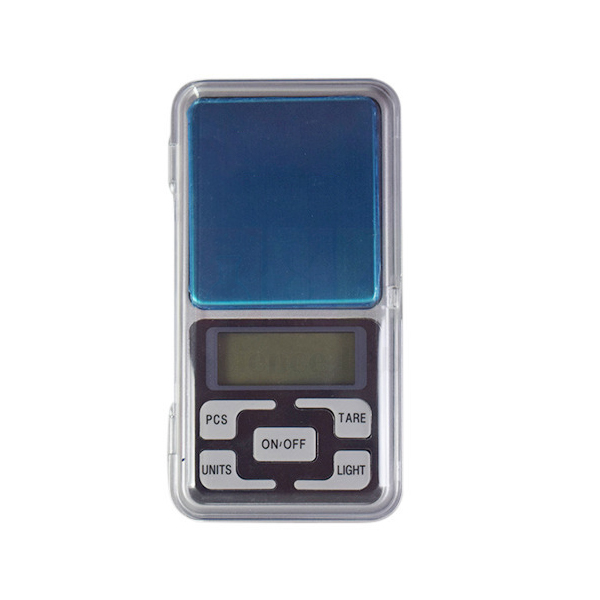
Electronic Pocket Scales (Product Code: SLE/ME/03) is a compact digital scale used for quick, small-quantity weighing on the lab bench, in the classroom or in the field. Two models are offered — 500 g x 0.1 g and 100 g x 0.01 g — each measuring only 4 x 2½ inches with a pan of the same size, a bright backlit LCD, a fast tare function and a cover that doubles as a tray. They are supplied by Jain Scientific Equipments Pvt Ltd (ScienceLab), Ambala, India.
Specifications
| Parameter | Detail |
|---|---|
| Models (capacity x readability) | 500 g x 0.1 g; 100 g x 0.01 g |
| Size | 4 x 2½ inches (roughly 10 x 6 cm); weigh pan is the same size |
| Display | Bright backlit LCD |
| Weighing units | g (grams), ct (carats), dwt (pennyweights), gn (grains) |
| Tare | Very quick tare mode |
| Cover | Doubles as a tray |
| Performance | Good reproducibility |
| Power | 2 AAA batteries (included) |
| Product code | SLE/ME/03 |
| Supplied by | Jain Scientific Equipments Pvt Ltd (ScienceLab), Ambala, India |
What Are Electronic Pocket Scales Used For?
Pocket scales handle the many small weighings that do not need a full laboratory balance: a few grams of salt for a solution, seeds or leaves in a biology investigation, or small components in a physics or design activity. The 100 g x 0.01 g model suits tiny quantities, while the 500 g x 0.1 g model covers everyday classroom objects. Running on batteries and small enough for a pocket, they travel easily on field trips and to science clubs.
Place a container on the pan and press tare to zero it, so that only the sample is weighed; the cover can act as a tray for loose material. Beyond grams, the carat, pennyweight and grain units give teachers a practical way to discuss non-metric units of mass. For consistent readings, keep the scale on a flat, steady surface away from draughts.
What to Specify When Ordering
- Model: 500 g x 0.1 g or 100 g x 0.01 g.
- Number of scales — per group, per student or per field kit.
- Spare AAA batteries if required (two are included with each scale).
Supplier
Jain Scientific Equipments Private Limited, trading as ScienceLab, supplies Electronic Pocket Scales from Ambala, Haryana, India, to schools, colleges, laboratories, dealers and importers. For vendor registration, buyers can note the supplying company’s GSTIN 06AAECJ8618A1ZT and its Importer-Exporter Code AAECJ8618A (DGFT), under which overseas consignments are shipped. Read more on the ScienceLab profile.
Related Measuring Equipment
Useful companions and alternatives for small-scale weighing:
- Electronic Balances — bench balances with a draftshield and RS232 for larger capacities.
- Plastic Weighing Boats — hold small samples on the pan and pour them off neatly.
- Weighing Paper — a disposable surface for powders and crystals.
- Spring Scales, Green, 500 g (5 N) — a mechanical option that reads both force and mass.
See the wider Measuring range for more instruments.
Frequently Asked Questions
Which capacities do the Electronic Pocket Scales come in?
Electronic Pocket Scales (SLE/ME/03) are available in two models: 500 g capacity with 0.1 g readability and 100 g capacity with 0.01 g readability. Choose the 0.01 g model for very small quantities and the 500 g model for general classroom weighing.
What units can the Electronic Pocket Scales display?
Electronic Pocket Scales weigh in four units: grams (g), carats (ct), pennyweights (dwt) and grains (gn). Grams cover normal science work, while the other units help when comparing measurement systems or weighing small items such as gemstones or metal samples.
What batteries do the Electronic Pocket Scales use?
Electronic Pocket Scales run on 2 AAA batteries, which are included. Battery power lets the scales work anywhere — in class, on field trips or in science clubs — without a power point. Remove the batteries if a scale will be stored unused for a long period.
How small are the Electronic Pocket Scales?
Electronic Pocket Scales measure only 4 x 2½ inches (roughly 10 x 6 cm), and the weigh pan is the same size. The cover doubles as a tray, so the scale stays protected in a bag and still offers a handy surface for samples.
Is a calibration certificate available for the Electronic Pocket Scales?
The product description of the Electronic Pocket Scales does not mention a calibration certificate or calibration masses. If you need documentation for a laboratory or tender, discuss it with us through the contact page before placing your order.
Who supplies the Electronic Pocket Scales?
Electronic Pocket Scales are supplied by Jain Scientific Equipments Pvt Ltd, trading as ScienceLab, from Ambala, Haryana, India, to schools, colleges, laboratories, dealers and importers in India and international markets. Quotations can be requested through the contact page or the enquiry cart.
What should an Electronic Pocket Scales quotation request include?
A quotation request for Electronic Pocket Scales should state the model (500 g x 0.1 g or 100 g x 0.01 g), the number of scales, any weighing accessories and the delivery location. Mention tender or vendor-registration needs so the right documents are prepared.
Request a Quote
To receive a quotation for Electronic Pocket Scales (SLE/ME/03), write to us via the contact page or add the scales to the enquiry cart with your chosen model.
Last updated: 24 September 2026
Plastic Weighing Boats
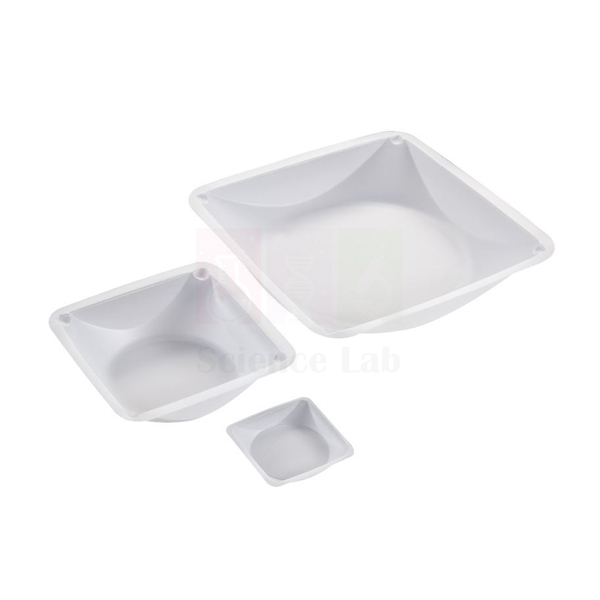
Plastic Weighing Boats (Product Code: SLE/ME/04) is a polystyrene sample holder used to weigh and transfer powdered and granular samples on laboratory balances in schools, colleges and testing labs. They suit all types of balances, and their smooth surface, rounded corners and corner recesses let samples pour off cleanly with little left behind. They are supplied by Jain Scientific Equipments Pvt Ltd (ScienceLab), Ambala, India, as part of its chemistry lab consumables.
Key Details
| Parameter | Detail |
|---|---|
| Material | Polystyrene |
| Balance compatibility | Suitable for all types of balances |
| Surface | Smooth, with rounded corners for easy removal of powdered and granular samples |
| Pouring | Recesses at the corners for controlled pour-off |
| Sizes and pack quantity | Not listed in the product description — ask us |
| Product code | SLE/ME/04 |
| Supplied by | Jain Scientific Equipments Pvt Ltd (ScienceLab), Ambala, India |
What Are Plastic Weighing Boats Used For?
A weighing boat sits on the balance pan and holds the sample, so powders and granules never touch the pan and can be carried straight to a beaker or flask. Tare the empty boat, add the sample until the balance shows the target mass, then tip it out using a corner recess to guide the flow. The smooth polystyrene and rounded corners leave very little material clinging behind, which matters when preparing solutions of known concentration.
Because the boats suit electronic, beam and pocket balances alike, one stock serves every weighing station in a laboratory. Polystyrene can be softened by some organic solvents, so check compatibility before weighing solvent-wet samples, and keep boats away from hot plates and open flames.
Supplier
ScienceLab, the trading name of Jain Scientific Equipments Private Limited, supplies Plastic Weighing Boats from Ambala, Haryana, India, as part of its range of laboratory consumables for schools, colleges, testing laboratories, dealers and importers. Buyers can order them together with balances and other measuring items in one enquiry. See the ScienceLab company profile for more about the company.
Related Measuring Equipment
Weighing boats are used alongside these balances and consumables:
- Weighing Paper — a flat alternative for very small quantities.
- Electronic Balances — digital balances for routine weighing with a boat on the pan.
- Electronic Pocket Scales — compact scales for small samples at the bench or in the field.
- Triple Beam Balance — a mechanical balance that works with boats just as well.
Find more weighing and measuring items in the Measuring category.
Frequently Asked Questions
What are Plastic Weighing Boats made of?
Plastic Weighing Boats (SLE/ME/04) are made of polystyrene. The smooth polystyrene surface and rounded corners help powders and granules slide out completely, so less sample is left behind when it is transferred to a beaker or flask.
Which balances can Plastic Weighing Boats be used on?
Plastic Weighing Boats are suitable for all types of balances, including electronic balances, pocket scales and mechanical beam balances. Place the empty boat on the pan, tare it or note its mass, and then add the sample.
What sizes and pack quantities of Plastic Weighing Boats are available?
The product description of Plastic Weighing Boats does not list sizes, capacities or the number of boats per pack. Tell us your balance type and typical sample amount through the contact page, and we will confirm the available options in our quotation.
Can Plastic Weighing Boats be used with all chemicals?
Plastic Weighing Boats are made of polystyrene, which some organic solvents can soften or dissolve. They suit dry powders and granules; for solvent-wet or reactive samples, check chemical compatibility first or ask us about an alternative through the contact page.
Are Plastic Weighing Boats reusable?
Plastic Weighing Boats are usually treated as single-use items to avoid cross-contamination between samples. A boat used for the same dry material may be wiped and reused where your laboratory’s procedures allow, but discard any boat that is cracked or visibly contaminated.
Who supplies Plastic Weighing Boats?
Plastic Weighing Boats are supplied by Jain Scientific Equipments Pvt Ltd, trading as ScienceLab, from Ambala, Haryana, India. The company serves schools, colleges, laboratories, dealers and importers in India and international markets through the contact page and enquiry cart.
What should a Plastic Weighing Boats quotation request include?
For a Plastic Weighing Boats quotation, give the quantity required, the balance types in use, typical sample sizes and the delivery location in India or abroad. Adding balances or weighing paper to the same enquiry lets us quote everything together.
Request a Quote
Send your Plastic Weighing Boats (SLE/ME/04) requirement through the contact page or add the item to the enquiry cart together with your other lab consumables.
Last updated: 24 September 2026