- Physics Lab Equipment
- Chemistry Lab Equipment
- Biology Lab Equipment
- Anatomical Lab Equipment
- Learning
- Educational Lab Equipment
- Magnets
- Agriculture
- Astronomy
- Earth Science
- Geography Lab Equipment
- Safety Lab Coat
- Laboratory
- Meteorological
- Electricity & Magnetism
- Heat
- School Lab Equipment
- Lab Glassware
- Science Lab Equipment
- Tvet Lab Equipment
- Robotics Kits Supplier and Manufacturer for Schools India
- Math Lab Equipment Manufacturers and Exporters in Ambala
- STEM Kits Manufacturers and Supplier India
- Engineering Lab Equipment
- Hospital Lab Equipment
- Water, Sanitation & Hygiene Supplies
- Cold Chain, Solar & Communication Equipment
- Nutrition
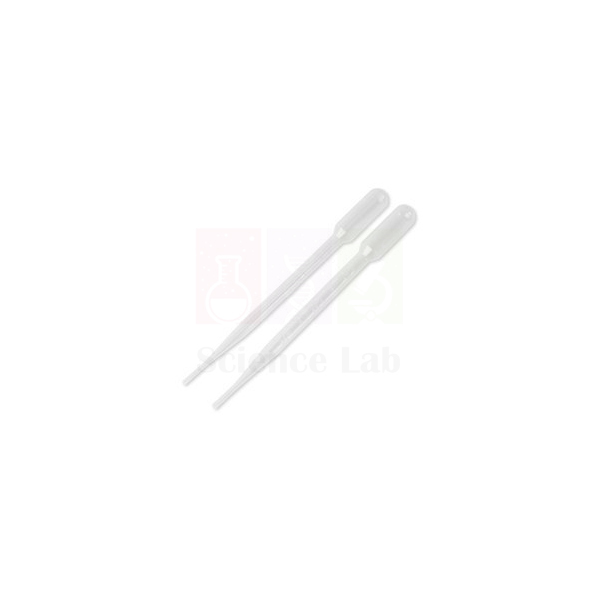
Plastic Microchemistry Pipets
Plastic Microchemistry Pipets (Product Code: SLE/ME/15) are low-density polyethylene pipets used to transfer, drop and hold small volumes of liquid in microscale chemistry practicals. They come in 0.25, 0.5, 0.75 and 1 mL sizes, where the stated capacity includes the bulb, and they can be cleaned and reused, doubling as micro-droppers or tiny reaction vessels. They are supplied by Jain Scientific Equipments Pvt Ltd (ScienceLab), Ambala, India.
Specifications
| Parameter | Detail |
|---|---|
| Material | Low-density polyethylene (LDPE) |
| Sizes | 0.25 mL, 0.5 mL, 0.75 mL and 1 mL |
| Capacity note | Total capacity includes the bulb |
| Reuse | Can be cleaned and reused |
| Uses | Storing and transferring liquids; micro-dropper; reaction vessel |
| Product code | SLE/ME/15 |
| Supplied by | Jain Scientific Equipments Pvt Ltd (ScienceLab), Ambala, India |
What Are Plastic Microchemistry Pipets Used For?
Microscale chemistry scales practicals down to drops instead of test-tube volumes, which cuts chemical use, cost and waste while keeping every student hands-on. These pipets are the basic tool for that approach: students use them to add reagents drop by drop to a spotting surface, count drops in simple titrations, keep a small amount of indicator ready at the bench, or draw two solutions into the bulb to watch a colour change or precipitate form.
As chemistry lab equipment for school classes, they are easy to hand out in sets. Label one pipet per reagent so solutions never mix, squeeze the bulb before dipping the tip rather than after, and rinse each pipet with water and then distilled water straight after the lesson. Polyethylene should not be heated, and some organic solvents can soften it, so reserve the pipets for aqueous work unless compatibility has been checked.
What to Specify When Ordering
- Size or sizes required: 0.25, 0.5, 0.75 or 1 mL.
- Quantity of each size, for example per student or per class set.
- Any dropper bottles or wash bottles to be supplied alongside.
Supplier
Jain Scientific Equipments Private Limited supplies these microchemistry pipets under its ScienceLab name from Ambala, Haryana, to schools, colleges, teacher-training institutes and dealers in India and international markets. They can be combined with reagent bottles, beakers and wash bottles in a single consignment for microscale programmes. Learn more on the ScienceLab profile page.
Related Measuring Equipment
Microscale practical sets often include:
- Transfer Pipette 3ml — a larger plastic pipette for bigger transfers.
- Dropper Bottle, 10 ml — small bottles for holding each reagent at the bench.
- Wash Bottle LDPE with Narrow Mouth — for rinsing the pipets before reuse.
- Plastic Beaker Set of 5 — plastic beakers for stock solutions and rinse water.
Further pipetting items are listed under Measuring.
Frequently Asked Questions
What sizes are Plastic Microchemistry Pipets available in?
Plastic Microchemistry Pipets are listed in 0.25 mL, 0.5 mL, 0.75 mL and 1 mL sizes. Each stated capacity is the total volume including the bulb, not only the stem, so allow for this when planning how much liquid to draw up.
What material are Plastic Microchemistry Pipets made from?
Plastic Microchemistry Pipets are made of low-density polyethylene. This flexible plastic lets the bulb be squeezed easily and does not shatter like glass when dropped, which suits younger students working with small volumes.
Can Plastic Microchemistry Pipets be reused?
Yes. Plastic Microchemistry Pipets can be cleaned and reused. Rinse them several times with water and then distilled water straight after use, dry them tip-down, and keep separate pipets for each reagent to avoid cross-contamination.
How is a Plastic Microchemistry Pipet used as a reaction vessel?
In microscale work, a Plastic Microchemistry Pipet can hold a few drops of two reagents inside its bulb so students can watch colour changes or precipitates form. This uses far smaller amounts of chemicals than test-tube reactions and reduces waste.
Are Plastic Microchemistry Pipets suitable for all chemicals?
Plastic Microchemistry Pipets suit most aqueous solutions used in school chemistry. Low-density polyethylene can soften with some organic solvents and should not be heated, so check compatibility or ask us before using them with solvents or hot liquids.
Who supplies Plastic Microchemistry Pipets?
Jain Scientific Equipments Pvt Ltd (ScienceLab), Ambala, Haryana, India, supplies Plastic Microchemistry Pipets to schools, colleges and dealers in India and international markets. State the sizes and quantities you need through the contact page for a quotation.
Request a Quote
Tell us which sizes and how many pipets you need on the contact page, or add them to the enquiry cart with dropper bottles and beakers for a single quotation.
Last updated: 24 September 2026
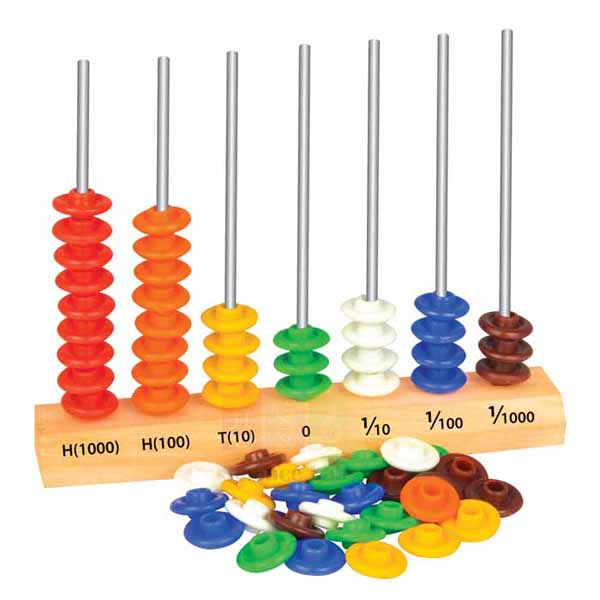
Decimal Abacus
Decimal Abacus (Product Code: SLE/MAT/55) is a wooden spike abacus used to teach decimal numbers and their place value in primary and middle-school maths. With 70 beads across 7 spikes, it lets pupils show whole-number and decimal places side by side and add or subtract decimals by moving beads. It is made by Jain Scientific Equipments Pvt Ltd (ScienceLab), an OEM laboratory equipment manufacturer in India, at its own factory in Ambala.
Specifications
| Parameter | Detail |
|---|---|
| Material | Wood |
| Spikes | 7 |
| Beads | 70 |
| Purpose | Decimal numbers and place value; addition and subtraction of whole and decimal numbers |
| Product code | SLE/MAT/55 |
| Manufacturer | Jain Scientific Equipments Pvt Ltd (ScienceLab) — OEM |
| Country of origin | India (made in Ambala, Haryana) |
What Is the Decimal Abacus Used For?
A Decimal Abacus makes the decimal point something pupils can see. Some spikes stand for whole-number places such as ones and tens, and the rest for tenths, hundredths and smaller places, with the decimal point marked between them, for example with a paper label. Beads placed on a spike show how many of that place value a number has.
When adding two decimals, pupils build the first number, add the second bead by bead, and exchange ten beads on the tenths spike for one bead on the ones spike, the carrying step that often confuses children on paper. Subtraction works the same way in reverse, exchanging one bead for ten on the spike to the right.
OEM Manufacturer
The Decimal Abacus is a ScienceLab product made by Jain Scientific Equipments Private Limited, the original equipment manufacturer, at its own licensed factory in Saha, Ambala, Haryana. Buying from the factory means schools, dealers and importers receive a quotation from the same company that builds the abacus, and questions about replacement beads go straight to the maker. Visit the ScienceLab company profile for company details.
Related Maths Lab Equipment
These place-value resources work alongside the Decimal Abacus:
- Decimal Kit — further decimal activities for primary classes.
- Abacus Upright — for whole-number place value before decimals.
- Abacus Desk/Table — a desk abacus for individual counting practice.
- Base Ten Blocks — to show the same place values with blocks.
- Game of Place Value — a U-shaped wire abacus for place value up to lakh.
More abacus and place-value tools are listed in the Maths Lab Equipment category.
Frequently Asked Questions
How many beads and spikes does the Decimal Abacus have?
The Decimal Abacus is a set of 70 beads with 7 spikes. The spikes let pupils represent several place values at once, including places to the right of the decimal point, while the beads show the digit in each place.
What is the Decimal Abacus made of?
The Decimal Abacus is a wooden abacus. Wood gives a sturdy base for the spikes and makes the abacus comfortable for pupils to handle while they build, add and subtract whole and decimal numbers in class.
What can pupils learn with the Decimal Abacus?
With the Decimal Abacus, pupils learn decimal numbers and their place value, and perform addition and subtraction on whole numbers and decimals. It establishes the relationship between a number and its place value in decimal notation.
How is the Decimal Abacus different from an ordinary abacus?
An ordinary counting abacus usually shows whole numbers only, while the Decimal Abacus is used to extend place value past the decimal point into tenths and smaller places. This makes it suitable once pupils move from whole numbers to decimals.
Who manufactures the Decimal Abacus?
The Decimal Abacus is manufactured by Jain Scientific Equipments Pvt Ltd (ScienceLab), the OEM, at its licensed factory in Saha, Ambala, Haryana, India. Quotations come directly from the manufacturer, which also handles repeat orders.
Can the Decimal Abacus be ordered in quantity?
Yes. The Decimal Abacus can be quoted for single classrooms, whole schools, tenders, and dealers or importers in India and international markets. Send the number of pieces and the delivery location through the contact page.
Request a Quote
Get a quotation for the Decimal Abacus by writing through the ScienceLab contact page or adding it to the enquiry cart. The manufacturer prepares your quote.
Last updated: 24 September 2026
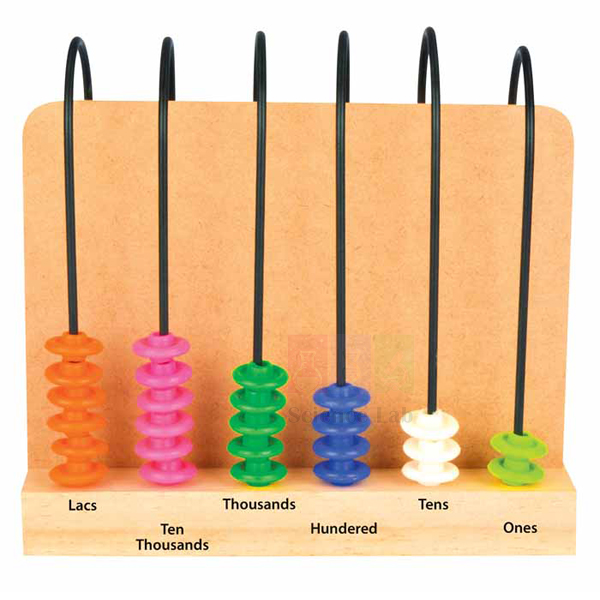
Game of Place Value
Game of Place Value (Product Code: SLE/MAT/56) is a U-shaped wire abacus used to teach the place value of numbers up to lakh in primary maths classrooms. Its 6 wires each hold 9 beads, 54 beads in all, on a compact 20 cm × 7 cm unit, so pupils can build, read and compare six-digit numbers at their desks. It is made by Jain Scientific Equipments Pvt Ltd (ScienceLab), an OEM manufacturer, at its own factory in Ambala, India.
Specifications
| Parameter | Detail |
|---|---|
| Type | U-shaped wire abacus |
| Wires | 6 |
| Beads | 9 per wire, 54 in total |
| Size | 20 cm × 7 cm |
| Place value range | Up to lakh |
| Product code | SLE/MAT/56 |
| Manufacturer | Jain Scientific Equipments Pvt Ltd (ScienceLab) — OEM |
| Country of origin | India (made in Ambala, Haryana) |
What Is the Game of Place Value Used For?
Each wire of the Game of Place Value stands for one place: ones, tens, hundreds, thousands, ten thousands and lakhs in the Indian system. With at most nine beads on a wire, a place can never hold more than nine, which is exactly the rule pupils need to learn. Building a number bead by bead shows why the same digit is worth more on a wire further to the left.
The game comes from digit challenges: given a set of digits, pupils form the greatest and the smallest possible number, then compare answers with a partner. Teachers can also call out a number in words for pupils to build, or build a number and ask for its expanded form.
OEM Manufacturer
Jain Scientific Equipments Private Limited (CIN U29309HR2020PTC087597) trades as ScienceLab and is the original equipment manufacturer of the Game of Place Value. The abacus is produced at the company’s own premises at 449, HSIIDC Industrial Area, Saha, Ambala, which hold Haryana Factory Licence AMB-ONLINE-CHD-J-414. Schools, dealers and importers buy it factory-direct; for more about the company, see the ScienceLab company profile.
Related Maths Lab Equipment
These resources build on the Game of Place Value:
- Place Value Mat with Stacking Counters — build numbers with counters on a mat as a companion activity.
- Place Value Board Multiplication — for multiplying whole numbers once place value is secure.
- Decimal Abacus — to extend place value past the decimal point.
- Abacus Upright — an upright abacus for counting and place-value work.
- Base Ten Blocks — another model of place value using blocks.
Find more place-value and number games in the Maths Lab Equipment category.
Frequently Asked Questions
How many wires and beads does the Game of Place Value have?
The Game of Place Value has 6 wires with 9 beads on each wire, a set of 54 beads in total. Six wires let pupils represent numbers up to the lakh place in the Indian number system.
What size is the Game of Place Value?
The Game of Place Value measures 20 cm × 7 cm. Its compact U-shaped wire design fits on a pupil’s desk, so each child or pair can build and compare numbers during the lesson.
What skills does the Game of Place Value teach?
The Game of Place Value teaches the place value of numbers up to lakh, and helps pupils form numbers from given digits and build the greatest and smallest possible numbers. These activities turn number formation into a quick, competitive game.
Why does each wire of the Game of Place Value hold only 9 beads?
Each wire of the Game of Place Value holds 9 beads because a single place in a number can only hold a digit from zero to nine. When pupils need a tenth bead, they must regroup onto the next wire, which reinforces carrying.
Who manufactures the Game of Place Value?
The Game of Place Value is manufactured by Jain Scientific Equipments Pvt Ltd (ScienceLab), the OEM, at its licensed factory in Saha, Ambala, Haryana, India. Schools and resellers receive quotations directly from the manufacturer.
Can schools order the Game of Place Value for every pupil?
Yes. The Game of Place Value can be quoted in class-set quantities so that every pupil or pair has one, and also for dealers and importers in India and international markets. State the quantity and delivery location in your enquiry.
Request a Quote
Order the Game of Place Value through the ScienceLab contact page or add it to the enquiry cart with other place-value resources. Quotations come direct from the manufacturer.
Last updated: 24 September 2026
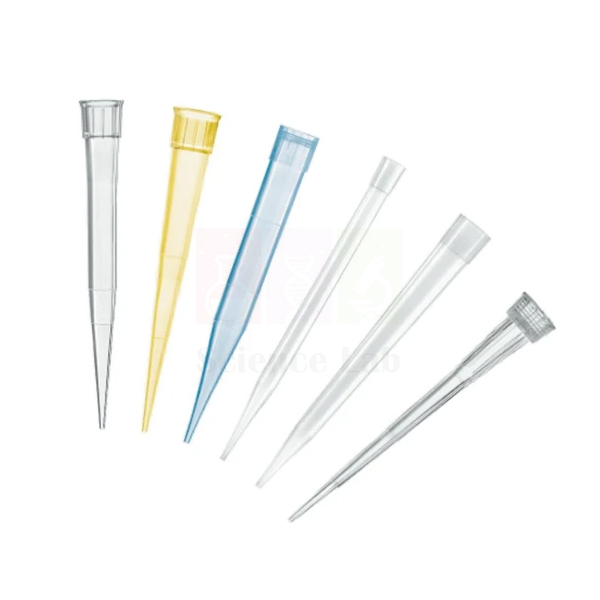
Micropipette Tips
Micropipette Tips (Product Code: SLE/ME/16) are replacement tips used on micropipettes to take up and dispense measured microlitre volumes in biology, chemistry and biotechnology laboratories. They are listed as replacement tips for the United Micropipettors and are sold in cases of 1,000 tips, a practical quantity for labs that change tips between every sample. They are supplied by Jain Scientific Equipments Pvt Ltd (ScienceLab), Ambala, India.
Key Details
| Parameter | Detail |
|---|---|
| Type | Replacement micropipette tips |
| Intended pipettes | United Micropipettors (as listed) |
| Packing | Case of 1,000 tips |
| Product code | SLE/ME/16 |
| Supplied by | Jain Scientific Equipments Pvt Ltd (ScienceLab), Ambala, India |
What Are Micropipette Tips Used For?
The tip is the only part of a micropipette that touches the liquid. It holds the measured volume while the pipette body stays clean, and swapping it for a fresh one between samples prevents carry-over from one solution to the next. In practice that means a new tip for each standard in a dilution series, each sample loaded onto a gel and each reagent added to a reaction tube.
Press the pipette shaft firmly into the tip so it seals evenly, then check it sits straight before drawing liquid. Touch the tip to the side of the receiving vessel to release the last drop, and eject used tips straight into a waste container. Keeping unused tips in a closed tip box protects them from dust, which matters for these everyday lab consumables in shared teaching labs.
What to Specify When Ordering
- The make, model and volume range of your micropipettes (these tips are listed for United Micropipettors).
- Number of cases of 1,000 tips.
- Whether you need filtered tips for PCR or aerosol-sensitive work as well.
Supplier
ScienceLab, the trading name of Jain Scientific Equipments Private Limited, supplies Micropipette Tips by the case from Ambala, Haryana, to schools, colleges, research laboratories and dealers in India and international markets. Regular users often set up repeat orders of tips alongside pipettes, tip boxes and tubes so that consumables never run short mid-term. More about the company is on the ScienceLab profile.
Related Measuring Equipment
Pipetting benches usually stock these items with the tips:
- Filtered Micropipette Tips — tips with a barrier for contamination-sensitive work.
- Micropipette — an adjustable pipette to use the tips with; confirm fit.
- Research Pipettors — micropipettes in four ranges for research work.
- Micro Tip Box — a box for storing tips clean at the bench.
- Micro Centrifuge Tube, 1.5ml — tubes for the samples being transferred.
Browse the Measuring category for further pipetting items.
Frequently Asked Questions
How many Micropipette Tips are in a case?
Micropipette Tips are sold in cases of 1,000 tips each. To plan how many cases you need, multiply the number of students or users by the number of transfers in each practical, since every sample and reagent needs a fresh tip.
Which pipettes do these Micropipette Tips fit?
These Micropipette Tips are listed as replacement tips for the United Micropipettors. If you use another make or model, send its name and volume range through the contact page so fit can be confirmed before quoting, because a poor seal gives inaccurate volumes.
What volume and material are the Micropipette Tips?
The product listing for the Micropipette Tips does not state the tip volume, colour or material. Tell us the volume range of your pipette in your enquiry, and the matching tip specification will be confirmed in writing before you order.
Can Micropipette Tips be reused?
Micropipette Tips are replacement consumables and should be changed between samples to prevent carry-over and contamination. Reusing a tip can leave residue inside it that changes the volume delivered and spoils later results.
Should I choose filtered tips instead of standard Micropipette Tips?
Standard Micropipette Tips suit routine teaching work. For PCR set-ups or any work where aerosols could contaminate the pipette, filtered micropipette tips add a barrier inside the tip; both types can be quoted together in one order.
Who supplies the Micropipette Tips?
Jain Scientific Equipments Pvt Ltd (ScienceLab), Ambala, Haryana, India, supplies Micropipette Tips by the case to schools, colleges, research labs and dealers in India and international markets, alongside micropipettes and tip boxes.
Request a Quote
State the number of cases and your pipette model on the contact page, or add Micropipette Tips to the enquiry cart with pipettes and tip boxes to receive one quotation.
Last updated: 24 September 2026
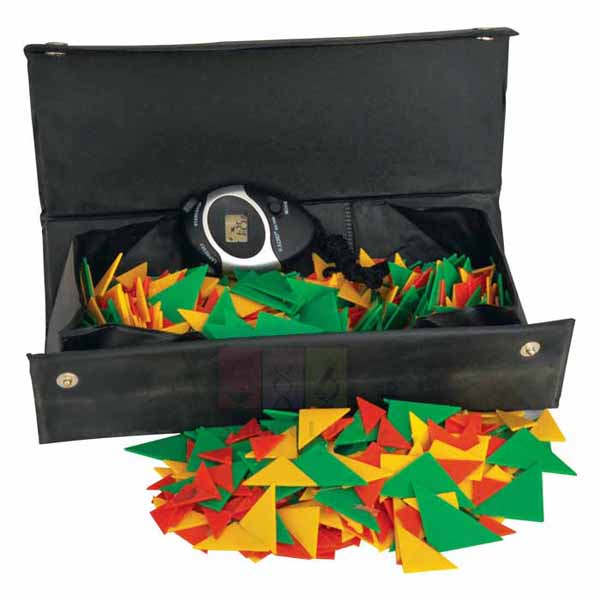
Time and Work Kit
Time and Work Kit (Product Code: SLE/MAT/57) is a maths lab kit used to measure and compare the work that different groups complete in the same time span in school classrooms. It combines assorted colour right-angle triangles with a single digital stopwatch, turning time-and-work word problems into a timed group activity. Jain Scientific Equipments Pvt Ltd (ScienceLab), an OEM manufacturer, makes it at its own factory in Ambala, India, as one of its mathematics lab kits for schools in India.
Key Details
| Parameter | Detail |
|---|---|
| Kit contents | Assorted colour right-angle triangles with one digital stopwatch |
| Timer | Single digital stopwatch |
| Work pieces | Right-angle triangles in assorted colours |
| Learning objective | Calculating the work done in the same time span by different groups |
| Product code | SLE/MAT/57 |
| Manufacturer | Jain Scientific Equipments Pvt Ltd (ScienceLab) — OEM |
| Country of origin | India (made in Ambala, Haryana) |
What Is the Time and Work Kit Used For?
The kit gives pupils a concrete entry point into the time-and-work chapter. Each group receives the same task — for example, sorting or arranging the coloured triangles into a set pattern — while one pupil runs the digital stopwatch. When the round ends, groups compare how much they finished in the same time span, express it as work per minute and use that rate to predict how long a combined team would take.
Agree on what counts as one unit of work before starting, and use the same stopwatch for every round so the timings stay comparable. Recording each group's output in a table lets the class move from the activity to unitary-method and efficiency calculations. The kit fits easily into a school lab setup in India where maths activity periods run alongside regular lessons.
OEM Manufacturer
Jain Scientific Equipments Private Limited, which trades as ScienceLab, is the OEM (original equipment manufacturer) of the Time and Work Kit. The company makes and assembles the kit at its own licensed factory at Saha, Ambala, Haryana, India, rather than sourcing it from a trader. Schools, colleges, institutions, dealers and importers are supplied factory-direct, and questions about replacement triangles or stopwatches go straight to the maker — just ask us. Learn more on our company profile.
Related Maths Lab Equipment
Teachers running timed maths activities often combine the Time and Work Kit with these items:
- Stopwatch, Digital — an extra timer so two groups can be timed at once.
- Bench Stopwatch — a desk-top timer the whole class can follow during a round.
- Junior Pythagoras Theorem — another right-angle triangle activity for the same classes.
- Upper Primary Maths Kit — a broader kit for equipping a full maths activity corner.
See the complete Maths Lab Equipment range for more classroom manipulatives.
Frequently Asked Questions
What is included in the Time and Work Kit?
The Time and Work Kit includes assorted colour right-angle triangles and a single digital stopwatch. The triangles act as the units of work that each group handles, and the stopwatch times every round so that output over the same time span can be compared fairly.
How is the Time and Work Kit used to teach time and work problems?
The Time and Work Kit is used by giving every group the same task and time limit, timing it with the digital stopwatch and comparing how many triangles each group handled. Pupils then turn the results into work per unit time and solve combined-work questions.
How many triangles are in the Time and Work Kit?
The Time and Work Kit is listed with assorted colour right-angle triangles, and our catalogue description does not fix a piece count. Please ask through our contact page for the current number of triangles and colours before you place an order.
Who manufactures the Time and Work Kit?
The Time and Work Kit is manufactured by Jain Scientific Equipments Pvt Ltd (ScienceLab), the OEM, at its own licensed factory at Saha, Ambala, Haryana, India. Quotations, repeat orders and replacement-part questions are handled directly by the manufacturer.
Can the Time and Work Kit be ordered in bulk or for export?
Yes, the Time and Work Kit can be quoted in class-set quantities for schools, institutions and dealers in India and international markets. Tell us how many kits you need and the delivery location, and we will prepare a quotation for you.
What details does a quotation for the Time and Work Kit need?
A quotation for the Time and Work Kit needs the product code SLE/MAT/57, the number of kits, the delivery address and any related items you want quoted together. Send these through the contact page or add the kit to the enquiry cart.
Request a Quote
To order the Time and Work Kit, send your quantity and delivery location through our contact page or add it to the enquiry cart. Quotations come direct from the manufacturer, so you deal with the team that makes the kit.
Last updated: 24 September 2026
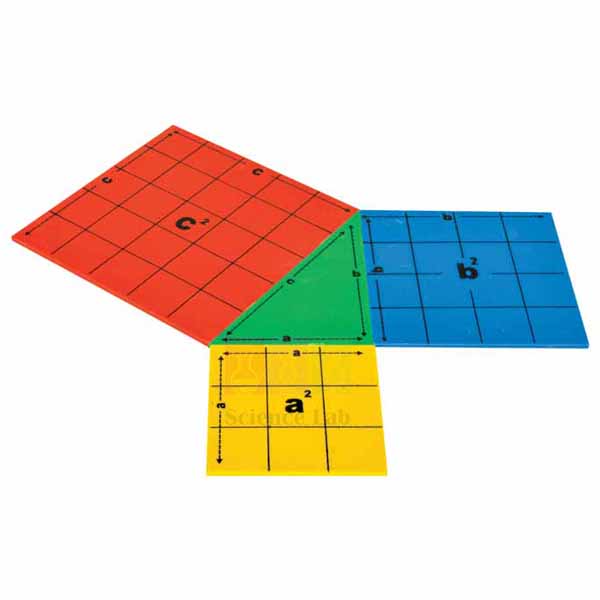
Junior Pythagoras Theorem
Junior Pythagoras Theorem (Product Code: SLE/MAT/58) is a hands-on geometry kit used to verify that, in a right triangle, the square of the hypotenuse equals the sum of the squares of the other two sides in school maths labs. It pairs one plastic right-angle triangle measuring (3-4) inches with a gridded square for each of its three sides. Jain Scientific Equipments Pvt Ltd (ScienceLab), an OEM school lab equipment manufacturer, makes it at its own factory in Ambala, India.
Specifications
| Parameter | Detail |
|---|---|
| Purpose | Verifying that the square of the hypotenuse equals the sum of the squares of the other two sides |
| Triangle | One plastic right-angle triangle, measure (3-4) inch |
| Squares | Set of squares, one for each of the 3 sides of the triangle |
| Grid | Square-inch grid printed on each square |
| Product code | SLE/MAT/58 |
| Manufacturer | Jain Scientific Equipments Pvt Ltd (ScienceLab) — OEM |
| Country of origin | India (made in Ambala, Haryana) |
What Is the Junior Pythagoras Theorem Kit Used For?
The kit turns Pythagoras' theorem from a formula into something pupils can see and count. Learners place each gridded square against its matching side of the plastic triangle, count the square-inch cells in every square, and discover that the two squares on the shorter sides together hold exactly as many cells as the square on the hypotenuse.
Work on a flat desk and line each square up edge to edge with the triangle so the picture stays accurate. After the counting activity, pupils can repeat the idea on graph paper with other right triangles and then move to the algebraic statement. As hands-on educational lab equipment in India, one kit per small group keeps every pupil involved in the counting.
OEM Manufacturer
ScienceLab is the trading name of Jain Scientific Equipments Private Limited, the original equipment manufacturer (OEM) of the Junior Pythagoras Theorem kit. The triangle and its gridded squares are produced at the company's own licensed factory at Saha, Ambala, Haryana, India, and kits reach schools, colleges and dealers factory-direct instead of passing through a chain of traders. If a square is lost or damaged, ask us about a replacement piece. More about the company is on our profile page.
Related Maths Lab Equipment
These items extend the right-triangle work started with the Junior Pythagoras Theorem kit:
- Trigonometry Board — the next step, from side lengths to trigonometric ratios.
- Graph Board — for drawing further right triangles and their squares on a grid.
- Set Square, Blackboard, 45-45-90 degrees — lets the teacher draw accurate right angles on the board.
- Geometry Set — for constructing and measuring triangles by hand.
Explore more geometry aids in our Maths Lab Equipment category.
Frequently Asked Questions
What does the Junior Pythagoras Theorem kit contain?
The Junior Pythagoras Theorem kit contains one plastic right-angle triangle with the measure (3-4) inches and a set of squares, one for each of the three sides, each printed with a square-inch grid so pupils can count areas directly.
How do students verify Pythagoras' theorem with this kit?
Students verify the theorem with the Junior Pythagoras Theorem kit by placing each gridded square against its side of the triangle, counting the square-inch cells, and showing that the two smaller squares together match the square on the hypotenuse.
What size is the triangle in the Junior Pythagoras Theorem kit?
The Junior Pythagoras Theorem kit uses a plastic right-angle triangle listed with the measure (3-4) inches, and its companion squares carry square-inch grids. For the overall dimensions of each square, please ask us through our contact page.
Which classes is the Junior Pythagoras Theorem kit suitable for?
The Junior Pythagoras Theorem kit suits classes meeting the theorem for the first time, usually in middle and secondary school, because counting printed square-inch cells makes the area relationship visible before pupils move on to formal algebraic proofs.
Who manufactures the Junior Pythagoras Theorem kit?
The Junior Pythagoras Theorem kit is manufactured by Jain Scientific Equipments Pvt Ltd (ScienceLab), the OEM, at its own licensed factory at Saha, Ambala, Haryana, India, and is supplied directly by the manufacturer to schools, institutions, dealers and importers.
Can the Junior Pythagoras Theorem kit be ordered for a whole class?
Yes, the Junior Pythagoras Theorem kit can be quoted singly or in class quantities for schools, institutions and dealers in India and international markets. Share the number of kits and the delivery location to receive a quotation.
Request a Quote
For a price on the Junior Pythagoras Theorem kit, write to us through the contact page or place it in the enquiry cart with your quantity. Your quotation comes straight from the manufacturer.
Last updated: 24 September 2026
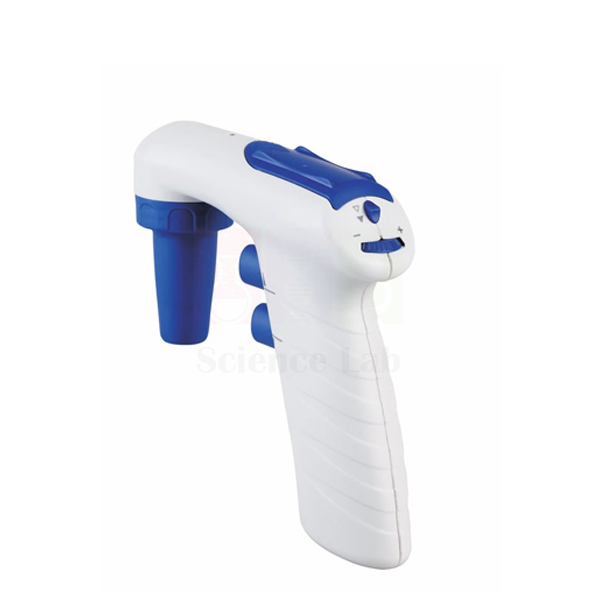
Pipet Controller
Pipet Controller (Product Code: SLE/ME/17) is a cordless, ergonomically designed pipetting aid used to aspirate and dispense liquids with glass or plastic pipets from 1 to 100 mL in teaching and research laboratories. Its low and high aspiration speeds, replaceable 0.2 µm and 0.45 µm PTFE filters and a liquid-blocking valve in the silicone nose protect the unit if liquid is drawn up too far. It is supplied by Jain Scientific Equipments Pvt Ltd (ScienceLab), Ambala, India.
Specifications
| Parameter | Detail |
|---|---|
| Type | Cordless, ergonomically designed pipet controller |
| Pipets accepted | Glass or plastic, 1 to 100 mL |
| Aspiration speed | Low or high setting |
| Filters | Replaceable PTFE, 0.2 µm and 0.45 µm |
| Liquid protection | Liquid-blocking valve in the silicone nose |
| Autoclavable parts | Silicone pipet holder (with valve), nosepiece and PTFE filters |
| Battery indicator | Low-battery warning light |
| Product code | SLE/ME/17 |
| Supplied by | Jain Scientific Equipments Pvt Ltd (ScienceLab), Ambala, India |
What Is a Cordless Pipet Controller Used For?
With no cable to trail across the bench, this controller moves easily between a sink, a media bench and a clean work area. It is used to fill serological and graduated pipets for culture media preparation, buffer make-up, reagent dispensing and routine volumetric transfers, taking the place of mouth pipetting and tiring hand bulbs in microbiology lab equipment set-ups.
Select low speed for small pipets, viscous samples or when setting a meniscus, and high speed to fill large pipets quickly. The finer 0.2 µm filter is the usual choice where the air path must stay especially clean, while the 0.45 µm filter suits general transfers. Autoclave the holder, nosepiece and filters according to your laboratory’s routine, wipe the body clean instead, and restore battery power as soon as the warning light comes on.
What to Specify When Ordering
- Number of controllers needed.
- Spare PTFE filters, stating 0.2 µm, 0.45 µm or both.
- Glass or plastic pipets in the sizes you use between 1 and 100 mL.
Supplier
Jain Scientific Equipments Private Limited, trading as ScienceLab from Ambala, Haryana, supplies the Pipet Controller to colleges, research laboratories, institutes and distributors in India and international markets. Overseas consignments are shipped under Importer-Exporter Code AAECJ8618A issued by the DGFT, and Indian buyers can record the supplier’s GSTIN 06AAECJ8618A1ZT on their purchase documents. Visit the ScienceLab profile for company background.
Related Measuring Equipment
These pipetting items complement the controller:
- Disposable Glass Serological Pipets — glass pipets to use with the controller.
- Pipette Controller — a rechargeable lithium-battery model with variable speed.
- Pipette Stand Rotary — holds pipets upright between transfers.
- Pipet Aid — a simple squeeze-bulb aid for occasional use.
More options are grouped in the Measuring category.
Frequently Asked Questions
What pipets can the Pipet Controller hold?
The Pipet Controller holds glass or plastic pipets from 1 to 100 mL. Push the pipet gently into the silicone holder until it seals, and check that it sits straight so liquid is drawn up smoothly without air leaks.
How is the aspiration speed set on the Pipet Controller?
The Pipet Controller’s aspiration speed can be set to low or high. Low speed gives fine control with small pipets or viscous fluids, while high speed fills large-volume pipets quickly during routine transfers.
How does the Pipet Controller protect itself from liquid?
The Pipet Controller combines replaceable 0.2 µm and 0.45 µm PTFE filters with a liquid-blocking valve in its silicone nose. If liquid is drawn up too far, the valve and filter stop it entering the unit; replace a wetted filter before continuing.
Which parts of the Pipet Controller can be autoclaved?
The silicone pipet holder (with its valve), the nosepiece and the PTFE filters of the Pipet Controller are autoclavable. The main body is not listed as autoclavable, so wipe it clean instead and keep it dry.
How do I know when the Pipet Controller needs power?
The Pipet Controller has a low-battery warning light. When it comes on, restore battery power before beginning a long series of transfers, so the unit is not interrupted part-way through a pipetting run.
How does the Pipet Controller differ from the Pipette Controller in the same range?
Both handle pipettes from 1 to 100 mL. The Pipet Controller stands out for its two-speed setting, choice of 0.2 µm or 0.45 µm PTFE filters and autoclavable holder, nosepiece and filters; ask us to compare both for your lab.
Who supplies the Pipet Controller?
Jain Scientific Equipments Pvt Ltd (ScienceLab), Ambala, Haryana, India, supplies the Pipet Controller to colleges, research laboratories and dealers in India and international markets, and can include spare PTFE filters and pipets in the same quotation.
Request a Quote
Send the number of controllers and the filters you prefer through the contact page, or add the Pipet Controller to the enquiry cart with pipets and stands for a combined quotation.
Last updated: 24 September 2026
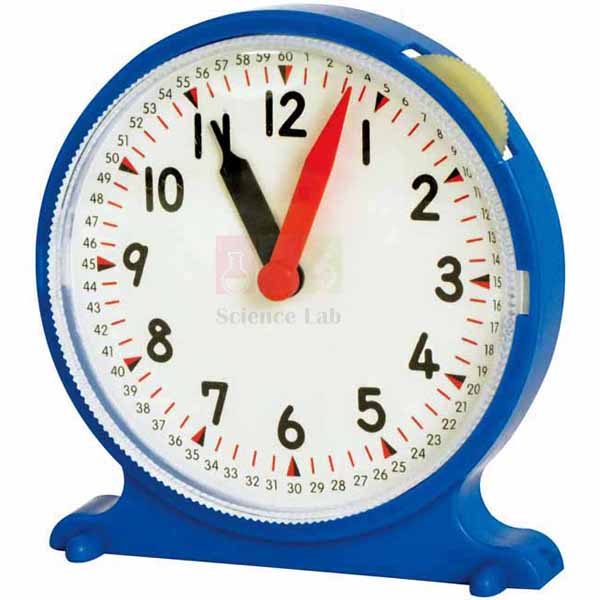
Geared Student Clock
Geared Student Clock (Product Code: SLE/MAT/59) is a geared practice clock used to develop children's time-telling skills in primary classrooms and maths labs. Hidden gears link its moveable hands, so turning the minute hand carries the hour hand accurately to the hours, and the bright colour hands are easy to read. Jain Scientific Equipments Pvt Ltd (ScienceLab), an OEM manufacturer, makes it at its own factory in Ambala, India.
Key Details
| Parameter | Detail |
|---|---|
| Mechanism | Hidden gears maintain the correct hour and minute relationship as the hands are moved |
| Hour hand | Accurate to the hours with the movement of the minute hand |
| Hands | Moveable, bright colour clock hands, easy to read |
| Learning objective | Developing a child's time-telling skill |
| Product code | SLE/MAT/59 |
| Manufacturer | Jain Scientific Equipments Pvt Ltd (ScienceLab) — OEM |
| Country of origin | India (made in Ambala, Haryana) |
What Is the Geared Student Clock Used For?
Because the gears keep both hands in step, the clock always shows a time that could really occur: at half past, the hour hand sits midway between two numbers, just as on a wall clock. Teachers call out a time, pupils set it on their own clocks, and a quick look around the room shows who has understood o'clock, half past and quarter times.
Once reading is secure, the same clock supports elapsed-time questions such as "what time will it be in three quarters of an hour?", with pupils turning the minute hand and watching the hour hand follow. It works well as part of a junior lab kit in primary school, where each child can hold and turn a clock rather than watching the teacher alone.
OEM Manufacturer
The Geared Student Clock is produced by Jain Scientific Equipments Private Limited, trading as ScienceLab, as the OEM (original equipment manufacturer). The clocks are made and assembled at the company's own licensed factory at Saha, Ambala, Haryana, India, so schools, dealers and importers buy from the maker rather than from a reseller. Repeat class sets can be ordered from the same source — ask us for current availability. Read more on our company profile.
Related Maths Lab Equipment
Pair the Geared Student Clock with these items when teaching time:
- Clock, Teaching, Wood — a teacher's demonstration clock for the front of the class.
- Dummy Clock — a lightweight fiber-sheet clock with movable hands for extra practice.
- Roman Numbers Kit — helps pupils read clock faces marked with Roman numerals.
- Stopwatch, Digital — for measuring short intervals once pupils can read the clock.
More time and number resources are listed under Maths Lab Equipment.
Frequently Asked Questions
How does the Geared Student Clock keep the hands in step?
The Geared Student Clock uses hidden gears that connect the minute and hour hands, so when a pupil turns the minute hand the hour hand moves accurately to the hours. This keeps the correct hour and minute relationship for every time that is set.
Which pupils is the Geared Student Clock meant for?
The Geared Student Clock is meant for children developing time-telling skills, so it suits early-years and primary classes learning o'clock, half past and quarter times, as well as older pupils practising elapsed-time problems.
Why choose a geared clock over a basic teaching clock?
The Geared Student Clock moves the hour hand together with the minute hand through its hidden gears, so pupils cannot set an impossible time and always see a correct hour and minute relationship, which avoids reinforcing mistakes during practice.
Are the hands on the Geared Student Clock easy to read?
Yes, the Geared Student Clock has bright colour hands that are easy to read, which helps young children follow each hand clearly while they practise setting and reading times at their desks.
What size is the Geared Student Clock?
The dimensions of the Geared Student Clock are not stated in our catalogue description. Please ask through our contact page for the dial size before ordering, especially if it needs to match other classroom clocks.
Who manufactures the Geared Student Clock?
The Geared Student Clock is manufactured by Jain Scientific Equipments Pvt Ltd (ScienceLab), the OEM, at its own licensed factory at Saha, Ambala, Haryana, India. Quotations and repeat orders are handled directly by the manufacturer.
Can Geared Student Clocks be ordered for a whole class?
Yes, Geared Student Clocks can be quoted in class sets for schools, dealers and institutions in India and international markets, including school lab equipment bulk supply orders. Tell us the quantity and delivery location to receive a quotation.
Request a Quote
Send your required number of Geared Student Clocks through our contact page, or add the clock to the enquiry cart. You will receive a quotation directly from the manufacturer.
Last updated: 24 September 2026