- Physics Lab Equipment
- Chemistry Lab Equipment
- Biology Lab Equipment
- Anatomical Lab Equipment
- Learning
- Educational Lab Equipment
- Magnets
- Agriculture
- Astronomy
- Earth Science
- Geography Lab Equipment
- Safety Lab Coat
- Laboratory
- Meteorological
- Electricity & Magnetism
- Heat
- School Lab Equipment
- Lab Glassware
- Science Lab Equipment
- Tvet Lab Equipment
- Robotics Kits Supplier and Manufacturer for Schools India
- Math Lab Equipment Manufacturers and Exporters in Ambala
- STEM Kits Manufacturers and Supplier India
- Engineering Lab Equipment
- Hospital Lab Equipment
- Water, Sanitation & Hygiene Supplies
- Cold Chain, Solar & Communication Equipment
- Nutrition
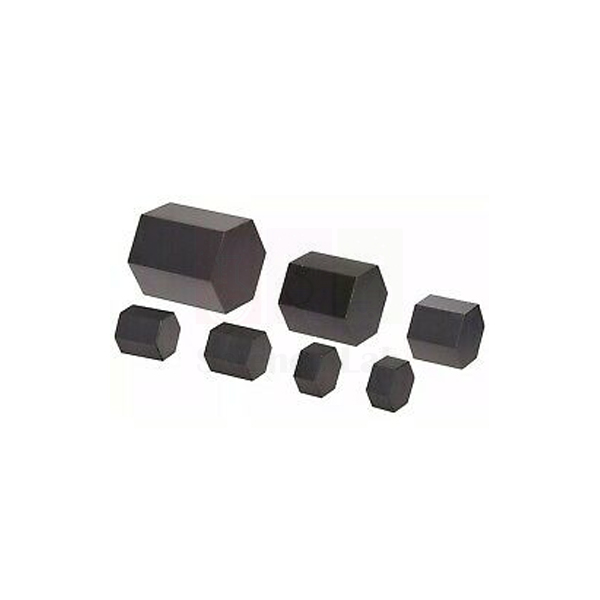
Mass Set
Mass Set (Product Code: SLE/ME/05) is a set of seven hexagonal solid steel masses used for weighing, balancing and simple force experiments in school and college science labs. Teachers pick it because each mass is accurate to 1 g and its length is proportional to its mass, so students see relative sizes at a glance across a range from 50 g to 1000 g. It is made by Jain Scientific Equipments Pvt Ltd (ScienceLab), an OEM manufacturer, at its own factory in Ambala, India.
Specifications
| Parameter | Detail |
|---|---|
| Form | Hexagonal solid steel bars |
| Accuracy | To 1 g |
| Size relationship | Length is proportional to mass |
| Set contents | Two 50 g, two 100 g, one 200 g, one 500 g and one 1000 g mass (7 pieces, 2 kg in total) |
| Handling | Easy to work with |
| Product code | SLE/ME/05 |
| Manufacturer | Jain Scientific Equipments Pvt Ltd (ScienceLab) — OEM |
| Country of origin | India (made in Ambala, Haryana) |
What Is the Mass Set Used For?
A mass set supplies known masses for experiments where the value must be trusted. On a pan balance, students set the masses against an unknown object to find its mass by comparison, and the same pieces provide known loads for simple force and lever experiments in mechanics lessons. Because each bar’s length is proportional to its mass, younger learners can line them up and see that the 1000 g bar is twice as long as the 500 g bar.
Combining pieces builds intermediate values — a 50 g and a 100 g mass placed together, for example — which turns the set into a practical tool for teaching addition of masses. Wipe the steel bars dry after use and keep all seven together so the set stays complete for the next practical.
What to Specify When Ordering
- Number of sets per laboratory (each set holds seven masses totalling 2 kg).
- Whether you need extra pieces of any value — ask us.
- Balances or spring scales to be quoted with the set.
OEM Manufacturer
The Mass Set is manufactured by ScienceLab, the trading name of Jain Scientific Equipments Private Limited, which is the OEM (original equipment manufacturer) of this item. The steel masses are made at the company’s own licensed factory at Saha, Ambala, Haryana, India, and supplied direct to schools, colleges, laboratories, dealers and importers. For replacement pieces or repeat sets, ask us — the manufacturer handles the request itself. More is on the ScienceLab profile.
Related Measuring Equipment
The masses are typically used with these instruments:
- Hanging Pan Balance — a balance for comparing unknown objects against the masses.
- Triple Beam Balance — a mechanical balance for measuring objects and samples directly.
- Spring Scales, Green, 500 g (5 N) — reads force and mass for simple load experiments.
- Metric Attachment Weight Set — another weight set for force and loading experiments.
Explore more instruments in the Measuring category.
Frequently Asked Questions
What is included in the Mass Set?
The Mass Set (SLE/ME/05) contains seven hexagonal solid steel masses: two 50 g, two 100 g, one 200 g, one 500 g and one 1000 g. Together they total 2 kg and can be combined to build many intermediate values.
How accurate are the masses in the Mass Set?
Each mass in the Mass Set is accurate to 1 g, which suits school and college practicals on weighing, balancing and density. The product description does not mention a calibration certificate; if your lab needs one, raise it through the contact page before ordering.
Why are the Mass Set masses hexagonal bars?
The Mass Set uses hexagonal solid steel bars whose length is proportional to their mass, so a 1000 g bar is visibly twice as long as a 500 g bar. The flat hexagonal sides stop bars rolling on the bench and make them easy to pick up.
Who manufactures the Mass Set?
The Mass Set is manufactured by Jain Scientific Equipments Pvt Ltd, trading as ScienceLab, the OEM for this product. The masses are made at the company’s own factory at Saha, Ambala, Haryana, India, and quotations are issued directly by the manufacturer.
How should the Mass Set be cared for?
Keep the Mass Set dry and wipe the steel bars with a clean cloth after use, since moisture and fingerprints can mark steel over time. Store all seven masses together and avoid dropping them, which could dent the bars or damage bench surfaces.
What should a Mass Set quotation request include?
A Mass Set quotation request should give the number of sets, any balances or spring scales to be quoted alongside, and the delivery location in India or abroad. Tender buyers should also mention any documentation they need when contacting us.
Is the Mass Set available in bulk and for export?
Yes. ScienceLab supplies the Mass Set to single schools, school groups, colleges, distributors and importers across India and international markets. Share your quantity and destination through the contact page for a quotation straight from the manufacturer.
Request a Quote
For a Mass Set (SLE/ME/05) quotation, use the contact page or add the set to the enquiry cart. Quotations come direct from the manufacturer in Ambala.
Last updated: 24 September 2026
130.jpg)
Spring Scales, Green, 500 g (5 N)
Spring Scales, Green, 500 g (5 N) (Product Code: SLE/ME/06) is a tubular spring scale used to measure force in newtons and mass in grams, up to 500 g (5 N), in school physics and general-science practicals. Its green colour-coded ends identify the capacity at a glance, and the clear tubular body carries easy-to-read gram and newton scales that can be fully zeroed. It is made by Jain Scientific Equipments Pvt Ltd (ScienceLab), an OEM manufacturer, at its own factory in Ambala, India.
Specifications
| Parameter | Detail |
|---|---|
| Capacity | 500 g (5 N) |
| Graduations | Grams and newtons, easy to read |
| Readings | Direct readings of both force and mass |
| Body | Clear tubular body; durable construction |
| Colour coding | Green ends, colour-coded by capacity |
| Zero adjustment | Can be fully zeroed |
| Product code | SLE/ME/06 |
| Manufacturer | Jain Scientific Equipments Pvt Ltd (ScienceLab) — OEM |
| Country of origin | India (made in Ambala, Haryana) |
What Is the 500 g Spring Scale Used For?
A spring scale measures force from the stretch of a calibrated spring. Students suspend an object and read its weight in newtons and its mass in grams at the same time, which makes the link between the two — 500 g corresponds to 5 N on this scale — easy to see. The same scale measures the pull needed to drag a block across a bench in friction experiments and the effort in simple pulley and inclined-plane set-ups, making it a core piece of mechanics lab equipment.
Before each reading, hold the scale in line with the pull and zero it with nothing attached. Choose a capacity close to the forces being measured: this green 500 g (5 N) scale suits lighter loads, and the colour-coded ends make it easy to hand out the right scale when a class works with several capacities at once.
What to Specify When Ordering
- Number of green 500 g (5 N) scales — one per practical group is common.
- Any other capacities your class uses — ask us, as the colour coding is designed to tell capacities apart.
- Masses or other apparatus to be quoted with the scales.
OEM Manufacturer
Spring Scales, Green, 500 g (5 N) are produced by ScienceLab — Jain Scientific Equipments Private Limited — as OEM (original equipment manufacturer). The scales are made at the company’s own licensed factory at Saha, Ambala, Haryana, India, and dispatched direct to schools, colleges, training institutes, dealers and importers. Repeat orders and questions about other capacities go straight to the manufacturer — ask us. Background is on the ScienceLab company profile.
Related Measuring Equipment
Force and mass practicals often use these alongside the spring scale:
- Force Meter/Spring Balance — another spring-based force meter for mechanics practicals.
- Pull-Spring Scales, Economy — an economical alternative for large class sets.
- Mass Set — known steel masses for loading experiments.
- Balance Spring Tubular Plastic — a tubular spring balance from the physics range.
More force and weighing instruments are listed under Measuring.
Frequently Asked Questions
What is the capacity of the Spring Scales, Green, 500 g (5 N)?
The Spring Scales, Green, 500 g (5 N) (SLE/ME/06) measures up to 500 g of mass or 5 N of force. Its scale is calibrated in both grams and newtons, so students read mass and force directly without converting between units.
Why does the 500 g spring scale have green ends?
The green colour-coded ends identify this spring scale’s 500 g (5 N) capacity. When a class works with scales of several capacities, colour coding helps teachers and students pick the right one quickly and avoid overloading a lower-range scale.
Can the 500 g (5 N) spring scale be zeroed?
Yes. The Spring Scales, Green, 500 g (5 N) can be fully zeroed. Zero it with nothing attached, holding it in the same orientation as the measurement, so that readings in grams and newtons start from a true zero every time.
Which experiments is the 500 g spring scale used for?
The green 500 g (5 N) spring scale suits experiments on weight and mass, friction, simple machines such as pulleys and inclined planes, and the stretching of springs. Its clear tubular body lets students watch the spring extend as the load increases.
Who manufactures the Spring Scales, Green, 500 g (5 N)?
The Spring Scales, Green, 500 g (5 N) is manufactured by Jain Scientific Equipments Pvt Ltd, trading as ScienceLab, the OEM for this instrument. It is made at the company’s own factory at Saha, Ambala, Haryana, India, and schools and dealers receive quotations directly from the manufacturer.
Is a calibration certificate available for the 500 g spring scale?
The product description of the Spring Scales, Green, 500 g (5 N) does not mention a calibration certificate. If your laboratory or tender needs calibration documentation, please raise it through the contact page so that availability can be discussed before ordering.
Can the 500 g spring scale be ordered in bulk or for export?
Yes. ScienceLab supplies the green 500 g (5 N) spring scale in class sets and larger quantities to schools, colleges, distributors and importers in India and international markets. Send the quantity, any other capacities and your delivery location through the contact page for a quotation.
Request a Quote
Order the Spring Scales, Green, 500 g (5 N) (SLE/ME/06) by sending your quantity through the contact page or adding it to the enquiry cart. Quotations come direct from the manufacturer.
Last updated: 24 September 2026
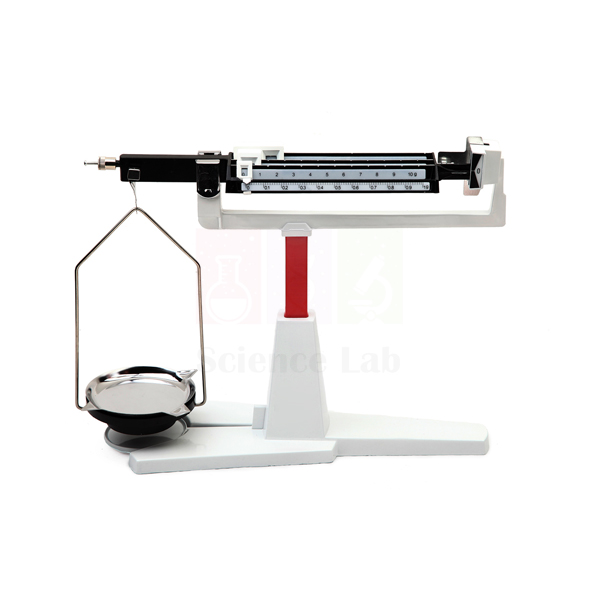
Hanging Pan Balance
Hanging Pan Balance (Product Code: SLE/ME/07) is a precision weighing balance used to measure mass to 0.01 g and to determine specific gravity in school, college and testing laboratories. As a precision chemical balance for India lab benches, it adds a self-storing stainless-steel platform, 3 1/2 in across, that tucks away when not needed, so one instrument handles both routine weighing and density work. It is supplied by Jain Scientific Equipments Pvt Ltd (ScienceLab), Ambala, India.
Specifications
| Parameter | Detail |
|---|---|
| Application | Precision weighing and specific-gravity determination |
| Readability | 0.01 g |
| Material | Stainless steel |
| Specific-gravity platform | Self-storing |
| Platform size | 3 1/2 in diameter × 1/2 in deep |
| Product code | SLE/ME/07 |
| Supplied by | Jain Scientific Equipments Pvt Ltd (ScienceLab), Ambala, India |
What Is a Hanging Pan Balance Used For?
This balance does two jobs on one bench. For everyday weighing, set the sample on the pan and read its mass to the nearest hundredth of a gram, which is fine enough for reagents, seeds or small metal pieces in practical classes. For specific gravity, bring out the stored platform, weigh a solid first in air and then while it hangs fully immersed in water, and use the apparent loss of weight to calculate its specific gravity by Archimedes’ principle.
That second use makes it handy physics lab equipment for density and buoyancy practicals as well as chemistry weighing. Place the balance on a firm, level bench away from draughts, suspend specimens on fine thread so the thread adds almost nothing to the reading, and dry the stainless-steel platform after every immersion. Weigh powders on paper or in a boat rather than directly on the pan.
Supplier
Jain Scientific Equipments Private Limited, trading as ScienceLab, supplies the Hanging Pan Balance from Ambala, Haryana, to schools, colleges, testing laboratories and dealers in India and international markets. It can be quoted together with density cubes, reference masses and weighing paper so a class has everything for a specific-gravity practical. For purchase files and vendor forms, the supplying company’s GSTIN is 06AAECJ8618A1ZT and its Legal Entity Identifier is 3358004HRD1JIVXKYX49. Background on the company is on the ScienceLab company profile.
Related Measuring Equipment
Specific-gravity and weighing practicals usually call for these items alongside the balance:
- Metal Density Cube Set — known solids for students to weigh in air and in water.
- Set to Demonstrate Archimedes’ Principle/Law — introduces the buoyancy idea behind the specific-gravity method.
- Mass Set — reference masses for a quick check of the balance before a lesson.
- Weighing Paper — keeps powders off the pan and speeds up cleaning.
- Electronic Balances — an alternative when a digital readout is preferred.
Browse the full Measuring equipment category for more balances, scales and pipetting tools.
Frequently Asked Questions
What is the readability of the Hanging Pan Balance?
The Hanging Pan Balance reads to 0.01 g, so it resolves differences of one hundredth of a gram. That resolution suits student weighing of reagents and small solids, and it is fine enough to show the weight lost when a solid is suspended in water.
How is specific gravity measured with the Hanging Pan Balance?
With the Hanging Pan Balance, weigh the solid in air, then weigh it again hanging from the specific-gravity platform while fully immersed in water. Dividing the mass in air by the loss in mass gives the specific gravity of the sample.
What is the platform of the Hanging Pan Balance made of?
The platform of the Hanging Pan Balance is stainless steel and measures 3 1/2 in in diameter by 1/2 in deep. It is self-storing, so it stays with the balance between lessons and is less likely to be misplaced or damaged.
What is the maximum capacity of the Hanging Pan Balance?
The product listing for the Hanging Pan Balance gives its readability and platform size but not its maximum capacity. Tell us the heaviest samples you plan to weigh through the contact page, and the capacity of the model quoted will be confirmed.
Is a calibration certificate available for the Hanging Pan Balance?
Calibration documents for the Hanging Pan Balance are not described in the product listing. If your laboratory needs a calibration certificate, mention it in your enquiry so that its availability can be discussed and confirmed in writing before you order.
Who supplies the Hanging Pan Balance?
The Hanging Pan Balance is supplied by Jain Scientific Equipments Pvt Ltd (ScienceLab) of Ambala, Haryana, India. The company quotes schools, colleges, laboratories and dealers in India and international markets, and can combine the balance with related measuring items in one order.
What should a quotation request for the Hanging Pan Balance include?
A quotation request for the Hanging Pan Balance should state the quantity, the delivery location, the heaviest sample you expect to weigh and any accessories such as density cubes or weighing paper. These details allow an accurate, complete offer to be prepared.
Request a Quote
To buy the Hanging Pan Balance, send your quantity and delivery details through the ScienceLab contact page, or add it to the enquiry cart with other measuring equipment to receive one combined quotation.
Last updated: 24 September 2026
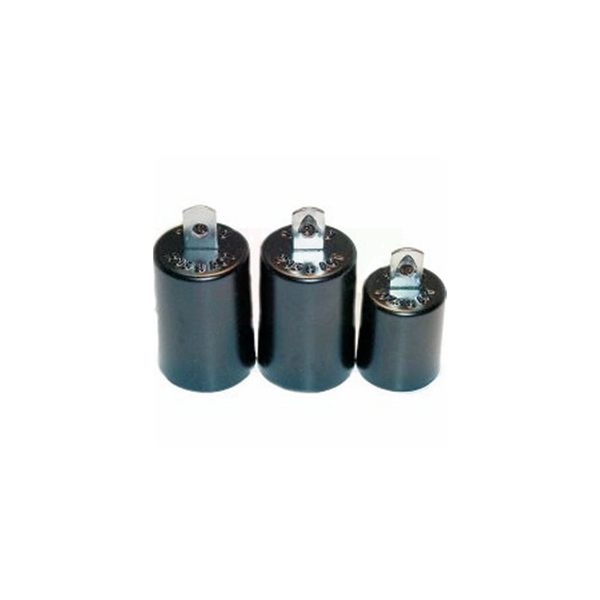
Metric Attachment Weight Set
Metric Attachment Weight Set (Product Code: SLE/ME/08) is a set of metric attachment weights used to extend the weighing capacity of a mechanical beam balance in school and college laboratories. According to the product listing, the set takes a balance with a 610 g capacity up to 2,610 g, so heavier objects can be weighed without buying a second, larger balance. It is supplied by Jain Scientific Equipments Pvt Ltd (ScienceLab), Ambala, India.
Key Details
| Parameter | Detail |
|---|---|
| Product type | Metric attachment weights for a beam balance |
| Capacity extension | From 610 g up to 2,610 g on a compatible balance (as listed) |
| Units | Metric (grams) |
| Product code | SLE/ME/08 |
| Supplied by | Jain Scientific Equipments Pvt Ltd (ScienceLab), Ambala, India |
What Is a Metric Attachment Weight Set Used For?
Attachment weights let a beam balance weigh objects heavier than its sliding riders can reach. Each weight is attached at the end of the beam and adds a fixed amount to the reading; the riders then measure the remainder, and the object’s mass is the sum of the attached weights and the rider readings. Students can weigh rocks, filled containers, soil samples or bulky apparatus that would otherwise overload the balance.
Used this way, a single balance covers both light and heavy work in mechanics lab equipment sets and general science practicals. Zero the balance with nothing on the pan before attaching any weight, handle the weights with clean, dry hands, and keep the set together so no piece goes missing. A dirty or damaged weight changes every reading made with it, so inspect the set at the start of each term.
What to Specify When Ordering
- The make, model and capacity of the beam balance you will use it with (the listing describes use with a 610 g balance).
- How many sets you need, usually one per balance.
- Whether you also need a beam balance quoted with the set.
Supplier
ScienceLab is the trading name of Jain Scientific Equipments Private Limited, which supplies the Metric Attachment Weight Set from Ambala, Haryana, to schools, colleges, science centres and dealers in India and international markets. Because attachment weights have to suit the beam they hang on, buyers are asked to share their balance details in the enquiry so the right set is quoted. Company background is on the ScienceLab profile.
Related Measuring Equipment
These items are commonly ordered with attachment weights:
- Triple Beam Balance — a beam balance to pair with the set; check its capacity against the listing first.
- Balance Triple Beam — the triple beam model offered in the chemistry range.
- Mass Set — known masses for checking the combined reading after the weights are attached.
- Plastic Weighing Boats — containers for loose samples placed on the pan.
See the complete Measuring category for other balances and weighing accessories.
Frequently Asked Questions
What does the Metric Attachment Weight Set do?
The Metric Attachment Weight Set extends the range of a beam balance so that it can weigh heavier objects. According to the product listing, it takes a balance with a 610 g capacity up to a total capacity of 2,610 g.
Which balance is the Metric Attachment Weight Set designed for?
The listing describes the Metric Attachment Weight Set with a beam balance of 610 g capacity. Attachment weights must match the beam they attach to, so please share your balance make and model through the contact page before ordering.
How is the total mass read when using the Metric Attachment Weight Set?
When the Metric Attachment Weight Set is in use, add the values of the attached weights to the readings shown by the beam riders. Zero the balance beforehand with nothing on the pan so that the combined figure is accurate.
What are the individual weight values and material of the Metric Attachment Weight Set?
The product listing for the Metric Attachment Weight Set does not state the individual weight values, the number of pieces or the material. Ask us through the contact page and the make-up of the set will be confirmed before you order.
Who supplies the Metric Attachment Weight Set?
Jain Scientific Equipments Pvt Ltd (ScienceLab), based in Ambala, Haryana, India, supplies the Metric Attachment Weight Set to schools, colleges and dealers in India and international markets, and can quote it together with a suitable beam balance.
What should a quote request for the Metric Attachment Weight Set include?
When requesting a quote for the Metric Attachment Weight Set, list the number of sets, the make and capacity of your balance, and your delivery address. If you still need a balance, add it to the same enquiry.
Request a Quote
Share your balance model and the number of sets on the contact page, or place the Metric Attachment Weight Set in the enquiry cart alongside any balances you need, and a written quotation will follow.
Last updated: 24 September 2026
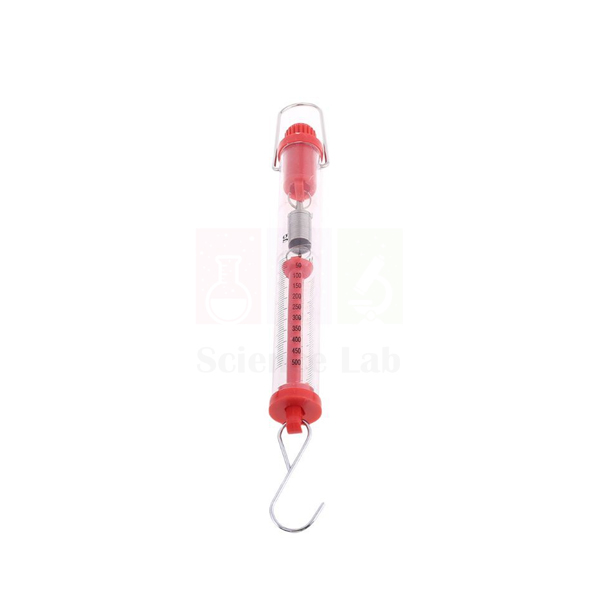
Force Meter/Spring Balance
Force Meter/Spring Balance (Product Code: SLE/ME/09) is a dual-purpose spring instrument used to weigh hanging objects and to measure pushing or pulling forces in school physics and general science lessons. Its extended rod lets students press against or pull on an object as well as hang loads from it, and this red, colour-coded 2 kg version is scaled in both grams and newtons. It is made by Jain Scientific Equipments Pvt Ltd (ScienceLab), an OEM manufacturer, at its own factory in Ambala, India.
Specifications
| Parameter | Detail |
|---|---|
| Functions | Weighs suspended objects; measures push and pull forces using the extended rod |
| Scale units | Grams and newtons |
| Range | 2 kg |
| Colour code | Red |
| Write-on area | Clear, flat area on the rod for drawing your own scale with a dry-wipe marker |
| Included | Instructions and ideas sheet |
| Product code | SLE/ME/09 |
| Manufacturer | Jain Scientific Equipments Pvt Ltd (ScienceLab) — OEM |
| Country of origin | India (made in Ambala, Haryana) |
What Is a Force Meter Used For?
Hang an object from the meter and students read its weight in newtons alongside its mass in grams, which makes the difference between mass and weight concrete. Turn the instrument round and the extended rod becomes a push-pull gauge: pupils can measure the force needed to start a block sliding, compare friction on different surfaces, or push a trolley and feel how force relates to motion. That versatility makes it a core item in any force and motion experiment kit.
The write-on strip on the rod is useful with younger classes, who can mark their own simple scale for a lesson and wipe it clean afterwards. Before each reading, check that the indicator sits at zero with nothing attached, keep the meter in line with the direction of the force, and read it at eye level. Staying within the 2 kg range protects the spring from being overstretched.
OEM Manufacturer
ScienceLab is the trading name of Jain Scientific Equipments Private Limited, the original equipment manufacturer (OEM) of this force meter. It is made and assembled at the company’s own licensed factory at Saha, Ambala, Haryana, rather than bought in from a trader, and goes factory-direct to schools, colleges, science centres, dealers and importers in India and international markets. Repeat batches for extra classes and questions about replacement parts are handled by the manufacturer itself, so simply ask us when you need more. Read about the company on the ScienceLab profile.
Related Measuring Equipment
Force and motion lessons often combine the meter with these items:
- Spring Scales, Green, 500 g (5 N) — a lower range for finer readings of light loads.
- Pull-Spring Scales, Economy — a simple pull-only scale for class sets.
- Dynamics Trolley, Plastic — a trolley to push or pull while measuring the applied force.
- Hooke’s Law Apparatus — explores how a spring stretches under load, the principle behind the meter.
- Newton Mass Set 10N Set — known loads for checking readings in newtons.
Explore the wider Measuring range for balances, scales and other measuring tools.
Frequently Asked Questions
What can the Force Meter/Spring Balance measure?
The Force Meter/Spring Balance measures the weight of objects hung from it and, using its extended rod, the force needed to push or pull an object. One instrument therefore covers weighing, friction and simple force-and-motion activities in class.
What units are marked on the Force Meter/Spring Balance?
The Force Meter/Spring Balance is calibrated in both grams and newtons. Reading the two scales side by side helps students see the link between an object’s mass and the gravitational force acting on it.
What range does the Force Meter/Spring Balance have?
The Force Meter/Spring Balance listed here is the red, colour-coded 2 kg version. Keep loads within that range so the spring is not overstretched; for light loads, a lower-range spring scale gives finer readings.
Can students write their own scale on the Force Meter/Spring Balance?
Yes. The Force Meter/Spring Balance has a clear, flat area on its rod that takes a dry-wipe marker, so students can draw their own scale for an activity and wipe it off afterwards without affecting the printed calibration.
What comes with the Force Meter/Spring Balance?
Each Force Meter/Spring Balance includes an instructions and ideas sheet that explains how to use it and suggests classroom activities. Masses, trolleys and other apparatus for experiments are separate items that can be quoted with it.
Who manufactures the Force Meter/Spring Balance?
The Force Meter/Spring Balance is manufactured by Jain Scientific Equipments Pvt Ltd (ScienceLab), the OEM, at its own licensed factory at Saha, Ambala, Haryana, India. Schools and dealers receive quotations directly from the manufacturer.
Can the Force Meter/Spring Balance be ordered in class sets?
Yes, the Force Meter/Spring Balance can be quoted in class quantities for schools, colleges and dealers in India and international markets. State the number required and your delivery location so the manufacturer can prepare the quotation.
Request a Quote
Quotations for the Force Meter/Spring Balance come straight from the manufacturer. Send your class quantity through the contact page or add it to the enquiry cart with trolleys, masses or other mechanics apparatus.
Last updated: 24 September 2026
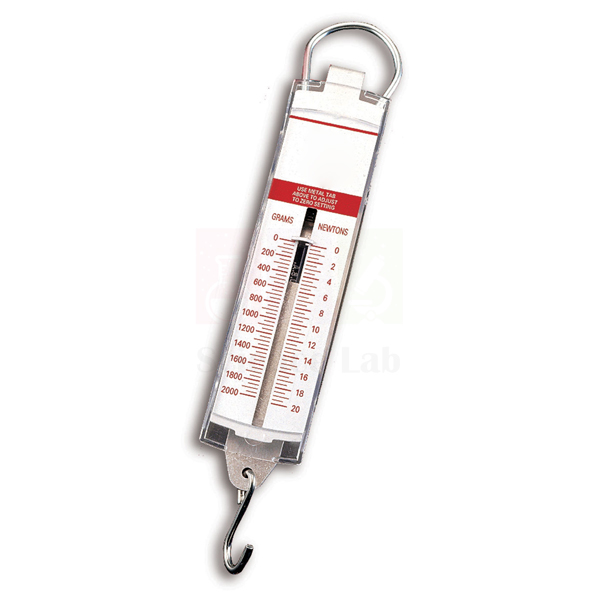
Pull-Spring Scales, Economy
Pull-Spring Scales, Economy (Product Code: SLE/ME/10) is a spring scale used to measure mass and pulling force in grams and newtons during school science practicals. Its dual scale reads up to 500 g in 10 g steps and up to 5 N in 0.1 N steps, with a metal pointer, zero adjustment, suspension ring and load hook on every scale, so whole classes can take their own readings. It is made by Jain Scientific Equipments Pvt Ltd (ScienceLab), an OEM manufacturer, at its own factory in Ambala, India.
Specifications
| Parameter | Detail |
|---|---|
| Scale units | Grams and newtons (g/N) |
| Mass scale (range × division) | 500 g × 10 g |
| Force scale (range × division) | 5 N × 0.1 N |
| Pointer | Metal |
| Zero adjustment | Yes |
| Fittings | Suspension ring and load hook |
| Product code | SLE/ME/10 |
| Manufacturer | Jain Scientific Equipments Pvt Ltd (ScienceLab) — OEM |
| Country of origin | India (made in Ambala, Haryana) |
What Is a Pull-Spring Scale Used For?
Pupils hang an object from the hook to find its mass in grams and its weight in newtons, then use the same scale to measure pulling forces: dragging a wooden block across sandpaper and glass to compare friction, raising a load through a pulley system lab set-up, or pulling a trolley up an inclined plane. Because the scale shows both units, teachers can move from everyday mass to scientific force without changing instruments.
For accurate results, set the zero adjustment with the scale held in the same position as the measurement, vertical for weighing and level for horizontal pulls. Pull smoothly along the axis of the spring so the pointer does not rub, and read at eye level. Loads beyond 500 g can stretch the spring permanently, so move heavier work to a higher-range force meter.
OEM Manufacturer
Jain Scientific Equipments Private Limited, which trades as ScienceLab, is the OEM behind these economy pull-spring scales and produces them at its own licensed factory at Saha, Ambala, Haryana, India. Because the scales come straight from the maker, schools, colleges, dealers and importers can order a first class set and later repeat quantities from one source, with every quotation issued by the manufacturer itself. If a pointer, ring or hook is damaged in use, ask us about replacement parts. More about the company is on the ScienceLab profile.
Related Measuring Equipment
Useful companions for spring-scale practicals:
- Force Meter/Spring Balance — a 2 kg push-pull meter for heavier loads and pushing forces.
- Spring Scales, Green, 500 g (5 N) — a green spring scale covering the same load range.
- Slotted Mass Hanger, 500g — known loads for checking the scale and for Hooke’s law work.
- Pulley, Bench Mounting, Ball Bearing — for measuring the effort needed to lift loads over a pulley.
More options are listed in the Measuring category.
Frequently Asked Questions
What is the range of the Pull-Spring Scales, Economy?
The Pull-Spring Scales, Economy read up to 500 g with 10 g divisions on the mass scale and up to 5 N with 0.1 N divisions on the force scale. This range suits most classroom weighing, friction and pulley activities.
Can the zero be adjusted on the Pull-Spring Scales, Economy?
Yes. Each of the Pull-Spring Scales, Economy has a zero adjustment, so the pointer can be reset before measuring. Set the zero while holding the scale in the position you will use, because orientation affects the reading.
What fittings do the Pull-Spring Scales, Economy have?
The Pull-Spring Scales, Economy have a metal pointer, a suspension ring for hanging the scale from a stand or holding it by hand, and a load hook for attaching objects, string or a mass hanger.
Can the Pull-Spring Scales, Economy measure horizontal pulls?
Yes, the Pull-Spring Scales, Economy measure pulling forces as well as weights. For horizontal pulls, reset the zero with the scale held level and keep the pull in line with the spring so the pointer moves freely.
Who manufactures the Pull-Spring Scales, Economy?
The Pull-Spring Scales, Economy are manufactured by Jain Scientific Equipments Pvt Ltd (ScienceLab) as the OEM at its own licensed factory at Saha, Ambala, Haryana, India, and are supplied factory-direct to schools, colleges and dealers.
How do I request a quote for the Pull-Spring Scales, Economy?
To request a quote for the Pull-Spring Scales, Economy, send the quantity per school or class, your delivery location and any related items such as mass hangers or pulleys. The manufacturer replies with a direct quotation.
Request a Quote
Tell us how many scales each class needs through the contact page, or collect them in the enquiry cart with other mechanics items; the quotation comes direct from the manufacturer in Ambala.
Last updated: 24 September 2026
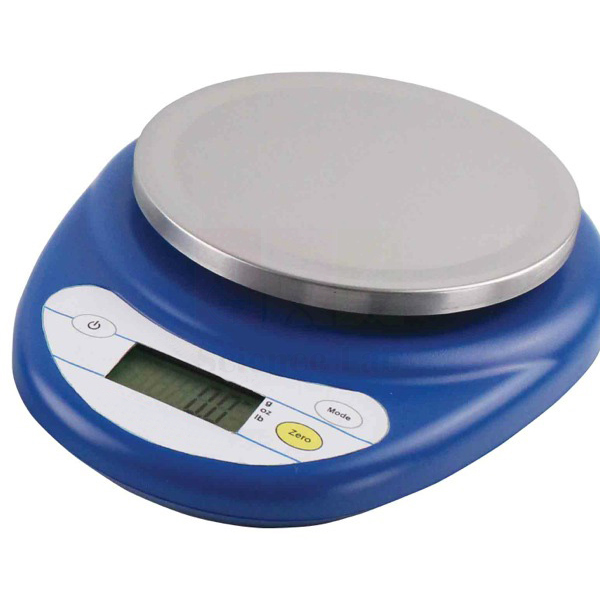
Compact Balance
Compact Balance (Product Code: SLE/ME/11) is a portable electronic balance used to weigh samples up to 220 g with 0.1 g readability in school laboratories, classrooms and outdoor practicals. A handy digital weighing balance for student groups, it has a 132 × 125 mm pan, an LCD display, gram and ounce modes, and runs on three AA batteries (included) or an optional AC adapter. It is supplied by Jain Scientific Equipments Pvt Ltd (ScienceLab), Ambala, India.
Specifications
| Parameter | Detail |
|---|---|
| Capacity | 220 g |
| Readability | 0.1 g |
| Weighing modes | g, oz |
| Tare range | To capacity, by subtraction |
| Stabilisation time | 3 s |
| Pan size | 132 × 125 mm (5-1/5 × 5 in) |
| Overall dimensions | 205 × 140 × 41 mm (8-1/10 × 5-1/2 × 1-3/5 in) |
| Display | LCD (digit size listed as 1/2 × 1-1/5 in) |
| Calibration | Digital, from the keypad |
| Optimal operating temperature | 18 to 25 °C (65 to 77 °F) |
| Power | 3 AA alkaline batteries (included) or AC adapter (sold separately) |
| Product code | SLE/ME/11 |
| Supplied by | Jain Scientific Equipments Pvt Ltd (ScienceLab), Ambala, India |
What Is a Compact Balance Used For?
Students use it to weigh out salts for solutions, measure seeds, leaves or soil for biology and geography work, and follow mass changes in chemistry, such as the loss in mass when marble chips react with acid. Battery power means the balance can move from bench to bench or out to a field site, where no mains socket is needed.
Place a weighing boat or paper on the pan and tare it; the tare works to full capacity by subtraction, so the container’s mass still counts towards the 220 g limit. Wait about 3 seconds for the display to settle, keep the balance away from fans and open windows, and recalibrate from the keypad after moving it to a new room. Its optimal operating range is 18 to 25 °C.
What to Specify When Ordering
- Number of balances, often one per student group.
- Whether you want the AC adapter, which is sold separately, or will run on the 3 AA batteries supplied.
- Whether reference masses for routine checks should be quoted with the balance.
- Consumables such as weighing boats or weighing paper.
Supplier
ScienceLab is the trading name of Jain Scientific Equipments Private Limited, which supplies the Compact Balance from Ambala, Haryana, to schools, colleges, laboratories and resellers in India and international markets. Tender and procurement teams can register the supplier using its Corporate Identification Number U29309HR2020PTC087597 and GST registration 06AAECJ8618A1ZT. See the company profile for more about ScienceLab.
Related Measuring Equipment
Items that make daily weighing with this balance quicker and cleaner:
- Plastic Weighing Boats — tare-able containers for powders and granules.
- Weighing Paper — glazed sheets for small quantities of powder.
- Mass Set — reference masses for spot checks between calibrations.
- Compact Balance 300g — a compact model with a higher capacity.
- Compact Balance 2000g — for heavier samples such as soil or water containers.
Compare more balances in the Measuring category.
Frequently Asked Questions
What is the capacity and readability of the Compact Balance?
The Compact Balance weighs up to 220 g and displays results to 0.1 g. That combination suits student practicals such as weighing salts for solutions, seeds, soil or small metal samples, where tenth-of-a-gram resolution is enough.
How is the Compact Balance powered?
The Compact Balance runs on 3 AA alkaline batteries, which are included, or on an AC adapter that is sold separately. Battery operation makes it easy to move between benches or take outdoors; mention the adapter in your enquiry if you want mains power.
How is the Compact Balance calibrated?
The Compact Balance is calibrated digitally from its keypad. Recalibrate after moving it or when the room temperature changes, using a suitable reference mass; ask us which calibration mass suits the model you are quoted.
Does the Compact Balance have a tare function?
Yes. The Compact Balance can tare to its full capacity by subtraction, so the mass of a weighing boat or paper is removed from the display. The container’s own mass still counts toward the 220 g total.
What units does the Compact Balance display?
The Compact Balance weighs in grams and ounces. Most school and college work uses grams, while the ounce mode helps when comparing results with older references or materials that quote imperial units.
What working conditions suit the Compact Balance?
The Compact Balance is designed to operate at 18 to 25 °C (65 to 77 °F), and a reading settles in about 3 seconds. Place it on a firm, level surface away from fans, open windows and direct sunlight for steady results.
Who supplies the Compact Balance, and is a calibration certificate available?
Jain Scientific Equipments Pvt Ltd (ScienceLab), Ambala, Haryana, India, supplies the Compact Balance to schools, colleges, laboratories and dealers in India and international markets. Calibration-certificate availability can be discussed with us when you request a quotation.
Request a Quote
Send the number of balances and whether you need the AC adapter through the contact page, or add the Compact Balance to the enquiry cart with weighing boats and paper for a single quotation.
Last updated: 24 September 2026
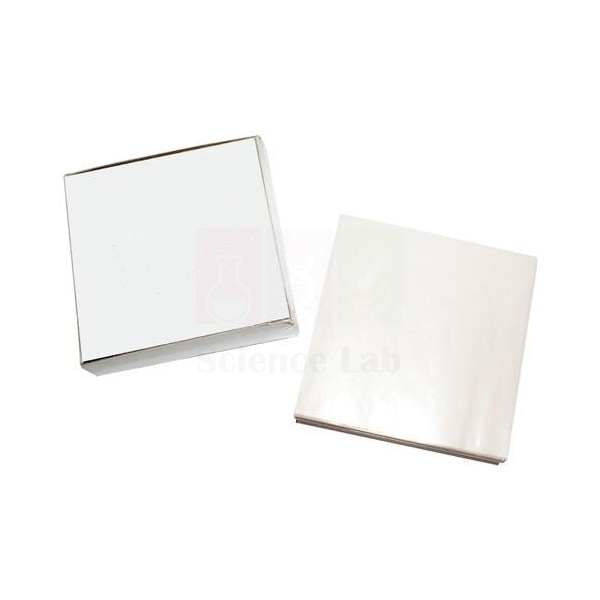
Weighing Paper
Weighing Paper (Product Code: SLE/ME/12) is a glazed paper sheet used to hold powders and small solids on a balance pan so they can be weighed cleanly in school, college and testing laboratories. Each sheet measures 3 × 3 in, and its smooth glazed surface protects the scale and helps prevent contamination from one sample to the next. It is supplied by Jain Scientific Equipments Pvt Ltd (ScienceLab), Ambala, India, among its chemistry consumables.
Specifications
| Parameter | Detail |
|---|---|
| Material | Glazed paper |
| Sheet size | 3 × 3 in |
| Purpose | Protects balance pans and helps prevent sample contamination |
| Product code | SLE/ME/12 |
| Supplied by | Jain Scientific Equipments Pvt Ltd (ScienceLab), Ambala, India |
What Is Weighing Paper Used For?
Whenever a practical calls for a measured amount of a solid, such as copper sulphate for a crystal-growing lesson or sodium chloride for a standard solution, a sheet of weighing paper sits between the chemical and the pan. The glazed finish means powder does not soak in or cling, so almost all of it slides off into the flask, and the pan stays free of corrosive residues.
Fold the sheet once from corner to corner and open it slightly to make a shallow channel. Set it on the pan, tare the balance, add the solid with a clean spatula, then tip it along the crease into the receiving vessel. Use a fresh sheet for each chemical; for liquids, damp materials or larger quantities, a plastic weighing boat is the sturdier choice.
Supplier
Jain Scientific Equipments Private Limited, known by its trading name ScienceLab, supplies Weighing Paper from Ambala, Haryana, to schools, colleges, testing laboratories and dealers in India and international markets. Labs usually add it to orders for balances, spatulas and other consumables so that everything for weighing practicals arrives together. Find out more on the ScienceLab profile page.
Related Measuring Equipment
Weighing paper is used with these balances and tools:
- Plastic Weighing Boats — rigid containers for liquids, damp solids or larger amounts.
- Compact Balance — a portable balance for student weighing.
- Electronic Balances — digital balances for routine laboratory weighing.
- Spatula, 140mm — for transferring small amounts of powder onto the sheet.
- Spatula, Spoon End — scoops granular solids more quickly.
Other weighing items are grouped in the Measuring category.
Frequently Asked Questions
What size is the Weighing Paper?
Each sheet of Weighing Paper measures 3 × 3 in. The compact square is sized for the small quantities of powder typically weighed out for student practicals and solution preparation, and it folds easily into a pouring channel.
Why use Weighing Paper instead of weighing directly on the pan?
Weighing Paper keeps chemicals off the balance pan, which protects the scale from residues and scratches and stops traces of one sample contaminating the next. Its glazed surface also lets the powder slide off completely into the receiving vessel.
How do you use Weighing Paper correctly?
Fold the Weighing Paper once corner to corner and open it slightly so it forms a shallow channel. Place it on the pan, tare the balance, add the sample with a spatula, then pour it along the crease into your flask or beaker.
Can Weighing Paper be reused?
Weighing Paper is meant to be used once for each sample and then discarded, because reusing a sheet can carry residue from one substance to another. For repeated weighing of the same material, a plastic weighing boat is a sturdier alternative.
In what quantities can Weighing Paper be ordered?
The product listing does not state a pack size for Weighing Paper. Tell us roughly how many sheets your laboratory uses in a term through the contact page, and the available packing will be confirmed in the quotation.
Who supplies Weighing Paper?
Weighing Paper is supplied by Jain Scientific Equipments Pvt Ltd (ScienceLab), Ambala, Haryana, India, to schools, colleges, laboratories and dealers in India and international markets, often together with balances, weighing boats and spatulas in one order.
Request a Quote
Let us know the quantity you need on the contact page, or add Weighing Paper to the enquiry cart along with balances or spatulas to receive one combined quotation.
Last updated: 24 September 2026