- Physics Lab Equipment
- Chemistry Lab Equipment
- Biology Lab Equipment
- Anatomical Lab Equipment
- Learning
- Educational Lab Equipment
- Magnets
- Agriculture
- Astronomy
- Earth Science
- Geography Lab Equipment
- Safety Lab Coat
- Laboratory
- Meteorological
- Electricity & Magnetism
- Heat
- School Lab Equipment
- Lab Glassware
- Science Lab Equipment
- Tvet Lab Equipment
- Robotics Kits Supplier and Manufacturer for Schools India
- Math Lab Equipment Manufacturers and Exporters in Ambala
- STEM Kits Manufacturers and Supplier India
- Engineering Lab Equipment
- Hospital Lab Equipment
- Water, Sanitation & Hygiene Supplies
- Cold Chain, Solar & Communication Equipment
- Nutrition
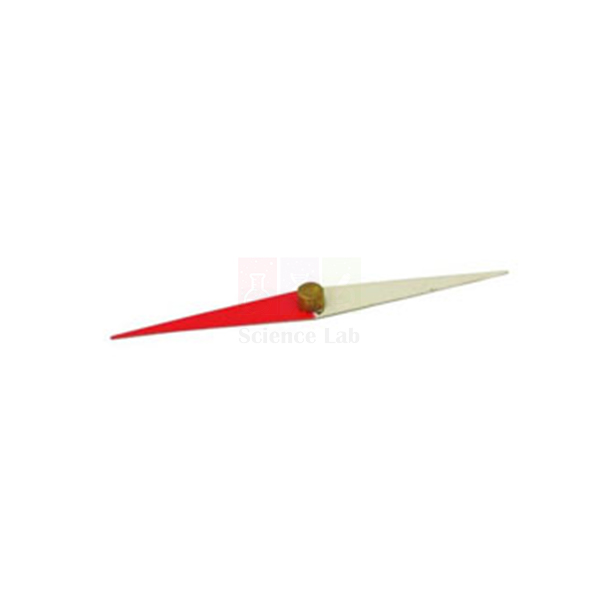
Magnetic Needle Jewel Bearing
Magnetic Needle Jewel Bearing (Product Code: SLE/PHY/237) is a pivoted carbon steel magnetic needle used to show the direction of magnetic fields, from the Earth's field to the field around a magnet or a current-carrying wire, in school physics lessons. This 50 mm needle turns on a jewel pivot bearing, which lets it swing freely with very little friction. It is made by Jain Scientific Equipments Pvt Ltd (ScienceLab), an OEM manufacturer, at its own factory in Ambala, India.
Specifications
| Parameter | Detail |
|---|---|
| Needle material | Carbon steel |
| Length | 50 mm |
| Bearing | Jewel pivot bearing |
| Bearing options in this range | Jewel or brass pivot bearing |
| Product code | SLE/PHY/237 |
| Manufacturer | Jain Scientific Equipments Pvt Ltd (ScienceLab) — OEM |
| Country of origin | India (made in Ambala, Haryana) |
What Is the Jewel Bearing Magnetic Needle Used For?
A freely pivoted magnetic needle always lines up with the magnetic field where it sits. Students use it to find north and south, to trace the curved field around a bar magnet by moving the needle step by step and marking its direction, and to repeat Oersted's classic observation that a needle swings when current flows in a nearby wire.
The jewel bearing is the point of choosing this version: because the pivot has so little friction, the needle responds to weak fields and comes to rest in a true direction rather than sticking. Store it away from strong magnets so its own magnetism is not disturbed, keep it dry, and handle it by the needle rather than pressing on the pivot. It sits well among the physics lab instruments India's schools use for magnetism practicals.
What to Specify When Ordering
- The bearing and length you need: this 50 mm jewel-bearing needle or the longer brass-bearing version.
- The number of needles per class or per practical group.
- Whether magnets, plotting compasses or field demonstrators should be quoted with them.
OEM Manufacturer
This magnetic needle is made by Jain Scientific Equipments Private Limited, trading as ScienceLab, which is the OEM (original equipment manufacturer) and produces it at its own licensed factory at Saha, Ambala, Haryana. Buying from the maker means schools, colleges, laboratory dealers and importers in India and international markets receive factory-direct pricing and can place repeat orders for the same pattern of needle. Ask us about replacement needles when you need them. The ScienceLab company profile has more about the company.
Related Physics Lab Equipment
Magnetism apparatus to use with the needle:
- Magnetic Needle, Brass — a longer needle on a brass pivot bearing.
- Plotting Compass, Single Glass Face — small compasses for plotting field lines as a group.
- Steel Horseshoe Magnet — a strong field source for needle experiments.
- Magnet Set — magnets and iron filings for comparing field strength and shape.
Find more items in Physics Lab Equipment.
Frequently Asked Questions
What length is the Magnetic Needle Jewel Bearing?
The Magnetic Needle Jewel Bearing is 50 mm long. It is a carbon steel needle mounted on a jewel pivot bearing, sized for bench experiments where students trace magnetic field directions around magnets and wires.
What is the advantage of a jewel bearing on a magnetic needle?
A jewel bearing gives the Magnetic Needle Jewel Bearing a very low-friction pivot, so the needle turns freely, responds to weak fields and settles in a true direction. That makes it useful where small deflections, such as those near a current-carrying wire, need to be seen clearly.
What experiments can be done with the Magnetic Needle Jewel Bearing?
The Magnetic Needle Jewel Bearing can be used to find north and south, plot the magnetic field around bar and horseshoe magnets, and show the deflection caused by an electric current in a nearby conductor, which introduces electromagnetism.
How should the Magnetic Needle Jewel Bearing be stored?
Store the Magnetic Needle Jewel Bearing away from strong magnets, in a dry place, and protect the pivot from knocks. Strong fields can weaken or reverse the needle's magnetism, and moisture can mark carbon steel over time.
Who manufactures the Magnetic Needle Jewel Bearing?
The Magnetic Needle Jewel Bearing is manufactured by Jain Scientific Equipments Pvt Ltd (ScienceLab), the OEM, at its own licensed factory at Saha, Ambala, Haryana, India. Quotations and repeat orders are handled directly by the manufacturer.
Can the Magnetic Needle Jewel Bearing be ordered in class sets?
Yes, the Magnetic Needle Jewel Bearing can be quoted in class-set quantities for schools, institutions, dealers and importers. Send the quantity and delivery location through the contact page and we will reply with a factory-direct price.
Request a Quote
To order the Magnetic Needle Jewel Bearing (SLE/PHY/237), contact the manufacturer through the ScienceLab contact page or add it to the enquiry cart.
Last updated: 24 September 2026
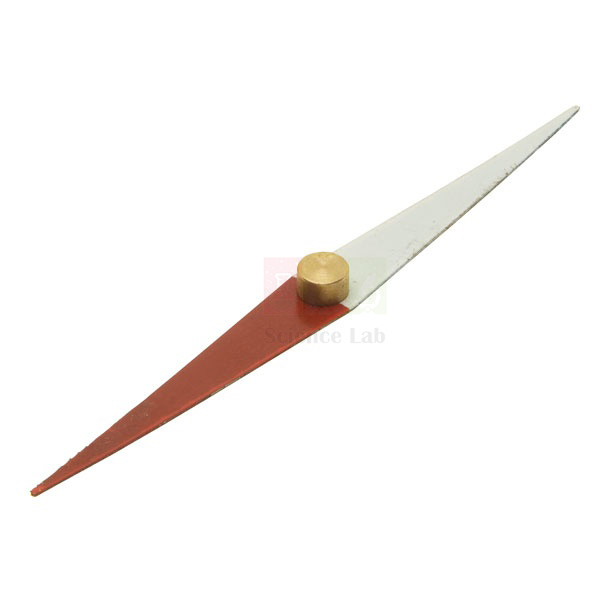
Magnetic Needle, Brass
Magnetic Needle, Brass (Product Code: SLE/PHY/238) is a 75 mm carbon steel magnetic needle on a brass pivot bearing, used to indicate magnetic field direction and to explain how a compass works in school physics classes. Its longer 75 mm length makes the needle's position easy to follow from the back of the room during teacher demonstrations. It is made by Jain Scientific Equipments Pvt Ltd (ScienceLab), an OEM manufacturer, at its own factory in Ambala, India.
Specifications
| Parameter | Detail |
|---|---|
| Needle material | Carbon steel |
| Length | 75 mm |
| Bearing | Brass pivot bearing |
| Bearing options in this range | Jewel or brass pivot bearing |
| Product code | SLE/PHY/238 |
| Manufacturer | Jain Scientific Equipments Pvt Ltd (ScienceLab) — OEM |
| Country of origin | India (made in Ambala, Haryana) |
What Is the Brass Magnetic Needle Used For?
This needle is a simple way to show what is inside every compass: a magnetised strip of steel, free to turn, that settles pointing north and south. Teachers bring a bar magnet towards each end to show that like poles repel and unlike poles attract, and then place the needle beside a current-carrying coil to find which end of the coil behaves as a north pole.
For accurate results, set the needle on a wooden or plastic bench away from steel stands and other magnets, and let it come to rest before reading its direction. Lift it gently on and off the brass pivot, and keep it separated from strong magnets in storage. As a product from a school lab equipment manufacturer, it is intended for regular classroom handling in magnetism lessons.
What to Specify When Ordering
- The version: this 75 mm brass-bearing needle or the shorter jewel-bearing needle.
- The quantity for demonstration benches or student groups.
- Any magnets, coils or plotting compasses to be quoted in the same order.
OEM Manufacturer
Jain Scientific Equipments Private Limited, trading as ScienceLab, is the OEM (original equipment manufacturer) of the Magnetic Needle, Brass and makes it at its own licensed factory at Saha, Ambala, Haryana, for schools, colleges, dealers and importers in India and international markets. Institutional and tender buyers who need vendor registration details can use GSTIN 06AAECJ8618A1ZT and LEI 3358004HRD1JIVXKYX49. Repeat orders and replacement needles are handled by the manufacturer directly. Read more on the ScienceLab company profile.
Related Physics Lab Equipment
Apparatus that pairs with the needle in magnetism lessons:
- Magnetic Needle Jewel Bearing — a shorter needle on a low-friction jewel pivot.
- Magnetising and Demagnetising Coil — for magnetising steel bars and strips.
- Magnetic Field Demonstrator — shows field-line patterns without loose iron filings.
- Compass Plotting (Clear) — small compasses for plotting fields around a bar magnet.
Visit Physics Lab Equipment for the full range.
Frequently Asked Questions
What size is the Magnetic Needle, Brass?
The Magnetic Needle, Brass is 75 mm long. It is a carbon steel needle mounted on a brass pivot bearing, and its length makes the pointing direction clear to a whole class during demonstrations of magnetic fields and compass action.
How does the Magnetic Needle, Brass differ from the jewel-bearing needle?
The Magnetic Needle, Brass is 75 mm long and turns on a brass pivot bearing, while the Magnetic Needle Jewel Bearing is a shorter needle on a jewel pivot. Choose the brass version for larger, easy-to-see demonstrations and the jewel version where very free movement matters most.
How is the Magnetic Needle, Brass used to explain a compass?
The Magnetic Needle, Brass shows the principle of a compass: the magnetised carbon steel needle, free to turn on its pivot, lines up with the Earth's magnetic field. Bringing a magnet close then shows how nearby magnetic fields change the direction it points.
What if the Magnetic Needle, Brass loses its magnetism?
If the Magnetic Needle, Brass becomes weak after long use or storage near strong magnets, it can generally be re-magnetised, for example with a magnetising coil. Ask us through the contact page for advice or a replacement needle.
Who manufactures the Magnetic Needle, Brass?
The Magnetic Needle, Brass is manufactured by Jain Scientific Equipments Pvt Ltd (ScienceLab), the OEM, at its own licensed factory at Saha, Ambala, Haryana, India. Buyers receive quotations directly from the manufacturer.
Can the Magnetic Needle, Brass be supplied in bulk?
Yes, the Magnetic Needle, Brass can be supplied in bulk to schools, institutions, dealers and importers in India and international markets. State the quantity and delivery location in your enquiry and we will send a factory-direct quotation.
Request a Quote
For the Magnetic Needle, Brass (SLE/PHY/238), send your enquiry through the ScienceLab contact page or add it to the enquiry cart; the quotation comes straight from the manufacturer.
Last updated: 24 September 2026
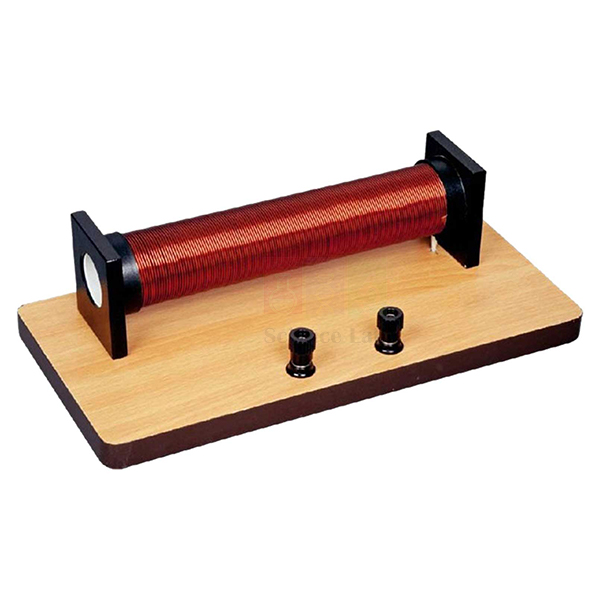
Magnetising and Demagnetising Coil
Magnetising and Demagnetising Coil (Product Code: SLE/PHY/239) is a base-mounted solenoid used to magnetise and demagnetise ordinary magnets, iron bars and strips in school physics magnetism lessons. It is wound with insulated copper wire, works at low voltage, and comes complete with a switch and 4 mm socket terminals for connection to a laboratory supply. It is supplied by Jain Scientific Equipments Pvt Ltd (ScienceLab), Ambala, India, for electromagnetism practicals.
Key Details
| Parameter | Detail |
|---|---|
| Type | Solenoid mounted on a base |
| Winding | Insulated copper wire |
| Control | Switch fitted |
| Connections | 4 mm socket terminals |
| Operating voltage | Low voltage (confirm the exact supply with us) |
| Suitable for | Magnetising and demagnetising ordinary magnets, iron bars, strips and similar items |
| Product code | SLE/PHY/239 |
| Supplied by | Jain Scientific Equipments Pvt Ltd (ScienceLab), Ambala, India |
What Is the Magnetising and Demagnetising Coil Used For?
When current flows through a solenoid, it produces a strong magnetic field along its centre. Placing an iron or steel bar inside the coil and switching on briefly lines up the tiny magnetic regions in the metal, so the bar comes out magnetised; students can then check its poles with a compass needle or see how many pins it lifts. Science departments also use the coil to restore bar magnets that have weakened over years of classroom use.
Demagnetising is generally done by exposing the item to a field that is steadily reduced, often an alternating one, as the bar is slowly withdrawn. Use only a low-voltage laboratory supply, keep current-on periods short so the winding does not warm up, and use the right-hand grip rule to predict which end becomes the north pole. As a laboratory instruments supplier in India, we can advise on a suitable power source.
What to Specify When Ordering
- The low-voltage supply you have (AC or DC, and voltage), so we can confirm it suits the coil.
- The size of the magnets or bars you want to treat, so we can check they fit the coil.
- The number of coils needed for your lab.
Supplier
ScienceLab, the trading name of Jain Scientific Equipments Private Limited in Ambala, Haryana, supplies the Magnetising and Demagnetising Coil to schools, colleges, polytechnics and dealers in India and international markets. We can quote it together with a low-voltage power supply, magnets and compass needles so a department receives a working magnetism set. Company information is on the ScienceLab profile page.
Related Physics Lab Equipment
Items used with the coil in magnetism practicals:
- Power Supply, Stepped — a low-voltage AC/DC laboratory supply.
- Magnetic Needle, Brass — for checking the poles of a newly magnetised bar.
- Magnet Set — magnets and iron filings for comparing strength before and after treatment.
- Iron-Clad Electromagnet — another demonstration of magnetism produced by current.
See more in Physics Lab Equipment.
Frequently Asked Questions
What can the Magnetising and Demagnetising Coil be used on?
The Magnetising and Demagnetising Coil is suitable for magnetising and demagnetising ordinary magnets, iron bars, strips and similar items. It is intended for school and college laboratories that need to prepare or restore magnets for experiments.
What power supply does the Magnetising and Demagnetising Coil need?
The Magnetising and Demagnetising Coil is a low-voltage coil connected through 4 mm socket terminals and switched by its own switch. The exact voltage and whether AC or DC should be used are not stated here, so please confirm them with us through the contact page.
How is a bar magnetised with the Magnetising and Demagnetising Coil?
To magnetise a bar with the Magnetising and Demagnetising Coil, place the bar inside the solenoid, switch the current on briefly, then switch off and remove the bar. Test its poles with a compass needle; the right-hand grip rule predicts which end becomes north.
How does demagnetising work with the Magnetising and Demagnetising Coil?
Demagnetising generally relies on a magnetic field that is gradually reduced, often an alternating field while the item is slowly withdrawn. Ask us how the Magnetising and Demagnetising Coil should be connected for demagnetising, so you use the correct supply for your model.
Who supplies the Magnetising and Demagnetising Coil?
Jain Scientific Equipments Pvt Ltd (ScienceLab), Ambala, Haryana, supplies the Magnetising and Demagnetising Coil to schools, colleges and dealers in India and international markets, and can quote it with power supplies and magnetism apparatus.
What should a quotation request for the Magnetising and Demagnetising Coil include?
A quotation request for the Magnetising and Demagnetising Coil should include the quantity, the power supply you plan to use and your delivery location. Send it through the contact page or the enquiry cart and we will reply with price and availability.
Request a Quote
To buy the Magnetising and Demagnetising Coil (SLE/PHY/239), contact us via the ScienceLab contact page or add it to the enquiry cart with any power supply or magnets you need.
Last updated: 24 September 2026
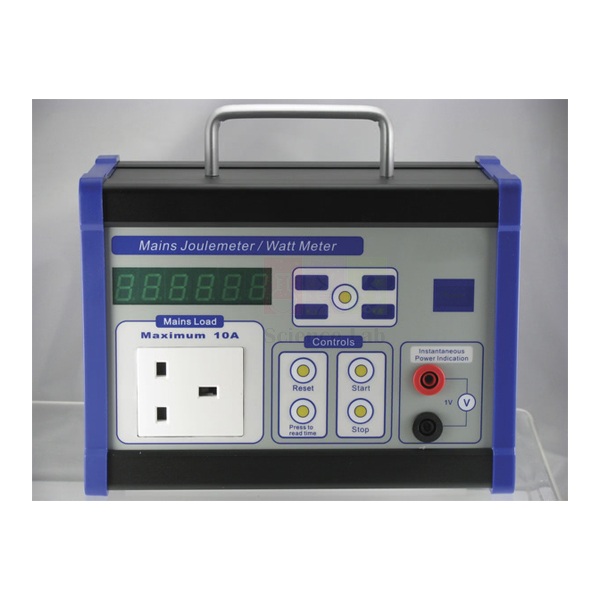
Mains Joule & Watt Meter
Mains Joule & Watt Meter (Product Code: SLE/PHY/240) is a compact electronic instrument used to measure the power drawn by, and the energy delivered to, a mains-powered appliance in school and college physics laboratories. Designed for both class demonstration and student use, it reads power on 200 W and 2 kW full-scale ranges and has a built-in timing function. This electronic lab instrument is supplied by Jain Scientific Equipments Pvt Ltd (ScienceLab), Ambala, India.
Specifications
| Parameter | Detail |
|---|---|
| Measures | Power and energy delivered to a mains appliance |
| Power ranges | 200 W and 2 kW full-scale reading |
| Energy ranges | 0 to 999,999 J or 0 to 999,999 kJ |
| Resolution | 0.5 J / 0.5 W on the 200 W range; 0.005 kJ / 0.005 kW on the kW range |
| Maximum current | 10 A, protected by a 10 A fast-blow fuse |
| Isolation | Current transformers and a sampling voltage transformer isolate the unit from the mains |
| Input impedance | 1 MΩ |
| Mains supply | 230 V ±5%, 50 Hz |
| Internal fuse | 315 mA (L) |
| External fuse | 10 A fast blow, in the IEC socket |
| Analogue output | 1 V full-scale instantaneous power indication on a pair of 4 mm meter output sockets, for a datalogger or oscilloscope |
| Energy display | Six 7-segment LEDs |
| Timing | Built-in timing function |
| Accuracy | 3%, typically better than 1% |
| Linearity | 2%, typically better than 1% |
| Dimensions | 208 x 155 x 115 mm (W x H x D); height including handle 187 mm |
| Build | Light and compact |
| Product code | SLE/PHY/240 |
| Supplied by | Jain Scientific Equipments Pvt Ltd (ScienceLab), Ambala, India |
What Is the Mains Joule & Watt Meter Used For?
The appliance under test is plugged into the meter, so students can read how many watts it draws and how many joules it uses over a timed run. Typical practicals include finding the energy consumed by a domestic appliance, comparing the efficiency of different types of lamp bulbs and, with a variable mains transformer unit (required for this test), comparing the power taken by lamp bulbs at different voltages.
Because instantaneous power is also available as an analogue signal on 4 mm sockets, the meter can feed a datalogger or oscilloscope to show how power changes while a lamp warms up or an appliance switches on and off. It is one of the physics lab instruments that turns the relation E = P × t into real readings: note the power, time the run with the built-in timer and compare the result with the energy display. Keep every load within the 10 A maximum and replace fuses only with the listed ratings.
What to Specify When Ordering
- How many meters you need: one for teacher demonstration or several for student groups.
- Whether you also need a variable mains transformer unit for the lamp-voltage comparison.
- Whether readings will be logged on a datalogger or oscilloscope, so connecting items can be quoted together.
- That your laboratory mains matches the 230 V ±5%, 50 Hz supply the meter is specified for.
Supplier
Jain Scientific Equipments Private Limited trades under the name ScienceLab and operates from Ambala, Haryana, India. The company supplies this Mains Joule & Watt Meter as part of its physics laboratory range, so schools, colleges, dealers and training institutes in India and international markets can source electrical-energy instruments together with their other lab equipment from one vendor. Background on the company is on the ScienceLab company profile.
Related Physics Lab Equipment
These items are commonly used alongside the Mains Joule & Watt Meter when teaching electrical power and energy:
- Oscilloscope Dual Trace — displays the meter's analogue power output as a trace.
- Electric Bulb — a lamp for efficiency comparisons (confirm the voltage rating you need).
- Standard Digital Multimeter — for voltage and current checks in low-voltage circuit work.
- Digital Coulomb Meter — a companion digital instrument for charge measurements in electricity topics.
More electrical and mechanics apparatus is listed in the Physics Lab Equipment category.
Frequently Asked Questions
What does the Mains Joule & Watt Meter measure?
The Mains Joule & Watt Meter measures the power, in watts or kilowatts, and the energy, in joules or kilojoules, delivered to a mains appliance plugged into it. Power is read on 200 W or 2 kW full-scale ranges, and energy is counted up to 999,999 J or 999,999 kJ on six LED digits.
How accurate is the Mains Joule & Watt Meter?
The Mains Joule & Watt Meter has a stated accuracy of 3% and linearity of 2%, both typically better than 1%. Resolution is 0.5 J or 0.5 W on the 200 W range and 0.005 kJ or 0.005 kW on the kilowatt range.
Can the Mains Joule & Watt Meter be connected to a datalogger or oscilloscope?
Yes. The Mains Joule & Watt Meter gives instantaneous power as a 1 V full-scale analogue signal on a pair of 4 mm meter output sockets, which can be connected to a datalogger or an oscilloscope to record how an appliance's power changes over time.
What is the maximum load for the Mains Joule & Watt Meter?
The Mains Joule & Watt Meter accepts a maximum current of 10 A, protected by a 10 A fast-blow fuse in the IEC socket, and runs from a 230 V ±5%, 50 Hz mains supply. A separate 315 mA (L) internal fuse protects the unit itself.
Who supplies the Mains Joule & Watt Meter?
The Mains Joule & Watt Meter is supplied by Jain Scientific Equipments Pvt Ltd (ScienceLab) of Ambala, Haryana, India, which serves schools, colleges, dealers and institutional buyers in India and international markets. Contact the team for current availability and a quotation.
Is a calibration certificate available for the Mains Joule & Watt Meter?
Calibration-certificate availability for the Mains Joule & Watt Meter should be discussed with ScienceLab before ordering. Share your requirement through the contact page and the team will confirm what documentation can accompany the instrument.
What should a quotation request for the Mains Joule & Watt Meter include?
A quotation request for the Mains Joule & Watt Meter should state the quantity, whether a variable mains transformer unit is also needed for lamp-voltage tests, any related items such as an oscilloscope, and your delivery location, so everything can be priced together.
Request a Quote
To request a price for the Mains Joule & Watt Meter (SLE/PHY/240), send your quantity and delivery details through the ScienceLab contact page, or add the item to the enquiry cart together with any other laboratory equipment you need.
Last updated: 24 September 2026
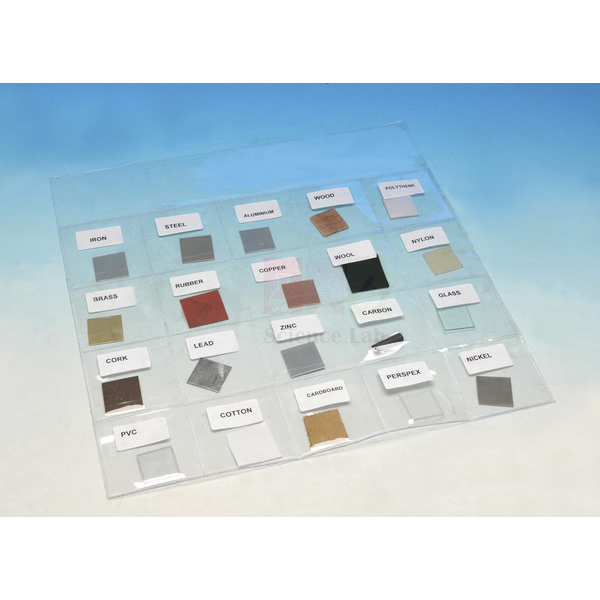
Materials Collection for Magnetism Studies
The Materials Collection for Magnetism Studies (Product Code: SLE/EAM/40) is a set of twenty different magnetic and non-magnetic materials assembled for teaching the principles of magnetism. Rather than relying on whatever objects happen to be in the classroom, teachers get one consistent collection that every group can test in the same way, which makes results easy to compare and discuss. It is a useful piece of school physics lab equipment in India for primary and middle school science, and it is made by Jain Scientific Equipments Pvt Ltd (ScienceLab), Ambala.
Key Details
| Parameter | Detail |
|---|---|
| Type | Collection of material samples for magnetism studies |
| Number of materials | Twenty |
| Composition | A mix of magnetic and non-magnetic materials |
| Purpose | Teaching the principles of magnetism |
| Suitable for | Sorting, classification and prediction activities in school science |
Typical Use
The classic activity is a predict-and-test sort. Students look at each of the twenty samples, write down whether they expect it to be attracted to a magnet, then check with a bar magnet and place it in a magnetic or non-magnetic group. Comparing predictions with results often overturns the common belief that every metal is magnetic, which opens a discussion about why only certain materials respond.
The same collection can support follow-up work: ranking how strongly different magnetic samples are held, checking whether a non-magnetic sheet placed between magnet and sample blocks the force, or grouping materials by other properties before retesting. As part of a physics experiment kit for school it pairs well with student magnet sets. Number each sample and keep a matching answer key with the collection so pieces can be checked back in after class.
Manufacturer
Jain Scientific Equipments Private Limited produces this collection under its ScienceLab trading name at Ambala in Haryana, where it builds a wide range of teaching apparatus for electricity, magnetism and general science. Schools in India and international markets order from the company; details are on our company profile.
Related Electricity & Magnetism Equipment
A magnet is needed to test the samples, and these items round out the lesson:
- Magnets Kit — guided magnetism investigations for groups of five students.
- Bar Magnet (Plastic) — a simple magnet for testing each sample.
- Plastic-Covered Ceramic Magnets, Pair — durable magnets for repeated class use.
- Early Magnetism Kit — an introductory set for younger learners.
- Mini Science Kit – Characteristics of Materials — extends sorting to other material properties.
Find more apparatus in the Electricity & Magnetism category.
Frequently Asked Questions
How many samples are in the collection?
Twenty different materials, some magnetic and some non-magnetic.
Which materials are included?
Our listing does not itemise the individual samples. Please request the current list through the contact page if you need it for lesson planning or a tender document.
Is a magnet supplied with the collection?
A magnet is not listed as part of this item. Order a bar magnet or magnet pair separately, or use magnets you already have.
How many collections does a class need?
That depends on group size. Many teachers give one collection to each working group so every student handles the samples; tell us your class arrangement and we will quote accordingly.
How should the samples be looked after?
Keep them dry to prevent rusting of iron-based pieces, store them in their packing, and check the numbered samples against your key after each lesson.
What should we send for an institutional quotation?
The product code SLE/EAM/40, quantity, delivery location and any magnets to be quoted with it. Orders from India and international markets are welcome.
Request a Quote
Ask for a price on the Materials Collection for Magnetism Studies using our contact page, or add it to the enquiry cart together with the magnets you plan to use.
Last updated: 24 September 2026
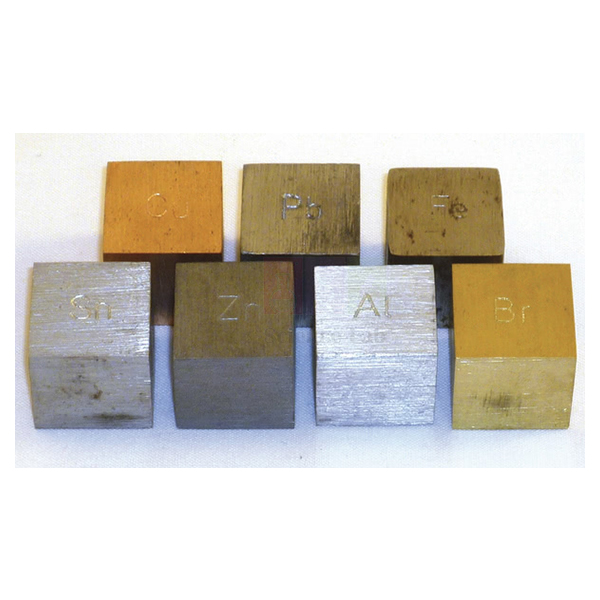
Metal Density Cubes, Set of 7
Metal Density Cubes, Set of 7 (Product Code: SLE/PHY/241) is a set of seven 20 mm metal cubes used to measure and compare the density of common metals in school and college physics laboratories. Students work with equal-sized cubes of brass, lead, steel, copper, aluminium, iron and tin, so any difference in mass comes straight from a difference in density. The set is made by Jain Scientific Equipments Pvt Ltd (ScienceLab), an OEM manufacturer, at its own factory in Ambala, India.
Specifications
| Parameter | Detail |
|---|---|
| Number of cubes | 7 (one of each metal) |
| Metals included | Brass, lead, steel, copper, aluminium, iron and tin |
| Cube size | 20 mm |
| Product code | SLE/PHY/241 |
| Manufacturer | Jain Scientific Equipments Pvt Ltd (ScienceLab) — OEM |
| Country of origin | India (made in Ambala, Haryana) |
What Are Metal Density Cubes Used For?
Because every cube in the set has the same nominal 20 mm side, each has roughly the same volume, about 8 cm³, so weighing them on a balance shows at once which metals are denser. Students calculate density as mass divided by volume, rank the seven metals and compare their answers with textbook values; lead and aluminium sit at opposite ends of the list, which makes the result easy to remember.
For a more careful practical, measure each side with a vernier caliper instead of relying on the nominal size, and cross-check the volume by displacement. The cubes also support lessons on identifying unknown materials, making them useful physics lab equipment for schools in India and abroad. Wash hands after handling the lead cube and store the set dry so the iron and steel cubes stay free of rust.
What to Specify When Ordering
- The number of sets: one for teacher demonstration or one per student group.
- Whether a balance and a vernier caliper should be quoted with the cubes for the full practical.
- Whether you want this seven-metal set or one of the six-cube alternatives listed on the site.
OEM Manufacturer
Jain Scientific Equipments Private Limited, which trades as ScienceLab, is the OEM (original equipment manufacturer) of the Metal Density Cubes, Set of 7. The set is produced at the company's own licensed factory at Saha, Ambala, Haryana, India, rather than bought in from a trader, so schools, colleges, dealers and importers receive it factory-direct. ScienceLab is the trading name of Jain Scientific Equipments Private Limited (CIN U29309HR2020PTC087597), and its production site at 449, HSIIDC Industrial Area, Saha, Ambala operates under Factory Licence AMB-ONLINE-CHD-J-414. For replacement cubes or repeat orders, ask the manufacturer directly; more about the company is on the ScienceLab profile page.
Related Physics Lab Equipment
A density practical with these cubes usually needs the following items as well:
- Caliper Vernier (Metal) — measures each cube's side so the volume is calculated accurately.
- Electronic Compact Balance — gives the mass reading for each cube.
- Glass Measuring Cylinder — for the displacement method of finding volume.
- Metal Density Cubes (Set of 6) — an alternative six-cube set.
- Cylinders, Metal (Set of 6) — extends the density practical to a second regular shape.
See the full Physics Lab Equipment range for more mechanics and properties-of-matter apparatus.
Frequently Asked Questions
Which metals are in the Metal Density Cubes, Set of 7?
The Metal Density Cubes, Set of 7 contains one cube each of brass, lead, steel, copper, aluminium, iron and tin. Having seven metals of the same size lets students compare densities side by side and rank them from lightest to heaviest simply by weighing.
What size are the cubes in the Metal Density Cubes, Set of 7?
Each cube in the Metal Density Cubes, Set of 7 measures 20 mm, giving a volume of about 8 cm³. Students should still measure the sides with a vernier caliper, because real dimensions can differ slightly from the nominal size and this affects the calculated density.
How do students find density with the Metal Density Cubes, Set of 7?
With the Metal Density Cubes, Set of 7, students weigh each cube on a balance, calculate its volume from the measured side length and divide mass by volume. Repeating this for all seven metals shows how strongly density varies between materials of identical size.
Who manufactures the Metal Density Cubes, Set of 7?
The Metal Density Cubes, Set of 7 is manufactured by Jain Scientific Equipments Pvt Ltd (ScienceLab), an OEM manufacturer, at its own licensed factory at Saha, Ambala, Haryana, India. Buyers receive the set factory-direct, and quotations come straight from the manufacturer.
How should the lead cube in the Metal Density Cubes, Set of 7 be handled?
The lead cube in the Metal Density Cubes, Set of 7 should be handled with normal lab hygiene: students wash their hands after the practical, keep the cube away from mouths and food, and return the whole set to dry storage when the lesson ends.
Can the Metal Density Cubes, Set of 7 be ordered in bulk?
Yes, the Metal Density Cubes, Set of 7 can be quoted in bulk for schools, colleges, dealers and importers in India and international markets. State the number of sets and your delivery location through the contact page and the manufacturer will reply with a quotation.
Request a Quote
Quotations for the Metal Density Cubes, Set of 7 (SLE/PHY/241) come direct from the manufacturer. Tell us how many sets you need on the ScienceLab contact page, or add the product to the enquiry cart with the rest of your physics order.
Last updated: 24 September 2026

Metal Discs – Set of 8
Metal Discs – Set of 8 (Product Code: SLE/PHY/242) is a set of eight 25 mm metal discs used to identify and compare the properties of everyday metals and alloys in school science and physics laboratories. Each disc is stamped with the name of its metal, which makes this educational lab equipment easy to use without a separate answer key. The set is made by Jain Scientific Equipments Pvt Ltd (ScienceLab), an OEM manufacturer, at its own factory in Ambala, India.
Specifications
| Parameter | Detail |
|---|---|
| Number of discs | 8 |
| Metals included | Brass, copper, bronze, nickel, mild steel, stainless steel, zinc and aluminium |
| Diameter | 25 mm |
| Marking | Each disc stamped with the metal name |
| Product code | SLE/PHY/242 |
| Manufacturer | Jain Scientific Equipments Pvt Ltd (ScienceLab) — OEM |
| Country of origin | India (made in Ambala, Haryana) |
What Are Metal Discs Used For?
Laying the eight discs side by side lets students compare colour, lustre and weight in the hand, and separate pure metals such as copper, nickel, zinc and aluminium from alloys such as brass, bronze and the two steels. A magnet quickly divides the discs into those that are attracted and those that are not, which opens a discussion of why mild steel and stainless steel can behave differently although both are iron-based.
As junior science lab equipment, the set also works as a labelled reference: students compare an unknown metal piece with the stamped discs before confirming their guess with other tests. Teachers can press a pair of dissimilar discs, such as copper and zinc, against paper soaked in electrolyte to show that two different metals produce a small voltage. Keep the discs clean and dry, and avoid scratching the stamped faces so the names stay legible.
What to Specify When Ordering
- The number of sets required for your class or number of student groups.
- Whether magnets should be quoted with the discs for magnetic sorting activities.
- Whether you also want the twelve-strip Metal Testing Strips set for extended magnetism work.
OEM Manufacturer
The Metal Discs – Set of 8 is made by Jain Scientific Equipments Private Limited, the company behind the ScienceLab name, acting as OEM (original equipment manufacturer). Sets are produced at its own licensed factory in Saha, Ambala, Haryana, India, and go factory-direct to schools, colleges, laboratory dealers and importers in India and international markets. Because the manufacturer handles enquiries itself, questions about replacement discs or repeat orders can be sent straight to us. Read more on the ScienceLab company profile.
Related Physics Lab Equipment
These items pair well with the metal discs in properties-of-materials lessons:
- Metal Testing Strips — twelve lettered strips for more detailed magnetism tests.
- Steel Horseshoe Magnet — for sorting magnetic from non-magnetic discs.
- Metal Density Cubes, Set of 7 — equal-sized cubes for comparing the density of similar metals.
- Galvanometer 50-0-50mV — detects the small voltage from a pair of dissimilar discs.
- Metal Strips Set — a further set of metal samples for comparison work.
Browse the Physics Lab Equipment category for more materials and magnetism apparatus.
Frequently Asked Questions
Which metals are included in the Metal Discs – Set of 8?
The Metal Discs – Set of 8 includes brass, copper, bronze, nickel, mild steel, stainless steel, zinc and aluminium. This mix of pure metals and common alloys gives students a realistic range of colours, weights and magnetic behaviour to compare in a single lesson.
How are the discs in the Metal Discs – Set of 8 identified?
Every disc in the Metal Discs – Set of 8 is stamped with the name of its metal, so students and teachers can identify each sample directly. The stamped label also lets the set act as a reference when students examine unknown metal pieces.
What size are the Metal Discs – Set of 8?
Each disc in the Metal Discs – Set of 8 is 25 mm in diameter. The uniform diameter makes the discs easy to compare by eye and by feel, and the size suits handling at a bench or passing around a classroom.
Who manufactures the Metal Discs – Set of 8?
Jain Scientific Equipments Pvt Ltd (ScienceLab) manufactures the Metal Discs – Set of 8 as an OEM at its own licensed factory in Saha, Ambala, Haryana, India. Schools, dealers and importers buy directly from the manufacturer, which also handles repeat orders.
Can the Metal Discs – Set of 8 be used for magnetism experiments?
Yes. With a magnet, the Metal Discs – Set of 8 can be sorted into discs that are attracted and discs that are not, showing students that magnetic behaviour depends on the metal or alloy rather than on appearance alone.
What details should a quotation request for the Metal Discs – Set of 8 include?
A quotation request for the Metal Discs – Set of 8 should give the number of sets, any related items such as magnets or metal testing strips, and your delivery location, so the manufacturer can price the complete order in one reply.
Request a Quote
Quotes for the Metal Discs – Set of 8 (SLE/PHY/242) come directly from the manufacturer. Send your requirement through the ScienceLab contact page or place the item in the enquiry cart.
Last updated: 24 September 2026
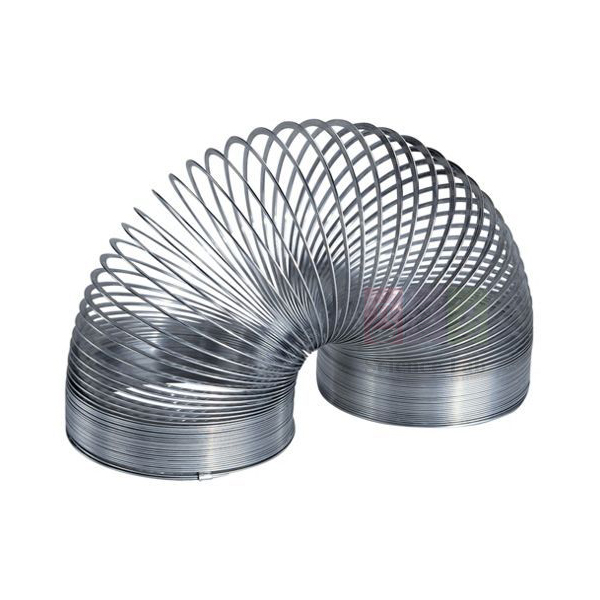
Metal Slinky, Helical Spring
Metal Slinky, Helical Spring (Product Code: SLE/PHY/243) is a steel helical coil spring used to demonstrate different types of waves in school and college physics lessons. Its 75 mm coil diameter gives a wide spring that is easy for a class to watch as a teacher or two students send pulses along it across a bench or floor. It is made by Jain Scientific Equipments Pvt Ltd (ScienceLab), an OEM manufacturer, at its own factory in Ambala, India.
Specifications
| Parameter | Detail |
|---|---|
| Material | Steel |
| Form | Helical coil spring |
| Coil diameter | 75 mm |
| Closed length | 100 (unit not stated in the original listing — ask us to confirm) |
| Purpose | Demonstrating different types of waves |
| Product code | SLE/PHY/243 |
| Manufacturer | Jain Scientific Equipments Pvt Ltd (ScienceLab) — OEM |
| Country of origin | India (made in Ambala, Haryana) |
What Is a Metal Slinky Used For?
Stretched out on a smooth floor or long bench, the spring shows both main wave types. Pushing one end back and forth sends a longitudinal wave of compressions and rarefactions along the coils, while flicking the end sideways sends a transverse pulse. Students can watch pulses reflect from a held end, see two pulses pass through each other and set up standing waves by shaking at a steady rate.
Timing a pulse over a measured length gives a simple estimate of wave speed, and changing the stretch shows how tension affects it, which makes the spring a good hands-on start to any wave motion unit in school. Tie a short piece of coloured thread to one coil so the motion of a single point is easy to follow. Avoid over-stretching or tangling the spring, and store it closed so the coils keep their shape.
What to Specify When Ordering
- The number of springs: one for demonstration or one per pair of students.
- Whether you need the closed length confirmed before ordering, as the listing does not state its unit.
- Whether other wave apparatus, such as a ripple tank, should be quoted for the same topic.
OEM Manufacturer
ScienceLab is the trading name of Jain Scientific Equipments Private Limited, the OEM (original equipment manufacturer) of this Metal Slinky, Helical Spring. The springs are produced at the company's own licensed factory in Saha, Ambala, Haryana, India, and supplied directly, not through a trading intermediary, to schools, colleges, distributors and importers. Enquiries about replacements or repeat quantities are answered by the manufacturer itself, and company details are on the ScienceLab profile page.
Related Physics Lab Equipment
Use these items with the spring to build a complete lesson on waves:
- Wave Form, Helix — a companion helix for wave-shape demonstrations.
- Ripple Tank — shows reflection and refraction of water waves after the spring demonstration.
- Stop Clock (Metal Case) — times pulses for a wave-speed estimate.
- Meter Stick, White — measures the distance a pulse travels.
- Slinky Spring — an alternative slinky listed in the catalogue.
More wave and mechanics apparatus is available in the Physics Lab Equipment category.
Frequently Asked Questions
What types of waves can the Metal Slinky, Helical Spring demonstrate?
The Metal Slinky, Helical Spring demonstrates longitudinal waves, by pushing and pulling one end along the spring's length, and transverse waves, by moving the end sideways. It also shows pulse reflection, superposition and standing waves when shaken at a steady rate.
What is the Metal Slinky, Helical Spring made of?
The Metal Slinky, Helical Spring is a helical coil made of steel with a coil diameter of 75 mm. To keep the coils even, handle it within a normal stretch during lessons and store it in its closed position afterwards.
What is the closed length of the Metal Slinky, Helical Spring?
The product listing gives the closed length of the Metal Slinky, Helical Spring as 100 without stating the unit. If an exact closed length matters for your lesson plan, ask ScienceLab through the contact page to confirm it before ordering.
Who manufactures the Metal Slinky, Helical Spring?
The Metal Slinky, Helical Spring is manufactured by Jain Scientific Equipments Pvt Ltd (ScienceLab), an OEM manufacturer with its own licensed factory in Saha, Ambala, Haryana, India. Schools and dealers buy it factory-direct, with quotations issued by the manufacturer.
How should students use the Metal Slinky, Helical Spring safely?
Use the Metal Slinky, Helical Spring on a clear floor or bench with one student holding each end firmly. Never let a stretched spring snap back towards anyone, avoid over-stretching, and ease out any kinks gently before storing the spring closed.
Can the Metal Slinky, Helical Spring be ordered for a whole class?
Yes, the Metal Slinky, Helical Spring can be quoted in class quantities for schools, colleges, dealers and importers in India and international markets. Mention how many springs you need and your delivery location when you send the enquiry.
Request a Quote
For a quotation on the Metal Slinky, Helical Spring (SLE/PHY/243) direct from the manufacturer, use the ScienceLab contact page or add it to the enquiry cart along with any other wave apparatus you need.
Last updated: 24 September 2026