- Physics Lab Equipment
- Chemistry Lab Equipment
- Biology Lab Equipment
- Anatomical Lab Equipment
- Learning
- Educational Lab Equipment
- Magnets
- Agriculture
- Astronomy
- Earth Science
- Geography Lab Equipment
- Safety Lab Coat
- Laboratory
- Meteorological
- Electricity & Magnetism
- Heat
- School Lab Equipment
- Lab Glassware
- Science Lab Equipment
- Tvet Lab Equipment
- Robotics Kits Supplier and Manufacturer for Schools India
- Math Lab Equipment Manufacturers and Exporters in Ambala
- STEM Kits Manufacturers and Supplier India
- Engineering Lab Equipment
- Hospital Lab Equipment
- Water, Sanitation & Hygiene Supplies
- Cold Chain, Solar & Communication Equipment
- Nutrition
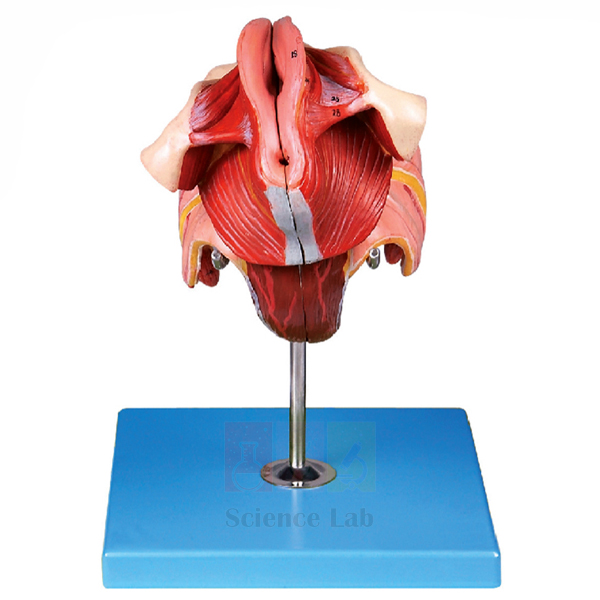
Human Female Genital Organs Model
The Human Female Genital Organs Model (Product Code: SLE/BL/54) is a dissected model showing both the internal and the external female genital organs, with 40 positions marked for identification. It is made of advanced PVC and mounted on a stand. Manufactured by Jain Scientific Equipments Pvt Ltd (ScienceLab), Ambala, it serves as reproductive-system biology lab equipment in India for senior school classes, nursing and midwifery programmes, and medical and paramedical colleges.
Specifications
| Parameter | Detail |
|---|---|
| Type | Dissected female genital organs model |
| Coverage | Internal and external female genital organs |
| Positions shown | 40 |
| Material | Advanced PVC |
| Mounting | Mounted on a stand |
Typical Use
Because it shows the external and internal organs in one dissected view, the model lets a tutor move from the outer anatomy inward in a single, continuous explanation, rather than switching between separate diagrams. With 40 positions to work through, it supports both an introductory overview for school students and the more detailed identification expected in nursing, midwifery and medical anatomy practicals. Typical topics include the structure of the reproductive tract, the menstrual cycle, fertilisation and the anatomical basis of common gynaecological examinations.
It works well in small-group sessions where students take turns naming the numbered positions, and it is also a sensible, matter-of-fact aid for reproductive health education. Keep the model on its stand when not in use, wipe it with a damp cloth and mild detergent, and avoid alcohol-based cleaners that can dull painted PVC surfaces.
Manufacturer
This model is made by Jain Scientific Equipments Private Limited in Ambala, Haryana, the company that trades as ScienceLab. It is a registered MSME enterprise with manufacturing as its major activity (Udyam UDYAM-HR-01-0003714), and its export consignments are handled under Importer-Exporter Code AAECJ8618A issued by the DGFT. Further details are on our company profile.
Related Human Models
Models that are often taught together with the Human Female Genital Organs Model:
- Human Male Genital Organs Model — the male counterpart for side-by-side comparison in the same lesson
- Human Female Ovary Model — a focused model for studying the ovary in more detail
- Female Pelvis with Organs — shows the reproductive organs in their position within the pelvis
- Human Female Urogenital Model — connects the reproductive organs with the kidneys, ureters and bladder
View the complete Human Models range for other anatomy teaching models.
Frequently Asked Questions
Does the model show both internal and external organs?
Yes. It shows the internal and external female genital organs in dissected form.
How many structures are marked?
40 positions are shown. If you need the identification list in advance for course material, please request it through our contact page.
What is it made of?
Advanced PVC, mounted on a stand for display and demonstration.
What size is the model?
Dimensions are not listed in our current product details. Contact us and we will confirm them before you order.
Can this model be included in a biology model kit bulk order?
Yes. We regularly combine anatomy models into a single quotation for colleges and distributors; send us the list of items and quantities.
Can you export to institutions outside India?
Yes. We supply India and international markets and can share our IEC and other registration details for your vendor documentation. Warranty terms are stated on the quotation.
Request a Quote
For a price on the Human Female Genital Organs Model, write to us through the contact page or add the model to your enquiry cart with any related reproductive-system models.
Last updated: 24 September 2026
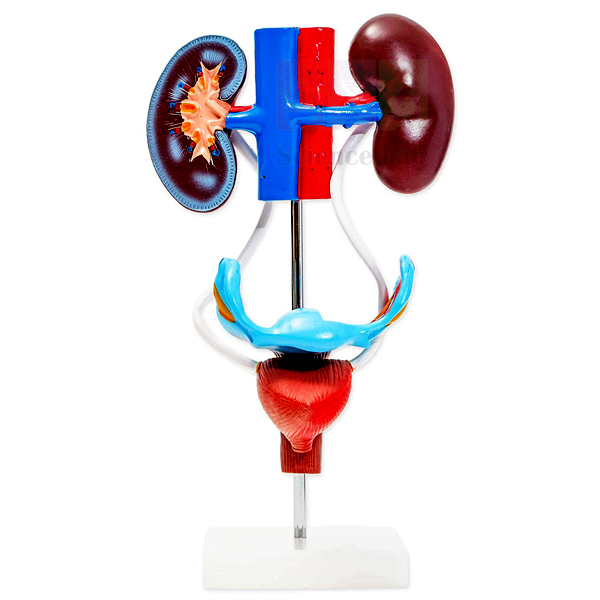
Human Female Urogenital Model
The Human Female Urogenital Model (Product Code: SLE/BL/55) brings the female urinary and reproductive systems together in a single PVC plastic model measuring 20 x 20 x 50 cm. It shows the kidney, ureters and urinary bladder alongside the uterus and its accessories, the vagina, the ovary membrane and the supporting ligaments, including the uterus ligament and its artery. The model is manufactured by Jain Scientific Equipments Pvt Ltd (ScienceLab), Ambala, and is used as a combined excretory and reproductive teaching aid in schools, nursing colleges and medical institutions.
Specifications
| Parameter | Detail |
|---|---|
| Type | Female urogenital system model |
| Material | PVC plastic |
| Size | 20 x 20 x 50 cm |
| Urinary structures | Kidney, ureters, urinary bladder |
| Reproductive structures | Uterus and accessories of the uterus, vagina, ovary membrane |
| Supporting structures | Ligaments, including the uterus ligament and its artery |
Typical Use
Textbooks usually present the urinary and reproductive systems in separate chapters, yet in the body they lie close together in the pelvis. This model is useful precisely because it shows them in one piece: students can follow urine from the kidney down the ureters to the bladder, and see at the same time how the bladder sits in relation to the uterus and vagina. Tutors also use the ligaments and the uterine artery to explain how the uterus is held in position and supplied with blood.
For nursing and midwifery students, understanding this close relationship is useful background for clinical procedures and for recognising how pregnancy affects the urinary tract. In high school biology lab equipment collections it supports both the excretion and the reproduction chapters with one purchase. At 20 x 20 x 50 cm it needs a clear shelf; clean it with a slightly damp cloth and keep it away from heat sources.
Manufacturer
ScienceLab is the trading name used by Jain Scientific Equipments Private Limited of Ambala, Haryana, which manufactures this urogenital model among its anatomy and life-science teaching products. Our company profile describes the company in more detail.
Related Laboratory Equipment
Models that extend a urinary and reproductive system lesson:
- Human Male and Female Urogenital Systems Model — for comparing male and female arrangements side by side
- Human Kidney Model — an enlarged look at kidney structure beyond what this combined model shows
- Human Kidney, Nephron, and Glomerulus Model Set — explains how the kidney filters blood at microscopic level
- Female Half Pelvis Model — a sectioned view of the female pelvis and its organs
- Human Female Genital Organs Model — more detail on the internal and external genital organs
Explore more anatomy models in our Human Models category.
Frequently Asked Questions
Which organs does the model show?
The kidney, ureters, urinary bladder, uterus with its accessories, vagina, ovary membrane and ligaments, including the uterus ligament and its artery.
What are its dimensions?
The model measures 20 x 20 x 50 cm.
What material is used?
It is made of PVC plastic, which is durable in regular classroom handling and easy to wipe clean.
Does it show the blood supply?
It includes the uterus ligament and its artery. Other vessels are not listed in our product details, so please contact us if a specific vessel is important for your syllabus.
Are the structures numbered or supplied with a key?
Our current listing does not state this. Ask us when you enquire and we will confirm what identification material is included.
What information should a purchase enquiry contain?
The product code SLE/BL/55, quantity, delivery address and any tender format you must follow. We supply institutions in India and international markets, with warranty terms given on the quotation.
Request a Quote
To receive a quotation for the Human Female Urogenital Model, use our contact page or add it to the enquiry cart together with any kidney or pelvis models you need.
Last updated: 24 September 2026
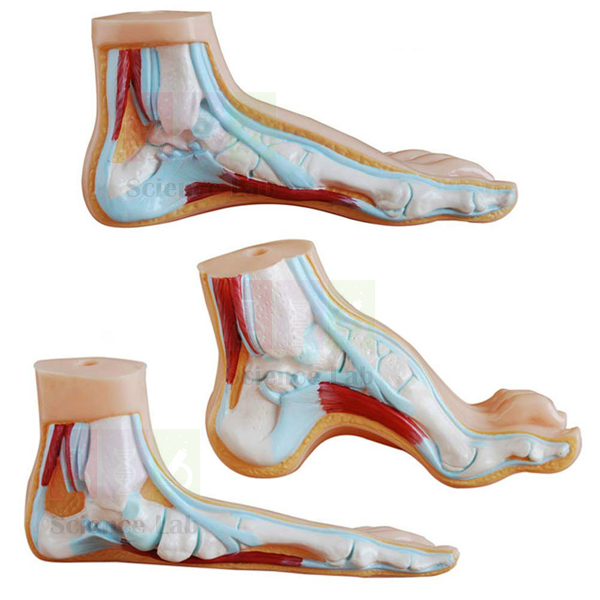
Human Foot Set Model
The Human Foot Set Model (Product Code: SLE/BL/56) is a set of three life-size, finely detailed foot models that compare a flattened foot, an arching foot and a normal foot. Each foot carries 23 numbered parts for identification, and the models are one-piece (not dissectible), so there are no loose pieces to lose between classes. Physiotherapy, podiatry, sports science and nursing tutors use the set to explain the arches of the foot and what happens when they are lost or exaggerated. It is manufactured by Jain Scientific Equipments Pvt Ltd (ScienceLab), Ambala, as one of its biology teaching aids for Indian and overseas institutions.
Specifications
| Parameter | Detail |
|---|---|
| Type | Set of foot models for comparing arch forms |
| Feet in the set | Flattened foot, arching foot, normal foot |
| Scale | Life size |
| Numbered parts | 23 on each foot |
| Construction | Not dissectible |
| Finish | Finely detailed |
Typical Use
The strength of this set is comparison. Placed side by side, the three feet let students see at once how the normal arch distributes body weight, how a flattened foot has lost that arch, and how an arching foot sits higher off the ground. Because every foot uses 23 numbered parts, learners can find the same structure on all three and describe how its position changes, which is exactly the kind of reasoning expected in physiotherapy and podiatry assessments.
The set is also useful for posture and footwear discussions in physical education and sports science, and for patient education in clinics where a practitioner needs to show a patient why an arch problem causes discomfort. It fits neatly into a human biology model set in India's colleges that already includes skeletal models of the leg and foot. Since the models do not come apart, care is simple: dust them regularly and wipe with a damp cloth.
Manufacturer
Jain Scientific Equipments Private Limited, trading as ScienceLab, makes this foot set in Ambala, Haryana, where it produces musculoskeletal and other anatomical models for teaching. Read about the company on our company profile.
Related Laboratory Equipment
Useful companions for a lesson on the foot and lower limb:
- Human Skeletal Foot Model — shows the bones that form the arches seen on the surface models
- Human Foot Model Set — an alternative foot set for institutions comparing options
- Human Leg and Portion of Pelvis Model — connects the foot to the leg and hip in one view
- Human Skeleton Model, Disarticulated — lets students handle individual foot bones
For more anatomy models, see the Human Models category.
Frequently Asked Questions
Which foot types are included?
Three: a flattened foot, an arching foot and a normal foot.
Are the models life size?
Yes, each foot is life size, which makes it easy to relate the models to real feet and footwear.
Can the feet be taken apart?
No. The models are not dissectible; they are designed for external comparison of arch form.
How many parts are numbered?
Each foot has 23 numbered parts. If you need the list of numbered parts ahead of delivery, ask us through the contact page.
Who typically buys this set?
Physiotherapy and podiatry departments, sports science and physical education faculties, nursing colleges and biology departments teaching the skeletal and muscular systems.
Do you accept institutional and export orders?
Yes. Send the quantity and delivery details for a formal quotation; we supply India and international markets, with warranty terms confirmed on the quotation.
Request a Quote
Enquire about the Human Foot Set Model through our contact page, or add it to the enquiry cart with any skeletal models you plan to order.
Last updated: 24 September 2026
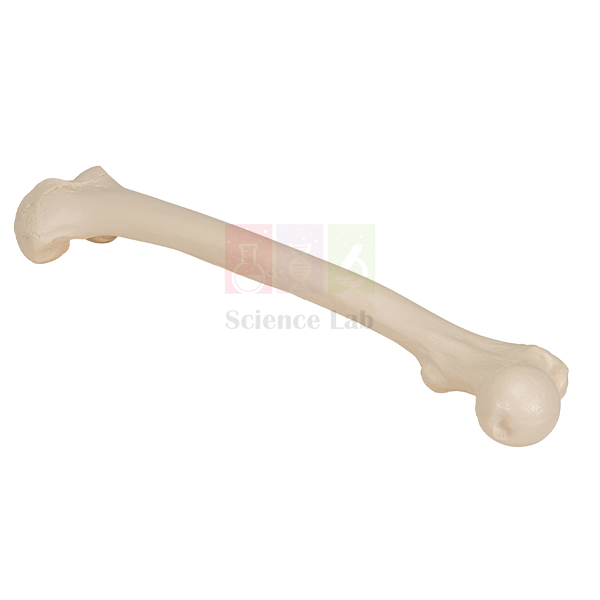
Human Femur Bone Model
Human Femur Bone Model (Product Code: SLE/BL/57) is an 18 × 14 × 18 cm teaching model of the human femur used to show osteoporosis and the blood vessels of bone in anatomy, pathology and health-education lessons. Medical, nursing, pharmacy and physiotherapy tutors use it to connect bone structure and blood supply with bone health. It is made by Jain Scientific Equipments Pvt Ltd (ScienceLab), an OEM manufacturer of biology lab equipment, at its own factory in Ambala, India.
Specifications
| Parameter | Detail |
|---|---|
| Bone represented | Human femur (thigh bone) |
| Features shown | Osteoporosis and blood vessels |
| Size | 18 × 14 × 18 cm |
| Product code | SLE/BL/57 |
| Manufacturer | Jain Scientific Equipments Pvt Ltd (ScienceLab) — OEM |
| Country of origin | India (made in Ambala, Haryana) |
What Is the Femur Bone Model Used For?
In pathology and anatomy classes the model anchors a discussion of how osteoporosis thins and weakens bone, and why the femur, which carries body weight, is a site of concern in older adults. The visible blood vessels let teachers explain that bone is living tissue with its own blood supply, which is essential for growth, repair and the healing of fractures.
Pharmacy and nursing tutors use it when teaching about bone-density medicines, calcium and vitamin D, while doctors and physiotherapists find it helpful for explaining a diagnosis to patients. Schools and colleges often add it to a health-education display alongside skeleton and joint models. Store it on a shelf away from direct sunlight so its surface detail stays clear.
OEM Manufacturer
Jain Scientific Equipments Private Limited, which trades as ScienceLab, is the original equipment manufacturer (OEM) of this femur model. It is produced at the company’s own licensed factory at Saha, Ambala, Haryana, India, and sold factory-direct to medical and nursing colleges, schools, clinics, dealers and importers, so buyers deal with the maker instead of a reseller. Learn about the company on its profile page.
Related Bone Models
Items that support the same bone-health and skeletal lessons:
- Human Advanced Osteoporosis Model — extends the osteoporosis topic with a dedicated model
- Human Bone Structures Model — for teaching the internal structure of bone tissue
- Human Hip Joint Model — shows where the upper end of the femur meets the pelvis
- Microslide Animal Tissue Set 2 Muscle, Bone, Connective — prepared slides for viewing bone tissue under a microscope
Browse all skeletal teaching models in the Bone Model category.
Frequently Asked Questions
What does the Human Femur Bone Model show?
The Human Femur Bone Model shows osteoporosis together with the blood vessels of the bone. That combination lets one model support lessons on bone disease, on bone as living tissue with its own blood supply, and on why fractures need a good blood supply to heal.
What size is the femur model?
The Human Femur Bone Model measures 18 × 14 × 18 cm. It is compact enough for a desk, a display shelf or a health-education table, and it can be passed around a small group during a pathology or anatomy tutorial.
Is the Human Femur Bone Model a full-length, life-size femur?
The description gives the Human Femur Bone Model’s size as 18 × 14 × 18 cm and does not state that it is a full-length life-size bone. For photographs or exact details of the portion shown, please ask through the contact page before ordering.
Who manufactures the Human Femur Bone Model?
Jain Scientific Equipments Pvt Ltd, trading as ScienceLab, manufactures the Human Femur Bone Model as the OEM at its own licensed factory at Saha, Ambala, Haryana, India. Colleges, clinics and dealers get quotations and repeat supplies directly from the manufacturer.
How should the Human Femur Bone Model be cleaned?
Dust the Human Femur Bone Model with a soft brush or dry cloth. If it needs more, wipe it gently with a slightly damp cloth without scrubbing, so the surface detail showing osteoporosis and the blood vessels stays clear.
Can the femur model be included in a larger institutional order?
Yes. The Human Femur Bone Model can be combined with other anatomy models in one enquiry for institutions in India and international markets. Share the codes and quantities, and we will confirm warranty terms and delivery with the quotation.
Request a Quote
Ask for a price by adding the femur model to the enquiry cart, or send your requirement through the contact page; the quotation comes direct from the manufacturer.
Last updated: 24 September 2026
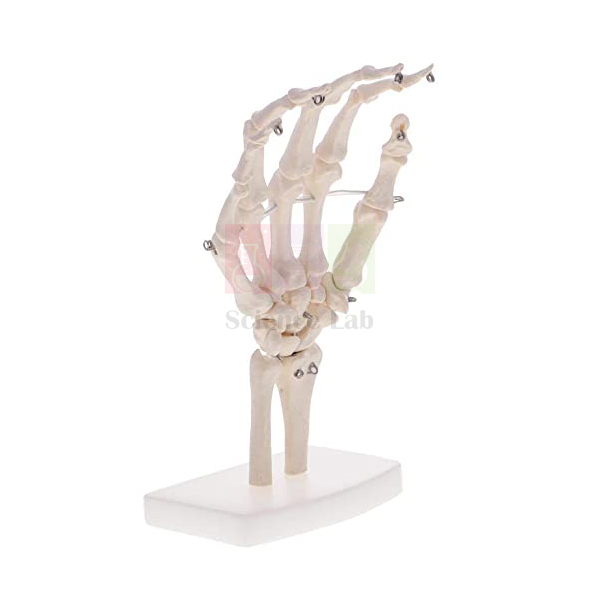
Human Hand Joint Model
Human Hand Joint Model (Product Code: SLE/BL/58) is a life-size PVC hand on a stand used to demonstrate hand functionality and the external anatomical structures of the hand in anatomy, therapy and biology classrooms. Because it stands on its own, it doubles as a permanent bench or display piece for occupational therapy and physiotherapy departments. It is made by Jain Scientific Equipments Pvt Ltd (ScienceLab), an OEM manufacturer of school laboratory equipment, at its own factory in Ambala, India.
Specifications
| Parameter | Detail |
|---|---|
| Part represented | Human hand and its joints |
| Demonstrates | Hand functionality and the external anatomical structures of the hand |
| Scale | Life size |
| Mounting | On stand |
| Material | PVC plastic |
| Product code | SLE/BL/58 |
| Manufacturer | Jain Scientific Equipments Pvt Ltd (ScienceLab) — OEM |
| Country of origin | India (made in Ambala, Haryana) |
What Is the Hand Joint Model Used For?
Teachers use the model to point out the external landmarks of the hand, discuss the joints of the wrist, palm and fingers, and relate them to everyday actions such as gripping, pinching and writing. Occupational therapists find a life-size hand useful when explaining exercises or splinting to patients recovering from hand injuries.
In a school biology lab setup, the model supports chapters on the skeleton, joints and movement, and makes a good companion to a full skeleton for close-up study. Place it where students can view it from all sides, and handle the fingers gently when demonstrating so the joints are not strained.
OEM Manufacturer
Jain Scientific Equipments Private Limited, trading as ScienceLab, is the OEM of this hand joint model and makes it at its own licensed factory at Saha, Ambala, Haryana, India. Schools, colleges, therapy departments, dealers and importers order it factory-direct, with quotations issued by the manufacturer itself. For vendor registration, the manufacturer’s GSTIN is 06AAECJ8618A1ZT and its Legal Entity Identifier (LEI) is 3358004HRD1JIVXKYX49. More information is on the company profile.
Related Bone Models
Other hand and arm models used in the same lessons:
- Human Hand Joint Model with Ligaments — the version with flexible artificial ligaments for teaching joint stability
- Human Skeletal Hand Model — shows the bones of the hand for naming carpals, metacarpals and phalanges
- 3-D Printed Human Superficial Hand Dissection Model — adds the superficial soft-tissue anatomy of the hand
- Human Elbow Joint Model — continues the upper-limb lesson at the elbow
For skeletons, joints and spine models, visit the Bone Model category.
Frequently Asked Questions
What is the difference between the Human Hand Joint Model and the version with ligaments?
The Human Hand Joint Model (SLE/BL/58) is mounted on a stand for free-standing display, while the Human Hand Joint Model with Ligaments (SLE/BL/59) includes flexible artificial ligaments. Choose SLE/BL/58 when a permanent display matters more than ligament teaching.
Is the Human Hand Joint Model life size?
Yes, the Human Hand Joint Model is made at life size, so students see the true proportions of the palm, wrist and fingers. That makes it easier to relate the model to their own hands when naming external landmarks and joints.
What is the hand joint model made of, and how is it cleaned?
The Human Hand Joint Model is made of PVC plastic. Wipe it with a cloth dampened in mild soapy water and dry it afterwards; avoid solvents and hot water, which can mark or soften the surface over time.
Which side of the body does the hand model represent?
The description of the Human Hand Joint Model does not specify a left or right hand. If your lessons need a particular side, please confirm through our contact page before ordering, and we will check the current version for you.
Who manufactures the Human Hand Joint Model?
Jain Scientific Equipments Pvt Ltd (ScienceLab) manufactures the Human Hand Joint Model as the OEM at its own licensed factory at Saha, Ambala, Haryana, India. Registration details for vendor enrolment appear in the OEM Manufacturer section, and quotations come directly from the manufacturer.
Do you supply the Human Hand Joint Model in bulk?
Yes. The Human Hand Joint Model is quoted in bulk for schools, colleges and distributors in India and international markets. State the quantity and destination so packing and dispatch can be planned, and ask about warranty terms in the same enquiry.
Request a Quote
Get pricing from the manufacturer by placing the hand model in the enquiry cart or by messaging us through the contact page with your quantity and delivery location.
Last updated: 24 September 2026
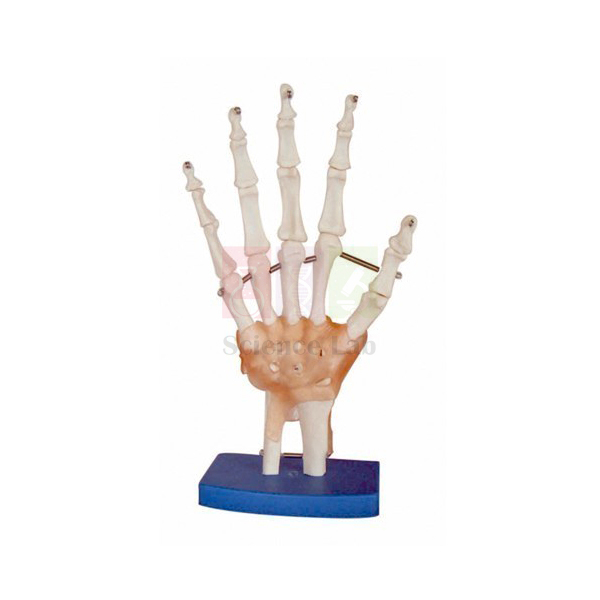
Human Hand Joint Model with Ligaments
Human Hand Joint Model with Ligaments (Product Code: SLE/BL/59) is a natural-size PVC hand fitted with flexible artificial ligaments, used to teach how ligaments stabilise the small joints of the hand in anatomy, hand therapy and sports science courses. It also demonstrates hand functionality and the external anatomical structures of the hand. It is made by Jain Scientific Equipments Pvt Ltd (ScienceLab), an OEM manufacturer, at its own factory in Ambala, India, and fits any set of biology teaching aids for the skeletal system.
Specifications
| Parameter | Detail |
|---|---|
| Part represented | Human hand and its joints |
| Demonstrates | Hand functionality and the external anatomical structures of the hand |
| Ligaments | Flexible artificial ligaments included |
| Scale | Natural size |
| Material | PVC plastic |
| Product code | SLE/BL/59 |
| Manufacturer | Jain Scientific Equipments Pvt Ltd (ScienceLab) — OEM |
| Country of origin | India (made in Ambala, Haryana) |
What Is the Hand Model with Ligaments Used For?
With flexible ligaments in place, a tutor can bend a finger and show how the ligaments guide and limit the movement at each joint. This leads naturally into common injuries: a finger bent sideways in a ball sport stresses the ligaments at the side of the joint, which is why sprained and “jammed” fingers are so frequent. Hand therapy and sports medicine students use the model to plan and explain splinting and rehabilitation.
For lessons on the skeletal and muscular system, a hand with working ligaments is a direct way to show the difference between bones, joints and the tissues that hold them together. Handle the model with clean, dry hands, and avoid bending the fingers beyond their natural range, which can overstretch the artificial ligaments over time.
OEM Manufacturer
The OEM for this model is Jain Scientific Equipments Private Limited, which trades as ScienceLab and makes it at its own licensed factory at Saha, Ambala, Haryana, India. Hand-therapy schools, universities, hospital teaching units, dealers and importers buy it direct from the factory, and any question about the ligaments after long use can be put to the manufacturer itself. See the company profile for background on the business.
Related Bone Models
Models that complement ligament and hand-anatomy teaching:
- Human Hand Joint Model — the stand-mounted version for a permanent display
- Human Arm and Hand model — places the hand in the context of the whole upper limb
- Human Skeletal Hand Model — for identifying the individual bones beneath the ligaments
- Human Knee Joint Model, Life Size — another joint model with flexible ligaments, for comparing a large weight-bearing joint
All skeletal and joint models are listed under Bone Model.
Frequently Asked Questions
What makes the Human Hand Joint Model with Ligaments different from the standard hand model?
The Human Hand Joint Model with Ligaments includes flexible artificial ligaments, so students can see how ligaments stabilise the joints of the hand. The standard Human Hand Joint Model (SLE/BL/58) is instead described as mounted on a stand for display.
Does the Human Hand Joint Model with Ligaments come with a stand?
A stand is not listed in the description of the Human Hand Joint Model with Ligaments. If you need the hand displayed upright, ask through the contact page and we will confirm what is available, or consider the stand-mounted SLE/BL/58 version.
What size is the hand model with ligaments?
The Human Hand Joint Model with Ligaments is natural size, so it reflects the proportions of a real human hand. Students can compare it directly with their own hands while locating joints and following how the ligaments limit movement.
How do I keep the ligaments in good condition?
Keep the Human Hand Joint Model with Ligaments in good condition by moving its joints gently within a natural range, storing it away from heat and cleaning it only with a dry or slightly damp cloth. Overbending the fingers can stretch the artificial ligaments.
Who manufactures the Human Hand Joint Model with Ligaments?
The Human Hand Joint Model with Ligaments is manufactured by Jain Scientific Equipments Pvt Ltd (ScienceLab), the OEM, at its own licensed factory at Saha, Ambala, Haryana, India. Buyers get quotations, repeat orders and after-sales advice directly from the manufacturer.
Can the hand model with ligaments be ordered as part of a bulk biology model order?
Yes. The Human Hand Joint Model with Ligaments can be quoted with other anatomy models in a biology model kit bulk order for schools, colleges and distributors in India and international markets. Ask about warranty terms when you request the quotation.
Request a Quote
Tell us how many units you need through the contact page, or add the model to the enquiry cart, and the manufacturer will reply with a quotation.
Last updated: 24 September 2026
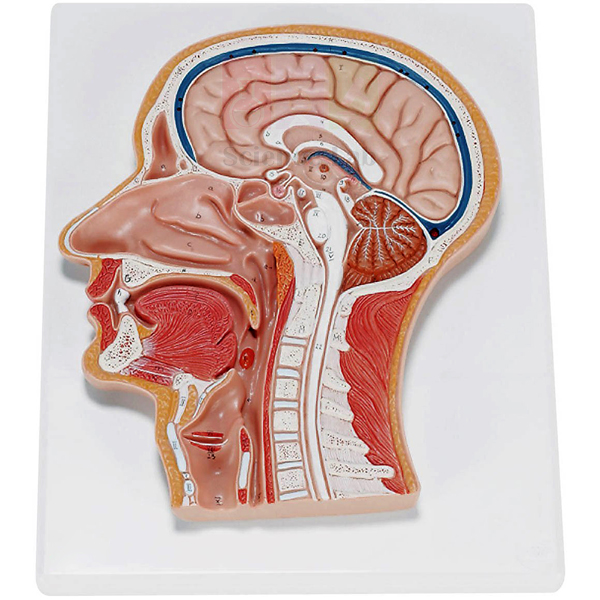
Human Head and Neck Model
Human Head and Neck Model (Product Code: SLE/BL/60) is a median-section anatomy model used to show the internal organs of the head and neck in biology, nursing and health-science classrooms. Mounted on a base, coloured and numbered with a keycard, it lays out the brain, nose, mouth and pharynx, larynx and cervical vertebral column along one midline cut. It is made by Jain Scientific Equipments Pvt Ltd (ScienceLab), an OEM manufacturer of human anatomical models, at its own factory in Ambala, India.
Specifications
| Parameter | Detail |
|---|---|
| Type | Head and neck model, median section |
| Structures shown | Median section of brain; nose; mouth and pharynx; larynx; vertebral column of the neck |
| Finish | Appropriately coloured and numbered |
| Identification | Keycard |
| Mounting | On a base |
| Product code | SLE/BL/60 |
| Manufacturer | Jain Scientific Equipments Pvt Ltd (ScienceLab) — OEM |
| Country of origin | India (made in Ambala, Haryana) |
What Is the Human Head and Neck Model Used For?
The pharynx is the crossroads where air and food share a passage, and this model makes that arrangement easy to explain. Teachers follow air from the nose through the pharynx to the larynx, then follow food from the mouth through the pharynx towards the oesophagus, discussing how swallowing protects the airway. The same section supports lessons on speech production, on the position of the brain above the nasal cavity, and on how the cervical vertebrae support the head.
Nursing, dental, speech-therapy and first-aid instructors use it to explain airway positioning, while school teachers use it for the respiratory and digestive chapters of the biology syllabus. Ask students to name each numbered structure from the keycard, then trace a breath and a swallow in turn. Kept alongside respiratory and skull models among a department's biology teaching aids in India, it can be reused across several topics.
OEM Manufacturer
ScienceLab, the trading name of Jain Scientific Equipments Private Limited, is the original equipment manufacturer (OEM) of this head and neck model. It is produced at the company's own licensed factory at Saha, Ambala, Haryana, India, so schools, nursing colleges, dealers and importers deal directly with the maker rather than a reseller.
Quotations, repeat orders and questions about replacement parts are handled by the manufacturer itself — just ask us. Our company profile describes the business in more detail.
Related Brain Models
Models that extend the study of the head, airway and neck:
- Head Section with Larynx Model — an alternative head section centred on the larynx
- Head and Neck Model — shows the muscles and blood vessels of the same region
- Human Larynx, Trachea, and Bronchi Model — continues the airway below the neck into the chest
- Anatomical Human Nasal Cavity Model — a closer look at the nose where the airway begins
- Human Half Head Model — adds dissected muscles, vessels and nerves on one side
Browse related head and brain models in our Brain Models category.
Frequently Asked Questions
What does the Human Head and Neck Model show?
The Human Head and Neck Model shows the internal organs of the region in median section: the brain, the nose, the mouth and pharynx, the larynx and the vertebral column of the neck, all coloured and numbered for identification.
Does the Human Head and Neck Model include a key?
Yes. The structures on the Human Head and Neck Model are numbered and a keycard is supplied, so students can check the name of every numbered organ, from the brain and nasal cavity down to the larynx and neck vertebrae.
Does the head and neck model come apart?
Our product information describes the Human Head and Neck Model as a median-section model mounted on a base and does not list removable parts. If your course needs a dissectible head, contact us and we will suggest a suitable model from the range.
What size is the Human Head and Neck Model?
Dimensions for the Human Head and Neck Model are not listed in our product information, so we do not publish a size here. Please ask through the contact page and we will confirm the measurements before you place an order.
How should the head and neck model be cleaned and stored?
Wipe the Human Head and Neck Model with a soft, slightly damp cloth and avoid strong cleaners that could fade the colours or numbers. Keep it covered on its base when not in use so dust does not settle on the sectioned surface.
Who manufactures the Human Head and Neck Model?
The Human Head and Neck Model is manufactured by Jain Scientific Equipments Pvt Ltd (ScienceLab), the OEM, at its own licensed factory in Saha, Ambala, Haryana, India. Buyers receive quotations and after-sales answers directly from the manufacturer.
Do you supply the head and neck model to colleges outside India?
Yes. ScienceLab supplies the Human Head and Neck Model to schools, colleges and distributors in India and international markets. Include your country, quantity and delivery address in the enquiry so the quotation reflects the full order.
Request a Quote
For a quotation on the Human Head and Neck Model, contact us via the contact page or add it to the enquiry cart with other anatomy items. Quotes are issued directly by the manufacturer.
Last updated: 24 September 2026
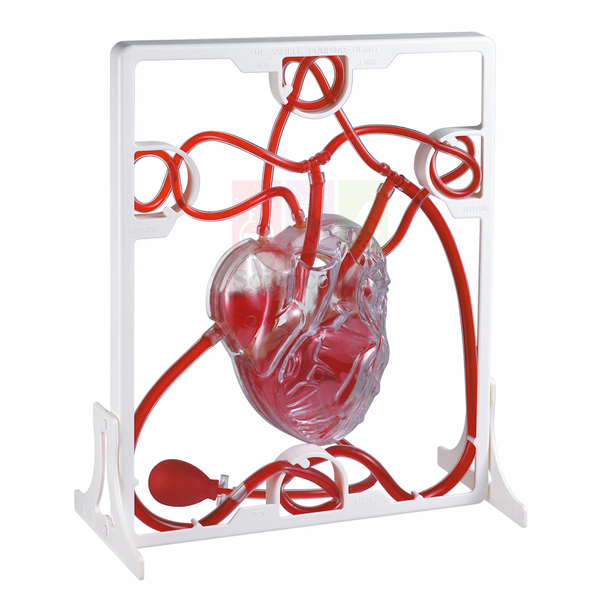
Human Heart, Pumping Model
The Human Heart, Pumping Model (Product Code: SLE/BL/61) is a 3-D working plastic heart with clear chambers, in which a squeeze bulb pumps simulated blood through the chambers in the same way a real heart moves blood. It is easy to assemble, comes with a complete instruction manual and a display stand, and includes acrylic paints and a brush so students can colour the finished heart themselves. Manufactured by Jain Scientific Equipments Pvt Ltd (ScienceLab), Ambala, it works as a science model kit for school projects as well as a hands-on aid for circulation lessons.
Specifications
| Parameter | Detail |
|---|---|
| Type | 3-D working heart model |
| Material | Plastic |
| Chambers | Clear, so the movement of simulated blood is visible |
| Pumping action | Squeeze bulb pumps simulated blood through the heart chambers |
| Assembly | Easy to assemble, with complete instruction manual |
| Supplied with | Display stand, acrylic paints and brush, instruction manual |
Typical Use
This model turns the heart lesson into a make-and-test activity. Students first assemble the heart following the instruction manual, then paint it with the acrylic paints and brush — teachers can ask them to use colour to separate the sides of the heart that carry oxygen-rich and oxygen-poor blood. Once it is on its display stand, squeezing the bulb sends simulated blood through the clear chambers, so the class can watch the direction of flow and discuss why the chambers and valves are arranged as they are.
It suits science fairs, holiday projects and classroom demonstrations alike, and heart model anatomy lessons in India's middle and secondary schools benefit from a model students have built themselves. Younger learners should assemble and paint it under teacher supervision, allow the paint to dry fully before pumping, and rinse and dry the chambers after use according to the manual.
Manufacturer
Behind the ScienceLab brand is Jain Scientific Equipments Private Limited, an Ambala, Haryana manufacturer whose range stretches from student project models like this pumping heart to full-size anatomy figures. Learn more on the company profile.
Related Human Models
These models take the circulation topic further once students have built the pumping heart:
- Human Cardiac Beat And Blood Circulation — a powered demonstration with a beating wall, moving valves and lights for arteries and veins
- Human Heart Model — a detailed anatomical model for labelling after the practical activity
- Heart 3 times Natural Size Model — an enlarged heart that the whole class can see from a distance
- Circulatory System Model Activity Set — extends the activity from the heart to the whole circulatory system
Our full range is in the Human Models category.
Frequently Asked Questions
How does the pumping action work?
A squeeze bulb pushes simulated blood through the clear heart chambers, imitating the way a real heart moves blood.
Does it arrive assembled?
It is designed to be easy to assemble and comes with a complete instruction manual, so students can put it together as part of the activity.
What is included?
The heart model parts, a display stand, acrylic paints, a brush and the instruction manual.
Is the simulated blood supplied?
The model is designed to pump simulated blood; please confirm through our contact page exactly what fluid is included with your order.
Is it suitable for school science projects?
Yes. Assembling, painting and then operating the heart makes it well suited to projects and exhibitions, with teacher supervision for younger students.
Can we buy class sets or order for export?
Yes. We quote class quantities for schools and distributors in India and international markets; warranty terms are confirmed on the quotation.
Request a Quote
For class-set pricing on the Human Heart, Pumping Model, contact us through the contact page or add it to the enquiry cart with other circulation models.
Last updated: 24 September 2026