- Physics Lab Equipment
- Chemistry Lab Equipment
- Biology Lab Equipment
- Anatomical Lab Equipment
- Learning
- Educational Lab Equipment
- Magnets
- Agriculture
- Astronomy
- Earth Science
- Geography Lab Equipment
- Safety Lab Coat
- Laboratory
- Meteorological
- Electricity & Magnetism
- Heat
- School Lab Equipment
- Lab Glassware
- Science Lab Equipment
- Tvet Lab Equipment
- Robotics Kits Supplier and Manufacturer for Schools India
- Math Lab Equipment Manufacturers and Exporters in Ambala
- STEM Kits Manufacturers and Supplier India
- Engineering Lab Equipment
- Hospital Lab Equipment
- Water, Sanitation & Hygiene Supplies
- Cold Chain, Solar & Communication Equipment
- Nutrition
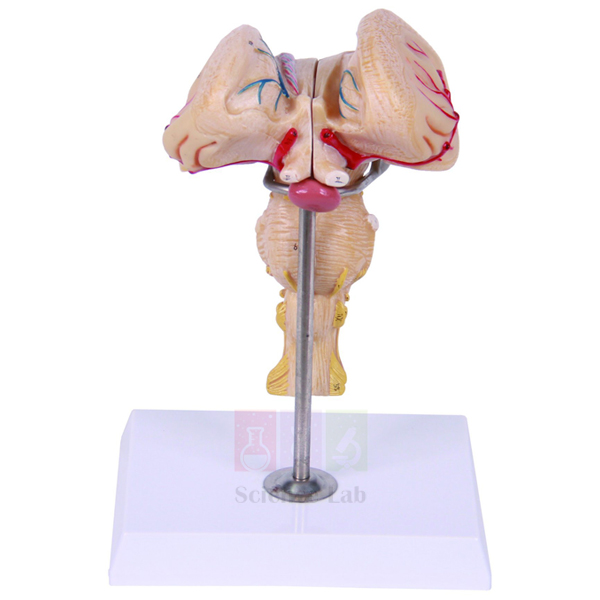
Human Brain Stem Model
Human Brain Stem Model (Product Code: SLE/BL/44) is an enlarged anatomical model used to teach the brain stem and the origins of the cranial nerves in neuroanatomy, nursing and advanced biology classes. Built at about 3 times life size and measuring 27 x 20 x 14 cm, it shows the base segments of the 12 pairs of cranial nerves in yellow. It is made by Jain Scientific Equipments Pvt Ltd (ScienceLab), an OEM manufacturer of human anatomical models, at its own factory in Ambala, India.
Specifications
| Parameter | Detail |
|---|---|
| Type | Enlarged brain stem model |
| Scale | About 3 times life size |
| Size | 27 x 20 x 14 cm |
| Cranial nerves | Base segments of the 12 pairs shown |
| Colour coding | Cranial nerve segments in yellow |
| Product code | SLE/BL/44 |
| Manufacturer | Jain Scientific Equipments Pvt Ltd (ScienceLab) — OEM |
| Country of origin | India (made in Ambala, Haryana) |
What Is the Brain Stem Model Used For?
In a real brain the brain stem is small and partly hidden beneath the cerebrum and cerebellum, which makes the origins of the cranial nerves hard to follow on a life-size specimen. Enlarging it roughly threefold solves that problem: a lecturer can hold the model up in front of a class and point to each yellow nerve segment while students work through the twelve pairs in order, often alongside a table of each nerve’s sensory or motor role. It suits medical, nursing, physiotherapy and speech-therapy courses as well as advanced school collections of anatomical models.
For self-study, students can sketch the model from the front and side, label the nerve segments, and check their drawings against a textbook. Pairing it with a whole-brain model helps learners see where the brain stem sits before they study it in close-up. Keep the model dust-free and handle it by its broad surfaces rather than by the nerve segments.
OEM Manufacturer
The Human Brain Stem Model is produced by Jain Scientific Equipments Private Limited, trading as ScienceLab, which acts as the OEM (original equipment manufacturer) and makes it at its own licensed factory at Saha, Ambala, Haryana, India. Colleges, institutions, dealers and importers therefore buy it straight from the manufacturer, and repeat orders or questions about a damaged model are handled by the same team — ask us.
The company is a registered MSME whose major activity is manufacturing (Udyam UDYAM-HR-01-0003714), and its overseas consignments move under Importer-Exporter Code AAECJ8618A from the DGFT. More information is on our company profile.
Related Brain Models
Models that place the brain stem in context or extend the same neuroanatomy topic:
- Enlarged Human Brain Stem Model — an alternative enlarged brain stem for comparing presentations.
- Human Brain Model, 15 Parts — shows the brain stem within a whole dissectible brain.
- Human Spinal Cord Section Model — continues the pathway below the brain stem.
- Human Brain Model in Head — follows the cranial nerves in relation to the skull.
- Neuron Model — explains the nerve cells that make up these pathways.
The full list is available in our Brain Models section.
Frequently Asked Questions
How big is the Human Brain Stem Model?
The Human Brain Stem Model measures 27 x 20 x 14 cm and represents the brain stem at about 3 times life size, large enough for a lecturer to demonstrate each cranial nerve segment to a whole class.
Why is the Human Brain Stem Model enlarged rather than life-size?
The Human Brain Stem Model is enlarged because the cranial nerve origins on a real brain stem are small and partly hidden; at about 3 times life size, every student in a group can see each yellow nerve segment clearly.
Which nerves does the Human Brain Stem Model show?
The Human Brain Stem Model shows the base segments of all 12 pairs of cranial nerves, coloured yellow so they stand out from the rest of the brain stem and can be worked through in order during a lesson.
Does the Human Brain Stem Model come with a numbered key?
A key is not mentioned in the product information for the Human Brain Stem Model. Please ask through our contact page to confirm exactly what is supplied with the model before you place an order.
Who manufactures the Human Brain Stem Model?
The Human Brain Stem Model is manufactured by Jain Scientific Equipments Pvt Ltd (ScienceLab), the OEM, at its own factory at Saha, Ambala, Haryana, India. Quotations and repeat orders come straight from the manufacturer, with no trader in between.
How should the Human Brain Stem Model be cleaned?
Clean the Human Brain Stem Model with a soft brush or dry cloth for dust and a barely damp cloth for marks. Do not soak it or use solvent-based cleaners, and handle it by its broad surfaces.
Can vendor registration details be provided for a Human Brain Stem Model tender?
Yes. For tenders that include the Human Brain Stem Model, the Udyam and IEC numbers are shown on this page, and further company registration details can be shared with your quotation on request.
Request a Quote
Send your requirement for the Human Brain Stem Model through our contact page, or place it in the enquiry cart to combine it with other models. The quotation is prepared directly by the manufacturer for buyers in India and international markets.
Last updated: 24 September 2026
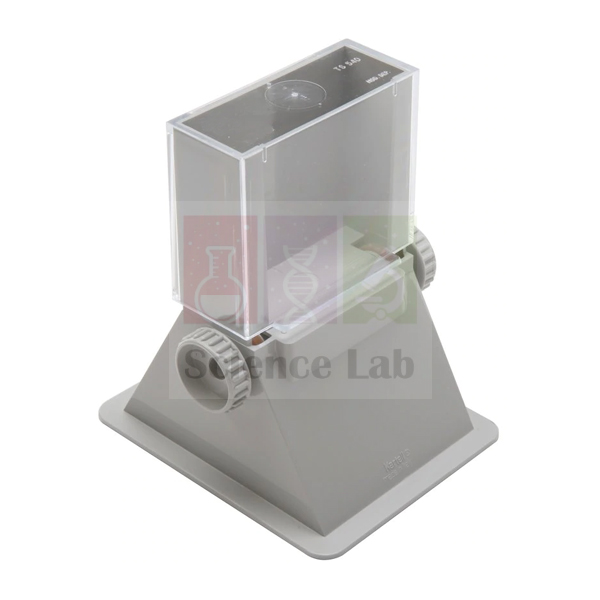
Slide Dispenser, Automatic
Slide Dispenser, Automatic (Product Code: SLE/M/81) is a knob-operated container used to store blank microscope slides and release them one at a time in school, college and laboratory microscopy work. It holds 50 standard 3 × 1 inch slides in a transparent, dust-free housing, so staff can see how many remain and students pick up only one clean slide. It is supplied by Jain Scientific Equipments Pvt Ltd (ScienceLab), Ambala, India, as practical biology lab equipment for India and abroad.
Specifications
| Parameter | Detail |
|---|---|
| Type | Automatic slide dispenser, knob-operated |
| Capacity | 50 standard slides |
| Slide size accepted | Standard 3 × 1 inch microscope slides |
| Container | Transparent, dust-free |
| Dispensing | Slides ejected one at a time by turning either side knob |
| Dimensions | 4 1/2 × 5 × 5 1/2 inches |
| Handling | Easy to use |
| Product code | SLE/M/81 |
| Supplied by | Jain Scientific Equipments Pvt Ltd (ScienceLab), Ambala, India |
What Is the Slide Dispenser Used For?
In a practical class where every group prepares onion peels, cheek-cell smears or other temporary mounts, loose boxes of slides quickly collect dust and fingerprints that later show up as debris in the field of view. This dispenser keeps the stack enclosed and hands out a single slide with a turn of a knob, so students never touch the slides they are not going to use.
Because there is a knob on each side, the unit can sit in the middle of a shared bench and be worked from the left or the right. Load only clean, dry slides of the standard 3 × 1 inch size, refill it before the lesson rather than during it, and stop turning if a slide sticks so that the stack can settle flat again. It is a small but useful part of a biology lab setup for schools in India that want tidy, repeatable slide preparation.
Supplier
The Slide Dispenser, Automatic is sourced and supplied by Jain Scientific Equipments Private Limited, the company behind the ScienceLab trading name in Ambala, Haryana. We supply it alongside our microscopes, blank slides and storage cases, so a school or distributor can cover a complete slide-preparation bench with one enquiry. Read more about the company on our ScienceLab company profile.
Related Microscope Products
These items are used in the same slide-preparation workflow:
- Microscope Slides Glass — blank clear glass slides for everyday mounts.
- Cover Glasses — to cover wet mounts once the slide is dispensed.
- Microscope Slide Case — storage for finished slides after the class.
- Microscope Slide Warming Table — for drying smears and mounted slides.
- Microscope Slide Dispenser — an alternative dispenser listing in our range.
Browse the full Microscope range for microscopes and accessories.
Frequently Asked Questions
How many slides does the Slide Dispenser, Automatic hold?
The Slide Dispenser, Automatic holds 50 standard 3 × 1 inch microscope slides. They sit in a transparent container, so the teacher or technician can see at a glance when the stack is running low and refill it before the next practical session.
How does the automatic slide dispenser release a slide?
Turning either side knob on the Slide Dispenser, Automatic ejects one slide at a time. Because both sides carry a knob, it can be operated from the left or the right, which suits shared benches and left-handed students alike.
What are the dimensions of the Slide Dispenser, Automatic?
The Slide Dispenser, Automatic measures 4 1/2 × 5 × 5 1/2 inches. This compact size fits beside a microscope on a student bench or on a shelf in the preparation room without taking much space.
Does the dispenser help keep slides clean?
Yes. The Slide Dispenser, Automatic stores slides in a transparent, dust-free container, which helps keep the glass free of dust and fingerprints between classes. Load only clean, dry slides so that nothing damp or dirty is trapped inside with the stack.
Who supplies the Slide Dispenser, Automatic?
Jain Scientific Equipments Pvt Ltd (ScienceLab), Ambala, India, supplies the Slide Dispenser, Automatic to schools, colleges, laboratories and dealers. It can be quoted together with our microscopes, glass slides and slide storage cases on a single enquiry.
What should a quotation request for the slide dispenser include?
For a Slide Dispenser, Automatic quotation, state product code SLE/M/81, the quantity, the delivery location and any slides or accessories you want on the same order. Send these details through the ScienceLab contact page and we will reply with availability.
Can the Slide Dispenser, Automatic be supplied in bulk or for export?
Yes. The Slide Dispenser, Automatic can be quoted in bulk quantities for institutions, distributors and importers in India and international markets. Share the quantity and destination through our contact page so that packing and shipping can be quoted accurately.
Request a Quote
To order the Slide Dispenser, Automatic (SLE/M/81), send your quantity and delivery details through our contact page, or add it to the enquiry cart and submit one request for all the microscopy items you need.
Last updated: 24 September 2026
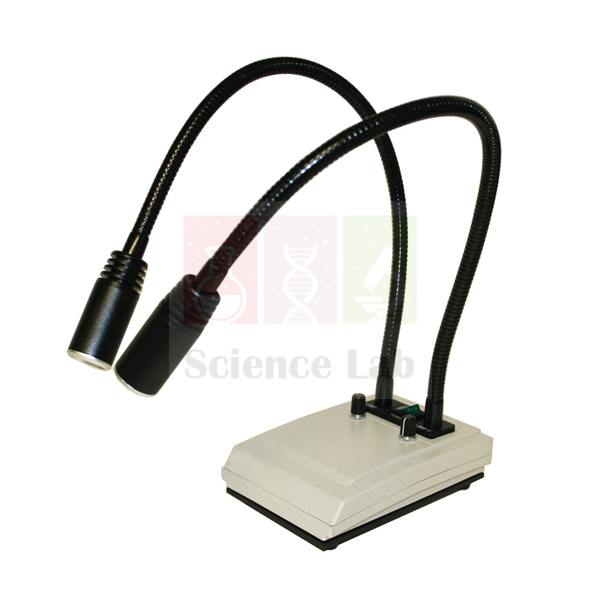
Walter LED Gooseneck Illuminator
Walter LED Gooseneck Illuminator (Product Code: SLE/M/82) is a bench light with flexible gooseneck light guides used to direct cool white LED light onto specimens viewed under stereo and dissecting microscopes in teaching and research labs. Each 19-inch guide carries a bright white LED in a protective housing, and output is adjustable from 0 to 100%. It is supplied by Jain Scientific Equipments Pvt Ltd (ScienceLab), Ambala, India, among our biology lab instruments for schools and colleges.
Specifications
| Parameter | Detail |
|---|---|
| Light source | Bright white LED mounted in a protective housing on each light guide |
| Light guide | 19 inch flexible gooseneck (each guide) |
| Colour temperature | 5,500 K |
| Light quality | Cool, white, uniform light |
| Intensity control | 0 to 100% |
| Estimated LED life | 50,000 hours |
| Operation | Consumes less power; runs cooler and quieter |
| Size | 25 in H × 4 in W × 5-1/2 in D |
| Weight | About 2 lb |
| Footprint | Small |
| Brand in product name | Walter |
| Product code | SLE/M/82 |
| Supplied by | Jain Scientific Equipments Pvt Ltd (ScienceLab), Ambala, India |
What Is the LED Gooseneck Illuminator Used For?
Stereo and dissecting microscopes mostly look at solid, opaque objects — insects, flowers, seeds, rock chips, coins or circuit boards — which have to be lit from above or from the side rather than from beneath. A gooseneck illuminator lets the user bend the light guides to exactly the angle needed: low and from one side to bring out surface texture and relief, or higher and from two directions to fill in shadows during a dissection.
The 5,500 K white light is close to daylight, which helps students record true colours of leaves, pollen-laden anthers or mineral grains in their notebooks. Because the LEDs run cool, live insects and fresh plant tissue do not dry out as quickly as under a hot lamp. For shiny or pale specimens, turn the intensity down to cut glare; for dark or dense material, raise it towards 100%. This makes it a handy companion for any stereo microscope bench in a school or college lab.
What to Specify When Ordering
- Number of illuminators needed (one per stereo or dissecting microscope station is typical).
- Your mains supply voltage and plug type, so we can confirm the power arrangement.
- The microscopes it will be used with, if you want them quoted on the same order.
Supplier
ScienceLab is the trading name of Jain Scientific Equipments Private Limited in Ambala, Haryana. The Walter LED Gooseneck Illuminator carries the Walter brand name; it is an item we source and supply, not one we make. Laboratories setting up stereo microscope benches can combine it with microscopes, auxiliary lenses and cleaning supplies from our range on one quotation. Company details are on our profile page.
Related Microscope Products
Items that work alongside a gooseneck light on a specimen-viewing bench:
- Stereomicroscopes — compact stereo microscopes for whole-specimen viewing.
- Stereo Binocular Microscope — another stereo model that benefits from side lighting.
- Dissecting Microscope — for dissections where angled light reduces shadows.
- Walter Auxiliary Lens — raises magnification, which calls for brighter lighting.
- Microfiber Lens Cloth — for keeping optics and LED housings free of dust.
See all microscopes and accessories in our Microscope category.
Frequently Asked Questions
What colour temperature does the Walter LED Gooseneck Illuminator give?
The Walter LED Gooseneck Illuminator gives cool white light at a colour temperature of 5,500 K, close to daylight. This helps students judge the natural colours of leaves, insects and minerals when viewing them under a stereo microscope.
How long do the LEDs in the Walter LED Gooseneck Illuminator last?
The LEDs in the Walter LED Gooseneck Illuminator have an estimated life of 50,000 hours. Combined with lower power consumption, this suits busy teaching labs where the light stays on through several practical sessions each day.
Can the brightness of the gooseneck illuminator be adjusted?
Yes. The Walter LED Gooseneck Illuminator has a light intensity control from 0 to 100%. Lower settings reduce glare on shiny or pale specimens, while full brightness helps with dark or dense samples at higher magnification.
How long are the gooseneck light guides?
Each flexible light guide on the Walter LED Gooseneck Illuminator is 19 inches long, so the light can be bent and aimed from above or from the side. Please ask us to confirm the number of light guides on the unit you are quoted.
Will the Walter LED Gooseneck Illuminator heat up specimens?
The Walter LED Gooseneck Illuminator is designed to run cooler and to give cool, white, uniform light. That helps when observing live insects or fresh plant material, which can dry out quickly under a hot conventional lamp.
What are the size and weight of the illuminator?
The Walter LED Gooseneck Illuminator measures 25 in high, 4 in wide and 5-1/2 in deep, and weighs about 2 lb. Its small footprint leaves space on the bench for the microscope, specimen dishes and notebooks.
Does ScienceLab manufacture the Walter LED Gooseneck Illuminator?
No. The Walter LED Gooseneck Illuminator is a Walter-branded product that Jain Scientific Equipments Pvt Ltd (ScienceLab) sources and supplies from Ambala, India. We can quote it together with microscopes and accessories for schools, colleges and distributors.
Request a Quote
For the Walter LED Gooseneck Illuminator (SLE/M/82), send quantity, mains supply details and delivery location through our contact page, or add it to the enquiry cart with any microscopes you need.
Last updated: 24 September 2026
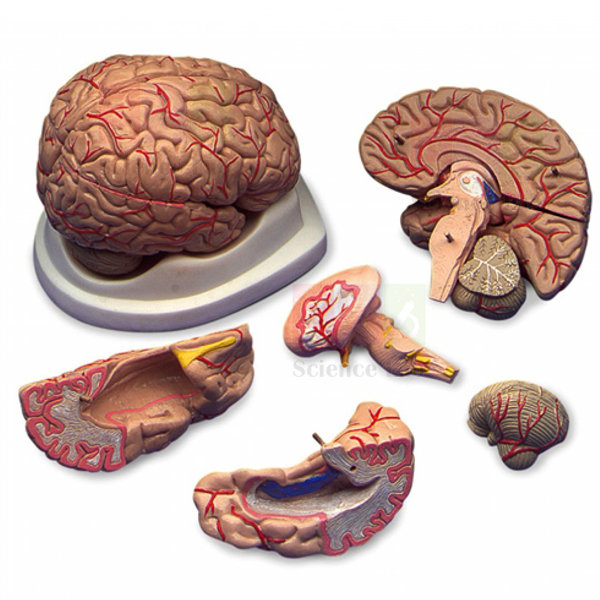
Human Brain Model with Arteries
Human Brain Model with Arteries (Product Code: SLE/BL/45) is a natural-size PVC anatomical model used to teach the external features of the brain together with its arterial supply in college, nursing and medical classrooms. Measuring 18.5 x 14 x 13.5 cm, it is dissectible into 8 parts and stands on a base, so the relations between component portions can be shown as one system. It is made by Jain Scientific Equipments Pvt Ltd (ScienceLab), an OEM manufacturer of anatomical models, at its own factory in Ambala, India.
Specifications
| Parameter | Detail |
|---|---|
| Scale | Natural size |
| Size | 18.5 x 14 x 13.5 cm |
| Material | PVC plastic |
| Dissection | Dissectible into 8 parts |
| Arterial supply shown | Sources of supply; vertebral and internal carotid arteries; arterial supply of the cerebellum and cerebrum |
| External features shown | Cerebral hemisphere, brain stem, cerebellum |
| Mounting | On base |
| Product code | SLE/BL/45 |
| Manufacturer | Jain Scientific Equipments Pvt Ltd (ScienceLab) — OEM |
| Country of origin | India (made in Ambala, Haryana) |
What Is the Brain Model with Arteries Used For?
This model is chosen when a course needs to explain where the brain gets its blood and what happens when that supply fails. Starting at the sources, the lecturer traces the vertebral and internal carotid arteries upward to the base of the brain and then follows the branches that serve the cerebrum and cerebellum. Students can then connect a blocked vessel to the region of brain it supplies — a foundation for understanding stroke in nursing, physiotherapy and medical teaching. As a 3D model it communicates these spatial relationships far better than a flat diagram.
Taking the eight parts apart lets students see how the cerebral hemisphere, brain stem and cerebellum fit together and how the arteries run between them. The PVC construction is practical for repeated classroom handling; reassemble the parts after use and wipe the surfaces clean before returning the model to its base.
OEM Manufacturer
ScienceLab is the trading name of Jain Scientific Equipments Private Limited, the OEM (original equipment manufacturer) that makes the Human Brain Model with Arteries at its own licensed factory at Saha, Ambala, Haryana, India. Medical and nursing colleges, schools, dealers and importers receive it factory-direct rather than through a reseller.
Dealing with the maker also simplifies after-sales questions: if one of the eight parts is lost or damaged, ask us about a replacement and the manufacturer will respond directly. Details of the organisation are on our company profile.
Related Brain Models
Models that complement a lesson on the blood supply of the brain:
- Human Brain with Arteries Model — an alternative about-life-size version with a numbered key.
- Microstructure of Artery and Vein Model — shows the vessel wall behind the arteries on this model.
- Human Heart Model — the pump that drives blood into the carotid and vertebral arteries.
- Human Skull with Cervical Spine Model — for tracing the route of the vertebral arteries through the neck.
- Human Brain Model, 8 Parts — a brain model focused on regions without the vascular detail.
Find more in our Brain Models category.
Frequently Asked Questions
What are the dimensions of the Human Brain Model with Arteries?
The Human Brain Model with Arteries is natural size and measures 18.5 x 14 x 13.5 cm, which lets students relate the arteries and brain regions to the proportions of a real adult brain.
What is the Human Brain Model with Arteries made of?
The Human Brain Model with Arteries is made of PVC plastic, a material that is easy to wipe clean and practical for regular handling by students during anatomy and nursing lessons.
Which arteries does the Human Brain Model with Arteries show?
The Human Brain Model with Arteries shows the sources of supply, the vertebral and internal carotid arteries, and the arterial supply of the cerebellum and cerebrum, alongside the cerebral hemisphere and brain stem.
How is the Human Brain Model with Arteries different from the Human Brain with Arteries Model?
Both dissect into 8 parts. The Human Brain Model with Arteries is natural size in PVC at 18.5 x 14 x 13.5 cm; the Human Brain with Arteries Model is about life size on a blue base with a numbered key.
Is a key or guide included with the Human Brain Model with Arteries?
A key is not listed for the Human Brain Model with Arteries. Please ask through our contact page to confirm what accompanies the model before you order it.
Who manufactures the Human Brain Model with Arteries?
The Human Brain Model with Arteries is manufactured by Jain Scientific Equipments Pvt Ltd (ScienceLab), the OEM, at its own factory at Saha, Ambala, Haryana, India, and is sold directly by the manufacturer to institutions and dealers.
What should a college include when requesting a quote for the Human Brain Model with Arteries?
When requesting a quote for the Human Brain Model with Arteries, give the quantity, delivery address and any documentation your purchase process needs. We serve institutions in India and international markets.
Request a Quote
Ask for a quotation on the Human Brain Model with Arteries via our contact page, or add it to the enquiry cart with any other models you require. Quotes come direct from the manufacturer.
Last updated: 24 September 2026
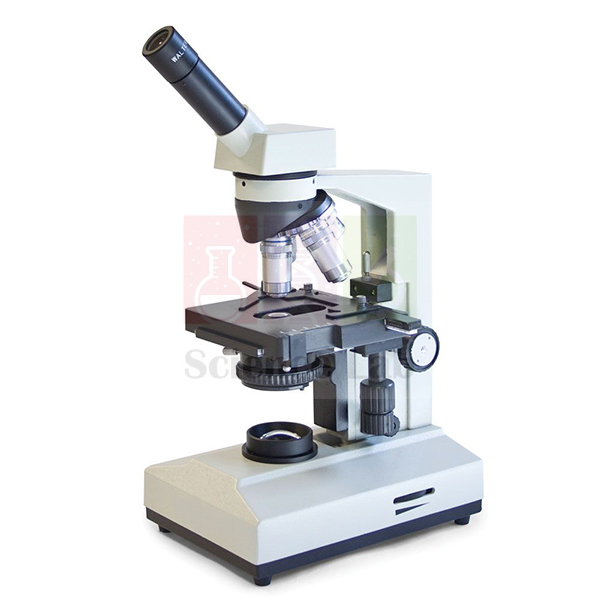
Compound Microscope Cordless
Compound Microscope Cordless (Product Code: SLE/M/83) is a battery-powered compound light microscope used to examine stained slides, cells and micro-organisms in school and college biology labs, including rooms without a power point at every bench. Rechargeable NiMH batteries and an AC charger/adapter are included, and its 360° rotating head, inclined at 45°, turns easily towards each student. It is supplied by Jain Scientific Equipments Pvt Ltd (ScienceLab), Ambala, India.
Specifications
| Parameter | Detail |
|---|---|
| Microscope type | Compound, cordless (rechargeable battery operation) |
| Head | 360° rotating, inclined at 45° for easier viewing |
| Stage | Built-in mechanical stage for easier slide scanning |
| Focusing | Separate coarse and fine focus, rack-and-pinion, with positive stops at both ends of stage travel |
| Condenser | Rack-and-pinion adjustable 1.25 N.A. Abbe condenser with iris diaphragm |
| Illumination | Built-in LED in the base with on/off switch and light intensity control |
| LED life | 10,000 hours |
| Power | Rechargeable NiMH batteries; AC charger/adapter included |
| Size | 11-1/2 in H × 6 in W × 9-1/2 in D |
| Weight | 10 lb |
| Product code | SLE/M/83 |
| Supplied by | Jain Scientific Equipments Pvt Ltd (ScienceLab), Ambala, India |
What Is the Cordless Compound Microscope Used For?
Students use it for the core practicals of a school or college biology course: onion peel and cheek-cell mounts, stained tissue slides, pond-water organisms and yeast. Running on batteries means the microscope can be set up on any bench, in an outdoor or field classroom, or in older buildings where sockets are few and trailing cables are a trip hazard.
The Abbe condenser and iris diaphragm are the keys to a good image: close the iris a little to add contrast to pale, unstained cells, and open it for strongly stained sections. Scan a slide systematically with the mechanical stage rather than pushing it by hand, and rely on the positive focus stops, which limit stage travel so a hurried student is less likely to crack a slide. Recharge the batteries after each day’s classes so the microscope is ready for the next session. It is a practical choice when planning a compound microscope set for school labs in India.
What to Specify When Ordering
- The objective and eyepiece configuration you require (not listed here — ask us for the current line-up).
- Number of microscopes per lab or class set.
- Your mains voltage and plug type for the AC charger/adapter.
- Any slides, cover glasses or cleaning supplies to add to the same order.
Supplier
Jain Scientific Equipments Private Limited, trading as ScienceLab from Ambala, Haryana, supplies the Compound Microscope Cordless to schools, colleges, training institutes and distributors. We source this microscope and can quote it with slides, cover glasses and cleaning accessories so a microscopy lab is equipped in one go. For vendor registration, the supplying company’s details are GSTIN 06AAECJ8618A1ZT and LEI 3358004HRD1JIVXKYX49. More about us is on the ScienceLab profile page.
Related Microscope Products
Consumables and alternatives often ordered with a cordless compound microscope:
- Microscope Slides Glass — blank slides for student-made mounts.
- Cover Glasses — to cover wet mounts and stained preparations.
- Microscope Cleaning Kit — for routine care of lenses and the stage.
- Cordless Microscope — another battery-operated model to compare.
- Compound Microscope — an alternative compound model in our range.
Compare more models in our Microscope category.
Frequently Asked Questions
Does the Compound Microscope Cordless need mains power during use?
No. The Compound Microscope Cordless runs its LED illumination from rechargeable NiMH batteries. The AC charger/adapter supplied is used to recharge them, so the microscope can work on benches, in field classes or in rooms without a nearby socket.
How long does the LED in the cordless compound microscope last?
The LED in the Compound Microscope Cordless has a 10,000-hour life. Its bright, cool light has an intensity control, so students can dim it for unstained cells and raise it for densely stained sections.
What condenser does the Compound Microscope Cordless have?
The Compound Microscope Cordless has a rack-and-pinion adjustable Abbe condenser of 1.25 N.A. with an iris diaphragm. Raising, lowering and closing it lets the user control brightness and contrast, which is especially useful for transparent specimens such as cheek cells.
What magnifications does the Compound Microscope Cordless offer?
The objective and eyepiece line-up of the Compound Microscope Cordless is not listed on this page. Please ask us through the contact page for the current configuration and total magnification before ordering, so the quotation matches your syllabus.
How does the focusing system protect slides and optics?
The Compound Microscope Cordless has separate coarse and fine rack-and-pinion focusing with positive stops at both ends of the stage travel. These stops limit movement, so students are less likely to crack a slide or damage an objective while focusing.
What are the size and weight of the Compound Microscope Cordless?
The Compound Microscope Cordless measures 11-1/2 in high, 6 in wide and 9-1/2 in deep, and weighs 10 lb. It stands firmly on a student bench yet can still be carried between the lab and a field classroom.
Who supplies the Compound Microscope Cordless for bulk or export orders?
Jain Scientific Equipments Pvt Ltd (ScienceLab), Ambala, India, supplies the Compound Microscope Cordless to schools, colleges, dealers and importers. Class-set quantities and shipping to India and international markets can be discussed with us through the contact page.
Request a Quote
Tell us the number of Compound Microscope Cordless units (SLE/M/83), your required optics and the delivery address through our contact page, or place it in the enquiry cart with slides and accessories.
Last updated: 24 September 2026
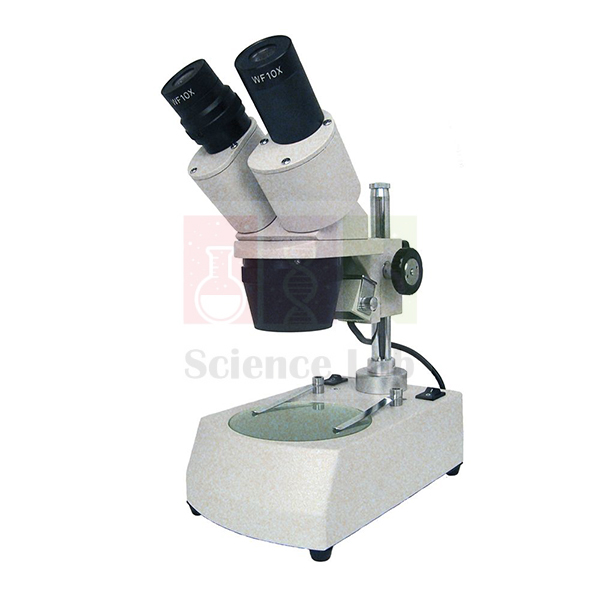
Stereomicroscopes
Stereomicroscopes (Product Code: SLE/M/84) are compact low-power microscopes used to view whole specimens such as insects, flowers, seeds and rocks as three-dimensional, unreversed images in secondary-school biology and science labs. They are offered with magnification levels of 10x and 30x or 20x and 40x, and their corded LED illumination stays cool after hours of use. They are supplied by Jain Scientific Equipments Pvt Ltd (ScienceLab), Ambala, India, as biology lab equipment for schools.
Specifications
| Parameter | Detail |
|---|---|
| Microscope type | Stereo microscope, compact size |
| Magnification options | 10x and 30x, or 20x and 40x |
| Image | Three-dimensional and unreversed, with good resolution, brightness and clarity |
| Illumination | Corded LED; stays cool after hours of use |
| Build | Rugged and dependable |
| Intended level | Secondary-level instruction |
| Product code | SLE/M/84 |
| Supplied by | Jain Scientific Equipments Pvt Ltd (ScienceLab), Ambala, India |
What Are Stereomicroscopes Used For?
A stereomicroscope shows solid objects in depth instead of thin slices, so it is the natural choice for looking at insect legs and mouthparts, flower structure, germinating seeds, soil crumbs, fossils, crystals and small dissections. Because the image is unreversed, a specimen moved to the left also moves left in the view — students can steer forceps and needles naturally, which is much harder under a compound microscope.
Use the lower setting (10x or 20x) to find and frame the whole specimen, then switch to 30x or 40x to study detail such as wing venation or seed coat texture. The cool LED lets live insects and moist plant material stay on the stage through a full lesson without wilting or drying. The compact body saves bench space and suits class sets where every pair of students needs its own stereo microscope.
What to Specify When Ordering
- Which magnification pair you need: 10x and 30x, or 20x and 40x.
- Number of units per class set.
- Your mains voltage and plug type for the corded LED illumination.
- Any dissection tools or specimen dishes to quote on the same order.
Supplier
These Stereomicroscopes are supplied by Jain Scientific Equipments Private Limited, which trades as ScienceLab from Ambala, Haryana. We source them for secondary schools, colleges and educational distributors, and a single quotation can bring together stereo microscopes, lighting and bench accessories. Learn more about the company on our profile.
Related Microscope Products
Useful additions to a stereo microscope bench:
- Walter LED Gooseneck Illuminator — extra angled light for textured, opaque specimens.
- Stereo Binocular Microscope — an alternative stereo model to compare.
- Binocular Stereo Microscope, 40x — another stereo option in our range.
- Pocket Magnifier — for collecting and pre-sorting specimens in the field.
- Microscope Cleaning Kit — for keeping eyepieces and objectives clean.
Explore the complete Microscope range.
Frequently Asked Questions
What magnifications are available on the Stereomicroscopes (SLE/M/84)?
The Stereomicroscopes (SLE/M/84) come with magnification levels of either 10x and 30x or 20x and 40x. Choose the lower pair for whole insects, flowers and rock samples, and the higher pair when students need to see finer surface detail.
Do these stereomicroscopes show a reversed image?
No. The Stereomicroscopes (SLE/M/84) give a three-dimensional, unreversed image, so a specimen moved to the right also moves right in the view. This makes dissection, seed sorting and handling small insects with forceps much easier for students.
Does the LED light on the Stereomicroscopes get hot?
The corded LED illumination on the Stereomicroscopes (SLE/M/84) stays cool even after hours of use. Live insects, fresh leaves and moist specimens therefore do not dry out during long practical periods, and the microscope stays comfortable to handle.
Which level of study are the Stereomicroscopes designed for?
The Stereomicroscopes (SLE/M/84) are compact and designed for secondary-level instruction. Colleges can also use them for general specimen viewing; ask us if you need higher magnification or a different stereo model for advanced work.
Do the Stereomicroscopes need a power socket?
Yes. The Stereomicroscopes (SLE/M/84) use corded LED illumination, so each unit needs a nearby socket. State your mains voltage and plug type when requesting a quotation, and we will confirm the power arrangement for the units supplied.
Who supplies the Stereomicroscopes (SLE/M/84)?
Jain Scientific Equipments Pvt Ltd (ScienceLab), Ambala, India, supplies these Stereomicroscopes to schools, colleges, laboratories and distributors in India and international markets. Class sets can be quoted together with lighting, dishes and other microscopy accessories.
Request a Quote
To receive a quotation for the Stereomicroscopes (SLE/M/84), state your chosen magnification pair and quantity through our contact page, or add them to the enquiry cart.
Last updated: 24 September 2026
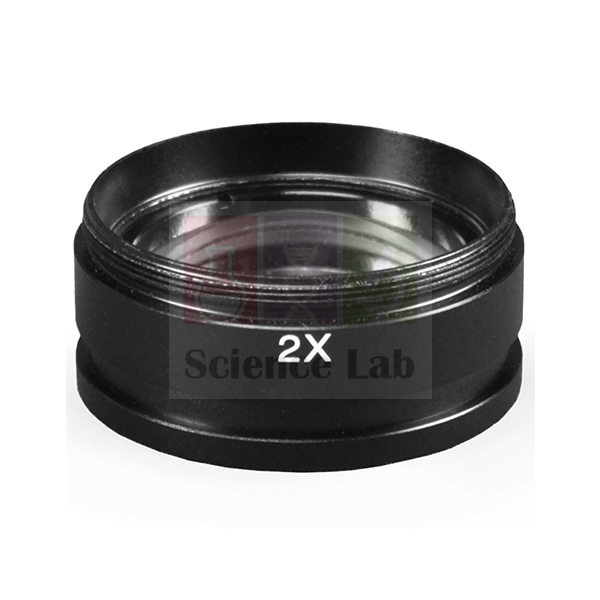
Walter Auxiliary Lens
Walter Auxiliary Lens (Product Code: SLE/M/85) is a 2x add-on lens used to increase the magnification of a stereo zoom microscope for extreme close-up views of specimens in biology, materials and inspection labs. With the lens in place, the listed magnification range moves from 7.5x–45x to 14x–90x, at a working distance of 30 mm. It is supplied by Jain Scientific Equipments Pvt Ltd (ScienceLab), Ambala, India, for college and research microscope users.
Specifications
| Parameter | Detail |
|---|---|
| Lens type | Auxiliary lens |
| Magnification factor | 2x |
| Magnification range | 7.5x–45x to 14x–90x |
| Field of view | 14.2 to 2.2 mm |
| Working distance | 30 mm |
| Brand in product name | Walter |
| Product code | SLE/M/85 |
| Supplied by | Jain Scientific Equipments Pvt Ltd (ScienceLab), Ambala, India |
What Is the Walter Auxiliary Lens Used For?
An auxiliary lens is the quickest way to push a stereo microscope beyond its built-in zoom. Doubling the magnification brings out features that are only hinted at in the standard range: the segments of an insect antenna, hairs and glands on a leaf surface, individual fibres in a textile sample, grains in a mineral or the finish of a small soldered joint.
Higher power comes with trade-offs worth planning for. The field of view narrows (listed from 14.2 mm down to 2.2 mm), so centre the feature before zooming in, and the 30 mm working distance leaves less room for forceps or probes, so do any handling at lower power first. More magnification also spreads the light over a larger image, which is why many users pair the lens with a gooseneck illuminator. Keep the glass clean with a microfiber cloth or lens tissue — at 90x every smudge shows. It is a sensible upgrade for biology lab instruments in college and research settings.
What to Specify When Ordering
- The make and model of the stereo microscope the lens will be fitted to, so we can confirm compatibility.
- Number of lenses required.
- Whether you also need lighting or cleaning accessories on the same quotation.
Supplier
Jain Scientific Equipments Private Limited, known by its trading name ScienceLab and based in Ambala, Haryana, supplies the Walter Auxiliary Lens. It is a Walter-branded accessory that we source for our customers rather than an item we produce. Laboratories and dealers can order it with stereo microscopes and illuminators from our range. See our company profile for background.
Related Microscope Products
Items used with an auxiliary lens for high-magnification stereo work:
- Walter LED Gooseneck Illuminator — brighter, angled light for higher magnification.
- Stereomicroscopes — compact stereo microscopes for specimen viewing.
- Microfiber Lens Cloth — for wiping dust and smudges from lens surfaces.
- Lens Tissue — disposable tissue for careful optical cleaning.
Find more accessories in the Microscope category.
Frequently Asked Questions
What magnification does the Walter Auxiliary Lens add?
The Walter Auxiliary Lens is a 2x lens. With it fitted, the listed magnification range changes from 7.5x–45x to 14x–90x, giving extreme close-up views of small structures that are hard to resolve at the microscope’s normal settings.
What field of view does the Walter Auxiliary Lens give?
The field of view with the Walter Auxiliary Lens is listed as 14.2 to 2.2 mm across the zoom range. The field shrinks as magnification rises, so centre the feature of interest before zooming in.
What is the working distance with the auxiliary lens fitted?
The Walter Auxiliary Lens gives a working distance of 30 mm between the lens and the specimen. That is enough for viewing, but it leaves limited room for dissecting tools, so plan manipulations at lower magnification.
Will the Walter Auxiliary Lens fit my microscope?
Fit depends on your stereo microscope’s make and mounting. Before ordering the Walter Auxiliary Lens, send us the model of the microscope it will be used on through the contact page so that we can confirm compatibility.
Is ScienceLab the maker of the Walter Auxiliary Lens?
No. The Walter Auxiliary Lens carries the Walter brand name. Jain Scientific Equipments Pvt Ltd (ScienceLab), Ambala, India, supplies it to schools, colleges, research labs and dealers along with related microscope accessories.
How should the Walter Auxiliary Lens be cleaned and stored?
Clean the Walter Auxiliary Lens with a soft microfiber cloth or lens tissue after removing loose dust, so grit does not scratch the glass. When it is not fitted, store it covered in a dry, dust-free place away from chemical fumes.
Request a Quote
Send the Walter Auxiliary Lens code SLE/M/85, your microscope model and quantity through our contact page, or use the enquiry cart to combine it with other microscope accessories.
Last updated: 24 September 2026

Beakers
Beakers (Product Code: SLE/P/01) are basic transparent polypropylene beakers used to hold, mix and pour liquids in school, college and clinical laboratories. Lab staff choose them where glass breakage is a worry, and they carry raised graduations and a tapered spout in capacities from 50 to 2000 ml. They are supplied by Jain Scientific Equipments Pvt Ltd (ScienceLab), Ambala, India, a lab plastic ware supplier in India for single sizes or a full beaker set for school labs.
Specifications
| Parameter | Detail |
|---|---|
| Material | PP (polypropylene) |
| Colour | Transparent |
| Capacity range | 50 to 2000 ml |
| Graduations | Raised |
| Spout | Tapered |
| Chemical resistance | Very good (as listed) |
| Sterilisation | Autoclavable |
| Product code | SLE/P/01 |
| Supplied by | Jain Scientific Equipments Pvt Ltd (ScienceLab), Ambala, India |
What Are Polypropylene Beakers Used For?
These beakers handle the everyday bench jobs that do not need heat: dissolving salts at room temperature, holding samples and rinse water, collecting filtrate, and carrying solutions between benches. The raised graduations give a quick volume check without printed marks that wear off, and the tapered spout gives a controlled pour into a funnel or flask. Because they are autoclavable, microbiology and clinical labs also use them for media handling and for sterilising before reuse.
Beaker graduations are for approximate volumes, so use a measuring cylinder or volumetric glassware when accuracy matters. Do not place polypropylene beakers over a flame or on a hot plate; a borosilicate glass beaker is the right choice for heating. For strong oxidising acids or aromatic and chlorinated solvents, check compatibility before long contact.
What to Specify When Ordering
- The capacities you need within the 50 to 2000 ml range.
- The quantity of each capacity, for example per bench or per lab.
- Whether you also need the tall-form Beakers with Handle for larger volumes.
- The delivery location, in India or abroad.
Supplier
Jain Scientific Equipments Private Limited, trading as ScienceLab, supplies these polypropylene Beakers from Ambala, Haryana, as part of its Scientific Lab Plasticware range. Schools, colleges, hospital and diagnostic labs, dealers and importers in India and international markets can combine them with bottles, cylinders and other plastic ware in one order. Read more on the company profile.
Related Scientific Lab Plasticware
These items are often ordered with polypropylene beakers for the same bench work:
- Beakers with Handle — tall-form handled beakers for larger volumes and easier carrying.
- Beaker, Polypropylene, Set of 4 — a ready-made set for students who need several sizes at once.
- Measuring Cylinder Set of 5 — for measuring volumes more accurately than beaker graduations allow.
- Stirring Rod, Polypropylene — for mixing solutions without scratching the beaker wall.
- Glass Beaker — the choice when a solution has to be heated.
View the full Scientific Lab Plasticware range for bottles, funnels, racks and more.
Frequently Asked Questions
What sizes are the polypropylene Beakers available in?
The Beakers (SLE/P/01) are listed in capacities from 50 to 2000 ml. Tell us exactly which sizes and how many of each you need, and the quotation will list every capacity separately so you can match it to your lab inventory.
Can these Beakers be autoclaved?
Yes, the polypropylene Beakers are listed as autoclavable, so they can be sterilised and reused in microbiology and clinical work. Place them upright or on their side with space around them, and let them cool fully before handling or stacking.
Can the polypropylene Beakers be heated on a hot plate or burner?
No, the polypropylene Beakers should not be placed over a flame or on a hot plate, because the plastic will soften. Use them for room-temperature work and autoclaving, and choose a borosilicate glass beaker whenever a solution needs direct heating.
How accurate are the graduations on the Beakers?
The raised graduations on the Beakers are meant for approximate volumes, and the listing does not give a tolerance. For accurate measurement use a measuring cylinder, pipette or volumetric flask, and use the beaker for mixing, holding and pouring.
Which chemicals can the polypropylene Beakers hold?
The Beakers are listed with very good chemical resistance and suit most aqueous acids, bases and salt solutions used in teaching labs. Strong oxidising acids and some organic solvents can attack polypropylene, so ask us or check a compatibility chart for those.
Who supplies the Beakers, and can I order in bulk?
The Beakers are supplied by Jain Scientific Equipments Pvt Ltd (ScienceLab), Ambala, India. Single sizes, mixed-size lots and bulk or tender quantities can be quoted for schools, colleges, dealers and importers in India and international markets.
Request a Quote
List the capacities and quantities of Beakers you need on the contact page, or add them to the enquiry cart with the rest of your plastic ware so one quotation covers everything.
Last updated: 24 September 2026