- Physics Lab Equipment
- Chemistry Lab Equipment
- Biology Lab Equipment
- Anatomical Lab Equipment
- Learning
- Educational Lab Equipment
- Magnets
- Agriculture
- Astronomy
- Earth Science
- Geography Lab Equipment
- Safety Lab Coat
- Laboratory
- Meteorological
- Electricity & Magnetism
- Heat
- School Lab Equipment
- Lab Glassware
- Science Lab Equipment
- Tvet Lab Equipment
- Robotics Kits Supplier and Manufacturer for Schools India
- Math Lab Equipment Manufacturers and Exporters in Ambala
- STEM Kits Manufacturers and Supplier India
- Engineering Lab Equipment
- Hospital Lab Equipment
- Water, Sanitation & Hygiene Supplies
- Cold Chain, Solar & Communication Equipment
- Nutrition
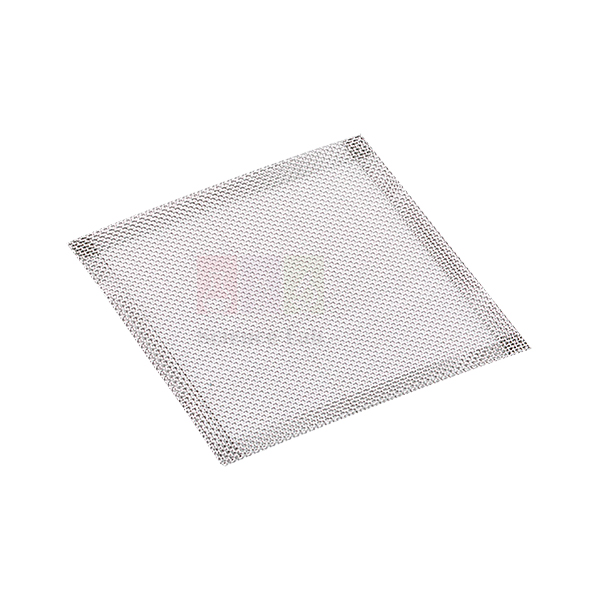
Gauze Wire
Gauze Wire (Product Code: SLE/CH/205) is a pack of plain wire gauze squares, without ceramic centres, that sit on a tripod between a burner flame and a beaker or flask. The mesh spreads the heat across the base of the vessel and gives it a flat, stable support. It is standard chemistry lab equipment for schools in India and colleges, and is made by Jain Scientific Equipments Pvt Ltd (ScienceLab), Ambala.
Specifications
| Parameter | Detail |
|---|---|
| Type | Plain gauze wire squares, without ceramic centres |
| Pattern | Plain |
| Dimensions | 150 x 150 |
| Pack size | Pack of 10 |
Typical Use
Lay a square flat on top of a tripod, place the beaker or conical flask in the middle, and position the Bunsen burner underneath. The wire mesh stops the flame touching the glass directly at one small spot, so water baths, solutions and crystallisation mixtures heat more evenly and the glass is less likely to crack. Plain gauze also lets students watch the flame through the mesh, which helps when teaching how to adjust a burner from a yellow to a blue flame.
Allow the gauze to cool before handling, as the wire stays hot well after the burner is turned off, and move it with tongs if it must be lifted during a practical. Replace squares that have sagged, rusted or developed holes, because a distorted mesh can tip a vessel. A pack of 10 equips several benches, which suits a class working in small groups.
Manufacturer
Jain Scientific Equipments Private Limited, trading as ScienceLab, manufactures laboratory apparatus in Ambala, Haryana, for schools, colleges and distributors. Our company profile describes the business and its range.
Related Chemistry Lab Equipment
The gauze is one layer of a standard heating setup; these items complete it:
- Tripod Stand 200mm — the stand on which the gauze square rests.
- Bunsen Burner — heat source placed below the tripod.
- Glass Beaker — the vessel most often heated on the gauze.
- Beaker Tongs — for removing a hot beaker from the gauze.
- Gauze Wire, Ceramic Centre — the ceramic-centred alternative for more diffused heating.
Find more heating apparatus in Chemistry Lab Equipment.
Frequently Asked Questions
How many squares are in a pack?
Each pack contains 10 plain gauze wire squares.
What size are the squares?
They are listed as 150 x 150 squares. If you need to confirm fit on your tripods, share the tripod top size through our contact page.
What is the difference between plain and ceramic centre gauze?
Plain gauze is an open wire mesh throughout. Ceramic centre gauze has a heat-spreading ceramic patch in the middle; choose it if you want the flame kept further from direct contact with the glass.
Can I heat a vessel without gauze?
Glassware should not normally sit directly over a naked flame. The gauze provides even heat and a flat support, which reduces the risk of cracking and tipping.
How long does a gauze square last?
It depends on how often and how strongly it is heated. Inspect squares regularly and replace any that are bent, holed or corroded.
What should I send for a bulk or export quotation?
The product code SLE/CH/205, number of packs, delivery address and any tender reference. We supply within India and to international markets.
Request a Quote
Get a quotation for the Gauze Wire from our contact page, or add it to the enquiry cart with tripods and burners.
Last updated: 24 September 2026
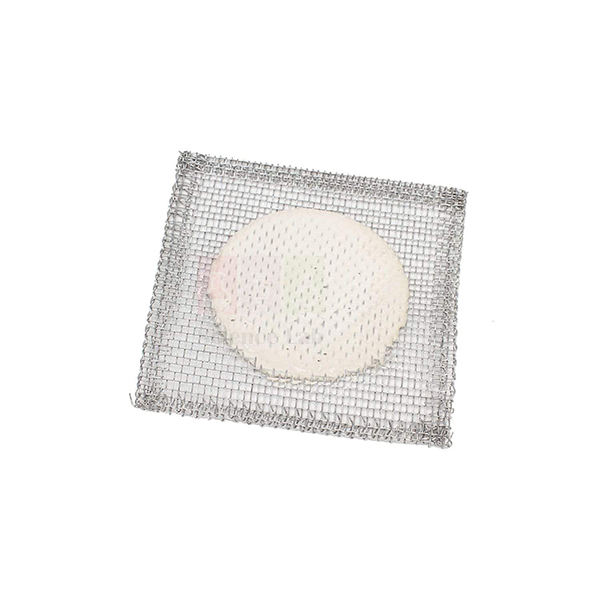
Gauze Wire, Ceramic Centre
Gauze Wire, Ceramic Centre (Product Code: SLE/CH/206) is a square wire gauze with a ceramic-coated centre that spreads burner heat over a wider area before it reaches the glass. It is offered in 125mm or 150mm sizes and is 100% asbestos free, which makes it a safer wire gauze for lab use in India’s schools and colleges than older asbestos-centred types. It is made by Jain Scientific Equipments Pvt Ltd (ScienceLab), Ambala.
Specifications
| Parameter | Detail |
|---|---|
| Type | Ceramic centred wire gauze |
| Shape | Square |
| Sizes available | 125mm or 150mm |
| Asbestos content | 100% asbestos free |
Typical Use
The ceramic centre is placed directly above the burner flame on a tripod, and the flask, beaker or evaporating basin sits on top of it. Because the ceramic diffuses the heat, liquids warm more gently and evenly, which is useful when evaporating a salt solution to the point of crystallisation or when heating borosilicate laboratory glassware that should not be exposed to a concentrated hot spot. It is also a good choice for younger classes, since the flame is less likely to lick around the base of the vessel.
Match the gauze size to the top of your tripod: the 125mm square suits smaller tripods and micro burners, while the 150mm square gives a wider platform for larger beakers. Let the gauze cool fully before storing it, never plunge a hot gauze into water, and avoid knocking the ceramic centre against hard surfaces, as a chipped or cracked centre spreads heat less evenly and should be replaced.
Manufacturer
This gauze is manufactured by Jain Scientific Equipments Private Limited, whose ScienceLab brand covers teaching apparatus produced in Ambala, Haryana, for institutions in India and abroad. You can read about the company on its profile page.
Related Chemistry Lab Equipment
Use the ceramic centre gauze with the following apparatus:
- Tripod, Stainless Steel — a corrosion-resistant stand to carry the gauze.
- Micro Burner — a small flame suited to gentle heating through the ceramic.
- Porcelain Dish (China Dish) — for evaporating solutions to form crystals.
- Conical Flask — a common vessel for heating reaction mixtures on the gauze.
- Gauze Wire — the plain mesh version without a ceramic centre.
Browse the full Chemistry Lab Equipment category.
Frequently Asked Questions
Which sizes can I order?
The gauze is available in 125mm or 150mm square sizes. State the size you need on your enquiry.
Does the ceramic centre contain asbestos?
No. These gauze wires are 100% asbestos free.
When should I choose ceramic centre gauze over plain gauze?
Choose it when you want gentler, more evenly spread heating, for example during evaporation or when heating thin-walled glassware. Plain gauze heats faster and lets students see the flame.
How many pieces come in one pack?
The pack quantity is not listed for this item. Please confirm it with us through our contact page when you request a quotation.
How do I care for the ceramic centre?
Cool it slowly in air, store it flat and avoid dropping it. Replace the gauze if the centre cracks, flakes or the wire becomes distorted.
Do you supply larger quantities for schools and distributors?
Yes. We supply institutions and resellers across India and international markets; include both sizes in one enquiry if you need a mix.
Request a Quote
Send your requirement for the Gauze Wire, Ceramic Centre through our contact page or add it to the enquiry cart.
Last updated: 24 September 2026
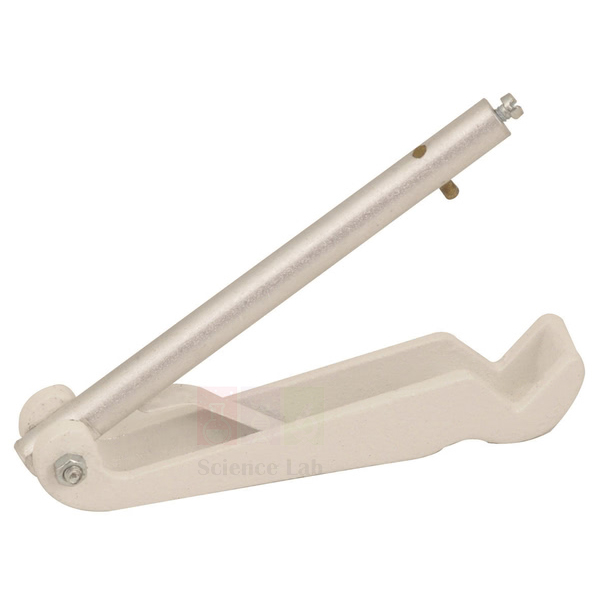
Glass Tubing Cutter
Glass Tubing Cutter (Product Code: SLE/CH/207) is a hand tool for scoring glass tubing cleanly so that it can be snapped to length for delivery tubes, bends and connectors. It is suitable for both soda and borosilicate glass tubing and has a diamond scribing point on a spring arm set into an aluminium alloy body with a V groove. Lab technicians and teachers who prepare chemistry lab glassware in India use it in place of a file, and it is made by Jain Scientific Equipments Pvt Ltd (ScienceLab), Ambala.
Specifications
| Parameter | Detail |
|---|---|
| Suitable tubing | Soda glass and borosilicate glass tubing |
| Cutting element | Diamond scribing point |
| Point mounting | Spring arm |
| Body | Aluminium alloy with V groove |
Typical Use
Mark the length you need, lay the tube in the V groove so it is held steady, and let the spring arm press the diamond point onto the glass. A single firm stroke or a short turn of the tube produces a fine score line. Wrap the tube in a cloth, place both thumbs behind the score and bend gently away from it; the glass should break cleanly at the line. Finish by rotating each cut end in a Bunsen flame until the sharp edge rounds off, which makes it safe to push into rubber tubing or a bung.
Always wear eye protection when scoring and snapping glass, work over a tray to catch fragments, and dispose of offcuts in a glass waste container rather than a general bin. Cut tubing prepared this way is typically used to build delivery tubes for gas collection apparatus, water traps and simple distillation setups in teaching labs.
Manufacturer
ScienceLab tools and apparatus come from Jain Scientific Equipments Private Limited, a manufacturer located in Ambala, Haryana, that serves schools, colleges, laboratories and trade buyers. The company profile gives an overview of the business.
Related Chemistry Lab Equipment
These items are used with the cutter when preparing and fitting glass tubing:
- Borosilicate Glass Tubing — heat-resistant tubing that the cutter can score.
- Soda Glass Tubing 6mm — soda glass stock for bending and cutting practice.
- Rubber Tubing — joins the cut glass pieces into a working apparatus.
- Bunsen Burner — for fire-polishing the cut ends and bending tubing.
- Safety Goggles — eye protection while scoring and snapping glass.
More glass-working and chemistry items are in Chemistry Lab Equipment.
Frequently Asked Questions
Which types of glass tubing can it cut?
It is suitable for soda glass and borosilicate glass tubing.
What does the cutting?
A diamond scribing point on a spring arm scores the glass; the tube is then snapped by hand along the score line.
What is the V groove for?
The V groove in the aluminium alloy body holds the round tube steady and centred under the diamond point, giving a straighter score.
What range of tube diameters does it accept?
A diameter range is not listed for this item. Please tell us the outside diameter of your tubing through our contact page and we will confirm suitability.
How do I keep the diamond point in good condition?
Use light, even pressure, avoid dragging the point over metal or stone, and store the cutter in a drawer where the tip is not knocked.
Is a warranty provided?
Warranty terms are stated on the quotation. Ask us when you enquire, especially for institutional or export orders.
Request a Quote
Request a price for the Glass Tubing Cutter via the contact page, or add it to the enquiry cart along with glass tubing.
Last updated: 24 September 2026
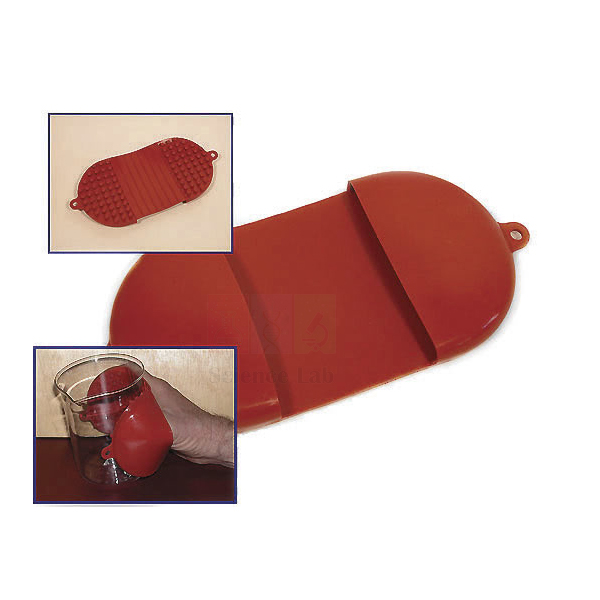
Safety Glove, Silicone
Safety Glove, Silicone (Product Code: SLE/G/22) is a silicone rubber protective glove used to handle hot or very cold items in laboratories, school preparation rooms and teaching kitchens. Rated to protect between -30°C and 260°C, it has inserts for the fingers and thumb and is made to fit any hand size, so one glove serves a whole bench. This heat-resistant lab safety glove is supplied by Jain Scientific Equipments Pvt Ltd (ScienceLab), Ambala, India.
Specifications
| Parameter | Detail |
|---|---|
| Type | Protective safety glove for hot and cold handling |
| Material | Silicone rubber |
| Design | Inserts for the fingers and thumb |
| Temperature protection | -30°C to 260°C |
| Size | Fits any size |
| Product code | SLE/G/22 |
| Supplied by | Jain Scientific Equipments Pvt Ltd (ScienceLab), Ambala, India |
What Is a Silicone Safety Glove Used For?
In a laboratory the silicone safety glove is used to lift beakers and flasks off heating equipment, take glassware and media out of drying ovens and autoclaves, and move containers after heating. At the cold end of its range it also gives a safe grip on items taken from a freezer, since the stated protection extends down to -30°C.
Silicone rubber sheds water and wipes clean easily, which helps in wet jobs such as unloading an autoclave. Make sure the glove is dry inside before handling hot objects, because trapped water can turn to steam. Use tongs for anything hotter than 260°C or for molten material, and never treat the glove as protection against an open flame.
What to Specify When Ordering
- The quantity required, confirming with us whether it is quoted per glove or per pair
- The hottest and coldest items you handle, to check they fall within -30°C to 260°C
- Whether tongs or oven gloves are also needed for the same workstation
Supplier
ScienceLab is the trading name of Jain Scientific Equipments Private Limited, which supplies this silicone safety glove from Ambala, Haryana, as a sourced protective accessory. Laboratories, schools, colleges and dealers can add it to orders for heating equipment, glassware and other gloves, with delivery across India and international markets. Read more on the ScienceLab company profile.
Related Gloves & Face Masks
Items used with the silicone safety glove when heating, drying and sterilising:
- Seamless Silicone Oven Glove — another silicone glove, intended for oven work.
- Double Oven Gloves — for carrying hot trays with both hands.
- Crucible & Beaker Tongs — for items too hot or too small to hold by hand.
- Oven, 43 litre — a drying oven whose hot glassware needs a protective glove.
- Electric Autoclave — its hot, wet load is unloaded with heat-resistant gloves.
View all hand and face protection in Gloves & Face Masks.
Frequently Asked Questions
What temperature range does the Safety Glove, Silicone cover?
The Safety Glove, Silicone protects between -30°C and 260°C. That range suits handling glassware from drying ovens and autoclaves and items from freezers; anything hotter than 260°C, molten material or an open flame needs tongs or other equipment instead.
What size is the silicone safety glove?
The silicone safety glove is made to fit any size, so one stock item can serve students, technicians and teachers with different hand sizes. Its silicone rubber body has inserts for the fingers and thumb, helping the wearer keep hold of beakers, flasks and trays.
Is the Safety Glove, Silicone sold as a single glove or a pair?
The listing for the Safety Glove, Silicone does not state whether it is supplied singly or in pairs. Please confirm the unit when you request a quotation through the ScienceLab contact page, and say how many hands per workstation need protection.
How should the silicone safety glove be cleaned?
The silicone safety glove can be wiped or washed with mild soap and water, then dried completely before it is used near heat again. Check the silicone regularly for cuts or thin spots and replace a damaged glove, because protection depends on an intact surface.
Who supplies the Safety Glove, Silicone?
The Safety Glove, Silicone is supplied by Jain Scientific Equipments Pvt Ltd (ScienceLab), Ambala, Haryana, India, as a sourced protective accessory. It is quoted to schools, colleges, research laboratories and dealers in India and international markets, often together with heating equipment and glassware.
Request a Quote
To receive a price for the Safety Glove, Silicone, send the quantity and delivery location through the ScienceLab contact page, or add it to the enquiry cart along with the ovens, autoclaves or glassware on your list.
Last updated: 24 September 2026
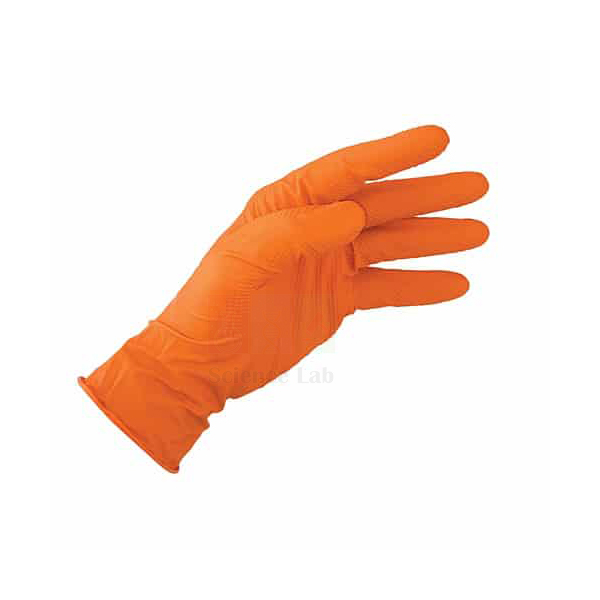
Gloves, Nitrile, Orange
Gloves, Nitrile, Orange (Product Code: SLE/G/23) are fluorescent orange nitrile gloves used to protect the hands from many commonly used chemicals during laboratory, workshop and cleaning tasks. Technicians, students and maintenance staff choose them when visibility matters, since the bright colour keeps gloved hands easy to see, and the powder-free, micro-textured surface helps grip wet glassware and tools. These chemical-resistant nitrile lab gloves are supplied by Jain Scientific Equipments Pvt Ltd (ScienceLab), Ambala, India.
Specifications
| Parameter | Detail |
|---|---|
| Material | Nitrile |
| Colour | Fluorescent orange, for high visibility |
| Powder | Powder-free |
| Surface | Micro-textured |
| Chemical resistance | Resists many commonly used chemicals |
| Puncture resistance | Described as more resistant to puncturing |
| Product code | SLE/G/23 |
| Supplied by | Jain Scientific Equipments Pvt Ltd (ScienceLab), Ambala, India |
What Are Orange Nitrile Gloves Used For?
Orange nitrile gloves suit practical sessions and routine jobs where hands come into contact with commonly used laboratory and cleaning chemicals, such as preparing solutions, washing glassware and wiping down benches. The high-visibility colour is helpful in busy preparation rooms, workshops and low-light areas, because a supervisor can see at a glance who is wearing gloves. No glove resists every chemical, so check suitability before working with strong solvents.
Put the gloves on over clean, dry hands and remove them by peeling each one inside-out so any contamination stays inside. Replace a glove straight away after a heavy splash or if it tears. Being powder-free, they leave no powder on samples, glassware or instruments.
Supplier
Jain Scientific Equipments Private Limited supplies the orange nitrile gloves under its trading name, ScienceLab, from Ambala, Haryana, as a sourced consumable. Schools, colleges, industrial and research laboratories and resellers can order them with other gloves, eye protection and lab consumables for delivery in India and international markets. Company details are on the ScienceLab profile.
Related Gloves & Face Masks
Other protection used with orange nitrile gloves in chemical and cleaning work:
- Gloves, Chemical Resistant — for heavier chemical handling.
- Chemical Gauntlet (Pair) Type — gauntlet-style gloves that extend protection beyond the wrist.
- Gloves, W/o Powder, Nitrile, M, Disposable — standard single-use nitrile gloves in medium.
- Gloves, Heavy-duty, Rubber/Nitrile, Medium — reusable heavy-duty gloves for cleaning rounds.
- Safety Goggles — eye protection for the same chemical tasks.
See the complete Gloves & Face Masks category.
Frequently Asked Questions
What are Gloves, Nitrile, Orange made of?
Gloves, Nitrile, Orange are made of nitrile, a synthetic rubber, and are powder-free with a micro-textured surface. Nitrile contains no natural rubber latex, which is one reason nitrile gloves are often chosen in workplaces that avoid latex.
Why are these nitrile gloves fluorescent orange?
These nitrile gloves are fluorescent orange for excellent visibility. The bright colour lets supervisors and co-workers spot gloved hands quickly around benches, machinery and vehicles, and a dropped glove is easy to find and pick up.
Are orange nitrile gloves chemical resistant?
Yes, orange nitrile gloves are described as resisting many commonly used chemicals and as being more resistant to puncturing. Resistance differs from chemical to chemical, so ask us about strong solvents or concentrated acids before use, and change gloves promptly after any splash.
What sizes and pack quantities are available for Gloves, Nitrile, Orange?
The listing for Gloves, Nitrile, Orange does not state sizes, thickness or pack quantity. Tell us the hand sizes and number of gloves you need through the ScienceLab contact page, and the available options will be confirmed in your quotation.
Who supplies Gloves, Nitrile, Orange?
Gloves, Nitrile, Orange are supplied by Jain Scientific Equipments Pvt Ltd (ScienceLab), based in Ambala, Haryana, India, as a sourced consumable. Laboratories, schools, workshops and resellers in India and international markets can include them in a quotation with other protective equipment.
Request a Quote
For a price on Gloves, Nitrile, Orange, send the sizes and quantities you need through the ScienceLab contact page, or add them to the enquiry cart with goggles and other safety items.
Last updated: 24 September 2026
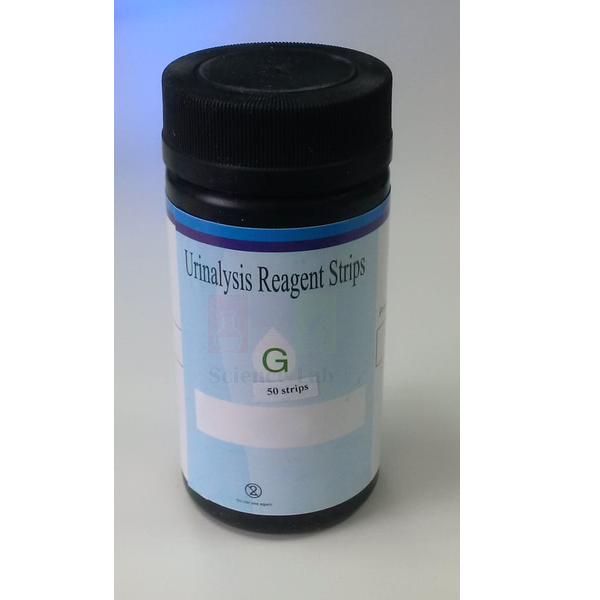
Glucose Test Strips
Glucose Test Strips (Product Code: SLE/CH/208) are reagent strips used to give a semi-quantitative test for glucose in urine, in biology, health education and chemistry teaching labs. The test pad changes colour and the shade indicates roughly how much glucose is present, rather than a simple yes or no; each pack holds 50 strips. They are supplied by Jain Scientific Equipments Pvt Ltd (ScienceLab), Ambala, India, a biology lab equipment supplier in India.
Specifications
| Parameter | Detail |
|---|---|
| Test type | Semi-quantitative |
| Analyte | Glucose |
| Sample | Urine |
| Pack size | Pack of 50 strips |
| Shelf life | Depends on the reagent, its grade and storage conditions; ask us for the expiry date of the batch you are quoted |
| Product code | SLE/CH/208 |
| Supplied by | Jain Scientific Equipments Pvt Ltd (ScienceLab), Ambala, India |
What Are Glucose Test Strips Used For?
In school and college practicals they show how glucose in urine is screened. Teachers often prepare simulated urine samples containing different amounts of dissolved glucose so students can test them safely; each group dips a strip briefly into a sample in a test tube, removes the excess liquid against the rim, waits for the reading time and compares the pad colour following the reading instructions. Ranking the samples from lowest to highest glucose opens a discussion of kidney function, blood sugar control and why glucose in urine is something doctors investigate.
Running the same samples through Benedict’s test alongside the strips lets students compare a quick strip reading with a heated chemical test, which works well in health education lessons. Keep the container tightly closed in a cool, dry place, take out only the strips needed and avoid touching the test pads. Classroom results are for learning only; any medical decision should rely on testing by qualified health professionals.
Supplier
Glucose Test Strips are supplied by Jain Scientific Equipments Private Limited, which trades as ScienceLab from Ambala, Haryana, India, and sources teaching consumables for schools, colleges and distributors. They can be quoted on the same order as Benedict’s reagent, test tubes and racks for a complete glucose practical. More about us is on the company profile.
Related Laboratory Equipment
Items used with the strips in a glucose testing practical:
- Benedicts Reagent (Test Of Glucose) — a classic chemical test to compare with strip results
- Container Sample 50 ml — for holding and labelling each prepared sample
- Test Tube — a narrow vessel for dipping a strip into a small volume of sample
- Test Tube Racks — keeps the sample tubes upright and in order
- Gloves W/o Powder Nitrile Disposable — hand protection when handling samples
Browse Chemistry Lab Equipment for more items.
Frequently Asked Questions
How many strips are in a pack?
Each pack of Glucose Test Strips contains 50 strips, so order packs according to the number of groups and samples you plan to test, allowing a few extra strips for repeats and teacher demonstrations.
What does semi-quantitative mean?
Semi-quantitative means the Glucose Test Strips give an approximate glucose level by colour, grouping results into ranges, rather than an exact concentration value of the kind an instrument would measure.
Can the strips test for anything other than glucose?
Glucose Test Strips are listed as a test for glucose in urine only. If you need to test other substances in your practical, ask us through the contact page about suitable reagents from our range.
What is the shelf life of the strips?
The shelf life of Glucose Test Strips depends on the reagent, its grade and storage conditions; ask us for the expiry date of the batch you are quoted, and plan to use opened containers without long delays.
How should opened packs be stored?
Close the Glucose Test Strips container immediately after taking out a strip and keep it in a cool, dry place away from moisture and direct light, taking care never to touch the test pads.
Are the strips intended for medical diagnosis?
Glucose Test Strips on this page are offered for teaching and demonstrating urine glucose testing. Classroom results are for learning only, and any medical decision should rely on testing by qualified health professionals.
Who supplies Glucose Test Strips?
Jain Scientific Equipments Private Limited (ScienceLab), Ambala, Haryana, India, supplies Glucose Test Strips to schools, colleges and distributors in India and international markets; state the number of packs and your delivery location for a quotation.
Request a Quote
For a quotation on Glucose Test Strips, contact us through the contact page or add them to the enquiry cart with the other items for your practical.
Last updated: 24 September 2026
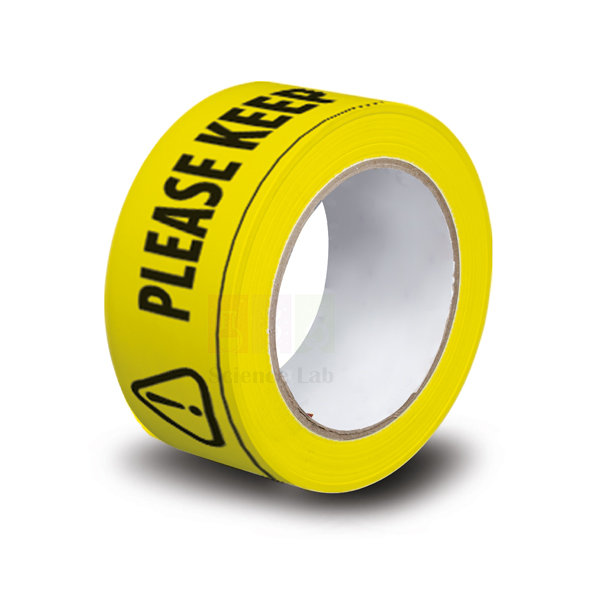
Hazard Warning Tape
Hazard Warning Tape (Product Code: SLE/CH/209) is a floor marking tape used for social distancing, laying out walkways, queue lines and keep-back zones that people can follow without signs or supervision. It comes in bulk, as a box of 36 rolls of 50 m each, and is intended for schools, universities, retail and industrial premises. It is supplied by Jain Scientific Equipments Pvt Ltd (ScienceLab), Ambala, for institutions planning a school laboratory setup in India or re-marking existing buildings.
Key Details
| Parameter | Detail |
|---|---|
| Type | Social distancing floor marking tape |
| Roll length | 50 m per roll |
| Supplied as | Box of 36 rolls |
| Suitable for | Schools, universities, retail and industrial premises |
Typical Use
Run parallel lines of tape to divide a wide corridor into two lanes, mark a stop line in front of a counter or preparation-room hatch, or outline a keep-clear area around a fume cupboard, electrical panel or emergency exit. In exam halls and assembly areas the tape can mark seat positions or rows so that spacing stays consistent every time the room is set up. With 36 rolls in a box, a campus can mark several buildings in one go and keep rolls in reserve for repairs.
For a neat, long-lasting line, sweep and degrease the floor, let it dry, then unroll a short length at a time and press it down while keeping it straight against a chalk line or straight edge. Cut the ends square rather than tearing them, and avoid laying tape across expansion joints or areas that stay wet, where it will lift early. Walk the marked route once to check it makes sense before opening the space to users.
Supplier
Jain Scientific Equipments Private Limited, which trades as ScienceLab and is based in Ambala, Haryana, supplies this tape as part of the site safety products it offers with its laboratory apparatus. The company profile has more information.
Related Laboratory Equipment
Pair the tape with these items to complete floor and hazard marking:
- Floor Sticker, Safe Distance — marks individual standing points along a taped queue lane.
- Floor Sticker, Arrow — shows the direction of travel within taped lanes.
- Hazard Warning Tape: Flammable — symbol tape for marking shelves or cabinets holding flammable materials.
- Hazard Warning Tape: Biohazard — symbol tape for areas where biological waste is handled.
More products are available in Chemistry Lab Equipment.
Frequently Asked Questions
How much tape is in one box?
A box holds 36 rolls, and each roll is 50 m long.
What colour and width is the tape?
Colour and width are not listed for this item. Please confirm them through our contact page before ordering.
Can I buy fewer rolls than a full box?
The tape is supplied as a box of 36 rolls. If you need a smaller quantity, ask us and we will tell you what we can offer.
Where is it meant to be used?
It is intended for floor marking in schools, universities, retail spaces and industrial premises.
How do I remove old tape when the layout changes?
Lift one end and peel slowly at a low angle; any adhesive left behind can usually be cleaned with a suitable floor cleaner. Test on a small area first.
What should an institutional quotation request include?
Give the product code SLE/CH/209, number of boxes, delivery address in India or abroad, and any purchase or tender reference.
Request a Quote
Ask for a quotation for the Hazard Warning Tape through our contact page or add it to the enquiry cart.
Last updated: 24 September 2026
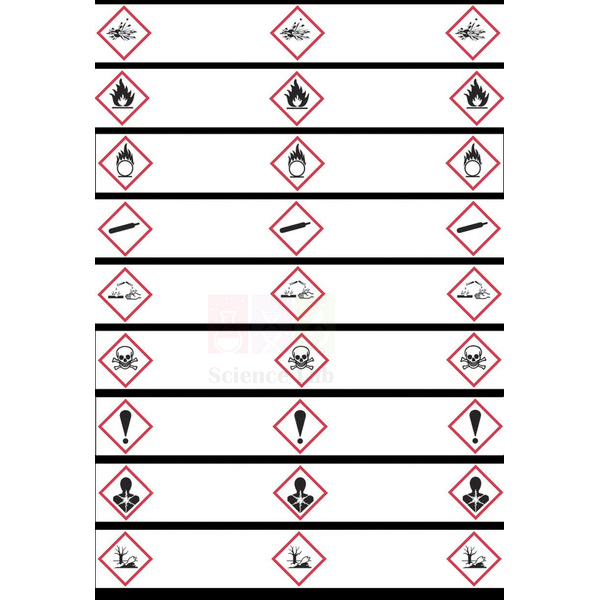
Hazard Warning Tape: Biohazard
Hazard Warning Tape: Biohazard (Product Code: SLE/CH/210) is a self-adhesive vinyl labelling tape printed with the biohazard warning pictogram, used to mark containers, shelves, cupboards, bins and equipment that hold biological material. The white tape is hard wearing, 25 mm wide and supplied as a 66 m roll, so one roll labels a large number of items. Microbiology, biotechnology and clinical teaching labs use it alongside other microbiology lab equipment in India, and it is supplied by Jain Scientific Equipments Pvt Ltd (ScienceLab), Ambala.
Specifications
| Parameter | Detail |
|---|---|
| Warning symbol | Biohazard pictogram |
| Material | Hard wearing, self-adhesive vinyl |
| Tape colour | White |
| Print layout | Pictogram repeated every 75 mm, with a blank area between symbols |
| Width | 25 mm |
| Roll length | 66 m |
Typical Use
Cut a length of tape covering one or two symbols and apply it to the lid and side of a culture waste container, the door of an incubator or a refrigerator holding cultures, or the edge of a shelf reserved for contaminated items. Because the pictogram repeats every 75 mm with a blank gap in between, the tape can be cut in the gap without slicing through a symbol, and each piece carries a complete warning. The white background keeps the symbol easy to see on dark or metal surfaces.
Apply the tape to clean, dry, grease-free surfaces and smooth it down from one end to avoid trapped air. Consistent biohazard labelling is part of good lab waste disposal practice: students and cleaning staff can recognise at a glance which containers must go for decontamination rather than into general waste. Replace labels that become worn, and remove old tape when a container is taken out of biohazard service.
Supplier
This tape is supplied by Jain Scientific Equipments Private Limited, the incorporated company behind the ScienceLab name, based in Ambala, Haryana. For vendor registration, its details are CIN U29309HR2020PTC087597 and GSTIN 06AAECJ8618A1ZT. See our company profile for more.
Related Laboratory Equipment
Items used with biohazard tape in the handling and disposal of biological waste:
- Biohazard Bag — collects contaminated waste in the area the tape marks out.
- Autoclave Bag Disposable — for sterilising waste before it leaves the lab.
- Autoclave Tape — shows that a bag or pack has been through the autoclave.
- Hazard Warning Tape: Corrosive — matching symbol tape for areas holding corrosive chemicals.
Explore more items in Chemistry Lab Equipment.
Frequently Asked Questions
How much tape is on a roll?
Each roll carries 66 m of 25 mm wide tape.
How often is the symbol printed?
The biohazard pictogram repeats every 75 mm, with a blank area between symbols.
Is the tape suitable for curved surfaces such as bins and bottles?
The vinyl tape is self-adhesive and hard wearing. For tightly curved or very cold surfaces, test a short piece first, and contact us if you need advice.
Will it survive autoclaving?
Autoclave resistance is not stated for this tape. For items that go into the autoclave, use autoclave tape and ask us through the contact page about suitability.
Can I order other hazard symbols?
Yes. Separate hazard warning tapes are listed for other hazard types, including corrosive, explosive, flammable and irritant.
Do you supply in quantity for institutions or export?
Yes. Tell us how many rolls you need and where they should be delivered; we serve buyers in India and international markets.
Request a Quote
For pricing on the Hazard Warning Tape: Biohazard, contact us through our contact page or add it to the enquiry cart.
Last updated: 24 September 2026