- Physics Lab Equipment
- Chemistry Lab Equipment
- Biology Lab Equipment
- Anatomical Lab Equipment
- Learning
- Educational Lab Equipment
- Magnets
- Agriculture
- Astronomy
- Earth Science
- Geography Lab Equipment
- Safety Lab Coat
- Laboratory
- Meteorological
- Electricity & Magnetism
- Heat
- School Lab Equipment
- Lab Glassware
- Science Lab Equipment
- Tvet Lab Equipment
- Robotics Kits Supplier and Manufacturer for Schools India
- Math Lab Equipment Manufacturers and Exporters in Ambala
- STEM Kits Manufacturers and Supplier India
- Engineering Lab Equipment
- Hospital Lab Equipment
- Water, Sanitation & Hygiene Supplies
- Cold Chain, Solar & Communication Equipment
- Nutrition
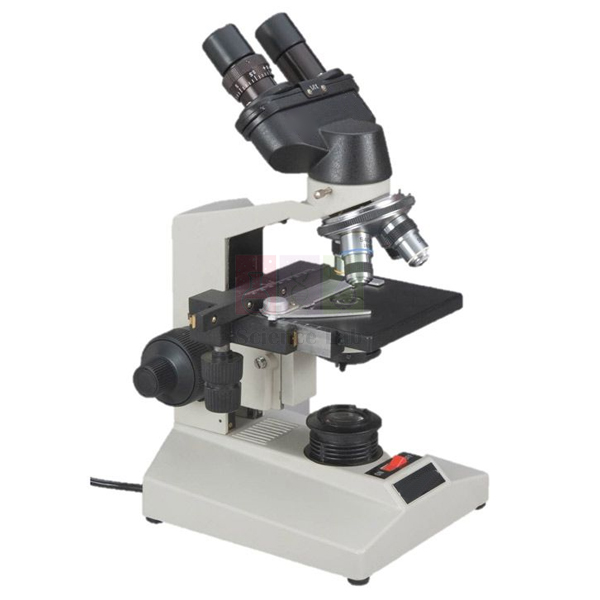
Pathological Binocular Microscope with Co-Axial Focusing Control
Pathological Binocular Microscope with Co-Axial Focusing Control (Product Code: SLE/M/25) is a two-eyepiece compound microscope used for extended examination of stained sections and smears in pathology, histology and microbiology teaching laboratories. Its 45° binocular head rotates through 360° and adjusts from 54 to 74 mm between the eyes, with dioptric correction, so each user can view comfortably through long sessions. It is supplied by Jain Scientific Equipments Pvt Ltd (ScienceLab), Ambala, India.
Specifications
| Parameter | Detail |
|---|---|
| Observation head | Binocular, inclined at 45°, rotatable through 360° |
| Interpupillary distance | Adjustment ring, 54–74 mm, with dioptric adjustment |
| Focusing control | Co-axial, as named |
| Eyepieces | Wide field 10x or 15x, paired |
| Objectives | 4x, 10x, 40/45x (S.L.), 100x oil immersion (S.L.) |
| Nosepiece | Quadruple, revolving on ball bearing |
| Main body | All parts pressure die-cast for long life and good mechanical strength |
| Condenser | Abbe, N.A. 1.25, with spherical lens and adjustable iris diaphragm |
| Illumination | Built-in base system with 6 V–20 W halogen bulb and plano-concave mirror attachment; suitable for 220 V, 50 Hz AC |
| Mechanical stage | Co-axial, low-positioned X-Y stage, 120 x 125 mm, fine vernier graduation |
| Product code | SLE/M/25 |
| Supplied by | Jain Scientific Equipments Pvt Ltd (ScienceLab), Ambala, India |
What Is the Pathological Binocular Microscope Used For?
Viewing with both eyes reduces fatigue when a student or demonstrator spends a whole practical scanning blood films, tissue sections or stained bacterial smears. That makes this binocular model a common choice for the demonstrator's bench and for senior batches in laboratory technology, pathology and microbiology courses. Paired 10x or 15x wide-field eyepieces work with 4x to 100x oil-immersion objectives, and the built-in halogen light keeps illumination consistent from bench to bench.
Each new user should first slide the interpupillary ring until the two fields merge into one circle, focus with the fixed eyepiece, then correct the other eye with the dioptric adjustment. Co-axial focusing places coarse and fine control on the same axis, so the hand stays in one position while the low-set stage knobs move the slide. Note the vernier readings of useful fields for later revision.
What to Specify When Ordering
- Paired eyepieces: wide field 10x or 15x.
- Mains supply at site; the listed lighting suits 220 V, 50 Hz AC.
- Number of units, and whether spare 6 V–20 W halogen bulbs are wanted.
- Immersion oil, cover glasses and slide storage for the course.
Supplier
This pathological binocular microscope is supplied by Jain Scientific Equipments Private Limited, which trades as ScienceLab from Ambala, Haryana, to colleges, training institutes, laboratory dealers and importers in India and international markets. For vendor registration, the supplying company is Jain Scientific Equipments Private Limited (CIN U29309HR2020PTC087597, GSTIN 06AAECJ8618A1ZT). Further details are on the ScienceLab company profile.
Related Laboratory Equipment
Items used alongside a binocular pathology microscope:
- Pathological Monocular Microscope — the single-eyepiece version for student benches.
- Immersion Oil, 25ml — for the 100x oil-immersion objective.
- Glass Cover Slips, No. 1 — thin covers for smears and sections.
- Unit System Slide Cabinet — tray storage for a large reference slide collection.
- Micrometric Slide — a stage graticule for calibrating measurements with a micrometer eyepiece.
See all models on the Microscope category page.
Frequently Asked Questions
How is the head of the Pathological Binocular Microscope with Co-Axial Focusing Control adjusted?
The Pathological Binocular Microscope with Co-Axial Focusing Control has a 45° binocular head that rotates through 360°, an interpupillary adjustment ring covering 54–74 mm, and dioptric adjustment, so each user can set it to their own eyes.
What does co-axial focusing control mean on this pathological binocular microscope?
On the Pathological Binocular Microscope with Co-Axial Focusing Control, the coarse and fine focus controls share one axis. The user can move from rough to precise focus without shifting the hand, which helps during long slide-scanning sessions.
Which objectives and eyepieces are fitted to the Pathological Binocular Microscope with Co-Axial Focusing Control?
The Pathological Binocular Microscope with Co-Axial Focusing Control carries 4x, 10x, 40/45x (S.L.) and 100x oil-immersion (S.L.) objectives on a ball-bearing quadruple nosepiece, with paired wide-field eyepieces of 10x or 15x.
How is the Pathological Binocular Microscope with Co-Axial Focusing Control illuminated?
The Pathological Binocular Microscope with Co-Axial Focusing Control has built-in base illumination with a 6 V–20 W halogen bulb for a 220 V, 50 Hz AC supply, plus a plano-concave mirror attachment, feeding an Abbe N.A. 1.25 condenser with iris diaphragm.
What stage does the Pathological Binocular Microscope with Co-Axial Focusing Control have?
The Pathological Binocular Microscope with Co-Axial Focusing Control has a co-axial, low-positioned mechanical X-Y stage of 120 x 125 mm with fine vernier graduation, for smooth scanning and for recording slide positions.
Who supplies the Pathological Binocular Microscope with Co-Axial Focusing Control?
The Pathological Binocular Microscope with Co-Axial Focusing Control is supplied by Jain Scientific Equipments Private Limited, trading as ScienceLab, Ambala, Haryana, India, to colleges, institutes, dealers and importers in India and international markets.
What should a quotation request for the Pathological Binocular Microscope with Co-Axial Focusing Control include?
Include product code SLE/M/25, the quantity, the eyepiece choice, your mains supply, any bulbs or consumables, and the delivery city or country. Vendor-registration documents for tenders can be requested in the same message.
Request a Quote
To request a quotation for the Pathological Binocular Microscope with Co-Axial Focusing Control (SLE/M/25), use the contact page or add it to the enquiry cart.
Last updated: 24 September 2026
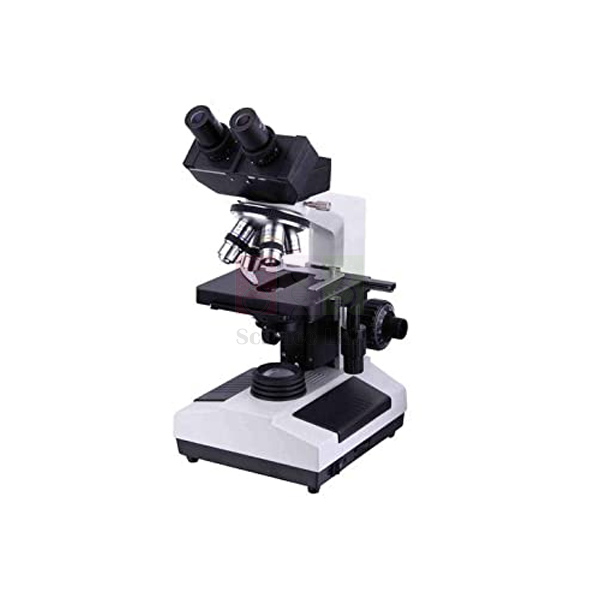
Research Binocular Microscope
Research Binocular Microscope (Product Code: SLE/M/26) is a binocular compound microscope with DIN objectives from 4x to 100x oil immersion, used for postgraduate teaching, project work and research slide examination. It pairs a pre-focusing lock with tension adjustment, coaxial focusing on ball-bearing guide ways and high-eyepoint WF 10x (F.N. 20) eyepieces with a die-cast stand and a large double-plate mechanical stage. It is supplied by Jain Scientific Equipments Pvt Ltd (ScienceLab), Ambala, India.
Specifications
| Parameter | Detail |
|---|---|
| Observation head | Binocular, inclined at 45°, rotatable through 360° |
| Interpupillary distance | Adjustment ring, 54–74 mm |
| Dioptric adjustment | Ring on the left tube with adjustable dioptric scale |
| Eyepieces | High eye point, wide field 10x (F.N. 20) or 15x, paired |
| Objectives | DIN 4x, 10x, 40/45x (S.L.), 100x oil immersion (S.L.) |
| Nosepiece | Quadruple, revolving on ball bearing |
| Main body | All parts die-cast for long life and good mechanical strength |
| Focusing | Coaxial control with ball-bearing guide way and large knobs; pre-focusing (auto-focusing) lock and tension adjustment ring |
| Condenser | Abbe, N.A. 1.25, with aspherical lens and adjustable iris diaphragm |
| Illumination | Built-in 6 V–20 W halogen system and plano-concave mirror attachment; suitable for 220 V, 50 Hz AC |
| Mechanical stage | Large double-plate X-Y type, co-axial and low-positioned, with fine vernier graduation (dimensions confirmed at quotation) |
| Product code | SLE/M/26 |
| Supplied by | Jain Scientific Equipments Pvt Ltd (ScienceLab), Ambala, India |
What Is the Research Binocular Microscope Used For?
The Research Binocular Microscope serves university botany, zoology and microbiology departments and research laboratories where the same set of slides is examined again and again. Once the pre-focusing lock is set, a user can lower the stage to change slides and bring it straight back close to the working focus. The tension ring lets each user set how firmly the large focusing knobs turn and helps stop the stage drifting under its own weight.
DIN objectives follow a common standard, which generally makes additional or replacement objectives easier to source later. The high-eyepoint WF 10x eyepieces with a field number of 20 give a wide view that spectacle wearers can use comfortably, and the dioptric ring on the left tube corrects for differences between the two eyes. Start at 4x, centre the specimen with the double-plate stage, and set the focus lock at the working magnification.
What to Specify When Ordering
- Paired eyepieces: wide field 10x (F.N. 20) or 15x.
- Stage dimensions you require, so they can be confirmed in the quotation.
- Mains supply at site; the listed lighting suits 220 V, 50 Hz AC.
- Accessories such as immersion oil, a stage micrometer or contrast equipment, so compatibility can be checked.
Supplier
Jain Scientific Equipments Private Limited supplies the Research Binocular Microscope under its ScienceLab trading name from Ambala, Haryana. Universities, research institutes, colleges, dealers and importers in India and international markets use one point of contact for the microscope, its consumables and add-on accessories. More about the company is on the ScienceLab profile.
Related Laboratory Equipment
Accessories and a documentation-ready alternative for research microscopy:
- Research Trinocular Microscope — the trinocular version, adding a third tube for imaging.
- Phase Contrast & Dark Field For Microscopes — a contrast attachment set; ask us whether it suits this stand.
- Immersion Oil, 25ml — for the 100x oil-immersion objective.
- Micrometric Slide — a stage graticule for calibrating measurements.
- Human Histology Slide Set of 25 — prepared tissue sections for reference and teaching.
Further models are on the Microscope category page.
Frequently Asked Questions
What is the focus lock on the Research Binocular Microscope for?
The Research Binocular Microscope has a pre-focusing (auto-focusing) lock and a tension adjustment ring. The lock remembers a working focus position, so after changing slides the stage returns close to focus, while the tension ring sets how firmly the knobs turn.
Can spectacle wearers use the Research Binocular Microscope comfortably?
Yes. The Research Binocular Microscope uses high-eye-point wide-field 10x (F.N. 20) or 15x paired eyepieces, which suit users who keep their spectacles on, and a dioptric ring on the left tube corrects differences between the eyes.
Which objectives does the Research Binocular Microscope use?
The Research Binocular Microscope uses DIN objectives of 4x, 10x, 40/45x (S.L.) and 100x oil immersion (S.L.), mounted on a quadruple nosepiece that revolves on a ball bearing, with an Abbe N.A. 1.25 aspherical condenser below the stage.
How is the Research Binocular Microscope illuminated?
The Research Binocular Microscope has a built-in illumination system with a 6 V–20 W halogen bulb for a 220 V, 50 Hz AC supply, and a plano-concave mirror attachment. Light passes through the condenser's adjustable iris diaphragm to the specimen.
What size is the stage of the Research Binocular Microscope?
The Research Binocular Microscope has a large double-plate X-Y mechanical stage, co-axial and low-positioned, with fine vernier graduation. Please confirm the exact stage dimensions with us through the contact page before ordering.
Can phase contrast be added to the Research Binocular Microscope?
Phase contrast parts are not part of the listed specification for the Research Binocular Microscope. A separate phase contrast and dark field set appears in our range; ask us whether it suits this stand before including it in an order.
Who supplies the Research Binocular Microscope?
The Research Binocular Microscope is supplied by Jain Scientific Equipments Private Limited, trading as ScienceLab, Ambala, Haryana, India, to universities, research institutes, colleges, dealers and importers in India and international markets.
Request a Quote
For the Research Binocular Microscope (SLE/M/26), send your requirement through the contact page or add it to the enquiry cart with any accessories you want checked for compatibility.
Last updated: 24 September 2026
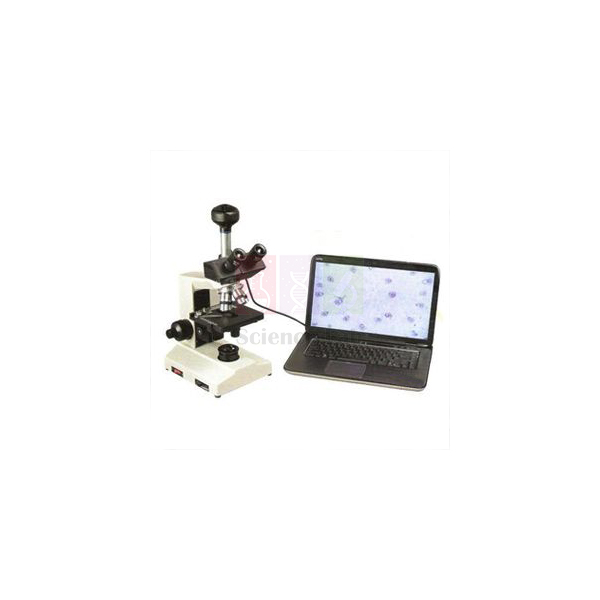
Research Trinocular Microscope
Research Trinocular Microscope (Product Code: SLE/M/27) is a compound microscope with a third photo tube, used to examine and document slides for dissertations, research records and projected teaching. It combines a 45° trinocular head with 54–74 mm interpupillary adjustment, DIN objectives from 4x to 100x oil immersion, and a pre-focusing lock on a die-cast, coaxially focused stand. It is supplied by Jain Scientific Equipments Pvt Ltd (ScienceLab), Ambala, India, among its laboratory instruments for research users.
Specifications
| Parameter | Detail |
|---|---|
| Observation head | Trinocular, inclined at 45°, rotatable through 360° |
| Interpupillary distance | Adjustment ring, 54–74 mm |
| Dioptric adjustment | Ring on the left with adjustable dioptric scale |
| Eyepieces | High eye point, wide field 10x (F.N. 20) or 15x, paired |
| Objectives | DIN 4x, 10x, 40/45x (S.L.), 100x oil immersion (S.L.) |
| Nosepiece | Quadruple, revolving on ball bearing |
| Main body | All parts die-cast for long life and good mechanical strength |
| Focusing | Coaxial control with ball-bearing guide way and large knobs; pre-focusing (auto-focusing) lock and tension adjustment ring |
| Condenser | Abbe, N.A. 1.25, aspherical lens, adjustable iris diaphragm |
| Illumination | Built-in 6 V–20 W halogen system and plano-concave mirror attachment; suitable for 220 V, 50 Hz AC |
| Mechanical stage | Large double-plate X-Y type, co-axial and low-positioned, with fine vernier graduation |
| Camera | Not included in the listed specification |
| Product code | SLE/M/27 |
| Supplied by | Jain Scientific Equipments Pvt Ltd (ScienceLab), Ambala, India |
What Is the Research Trinocular Microscope Used For?
The third tube is what sets this model apart: with a microscope camera fitted, researchers capture images for theses, lab notebooks and reports, or show the live field on a seminar-room screen while still viewing through the binocular eyepieces. Postgraduate departments in botany, zoology, microbiology and pathology use it where observations must be recorded, not just seen.
For consistent image series, set the pre-focusing lock at the working magnification so every new slide returns to the same focal plane, and note vernier positions so a field can be re-imaged later. The built-in halogen light keeps exposure steady between sessions; closing the iris diaphragm slightly adds contrast on pale specimens. Because the camera and its adapter are not in the listed specification, plan them into the order from the start.
What to Specify When Ordering
- Camera and adapter for the trinocular tube, or the camera you already own, so fit can be checked.
- Paired eyepieces: wide field 10x (F.N. 20) or 15x.
- Mains supply at site; the listed lighting suits 220 V, 50 Hz AC.
- Required stage dimensions, to be confirmed in the quotation.
Supplier
ScienceLab is the trading name used by Jain Scientific Equipments Private Limited, Ambala, Haryana, which supplies the Research Trinocular Microscope to universities, research institutes, colleges, dealers and importers. Because imaging set-ups vary, buyers can discuss the camera side of the system with the same team that quotes the microscope. Company background is on the ScienceLab profile.
Related Laboratory Equipment
Imaging options and accessories for a trinocular research microscope:
- 5mp Microscope Camera — a C-mount Wi-Fi camera that streams to phones, tablets or computers; confirm fit with the photo tube.
- Microscope Digital Camera, 5MP — a USB eyepiece camera for capture on a computer.
- Research Binocular Microscope — the binocular version for users who do not need imaging.
- Immersion Oil, 25ml — for the 100x oil-immersion objective.
- Slide Tray Cabinet, Polypropylene — keeps imaged slides organised for re-examination.
Explore more on the Microscope category page.
Frequently Asked Questions
Is a camera included with the Research Trinocular Microscope?
No camera is included in the listed specification of the Research Trinocular Microscope. Its third tube is intended for a microscope camera, so tell us which camera you plan to use, or ask for a camera from our range, and fit can be discussed before ordering.
What adjustments does the head of the Research Trinocular Microscope offer?
The Research Trinocular Microscope has a trinocular head inclined at 45° and rotatable through 360°, an interpupillary adjustment ring covering 54–74 mm, and a dioptric adjustment ring on the left with an adjustable dioptric scale.
How does the focus lock on the Research Trinocular Microscope help with imaging?
The pre-focusing lock on the Research Trinocular Microscope stores a working focus position, so each new slide comes back to the same focal plane. That saves time during image series, and the tension ring keeps the setting from drifting.
Which objectives does the Research Trinocular Microscope use?
The Research Trinocular Microscope uses DIN objectives of 4x, 10x, 40/45x (S.L.) and 100x oil immersion (S.L.) on a ball-bearing quadruple nosepiece, with paired high-eye-point WF 10x (F.N. 20) or 15x eyepieces and an Abbe N.A. 1.25 condenser.
How is the Research Trinocular Microscope illuminated?
The Research Trinocular Microscope has a built-in illumination system with a 6 V–20 W halogen bulb, suitable for a 220 V, 50 Hz AC supply, together with a plano-concave mirror attachment as an alternative light source.
What stage does the Research Trinocular Microscope have?
The Research Trinocular Microscope has a large double-plate X-Y mechanical stage, co-axial and low-positioned, with fine vernier graduation. Please confirm the stage dimensions with us through the contact page if they matter for your specimens.
Who supplies the Research Trinocular Microscope?
The Research Trinocular Microscope is supplied by Jain Scientific Equipments Private Limited, trading as ScienceLab, Ambala, Haryana, India, to universities, research institutes, colleges, dealers and importers in India and international markets.
Request a Quote
To price the Research Trinocular Microscope (SLE/M/27) with or without a camera, contact us through the contact page or add it to the enquiry cart.
Last updated: 24 September 2026
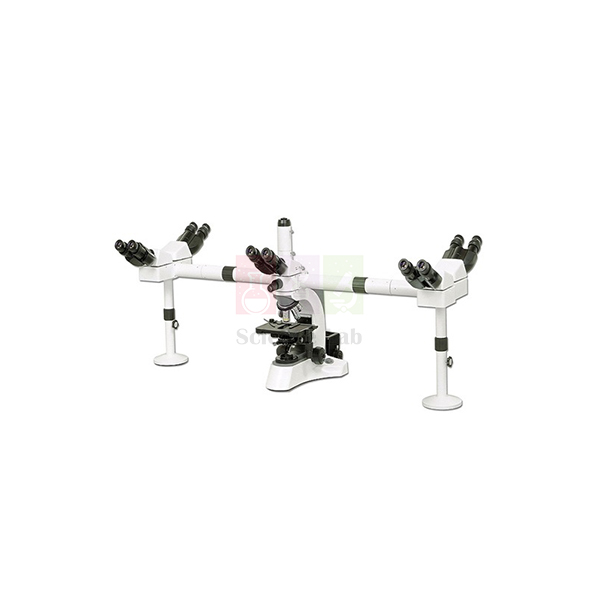
Multi Viewing Microscope
Multi Viewing Microscope (Product Code: SLE/M/28) is a teaching microscope with a trinocular head and additional binocular viewing, used when a demonstrator and a group must see the same slide field at the same time in colleges, training centres and research laboratories. It pairs infinity plan achromatic 4x to 100x objectives with a green LED pointer, Köhler halogen illumination and C-mount video adapters. It is supplied by Jain Scientific Equipments Pvt Ltd (ScienceLab), Ambala, India.
Specifications
| Parameter | Detail |
|---|---|
| Optical system | Infinity optical system |
| Viewing head | Compensation-free trinocular head, inclined at 30°, rotatable through 360°, interpupillary distance 48–75 mm |
| Binocular viewing | Compensation-free binocular head, inclined at 30°, rotatable through 360°, interpupillary distance 48–75 mm |
| Eyepieces | Extra wide field WF 10x/20, 10 pcs |
| Nosepiece | Inverse quintuple |
| Objectives | Infinity plan achromatic 4x, 10x, 40x, 100x |
| Condenser | Swing condenser, N.A. 0.9/0.25 |
| Illumination | Köhler illumination, external, halogen lamp 12 V 50 W |
| Pointer | Green LED pointer, brightness adjustable |
| Focusing | Coaxial coarse and fine, fine division 0.002 mm |
| Stage | Double-layer mechanical stage, 185 x 142 mm, moving range 75 x 55 mm |
| Video adapters | C-mount 1x and C-mount 0.5x |
| Product code | SLE/M/28 |
| Supplied by | Jain Scientific Equipments Pvt Ltd (ScienceLab), Ambala, India |
What Is the Multi Viewing Microscope Used For?
A multi viewing microscope turns slide teaching into a shared session. The demonstrator sits at the trinocular head, finds a structure, and moves the green LED pointer onto it; everyone at the other eyepieces sees the same field with the pointer marking the feature under discussion. Histology and pathology teaching, training of laboratory staff and group review of research slides are typical uses.
Set up Köhler illumination once at the start of the session so light is even across the field, then adjust the pointer brightness to stand out without masking detail. Use the swing condenser to match low and high power, with the lower N.A. setting for the 4x objective. The large double-layer stage and coaxial focusing with 0.002 mm fine division keep the image steady while several people watch, and a camera on the C-mount adapter can record or project the session.
What to Specify When Ordering
- Number of viewing positions you need, so the head arrangement can be confirmed against the 10 listed eyepieces.
- Camera for the C-mount adapters (1x or 0.5x), since no camera is listed.
- Mains supply at site, for the external 12 V 50 W halogen illumination.
- Immersion oil and teaching slide sets for the first sessions.
Supplier
Jain Scientific Equipments Private Limited, trading as ScienceLab from Ambala, Haryana, supplies the Multi Viewing Microscope to medical and life-science colleges, training centres, research laboratories, dealers and importers in India and international markets. Because configurations differ, the viewing arrangement and imaging accessories are agreed in writing at quotation stage. Learn more on the ScienceLab profile.
Related Laboratory Equipment
Imaging, single-user alternatives and teaching material:
- 5mp Microscope Camera — a C-mount Wi-Fi camera for streaming the shared view; confirm fit.
- Research Trinocular Microscope — a single-user research model with a photo tube.
- Research Microscope — a binocular research model with LED Köhler illumination.
- Human Histology Slide Set of 25 — prepared tissue sections for group teaching.
- Immersion Oil, 25ml — for the 100x objective.
Compare the range on the Microscope category page.
Frequently Asked Questions
How many people can use the Multi Viewing Microscope at once?
The listed specification of the Multi Viewing Microscope includes a compensation-free trinocular head, compensation-free binocular viewing and 10 WF 10x/20 eyepieces. Please confirm the number of viewing positions you need through the contact page before ordering.
What is the LED pointer on the Multi Viewing Microscope for?
The Multi Viewing Microscope has a green LED pointer with adjustable brightness. The demonstrator moves it onto a cell or structure, and every viewer sees the pointer in the same field, which makes group explanations quick and unambiguous.
Can a camera be connected to the Multi Viewing Microscope?
Yes. The Multi Viewing Microscope lists C-mount video adapters of 1x and 0.5x for its trinocular head. A camera itself is not included in the listed specification, so specify one in your enquiry or tell us which camera you already use.
What optics does the Multi Viewing Microscope use?
The Multi Viewing Microscope uses an infinity optical system with plan achromatic 4x, 10x, 40x and 100x objectives on an inverse quintuple nosepiece, and extra wide field WF 10x/20 eyepieces.
How is the Multi Viewing Microscope illuminated?
The Multi Viewing Microscope uses Köhler illumination from an external 12 V 50 W halogen lamp, with a swing condenser of N.A. 0.9/0.25 so that lighting can be matched to low- and high-power objectives.
What stage and focusing does the Multi Viewing Microscope have?
The Multi Viewing Microscope has a double-layer mechanical stage of 185 x 142 mm with a 75 x 55 mm moving range, and coaxial coarse and fine focusing with a fine division of 0.002 mm.
Who supplies the Multi Viewing Microscope?
The Multi Viewing Microscope is supplied by Jain Scientific Equipments Private Limited, trading as ScienceLab, Ambala, Haryana, India, to colleges, training centres, research laboratories, dealers and importers in India and international markets.
Request a Quote
For a quotation on the Multi Viewing Microscope (SLE/M/28), including the viewing arrangement and any camera, use our contact page or add it to the enquiry cart.
Last updated: 24 September 2026
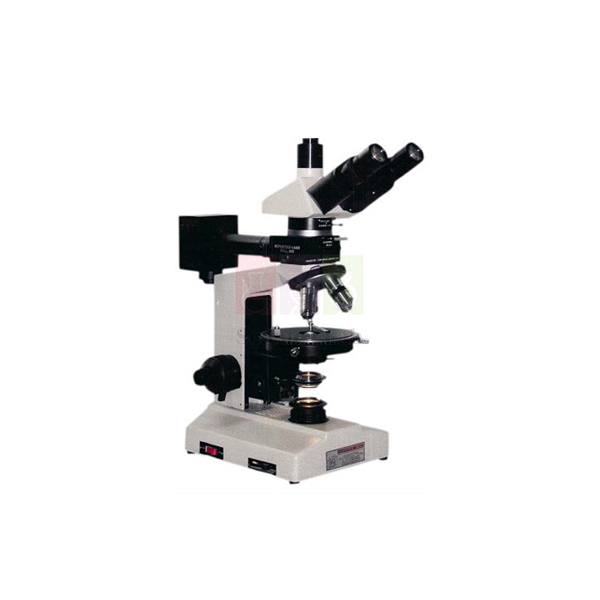
Research Trinocular Ore Microscope
Research Trinocular Ore Microscope (Product Code: SLE/M/29) is a trinocular research microscope used to examine ore and mineral specimens in geology, mining and materials laboratories. University departments choose it for its 360° round stage read to 0.1° with a vernier and its set of gypsum, mica and quartz wedge compensators. It is supplied by Jain Scientific Equipments Pvt Ltd (ScienceLab), Ambala, India, a laboratory instruments supplier in India serving colleges and research institutes.
Specifications
| Parameter | Detail |
|---|---|
| Observation head | Flat trinocular head inclined at 45° |
| Eyepiece | 10x / 20 mm |
| Cross (partition) eyepiece | 10x / 20 mm |
| Grid eyepiece | 10x / 20 mm |
| Objectives | 4x, 10x, 25/40x, 60/63x |
| Nosepiece | Quadruple |
| Compensators | Gypsum 1λ, mica ¼λ, quartz wedge |
| Stage | Revolving round stage, approx. 160 mm diameter, 360° rotatable, graduated in 1° increments |
| Stage least count | 0.1° with vernier |
| Illumination | 12 V / 20 W lamp, brightness adjustable |
| Power supply | 110–220 V |
| Optional accessories | Digital high-resolution photographic camera with microscope adapter; digital CMOS camera with high colour depth and live images on a computer |
| Product code | SLE/M/29 |
| Supplied by | Jain Scientific Equipments Pvt Ltd (ScienceLab), Ambala, India |
What Is the Ore Microscope Used For?
An ore microscope lets geology and mining students study ore minerals, their textures and the way grains intergrow in prepared specimens. The 45° trinocular head gives relaxed two-eye viewing while the third port stays free for one of the optional cameras, so a whole class can follow the same field on a computer screen.
The graduated round stage does most of the measuring work: turn the specimen through 360°, read the angle on the 1° scale and refine it to 0.1° with the vernier. Slide in the gypsum, mica or quartz wedge compensator to judge interference colours and retardation, use the cross eyepiece to centre a grain and the grid eyepiece to estimate grain sizes and proportions.
What to Specify When Ordering
- Objective choice for the two paired positions: 25x or 40x, and 60x or 63x
- Camera option, if any: the high-resolution photographic camera with adapter or the CMOS camera for live computer images
- Your mains voltage (the instrument is listed for 110–220 V)
- Number of microscopes needed for the laboratory
Supplier
Jain Scientific Equipments Private Limited trades as ScienceLab and supplies this ore microscope from Ambala, Haryana, to universities, geology institutes, dealers and importers in India and international markets. Tell us the objective and camera configuration you need and we will quote exactly that set-up. Buyers completing vendor registration can use the supplying company's Importer-Exporter Code AAECJ8618A (DGFT) and GSTIN 06AAECJ8618A1ZT. Read more on the ScienceLab company profile.
Related Laboratory Equipment
Instruments, accessories and specimens used alongside an ore microscope:
- Ore Polarising Microscope — an alternative with transmission and reflection modes and a CCD camera
- Microscope Digital Camera, 5MP — for recording specimen images; ask us to confirm the fit
- C-Mount Adapter — a common way of mounting a camera on a trinocular port
- Mineral Study Kit — mineral samples for identification practice
- Lens Tissue — for wiping eyepieces and objectives clean
See the complete Microscope range for student, research and polarising microscopes and their accessories.
Frequently Asked Questions
What objectives does the Research Trinocular Ore Microscope have?
The Research Trinocular Ore Microscope carries 4x, 10x, 25/40x and 60/63x objectives on a quadruple nosepiece. The 25/40x and 60/63x positions are listed as alternatives, so state the magnification you want in each position when you request a quotation.
Which eyepieces come with the Research Trinocular Ore Microscope?
The Research Trinocular Ore Microscope is listed with three 10x / 20 mm eyepieces: a plain eyepiece for general viewing, a cross (partition) eyepiece for centring and alignment, and a grid eyepiece for estimating grain sizes and proportions within the field.
What compensators are included with this ore microscope?
The Research Trinocular Ore Microscope includes a gypsum compensator of 1λ, a mica compensator of ¼λ and a quartz wedge. Placed in the light path, these plates help the user judge interference colours and retardation during polarised-light examination of minerals.
How precisely can the stage angle be read?
The Research Trinocular Ore Microscope has a revolving round stage of approximately 160 mm diameter that turns through 360°. It is graduated in 1° steps, and a vernier gives a least count of 0.1°, which suits extinction-angle and orientation measurements.
Can a camera be fitted to the Research Trinocular Ore Microscope?
Yes. The Research Trinocular Ore Microscope has a trinocular head, and two cameras are offered as optional accessories: a digital high-resolution photographic camera with microscope adapter, and a digital CMOS camera with high colour depth that shows live images on a computer.
Is a calibration certificate available for this microscope?
Calibration-certificate availability for the Research Trinocular Ore Microscope should be discussed with us before ordering. Mention the requirement in your enquiry through the contact page and we will tell you what documentation can accompany the instrument.
Who supplies the Research Trinocular Ore Microscope?
The Research Trinocular Ore Microscope is supplied by Jain Scientific Equipments Pvt Ltd, trading as ScienceLab, from Ambala, Haryana, India. The company handles orders from institutions, dealers and importers in India and international markets, from single units to departmental quantities.
Request a Quote
To get a quotation for the Research Trinocular Ore Microscope, send your objective choice, camera option and quantity through our contact page, or add the item to the enquiry cart together with other microscopes and accessories you need.
Last updated: 24 September 2026
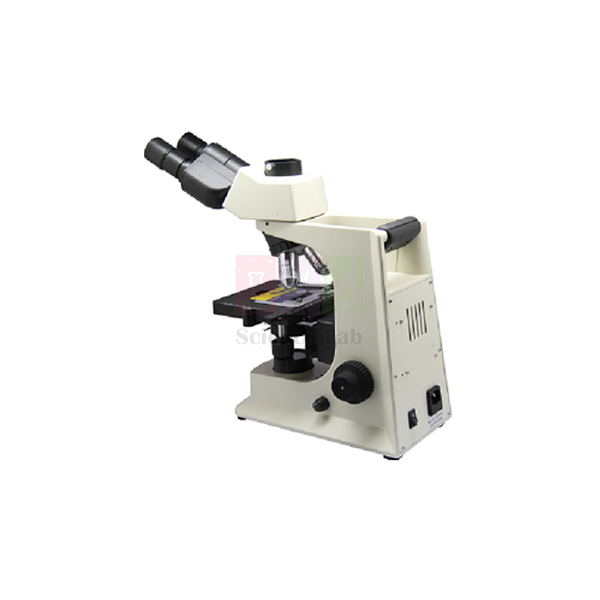
Universal Research Microscope
Universal Research Microscope (Product Code: SLE/M/30) is a binocular compound microscope used for detailed slide work in biology, pathology and microbiology laboratories. Colleges and teaching hospitals value its dual lighting — a built-in 6 V 20 W halogen lamp plus a plano-concave mirror attachment — and its Abbe condenser of N.A. 1.25. It is supplied by Jain Scientific Equipments Pvt Ltd (ScienceLab), Ambala, India, for buyers sourcing a compound microscope in India.
Specifications
| Parameter | Detail |
|---|---|
| Illumination | Built-in system with 6 V – 20 W halogen bulb and plano-concave mirror attachment |
| Mains supply | Suitable for 220 V, 50 Hz AC |
| Observation head | Binocular, inclined at 45°, rotatable through 360° |
| Interpupillary distance | Adjustment ring, 54–74 mm |
| Dioptric adjustment | Ring on the left eyetube with adjustable dioptric scale |
| Eyepieces | High eye-point wide-field 10x (F.N. 20) or 15x, paired |
| Objectives | DIN 4x, 10x, 40/45x (spring loaded), 100x oil immersion (spring loaded) |
| Nosepiece | Quadruple, revolving on ball bearing |
| Condenser | Abbe, N.A. 1.25, aspherical lens, adjustable iris diaphragm |
| Mechanical stage | Co-axial, low-positioned, large double-plate X-Y stage with fine vernier graduation |
| Focusing | Coaxial control with ball-bearing guideway and large knobs; pre-focusing / auto-focusing lock and tension adjustment ring |
| Main body | All parts die-cast for long life and mechanical strength |
| Product code | SLE/M/30 |
| Supplied by | Jain Scientific Equipments Pvt Ltd (ScienceLab), Ambala, India |
What Is the Universal Research Microscope Used For?
This microscope handles the everyday slide work of an undergraduate or diagnostic teaching lab: stained tissue sections, blood smears, bacteria and plant material. The 4x and 10x objectives locate the area of interest, the spring-loaded 40/45x resolves cells, and the 100x oil-immersion objective is used for bacteria and fine cell detail with a drop of immersion oil between slide and lens.
The "universal" lighting is useful where power is unreliable: switch on the halogen lamp for controlled, adjustable light, or attach the plano-concave mirror to use daylight or a bench lamp. For a microbiology lab equipment India set-up, the Abbe condenser and iris diaphragm let students balance contrast and resolution for each objective, and the pre-focus lock stops the stage rising into a slide during a practical.
What to Specify When Ordering
- Eyepiece pair: 10x wide-field (F.N. 20) or 15x
- High-dry objective: 40x or 45x
- Your mains supply, since the unit is listed for 220 V, 50 Hz AC
- Quantity, plus consumables such as immersion oil and slides
Supplier
ScienceLab is the trading name of Jain Scientific Equipments Private Limited, which supplies the Universal Research Microscope from Ambala, Haryana, to medical and science colleges, research institutes, laboratory dealers and importers in India and international markets. One enquiry can cover the microscopes and the slides, oil and cleaning materials used with them. Company background is on the ScienceLab profile page.
Related Laboratory Equipment
Consumables and alternatives that go with a research binocular microscope:
- Immersion Oil, 25ml — needed for the 100x oil-immersion objective
- Microscope Slides Glass — plain slides for smears and mounts
- Cover Glasses — to cover specimens before high-power viewing
- Microscope Cleaning Kit — for removing oil and dust from the optics
- Research Binocular Microscope — another research-grade binocular option to compare
More instruments are listed in our Microscope category.
Frequently Asked Questions
What objectives and eyepieces does the Universal Research Microscope use?
The Universal Research Microscope uses DIN objectives of 4x, 10x, 40/45x and 100x oil immersion, the last two spring loaded. They sit on a ball-bearing quadruple nosepiece and are paired with high eye-point wide-field 10x (F.N. 20) or 15x eyepieces.
Why does the Universal Research Microscope have both a lamp and a mirror?
The Universal Research Microscope combines a built-in 6 V – 20 W halogen bulb with a plano-concave mirror attachment. The lamp gives steady, adjustable light from the mains, while the mirror lets the microscope work with daylight or an external lamp when electricity is not available.
Can the binocular head be adjusted for different students?
Yes. The Universal Research Microscope's binocular head is inclined at 45° and rotates through 360°, the interpupillary distance adjusts from 54 to 74 mm, and a dioptric ring with scale on the left eyetube corrects for differences between a user's two eyes.
What condenser is fitted to the Universal Research Microscope?
The Universal Research Microscope has an Abbe condenser with a numerical aperture of 1.25, an aspherical lens and an adjustable iris diaphragm. Closing or opening the iris lets the user trade contrast against resolution to suit each objective and specimen.
What mains supply does this microscope need?
The Universal Research Microscope is listed as suitable for a 220 V, 50 Hz AC supply for its halogen illumination. If your laboratory uses a different mains voltage, state it in your enquiry so the power arrangement can be confirmed before a quotation is issued.
Who supplies the Universal Research Microscope?
The Universal Research Microscope is supplied by Jain Scientific Equipments Pvt Ltd, known as ScienceLab, based in Ambala, Haryana, India. It supplies colleges, research institutes, dealers and importers in India and international markets, and can include slides and immersion oil in the same order.
Request a Quote
Send your eyepiece and objective choice, mains voltage and quantity for the Universal Research Microscope through our contact page, or place it in the enquiry cart with the consumables you need, and we will reply with a quotation.
Last updated: 24 September 2026
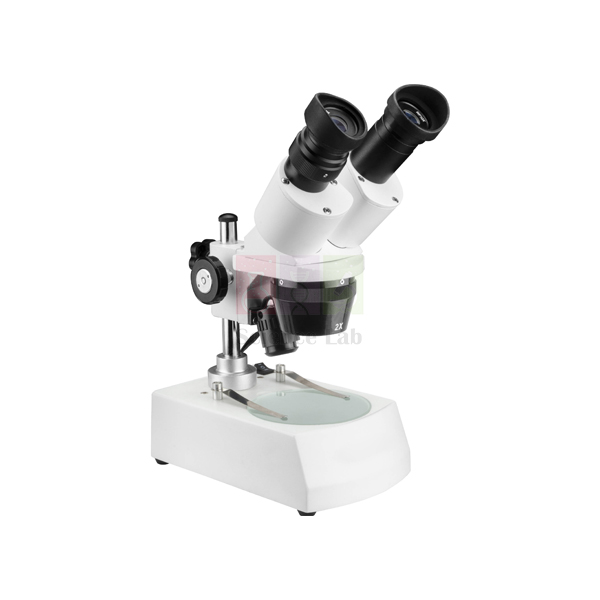
Binocular Stereo Microscope
Binocular Stereo Microscope (Product Code: SLE/M/31) is a low-power, two-eyepiece microscope used to view solid specimens in three dimensions in school, college and field-study laboratories. Its 2x/4x objective and paired 10x wide-field eyepieces give 20x and 40x, with halogen lighting from above and below. It is supplied by Jain Scientific Equipments Pvt Ltd (ScienceLab), Ambala, India, a biology lab equipment supplier in India.
Specifications
| Parameter | Detail |
|---|---|
| Objective | 2x – 4x |
| Eyepieces | Two wide-field 10x |
| Total magnification | 20x – 40x |
| Illumination | Top and bottom halogen |
| Head | Rotates 360° |
| Interpupillary distance | Adjustable, 55–75 mm |
| Diopter correction | Yes |
| Focusing | Coaxial coarse focusing |
| Working distance | Adjustable, with lock |
| Stage | Three round plates (white, black, transparent glass) and two metal slide clips |
| Power | 120–240 V |
| Product code | SLE/M/31 |
| Supplied by | Jain Scientific Equipments Pvt Ltd (ScienceLab), Ambala, India |
What Is the Binocular Stereo Microscope Used For?
A stereo microscope shows whole objects rather than thin sections, so students can study insects, flowers, seeds, leaf surfaces, small fossils, rock grains and the progress of a dissection with natural depth. Because the specimen does not need to be sliced or mounted, the instrument is often the first microscope used in a practical and one of the most handled pieces of zoology lab equipment in India.
Use the top halogen lamp for opaque material such as a beetle or a mineral grain, and the bottom lamp for thin or translucent items such as a leaf skeleton or a drop of pond water in a dish. Swap the stage plate to suit the specimen: white behind dark subjects, black behind pale ones, and the clear glass plate whenever light must pass through from below.
What to Specify When Ordering
- Number of microscopes per practical group or laboratory
- Your mains voltage (listed for 120–240 V)
- Any storage cases or specimen dishes to add to the same order
Supplier
Jain Scientific Equipments Private Limited, which operates under the ScienceLab name, supplies this stereo microscope from Ambala, Haryana. Schools, colleges, training institutes, dealers and importers in India and international markets order it singly or as sets for a biology room, often with petri dishes, specimen packs and cases. Visit the ScienceLab profile to learn about the company.
Related Laboratory Equipment
Useful additions and alternatives for low-power stereo work:
- Binocular Stereo Microscope, 40x — a related stereo model to compare
- Stereo Binocular Microscope — another binocular stereo option in the range
- Petri Dish Glass With Lid — holds live or wet specimens on the stage
- Class Rock Pack — rock samples to examine under low magnification
- Carry Case for Microscopes — storage and transport between rooms
Browse all instruments in the Microscope category.
Frequently Asked Questions
What magnification does the Binocular Stereo Microscope give?
The Binocular Stereo Microscope gives 20x and 40x total magnification. It combines a 2x – 4x objective with two wide-field 10x eyepieces, a range suited to whole insects, plant parts, rock grains and dissections rather than cells on a slide.
When should the top or bottom light be used?
On the Binocular Stereo Microscope, the top halogen light is for opaque objects such as insects, seeds or minerals, while the bottom halogen light shines through thin or translucent specimens placed on the clear glass stage plate. Both can be used together for mixed specimens.
What stage accessories come with the Binocular Stereo Microscope?
The Binocular Stereo Microscope comes with three round stage plates — white, black and transparent glass — and two metal slide clips. The coloured plates give contrast behind dark or pale objects, and the clips hold a slide or flat specimen in place.
Can the Binocular Stereo Microscope be adjusted for each student?
Yes. The Binocular Stereo Microscope's interpupillary distance adjusts from 55 to 75 mm, one eyepiece offers diopter correction, and the head rotates 360° so it can face the user from any side of a shared bench.
What power supply does the Binocular Stereo Microscope need?
The Binocular Stereo Microscope is listed for 120–240 V mains power, which runs its top and bottom halogen lamps. Tell us your local voltage and socket type in your enquiry so we can confirm the power arrangement before quoting.
Who supplies the Binocular Stereo Microscope?
The Binocular Stereo Microscope is supplied by Jain Scientific Equipments Pvt Ltd, trading as ScienceLab, Ambala, Haryana, India. Orders from schools, colleges, dealers and importers in India and international markets are handled directly, including class sets with related specimen dishes and cases.
Request a Quote
For a quotation on the Binocular Stereo Microscope, tell us the quantity and mains voltage through the contact page, or add it to the enquiry cart along with dishes, specimens and cases.
Last updated: 24 September 2026
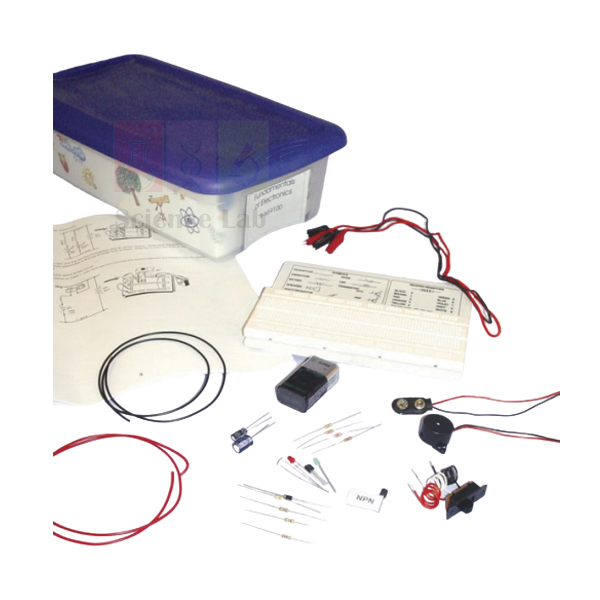
Fundamentals of Electronics
Fundamentals of Electronics (Product Code: SLE/PHY/88) is an electronics starter kit used to introduce students to basic components and circuits in school science and physics lessons. Built around a solderless breadboard, it brings together transistors, LEDs, capacitors, a photo resistor, a buzzer, a 9 volt battery and a Teacher's Guide in one set. The kit is made up by Jain Scientific Equipments Pvt Ltd (ScienceLab), an OEM manufacturer, at its own factory in Ambala, India.
Key Details
| Parameter | Detail |
|---|---|
| Circuit base | Solderless electronics breadboard |
| Semiconductors | NPN and PNP transistors; diode |
| Indicators | Red and green light-emitting diodes (LEDs); buzzer |
| Other components | Capacitors, resistors, photo resistor |
| Control and wiring | Switches and connection wires |
| Power | 9 volt battery |
| Documentation | Teacher's Guide |
| Product code | SLE/PHY/88 |
| Manufacturer | Jain Scientific Equipments Pvt Ltd (ScienceLab) — OEM |
| Country of origin | India (made in Ambala, Haryana) |
What Is the Fundamentals of Electronics Kit Used For?
The kit takes students from reading a circuit diagram to building a working circuit with no soldering iron: components push into the breadboard and can be moved as often as the lesson needs. Typical activities include lighting an LED through a resistor, sounding the buzzer from a switch, using a transistor as a simple electronic switch and making a light-sensitive circuit with the photo resistor. It is a hands-on route into semiconductor topics that also suits DIY science kit sessions and STEM clubs.
The Teacher's Guide helps staff plan each practical. Before a session, check the 9 volt battery, keep the small parts sorted so none go missing, and remind students that transistors, diodes and LEDs only work when inserted the right way round.
What to Specify When Ordering
- Number of kits, for example one per student pair or group.
- Any spares for heavy use, such as extra LEDs or 9 volt batteries.
- Delivery location, so packing and freight can be quoted together.
OEM Manufacturer
ScienceLab is the trading name of Jain Scientific Equipments Private Limited, the OEM that makes up this electronics kit at its own licensed factory at Saha, Ambala, Haryana. Kits are packed factory-direct for schools, colleges, training centres, dealers and importers, and every quotation comes from the manufacturer itself. If components go missing over a school year, ask us about replacement parts instead of buying a whole new kit. The company profile has more about the business.
Related Physics Lab Equipment
Useful additions for electronics lessons built on this kit:
- Light Dependent Resistor — a cased light sensor for further light-controlled circuit projects.
- LED Blue — 5 mm LEDs in bulk packs, handy as spares or an extra colour.
- LED Bright Red — standard 5 mm red LEDs for replacing worn indicator parts.
- Battery Clip, PP3 — a standard clip with leads for connecting a 9 volt battery.
- Standard Digital Multimeter — for measuring voltages and checking components in student circuits.
For more electronics teaching resources, browse Physics Lab Equipment and DIY Electronics Kits for Students.
Frequently Asked Questions
What is included in the Fundamentals of Electronics kit?
The Fundamentals of Electronics kit includes a solderless breadboard, switches, connection wires, NPN and PNP transistors, red and green LEDs, capacitors, a diode, a photo resistor, resistors, a buzzer, a 9 volt battery and a Teacher's Guide.
Does the Fundamentals of Electronics kit need soldering?
No. The Fundamentals of Electronics kit uses a solderless electronics breadboard, so components and connection wires simply push into place. Circuits can be changed or taken apart in seconds, which suits beginners and keeps parts reusable for the next class.
What powers the circuits in the Fundamentals of Electronics kit?
Circuits in the Fundamentals of Electronics kit run from the 9 volt battery supplied with it. Keep a spare battery for busy practical sessions, and disconnect the battery whenever circuits are left unattended or packed away.
Is a teacher's guide provided with the kit?
Yes. A Teacher's Guide is part of the Fundamentals of Electronics kit, giving staff a starting point for planning practical activities with the breadboard and components. For questions about particular activities or syllabus fit, contact ScienceLab before ordering.
Who manufactures the Fundamentals of Electronics kit?
The Fundamentals of Electronics kit is made up by Jain Scientific Equipments Pvt Ltd (ScienceLab) as the OEM at its own factory in Ambala, Haryana, India, and is supplied direct to schools, colleges, dealers and importers.
Can the Fundamentals of Electronics kit be ordered for a whole class?
Yes. The Fundamentals of Electronics kit can be quoted in class-set and larger institutional quantities for India and international markets. State the number of kits, any spare components wanted and the delivery destination when you contact us.
Request a Quote
Ask for a price on the Fundamentals of Electronics kit through the contact page, or add it to the enquiry cart with other items for your lab. The quotation comes direct from the manufacturer, including any spares you list.
Last updated: 24 September 2026