- Physics Lab Equipment
- Chemistry Lab Equipment
- Biology Lab Equipment
- Anatomical Lab Equipment
- Learning
- Educational Lab Equipment
- Magnets
- Agriculture
- Astronomy
- Earth Science
- Geography Lab Equipment
- Safety Lab Coat
- Laboratory
- Meteorological
- Electricity & Magnetism
- Heat
- School Lab Equipment
- Lab Glassware
- Science Lab Equipment
- Tvet Lab Equipment
- Robotics Kits Supplier and Manufacturer for Schools India
- Math Lab Equipment Manufacturers and Exporters in Ambala
- STEM Kits Manufacturers and Supplier India
- Engineering Lab Equipment
- Hospital Lab Equipment
- Water, Sanitation & Hygiene Supplies
- Cold Chain, Solar & Communication Equipment
- Nutrition
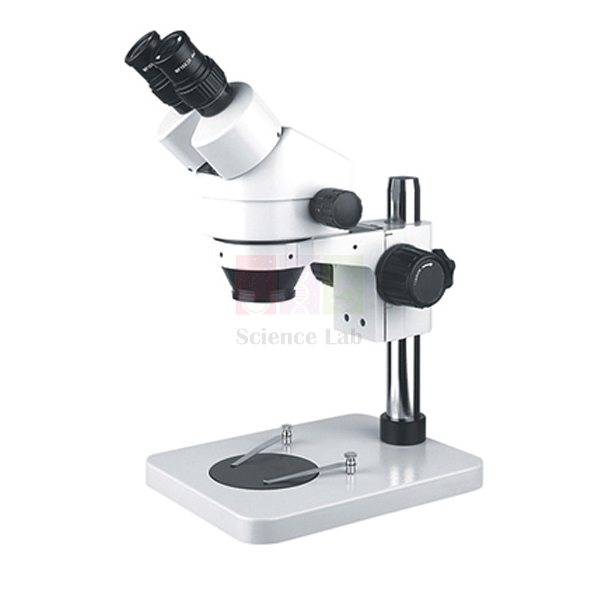
Stereoscopic Dissection Microscopes
Stereoscopic Dissection Microscopes (Product Code: SLE/M/32) are compact binocular microscopes used to magnify specimens at 20x during dissection practicals in school and college biology labs. A fixed 2x objective works with locked-in paired 10x wide-field eyepieces, and the unit packs into a wooden box. They are supplied by Jain Scientific Equipments Pvt Ltd (ScienceLab), Ambala, India, as practical school biology lab equipment in India and abroad.
Specifications
| Parameter | Detail |
|---|---|
| Objective | Fixed 2x |
| Eyepieces | Locked-in paired 10x wide field; diopter adjustment in one eyepiece |
| Magnification | 20x |
| Height | Adjustable, approx. 8½ in – 12½ in |
| Working distance | 1½ in – 5 in |
| Stage | Stage plug 2⅜ in diameter, with clips |
| Focusing | Rack and pinion |
| Size and packing | Compact; 6¾ in L x 4½ in W, in wooden box |
| Stand option | Available with pillar stand |
| Product code | SLE/M/32 |
| Supplied by | Jain Scientific Equipments Pvt Ltd (ScienceLab), Ambala, India |
What Is the Stereoscopic Dissection Microscope Used For?
During a dissection, students need a steady, upright, three-dimensional view of small structures such as the mouthparts of a cockroach, the nerve cord of an earthworm or the ovary of a flower. This microscope gives that view at a fixed 20x, with up to 5 in of working distance so needles and forceps can move freely under the objective.
Set the height within its 8½ in to 12½ in range to suit the specimen, place small material on the stage plug and hold it with the clips, then bring it into focus with the rack and pinion. Students with unequal eyesight can use the diopter adjustment on one eyepiece. After class, the microscope returns to its wooden box, which keeps dust off the optics between sessions.
What to Specify When Ordering
- Standard version or the version with pillar stand
- Number of microscopes, usually one per dissection group
- Any dissection trays or depression slides to add to the order
Supplier
Jain Scientific Equipments Private Limited, trading as ScienceLab, supplies these dissection microscopes from Ambala, Haryana, to schools, colleges, dealers and importers in India and international markets. Institutional buyers who need vendor details can register the supplying company using GSTIN 06AAECJ8618A1ZT and LEI 3358004HRD1JIVXKYX49. The ScienceLab company profile has more background.
Related Laboratory Equipment
Items used in the same dissection practical, and alternative models:
- Dissection Pan — for the main dissection before parts are viewed at 20x
- Microscope Slides Depression — holds tiny specimens in a drop of liquid
- Dissection Microscope — another dissection model to compare
- Dissecting Microscope — an alternative for dissection classes
The full Microscope category lists stereo, compound and digital microscopes.
Frequently Asked Questions
What magnification do the Stereoscopic Dissection Microscopes give?
The Stereoscopic Dissection Microscopes give a fixed 20x magnification from a 2x objective and locked-in paired 10x wide-field eyepieces. This low, constant power keeps a wide field of view and plenty of depth, which is what students need while dissecting.
How much working space is there under the objective?
The Stereoscopic Dissection Microscopes offer a working distance of 1½ in to 5 in, and the overall height adjusts from about 8½ in to 12½ in. That space lets students use needles, forceps and scalpels on the specimen while viewing it.
How are the Stereoscopic Dissection Microscopes focused?
The Stereoscopic Dissection Microscopes are focused with a rack-and-pinion mechanism. Because the eyepieces are locked in place, students only turn the focus knob and, if needed, the diopter adjustment on one eyepiece to get a sharp image for both eyes.
Is a pillar stand version available?
Yes, the Stereoscopic Dissection Microscopes are listed as available with a pillar stand. State in your enquiry whether you need the standard compact version or the pillar-stand version, and how many of each, so the quotation matches your laboratory layout.
How are the Stereoscopic Dissection Microscopes packed and stored?
The Stereoscopic Dissection Microscopes are compact, listed at 6¾ in long by 4½ in wide, and come in a wooden box. The box protects the optics from dust and knocks when the microscopes are stored between practical sessions or carried between rooms.
Who supplies the Stereoscopic Dissection Microscopes?
The Stereoscopic Dissection Microscopes are supplied by Jain Scientific Equipments Pvt Ltd, trading as ScienceLab, from Ambala, Haryana, India. The company handles school, college, dealer and importer orders in India and international markets, including multiple units for group dissection work.
Request a Quote
Ask for a quotation on the Stereoscopic Dissection Microscopes by sending the version and quantity through our contact page, or add them to the enquiry cart with dissection pans and slides.
Last updated: 24 September 2026
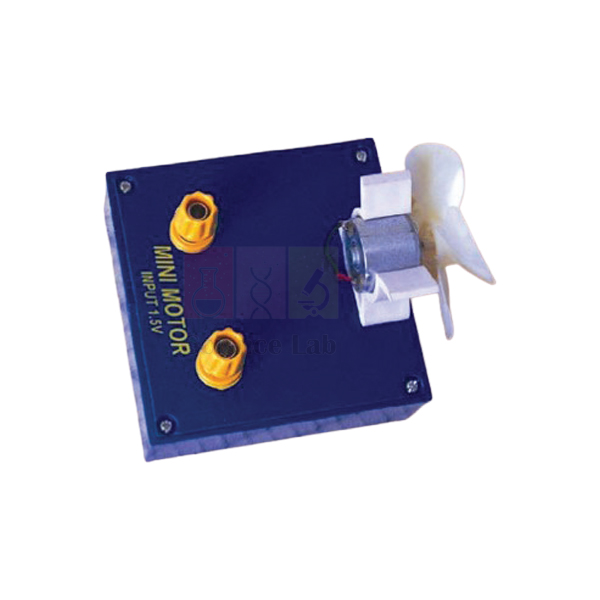
Mini Motor Unit
Mini Motor Unit (Product Code: SLE/PHY/89) is a small base-mounted DC motor used to show electrical energy being turned into motion in school physics and energy lessons. It runs from 1.5 to 4.5 V DC on a base of about 88 x 70 mm and is intended for use with a solar cell unit, so pupils can watch light drive a motor. It is manufactured by Jain Scientific Equipments Pvt Ltd (ScienceLab), an OEM manufacturer, at its own factory in Ambala, India.
Specifications
| Parameter | Detail |
|---|---|
| Type | Small DC motor mounted on a base |
| Operating voltage | 1.5 to 4.5 V DC |
| Base size | Approx. 88 x 70 mm |
| Intended use | With a solar cell unit |
| Product code | SLE/PHY/89 |
| Manufacturer | Jain Scientific Equipments Pvt Ltd (ScienceLab) — OEM |
| Country of origin | India (made in Ambala, Haryana) |
What Is the Mini Motor Unit Used For?
Connected to a solar cell unit, the Mini Motor Unit makes an energy-transfer chain visible: light becomes electrical energy, which the motor turns into movement. Shading the cell or moving a lamp closer shows pupils at once how motor speed depends on the light reaching the cell, making this a simple solar energy science kit activity for the classroom.
Because it works from 1.5 to 4.5 V DC, the unit can also run from one to three dry cells when there is not enough light, which is useful for comparing a battery supply with a solar one. Do not connect it to anything above 4.5 V, and keep the motor shaft free of dust and loose threads.
What to Specify When Ordering
- Number of motor units needed per class.
- Whether a matching solar cell unit should be quoted as well.
- The supply you intend to use, keeping within 1.5 to 4.5 V DC.
OEM Manufacturer
Jain Scientific Equipments Private Limited trades under the ScienceLab name and manufactures the Mini Motor Unit as the OEM at its factory at Saha, Ambala, Haryana. Energy and electricity apparatus from that factory reaches schools, dealers and importers directly, with no middle trader in the chain. Ask the manufacturer about replacement units or repeat orders when class sets need topping up. Read about the company on the profile page.
Related Physics Lab Equipment
Apparatus for energy-conversion and motor lessons alongside the Mini Motor Unit:
- Mounted Solar Cell — a base-mounted photovoltaic cell for light-to-electricity experiments.
- Mounted Motor for Solar Cell — a low-consumption motor with a small pulley for load-lifting demonstrations.
- Simple Circuit Module Motor — a low-voltage motor module with a current-limiting resistor for circuit work.
- Electric Motor — a miniature DC motor for models and robotics projects.
- Battery Holder, C — a single-cell holder for running the motor from a battery.
Find more energy and electricity apparatus under Physics Lab Equipment.
Frequently Asked Questions
What voltage does the Mini Motor Unit run on?
The Mini Motor Unit operates from 1.5 to 4.5 V DC. That range suits the output of a school solar cell unit or a small number of dry cells; higher supply voltages should not be used with this motor.
How big is the base of the Mini Motor Unit?
The Mini Motor Unit is mounted on a base measuring approximately 88 x 70 mm. The compact base sits steadily on the bench beside a solar cell unit and holds the motor in a fixed position during experiments.
Can the Mini Motor Unit be used with a solar cell?
Yes. The Mini Motor Unit is intended for use with a solar cell unit, turning the cell's electrical output into visible rotation. If you need a matching solar cell, include it in your enquiry so ScienceLab can quote both together.
Will the Mini Motor Unit run from batteries?
Yes, as long as the supply stays within its range. The Mini Motor Unit runs on 1.5 to 4.5 V DC, so a battery supply inside that range can drive it, which is handy for lessons held without enough light.
Who manufactures the Mini Motor Unit?
The Mini Motor Unit is manufactured by Jain Scientific Equipments Pvt Ltd (ScienceLab), the OEM, at its own factory in Ambala, Haryana, India. It is sold direct to schools, colleges, dealers and importers.
What should I include when asking for a Mini Motor Unit quotation?
A quotation request for the Mini Motor Unit should give the number of units, whether solar cells or battery holders are also needed, and your delivery location. Bulk orders for India and international markets are quoted on request through the contact page.
Request a Quote
To buy the Mini Motor Unit, message us through the contact page or place it in the enquiry cart together with any solar cells you need. Quotations are issued directly by the manufacturer.
Last updated: 24 September 2026
 with Fahnstock clips10.jpg)
Switches (Econ) with Fahnstock clips
Switches (Econ) with Fahnstock clips (Product Code: SLE/PHY/90) is a pack of economy switches used to open and close simple circuits in school electricity practicals. Each pack holds 25 switches fitted with Fahnstock (Fahnestock) spring clips, so bare wire ends can be connected without screwdrivers or soldering, a practical choice when equipping a whole class. They are manufactured by Jain Scientific Equipments Pvt Ltd (ScienceLab), an OEM manufacturer, at its own factory in Ambala, India.
Key Details
| Parameter | Detail |
|---|---|
| Switch type | Economy switch |
| Connections | Fahnstock (Fahnestock) spring clips |
| Pack size | 25 switches |
| Product code | SLE/PHY/90 |
| Manufacturer | Jain Scientific Equipments Pvt Ltd (ScienceLab) — OEM |
| Country of origin | India (made in Ambala, Haryana) |
What Are the Economy Switches with Fahnstock Clips Used For?
An economy switch lets pupils control a circuit by hand, so they see a lamp, buzzer or motor respond the moment the circuit is completed or broken. The spring clips grip a wire when pressed and released, which makes setting up and clearing away circuits quick for younger students and avoids small terminal screws going missing. With 25 switches in a pack, one pack can equip a typical class working in pairs or small groups.
Use the switches in low-voltage circuits powered by cells. Strip a short length of insulation from each wire, push it fully into the clip, and leave the switch open until the rest of the circuit is connected. They are a low-cost part of basic physics lab equipment for schools setting up electricity practicals.
What to Specify When Ordering
- Number of packs required (each pack contains 25 switches).
- Any lamp holders, cells or leads to be quoted with the switches.
- Delivery location for the order.
OEM Manufacturer
ScienceLab, the trading name of Jain Scientific Equipments Private Limited, manufactures these economy switches as the OEM at its own factory at Saha, Ambala, Haryana. Packing them in 25s straight from the factory keeps class quantities simple for schools, dealers and importers. When stocks run low, ask the manufacturer directly for repeat packs. The ScienceLab profile explains more about the company.
Related Physics Lab Equipment
Items that complete simple switch circuits in the classroom:
- Lamp Holder (Economy Switch) — a miniature lamp holder on a plastic base with the same style of spring clips.
- Knife Switch – Single Pole, Single Throw — a brass-bladed knife switch on a base as a sturdier alternative.
- Contact Key (Push Switch) — a spring contact key for momentary switching.
- Crocodile Clips & Leads — ready-made leads for joining switches, cells and lamps.
- Battery Holder, C — a single-cell holder to power simple switch circuits.
More circuit components are listed in Physics Lab Equipment.
Frequently Asked Questions
How many switches come in a pack of Switches (Econ) with Fahnstock clips?
Each pack of Switches (Econ) with Fahnstock clips contains 25 economy switches. That quantity lets a school equip a class working in pairs or small groups from a single pack, often with a few left over as spares.
What are Fahnstock clips?
Fahnstock clips, more often spelled Fahnestock clips, are spring connectors that grip a wire when pressed and released. On the Switches (Econ) with Fahnstock clips they let pupils connect bare wire ends quickly, without screw terminals or soldering.
What voltage are the economy switches rated for?
The listing for Switches (Econ) with Fahnstock clips does not state a voltage or current rating. They are intended for low-voltage school circuits powered by cells; for any other use, please confirm suitability with us through the contact page first.
Who manufactures the Switches (Econ) with Fahnstock clips?
Switches (Econ) with Fahnstock clips are manufactured by Jain Scientific Equipments Pvt Ltd (ScienceLab) as the OEM at its own factory in Ambala, Haryana, India, and are supplied in packs of 25 direct to schools and dealers.
Can several packs be ordered for export?
Yes. Switches (Econ) with Fahnstock clips can be ordered in multiple packs for schools, education projects and distributors in India and international markets. Tell us the number of packs and the destination, and the quotation will cover packing and freight.
Request a Quote
Tell us how many packs of Switches (Econ) with Fahnstock clips you need through the contact page, or add them to the enquiry cart. You will receive a quotation directly from the manufacturer.
Last updated: 24 September 2026
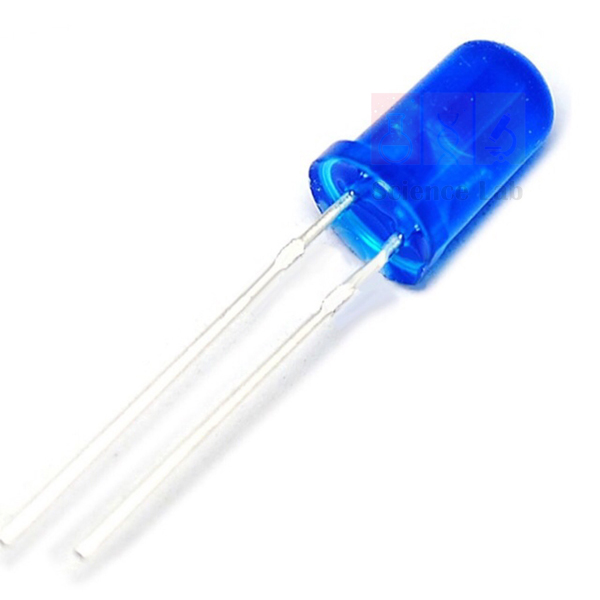
LED Blue
LED Blue (Product Code: SLE/PHY/91) is a pack of standard 5 mm blue light-emitting diodes used as indicators and light sources in electronics and physics practicals in schools and colleges. Each pack contains 100 LEDs, enough to keep a lab stocked for breadboard projects, circuit-building lessons and replacements across a term. It is supplied by Jain Scientific Equipments Pvt Ltd (ScienceLab), Ambala, India, alongside the same 5 mm LEDs in other colours.
Specifications
| Parameter | Detail |
|---|---|
| Component | Light-emitting diode (LED), standard type |
| Size | 5 mm |
| Colour | Blue |
| Pack quantity | 100 LEDs |
| Other colours | Available in a range of colours (listed separately) |
| Product code | SLE/PHY/91 |
| Supplied by | Jain Scientific Equipments Pvt Ltd (ScienceLab), Ambala, India |
What Are the Blue 5 mm LEDs Used For?
Blue LEDs are used on breadboards and circuit boards as on/off indicators, in simple logic and sensor projects, and to show that a diode lets current pass in one direction only. Comparing blue with red or green LEDs also lets older students explore how the voltage needed to light an LED changes with its colour, a common LED characteristics experiment.
An LED should always be wired with a series resistor to limit the current, because connecting it straight across a cell or supply can destroy it. The longer lead is normally the positive (anode) connection. Keep opened packs dry and sealed so the leads stay clean between lessons.
What to Specify When Ordering
- Number of packs (each pack holds 100 blue LEDs).
- Any other LED colours you want quoted in the same order.
- Resistors, breadboards or LED boards needed to complete student circuits.
Supplier
Jain Scientific Equipments Private Limited, trading as ScienceLab, supplies these standard 5 mm blue LEDs as part of its physics and electronics consumables range. Schools and colleges can add LED packs to the same enquiry as their circuit apparatus, so components and equipment arrive in one consignment. Read more about the company on the ScienceLab profile page.
Related Physics Lab Equipment
Components and kits often ordered with blue LEDs:
- LED Bright Red — the same standard LED size in bright red, also in packs.
- LED, 5 mm, White — white LEDs for lighting projects and colour comparisons.
- Simple Circuit Module LED Board Red — a ready-mounted LED with a series resistor for younger pupils.
- Fundamentals of Electronics — a breadboard kit in which LEDs serve as indicators.
- Battery Clip, PP3 — a clip with leads for powering LED circuits from a PP3 battery.
Browse the wider range of Physics Lab Equipment for circuit apparatus.
Frequently Asked Questions
How many LEDs are in a pack of LED Blue?
The LED Blue pack contains 100 standard 5 mm blue light-emitting diodes. Buying by the hundred keeps a school or college lab stocked for class projects and replacements, rather than ordering single LEDs each time one fails.
What size are the LED Blue diodes?
LED Blue diodes are the standard 5 mm size, which fits common breadboards, LED holders and circuit boards used in schools. The same 5 mm LEDs are also available in a range of other colours, listed as separate items.
Do the blue LEDs need a resistor?
Yes. Like any LED, each diode in the LED Blue pack should be connected with a suitable series resistor to limit the current. Without one, connecting it directly to a cell or power supply can damage the LED almost immediately.
Where can I find the electrical ratings for LED Blue?
The LED Blue listing gives the size, colour and pack quantity but not forward voltage, current or brightness figures. If your experiment needs these ratings, ask us through the contact page before ordering and we will advise on the batch quoted.
Who supplies LED Blue?
LED Blue is supplied by Jain Scientific Equipments Pvt Ltd (ScienceLab), Ambala, India, to schools, colleges, training institutes and dealers, and it can be included in larger laboratory orders for India and international markets.
Can other LED colours be ordered together with LED Blue?
Yes. The LED Blue pack can be quoted together with the same 5 mm LEDs in other colours, such as red and white, so a single order covers all the indicator colours your class projects need.
Request a Quote
Request a price for LED Blue by sending the number of packs and any other colours through the contact page, or add the item to the enquiry cart. ScienceLab will reply with a quotation for the full order.
Last updated: 24 September 2026
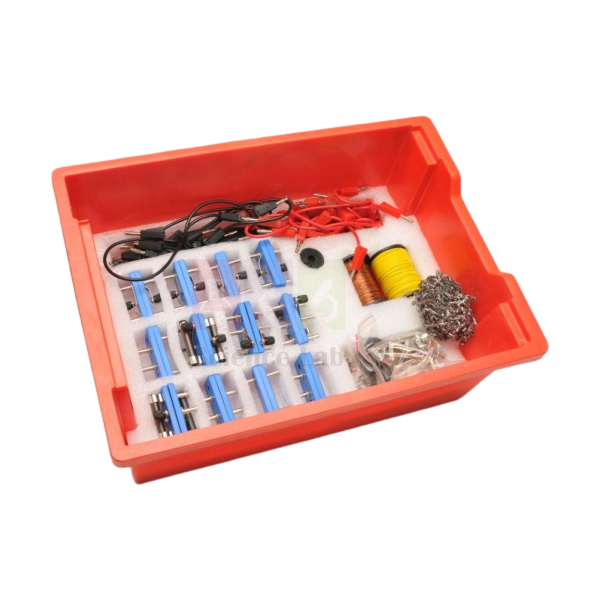
Electricity Circuits Kit
Electricity Circuits Kit (Product Code: SLE/PHY/92) is a panel-based electricity kit used for pupil investigations into simple circuits in primary and lower-secondary science. Each component, such as a switch, rheostat or bulb holder, sits on its own plastic panel with 4 mm sockets, and the panels are linked with 4 mm stackable leads instead of being fixed to a circuit board. The kit is manufactured by Jain Scientific Equipments Pvt Ltd (ScienceLab), an OEM manufacturer, at its own factory in Ambala, India.
Specifications
| Parameter | Detail |
|---|---|
| Kit type | Basic electricity kit with individual component panels |
| Components | Switch, rheostat, bulb holder, etc., each on its own plastic panel |
| Panel connections | 4 mm sockets |
| Linking method | 4 mm stackable leads |
| Curriculum level | Basic circuit concepts at key stage 2, with applications into key stage 3 |
| Storage | Two polystyrene trays per kit |
| Product code | SLE/PHY/92 |
| Manufacturer | Jain Scientific Equipments Pvt Ltd (ScienceLab) — OEM |
| Country of origin | India (made in Ambala, Haryana) |
What Is the Electricity Circuits Kit Used For?
Because every component is a separate panel, pupils lay out a circuit on the desk just as it appears in a circuit diagram, which makes the link between symbol and real component easier to grasp. The kit covers complete and broken circuits, switching and changing lamp brightness with the rheostat, and it is flexible enough to move on to series and parallel work later. That makes it a practical physics experiment kit for schools that want pupils to design their own circuits rather than follow a fixed board layout.
The two polystyrene trays hold every panel in its place, so a technician can see at a glance whether anything is missing before the kit goes back on the shelf. Push the stackable leads fully into the 4 mm sockets, and pull them out by the plug rather than the cable to keep connections reliable.
What to Specify When Ordering
- Number of kits, based on how many pupil groups work at once.
- Whether 4 mm stackable leads should be quoted with the kits.
- Spare component panels, such as bulb holders, rheostats or push switches, for heavily used classes.
- Delivery location for packing and freight.
OEM Manufacturer
ScienceLab is the trading name of Jain Scientific Equipments Private Limited (CIN U29309HR2020PTC087597), the OEM that manufactures this circuits kit. Production takes place at the company's licensed factory at 449, HSIIDC Industrial Area, Saha, Ambala, Haryana (Factory Licence AMB-ONLINE-CHD-J-414). Schools, dealers and importers buy the kit factory-direct and can ask the same source for spare panels when parts wear out. The company profile has further details.
Related Physics Lab Equipment
Leads, spare panels and an alternative approach for circuit lessons:
- Stackable Leads — 4 mm stackable leads for linking the component panels.
- Circuits Kit Bulb Holder — a spare panel-mounted bulb holder from the Circuits Kit spares range.
- Circuits Kit Rheostat — a spare panel-mounted rheostat for brightness-control activities.
- Circuits Kit Push Switch — a spare panel-mounted push switch.
- Worcester Circuit Board — the circuit-board approach, for schools comparing both methods.
See all circuit and electricity apparatus under Physics Lab Equipment.
Frequently Asked Questions
How are circuits built with the Electricity Circuits Kit?
Circuits are built with the Electricity Circuits Kit by connecting individual component panels together using 4 mm stackable leads. Each panel carries one component, such as a switch, rheostat or bulb holder, and has 4 mm sockets for the leads.
Which pupils is the Electricity Circuits Kit suitable for?
The Electricity Circuits Kit suits teaching basic circuit concepts at key stage 2, roughly the upper primary years, and it also has applications for further study into key stage 3. Teachers can begin simply and add components as pupils progress.
Are stackable leads included with the Electricity Circuits Kit?
The Electricity Circuits Kit is designed to be connected with 4 mm stackable leads, but the listing does not confirm how many leads come with each kit. Mention leads in your enquiry and ScienceLab will confirm what is included in the quotation.
How is the Electricity Circuits Kit stored?
Each Electricity Circuits Kit is supplied in two polystyrene trays that keep the component panels organised. The trays make it easy to check that every panel has come back after a lesson, and they protect the units in storage.
How does the kit compare with a circuit board?
The Electricity Circuits Kit is a low-cost, flexible alternative to the circuit-board approach. Instead of fixed positions on a board, separate panels let pupils arrange components freely, which suits open investigations and makes each circuit resemble its diagram.
Who manufactures the Electricity Circuits Kit?
The Electricity Circuits Kit is manufactured by Jain Scientific Equipments Pvt Ltd (ScienceLab) as the OEM at its own licensed factory in Saha, Ambala, Haryana, India, and is supplied direct to schools, dealers and importers.
Can the Electricity Circuits Kit be ordered for several classrooms?
Yes. The Electricity Circuits Kit can be quoted in class-set and institutional quantities for schools and distributors in India and international markets. Share the number of kits, any spare panels and the destination through the contact page.
Request a Quote
Ask for a quotation for the Electricity Circuits Kit, including leads and spare panels, through the contact page or the enquiry cart. Quotes are issued directly by the manufacturer, so questions about kit contents are answered at source.
Last updated: 24 September 2026
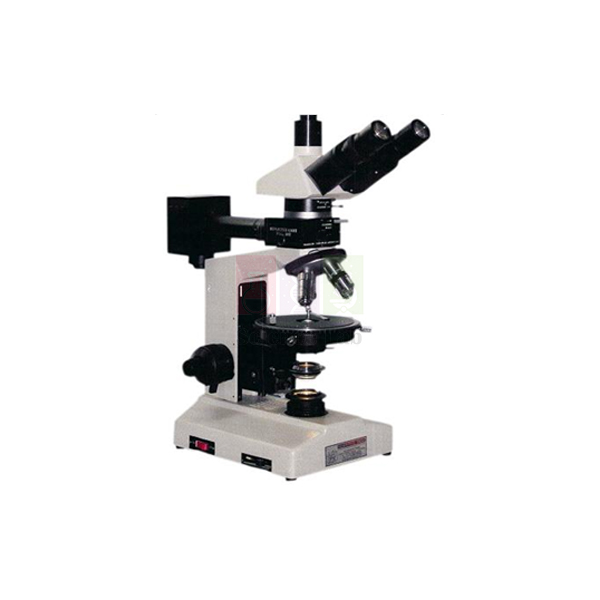
Advance Research Polarising Microscope with Incident Light
Advance Research Polarising Microscope with Incident Light (Product Code: SLE/M/33) is an infinity-corrected trinocular microscope used for polarised-light study of rocks, minerals, ores and crystalline materials in transmission and reflection modes. Geology and materials departments use it with its plan achromatic POL objectives and colour CCD camera with imaging software. It is supplied by Jain Scientific Equipments Pvt Ltd (ScienceLab), Ambala, India, among its laboratory instruments in India and overseas.
Specifications
| Parameter | Detail |
|---|---|
| Frame | For transmission and reflection mode polarisation microscopy, with built-in filter holders |
| Optical system | Infinity corrected |
| Objectives (plan achromatic, polarising) | 4X POL N.A. 0.13, W.D. 17.0 mm; 10X POL N.A. 0.3, W.D. 10.0 mm; 20X POL N.A. 0.5, W.D. 2.1 mm; 40X POL N.A. 0.75, W.D. 1.1 mm |
| Viewing tube | Fixed trinocular tube |
| Illumination | High-power LED light with power supply; built-in transmitted light filters |
| Nosepiece | Minimum 4-position, centrable and detachable |
| Focus stroke | Minimum 22 mm; fine stroke minimum 100 µm |
| Condenser | Strain-free polarising condenser, swing-out type |
| Stage | Circular, rotatable and centerable, 360° graduated mechanical stage |
| Reflected light | Polariser slider for the reflected illumination tube |
| Rotation scale | 360° rotatable, scale interval of 5 |
| Wedge compensator | Wedge shaped, measurement range 0–4λ |
| Camera | Colour CCD camera, specified as minimum 5 megapixel, mounted on the trinocular tube with a suitable adapter |
| Camera sensor and output | 2/3 inch CCD; 1920 x 1080 pixels; pixel size 3.45 x 3.45 µm; 12-bit A/D converter |
| Camera speed and interface | Minimum exposure 1 ms or smaller; 15 frames per second; USB connection to PC |
| Software | Standard imaging software: image acquisition, measurements, point or object detection, aligning multiple images together |
| Product code | SLE/M/33 |
| Supplied by | Jain Scientific Equipments Pvt Ltd (ScienceLab), Ambala, India |
What Is the Polarising Microscope with Incident Light Used For?
Transmitted polarised light reveals the optical properties of transparent minerals in thin sections — birefringence, extinction and interference colours — while incident (reflected) light is needed for opaque material such as ore minerals, metals and polished sections that light cannot pass through. Having both paths on one frame lets a petrology or mineralogy class move from a thin section to a polished ore block without changing instruments.
In practice, the specimen is centred on the rotating graduated stage, observed between crossed polars, and turned to watch extinction positions. The wedge compensator, with its 0–4λ range, helps estimate retardation. The CCD camera and software then capture, measure and stitch images for reports, and the 15 frames per second output is useful for showing a live view to a group.
What to Specify When Ordering
- Whether the colour CCD camera and imaging software are required with the microscope
- Objective set needed (4X, 10X, 20X and 40X POL are listed)
- Your mains voltage for the LED power supply and a computer for the USB camera
- Quantity and any tender specification you must match
Supplier
Jain Scientific Equipments Private Limited, whose trading name is ScienceLab, supplies this polarising microscope from Ambala, Haryana. Universities, geological survey laboratories, institutes, dealers and importers in India and international markets can send their technical specification and receive a quotation for the matching configuration. See the company profile for more about ScienceLab.
Related Laboratory Equipment
Alternatives and items used in the same mineral and ore microscopy work:
- Ore Polarising Microscope — a close alternative with the same POL objective series
- Research Trinocular Ore Microscope — with gypsum, mica and quartz wedge compensators and a vernier stage
- Single Disc Polishing Machine — for preparing polished specimen surfaces
- Mineral ID Starter Set — reference minerals for identification exercises
Other research and student instruments are in the Microscope category.
Frequently Asked Questions
Why does the Advance Research Polarising Microscope have incident light?
The Advance Research Polarising Microscope with Incident Light works in both transmission and reflection modes. Transmitted light is for thin sections of transparent minerals, while incident light, with its own polariser slider, lets you examine opaque ores, metals and polished sections.
Which objectives are fitted to this polarising microscope?
The Advance Research Polarising Microscope with Incident Light uses infinity-corrected plan achromatic POL objectives: 4X (N.A. 0.13, W.D. 17.0 mm), 10X (N.A. 0.3, W.D. 10.0 mm), 20X (N.A. 0.5, W.D. 2.1 mm) and 40X (N.A. 0.75, W.D. 1.1 mm).
What camera and software come with the microscope?
The Advance Research Polarising Microscope with Incident Light is specified with a colour CCD camera on the trinocular tube: 2/3 inch sensor, 1920 x 1080 pixels, 3.45 µm pixels, 12-bit conversion and 15 frames per second over USB, plus software for acquisition, measurement, object detection and image alignment.
What stage and condenser does it use?
The Advance Research Polarising Microscope with Incident Light has a circular, centerable mechanical stage that rotates through a graduated 360°, and a strain-free swing-out polarising condenser, so the polarised light is not disturbed by stress in the condenser glass.
What is the range of the wedge compensator?
The wedge-shaped compensator listed for the Advance Research Polarising Microscope with Incident Light has a measurement range of 0–4λ. Moving the wedge through the light path shifts interference colours, helping the user estimate retardation and birefringence of a mineral grain.
Is a calibration certificate available for this polarising microscope?
Whether a calibration certificate can be supplied with the Advance Research Polarising Microscope with Incident Light should be discussed before ordering. Please raise it in your enquiry through the contact page so we can confirm the available documentation.
Who supplies the Advance Research Polarising Microscope with Incident Light?
The Advance Research Polarising Microscope with Incident Light is supplied by Jain Scientific Equipments Pvt Ltd, trading as ScienceLab, Ambala, Haryana, India, to universities, institutes, dealers and importers in India and international markets.
Request a Quote
Send your specification, camera requirement and quantity for the Advance Research Polarising Microscope with Incident Light through the contact page, or add it to the enquiry cart, and we will prepare a quotation.
Last updated: 24 September 2026
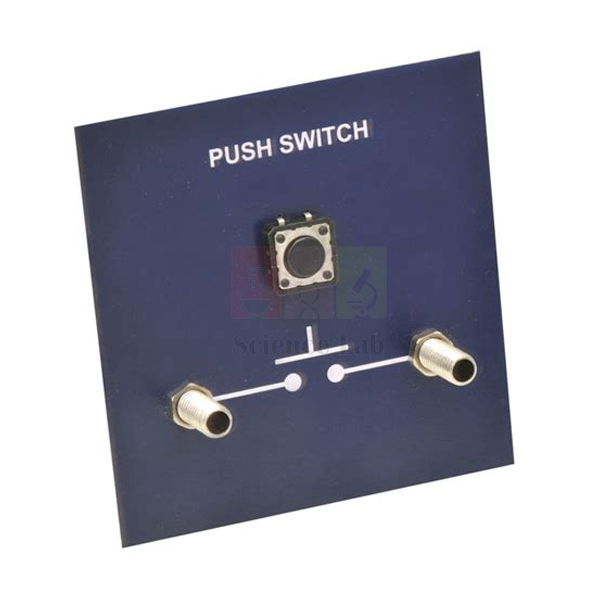
Simple Circuit Module Push Switch
Simple Circuit Module Push Switch (Product Code: SLE/PHY/93) is an on/off push-button switch mounted on a base, used to open and close simple circuits in school electricity lessons. As part of the Simple Circuit Modules series, it lets pupils control LED boards, motors and buzzers from the same range with a press of a button. It is supplied by Jain Scientific Equipments Pvt Ltd (ScienceLab), Ambala, India.
Key Details
| Parameter | Detail |
|---|---|
| Series | Simple Circuit Modules |
| Module type | Push switch |
| Action | On/off push button |
| Mounting | On base |
| Companion modules | LED boards and other Simple Circuit Modules (listed separately) |
| Product code | SLE/PHY/93 |
| Supplied by | Jain Scientific Equipments Pvt Ltd (ScienceLab), Ambala, India |
What Is the Push Switch Module Used For?
The push switch module gives pupils a hands-on way to see how a switch controls a circuit: press the button and the circuit changes state, press again and it changes back. Placed in series with an LED board it demonstrates a complete and a broken circuit. With two switch modules, pupils can model an output that works only when both switches are on (series) or when either one is on (parallel), a first step towards AND and OR logic.
Because the switch is fixed to its own base, it stays in place on the bench while pupils rearrange the rest of the circuit. Leave it in the off position while connecting the supply, and press the button firmly rather than striking it. It is a durable piece of junior science lab equipment for early electricity topics.
What to Specify When Ordering
- Number of push switch modules, for example two per group for series and parallel work.
- Other Simple Circuit Modules required: red or green LED boards, motor, buzzer or lamp holder.
- Delivery location for the complete order.
Supplier
Jain Scientific Equipments Private Limited, known by its trading name ScienceLab, supplies the Simple Circuit Modules range, including this push switch, from Ambala, Haryana, India. Ordering the switch, indicator and motor modules together lets the company quote the whole set at once. Replacement modules or repeat class sets can be requested from us directly. The ScienceLab profile describes the company.
Related Physics Lab Equipment
Output modules from the same series that the push switch can control:
- Simple Circuit Module LED Board Red — a red LED indicator to switch on and off.
- Simple Circuit Module LED Board Green — a green indicator for two-switch logic circuits.
- Simple Circuit Module Buzzer — a sound output module for alarm-style circuits.
- Simple Circuit Module Lamp Holder — a lamp module for classic switch-and-bulb circuits.
- Simple Circuit Module Motor — a low-voltage motor module for switching motion on and off.
The full range is listed under Physics Lab Equipment.
Frequently Asked Questions
What type of switch is the Simple Circuit Module Push Switch?
The Simple Circuit Module Push Switch is an on/off push-button switch mounted on a base. Pressing the button changes the circuit between on and off, so pupils can control lamps, LEDs, buzzers or motors in the circuits they build.
Which modules work with the push switch?
The Simple Circuit Module Push Switch is designed to work with other modules in the same series, such as the LED boards, motor, buzzer and lamp holder modules. Together they let pupils build complete switched circuits on the bench.
Is an LED board included with the Simple Circuit Module Push Switch?
No. The Simple Circuit Module Push Switch is the switch module only. LED boards and other Simple Circuit Modules are listed as separate items, so include every module you need in your enquiry to receive one combined quotation.
What voltage can the push switch module be used at?
The Simple Circuit Module Push Switch listing does not give a voltage or current rating. It is intended for the low-voltage circuits used with the Simple Circuit Modules range; confirm with us through the contact page before using it elsewhere.
Who supplies the Simple Circuit Module Push Switch?
Jain Scientific Equipments Pvt Ltd (ScienceLab), Ambala, Haryana, India, supplies the Simple Circuit Module Push Switch. The company sources it together with the other Simple Circuit Modules and quotes schools, colleges, dealers and importers in India and international markets.
Can the push switch module be ordered in bulk?
Yes. The Simple Circuit Module Push Switch can be ordered in class quantities, on its own or with a full set of Simple Circuit Modules, for customers in India and international markets. State quantities and the destination for an accurate quotation.
Request a Quote
List the push switches and any other Simple Circuit Modules you need and send them through the contact page, or use the enquiry cart. ScienceLab, as the supplier, will reply with one quotation for the whole set.
Last updated: 24 September 2026
309.jpg)
Contact Key (Push Switch)
Contact Key (Push Switch) (Product Code: SLE/PHY/94) is a single contact key on a base, used to close a circuit only while it is pressed during physics practicals such as galvanometer and induction experiments. A plated spring arm with a press knob lifts clear of the contact as soon as it is released, and 4 mm terminals make the key quick to wire into a circuit. It is manufactured by Jain Scientific Equipments Pvt Ltd (ScienceLab), an OEM manufacturer, at its own factory in Ambala, India.
Specifications
| Parameter | Detail |
|---|---|
| Type | Single contact key (push switch) |
| Mounting | On base |
| Moving part | Plated spring arm with press knob |
| Contact | Contact stud |
| Connecting strip | Plated |
| Terminals | 4 mm |
| Product code | SLE/PHY/94 |
| Manufacturer | Jain Scientific Equipments Pvt Ltd (ScienceLab) — OEM |
| Country of origin | India (made in Ambala, Haryana) |
What Is the Contact Key Used For?
A contact key is used wherever current should flow only for a moment: tapping it while watching a galvanometer, closing a circuit briefly to find the balance point on a meter bridge or potentiometer, or switching a coil on and off to show an induced current. Keeping the circuit closed only while a reading is taken also stops resistance wires and cells from warming up or running down, which improves the accuracy of student results.
Press the knob squarely so the spring arm meets the contact stud cleanly, and avoid holding it down longer than necessary. If connections become intermittent, wipe the contact surfaces and check that the 4 mm terminals are tight.
What to Specify When Ordering
- Number of contact keys, usually one per practical bench.
- 4 mm leads needed to connect the key into circuits.
- Delivery location for the quotation.
OEM Manufacturer
The Contact Key is made by ScienceLab, the trading name of Jain Scientific Equipments Private Limited, which acts as the OEM and manufactures it at its own factory at Saha, Ambala, Haryana. Physics departments, dealers and importers order these bench accessories straight from the maker, keeping repeat orders and replacement keys simple to arrange. You can read about the company on its profile page.
Related Physics Lab Equipment
Other switching and measuring items used in the same practicals:
- One Way Key — a plug-type key with brass blocks and a tapered plug for circuits that stay closed.
- Knife Switch – Single Pole, Single Throw — a brass knife switch on a base for latching on/off control.
- Switches (Econ) with Fahnstock clips — low-cost economy switches packed for class sets.
- Stackable Leads — 4 mm leads for wiring the key's terminals.
- Galvanometer 50-0-50mV — a centre-zero moving coil meter read while the key is tapped.
Browse more practical apparatus in Physics Lab Equipment.
Frequently Asked Questions
How does the Contact Key (Push Switch) work?
The Contact Key (Push Switch) closes a circuit when its press knob pushes a plated spring arm onto a contact stud. When the knob is released, the spring lifts the arm away and the circuit opens again, giving momentary control.
What terminals does the Contact Key (Push Switch) have?
The Contact Key (Push Switch) has 4 mm terminals linked through a plated connecting strip, so it accepts the standard 4 mm leads used in school and college physics laboratories.
Which experiments use a contact key?
The Contact Key (Push Switch) is used in experiments that need brief current flow, such as galvanometer null readings, meter bridge and potentiometer balancing, and induction demonstrations. Short contact prevents cells and resistance wires from heating or draining during measurements.
Does the contact key stay on when pressed?
No. The Contact Key (Push Switch) is a momentary key: the circuit is closed only while the knob is held down. For a switch that stays on, choose a knife switch or a plug key from the related items above.
Who manufactures the Contact Key (Push Switch)?
The Contact Key (Push Switch) is manufactured by Jain Scientific Equipments Pvt Ltd (ScienceLab) as the OEM at its own factory in Ambala, Haryana, India, and is sold direct to institutions, dealers and importers.
Can contact keys be ordered for a whole laboratory?
Yes. The Contact Key (Push Switch) can be quoted for a single bench or for entire physics laboratories in India and international markets. Send the quantity, any 4 mm leads required and the delivery destination through the contact page.
Request a Quote
For a quotation on the Contact Key (Push Switch), send your quantity through the contact page or add the key to the enquiry cart. The price comes directly from the manufacturer.
Last updated: 24 September 2026