- Physics Lab Equipment
- Chemistry Lab Equipment
- Biology Lab Equipment
- Anatomical Lab Equipment
- Learning
- Educational Lab Equipment
- Magnets
- Agriculture
- Astronomy
- Earth Science
- Geography Lab Equipment
- Safety Lab Coat
- Laboratory
- Meteorological
- Electricity & Magnetism
- Heat
- School Lab Equipment
- Lab Glassware
- Science Lab Equipment
- Tvet Lab Equipment
- Robotics Kits Supplier and Manufacturer for Schools India
- Math Lab Equipment Manufacturers and Exporters in Ambala
- STEM Kits Manufacturers and Supplier India
- Engineering Lab Equipment
- Hospital Lab Equipment
- Water, Sanitation & Hygiene Supplies
- Cold Chain, Solar & Communication Equipment
- Nutrition
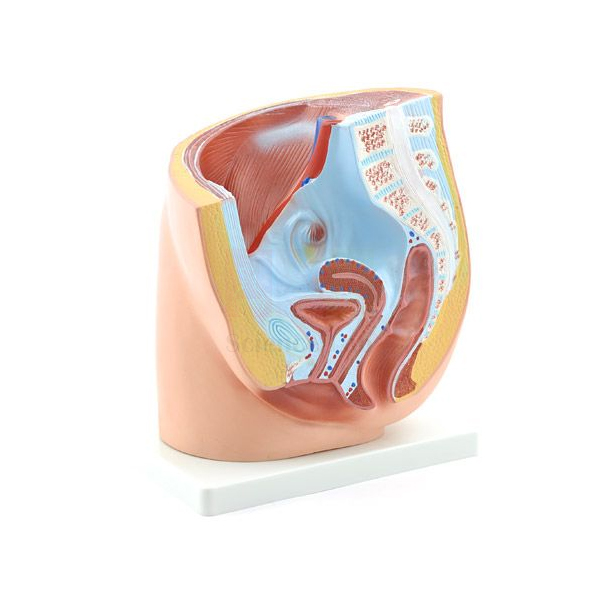
Female Half Pelvis Model
Female Half Pelvis Model (Product Code: SLE/A/04) is an approximately life-size sectional model that lets students look straight into the female pelvis and see how the bladder, uterus and colon sit in relation to one another and to the lower spine. It is used in secondary and senior secondary biology, nursing, midwifery and paramedical classrooms whenever reproductive or pelvic anatomy is taught. As an anatomical models manufacturer, Jain Scientific Equipments Pvt Ltd (ScienceLab) of Ambala supplies it mounted on a blue base with a laminated key.
Specifications
| Parameter | Detail |
|---|---|
| Scale | About life size |
| View | Cross section of a female pelvis |
| Organs in section | Bladder, uterus and colon |
| Skeletal and nervous structures | Structure of the spine and the spinal cord present in the pelvis |
| Base | Mounted on a blue base |
| Key | Laminated key included |
Typical Use
Sectional models answer a question that flat textbook diagrams leave vague: what lies in front of, behind and above what. With this half pelvis, a teacher can show that the bladder sits at the front, the uterus behind it and the colon further back against the spine, then explain how a filling bladder or a growing uterus changes that arrangement. Nursing and midwifery tutors use the same view when discussing catheterisation, pelvic examination or the changes of pregnancy in general terms.
The laminated key survives repeated handling in practical rooms, so students can use it for self-testing without damaging a paper sheet. When building a biology lab equipment India classroom set for reproduction and excretion, many schools place this model next to a skeletal female pelvis so learners can compare the bony framework with the soft organs it protects.
Manufacturer
ScienceLab is the brand under which Jain Scientific Equipments Private Limited, based in Ambala, Haryana, makes anatomy and biology teaching models for schools, colleges and training institutes. Details of the company and its product range are on the ScienceLab profile page.
Related Human Models
Useful companions for a lesson on the pelvis and reproductive system:
- Female Pelvis with Organs — a further view of pelvic organs for side-by-side comparison.
- Female Skeletal Pelvis — the bony pelvis alone, for teaching landmarks and pelvic shape.
- Male Pelvis Section Model — lets students contrast male and female pelvic anatomy.
- Human Female Genital Organs Model — detail of the reproductive organs seen in section here.
See the complete range in the Human Models category.
Frequently Asked Questions
Is the model life size?
It is about life size, which helps students relate what they see to the real body.
Which organs can be seen in the section?
The bladder, uterus and colon are shown in cross section, together with the spine and the spinal cord where they pass through the pelvis.
Does it come with labels?
A laminated key is included, and the model is mounted on a blue base for display.
Is it suitable for school students as well as nursing trainees?
Yes. The sectional view is simple enough for secondary school reproduction topics and detailed enough for introductory nursing and midwifery anatomy.
Can you provide exact dimensions or weight for shipping?
These are not listed on this page. Contact us through the contact page and we will confirm them with your quotation.
Do you supply colleges and distributors outside India?
Yes, ScienceLab supplies institutions in India and international markets; tell us the quantity and destination.
Request a Quote
To order the Female Half Pelvis Model (SLE/A/04), write to us via the contact page or add it to the enquiry cart and submit your list in one go.
Last updated: 24 September 2026
 Type391.jpg)
Chemical Gauntlet (Pair) Type
Chemical Gauntlet (Pair) Type (Product Code: SLE/G/04) is a green, flock-lined nitrile gauntlet used to protect the hands and lower forearms when handling chemicals in chemistry laboratories, preparation rooms and technical workshops. At 320 mm long and 0.38 mm thick, it reaches further up the arm than a standard glove, and its textured pattern improves grip on wet bottles and glassware. It is supplied per pair, in large size 9, by Jain Scientific Equipments Pvt Ltd (ScienceLab), Ambala, India.
Specifications
| Parameter | Detail |
|---|---|
| Type | Chemical-resistant gauntlet |
| Material | Nitrile, cotton flock lined |
| Grip | Textured pattern for enhanced grip |
| Lining | Flock lined for added comfort |
| Length | 320 mm |
| Thickness | 0.38 mm |
| Colour | Green |
| Size | Large, size 9 |
| Sold as | Per pair |
| Product code | SLE/G/04 |
| Supplied by | Jain Scientific Equipments Pvt Ltd (ScienceLab), Ambala, India |
What Is a Chemical Gauntlet Used For?
A gauntlet is simply a glove with an extended cuff. The extra length protects the wrist and lower forearm from splashes when pouring from stock bottles, diluting acids, filling wash bottles or cleaning up a spill, jobs where a short examination glove would leave skin exposed. Lab technicians in school and college chemistry departments often keep a pair beside the chemical store and the preparation bench.
The flock lining makes the gauntlet easier to put on and more comfortable over longer tasks, and the textured surface helps hold smooth, wet containers. Nitrile performs well with many common laboratory chemicals, but no glove resists everything, so check the safety data sheet for each chemical and replace the pair if it swells, cracks or discolours. For buyers sourcing nitrile lab gloves in India, this gauntlet is the option to pick when forearm coverage matters.
What to Specify When Ordering
- Number of pairs required in large size 9.
- Whether other hand sizes are needed (ask us what is available).
- The main chemicals handled, if you would like us to comment on suitability.
Supplier
This gauntlet is supplied by Jain Scientific Equipments Private Limited, trading as ScienceLab, Ambala, Haryana. Chemistry departments, industrial training institutes and distributors can order it with aprons, goggles and lab glassware in a single quotation. Company details are on the ScienceLab profile page.
Related Gloves & Face Masks
Protective items used alongside a chemical gauntlet:
- Gloves, Chemical Resistant — a shorter chemical-resistant glove for lighter tasks.
- Gloves, Nitrile, Orange — another nitrile glove in the range.
- Red PVC Gloves — for wet cleaning and glassware washing.
- Apron, PVC — protects clothing from chemical splashes.
- Safety Goggles — eye protection for the same tasks.
Explore all Gloves & Face Masks.
Frequently Asked Questions
How long and thick is the Chemical Gauntlet (Pair) Type?
The Chemical Gauntlet (Pair) Type is 320 mm long and 0.38 mm thick. The extended length covers the wrist and lower forearm, giving more coverage than a standard-length glove when pouring or mixing chemicals.
What material is the chemical gauntlet made of?
The chemical gauntlet is made of green nitrile with a cotton flock lining. The outer surface has a textured pattern for enhanced grip, and the flock lining adds comfort during longer tasks.
What size is the Chemical Gauntlet (Pair) Type?
The Chemical Gauntlet (Pair) Type is listed as large, size 9, and is sold per pair. If you need other sizes for your staff, ask us through the contact page before placing an order.
Will the chemical gauntlet resist every laboratory chemical?
No glove resists every chemical. The Chemical Gauntlet (Pair) Type is described as chemical resistant, but its suitability depends on the chemical, concentration and contact time, so always check the safety data sheet and inspect the gauntlet before each use.
Who supplies the Chemical Gauntlet (Pair) Type?
The Chemical Gauntlet (Pair) Type is supplied by Jain Scientific Equipments Pvt Ltd (ScienceLab), Ambala, India, to laboratories, schools, colleges and distributors in India and international markets. Send the number of pairs you need for a quotation.
Request a Quote
To price the Chemical Gauntlet (Pair) Type, send the number of pairs through the contact page, or add it to the enquiry cart with other safety equipment.
Last updated: 24 September 2026
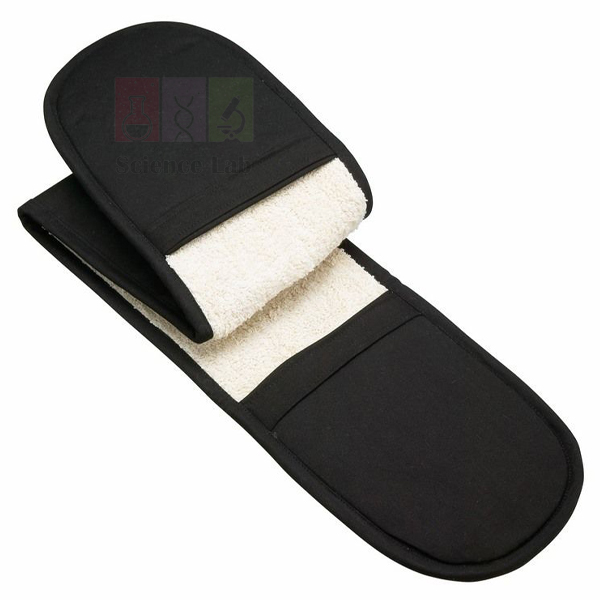
Cotton Chef's Textiles W. Double Oven Gloves
Cotton Chef's Textiles W. Double Oven Gloves (Product Code: SLE/G/05) is a two-handed insulated oven glove, joined by a centre strip, used to lift hot trays and dishes out of ovens in home-science rooms, catering-training kitchens and institutional canteens. It is made from heavy duty cotton with beige embroidered towelling, has steam barriers for added protection, and its two hand pockets sit a generous 51 cm apart. It is supplied by Jain Scientific Equipments Pvt Ltd (ScienceLab), Ambala, India.
Key Details
| Parameter | Detail |
|---|---|
| Type | Insulated double oven glove |
| Material | Heavy duty cotton |
| Finish | Beige towelling, embroidered |
| Protection feature | Steam barriers for added protection |
| Distance between pockets | 51 cm |
| Temperature rating | Not listed — ask us before use with laboratory ovens |
| Product code | SLE/G/05 |
| Supplied by | Jain Scientific Equipments Pvt Ltd (ScienceLab), Ambala, India |
What Are Double Oven Gloves Used For?
A double oven glove links two insulated pockets with a padded strip, so the user slips both hands in and lifts a wide baking tray, roasting tin or casserole evenly with both hands. The 51 cm spacing between the pockets leaves room for large trays, and the continuous strip between them protects the forearms from brushing against the oven door or rack.
In schools and colleges, double oven gloves are part of the kit for food and nutrition, home-science and hospitality practicals, where students take trays in and out of ovens many times in one session. The steam barriers add protection when lifting lids off steaming dishes. Keep the glove dry, since damp cotton conducts heat much faster, and replace it when the padding thins. Institutions buying from a school lab equipment supplier in India often order double and single oven gloves together.
What to Specify When Ordering
- Number of double oven gloves required (one per oven or cooking station is common).
- Whether single oven gloves should be quoted as well.
- The type of oven and typical temperatures, so we can advise on suitability.
Supplier
Jain Scientific Equipments Private Limited supplies these double oven gloves under its trading name ScienceLab from Ambala, Haryana. Schools, catering institutes, hostels and resellers can add them to orders for other kitchen-lab and safety textiles. More about the company is on the ScienceLab profile page.
Related Gloves & Face Masks
Other heat-handling gloves in the range:
- Cotton Chef's Textiles Single Oven Glove — the single-hand version in the same cotton towelling.
- Double Oven Gloves — an alternative two-handed oven glove.
- Seamless Silicone Oven Glove — a silicone option that is easy to wipe clean.
- Oven Glove, Flower Pattern — a patterned single oven glove.
Browse the Gloves & Face Masks category for more.
Frequently Asked Questions
What are the Cotton Chef's Textiles W. Double Oven Gloves made of?
The Cotton Chef's Textiles W. Double Oven Gloves are made from heavy duty cotton with beige embroidered towelling. They are insulated and include steam barriers for added protection when handling hot, steaming dishes.
How far apart are the pockets on the double oven glove?
The pockets on the double oven glove are generously 51 cm apart, which leaves room to lift wide trays and dishes with both hands while the padded centre strip shields the forearms.
Can the double oven gloves be used with laboratory ovens?
The Cotton Chef's Textiles W. Double Oven Gloves are kitchen-style oven gloves, and no temperature rating is listed. Before using them with laboratory drying ovens or other high-temperature equipment, ask us whether a heat-resistant lab glove would be more suitable.
How is a double oven glove different from a single oven glove?
A double oven glove joins two hand pockets with a padded strip for two-handed lifting, while a single oven glove covers one hand. ScienceLab lists both in the same heavy duty cotton towelling.
Who supplies the Cotton Chef's Textiles W. Double Oven Gloves?
The Cotton Chef's Textiles W. Double Oven Gloves are supplied by Jain Scientific Equipments Pvt Ltd (ScienceLab), Ambala, India, to schools, catering institutes and distributors in India and international markets. Send your quantity through the contact page for a quotation.
Request a Quote
Tell us how many Cotton Chef's Textiles W. Double Oven Gloves you need through the contact page, or add them to the enquiry cart.
Last updated: 24 September 2026
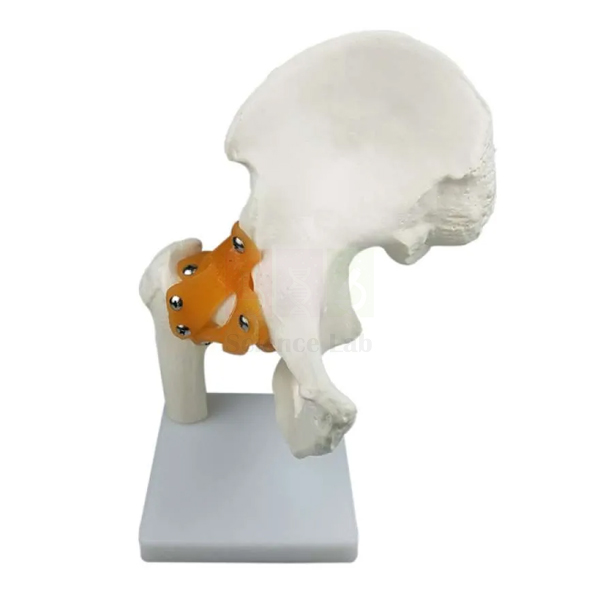
Hip Joint Model
Hip Joint Model (Product Code: SLE/A/05) is an approximately life-sized plastic model of the human hip used to teach the bones and ligaments of this weight-bearing joint in biology and allied-health courses. Ten bone structures and three ligaments are labelled on a laminated key, and the joint sits on a base, 23 × 13 × 15 cm overall — a compact piece of high school biology lab equipment. It is made by Jain Scientific Equipments Pvt Ltd (ScienceLab), an OEM manufacturer, at its own factory in Ambala, India.
Specifications
| Parameter | Detail |
|---|---|
| Material | Plastic |
| Scale | Approximately life-sized |
| Size (with base) | 23 × 13 × 15 cm |
| Labelled bone structures | 10 |
| Labelled ligaments | 3 |
| Key | Laminated key included |
| Mounting | Mounted on a base |
| Product code | SLE/A/05 |
| Manufacturer | Jain Scientific Equipments Pvt Ltd (ScienceLab) — OEM |
| Country of origin | India (made in Ambala, Haryana) |
What Is the Hip Joint Model Used For?
The hip is the classic example of a deep ball-and-socket joint, and this model lets students see how the rounded head of the femur sits within the socket of the pelvis. Working from the laminated key, learners identify the ten labelled bone structures and then the three labelled ligaments, and discuss how those strong ligaments make the hip far more stable than the shoulder — at the cost of some range of movement. It is also a helpful reference when talking about why hip fractures in older people usually involve the neck of the femur.
In physiotherapy and orthopaedic nursing teaching, the model supports explanations of hip replacement and post-operative precautions, while school classes use it within the chapter on joints and locomotion as part of a human biology model set. Its compact base makes it easy to store and to include in orders for several labs.
OEM Manufacturer
Jain Scientific Equipments Private Limited manufactures the Hip Joint Model as its OEM (original equipment manufacturer) and sells it under the ScienceLab brand. Production takes place at the company's own licensed factory at Saha, Ambala, Haryana, India.
Schools, colleges, dealers and importers are therefore quoted by the maker rather than by a middleman, and additional units for matching lab sets can be ordered from the same source. See our company profile for details.
Related Bone Models
Models that extend a lesson on the hip and lower limb:
- Human Hip Joint Model — an alternative hip joint model for comparison or additional group sets
- Human Femur Bone Model — the thigh bone whose head forms the ball of the hip joint
- Male Skeletal Pelvis — the pelvis that provides the hip socket, with its own labelled key
- Human Knee Joint Model, Life Size — the joint at the lower end of the femur
The Bone Model category lists all our joint, pelvis and skeleton models.
Frequently Asked Questions
How many structures are labelled on the Hip Joint Model?
The Hip Joint Model has ten labelled bone structures and three labelled ligaments, all identified on the included laminated key, so students can work through the joint without needing a separate chart.
What size is the Hip Joint Model?
The Hip Joint Model measures 23 × 13 × 15 cm including its base, and the joint itself is approximately life-sized, which keeps it easy to store and to set out on a bench.
Is the Hip Joint Model a left or right hip?
The side is not specified in our current product information for the Hip Joint Model (SLE/A/05). Please contact us if you need a particular side and the manufacturer will confirm before quoting.
What is the Hip Joint Model made of?
The Hip Joint Model is made of plastic and mounted on a base, so it stands securely on a desk while students compare the labelled bones and ligaments against the laminated key.
How do I keep the Hip Joint Model clean?
Remove dust from the Hip Joint Model with a soft brush and wipe the base with a lightly damp cloth. Keep the laminated key with the model so the labels can always be checked.
Who manufactures the Hip Joint Model?
Jain Scientific Equipments Pvt Ltd (ScienceLab) is the OEM of the Hip Joint Model and makes it at its own factory at Saha, Ambala, Haryana, India; institutions and dealers receive quotations straight from the manufacturer.
Can the Hip Joint Model be supplied for export?
Yes. ScienceLab supplies the Hip Joint Model to institutions and distributors in India and international markets. Share the destination country and quantity, and the manufacturer will prepare a quotation.
Request a Quote
Get a manufacturer's quotation for the Hip Joint Model through our contact form, or add it to your enquiry cart.
Last updated: 24 September 2026
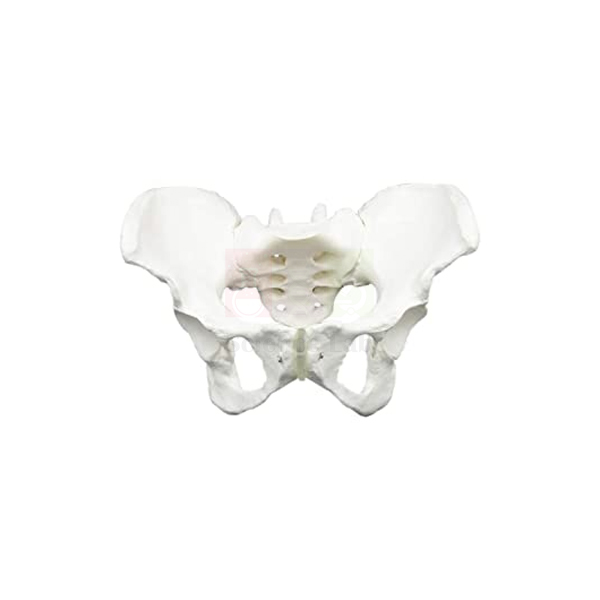
Female Skeletal Pelvis
Female Skeletal Pelvis (Product Code: SLE/A/06) is an approximately life-sized plastic model of the female bony pelvis used to teach pelvic anatomy and the birth canal in midwifery, nursing, obstetrics and biology classes. It comes unmounted, so it can be held and turned freely, and an included key identifies 36 labelled structures. It is made by Jain Scientific Equipments Pvt Ltd (ScienceLab), an OEM manufacturer of human anatomical models, at its own factory in Ambala, India.
Specifications
| Parameter | Detail |
|---|---|
| Type | Female skeletal pelvis |
| Material | Plastic |
| Scale | Approximately life-sized |
| Mounting | Unmounted |
| Labelled structures | 36, identified on the included key |
| Product code | SLE/A/06 |
| Manufacturer | Jain Scientific Equipments Pvt Ltd (ScienceLab) — OEM |
| Country of origin | India (made in Ambala, Haryana) |
What Is the Female Skeletal Pelvis Used For?
The female pelvis is shaped for childbirth, and that makes it one of the most practical models in a midwifery or obstetrics classroom. Because it is unmounted, a tutor can hold it at the angle it sits in the body and show the pelvic inlet, cavity and outlet through which a baby passes during labour. Students use the key to find the 36 labelled structures, then relate landmarks they can see on the model to the ones used in clinical assessment.
In general biology and anatomy classes, the female pelvis is best taught next to a male one: the wider, shallower shape and broader angle below the pubic bones become obvious when the two are compared on the bench. Adding both to a human biology model set gives students a hands-on way to learn how skeletal remains can indicate sex.
OEM Manufacturer
Jain Scientific Equipments Private Limited, trading as ScienceLab, is the OEM (original equipment manufacturer) of the Female Skeletal Pelvis and produces it at its own licensed factory at Saha, Ambala, Haryana, India.
Midwifery schools, nursing colleges, dealers and importers are supplied factory-direct, and orders for matching pelvis models can be placed with the same manufacturer. More information is on our company profile.
Related Bone Models
Models commonly used with a female pelvis in comparative and obstetric teaching:
- Male Skeletal Pelvis — the matching male pelvis for side-by-side comparison of shape
- Human Birth Demonstration Model — shows the stages of delivery through the birth canal
- Fetal Skull — for explaining how the baby's head passes through the pelvis
- Female Pelvis with Organs — adds the pelvic organs to the bony framework
- Human Adult Female Pelvis Structural Model — an alternative female pelvis model
Other pelvic, joint and skeleton models are available in the Bone Model category.
Frequently Asked Questions
How many structures does the key for the Female Skeletal Pelvis identify?
The key supplied with the Female Skeletal Pelvis identifies 36 labelled structures, giving students a complete reference for the bones and landmarks of the pelvis during obstetric and anatomy practicals.
Does the Female Skeletal Pelvis come on a stand?
No. The Female Skeletal Pelvis is unmounted, which makes it easy to hold at the angle it sits in the body and to rotate during obstetric demonstrations of the pelvic inlet, cavity and outlet.
Is the Female Skeletal Pelvis life size?
The Female Skeletal Pelvis is an approximately life-sized plastic representation of the female pelvis. Exact measurements are not in our current listing; contact us and the manufacturer will confirm them before you order.
Is there a male pelvis for comparison with the Female Skeletal Pelvis?
Yes. The Male Skeletal Pelvis (SLE/A/07) is listed as a companion model, and many colleges order it with the Female Skeletal Pelvis so differences in shape can be compared side by side.
How should the Female Skeletal Pelvis be stored?
Because the Female Skeletal Pelvis is unmounted, rest it on a padded shelf or in a box rather than on its edge so it cannot roll or fall, and clean it with a soft, slightly damp cloth.
Who manufactures the Female Skeletal Pelvis?
The Female Skeletal Pelvis is manufactured by Jain Scientific Equipments Pvt Ltd (ScienceLab), the OEM, at its own factory at Saha, Ambala, Haryana, India, and is supplied factory-direct to nursing colleges, schools, dealers and importers.
How do nursing colleges order the Female Skeletal Pelvis?
To order the Female Skeletal Pelvis, send the product code SLE/A/06, the quantity and the delivery address in India or overseas through our contact page, and the manufacturer will reply with a formal quotation.
Request a Quote
For a quotation from the manufacturer on the Female Skeletal Pelvis, contact us or add it to your enquiry cart — together with the male pelvis if you plan comparison teaching.
Last updated: 24 September 2026
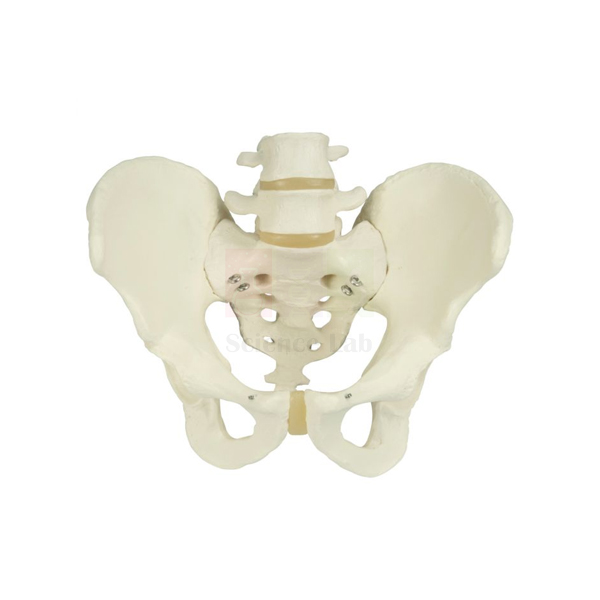
Male Skeletal Pelvis
Male Skeletal Pelvis (Product Code: SLE/A/07) is an approximately life-sized plastic model of the male bony pelvis used to teach the pelvic girdle, and how it differs from the female pelvis, in anatomy, physiotherapy and forensic-science classes. An included key identifies 36 labelled structures, which makes it a self-checking biology teaching aid for pelvic anatomy. It is made by Jain Scientific Equipments Pvt Ltd (ScienceLab), an OEM manufacturer, at its own factory in Ambala, India.
Specifications
| Parameter | Detail |
|---|---|
| Type | Male skeletal pelvis |
| Material | Plastic |
| Scale | Approximately life-sized |
| Labelled structures | 36, identified on the included key |
| Product code | SLE/A/07 |
| Manufacturer | Jain Scientific Equipments Pvt Ltd (ScienceLab) — OEM |
| Country of origin | India (made in Ambala, Haryana) |
What Is the Male Skeletal Pelvis Used For?
A first session usually walks through the pelvic girdle as a whole: the two hip bones, the sacrum at the back and the joints that hold them in a ring. With the key in hand, students locate each of the 36 labelled structures and note the attachment points for the powerful muscles of the hip and trunk. The model then becomes a reference for how body weight passes from the vertebral column through the pelvis to the legs.
Placed next to a female pelvis, it shows the classic differences clearly — a taller, narrower and heavier build with a tighter angle below the pubic bones — which is why anatomy, physical anthropology and introductory forensic courses keep both. Physiotherapy students also use it when studying pelvic alignment and posture.
OEM Manufacturer
As OEM (original equipment manufacturer), Jain Scientific Equipments Private Limited — the company that trades as ScienceLab — makes the Male Skeletal Pelvis at its own licensed factory at Saha, Ambala, Haryana, India.
Colleges ordering a male and female pair can have both quoted by one manufacturer, with no trader in between, and repeat orders follow the same route. Visit the company profile to read more.
Related Bone Models
Items that support pelvic anatomy and comparison lessons:
- Female Skeletal Pelvis — the companion female pelvis for side-by-side comparison
- Male Pelvis Section Model — shows the organs contained within the male pelvis
- Human Pelvis Structural Model With 5 Pcs Lumbar Vertebraes — connects the pelvis to the lower spine
- Hip Joint Model — the joint where the pelvis meets the femur
- Human Adult Male Pelvis Structural Model — an alternative male pelvis model
See the full Bone Model category for more skeletal models.
Frequently Asked Questions
How many structures are labelled on the Male Skeletal Pelvis?
The included key for the Male Skeletal Pelvis identifies 36 labelled structures, so students can find each bone, joint and landmark of the pelvic girdle and check their answers without a separate chart.
What material is the Male Skeletal Pelvis made of?
The Male Skeletal Pelvis is made of plastic and is approximately life-sized, which lets students handle it during practicals and compare it directly with a female pelvis or a full skeleton.
Is the Male Skeletal Pelvis mounted on a base or stand?
Mounting is not specified in our current listing for the Male Skeletal Pelvis (SLE/A/07). Contact us and the manufacturer will confirm how the model is supplied before you place an order.
Can the Male Skeletal Pelvis be bought with the female pelvis as a pair?
Yes. The Male Skeletal Pelvis and the Female Skeletal Pelvis are listed separately and can be quoted together; mention both codes, SLE/A/07 and SLE/A/06, in your enquiry for comparison teaching.
How should the Male Skeletal Pelvis be cared for?
Handle the Male Skeletal Pelvis with both hands, keep it away from heat sources, and clean the surface with a soft damp cloth rather than chemical cleaners so the labelled structures stay easy to read.
Who manufactures the Male Skeletal Pelvis?
Jain Scientific Equipments Pvt Ltd (ScienceLab) manufactures the Male Skeletal Pelvis as the OEM at its own factory at Saha, Ambala, Haryana, India, and quotes directly to colleges, schools, dealers and importers.
Do you accept bulk and overseas orders for the Male Skeletal Pelvis?
Yes. ScienceLab supplies the Male Skeletal Pelvis to institutions and distributors in India and international markets. Tell us the quantity and delivery country to receive a quotation from the manufacturer.
Request a Quote
Request a price for the Male Skeletal Pelvis, quoted direct by the manufacturer, via our contact page, or add it to the enquiry cart.
Last updated: 24 September 2026
Human Skull
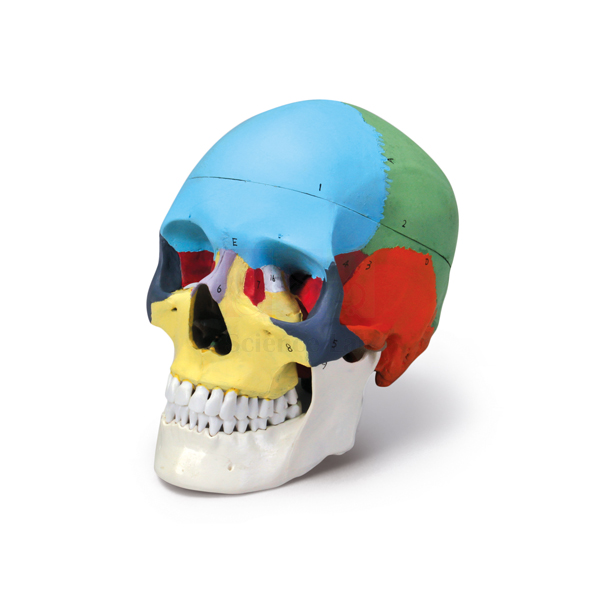
Human Skull (Product Code: SLE/A/08) is a life-sized, colour-coded plastic skull model used to teach the names and boundaries of the cranial and facial bones in school and college anatomy lessons. Each bone is coloured differently and a key to the bones and structures is included, while the jaw and skull cap both come off. It is made by Jain Scientific Equipments Pvt Ltd (ScienceLab), an OEM manufacturer, at its own factory in Ambala, India.
Specifications
| Parameter | Detail |
|---|---|
| Material | Plastic |
| Scale | Life-sized |
| Mounting | Unmounted (no stand) |
| Bone identification | Colour-coded bones |
| Removable parts | Jaw and skull cap |
| Included | Key to identify bones and structures |
| Product code | SLE/A/08 |
| Manufacturer | Jain Scientific Equipments Pvt Ltd (ScienceLab) — OEM |
| Country of origin | India (made in Ambala, Haryana) |
What Is the Colour-Coded Human Skull Used For?
Beginners often struggle to see where one skull bone ends and the next begins, because on real bone the sutures are faint. Colour coding solves that: the frontal, parietal, temporal and occipital bones of the vault, and facial bones such as the maxilla, zygomatic and nasal bones, stand out as separate blocks of colour. A typical lesson has students name each coloured region, then cover the key and quiz each other until they can identify every bone without help.
Lifting off the skull cap moves the class from the outside of the cranium to the floor inside it, and removing the jaw exposes the mandible for separate study. Because the model is unmounted, it can be turned upside down to examine the base of the skull and the large opening where the spinal cord passes. It is a staple of school biology lab equipment in India, from secondary classes to first-year nursing and paramedical courses.
OEM Manufacturer
ScienceLab is the trading name of Jain Scientific Equipments Private Limited, the OEM (original equipment manufacturer) that makes this colour-coded skull at its own licensed factory in Saha, Ambala, Haryana, India. Schools, colleges, distributors and importers buy it factory-direct, and every quotation is prepared by the maker rather than a reseller.
Purchase departments that need vendor registration details can record the company's GSTIN 06AAECJ8618A1ZT and its Legal Entity Identifier 3358004HRD1JIVXKYX49. If a skull cap or jaw is lost, ask us about a replacement part. Read more on the ScienceLab company profile.
Related Skulls
Teachers building a skull-identification station often add these items:
- Human Skull Model — a 3-part skull with number-coded bones for numbered identification tests.
- Economy Human Skull — a detailed plastic skull showing sutures, foramina and processes, useful once students know the bones.
- Human Skull Bones Model — for studying the skull bones in more detail.
- Human Skull Storage Case, Black Plastic — keeps the skull, jaw and cap together between lessons.
- Human Brain Model in Head — shows what sits inside the cranium.
The Skulls category lists every human and animal skull model in the range.
Frequently Asked Questions
What makes the Human Skull easy to learn from?
The Human Skull is colour-coded, so each bone is a different colour and its edges are easy to follow. A key to identify the bones and structures is included, which lets students check their own answers during revision or self-study.
Which parts of the Human Skull are removable?
Both the jaw and the skull cap of the Human Skull are removable. Taking off the skull cap shows the inside of the cranium, and removing the jaw lets students examine the mandible separately from the rest of the skull.
Does the Human Skull come on a stand?
No. The Human Skull is an unmounted, life-sized model without a stand, so it can be picked up, turned over and passed along a bench to examine the base of the skull as well as the face and the top of the cranium.
How should the Human Skull be cleaned and stored?
The plastic Human Skull can be wiped with a soft, damp cloth; avoid solvents that could dull the colour coding. Store it away from direct sunlight, with the jaw and skull cap kept together, ideally in a closed case on a low shelf.
Who manufactures the Human Skull?
The Human Skull (SLE/A/08) is manufactured by Jain Scientific Equipments Pvt Ltd (ScienceLab), the OEM, at its own licensed factory at Saha, Ambala, Haryana, India. Buyers deal directly with the manufacturer for quotations and repeat orders.
What should a quotation request for the Human Skull include?
A quotation request for the Human Skull should give the product code SLE/A/08, the number of skulls needed and the delivery city or country. List any other models you need, such as a storage case, so everything can be quoted together.
Request a Quote
Ask for a price on the Human Skull through our contact page, or add it to the enquiry cart with any other models you need. The quotation comes straight from the manufacturer.
Last updated: 24 September 2026
Elbow Joint Model Human
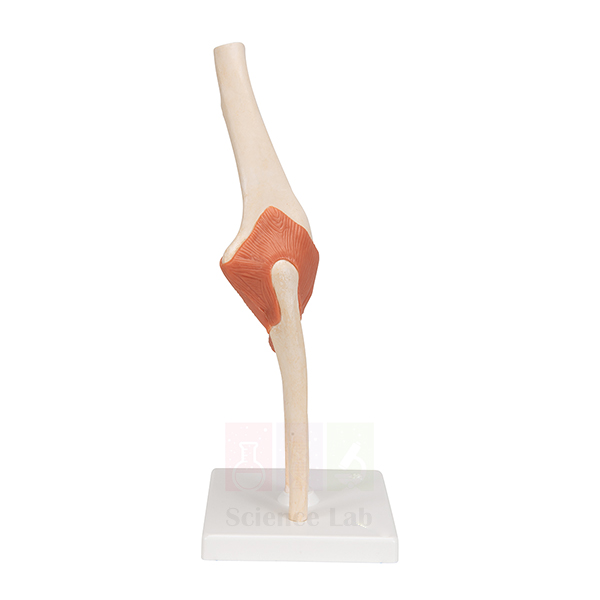
Elbow Joint Model Human (Product Code: SLE/A/09) is a life-sized plastic model of the human elbow used to teach its skeletal structures and major ligaments in biology, nursing, physiotherapy and sports-science classes. Ten structures are labelled and listed on a laminated key, and the joint is mounted on a base, 23 × 11.5 × 11.5 cm overall, making it a compact item of school biology lab equipment. It is made by Jain Scientific Equipments Pvt Ltd (ScienceLab), an OEM manufacturer, at its own factory in Ambala, India.
Specifications
| Parameter | Detail |
|---|---|
| Material | Plastic |
| Scale | Life-sized |
| Structures shown | Skeletal structures and major ligaments of the elbow |
| Labelled structures | 10 |
| Key | Laminated key included |
| Size (with base) | 23 × 11.5 × 11.5 cm |
| Mounting | Mounted on a base |
| Product code | SLE/A/09 |
| Manufacturer | Jain Scientific Equipments Pvt Ltd (ScienceLab) — OEM |
| Country of origin | India (made in Ambala, Haryana) |
What Is the Elbow Joint Model Used For?
The elbow is where three bones — the humerus of the upper arm and the radius and ulna of the forearm — come together, and this model makes that meeting point easy to see. Students use the laminated key to name the ten labelled structures, then look at how the major ligaments hold the hinge together. The lesson extends naturally to the difference between bending and straightening at the elbow and the turning of the forearm that lets the palm face up or down.
Sports science and physiotherapy tutors often use it to point out where common overuse injuries such as tennis elbow arise, while school biology classes use it as a hinge-joint example next to ball-and-socket joints like the shoulder and hip. Its small footprint makes it a practical addition to a shelf of biology teaching aids.
OEM Manufacturer
The Elbow Joint Model Human is produced at the licensed factory of Jain Scientific Equipments Private Limited at Saha, Ambala, Haryana, India. The company trades as ScienceLab and is the model's OEM (original equipment manufacturer), so buyers get it from the maker rather than from a reseller.
Ask us about a replacement key or additional units for another lab, and the manufacturer will respond directly. The company's background is summarised on our company profile page.
Related Bone Models
Useful models for continuing an elbow and upper-limb lesson:
- Functional Elbow Joint — a working elbow model for demonstrating movement
- Human Elbow Cross-Section Model — shows the internal layers of the elbow region
- Shoulder Joint Model — the labelled joint at the upper end of the humerus
- Human Hand Joint Model — completes the upper limb with the joints of the hand
You can view all joint and skeleton models in our Bone Model category.
Frequently Asked Questions
How many parts are labelled on the Elbow Joint Model Human?
The Elbow Joint Model Human has ten labelled structures, and all of them are listed on the laminated key supplied with the model, so students can check each bone and ligament on their own.
How big is the Elbow Joint Model Human?
The Elbow Joint Model Human is life-sized and measures 23 × 11.5 × 11.5 cm including its base, a small footprint that suits a shelf of teaching models or a crowded practical bench.
Does the Elbow Joint Model Human show ligaments?
Yes. The Elbow Joint Model Human shows the major ligaments of the elbow together with its skeletal structures, so students can see how soft tissue holds the humerus, radius and ulna together at the joint.
Can the Elbow Joint Model Human be flexed?
Movement is not described in our listing for the Elbow Joint Model Human, which is designed for identifying structures. For demonstrating motion, consider the Functional Elbow Joint, or contact us to check before ordering.
What is the best way to clean the Elbow Joint Model Human?
Dust the Elbow Joint Model Human with a soft brush, wipe the plastic with a barely damp cloth, and dry it before returning it to the shelf, keeping the laminated key alongside the model.
Who manufactures the Elbow Joint Model Human?
The Elbow Joint Model Human is manufactured by Jain Scientific Equipments Pvt Ltd (ScienceLab), the OEM, at its own factory at Saha, Ambala, Haryana, India, so quotations and repeat orders come directly from the maker.
What details are needed for a college purchase order for the Elbow Joint Model Human?
A purchase order for the Elbow Joint Model Human should give the product code SLE/A/09, the number of units, billing and delivery addresses, and whether delivery is within India or to international markets.
Request a Quote
For a manufacturer's quotation on the Elbow Joint Model Human, contact us or add it to your enquiry cart.
Last updated: 24 September 2026