- Physics Lab Equipment
- Chemistry Lab Equipment
- Biology Lab Equipment
- Anatomical Lab Equipment
- Learning
- Educational Lab Equipment
- Magnets
- Agriculture
- Astronomy
- Earth Science
- Geography Lab Equipment
- Safety Lab Coat
- Laboratory
- Meteorological
- Electricity & Magnetism
- Heat
- School Lab Equipment
- Lab Glassware
- Science Lab Equipment
- Tvet Lab Equipment
- Robotics Kits Supplier and Manufacturer for Schools India
- Math Lab Equipment Manufacturers and Exporters in Ambala
- STEM Kits Manufacturers and Supplier India
- Engineering Lab Equipment
- Hospital Lab Equipment
- Water, Sanitation & Hygiene Supplies
- Cold Chain, Solar & Communication Equipment
- Nutrition
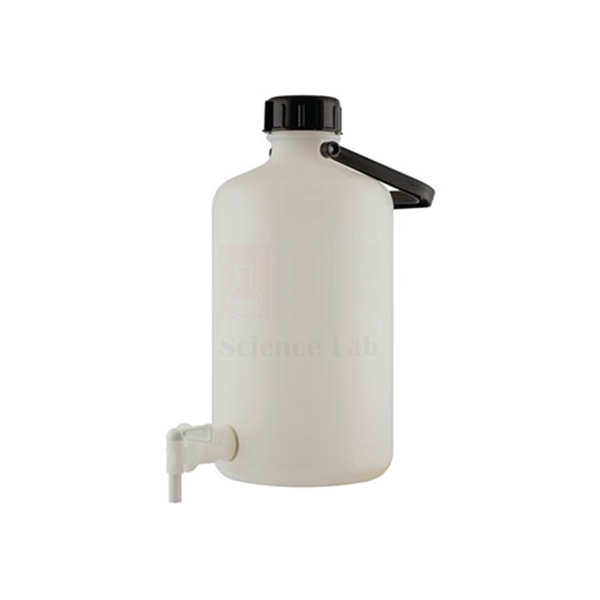
Aspirator with stopcock
Aspirator with stopcock (Product Code: SLE/P/31) is a laboratory storage vessel fitted with a stopcock outlet, used to hold and dispense distilled water or prepared solutions in school, college and industrial laboratories. It has a carrying handle, is built strong and durable for extended use, and can be used in ambient temperatures below 0°C. The aspirator is made by Jain Scientific Equipments Pvt Ltd (ScienceLab), an OEM manufacturer, at its own factory in Ambala, India.
Specifications
| Parameter | Detail |
|---|---|
| Capacity options | 10, 20, 30 (unit not stated in our listing; confirm with us) |
| Outlet | Stopcock |
| Handle | Carrying handle |
| Cap | Cap with holes to seal |
| Operating conditions | Can be used in ambient temperatures below 0°C |
| Construction | Strong and durable for extended use |
| Product code | SLE/P/31 |
| Manufacturer | Jain Scientific Equipments Pvt Ltd (ScienceLab) — OEM |
| Country of origin | India (made in Ambala, Haryana) |
What Is the Aspirator Bottle Used For?
An aspirator stores a working volume of liquid and releases it through its stopcock, so users can fill wash bottles, beakers or flasks without lifting and tipping a heavy container. Laboratories typically keep one filled with distilled or deionised water on a shelf above the bench, or use it as a reservoir for a stock solution that several groups draw from during a practical.
Place the aspirator on a firm raised surface so a vessel fits under the stopcock, fill it through the cap opening, and close the stopcock fully before lifting it by the carrying handle. Because it can be used in ambient temperatures below 0°C, it also suits cold rooms and unheated stores in winter. An aspirator is a useful part of any new school lab setup in India, keeping distilled water within reach of the benches.
What to Specify When Ordering
- Which capacity option you need: 10, 20 or 30 (we will confirm the unit with your quotation).
- How many aspirators of each capacity.
- The liquid you plan to store, so we can confirm suitability.
OEM Manufacturer
The Aspirator with stopcock is an OEM product of Jain Scientific Equipments Private Limited, which trades as ScienceLab. It is made at the company’s own licensed factory at Saha, Ambala, Haryana, so capacity questions and quotations are answered by the maker itself rather than a middleman. Institutions, dealers and importers order it factory-direct. Find out more about the company on the ScienceLab profile page.
Related Scientific Lab Plasticware
Other storage and dispensing vessels for laboratory liquids:
- Aspirator Polythene — a polythene aspirator alternative.
- Aspirator Bottles Borosilicate — glass aspirators for solutions that need glass.
- Polypropylene Carboys — large containers for bulk liquid storage.
- Stopcock — a separate stopcock for lab assemblies.
- Widemouthed Wash Bottles — bench bottles filled from the aspirator.
See more in Scientific Lab Plasticware.
Frequently Asked Questions
What capacities is the Aspirator with stopcock available in?
The Aspirator with stopcock is listed in capacities of 10, 20 and 30, but the unit is not stated in our listing. Please confirm the capacity you need through the contact page and we will state it clearly on the quotation.
Can the Aspirator with stopcock be used in cold conditions?
Yes. The Aspirator with stopcock can be used in ambient temperatures below 0°C, so it can stay in cold rooms or unheated stores. Close the stopcock before moving it and avoid knocking the outlet.
How is the Aspirator with stopcock carried and closed?
The Aspirator with stopcock has a carrying handle for moving it and a cap with holes to seal. Close the stopcock fully and fit the cap before carrying a filled aspirator from the store to the bench.
What liquids can be stored in the Aspirator with stopcock?
The Aspirator with stopcock is commonly used for distilled water and prepared laboratory solutions. The body material is not stated in the listing, so tell us the liquid you plan to store and we will confirm suitability before you order.
Who manufactures the Aspirator with stopcock?
The Aspirator with stopcock is manufactured in India by Jain Scientific Equipments Pvt Ltd (ScienceLab), the OEM, at the company’s own factory in Saha, Ambala, Haryana. Capacity and suitability questions are answered by the manufacturer itself.
Is the Aspirator with stopcock available for export orders?
Yes. The Aspirator with stopcock is supplied to laboratories, dealers and importers in India and international markets. Send the capacity, quantity and destination through the enquiry cart or contact page for a quotation.
Request a Quote
To price the Aspirator with stopcock, send your capacity and quantity through the contact page or add it to the enquiry cart. The manufacturer quotes you directly.
Last updated: 24 September 2026
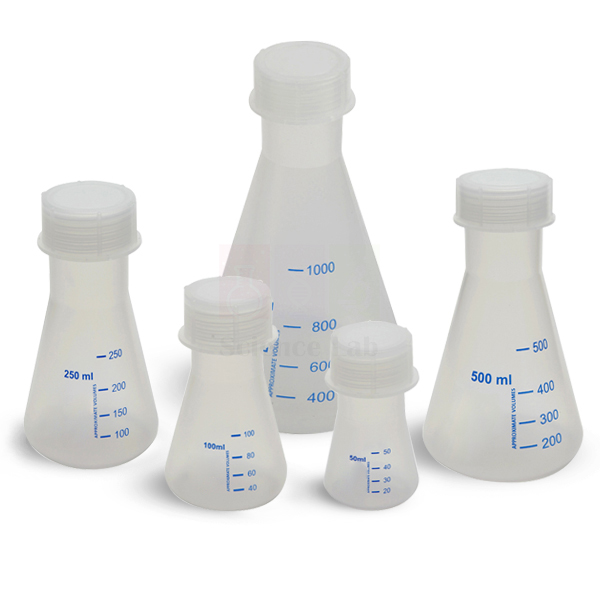
Polypropylene Conical Flask with Screw Cap
Polypropylene Conical Flask with Screw Cap (Product Code: SLE/P/32) is a wide-neck Erlenmeyer flask made of polypropylene with a PP screw cap, used to mix, store and carry solutions in school, college and research laboratories. It is offered in five capacities from 50 mL to 1000 mL, giving a lightweight plastic alternative to glass conical flasks for routine work. The flask is made by Jain Scientific Equipments Pvt Ltd (ScienceLab), an OEM manufacturer, at its own factory in Ambala, India.
Specifications
| Parameter | Detail |
|---|---|
| Type | Conical (Erlenmeyer) flask, wide neck |
| Material | Polypropylene (PP) |
| Closure | PP wide screw cap |
| Capacities | 50 mL, 100 mL, 250 mL, 500 mL, 1000 mL |
| Product code | SLE/P/32 |
| Manufacturer | Jain Scientific Equipments Pvt Ltd (ScienceLab) — OEM |
| Country of origin | India (made in Ambala, Haryana) |
What Is the Polypropylene Conical Flask Used For?
The conical shape lets you swirl a solution vigorously without splashing, which is why Erlenmeyer flasks are standard for titrations, dissolving solids and mixing reagents. This version adds a screw cap, so the same flask can also store a prepared solution or carry it to another room with the cap closed. A wide neck makes filling, cleaning and adding solids easier than with a narrow-neck flask.
Polypropylene flasks are a sensible choice for younger students and field work, where dropped glassware is a real risk. Keep them away from open flames and hot plates set at high temperatures, and use glass flasks when strong heating is needed. When buying conical flasks for school practicals in India, it helps to keep a plastic set for handling and storage and a glass set for heating.
What to Specify When Ordering
- The capacity or capacities you need: 50, 100, 250, 500 or 1000 mL.
- The quantity of each capacity per lab or per student group.
- Whether you also want the glass Conical Flask with Screw Cap quoted for heating work.
OEM Manufacturer
Jain Scientific Equipments Private Limited, trading as ScienceLab, is the OEM of the Polypropylene Conical Flask with Screw Cap. All five capacities come from the company’s own licensed factory at Saha, Ambala, Haryana, which means a mixed order of different sizes can be quoted in one go by the maker. Schools, colleges, dealers and importers buy direct from the manufacturer rather than through a trader. See the ScienceLab company profile for more about the company.
Related Scientific Lab Plasticware
Items used alongside conical flasks when preparing and measuring solutions:
- Conical Flask with Screw Cap — the glass version for work that involves heating.
- Beaker, Polypropylene, Set of 4 — plastic beakers for mixing and pouring.
- Measuring Cylinder Set of 5 — for measuring volumes before transfer to the flask.
- Polythene Filter Funnels — for filtering into the flask neck.
- Container with sc cap — wide-neck storage for powders and samples.
Find more in Scientific Lab Plasticware.
Frequently Asked Questions
What capacities does the Polypropylene Conical Flask with Screw Cap come in?
The Polypropylene Conical Flask with Screw Cap comes in 50 mL, 100 mL, 250 mL, 500 mL and 1000 mL capacities. Each capacity is an Erlenmeyer flask with a wide neck and a PP screw cap.
What is the screw cap of the Polypropylene Conical Flask made of?
The Polypropylene Conical Flask with Screw Cap is closed with a wide screw cap made of PP (polypropylene), the same material as the flask body, so flask and cap can be washed together.
Can the Polypropylene Conical Flask with Screw Cap be heated?
The Polypropylene Conical Flask with Screw Cap is a plastic flask, so do not heat it over a flame or on a very hot plate. For experiments that need strong heating, use the glass Conical Flask with Screw Cap; ask us if you need guidance for your procedure.
Why choose a polypropylene conical flask instead of glass?
A Polypropylene Conical Flask with Screw Cap is lighter than glass and far less likely to shatter if dropped, which suits junior classes, field trips and storage of solutions. Glass remains the better choice for heating and some organic solvents.
Who manufactures the Polypropylene Conical Flask with Screw Cap?
All five capacities of the Polypropylene Conical Flask with Screw Cap are made by Jain Scientific Equipments Pvt Ltd (ScienceLab), the OEM, at its own licensed factory in Saha, Ambala, India, so a mixed-size order is quoted by one manufacturer.
What details should a quotation request for the Polypropylene Conical Flask include?
For the Polypropylene Conical Flask with Screw Cap, list each capacity you need with its quantity and the delivery location in India or abroad. Send the list through the enquiry cart or the contact page.
Request a Quote
Request a price for the Polypropylene Conical Flask with Screw Cap in one or more capacities through the contact page or the enquiry cart. The manufacturer prepares the quotation directly.
Last updated: 24 September 2026
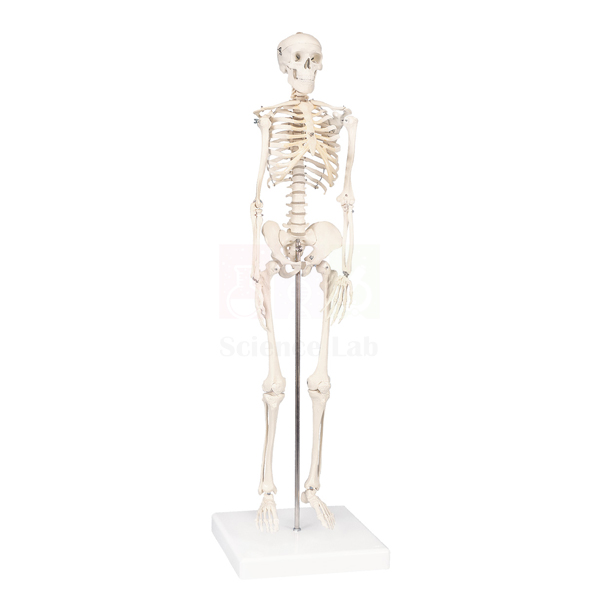
Human Skeleton
Human Skeleton (Product Code: SLE/A/01) is a miniature plastic skeleton model used to give students a close-up view of the bones of the human body on the classroom bench. Its axial skeleton is coloured blue and its appendicular skeleton white, so learners can tell the two divisions apart at a glance; the skull cap lifts off, the jaw is hinged and the joints are articulated. It is manufactured by Jain Scientific Equipments Pvt Ltd (ScienceLab), an OEM manufacturer, at its own factory in Ambala, India.
Key Details
| Parameter | Detail |
|---|---|
| Scale | Miniature skeleton |
| Material | Plastic |
| Colour coding | Axial skeleton in blue; appendicular skeleton in white |
| Skull | Removable skull cap; hinged jaw |
| Joints | Articulated |
| Mounting | Rod-mounted on a base |
| Product code | SLE/A/01 |
| Manufacturer | Jain Scientific Equipments Pvt Ltd (ScienceLab) — OEM |
| Country of origin | India (made in Ambala, Haryana) |
What Is the Miniature Human Skeleton Used For?
The colour coding makes this model a quick way to teach the two main divisions of the skeleton: the axial skeleton (skull, vertebral column, ribs and sternum) in blue, and the appendicular skeleton (shoulder and hip girdles and the limbs) in white. Being a miniature, it can sit on a bench or desk, so a small group can examine the bones close up instead of viewing a large model from across the room.
Lift off the skull cap to show the cranial cavity, open the hinged jaw when discussing chewing, and move the articulated joints to compare different types of joint movement. Among biology lab equipment in India for secondary schools, it works well at revision stations where students label bones against a diagram.
OEM Manufacturer
ScienceLab, the trading name of Jain Scientific Equipments Private Limited, is the OEM behind this miniature Human Skeleton and makes it at the company's own licensed factory at Saha, Ambala, Haryana, India. Schools, colleges, dealers and importers buy it direct from the maker, which keeps quotations simple; replacement parts such as a lost skull cap can be discussed with the manufacturer — ask us.
For vendor registration, the company's details are GSTIN 06AAECJ8618A1ZT and LEI 3358004HRD1JIVXKYX49. More on the ScienceLab company profile.
Related Bone Model
Other skeleton models that buyers compare with, or use alongside, this one:
- Human Skeleton, 168 cm (SCL177/1.25) — another Human Skeleton listing: a flexible ligamentary model on a heavy metal stand.
- Human Skeleton, Rod-Supported — an alternative rod-supported skeleton for display.
- Human Skeleton, Hang-Up — a hanging-style skeleton for comparison.
- Disarticulated Human Skeleton — separate bones for detailed study of individual bones.
Explore the full Bone Model range.
Frequently Asked Questions
What size is the Human Skeleton SLE/A/01?
The Human Skeleton SLE/A/01 is a miniature model; the listing does not give its exact height. Please ask us through the contact page for the current dimensions before ordering, especially if it must fit a particular cabinet or display shelf.
Why are the bones of the Human Skeleton SLE/A/01 two different colours?
On the Human Skeleton SLE/A/01 the axial skeleton is blue and the appendicular skeleton is white. The contrast lets students separate the skull, spine and ribcage from the limbs and girdles at a glance when learning skeletal divisions.
Which parts of the Human Skeleton SLE/A/01 move?
The Human Skeleton SLE/A/01 has a removable skull cap, a hinged jaw and articulated joints, so teachers can open the skull, move the jaw and demonstrate limb movement during lessons. The whole model is rod-mounted on a base for stable display.
Who manufactures the Human Skeleton SLE/A/01?
Jain Scientific Equipments Pvt Ltd (ScienceLab) is the OEM manufacturer of the Human Skeleton SLE/A/01, producing it at its own licensed factory in Saha, Ambala, Haryana, India, and supplying it direct to schools, colleges, dealers and importers.
How does it differ from the 168 cm Human Skeleton listing?
The Human Skeleton SLE/A/01 is a miniature, colour-coded plastic model on a rod-mounted base for close-up bench study, whereas listing SCL177/1.25 is a 168 cm flexible ligamentary skeleton on a heavy metal stand for full-size demonstration.
How should the plastic Human Skeleton be looked after?
Keep the Human Skeleton SLE/A/01 on its base away from heat and direct sunlight, and wipe it with a soft cloth. Replace the skull cap after each lesson and move joints gently so the articulations stay secure with regular classroom handling.
What should a quotation request for this skeleton include?
A quotation request for the Human Skeleton SLE/A/01 should state the product code, the quantity needed, the delivery location and whether you need dealer or export supply. ScienceLab replies directly as the manufacturer.
Request a Quote
Ask for a quotation on the Human Skeleton (SLE/A/01) via the contact page, or collect it with other models in the enquiry cart; prices are quoted directly by the manufacturer.
Last updated: 24 September 2026
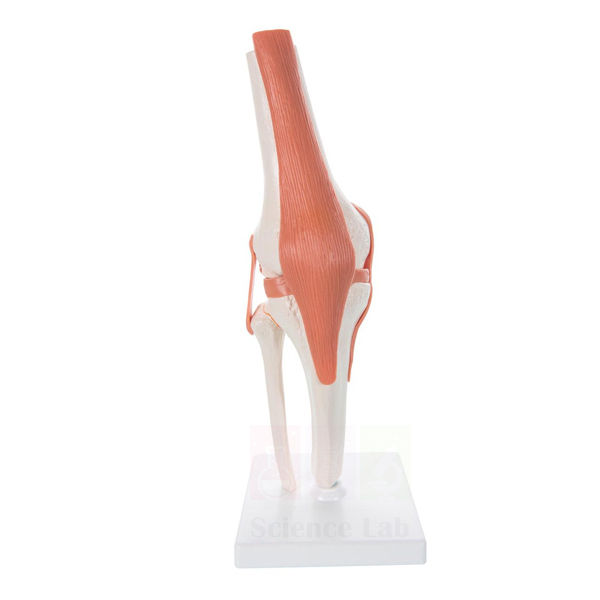
Human Joint Models
Human Joint Models (Product Code: SLE/A/02) are life-sized plastic replicas of human joints used to give students hands-on practice in joint anatomy in school, college and nursing laboratories. Each labelled model shows the major bones and bone structures along with many important tendons and ligaments, and comes with a numbered, laminated key. They are made by Jain Scientific Equipments Pvt Ltd (ScienceLab), an OEM manufacturer of anatomical models, at its own factory in Ambala, India.
Key Details
| Parameter | Detail |
|---|---|
| Material | Plastic |
| Scale | Life-sized replicas of human joints |
| Structures shown | Major bones and bone structures, plus many important tendons and ligaments |
| Labelling | All labelled, with a numbered, laminated key |
| Purpose | Hands-on learning about joints |
| Product code | SLE/A/02 |
| Manufacturer | Jain Scientific Equipments Pvt Ltd (ScienceLab) — OEM |
| Country of origin | India (made in Ambala, Haryana) |
What Are the Human Joint Models Used For?
Joints are easier to understand when students can hold them. With these replicas a class can look at how the bone ends are shaped to fit together, where the ligaments run to hold the joint stable, and where tendons cross the joint to move it. The numbered key turns each model into a self-check exercise: students name the numbered structures first, then confirm their answers against the laminated sheet.
Teachers often set the models out as a station activity, with small groups rotating between joints and recording the bones, ligaments and tendons they find. This hands-on approach suits school biology lab equipment in India as well as introductory anatomy in nursing and physiotherapy programmes.
OEM Manufacturer
The Human Joint Models are manufactured by Jain Scientific Equipments Private Limited, trading as ScienceLab, which acts as OEM and makes them at its own licensed factory at Saha, Ambala, Haryana, India. Buying from the factory means the models and their keys come from one source, and repeat orders for additional labs are handled by the manufacturer itself. See our company profile.
Related Bone Models
Individual joint models that expand on the same lessons:
- Shoulder Joint Model — a mounted shoulder with bone and connective tissue structures numbered on a key
- Elbow Joint Model Human — a life-sized elbow with labelled structures and major ligaments
- Hip Joint Model — a hip on a base with labelled bone structures and ligaments
- Human Knee Joint Model, Life Size — a knee on a stand for demonstrating flexion, extension and rotation
- Human Hand Joint Model with Ligaments — the small joints of the hand with flexible artificial ligaments
See all joint, pelvis and skeleton models in the Bone Model category.
Frequently Asked Questions
Which joints are included in the Human Joint Models?
The original listing for the Human Joint Models (SLE/A/02) does not name the individual joints, so please ask us for the current set composition before ordering. Single joints, such as the Shoulder Joint Model and Elbow Joint Model Human, are also listed separately.
Are the Human Joint Models labelled?
Yes. All Human Joint Models are labelled and come with a numbered, laminated key that names the structures, so students can check their identifications without needing a separate reference book.
Do the Human Joint Models show soft tissue as well as bone?
Yes. Besides the major bones and bone structures, the Human Joint Models show many of the important tendons and ligaments, which helps students understand how a joint is held together and how it is moved.
What are the Human Joint Models made of?
The Human Joint Models are made of plastic and are life-sized, so they can be handled repeatedly in practical classes and wiped clean between groups with a soft, slightly damp cloth.
Who manufactures the Human Joint Models?
The Human Joint Models are manufactured by Jain Scientific Equipments Pvt Ltd (ScienceLab), the OEM, at its own licensed factory at Saha, Ambala, Haryana, India. Institutions, dealers and importers receive quotations directly from the manufacturer.
How should the laminated key of the Human Joint Models be looked after?
Keep the laminated key of the Human Joint Models with its model after each class and wipe it with a dry cloth. Store the models away from direct sunlight and heat so the plastic and labels stay in good condition.
Can Human Joint Models be ordered for several labs at once?
Yes. Human Joint Models can be quoted in multiple sets for schools, colleges and institutions in India and international markets. Mention the quantity, the product code SLE/A/02 and the delivery location in your enquiry.
Request a Quote
To order, use the contact form or place the joint models in your enquiry cart. You will receive a quotation direct from the manufacturer.
Last updated: 24 September 2026
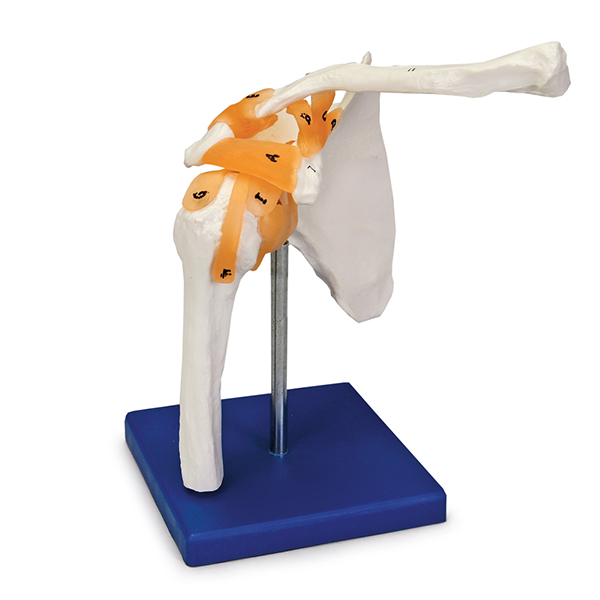
Shoulder Joint Model
Shoulder Joint Model (Product Code: SLE/A/03) is an approximately life-sized plastic model of the human shoulder used to identify its bones, ligaments and tendons in biology, nursing and physiotherapy classes. Eleven osteological structures and nine connective tissue structures are numbered and explained on a laminated key, and the joint is mounted on a base measuring 24 × 14.5 × 12 cm overall. It is made by Jain Scientific Equipments Pvt Ltd (ScienceLab), an OEM manufacturer of school biology lab equipment, at its own factory in Ambala, India.
Specifications
| Parameter | Detail |
|---|---|
| Material | Plastic |
| Scale | Approximately life-sized |
| Size (with base) | 24 × 14.5 × 12 cm |
| Numbered bone structures | 11 osteological structures |
| Numbered soft-tissue structures | 9 connective tissue structures |
| Structures shown | Bones and many of the major ligaments and tendons of the shoulder joint |
| Key | Laminated key included |
| Mounting | Mounted on a base |
| Product code | SLE/A/03 |
| Manufacturer | Jain Scientific Equipments Pvt Ltd (ScienceLab) — OEM |
| Country of origin | India (made in Ambala, Haryana) |
What Is the Shoulder Joint Model Used For?
This is the model to reach for when the goal is naming parts. A typical exercise gives students the laminated key and asks them to locate each numbered bone structure first, then the connective tissue structures — the ligaments that stabilise the joint and the tendons that pass over it. Splitting the task into bone and soft-tissue rounds helps learners see why the shoulder is so mobile yet relatively easy to dislocate: the bones form a shallow joint, and much of its stability depends on the surrounding ligaments and tendons.
Physiotherapy, sports science and nursing students can use the numbered structures to revise common shoulder injuries by location, while school classes use it for the joints topic in human biology. Mounted on its own base, it stands on a bench without extra support, making it straightforward to include in a set of biology teaching aids.
OEM Manufacturer
This labelled shoulder is made by Jain Scientific Equipments Private Limited — known to customers as ScienceLab — which is its OEM (original equipment manufacturer) and produces it at its own licensed factory at Saha, Ambala, Haryana, India.
Institutions, dealers and importers buy it factory-direct, and a replacement laminated key or a repeat order for another lab can be requested from the manufacturer; just ask. Learn more through our company profile.
Related Bone Models
Models that pair well with this labelled shoulder:
- Human Shoulder Joint Model — a movable shoulder for demonstrating abduction, adduction and rotation
- Shoulder Girdle with Musculature Model — shows the muscles around the shoulder girdle
- Hip Joint Model — a second ball-and-socket joint for comparing depth and stability
- Elbow Joint Model Human — the next labelled joint down the upper limb
Find other joint and skeletal models in the Bone Model category.
Frequently Asked Questions
How many structures are numbered on the Shoulder Joint Model?
The Shoulder Joint Model has eleven osteological (bone) structures and nine connective tissue structures numbered, twenty in total, and every one of them is identified on the laminated key supplied with the model.
What is the overall size of the Shoulder Joint Model?
The Shoulder Joint Model measures 24 × 14.5 × 12 cm including its base, and the joint itself is approximately life-sized, so it stands securely on a bench without extra support during identification work.
How does the Shoulder Joint Model differ from the Human Shoulder Joint Model?
The Shoulder Joint Model (SLE/A/03) is built for naming numbered bones, ligaments and tendons against a key, whereas the Human Shoulder Joint Model is designed for demonstrating shoulder movements. Many departments keep both on the shelf.
Is the Shoulder Joint Model movable?
Movement is not described in our current listing for the Shoulder Joint Model, which is designed for identifying structures. Contact us if range of motion matters for your lesson plan and we will confirm before you order.
How should the Shoulder Joint Model be cleaned?
A soft, dry cloth is usually enough for the plastic Shoulder Joint Model. For marks, use a cloth dampened with mild soapy water and dry it straight away, keeping the laminated key with the model.
Who manufactures the Shoulder Joint Model?
The Shoulder Joint Model is made by Jain Scientific Equipments Pvt Ltd (ScienceLab), acting as OEM, at its own factory at Saha, Ambala, Haryana, India, so buyers deal with the manufacturer directly for quotes and repeat orders.
What should a tender or bulk enquiry for the Shoulder Joint Model include?
For the Shoulder Joint Model, quote the code SLE/A/03, the quantity, the delivery address in India or abroad and your required delivery date, and the manufacturer will confirm supply and pricing.
Request a Quote
To receive pricing from the manufacturer, contact us or add the Shoulder Joint Model to your enquiry cart.
Last updated: 24 September 2026
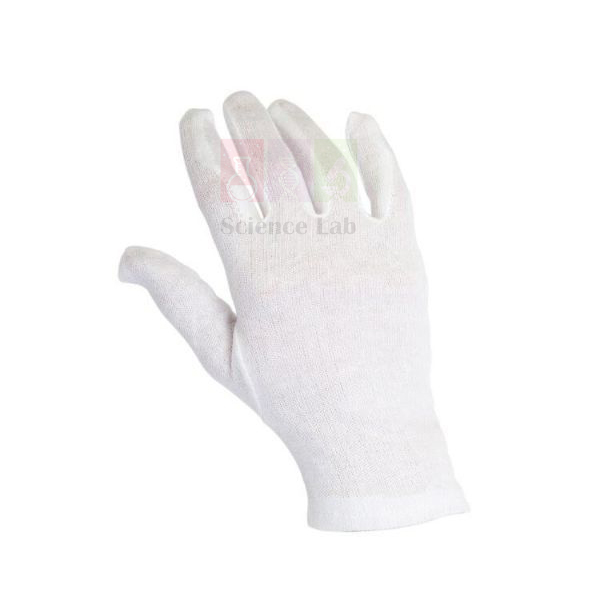
Stockinette Gloves
Stockinette Gloves (Product Code: SLE/G/01) are white, one-size knitted gloves used for general handling work in non-hazardous environments such as laboratory stores, classrooms and equipment rooms. They are sold in packs of 12, which makes them easy to issue to a group of students or staff. They are supplied by Jain Scientific Equipments Pvt Ltd (ScienceLab), Ambala, India, as part of its range of lab consumables and hand protection.
Key Details
| Parameter | Detail |
|---|---|
| Type | Stockinette (knitted) gloves |
| Colour | White |
| Size | One size |
| Pack | Pack of 12 gloves |
| Intended use | General handling in non-hazardous environments |
| Product code | SLE/G/01 |
| Supplied by | Jain Scientific Equipments Pvt Ltd (ScienceLab), Ambala, India |
What Are Stockinette Gloves Used For?
Stockinette gloves are light fabric gloves for clean, low-risk tasks where the aim is to keep hands comfortable and to keep fingerprints and skin oils off the items being handled. Typical examples include sorting and shelving clean apparatus, handling optical parts or display specimens during a lesson, inventory checks in a lab store and packing finished equipment.
Because the listing limits them to non-hazardous environments, they should not be used for chemicals, hot objects, sharp edges or biological samples; for that work, choose a chemical-resistant, heat-resistant or examination glove instead. The white colour shows dirt quickly, which reminds users when a pair needs washing or replacing. Schools that buy from a lab consumables supplier in India often keep a pack in each lab for routine handling jobs.
What to Specify When Ordering
- Number of packs of 12 required.
- Whether the one-size fit suits all your users, or whether a sized glove should also be quoted.
- Any other gloves or masks to include in the same quotation.
Supplier
Jain Scientific Equipments Private Limited, trading as ScienceLab from Ambala, Haryana, supplies these stockinette gloves along with protective, examination and heat-resistant gloves. Schools, colleges, laboratories and resellers can source a mix of hand protection in one enquiry. Read about the company on the ScienceLab profile page.
Related Gloves & Face Masks
Choose these when the task needs a different kind of protection:
- Gloves, Ultra Light Weight, White — another light white glove for handling tasks.
- Gripper Glove — for jobs that need a firmer hold.
- Powder Free Examination Gloves — for work with liquids or samples.
- Gloves, Chemical Resistant — for handling chemicals.
See the full Gloves & Face Masks range.
Frequently Asked Questions
How many gloves are in a pack of Stockinette Gloves?
Stockinette Gloves are supplied in a pack of 12 gloves. They are white and one size, so a single pack can be shared among several users for general handling work.
Are Stockinette Gloves suitable for chemicals or hot items?
No. Stockinette Gloves are intended for general handling in non-hazardous environments only. For chemicals, heat, sharp objects or biological material, choose a glove made for that hazard, such as a chemical-resistant or oven glove.
What sizes do the Stockinette Gloves come in?
The Stockinette Gloves are listed as one size. If your users need a specific hand size, mention it in your enquiry and we will tell you which gloves in the ScienceLab range are available in sizes.
What are Stockinette Gloves typically used for in a lab?
In a lab, Stockinette Gloves are typically used to handle clean apparatus, optical parts, display items and stock during inventory, keeping fingerprints off surfaces while keeping hands comfortable in low-risk tasks.
Who supplies the Stockinette Gloves?
The Stockinette Gloves are supplied by Jain Scientific Equipments Pvt Ltd (ScienceLab), Ambala, India, to schools, colleges, laboratories and distributors in India and international markets. Send the number of packs you need through the contact page for a quotation.
Request a Quote
To order Stockinette Gloves, tell us how many packs of 12 you need via the contact page, or add them to the enquiry cart with other safety items.
Last updated: 24 September 2026
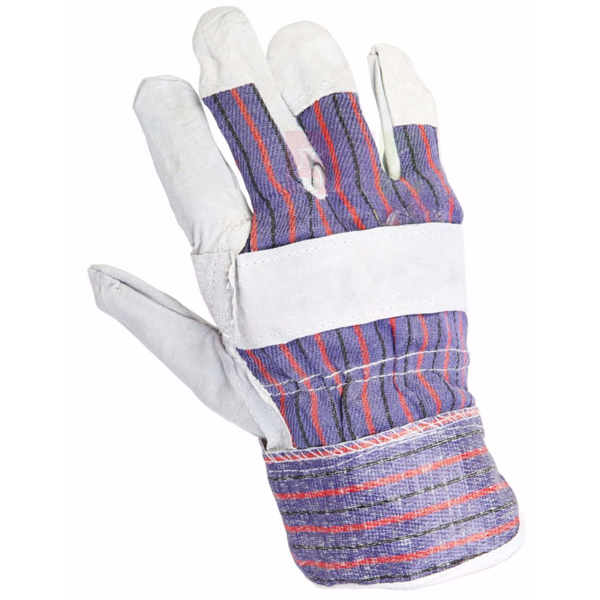
Riggers Glove
Riggers Glove (Product Code: SLE/G/02) is a cow split suede work glove used to protect hands during general handling, lifting and workshop tasks in technical institutes, maintenance departments and field work. It combines a leather patch palm with a striped cotton back and cuff, comes in size 10 and is coloured grey and purple. It is supplied by Jain Scientific Equipments Pvt Ltd (ScienceLab), Ambala, India.
Key Details
| Parameter | Detail |
|---|---|
| Type | Rigger glove |
| Palm | Cow split suede with patch palm |
| Back and cuff | Striped cotton |
| Size | 10 |
| Colour | Grey and purple |
| Product code | SLE/G/02 |
| Supplied by | Jain Scientific Equipments Pvt Ltd (ScienceLab), Ambala, India |
What Is a Riggers Glove Used For?
Rigger gloves take their name from rope and rigging work, and the design has become a general-purpose work glove. The split suede palm with its extra patch takes the wear when gripping timber, metal stock, crates or tools, while the cotton back lets the hand breathe. In vocational and engineering training workshops, students use them when carrying materials, setting up machines, handling rough castings or clearing a work area.
They are equally useful for lab technicians moving benches and cabinets, for stores staff unloading deliveries and for outdoor field work. Riggers are handling gloves, not specialist protection, so they are not a substitute for welding, chemical or electrical gloves. Keep them dry where possible, as suede stiffens after soaking. Institutions buying from a laboratory equipment supplier in India often add a few pairs for their maintenance teams.
What to Specify When Ordering
- Number of pairs required in size 10.
- Whether other hand sizes are needed (ask us what can be offered).
- Any specialist gloves, such as welding or chemical gloves, to quote alongside.
Supplier
ScienceLab is the trading name of Jain Scientific Equipments Private Limited, based in Ambala, Haryana. It supplies the Riggers Glove to technical institutes, colleges, laboratories and distributors that want work gloves and lab equipment from a single source. Company background is on the ScienceLab profile.
Related Gloves & Face Masks
Other gloves for workshop and handling tasks:
- Cotton Backed Chrome Glove — another leather-palm work glove.
- Gripper Glove — for tasks where grip matters most.
- Gloves, Welding — for welding work, where a rigger glove is not suitable.
- Gloves, Heavy-duty, Rubber/Nitrile, Large — for wet or messy jobs.
Browse the Gloves & Face Masks category for more hand protection.
Frequently Asked Questions
What is the Riggers Glove made of?
The Riggers Glove is made of cow split suede with a patch palm for extra wear resistance on the gripping area, and it has a striped cotton back and cuff that keep the glove flexible and breathable.
What size and colour is the Riggers Glove?
The Riggers Glove is listed in size 10 and is coloured grey and purple. If you need other sizes for your staff or students, ask us through the contact page before ordering.
Can the Riggers Glove be used for welding or chemicals?
No. The Riggers Glove is a general handling and work glove. For welding, use dedicated welding gloves, and for chemicals choose a chemical-resistant glove or gauntlet from the ScienceLab gloves range.
Where are rigger gloves typically used?
Rigger gloves are typically used in workshops, stores, maintenance departments and outdoor work for lifting, carrying and handling rough materials, tools and equipment where hands need abrasion protection.
Who supplies the Riggers Glove?
The Riggers Glove is supplied by Jain Scientific Equipments Pvt Ltd (ScienceLab), Ambala, India, to technical institutes, laboratories and distributors in India and international markets. Share your quantity in pairs for a quotation.
Request a Quote
Send the number of pairs you need for the Riggers Glove through the contact page, or add it to the enquiry cart with other workshop items.
Last updated: 24 September 2026
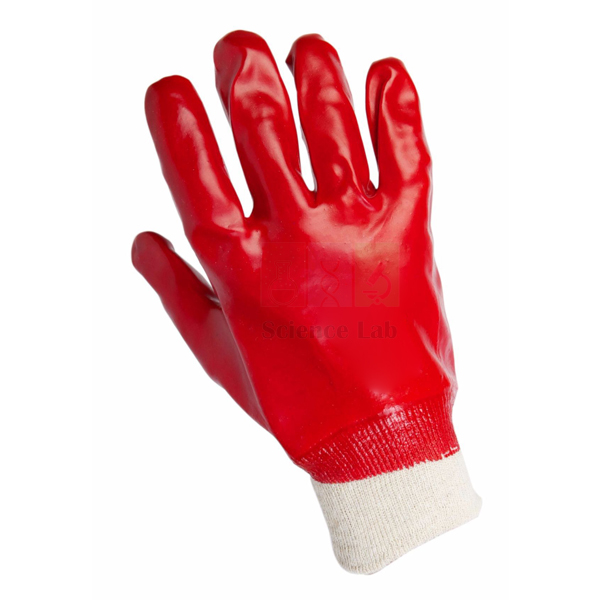
Red PVC Gloves
Red PVC Gloves (Product Code: SLE/G/03) are single-dipped PVC-coated gloves with a cotton interlock liner, used to keep hands dry and protected during wet cleaning, glassware washing and general liquid-handling tasks in laboratories, workshops and maintenance areas. The listed glove is size 10, and sizes 7 to 10 are available so a whole team can be fitted. They are supplied by Jain Scientific Equipments Pvt Ltd (ScienceLab), Ambala, India.
Key Details
| Parameter | Detail |
|---|---|
| Construction | Single dipped glove |
| Coating | PVC |
| Liner | Cotton interlock |
| Colour | Red |
| Listed size | 10 |
| Sizes available | 7 to 10 |
| Product code | SLE/G/03 |
| Supplied by | Jain Scientific Equipments Pvt Ltd (ScienceLab), Ambala, India |
What Are Red PVC Gloves Used For?
A PVC coating over a cotton interlock liner gives a glove that sheds water and cleaning solutions while the soft liner absorbs sweat and makes the glove comfortable to pull on and off. That combination suits the wash-up area of a school or college lab, where technicians scrub glassware, empty sinks and wipe down benches, as well as cleaning, stores and maintenance jobs across a campus.
The bright red colour makes these gloves easy to keep separate from examination or food-area gloves. Before using them with any particular chemical, check the chemical's safety data sheet or ask us, because resistance depends on the substance and its concentration; for stronger chemicals a longer chemical gauntlet is the better choice. Many buyers add a few pairs when ordering from a chemistry consumables supplier in India.
What to Specify When Ordering
- Glove size for each user, from 7 to 10.
- Number of pairs per size.
- The chemicals or cleaning agents they will be used with, so we can advise on suitability.
Supplier
Jain Scientific Equipments Private Limited, the Ambala, Haryana company behind the ScienceLab name, supplies Red PVC Gloves to laboratories, schools, colleges, facilities teams and distributors. Mixed-size orders can be combined with aprons, goggles and other safety items. Learn more on the ScienceLab profile page.
Related Gloves & Face Masks
Other protection often ordered with PVC gloves:
- Chemical Gauntlet (Pair) Type — a longer nitrile gauntlet for chemical handling.
- Gloves, Chemical Resistant — an alternative for chemical work.
- Gloves, Heavy-duty, Rubber/Nitrile, Medium — a heavy-duty option for cleaning tasks.
- Apron, PVC — protects clothing during wet work.
- Safety Goggles — eye protection against splashes.
See more in the Gloves & Face Masks category.
Frequently Asked Questions
What sizes are Red PVC Gloves available in?
Red PVC Gloves are listed in size 10, and sizes 7 to 10 are available. State the size and number of pairs for each user in your enquiry so the order can be packed by size.
How are Red PVC Gloves constructed?
Red PVC Gloves are single dipped gloves: a cotton interlock liner is coated with PVC. The coating provides the outer barrier, while the cotton liner makes the glove more comfortable to wear.
Are Red PVC Gloves chemical resistant?
Red PVC Gloves have a PVC coating suited to wet work, but resistance varies with each chemical and concentration. Check the chemical's safety data sheet or ask ScienceLab before use, and choose a chemical gauntlet for more demanding chemical handling.
Where are Red PVC Gloves used in a school or college?
In schools and colleges, Red PVC Gloves are used in the lab wash-up area for cleaning glassware and benches, and by housekeeping and maintenance staff for wet cleaning jobs around the campus.
Who supplies Red PVC Gloves?
Red PVC Gloves are supplied by Jain Scientific Equipments Pvt Ltd (ScienceLab), Ambala, India, to laboratories, institutions and distributors in India and international markets. Send your size-wise quantities through the contact page for a quotation.
Request a Quote
Tell us the sizes and number of pairs of Red PVC Gloves you need through the contact page, or add them to the enquiry cart.
Last updated: 24 September 2026