- Physics Lab Equipment
- Chemistry Lab Equipment
- Biology Lab Equipment
- Anatomical Lab Equipment
- Learning
- Educational Lab Equipment
- Magnets
- Agriculture
- Astronomy
- Earth Science
- Geography Lab Equipment
- Safety Lab Coat
- Laboratory
- Meteorological
- Electricity & Magnetism
- Heat
- School Lab Equipment
- Lab Glassware
- Science Lab Equipment
- Tvet Lab Equipment
- Robotics Kits Supplier and Manufacturer for Schools India
- Math Lab Equipment Manufacturers and Exporters in Ambala
- STEM Kits Manufacturers and Supplier India
- Engineering Lab Equipment
- Hospital Lab Equipment
- Water, Sanitation & Hygiene Supplies
- Cold Chain, Solar & Communication Equipment
- Nutrition
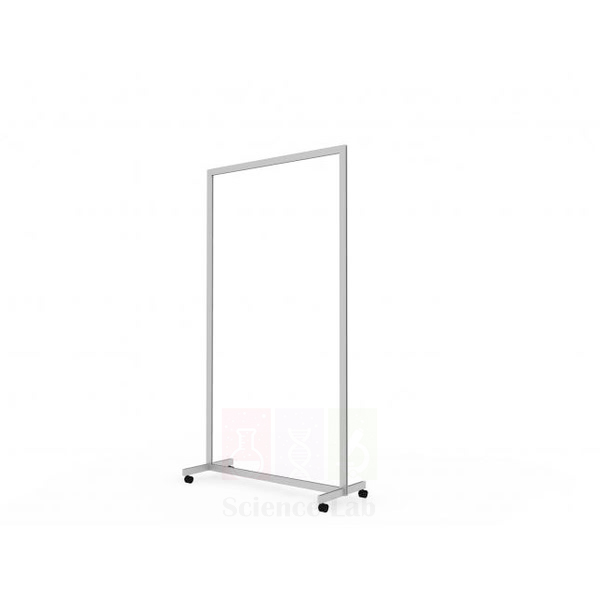
Wheeled Partition
Wheeled Partition (Product Code: SLE/HE/21) is a mobile privacy screen on four braked castors used to create and rearrange testing, vaccination and consultation booths in hospitals, medical practices, schools and offices. It measures 100 cm wide by 160 cm high, with a durable aluminium frame, a plain white PVC foam board panel and a black rubber gasket that keeps the panel snug and rattle-free. It is supplied by Jain Scientific Equipments Pvt Ltd (ScienceLab), Ambala, India.
Specifications
| Parameter | Detail |
|---|---|
| Dimensions | 100 cm wide x 160 cm high |
| Frame | Durable aluminium |
| Infill panel | Plain white PVC foam board |
| Gasket | Black rubber gasket around the perimeter between frame and panel, for a sealed finish and snug, rattle-free fit |
| Castors | Four castors, all with brakes |
| Surface finish | Smooth frame and panel, easy to clean |
| Product code | SLE/HE/21 |
| Supplied by | Jain Scientific Equipments Pvt Ltd (ScienceLab), Ambala, India |
What Is the Wheeled Partition Used For?
Schools, local authorities, hospitals and medical practices use wheeled partitions to set up private screens and keep people apart during mass testing and vaccination sessions. Because the screen rolls, a single room can switch from an open waiting area to a row of booths in minutes, then be cleared again for its usual purpose once the session ends.
Roll the partition into position and lock all four castor brakes before anyone sits beside it, so it cannot drift if leaned on. Wipe the smooth aluminium and PVC surfaces between users as part of your cleaning routine, and when moving the screen, push it from the frame rather than the panel. Unlocked screens can be parked side by side against a wall when not needed.
What to Specify When Ordering
- The number of partitions needed for the booths you plan to form
- Whether some positions would suit the Freestanding Partition Wall on fixed feet instead
- Any direction signs or testing pods to be quoted at the same time
Supplier
Jain Scientific Equipments Private Limited is the company behind the ScienceLab name in Ambala, Haryana. It supplies the Wheeled Partition to hospitals, clinics, schools and public bodies that need flexible screening, and it can combine partitions with ward, signage and laboratory items in one consignment for buyers in India and international markets. Find out more on the ScienceLab profile page.
Related Hospital Lab Equipment
These hospital items are often planned with mobile screens:
- Freestanding Partition Wall — the same 100 x 160 cm panel on two steel feet for fixed positions
- Hospital Bed Screen On Castors — a three-section mobile screen for ward bedsides
- Covid Testing Pod – 5 Bay — a linked bank of five screened booths
- Covid Testing Arrow Right Sign — points visitors to the booths you create
Browse Hospital Lab Equipment for more screens and ward items.
Frequently Asked Questions
What size is the Wheeled Partition?
The Wheeled Partition is 100 cm wide and 160 cm high. The panel is tall enough to screen a seated consultation or test, and several partitions can be rolled together to form a booth or a longer screen across a room.
Do the Wheeled Partition castors lock?
Yes. All four castors on the Wheeled Partition have brakes. Lock them once the screen is in position so it stays put during a session, and release them to move the partition or park it against a wall afterwards.
What is the Wheeled Partition made from?
The Wheeled Partition has a durable aluminium frame and a plain white PVC foam board infill panel. A black rubber gasket runs around the perimeter between frame and panel, giving a sealed finish and stopping the panel from rattling when the screen is moved.
How is the Wheeled Partition cleaned?
Both materials of the Wheeled Partition have a smooth finish, so the frame and panel can be wiped down with your usual detergent or disinfectant between users. Clean the castors as part of routine floor cleaning to stop debris building up.
Who supplies the Wheeled Partition?
Jain Scientific Equipments Pvt Ltd (ScienceLab), based in Ambala, Haryana, India, supplies the Wheeled Partition. It can be quoted alone or with fixed partitions, testing pods and direction signs for a complete screening layout.
Can I order Wheeled Partitions in bulk or for export?
Yes. The Wheeled Partition can be quoted for hospitals, school groups and public bodies in India and international markets. Include the number of partitions and the delivery address in your enquiry so the quotation covers freight to your site.
Request a Quote
Tell us how many partitions you need through the contact page, or add the Wheeled Partition to the enquiry cart with your other screening items and send one request.
Last updated: 24 September 2026
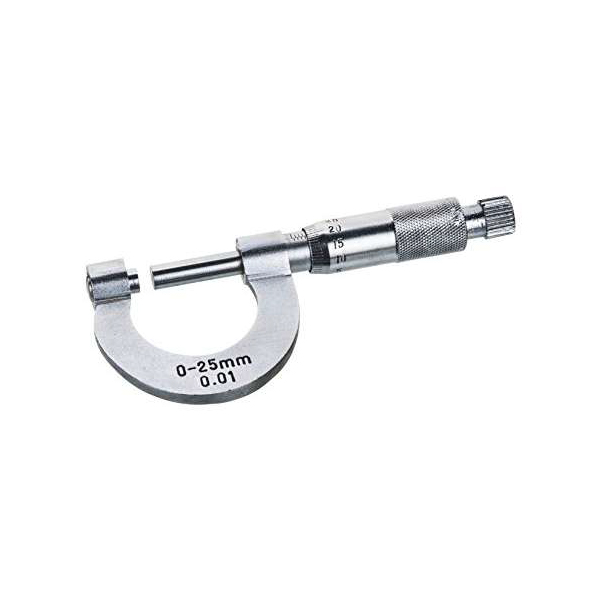
Micrometer
The Micrometer (Product Code: SCL105/01) is a horseshoe micrometer — also called a micrometer screw gauge — that uses a calibrated screw to take accurate outside measurements up to 25 mm, reading to 0.01 mm. Made of nickel-plated brass with a ratchet top and a lock, it is widely applicable in mechanical engineering, machining and most mechanical trades, and in the physics practicals of schools and colleges. It is manufactured by Jain Scientific Equipments Pvt Ltd (ScienceLab), Ambala, as a lock-type screw gauge for lab work in India and international markets.
Specifications
| Parameter | Detail |
|---|---|
| Type | Horseshoe micrometer (micrometer screw gauge), lock type |
| Range | 0–25 mm x 0.01 mm |
| Precision | 1/100 mm |
| Minimum measuring accuracy | 0.01 mm |
| Maximum measured length | 25 mm (outside measurements) |
| Material | Nickel-plated brass, with ratchet top |
| Rod | Accurately machined stainless steel |
| Screw | Ratchet micrometric screw |
| Rollers | Tungsten carbide alloy |
| Supplied with | Storage plastic box and calibration standard |
Typical Use
In school and college practicals the micrometer is used to find the diameter of a wire, the thickness of a glass plate or metal sheet, and the diameter of small spheres — measurements where a ruler, or even a vernier caliper, is not fine enough. Place the object between the measuring faces, turn the screw until the ratchet slips, then take the reading from the main and circular scales and apply any zero correction.
Before each set of readings, close the faces gently using the ratchet and check whether the scale reads zero; if it does not, record the zero error and correct every reading for it. The lock holds the screw in position so a reading is not disturbed while you note it. As with other precision physics lab instruments, wipe the measuring faces clean before use and return the micrometer to its plastic box afterwards.
Manufacturer
Jain Scientific Equipments Private Limited, incorporated under CIN U29309HR2020PTC087597, trades as ScienceLab and is based in Ambala, Haryana; the company manufactures at its licensed factory in the HSIIDC Industrial Area, Saha, Ambala (Factory Licence AMB-ONLINE-CHD-J-414). Learn more on our company profile.
Related Lab Equipment
Measuring tools used alongside the micrometer in length-measurement practicals:
- Caliper — for larger components beyond the micrometer’s 25 mm range
- Caliper Vernier (Metal) — the usual companion for vernier practicals before moving to the screw gauge
- Micrometer Screw Gauge, Lock Type — an alternative lock-type screw gauge from our physics range
- Metal Ruler — for rough measurement before a precise reading is taken
Browse the full Lab Equipment range for more measurement and demonstration apparatus.
Frequently Asked Questions
What are the range and least count?
The range is 0–25 mm and the micrometer reads to 0.01 mm (1/100 mm).
Can it measure internal diameters or depths?
No. It is specified for outside measurements up to 25 mm; use a caliper for inside and depth measurements.
What does the ratchet do?
The ratchet slips once the faces touch the object, so every reading is taken with the same gentle pressure and the object is not squeezed.
What is the lock for?
It fixes the screw in place so a reading stays set while it is recorded or while the instrument is moved.
What comes in the box?
The micrometer is supplied in a storage plastic box together with a calibration standard.
Is a calibration certificate available?
The calibration standard in the box is a reference piece for checking the instrument, not a certificate. Whether a calibration certificate can be provided should be discussed with us — please contact us before ordering.
Can you quote for a class set or a tender?
Yes. Send the quantity, delivery location and any vendor documents your tender requires; we supply schools, colleges and distributors in India and international markets.
Request a Quote
For pricing on the Micrometer, contact our sales team or add it to the enquiry cart together with calipers and rulers for a complete measurement kit.
Last updated: 24 September 2026
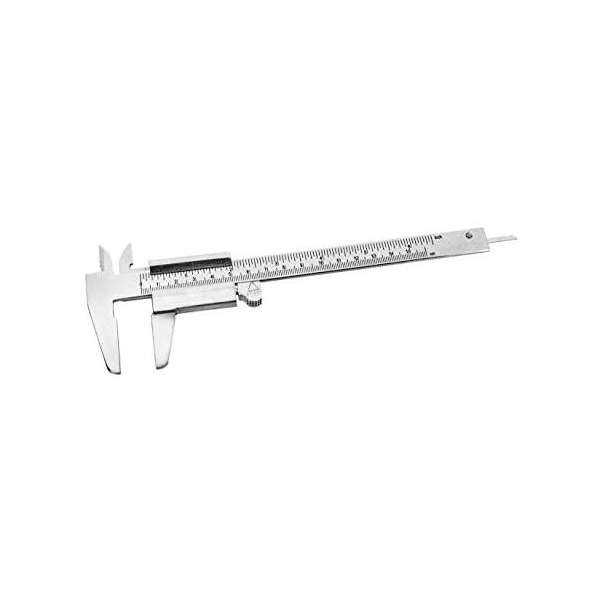
Caliper
Caliper (Product Code: SCL1208/02) is a vernier (nonius) caliper that lets a student read a length falling between two graduations of the main scale by mechanical interpolation, giving readings to a precision of 0.1 mm instead of relying on eye estimation. Physics and general science classes use it to measure the outside size of small objects and the inside width of holes up to 120 mm. It is made by Jain Scientific Equipments Pvt Ltd (ScienceLab) in Ambala, India, and is a practical choice for institutions sourcing a Vernier caliper for school labs in India and abroad.
Specifications
| Parameter | Detail |
|---|---|
| Type | Vernier (nonius) caliper |
| Material | Nonius steel |
| Precision | 0.1 mm |
| Maximum measurement length | 120 mm |
| Measuring jaws | External measuring rods for outside dimensions; internal measuring jaws for holes |
| Reading principle | Vernier scale – mechanical interpolation between main-scale markings to reduce estimation error |
Typical Use
In a first measurement practical, learners use the caliper to find the diameter of a cylinder or sphere, the thickness of a block, or the bore of a small tube, then work out areas and volumes from their readings. Combined with a balance, the same measurements let a class calculate the density of regular solids. Before each set of readings, close the jaws fully and check whether the vernier zero lines up with the main-scale zero; any offset is the zero error and must be corrected in every result.
Good technique matters as much as the tool: hold the object square between the jaws without forcing them, keep the eye level with the scale, and take the reading where a vernier line coincides exactly with a main-scale line. Because vernier reading is a standard exercise in secondary physics, the caliper belongs in the set of physics practical equipment that CBSE and state-board laboratories keep for every student group.
Manufacturer
This caliper is produced by Jain Scientific Equipments Private Limited, the Ambala, Haryana company that trades as ScienceLab and builds measuring and demonstration apparatus for school and college teaching. Institutions in India and international markets order from its catalogue; background on the business is on the ScienceLab company profile.
Related Lab Equipment
Items that are usually needed alongside this caliper in measurement and density practicals:
- Micrometer — for wires and thin sheets that need finer readings than a vernier scale gives.
- Metal Ruler — for lengths beyond the caliper's 120 mm range.
- Metal Density Cubes (Set of 6) — regular solids whose sides students measure to calculate volume and density.
- Balance — to find the mass that goes with each measured volume.
- Vernier Calliper — another vernier model from our physics range, for comparison.
More measuring and demonstration apparatus is listed in our Lab Equipment category.
Frequently Asked Questions
What is the smallest reading this caliper gives?
It reads to a precision of 0.1 mm using its vernier scale. For very thin items such as wires, a micrometer is the better instrument.
Can it measure the inside of holes and tubes?
Yes. In addition to the external measuring rods, it has internal measuring jaws for holes, so the bore of a tube or ring can be measured within the 120 mm maximum length.
What material is it made from, and how should it be cared for?
The caliper is made of nonius steel. Wipe it clean and dry after each class, avoid dropping it or using the jaws as a tool, and store it in a dry drawer so the measuring faces stay true.
How do students allow for zero error?
Close the jaws and note where the vernier zero sits against the main-scale zero. If they do not coincide, record the offset and subtract or add it to every reading taken with that instrument.
Is a calibration certificate available?
Please discuss any calibration-certificate requirement with us through the contact page before ordering, and we will confirm what can be provided for this item.
What should an institutional enquiry include?
State the quantity, product code SCL1208/02, delivery address and any documents your purchase process requires. Bulk orders for schools, colleges and distributors in India and international markets are welcome.
Request a Quote
To order the Caliper or ask about quantities, send your requirement through our contact page, or add it to the enquiry cart along with the other laboratory items your department needs.
Last updated: 24 September 2026
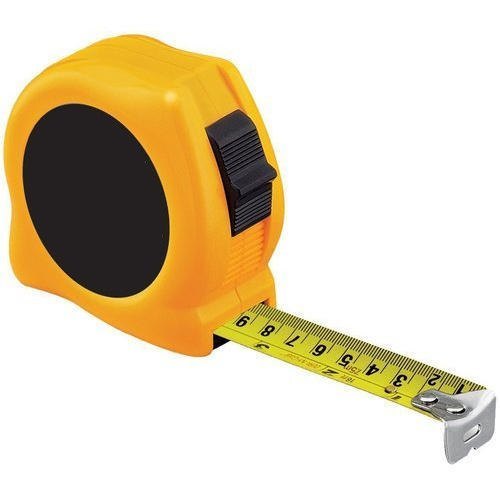
Tape Measure
Tape Measure (Product Code: SCL1209/03) is a 3-metre measuring tape with a steel strip graduated in millimetres, wound inside a resistant plastic body. Teachers and students reach for it whenever a length is too long for a ruler: the run of a trolley track, the height of a ramp, the size of a bench or the distance a ball rolls in a motion experiment. It is made by Jain Scientific Equipments Pvt Ltd (ScienceLab) in Ambala, India, and is a basic item on any list of physics lab equipment for schools in India.
Specifications
| Parameter | Detail |
|---|---|
| Type | Tape measure with millimetre divisions |
| Length | 3 metres |
| Tape material | Steel, graduated strip in mm |
| Body material | Plastic, resistant body |
| Blade width | 2-10 mm |
| Construction | Durable |
Typical Use
A common lesson on speed starts with the tape: students mark a start and a finish line on the floor, measure the gap between them, then time a rolling ball or toy car over that distance and divide distance by time. The same tape gives the length and height of an inclined plane when a class works out slope, and it helps technicians set out benches, stands and apparatus at the spacing an experiment sheet asks for.
For accurate readings, pull the steel strip out straight and flat, hold the end firmly at the starting mark, and read the millimetre division square-on rather than at an angle. Guide the tape back into the plastic body instead of letting it snap shut, and wipe it dry if it gets wet. It is one of the simplest entries on a school lab instruments list, yet it is used in almost every mechanics practical.
Manufacturer
ScienceLab is the trading name of Jain Scientific Equipments Private Limited, a company based in Ambala, Haryana, whose catalogue runs from everyday measuring tools such as this tape to full physics demonstration sets for schools and colleges. You can read about the company on its profile page.
Related Lab Equipment
Useful companions for distance, speed and ramp experiments:
- Digital Chronometer (Stopwatch) — times the run over a distance measured with the tape, so students can calculate speed.
- Inclined Plane With Accessories — a ramp whose length and height the tape measures in slope and friction work.
- Metal Ruler — a rigid straight edge for shorter bench measurements and ruling lines.
- Caliper — for small diameters and thicknesses that a tape cannot resolve.
See the full Lab Equipment category for other measuring and mechanics items.
Frequently Asked Questions
How long is the tape and how is it marked?
The steel tape is 3 metres long and graduated in millimetres along the strip.
What are the body and tape made of?
The housing is a resistant plastic body and the measuring strip is steel, a combination chosen for durability in everyday classroom handling.
Can it be used for longer distances such as a sports ground?
It covers 3 metres in one pull, so longer distances have to be measured in sections. If your syllabus needs long outdoor measurements, tell us through the contact page and we will suggest a suitable option.
How should students look after it?
Retract the strip slowly, avoid kinking or stepping on it, and dry it after any contact with water so the steel stays in good condition.
Can you supply enough for every student group?
Yes. Class sets and bulk quantities for schools, colleges and distributors in India and international markets can be quoted; mention the number of pieces and the delivery location.
What warranty applies?
Warranty terms are confirmed in our written quotation. Please ask about them when you send your enquiry.
Request a Quote
For prices and delivery on the Tape Measure, message us through the contact form or place it in the enquiry cart and submit your full apparatus list in one go.
Last updated: 24 September 2026
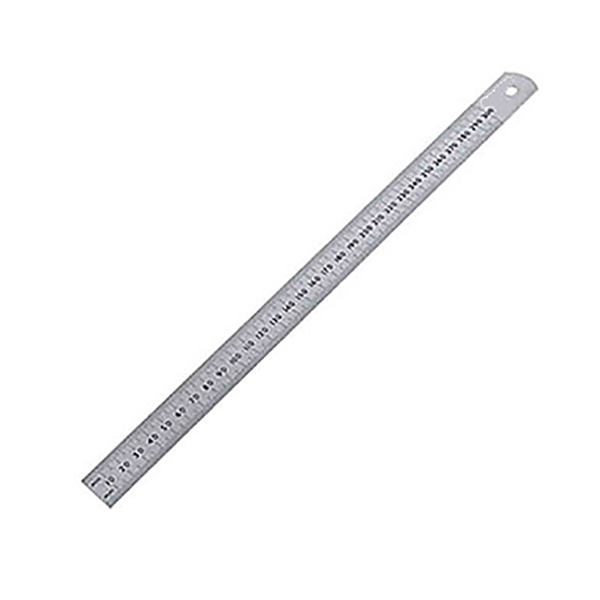
Metal Ruler
Metal Ruler (Product Code: SCL1211/04) is a graduated stainless steel rule 100 cm long, with a true straight edge that serves both for reading lengths and for ruling lines. Physics teachers use it where a short plastic scale is not enough: reading the extension of a spring, setting the length of a pendulum or spacing a lens and screen on the bench. The ruler is made by Jain Scientific Equipments Pvt Ltd (ScienceLab), Ambala, as part of its mechanics lab equipment in India for schools and colleges.
Specifications
| Parameter | Detail |
|---|---|
| Material | Stainless steel |
| Length | 100 cm |
| Width | Between 2 cm and 3 cm |
| Thickness | 0.5 mm |
| Scale | Graduated |
| Edge | Straight edge |
Typical Use
In a Hooke's law practical the ruler is clamped upright beside a hanging spring, and students note the position of a pointer each time a mass is added, turning the readings into a force-extension graph. It is equally handy for measuring the length of a simple pendulum from the point of suspension to the centre of the bob, for object and image distances in lens work, and for drawing long, clean lines on charts and posters.
Because the strip is only 0.5 mm thick, the graduations sit close to the object being measured, which helps students avoid parallax when they look straight down on the scale. A thin steel rule can flex, so support it along its length on the bench when taking a reading. Stainless steel does not swell like wood and wipes clean easily, which keeps this ruler serviceable in busy school physics lab equipment sets in India for many batches of students.
Manufacturer
Jain Scientific Equipments Private Limited makes this ruler under its ScienceLab brand in Ambala, Haryana, where the company develops teaching apparatus for physics, chemistry and biology laboratories. More about who we are is on the company profile.
Related Lab Equipment
Items that pair with this ruler in spring, pendulum and general measurement work:
- Set of Springs — springs whose extension is read against the ruler in elasticity experiments.
- Stand — to hold the ruler upright next to a hanging spring or pendulum.
- Caliper — for small diameters and thicknesses beyond the resolution of a rule.
- Tape Measure — for distances longer than the ruler, such as floor tracks.
- Meter Stick, White — an alternative scale for general classroom use.
Other measuring and mechanics items are grouped in our Lab Equipment category.
Frequently Asked Questions
How long is the ruler and is it graduated along its length?
It is 100 cm long and graduated. If you need the exact graduation interval before ordering, we can confirm it on request.
Why choose stainless steel over a wooden or plastic scale?
Stainless steel keeps a straight edge, does not warp with humidity and is easy to clean. Its 0.5 mm thickness also keeps the scale close to the object, reducing parallax.
Can it be held vertically in a clamp?
Yes, it can be held upright in a clamp on a stand for spring and pendulum work. Make sure your clamp jaws close firmly on a thin strip 2 to 3 cm wide.
How should it be stored?
Store it flat in a drawer or hang it from a hook so it is not bent under other apparatus, and wipe off any moisture after use.
Is the edge safe for students?
It is a thin metal strip, so students should carry it carefully and not use it for cutting or prising. Normal classroom handling is otherwise straightforward.
What details should a school include in its purchase request?
Give the product code SCL1211/04, the quantity, the delivery address and any vendor documents your institution needs. We quote bulk orders for India and international markets.
Request a Quote
Ready to order the Metal Ruler? Write to us via the contact page with your quantity, or use the enquiry cart to combine it with other items in one request.
Last updated: 24 September 2026
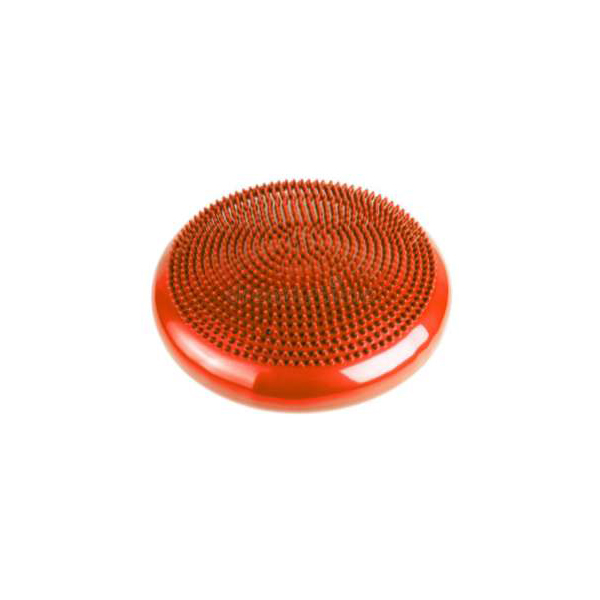
Disc to Demonstrate Equilibrium (Balance)
Disc to Demonstrate Equilibrium (Balance) (Product Code: SCL1213/05) is a 200 mm plastic disc that turns on a rotation axis and carries 18 attachment points – 2 mm holes or the same number of nails – laid out radially and symmetrically across its face. By hanging loads at different points, a teacher shows when a body that is free to rotate stays at rest: the turning effects on either side of the axis must cancel. Made by Jain Scientific Equipments Pvt Ltd (ScienceLab), Ambala, it works as a circular alternative to a moment bar apparatus in school physics.
Specifications
| Parameter | Detail |
|---|---|
| Type | Demonstration disc for the equilibrium of a body with a rotation axis |
| Material | Plastic disc |
| Diameter | 200 mm |
| Rotation axis | Provided |
| Attachment points | 18 holes of 2 mm diameter, or the same number of nails |
| Layout | Radially and symmetrically distributed on the surface of the disc |
Typical Use
With the disc mounted on its axis, students hang masses from holes on opposite sides and adjust them until the disc stays still in any position they leave it. They then measure the perpendicular distance from the axis to the line along which each thread hangs and compare the sum of clockwise moments with the sum of anticlockwise moments. Because the attachment points lie on radial lines, the class quickly sees an important subtlety: a load hung from a point above or below the horizontal diameter has a shorter lever arm than one at the same radius on that diameter, so it is the perpendicular distance, not the distance along the radius, that counts.
Before loading, check that the empty disc turns freely and settles without a preferred position; otherwise friction or imbalance will mask the result. Light masses on fine thread give the cleanest readings. For teachers building a set of mechanics lab equipment in India, the disc complements straight levers by showing the same principle on a rotating body.
Manufacturer
The disc is manufactured by Jain Scientific Equipments Private Limited, the Ambala, Haryana company behind the ScienceLab name, which designs demonstration apparatus for teaching mechanics and other physics topics. The company is a registered MSME enterprise (Udyam UDYAM-HR-01-0003714) and handles overseas shipments under Importer-Exporter Code AAECJ8618A issued by the DGFT. Further background is on the ScienceLab profile page.
Related Lab Equipment
To run a complete moments and equilibrium lesson, these items are often ordered with the disc:
- Set Of Marked Masses — known loads to hang from the holes or nails.
- Stand — a support for the rotation axis during the demonstration.
- Dynamometer — to apply and read a measured pulling force instead of a hanging mass.
- Lever — the straight-bar version of the principle of moments, for comparison.
- Deformable Parallelepiped — extends the topic to the balance of bodies standing on a base.
Browse all items in our Lab Equipment category.
Frequently Asked Questions
Does the disc come with holes or with nails?
It is specified with 18 holes of 2 mm diameter or the same number of nails. Tell us which version suits your lesson when you enquire and we will confirm it in the quotation.
Are masses included?
The specification covers the disc with its rotation axis and attachment points; masses are not listed. A Set Of Marked Masses can be ordered alongside it.
Which topics does it support?
The principle of moments, the conditions for equilibrium of a body with a fixed axis, and the idea of the perpendicular lever arm.
How is the axis supported during a demonstration?
The disc turns on its rotation axis, which is normally held on a laboratory support. If you need a particular mounting arrangement, please discuss it with us through the contact page.
How do I keep the plastic disc in good condition?
Keep it away from heat sources, clean it with a damp cloth, and store it flat so the disc does not warp.
Can you supply multiple units for student groups or export?
Yes. We quote class sets and bulk orders for schools, colleges and distributors in India and international markets.
Request a Quote
For a price on the Disc to Demonstrate Equilibrium (Balance), send your quantity through our contact page or add it to the enquiry cart with the masses and supports you need.
Last updated: 24 September 2026

Deformable Parallelepiped
Deformable Parallelepiped (Product Code: SCL1215/06) is a hinged frame with a base – four vertical rods joining two bases, plus a median articulated support – that can be folded obliquely into a leaning box shape. As the frame leans further, students watch the moment a body standing on a base stops being stable and tips over, which makes the idea of centre of gravity and support base visible at a glance. It is made by Jain Scientific Equipments Pvt Ltd (ScienceLab), Ambala, for schools looking for a simple center of gravity apparatus in India.
Specifications
| Parameter | Detail |
|---|---|
| Type | Parallelepiped frame with base that can be folded obliquely |
| Construction | Four vertical rods, two bases and a median articulated support |
| Dimensions | Not smaller than 140x200 mm |
| Purpose | Device to show the balance of bodies with a support base |
Typical Use
Stand the frame upright on the bench, then tilt it step by step so that the rods lean and the upper base moves sideways over the lower one. A plumb line hung from the upper part of the frame marks the vertical through its centre of gravity. While that line still falls inside the lower base, the frame stays standing; once it passes beyond the edge, the frame overturns. Students can mark the tipping angle and relate it to everyday cases such as loaded vehicles, tall cupboards and why stable objects have wide, low bases.
Tilt slowly and keep a hand close so the frame does not fall off the bench, and do not force the joints past their natural travel. Used as a demonstration model in the physics lab, it pairs well with rotating-disc and lever experiments to give a complete lesson on equilibrium.
Manufacturer
ScienceLab apparatus such as this frame is made by Jain Scientific Equipments Private Limited, a company registered in Ambala, Haryana, that focuses on hands-on equipment for teaching science. See the company profile for more about its range and export activity to international markets.
Related Lab Equipment
Items that support the same stability and equilibrium lesson:
- Plumb Line Level — shows the vertical through the centre of gravity as the frame leans.
- Disc to Demonstrate Equilibrium (Balance) — covers equilibrium of a body turning about an axis.
- Metal Ruler — for measuring base width, height and sideways shift before tipping.
- Inclined Plane With Accessories — lets students compare toppling with sliding on a slope.
You will find further mechanics apparatus in our Lab Equipment category.
Frequently Asked Questions
What principle does the deformable parallelepiped demonstrate?
It shows that a body resting on a base stays in balance only while the vertical line through its centre of gravity falls within that base, and topples once it moves outside.
What size is the frame?
Its dimensions are not smaller than 140x200 mm. If you need the exact measurements for a display cabinet or lesson plan, we can confirm them on request.
Is a plumb line supplied with it?
The specification lists the frame with its four vertical rods, two bases and median articulated support. A plumb line is not listed, so order a Plumb Line Level separately if you want to show the vertical.
Is it meant for the teacher or for student groups?
It is mainly a front-bench demonstration piece, but small groups can also use it to record the tilt at which the frame overturns.
How should it be looked after?
Return the frame to its upright position after use, keep the joints free of dust, and avoid bending the rods or forcing the articulated support.
What does a school need to send for a quotation?
The product code SCL1215/06, quantity and delivery address are enough to start. We supply institutions and distributors in India and international markets.
Request a Quote
Ask for pricing on the Deformable Parallelepiped through our contact page, or collect it in the enquiry cart with the other mechanics items on your list.
Last updated: 24 September 2026
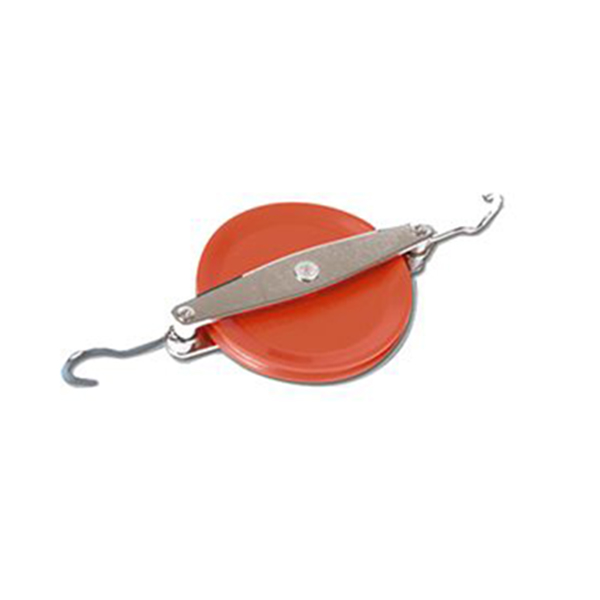
Pulley
Pulley (Product Code: SCL1217/07) is a single 40 mm polypropylene wheel with a peripheral groove, turning on its rotation axis inside an aluminium frame that carries hooks on two sides. One hook lets it hang from a support as a fixed pulley; the other takes a load or a second pulley, so the same unit can be used fixed or movable. Made by Jain Scientific Equipments Pvt Ltd (ScienceLab), Ambala, it is the basic building block for any pulley system lab in India, from middle school to junior college.
Specifications
| Parameter | Detail |
|---|---|
| Type | Peripheral groove wheel on support |
| Wheel material | Polypropylene |
| Frame | Aluminium |
| Wheel diameter | 40 mm |
| Wheel thickness | 5 mm |
| Rotation | Turns on a rotation axis |
| Fittings | Hooks on two sides |
Typical Use
Hung from a stand as a fixed pulley, it shows that a pulley changes the direction of a force: students pull down on a string passing over the groove to raise a mass, and a spring balance reveals that the effort is close to the load. Used as a movable pulley, with the load on the lower hook and one end of the string anchored, the effort needed falls to roughly half the load while the string travels twice as far. Several units combined give a block and tackle, from which a class calculates mechanical advantage, velocity ratio and efficiency.
For consistent results, use light, non-stretch string that runs cleanly in the groove, check that the wheel spins freely before each trial, and include the weight of the pulley itself when working out a movable arrangement. These are the classic force and simple-machine practicals found in school physics lab equipment in India.
Manufacturer
This pulley comes from Jain Scientific Equipments Private Limited, which operates as ScienceLab from Ambala in Haryana and produces mechanics apparatus for classrooms and training institutes in India and international markets. The ScienceLab profile gives an overview of the company.
Related Lab Equipment
Items that complete a pulley and simple-machines practical:
- Stand — a rigid support to hang the pulley from its hook.
- Set Of Marked Masses — known loads to lift in effort-load measurements.
- Dynamometer — measures the effort applied to the string.
- Pulley, Metal, Double — a two-wheel block for building a block and tackle.
- Inclined Plane With Accessories — another simple machine often studied in the same unit.
For more mechanics items, visit our Lab Equipment category.
Frequently Asked Questions
Can it be used as both a fixed and a movable pulley?
Yes. With hooks on two sides, it can hang from a support as a fixed pulley or carry the load as a movable one.
What size is the wheel?
The polypropylene wheel is 40 mm in diameter and 5 mm thick, with a peripheral groove for the string, and it is mounted in an aluminium frame.
Are string and masses included?
They are not listed in the specification. Masses and a force meter can be ordered with it, and any light, strong cord will run in the groove.
What load can it carry?
A load rating is not specified for this item. For heavier or unusual loads, please ask us through the contact page before use.
How do I keep it running smoothly?
Keep the axis free of dust and grit, avoid dropping the frame, and store it on a hook or in a tray rather than loose under heavier apparatus.
Can you supply pulleys in class quantities?
Yes, we quote bulk quantities for schools, colleges and distributors in India and international markets. Include the code SCL1217/07 and the number required.
Request a Quote
Send your Pulley requirement through the contact page, or add it to the enquiry cart together with stands and masses for a single combined quotation.
Last updated: 24 September 2026