- Physics Lab Equipment
- Chemistry Lab Equipment
- Biology Lab Equipment
- Anatomical Lab Equipment
- Learning
- Educational Lab Equipment
- Magnets
- Agriculture
- Astronomy
- Earth Science
- Geography Lab Equipment
- Safety Lab Coat
- Laboratory
- Meteorological
- Electricity & Magnetism
- Heat
- School Lab Equipment
- Lab Glassware
- Science Lab Equipment
- Tvet Lab Equipment
- Robotics Kits Supplier and Manufacturer for Schools India
- Math Lab Equipment Manufacturers and Exporters in Ambala
- STEM Kits Manufacturers and Supplier India
- Engineering Lab Equipment
- Hospital Lab Equipment
- Water, Sanitation & Hygiene Supplies
- Cold Chain, Solar & Communication Equipment
- Nutrition
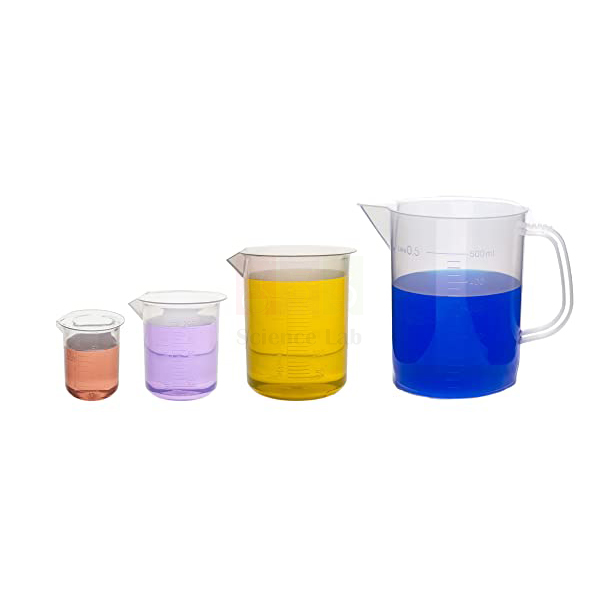
Beaker, Polypropylene, Set of 4
Beaker, Polypropylene, Set of 4 (Product Code: SLE/P/33) is a set of four clear polypropylene beakers in 25, 50, 100 and 250 ml sizes, used to hold, mix, pour and roughly measure liquids in school and college laboratories. The beakers have raised graduations on the outer surface, a tapered easy-pour spout, very good chemical resistance, and are autoclavable up to 130°C. The set is made by Jain Scientific Equipments Pvt Ltd (ScienceLab), an OEM manufacturer, at its own factory in Ambala, India.
Specifications
| Parameter | Detail |
|---|---|
| Contents | Set of 4 beakers |
| Capacities | 25 ml, 50 ml, 100 ml, 250 ml |
| Material | Polypropylene |
| Colour | Clear, with good clarity |
| Chemical resistance | Very good |
| Autoclaving | Autoclavable up to 130°C |
| Graduations | Raised, on the outer surface |
| Spout | Tapered, easy-pour |
| Product code | SLE/P/33 |
| Manufacturer | Jain Scientific Equipments Pvt Ltd (ScienceLab) — OEM |
| Country of origin | India (made in Ambala, Haryana) |
What Are Polypropylene Beakers Used For?
Beakers are the everyday containers of the lab: students use them to dissolve solids, collect filtrate and pour measured portions into other vessels. Having four sizes in one set means the right beaker is always at hand, from 25 ml for small reagent portions to 250 ml for mixing a class solution. Because the graduations are raised rather than printed, there is no ink scale to rub off with washing.
Beaker graduations are approximate, so use a measuring cylinder or pipette when an accurate volume matters. The clear body lets students watch colour changes and dissolving, and the tapered spout gives a clean pour with fewer drips. As a beaker set for school labs in India, a polypropylene set is a practical option for junior classes because plastic does not shatter like glass, and it can be autoclaved at up to 130°C when used in biology or microbiology work.
What to Specify When Ordering
- The number of sets (each set contains one beaker each of 25, 50, 100 and 250 ml).
- Whether you also need individual polypropylene beakers in other sizes.
- Any companion items, such as measuring cylinders or stirring rods, for the same quotation.
OEM Manufacturer
ScienceLab is the trading name of Jain Scientific Equipments Private Limited, the original equipment manufacturer of the Beaker, Polypropylene, Set of 4. The beakers are made at the company’s own licensed factory at Saha, Ambala, Haryana, and the sets reach schools, colleges, dealers and importers factory-direct. If a beaker from a set is lost or damaged, ask us about a replacement; the request goes to the manufacturer, not a reseller. Read more on the company profile page.
Related Scientific Lab Plasticware
Items that complement a polypropylene beaker set:
- Beaker, Polypropylene — individual polypropylene beakers.
- Glass Beaker Set of 5 — glass beakers for work that needs direct heating.
- Measuring Cylinder Set of 5 — for accurate volume measurement.
- Stirring Rod, Polypropylene — for mixing solutions in the beakers.
- Measuring Jug, Polypropylene — larger graduated jugs for bulk volumes.
Browse the Scientific Lab Plasticware category.
Frequently Asked Questions
Which sizes are in the Beaker, Polypropylene, Set of 4?
The Beaker, Polypropylene, Set of 4 contains four clear polypropylene beakers of 25 ml, 50 ml, 100 ml and 250 ml. Each beaker has raised outer graduations and a tapered easy-pour spout.
Can the polypropylene beakers be autoclaved?
Yes. The beakers in the Beaker, Polypropylene, Set of 4 are autoclavable up to 130°C. Do not place them over a flame or on a very hot plate; use glass beakers when direct heating is required.
How chemically resistant is the Beaker, Polypropylene, Set of 4?
The Beaker, Polypropylene, Set of 4 has very good chemical resistance for common school and college reagents. For unusual solvents or concentrated chemicals, check compatibility with us through the contact page before use.
Are the graduations on the beakers accurate?
The raised graduations on the Beaker, Polypropylene, Set of 4 give an approximate volume, as on any beaker. For accurate measurement, transfer the liquid with a measuring cylinder or pipette.
Who manufactures the Beaker, Polypropylene, Set of 4?
The Beaker, Polypropylene, Set of 4 comes from Jain Scientific Equipments Pvt Ltd (ScienceLab), which is the OEM and makes the beakers at its own factory in Saha, Ambala, Haryana, India. Schools and dealers order the sets straight from the maker.
Can schools order beaker sets in bulk?
Yes. The Beaker, Polypropylene, Set of 4 can be ordered in quantity by schools, colleges, dealers and importers in India and international markets. Send the number of sets and delivery location through the enquiry cart for a quotation.
Request a Quote
To buy the Beaker, Polypropylene, Set of 4, send the number of sets through the contact page or add it to the enquiry cart. You will receive a quotation direct from the manufacturer.
Last updated: 24 September 2026
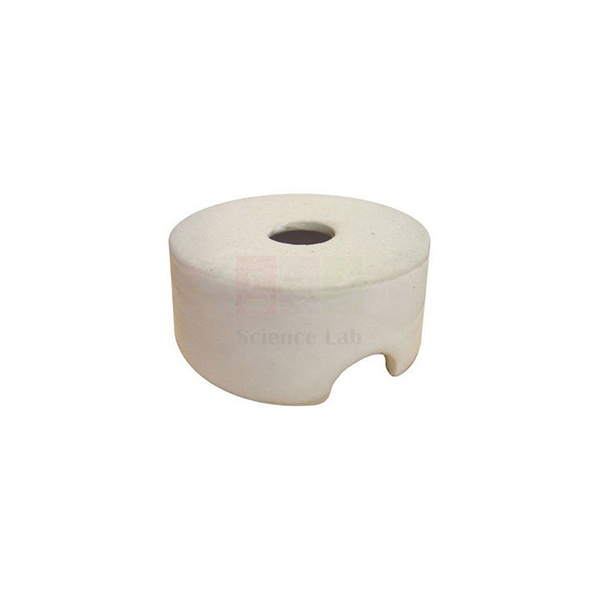
Beehive Shelves
Beehive Shelves (Product Code: SLE/CH/191) are small white porcelain stands, 75 mm in diameter, that sit under water in a pneumatic trough and support an inverted gas jar while a gas is collected over water. Glazed both inside and out, they resist staining and are easy to rinse clean between experiments. Chemistry teachers in schools and colleges rely on them as a standard part of gas collection apparatus for preparing oxygen, hydrogen and carbon dioxide in class. They are made by Jain Scientific Equipments Pvt Ltd (ScienceLab), Ambala.
Specifications
| Parameter | Detail |
|---|---|
| Material | Porcelain |
| Glazing | Glazed both inside and out |
| Colour | White |
| Diameter | 75 mm |
| Application | For use in pneumatic troughs for gas collection |
Typical Use
To collect a gas by downward displacement of water, fill the pneumatic trough, place the beehive shelf on its floor so it is covered with water, and lead the delivery tube from the reaction flask in through the opening at the side of the shelf. A gas jar filled completely with water is then inverted over the top of the shelf. As the reaction runs, bubbles rise through the shelf into the jar and push the water out; when the jar is full of gas, a cover is slid under its mouth before it is lifted away. This simple arrangement is a staple of junior science lab equipment because students can watch the gas displace the water.
Let the first few bubbles escape before placing the jar, since they are mostly air from the apparatus. After the lesson, rinse the shelf in clean water and dry it; the glazed surface does not hold residues. Porcelain can chip if dropped into a trough, so lower it in by hand.
Manufacturer
Jain Scientific Equipments Private Limited, trading as ScienceLab, is based in Ambala, Haryana and supplies apparatus for chemistry, physics and biology teaching labs. The company is incorporated under CIN U29309HR2020PTC087597 and manufactures at its licensed factory at 449, HSIIDC Industrial Area, Saha, Ambala (Factory Licence AMB-ONLINE-CHD-J-414). See the company profile for more.
Related Chemistry Lab Equipment
The rest of a gas-collection-over-water set-up:
- Pneumatic Trough — the water trough in which the beehive shelf stands.
- Gas Jar, Glass — the jar inverted over the shelf to collect the gas.
- Gas Jar Cover — closes the jar before it is lifted out of the water.
- Delivery Tube — carries gas from the generating flask into the shelf.
- Beehive Shelf, Porcelain — a separately listed porcelain beehive shelf you can compare.
Find more apparatus in the Chemistry Lab Equipment category.
Frequently Asked Questions
What diameter are the Beehive Shelves?
75 mm.
What are they made of?
White porcelain, glazed both inside and out, which keeps them smooth and easy to clean.
Will they fit my pneumatic trough and gas jars?
They are intended for use in pneumatic troughs. Check that your trough is deep enough to cover the shelf with water and that your gas jar mouth sits comfortably over a 75 mm shelf.
Which gases can be collected with them?
Gases that are not very soluble in water, such as oxygen and hydrogen, are commonly collected over water in school practicals. Very soluble gases need a different collection method.
How many should a school order?
Usually one per pneumatic trough, plus a few spares in case of breakage. Tell us how many student stations you have and we can suggest quantities.
What warranty and delivery terms apply?
These are stated in the quotation. Ask through the contact page for delivery within India or to international markets.
Request a Quote
Request a quotation for Beehive Shelves via the contact page, or add them to the enquiry cart with troughs, gas jars and delivery tubes to price the full set-up.
Last updated: 24 September 2026
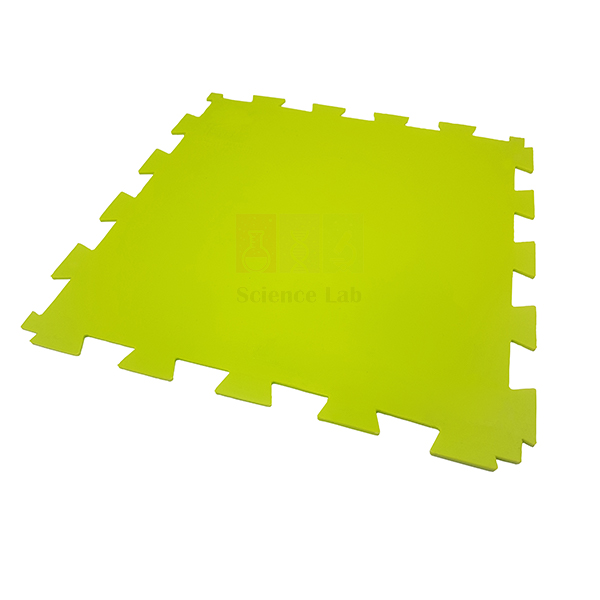
Bench-Armour Interlocking Bench Mat
Bench-Armour Interlocking Bench Mat (Product Code: SLE/CH/192) is a 250 x 250 mm heat proof mat that protects laboratory benches from hot apparatus, offered as a long lasting alternative to the old asbestos sheet bench mats still found in many labs. The interlocking design lets several mats be joined into a larger protected area around a heating station. Schools and colleges place it under a tripod stand and wire gauze during Bunsen burner work, and also use it to line trays that hold glassware. It is supplied by Jain Scientific Equipments Pvt Ltd (ScienceLab), Ambala.
Specifications
| Parameter | Detail |
|---|---|
| Type | Interlocking heat proof bench mat |
| Dimensions | 250 x 250 mm |
| Shape | Rectangular |
| Key property | Heat proof and long lasting; alternative to asbestos sheet bench mats |
| Secondary use | Lining storage trays – the matting stops glass sliding and prevents damage to glassware |
Typical Use
In a heating practical, each student station gets a mat on which the Bunsen burner and tripod stand, so a hot base, a dropped gauze or a spill from a boiling tube lands on the mat and not on the laminate or wooden bench top. Where a teacher needs a wider protected zone, for instance for a demonstration with two burners or a water bath, several mats can be interlocked side by side. Replacing ageing asbestos sheet mats with these is one of the simpler lab equipment accessories upgrades a school can make, because it removes an outdated material from everyday handling.
Off the bench, the same mat laid in the bottom of a storage tray or drawer keeps beakers, flasks and test tubes from sliding into each other when the tray is carried. Let the mat cool before stacking or storing it, and wipe it with a damp cloth to remove chemical splashes.
Supplier
This bench mat is supplied by Jain Scientific Equipments Private Limited, the company behind the ScienceLab name, located in Ambala, Haryana and serving teaching and research laboratories with apparatus and accessories. Visit the company profile to learn more.
Related Chemistry Lab Equipment
Heating-station items that are used on top of this mat:
- Bunsen Burner — the heat source the mat protects the bench from.
- Tripod, Stainless Steel — supports beakers and dishes over the flame.
- Gauze Wire, Ceramic Centre — spreads heat evenly under glassware on the tripod.
- Bunsen Burner Kit — a class set of burners, gauzes, bench mats and tripods.
- Beaker Tongs — for lifting hot beakers off the tripod onto the mat.
Explore the full Chemistry Lab Equipment range.
Frequently Asked Questions
What size is the bench mat?
Each mat measures 250 x 250 mm.
Does it contain asbestos?
It is offered as an alternative to regular asbestos sheet bench mats. For the exact material composition, please ask through the contact page.
What maximum temperature can it take?
The mat is described as heat proof, but a specific temperature rating is not listed here. Contact us if your application involves very high temperatures and we will confirm suitability.
Can several mats be joined together?
Yes, it is an interlocking mat, so pieces can be connected to cover a larger working area.
Is it only for heating work?
No. It can also line storage trays, where the matting stops glassware sliding and helps prevent breakage.
How many should be ordered for a class?
Most schools order one per heating station plus spares. Share your number of student benches and we will quote for the quantity.
Request a Quote
For pricing on the Bench-Armour Interlocking Bench Mat, contact us through the contact page, or add it to the enquiry cart with burners and tripods for a combined quote.
Last updated: 24 September 2026
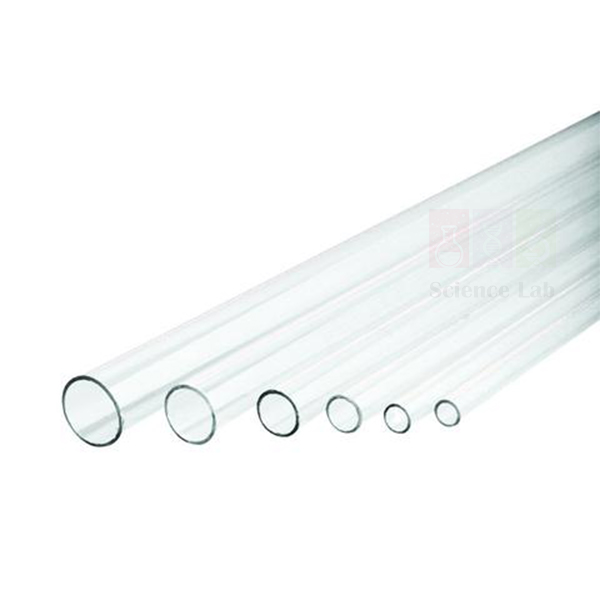
Borosilicate Glass Tubing
Borosilicate Glass Tubing (Product Code: SLE/CH/193) is clear, light-wall tubing made from borosilicate glass 3.3, the heat and chemical resistant glass used for most laboratory apparatus. Teachers, lab technicians and glassblowing students cut and shape it into delivery tubes, connectors and bends for gas preparation, distillation and other set-ups. Made from the same material as the borosilicate glassware found in labs across India, it copes with flame work and with contact with common reagents. It comes in packs of 30 and is supplied by Jain Scientific Equipments Pvt Ltd (ScienceLab), Ambala.
Specifications
| Parameter | Detail |
|---|---|
| Material | Borosilicate glass 3.3 |
| Wall | Light wall |
| Colour | Clear |
| Properties | Heat resistant, chemical resistant |
| Listed size | 6 mm (please confirm the diameter and piece length for your order when you enquire) |
| Pack size | 30 pieces |
Typical Use
A technician preparing for a gas practical scores the tubing with a tubing cutter, snaps it cleanly, fire-polishes the ends so they will not cut hands or stoppers, and then softens a section in a hot flame to bend it into a right angle or U-shape. The finished piece is pushed through a bored rubber or cork stopper to make a delivery tube, or joined to rubber tubing to connect apparatus. College students also use straight lengths to practise basic glassblowing and to draw capillaries. Keeping a pack of blanks on the shelf means a broken fitting can be replaced on the spot, which is why tubing sits alongside the rest of the chemistry lab glassware in most Indian prep rooms.
Borosilicate glass needs a hotter flame than soda glass to soften, so allow extra heating time when bending. When pushing tubing into a stopper, wet or lubricate the glass, hold it close to the stopper and protect your hand with a cloth. Let worked glass cool slowly on a heat proof mat.
Supplier
Borosilicate Glass Tubing is supplied by Jain Scientific Equipments Private Limited, whose trading name is ScienceLab; the company is based in Ambala, Haryana and provides glassware, apparatus and consumables to educational laboratories. More information is on the company profile page.
Related Chemistry Lab Equipment
Tools and fittings used when working with glass tubing:
- Glass Tubing Cutter — for scoring the tubing before breaking it to length.
- Soda Glass Tubing 6mm — a soda glass alternative that softens at a lower temperature.
- Rubber stoppers with holes of different diameters — for mounting the finished tubes in flasks.
- Rubber Tubing — for flexible joints between glass pieces.
- Delivery Tube — a ready-made option when you do not want to shape your own.
See more glassware and accessories in Chemistry Lab Equipment.
Frequently Asked Questions
What glass is the tubing made from?
Borosilicate glass 3.3, which is heat resistant and chemical resistant.
How many pieces are in a pack?
30.
What does the 6 mm size refer to?
The listing gives 6 mm as the size. Please confirm the outside diameter and piece length you need through the contact page so we quote exactly the right tubing.
Can it be bent with an ordinary Bunsen burner?
Borosilicate glass needs more heat than soda glass. A hot, well-adjusted flame and patience are needed; for frequent bending, many labs prefer a higher-temperature burner.
Is light-wall tubing suitable for vacuum work?
Light-wall tubing is intended for general connections and gas delivery. For vacuum or pressure applications, discuss your set-up with us before ordering.
Can you supply larger quantities for colleges or export?
Yes. Tell us how many packs you need and where they should be delivered, in India or abroad, and we will include suitable protective packing.
Request a Quote
Send an enquiry for Borosilicate Glass Tubing through the contact page, or place it in the enquiry cart with cutters and stoppers.
Last updated: 24 September 2026
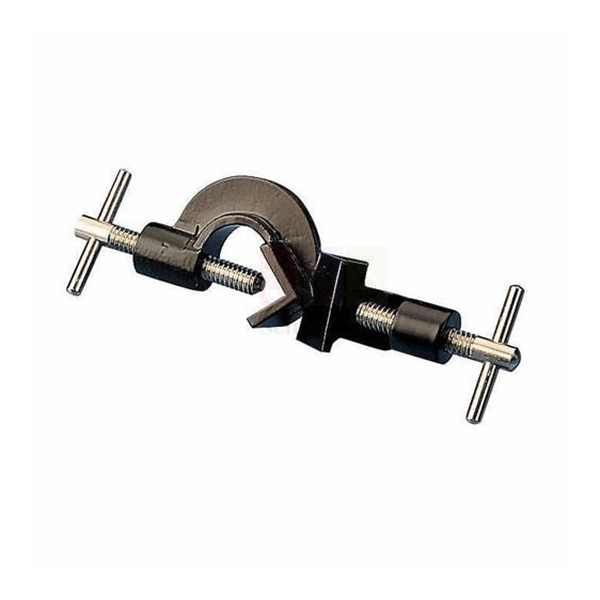
Bosshead, Coated Aluminium, Black
Bosshead, Coated Aluminium, Black (Product Code: SLE/BH/15) is a die-cast, double-head bosshead used to hold rods of 5-20mm on retort stands in school and college laboratories. The wide rod range lets one fitting grip both slim clamp shanks and thicker stand rods, and metal clamping screws tighten each head securely. It is manufactured by Jain Scientific Equipments Pvt Ltd (ScienceLab), an OEM manufacturer, at its own factory in Ambala, India.
Specifications
| Parameter | Detail |
|---|---|
| Type | Double-head bosshead, die-cast |
| Material | Coated aluminium |
| Colour | Black |
| Rod range | 5-20mm |
| Clamping screws | Metal, for tightness |
| Product code | SLE/BH/15 |
| Manufacturer | Jain Scientific Equipments Pvt Ltd (ScienceLab) — OEM |
| Country of origin | India (made in Ambala, Haryana) |
What Is the Black Coated Aluminium Bosshead Used For?
The double head is the working principle of any bosshead: one head grips the upright stand rod, the other grips the clamp or cross rod. The wide 5-20mm range is the practical advantage here, because one design accepts the thin rods of burette, test-tube and thermometer clamps as well as heavier support rods, so a lab does not need separate bossheads for every clamp. It is a sensible line for school lab equipment bulk supply, when dozens of stands are fitted out for practicals in heating, titration and filtration.
Tighten the stand-rod head first, then position and lock the clamp, and check both screws before loading glassware. The black coating protects the aluminium and gives a uniform look across a lab; avoid scraping it with tools and wipe off spills promptly.
OEM Manufacturer
Jain Scientific Equipments Private Limited — ScienceLab to its customers — is the OEM of this black coated bosshead, producing it at its own licensed factory at Saha, Ambala, Haryana, India. Schools fitting out many benches, as well as dealers and importers, can therefore order class quantities straight from the manufacturer and ask it about matching stands and clamps. More is on the company profile.
Related Laboratory Equipment
Items that complete or offer alternatives to this bosshead on a retort stand:
- Retort Stand — base and rod on which to mount the bosshead.
- Retort Clamp, Rubber Jaws — a rubber-lined clamp whose rod the bosshead can hold.
- Bosshead, Metal — a blue-coated die-cast alternative for right-angle clamping.
- Bosshead, Swivel — die-cast swivel bossheads for angled positions.
- Bosshead Aluminium — an aluminium bosshead with a choice of screw types.
Compare all styles in the Bosshead category.
Frequently Asked Questions
What rod sizes does the Bosshead, Coated Aluminium, Black accept?
The Bosshead, Coated Aluminium, Black holds rods of 5-20mm, which covers most clamp shanks and stand rods used in school and college laboratories, so one bosshead type can serve a mixed set of clamps.
What does double-head mean on the Bosshead, Coated Aluminium, Black?
The Bosshead, Coated Aluminium, Black has two clamping heads: one grips the upright stand rod and the other grips the clamp or cross rod, each tightened by its own metal clamping screw.
Why is the Bosshead, Coated Aluminium, Black coated?
The black coating finishes the die-cast aluminium surface of the Bosshead, Coated Aluminium, Black and gives a uniform look across a lab. Wipe spills promptly and avoid scraping the coating with metal tools.
Can the Bosshead, Coated Aluminium, Black hold rods at an angle?
The Bosshead, Coated Aluminium, Black is described as a double-head clamping bosshead without an angle setting. For adjustable angles, choose a swivel bosshead or ask ScienceLab via the contact page.
Who manufactures the Bosshead, Coated Aluminium, Black?
The OEM for the Bosshead, Coated Aluminium, Black is Jain Scientific Equipments Pvt Ltd (ScienceLab); it is produced at the company’s own factory in Ambala, Haryana, India, and schools, dealers and importers buy it factory-direct.
Is the Bosshead, Coated Aluminium, Black available in bulk?
Pack sizes for the Bosshead, Coated Aluminium, Black are not given in the listing. Tell ScienceLab how many stands you are equipping, with code SLE/BH/15 and the delivery location, and the quantity will be quoted.
Request a Quote
For a quotation on the Bosshead, Coated Aluminium, Black, send ScienceLab an enquiry or add it to the enquiry cart with the stands and clamps you are ordering; the reply comes from the manufacturer.
Last updated: 24 September 2026
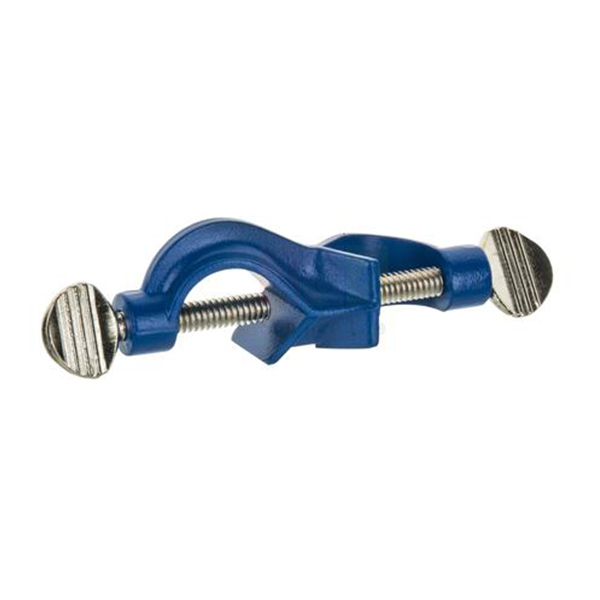
Bosshead, Metal
Bosshead, Metal (Product Code: SLE/BH/16) is a die-cast alloy bosshead used to hold two retort stand rods at right angles to each other in school titration, heating and filtration setups. It accepts rods up to 16.5mm diameter, is listed with a diameter of 16mm, and has a blue coating with well-finished metal edges for safe handling. Jain Scientific Equipments Pvt Ltd (ScienceLab) is the OEM manufacturer, producing this bosshead at its own factory in Ambala, India.
Specifications
| Parameter | Detail |
|---|---|
| For use with | Retort stand rods |
| Construction | Die-cast alloy |
| Material | Metal |
| Rod capacity | Up to 16.5mm diameter, at right angles to each other |
| Diameter | 16mm |
| Finish | Blue coating; metal edges well finished for safe use |
| Product code | SLE/BH/16 |
| Manufacturer | Jain Scientific Equipments Pvt Ltd (ScienceLab) — OEM |
| Country of origin | India (made in Ambala, Haryana) |
What Is the Metal Bosshead Used For?
This is the everyday right-angle bosshead of a retort stand lab: one side grips the upright rod, the other holds the shank of a burette clamp, retort clamp or ring so it sticks out horizontally over the bench. In a school titration practical it carries the burette clamp at a comfortable reading height, in a heating experiment it holds a boiling tube or flask over the burner, and in filtration it supports a ring and funnel above a beaker. Because two rods up to 16.5mm are held square to each other, clamps stay level and apparatus hangs straight.
Slide the bosshead to height, tighten it on the stand rod, then insert and lock the clamp. Students handle it often, so the well-finished metal edges matter: there are no sharp burrs to catch fingers. Store bossheads on the rods rather than loose in a drawer so they are ready for the next class.
OEM Manufacturer
ScienceLab is the trade name of Jain Scientific Equipments Private Limited, the OEM that manufactures this blue-coated bosshead at its own licensed factory at Saha, Ambala, Haryana, India. The company is registered as an MSME manufacturer (Udyam UDYAM-HR-01-0003714) and exports under Importer-Exporter Code AAECJ8618A issued by the DGFT. Schools, dealers and importers therefore order it directly from the factory. Read more on the company profile.
Related Laboratory Equipment
Stand parts and clamps used with this bosshead in the same practical:
- Retort Stand — cast iron base with a rod for the bosshead to grip.
- Retort Clamp, Cork Jaws — a four-prong clamp in a matching blue finish for flasks and tubes.
- Retort Metalware Kit — a class set of retort bases, clamps and rods.
- Burette Clamp, Die Cast – Single Clamp — a die-cast burette clamp for titration.
- Bosshead, Coated Aluminium, Black — a double-head alternative with a wider rod range.
See the complete range in the Bosshead category and clamps in the Retort Clamp category.
Frequently Asked Questions
What is the largest rod the Bosshead, Metal will take?
The Bosshead, Metal accepts retort stand rods up to 16.5mm diameter and holds them at right angles to each other; the listing also gives a diameter of 16mm for the bosshead itself.
Can the Bosshead, Metal set rods at an angle other than a right angle?
No. The Bosshead, Metal holds the two rods at right angles to each other, which keeps clamps level. For sloping apparatus, use one of the swivel bossheads in the same category instead.
What finish does the Bosshead, Metal have?
The Bosshead, Metal has a blue coating over its die-cast alloy body, and its metal edges are well finished so that students can handle it safely during practicals without catching fingers on burrs.
Will the Bosshead, Metal fit the retort stands we already have?
If your stand rods are 16.5mm diameter or less, the Bosshead, Metal is designed to take them. If you are unsure, measure the rod or send the stand details through the contact page for confirmation.
Who manufactures the Bosshead, Metal?
Jain Scientific Equipments Pvt Ltd (ScienceLab) is the OEM that makes the Bosshead, Metal at its own licensed factory in Saha, Ambala, India, and it can ship export orders under its own Importer-Exporter Code.
What does a school or tender quotation for the Bosshead, Metal need?
A quotation request for the Bosshead, Metal needs code SLE/BH/16, the quantity, the delivery address and any vendor registration requirements. ScienceLab supplies India and international markets.
Request a Quote
For a factory-direct quotation on the Bosshead, Metal, contact ScienceLab or add it to the enquiry cart together with retort stands and clamps.
Last updated: 24 September 2026
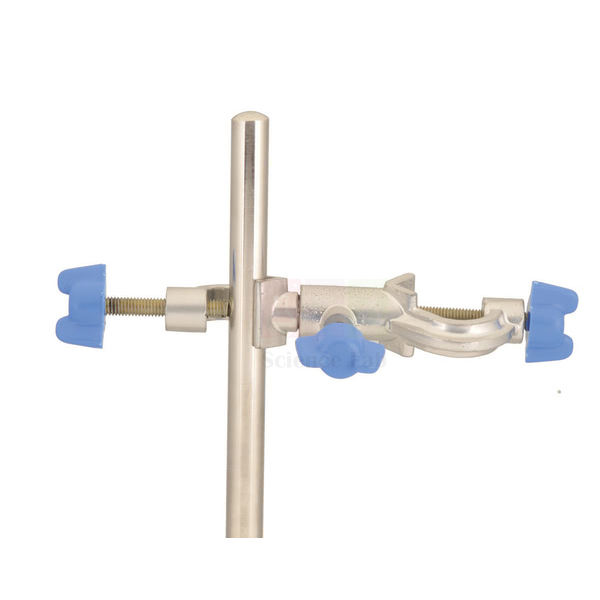
Bosshead, Swivel
Bosshead, Swivel (Product Code: SLE/BH/17) is a die-cast zinc connector used to join two support rods at any angle on retort stands in school and college laboratories. Science departments that run angled practicals on many benches choose it because it holds rods up to 16mm and comes in a pack of 25, ready for school lab equipment bulk supply. It is made by Jain Scientific Equipments Pvt Ltd (ScienceLab), an OEM manufacturer, at its own factory in Ambala, India.
Specifications
| Parameter | Detail |
|---|---|
| Type | Swivel bosshead |
| Material | Zinc, die-cast |
| Rod capacity | Holds rods up to 16mm |
| Diameter | 16mm |
| Angle | Two rods can be fitted at any angle |
| Pack | Pack of 25 |
| Product code | SLE/BH/17 |
| Manufacturer | Jain Scientific Equipments Pvt Ltd (ScienceLab) — OEM |
| Country of origin | India (made in Ambala, Haryana) |
What Is the Swivel Bosshead Used For?
A swivel bosshead is the joint that lets a stand hold apparatus on a slope. When a whole class assembles the same angled setup — collecting a gas over water with a tilted delivery tube, heating a test tube at a slant, sloping a condenser for a simple distillation, or angling a ramp or mirror in physics — each stand needs a joint that can be set and then locked. A pack of 25 gives every group identical hardware, so the teacher demonstrates once and every bench copies the same angle. It is a small but constant part of chemistry lab equipment in schools across India.
Clamp one side to the stand rod, fit the clamp shank or second rod into the other side, swing it to the required angle and tighten. Recheck the angle after tightening and support glassware by hand while adjusting. Wipe off spills after each lesson and store the bossheads together so the class set stays complete through the year.
What to Specify When Ordering
- The number of packs required — each pack holds 25 swivel bossheads.
- The diameter of your stand rods, since this bosshead takes rods up to 16mm.
- Any stands, clamps or fixed bossheads needed for the same benches, so one quotation covers the full setup.
- The delivery location, in India or abroad.
OEM Manufacturer
ScienceLab is the trading name of Jain Scientific Equipments Private Limited, the OEM (original equipment manufacturer) of this swivel bosshead. It is produced at the company's own licensed factory at 449, HSIIDC Industrial Area, Saha, Ambala, Haryana, rather than bought in from a trader. Schools, colleges, dealers and importers therefore order class packs straight from the maker, and questions about matching stands, spare fittings or repeat packs go to the manufacturer itself. Read more on the company profile.
Related Laboratory Equipment
Class-set items that pair with a pack of swivel bossheads:
- Retort Metalware Kit — a class set of bases, rods and clamps to fit the bossheads to.
- Retort Stand — individual stands for each bench.
- Three Prong Swivel Clamp — a rotating clamp for round and irregular apparatus.
- Bosshead, Metal — a fixed bosshead for the other joints on the stand.
- Bosshead Swivel Type, Malleable Cast Iron, Chromium Plated — a swivel option in chromium-plated cast iron.
Other connector styles are listed in the Bosshead category.
Frequently Asked Questions
How many bossheads are in one pack of the Bosshead, Swivel?
The Bosshead, Swivel (SLE/BH/17) comes as a pack of 25 bossheads. That is enough to fit out a typical class set of retort stands with one angled joint each, so every group works with identical hardware during a practical.
What rod size does the swivel bosshead fit?
The Bosshead, Swivel holds rods up to 16mm in diameter. If your stand rods are thicker than 16mm, compare the other connectors in the Bosshead category or send your rod size through the contact page before ordering.
Can the two rods be set at any angle?
Yes. The Bosshead, Swivel lets two rods be fitted at any angle to each other, so a delivery tube, condenser or clamp arm can be set on a slope and then locked by tightening, instead of being limited to a right angle.
What is the swivel bosshead made of?
The Bosshead, Swivel is made of die-cast zinc, as listed for code SLE/BH/17. Wipe each bosshead after practical work and keep the screws free of spilt chemicals so the joints keep turning and locking smoothly.
Who manufactures the Bosshead, Swivel?
The Bosshead, Swivel is manufactured by Jain Scientific Equipments Pvt Ltd (ScienceLab), the OEM, at its own licensed factory in Saha, Ambala, Haryana, India. Class packs and repeat orders are quoted directly by the manufacturer rather than through a trader.
What should a quotation request for the swivel bosshead include?
A quotation request for the Bosshead, Swivel should give code SLE/BH/17, the number of packs of 25, your stand rod diameter and the delivery location. ScienceLab supplies schools and dealers in India and international markets from Ambala.
Request a Quote
To price packs of the Bosshead, Swivel, contact ScienceLab or add the item to the enquiry cart with the stands and clamps for your class. Quotations come direct from the manufacturer in Ambala.
Last updated: 24 September 2026
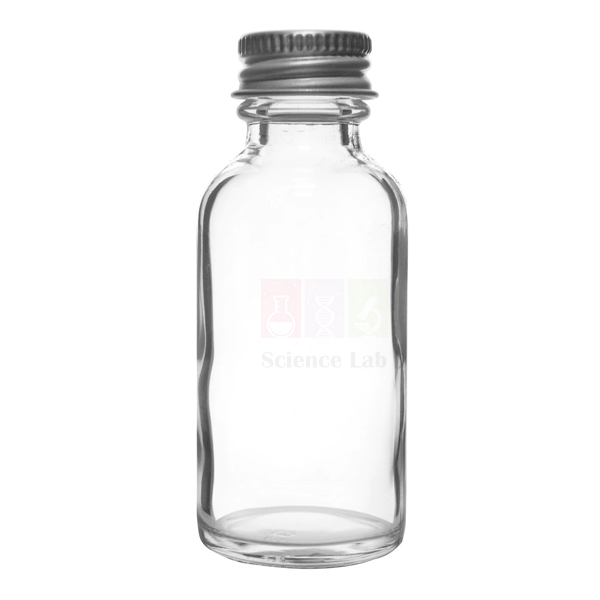
Bottle, McCartney
The Bottle, McCartney (Product Code: SLE/GBO/14) is a small clear-glass bottle of 1 oz (29.5 ml) capacity in the traditional McCartney pattern, used in microbiology for storing culture media, stock cultures and small liquid samples. An aluminium screw cap with a foam liner closes the 12 mm mouth, giving a firmer seal than a cotton plug. It is manufactured by Jain Scientific Equipments Pvt Ltd (ScienceLab), Ambala, as a practical culture media bottle for laboratories in India and abroad.
Specifications
| Parameter | Detail |
|---|---|
| Type | McCartney bottle |
| Material | Glass |
| Colour | Clear |
| Capacity | 1 oz (29.5 ml) |
| Height | 3.1 in |
| Diameter | 1.3 in |
| Mouth inner diameter | 12 mm |
| Closure | Aluminium screw cap with foam liner |
| Heat resistance | Heat resistant |
| Chemical resistance | Chemical resistant |
Typical Use
McCartney bottles are the everyday containers of a microbiology teaching or diagnostic lab. Molten agar can be dispensed into them and set at an angle to make slopes for maintaining pure cultures, broth can be stored ready for inoculation, and small water, milk or food samples can be collected and carried to the bench. The clear glass lets students see turbidity or colonies without opening the bottle, and the compact size keeps a large number of cultures in a small rack or refrigerator shelf. They are a routine item in any microbiology lab setup in India, from college practical classes to quality-control rooms.
Work near a flame or in a clean cabinet when opening the bottle, and flame the neck briefly before and after transfer. Screw caps are normally loosened slightly during sterilisation and tightened once the bottle has cooled; if you plan to sterilise filled bottles, confirm with us that the cap liner suits your cycle. Label each bottle with the organism or medium and the date.
Manufacturer
Jain Scientific Equipments Private Limited, trading as ScienceLab, is a laboratory equipment company in Ambala, Haryana. It produces glassware and apparatus for biology, chemistry and microbiology teaching and serves customers in India and international markets. Details are on the company profile page.
Related Laboratory Equipment
Equipment used with McCartney bottles in a culture and media workflow:
- Bottle McCARTNEY, BIJOU — a companion McCartney/Bijou bottle listed in our chemistry range.
- Universal Bottle Pp Cap — an alternative universal bottle with a polypropylene cap.
- Autoclave Basket — holds a batch of small bottles together inside the autoclave.
- Electric Autoclave — for sterilising culture media before it is dispensed.
- Petri Dish Glass With Lid — for plating out cultures kept in the bottles.
Find more bottles in the Glassware Bottles category.
Frequently Asked Questions
What are the bottle’s capacity and dimensions?
It holds 1 oz (29.5 ml), stands 3.1 in tall, is 1.3 in in diameter and has a mouth with an inner diameter of 12 mm.
What kind of cap is fitted?
An aluminium screw cap with a foam liner.
Can filled bottles go into an autoclave?
The glass is heat resistant. Please contact us to confirm the cap and liner suit your sterilisation cycle before you autoclave filled bottles.
What do labs usually keep in McCartney bottles?
Agar slopes, broths, stock cultures and small liquid samples for testing. The screw cap limits evaporation and contamination during storage.
Are other sizes available?
This listing covers the 1 oz (29.5 ml) bottle. For a different size, see the McCartney/Bijou bottle or ask us.
How should I request a quotation?
Send the number of bottles, your delivery location and any related items such as autoclave baskets. We supply institutions in India and international markets.
Request a Quote
For prices on the Bottle, McCartney, use our contact page or add it to the enquiry cart with the rest of your microbiology requirements.
Last updated: 24 September 2026