- Physics Lab Equipment
- Chemistry Lab Equipment
- Biology Lab Equipment
- Anatomical Lab Equipment
- Learning
- Educational Lab Equipment
- Magnets
- Agriculture
- Astronomy
- Earth Science
- Geography Lab Equipment
- Safety Lab Coat
- Laboratory
- Meteorological
- Electricity & Magnetism
- Heat
- School Lab Equipment
- Lab Glassware
- Science Lab Equipment
- Tvet Lab Equipment
- Robotics Kits Supplier and Manufacturer for Schools India
- Math Lab Equipment Manufacturers and Exporters in Ambala
- STEM Kits Manufacturers and Supplier India
- Engineering Lab Equipment
- Hospital Lab Equipment
- Water, Sanitation & Hygiene Supplies
- Cold Chain, Solar & Communication Equipment
- Nutrition
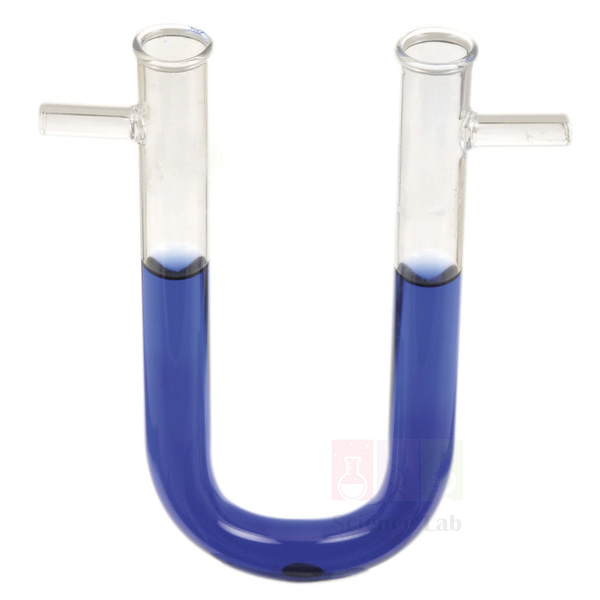
Absorption Tube with Side Arms
Absorption Tube with Side Arms (Product Code: SLE/CH/182) is a heavy walled, clear borosilicate glass U-tube fitted with side arms of approximately 6mm diameter, so it can be plugged straight into a gas train with flexible tubing. It is used by chemistry departments and analytical teaching labs to dry a gas or absorb a component such as water vapour or carbon dioxide while the gas flows continuously through the packing. This piece of borosilicate laboratory glassware in India is manufactured by Jain Scientific Equipments Pvt Ltd (ScienceLab), Ambala.
Specifications
| Parameter | Detail |
|---|---|
| Material | Heavy walled borosilicate glass |
| Form | U-form with side arms |
| Side arm diameter | Approximately 6mm |
| Colour | Clear |
| Properties | Heat resistant; chemical resistant |
Typical Use
With side arms, the gas connections and the filling openings are separate. The absorbent is poured in through the top of each limb, held with a small plug of glass wool and sealed with solid stoppers, while the incoming and outgoing gas lines slide onto the side arms. When the packing is spent, the stoppers come out for refilling without disturbing the tubing, which saves time when a gas train has several stages such as washing, drying and absorption in sequence.
This layout suits combustion and absorption experiments, where one tube collects water and a second collects carbon dioxide, and each is weighed before and after to find the mass absorbed. The heavy walls stand up to repeated handling, and the transparent glass lets the operator watch the absorbent change as it works through the tube. Support the tube with a clamp rather than letting it hang on the tubing, and slide tubing onto the side arms gently with a little water as a lubricant to avoid strain on the glass.
Manufacturer
Jain Scientific Equipments Private Limited, trading as ScienceLab, produces laboratory glassware and teaching apparatus in Ambala, Haryana for schools, colleges and technical institutes. Visit our company profile for an overview of the company.
Related Chemistry Lab Equipment
Other items that commonly sit in the same gas train:
- Absorption Tube — the plain U-form version, 125mm long and 15mm in diameter.
- Absorption Tower Calcium Chloride — a larger drying column for higher gas flows.
- Gas Washing Bottle — scrubs the gas with a liquid before it reaches the solid absorbent.
- Glass Combustion Tube — where a sample is burned before its products are absorbed.
- Three Prong Swivel Clamp — supports the tube at the right angle on a stand.
Explore more in our Chemistry Lab Equipment category.
Frequently Asked Questions
What size are the side arms?
They are approximately 6mm in diameter. Choose flexible tubing whose bore grips that size snugly.
What is the overall length of the tube?
An overall length is not stated in our product details. Please ask through our contact page if the tube must fit a particular set-up.
Why choose side arms instead of a plain U-tube?
Side arms keep the gas connections separate from the filling openings, so the absorbent can be changed without dismantling the tubing.
Is the glass suitable for warm gases and reactive absorbents?
Yes. It is heavy walled borosilicate glass that is heat resistant and chemical resistant; still avoid sudden temperature shocks.
Are stoppers included?
Stoppers are not listed with this tube. We can quote suitable ones on request.
What should a laboratory include in a quotation request?
The quantity, any accessories wanted and the delivery address. We supply institutions in India and international markets.
Request a Quote
To price the Absorption Tube with Side Arms, contact us via the contact page or add it to the enquiry cart with the rest of your gas-train glassware.
Last updated: 24 September 2026
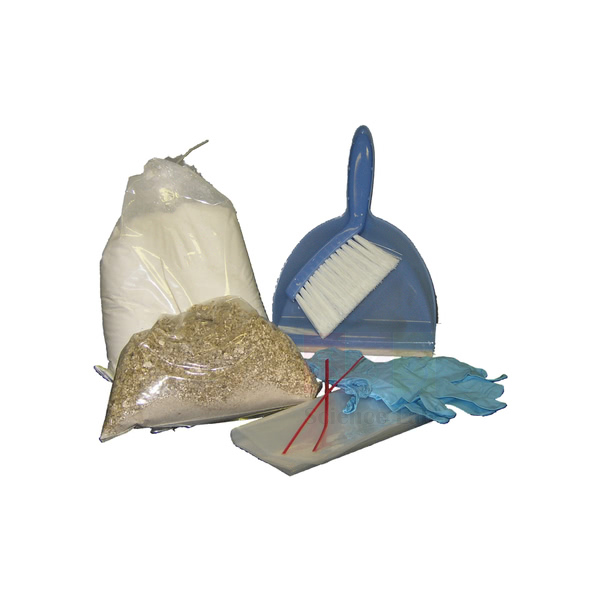
Acid Spill Clean Up Kit
Acid Spill Clean Up Kit (Product Code: SLE/CH/183) brings together what a laboratory needs to deal with a spilled acid quickly: a neutralising mixture with litmus powder, vermiculite absorbent, vinyl gloves, a dustpan and brush, and bags, ties and tags for packing the waste. Kept beside the acid store or fume cupboard, it lets teachers and technicians respond within moments instead of hunting for materials. An essential safety item among chemistry lab equipment for schools in India, it is supplied by Jain Scientific Equipments Pvt Ltd (ScienceLab), Ambala.
Specifications
| Parameter | Detail |
|---|---|
| Neutraliser | 1 bag neutralising mixture (Calcium Hydroxide, Sodium Carbonate, Calcium Carbonate & Litmus Powder) |
| Absorbent | 1 bag vermiculite absorbant |
| Hand protection | 2 vinyl exam gloves |
| Collection tools | 1 dustpan and brush |
| Waste packaging | 4 empty 225 x 400mm polybags, 4 twist ties, 4 blank shipping tags |
| Documentation | Instruction sheet/MSDS |
Typical Use
When an acid is spilled, clear people away from the area, put on the vinyl gloves along with eye protection, and read the instruction sheet if anyone is unsure of the steps. Work the neutralising mixture over the spill from the edges towards the centre so the liquid is not spread further. The litmus powder in the mixture gives a visible colour cue as the acid is neutralised, and more mixture can be added until the whole area shows the change. Vermiculite then soaks up the remaining liquid so it can be swept rather than mopped.
Use the dustpan and brush to transfer the treated material into one of the polybags, close it with a twist tie and write the contents and date on a blank tag before passing it on for disposal in line with your institution’s waste procedures. Four bags, ties and tags allow the waste to be divided into manageable loads. After any use, restock the consumed items so the kit is ready for the next incident, and include it in routine safety checks alongside eyewash and first aid provisions, supporting good waste disposal practice in the lab.
Supplier
Jain Scientific Equipments Private Limited, operating as ScienceLab from Ambala, Haryana, supplies this spill kit as part of the safety range it provides to school and college laboratories. For vendor registration, procurement teams can note the company’s GSTIN 06AAECJ8618A1ZT and its DGFT Importer-Exporter Code AAECJ8618A, under which overseas orders are dispatched. Further details are on our company profile.
Related Chemistry Lab Equipment
Complete your spill-response and acid-handling provisions with these items:
- Caustic Spill Clean Up Kit — for alkali spills, which need a different neutraliser.
- Solvent Spill Clean Up Kit — for organic solvent spills in the same laboratory.
- Acid Storage Cabinet Vertical — safe storage that reduces the chance of spills in the first place.
- Safety Goggles — eye protection to wear while treating a spill.
- Acid Proof Aprons, Lab Coat, Pants, Shoe Covers and Sleeves — body protection for staff handling acids.
Browse more safety and laboratory items in our Chemistry Lab Equipment category.
Frequently Asked Questions
What is inside the Acid Spill Clean Up Kit?
An instruction sheet/MSDS, 2 vinyl exam gloves, 4 blank shipping tags, 4 empty 225 x 400mm polybags, 4 twist ties, 1 dustpan and brush, 1 bag of vermiculite absorbent and 1 bag of neutralising mixture.
What does the neutralising mixture contain?
Calcium hydroxide, sodium carbonate, calcium carbonate and litmus powder; the litmus helps show when the acid has been neutralised.
Can it be used for alkali or solvent spills?
No. It is intended for acid spills. Use the caustic spill kit for alkalis and the solvent spill kit for organic solvents.
How large a spill can one kit treat?
A treatment capacity is not stated in our product details. Ask us through our contact page, and consider keeping more than one kit where large volumes of acid are stored.
Are refill materials available after the kit is used?
The dustpan and brush can be cleaned and reused, but the gloves, absorbent and neutraliser must be replaced. Contact us to discuss refills or a replacement kit.
Can you supply kits for several laboratories?
Yes. We supply institutions across India and international markets; tell us how many kits and delivery points you need.
Request a Quote
To equip your laboratory with the Acid Spill Clean Up Kit, send your requirement through our contact page or add it to the enquiry cart alongside caustic and solvent spill kits for a complete quotation.
Last updated: 24 September 2026
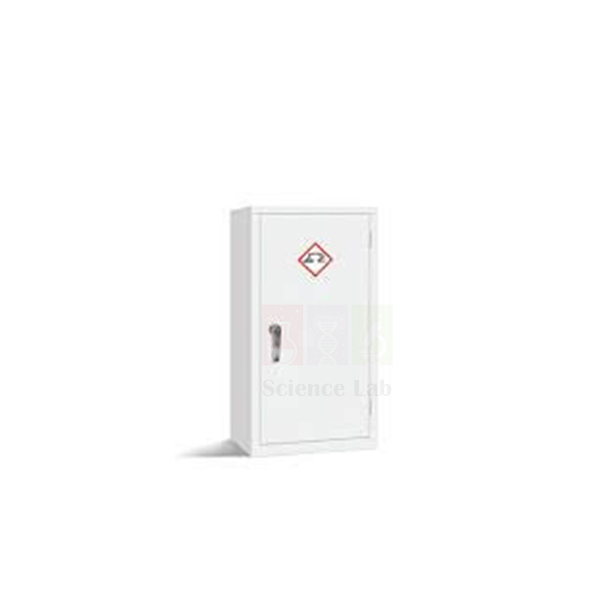
Acid Storage Cabinet Vertical
Acid Storage Cabinet Vertical (Product Code: SLE/CH/184) is an upright, robustly built cabinet for keeping bottles of acid locked away in one place in a school, college or research chemistry laboratory. Reinforced doors, a 3 point locking system and a leak proof sump let laboratory staff control who can reach corrosive stock and keep drips inside the unit instead of on the floor. It works as a dedicated chemistry reagent cabinet for acids and is made by Jain Scientific Equipments Pvt Ltd (ScienceLab), Ambala.
Specifications
| Parameter | Detail |
|---|---|
| Type | Vertical acid storage cabinet |
| Construction | Robust construction with reinforced doors |
| Finish | Powder coated paint finish |
| Door handle | Chrome |
| Locking | 3 point locking system |
| Spill containment | Leak proof sump, 30 Ltr |
| Shelves | 1 |
| Dimensions (H x W x D) | 710 x 915 x 457 mm |
Typical Use
Most chemistry departments place this cabinet in the preparation room, close to where dilute acids are made up before practical classes. Stock bottles stand on the single shelf and on the base, so if a cap loosens or a bottle cracks, the liquid runs into the 30 litre sump rather than across the room. Because the doors lock at three points, the laboratory in-charge can keep concentrated acids out of reach of students between lessons, which makes it a sensible lab storage cabinet for Indian school and college prep rooms.
Good practice is to store acids apart from alkalis and flammable solvents, label the shelf edge with what belongs there, and look into the sump during routine checks. If liquid has collected, neutralise and clean it out according to your laboratory safety procedure before returning the bottles. The 710 mm height and 457 mm depth give a compact footprint, so measure the space you have in mind before ordering.
Manufacturer
This cabinet is produced by Jain Scientific Equipments Private Limited, the Ambala, Haryana company that trades under the ScienceLab name and builds apparatus and storage for teaching laboratories. Background on the company, its facilities and the range it offers is available on the ScienceLab company profile.
Related Chemistry Lab Equipment
Items often ordered together with a vertical acid cabinet when a prep room is being organised:
- Acids Storage Cabinet — a two-door white metal alternative, also with a leak proof sump.
- Hazardous Storage Cabinet Horizontal — for hazardous chemicals that should be kept apart from acids.
- Acid Spill Clean Up Kit — for acid spills that happen outside the cabinet, for example on the bench.
- Safety Goggles — eye protection while decanting from stock bottles.
More storage and handling items are listed in the Chemistry Lab Equipment category.
Frequently Asked Questions
What size is the Acid Storage Cabinet Vertical?
It measures 710 mm high, 915 mm wide and 457 mm deep (H x W x D) and has one shelf above a 30 Ltr leak proof sump.
What does the leak proof sump do?
It catches liquid that escapes from a leaking or broken bottle so the spill stays inside the cabinet. It should be inspected regularly and cleaned out safely whenever anything has collected in it.
Can acids and alkalis share this cabinet?
It is better not to. Follow your institution’s chemical storage rules and the safety data sheet for each chemical; many laboratories keep acids and alkalis in separate cabinets.
Is this cabinet meant for flammable solvents?
It is described for acid storage. If you also need storage for flammables or other hazardous chemicals, tell us your requirement through the contact page and we will advise on the options in our range.
What warranty applies?
Warranty terms are confirmed in writing with your quotation. Please ask through the contact page if you need them before placing an order.
What should an institutional enquiry include?
The quantity, delivery address, whether you want this vertical model or the two-door version, and any tender or purchase-order format your institution uses.
Do you supply outside India?
Yes. ScienceLab supplies institutions across India and in international markets; packing and shipping arrangements are agreed when the quotation is prepared.
Request a Quote
For a quotation on the Acid Storage Cabinet Vertical, send your requirement through our contact page, or add it to the enquiry cart with any other laboratory items you need.
Last updated: 24 September 2026
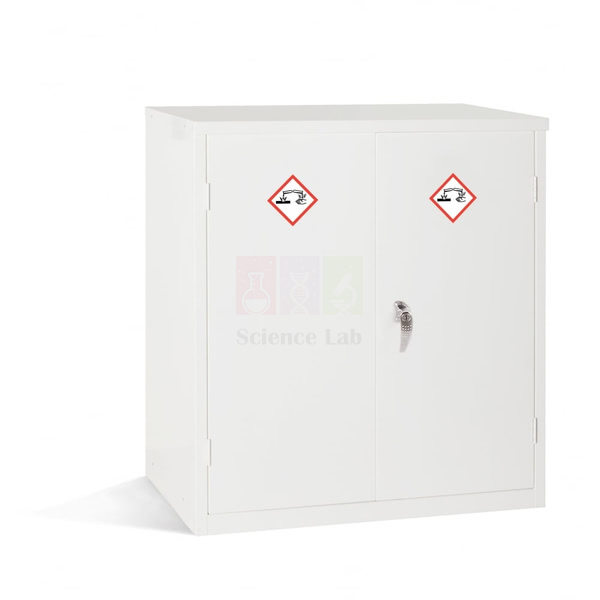
Acids Storage Cabinet
Acids Storage Cabinet (Product Code: SLE/CH/185) is a white, rectangular metal cabinet with two doors, built to hold a laboratory’s stock of acids in a stable, enclosed space. Its leak proof sump keeps any spillage contained within the cabinet, which protects floors, neighbouring furniture and the people working nearby. Laboratory managers use it as a practical piece of laboratory furniture for chemistry prep rooms in schools, colleges and testing labs. It is made by Jain Scientific Equipments Pvt Ltd (ScienceLab), Ambala.
Specifications
| Parameter | Detail |
|---|---|
| Material | Metal |
| Shape | Rectangular |
| Colour | White |
| Number of doors | 2 |
| Spill containment | Leak proof sump inside the cabinet |
| Design | Robust metal body designed for good structural stability |
Typical Use
The two-door layout gives wide access to the interior, so stock bottles at the back can be reached and lifted out without moving everything in front of them. Teachers and lab assistants typically group acids by type inside the cabinet, keep the labels facing forward, and close the doors after every use so fumes and accidental knocks are kept to a minimum. Because the sump sits at the base, a slow leak shows up as liquid in the sump rather than as corrosion on the floor, which gives staff an early warning to replace a damaged bottle. It is one of the basic pieces of chemistry lab equipment for schools in India that are setting up or upgrading a preparation room.
Place the cabinet on a level floor away from heat sources and direct sunlight, and keep alkalis, oxidisers and flammable liquids in separate storage. The white finish makes stains and residues easy to spot, so wipe the inside down during routine housekeeping.
Manufacturer
ScienceLab is the brand used by Jain Scientific Equipments Private Limited, a private limited company in Ambala, Haryana that designs and makes equipment and storage for educational and research laboratories. You can read about the company on its profile page.
Related Chemistry Lab Equipment
Other items that help complete safe chemical storage and spill response in the same room:
- Acid Storage Cabinet Vertical — a single-shelf vertical model with 3 point locking and a 30 Ltr sump.
- Hazardous Storage Cabinet Vertical Two Door — separate storage for hazardous chemicals that should not sit with acids.
- Caustic Spill Clean Up Kit — for alkali spills, since alkalis are stored away from this cabinet.
- Spill Pack — general spill response kept close to the storage area.
- Apron, PVC — body protection while moving acid bottles.
Browse the Chemistry Lab Equipment category for further apparatus and storage.
Frequently Asked Questions
How many doors does the Acids Storage Cabinet have?
Two. The double-door front gives wide access for loading and removing bottles.
What are the internal dimensions and shelf arrangement?
Exact dimensions and shelving are not listed on this page. Please ask through the contact page and we will confirm them with your quotation.
How is a spillage contained?
The cabinet has a leak proof sump that holds spilled liquid inside the cabinet, so it can be neutralised and cleaned up without spreading.
How is this different from the Acid Storage Cabinet Vertical?
This model is a white, two-door metal cabinet; the vertical model is an upright, single-shelf cabinet with 3 point locking and its own sump; its dimensions are given on its product page. Choose based on the space and access you need.
How should the cabinet be cleaned?
Empty the affected area, neutralise any acid residue following your lab safety procedure, then wipe the surfaces and sump with water and a mild detergent and dry them before restocking.
Can you supply several cabinets for a school group or tender?
Yes. Share the quantity, delivery locations and tender terms, and we will prepare a combined quotation for institutions in India or international markets.
Request a Quote
To get a price for the Acids Storage Cabinet, write to us via the contact page or place it in the enquiry cart along with the rest of your laboratory list.
Last updated: 24 September 2026
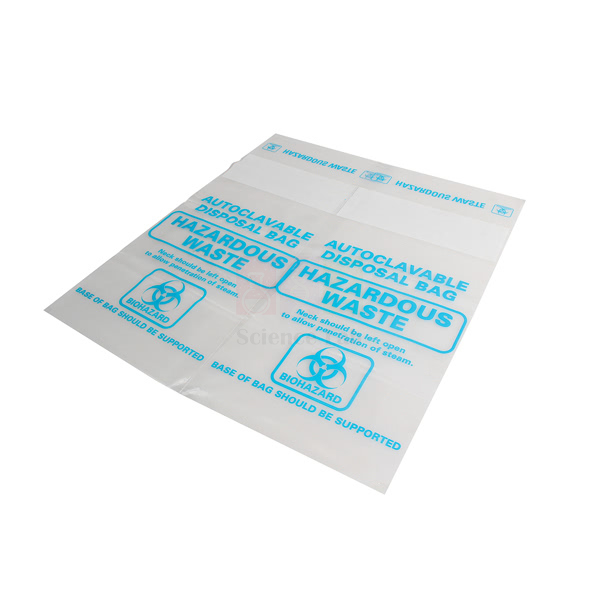
Autoclave Bag Disposable
Autoclave Bag Disposable (Product Code: SLE/CH/186) is a single-use, high temperature bag for collecting contaminated laboratory waste and sterilising it in an autoclave before disposal. Made from heavy gauge polypropylene, each 400 x 600 mm bag can go through autoclave cycles up to 132 °C and carries blue biohazard markings so everyone in the lab recognises it as biological waste. Microbiology, biology and clinical teaching labs use it for used culture plates, swabs and tips, and it is a routine item of disposable lab equipment supplied by Jain Scientific Equipments Pvt Ltd (ScienceLab), Ambala.
Specifications
| Parameter | Detail |
|---|---|
| Material | Heavy gauge polypropylene |
| Type | High temperature autoclave bag, disposable |
| Dimensions | 400 x 600 mm |
| Maximum autoclave temperature | Up to 132 °C (270 °F) |
| Markings | Blue biohazard markings |
| Write-on area | White panel on each bag for notes |
| Pack size | 200 bags |
Typical Use
At the end of a microbiology practical, students drop used Petri dishes, cotton swabs, disposable loops and gloves into one of these bags, usually held open in a bin or autoclave basket on the bench. The technician writes the date, lab room and batch on the white panel, closes the neck loosely so steam can get in, and loads the bag into the autoclave. After the cycle and cooling, the treated waste goes out through the institution’s normal waste disposal route. The 400 x 600 mm size suits a bench-side bin or a small to medium autoclave chamber.
Stand the bag in a rigid tray or basket during the cycle so it cannot sag against the chamber wall, never overfill it, and keep needles or broken glass in a separate puncture-proof container. Stay within the 132 °C limit stated for the bag.
Supplier
These bags are supplied by Jain Scientific Equipments Private Limited, which trades as ScienceLab from Ambala in Haryana and provides consumables alongside the apparatus it offers to teaching and research laboratories. The company profile explains more about the business.
Related Chemistry Lab Equipment
Items used in the same sterilise-and-dispose workflow:
- Autoclave Bag — the larger 610 x 810 mm bag for bigger loads and chambers.
- Autoclave Tape — sterilisation indicator tape for marking each loaded bag.
- Autoclave Basket — holds the bag upright inside the chamber.
- Autoclave Stainless Steel — an autoclave for running the sterilisation cycle.
- Gloves W/o Powder Nitrile Disposable — hand protection while handling contaminated waste.
See the Chemistry Lab Equipment category for more laboratory consumables and accessories.
Frequently Asked Questions
How many bags are in a pack?
Each pack contains 200 disposable bags of 400 x 600 mm.
What temperature can the bags withstand?
They are autoclavable up to 132 °C (270 °F). Do not use them in cycles above that temperature.
Can a bag be reused after autoclaving?
No. They are disposable bags meant for one cycle, after which the treated waste and bag are discarded together.
What should be written on the white panel?
Most labs note the date, room or course, and the person responsible, so each bag can be traced through the sterilisation record. Use a marker that stays legible after autoclaving.
Which size should I choose, this or the Autoclave Bag?
This bag is 400 x 600 mm; the Autoclave Bag listing is a larger size. Match the bag to your bin and to the usable depth of your autoclave chamber.
Can you supply regular bulk quantities?
Yes. Tell us your expected monthly or annual usage through the contact page and we will quote for delivery in India or to international markets.
Request a Quote
Request pricing for the Autoclave Bag Disposable through the contact page, or add packs to the enquiry cart with your other microbiology consumables.
Last updated: 24 September 2026
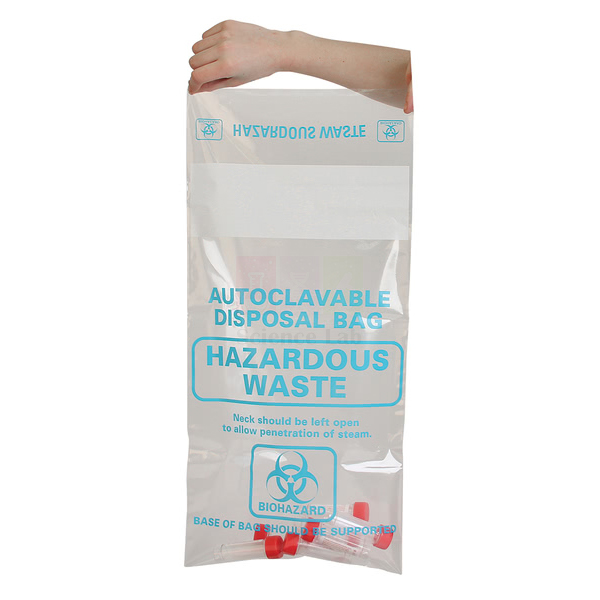
Autoclave Bag
Autoclave Bag (Product Code: SLE/CH/187) is the large-format, 610 x 810 mm version of ScienceLab’s high temperature waste bag, intended for departments that collect contaminated material from several benches and sterilise it in one load. The bag is made from heavy gauge polypropylene, is autoclavable up to 132 °C (270 °F), and is printed with blue biohazard markings. It suits colleges, hospitals’ teaching labs and research groups across India that run an autoclave sterilizer daily, and it is supplied by Jain Scientific Equipments Pvt Ltd (ScienceLab), Ambala.
Specifications
| Parameter | Detail |
|---|---|
| Dimensions | 610 x 810 mm |
| Material | Heavy gauge polypropylene |
| Temperature rating | Autoclavable up to 132 °C (270 °F) |
| Markings | Blue biohazard markings |
| Labelling | White panel for writing notes directly on the bag |
| Use | Disposable |
| Pack | Pack of 200 |
Typical Use
Where waste from a whole practical session or a research group is gathered in one place, a 610 x 810 mm bag lines a larger collection bin at the end of the room. Once the day’s culture plates, pipette tips and contaminated paper towels are in, a technician records the source and date on the white panel, marks the bag with indicator tape and carries it to the autoclave in a secondary tray. Treating one large bag per cycle instead of several small ones keeps sterilisation records simple and makes the autoclave part of a clear waste disposal lab routine.
Before buying, check that a filled bag will fit the chamber of your autoclave with room for steam to circulate. Fill to about two-thirds, avoid pressing air out tightly, and let the load cool fully before the bag is moved to general disposal. Keep sharps in rigid containers rather than in the bag.
Supplier
Jain Scientific Equipments Private Limited, which operates under the ScienceLab name from Ambala, Haryana, supplies this bag as part of the consumables it provides with its laboratory apparatus. For purchase departments that need vendor registration details, the company’s GSTIN is 06AAECJ8618A1ZT and its Legal Entity Identifier (LEI) is 3358004HRD1JIVXKYX49. Further background is on the company profile.
Related Chemistry Lab Equipment
Useful items for the same collection and sterilisation cycle:
- Autoclave Bag Disposable — the smaller 400 x 600 mm bag for bench-side bins.
- Autoclave Tape — indicator tape to show that a bag has been through a cycle.
- Electric Autoclave — for sterilising the filled bags.
- Classic Standard Autoclave — another autoclave option for departmental waste.
- Petri Dish, Triple Vent — the kind of culture ware that ends up in the bag after a practical.
For other consumables and apparatus, visit the Chemistry Lab Equipment category.
Frequently Asked Questions
What size is the Autoclave Bag?
610 x 810 mm, which is the larger of the two autoclave bag sizes listed by ScienceLab.
Will it fit my autoclave?
That depends on your chamber. Compare the usable depth and diameter of the chamber with a loosely filled 610 x 810 mm bag; for smaller chambers the smaller Autoclave Bag Disposable may be the better choice.
Why are the markings blue?
The blue biohazard print identifies the contents as biological waste at a glance, so staff handle the bag with care before and after the cycle.
How should the bag be closed for autoclaving?
Close the neck loosely, for example with a loose fold or tie, so steam can penetrate the load. Seal it fully only after the cycle, if your disposal procedure requires it.
Can I get vendor registration documents for our purchase file?
Yes. GSTIN and LEI details are given above, and other documents your institution needs can be requested through the contact page.
Do you ship packs of 200 in larger quantities?
Yes. Let us know how many packs you need and the delivery location in India or abroad, and we will include packing and freight in the quotation.
Request a Quote
Send your requirement for the Autoclave Bag via our contact page, or collect it with other items in the enquiry cart and submit one enquiry.
Last updated: 24 September 2026
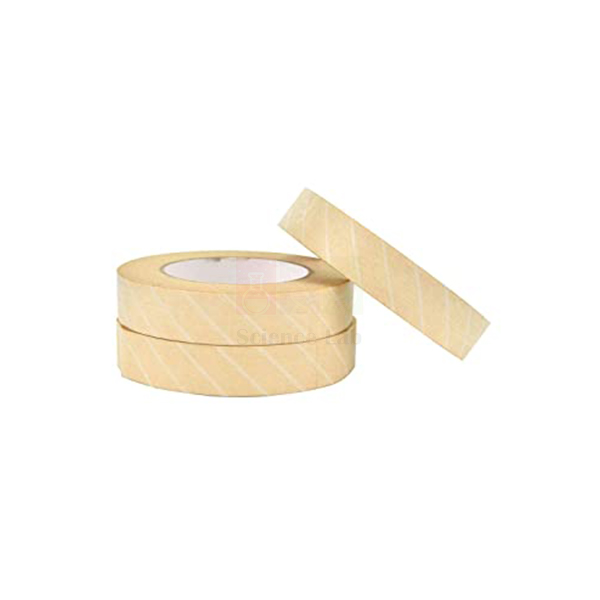
Autoclave Tape
Autoclave Tape (Product Code: SLE/CH/188) is a self-adhesive sterilisation indicator tape made of semicreped paper, used to seal and mark items before they go into an autoclave so that processed and unprocessed loads can be told apart at a glance. Each reel is 50 m long and 25 mm wide, the tape stays affixed for 18 months, and it sticks to plastic, metal, fabric, paper and cardboard. It is a small but constant item of microbiology lab equipment in teaching, clinical and research laboratories, supplied by Jain Scientific Equipments Pvt Ltd (ScienceLab), Ambala.
Specifications
| Parameter | Detail |
|---|---|
| Type | Self-adhesive sterilisation indicator tape |
| Material | Semicreped paper |
| Reel size | 50 m x 25 mm |
| Adhesion life | Remains affixed for 18 months |
| Suitable surfaces | Plastic, metal, fabrics, paper, cardboard |
Typical Use
Technicians tear off a strip to close a wrapped instrument pack, to hold foil over the mouth of a flask of culture medium, or to mark a filled waste bag before loading the autoclave. After the cycle, the indicator markings show which items have been exposed to the sterilisation process, so nobody mistakes a fresh bundle of media bottles for one still waiting to be processed. Because the tape grips cloth wraps, glass, metal trays and cardboard alike, a single reel covers most of the jobs in a prep room, and labs usually order it together with their other lab consumables.
Apply the tape to a clean, dry surface and press it down firmly along its length. The semicreped paper stretches slightly, which helps it follow the curve of a bottle neck or the fold of a wrap. Keep spare reels in a cool, dry cupboard away from steam lines.
Supplier
Autoclave Tape is supplied by Jain Scientific Equipments Private Limited, an Ambala, Haryana company whose trading name is ScienceLab and which equips school, college and research laboratories with apparatus and day-to-day supplies. Read more on the about the company page.
Related Chemistry Lab Equipment
Items the tape is most often used with:
- Autoclave Bag Disposable — 400 x 600 mm waste bags that are marked with tape before a cycle.
- Autoclave Bag — the larger 610 x 810 mm waste bag.
- Autoclave Basket — for loading taped items into the chamber.
- Portable Autoclave Single Drum — a compact autoclave for school and college labs.
- Petri Dish Glass With Lid — glassware commonly bundled and taped for sterilisation.
The Chemistry Lab Equipment category lists more accessories for the prep room.
Frequently Asked Questions
How much tape is on one reel?
Each reel holds 50 m of 25 mm wide tape.
Does a changed indicator mean the item is sterile?
No. Indicator tape shows that an item has been through the sterilisation process; it does not by itself prove sterility. Follow your laboratory’s validation procedure for confirming autoclave performance.
How long will the tape stay stuck?
The tape is listed to remain affixed for 18 months once applied.
What surfaces can it be used on?
Plastic, metal, fabrics, paper and cardboard. Surfaces should be clean and dry for good adhesion.
Can I write on the tape?
It is made of semicreped paper. If you plan to write dates or initials on it, test your pen or marker on a strip first to see how it survives a cycle.
Is a data sheet or test report available?
Please ask through the contact page and we will tell you what documentation can be provided with your order.
Can you supply reels in bulk?
Yes. Share your annual usage and delivery location, in India or abroad, and we will quote accordingly.
Request a Quote
Ask for a quotation on Autoclave Tape using the contact page, or add reels to the enquiry cart together with autoclave bags and other supplies.
Last updated: 24 September 2026
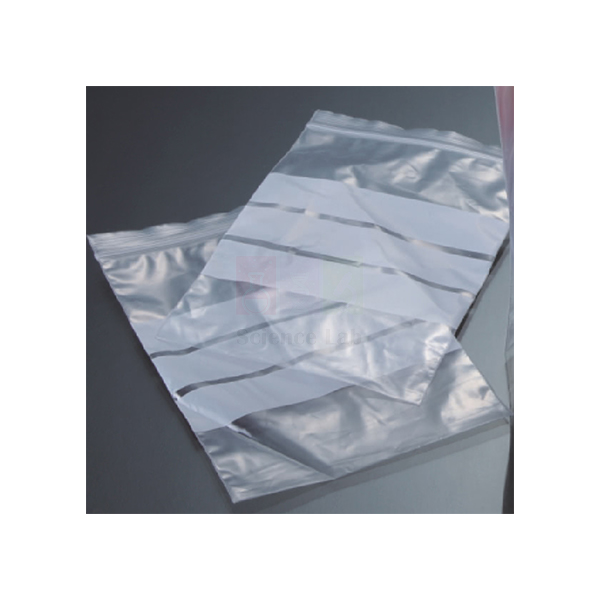
Bags, Grip-Seal
Bags, Grip-Seal (Product Code: SLE/CH/189) are small, resealable laboratory bags measuring 100 x 140 mm, each printed with 3 white writing strips so the contents can be identified without a separate label. They are made from LDPE (low density polyethylene) with good clarity, so samples stay visible through the bag. Science departments, field-study groups and research labs use them to store and sort dry samples, weighed portions and small parts, and they come in packs of 1000 as part of the lab consumables range supplied by Jain Scientific Equipments Pvt Ltd (ScienceLab), Ambala.
Specifications
| Parameter | Detail |
|---|---|
| Type | Grip-seal (press-to-close) bag for laboratory use |
| Material | LDPE (Low Density Polyethylene), high clarity |
| Dimensions | 100 x 140 mm |
| Writing area | 3 white writing strips on each bag |
| Pack size | 1000 bags |
Typical Use
On a soil or ecology field trip, each student group can drop a sample into its own bag, press the seal shut and fill in the three strips with site number, date and collector name. Back in the lab, the same bags hold pre-weighed portions of salts for a practical, seeds for a germination trial, rock chips for identification, or spare screws and fittings from apparatus. The clear LDPE lets a teacher check the contents without opening the bag, which keeps moisture out and cuts down on spills. Like other lab plastic ware used in bulk, a pack of 1000 lasts a department through many classes.
Write on the strips before filling if possible, using a permanent marker, and squeeze out excess air before sealing. These bags are meant for dry or solid material; keep liquids and corrosive chemicals in proper bottles or specimen containers, and store unused bags away from direct sunlight and heat.
Supplier
Grip-seal bags are supplied by Jain Scientific Equipments Private Limited, known in the market as ScienceLab, from its base in Ambala, Haryana, alongside the teaching-laboratory apparatus the company produces. Company details are on the ScienceLab profile.
Related Chemistry Lab Equipment
Items that fit the same sampling, weighing and storage routine:
- Bag Resealable Small Plastic — another resealable bag option for small items.
- Specimen Container, PP — a rigid container for samples that need more protection than a bag.
- Spatula, Spoon End — for transferring powders and granules into the bags.
- Weighting Tray — for weighing portions before they are bagged.
- Storage Boxes – Rock – Mineral Specimens — for organising bagged rock and mineral samples.
More consumables are listed under Chemistry Lab Equipment.
Frequently Asked Questions
What size are the grip-seal bags?
Each bag measures 100 x 140 mm.
How many bags come in a pack?
A pack contains 1000 bags.
What are the white strips for?
There are 3 white writing strips on each bag for sample number, date, name or any other notes, so no extra label is needed.
What material are they made from?
LDPE (low density polyethylene), chosen for its clarity so contents can be seen without opening the bag.
Can they be autoclaved or used for hot samples?
They are not described for autoclaving or heat. For sterilising waste, use the polypropylene autoclave bags in our range.
Are other sizes available?
This listing covers the 100 x 140 mm bag. For other sizes, ask through the contact page and we will tell you what can be supplied.
Can you supply several packs for a school group or export order?
Yes. Give us the number of packs and the delivery location in India or overseas, and we will quote.
Request a Quote
To order Bags, Grip-Seal, contact us through the contact page, or add the packs you need to the enquiry cart.
Last updated: 24 September 2026