- Physics Lab Equipment
- Chemistry Lab Equipment
- Biology Lab Equipment
- Anatomical Lab Equipment
- Learning
- Educational Lab Equipment
- Magnets
- Agriculture
- Astronomy
- Earth Science
- Geography Lab Equipment
- Safety Lab Coat
- Laboratory
- Meteorological
- Electricity & Magnetism
- Heat
- School Lab Equipment
- Lab Glassware
- Science Lab Equipment
- Tvet Lab Equipment
- Robotics Kits Supplier and Manufacturer for Schools India
- Math Lab Equipment Manufacturers and Exporters in Ambala
- STEM Kits Manufacturers and Supplier India
- Engineering Lab Equipment
- Hospital Lab Equipment
- Water, Sanitation & Hygiene Supplies
- Cold Chain, Solar & Communication Equipment
- Nutrition
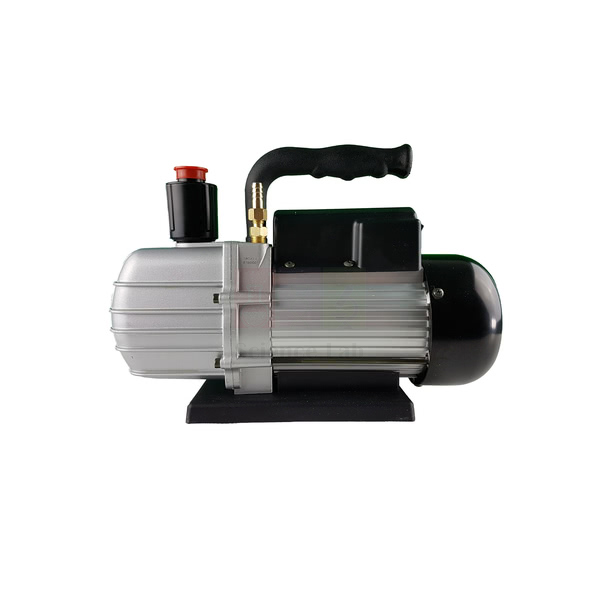
Vacuum Pump, Electric
Vacuum Pump, Electric (Product Code: SLE/LI/29) is a rotary vacuum pump used to evacuate air from filtration flasks, desiccators and other sealed apparatus in general laboratory work. It suits college, research and industrial labs that want a quiet, low-energy pump, with a 250 W motor giving a pumping speed of 1 litre per second and a pressure limit of 0.067 Pa. The pump is supplied by Jain Scientific Equipments Pvt Ltd (ScienceLab), Ambala, India.
Specifications
| Parameter | Detail |
|---|---|
| Pump type | Rotary vacuum pump |
| Pumping speed | 1 litre per second |
| Displacement | 1 litre per second |
| Pumped volume | 3.5 m³/h |
| Pressure limit | 0.067 Pa |
| Vacuum limit | 0.01 (unit not stated in the listing) |
| Rotational speed | 1300 rpm |
| Motor power | 250 W |
| Power supply | 230 V |
| Recommended oil | HFV-1 |
| Operation | Very quiet, low energy consumption |
| Product code | SLE/LI/29 |
| Supplied by | Jain Scientific Equipments Pvt Ltd (ScienceLab), Ambala, India |
What Is an Electric Vacuum Pump Used For?
Most chemistry and biology laboratories need a vacuum source at some point. Connected by thick-walled tubing, this pump speeds up Buchner filtration by drawing liquid through the filter paper, removes air from vacuum desiccators so samples dry without moisture pick-up, degasses liquids before measurement, and powers physics demonstrations such as sound in a partial vacuum. Its quiet running makes it comfortable to use in a teaching room.
Place a trap or filter flask between the apparatus and the pump so liquids and corrosive vapours cannot reach the oil. Check the oil level before each session, top up or change it with the recommended HFV-1 grade when it looks cloudy or dark, and release the vacuum in the apparatus before switching off so oil is not drawn back into the line.
What to Specify When Ordering
- The apparatus you will evacuate, such as filter flasks, desiccators or a bell jar.
- Whether you need vacuum tubing and a supply of HFV-1 oil with the pump.
- Your mains supply, since the pump is listed for 230 V.
- Quantity per laboratory and delivery location.
Supplier
Jain Scientific Equipments Private Limited, trading as ScienceLab, sources this electric vacuum pump and supplies it from Ambala, Haryana as part of its work as a laboratory equipment supplier in India and to international markets. Colleges, research institutions, industrial labs and dealers can order it with matching tubing, flasks and desiccators in one consignment. Background on the company is on the ScienceLab profile page.
Related Laboratory Instruments
A vacuum pump works with the connecting tubing and glassware below:
- Vacuum Tubing — thick-walled tubing that connects the pump to your apparatus.
- Conical Filter Flask — side-arm flask for vacuum filtration and for use as a trap.
- Buchner Funnel, 90 mm, Porcelain — filter funnel that sits on the flask during suction filtration.
- Vacuum Desiccator — sealed vessel evacuated by the pump for moisture-free drying.
- Vacuum Pump, Hand — portable manual option for light-duty demonstrations.
Browse the Laboratory Instruments category for more general laboratory equipment.
Frequently Asked Questions
How fast does the Vacuum Pump, Electric evacuate apparatus?
The Vacuum Pump, Electric has a pumping speed and displacement of 1 litre per second and a listed pumped volume of 3.5 m³/h, with the rotor turning at 1300 rpm. Actual evacuation time depends on the volume of your apparatus and the tubing used.
What vacuum level can the Vacuum Pump, Electric reach?
The Vacuum Pump, Electric has a stated pressure limit of 0.067 Pa. The listing also gives a vacuum limit of 0.01 without a unit, so if your method depends on a particular ultimate pressure, ask us to confirm it before ordering.
What oil does the Vacuum Pump, Electric use?
HFV-1 is the recommended oil for the Vacuum Pump, Electric. Check the oil level before use and replace the oil when it becomes cloudy or dark, since contaminated oil reduces the vacuum the pump can reach and shortens its working life.
What power supply does the Vacuum Pump, Electric need?
The Vacuum Pump, Electric runs from a 230 V supply and has a 250 W motor. It is described as very quiet with low energy consumption, which makes it comfortable to run in classrooms and shared laboratories during long filtration or drying work.
Can the Vacuum Pump, Electric pump solvent or acid vapours?
The Vacuum Pump, Electric should be protected by a trap or filter flask so liquids and corrosive vapours do not reach the pump oil. If your work involves large amounts of solvent or acid vapour, tell us when you enquire so we can advise on a suitable setup.
Who supplies the Vacuum Pump, Electric?
The Vacuum Pump, Electric is supplied by Jain Scientific Equipments Pvt Ltd (ScienceLab), Ambala, Haryana. The company provides it to colleges, research and industrial laboratories and dealers in India and international markets, often together with tubing and glassware.
Request a Quote
Send your requirement for the Vacuum Pump, Electric (SLE/LI/29) through our contact page, or add the pump and its accessories to the enquiry cart for a combined quotation.
Last updated: 24 September 2026
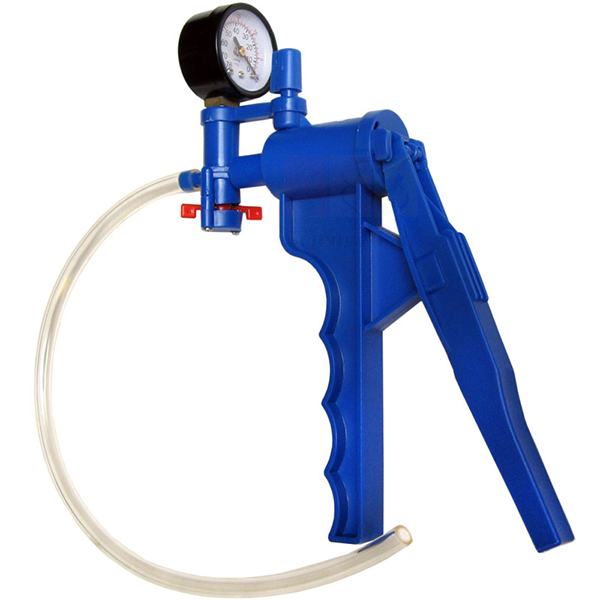
Vacuum Pump, Hand
Vacuum Pump, Hand (Product Code: SLE/LI/30) is a lightweight manually operated pump used to draw a partial vacuum, or build up air pressure, in small vessels during school and college science practicals. Teachers use it where no power socket is available or where students should feel the effort of pumping, since each stroke moves 15 cm³ of air, reaching a maximum vacuum of 50 mmHg or a positive gauge pressure of up to 2 atm. It is supplied by Jain Scientific Equipments Pvt Ltd (ScienceLab), Ambala, India.
Specifications
| Parameter | Detail |
|---|---|
| Operation | Hand operated, lightweight |
| Volume per stroke | 15 cm³ |
| Maximum vacuum | 50 mmHg (as listed) |
| Positive pressure | Gauge pressures up to 2 atm |
| Power | None required (manual) |
| Product code | SLE/LI/30 |
| Supplied by | Jain Scientific Equipments Pvt Ltd (ScienceLab), Ambala, India |
What Is a Hand Vacuum Pump Used For?
In physics lessons a hand pump makes air pressure visible: students can partly evacuate a small bell jar or flask and watch a balloon expand, see water boil at reduced pressure, or connect a manometer and read the pressure change after each stroke. Reversed to pressure mode, the same pump pushes air into a sealed vessel to show how gas pressure rises as more air is added, which links neatly to lessons on the gas laws.
Because it needs no electricity, this piece of physics lab equipment works on any bench, in a field station or during an outdoor demonstration. Connect it with thick-walled tubing, keep every joint tight, and pump steadily rather than in jerks. Stay within 2 atm when pressurising, and never pressurise glassware that is not designed for internal pressure; for larger volumes or deeper vacuum, an electric pump is the better tool.
Supplier
This manual pump is supplied by Jain Scientific Equipments Private Limited, the company that trades as ScienceLab from Ambala, Haryana. Schools, colleges, science centres and dealers in India and international markets can order it on its own or with tubing, bell jars and manometers for a complete demonstration kit. Institutional buyers who need vendor registration details can record the supplier under GSTIN 06AAECJ8618A1ZT and Legal Entity Identifier 3358004HRD1JIVXKYX49. More about us is on the ScienceLab profile.
Related Laboratory Instruments
Pressure and vacuum demonstrations usually combine the pump with the items below:
- Vacuum Tubing — thick-walled tubing that will not collapse under suction.
- Bell In Glass Jar and Base — classic demonstration of sound needing a medium.
- Manometer, Glass — shows the pressure difference produced by each stroke.
- Vacuum Pump with Pressure Gauge — alternative with a built-in gauge for reading vacuum directly.
- Vacuum Pump, Electric — motorised rotary pump for larger volumes and deeper vacuum.
More equipment is listed under Laboratory Instruments.
Frequently Asked Questions
How much air does the Vacuum Pump, Hand move per stroke?
The Vacuum Pump, Hand draws 15 cm³ of air with each stroke. That small volume per stroke gives fine control and lets students count strokes against pressure readings, but it also means large vessels take many strokes to evacuate.
What vacuum can the Vacuum Pump, Hand produce?
The Vacuum Pump, Hand is listed with a maximum vacuum of 50 mmHg. It is intended for small vessels and classroom demonstrations; for deeper vacuum or large apparatus, the Vacuum Pump, Electric in the same range is the more suitable choice.
Can the Vacuum Pump, Hand also create pressure?
Yes, the Vacuum Pump, Hand can produce positive gauge pressures up to 2 atm as well as suction. Use only vessels and tubing designed to hold internal pressure, keep all connections secure, and release the pressure slowly after the demonstration.
Does the Vacuum Pump, Hand need electricity?
No, the Vacuum Pump, Hand is operated entirely by hand and needs no power supply. Its light weight makes it easy to carry between classrooms, laboratories and outdoor teaching areas, and there is no motor to service.
Which experiments suit the Vacuum Pump, Hand?
The Vacuum Pump, Hand suits small-scale demonstrations such as expanding a balloon in a partly evacuated jar, boiling water at reduced pressure, reading pressure changes on a manometer and showing gas pressure rising in a sealed vessel.
Who supplies the Vacuum Pump, Hand?
The Vacuum Pump, Hand is supplied by Jain Scientific Equipments Pvt Ltd (ScienceLab), Ambala, Haryana. The company quotes directly to schools, colleges and dealers, and supplies single pumps or class quantities to India and international markets.
Request a Quote
To order the Vacuum Pump, Hand (SLE/LI/30), send the quantity and any accessories you need through our contact page, or add it to the enquiry cart and we will reply with a quotation.
Last updated: 24 September 2026
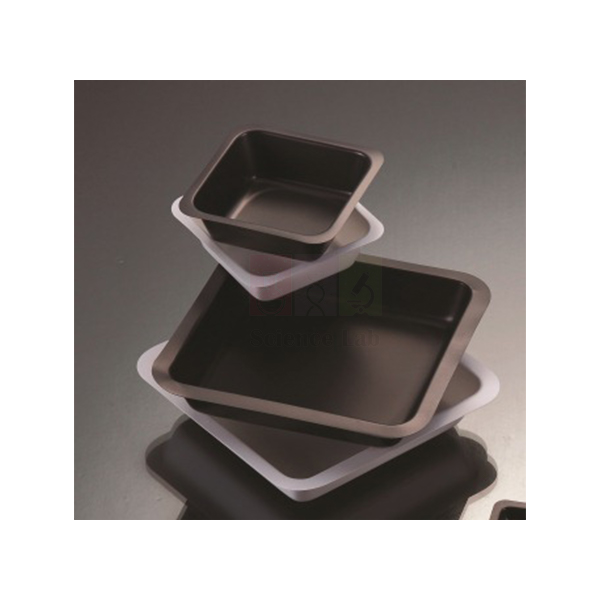
Weighing Tray
Weighing Tray (Product Code: SLE/LI/31) is a square high-impact polystyrene tray used to hold powders, granules and small solid samples while they are weighed on a laboratory balance. Chemistry, biology and pharmacy labs use such trays for routine weighing; this one comes in packs of 250, and its 140 × 140 mm size leaves room for larger portions without spilling. These trays are supplied by Jain Scientific Equipments Pvt Ltd (ScienceLab), Ambala, India.
Specifications
| Parameter | Detail |
|---|---|
| Material | High-impact polystyrene |
| Dimensions | 140 × 140 mm |
| Pack size | 250 trays |
| Product code | SLE/LI/31 |
| Supplied by | Jain Scientific Equipments Pvt Ltd (ScienceLab), Ambala, India |
What Is a Weighing Tray Used For?
Placing a sample straight onto a balance pan contaminates the pan and makes it hard to transfer every particle afterwards. A weighing tray solves both problems: set it on the pan, press tare, add the solid with a spatula, then carry the tray to the beaker or flask and pour. Using a fresh tray for each chemical keeps samples from mixing, which matters when a class of students weighs out different reagents on shared balances.
Pair it with a digital weighing balance whose pan and capacity comfortably take a 140 mm tray, and keep the tray level while adding material so nothing slides off. Polystyrene is attacked by solvents such as acetone, so weigh solvent-wet or hot material in a glass or porcelain dish instead. Store unused trays in their pack to keep them clean and dust-free.
What to Specify When Ordering
- The number of packs of 250 you need for the term or year.
- The balances they will be used on, so we can check the 140 × 140 mm size suits the pans.
- Any other weighing accessories, such as spatulas, to include in the same order.
Supplier
Jain Scientific Equipments Private Limited supplies these weighing trays under its ScienceLab trading name from Ambala, Haryana. As a lab consumables supplier in India, the company sources them for schools, colleges, pharmacy and research laboratories and dealers, and ships to India and international markets alongside balances and other bench items. Read about the company on the ScienceLab profile page.
Related Laboratory Instruments
Weighing trays are used together with a balance and a way to transfer the sample:
- Electronic Compact Balance — compact digital balance for everyday weighing with a tray.
- Physical Balance (Digital) — digital balance for student practical work.
- Spatula, Spoon End — scoops powders onto the tray in small amounts.
- Spatula, Polypropylene — plastic spatula for samples that should not touch metal.
See the full Laboratory Instruments range, or browse Balances for weighing equipment.
Frequently Asked Questions
What size is the Weighing Tray?
The Weighing Tray measures 140 × 140 mm and is made from high-impact polystyrene. The square shape gives a generous area for larger portions of powder or granules and makes it easy to pour the weighed sample neatly into a beaker or flask.
How many trays are in a pack of the Weighing Tray?
The Weighing Tray is supplied in packs of 250. When you request a quotation, state how many packs you need so the order covers a full term or academic year of weighing for your laboratory.
Which balances can I use the Weighing Tray on?
The Weighing Tray can be used on any laboratory balance whose pan and capacity comfortably hold a 140 × 140 mm tray. Place the empty tray on the pan, press tare, and then add your sample so the display shows only the sample mass.
Can the Weighing Tray hold solvents or hot material?
The Weighing Tray is polystyrene, which solvents such as acetone attack and heat can deform. Use it for dry solids at room temperature, and weigh solvent-wet or hot material in a glass or porcelain dish instead.
Should a Weighing Tray be reused?
A Weighing Tray is normally used once per chemical and then discarded, which prevents one sample contaminating the next. Buying packs of 250 keeps a steady supply on hand, so students can take a fresh tray for every reagent they weigh.
Who supplies the Weighing Tray?
The Weighing Tray is supplied by Jain Scientific Equipments Pvt Ltd (ScienceLab), Ambala, Haryana. The company provides it to schools, colleges, research laboratories and dealers in India and international markets, and can combine it with balances and spatulas in one order.
Request a Quote
Request a quotation for the Weighing Tray (SLE/LI/31) by sending the number of packs through our contact page, or add it to the enquiry cart with your other laboratory consumables.
Last updated: 24 September 2026
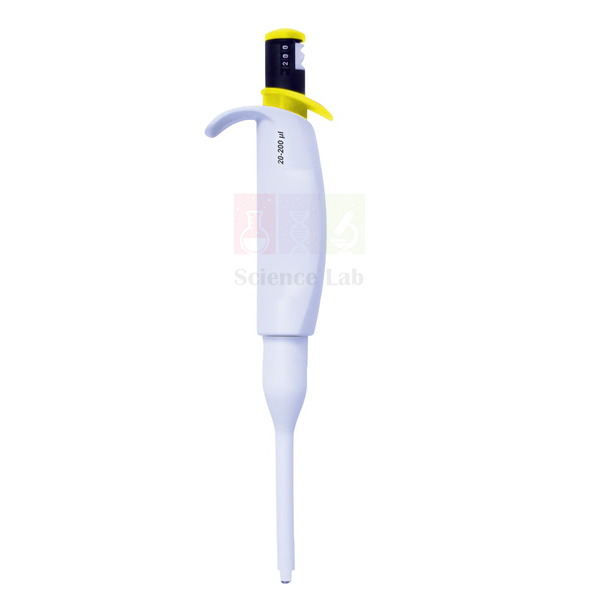
Single Channel Pipettors
Single Channel Pipettors (Product Code: SLE/CL/84) are hand-held liquid-handling instruments working in the 20–200 µl range, the band used most often for serum aliquots, buffer additions and ELISA well filling. The pipettor carries a yellow colour code so it can be picked out quickly on a crowded bench, and its listed inaccuracy and imprecision figures give lab managers a clear basis for comparing it with other instruments. Hospital labs, pathology units and college teaching rooms that stock microbiology lab equipment in India rely on this range for day-to-day dosing. It is supplied by Jain Scientific Equipments Pvt Ltd (ScienceLab), Ambala.
Specifications
| Parameter | Detail |
|---|---|
| Type | Single channel pipettor |
| Volume range | 20–200 µl |
| Colour code | Yellow |
| Inaccuracy (%) | 2.5 / 0.6 |
| Imprecision (%) | 0.7 / 0.2 |
Typical Use
In a clinical chemistry or serology section, a 20–200 µl pipettor transfers patient serum or plasma into reaction cuvettes, adds controls and calibrators, and dispenses sample and conjugate into microplate wells. Microbiology practicals use the same range for spreading an inoculum on agar plates and for serial dilutions in broth, while biochemistry classes use it to build standard curves for colorimetric assays. Because one instrument covers a tenfold span, it is often the first pipettor a new diagnostic or teaching lab buys.
Match the pipettor with tips sized for 200 µl work and keep the yellow-coded instruments and tip racks together to avoid mix-ups between ranges. For viscous liquids such as serum or glycerol, reverse pipetting (over-aspirating to the second stop and dispensing only to the first) gives more repeatable volumes. Always hold the pipettor vertically during aspiration, never lay it down with liquid in the tip, and have its performance checked at intervals set by your lab's quality procedure.
Supplier
Jain Scientific Equipments Private Limited, which trades as ScienceLab from Ambala in Haryana, sources and dispatches pipetting instruments like this one together with the teaching and laboratory apparatus it produces, so a clinical lab can order its bench set-up from a single vendor. Details of the company, its facilities and its range are on the ScienceLab profile page.
Related Clinical Laboratory Products
These items complete a routine pipetting workflow built around the 20–200 µl range:
- Pipette Tip Barrier Ster 200ul — sterile barrier tips sized for the top of this range.
- Pipettor, Variable Volume — covers micro-volumes below 20 µl.
- Pipettor, High Volume — for reagent volumes above 200 µl.
- Digital Pipette 8 Channels — fills a full microplate row at once when throughput grows.
Browse the complete Clinical Laboratory range for tips, racks and diagnostic consumables.
Frequently Asked Questions
What volume range does this pipettor cover?
It is listed for 20 to 200 µl. For volumes below or above this band, pair it with a lower- or higher-range pipettor.
What do the inaccuracy and imprecision figures mean?
They are listed as 2.5 / 0.6 % inaccuracy and 0.7 / 0.2 % imprecision, each pair quoted at different points of the range. Ask us for the test volumes behind each value if your quality system needs them.
Why is the pipettor colour coded yellow?
The colour marks its volume range, helping staff pick the right instrument and matching tip rack quickly, especially in labs that run several pipettors side by side.
Which tips should I order with it?
Use tips sized for up to 200 µl. The listing does not name a specific tip, so confirm the fit with our team when you place the order.
Can a calibration certificate be provided?
Calibration certificate availability should be discussed with us before ordering; write to us through the contact page with your requirement.
What should an institutional quotation request include?
Mention product code SLE/CL/84, the number of pipettors, any tips needed and the delivery address. We supply hospitals, colleges and distributors across India and international markets.
Request a Quote
For pricing on Single Channel Pipettors, message us via the contact page or place the item in the enquiry cart together with matching tips.
Last updated: 24 September 2026

Laboratory Trolley – 2 Shelf
Laboratory Trolley – 2 Shelf (Product Code: SLE/HF/25) is a lightweight two-tier trolley built from chemical-resistant, nylon-fibre-blended polymer, used to move glassware, reagents, samples and small instruments between benches, stores and wash-up areas. With a 950 mm working height and a 250 kg safe working load, it serves research, medical, industrial and teaching laboratories. It is made by Jain Scientific Equipments Pvt Ltd (ScienceLab), Ambala, as part of its range of laboratory furniture in India.
Specifications
| Parameter | Detail |
|---|---|
| Shelves | 2 |
| Construction | Nylon-fibre-blended polymers, chemical resistant, made to withstand harsh working conditions |
| Tray size | L 680 x W 450 mm |
| Tray height | 550 mm |
| Overall dimensions | L 850 x W 480 x H 950 mm |
| Frame | Aluminium, 553 mm (as listed) |
| Colour | Black |
| Castors | Precision bearing castors, including 2 with brakes |
| Safe working load | 250 kg |
| Design | Ergonomic, extremely lightweight |
| Assembly | Rubber construction mallet included for easy assembly |
Typical Use
In a teaching laboratory the two-shelf trolley is the simplest way to issue and collect a class set of glassware or reagent bottles: the top tray holds what students need for the practical, the lower tray carries spares or a container for used items. Because the trolley is light, one person can steer it between benches, and the two braked castors hold it still while it is being loaded or unloaded.
Colleges selecting lab equipment for college practicals in India often pair one of these trolleys with each lab so that glassware goes to the wash-up area on wheels instead of by hand. Load heavy items on the lower tray, stay within the 250 kg rating, and wipe up spills promptly with water or a mild detergent — the polymer resists chemicals, but residues left to dry are harder to remove.
Manufacturer
Jain Scientific Equipments Private Limited, the Ambala, Haryana company behind the ScienceLab brand, offers this trolley in 2-, 3- and 4-shelf formats for laboratories and hospitals. More about the company is on our company profile.
Related Laboratory Equipment
Other trolley sizes and the accessories used to carry items safely on them:
- Laboratory Trolley – 3 Shelf — one more tier and pneumatic-tyre castors
- Laboratory Trolley – 4 Shelf — four closely spaced trays for many small items
- Universal Tube Rack — keeps tubes upright on the tray while the trolley moves
- Plastic Bin with Flat Lids — lidded bins for carrying small parts or used items
This trolley is listed under Hospital Furniture, alongside our other trolleys.
Frequently Asked Questions
How much weight can it carry?
The safe working load is 250 kg. Spread heavy items evenly and keep the heaviest on the lower tray.
How big are the trays?
Each tray is 680 x 450 mm, and the trolley measures 850 x 480 x 950 mm overall.
Is it resistant to laboratory chemicals?
Yes, the nylon-fibre-blended polymer construction is chemical resistant. If you will handle a particularly aggressive solvent or acid, tell us through the contact page so we can advise before you order.
Does it need assembling?
Yes. A rubber construction mallet is supplied with the trolley to make assembly easy.
How does it compare with the 3- and 4-shelf trolleys?
This model is 950 mm high with two trays. The 3-shelf version adds a third tier and runs on pneumatic-tyre castors, while the 4-shelf version carries four closely spaced trays for smaller items.
What warranty is offered?
Warranty terms are given with each quotation.
Can you supply several trolleys for a new laboratory block?
Yes. We supply laboratories in India and international markets; include the quantity and delivery location in your enquiry.
Request a Quote
Add the 2-shelf trolley to the enquiry cart, or ask for pricing on a mix of trolley sizes through the contact page.
Last updated: 24 September 2026
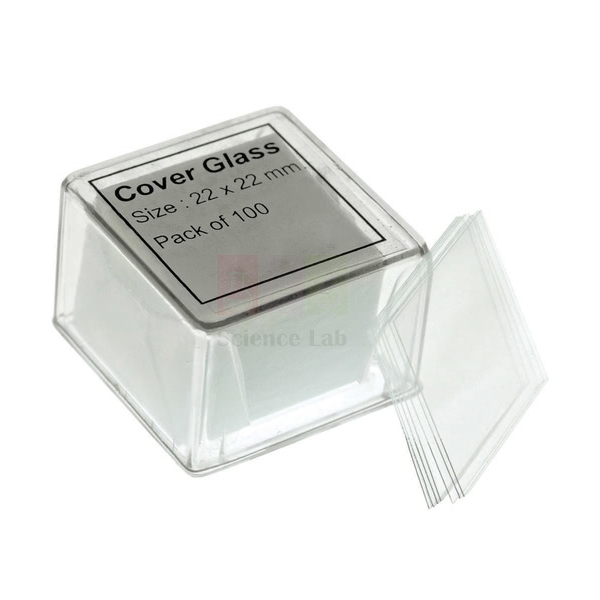
Glass Cover Slips
Glass Cover Slips (Product Code: SLE/PS/104) are thin, square, pre-cleaned cover glasses used to cover specimens mounted on microscope slides in school, college and research laboratories. Each slip measures 22 x 22 mm with a thickness of 0.13–0.17 mm, and a box holds approximately 100 pieces (10 g), a convenient pack for student practicals. They are supplied by Jain Scientific Equipments Pvt Ltd (ScienceLab), Ambala, India.
Specifications
| Parameter | Detail |
|---|---|
| Type | Pre-cleaned cover glasses |
| Shape | Square |
| Dimensions | 22 x 22 mm |
| Thickness | 0.13–0.17 mm |
| Pack | Approximately 100 pieces (10 g) per box |
| Product code | SLE/PS/104 |
| Supplied by | Jain Scientific Equipments Pvt Ltd (ScienceLab), Ambala, India |
What Are Glass Cover Slips Used For?
A cover slip is placed over a drop of mountant, water or stain on a microscope slide to flatten the specimen, keep it from drying out and protect the objective lens from contact with the sample. In school biology practicals they are used for temporary mounts such as onion epidermis, cheek cells, pond water and pollen, and in colleges for stained smears and sections.
To avoid trapping air bubbles, touch one edge of the slip to the liquid and lower it slowly with a needle or forceps. Handle the slips by their edges, as the 0.13–0.17 mm glass is thin and breaks easily, and put broken pieces in a glass waste container. Their thickness range includes 0.17 mm, the cover-glass thickness many microscope objectives are designed for. As a biology lab equipment supplier in India, we can quote them together with plain slides for new practical kits.
What to Specify When Ordering
- Number of boxes (each approximately 100 pieces)
- Confirmation that the 22 x 22 mm square size suits your slides and mounts
- Whether plain microscope slides or cover-slip forceps should be added
Supplier
Jain Scientific Equipments Private Limited, which trades as ScienceLab from Ambala, Haryana, supplies Glass Cover Slips as a routine consumable to schools, colleges, laboratories and dealers in India and international markets. For vendor registration, the supplying company is registered under CIN U29309HR2020PTC087597 and GSTIN 06AAECJ8618A1ZT. More information is on our company profile.
Related Prepared Slides
Items used with cover slips when making slides:
- Microscope Glass Slides — the plain slides the cover slips sit on
- Glass Cover Slips, No. 1 — an alternative cover-slip listing to compare
- Microscope Slide Cover Forceps — for picking up and lowering thin slips
- Slide Box — storage for finished slides
Find more slides and accessories in Prepared Slides.
Frequently Asked Questions
What size are these Glass Cover Slips?
These Glass Cover Slips are square, measuring 22 x 22 mm, with a thickness between 0.13 and 0.17 mm. The size covers a typical specimen area on a standard microscope slide used in school and college practicals.
How many Glass Cover Slips are in a box?
Each box of Glass Cover Slips (SLE/PS/104) holds approximately 100 pieces, about 10 g of glass. Order the number of boxes you need for the term, since slips are used once for temporary mounts and break easily.
Do the Glass Cover Slips need cleaning before use?
The Glass Cover Slips are supplied pre-cleaned. Keep the box closed and handle slips by their edges so that fingerprints and dust do not spoil the view; if a slip is marked, wipe it gently with lens tissue.
Can Glass Cover Slips be used with high-power objectives?
Glass Cover Slips at 0.13–0.17 mm are thin enough for the high-power objectives on school and college compound microscopes, and 0.17 mm is the thickness many objectives are designed around. Check your microscope manual if you use specialised objectives.
Who supplies these Glass Cover Slips?
These Glass Cover Slips are supplied by Jain Scientific Equipments Pvt Ltd (ScienceLab), Ambala, Haryana, India, to schools, colleges, laboratories and dealers. CIN and GSTIN details are available for vendor registration.
What should I include in a Glass Cover Slips enquiry?
For Glass Cover Slips, give code SLE/PS/104, the number of boxes, any slides or forceps you want quoted together, and the delivery city or country. Bulk and export quantities can be requested through our contact page.
Request a Quote
Order Glass Cover Slips by sending your quantity through our contact page, or add them to the enquiry cart with slides and other consumables.
Last updated: 24 September 2026
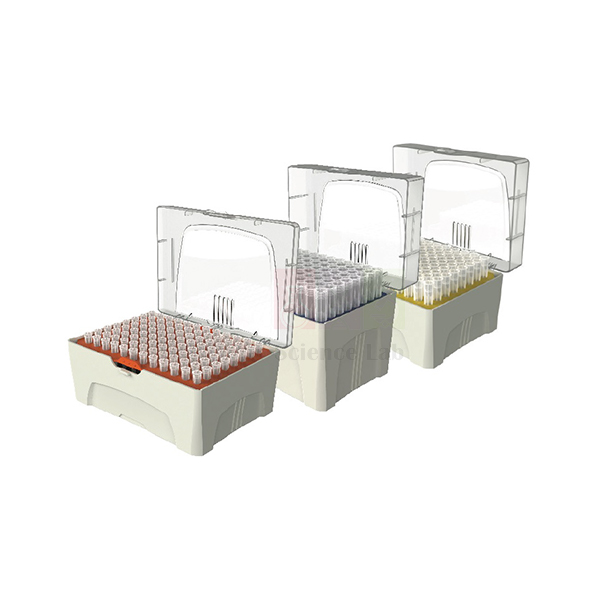
Filter Pipette Tips
Filter Pipette Tips (Product Code: SLE/CL/85) are 1–10 µL disposable tips with a built-in filter that stops aerosols and liquid from reaching the pipette shaft. They are free from DNase, RNase, human DNA, pyrogen and PCR inhibitors, which is why molecular biology, virology and diagnostic labs choose them for contamination-sensitive micro-volume work. The tips have a low-retention surface, can be autoclaved and are held in a hinged, colour-coded rack. They are supplied by Jain Scientific Equipments Pvt Ltd (ScienceLab), Ambala, a lab consumables supplier for India and international markets.
Specifications
| Parameter | Detail |
|---|---|
| Type | Filter pipette tips |
| Volume range | 1–10 µL |
| Sterilisation | Fully autoclavable |
| Surface | Low retention |
| Rack | Stackable; hinge rack allows single-hand operation |
| Identification | Colour-coded tray |
| Free from | DNase, RNase, human DNA, pyrogen and PCR inhibitor |
| Supplied as | Pack of 10 |
Typical Use
Filtered micro-volume tips are the standard choice when setting up PCR and real-time PCR reactions, handling extracted RNA, pipetting infectious specimens or loading samples from a gel electrophoresis kit in India's biotechnology teaching labs. The filter barrier keeps the inside of the pipettor clean, so a trace of one sample cannot be carried into the next, and the nuclease-free, inhibitor-free material protects sensitive enzymatic reactions. Low retention means less liquid clings to the tip wall, which matters when a few microlitres of enzyme or detergent-containing buffer are being dispensed.
In practice, open the hinged lid with one hand while holding the pipettor in the other, press the pipettor firmly onto a tip, and close the lid again straight away to keep the remaining tips clean. Change the tip for every sample and every reagent, and never reuse a filter tip once liquid has touched the filter. The colour-coded tray helps staff keep these small tips apart from larger racks, and the stackable design saves drawer space in busy PCR rooms.
Supplier
ScienceLab is the brand under which Jain Scientific Equipments Private Limited, an Ambala (Haryana) company, provides consumables such as these tips along with the laboratory and teaching equipment it makes. Ordering tips with your pipettors and other clinical items from one source simplifies purchasing for hospitals and colleges. Read about the company on our profile page.
Related Clinical Laboratory Products
Pair these tips with the following items used in the same micro-pipetting workflow:
- Pipettor, Variable Volume — a 0.5–10 µl pipettor for the same small-volume band.
- Pipette Tip White 2-20 ul — unfiltered tips for routine work where aerosol protection is not needed.
- Pipette Tip Barrier Ster 200ul — barrier tips for larger volumes in the same assay.
- Filtered Micropipette Tips — another filtered tip option from our measuring range.
- Biohazard Bag — for safe disposal of used tips after clinical or infectious work.
See all tips, pipettors and diagnostic consumables in the Clinical Laboratory category.
Frequently Asked Questions
What volume are these tips made for?
They are 1–10 µL filter tips, intended for micropipettes working in that range. Confirm the fit with your pipettor model when ordering.
Are the tips sterile when delivered?
The listing states that they are fully autoclavable and free from DNase, RNase, human DNA, pyrogen and PCR inhibitor; it does not state pre-sterilisation. Autoclave them before use if your protocol requires sterile tips, or ask us about sterile supply.
What is in a pack?
The tips are listed as available in a pack of 10. Ask our team how many tips each rack holds so you can plan your consumption.
Why use filter tips instead of ordinary tips?
The filter blocks aerosols from entering the pipettor, reducing cross-contamination between samples. They are recommended for PCR, RNA and infectious-sample work.
Can the racks be refilled or reused?
The tips themselves are single-use. Whether empty racks can be refilled should be checked with us via the contact page.
Do you supply tips in bulk for labs and distributors?
Yes, bulk and repeat orders are handled for India and international markets. Include the product code SLE/CL/85 and the number of packs in your enquiry.
Request a Quote
To receive a quotation for Filter Pipette Tips, contact us through the contact page or add them to the enquiry cart with any pipettors you need.
Last updated: 24 September 2026
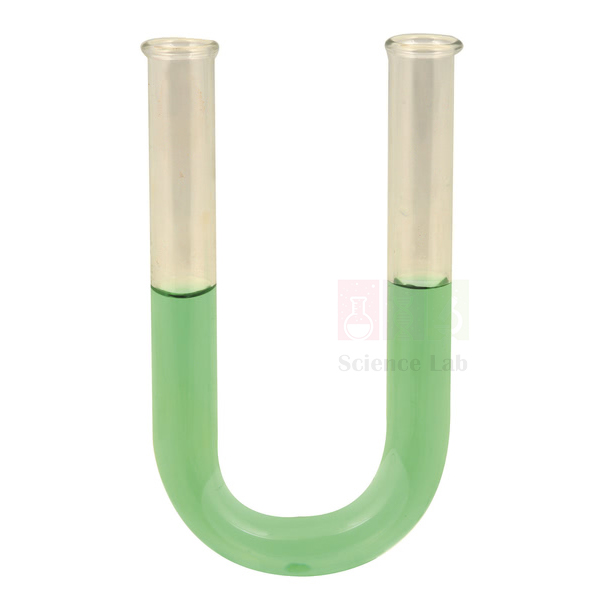
Absorption Tube
Absorption Tube (Product Code: SLE/CH/181) is a U-form tube in heavy walled, clear borosilicate glass, 125mm long and 15mm in diameter, used to hold a solid absorbent or drying agent through which a gas stream is passed. Chemistry teachers and laboratory technicians use it to dry gases and to trap water vapour or carbon dioxide in analysis experiments. Part of our borosilicate glassware for Indian school and college laboratories, it is manufactured by Jain Scientific Equipments Pvt Ltd (ScienceLab), Ambala.
Specifications
| Parameter | Detail |
|---|---|
| Material | Heavy walled borosilicate glass |
| Form | U-form |
| Colour | Clear |
| Length | 125mm |
| Diameter | 15mm |
| Properties | Heat resistant; chemical resistant |
Typical Use
The tube is packed with granules of a suitable absorbent, with a loose plug of glass wool at each end to keep the solid in place, and both limbs are closed with stoppers carrying short glass tubes. Clamped upright, it sits in the gas line between a generator and the point of collection or measurement, so the gas has to pass through the whole length of the packing. The U shape doubles the contact path in a small footprint, and the clear glass lets students see when the absorbent near the inlet is becoming spent.
In quantitative work the filled tube can be weighed before and after the gas passes, and the gain in mass gives the amount of water or carbon dioxide absorbed. Heavy walls make the tube robust enough for repeated packing and cleaning, and the borosilicate glass copes with warm gases and reactive absorbents. As with all chemistry lab glassware in India’s busy teaching labs, avoid sudden temperature changes, and empty, rinse and dry the tube after each use so old absorbent does not cake inside.
Manufacturer
ScienceLab glassware like this absorption tube comes from Jain Scientific Equipments Private Limited, a laboratory apparatus company in Ambala, Haryana, serving teaching and training laboratories. Background on the company is available on our company profile.
Related Chemistry Lab Equipment
Items used with the absorption tube in a typical gas drying set-up:
- Absorption Tube with Side Arms — the variant with side arms for direct tubing connections.
- Calcium Chloride Tube, Borosilicate Glass — a straight drying tube for protecting apparatus from moisture.
- Calcium Chloride — a common drying agent for packing the tube.
- Rubber Tubing — links the tube into the gas line.
- Universal Clamp — holds the tube steady on a retort stand.
Find more glassware and apparatus in our Chemistry Lab Equipment category.
Frequently Asked Questions
What are the dimensions of the Absorption Tube?
It is 125mm long with a diameter of 15mm.
What glass is it made from?
Heavy walled, clear borosilicate glass that is heat resistant and chemical resistant.
Are stoppers supplied with the tube?
Stoppers are not listed with this item. Tell us through our contact page if you would like suitable stoppers quoted.
Which absorbent should I use?
It depends on the gas. Anhydrous calcium chloride is a common choice for drying many gases but is not suitable for ammonia, so check your practical guide before packing.
How is it different from the side-arm version?
This is the plain U-form tube, closed with stoppers at the limbs; the side-arm version has side arms of about 6mm diameter for connecting tubing directly.
Can laboratories order it in quantity?
Yes. We supply glassware in institutional quantities to customers in India and international markets; include the quantity required in your enquiry.
Request a Quote
For the Absorption Tube, send the quantity and delivery details through our contact page or add it to the enquiry cart with tubing, clamps and drying agent.
Last updated: 24 September 2026