- Physics Lab Equipment
- Chemistry Lab Equipment
- Biology Lab Equipment
- Anatomical Lab Equipment
- Learning
- Educational Lab Equipment
- Magnets
- Agriculture
- Astronomy
- Earth Science
- Geography Lab Equipment
- Safety Lab Coat
- Laboratory
- Meteorological
- Electricity & Magnetism
- Heat
- School Lab Equipment
- Lab Glassware
- Science Lab Equipment
- Tvet Lab Equipment
- Robotics Kits Supplier and Manufacturer for Schools India
- Math Lab Equipment Manufacturers and Exporters in Ambala
- STEM Kits Manufacturers and Supplier India
- Engineering Lab Equipment
- Hospital Lab Equipment
- Water, Sanitation & Hygiene Supplies
- Cold Chain, Solar & Communication Equipment
- Nutrition
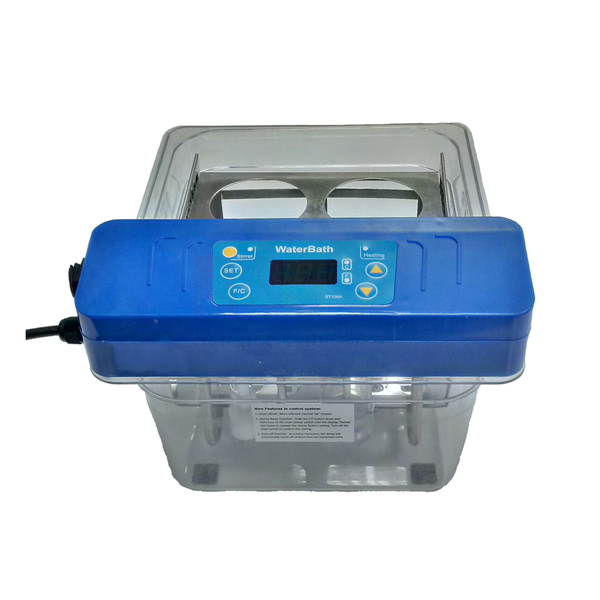
Digital Stirred Water Bath, 8 Litre
Digital Stirred Water Bath, 8 Litre (Product Code: SLE/WB/18) is a digitally controlled laboratory water bath with a built-in adjustable-speed stirrer, used to heat samples evenly up to 80°C in teaching, research and quality-control labs. The temperature is set in 0.1°C increments and a 1200 W element with energy-saving control provides the heat, giving an economical yet comprehensive heating solution. It is supplied by Jain Scientific Equipments Pvt Ltd (ScienceLab), Ambala, for buyers of a digital laboratory water bath in India.
Specifications
| Parameter | Detail |
|---|---|
| Bath capacity | 8 litre |
| Temperature setting | Up to 80°C in 0.1°C increments |
| Heating source | 1200 W element with energy-saving control |
| Circulation | Adjustable speed stirrer |
| Supply voltage | 220/240 V, 50/60 Hz |
| Rack hole sizes: test tube | 15 x 22 mm |
| Rack hole sizes: flasks | 4 x 78 mm |
| Rack hole sizes: boiling tube | 15 x 28 mm |
| Product code | SLE/WB/18 |
| Supplied by | Jain Scientific Equipments Pvt Ltd (ScienceLab), Ambala, India |
What Is the Digital Stirred Water Bath Used For?
In an unstirred bath, water near the heater is warmer than water at the far end. The stirrer in this 8 litre bath keeps the water moving, so tubes and flasks anywhere in the tank see the same temperature, and the digital setting in 0.1°C steps lets students and technicians repeat a method exactly. That makes it well suited to enzyme kinetics, incubation of assay tubes, dissolving and warming reagents, and any practical where a set temperature must be held consistently up to 80°C.
The listed rack hole sizes cover test tubes (22 mm), boiling tubes (28 mm) and flasks (78 mm), so mixed glassware can be heated in one run. Set the stirrer speed low for small tubes so they are not disturbed, keep the water above the sample level, and use distilled water to limit scale on the element. For school and college labs looking for a digital water bath in India with better uniformity than a basic bath, this is a compact option.
What to Specify When Ordering
- Confirm your mains supply is 220/240 V, 50/60 Hz.
- Which glassware you will use (test tubes, boiling tubes or flasks), and ask us which rack is supplied with the bath.
- The number of baths and any extras such as floating spheres or a reference thermometer.
Supplier
ScienceLab, the trading name of Jain Scientific Equipments Private Limited, supplies the Digital Stirred Water Bath, 8 Litre from Ambala, Haryana, to schools, colleges, research labs, industrial QC departments and dealers in India and international markets. Tell us the glassware you plan to use so the quotation covers the right rack arrangement. More information is on the ScienceLab profile page.
Related Water Bath Equipment
Items used alongside, or instead of, a stirred digital bath:
- Polypropylene Water Bath Spheres — reduce heat loss from the water surface.
- Digital Unstirred Water Bath — a digitally controlled bath without a stirrer.
- Unstirred Thermostatic Water Bath, 14 Litre — a larger analogue bath that reaches 100°C.
- Boiling Tube — glassware sized for the boiling-tube rack positions.
Explore other models in the Water Bath category.
Frequently Asked Questions
What temperature can the Digital Stirred Water Bath, 8 Litre reach?
The Digital Stirred Water Bath, 8 Litre heats up to 80°C, and the temperature is set digitally in 0.1°C increments. The lower end of the range is not stated in its listing, so ask us if you need to work close to room temperature.
Why choose a stirred bath like the Digital Stirred Water Bath, 8 Litre?
The Digital Stirred Water Bath, 8 Litre has an adjustable speed stirrer that circulates the water, so samples in every part of the tank sit at a more uniform temperature than in an unstirred bath. The speed can be reduced for delicate tubes.
What glassware fits the Digital Stirred Water Bath, 8 Litre rack?
The Digital Stirred Water Bath, 8 Litre lists rack hole sizes of 15 x 22 mm for test tubes, 15 x 28 mm for boiling tubes and 4 x 78 mm for flasks. Please confirm with us which rack comes with your order.
How much power does the Digital Stirred Water Bath, 8 Litre use?
The Digital Stirred Water Bath, 8 Litre uses a 1200 W heating element with energy-saving control and runs on 220/240 V, 50/60 Hz mains. Connect it to a suitably rated, earthed laboratory socket.
Who supplies the Digital Stirred Water Bath, 8 Litre?
Jain Scientific Equipments Pvt Ltd (ScienceLab), Ambala, Haryana, India supplies the Digital Stirred Water Bath, 8 Litre to educational, research and industrial laboratories and dealers in India and international markets.
Can a calibration certificate be supplied with the Digital Stirred Water Bath, 8 Litre?
The listing for the Digital Stirred Water Bath, 8 Litre does not mention calibration paperwork. If your audit or accreditation requires one, raise it on the contact page before you order and we will explain what is possible.
Request a Quote
Request pricing through our contact page, or add the Digital Stirred Water Bath, 8 Litre to the enquiry cart along with glassware and accessories.
Last updated: 24 September 2026

Compact Balance 2000g
Compact Balance 2000g is a portable electronic balance that weighs up to 2000 g in 0.1 g steps on a removable 145 x 145 mm platform. The whole unit weighs 0.5 kg and runs from the included 12V adapter or from 6 AA batteries, not included, so schools, kitchens and field teams can carry it. A sealed three-button keypad keeps soil and spills out.
Compact Balance 2000g specifications
| Parameter | Detail |
|---|---|
| Capacity and readability | 2000 g, read in 0.1 g steps |
| Repeatability and linearity | 0.1 g repeatability; 0.2 g linearity |
| Stabilisation time | 2.0 (as listed) |
| Pan | 145 x 145 mm, removable platform |
| Units and calibration | g, oz; external calibration performed through the keypad |
| Display and keypad | High-contrast display with 15 mm digits, visible from a distance; three colour-coded buttons, sealed against dirt and spills |
| Power | 12V AC 50/60Hz 150mA adapter (included) or 6 x AA batteries (not included); battery life 3 hours |
| Software and protection | Auto power-off; zero tracking; overload and low-battery indicators; overload protection for internal components |
| Body, weight and size | ABS plastic; net weight 0.5 kg; 147 x 208 x 40 mm (W x D x H); operating temperature 0° to 40°C |
| Product code | SLE/LB/22 |
| Minimum order | 10 units |
| Dispatch | Usually within 7 to 10 working days |
| Supplied by | ScienceLab (Jain Scientific Equipments Pvt Ltd), Ambala, India |
Fieldwork and food practicals with the 2000 g balance
Plant biomass from a quadrat. Lay a quadrat on the school field, cut every plant inside it at ground level with garden secateurs and weigh the cuttings in a tared bag. Dry them slowly over several days and weigh them again. Dry mass per quadrat lets groups compare a mown patch with an unmown one.
Water held by different soils. Line a glass funnel with filter paper and add a weighed sample of dry sand, loam or clay. Weigh the water before pouring it through, then weigh what drains into a tared beaker. Water added minus water drained gives the mass each soil holds back.
Mass and volume in food practicals. Fill a polypropylene measuring jug to the same mark with flour, sugar and water in turn, and weigh each one. Equal volumes give very different masses, which shows why recipes written in grams are more reliable than cup measures. Switch to ounces to check an older recipe.
Frequently Asked Questions About the Compact Balance 2000g
Why should the balance rest after being carried in from a hot or cold place?
Its readings settle only once the balance has reached the temperature of the room. Leave it switched on for a while before weighing, and wipe off any condensation first. Use it only within the listed operating range of 0° to 40°C, and keep it out of direct sun during fieldwork.
What do the overload and low-battery indicators mean?
The overload indicator shows that the load is above 2000 g, so lift it off at once, even though the internal parts have overload protection. The low-battery indicator means the 6 AA cells are nearly flat. Fit fresh batteries or switch to the included adapter before taking more readings.
Why can a mobile phone near the balance upset the reading?
Radio signals from phones, walkie-talkies and some chargers can make the last digit jump or drift. Keep them a short distance from the balance while weighing. If the display still wanders, look for draughts, vibration or a bench that is not level.
Why do biology groups often record dry mass rather than fresh mass?
Fresh plant material loses water from the moment it is cut, so its mass depends on how long it waited and how damp the day was. Dry mass removes that water and gives a steadier figure. The 0.1 g readability suits whole plants and quadrat samples; tiny seedlings need a finer balance.
Why does the display switch itself off during fieldwork?
Auto power-off shuts the balance down after a spell without use, which saves the batteries; their listed life is 3 hours. Switch it on again, let the display settle and set the zero before the next sample. Carry spare AA cells for a long session outdoors.
What does zero tracking do?
Zero tracking keeps the display steady at zero by correcting very small, slow changes while the platform is empty, such as drift as the balance warms up. It does not cancel a real sample. Wipe the platform clean between groups so no stray soil is weighed with the next sample.
Field and food weighing companions
- Compact Balance 300g
- Balance, Portable
- Bottle, Polyethylene, Widemouthed
- Quadrat
- Measuring Jug, Polypropylene
To request a quotation, send the product name, code and quantity through our contact page or add the item to your enquiry cart.
Last updated: 14 November 2026

Compact Balance 300g
Small reagent quantities in student chemistry and biology practicals are weighed on the Compact Balance 300g, a portable centigram balance. It reads up to 300 g with 0.01 g readability, 0.01 g repeatability and 0.02 g linearity on a 100 mm removable pan. Three colour-coded buttons sit on a sealed keypad, and power comes from the included adapter or from 6 AA batteries that the user supplies.
Compact Balance 300g specifications
| Parameter | Detail |
|---|---|
| Capacity and readability | 300 g; 0.01 g |
| Repeatability and linearity | 0.01 g; 0.02 g |
| Stabilisation time | 2.0 (as listed) |
| Pan | 100 mm, removable platform |
| Draught shield | Fitted |
| Units and calibration | g, oz; external calibration, initiated from the keypad |
| Display, keypad and software | High-contrast, 15 mm digit height; three colour-coded buttons, sealed against dirt and spills; auto power-off; zero tracking; overload and low-battery indicators |
| Power | 12V AC 50/60Hz 150mA adapter (included) / 6 x AA batteries (not included); battery life 3 hours |
| Construction and size | ABS plastic, with overload protection; net weight 0.5 kg; 147 x 208 x 150 mm (W x D x H); operating temperature 0° to 40°C |
| Product code | SLE/LB/23 |
| Minimum order | 10 units |
| Dispatch | Usually within 7 to 10 working days |
| Supplied by | ScienceLab (Jain Scientific Equipments Pvt Ltd), Ambala, India |
Centigram weighing in chemistry and biology practicals
Rate of reaction by mass loss. Stand a conical flask of dilute hydrochloric acid on the pan, add calcium carbonate granules and plug the neck loosely with cotton wool. Record the mass at the start and then at fixed intervals timed with a digital stopwatch. Repeat with powder in place of granules to see how surface area changes the rate.
Solution of known concentration. Tare a sheet of weighing paper, then add sodium chloride with a polypropylene spatula until the display shows the mass needed to two decimal places. Tip the salt through a funnel into a volumetric flask, rinse the paper and funnel into it, and make up to the mark with distilled water.
Water loss from leaves. Pick four similar leaves and coat them with petroleum jelly on the upper side, the lower side, both sides or neither. Weigh each leaf, hang them on a line for a few days and weigh them again. The leaves with a bare lower surface lose the most mass, which shows where most stomata lie.
Frequently Asked Questions About the Compact Balance 300g
How reliable is the last digit of a 0.01 g reading?
Treat the final digit as uncertain by about one step. With 0.01 g repeatability, repeat weighings of one sample may differ in the second decimal place. Record masses to two decimal places, and remember that a sample of only a few hundredths of a gram carries a large percentage uncertainty.
What do the repeatability and linearity figures tell me?
Repeatability of 0.01 g is how closely repeat readings of the same load agree. Linearity of 0.02 g is how far a reading may stray from the true value at different points between zero and 300 g. In the worst case both add together, so allow a few hundredths of a gram on any one result.
Why is a cotton wool plug used when the balance follows a reaction?
The loose plug lets carbon dioxide escape but catches the fine spray of acid that the fizzing throws up. The mass lost is then due to the gas alone, which is what the experiment measures. It also keeps acid droplets off the pan and the sealed keypad.
Why is the reaction of magnesium with acid not followed by mass loss on this balance?
That reaction gives off hydrogen, which is so light that the total mass lost is tiny, often only a few hundredths of a gram. The change is close to the reading uncertainty, so the results scatter. Collect the hydrogen in a gas syringe instead and measure its volume.
Why must the balance be calibrated again after a move?
An electronic balance senses the force of the load, so local gravity, temperature and the slope of the bench all shift its reading slightly. External calibration with a known mass, started from the keypad at the place of use, corrects for them. A calibration mass is not stated as included.
In what units is the rate given when mass loss is recorded?
Rate from mass loss is given in grams per second or grams per minute. A mean rate is the total mass lost divided by the time taken. For the rate at one moment, draw a tangent to the curve of mass against time and work out its gradient.
Accessories and a larger balance for small-quantity weighing
To request a quotation, send the product name, code and quantity through our contact page or add the item to your enquiry cart.
Last updated: 15 November 2026
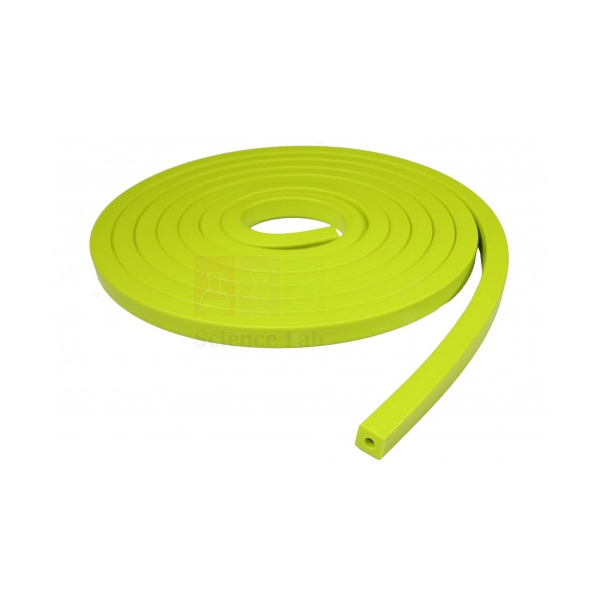
Vacuum Tubing
Vacuum Tubing (Product Code: SLE/LI/15) is heavy-wall laboratory tubing used to connect vacuum pumps to filter flasks, desiccators and other apparatus in chemistry, biology and physics laboratories. Made from a polymer blend with an 8 mm internal diameter and a 6 mm wall, it is designed to replace natural rubber vacuum tubing, resists UV and has a square outer profile that lies flat on the bench. It is supplied by Jain Scientific Equipments Pvt Ltd (ScienceLab), Ambala, a laboratory equipment supplier in India.
Specifications
| Parameter | Detail |
|---|---|
| Material | Polymer blend |
| Internal diameter | 8 mm |
| Wall thickness | 6 mm |
| External profile | Square, sits flat on the bench |
| UV resistance | Yes |
| Tensile strength | 7.5 MPa |
| Tear strength | 17 kN/m |
| Specific gravity | 1.16 ± 0.05 g/cm³ |
| Rebound resilience | 60% |
| Temperature range | -50 to 200 °C |
| Replaces | Natural rubber vacuum tubing; described as lasting many times longer |
| Product code | SLE/LI/15 |
| Supplied by | Jain Scientific Equipments Pvt Ltd (ScienceLab), Ambala, India |
What Is Vacuum Tubing Used For?
Vacuum tubing links a vacuum source to apparatus that must work under reduced pressure — for example a pump to a filter flask during Buchner filtration, to a vacuum desiccator, or to a distillation set-up run under reduced pressure. Thin-walled tubing collapses when air is drawn out, which is why the 6 mm wall matters: it keeps the bore open so the vacuum reaches the apparatus. Schools and colleges buy it as one of their routine lab consumables for filtration and drying practicals.
Cut lengths cleanly with a sharp blade, push the tubing fully over each hose connector, and route it so clamps or bench edges do not kink or pinch it. The polymer blend is intended to outlast natural rubber, but check the ends for splits from time to time and trim them back when needed. The square profile also stops the tubing rolling off the bench.
What to Specify When Ordering
- The total length required, or the number of vacuum set-ups to equip.
- The hose connector sizes on your pumps, flasks and desiccators, to check against the 8 mm bore.
- The delivery city or country.
Supplier
ScienceLab is the trading name of Jain Scientific Equipments Private Limited, which supplies this vacuum tubing from Ambala, Haryana, to schools, colleges, research laboratories, dealers and importers. Tubing is usually ordered with the pump, filter flasks and funnels for a filtration station, and the complete set can be quoted at once. See the company profile for more.
Related Laboratory Instruments
Apparatus that the tubing connects in a vacuum set-up:
- Vacuum Pump, Electric — a powered vacuum source for the tubing.
- Vacuum Pump, Hand — a manual option for small set-ups.
- Conical Filter Flask — the side-arm flask used for vacuum filtration.
- Buchner Funnel, 90 mm, Porcelain — the funnel that sits on the filter flask.
- Vacuum Desiccator — for drying samples under reduced pressure.
More items are in Laboratory Instruments.
Frequently Asked Questions
What size is the Vacuum Tubing?
The Vacuum Tubing has an 8 mm internal diameter and a 6 mm wall thickness. The heavy wall helps the tubing keep its bore open under vacuum, and the square external profile lets it sit flat on the bench.
What is the vacuum tubing made of?
The Vacuum Tubing is made from a polymer blend designed to replace natural rubber vacuum tubing. It is described as lasting many times longer than natural rubber, with UV resistance, 7.5 MPa tensile strength and 17 kN/m tear strength.
What temperature range can the vacuum tubing handle?
The Vacuum Tubing is listed for a temperature range of -50 to 200 °C. For hot or chemically demanding applications, tell us the conditions so we can confirm whether this tubing suits your set-up before you order.
How is the vacuum tubing sold?
Length and pack size for the Vacuum Tubing are confirmed at quotation. Tell us the total length you need, or the number of vacuum set-ups to equip, through our contact page and we will quote accordingly.
Who supplies the Vacuum Tubing?
The Vacuum Tubing is supplied by Jain Scientific Equipments Pvt Ltd (ScienceLab), Ambala, Haryana, India, to schools, colleges, research laboratories, dealers and importers in India and international markets.
Will the tubing fit my pump and filter flask?
The Vacuum Tubing has an 8 mm bore, so it suits hose connectors of a matching size. Check the hose barb on your vacuum pump, filter flask or desiccator, and send us the sizes if you are unsure about the fit.
Request a Quote
To get a price for the Vacuum Tubing, send the length or number of set-ups through our contact page, or add it to the enquiry cart with pumps and filtration glassware.
Last updated: 24 September 2026
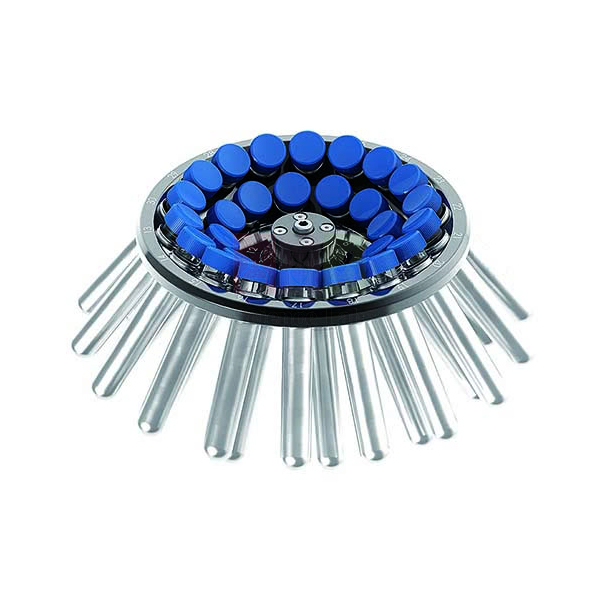
Fixed Angle Rotor
Fixed Angle Rotor (Product Code: SLE/LC/14) is a centrifuge rotor accessory, designated 30-15, used to spin 30 tubes of 15 mL at once in a compatible laboratory centrifuge. It suits clinical, teaching and research laboratories that process large batches, and buyers adding capacity to a laboratory centrifuge in India should confirm fit with us before ordering. It is supplied by Jain Scientific Equipments Pvt Ltd (ScienceLab), Ambala, India.
Specifications
| Parameter | Detail |
|---|---|
| Type | Fixed angle centrifuge rotor |
| Designation | 30-15 |
| Capacity | 15 mL x 30 |
| Supplied as | Centrifuge rotor (accessory) |
| Compatibility | To be confirmed against your centrifuge make and model |
| Product code | SLE/LC/14 |
| Supplied by | Jain Scientific Equipments Pvt Ltd (ScienceLab), Ambala, India |
What Is the Fixed Angle Rotor Used For?
The Fixed Angle Rotor is used to pellet cells, precipitates and debris from a large batch of 15 mL tubes in one run. Every tube sits at the same constant angle to the spin axis, so particles travel only a short distance before reaching the outer wall of the tube and then slide down to form a compact pellet. A 30-place layout is handy when an entire class set or a full morning of samples needs to be spun together.
Fill tubes to matching volumes and place them in diametrically opposite positions; if you are not using every position, keep the load symmetrical around the rotor. Never run the rotor above the lower of the rotor's and the centrifuge's rated limits, so ask us for the rating before first use. After each session, rinse off any spills, dry the cavities fully and inspect them for corrosion or cracks.
What to Specify When Ordering
- The make and model of the centrifuge the rotor will be fitted to
- Number of rotors required
- Whether 15 mL tubes should be quoted with the rotor
Supplier
Jain Scientific Equipments Private Limited, trading as ScienceLab from Ambala, Haryana, supplies the Fixed Angle Rotor to laboratories, service teams and dealers in India and international markets. Because rotor fit depends on the centrifuge, the company checks your machine's make and model before it quotes. See our company profile to learn more about the company.
Related Laboratory Equipment
Centrifuges and tubes that go with a 15 mL fixed angle rotor:
- Centrifuge, Clinical, Swing Out Head — a multi-rotor centrifuge whose accessory range includes fixed-angle rotors; confirm fit before ordering.
- Universal Centrifuge — offered with a choice of rotors; ask whether this rotor suits your configuration.
- Centrifuge Tubes — tubes to load the 15 mL positions.
- Oak Ridge Centrifuge Tubes — an alternative tube style; check its size against the rotor cavities.
- Test Tube Rack SS — for arranging a full batch of tubes in balanced pairs.
Find matching machines in our Centrifuges category.
Frequently Asked Questions
How many tubes does the Fixed Angle Rotor hold?
The Fixed Angle Rotor, designated 30-15, holds 30 tubes of 15 mL each, so a full class set or a large batch of samples can be spun together in a single run on a compatible centrifuge.
Which centrifuge does the Fixed Angle Rotor fit?
The compatible centrifuge for the Fixed Angle Rotor is not specified in the listing. Send us the make and model of your centrifuge through our contact page and we will confirm whether the rotor fits before you order.
What is the maximum rated speed of the Fixed Angle Rotor?
A speed or RCF rating for the Fixed Angle Rotor is not listed on this page. Request it from us before first use, and never run the rotor above the lower of the rotor's and the centrifuge's rated limits.
What angle are tubes held at in the Fixed Angle Rotor?
The tube angle of the Fixed Angle Rotor is not stated in the documentation. If your method depends on a particular angle, please ask us for the figure before ordering so you can check it against the protocol.
Can the Fixed Angle Rotor run with only some positions filled?
Yes, the Fixed Angle Rotor can run partly loaded as long as the tubes are arranged symmetrically with matching volumes, so the load stays balanced around the spin axis. Never run it with tubes bunched on one side.
Who supplies the Fixed Angle Rotor?
The Fixed Angle Rotor is supplied by Jain Scientific Equipments Pvt Ltd (ScienceLab), Ambala, Haryana, India. The company confirms fit with your centrifuge and quotes rotors singly or in quantity for laboratories and dealers in India and international markets.
How should the Fixed Angle Rotor be cleaned?
Clean the Fixed Angle Rotor with a mild detergent, rinse it and dry it completely, paying attention to the tube cavities. Whether it can be autoclaved is not stated, so check with us before steam sterilising it.
Request a Quote
For a quotation on the Fixed Angle Rotor, contact us via the contact page or add it to the enquiry cart with your centrifuge details.
Last updated: 24 September 2026

Fume Cupboard, Ductless, Polypropylene
Fume Cupboard, Ductless, Polypropylene (Product Code: SLE/LI/16) is a mobile ductless fume cupboard used to draw fumes away from the user and through filters during chemical work in school, college and research laboratories. Built entirely from highly chemical-resistant polypropylene, it has two power sockets, an integral LED light and a fully adjustable fan, and it needs no specialist fitting. This chemical fume cupboard is supplied by Jain Scientific Equipments Pvt Ltd (ScienceLab), Ambala, India.
Specifications
| Parameter | Detail |
|---|---|
| Type | Mobile ductless fume cupboard |
| Construction | Fully polypropylene, highly chemical resistant |
| Air velocity | 0.6 m/s |
| Noise level | Below 52 dB |
| Power supply | 220 V |
| Power sockets | Two |
| Lighting | Integral LED light |
| Fan | Fully adjustable |
| Filter change | Every 600 hours, or sooner if considered necessary |
| Installation | Simple to use; no specialist fitting required; lightweight for easy manoeuvring |
| Mounting | Benchtop, or fully mobile when coupled with the fume cupboard stand |
| Product code | SLE/LI/16 |
| Supplied by | Jain Scientific Equipments Pvt Ltd (ScienceLab), Ambala, India |
What Is the Ductless Fume Cupboard Used For?
A ductless fume cupboard lets a school or college carry out fume-producing chemistry without building an exhaust duct through a wall or roof. The fan draws air in at the front at about 0.6 m/s, carrying vapours away from the user and through the filters before the air returns to the room. As a fume cupboard for schools, it suits demonstrations and small-scale practicals such as heating, dissolving and reactions that release odours or vapours, provided the filters match the chemicals used.
Log running hours so the filters are changed every 600 hours, or sooner if odours become noticeable, and keep containers and apparatus well inside the front opening. The two built-in sockets can power a stirrer or hotplate inside the cupboard, and the adjustable fan lets the airflow be set for each task.
What to Specify When Ordering
- Benchtop use, or mobile use with the fume cupboard stand (ask us which stand suits this unit).
- The chemicals you plan to handle, so filter suitability can be discussed.
- The mains supply at your site — the listed unit runs on 220 V.
- Whether spare filters should be quoted, and the number of cupboards required.
Supplier
Jain Scientific Equipments Private Limited, trading as ScienceLab, supplies this polypropylene fume cupboard from Ambala, Haryana, to schools, colleges, laboratories, dealers and importers. Institutions registering a new vendor can use the company's GSTIN 06AAECJ8618A1ZT and its Importer-Exporter Code AAECJ8618A issued by the DGFT. More details are on our company profile.
Related Laboratory Instruments
Other fume-control options and accessories:
- Fume Cupboard, Ductless — a larger ductless model with an airflow alarm.
- Polypropylene Ducted Fume Cupboard — a ducted option where an exhaust duct can be installed.
- Stand for 1200mm Fume Cabinet — a fume cabinet stand in our range; ask which stand suits this cupboard.
- Thermo-Anemometer — for checking the air velocity at the front opening.
See more in Laboratory Instruments.
Frequently Asked Questions
What is the air velocity of the Fume Cupboard, Ductless, Polypropylene?
The Fume Cupboard, Ductless, Polypropylene is listed with an air velocity of 0.6 m/s and a noise level below 52 dB. Its fully adjustable fan lets users set the airflow to suit the task in hand.
How often should the filters be changed?
Filters in the Fume Cupboard, Ductless, Polypropylene should be changed every 600 hours of use, or sooner if you feel it is necessary. Keeping a simple log of running hours makes filter replacements easy to plan.
Does the ductless fume cupboard need installation?
No specialist fitting is needed for the Fume Cupboard, Ductless, Polypropylene. It is simple to use, runs on a 220 V supply and can sit on a bench or become a mobile unit when coupled with the fume cupboard stand.
Which chemicals can be used in the fume cupboard?
Suitability of the Fume Cupboard, Ductless, Polypropylene depends on the filters fitted and the chemicals handled. Its body is highly chemical-resistant polypropylene; send a list of the chemicals you plan to use through our contact page so filter suitability can be discussed.
Who supplies the Fume Cupboard, Ductless, Polypropylene?
The Fume Cupboard, Ductless, Polypropylene is supplied by Jain Scientific Equipments Pvt Ltd (ScienceLab), Ambala, Haryana, India, to schools, colleges, laboratories, dealers and importers in India and international markets.
What should a quotation request for this fume cupboard include?
A quotation request for the Fume Cupboard, Ductless, Polypropylene should state the quantity, benchtop or mobile use, whether spare filters and a stand are needed, the chemicals to be handled and the delivery location.
Request a Quote
Send your requirements for the Fume Cupboard, Ductless, Polypropylene through our contact page, or add it to the enquiry cart with spare filters and other laboratory items.
Last updated: 24 September 2026
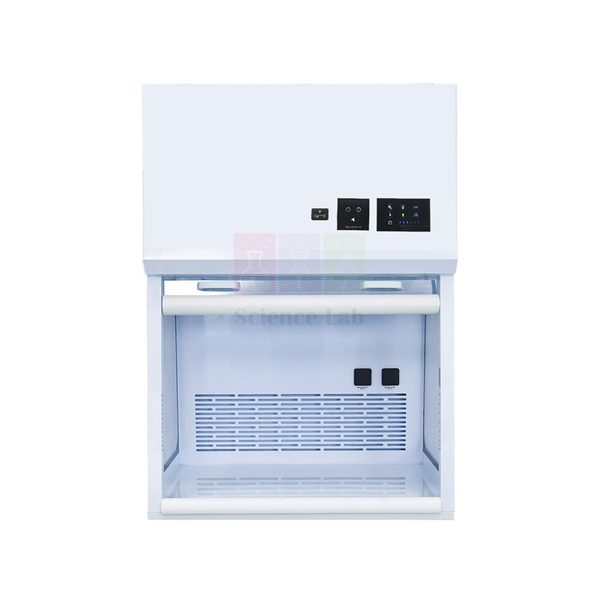
Fume Cupboard, Ductless
Fume Cupboard, Ductless (Product Code: SLE/LI/17) is a duct-free fume cupboard used to protect students and staff from chemical vapours during practical work in schools, colleges and research laboratories. This 900 mm-wide polypropylene unit adds an airflow alarm to the usual LED light, twin sockets and adjustable fan, with a 570 x 770 mm front sash opening and a 0.5 m/s air velocity. It is supplied by Jain Scientific Equipments Pvt Ltd (ScienceLab), Ambala, a laboratory equipment supplier in India.
Specifications
| Parameter | Detail |
|---|---|
| Type | Mobile ductless fume cupboard |
| Construction | Fully polypropylene, highly chemical resistant |
| External dimensions (W x D x H) | 900 x 750 x 1223 mm |
| Workspace (W x D x H) | Listed as 885 x 610 x 695 mm and as 840 x 640 x 660 mm — confirm with your quotation |
| Front sash opening | 570 mm high, 770 mm wide |
| Air velocity | 0.5 m/s |
| Noise level | Below 52 dB |
| Power supply | 220 V |
| Weight | 120 kg |
| Features | Two power sockets, integral LED light, fully adjustable fan, airflow alarm |
| Mounting | Benchtop, or fully mobile when coupled with the fume cupboard stand |
| Installation | Simple to use; no specialist fitting required |
| Product code | SLE/LI/17 |
| Supplied by | Jain Scientific Equipments Pvt Ltd (ScienceLab), Ambala, India |
What Is the Ductless Fume Cupboard with Airflow Alarm Used For?
This laboratory fume hood is used wherever fume-producing chemistry must be contained but ducting to the outside is impractical, such as older school buildings, preparation rooms and temporary labs. Air enters through the 570 x 770 mm sash opening at about 0.5 m/s, moves vapours away from the operator and passes through the unit's filtration before returning to the room. The airflow alarm warns users when airflow is inadequate, so work can stop before exposure becomes a risk.
At 120 kg, the cupboard is best placed once on a sturdy bench, or fitted to the fume cupboard stand when it needs to move between rooms. Use the two internal sockets for small electrical apparatus, keep the sash as low as practical while working, and never ignore the alarm — check the fan setting and filters before carrying on.
What to Specify When Ordering
- Benchtop placement, or mobile use with the fume cupboard stand.
- The workspace size you need — two workspace figures are listed, so confirm the internal dimensions.
- The chemicals you will handle, so filter choice can be discussed.
- Your mains supply (the listed unit runs on 220 V) and the delivery location.
Supplier
ScienceLab is the trading name under which Jain Scientific Equipments Private Limited supplies this ductless fume cupboard from Ambala, Haryana. Schools, colleges, research laboratories, dealers and importers can combine it with filters, safety wear and bench apparatus in a single quotation. Visit our company profile for more about the business.
Related Laboratory Instruments
Alternatives and accessories for safe fume handling:
- Fume Cupboard, Ductless, Polypropylene — a ductless model listed with 0.6 m/s air velocity.
- Polypropylene Inverted Mobile Fume Cabinet — a mobile cabinet with sink, taps and touch-screen control.
- Thermo-Anemometer — for spot-checking air velocity at the sash.
- Safety Screen — an extra barrier during demonstrations.
Browse Laboratory Instruments for more.
Frequently Asked Questions
What are the dimensions of the Fume Cupboard, Ductless?
The Fume Cupboard, Ductless measures 900 x 750 x 1223 mm (W x D x H) externally, with a front sash opening 570 mm high and 770 mm wide. Two workspace sizes are listed, so confirm the internal dimensions when you request a quotation.
Does the ductless fume cupboard have an airflow alarm?
Yes. The Fume Cupboard, Ductless includes an airflow alarm along with two power sockets, an integral LED light and a fully adjustable fan. The alarm helps users notice when airflow is not adequate so they can pause work and check the unit.
How heavy is the Fume Cupboard, Ductless?
The Fume Cupboard, Ductless weighs 120 kg. It can be used as a benchtop unit on a strong bench, or turned into a mobile unit by coupling it with the fume cupboard stand when it has to move between rooms.
What air velocity does the fume cupboard provide?
The Fume Cupboard, Ductless is listed with an air velocity of 0.5 m/s and a noise level below 52 dB, running on a 220 V supply. A thermo-anemometer can be used to spot-check the velocity at the sash opening.
Who supplies the Fume Cupboard, Ductless?
The Fume Cupboard, Ductless is supplied by Jain Scientific Equipments Pvt Ltd (ScienceLab), Ambala, Haryana, India, to schools, colleges, research laboratories, dealers and importers in India and international markets.
What should a quotation request for the ductless fume cupboard include?
A quotation request for the Fume Cupboard, Ductless should list the quantity, the chemicals to be handled, benchtop or stand-mounted use, your mains supply and the delivery location. Send it through our contact page for a tailored reply.
Request a Quote
Ask for a price on the Fume Cupboard, Ductless via our contact page, or add it to the enquiry cart with the stand, filters and safety items you need.
Last updated: 24 September 2026

Heating Mantle 1000ml
Heating Mantle 1000ml (Product Code: SLE/LHM/06) is an electric bench heater that holds a 1000 ml flask in its heating well and warms the glass evenly from below and around the sides, without an open flame. Chemistry teachers, college demonstrators and laboratory technicians use it for boiling, refluxing and distilling liquids at bench scale, where a steady, controllable heat source matters more than speed. It is made by Jain Scientific Equipments Pvt Ltd (ScienceLab) in Ambala, India, and forms part of our chemistry lab equipment in India for schools, colleges and working laboratories.
Specifications
| Parameter | Detail |
|---|---|
| Flask capacity | 1000 ml |
| Supply | 220 V, 50 Hz |
| Power | 350 W |
| Maximum temperature | 450 °C |
| Control | Analogue control, simple to operate |
| Indicators | Power indicator light and heating indicator light |
| Base | Four rubber feet for stability during use |
| Exterior size | Φ 260 mm × 200 mm |
| Net weight | 3.5 kg |
| Gross weight | 4 kg |
| Packing size | 290 × 290 × 220 mm |
Typical Use
The 1000 ml size suits class demonstrations and practical work where a litre-scale batch is heated for a long period: refluxing a reaction mixture under a condenser, running a simple or fractional distillation, concentrating an extract or bringing an aqueous solution to a controlled boil. Because the flask sits inside the mantle rather than over a burner, heat reaches a larger area of the glass and there is no flame near flammable vapours. Laboratories assembling laboratory distillation apparatus in India often pair this mantle with a round bottom flask, a condenser and a retort stand to make a complete, stable set-up.
For best results, choose a flask that fills the well so the glass is in full contact with the mantle, clamp the flask neck to a stand so the mantle only supports its weight, and turn the analogue knob up in steps while watching the heating lamp and the liquid. Add anti-bumping granules before boiling, never switch the mantle on empty at a high setting, and let it cool on its rubber feet before moving it or wiping the surface.
Manufacturer
This mantle is produced by Jain Scientific Equipments Private Limited, the company behind the ScienceLab brand, from its base in Ambala, Haryana. Our team supplies heating equipment and glassware to teaching and research laboratories across India and international markets, and can advise on matching mantle sizes to the flasks you already hold. Read more about the company on our company profile page.
Related Laboratory Equipment
These items are used alongside the 1000 ml mantle in the same heating, reflux or distillation workflow:
- Round Bottom Flask — the vessel shape a heating mantle is designed to cradle.
- Liebig Condenser — fits above the flask for reflux or to condense distillate.
- Retort Stand — holds the flask neck and condenser steady over the mantle.
- Heating Mantle With Stirrer (Rota Mantle) — an alternative when the mixture must be stirred while heating.
- Heating Mantle 250ml — a smaller mantle for student-scale flasks.
Browse every size and control type in our Heating Mantle category.
Frequently Asked Questions
Which flask size does this mantle take?
It is built for a 1000 ml flask. A much smaller flask will not sit in full contact with the heating surface, so for small volumes a smaller mantle from the same category is the better choice.
How hot does it get?
The mantle heats to a maximum of 450 °C. The temperature actually reached by the liquid depends on the setting of the analogue control, the contents and the volume in the flask.
What electrical supply does it need?
It runs on 220 V, 50 Hz and draws 350 W. If your laboratory uses a different mains supply, please contact us before ordering so we can discuss options.
Is a flask included with the mantle?
This listing is for the heating mantle; glassware such as round bottom flasks and condensers is listed separately. Your quotation will state exactly what is packed.
Can it stir the liquid while heating?
No stirring function is described for this model; it provides analogue-controlled heating only. For combined heating and stirring, look at the Rota Mantle listed above.
Can you supply a calibration certificate?
Please discuss calibration certificate availability with us through the contact page when you request a quotation.
What is the shipping size and weight?
Each unit is packed in a carton of 290 × 290 × 220 mm with a gross weight of 4 kg (net 3.5 kg), which helps when planning freight for bulk or export orders to India and international markets.
Request a Quote
To order the Heating Mantle 1000ml for your laboratory, send your quantity and delivery location through our contact page, or add it to the enquiry cart together with the flasks and condensers you need.
Last updated: 24 September 2026
