- Physics Lab Equipment
- Chemistry Lab Equipment
- Biology Lab Equipment
- Anatomical Lab Equipment
- Learning
- Educational Lab Equipment
- Magnets
- Agriculture
- Astronomy
- Earth Science
- Geography Lab Equipment
- Safety Lab Coat
- Laboratory
- Meteorological
- Electricity & Magnetism
- Heat
- School Lab Equipment
- Lab Glassware
- Science Lab Equipment
- Tvet Lab Equipment
- Robotics Kits Supplier and Manufacturer for Schools India
- Math Lab Equipment Manufacturers and Exporters in Ambala
- STEM Kits Manufacturers and Supplier India
- Engineering Lab Equipment
- Hospital Lab Equipment
- Water, Sanitation & Hygiene Supplies
- Cold Chain, Solar & Communication Equipment
- Nutrition
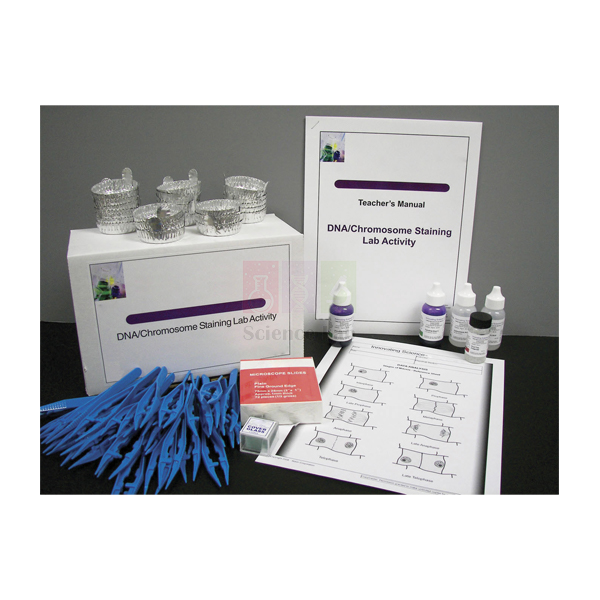
DNA/Chromosome Staining Lab Activity
DNA/Chromosome Staining Lab Activity (Product Code: SLE/EB/13) is a mitosis practical kit used to stain and squash preserved plant root tips so that students can see chromosomes in every stage of cell division in school and college biology labs. Each student prepares an individual slide, and the kit holds enough material for 30 students. It is supplied by Jain Scientific Equipments Pvt Ltd (ScienceLab), Ambala, India, as a staining kit for biology labs that want real, student-made preparations.
Specifications
| Parameter | Detail |
|---|---|
| Specimen material | Specially grown and preserved plant root tips (included) |
| Preparation of material | Grown and harvested under specific conditions to ensure maximum mitotic activity at the time of preservation |
| Expected result | Multiple examples of every stage of mitosis on each microscope slide prepared |
| Student procedure | Prepare and stain samples, then perform a cell squash for microscopic observation |
| Skills taught | Cell division; tissue staining; microscopic observation |
| Quantity | Enough material for 30 students working individually |
| Shelf life | Shelf life depends on the chemical, its grade and storage conditions; ask us for the expiry date of the batch you are quoted |
| Product code | SLE/EB/13 |
| Supplied by | Jain Scientific Equipments Pvt Ltd (ScienceLab), Ambala, India |
What Is the DNA/Chromosome Staining Activity Used For?
It is used to let students find mitosis for themselves rather than on a bought slide. After a short demonstration, each student takes a root tip, stains it, places it on a slide under a coverslip and presses down gently to spread the cells into a single layer — the squash. At low power they locate the region of dividing cells, then move to higher magnification to pick out prophase, metaphase, anaphase and telophase. Counting how many cells sit in each stage gives a simple estimate of how long each phase lasts relative to the others.
Because the root tips were harvested at peak mitotic activity, every slide should show several examples of each stage, even for first-time students. Squash preparations are temporary, so it helps to compare them with permanent reference slides; this kind of temporary slides biology kit also leaves time in the lesson for students to sketch and label what they find.
Supplier
Jain Scientific Equipments Private Limited, the company behind the ScienceLab name in Ambala, Haryana, India, supplies this staining activity along with the slides, coverslips and stains that teachers often add to a mitosis practical. You can read more on our company profile.
Related Laboratory Equipment
Items that support the staining and viewing steps of this activity:
- Mitosis & Meiosis Set, Microscope Slides — permanent prepared slides to compare with the students' own squashes.
- Plain Slides — extra slides for repeat squashes.
- Coverslips — needed to cover and press each root-tip preparation.
- Acetocarmine (Nucleic Acid) — a chromosome stain widely used for root-tip squashes in school labs.
- Binocular Microscope — comfortable two-eye viewing for the high-power search for mitotic stages.
Discover more practical kits in Biology Kits.
Frequently Asked Questions
What plant material comes with the DNA/Chromosome Staining Lab Activity?
The DNA/Chromosome Staining Lab Activity includes specially grown and preserved plant root tips, harvested under conditions chosen to give maximum mitotic activity at the time of preservation, so every slide shows several examples of each stage.
How many students can one DNA/Chromosome Staining Lab Activity serve?
One DNA/Chromosome Staining Lab Activity contains enough material for 30 students working individually, with each student preparing, staining and squashing a root tip on his or her own microscope slide.
Is the stain included in the DNA/Chromosome Staining Lab Activity?
Students stain their own samples as part of the DNA/Chromosome Staining Lab Activity. Please contact us to confirm which stain, and how much of it, is supplied in the current kit before you plan the practical.
What microscope does the DNA/Chromosome Staining Lab Activity need?
The DNA/Chromosome Staining Lab Activity needs a compound microscope with a high-power objective, because chromosomes must be seen clearly enough for students to tell prophase, metaphase, anaphase and telophase apart.
Can the slides made in the DNA/Chromosome Staining Lab Activity be kept?
Squash preparations from the DNA/Chromosome Staining Lab Activity are temporary and should be examined on the day they are made. For a permanent record, pair the activity with prepared mitosis slides or photograph the clearest fields.
How long do the root tips and stain keep?
No fixed period is stated for the DNA/Chromosome Staining Lab Activity, because shelf life depends on the chemical, its grade and storage conditions. Ask us for the expiry date of the batch you are quoted and keep the container sealed.
Who supplies the DNA/Chromosome Staining Lab Activity?
Jain Scientific Equipments Pvt Ltd, trading as ScienceLab from Ambala, Haryana, India, supplies the DNA/Chromosome Staining Lab Activity to schools and colleges, and quotes for whole year groups in India and international markets.
Request a Quote
To plan a mitosis practical with the DNA/Chromosome Staining Lab Activity, ask us for a quotation or place it in the enquiry cart with slides and coverslips.
Last updated: 24 September 2026
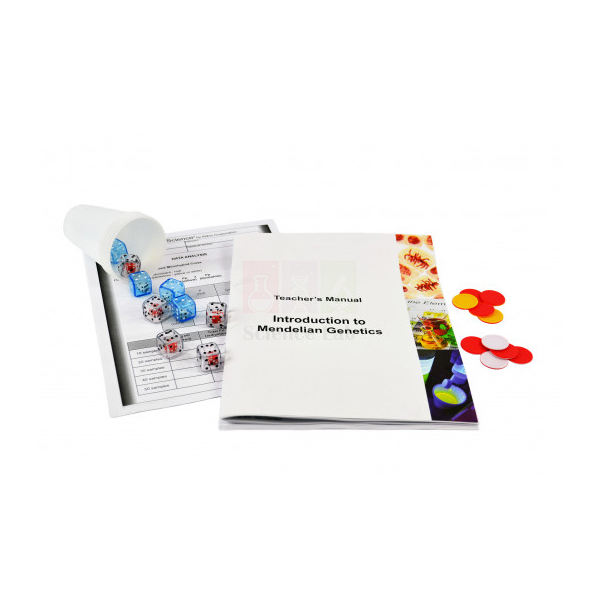
Genes & Probability Lab
Genes & Probability Lab (Product Code: SLE/EB/14) is a genetics activity kit used to teach inheritance patterns and genetic probability through game-like exercises in school and college classrooms. Working with easily observed and tested traits, students explore gametogenesis and fertilisation, monohybrid and dihybrid crosses, and the laws of dominance, segregation and recombination along with independent assortment. It is supplied by Jain Scientific Equipments Pvt Ltd (ScienceLab), Ambala, India, as a genetics experiment kit for Mendelian lessons.
Key Details
| Parameter | Detail |
|---|---|
| Type | Genetics and probability lab activity |
| Format | Game-like exercises |
| Traits studied | Easily observed and tested traits |
| Processes modelled | Gametogenesis and fertilisation |
| Crosses | Monohybrid and dihybrid |
| Principles covered | Laws of dominance, segregation and recombination; independent assortment |
| Suitable for | School and college genetics lessons |
| Product code | SLE/EB/14 |
| Supplied by | Jain Scientific Equipments Pvt Ltd (ScienceLab), Ambala, India |
What Is the Genes & Probability Lab Used For?
It is used to let the rules of inheritance emerge from chance instead of being handed down as a table. A session usually begins with students modelling gamete formation, where each parent passes on one allele for each gene, and then “fertilising” by combining gametes at random and recording the offspring. When the whole class pools its results, the classic Mendelian ratios appear, and students see for themselves why small samples often stray from the expected numbers.
The dihybrid exercises extend the idea to two genes at once, so independent assortment and recombination become something students observe rather than memorise. Teachers often link the lab to probability lessons in mathematics, and as a genetics inheritance kit it gives a solid foundation before students tackle pedigrees or blood-group inheritance.
Supplier
ScienceLab is a trading name of Jain Scientific Equipments Private Limited, located in Ambala, Haryana, India, which supplies this genetics lab to schools, colleges and tender departments. For vendor registration, the supplying company is listed under GSTIN 06AAECJ8618A1ZT and LEI 3358004HRD1JIVXKYX49. The company profile has further information.
Related Biology Kits
These items take the same genetics principles in different directions:
- Fruit fly Genetics Kit — carries the same crosses into a breeding experiment with living organisms.
- Probability Kit — a maths lab resource for practising the probability rules behind each cross.
- Blood Typing Kit, Simulated — applies inheritance rules to ABO blood groups and a paternity question.
- Mendelian Inheritance — reference material summarising Mendel's laws for revision.
View all of our Biology Kits.
Frequently Asked Questions
Which genetics topics does the Genes & Probability Lab cover?
The Genes & Probability Lab covers gametogenesis and fertilisation, monohybrid and dihybrid crosses, the laws of dominance, segregation and recombination, and independent assortment, all taught through game-like exercises with easily observed traits.
Does the Genes & Probability Lab need live organisms or special apparatus?
No live organisms or special apparatus are listed for the Genes & Probability Lab; it is built around game-like exercises and easily observed traits. Contact us for the current component list before ordering.
Which level of student is the Genes & Probability Lab suited to?
The Genes & Probability Lab suits secondary school and early college students, because monohybrid and dihybrid crosses are normally taught in secondary genetics and then revisited in more depth in first-year college biology.
How many students can use one Genes & Probability Lab?
The group size for one Genes & Probability Lab is not stated in the product description. Tell us your class size when you enquire and we will confirm the quantity to order in the quotation.
Can the Genes & Probability Lab be used for revision?
Yes. Because its exercises are game-like, the Genes & Probability Lab works well as a quick recap of Mendel's laws and probability before examinations, as well as for first teaching of inheritance.
Who supplies the Genes & Probability Lab?
Jain Scientific Equipments Pvt Ltd, trading as ScienceLab from Ambala, Haryana, India, supplies the Genes & Probability Lab to schools, colleges and institutions in India and international markets, issuing quotations directly.
What is needed for a tender or purchase-order quotation?
For a Genes & Probability Lab tender or purchase-order quotation, send the quantity, delivery address and any tender format you must follow, so the quotation can be prepared in the layout your purchasing office needs.
Request a Quote
To order the Genes & Probability Lab, send your requirement to us or collect it with other items in the enquiry cart.
Last updated: 24 September 2026
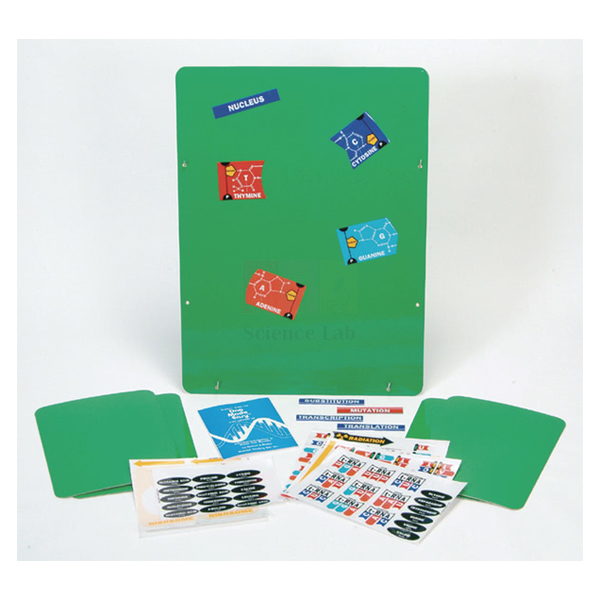
Model, DNA
Model, DNA (Product Code: SLE/Mo/11) is a DNA teaching model used to perform classroom demonstrations of DNA structure, gene duplication and mutation in biology lessons. Its listing describes seven demonstrations, including revealing the double strand, duplicating a gene and mutating normal blood into sickle-cell blood, so it fits well into a genetics and inheritance unit. Jain Scientific Equipments Pvt Ltd (ScienceLab), an OEM manufacturer, makes the model at its own factory in Ambala, India.
Key Details
| Parameter | Detail |
|---|---|
| Model type | DNA teaching model for classroom demonstrations |
| Number of demonstrations | 7 (as listed) |
| Example demonstration | Reveal a double strand of DNA and duplicate the gene |
| Example demonstration | Synthesize normal blood, then mutate it to produce sickle-cell blood |
| Full demonstration list, parts and size | Not stated in this listing — ask us |
| Product code | SLE/Mo/11 |
| Manufacturer | Jain Scientific Equipments Pvt Ltd (ScienceLab) — OEM |
| Country of origin | India (made in Ambala, Haryana) |
What Is the DNA Model Used For?
The Model, DNA turns processes that students normally meet only as diagrams into something they can watch. Opening up the double strand shows the two complementary sequences, and duplicating the gene demonstrates how each strand acts as a template for a new partner strand during replication.
The sickle-cell demonstration links a change in DNA to a visible trait: a single base change in the gene for haemoglobin alters the protein and gives red blood cells their sickle shape. Building the normal version first and then introducing the mutation lets students compare the two side by side. Running the replication demonstration before the mutation one, and asking students to predict each outcome, keeps the class engaged.
OEM Manufacturer
Jain Scientific Equipments Private Limited trades as ScienceLab and is the OEM (original equipment manufacturer) of the Model, DNA. The model is made at the company's own licensed factory at Saha, Ambala, Haryana, India, and supplied factory-direct to schools, colleges, dealers and importers.
Questions about setting up the demonstrations are answered by the maker itself rather than a reseller. Company details are on the ScienceLab profile page.
Related Molecule Models
Extend the demonstrations with these models and lab activities:
- Protein Biosynthesis — shows how a gene's code becomes a protein, the step between DNA and a trait.
- DNA extraction lab kit — a hands-on practical for isolating DNA.
- DNA Fingerprinting Electrophoresis Lab Activity — shows how differences in DNA are detected in the laboratory.
- Mini DNA 22 layer base pair Molecular Model — a colour-coded kit students can build themselves.
Find more DNA models in the Molecule category.
Frequently Asked Questions
What demonstrations can be done with the Model, DNA?
The Model, DNA supports seven classroom demonstrations according to its listing. Two examples are revealing the double strand of DNA and duplicating the gene, and synthesizing normal blood then mutating it to produce sickle-cell blood. Ask us for the full list.
How does the Model, DNA show sickle-cell disease?
The Model, DNA is used to build the sequence for normal blood and then introduce a mutation that produces sickle-cell blood. Students see how a small change in DNA can alter the protein it codes for and the resulting trait.
Which classes is the Model, DNA suited to?
The Model, DNA suits secondary and senior-secondary biology, where DNA structure, replication, mutation and inheritance are taught. Teachers can also use it in introductory college genetics as a quick visual before more detailed molecular work.
Who manufactures the Model, DNA?
The Model, DNA is manufactured by Jain Scientific Equipments Pvt Ltd (ScienceLab), the OEM, at its own licensed factory in Saha, Ambala, Haryana, India. Quotations and after-sales questions go directly to the manufacturer.
What parts and size does the Model, DNA have?
The parts list and dimensions of the Model, DNA are not given in this listing. Send your enquiry through the contact page and the manufacturer will confirm the contents and size in your quotation.
Can schools order the Model, DNA in quantity?
Yes, the Model, DNA can be quoted in quantity for schools, colleges, dealers and importers in India and international markets. State the number of models and the delivery location on the contact page to receive a quotation.
Request a Quote
To request a quotation for the Model, DNA, use the contact page or the enquiry cart. The quote is prepared by the manufacturer in Ambala.
Last updated: 24 September 2026

Human Genetic Disorders Poster
Human Genetic Disorders Poster (Product Code: SLE/BL/054) is a wall chart used to show where disease-causing genes sit on the human chromosomes in school and college genetics lessons. Biology teachers use its detailed view of all 23 human chromosome pairs, based on discoveries from the Human Genome Project, printed on an 890mm W x 585mm H sheet. It is supplied by Jain Scientific Equipments Pvt Ltd (ScienceLab), Ambala, India, as part of a biology chart set for schools.
Specifications
| Parameter | Detail |
|---|---|
| Size | 890mm W x 585mm H |
| Chromosomes shown | All 23 human chromosome pairs, in detail |
| Gene locations | Genes that cause some of the most common genetic disorders discovered to date, as part of the Human Genome Project |
| Disorders shown include | Breast cancer, melanoma, deafness, muscular dystrophy, Parkinson's disease, Tay-Sachs disease, cystic fibrosis, colour blindness and many others |
| Additional illustrations | Detailed 3-D view of a cell, a chromosome and double-helix DNA |
| Karyotypes | Karyotypes representing Down's Syndrome and Turner's Syndrome |
| Finish and mounting | Not stated — confirm at enquiry |
| Product code | SLE/BL/054 |
| Supplied by | Jain Scientific Equipments Pvt Ltd (ScienceLab), Ambala, India |
What Is the Human Genetic Disorders Poster Used For?
On the wall of a biology room, the poster becomes a reference students return to throughout a genetics unit. Teachers can start at the cell illustration and zoom in — cell, chromosome, DNA double helix — so that students see a gene as a stretch of DNA at a fixed place on one chromosome. The disorder labels then show that conditions such as cystic fibrosis or muscular dystrophy trace back to specific locations, while the colour blindness entry leads naturally into sex-linked inheritance.
The two karyotypes make a good comparison exercise: students count and pair the chromosomes and spot what differs from a typical set — an extra copy of one chromosome in Down's Syndrome, and a missing sex chromosome in Turner's Syndrome. That distinction between single-gene and whole-chromosome disorders is a key idea in senior biology. Among biology teaching aids for schools in India, the poster works well beside DNA models and practical genetics kits; hang it at eye level and away from strong direct sunlight to keep the print clear.
Supplier
The Human Genetic Disorders Poster is supplied by Jain Scientific Equipments Private Limited, which trades as ScienceLab from Ambala, Haryana, India. The company sources teaching charts like this one alongside its laboratory apparatus, so a school or distributor can place posters, models and practical kits on a single quotation for delivery in India and international markets. Company details are on our company profile.
Related Biology Lab Equipment
Teaching resources that pair with this poster in a genetics unit:
- Visualizing Mitosis Poster — shows how chromosomes are copied and shared during cell division
- Fruit fly Genetics Kit — hands-on crosses for dominance, recessiveness and sex linkage
- DNA/Chromosome Staining Lab Activity — lets students see real chromosomes under the microscope
- Model, DNA — a three-dimensional companion to the double-helix illustration
- Mendelian Inheritance (Mendel's First) — the inheritance principle behind single-gene disorders
Other posters and teaching aids are listed under Biology Lab Equipment.
Frequently Asked Questions
How big is the Human Genetic Disorders Poster?
The Human Genetic Disorders Poster measures 890mm wide by 585mm high, a size that lets a class read the chromosome map and the disorder labels from the front rows when it is mounted at eye level on a biology-room wall.
Which disorders does the Human Genetic Disorders Poster show?
The Human Genetic Disorders Poster marks gene locations for conditions including breast cancer, melanoma, deafness, muscular dystrophy, Parkinson's disease, Tay-Sachs disease, cystic fibrosis and colour blindness, among many others, placed across the 23 human chromosome pairs.
Does the poster include karyotypes?
Yes. The Human Genetic Disorders Poster includes karyotypes representing Down's Syndrome and Turner's Syndrome, together with a detailed 3-D view of a cell, a chromosome and double-helix DNA, so whole-chromosome and single-gene disorders can be compared on one sheet.
Is the Human Genetic Disorders Poster laminated or framed?
The finish and mounting of the Human Genetic Disorders Poster are not stated in our product information. If your school needs a laminated or framed copy, ask through the contact page before ordering and we will confirm what can be supplied.
Which classes is the poster suitable for?
The Human Genetic Disorders Poster suits secondary and senior secondary biology and introductory college genetics, wherever chromosomes, genes, karyotypes and inherited disorders are taught. Teachers use it both as a lesson starter and as a revision reference on the classroom wall.
Who supplies the Human Genetic Disorders Poster?
The Human Genetic Disorders Poster is supplied by Jain Scientific Equipments Private Limited, trading as ScienceLab, in Ambala, Haryana, India. Schools, colleges and distributors in India and international markets can order it on its own or with other charts and models.
Request a Quote
To order the Human Genetic Disorders Poster, get in touch through our contact page with the number of copies, or place it in the enquiry cart alongside other charts and models.
Last updated: 24 September 2026
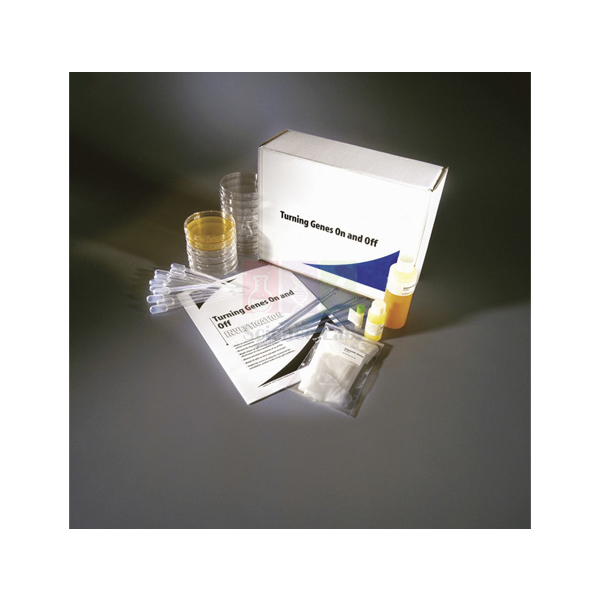
Turning Genes On and Off Lab Investigation
Turning Genes On and Off Lab Investigation (Product Code: SLE/EB/16) is a gene-regulation practical used to show how a gene responds to its environment in senior school and college biology labs. A safe, commonly found microbe turns its colonies red when the gene is expressed, so students can predict and then test the effect of temperature simply by looking at the cultures. It is supplied by Jain Scientific Equipments Pvt Ltd (ScienceLab), Ambala, India, as a bacteria culture experiment kit.
Key Details
| Parameter | Detail |
|---|---|
| Type | Gene regulation and expression lab investigation |
| Organism | A safe, commonly found microbe |
| Visible marker | Expression of the gene produces a pigment that turns the bacterial colonies red |
| Main variable | Temperature |
| Extension work | Students design their own experiments to identify other variables that may affect gene expression |
| Shelf life | Shelf life depends on the chemical, its grade and storage conditions; ask us for the expiry date of the batch you are quoted |
| Product code | SLE/EB/16 |
| Supplied by | Jain Scientific Equipments Pvt Ltd (ScienceLab), Ambala, India |
What Is the Turning Genes On and Off Investigation Used For?
It is used to give students a direct, visible read-out of gene expression. Students grow the microbe at two or more different temperatures, first predicting which conditions will switch pigment production on. Comparing colony colour across the cultures then leads naturally to a discussion of why organisms regulate their genes instead of keeping every gene active all the time. Normal microbiology practice applies throughout: clean technique, clearly labelled cultures and sterilisation of all used material before disposal.
Once the temperature experiment is complete, groups can plan their own follow-up investigations into other variables that might influence expression. In senior classes this makes the investigation a useful bridge to biotechnology lab kit topics such as gene regulation systems and genetic engineering, because students see for themselves that gene activity responds to conditions outside the cell.
Supplier
This investigation is supplied by Jain Scientific Equipments Private Limited, which trades as ScienceLab from Ambala, Haryana, India. Because it involves a living microbe, tell us your practical date when you enquire so that delivery can be planned around the lesson. Details of the company are on our profile page.
Related Laboratory Equipment
Equipment that supports temperature-controlled culture work in this investigation:
- Laboratory Incubator With Visibility Door — holds cultures at a set temperature, and the door lets students check colony colour at a glance.
- Petri Dish — for culturing the microbe at each temperature being compared.
- Thermometer (Digital) — records the actual temperature of each treatment for the results table.
- Autoclave Bag Disposable — for sterilising and discarding used cultures safely.
More investigations are available in our Biology Kits category.
Frequently Asked Questions
Which organism does the Turning Genes On and Off Lab Investigation use?
The Turning Genes On and Off Lab Investigation uses a safe, commonly found microbe. For its identity and the handling notes that go with it, please contact us before ordering so your lab can prepare suitable culture facilities.
How do students see that the gene is switched on?
In the Turning Genes On and Off Lab Investigation, the gene's product is a pigment, so bacterial colonies turn red when the gene is expressed; no chemical test or special instrument is needed to read the result.
What equipment is needed besides the Turning Genes On and Off Lab Investigation?
Alongside the Turning Genes On and Off Lab Investigation you need a way to hold cultures at different temperatures, such as an incubator, plus standard aseptic items. Ask us exactly what is included so you can plan the rest.
Can students design their own experiments?
Yes. After the temperature experiment in the Turning Genes On and Off Lab Investigation, students can plan their own investigations to identify other variables that may affect gene expression, building experimental design skills.
How should cultures from the investigation be disposed of?
Cultures from the Turning Genes On and Off Lab Investigation should be sterilised together with used consumables, for example in an autoclave bag, before discarding, following your institution's biosafety rules.
How long do the kit's materials keep?
No fixed period is stated for the Turning Genes On and Off Lab Investigation, because shelf life depends on the chemical, its grade and storage conditions. Ask us for the expiry date of the batch you are quoted before scheduling the practical.
Who supplies the Turning Genes On and Off Lab Investigation?
Jain Scientific Equipments Pvt Ltd, trading as ScienceLab from Ambala, Haryana, India, supplies the Turning Genes On and Off Lab Investigation to schools and colleges in India and international markets; shipping arrangements are confirmed in the quotation.
Request a Quote
For a quotation on the Turning Genes On and Off Lab Investigation, contact our office or add it to the enquiry cart with any incubation equipment you need.
Last updated: 24 September 2026
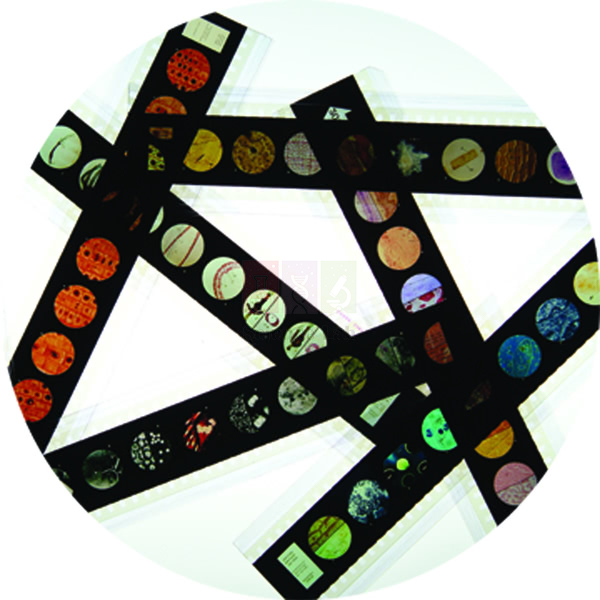
Microslide Nutrition
Microslide Nutrition (Product Code: SLE/PS/92) is a Microslide of 8 related 35mm images, photographed through a microscope, used to show how a shortage of vitamins and minerals changes body tissues in biology, home science and health education lessons. Each image pairs a nutrient with the tissue it affects, from vitamin A deficiency in the cornea at 200x to iodine deficiency in the thyroid at 400x and iron deficiency in blood at 300x. It is supplied by Jain Scientific Equipments Pvt Ltd (ScienceLab), Ambala, India.
Specifications
| Parameter | Detail |
|---|---|
| Format | Microslide of 8 related 35mm images |
| Viewed with | Microslide Viewer |
| Vitamin deficiency images | Vitamin A – cornea (200x); vitamin B1 – heart muscle (250x); vitamin B2 – skin (40x and 100x); vitamin B3 – skin (50x); vitamin D – bone (40x and 100x) |
| Mineral deficiency images | Iodine – thyroid (400x); potassium – heart muscle (100x); iron – blood (300x) |
| Labelling | Arrows and callouts identify the changes to look for |
| Teaching folder | Detailed text folder with questions; pocket stores the Microslide |
| Product code | SLE/PS/92 |
| Supplied by | Jain Scientific Equipments Pvt Ltd (ScienceLab), Ambala, India |
What Is the Microslide Nutrition Used For?
Food and nutrition chapters often present deficiency diseases as a list to memorise. This set shows what those deficiencies do at tissue level, in the cornea, skin, bone, thyroid, heart muscle and blood, which makes the link between diet and health far more concrete for students.
A practical approach is to give each group one nutrient, ask them to find foods rich in it, and then have them present the matching image using its callouts. The set connects naturally with the digestive system topic and with textbook conditions such as rickets, goitre and anaemia, making it a useful aid for health education classes.
Supplier
Jain Scientific Equipments Private Limited, which trades as ScienceLab, supplies Microslide Nutrition from Ambala, Haryana, to schools, colleges, home-science departments and dealers in India and international markets. Buyers who need vendor registration details can use the company's CIN U29309HR2020PTC087597 and GSTIN 06AAECJ8618A1ZT. See the ScienceLab profile for more about the company.
Related Prepared Slides
These items support the same nutrition and health lessons:
- Microslide Viewer — the viewer these 35mm images need.
- Microslide The Digestive System — covers how nutrients are taken into the body.
- Prepared Microscope Slide Set – Health And Disease — glass slides for microscope work on the same theme.
- Microslide Human Diseases — sets nutrition-related illness beside infectious and genetic disease.
The full range is under Prepared Slides.
Frequently Asked Questions
Which deficiencies are shown in the Microslide Nutrition?
The Microslide Nutrition shows deficiencies of vitamin A (cornea), vitamin B1 (heart muscle), vitamin B2 (skin), vitamin B3 (skin), vitamin D (bone), iodine (thyroid), potassium (heart muscle) and iron (blood).
What magnifications are used in the Microslide Nutrition?
The Microslide Nutrition images range from 40x to 400x: for example the cornea at 200x, the heart muscle at 100x and 250x, blood at 300x and the thyroid at 400x, with the skin and bone images at 40x and 100x.
Which subjects can use the Microslide Nutrition?
The Microslide Nutrition suits school biology, home science and health education, and any course that teaches how diet affects the body. Its text folder questions help students connect each nutrient with the tissue it affects.
Is the Microslide Nutrition meant for diagnosis?
No. The Microslide Nutrition is a classroom teaching aid made of photographed images. It illustrates tissue changes for learning purposes and is not intended for diagnosis or for giving medical or dietary advice.
Who supplies the Microslide Nutrition?
The Microslide Nutrition is supplied by Jain Scientific Equipments Pvt Ltd (ScienceLab), Ambala, Haryana, India, to schools, colleges and dealers in India and international markets.
How can I get a quotation for the Microslide Nutrition?
To get a quotation for the Microslide Nutrition, send the number of sets, the number of viewers and your delivery location through the contact page, or add the item to the enquiry cart.
Request a Quote
Send an enquiry for the Microslide Nutrition through the contact page, or use the enquiry cart to combine it with viewers and other health-topic Microslides.
Last updated: 24 September 2026

Microslide Lesson Set – Immunity
Microslide Lesson Set – Immunity (Product Code: SLE/PS/93) is a Microslide lesson set of related 35mm images, photographed through a microscope, used to teach how the immune system defends the body in senior school and college biology. Its listed subjects run from phagocytes, monocytes and macrophages to the bone marrow, lymph and thymus glands, T-cells with HIV budding, plasma cells, agglutinated red cells, eosinophils and basophils. It is supplied by Jain Scientific Equipments Pvt Ltd (ScienceLab), Ambala, India.
Specifications
| Parameter | Detail |
|---|---|
| Format | Microslide images; each Microslide is a set of 8 related 35mm images |
| Viewing | Microslide Viewer |
| Engulfing cells | Blood phagocyte, phagocytosis, monocyte, macrophage |
| Immune organs | Bone marrow, lymph gland, thymus gland |
| Lymphocytes and antibody cells | Normal T-cells, HIV budding from T-cell, plasma cell |
| Blood reactions and granulocytes | Normal red blood cells, agglutinated cells, eosinophil, basophil |
| Subjects listed | 14 |
| Labelling | Arrows and callouts on the images |
| Text folder | Detailed notes and questions, with a pocket to store the Microslides |
| Product code | SLE/PS/93 |
| Supplied by | Jain Scientific Equipments Pvt Ltd (ScienceLab), Ambala, India |
What Is the Microslide Immunity Lesson Set Used For?
Immunity stays abstract until students see the cells involved. The lesson set starts with phagocytes caught in the act of phagocytosis, then shows the monocytes and macrophages that clear away invaders, and the bone marrow, lymph gland and thymus where immune cells are produced and mature.
Normal T-cells beside HIV budding from a T-cell help explain why HIV weakens the immune system, while the plasma cell introduces antibody production. Normal and agglutinated red cells lead into blood grouping, and the eosinophil and basophil complete the white-cell family, making the set a strong resource for college biology and health education courses.
What to Specify When Ordering
- The number of Immunity lesson sets you need.
- Ask us to confirm how many Microslides and images the lesson set contains, since the listing names 14 subjects and each Microslide holds 8 images.
- How many Microslide Viewers are required for your groups.
- Any other Microslide titles, such as body defences or human diseases, to include on the same order.
Supplier
The Immunity lesson set is supplied by Jain Scientific Equipments Private Limited, the Ambala, Haryana company behind the ScienceLab name. It sources Microslide titles and viewers for human biology and health courses and supplies them to schools, colleges and dealers in India and international markets. You can read about the company on the ScienceLab profile page.
Related Prepared Slides
Items that support the same immunity lessons:
- Microslide Viewer — needed to view the images.
- Microslide Body Defences Against Infection — the wider picture of how the body keeps infection out.
- Human Blood Cell Types Model — an enlarged model of the blood cells shown in the set.
- Microslide Harmful Bacteria — the disease-causing organisms the immune system responds to.
- Microslide Human Diseases — connects immunity with infectious and non-infectious disease.
More titles are in Prepared Slides.
Frequently Asked Questions
What topics does the Microslide Lesson Set – Immunity cover?
The Microslide Lesson Set – Immunity lists blood phagocyte, phagocytosis, monocyte, macrophage, bone marrow, lymph gland, thymus gland, normal T-cells, HIV budding from a T-cell, plasma cell, normal red blood cells, agglutinated cells, eosinophil and basophil.
How many Microslides are in the Microslide Lesson Set – Immunity?
Each Microslide holds 8 related 35mm images, and the Microslide Lesson Set – Immunity lists 14 subjects. Please confirm the exact number of Microslides in the lesson set through the contact page before ordering.
Does the Microslide Lesson Set – Immunity cover HIV?
Yes. The Microslide Lesson Set – Immunity includes normal T-cells and an image of HIV budding from a T-cell, which teachers use to explain how the virus affects the cells that coordinate the immune response.
Does the Microslide Lesson Set – Immunity include teaching notes?
Yes. The Microslide Lesson Set – Immunity comes with a detailed text folder that informs students and asks them questions about each subject, and the folder has a pocket for storing the Microslides.
Which students is the Microslide Lesson Set – Immunity suitable for?
The Microslide Lesson Set – Immunity suits senior secondary and college students in biology, human biology and health education courses, where immune cells, antibodies and blood reactions are studied in detail.
Who supplies the Microslide Lesson Set – Immunity?
The Microslide Lesson Set – Immunity is supplied by Jain Scientific Equipments Pvt Ltd (ScienceLab), Ambala, Haryana, India, to schools, colleges and dealers in India and international markets.
Request a Quote
Ask for a quotation on the Microslide Lesson Set – Immunity through the contact page, or add it to the enquiry cart with viewers and related Microslide titles.
Last updated: 24 September 2026
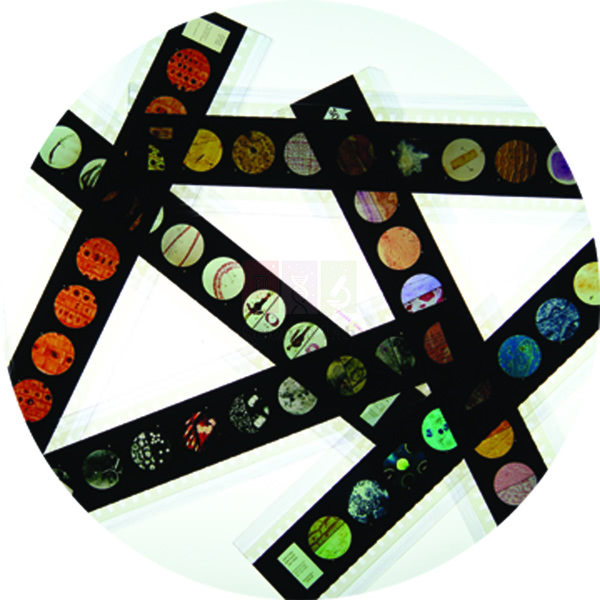
Microslide Human Diseases
Microslide Human Diseases (Product Code: SLE/PS/94) is a Microslide of 8 related 35mm images, photographed through a microscope, used to compare the different causes of human disease in school biology and health education. It moves from the influenza virus at 320,000x and tuberculosis to amoebic dysentery, the Trichina worm, sickle cell anaemia, a normal and a blackened lung, and atherosclerosis. It is supplied by Jain Scientific Equipments Pvt Ltd (ScienceLab), Ambala, India.
Specifications
| Parameter | Detail |
|---|---|
| Format | 8 related 35mm images for a Microslide Viewer |
| Viral disease | Influenza virus (320,000x) |
| Bacterial disease | Tuberculosis (100x and 1000x) |
| Protist disease | Amoebic dysentery (100x) |
| Parasitic worm | Trichina worm (65x) |
| Genetic disease | Sickle cell anaemia (400x) |
| Environmental illness | Normal lung (150x) and blackened lung (65x) |
| Multifactorial disease | Atherosclerosis (3x and 15x) |
| Labelling | Arrows and callouts guide students to key features |
| Folder | Detailed text folder with questions; pocket stores the Microslide |
| Product code | SLE/PS/94 |
| Supplied by | Jain Scientific Equipments Pvt Ltd (ScienceLab), Ambala, India |
What Is the Microslide Human Diseases Used For?
This set groups illness by cause rather than by body system: viral, bacterial, protist, parasitic, genetic, environmental and multifactorial. Students quickly see that not every disease is caught from someone else, because sickle cell anaemia is inherited, a blackened lung reflects what was breathed in and atherosclerosis builds up from several factors over time.
The normal and blackened lung pair is a strong starting point for discussing air pollution and smoking. The magnifications also teach scale, from atherosclerosis visible at just 3x and 15x to the influenza virus at 320,000x. Health education teachers often use the text folder questions as a group task before moving on to prevention.
Supplier
Microslide Human Diseases comes from Jain Scientific Equipments Private Limited, which supplies biology teaching material under the ScienceLab name from Ambala, Haryana. The company serves schools, colleges and distributors in India and international markets, and can quote this title together with the viewer and the related health Microslides. The company profile gives more background.
Related Prepared Slides
Other items for lessons on health and disease:
- Microslide Viewer — used to view the eight images.
- Microslide Smoking & Health — builds on the blackened lung image.
- Microslide Harmful Bacteria — a closer look at bacterial causes of disease.
- Microslide Lesson Set – Immunity — how the body fights the infections shown here.
- Prepared Microscope Slide Set – Health And Disease — glass slides for microscope study of the same theme.
Browse Prepared Slides for further titles.
Frequently Asked Questions
Which diseases are shown in the Microslide Human Diseases?
The Microslide Human Diseases shows the influenza virus, tuberculosis, amoebic dysentery, the Trichina worm, sickle cell anaemia, a normal lung beside a blackened lung, and atherosclerosis, each labelled with arrows and callouts.
What magnifications are used in the Microslide Human Diseases?
The Microslide Human Diseases spans 3x to 320,000x: atherosclerosis at 3x and 15x, the Trichina worm and blackened lung at 65x, tuberculosis at 100x and 1000x, sickle cell anaemia at 400x and the influenza virus at 320,000x.
Does the Microslide Human Diseases include non-infectious diseases?
Yes. Along with viral, bacterial, protist and parasitic infections, the Microslide Human Diseases covers a genetic disease (sickle cell anaemia), an environmental illness (blackened lung) and a multifactorial disease (atherosclerosis).
Is the Microslide Human Diseases a medical reference?
No. The Microslide Human Diseases is a teaching aid for school and college classes. Its photographed images and text folder explain disease causes for learning, and it is not intended for diagnosis or clinical use.
Who supplies the Microslide Human Diseases?
The Microslide Human Diseases is supplied by Jain Scientific Equipments Pvt Ltd (ScienceLab), Ambala, Haryana, India, to schools, colleges and distributors in India and international markets.
What should a quotation request for the Microslide Human Diseases include?
A quotation request for the Microslide Human Diseases should give the number of sets, the number of viewers and the delivery location, plus any related health titles. Send it through the contact page.
Request a Quote
Enquire about the Microslide Human Diseases through the contact page, or add it to the enquiry cart with a viewer and other health and disease titles.
Last updated: 24 September 2026