- Physics Lab Equipment
- Chemistry Lab Equipment
- Biology Lab Equipment
- Anatomical Lab Equipment
- Learning
- Educational Lab Equipment
- Magnets
- Agriculture
- Astronomy
- Earth Science
- Geography Lab Equipment
- Safety Lab Coat
- Laboratory
- Meteorological
- Electricity & Magnetism
- Heat
- School Lab Equipment
- Lab Glassware
- Science Lab Equipment
- Tvet Lab Equipment
- Robotics Kits Supplier and Manufacturer for Schools India
- Math Lab Equipment Manufacturers and Exporters in Ambala
- STEM Kits Manufacturers and Supplier India
- Engineering Lab Equipment
- Hospital Lab Equipment
- Water, Sanitation & Hygiene Supplies
- Cold Chain, Solar & Communication Equipment
- Nutrition
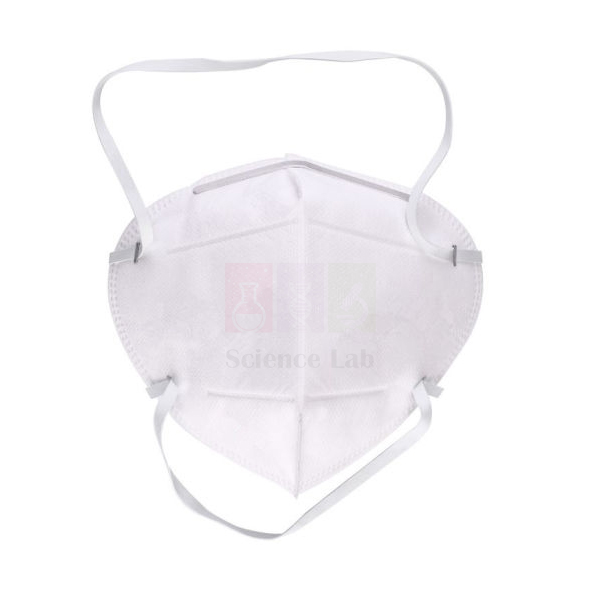
Non-Disposable Face Mask
Non-Disposable Face Mask (Product Code: SLE/MK/06) is a white, cup-shaped ear-loop face mask built from melt-blown fabric, PP nonwoven and an active-carbon layer, used for face protection in medical, pharmaceutical, laboratory and industrial work. It is listed with a bacterial filtration efficiency (BFE) above 99%, and the carbon layer sets it apart from plain 3-ply masks. It is supplied by Jain Scientific Equipments Pvt Ltd (ScienceLab), Ambala, India, a laboratory equipment supplier in India.
Specifications
| Parameter | Detail |
|---|---|
| Materials | Melt-blown fabric, PP (polypropylene) nonwoven, active carbon |
| Style | Cup-shaped nonwoven face mask with ear loops |
| Bacterial filtration efficiency (BFE) | Above 99% |
| Colour | White |
| Application | Medical and surgical, pharmaceutical, laboratory and industrial sectors |
| Product code | SLE/MK/06 |
| Supplied by | Jain Scientific Equipments Pvt Ltd (ScienceLab), Ambala, India |
What Is the Non-Disposable Face Mask Used For?
The mask covers a wide set of workplaces: hospital and clinic duties, tablet and powder handling in pharmaceutical units, routine bench work in teaching and testing laboratories, and dusty industrial tasks. Its cup shape keeps the fabric away from the mouth, which many wearers find more comfortable over a long shift, and it makes a useful standard item in a pharmacy lab setup in India where students handle powders.
Active carbon is commonly added to masks to help reduce odours, while the melt-blown layer handles fine particles; the BFE figure describes how well the material held back a bacterial aerosol in testing. Because the name marks this mask as non-disposable, ask us for the care and reuse guidance that applies to the batch you are quoted, and replace any mask that is damaged, soiled or no longer fits closely.
Supplier
Jain Scientific Equipments Private Limited, trading as ScienceLab, supplies this Non-Disposable Face Mask from Ambala, Haryana, as a sourced protective item. Pharmacy colleges, hospitals, industrial training institutes and distributors can combine it with gowns and gloves in a single quotation for delivery in India and international markets. More about the company is on the ScienceLab profile page.
Related Gloves & Face Masks
Other protective items for the same work areas:
- Particulate Protective Face Mask, Melt-Blown — head-mounted FFP2-level mask for heavier dust.
- Safety Face Mask — melt-blown ear-hook mask with adjustable ear rope.
- Gloves, W/o Powder, Nitrile, L, Disposable — powder-free nitrile gloves for pharmaceutical and lab handling.
- Disposable Isolation Gown — body cover for clinical and isolation duties.
See the full Gloves & Face Masks category.
Frequently Asked Questions
What materials is the Non-Disposable Face Mask made from?
The Non-Disposable Face Mask is made from melt-blown fabric, PP (polypropylene) nonwoven and an active-carbon layer. It is white, cup-shaped and held on with ear loops, which keeps the mask clear of the mouth.
What is the bacterial filtration efficiency of this mask?
The Non-Disposable Face Mask is listed with a bacterial filtration efficiency (BFE) above 99%. BFE describes the filtering performance of the material in a laboratory test; wearing the mask closely over the nose and chin is still needed.
How many times can the Non-Disposable Face Mask be reused?
The Non-Disposable Face Mask is offered as a non-disposable item, but no fixed number of uses is stated. Ask us for the care and reuse guidance for the batch you are quoted, and replace the mask whenever it is damaged or soiled.
Which sectors is the Non-Disposable Face Mask meant for?
The Non-Disposable Face Mask is listed for medical and surgical, pharmaceutical, laboratory and industrial sectors. That makes it suitable for hospitals, pharmacy colleges, testing laboratories and workshops that want one mask type across departments.
Who supplies the Non-Disposable Face Mask?
The Non-Disposable Face Mask is supplied by Jain Scientific Equipments Pvt Ltd (ScienceLab), Ambala, Haryana, India. The company sources it for institutions and dealers and can include it in combined orders with gloves, gowns and other protective items.
Does the active-carbon layer protect against chemical vapours?
No protection against chemical vapours is claimed for the Non-Disposable Face Mask. Active carbon in masks is commonly used to reduce odours; for solvent or gas exposure, use a fume cupboard or a respirator chosen for that specific hazard.
Request a Quote
Share the quantity and destination on the contact page, or add the Non-Disposable Face Mask to the enquiry cart with any gloves or gowns you need.
Last updated: 24 September 2026
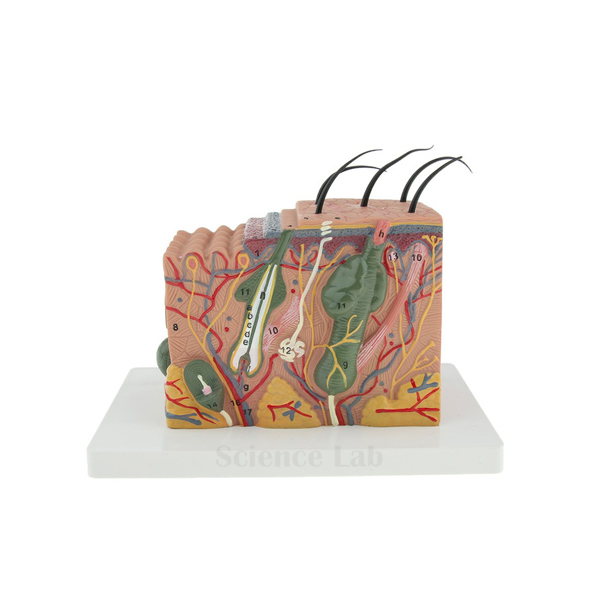
Human Skin Section Model
Human Skin Section Model (Product Code: SLE/A/37) enlarges a block of scalp skin about 70× so that hairs, glands and nerve endings, normally seen only under a microscope, can be pointed out on a solid model. The section is cast in one piece and mounted on a sturdy base, which makes it robust enough for repeated handling in class. Biology, dermatology, cosmetology and nursing teachers use it to explain skin layers and appendages, and schools sourcing from a biology lab equipment supplier in India can order it directly from its manufacturer, Jain Scientific Equipments Pvt Ltd (ScienceLab), Ambala.
Specifications
| Parameter | Detail |
|---|---|
| Type | Enlarged section through human scalp skin |
| Magnification | About 70× life size |
| Size | 21 × 20 × 11 cm |
| Construction | 1-piece section |
| Structures shown | Tissue components of the scalp, with detailed hairs, sebaceous glands, sweat glands and sensory receptors |
| Mounting | Mounted on a sturdy base |
Typical Use
The model is typically used when introducing the integumentary system. Starting at the surface, students can follow a hair shaft down to its root, locate the sebaceous gland that oils it, find the sweat glands and then identify the sensory receptors that respond to touch, pressure and temperature. Because it is a single piece, there is nothing to lose or reassemble, so it can be passed between groups during a practical.
Cosmetology and trichology courses find the scalp section particularly relevant because it shows hair in its natural setting. In a school or college biology lab it works well next to prepared microscope slides of skin: students view the slide first, then use the model to make sense of the three-dimensional structure behind what they saw under the lens.
Manufacturer
The model is made by Jain Scientific Equipments Private Limited, a company in Ambala, Haryana whose products carry the ScienceLab name and reach schools, colleges and training centres in India and international markets. Our company profile gives an overview of the business.
Related Human Models
These items extend a lesson on skin structure and the senses:
- Enlarged Skin Model — another magnified skin model for comparison or additional benches.
- Human Skin with Burn Pathologies Model — moves from healthy skin to the effects of burns.
- Prepared Microscope Slide Set – Skin and Excretion — real tissue sections to view alongside the model.
- Human Head Section Model — places the scalp in the context of the whole head.
Browse further organ and tissue models in our anatomy models category.
Frequently Asked Questions
Which part of the body does the section come from?
It is a section through the human scalp, so hair and associated glands are prominent.
How much is it enlarged?
About 70× life size, giving an overall size of 21 × 20 × 11 cm on its base.
Does the model come apart?
No. It is a 1-piece section, which makes it quick to use and easy to store.
Are sensory receptors shown?
Yes, sensory receptors are shown along with hairs, sebaceous glands and sweat glands.
How should it be cleaned?
Dust it with a soft brush or dry cloth; if needed, wipe gently with a slightly damp cloth and let it dry before storing.
Can you supply it in quantity for several labs?
Yes. Send your quantity and delivery locations through the contact page and we will quote for the full order.
Request a Quote
For a price on the Human Skin Section Model, reach us on the contact page or put it in the enquiry cart together with the slides and models you plan to buy.
Last updated: 24 September 2026
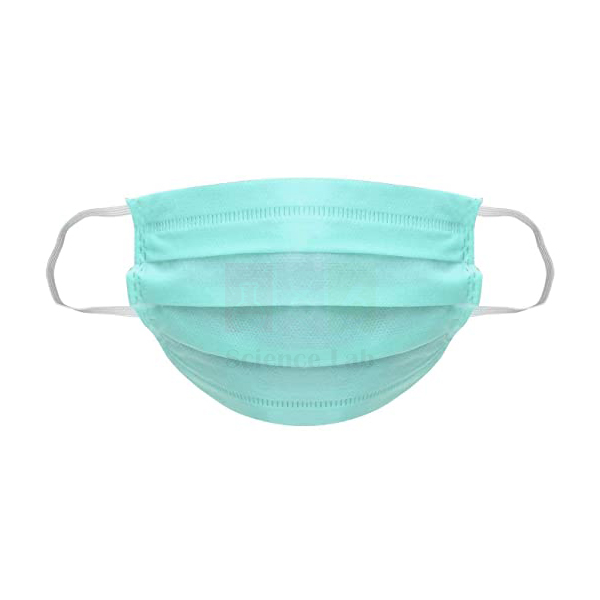
Face Mask
Face Mask (Product Code: SLE/MK/07) is a green, 3-ply non-woven face mask with ear loops, used for day-to-day nose and mouth protection by students, lab assistants and health staff. Its green colour lets institutions separate groups, rooms or shifts from those issued blue masks, and each of its three plies is specified at 25G with a listed bacterial filtration efficiency of 99%. It is supplied by Jain Scientific Equipments Pvt Ltd (ScienceLab), Ambala, India, a school lab equipment supplier in India, in neutral boxes of 50.
Specifications
| Parameter | Detail |
|---|---|
| Colour | Green |
| Material | Non-woven |
| Construction | 3-ply |
| Layer specification | 25G + 25G + 25G |
| Bacterial filtration efficiency | 99% (shown as “BEF 99%” in the source listing) |
| Fastening | Ear loops |
| Box quantity | 50 pieces |
| Packing | Neutral box |
| Product code | SLE/MK/07 |
| Supplied by | Jain Scientific Equipments Pvt Ltd (ScienceLab), Ambala, India |
What Is the Green Face Mask Used For?
Schools and colleges use a mask like this during practical classes where powders, dried plant material or chalk dust are handled, and health rooms keep it for visitors and staff. Because it matches the blue non-woven mask in construction and pack size, a buyer can run two colours side by side: green for one lab block, class group or visiting team, blue for another, making it easy to see who has been issued which stock.
Hand the masks out from the box without touching the inner face, show students how to press the upper edge over the nose and pull the lower edge down to cover the chin, and collect used masks in a lined bin at the end of the session. A spare box in each lab avoids students sharing or reusing masks between periods.
What to Specify When Ordering
- Number of boxes of 50 green masks
- Whether you also need the blue version for a two-colour system
- Whether neutral (plain) box packing suits your store or resale needs
- Delivery location and schedule for term or shift start
Supplier
The Face Mask is supplied by Jain Scientific Equipments Private Limited, known by its trading name ScienceLab, from Ambala in Haryana. It is a sourced consumable that schools, colleges, clinics and resellers can add to their apparatus orders, so protective items and lab equipment arrive under one quotation for India and international markets. Company background is on the profile page.
Related Gloves & Face Masks
Items often bought with the green Face Mask:
- Non Woven Face Mask — the blue counterpart with the same layers and box size.
- Medical Mask — 3-ply single-use mask with a water-proof, chemical-resistant surface.
- Examination Gloves — disposable gloves for students handling specimens.
- Mask Surgical Tie Strap Disposable — tie-on option for staff who prefer straps.
Explore the Gloves & Face Masks category for more.
Frequently Asked Questions
How is the Face Mask different from the Non Woven Face Mask?
The Face Mask (SLE/MK/07) is green, while the Non Woven Face Mask (SLE/MK/02) is blue. Both are listed as 3-ply non-woven ear-loop masks with 25G + 25G + 25G layers, 99% bacterial filtration efficiency and 50 pieces per box.
How is the Face Mask packed?
The Face Mask is packed 50 pieces to a neutral (plain) box. Plain boxes are practical for institutional stores and for dealers. Order by the box, remembering that each mask is worn once and then discarded.
What is the filtration efficiency of the green Face Mask?
The Face Mask is listed with a bacterial filtration efficiency of 99%, a measure of how well the non-woven material holds back a bacterial aerosol in a laboratory test. Wearing it snugly over the nose and chin matters for real-world protection.
Is the Face Mask suitable for school laboratories?
Yes, the Face Mask suits school and college laboratories for routine tasks such as handling powders, dried specimens or dusty materials. It is a light 3-ply mask for everyday dust and droplets, not a respirator for toxic fumes.
Who supplies the Face Mask?
The Face Mask is supplied by Jain Scientific Equipments Pvt Ltd (ScienceLab), Ambala, Haryana, India. It is sourced for schools, colleges, clinics and dealers and can be combined with gloves and lab apparatus in one order.
Can I order green and blue masks together?
Yes. The green Face Mask and the blue Non Woven Face Mask can be quoted together, so an institution can set up a two-colour system. Tell us the number of boxes of each colour and the delivery address.
Request a Quote
Request pricing on the contact page, or add the Face Mask to the enquiry cart together with the blue version or gloves.
Last updated: 24 September 2026
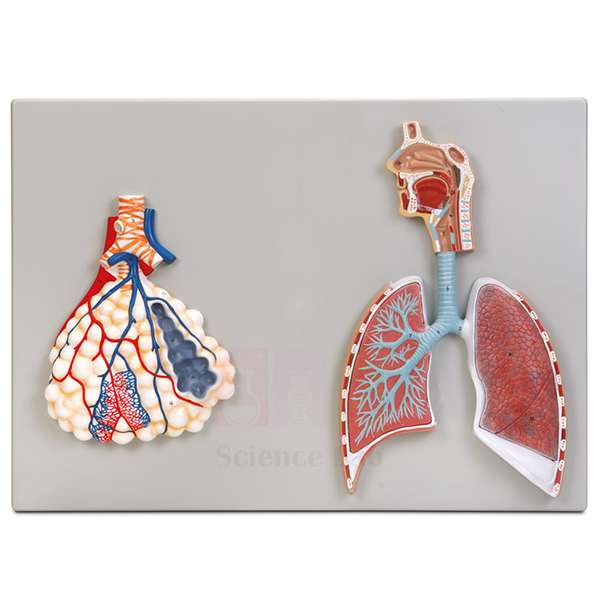
Human Respiratory System Model, 2-parts
Human Respiratory System Model, 2-parts (Product Code: SLE/A/38) follows the path of inhaled air from the nasopharynx down to the terminal bronchioles of the right lung, and adds a highly magnified view of the pulmonary alveoli where gas exchange happens. The left lung is shown in surface view with its superior and inferior lobes, and every structure is numbered against an accompanying key. It is a clear, labelled option for biology lab equipment in schools in India, nursing colleges and physiology departments, and it is manufactured by Jain Scientific Equipments Pvt Ltd (ScienceLab), Ambala.
Specifications
| Parameter | Detail |
|---|---|
| Type | Two-part model of the human respiratory system |
| Size | 53 × 38 cm |
| Airway shown | From the nasopharynx to the terminal bronchioles of the right lung |
| Left lung | Surface view showing superior and inferior lobes |
| Alveoli detail | Highly magnified pulmonary alveoli showing their association with terminal bronchioles and the capillary bed |
| Labelling | Structures numbered and referenced on the accompanying key |
Typical Use
Teachers generally walk the class along the airway in sequence: nasopharynx, larynx and trachea, then the branching bronchi of the right lung down to the terminal bronchioles. The magnified alveoli detail then answers the natural next question of how oxygen reaches the blood, because it shows the air sacs wrapped in their capillary bed. Contrasting the dissected right side with the surface view of the left lung helps students see both the outer lobes and the inner branching on one model.
The numbered key makes the model convenient for self-study and assessment. Give students the key with the names covered and ask them to identify each number, or use the model as a revision station where learners check their labelled diagrams against it. It also supports health education lessons on breathing, smoking and lung care at school level.
Manufacturer
Jain Scientific Equipments Private Limited manufactures this respiratory model under its ScienceLab brand in Ambala, Haryana, and ships teaching equipment to customers in India and international markets. For a short history of the company and its product range, visit our company profile.
Related Human Models
Build a complete breathing and gas-exchange unit with these related models:
- Human Lung Model in Bell Jar — demonstrates the mechanics of breathing to complement the anatomy.
- Human Larynx, Trachea, and Bronchi Model — a three-dimensional view of the upper part of the same airway.
- Pathology of the Human Lung Model — shows how infections change lung tissue.
- Lung Demonstration Model — another hands-on option for lung function lessons.
- Anatomical Human Nasal Cavity Model — details the entry point of the airway.
Our complete list of organ-system models is in the anatomy models category.
Frequently Asked Questions
What does the two-part model include?
It shows the airway from the nasopharynx to the terminal bronchioles of the right lung, a surface view of the left lung and a magnified view of the alveoli, with a numbered key.
How large is it?
The model measures 53 × 38 cm.
Are the structures labelled?
They are numbered and referenced on the accompanying key rather than printed with names, which suits testing as well as teaching.
Does it show gas exchange?
It shows the anatomy of gas exchange: magnified alveoli with the terminal bronchioles and capillary bed around them.
Which classes is it suitable for?
It suits secondary biology, nursing, paramedical and first-year physiology teaching.
What details should we send for a tender or institutional order?
Send the product code SLE/A/38, quantity, delivery address and any required documents through the contact page.
Request a Quote
Request pricing for the Human Respiratory System Model, 2-parts through our contact page, or add it to the enquiry cart if you are assembling a full respiratory teaching set.
Last updated: 24 September 2026
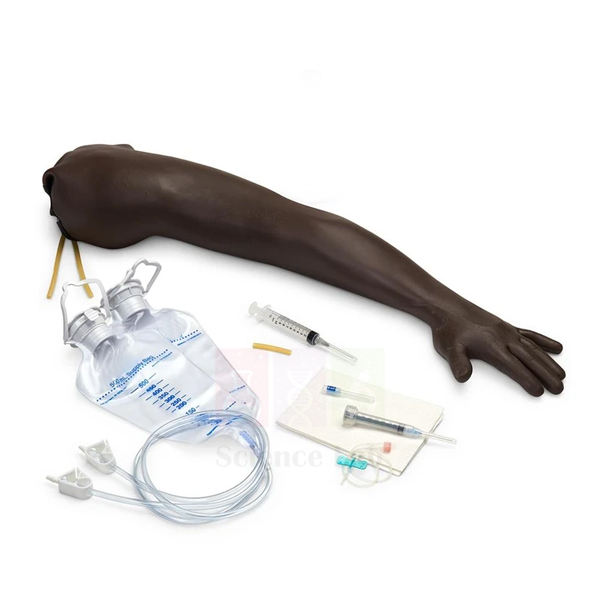
Adult Venipuncture and Injection Training Arm, Dark
Adult Venipuncture and Injection Training Arm, Dark (Product Code: SLE/A/39) is a skills-lab arm for practising intravenous access and intramuscular injection before learners work with patients. It simulates starting simple IVs and placing over-the-needle IV catheters, with veins along the forearm and on the back of the hand, and a foam pad that stands in for muscle tissue for injection practice. The dark simulated skin helps trainees practise vein location on darker skin tones. Nursing schools, paramedical institutes and hospital training units buy it from Jain Scientific Equipments Pvt Ltd (ScienceLab), Ambala, a vocational training lab equipment manufacturer in India.
Specifications
| Parameter | Detail |
|---|---|
| Type | Adult venipuncture and injection training arm |
| Dimensions | 35 × 12 × 6 in |
| Skin | Simulated dark skin; the vein rolls as it is palpated |
| Needle feedback | Characteristic “pop” can be felt as the needle penetrates the vein |
| Vein access sites | Along the forearm and at the back of the hand |
| IV procedures simulated | Starting simple IVs and over-the-needle IV catheters |
| Injection practice | Intramuscular injection using a foam pad that simulates muscle tissue |
Typical Use
In a nursing skills lab the arm is used for step-by-step practice of peripheral venous access: applying a tourniquet, palpating for a suitable vein, anchoring it against the rolling that happens in real patients, inserting the needle and recognising the “pop” that signals entry into the vein. Trainees then progress to over-the-needle catheters on the forearm and hand sites. The separate foam muscle pad allows intramuscular injection technique to be taught in the same session without switching trainers.
Instructors in paramedical and allied-health colleges often run timed stations with the arm for assessment, and it is a practical addition to lab equipment for college skills centres in India. Always follow your institution’s sharps-disposal procedure during practice, and rotate puncture sites between groups to spread wear across the simulated veins.
Manufacturer
The training arm is manufactured by Jain Scientific Equipments Private Limited, whose trading name is ScienceLab. From its base in Ambala, Haryana, the company provides training and laboratory equipment to nursing, medical and technical institutions in India and international markets. Read more on our company profile.
Related Human Models
Clinical-skills and anatomy items that are often ordered with an injection training arm:
- Advanced Adult CPR Training Manikin — adds resuscitation practice to the same nursing skills lab.
- Human Muscular Arm Model — helps trainees learn the arm muscles before choosing injection sites.
- Human Circulatory System Model — explains the venous system that venipuncture relies on.
- Human Arm and Hand model — the skeletal landmarks of the arm and hand for surface-anatomy teaching.
See all trainers and models in our anatomy models category.
Frequently Asked Questions
Which procedures can be practised on this arm?
Starting simple IVs, placing over-the-needle IV catheters and giving intramuscular injections into the foam muscle pad.
Where are the veins located?
Veins are accessible along the forearm and at the back of the hand.
Does it give realistic feedback?
Yes. The vein rolls as it is palpated, and a characteristic “pop” can be felt when the needle enters the vein.
What are the dimensions?
The arm measures 35 × 12 × 6 inches.
Are replacement skins, veins or simulated blood included?
The supplied contents and the availability of spare parts should be confirmed before ordering; please ask through our contact page.
Is there a lighter skin-tone version?
This listing is the dark-skin arm. Contact us if you need to discuss other skin tones for a mixed training set.
What warranty is offered?
Warranty terms are stated in each quotation; ask us for the current terms when you enquire.
Request a Quote
To equip a skills lab with the Adult Venipuncture and Injection Training Arm, Dark, send your requirement via the contact page or add it to the enquiry cart with any manikins and models you also need.
Last updated: 24 September 2026
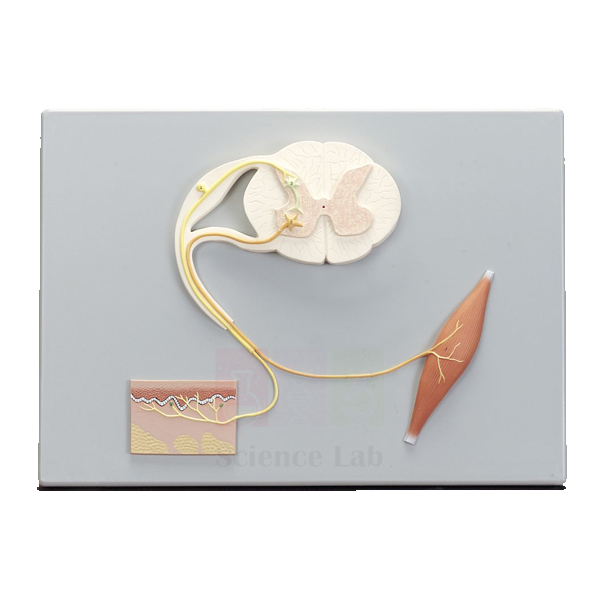
Human Reflex Pathway Model
Human Reflex Pathway Model (Product Code: SLE/A/40) is a plaque-mounted model that lays out a typical reflex arc from start to finish: the sensory side that detects a stimulus, the neural connections in the spinal cord and the motor side that produces the response. Each structure is numbered and matched to an accompanying key, so the pathway can be read like a labelled diagram in relief. Physiology, psychology, nursing and senior biology teachers use it among their biology teaching aids in India, and it is manufactured by Jain Scientific Equipments Pvt Ltd (ScienceLab), Ambala.
Specifications
| Parameter | Detail |
|---|---|
| Type | Plaque-mounted model of a human reflex pathway |
| Size | 53 × 38 cm |
| Components shown | Sensory, neural and motor components of a typical reflex arc |
| Labelling | Pertinent structures numbered and referenced on the accompanying key |
| Mounting | Plaque mount |
Typical Use
Reflexes are one of the first topics where students must connect structure with function in the nervous system. With this model a teacher can trace the route of a signal in order: the receptor picks up the stimulus, the sensory neuron carries it to the spinal cord, connections there pass it on, and the motor neuron carries the command to the effector muscle. Demonstrating a knee-jerk or withdrawal reflex on a volunteer immediately afterwards makes the pathway memorable.
Because the plaque is flat, it can be hung on a wall or propped on an easel as a reference throughout a neurology unit. The numbered key also makes it convenient for practical tests: cover the key and ask students to name each numbered structure and state whether it belongs to the sensory, neural or motor part of the arc.
Manufacturer
Made in Ambala, Haryana by Jain Scientific Equipments Private Limited (trading as ScienceLab), this model is one of many teaching items the company provides to schools, universities and training institutes in India and international markets. Our company profile has further details.
Related Human Models
These models help students see where each part of the reflex arc sits in the body:
- Human Spinal Cord Section Model — enlarges the grey and white matter where reflex connections are made.
- Human Vertebral And Partial Spinal Cord Model — shows the cord inside the vertebral column with its nerve roots.
- Human Nervous System Model — places the reflex arc within the whole nervous system.
- Human Skin Section Model — shows the sensory receptors where many reflexes begin.
Find more nervous-system and organ models in our anatomy models category.
Frequently Asked Questions
What does the model show?
It shows the sensory, neural and motor components of a typical reflex arc on a single plaque.
How are structures identified?
Pertinent structures are numbered and referenced on the accompanying key.
What size is the plaque?
It measures 53 × 38 cm, large enough for front-of-class viewing.
Can it be wall-mounted?
It is a plaque mount, so it is designed to be displayed flat. Please confirm the fixing arrangement with us if you plan to hang it permanently.
Which courses use it?
It suits secondary and senior secondary biology, nursing, physiotherapy, psychology and first-year medical physiology.
Can you quote for several departments at once?
Yes. List the items and quantities for each department through our contact page and we will send one consolidated quotation.
Request a Quote
Price and delivery details for the Human Reflex Pathway Model are available on request through our contact page; you can also save it to the enquiry cart while you choose other nervous-system models.
Last updated: 24 September 2026
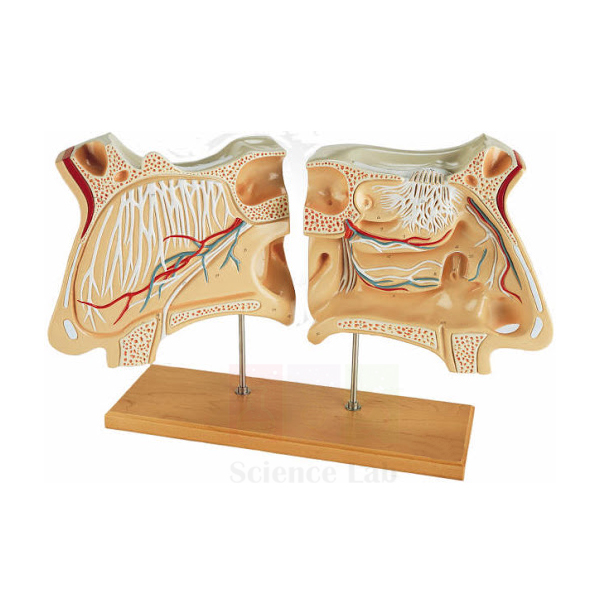
Human Nose Model
Human Nose Model (Product Code: SLE/A/41) enlarges the external nose and nasal cavity about 3× life size and separates into 5 parts, so that the intricate bones and the mucous-membrane lining of the cavity can be opened up and examined. Individual cartilages and bones are coloured, making it easy to tell the flexible framework of the nose apart from its bony support. ENT, anatomy, nursing and senior biology classes use it for the upper respiratory tract and the sense of smell. It is made by Jain Scientific Equipments Pvt Ltd (ScienceLab), Ambala, among the human anatomical models manufacturers in India.
Specifications
| Parameter | Detail |
|---|---|
| Type | Dissectible model of the human nose and nasal cavity |
| Scale | About 3× life size |
| Size | 38 × 72 × 8 cm |
| Number of parts | Dissectible into 5 parts |
| Colour coding | Individual cartilage and bone are coloured |
| Structures shown | Bones of the nose and the nasal cavity covered by mucous membrane |
| Mounting | Mounted on base |
Typical Use
The nasal cavity is a complicated space of thin bones and folded lining that is almost impossible to appreciate from a flat drawing. Opening this model part by part lets students see how the external cartilages give the nose its shape, where bone takes over, and how the mucous membrane covers the cavity walls to warm and moisten incoming air. The colour coding helps learners separate cartilage from bone at a glance.
ENT and nursing tutors use the model when explaining nasal packing, nosebleeds and common obstructions, while school teachers bring it into lessons on breathing and smell. Keep the 5 parts together on the base between classes, and check that each piece is seated correctly when reassembling so the model presents the cavity in its true orientation.
Manufacturer
ScienceLab is the trading name of Jain Scientific Equipments Private Limited (CIN U29309HR2020PTC087597), an Ambala, Haryana company that produces anatomical and science teaching equipment at its licensed factory at 449, HSIIDC Industrial Area, Saha, Ambala (Factory Licence AMB-ONLINE-CHD-J-414). It serves institutions in India and international markets; see our company profile for more.
Related Human Models
Other nose and airway models that suit the same ENT and respiratory lessons:
- Human Nose Model on Base — an alternative nose model for additional benches.
- Human Nose Model on Stand — a stand-mounted version for display and comparison.
- Anatomical Human Nasal Cavity Model — concentrates on the interior of the nasal passages.
- Human Tongue Model — pairs smell with taste in a special-senses lesson.
More head, sense-organ and respiratory models are in the anatomy models category.
Frequently Asked Questions
How many parts does the nose model have?
It is dissectible into 5 parts that reveal the bones and the lined nasal cavity.
What is the scale and overall size?
About 3× life size, measuring 38 × 72 × 8 cm on its base.
Are cartilage and bone distinguished?
Yes. Individual cartilage and bone are coloured so they can be told apart easily.
Is it suitable for ENT teaching?
Yes. It is used in ENT, nursing and anatomy classes, as well as in school biology for breathing and smell.
How should it be cleaned?
Wipe the parts gently with a soft, dry or lightly damp cloth, and avoid alcohol or solvent cleaners on the painted surfaces.
Can you supply a biology model kit bulk order that includes this model?
Yes. Send us your full list and quantities through the contact page and we will quote the items together.
Request a Quote
For a quotation on the Human Nose Model, contact us through the contact page or add it to the enquiry cart and submit your list when ready.
Last updated: 24 September 2026
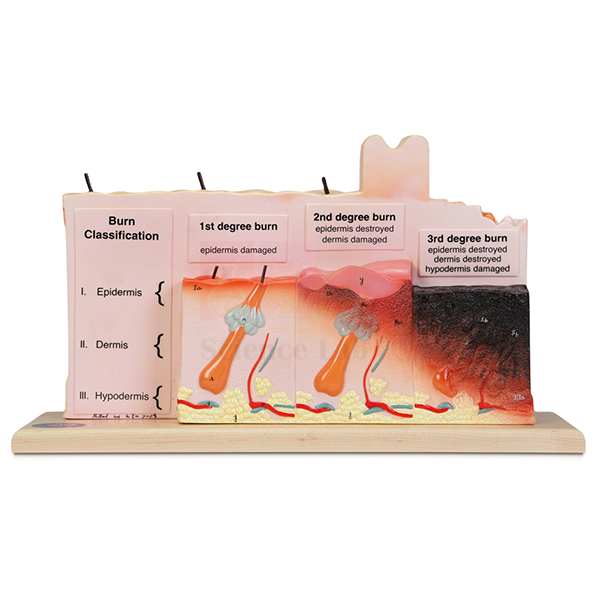
Human Skin with Burn Pathologies Model
Human Skin with Burn Pathologies Model (Product Code: SLE/A/42) is an anatomical teaching model of human skin designed to illustrate how burns damage the skin. It gives nursing, paramedical, first-aid and dermatology instructors a physical reference for discussing burn injuries, which are difficult to teach from photographs alone. It is manufactured by Jain Scientific Equipments Pvt Ltd (ScienceLab), Ambala, for colleges and schools looking for school biology lab equipment in India and for clinical-skills teaching. Because the detailed specification for this listing is being reviewed, please confirm scale, size, mounting and the pathologies represented with us before ordering.
Key Details
| Parameter | Detail |
|---|---|
| Type | Anatomical teaching model of human skin |
| Purpose | Illustrating burn pathologies of the skin |
| Supplied as | Single teaching model; confirm current specification on enquiry |
| Suitable for | Nursing, paramedical, first-aid, dermatology and senior biology teaching |
Typical Use
Burn care is usually taught by first reviewing healthy skin and then showing how heat, chemicals or electricity destroy tissue to different depths. A burn pathology model supports that second step: instructors can point to the damaged areas while explaining how depth of injury relates to pain, blistering, healing time and the need for specialist care. Placing it next to a normal skin section model makes the contrast between healthy and injured tissue clear.
In first-aid and emergency-care courses the model helps learners understand why prompt cooling, covering and referral matter, while nursing students use it to link wound assessment with the underlying skin layers. Ask us which burn stages are shown so you can align the model with your syllabus before purchase.
Manufacturer
Jain Scientific Equipments Private Limited, known to customers as ScienceLab, is an Ambala, Haryana company making models and laboratory equipment for education and training in India and international markets. Our team can answer detailed questions about this model; company background is on our company profile.
Related Human Models
Items that help students compare healthy and injured skin:
- Human Skin Section Model — a healthy scalp skin section to study before discussing burns.
- Enlarged Skin Model — another reference for normal skin layers.
- Prepared Microscope Slide Set – Skin and Excretion — microscope slides of skin tissue for practical work.
Explore all skin, organ and clinical teaching models in our anatomy models category.
Frequently Asked Questions
What does this model teach?
It is a skin model focused on burn pathologies, used to explain how burns affect the skin. Please ask us for the exact pathologies represented.
What are its size and scale?
The specification for this listing is being confirmed; contact us through the contact page and we will send current dimensions before you order.
Who is it intended for?
Nursing and paramedical colleges, first-aid and emergency-care trainers, dermatology teaching and senior biology classes.
Can it be used without a normal skin model?
Yes, but many teachers find the lesson clearer when a healthy skin model is used alongside it for comparison.
How should the model be cared for?
Keep it out of direct sunlight, dust it regularly and clean only with a soft, slightly damp cloth.
What should an institutional enquiry include?
Quote the product code SLE/A/42, the quantity and the delivery location, plus any documents your purchase process requires.
Request a Quote
To check the current specification and price of the Human Skin with Burn Pathologies Model, message us through the contact page or add it to the enquiry cart with related skin models.
Last updated: 24 September 2026