- Physics Lab Equipment
- Chemistry Lab Equipment
- Biology Lab Equipment
- Anatomical Lab Equipment
- Learning
- Educational Lab Equipment
- Magnets
- Agriculture
- Astronomy
- Earth Science
- Geography Lab Equipment
- Safety Lab Coat
- Laboratory
- Meteorological
- Electricity & Magnetism
- Heat
- School Lab Equipment
- Lab Glassware
- Science Lab Equipment
- Tvet Lab Equipment
- Robotics Kits Supplier and Manufacturer for Schools India
- Math Lab Equipment Manufacturers and Exporters in Ambala
- STEM Kits Manufacturers and Supplier India
- Engineering Lab Equipment
- Hospital Lab Equipment
- Water, Sanitation & Hygiene Supplies
- Cold Chain, Solar & Communication Equipment
- Nutrition
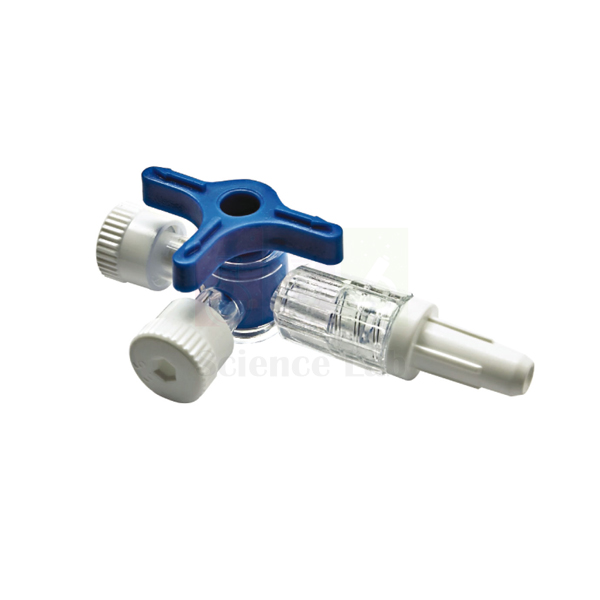
Three-Way Tap for Syringe
Three-Way Tap for Syringe (Product Code: SLE/P/14) is a Luer-fitting valve used to connect syringes to other syringes, tubing and vessels in gas collection apparatus and liquid-transfer set-ups in school and college laboratories. It has two female and one male Luer connectors, and at any position of the valve lever two of those connectors are in communication. It is supplied by Jain Scientific Equipments Pvt Ltd (ScienceLab), Ambala, India.
Key Details
| Parameter | Detail |
|---|---|
| Type | Three-way tap (valve) for syringes |
| Connectors | Two female and one male Luer connectors |
| Valve action | Two connectors in communication at any position of the lever |
| Control | Valve lever |
| Product code | SLE/P/14 |
| Supplied by | Jain Scientific Equipments Pvt Ltd (ScienceLab), Ambala, India |
What Is a Three-Way Syringe Tap Used For?
In chemistry and physics practicals, a three-way tap lets one syringe be connected to two different destinations without pulling fittings apart. Typical uses include drawing a gas sample from a reaction flask into a syringe and then turning the lever to push it into a second syringe or tube, measuring the volume of gas given off in a reaction, and moving small volumes of liquid between two syringes in a closed system.
Push the Luer fittings together with a slight twist so they seal, and check which two ports are open before moving any liquid or gas. Turn the lever slowly during an experiment to avoid sudden pressure changes. Rinse the tap with water after use and let it dry before storage.
Supplier
ScienceLab is the trading name of Jain Scientific Equipments Private Limited, which supplies this three-way tap from Ambala, Haryana, India to schools, colleges, laboratories, dealers and importers. For vendor registration, the supplying company is Jain Scientific Equipments Private Limited (CIN U29309HR2020PTC087597, GSTIN 06AAECJ8618A1ZT). Further details are on the company profile page.
Related Laboratory Equipment
Gas-collection and liquid-transfer experiments often combine the tap with these items:
- Stopcock — a separate valve for controlling flow in glass apparatus.
- Rubber Tubing — links flasks and other apparatus in gas and liquid set-ups.
- Gas Washing Bottle — for bubbling a collected gas through a liquid.
- Pneumatic Trough — the classic water-displacement method of collecting gas.
Browse the Scientific Lab Plasticware category for more bench fittings and containers.
Frequently Asked Questions
What connectors does the Three-Way Tap for Syringe have?
The Three-Way Tap for Syringe (SLE/P/14) has two female Luer connectors and one male Luer connector. This arrangement lets Luer-tipped syringes and other Luer-fitted accessories be joined directly to the tap in a laboratory set-up.
How many ports are open at once on the three-way tap?
At any position of the valve lever, two of the three connectors on the Three-Way Tap for Syringe are in communication. Turning the lever changes which pair is connected, so flow can be redirected without disconnecting anything.
Which experiments use a three-way syringe tap?
The Three-Way Tap for Syringe is used in gas collection and measurement experiments, gas sampling from reaction vessels and closed transfers of liquid between two syringes. It suits chemistry and physics practicals where a route must be switched without opening the system.
Are syringes included with the Three-Way Tap for Syringe?
The listing for the Three-Way Tap for Syringe (SLE/P/14) covers the tap itself, and syringes are not mentioned as included. If you need syringes or tubing supplied with it, list them in your enquiry through the contact page.
Who supplies the Three-Way Tap for Syringe?
Jain Scientific Equipments Pvt Ltd, trading as ScienceLab, supplies the Three-Way Tap for Syringe from Ambala, Haryana, India to schools, colleges, laboratories, dealers and importers in India and international markets.
What information does a quotation for the three-way tap need?
A quotation for the Three-Way Tap for Syringe (SLE/P/14) needs the quantity, the delivery location and any matching items such as tubing or syringes. Institutions that need vendor registration details can request them along with the quotation.
Request a Quote
Send your quantity for the Three-Way Tap for Syringe through the contact page or add it to the enquiry cart; ScienceLab will reply with a quotation and can include vendor registration details for institutional purchase files.
Last updated: 24 September 2026
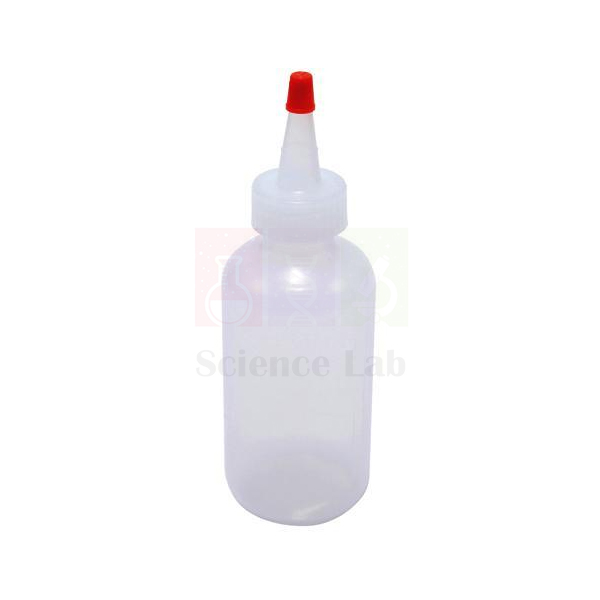
Dropping Bottle
Dropping Bottle (Product Code: SLE/P/15) is a 125 ml plain round LDPE bottle used to store and dispense bench reagents and indicator solutions in school and college chemistry laboratories. Made in natural LDPE and supplied with a cap, it is a lightweight container for the reagent sets used in salt analysis at school level. It is made by Jain Scientific Equipments Pvt Ltd (ScienceLab), an OEM manufacturer, at its own factory in Ambala, India.
Specifications
| Parameter | Detail |
|---|---|
| Bottle style | Plain round |
| Capacity | 125 ml |
| Material | LDPE, natural colour |
| Closure | Supplied with cap |
| Product code | SLE/P/15 |
| Manufacturer | Jain Scientific Equipments Pvt Ltd (ScienceLab) — OEM |
| Country of origin | India (made in Ambala, Haryana) |
What Is the 125 ml Dropping Bottle Used For?
Chemistry teachers fill these bottles with bench reagents such as dilute acids, alkalis, indicators and test solutions, so that every practical station has its own labelled supply. The 125 ml size holds enough for reagents that are used again and again through a lesson, which cuts down trips to the stock cupboard. They are a basic item on the checklist for a new school lab setup in India.
Label each bottle with the reagent name and concentration, and keep caps on between uses to prevent evaporation and cross-contamination. Natural LDPE lets light through, so keep light-sensitive solutions such as silver nitrate in amber glass instead. Rinse the bottle with distilled water before refilling it with a different reagent.
OEM Manufacturer
The Dropping Bottle is manufactured by Jain Scientific Equipments Private Limited, which trades as ScienceLab and acts as OEM (original equipment manufacturer) at its own licensed factory at Saha, Ambala, Haryana, India. Schools, colleges, dealers and importers order these bottles factory-direct, and quotations are issued by the manufacturer rather than a reseller. Ask us about repeat orders or matching caps. See the ScienceLab company profile for more about the business.
Related Scientific Lab Plasticware
Reagent stations built around the dropping bottle often include these items:
- Dropper Bottle Tray — organises a set of reagent bottles at each practical station.
- Azlon Dispensing Bottle — a smaller dropper bottle with a spouted closure for indicators.
- Amber Dropping Bottle — a glass option for light-sensitive reagents.
- Polypropylene Tiles — a spotting tile for drop tests with the dispensed reagents.
The full Scientific Lab Plasticware category lists more bottles and containers.
Frequently Asked Questions
What is the capacity of the Dropping Bottle SLE/P/15?
The Dropping Bottle SLE/P/15 holds 125 ml. It is a plain round bottle made of natural LDPE and is supplied with a cap, which makes it suitable for bench reagents that are used repeatedly during a practical session.
Does the Dropping Bottle come with a cap?
Yes, the ScienceLab Dropping Bottle (SLE/P/15) is supplied with a cap. The listing describes a plain round bottle with cap; if you need a particular dropper tip or closure style, confirm it through the contact page before ordering.
Can light-sensitive reagents be stored in this dropping bottle?
The Dropping Bottle SLE/P/15 is made of natural LDPE, which is translucent and lets light through. For light-sensitive solutions such as silver nitrate, use an amber glass dropping bottle and keep the LDPE bottle for general bench reagents.
Why choose an LDPE dropping bottle over glass?
An LDPE dropping bottle such as SLE/P/15 is lightweight and much less likely to shatter if knocked off a bench, which makes it a safer choice for student practicals. Glass remains preferable for solvents or reagents that attack polyethylene.
Who manufactures the 125 ml Dropping Bottle?
Jain Scientific Equipments Pvt Ltd, trading as ScienceLab, manufactures the 125 ml Dropping Bottle (SLE/P/15) as the OEM at its own licensed factory in Saha, Ambala, Haryana, India, and supplies it factory-direct to schools, colleges and dealers.
How do I order dropping bottles for a whole lab?
To order Dropping Bottles (SLE/P/15) for a full lab, count the practical stations and the reagents per station, then send the total quantity and delivery location through the enquiry cart or contact page. ScienceLab supplies India and international markets.
Request a Quote
Place the Dropping Bottle in the enquiry cart or share your requirement through the contact page. ScienceLab, as the manufacturer, will send a direct quotation for the quantity you need.
Last updated: 24 September 2026
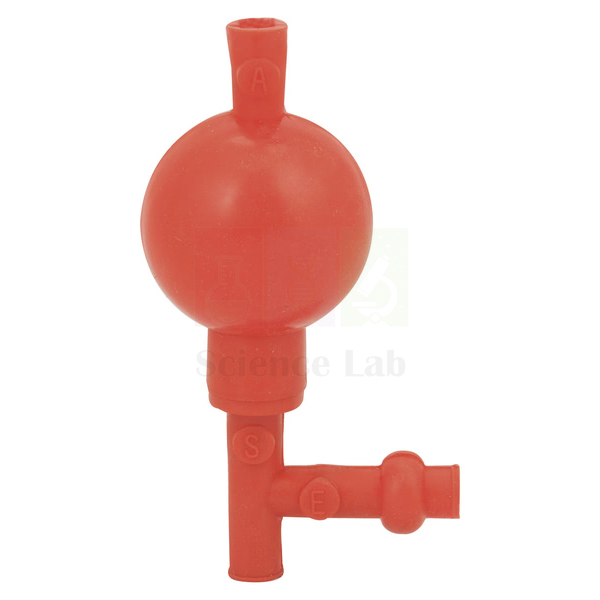
Bulb Type, Pipette Filler
Bulb Type, Pipette Filler (Product Code: SLE/P/16) is a squeeze-bulb pipetting aid used to draw up and release noxious solutions, microbial suspensions and other harmful or unpleasant liquids in microbiology, biology and chemistry laboratories. It consists of a bulb and three pinch valves that control the flow of liquid into and out of the pipette, with a listed capacity of 54 mm, 50 ml. It is supplied by Jain Scientific Equipments Pvt Ltd (ScienceLab), Ambala, India, alongside its microbiology lab equipment for India and international markets.
Specifications
| Parameter | Detail |
|---|---|
| Type | Bulb-type pipette filler |
| Construction | Bulb with three pinch valves |
| Valve function | Control influx and efflux of pipette contents |
| Intended liquids | Noxious solutions, microbial suspensions and other harmful or unpleasant solutions |
| Listed capacity | 54 mm, 50 ml (as given; confirm fit with your pipettes) |
| Product code | SLE/P/16 |
| Supplied by | Jain Scientific Equipments Pvt Ltd (ScienceLab), Ambala, India |
What Is a Bulb Pipette Filler Used For?
The bulb filler is chosen when the liquid in a pipette should never come near the user's mouth or face, for example bacterial cultures in a microbiology practical or corrosive and foul-smelling reagents in chemistry. On a typical three-valve filler, with the pipette seated in the lower end, one valve empties air from the squeezed bulb, a second draws liquid up to the mark and the third lets it run out into the receiving vessel.
Practise with water before handling cultures or hazardous reagents, and never let liquid rise into the bulb. After pipetting microbial suspensions, follow your laboratory's decontamination procedure for the pipette and any surfaces it touched. Inspect the bulb regularly for cracks or loss of suction.
What to Specify When Ordering
- Pipette sizes and top diameters in use, since this filler is listed as 54 mm, 50 ml.
- Quantity needed for each microbiology or chemistry bench.
- Whether thumb-wheel fillers should also be quoted for routine, non-hazardous pipetting.
Supplier
ScienceLab, the trading name of Jain Scientific Equipments Private Limited, supplies the bulb-type pipette filler from Ambala, Haryana, India. It is sourced for, and shipped to, schools, colleges, microbiology laboratories, dealers and importers, often together with pipettes, culture ware and other bench items. More about the company is on the ScienceLab profile page.
Related Scientific Lab Plasticware
Laboratories using a bulb filler commonly stock these related items:
- Pipette Filler — a red 25 ml thumb-wheel filler for routine pipetting.
- Pipette Filler – 10ml — a filler for smaller pipettes.
- Pipette Stand Rotary — holds pipettes upright to drain after cleaning.
- Inoculation Loops — another basic tool for handling microbial cultures.
See more in the Scientific Lab Plasticware category.
Frequently Asked Questions
What liquids is the Bulb Type, Pipette Filler meant for?
The Bulb Type, Pipette Filler (SLE/P/16) is meant for pipetting noxious solutions, microbial suspensions and other harmful or unpleasant liquids. It keeps the liquid away from the user's mouth and gives valve-controlled filling and emptying of the pipette.
How do the three valves on the bulb pipette filler work?
The Bulb Type, Pipette Filler has a bulb and three pinch valves that control the influx and efflux of pipette contents. Typically one valve releases air from the squeezed bulb, one draws liquid up and one lets it drain out.
What does the listed capacity of 54 mm, 50 ml mean?
The Bulb Type, Pipette Filler is listed as 54 mm, 50 ml. Because the listing does not say which dimension the 54 mm refers to, send your pipette sizes through the contact page and ScienceLab will confirm the fit before quoting.
Is the bulb pipette filler suitable for sterile work?
No sterility claim is made for the Bulb Type, Pipette Filler (SLE/P/16). Treat it as general bench equipment and follow your laboratory's own cleaning and decontamination procedures after handling microbial suspensions or harmful solutions.
Who supplies the Bulb Type, Pipette Filler?
Jain Scientific Equipments Pvt Ltd, trading as ScienceLab, supplies the Bulb Type, Pipette Filler (SLE/P/16) from Ambala, Haryana, India to schools, colleges, microbiology laboratories, dealers and importers in India and international markets.
What should a quote request for bulb pipette fillers include?
When requesting a quote for the Bulb Type, Pipette Filler (SLE/P/16), include the quantity, the pipette sizes you use and the delivery location. ScienceLab can quote thumb-wheel fillers and pipette stands on the same enquiry if needed.
Request a Quote
Add the Bulb Type, Pipette Filler to the enquiry cart or describe your pipetting needs on the contact page, and ScienceLab will send a quotation.
Last updated: 24 September 2026
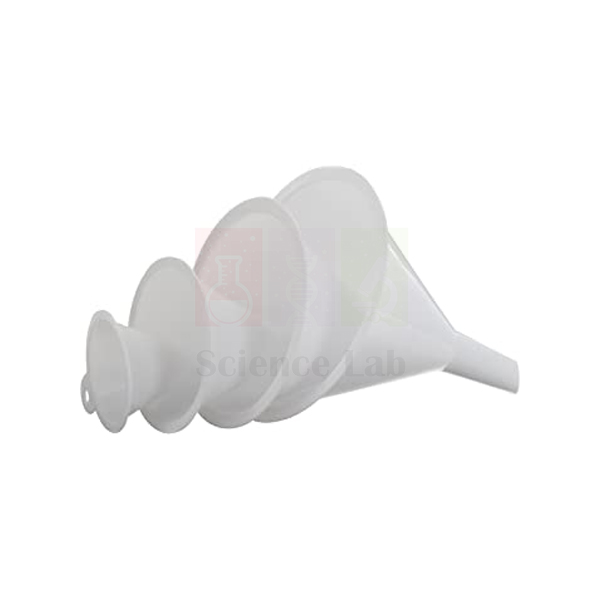
Funnels Set, Polythene
Funnels Set, Polythene (Product Code: SLE/P/17) is a set of three plastic funnels used to transfer liquids or sand between containers and to compare the flow rates of sand or water in primary and secondary school science. The funnels measure 75 mm, 95 mm and 120 mm in diameter and are made from flexible yet strong polythene. The set is made by Jain Scientific Equipments Pvt Ltd (ScienceLab), an OEM manufacturer of junior science lab equipment, at its own factory in Ambala, India.
Specifications
| Parameter | Detail |
|---|---|
| Contents | Set of 3 funnels |
| Diameters | 75 mm, 95 mm and 120 mm |
| Material | Polythene, flexible yet strong |
| Typical activities | Flow rates of sand or water; transfer of liquids or sand between containers |
| Product code | SLE/P/17 |
| Manufacturer | Jain Scientific Equipments Pvt Ltd (ScienceLab) — OEM |
| Country of origin | India (made in Ambala, Haryana) |
What Is a Polythene Funnel Set Used For?
With three mouth sizes in one set, pupils can investigate how funnel size changes how quickly sand or water flows through, timing each funnel and recording the results in a table. The same funnels double as everyday pouring aids for moving water, sand or dry granules from a jug into a narrow-necked bottle without spills. The set also fits neatly into a junior lab kit for primary school classrooms.
Because polythene flexes rather than cracks, the set suits younger students and sand-tray activities. Keep separate funnels for sand and for liquids where possible, rinse and dry them after use, and keep them away from hot liquids and flames. For filtration with filter paper, a dedicated filter funnel gives a better fit.
What to Specify When Ordering
- Number of sets (each set contains three funnels of 75 mm, 95 mm and 120 mm).
- Whether the funnels are for flow-rate investigations, general pouring or both, so companion items can be quoted.
- Any filter funnels, beakers or measuring cylinders needed for the same activity.
OEM Manufacturer
ScienceLab is the brand under which Jain Scientific Equipments Private Limited manufactures this polythene funnel set as the OEM (original equipment manufacturer). The funnels are produced at the company's own licensed factory at Saha, Ambala, Haryana, India, and supplied factory-direct to schools, education departments, dealers and importers. Buying from the manufacturer means quotations, repeat orders and replacement funnels come from one source, so ask us for details. Visit the ScienceLab profile to learn more.
Related Scientific Lab Plasticware
Flow-rate and pouring activities usually call for a few of these items too:
- Polythene Filter Funnels — a filter funnel for separation work with soils and solutions.
- Beakers — collect the water or sand that passes through each funnel.
- Measuring Cylinder Set of 5 — measures the volumes used in flow-rate tests.
- Funnels — another funnel listing in the laboratory equipment range.
More classroom plasticware is listed under Scientific Lab Plasticware.
Frequently Asked Questions
How many funnels are in the Funnels Set, Polythene?
The Funnels Set, Polythene (SLE/P/17) contains three funnels with diameters of 75 mm, 95 mm and 120 mm. Having three sizes lets students compare flow rates and choose the right funnel for each container they fill.
What are the polythene funnels made of?
The funnels in the Funnels Set, Polythene are made from flexible yet strong polythene. The material bends rather than cracking if dropped, which suits younger learners, but it should be kept away from flames and very hot liquids.
Can the Funnels Set, Polythene be used for sand flow experiments?
Yes. The Funnels Set, Polythene is intended for determining flow rates of sand or water as well as for simple transfer of liquids or sand from one container to another, making it a practical choice for primary and middle-school science activities.
Is the polythene funnel set suitable for filtration?
The Funnels Set, Polythene is described for flow-rate work and simple transfers rather than filtration. For filtering with filter paper, ScienceLab lists separate polythene filter funnels intended for separation work with soils and solutions.
Who manufactures the Funnels Set, Polythene?
Jain Scientific Equipments Pvt Ltd, trading as ScienceLab, manufactures the Funnels Set, Polythene (SLE/P/17) as the OEM at its own licensed factory in Saha, Ambala, Haryana, India. Schools and dealers receive quotations directly from the manufacturer.
Can schools order the funnel set for several classrooms?
Yes. ScienceLab supplies the Funnels Set, Polythene in classroom and bulk quantities to schools, dealers and importers in India and international markets. State the number of sets and the delivery location in your enquiry through the contact page to receive a quotation.
Request a Quote
To order the Funnels Set, Polythene, add it to the enquiry cart or contact us through the contact page with the number of sets required. The quotation comes straight from the manufacturer in Ambala.
Last updated: 24 September 2026
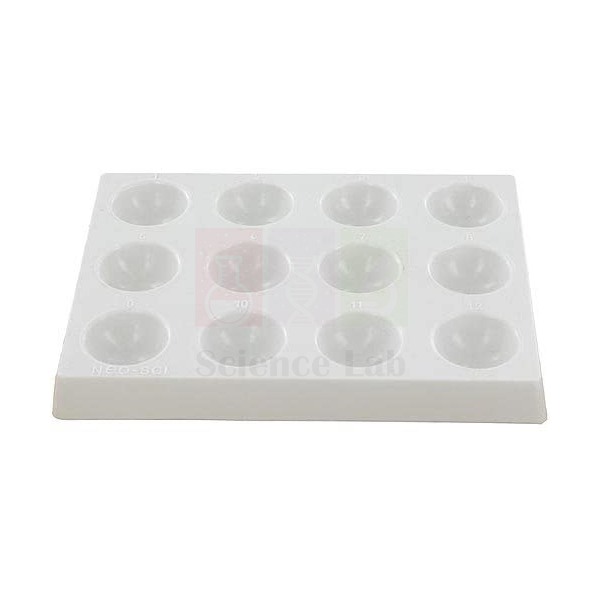
Polypropylene Tiles
Polypropylene Tiles (Product Code: SLE/P/18) are white spotting tiles used to carry out drop-scale colour tests and small reactions side by side in school and college chemistry and biology laboratories. Each tile measures 118 × 93 × 11 mm and has 12 cavities of 22 mm diameter, so a dozen samples or reagent combinations can be compared at once. They are made by Jain Scientific Equipments Pvt Ltd (ScienceLab), an OEM lab equipment manufacturer, at its own factory in Ambala, India.
Specifications
| Parameter | Detail |
|---|---|
| Type | Spotting tile with cavities |
| Material | Polypropylene |
| Colour | White |
| Number of cavities | 12 |
| Cavity diameter | 22 mm |
| Overall size | 118 × 93 × 11 mm |
| Product code | SLE/P/18 |
| Manufacturer | Jain Scientific Equipments Pvt Ltd (ScienceLab) — OEM |
| Country of origin | India (made in Ambala, Haryana) |
What Are Polypropylene Spotting Tiles Used For?
A white spotting tile makes small colour changes easy to see. Students place a few drops of a test solution in each cavity and add an indicator or reagent, for example to test for starch with iodine, to compare the pH of household liquids with universal indicator, or to preview the end-point colour of a titration before the full run. Twelve cavities let a whole series of samples or concentrations be laid out in order, so results can be read and recorded at a glance.
Polypropylene tiles are lighter than ceramic spotting tiles and less likely to chip when handled by students. Rinse the cavities with water straight after use so coloured residues do not stain, and dry the tile before storing it. They make a compact addition to any chemistry teaching kit for schools in India.
OEM Manufacturer
Jain Scientific Equipments Private Limited, trading as ScienceLab, manufactures these polypropylene tiles as the OEM (original equipment manufacturer) at its own licensed factory at Saha, Ambala, Haryana, India. Because the tiles come straight from the maker, schools, colleges, dealers and importers can order classroom quantities and repeat batches without a middleman. Details on the company are on the ScienceLab profile.
Related Scientific Lab Plasticware
Drop tests on a spotting tile usually need these companion items:
- Dropping Bottle — holds the reagents that are dropped into each cavity.
- Azlon Dispensing Bottle — dispenses indicators a drop at a time.
- Universal pH Indicator — a common reagent for colour tests on the tile.
- Stirring Rod, Polypropylene — mixes the drops inside each cavity.
Browse the whole Scientific Lab Plasticware category for more bench items.
Frequently Asked Questions
How many cavities does the Polypropylene Tile have?
Each Polypropylene Tile (SLE/P/18) has 12 cavities, each 22 mm in diameter, set in a white tile measuring 118 × 93 × 11 mm. This lets students run a dozen drop tests side by side and compare colours directly.
Why are the Polypropylene Tiles white?
The Polypropylene Tiles are white because a white background shows faint colour changes clearly, such as the blue-black of starch with iodine or the shades of universal indicator. This makes results easier to read and record accurately.
Can the Polypropylene Tiles be heated?
No heat rating is given for the Polypropylene Tiles (SLE/P/18), so use them for room-temperature drop tests only and keep them away from burners and hot plates. For reactions that need heating, use a test tube or an evaporating dish instead.
How should polypropylene spotting tiles be cleaned?
Rinse the Polypropylene Tiles with water straight after use, using a soft brush or cloth for any residue, and let them dry before storage. Prompt rinsing stops coloured indicators and iodine from staining the white polypropylene surface.
Who manufactures the Polypropylene Tiles SLE/P/18?
Jain Scientific Equipments Pvt Ltd, trading as ScienceLab, manufactures the Polypropylene Tiles (SLE/P/18) as the OEM at its own licensed factory in Saha, Ambala, Haryana, India, supplying schools, colleges, dealers and importers directly.
What does a quotation for spotting tiles need?
A quotation for the Polypropylene Tiles (SLE/P/18) needs the number of tiles, the delivery location and any dropper bottles or indicators you want on the same order. Send the details through the enquiry cart or the contact page.
Request a Quote
Add the Polypropylene Tiles to the enquiry cart or send the number of tiles you need via the contact page; the quotation will come direct from ScienceLab as the manufacturer.
Last updated: 24 September 2026
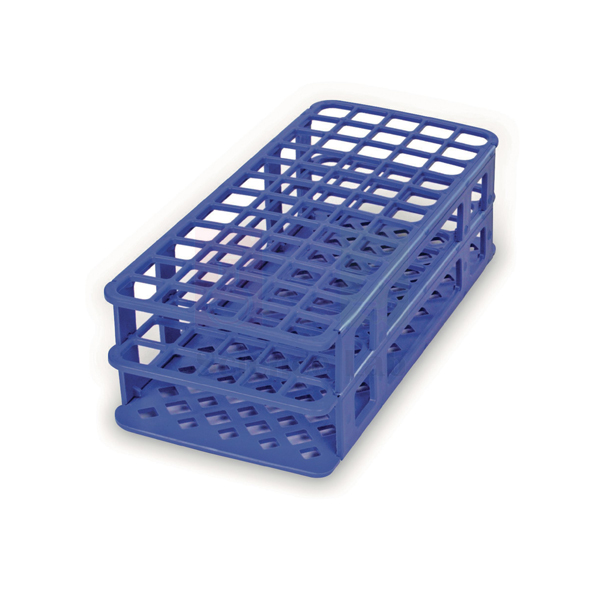
Test Tube Rack
Test Tube Rack (Product Code: SLE/P/19) is a polypropylene rack used to hold test tubes upright during experiments, incubation and storage in school, college and research laboratories. It has 60 wells of 17 mm, measures 245 × 108 × 72 mm, folds and snaps together for easy assembly, and is autoclavable. It is made by Jain Scientific Equipments Pvt Ltd (ScienceLab), an OEM manufacturer, at its own factory in Ambala, India, as a practical test tube rack for schools in India and overseas.
Specifications
| Parameter | Detail |
|---|---|
| Material | Polypropylene |
| Number of wells | 60 |
| Well size | 17 mm |
| Dimensions | L 245 × W 108 × D 72 mm |
| Assembly | Easy to assemble; folds and snaps together |
| Sterilisation | Autoclavable |
| Product code | SLE/P/19 |
| Manufacturer | Jain Scientific Equipments Pvt Ltd (ScienceLab) — OEM |
| Country of origin | India (made in Ambala, Haryana) |
What Is a Polypropylene Test Tube Rack Used For?
A 60-place rack keeps a whole class set or a long series of dilutions organised in rows, so tubes can be labelled by position and results compared along the series. Students use it during food tests, enzyme and temperature experiments, microbiology culture work and chemical reactions that need tubes to stand for a set time. Because it is autoclavable, microbiology labs can autoclave the rack along with used culture tubes.
The 17 mm wells suit tubes up to that outside diameter, so check your tube size before ordering. Snap the panels together on a flat surface and make sure every joint locks before loading tubes. Clean the rack with warm water and mild detergent between practicals.
What to Specify When Ordering
- Outside diameter of your test tubes (the wells are 17 mm).
- Number of racks needed for the class or laboratory.
- Any matching accessories, such as test tube brushes or holders.
OEM Manufacturer
ScienceLab is the trading name of Jain Scientific Equipments Private Limited, which acts as OEM (original equipment manufacturer) for this polypropylene test tube rack and makes it at its own licensed factory at Saha, Ambala, Haryana, India. Racks are dispatched factory-direct to schools, colleges, research institutions, dealers and importers. Ask us about repeat orders or extra racks to match an existing lab set. See the ScienceLab company profile for background on the business.
Related Scientific Lab Plasticware
Test tube work at the bench usually involves these items as well:
- Test Tube Rack, Polypropylene — another polypropylene rack in the same range.
- Universal Tube Rack — a rack option for other tube types.
- Polyprop Test Tube Basket — holds loose tubes for washing or carrying.
- Brush Test Tube — cleans tubes before they go back in the rack.
- Test Tube Holder — grips a single tube while it is heated.
Explore the Scientific Lab Plasticware category for further racks and containers.
Frequently Asked Questions
How many test tubes does the Test Tube Rack SLE/P/19 hold?
The Test Tube Rack SLE/P/19 has 60 wells, each 17 mm across, so it holds up to 60 test tubes that fit that well size. The assembled rack measures 245 × 108 × 72 mm.
Is the Test Tube Rack autoclavable?
Yes, the ScienceLab Test Tube Rack (SLE/P/19) is made of polypropylene and is autoclavable, so microbiology and biology labs can autoclave it with used culture tubes. Follow your autoclave's normal cycle and let the rack cool before handling it.
How is the polypropylene test tube rack assembled?
The Test Tube Rack is easy to assemble because its polypropylene panels fold and snap together. Press each joint firmly until it locks, and check that the rack stands level before loading it with tubes.
What size test tubes fit the 17 mm wells?
The wells of the Test Tube Rack (SLE/P/19) are 17 mm, so choose tubes whose outside diameter is no larger than that. If you use several tube sizes, send them through the contact page and ScienceLab will suggest suitable racks.
Who manufactures the Test Tube Rack SLE/P/19?
Jain Scientific Equipments Pvt Ltd, trading as ScienceLab, manufactures the Test Tube Rack (SLE/P/19) as the OEM at its own licensed factory in Saha, Ambala, Haryana, India, and supplies it directly to schools, colleges, dealers and importers.
Can the test tube rack be ordered in bulk for school labs?
Yes. ScienceLab supplies the Test Tube Rack in bulk for school and college labs in India and international markets. Share the number of racks, the tube size you use and the delivery location to receive a quotation from the manufacturer.
Request a Quote
For a quotation on the Test Tube Rack, add it to the enquiry cart or write to us via the contact page with the rack quantity and tube size. The manufacturer will reply with a direct quote.
Last updated: 24 September 2026
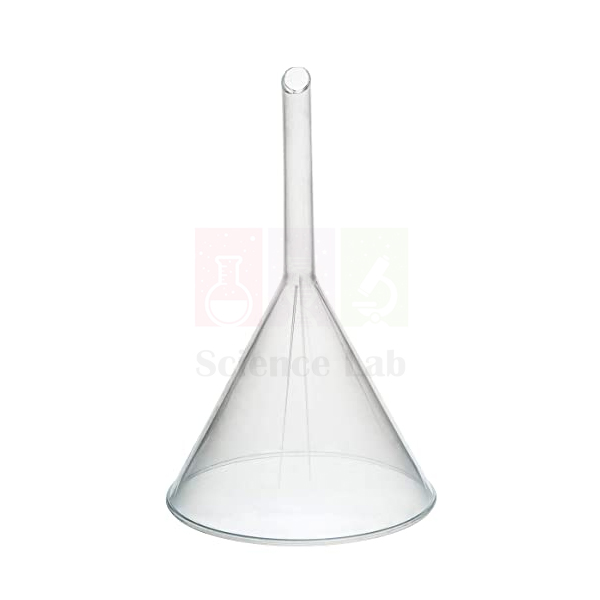
Polythene Filter Funnels
Polythene Filter Funnels (Product Code: SLE/P/20) are small plastic funnels used for filtration and separation work with soils and solutions in school, college and field laboratories. At 38 mm they suit small-volume filtrations with folded filter paper, and the plastic is listed as unbreakable, which makes them a safer choice than glass on student benches. They are made by Jain Scientific Equipments Pvt Ltd (ScienceLab), an OEM manufacturer, at its own factory in Ambala, India.
Specifications
| Parameter | Detail |
|---|---|
| Type | Filter funnel |
| Material | Polythene (plastic), listed as unbreakable |
| Size | 38 mm |
| Intended use | Separation work with soils and solutions |
| Product code | SLE/P/20 |
| Manufacturer | Jain Scientific Equipments Pvt Ltd (ScienceLab) — OEM |
| Country of origin | India (made in Ambala, Haryana) |
What Are Polythene Filter Funnels Used For?
In soil practicals, students shake a soil sample with distilled water and pour the mixture through filter paper in the funnel to obtain a clear extract for pH or nutrient tests. The same funnel separates precipitates from solutions in chemistry, for example when collecting an insoluble salt, and clarifies small water samples before testing. Its compact size suits the short filtrations common in school practicals, and it is equally useful as lab equipment for colleges in India running soil and water analysis.
Fold a filter paper circle into a cone, seat it in the funnel and wet it with a little distilled water so it clings to the wall before pouring. Support the funnel in a stand or on a small flask, pour down a stirring rod, and never fill the paper to the rim. Wash the funnel after soil work so fine particles do not carry over into the next filtration.
OEM Manufacturer
These filter funnels are manufactured by Jain Scientific Equipments Private Limited, trading as ScienceLab, which is the OEM (original equipment manufacturer) and produces them at its own licensed factory at Saha, Ambala, Haryana, India. Supplying factory-direct, the company serves schools, colleges, soil-testing and teaching laboratories, dealers and importers, and handles repeat orders itself. Learn more on the ScienceLab profile page.
Related Scientific Lab Plasticware
A complete filtration set-up normally combines the funnel with these items:
- Funnels Set, Polythene — larger polythene funnels for pouring and flow-rate tests.
- Filter Paper — the paper cone that sits inside the funnel.
- Water And Soil Analysis Kit — for testing the extracts collected through the funnel.
- Polythene Wash Bottles — rinse residue down the filter paper.
- Conical Flask — receives the filtrate beneath the funnel.
View more items in the Scientific Lab Plasticware category.
Frequently Asked Questions
What size are the Polythene Filter Funnels?
The Polythene Filter Funnels (SLE/P/20) are 38 mm in size. This compact funnel suits small-volume filtrations with a folded filter paper, such as clearing soil extracts or separating a small quantity of precipitate from a solution.
Are the Polythene Filter Funnels breakable?
The Polythene Filter Funnels are made of plastic that is listed as unbreakable, so they do not shatter like a glass funnel if dropped on a bench or floor. Keep them away from flames and hot liquids, which can soften polythene.
Can the Polythene Filter Funnels be used for soil analysis?
Yes. The Polythene Filter Funnels are intended for separation work with soils and solutions, making them suitable for filtering soil-water mixtures to get a clear extract for pH or nutrient tests in school, college and field laboratories.
Do the filter funnels come with filter paper?
Filter paper is not listed as included with the Polythene Filter Funnels (SLE/P/20). ScienceLab supplies filter paper separately, so add it to your enquiry through the contact page and state the circle size you need for a 38 mm funnel.
Who manufactures the Polythene Filter Funnels?
Jain Scientific Equipments Pvt Ltd, trading as ScienceLab, manufactures the Polythene Filter Funnels (SLE/P/20) as the OEM at its own licensed factory in Saha, Ambala, Haryana, India, and supplies them factory-direct to schools, colleges, dealers and importers.
How can I get a quote for polythene filter funnels?
To get a quote for the Polythene Filter Funnels, add them to the enquiry cart or send the quantity and delivery location through the contact page. ScienceLab quotes directly as the manufacturer for orders across India and international markets.
Request a Quote
Request pricing for the Polythene Filter Funnels through the contact page or the enquiry cart, and include any filter paper or wash bottles you need. The quotation will come straight from the manufacturer.
Last updated: 24 September 2026
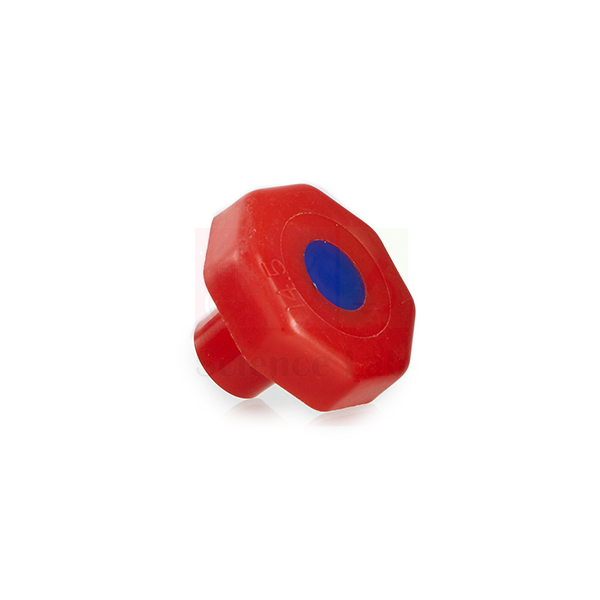
Reagent Bottle Stopper
Reagent Bottle Stopper (Product Code: SLE/P/21) is a plastic stopper used to close reagent bottles in school, college and research laboratories, keeping stored solutions free of dust and evaporation losses. It is listed in the sizes 19/26 and 38 mm, making it a handy spare part for lab equipment when an original stopper is lost or broken. It is made by Jain Scientific Equipments Pvt Ltd (ScienceLab), an OEM manufacturer, at its own factory in Ambala, India.
Specifications
| Parameter | Detail |
|---|---|
| Type | Stopper for reagent bottles |
| Material | Plastic |
| Sizes listed | 19/26 and 38 mm |
| Product code | SLE/P/21 |
| Manufacturer | Jain Scientific Equipments Pvt Ltd (ScienceLab) — OEM |
| Country of origin | India (made in Ambala, Haryana) |
What Is a Reagent Bottle Stopper Used For?
Reagent bottles lose their usefulness quickly once a stopper goes missing: solutions evaporate, absorb moisture or carbon dioxide from the air, and collect dust. A replacement plastic stopper restores a proper closure, so stock solutions and bench reagents stay clean between practicals. Plastic stoppers are also less likely than glass ones to seize in the necks of bottles that hold alkaline solutions.
Measure the neck opening, or check the size marked on the bottle, before ordering, since the listing gives two sizes: 19/26 and 38 mm. Press the stopper in firmly but without forcing it, wipe any spilled reagent off the neck before closing, and store bottles upright.
What to Specify When Ordering
- Stopper size: 19/26 or 38 mm, matched to your bottle neck.
- Number of stoppers needed in each size.
- The bottle type and the reagent it holds, so the fit can be checked with you.
OEM Manufacturer
Jain Scientific Equipments Private Limited, trading as ScienceLab, manufactures these reagent bottle stoppers as the OEM (original equipment manufacturer) at its own licensed factory at Saha, Ambala, Haryana, India. Stoppers are supplied factory-direct to schools, colleges, laboratories, dealers and importers, often together with the bottles they close.
For institutional and tender buyers who need vendor details, the company's registrations are GSTIN 06AAECJ8618A1ZT and LEI 3358004HRD1JIVXKYX49. More about the company is on the ScienceLab profile.
Related Laboratory Equipment
Stoppers are most often ordered alongside the reagent bottles and containers they serve:
- Reagent Bottle, Narrow Mouth — a glass reagent bottle for stock solutions.
- Reagent Bottle Narrow Mouth, Amber Glass — for light-sensitive stock solutions.
- Bottle Reagent, W.M. Glass — a wide-mouth glass reagent bottle for solids.
- Dropping Bottle — a plastic bottle for bench-sized quantities of reagent.
Further closures and bottles are listed in the Scientific Lab Plasticware category.
Frequently Asked Questions
What sizes is the Reagent Bottle Stopper available in?
The Reagent Bottle Stopper (SLE/P/21) is listed in two sizes: 19/26 and 38 mm. Check the neck of your reagent bottle, or tell us the bottle type through the contact page, so the correct stopper size is quoted.
What material are the reagent bottle stoppers made of?
The Reagent Bottle Stopper is made of plastic. Plastic stoppers are light, less likely to chip than glass stoppers and less prone to sticking in bottles that hold alkaline solutions, which makes them practical replacements in school storerooms.
Will the Reagent Bottle Stopper fit my existing bottles?
The Reagent Bottle Stopper will fit bottles whose necks match its listed sizes of 19/26 or 38 mm. If you are unsure, share the bottle make, capacity or neck measurement, and ScienceLab will confirm which stopper suits it before quoting.
Can a plastic stopper replace a broken glass stopper?
Yes, a plastic Reagent Bottle Stopper (SLE/P/21) can replace a lost or broken glass stopper when the neck size matches 19/26 or 38 mm. This keeps the bottle in use instead of discarding it or leaving the reagent uncovered.
Who manufactures the Reagent Bottle Stopper SLE/P/21?
Jain Scientific Equipments Pvt Ltd, trading as ScienceLab, manufactures the Reagent Bottle Stopper (SLE/P/21) as the OEM at its own licensed factory in Saha, Ambala, Haryana, India, and supplies it directly to schools, colleges, dealers and importers.
What should an enquiry for bottle stoppers include?
An enquiry for the Reagent Bottle Stopper should list the size (19/26 or 38 mm), the quantity of each and the delivery location. Tender and institutional buyers can also ask for vendor registration details along with the quotation.
Request a Quote
Add the Reagent Bottle Stopper to the enquiry cart or send the sizes and quantities through the contact page. As the manufacturer, ScienceLab will reply with a direct quotation.
Last updated: 24 September 2026