- Physics Lab Equipment
- Chemistry Lab Equipment
- Biology Lab Equipment
- Anatomical Lab Equipment
- Learning
- Educational Lab Equipment
- Magnets
- Agriculture
- Astronomy
- Earth Science
- Geography Lab Equipment
- Safety Lab Coat
- Laboratory
- Meteorological
- Electricity & Magnetism
- Heat
- School Lab Equipment
- Lab Glassware
- Science Lab Equipment
- Tvet Lab Equipment
- Robotics Kits Supplier and Manufacturer for Schools India
- Math Lab Equipment Manufacturers and Exporters in Ambala
- STEM Kits Manufacturers and Supplier India
- Engineering Lab Equipment
- Hospital Lab Equipment
- Water, Sanitation & Hygiene Supplies
- Cold Chain, Solar & Communication Equipment
- Nutrition
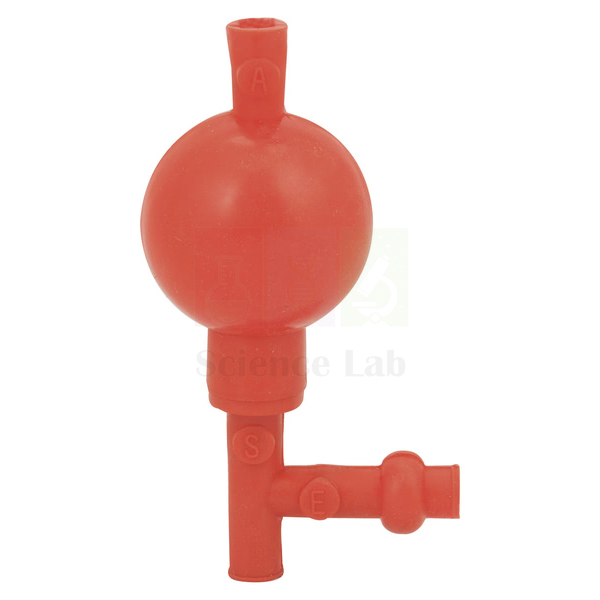
Bulb Type, Pipette Filler
Bulb Type, Pipette Filler (Product Code: SLE/P/16) is a squeeze-bulb pipetting aid used to draw up and release noxious solutions, microbial suspensions and other harmful or unpleasant liquids in microbiology, biology and chemistry laboratories. It consists of a bulb and three pinch valves that control the flow of liquid into and out of the pipette, with a listed capacity of 54 mm, 50 ml. It is supplied by Jain Scientific Equipments Pvt Ltd (ScienceLab), Ambala, India, alongside its microbiology lab equipment for India and international markets.
Specifications
| Parameter | Detail |
|---|---|
| Type | Bulb-type pipette filler |
| Construction | Bulb with three pinch valves |
| Valve function | Control influx and efflux of pipette contents |
| Intended liquids | Noxious solutions, microbial suspensions and other harmful or unpleasant solutions |
| Listed capacity | 54 mm, 50 ml (as given; confirm fit with your pipettes) |
| Product code | SLE/P/16 |
| Supplied by | Jain Scientific Equipments Pvt Ltd (ScienceLab), Ambala, India |
What Is a Bulb Pipette Filler Used For?
The bulb filler is chosen when the liquid in a pipette should never come near the user's mouth or face, for example bacterial cultures in a microbiology practical or corrosive and foul-smelling reagents in chemistry. On a typical three-valve filler, with the pipette seated in the lower end, one valve empties air from the squeezed bulb, a second draws liquid up to the mark and the third lets it run out into the receiving vessel.
Practise with water before handling cultures or hazardous reagents, and never let liquid rise into the bulb. After pipetting microbial suspensions, follow your laboratory's decontamination procedure for the pipette and any surfaces it touched. Inspect the bulb regularly for cracks or loss of suction.
What to Specify When Ordering
- Pipette sizes and top diameters in use, since this filler is listed as 54 mm, 50 ml.
- Quantity needed for each microbiology or chemistry bench.
- Whether thumb-wheel fillers should also be quoted for routine, non-hazardous pipetting.
Supplier
ScienceLab, the trading name of Jain Scientific Equipments Private Limited, supplies the bulb-type pipette filler from Ambala, Haryana, India. It is sourced for, and shipped to, schools, colleges, microbiology laboratories, dealers and importers, often together with pipettes, culture ware and other bench items. More about the company is on the ScienceLab profile page.
Related Scientific Lab Plasticware
Laboratories using a bulb filler commonly stock these related items:
- Pipette Filler — a red 25 ml thumb-wheel filler for routine pipetting.
- Pipette Filler – 10ml — a filler for smaller pipettes.
- Pipette Stand Rotary — holds pipettes upright to drain after cleaning.
- Inoculation Loops — another basic tool for handling microbial cultures.
See more in the Scientific Lab Plasticware category.
Frequently Asked Questions
What liquids is the Bulb Type, Pipette Filler meant for?
The Bulb Type, Pipette Filler (SLE/P/16) is meant for pipetting noxious solutions, microbial suspensions and other harmful or unpleasant liquids. It keeps the liquid away from the user's mouth and gives valve-controlled filling and emptying of the pipette.
How do the three valves on the bulb pipette filler work?
The Bulb Type, Pipette Filler has a bulb and three pinch valves that control the influx and efflux of pipette contents. Typically one valve releases air from the squeezed bulb, one draws liquid up and one lets it drain out.
What does the listed capacity of 54 mm, 50 ml mean?
The Bulb Type, Pipette Filler is listed as 54 mm, 50 ml. Because the listing does not say which dimension the 54 mm refers to, send your pipette sizes through the contact page and ScienceLab will confirm the fit before quoting.
Is the bulb pipette filler suitable for sterile work?
No sterility claim is made for the Bulb Type, Pipette Filler (SLE/P/16). Treat it as general bench equipment and follow your laboratory's own cleaning and decontamination procedures after handling microbial suspensions or harmful solutions.
Who supplies the Bulb Type, Pipette Filler?
Jain Scientific Equipments Pvt Ltd, trading as ScienceLab, supplies the Bulb Type, Pipette Filler (SLE/P/16) from Ambala, Haryana, India to schools, colleges, microbiology laboratories, dealers and importers in India and international markets.
What should a quote request for bulb pipette fillers include?
When requesting a quote for the Bulb Type, Pipette Filler (SLE/P/16), include the quantity, the pipette sizes you use and the delivery location. ScienceLab can quote thumb-wheel fillers and pipette stands on the same enquiry if needed.
Request a Quote
Add the Bulb Type, Pipette Filler to the enquiry cart or describe your pipetting needs on the contact page, and ScienceLab will send a quotation.
Last updated: 24 September 2026