- Physics Lab Equipment
- Chemistry Lab Equipment
- Biology Lab Equipment
- Anatomical Lab Equipment
- Learning
- Educational Lab Equipment
- Magnets
- Agriculture
- Astronomy
- Earth Science
- Geography Lab Equipment
- Safety Lab Coat
- Laboratory
- Meteorological
- Electricity & Magnetism
- Heat
- School Lab Equipment
- Lab Glassware
- Science Lab Equipment
- Tvet Lab Equipment
- Robotics Kits Supplier and Manufacturer for Schools India
- Math Lab Equipment Manufacturers and Exporters in Ambala
- STEM Kits Manufacturers and Supplier India
- Engineering Lab Equipment
- Hospital Lab Equipment
- Water, Sanitation & Hygiene Supplies
- Cold Chain, Solar & Communication Equipment
- Nutrition
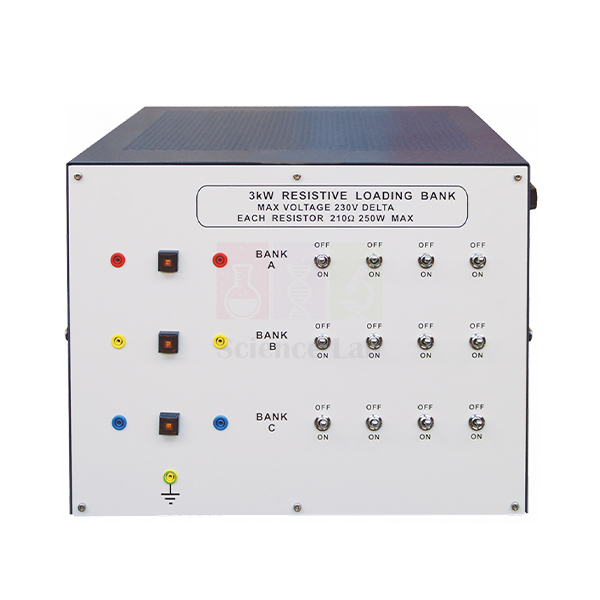
Portable Resistive Load Bank
Portable Resistive Load Bank (Product Code: SLE/EPS/10) is a three-phase resistive load used to draw controlled real power from generators, transformers and supply circuits during power systems practicals. Each of its three resistor banks is electrically separate and carries its own thermal circuit-breaker, so students can build balanced or unbalanced star or delta loads. It is made by Jain Scientific Equipments Pvt Ltd (ScienceLab), an OEM, at its own factory in Ambala, India, within its engineering educational equipment in India range.
Key Details
| Parameter | Detail |
|---|---|
| Load type | Resistive, in three switchable banks |
| Housing | Robust steel enclosure |
| Three-phase connection | Banks electrically separate, so they connect as a star or delta load |
| Resistor switching | Each bank has a set of switches to bring each resistor into circuit |
| Overload protection | Thermally operated circuit-breaker in each bank of resistors |
| Terminals | Safety sockets on the enclosure front panel |
| Load conditions | Balanced or unbalanced resistive loads |
| Expansion | Combine with other similar load banks for variable power and power factor loads |
| Product code | SLE/EPS/10 |
| Manufacturer | Jain Scientific Equipments Pvt Ltd (ScienceLab) — OEM |
| Country of origin | India (made in Ambala, Haryana) |
What Is the Resistive Load Bank Used For?
A resistive load takes current in phase with the voltage, so it absorbs real power at unity power factor and turns it into heat. That makes this unit the reference load in most power practicals: students add load resistor by resistor and record how a source’s terminal voltage, current and output change as demand rises.
Switch the three banks to different settings to create unbalanced conditions, or connect them in star or delta to compare line and phase quantities. When a non-unity power factor is needed, the resistive banks are combined with other similar load banks. Allow pauses between heavy load steps — the resistors run warm, and each bank’s thermal circuit-breaker is there to protect them.
What to Specify When Ordering
- Your supply voltage and the power you expect to dissipate, so suitability can be checked (ratings are not listed on this page).
- Any companion loads you need, such as the inductive or power factor load bank.
- Number of units for your benches.
OEM Manufacturer
Jain Scientific Equipments Private Limited, trading as ScienceLab, is the OEM (original equipment manufacturer) of the Portable Resistive Load Bank. Rather than reselling a trader’s stock, the company makes and assembles each unit at its own licensed factory at Saha, Ambala, Haryana, India, and supplies it factory-direct to institutions, dealers and importers.
Quotations come straight from the manufacturer, and spare parts can be requested directly — just ask us. Company information is on the ScienceLab profile page.
Related Power & Energy Systems Trainers
Equipment commonly used with a resistive load bank in power systems practicals:
- Portable Inductive Load Bank — adds a lagging reactive load for power factor studies.
- Power Factor Load Bank — free-standing unit with resistive, inductive and capacitive banks.
- Power System Simulator Generator — a generator source to load and protect.
- Modular Power System — hub linking module power, test circuits and emergency stops.
Compare all Power & Energy Systems Trainers to plan a complete power lab.
Frequently Asked Questions
What does the Portable Resistive Load Bank contain?
The Portable Resistive Load Bank (SLE/EPS/10) is a robust steel enclosure with three banks of switchable resistive loads. Each bank has a set of switches to bring each resistor into circuit, and safety sockets on the front panel connect it to experiment circuits.
Can the Portable Resistive Load Bank create unbalanced loads?
Yes. Because each bank of the Portable Resistive Load Bank is electrically separate and switched independently, students can create balanced or unbalanced resistive loads, connected as a star or a delta load for three-phase circuits.
How is the Portable Resistive Load Bank protected?
Each bank of resistors in the Portable Resistive Load Bank includes its own thermally operated circuit-breaker to protect the loads, and all connections to experiment circuits are made through safety sockets on the enclosure front panel.
Can it be used for power factor experiments?
Yes. The Portable Resistive Load Bank can be used with other similar load banks, for example the inductive load bank, to provide variable power and power factor loads. On its own it presents a purely resistive, unity power factor load.
Who manufactures the Portable Resistive Load Bank?
Jain Scientific Equipments Pvt Ltd (ScienceLab) manufactures the Portable Resistive Load Bank as the OEM at its own licensed factory in Saha, Ambala, Haryana, India, and supplies institutions and dealers across India and international markets directly.
What are the resistance values and power rating?
Resistance values and the power rating of the Portable Resistive Load Bank are not published on this page. Tell ScienceLab your supply voltage and required load through the contact page, and we will confirm suitability before quoting.
Request a Quote
Ask for Portable Resistive Load Bank (SLE/EPS/10) pricing on the contact page or add it to the enquiry cart. The manufacturer replies with a quotation for single units or complete power lab packages.
Last updated: 24 September 2026
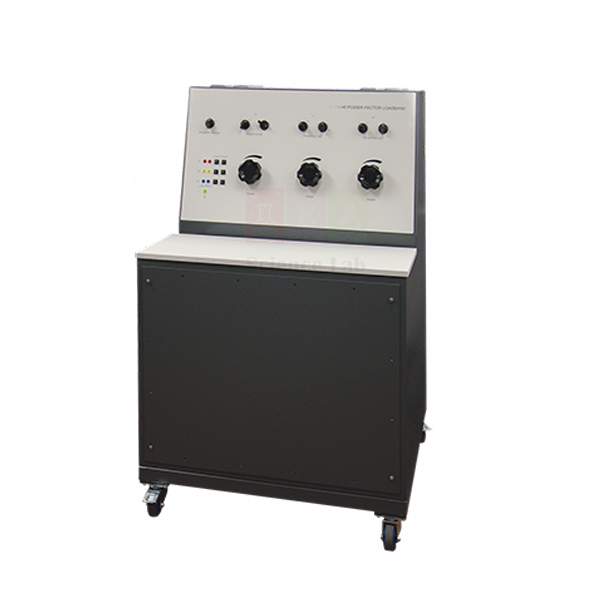
Power Factor Load Bank
Power Factor Load Bank (Product Code: SLE/EPS/11) is a free-standing, mobile load unit used to set unity, leading or lagging power factor loads on single and three-phase circuits in power systems laboratories. It combines separate resistive, inductive and capacitive banks across three independent lines, and a voltage-selector switch adapts it to different line voltages. It is manufactured by Jain Scientific Equipments Pvt Ltd (ScienceLab), an OEM, at its own factory in Ambala, India.
Key Details
| Parameter | Detail |
|---|---|
| Construction | Free-standing, mobile unit; worktop on top for additional instruments or recording results |
| Load banks | Three separate banks: resistive, inductive and capacitive |
| Power factor | Unity (resistive only), leading or lagging, by choice and combination of load types |
| Inputs | Three separate inputs: Lines 1, 2 and 3 |
| Circuit types | Single-phase and three-phase |
| Line connection | Each line independent; connect as a star or delta load |
| Voltage selection | Voltage-selector switch for different line voltages |
| Unbalanced loading | Each bank (line) may be set to different values |
| Product code | SLE/EPS/11 |
| Manufacturer | Jain Scientific Equipments Pvt Ltd (ScienceLab) — OEM |
| Country of origin | India (made in Ambala, Haryana) |
What Is the Power Factor Load Bank Used For?
Most power systems experiments need a load whose behaviour is known in advance, and this unit supplies exactly that: predictable load and power factor characteristics that students set rather than guess. Resistive banks alone give unity power factor; bringing in the inductive banks moves it lagging, while the capacitive banks move it leading.
Because each line is independent and can be set to its own value, the same unit runs balanced and unbalanced load tests in star or delta, or works on a single-phase circuit. Switching capacitance against an inductive load also illustrates the principle of the static VAr compensator used in industrial plants and large factories. The worktop keeps meters and result sheets right beside the controls.
What to Specify When Ordering
- The line voltage(s) in your laboratory, so the voltage-selector setting can be confirmed.
- Whether you will use it on single-phase circuits, three-phase circuits or both.
- Any additional portable resistive or inductive load banks needed for larger loads.
- Number of units.
OEM Manufacturer
ScienceLab is the trading name of Jain Scientific Equipments Private Limited, the OEM (original equipment manufacturer) of the Power Factor Load Bank. The unit is made and assembled at the company’s own licensed factory in Saha, Ambala, Haryana, India, and sold factory-direct by a vocational training lab equipment manufacturer in India that serves colleges, dealers and importers.
For institutional and tender buyers who need vendor registration details, the company’s GSTIN is 06AAECJ8618A1ZT and its Legal Entity Identifier (LEI) is 3358004HRD1JIVXKYX49. Spares and repeat orders are handled by the manufacturer — ask us, or read more on the ScienceLab company profile.
Related Power & Energy Systems Trainers
Sources and extra loads that pair with the Power Factor Load Bank:
- Portable Resistive Load Bank — additional switchable resistive load in a steel enclosure.
- Portable Inductive Load Bank — additional switchable inductive load.
- Power System Simulator Generator — generator console to load at known power factors.
- Distribution Trainer — distribution-level circuits to load.
See every item in Power & Energy Systems Trainers.
Frequently Asked Questions
What load types does the Power Factor Load Bank provide?
The Power Factor Load Bank (SLE/EPS/11) includes three separate banks of resistive, inductive and capacitive loads. Choosing and combining them gives unity power factor (resistive only) or a leading or lagging power factor for power systems experiments.
Does the Power Factor Load Bank work on single-phase circuits?
Yes. The Power Factor Load Bank has three separate inputs, Lines 1, 2 and 3, so it works with single-phase and three-phase circuits. Each line is independent and can be connected with the others as a star or delta load.
Can it be used with different line voltages?
A voltage-selector switch lets the Power Factor Load Bank work with different line voltages for single and three-phase circuits. Give ScienceLab your laboratory’s line voltage when enquiring so the selector setting can be confirmed for your supply.
Can the Power Factor Load Bank create unbalanced loads?
Yes. Each bank, or line, of the Power Factor Load Bank may be set to a different value, giving an unbalanced load for balanced and unbalanced load tests on three-phase circuits.
How does it relate to a static VAr compensator?
The Power Factor Load Bank helps show the principles of a static VAr compensator, as used in industrial plants and large factories, by letting students combine capacitive and inductive loads and observe how the power factor changes.
Who manufactures the Power Factor Load Bank?
Jain Scientific Equipments Pvt Ltd (ScienceLab) is the OEM that manufactures the Power Factor Load Bank at its own licensed factory in Saha, Ambala, Haryana, India. Institutions and dealers in India and international markets buy it direct from the manufacturer.
Request a Quote
Request a manufacturer’s quotation for the Power Factor Load Bank (SLE/EPS/11) through our contact page, or add it to your enquiry cart. Include your line voltage and quantity for a faster reply.
Last updated: 24 September 2026
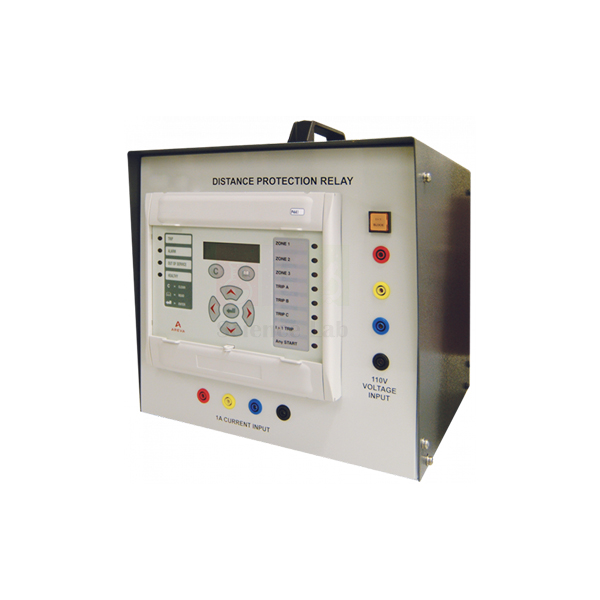
Distance Protection Relay
Distance Protection Relay (Product Code: SLE/EPS/12) is a relay module used to teach full-scheme phase and ground distance protection, with up to five zones, in power system protection laboratories. Based on the Micom industrial relay, it also provides overcurrent, earth fault, negative sequence, thermal overload and broken conductor functions, programmed from its keypad or a computer. It is supplied by Jain Scientific Equipments Pvt Ltd (ScienceLab), Ambala, India.
Key Details
| Parameter | Detail |
|---|---|
| Relay | Based on the Micom industrial relay |
| Distance protection | Full scheme phase and ground distance protection, up to five zones |
| Overcurrent functions | Directional/non-directional phase overcurrent; directional/non-directional negative sequence overcurrent |
| Earth fault | Directional/non-directional earth fault |
| Other protection | Thermal overload protection; broken conductor |
| Element blocking | Blocking of any one protection element |
| Records | Creates fault and disturbance records |
| Programming | Keypad and display on the relay module, or Micom S1 software on a suitable computer |
| Test setup | Fault circuits set up on the Protection and Relay Test Set; relay module then connected to them |
| Product code | SLE/EPS/12 |
| Supplied by | Jain Scientific Equipments Pvt Ltd (ScienceLab), Ambala, India |
What Is the Distance Protection Relay Used For?
A distance relay judges how far away a fault is by comparing voltage and current — in effect measuring the impedance to the fault — and responds according to the zone the fault falls in. This module lets students program up to five zones of full-scheme phase and ground distance protection and see which zone responds to each fault set up on the Protection and Relay Test Set.
The same relay also covers directional and non-directional overcurrent, earth fault and negative sequence overcurrent, thermal overload and broken conductor detection, so one module supports a whole sequence of protection practicals. Its fault and disturbance records let students review each test afterwards, and blocking any one protection element shows how individual functions interact. Settings go in through the keypad or Micom S1 software on a suitable computer.
What to Specify When Ordering
- Whether you already have the Protection and Relay Test Set on which the fault circuits are set up.
- Whether the relay will be programmed from a computer with Micom S1 software.
- Number of relay modules required.
Supplier
Jain Scientific Equipments Private Limited trades as ScienceLab from Ambala, Haryana, India. It supplies the Distance Protection Relay, built around a Micom industrial relay, to universities, engineering colleges and training institutes, together with other engineering lab equipment in India and international markets.
Questions about the relay model, the software or spares are best raised at enquiry stage. Company details are on the ScienceLab profile.
Related Power & Energy Systems Trainers
Other relays and trainers used in the same protection course:
- Differential Protection Relay — Micom-based module for three-phase differential protection.
- Directional/Non-Directional Overcurrent Relay — three overcurrent stages with IDMT curves.
- Overcurrent And Earth Fault Relay — overcurrent and earth fault protection studies.
- Circuit Breaker Trainer — fuses and circuit-breakers under controlled fault currents.
Browse the Power & Energy Systems Trainers category for more.
Frequently Asked Questions
How many protection zones does the Distance Protection Relay offer?
The Distance Protection Relay (SLE/EPS/12) provides full-scheme phase and ground distance protection with up to five zones. Students program the zone settings and then test them against fault circuits set up on the Protection and Relay Test Set.
Which other functions does the Distance Protection Relay include?
Besides distance protection, the Distance Protection Relay offers directional/non-directional phase overcurrent, earth fault and negative sequence overcurrent, thermal overload protection, broken conductor detection, blocking of any one protection element, and fault and disturbance records.
How is the Distance Protection Relay programmed?
The Distance Protection Relay is programmed using the keypad and display on the relay module, or with Micom S1 software and a suitable computer. After programming, the relay module is connected to the fault circuits so tests can be performed.
Which relay is the module based on?
The Distance Protection Relay module is based on the Micom industrial relay, so students practise on real industrial relay hardware with its own keypad, display and settings rather than on a simplified classroom model.
Who supplies the Distance Protection Relay?
The Distance Protection Relay is supplied by Jain Scientific Equipments Pvt Ltd (ScienceLab), Ambala, Haryana, India, to institutions and dealers in India and international markets. Quotations are available through the ScienceLab contact page.
What should a quotation request include?
For a Distance Protection Relay quotation, state the quantity, whether you already have the Protection and Relay Test Set used to create the fault circuits, and whether you plan to program the relay with Micom S1 software on a computer.
Request a Quote
Send a Distance Protection Relay (SLE/EPS/12) enquiry through the contact page, or add it to the enquiry cart with the other relays and trainers for your protection lab.
Last updated: 24 September 2026
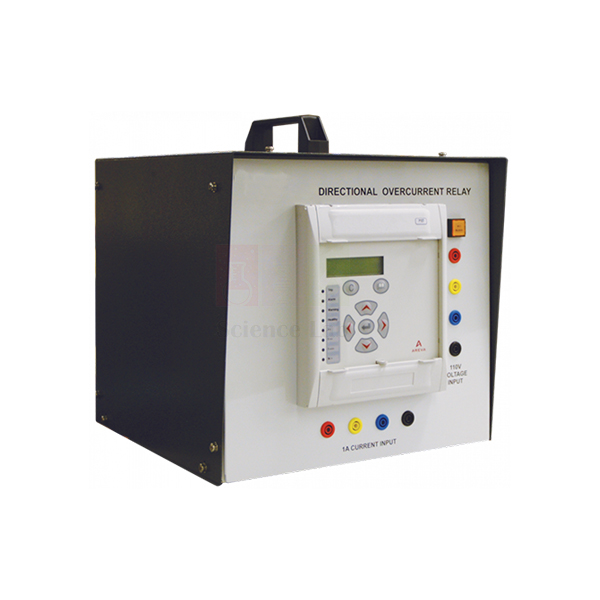
Directional/Non-Directional Overcurrent Relay
Directional/Non-Directional Overcurrent Relay (Product Code: SLE/EPS/13) is a programmable protection relay module used to teach overcurrent and earth fault protection, including IDMT time characteristics, in power system protection laboratories. It offers three independent overcurrent stages — the first selectable from 12 IDMT curves — plus voltage, undercurrent, thermal and negative phase sequence functions. It is supplied by Jain Scientific Equipments Pvt Ltd (ScienceLab), Ambala, India, a lab instruments supplier in India for engineering institutes.
Specifications
| Parameter | Detail |
|---|---|
| Overcurrent stages | Three independent stages of directional/non-directional phase overcurrent |
| Stage characteristics | First stage: any of 12 IDMT curves; remaining two stages: direct time characteristic |
| Earth fault | Directional/non-directional earth fault |
| Voltage and current functions | Undercurrent, undervoltage and overvoltage |
| Other protection | Thermal overload protection; negative phase sequence overcurrent |
| Blocking | Selectable blocking |
| Records | Creates fault and disturbance records |
| Enclosure | Robust enclosure with carrying handle |
| Mounting and connection | Mounts on the desk area of the Protection and Relay Test Set; connects by multi-core cable and safety leads |
| Programming | Keypad and display on the module, or Micom S1 software on a suitable computer |
| Product code | SLE/EPS/13 |
| Supplied by | Jain Scientific Equipments Pvt Ltd (ScienceLab), Ambala, India |
What Is the Directional Overcurrent Relay Used For?
Overcurrent protection is usually the first relay topic in a power systems course, and this module covers it in depth. Students select one of the 12 IDMT curves for the first stage, set the two direct time stages above it, and observe how the relay operates faster as fault current rises — the basis of grading relays along a feeder. Switching stages between directional and non-directional operation shows why fault direction matters on networks fed from more than one end.
Supporting functions are covered too: earth fault, negative phase sequence overcurrent, thermal overload, undercurrent, undervoltage and overvoltage. Most tests use a single relay: a fault circuit is set up on the Protection and Relay Test Set, the module is programmed by keypad or with Micom S1 software on a suitable computer, then connected with the multi-core cable and safety leads. Fault and disturbance records show what happened during each test.
What to Specify When Ordering
- Whether you already have the Protection and Relay Test Set the module mounts on.
- Whether you will program it from a computer using Micom S1 software.
- Number of modules — most tests are performed with a single relay.
Supplier
ScienceLab, the trading name of Jain Scientific Equipments Private Limited in Ambala, Haryana, India, supplies the Directional/Non-Directional Overcurrent Relay to engineering colleges, polytechnics and training institutes, alongside the other protection relays in its power systems range, for customers in India and international markets.
Please raise any questions about the relay model or the Micom S1 software when you enquire. You can read about the company on the ScienceLab profile page.
Related Power & Energy Systems Trainers
Relays and trainers that build on overcurrent protection practicals:
- Overcurrent And Earth Fault Relay — further overcurrent and earth fault protection studies.
- Distance Protection Relay — phase and ground distance protection up to five zones.
- Differential Protection Relay — three-phase differential protection characteristics.
- Circuit Breaker Trainer — fuse breaking-time behaviour to compare with IDMT curves.
Explore the complete Power & Energy Systems Trainers range.
Frequently Asked Questions
How many overcurrent stages does the Directional/Non-Directional Overcurrent Relay have?
The Directional/Non-Directional Overcurrent Relay (SLE/EPS/13) has three independent stages of directional/non-directional phase overcurrent. The first stage may be set to any of 12 IDMT curves, and the remaining two stages have a direct time characteristic.
Which other protection functions are included?
In addition to phase overcurrent, the Directional/Non-Directional Overcurrent Relay provides directional/non-directional earth fault, negative phase sequence overcurrent, thermal overload protection, undercurrent, undervoltage, overvoltage, selectable blocking, and creation of fault and disturbance records.
How does the relay connect to the Protection and Relay Test Set?
The Directional/Non-Directional Overcurrent Relay mounts on the desk area of the Protection and Relay Test Set and connects to it using a multi-core cable and safety leads. Its robust enclosure has a carrying handle for moving it between test sets.
How is the Directional/Non-Directional Overcurrent Relay programmed?
Program the Directional/Non-Directional Overcurrent Relay with the keypad and display on the module, or with Micom S1 software and a suitable computer. Once the settings are entered, the module is connected to the fault circuits and tests can be performed.
Do the tests need more than one relay?
Most tests with the Directional/Non-Directional Overcurrent Relay are performed using a single relay. If you plan grading or coordination exercises between several relays, mention this when requesting a quotation so ScienceLab can advise on quantities.
Who supplies the Directional/Non-Directional Overcurrent Relay?
The Directional/Non-Directional Overcurrent Relay is supplied by Jain Scientific Equipments Pvt Ltd (ScienceLab), Ambala, Haryana, India, to colleges, institutes and dealers in India and international markets. Enquiries go through our contact page.
Request a Quote
For a Directional/Non-Directional Overcurrent Relay (SLE/EPS/13) quotation, use the contact page or add the module to the enquiry cart along with your other protection lab items.
Last updated: 24 September 2026
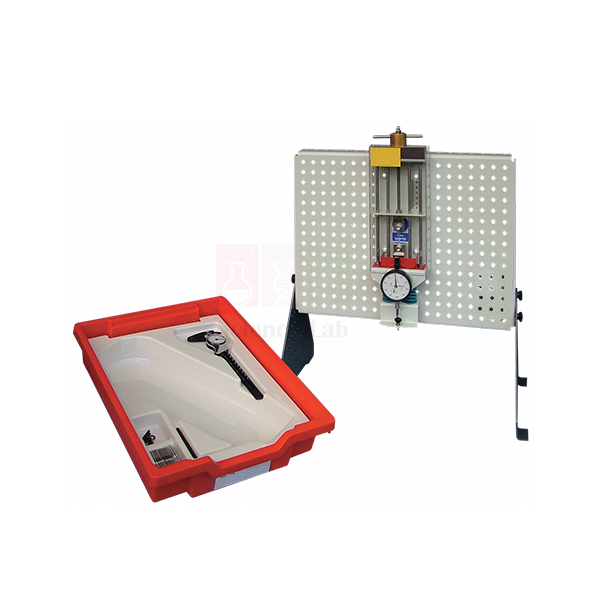
Tensile Tester Kit
Tensile Tester Kit (Product Code: SLE/ETP/21) is a cased, hands-on kit used to introduce students to tensile testing by stretching specimens of different materials to destruction while measuring extension and force, in engineering science and technical education classes. It gives learners first contact with yield properties, tensile strength, elongation and overall stress and strain. It is made by Jain Scientific Equipments Pvt Ltd (ScienceLab), an OEM and vocational training lab equipment manufacturer in India, at its own factory in Ambala.
Key Details
| Parameter | Detail |
|---|---|
| Kit contents | A cased tensile tester with specimens of different materials |
| Test method | Specimens stretched to destruction while extension and force are measured |
| Terms introduced | Yield properties; tensile strength; elongation; overall stress and strain |
| Product code | SLE/ETP/21 |
| Manufacturer | Jain Scientific Equipments Pvt Ltd (ScienceLab) — OEM |
| Country of origin | India (made in Ambala, Haryana) |
What Is the Tensile Tester Kit Used For?
Before students meet a full-size testing machine, they need a feel for what happens when a material is pulled apart. The Tensile Tester Kit gives them that experience at desk level: each group loads a specimen, stretches it until it breaks, and records force and extension along the way. Comparing specimens of different materials shows at once why some stretch a long way and others snap suddenly.
From their readings, students plot force against extension, convert the results to stress and strain using the specimen dimensions, and identify yield, tensile strength and elongation. These are the same terms they will use later in materials science and design courses. Measure each specimen before testing, pull steadily rather than in jerks, and wear eye protection when a specimen is close to breaking.
What to Specify When Ordering
- The number of kits, usually one per student group.
- Replacement specimens, since every specimen is stretched to destruction; ask us what is available.
- Whether you want storage trays or other engineering science kits in the same order.
OEM Manufacturer
Jain Scientific Equipments Private Limited, trading as ScienceLab, is the OEM (original equipment manufacturer) of the Tensile Tester Kit and makes it at its own licensed factory at Saha, Ambala, Haryana, India. Schools with technical streams, polytechnics, colleges, dealers and importers buy it factory-direct, not through a trading intermediary. Replacement specimens and repeat kits are requested from the manufacturer itself; tell us your quantities. See the ScienceLab company profile.
Related Materials Testing and Properties Equipment
Next steps and companions for the kit:
- Bench Top Tensile Testing Machine — the next step up, with load cell and digital displays for metal specimens.
- Moments Kit — a rigid-beam kit on moments, levers and beams for the same engineering science course.
- Set Of 5 trays And Lids — trays and lids for storing kit parts and printed material.
- Speciman — long-style carbon steel tensile specimen for machine testing.
More kits and apparatus are in the Materials Testing and Properties category.
Frequently Asked Questions
What is included in the Tensile Tester Kit?
The Tensile Tester Kit includes a cased tensile tester with specimens of different materials. Students stretch the specimens to destruction while measuring extension and force. Please confirm the exact specimen assortment with us when requesting a quotation.
Which concepts does the Tensile Tester Kit teach?
The Tensile Tester Kit introduces students to tensile test terms including yield properties, tensile strength, elongation, and overall stress and strain, giving them a practical basis for later materials science work.
Can the specimens in the Tensile Tester Kit be reused?
No. Specimens in the Tensile Tester Kit are stretched to destruction, so each one is used once. Plan for replacement specimens for repeat classes and ask us about availability when you order.
How does the Tensile Tester Kit differ from the Bench Top Tensile Testing Machine?
The Tensile Tester Kit is a cased introductory kit for first lessons on tensile testing. The Bench Top Tensile Testing Machine is a larger machine for metal specimens with a load cell and digital displays, suited to degree-level practicals.
Who manufactures the Tensile Tester Kit?
The Tensile Tester Kit is manufactured by Jain Scientific Equipments Pvt Ltd (ScienceLab), the OEM, at its own licensed factory in Ambala, Haryana, India, and is supplied directly by the manufacturer to institutions and dealers.
What should a Tensile Tester Kit enquiry include?
A Tensile Tester Kit enquiry should include the product code SLE/ETP/21, the number of kits, any replacement specimens you need and the delivery destination in India or abroad, sent through our contact page or enquiry cart.
Request a Quote
Quotations for the Tensile Tester Kit come straight from the manufacturer. Send your requirement through the contact page or add it to the enquiry cart; we supply India and international markets.
Last updated: 24 September 2026
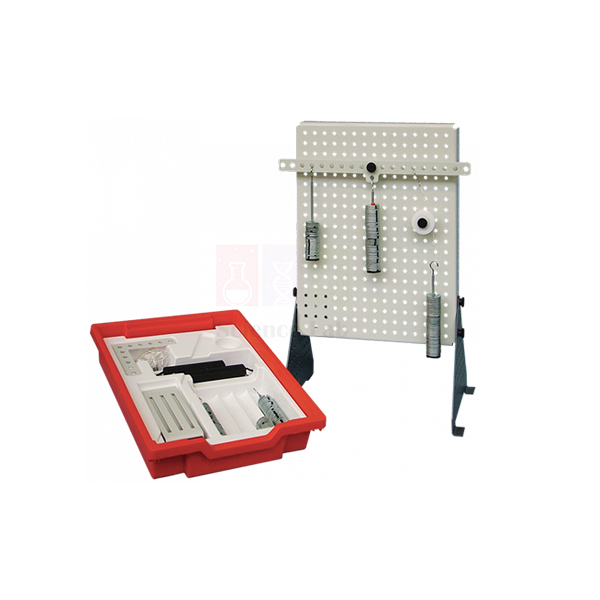
Moments Kit
Moments Kit (Product Code: SLE/ETP/22) is an engineering science kit used to teach the principle of moments, extending to levers and beams, in polytechnic and technical college laboratories. Built around a rigid beam, it adds a pulley for oblique-force experiments and an L-shape plate for bell crank levers, and works with spring balances to show beam reactions. It is made by Jain Scientific Equipments Pvt Ltd (ScienceLab), an OEM manufacturer of school and college lab equipment, at its own factory in Ambala, India.
Key Details
| Parameter | Detail |
|---|---|
| Main part | Rigid beam for experiments in the principle of moments, extending to levers and beams |
| Pulley | Allows extra experiments with moments caused by oblique forces |
| Bell crank plate | L-shape plate for experiments in bell crank levers |
| Lever types | Shows the three main lever types |
| Beam balance | Uses moments to find unknown weights, creating simple beam balances |
| Beam reactions | Works with spring balances to show reaction forces on beams with point loads and uniformly distributed loads |
| Product code | SLE/ETP/22 |
| Manufacturer | Jain Scientific Equipments Pvt Ltd (ScienceLab) — OEM |
| Country of origin | India (made in Ambala, Haryana) |
What Is the Moments Kit Used For?
Moments explain why a spanner with a longer handle is easier to turn, how a crowbar lifts heavy loads and how bridge supports share a load. With the Moments Kit, students balance the rigid beam with known weights to confirm that clockwise and anticlockwise moments are equal, then use the same rule to find an unknown weight, turning the beam into a simple beam balance.
The kit then moves on to the three main lever types, the bell crank lever on the L-shape plate, and moments from oblique forces using the pulley. With spring balances as supports, students measure reaction forces on a beam under point loads and uniformly distributed loads and compare them with their calculations. Level the beam before each reading and keep string lines clear of the beam edges.
What to Specify When Ordering
- The number of kits needed for your student groups.
- Whether spring balances are needed for the beam-reaction experiments; ask us what the kit includes.
- Whether you want storage trays or other engineering science kits in the same order.
OEM Manufacturer
The Moments Kit is made by Jain Scientific Equipments Private Limited, trading as ScienceLab, as its OEM (original equipment manufacturer). Production takes place at the company's licensed factory at 449, HSIIDC Industrial Area, Saha, Ambala (Factory Licence AMB-ONLINE-CHD-J-414), and the company is incorporated under CIN U29309HR2020PTC087597. Colleges, dealers and importers therefore order direct from the manufacturer. Company details are on the ScienceLab profile.
Related Materials Testing and Properties Equipment
Companion items for moments and lever practicals:
- Force Meter/Spring Balance — spring balances for measuring beam reaction forces.
- Engineering Science Work Panel — a perforated metal desk panel on which Engineering Science kit parts can be fitted in any position.
- Gear Trains Kit — spur, bevel and worm gears for studying mechanical advantage and velocity ratio.
- Set Of 5 trays And Lids — trays and lids for storing kit parts between lessons.
Find more engineering science kits in Materials Testing and Properties.
Frequently Asked Questions
What experiments can be done with the Moments Kit?
The Moments Kit covers the principle of moments, finding unknown weights with a simple beam balance, the three main lever types, bell crank levers, moments from oblique forces and reaction forces on beams under point and uniformly distributed loads.
Does the Moments Kit cover all three lever types?
Yes. The Moments Kit shows the three main lever types using its rigid beam, and it also includes an L-shape plate so students can carry out experiments on bell crank levers.
What is the pulley in the Moments Kit for?
The pulley in the Moments Kit allows extra experiments with moments caused by oblique forces, where the force acts at an angle to the beam and students must use its perpendicular component to calculate the moment.
Are spring balances needed with the Moments Kit?
The Moments Kit works with spring balances to show reaction forces on beams with point loads and uniformly distributed loads. Ask us whether spring balances are included in your quotation or should be ordered separately.
Who manufactures the Moments Kit?
The Moments Kit is manufactured by Jain Scientific Equipments Pvt Ltd (ScienceLab), the OEM, at its own licensed factory in Saha, Ambala, Haryana, India. Quotations and repeat orders come straight from the manufacturer.
What should a Moments Kit quotation request include?
A Moments Kit quotation request should include the product code SLE/ETP/22, the number of kits, whether you need spring balances or storage trays, and the delivery destination, sent through the contact page or enquiry cart.
Request a Quote
Request a Moments Kit quotation direct from the manufacturer through the contact page, or add it to the enquiry cart. We supply institutions, dealers and importers in India and international markets.
Last updated: 24 September 2026
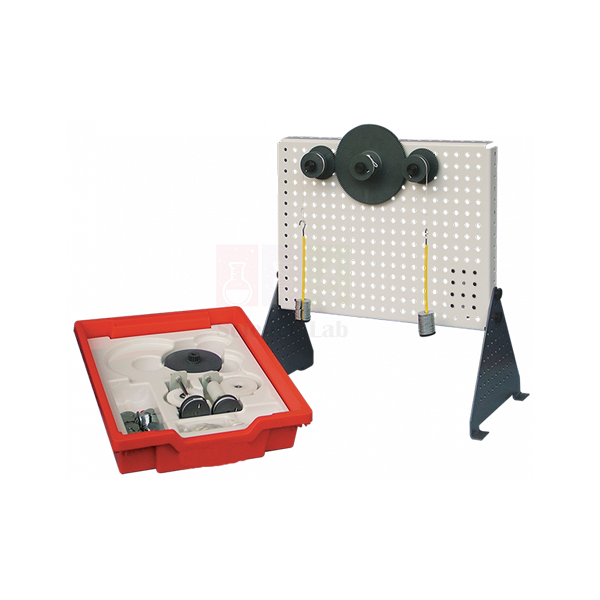
Gear Trains Kit
Gear Trains Kit (Product Code: SLE/ETP/23) is an engineering science teaching kit of spur, bevel and worm gears used to investigate how different gear sets transmit motion in school, polytechnic and college engineering labs. Lecturers use it to introduce gear ratio, efficiency, mechanical advantage and velocity ratio, and its double-toothed spur gears allow compound gear train experiments. The kit is made by Jain Scientific Equipments Pvt Ltd (ScienceLab), an OEM manufacturer, at its own factory in Ambala, India, as part of its engineering lab equipment range.
Key Details
| Parameter | Detail |
|---|---|
| Gears included | Spur gears, a bevel gear and a worm drive |
| Spur gear design | Two sets of teeth on the same shaft, allowing extra experiments in compound gear trains |
| Engineering terms introduced | Gear ratio, efficiency, mechanical advantage, velocity ratio |
| Real-world link | Gear sets similar to those in automobile gear boxes, domestic and industrial hand tools and clockwork instruments |
| Student activity | Test each gear set and note the differences in its characteristics |
| Product code | SLE/ETP/23 |
| Manufacturer | Jain Scientific Equipments Pvt Ltd (ScienceLab) — OEM |
| Country of origin | India (made in Ambala, Haryana) |
What Is the Gear Trains Kit Used For?
In a mechanics practical, students mesh one gear pair at a time, turn the input by hand and count the turns of the output to work out the velocity ratio. Comparing the effort applied with the load moved then shows mechanical advantage, and the gap between ideal and measured results explains why efficiency is always below one hundred percent.
The bevel gear shows how a drive can be turned through an angle, while the worm drive demonstrates a large speed reduction in a single stage. Joining the double-toothed spur gears into a compound train lets the class see how individual ratios multiply. A chalk or marker spot on one tooth of each gear makes counting turns much easier. As mechanics lab equipment, the kit links textbook formulas to the gearboxes and hand tools students already know.
OEM Manufacturer
ScienceLab is the trading name of Jain Scientific Equipments Private Limited, which produces the Gear Trains Kit as the original equipment manufacturer at its own licensed factory at Saha, Ambala, Haryana, India. Because the kit is made and assembled there rather than sourced from a trader, schools, polytechnics, engineering colleges, dealers and importers receive it factory-direct. Replacement gears and repeat orders are handled by the manufacturer itself — ask us about the parts you need. Read more on the ScienceLab company profile.
Related Laboratory Equipment
These items from the same engineering science range help build a complete mechanisms and statics practical.
- Engineering Science Work Panel — perforated metal bench panel made for engineering science kits; confirm your set-up with us.
- Moments Kit — continues from gears into turning-effect and lever experiments.
- Potential And Energy Kit — pendulum, spring and flywheel experiments on energy transfer.
- Set Of 5 trays And Lids — stackable trays for keeping gears and small parts together between lessons.
- Gear Train Model — a gear train demonstration model from the Theory of Machines range.
Browse the full Materials Testing and Properties range for more engineering teaching equipment.
Frequently Asked Questions
What gears are included in the Gear Trains Kit?
The Gear Trains Kit includes spur gears, a bevel gear and a worm drive. Its spur gears carry two sets of teeth on the same shaft, so students can build compound gear trains as well as simple gear pairs and compare how each arrangement behaves.
Which engineering terms does the Gear Trains Kit teach?
The Gear Trains Kit introduces gear ratio, efficiency, mechanical advantage and velocity ratio. Students test each gear set, record what they observe and compare the characteristics, linking theory to gear boxes, hand tools and clockwork mechanisms.
Who manufactures the Gear Trains Kit?
The Gear Trains Kit is manufactured by Jain Scientific Equipments Pvt Ltd (ScienceLab) as the OEM at its own licensed factory at Saha, Ambala, Haryana, India, so institutions, dealers and importers buy it directly from the maker.
Which courses can use the Gear Trains Kit?
The Gear Trains Kit suits any course that introduces gear ratio and mechanical advantage, from senior school technology and physics to diploma and engineering mechanics practicals. The teacher or lecturer decides how deep the calculations go for each group.
How should the Gear Trains Kit be looked after?
Keep the Gear Trains Kit clean and dry, store the gears in a tray between lessons and check the teeth for chips before each practical. Dust and grit add friction and distort efficiency results. For replacement parts, ask ScienceLab.
What should a quotation request for the Gear Trains Kit include?
For a Gear Trains Kit quotation, state the number of kits, any related engineering science items you want with them, and the delivery address in India or abroad. Send the details through the contact page and the quote comes straight from the manufacturer.
Can the Gear Trains Kit be ordered in bulk or for export?
Yes. ScienceLab supplies the Gear Trains Kit in quantity to institutions and dealers in India and international markets. Share your quantity and destination through the contact page to receive a quotation.
Request a Quote
To order the Gear Trains Kit, send your quantity and delivery location through the contact page or add it to the enquiry cart. Quotations come direct from the manufacturer, ScienceLab in Ambala.
Last updated: 24 September 2026
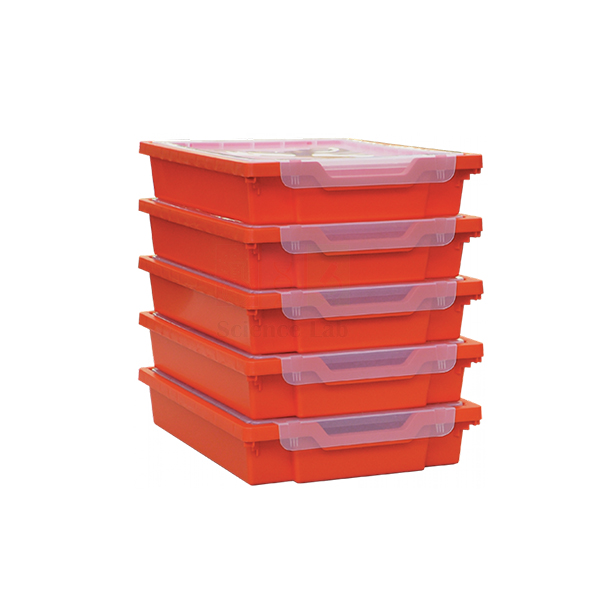
Set Of 5 trays And Lids
Set Of 5 trays And Lids (Product Code: SLE/ETP/24) is a pack of five lidded storage trays used to keep kit ancillaries, writing materials and A4 printed sheets safe and organised in engineering science teaching labs. Because the trays are identical to those used for the engineering science kits, they fit and stack in the same way as the kit trays already on the shelf. This lab equipment accessory is supplied by Jain Scientific Equipments Pvt Ltd (ScienceLab), Ambala, India.
Key Details
| Parameter | Detail |
|---|---|
| Contents | Five trays with lids |
| Suitable for storing | Ancillaries, writing materials or A4 size printed material |
| Compatibility | Identical to the trays used for the kits, so they fit and stack in the same way |
| Product code | SLE/ETP/24 |
| Supplied by | Jain Scientific Equipments Pvt Ltd (ScienceLab), Ambala, India |
What Are the Trays and Lids Used For?
In a shared lab, small ancillaries tend to drift from one kit to another and go missing by the end of term. Giving each bench group its own lidded tray keeps those pieces together, and worksheets or lecturer notes printed on A4 paper stay flat and clean under the lid instead of getting creased in a drawer.
Since the trays match the kit trays, a technician can stack spare trays on top of the kits and keep a tidy, uniform shelf. A simple label on each lid (group name, lab number or contents) speeds up issue and return during a practical session. For a school lab setup that is growing kit by kit, the set is an easy way to add storage that looks and stacks like the rest of the range.
Supplier
ScienceLab is the trading name of Jain Scientific Equipments Private Limited, which supplies this set of trays and lids to accompany its engineering science kits. Buyers can combine the trays with kits and other laboratory items in a single enquiry, which keeps purchasing simple for schools, colleges, dealers and importers. Company details are on the ScienceLab profile page.
Related Laboratory Equipment
The trays are most useful alongside the engineering science kits and panel they are designed to sit with.
- Engineering Science Work Panel — the perforated metal bench panel on which engineering science kits are set up.
- Gear Trains Kit — spur, bevel and worm gears whose small parts benefit from tray storage.
- Potential And Energy Kit — pendulum, spring and flywheel kit for energy experiments.
- Moments Kit — another engineering science kit for turning-effect experiments.
- Tensile Tester Kit — a materials-testing kit from the same product series.
See all items in the Materials Testing and Properties category.
Frequently Asked Questions
How many trays are in the Set Of 5 trays And Lids?
The Set Of 5 trays And Lids contains five trays, each with a matching lid. One set can give five bench groups their own storage tray, or hold a lab's worksheets and small parts in separate labelled trays.
What can be stored in the Set Of 5 trays And Lids?
The Set Of 5 trays And Lids is intended for ancillaries, writing materials or A4 size printed material. Typical uses are keeping small kit parts together, holding pens and rulers for a group, and storing printed worksheets flat.
Do these trays stack with the engineering science kit trays?
Yes. The trays in the Set Of 5 trays And Lids are identical to those used for the kits, so they fit and stack in the same way. Labs can add them to existing kit storage without mixing different tray shapes.
Who supplies the Set Of 5 trays And Lids?
The Set Of 5 trays And Lids is supplied by Jain Scientific Equipments Pvt Ltd (ScienceLab), Ambala, Haryana, India, which also offers the engineering science kits and work panel that the trays accompany.
What are the dimensions and material of the trays?
The listing for the Set Of 5 trays And Lids does not state exact dimensions or material, only that the trays hold A4 size printed material. Ask through the contact page and we will confirm the details with your quotation.
How do I order the Set Of 5 trays And Lids with other kits?
List the number of Set Of 5 trays And Lids you need together with any kits or panels in one enquiry, plus your delivery address in India or abroad. ScienceLab will return a single quotation covering all items.
Request a Quote
Send the quantity of tray sets you need through the contact page, or add this item to the enquiry cart with the kits you are ordering, and ScienceLab will reply with a quotation.
Last updated: 24 September 2026