- Physics Lab Equipment
- Chemistry Lab Equipment
- Biology Lab Equipment
- Anatomical Lab Equipment
- Learning
- Educational Lab Equipment
- Magnets
- Agriculture
- Astronomy
- Earth Science
- Geography Lab Equipment
- Safety Lab Coat
- Laboratory
- Meteorological
- Electricity & Magnetism
- Heat
- School Lab Equipment
- Lab Glassware
- Science Lab Equipment
- Tvet Lab Equipment
- Robotics Kits Supplier and Manufacturer for Schools India
- Math Lab Equipment Manufacturers and Exporters in Ambala
- STEM Kits Manufacturers and Supplier India
- Engineering Lab Equipment
- Hospital Lab Equipment
- Water, Sanitation & Hygiene Supplies
- Cold Chain, Solar & Communication Equipment
- Nutrition
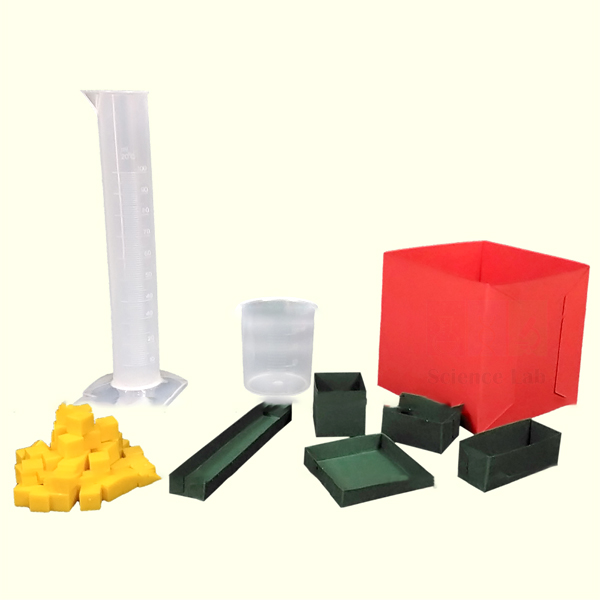
Volume Measuring Set
Volume Measuring Set (Product Code: SLE/LP/20) is a primary maths kit used to teach capacity and volume, from millilitres and litres to cubic centimetres, through hands-on measuring. Designed for up to 4 children aged 8–12 years, it combines a 100 ml measuring cylinder, a 100 ml beaker, 1 cm³ plastic cubes and nets for folding boxes of different volumes, including one litre. It is supplied by Jain Scientific Equipments Pvt Ltd (ScienceLab), Ambala, India.
Specifications
| Parameter | Detail |
|---|---|
| Measuring cylinder | 100 ml |
| Beaker | 100 ml |
| Unit cubes | Plastic cubes of 1 cm³ each |
| Nets | For making boxes of different volumes, including a one-litre box |
| Group size | Up to 4 children per set |
| Age group | 8–12 years |
| Concepts covered | Capacity of everyday liquids; converting millilitres and litres; the cubic centimetre–millilitre relationship; estimation and problem solving with volume |
| Product code | SLE/LP/20 |
| Supplied by | Jain Scientific Equipments Pvt Ltd (ScienceLab), Ambala, India |
What Is the Volume Measuring Set Used For?
Lessons usually open with informal comparisons, such as which container holds more, before moving to standard units with the 100 ml measuring cylinder and the 100 ml beaker. Pupils pour water between the two, read the cylinder's scale at eye level and notice that the same quantity of liquid looks different in a tall, narrow vessel and a short, wide one. Everyday examples like a glass of milk or a bottle of juice help them estimate capacity before checking by measurement.
The 1 cm³ plastic cubes connect solid volume with liquid capacity: one cubic centimetre corresponds to one millilitre, so a counted group of cubes matches the same number of millilitres. Older pupils then fold the nets into boxes of different sizes, finishing with a one-litre box that makes the link between litres, millilitres and cubic centimetres visible. The sequence suits a maths lab rotation in which groups of four move between measuring stations.
What to Specify When Ordering
- Number of sets — one Volume Measuring Set serves up to 4 children aged 8–12.
- Spare cubes or nets — ask us if larger groups or repeat lessons need extra 1 cm³ cubes or box nets.
- Extra measuring ware — schools wanting more pouring stations can add measuring cylinders from the related items below.
Supplier
ScienceLab is the brand name of Jain Scientific Equipments Private Limited, which supplies the Volume Measuring Set from Ambala, Haryana, India to schools, dealers and importers in India and international markets. A school can source the kit together with extra measuring cylinders and other Primary maths aids on one quotation, and can ask us about spare cubes or nets for repeat lessons. For vendor registration in tenders, the supplying company's GSTIN is 06AAECJ8618A1ZT and its LEI is 3358004HRD1JIVXKYX49. The ScienceLab profile page has more about the company.
Related Primary Learning Aids
These items support the same measurement and volume lessons:
- Glass Measuring Cylinder — an extra graduated cylinder for additional pouring stations.
- Measuring Cylinder, Polypropylene — a plastic option for younger pupils handling liquids.
- Volume Relation Between Cone and Cylinder — for older pupils moving on to the volumes of curved solids.
- Dienes Blocks Plastic — base-ten blocks for counting larger groups of unit cubes.
- Solid Shapes — for naming the 3D forms whose volume pupils are measuring.
See the whole Primary learning equipment range for other maths kits.
Frequently Asked Questions
What is included in the Volume Measuring Set?
The Volume Measuring Set (SLE/LP/20) includes a 100 ml measuring cylinder, a 100 ml beaker, plastic cubes of 1 cm³ and nets for making boxes of different volumes, including a box of one litre. Together they cover liquid capacity and solid volume in one kit.
Which age group is the Volume Measuring Set for?
The Volume Measuring Set is meant for children aged 8–12 years working in groups of up to 4. Younger pupils in that range start with pouring and comparing, while older ones move on to unit conversion and folding the one-litre net.
How does the Volume Measuring Set show that 1 cm³ equals 1 ml?
The Volume Measuring Set pairs 1 cm³ plastic cubes with a 100 ml measuring cylinder, so pupils can compare a counted volume of cubes with a measured volume of liquid and see that one cubic centimetre and one millilitre describe the same amount of space.
Who supplies the Volume Measuring Set?
The Volume Measuring Set is supplied by Jain Scientific Equipments Pvt Ltd (ScienceLab) of Ambala, Haryana, India. Schools and dealers receive quotations from the company directly and can ask the same team about spare 1 cm³ cubes, extra nets or additional measuring cylinders for larger classes.
How should the Volume Measuring Set be cleaned after lessons?
After water activities, rinse the Volume Measuring Set's cylinder and beaker, let them drain upside down and dry the cubes before storing them. Keep the nets flat and dry so they can be folded again, and store the kit in one box so no pieces go missing.
What details are needed for a Volume Measuring Set quotation?
For a Volume Measuring Set quotation, give the number of kits, the class sizes to be covered, any spare cubes or nets required and the delivery address in India or abroad. Send them through the contact page and ScienceLab will reply with a quote.
Request a Quote
Schools planning a measurement unit can request a price for the Volume Measuring Set through the ScienceLab contact form or by adding it to the enquiry cart. ScienceLab quotes for a single kit or a large institutional order, and can add related measuring ware to the same offer.
Last updated: 24 September 2026
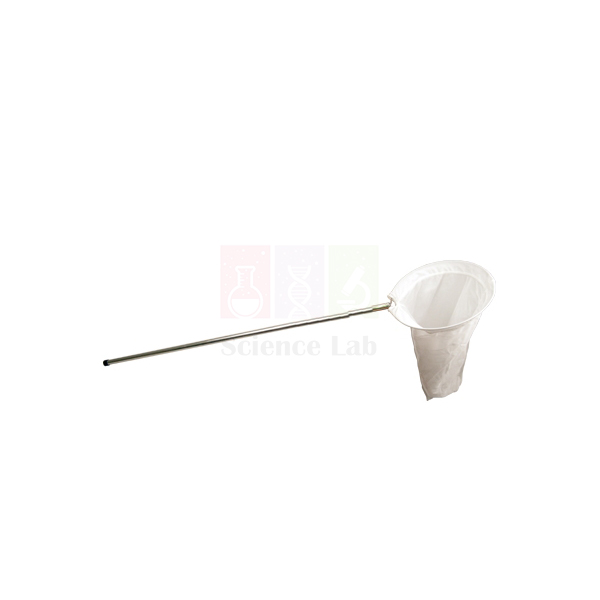
Insect Net, Economy
Insect Net, Economy (Product Code: SLE/EZ/21) is a lightweight collecting net used to catch butterflies, grasshoppers and other insects for study in school biology projects and college entomology fieldwork. It pairs a 36 in handle, 5/8 in in diameter, with a soft micromesh bag 16 in deep on a 10-1/2 in hoop, and it is easy to carry on field trips. It is made by Jain Scientific Equipments Pvt Ltd (ScienceLab), an OEM manufacturer, at its own factory in Ambala, India.
Specifications
| Parameter | Detail |
|---|---|
| Handle length | 36 in |
| Handle diameter | 5/8 in |
| Net | Soft micromesh |
| Hoop diameter | 10-1/2 in |
| Bag depth | 16 in |
| Weight class | Lightweight, easy to carry |
| Product code | SLE/EZ/21 |
| Manufacturer | Jain Scientific Equipments Pvt Ltd (ScienceLab) — OEM |
| Country of origin | India (made in Ambala, Haryana) |
What Is the Insect Net Used For?
An insect net is the starting point for most entomology activities: sweeping through long grass to sample the insects living there, or catching a single butterfly or dragonfly in flight. After each sweep or swing, a quick turn of the wrist folds the deep bag over the hoop and traps the catch until it can be moved into a viewing box. The soft micromesh is gentle on delicate wings and legs, which matters when insects are to be released after study.
Class sweep-net surveys work well when every group uses the same net and the same number of sweeps, so results can be compared between habitats. Keep the net away from thorny bushes and water, check the bag for snags after each outing, and store it hung up and dry. Together with viewing boxes and pins, it forms the core of an insect collection kit for schools.
OEM Manufacturer
This economy insect net is made by Jain Scientific Equipments Private Limited, the company behind the ScienceLab name and the original equipment manufacturer (OEM) of the product. Nets are assembled at its own licensed factory at Saha, Ambala, Haryana, India, and sold factory-direct to schools, colleges, nature clubs, dealers and importers. Class quantities and replacement nets are arranged by the manufacturer itself, so ask us. More is on the company profile page.
Related Zoology Equipment
Items for holding, viewing and preserving what the net catches:
- Bug Box, Gridded — for viewing and measuring a live insect before release.
- Chamber with Lid — a two-chamber container for simple behaviour tests on the catch.
- Insect Pin Holder — keeps entomology pins sorted when specimens are mounted.
- Insect Mount Set — reference specimens for identifying what was caught.
The Zoology category has more collecting and observation equipment.
Frequently Asked Questions
What are the dimensions of the Insect Net, Economy?
The Insect Net, Economy has a 36 in handle with a 5/8 in diameter, a 10-1/2 in hoop and a soft micromesh bag 16 in deep. The deep bag lets the net be folded over the hoop to trap insects after a swing.
Is the Insect Net, Economy suitable for younger students?
Yes. The Insect Net, Economy is lightweight and easy to carry, which suits school groups on nature walks. Show students how to swing it clear of others and how to transfer insects gently into a viewing box.
Can the Insect Net, Economy be used for sweep netting?
Yes. The Insect Net, Economy can be swept through grass and low plants to sample the insects living there. Use a set number of sweeps in each habitat so a class can compare results fairly.
How should the Insect Net, Economy be cared for?
After use, shake out plant debris, check the micromesh for snags, and hang the Insect Net, Economy up to dry and store. Keeping it away from thorns and water helps the soft bag last longer.
Who manufactures the Insect Net, Economy?
The Insect Net, Economy is manufactured by Jain Scientific Equipments Pvt Ltd (ScienceLab), the OEM, at its own licensed factory in Saha, Ambala, Haryana, India. Quotations for single nets or class sets come direct from the manufacturer.
What should a quotation request for the Insect Net, Economy include?
For an Insect Net, Economy quotation, send the number of nets, your delivery location in India or abroad, and any viewing boxes or pins you want added. Use the contact page or the enquiry cart.
Request a Quote
Quotes for the Insect Net, Economy come direct from the manufacturer. Share your quantity and delivery location through our contact page, or add it to the enquiry cart.
Last updated: 24 September 2026
327.jpg)
Empty Number Card (Set of 5)
Empty Number Card (Set of 5) (Product Code: SLE/LP/21) is a set of blank number cards used to practise recognising, writing and placing numerals in early primary maths. Teachers or pupils write any numeral on the cards with the chalks supplied, then hang them from their hooks to form a number sequence that can be wiped and changed. The set is supplied by Jain Scientific Equipments Pvt Ltd (ScienceLab), Ambala, India, within its range of mathematics lab equipment.
Key Details
| Parameter | Detail |
|---|---|
| Contents | 5 blank number cards |
| Writing | Chalks included for writing numerals on the cards |
| Display | Hooks for hanging the cards |
| Concepts covered | Numeral recognition; writing numbers; number location; connecting symbol to quantity |
| Product code | SLE/LP/21 |
| Supplied by | Jain Scientific Equipments Pvt Ltd (ScienceLab), Ambala, India |
What Is the Empty Number Card Set Used For?
Because the cards start blank, the teacher decides which numbers each lesson needs: 1 to 5 for a first counting group, a run of two-digit numbers for older children, or a sequence with one card left empty for pupils to complete. Writing a numeral in chalk and then saying it aloud reinforces both recognition and correct number formation.
Hung on their hooks, the cards become a movable number line for number-location work: pupils decide where a given number belongs, re-order cards that are out of place, or find the missing value between two neighbours. Placing a small group of classroom objects beside each card connects the written symbol to the quantity it stands for, an important step before formal addition.
Supplier
Jain Scientific Equipments Private Limited, the company behind the ScienceLab name, supplies the Empty Number Card set from Ambala, Haryana, India to primary schools, teacher-resource centres, stockists and importers in India and international markets. The cards sit in the same Primary maths range as the number cards, digit cards and number mats listed below, so an early-number corner can be furnished through a single supplier. For extra chalk or a repeat supply, simply ask us. Company background is on the ScienceLab profile.
Related Primary Learning Aids
For a complete early-number corner, teachers often add these items:
- Number Card (101 cards) — a larger card set for when a long run of numbers is needed.
- Digit cards — for building bigger numbers from single digits.
- Number Sticks — for linking counting with the numerals written on the cards.
- Number Catchers I (3 to 10) — a follow-on activity for small numbers.
- Number Mat — another surface for number-location games.
All early maths aids are grouped in the Primary learning equipment category.
Frequently Asked Questions
What does the Empty Number Card (Set of 5) include?
The Empty Number Card (Set of 5), code SLE/LP/21, includes five blank number cards, chalks for writing numerals on them and hooks so the cards can be hung up for display or number-line activities.
Can the numbers on the Empty Number Cards be changed?
Yes. The Empty Number Cards are written on with chalk, so a numeral can be wiped off and replaced with a new one, letting one set of five cards serve many different counting, ordering and number-location activities.
Which early maths skills do Empty Number Cards support?
Empty Number Cards support numeral recognition, writing numbers, number-location activities and connecting a written symbol to the quantity it represents, which makes them useful throughout the first years of primary maths.
Who supplies the Empty Number Card set?
Jain Scientific Equipments Pvt Ltd (ScienceLab), based in Ambala, Haryana, India, supplies the Empty Number Card set to schools, dealers and importers. The cards can be ordered on their own or together with other early-number aids from the Primary maths range in one enquiry.
What age group are the Empty Number Cards meant for?
No specific age range is listed for the Empty Number Card (Set of 5); the cards are aimed at the early stages of learning numerals. For guidance on a particular class, ask ScienceLab through the contact page.
How many Empty Number Card sets does a classroom need?
How many Empty Number Card sets a classroom needs depends on the teaching style: one set can serve a teacher-led number line, while small-group work usually calls for a set per group. Tell us your class sizes and we will quote accordingly.
Request a Quote
Send your requirement for the Empty Number Card (Set of 5) using the contact page, or collect it with other items in the enquiry cart and submit one enquiry. ScienceLab quotes for single sets as well as school-wide orders.
Last updated: 24 September 2026

Currency
Currency (Product Code: SLE/LP/22) is a classroom set of practice rupee notes and coins used to teach counting money, making change and converting rupees to paise in primary maths. One set serves up to 6 children aged 8–12 years and holds notes in seven denominations plus 5-, 2- and 1-rupee coins, enough for realistic shop role-play. It is supplied by Jain Scientific Equipments Pvt Ltd (ScienceLab), Ambala, India.
Key Details
| Parameter | Detail |
|---|---|
| Notes, 10 of each | 1000, 500, 100, 50 and 20 rupee denominations |
| Notes, 100 of each | 10 rupee and 1 rupee denominations |
| Coins, 10 of each | 5 rupee, 2 rupee and 1 rupee |
| Group size | Up to 6 children per set |
| Age group | 8–12 years |
| Concepts covered | Identifying notes and coins; converting rupees to paise; adding and subtracting bills; making the same amount with different combinations |
| Product code | SLE/LP/22 |
| Supplied by | Jain Scientific Equipments Pvt Ltd (ScienceLab), Ambala, India |
What Is the Currency Set Used For?
The Currency set turns money lessons into a working classroom shop. Children first learn to recognise each note and coin, then take turns as shopkeeper and customer, adding up bills, paying and working out change by subtraction. Converting rupees to paise follows naturally once pupils learn that one rupee is made up of 100 paise.
A popular challenge is to make the same amount in several ways, for example paying 20 rupees with a single note, with two 10-rupee notes, or with a mix of notes and coins. With 100 notes each of the 10 and 1 rupee values, a group of six has plenty of small change to trade without running out. Like the other mathematics lab kits in the range, the set is quickest to use when stored sorted by denomination.
What to Specify When Ordering
- Number of sets — one Currency set suits up to 6 children aged 8–12.
- Current contents — confirm the denomination list in your quotation so it matches the notes and coins your syllabus covers.
- Other maths aids — list any related items below so one quotation covers the whole order.
Supplier
Behind the ScienceLab brand is Jain Scientific Equipments Private Limited, which supplies this Currency set from Ambala, Haryana, India to schools, learning centres, distributors and importers in India and international markets. Money lessons often need more than one aid, so the set can be quoted together with decimal kits, balances and the other Primary maths items listed below. If notes or coins go missing over a school year, ask us about replacements. Learn more on the ScienceLab company profile.
Related Primary Learning Aids
These items extend money and number lessons built around the Currency set:
- Dummy Currency Notes — an additional note set for larger classes or extra shop stalls.
- Decimal Kit — helps link rupees and paise to decimal notation.
- Taming The Tables — times-table practice for totalling repeated items in a shop game.
- Balance Brass — for weighing goods during classroom shop role-play.
Explore the Primary learning equipment category for more maths aids.
Frequently Asked Questions
What notes and coins are in the Currency set?
The Currency set (SLE/LP/22) holds 10 notes each of the 1000, 500, 100, 50 and 20 rupee values, 100 notes each of the 10 and 1 rupee values, and 10 coins each of 5, 2 and 1 rupee.
How many children can use one Currency set?
One Currency set is intended for up to 6 children aged 8–12 years. That is enough for a small shop game with a shopkeeper and several customers, each handling notes and coins and checking the totals.
Which money skills does the Currency set teach?
The Currency set teaches identifying notes and coins, converting rupees to paise, adding and subtracting bills, and making the same amount of money with different combinations of notes and coins, all through practical role-play.
Who supplies the Currency set?
The Currency set is supplied by Jain Scientific Equipments Pvt Ltd (ScienceLab), Ambala, Haryana, India, to schools, learning centres, distributors and importers. Quotations, repeat supplies and questions about replacing lost notes or coins are all handled by the same ScienceLab team.
Does the Currency set match the notes in use today?
The Currency set's listed contents include 1000-rupee notes. If your lessons must reflect only the notes and coins in everyday use now, confirm the current contents with ScienceLab through the contact page before ordering.
What should a Currency set enquiry include?
A Currency set enquiry should give the number of sets, the class sizes they will serve, any other primary maths aids you need and the delivery location in India or abroad, so ScienceLab can prepare a complete quotation in one go.
Request a Quote
Request a price for the Currency set through the contact page or add it to the enquiry cart alongside other maths aids. ScienceLab quotes for single sets or for supplies covering many classrooms.
Last updated: 24 September 2026
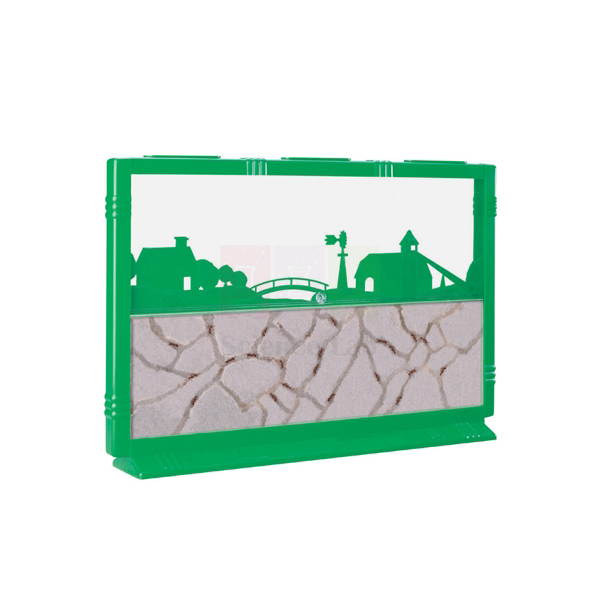
Giant Ant Farm
Giant Ant Farm (Product Code: SLE/EZ/22) is a large ant habitat used to watch ants dig tunnels and organise their colony over several weeks in classrooms and science clubs. At 15 x 10 in, it comes with clean tunnelling sand, a 24-inch clear connecting tube, a tunnel starter tool and a water feeder, giving students everything needed except the ants to begin observing. It is supplied by Jain Scientific Equipments Pvt Ltd (ScienceLab), Ambala, India.
Specifications
| Parameter | Detail |
|---|---|
| Size | 15 x 10 in |
| Tunnelling medium | Clean tunnelling sand |
| Connecting tube | 24-inch, clear |
| Tools | Tunnel starter tool |
| Watering | Water feeder |
| Live ants | Not listed as included — ask us |
| Product code | SLE/EZ/22 |
| Supplied by | Jain Scientific Equipments Pvt Ltd (ScienceLab), Ambala, India |
What Is the Giant Ant Farm Used For?
Ants are social insects, and an ant farm lets a class see what normally happens underground: workers digging and extending tunnels, carrying sand grains to the surface, moving food and caring for the colony. Because the tunnels change from day to day, students can sketch or photograph the farm at the same time each day and build a record of how the network grows, a long-running project in social insect behaviour.
Use the tunnel starter tool to make a few shallow openings that encourage the ants to begin digging, and keep the sand lightly moist with the water feeder. Keep the farm out of direct sunlight and away from heaters, feed sparingly, and never mix ants from different colonies, as they will fight. It adds a living element to school biology lab equipment and nature study.
What to Specify When Ordering
- The number of ant farms, for example one per class or one per science club.
- Whether you need help with a source of ants, since live ants are not listed as included.
- Any viewing boxes or magnifiers you want on the same order.
Supplier
Jain Scientific Equipments Private Limited, trading as ScienceLab, supplies the giant ant farm from Ambala, Haryana, India. Schools, colleges, activity centres and educational dealers can order it alongside other insect-study equipment, with delivery across India and to international markets. Company details are on the company profile page.
Related Zoology Equipment
Other insect-study items that complement the ant farm:
- Antworks Deluxe Kit — another ant habitat option from the same zoology range.
- Chamber with Lid — for short choice experiments with ants or other small insects.
- Bug Box, Gridded — for measuring individual ants and other minibeasts.
- Lens — a 3x and 6x magnifier for watching ants at work up close.
Explore the Zoology category for more.
Frequently Asked Questions
What comes with the Giant Ant Farm?
The Giant Ant Farm comes with clean tunnelling sand, a 24-inch clear connecting tube, a tunnel starter tool and a water feeder. The habitat itself measures 15 x 10 in, large enough for a class to watch at the same time.
Are live ants included with the Giant Ant Farm?
The listing for the Giant Ant Farm does not include live ants. Please ask through our contact page before ordering; many schools collect a small number of local ants from one colony under a teacher's supervision.
What is the tunnel starter tool on the Giant Ant Farm for?
The tunnel starter tool supplied with the Giant Ant Farm is used to make a few shallow openings in the sand. These give newly added ants a place to begin digging, so tunnels appear sooner.
How do I keep ants healthy in the Giant Ant Farm?
Keep the Giant Ant Farm out of direct sunlight and away from heat, keep the sand lightly moist using the water feeder, and give only small amounts of food. Remove uneaten food so mould does not develop.
What can students learn from the Giant Ant Farm?
The Giant Ant Farm lets students observe social insect behaviour, including tunnelling, division of work and food handling. Daily sketches or photos turn it into a long-running project on animal behaviour and data recording.
Who supplies the Giant Ant Farm?
The Giant Ant Farm is supplied by Jain Scientific Equipments Pvt Ltd (ScienceLab), Ambala, Haryana, India, to schools, colleges and dealers in India and international markets. It can be quoted with other insect-study items.
Request a Quote
To request a price for the Giant Ant Farm, send the quantity and delivery location through our contact page, or add it to the enquiry cart.
Last updated: 24 September 2026
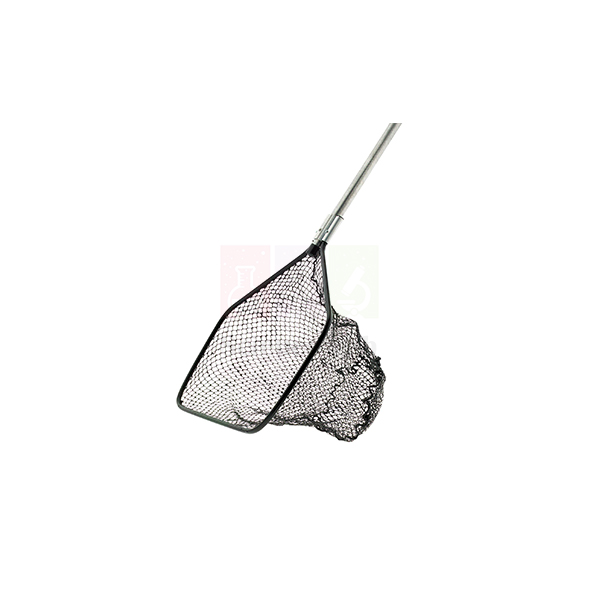
Net, Basic Fish Dip
Net, Basic Fish Dip (Product Code: SLE/EZ/23) is a long-handled D-frame dip net used to sample fish and aquatic invertebrates from ponds, streams and tanks in biology and environmental science fieldwork. It has a 4 ft aluminium handle, a D-shaped monorail bow 16 in wide by 18 in long, and a 24 in deep bag of 1/4 in knotless nylon mesh encased in the bow for protection. It is made by Jain Scientific Equipments Pvt Ltd (ScienceLab), an OEM manufacturer, at its own factory in Ambala, India.
Specifications
| Parameter | Detail |
|---|---|
| Handle | Aluminium, 4 ft long |
| Bow shape | D-shaped monorail bow |
| Bow size | 16 in wide x 18 in long |
| Bag depth | 24 in |
| Mesh | 1/4 in knotless nylon |
| Net protection | Net encased in the bow as a natural guard; bow prevents abrasion from tanks, rocks and sand |
| Product code | SLE/EZ/23 |
| Manufacturer | Jain Scientific Equipments Pvt Ltd (ScienceLab) — OEM |
| Country of origin | India (made in Ambala, Haryana) |
What Is the Fish Dip Net Used For?
The flat edge of a D-shaped frame sits flush against a stream bed, pond floor or tank bottom, so very little escapes underneath. Students use it for kick sampling, where the net is held on the bed while the gravel just upstream is disturbed so that dislodged animals drift in, and for sweeping through weed beds and along banks to catch small fish, nymphs and snails. The 4 ft handle lets them reach out from the bank while keeping their feet on firm ground.
Because the net is encased in the monorail bow, it is not dragged directly over stones and sand, which reduces wear on the mesh. Empty the catch by turning the bag inside out into a tray of water, and rinse the net before moving to a new site. Hang it to dry after use. It is a dependable part of an ecology science kit for school and college stream studies.
OEM Manufacturer
Jain Scientific Equipments Private Limited, trading as ScienceLab, is the original equipment manufacturer (OEM) of this basic fish dip net. It is made at the company's own licensed factory at Saha, Ambala, Haryana, India, and reaches schools, colleges, fisheries teaching departments, dealers and importers directly from the manufacturer rather than through a trader. Replacement bags, repeat orders and class sets are quoted by the factory — ask us. See the company profile for more.
Related Zoology Equipment
Equipment that works alongside the fish dip net on a stream or pond survey:
- Invertebrate Sampling Tray — a wide tray to empty the net into for hand-picking.
- Minnow Seine, Thrifty — a seine for sampling open shallow water that the dip net cannot cover.
- Mini Fish Measuring Board — for measuring fish lengths before release.
- Key to Identifying Water Invertebrates — for identifying the invertebrates collected.
Browse the Zoology category for more field equipment.
Frequently Asked Questions
What are the dimensions of the Net, Basic Fish Dip?
The Net, Basic Fish Dip has a 4 ft aluminium handle, a D-shaped bow 16 in wide and 18 in long, and a bag 24 in deep made of 1/4 in knotless nylon mesh. The deep bag holds the catch securely while the net is lifted.
Why does the Net, Basic Fish Dip have a D-shaped bow?
The flat side of the D-shaped bow on the Net, Basic Fish Dip rests flush on a stream bed or tank floor, leaving little gap for animals to escape beneath. That makes it well suited to kick sampling and bottom sweeps.
How is the net protected from wear on the Net, Basic Fish Dip?
On the Net, Basic Fish Dip the nylon net is encased in a monorail bow, which acts as a natural guard. The bow takes the contact with rocks, sand and tank walls instead of the mesh, reducing abrasion.
Can the Net, Basic Fish Dip be used for invertebrates as well as fish?
Yes. The Net, Basic Fish Dip, with its 1/4 in knotless nylon mesh, collects small fish as well as larger aquatic invertebrates such as nymphs, snails and beetles, which can then be sorted in a tray.
Who manufactures the Net, Basic Fish Dip?
The Net, Basic Fish Dip is manufactured by Jain Scientific Equipments Pvt Ltd (ScienceLab), the OEM, at its own licensed factory in Saha, Ambala, Haryana, India. Quotations, replacement bags and repeat orders are handled directly by the manufacturer.
How should the Net, Basic Fish Dip be cleaned after use?
Rinse the Net, Basic Fish Dip in clean water to remove mud, plants and small animals, especially before sampling a different site. Then hang it up to dry fully before storage to prevent odour and mildew.
Request a Quote
Quotations for the Net, Basic Fish Dip come direct from the manufacturer. Send the number of nets and your delivery location through our contact page, or add it to the enquiry cart.
Last updated: 24 September 2026
Gee Minnow Trap
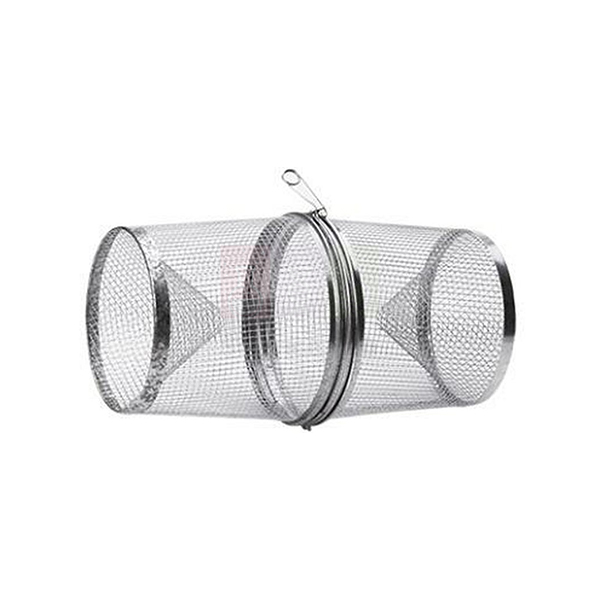
Gee Minnow Trap (Product Code: SLE/EZ/24) is a no-frills wire-mesh trap used to catch small fish passively in ponds and streams for biology and fisheries fieldwork. Students set it in the water and return later, instead of netting actively; it is made of galvanised 1/4 in square wire mesh, measures 16 in long by 9 in wide, and has a 7/8 in entrance hole. It is supplied by Jain Scientific Equipments Pvt Ltd (ScienceLab), Ambala, India.
Specifications
| Parameter | Detail |
|---|---|
| Type | Passive minnow trap |
| Material | Galvanised 1/4 in square wire mesh |
| Length | 16 in |
| Width | 9 in |
| Entrance hole | 7/8 in |
| Operation | Set it up and return at your convenience |
| Product code | SLE/EZ/24 |
| Supplied by | Jain Scientific Equipments Pvt Ltd (ScienceLab), Ambala, India |
What Is the Minnow Trap Used For?
A minnow trap samples small fish without anyone standing in the water: fish swim in through the entrance hole, often drawn by a little bait, and find it hard to swim back out. That makes it useful where banks are steep or water is too deep for a seine, and for comparing catches between sites or times of day. Traps set side by side in different habitats give a simple, repeatable survey method for a school or college ecology project.
Place the trap in shallow water near cover such as weeds or roots, and tie it to the bank with cord so it can be recovered. Check it within a few hours rather than leaving fish inside for long, then count, measure and release them where they were caught. The galvanised mesh copes with repeated wetting; rinse and dry it after use. Always check local rules on fish sampling and supervise students near water.
Supplier
Jain Scientific Equipments Private Limited, which trades as ScienceLab, supplies the Gee Minnow Trap from Ambala, Haryana, India. Schools, colleges, fisheries and environmental study programmes and dealers can source it together with nets, measuring boards and aerators on one quotation, for delivery across India and to international markets. More about the company is on the company profile page.
Related Zoology Equipment
Items that support a small-fish survey with the minnow trap:
- Minnow Seine, Thrifty — an active sampling method to compare with the trap's passive catch.
- Net, Basic Fish Dip — for lifting fish out of the trap and sampling the margins.
- Mini Fish Measuring Board — for recording fish lengths before release.
- Bucket Aerator — keeps fish in a holding bucket supplied with oxygen.
More fieldwork items are in the Zoology category.
Frequently Asked Questions
What is the Gee Minnow Trap made of?
The Gee Minnow Trap is made of galvanised 1/4 in square wire mesh. The galvanised coating helps the trap cope with repeated use in water, and the small mesh holds minnows and other small fish once they are inside.
What size is the Gee Minnow Trap?
The Gee Minnow Trap is 16 in long and 9 in wide, with a 7/8 in entrance hole. It is compact enough to carry several traps in one field bag and set them at different points around a pond.
How does the Gee Minnow Trap work?
Small fish swim into the Gee Minnow Trap through its entrance hole and find it difficult to swim back out. Students simply set the trap in the water, leave it for a short time, and return to count the catch.
How long should the Gee Minnow Trap be left in the water?
For teaching surveys, check the Gee Minnow Trap within a few hours so fish are not held for long. Record, measure and release the catch at the same spot, and remove the trap when the session ends.
Does the Gee Minnow Trap come with bait or cord?
The listing for the Gee Minnow Trap describes the wire-mesh trap only and does not mention bait or cord. Most groups use a length of cord to anchor it to the bank; ask us if you need accessories.
Who supplies the Gee Minnow Trap?
The Gee Minnow Trap is supplied by Jain Scientific Equipments Pvt Ltd (ScienceLab), Ambala, Haryana, India. Schools, colleges and dealers in India and international markets can order it through the contact page.
Request a Quote
For a Gee Minnow Trap quotation, send the number of traps and your delivery location through our contact page, or add them to the enquiry cart with other fieldwork items.
Last updated: 24 September 2026
Mini Fish Measuring Board
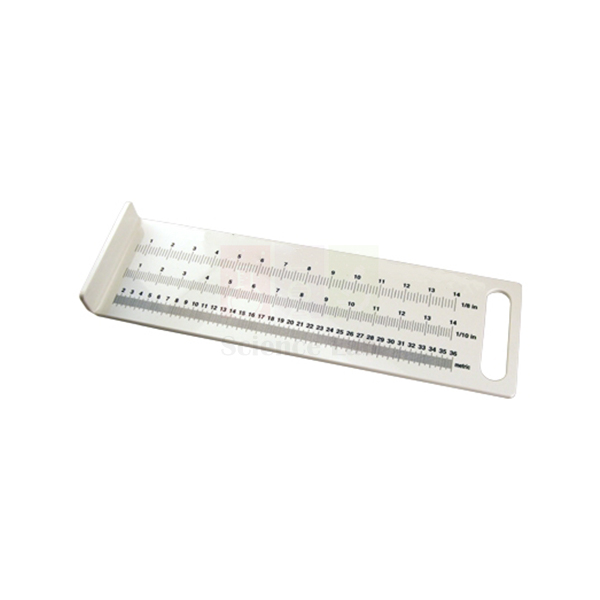
Mini Fish Measuring Board (Product Code: SLE/EZ/25) is a lightweight PVC board used to measure the length of small fish quickly and consistently during fisheries, ecology and zoology fieldwork. A raised lip positions the fish, a built-in handle makes it easy to carry, and three scales — in eighths of an inch, tenths of an inch and centimetres — are silk-screened in high-resolution black. It is supplied by Jain Scientific Equipments Pvt Ltd (ScienceLab), Ambala, India.
Specifications
| Parameter | Detail |
|---|---|
| Material | Lightweight PVC |
| Scales | Three: eighths (in), tenths (in) and centimetres |
| Scale printing | Silk-screened in high-resolution black |
| Fish positioning | Raised lip |
| Handle | Built-in |
| Size (as listed) | 15 in long; 16 x 5 x 1.5 in |
| Product code | SLE/EZ/25 |
| Supplied by | Jain Scientific Equipments Pvt Ltd (ScienceLab), Ambala, India |
What Is the Fish Measuring Board Used For?
Fish length is one of the most useful measurements in a freshwater survey: it shows the size range of a population, helps separate young fish from adults, and can be plotted as a length-frequency chart back in class. On a measuring board, the fish lies on its side with its snout pushed gently against the raised lip, and the length is read where the tail ends, so every student measures in the same way.
Having inch and centimetre scales on one board lets a group record in the unit their worksheet asks for, or practise converting between them. Wet the board before each fish so the protective slime layer is not rubbed off, measure quickly, and return the fish to water straight away. Rinse the board in clean water afterwards and let it dry. It is a handy addition to zoology lab equipment used on fisheries and pond-study courses.
Supplier
This mini fish measuring board is supplied by Jain Scientific Equipments Private Limited, trading as ScienceLab, of Ambala, Haryana, India. Schools, colleges, fisheries training centres and dealers can order it in field-kit quantities, with nets, traps and aerators on the same quotation, for customers in India and international markets. Company background is on the company profile page.
Related Zoology Equipment
Items used before and after measuring fish in the field:
- Minnow Seine, Thrifty — for catching the small fish to be measured.
- Gee Minnow Trap — a passive trap that supplies fish for measurement.
- Bucket Aerator — keeps fish in good condition while they wait to be measured.
- Bony Fish Model — for learning fish body parts, such as the snout and tail fin, in class.
See the Zoology category for more.
Frequently Asked Questions
Which scales are printed on the Mini Fish Measuring Board?
The Mini Fish Measuring Board carries three scales: inches in eighths, inches in tenths and centimetres. They are silk-screened in high-resolution black, so students can read and record lengths in whichever unit their survey uses.
What size is the Mini Fish Measuring Board?
The Mini Fish Measuring Board is listed as 15 in long and 16 x 5 x 1.5 in. The listing does not make clear which figure is the scale length, so ask through our contact page if the exact measuring range matters.
What is the raised lip on the Mini Fish Measuring Board for?
The raised lip on the Mini Fish Measuring Board acts as a stop for the fish's snout. With the snout against the lip, the length is read at the tail, giving consistent measurements between students.
What material is the Mini Fish Measuring Board made from?
The Mini Fish Measuring Board is made of lightweight PVC with a built-in handle. PVC can be rinsed after each use, and the light weight suits carrying the board to ponds and streams.
How do I measure a fish without harming it on the Mini Fish Measuring Board?
Wet the Mini Fish Measuring Board first, lay the fish on its side with the snout against the lip, read the length quickly and return the fish to water at once. Wet hands also help protect its slime layer.
Who supplies the Mini Fish Measuring Board?
The Mini Fish Measuring Board is supplied by Jain Scientific Equipments Pvt Ltd (ScienceLab), Ambala, Haryana, India, to schools, colleges and dealers in India and international markets. It can be quoted with nets, traps and aerators.
Request a Quote
To order the Mini Fish Measuring Board, send the quantity and delivery location through our contact page, or add it to the enquiry cart.
Last updated: 24 September 2026