- Physics Lab Equipment
- Chemistry Lab Equipment
- Biology Lab Equipment
- Anatomical Lab Equipment
- Learning
- Educational Lab Equipment
- Magnets
- Agriculture
- Astronomy
- Earth Science
- Geography Lab Equipment
- Safety Lab Coat
- Laboratory
- Meteorological
- Electricity & Magnetism
- Heat
- School Lab Equipment
- Lab Glassware
- Science Lab Equipment
- Tvet Lab Equipment
- Robotics Kits Supplier and Manufacturer for Schools India
- Math Lab Equipment Manufacturers and Exporters in Ambala
- STEM Kits Manufacturers and Supplier India
- Engineering Lab Equipment
- Hospital Lab Equipment
- Water, Sanitation & Hygiene Supplies
- Cold Chain, Solar & Communication Equipment
- Nutrition
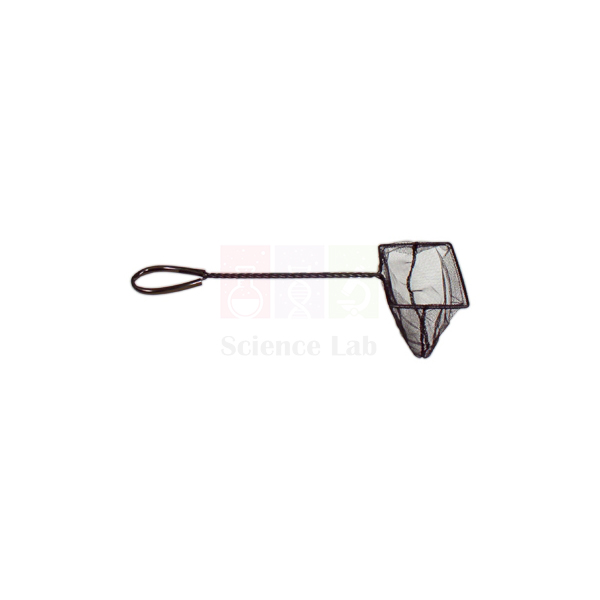
Aquarium Dip Net
Aquarium Dip Net (Product Code: SLE/EZ/18) is a small fine-mesh hand net used to catch and transfer fish, tadpoles and aquatic invertebrates in classroom aquaria and outdoor pond work. It has a 3 x 4 in net on an extra-strong, three-ply, vinyl-covered handle, and schools typically buy twelve or more so each group has its own. It is made by Jain Scientific Equipments Pvt Ltd (ScienceLab), an OEM manufacturer, at its own factory in Ambala, India.
Specifications
| Parameter | Detail |
|---|---|
| Net | Fine mesh |
| Net size | 3 x 4 in |
| Handle | Extra-strong, three-ply, vinyl-covered |
| Use | Indoors or outdoors |
| Class quantity | Suited to buying twelve or more |
| Product code | SLE/EZ/18 |
| Manufacturer | Jain Scientific Equipments Pvt Ltd (ScienceLab) — OEM |
| Country of origin | India (made in Ambala, Haryana) |
What Is the Aquarium Dip Net Used For?
In a classroom aquarium, a small net is the gentlest way to move a fish or snail to an observation tank, isolate an animal, or lift out uneaten food. Outdoors, the same net scoops water boatmen, tadpoles and larvae from the edge of a pond or from a sampling tray into smaller pots for closer study. Its fine mesh holds tiny animals securely, while the vinyl-covered handle is comfortable for younger hands.
Guide the animal into the net slowly rather than chasing it, and transfer it quickly so it spends as little time out of water as possible. Rinse the net in clean water between tanks to avoid carrying algae or disease from one aquarium to another, then hang it to dry. A set of these nets makes pond and aquarium work practical for a whole class of biology students.
What to Specify When Ordering
- The number of nets, bearing in mind that twelve or more suits a typical class.
- Whether you also need tanks or trays to receive the animals.
- Your delivery location, so the quotation includes freight.
OEM Manufacturer
The aquarium dip net is manufactured by Jain Scientific Equipments Private Limited, which trades as ScienceLab and acts as the original equipment manufacturer (OEM). Production takes place at the company's own licensed factory at Saha, Ambala, Haryana, India, and the nets go factory-direct to schools, colleges, aquarium-keeping clubs, dealers and importers. Class sets and replacement nets are quoted by the manufacturer itself — just ask. Read more on the company profile page.
Related Zoology Equipment
Items that go with the aquarium dip net in aquatic-life lessons:
- Mini Aquarium Tank — a clear pan to hold the animals the net collects.
- Net, Basic Fish Dip — a long-handled D-net for sampling larger stretches of water.
- Sorting Tray — a white tray from which small animals can be picked with the dip net.
- Bucket Aerator — keeps animals in a holding bucket supplied with oxygen.
See more in the Zoology category.
Frequently Asked Questions
What size is the Aquarium Dip Net?
The Aquarium Dip Net has a 3 x 4 in fine-mesh net. That small size makes it easy to reach into a classroom aquarium or observation tank and catch a single fish, snail or tadpole without disturbing the rest.
What is the handle of the Aquarium Dip Net made of?
The Aquarium Dip Net has an extra-strong, three-ply handle with a vinyl covering. The covering gives a comfortable grip for students and is easy to rinse clean after use in pond or aquarium water.
Can the Aquarium Dip Net be used outdoors?
Yes. The Aquarium Dip Net can be used inside or out, for aquarium maintenance in class or for scooping small animals from pond edges and sampling trays during fieldwork. Rinse and dry it after each outing.
How many Aquarium Dip Nets should a school order?
Schools usually order twelve or more Aquarium Dip Nets, so that each group in a class has its own net during pond dipping or aquarium work. Tell us your class size and we can quote a suitable quantity.
Who manufactures the Aquarium Dip Net?
The Aquarium Dip Net is manufactured by Jain Scientific Equipments Pvt Ltd (ScienceLab), the OEM, at its own licensed factory in Saha, Ambala, Haryana, India. Orders and repeat supplies are handled directly by the manufacturer.
How do I stop the Aquarium Dip Net spreading disease between tanks?
Rinse the Aquarium Dip Net thoroughly in clean water after each tank and let it dry before the next use. Where possible, keep a separate net for each aquarium so algae and disease are not carried between them.
Request a Quote
Quotes for the Aquarium Dip Net come direct from the manufacturer. Send the number of nets and your delivery location through our contact page, or add them to the enquiry cart.
Last updated: 24 September 2026

Number Sticks
Number Sticks (Product Code: SLE/LP/15) is a set of 200 sticks with rubber band and a wooden dice, used to teach place value by bundling and regrouping tens and ones in early primary maths. Designed for up to 4 children aged 6–9 years, it turns the carry-over and borrowing steps of addition and subtraction into something children can see and handle. It is supplied by Jain Scientific Equipments Pvt Ltd (ScienceLab), Ambala, India, as a junior lab kit for primary school number work.
Specifications
| Parameter | Detail |
|---|---|
| Sticks | 200 |
| Bundling | Rubber band, to structure the sticks into groups |
| Dice | Wooden dice marked 0–5, for the game |
| Activity guide | Write-up with details of the activities |
| Group size and age | Up to 4 children, 6–9 years |
| Concepts | Counting and regrouping objects into tens and ones; expanding a number by place value; place value with addition and subtraction; carry-over and borrowing in the algorithm; place value built on number sense |
| Product code | SLE/LP/15 |
| Supplied by | Jain Scientific Equipments Pvt Ltd (ScienceLab), Ambala, India |
What Are Number Sticks Used For?
Children count out ten loose sticks and bind them into a bundle, so “one ten” becomes an object they can hold rather than a word. A number such as 16 is then built as 1 bundle and 6 loose sticks, which is its expanded form made concrete. Reading the bundles and loose sticks back as a written number connects the objects to the digits.
The 0–5 wooden dice adds a game element: as sticks are collected, ten loose ones must be bundled before play continues, which is carry-over in action. In subtraction the reverse happens — a bundle is opened to give ten ones, which is exactly what borrowing means. Once children can explain these moves with sticks, the written algorithm makes sense instead of being a set of rules.
Supplier
Number Sticks are supplied by Jain Scientific Equipments Private Limited, whose trading name is ScienceLab, from Ambala in Haryana. Primary schools, early-learning centres and dealers in India and international markets order them for maths corners and group sets. The company profile has more information.
Related Primary Maths Kits
Next steps after tens-and-ones work with sticks:
- Dienes Blocks Plastic — ready-made base-ten blocks once bundling is secure.
- Digit cards — place-value games with 3- and 4-digit numbers.
- Game of Place Value — another game for practising place value.
- Abacus Upright — a bead abacus for showing tens and ones.
- Number Card (101 cards) — a hanging number line from 0 to 100.
Explore more number kits in the Primary category.
Frequently Asked Questions
How many sticks are in Number Sticks?
Number Sticks contains 200 sticks, together with rubber band for bundling them into groups and a wooden dice marked 0–5 for the game. A write-up with details of the activities is also included in the set.
What age group are Number Sticks for?
Number Sticks are intended for up to 4 children aged 6–9 years, the stage when children first group objects into tens and ones and learn to add and subtract with carry-over and borrowing.
How do Number Sticks teach carry-over and borrowing?
Number Sticks teach carry-over by having children bundle ten loose sticks into one ten, and borrowing by opening a bundle back into ten ones, so each step of the written algorithm matches an action with real objects.
What is the dice in Number Sticks used for?
The wooden dice in Number Sticks is marked 0–5 and is used for a place-value game, adding a chance element that keeps children counting, bundling and regrouping sticks as their totals change from round to round.
Who supplies Number Sticks?
Number Sticks are supplied by Jain Scientific Equipments Pvt Ltd (ScienceLab), Ambala, Haryana, India, to schools, early-learning centres and dealers in India and international markets, as single sets or in quantities for several groups.
Request a Quote
Ask for a Number Sticks quotation by sending the number of groups and your delivery location through the contact page, or add the set to the enquiry cart with other place-value kits.
Last updated: 24 September 2026

Sorting Kits Triangle
Sorting Kits Triangle (Product Code: SLE/LP/16) is a set of different types of triangles in three colours, used to develop geometric thinking by sorting and classifying triangles in school maths. Groups of up to 4 children aged 8–14 years sort the pieces in different ways and look for the geometric basis of each grouping, moving from how a triangle looks to what defines it. It is supplied by Jain Scientific Equipments Pvt Ltd (ScienceLab), Ambala, India, as one of its mathematics lab kits for geometry teaching.
Key Details
| Parameter | Detail |
|---|---|
| Contents | A set of different types of triangles |
| Colours | Three different colours |
| Group size and age | Up to 4 children, 8–14 years |
| Concepts | Properties and classification of triangles; angle sum property; congruence and similarity; relationships between different shapes |
| Approach | Sorting in different ways and exploring the geometric basis for sorting; moving from a visual to an analytical understanding of shapes |
| Product code | SLE/LP/16 |
| Supplied by | Jain Scientific Equipments Pvt Ltd (ScienceLab), Ambala, India |
What Is the Triangle Sorting Kit Used For?
A first sort is often by colour, and that is useful precisely because colour turns out not to be a geometric property. The teacher then asks for new sorts — by equal sides, by the largest angle, by whether there is a right angle — and children discover the categories equilateral, isosceles and scalene, and acute, right and obtuse, for themselves.
Laying one piece over another is a direct test of congruence, while comparing triangles that share a shape but not a size introduces similarity. Tracing a triangle on paper, tearing off its three corners and fitting them along a straight line shows the angle sum property in a way pupils remember. Together these activities move children from recognising triangles by sight to reasoning about them.
What to Specify When Ordering
- Which kit you need: triangles (three colours), quadrilaterals (Sorting Kit Quadrilateral, two colours), or both.
- The number of kits — each serves a group of up to 4 children.
- A request to confirm the number of pieces and their material in the quotation.
Supplier
Sorting Kits Triangle is supplied by Jain Scientific Equipments Private Limited, the Ambala company behind the ScienceLab brand. Upper-primary and middle schools, maths labs and dealers in India and international markets order it on its own or with the quadrilateral kit. More about the company is on the profile page.
Related Primary Maths Kits
Geometry aids that support triangle classification:
- Sorting Kit Quadrilateral — the companion kit for four-sided shapes.
- Tessellation Kit — tiling with polygons to extend angle work.
- Geoboard — making and comparing triangles on a board.
- Professional Protractor — measuring angles to check the angle sum.
- Straws Base Kit — constructing triangles from given sides and angles.
Further kits for primary geometry are in the Primary category.
Frequently Asked Questions
What is in the Sorting Kits Triangle set?
Sorting Kits Triangle is a set of different types of triangles made in three different colours, designed for sorting and classification activities by groups of up to 4 children aged 8–14 years.
What concepts does Sorting Kits Triangle teach?
Sorting Kits Triangle teaches the properties and classification of triangles, the angle sum property, congruence and similarity, and relationships between shapes, helping children move from recognising triangles by appearance to describing them by their properties.
How many triangles are in Sorting Kits Triangle?
The number, sizes and material of the pieces in Sorting Kits Triangle are not given in the product description. Please ask through the contact page, and your quotation will list the pieces supplied in the set.
Is there a matching quadrilateral kit for Sorting Kits Triangle?
Yes. Sorting Kit Quadrilateral is the companion to Sorting Kits Triangle, with different types of quadrilaterals in two colours for the same 8–14 age range, so both kits can be used across one polygon classification unit.
Who supplies Sorting Kits Triangle?
Sorting Kits Triangle comes from Jain Scientific Equipments Pvt Ltd (ScienceLab), Ambala, Haryana, India, which supplies schools, maths labs and dealers in India and international markets with single kits or group quantities.
Request a Quote
Send the number of Sorting Kits Triangle sets, and whether you also need the quadrilateral kit, through the contact page, or add both to the enquiry cart for one quotation.
Last updated: 24 September 2026

Sorting Kit Quadrilateral
Sorting Kit Quadrilateral (Product Code: SLE/LP/17) is a set of different types of quadrilaterals in two colours, used to discover and classify the properties of four-sided shapes in school geometry lessons. It is intended for up to 4 children aged 8–14 years, who sort the pieces in several ways to work out how different quadrilaterals are related — for instance, why every square is also a rectangle. It is supplied by Jain Scientific Equipments Pvt Ltd (ScienceLab), Ambala, India, alongside its other mathematics lab kits.
Key Details
| Parameter | Detail |
|---|---|
| Contents | A set of different types of quadrilaterals |
| Colours | Two colours |
| Group size and age | Up to 4 children, 8–14 years |
| Concepts | Properties and classification of quadrilaterals; angle sum property; congruence and similarity; relationships between different shapes |
| Approach | Sorting in different ways and exploring the geometric basis for sorting; from visual to analytical understanding |
| Product code | SLE/LP/17 |
| Supplied by | Jain Scientific Equipments Pvt Ltd (ScienceLab), Ambala, India |
What Is the Quadrilateral Sorting Kit Used For?
Quadrilaterals are where classification gets interesting, because the categories overlap: a square is also a rectangle and a rhombus, and all three are parallelograms. Sorting the pieces by parallel sides, equal sides and right angles lets children build these family relationships themselves instead of memorising a chart, and a Venn-style sort shows clearly which shapes belong to more than one group.
The kit also supports reasoning about angles. Drawing one diagonal splits any quadrilateral into two triangles, which explains why its four angles always make the same total. Overlaying pieces tests congruence, and comparing shapes that match in form but not in size opens a discussion of similarity. In a geometry corner of a school lab setup, this kit sits naturally after work on triangles.
Supplier
Jain Scientific Equipments Private Limited, trading as ScienceLab, supplies the Sorting Kit Quadrilateral from Ambala, Haryana, to schools, teacher-training institutes, maths labs and dealers in India and international markets. It can be quoted together with the triangle sorting kit for a complete polygon unit. Company information is available on the ScienceLab profile.
Related Primary Maths Kits
Kits that pair well with quadrilateral sorting:
- Sorting Kits Triangle — the triangle kit that usually comes first.
- Geoboard — making quadrilaterals and exploring their area.
- Sorting Ring — rings for grouping pieces during sorting activities.
- Straws Base Kit — building quadrilaterals from sides and angles.
- Tessellation Kit — seeing which quadrilaterals tile a surface.
The Primary category lists more geometry kits.
Frequently Asked Questions
What does the Sorting Kit Quadrilateral contain?
The Sorting Kit Quadrilateral contains a set of different types of quadrilaterals made in two colours, for sorting and classification activities by groups of up to 4 children aged 8–14 years.
What will children learn with the Sorting Kit Quadrilateral?
With the Sorting Kit Quadrilateral, children discover the properties and classification of quadrilaterals, the angle sum property, congruence and similarity, and the relationships between different four-sided shapes, moving from visual recognition to analytical thinking.
How does the Sorting Kit Quadrilateral differ from the triangle kit?
The Sorting Kit Quadrilateral holds quadrilaterals in two colours, while Sorting Kits Triangle holds triangles in three colours. Both serve up to 4 children aged 8–14 years and can be used one after the other in a geometry unit.
Which quadrilaterals are included in the Sorting Kit Quadrilateral?
The exact shapes, number of pieces and material in the Sorting Kit Quadrilateral are not listed in its description beyond different types of quadrilaterals. Please ask through the contact page and the quotation will confirm the contents.
Who supplies the Sorting Kit Quadrilateral?
Jain Scientific Equipments Pvt Ltd (ScienceLab) of Ambala, Haryana, India, supplies the Sorting Kit Quadrilateral to schools and dealers in India and international markets, either singly or together with other geometry kits.
Request a Quote
Tell us how many Sorting Kit Quadrilateral sets you need, and whether the triangle kit should be added, through the contact page; the enquiry cart also collects several items into one request.
Last updated: 24 September 2026
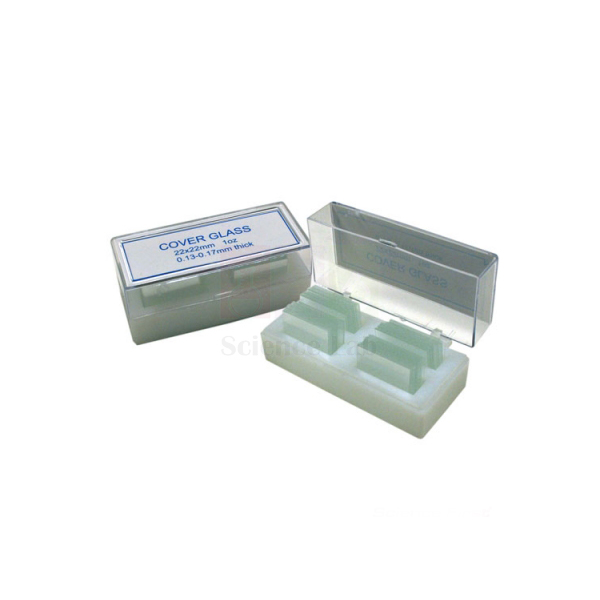
Microscope Cover Slips
Microscope Cover Slips (Product Code: SLE/EZ/19) are thin, pre-cleaned covers placed over specimens on microscope slides to flatten and protect wet mounts in school, college and teaching laboratories. Each slip measures 22 x 22 mm with a thickness of 0.13 to 0.16 mm, and they are described as non-fogging and non-sticking, with no bubbles, scratches or striations. They are supplied by Jain Scientific Equipments Pvt Ltd (ScienceLab), Ambala, India, as a routine microscopy consumable.
Specifications
| Parameter | Detail |
|---|---|
| Dimensions | 22 mm x 22 mm |
| Thickness | 0.13 – 0.16 mm |
| Condition | Pre-cleaned |
| Surface | Non-fogging, non-sticking |
| Quality | No bubbles, scratches or striations |
| Pack size | Not stated — confirmed on quotation |
| Product code | SLE/EZ/19 |
| Supplied by | Jain Scientific Equipments Pvt Ltd (ScienceLab), Ambala, India |
What Are Microscope Cover Slips Used For?
Almost every temporary mount in a biology practical, from onion peel and cheek cells to pond water and stained tissue, needs a cover slip. It spreads the drop of water or stain into a thin, even layer, keeps the specimen flat so it stays in focus, slows drying under the lamp, and stops liquid touching the objective lens. Thin cover slips leave room for higher-power objectives to focus close to the specimen.
To avoid trapped air, touch one edge of the slip to the drop and lower it slowly with a needle or probe. Hold slips by their edges, or pick them up with forceps, as fingerprints show up clearly under magnification. Cover slips are fragile, so collect broken pieces in a dedicated glass-waste container. They are an everyday item on any list of microscope slides and school microscopy supplies in India.
What to Specify When Ordering
- The quantity you need; the pack size is not listed, so we confirm it on the quotation.
- Plain or cavity microscope slides to be supplied with the cover slips.
- Any mounting tools, such as teasing needles or droppers, for the same practical.
Supplier
Jain Scientific Equipments Private Limited, trading as ScienceLab, supplies these microscope cover slips from Ambala, Haryana, India. Schools, colleges, pathology teaching labs and distributors can add them to orders for slides, microscopes and dissection tools, with dispatch across India and to international markets. Company information is on the company profile page.
Related Zoology Equipment
Everything else needed to prepare and view a wet mount:
- Microscope Slides Glass — plain slides to carry the specimen under the cover slip.
- Microscope Slides Depression — cavity slides for thicker samples and living organisms.
- Teasing Needle (Probe) — for spreading the specimen and lowering the slip without bubbles.
- Dropper — for adding water or stain to the slide.
- Compound Microscope — for viewing the finished mount.
More items are in the Zoology category.
Frequently Asked Questions
What size are the Microscope Cover Slips?
The Microscope Cover Slips measure 22 mm x 22 mm and are 0.13 to 0.16 mm thick. This size covers the specimen area of a standard microscope slide and is common in school and college practicals.
Do the Microscope Cover Slips need cleaning before use?
No. The Microscope Cover Slips are supplied pre-cleaned and described as free from bubbles, scratches and striations. Handle them by the edges or with forceps so fingerprints do not undo that cleaning.
How many Microscope Cover Slips are in a pack?
The listing does not state a pack size for the Microscope Cover Slips. Tell us how many you need through our contact page, and the quotation will confirm the pack size and number of packs.
How do I avoid air bubbles under Microscope Cover Slips?
Place a drop of water or stain on the specimen, touch one edge of the Microscope Cover Slip to the drop, and lower it slowly with a teasing needle. The liquid spreads ahead of the slip and pushes air out.
Are Microscope Cover Slips reusable?
Microscope Cover Slips are usually treated as consumables in teaching labs, because they are thin and break easily during cleaning. Collect used or broken slips in a glass-waste container rather than a general bin.
Who supplies the Microscope Cover Slips?
The Microscope Cover Slips are supplied by Jain Scientific Equipments Pvt Ltd (ScienceLab), Ambala, Haryana, India. Schools, colleges and dealers in India and international markets can order them alone or with slides and microscopes.
Request a Quote
To order Microscope Cover Slips, send the quantity and delivery location through our contact page, or add them with slides to the enquiry cart.
Last updated: 24 September 2026

Geoboard
Geoboard (Product Code: SLE/LP/18) is a square plastic pin board used to build polygons, angles and circles with rubber bands in primary school maths lessons. It suits one or two children aged 6 years and above and includes worksheets with a printed grid for recording each shape. It is supplied by Jain Scientific Equipments Pvt Ltd (ScienceLab), Ambala, India, as part of its range of mathematics lab kits.
Key Details
| Parameter | Detail |
|---|---|
| Board | Square plastic board fitted with pins |
| Supplied with | Rubber bands and worksheets with a printed grid |
| Group size | 1–2 children per board |
| Age group | 6 years and above |
| Concepts covered | Properties of polygons and their angles; right, acute and obtuse angles; parallel and intersecting lines; circles and chords; rotations and reflections of 2-D shapes |
| Product code | SLE/LP/18 |
| Supplied by | Jain Scientific Equipments Pvt Ltd (ScienceLab), Ambala, India |
What Is the Geoboard Used For?
Children loop rubber bands around the pins to form triangles, quadrilaterals and other polygons, then compare them by their sides and angles. Because every corner sits on a pin, a pupil gets the feel of an angle just by watching how sharply a band turns, and can sort angles into right, acute and obtuse. Two bands stretched side by side show parallel lines, while crossing them shows intersecting lines.
The same board also supports work on circles and chords, carrying pupils from straight-sided figures to curved ones. Turning or flipping a band shape gives an intuitive first look at rotations and reflections of familiar 2-D shapes. Finishing each activity by copying the shape onto a grid worksheet links hands-on work with written geometry, which makes the Geoboard a practical junior lab kit for primary school maths corners.
What to Specify When Ordering
- Number of boards — each Geoboard is meant for 1–2 children, so plan a class set per pair of pupils.
- Extra rubber bands — bands wear with daily use; ask us about spares along with the boards.
- Worksheets — say whether you need additional printed-grid worksheet sets for repeat lessons.
Supplier
ScienceLab is the trading name of Jain Scientific Equipments Private Limited, which supplies this Geoboard from Ambala, Haryana, India to primary schools, teacher-training colleges, dealers and importers in India and international markets. It can be ordered alongside the other geometry and number aids in the Primary maths range, so a school can equip a whole maths corner through one supplier. If a class set later needs extra rubber bands or more boards, ask us and we will quote them. Read more on the ScienceLab company profile.
Related Primary Learning Aids
These items from the same maths range pair well with the Geoboard when planning geometry lessons:
- Double Sided Geoboard — an alternative board for extending the same band-and-pin activities.
- 10 Isometric Grid Pattern Geoboard — an isometric pin pattern suited to triangle-based shapes.
- Sorting Kits Triangle — for classifying triangles once pupils have built them with bands.
- Sorting Kit Quadrilateral — for comparing four-sided shapes by their properties.
- Tessellation Kit — for taking shape work on to repeating patterns.
Browse the full Primary learning equipment range for more maths aids.
Frequently Asked Questions
What comes with the Geoboard?
The Geoboard (SLE/LP/18) comes as a square plastic board fitted with pins, together with rubber bands and worksheets printed with a grid. Pupils build shapes on the pins and then copy them onto the worksheets to record what they found.
What age group is the Geoboard suitable for?
The Geoboard is intended for children aged 6 years and above, with one board shared by one or two pupils. That small group size lets each child handle the bands, form shapes and talk through angles and sides with a partner.
Which maths topics can the Geoboard teach?
The Geoboard supports lessons on polygons and their angles, classifying angles as right, acute or obtuse, parallel and intersecting lines, circles and chords, and early ideas of rotation and reflection of 2-D shapes, so it serves several primary geometry units.
Who supplies the Geoboard?
The Geoboard is supplied by Jain Scientific Equipments Pvt Ltd (ScienceLab), based in Ambala, Haryana, India. Schools, dealers and importers can order it on its own or together with other Primary maths aids, and enquiries about extra rubber bands or worksheets go to the same team.
How should the Geoboard be looked after?
Store the Geoboard's rubber bands in a closed box away from direct sunlight and heat, since rubber perishes with age, and wipe the plastic board clean after lessons. Check that the pins are secure before each session so young children can work safely.
What should a quotation request for the Geoboard include?
A quotation request for the Geoboard should state the number of boards, how many children will share each class set, any extra rubber bands or worksheets, and the delivery location in India or abroad. Send these details through the contact page for a quotation from ScienceLab.
Request a Quote
For pricing on single boards or full class sets of the Geoboard, send your requirement through our contact form or add the item to the enquiry cart. ScienceLab replies with a quotation, and bulk orders from schools and dealers are welcome.
Last updated: 24 September 2026
28.jpg)
Teasing Needle (Probe)
Teasing Needle (Probe) (Product Code: SLE/EZ/20) is a stainless steel needle with a plastic handle used to tease apart tissue, spread specimens on slides and probe structures during dissection in biology practicals. School and college students use it for slide preparation and animal or plant dissections, and it is sold individually, so labs can buy exactly the number of workstations they need. It is made by Jain Scientific Equipments Pvt Ltd (ScienceLab), an OEM manufacturer, at its own factory in Ambala, India.
Specifications
| Parameter | Detail |
|---|---|
| Needle | Stainless steel |
| Handle | Plastic |
| Sold as | Individual pieces (eaches) |
| Product code | SLE/EZ/20 |
| Manufacturer | Jain Scientific Equipments Pvt Ltd (ScienceLab) — OEM |
| Country of origin | India (made in Ambala, Haryana) |
What Is the Teasing Needle Used For?
Teasing means gently pulling a tissue apart into fine strands so its cells or fibres can be seen under the microscope, as in a muscle-fibre or root-tip preparation. The same needle spreads an onion peel flat, pushes air bubbles out from under a cover slip, and lowers the slip slowly onto a drop of stain. In dissection it acts as a probe for lifting nerves and vessels or tracing a structure without cutting it.
Stainless steel stands up to repeated contact with water and stains, and the plastic handle gives a light, steady grip for fine work. Wipe the needle clean and dry after each class, push the point into a cork for storage, and count needles out and back in at the end of the lesson. Teasing needles belong in every dissection kit used in school labs in India, alongside forceps, scissors and a scalpel.
OEM Manufacturer
Jain Scientific Equipments Private Limited, trading as ScienceLab, is the original equipment manufacturer (OEM) of this teasing needle. It is made at the company's own licensed factory at Saha, Ambala, Haryana, India, and supplied factory-direct — not through a trader — to schools, colleges, dissection-kit assemblers, dealers and importers. Replacement needles for existing kits and repeat orders are handled by the manufacturer, so ask us. Visit the company profile for background.
Related Zoology Equipment
Tools and consumables used with the teasing needle:
- Dissecting Needle — an alternative needle from the dissection equipment range.
- Dissecting Needle Plastic Handle — a similar plastic-handled needle for comparison.
- Microscope Cover Slips — the cover slips the needle helps to lower without bubbles.
- Dissecting Tray with Wax — a wax base for pinning specimens during probing.
- Dissecting Set, Student — a full student set of dissection instruments.
The Zoology category lists more practical equipment.
Frequently Asked Questions
What is the Teasing Needle (Probe) made of?
The Teasing Needle (Probe) has a stainless steel needle fitted in a plastic handle. Stainless steel resists rust after contact with water and stains, and the plastic handle is light and easy to clean between practical classes.
Is the Teasing Needle (Probe) sold singly or in packs?
The Teasing Needle (Probe) is sold in eaches, meaning individually. Schools can therefore order the exact number required for their workstations or to replace missing needles in existing dissection kits.
What is the difference between teasing and dissecting with the Teasing Needle (Probe)?
Teasing with the Teasing Needle (Probe) separates tissue into fine strands for microscope viewing, while in dissection the needle is used as a probe to lift and trace structures without cutting them. The same tool serves both tasks.
How should the Teasing Needle (Probe) be cleaned and stored?
After use, rinse the Teasing Needle (Probe), wipe it dry and, if your lab practice requires, wipe the tip with alcohol. Store it with the point pushed into a cork or in a kit slot to protect the tip and prevent pricks.
Who manufactures the Teasing Needle (Probe)?
The Teasing Needle (Probe) is manufactured by Jain Scientific Equipments Pvt Ltd (ScienceLab), the OEM, at its own licensed factory in Saha, Ambala, Haryana, India. Quotations and repeat orders come straight from the manufacturer.
Can the Teasing Needle (Probe) be ordered for export?
Yes. The Teasing Needle (Probe) is supplied to schools, colleges, kit assemblers and dealers in India and international markets. Share the quantity and destination country, and we will include freight options in the quotation.
Request a Quote
Prices for the Teasing Needle (Probe) come direct from the manufacturer. Send the quantity and delivery location through our contact page, or add it to the enquiry cart with other dissection tools.
Last updated: 24 September 2026

Solid Shapes
Solid Shapes (Product Code: SLE/LP/19) is a set of 7 wooden solid shapes used to explore three-dimensional geometry, including faces, edges, vertices and flat versus curved surfaces, in primary classrooms. Up to 4 children aged 7–12 years can share one set, handling each solid and tracing its faces to find the 2D shapes within it. The set is supplied by Jain Scientific Equipments Pvt Ltd (ScienceLab), Ambala, India, alongside its wider range of school lab equipment.
Key Details
| Parameter | Detail |
|---|---|
| Contents | 7 solid shapes |
| Material | Wood |
| Group size | Up to 4 children per set |
| Age group | 7–12 years |
| Concepts covered | Flat and curved surfaces; faces, vertices and edges; tracing 2D shapes from 3D objects; how cubes and cuboids relate to squares and rectangles |
| Product code | SLE/LP/19 |
| Supplied by | Jain Scientific Equipments Pvt Ltd (ScienceLab), Ambala, India |
What Are Solid Shapes Used For?
Pupils usually begin by sorting the wooden solids into two groups: those with only flat surfaces and those with at least one curved surface. Doing this by touch builds the vocabulary of 3D geometry before any drawing starts. Children then count the faces, edges and vertices of each piece and record them in a simple table, spotting patterns as they compare results.
Standing a solid on paper and drawing round a face shows how a 3D object contains 2D shapes; a cube-shaped face, for example, leaves a square outline. This tracing step makes the link between cubes and squares, and between cuboids and rectangles, concrete rather than abstract. Keeping the set in a labelled box helps the teacher check that all 7 pieces are back after each lesson.
Supplier
These Solid Shapes are supplied by Jain Scientific Equipments Private Limited, which trades as ScienceLab and serves primary schools, education departments, distributors and importers in India and international markets from Ambala, Haryana. Because the set belongs to a wider Primary maths range, one order can cover the solids together with the 2D shapes and other geometry aids used in the same lessons. If a piece goes missing from a set, ask us about a replacement before buying a whole new kit. The ScienceLab company profile gives more background on the business.
Related Primary Learning Aids
Teachers building a geometry corner often combine Solid Shapes with these items:
- 3D Colour Solid Set — a coloured set for extending solid-shape sorting activities.
- Transparent 3D Solid Set — see-through solids that make every edge and vertex visible at once.
- 2D Shapes — flat shapes to match against the faces traced from each solid.
- Folding Geometric Shapes — another hands-on way to relate flat and solid forms.
- Geoboard — for polygon work that comes before or alongside solids.
More maths aids for this age group are listed in the Primary learning equipment category.
Frequently Asked Questions
How many pieces are in the Solid Shapes set?
The Solid Shapes set (SLE/LP/19) contains 7 solid shapes made from wood. If your lesson plan depends on one particular solid, confirm the current list of shapes with ScienceLab through the contact page before ordering.
What age range is the Solid Shapes set designed for?
Solid Shapes is designed for children aged 7–12 years, and one set can be shared by up to 4 children. That spans early sorting of flat and curved surfaces in the lower classes through to counting faces, edges and vertices later on.
What can children learn with Solid Shapes?
With Solid Shapes, children classify 3D objects by flat and curved surfaces, identify faces, vertices and edges, trace 2D shapes from the faces of solids, and see how cubes and cuboids relate to squares and rectangles.
Who supplies the Solid Shapes set?
Jain Scientific Equipments Pvt Ltd (ScienceLab), based in Ambala, Haryana, India, supplies the Solid Shapes set and quotes directly to schools, education departments, dealers and importers. The same enquiry can include other Primary maths aids, such as 2D shapes or a geoboard, for a complete geometry corner.
How should the wooden Solid Shapes be cared for?
Keep the Solid Shapes set dry and return it to its box after lessons, because wood can swell or mark if left damp. Wipe the pieces with a dry or slightly damp cloth rather than soaking them, and count all 7 before packing away.
Can Solid Shapes be ordered for several classrooms?
Yes, Solid Shapes can be quoted in class or whole-school quantities. Tell us how many groups of up to 4 children you need to equip and where the order should be delivered, and ScienceLab will prepare a quotation for India or abroad.
Request a Quote
To receive a quotation for Solid Shapes, share the number of sets and delivery details on the contact page, or place the item in the enquiry cart together with other primary maths aids. ScienceLab will reply with one offer covering everything on your list.
Last updated: 24 September 2026