- Physics Lab Equipment
- Chemistry Lab Equipment
- Biology Lab Equipment
- Anatomical Lab Equipment
- Learning
- Educational Lab Equipment
- Magnets
- Agriculture
- Astronomy
- Earth Science
- Geography Lab Equipment
- Safety Lab Coat
- Laboratory
- Meteorological
- Electricity & Magnetism
- Heat
- School Lab Equipment
- Lab Glassware
- Science Lab Equipment
- Tvet Lab Equipment
- Robotics Kits Supplier and Manufacturer for Schools India
- Math Lab Equipment Manufacturers and Exporters in Ambala
- STEM Kits Manufacturers and Supplier India
- Engineering Lab Equipment
- Hospital Lab Equipment
- Water, Sanitation & Hygiene Supplies
- Cold Chain, Solar & Communication Equipment
- Nutrition
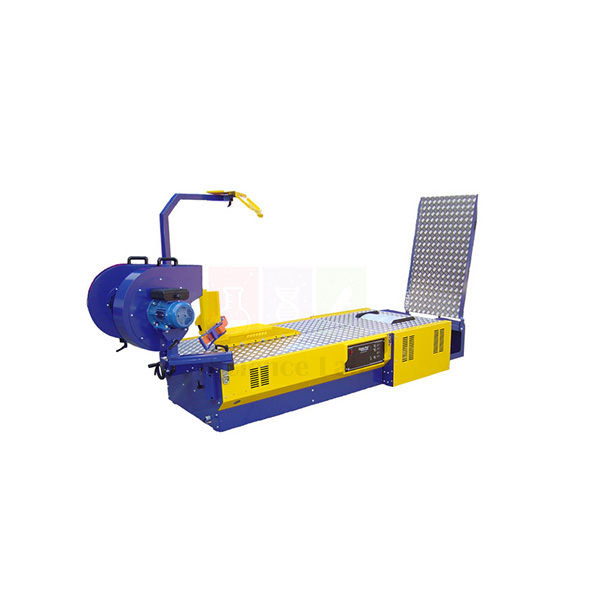
Motor Cycle Dynamometer Test Bench
The Motor Cycle Dynamometer Test Bench lets a complete motorcycle run through its gears while it stays in place. The driven wheel turns a grooved, non-slip chrome roller, a pneumatic clamp holds the bike without straps, and wheel and roller speed sensors follow the run. Fans built into the 3 mm steel chassis cool the engine, tyre and brake and draw the exhaust away.
Motorcycle dynamometer bench specifications
| Parameter | Detail |
|---|---|
| Chassis | Monobloc chassis in 3 mm steel with chequer plate deck |
| Roller | Non-slip chrome roller with groove for alignment check, with safety brake |
| Wheel clamp | Pneumatic automatic wheel clamp; no straps required; one-person loading |
| Sensors | Wheel speed sensor and roller speed sensor |
| Access ramp | Integral folding ramp that doubles as a safety barrier |
| Cooling and extraction | Engine cooling fans, rear tyre cooling fan and exhaust gas extraction fan, all housed in the chassis; outlets for engine and exhaust pipes, rear tyre, brake and silencers; cover plates for the extraction inlets |
| Electric starter control | Optional |
| Test scope | Individual engine unit tests to vehicle tests; frame alignment check with the clamp and grooved roller together |
| Dimensions and weight | 1600 × 900 × 1200 mm; 280 kg (approx.) |
| Product code | SLE/MCE/55 |
| Minimum order | 10 units |
| Dispatch | Usually within 7 to 10 working days |
| Manufacturer | ScienceLab (Jain Scientific Equipments Pvt Ltd), Ambala, India |
Running tests on the motorcycle roller bench
Wheel slip study. Run the motorcycle in a middle gear and record wheel speed and roller speed at a steady speed, then again during a firm acceleration. Students convert both to surface speed, work out slip as the difference divided by roller speed, and explain why slip appears mainly when the tyre drives the roller harder.
Constant-speed fuel run. Hold a steady roller speed with the cooling fans and extraction running, and time the fuel used with a manual volumetric fuel gauge and a digital stopwatch. The distance covered follows from roller speed and time. Because the roller adds no road load, students compare the result with road fuel use and explain the gap.
Frame alignment check. With the bike clamped, students watch whether the driven tyre runs true in the roller groove. A tyre that wanders to one side sends the class to the chain adjusters, the wheel alignment and the frame.
Engine and vehicle compared. The cut section model of a four stroke petrol engine shows the inside of a small engine before trainees run one on the roller. The four cylinder petrol engine test bench then shows the difference between testing an engine alone and testing a whole vehicle through its drive.
Frequently Asked Questions About the Motor Cycle Dynamometer Test Bench
Why compare wheel speed with roller speed?
If the tyre grips the roller fully, the two speeds agree once the different diameters are allowed for. Under heavy throttle the tyre can slip, and wheel speed then runs ahead of roller speed. Watching the gap shows students when the readings stop reflecting the engine and start reflecting lost grip.
How does the pneumatic clamp replace tie-down straps?
The clamp grips the wheel and holds the motorcycle upright and in line, so one person can load it and no straps are needed. Straps on other dynamometers can pull a machine down or back unevenly and change the load on the tyre. The clamp needs a compressed air supply, and it must close fully before the engine starts.
Why does a stationary motorcycle need cooling fans?
On the road, the airflow from riding cools the engine, tyre and brake. On the bench the machine stands still, so heat builds quickly, especially in long steady runs. The fans in the chassis blow on the engine and exhaust pipes, rear tyre, brake and silencers, and the extraction fan draws exhaust gas out of the room.
Why set tyre pressure before a run?
A soft tyre flexes more on the curved roller, heats up, slips more easily and changes its rolling radius, which shifts the speed readings. Set the cold pressure to the motorcycle maker's figure, check the tread for cuts or embedded stones, and look at the tyre again after a long or hard run.
What does the frame alignment check show?
With the clamp holding the machine square, the driven tyre should run true in the roller groove. A tyre that drifts to one side suggests unevenly set chain adjusters, a misaligned wheel or frame damage. Trainees note the drift, then inspect the adjusters and swinging arm before any road test.
What should be done before each run?
Wheel the motorcycle up the ramp, close the clamp and raise the ramp into its barrier position. Connect the exhaust extraction, fit cover plates on unused inlets and switch on the cooling fans. Check the roller safety brake as the supplied instructions describe, then warm the engine at moderate speed before taking readings.
Engine testing and two-wheeler training items
- Four Stroke Four Cylinder Petrol Engine Test Bench
- Manual Volumetric Fuel Gauge
- Cut Section Model Of Four Stroke Petrol Engine
- 4 Stroke Petrol Engine
- Stopwatch, Digital
- Automotive Engine Fault Diagnosis Simulator Auto Fault
To request a quotation, send the product name, code and quantity through our contact page or add the item to your enquiry cart.
Last updated: 14 November 2026
