- Physics Lab Equipment
- Chemistry Lab Equipment
- Biology Lab Equipment
- Anatomical Lab Equipment
- Learning
- Educational Lab Equipment
- Magnets
- Agriculture
- Astronomy
- Earth Science
- Geography Lab Equipment
- Safety Lab Coat
- Laboratory
- Meteorological
- Electricity & Magnetism
- Heat
- School Lab Equipment
- Lab Glassware
- Science Lab Equipment
- Tvet Lab Equipment
- Robotics Kits Supplier and Manufacturer for Schools India
- Math Lab Equipment Manufacturers and Exporters in Ambala
- STEM Kits Manufacturers and Supplier India
- Engineering Lab Equipment
- Hospital Lab Equipment
- Water, Sanitation & Hygiene Supplies
- Cold Chain, Solar & Communication Equipment
- Nutrition
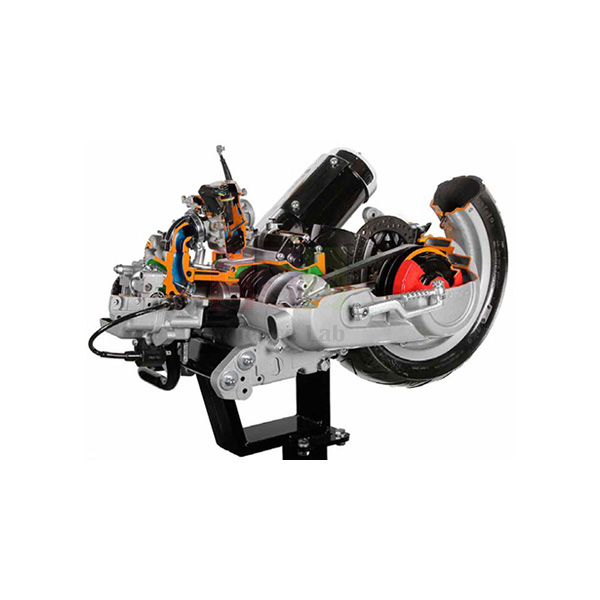
Cut Section Model Of Four Stroke Petrol Engine
The Cut Section Model Of Four Stroke Petrol Engine is built from an actual 160 cc, 6 HP engine and turned by a crank handle. A class can follow the piston, valves and crankshaft through intake, compression, power and exhaust. Its parts, lubricating circuits, fuel system and cooling system are painted in different colours, and the engine is made dissectible for demonstration.
Petrol engine cut section specifications
| Parameter | Detail |
|---|---|
| Engine | Actual four-stroke petrol engine, cut-sectioned for training |
| Displacement and power | 160 cc; 6 HP |
| Operation | Manual, by crank handle; flywheel fitted |
| Mounting | Sturdy iron frame on a base |
| Colour coding | Parts, cross-sections, lubricating circuits, fuel system and cooling system in different colours |
| Construction | Specially made dissectible for demonstration |
| Supplied with | Key card and literature on the working of the engine |
| Dimensions | 500 × 500 × 600 mm |
| Weight | Approx. 35 kg |
| Product code | SLE/MCE/63 |
| Minimum order | 10 units |
| Dispatch | Usually within 7 to 10 working days |
| Manufacturer | ScienceLab (Jain Scientific Equipments Pvt Ltd), Ambala, India |
Engine lessons on the cut section model
Stroke-by-stroke chart. Chalk a mark on the flywheel, then turn the crank slowly and stop at the end of each stroke. Students note the piston direction, which valve is open and what the mixture is doing, and finish with a chart of the whole cycle over two crankshaft turns.
Spark ignition against compression ignition. Place the model beside the section model of four-stroke diesel engine. Students compare the combustion chambers, find the injector on the diesel model and explain why the diesel needs no spark plug.
Naming the parts. Because the engine is dissectible, the instructor removes one part at a time while students identify it from the key card and say which colour-coded circuit it belongs to. A contrast with the rotor of the Wankel engine model shows a different way to turn gas pressure into rotation.
From model to running engine. After the sectioned lesson, students repeat the cycle explanation on the 4 stroke petrol engine, this time with fuel, spark and exhaust heat, and later meet firing order on the four cylinder petrol engine test bench.
Frequently Asked Questions About the Cut Section Model Of Four Stroke Petrol Engine
Why does a single-cylinder engine like this need a flywheel?
Only one stroke in four delivers power, so the crankshaft would slow sharply during intake, compression and exhaust. The heavy flywheel stores energy on the power stroke and carries the crank through the other three. Engines with more cylinders overlap their power strokes and run more smoothly.
How does a four-stroke engine differ from a two-stroke?
A four-stroke completes its cycle in two crankshaft turns and uses cam-driven valves, with oil kept separately in the sump. A two-stroke fires once every turn, uses ports in the cylinder wall and usually mixes its oil with the fuel. On this model, students can see the valves that a two-stroke does without.
How do students tell which stroke the engine is on?
Watch the piston and both valves together. Piston moving down with the inlet valve open is intake; moving up with both closed is compression; down again with both closed is power; up with the exhaust valve open is exhaust. Each stroke takes half a crankshaft turn.
Where does the spark plug fire in the cycle?
Near the end of the compression stroke, slightly before the piston reaches the top. The burning mixture then raises the pressure and drives the piston down on the power stroke. Firing a little early gives the flame time to build pressure just after top dead centre.
What should students look for in the colour-coded circuits?
Trace the lubricating circuits to the bearings and other moving parts, follow the fuel system to the cylinder, and find the cooling system around the hot zones. The key card names each part, so students can link every colour to the job that system does.
How should the cut section model be looked after?
Keep it covered between classes so dust stays out of the cut sections, and wipe exposed steel lightly with oil if it starts to mark. Turn the crank slowly and never force it if something binds. Refit dismantled parts in the reverse order of removal, checking each against the key card.
Engine models and test benches
- Section Model Of Four-Stroke Diesel Engine
- 4 Stroke Petrol Engine
- Four Stroke Four Cylinder Petrol Engine Test Bench
- Wankel Engine Model
- Automotive Power Train Training Equipment DOHC Gasoline
- Automotive Power Train Training Equipment SOHC Gasoline
To request a quotation, send the product name, code and quantity through our contact page or add the item to your enquiry cart.
Last updated: 14 November 2026