- Physics Lab Equipment
- Chemistry Lab Equipment
- Biology Lab Equipment
- Anatomical Lab Equipment
- Learning
- Educational Lab Equipment
- Magnets
- Agriculture
- Astronomy
- Earth Science
- Geography Lab Equipment
- Safety Lab Coat
- Laboratory
- Meteorological
- Electricity & Magnetism
- Heat
- School Lab Equipment
- Lab Glassware
- Science Lab Equipment
- Tvet Lab Equipment
- Robotics Kits Supplier and Manufacturer for Schools India
- Math Lab Equipment Manufacturers and Exporters in Ambala
- STEM Kits Manufacturers and Supplier India
- Engineering Lab Equipment
- Hospital Lab Equipment
- Water, Sanitation & Hygiene Supplies
- Cold Chain, Solar & Communication Equipment
- Nutrition
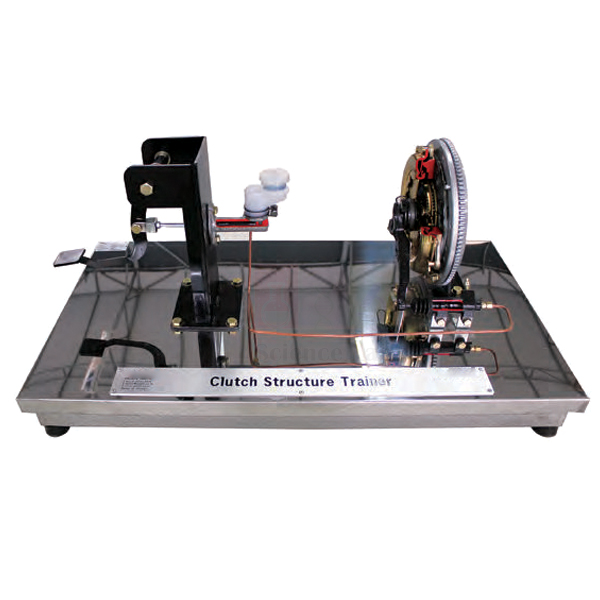
Clutch Structure Trainer Hydraulics
The Clutch Structure Trainer Hydraulics is a sectioned unit, small enough for an ordinary classroom table, that explains how the hydraulic clutch inside a manual-transmission vehicle works. It is built from a clutch pressing board, clutch pedal and clutch cylinder. Every cut section is painted a different colour in vehicle paint, and the whole unit weighs about 20 kg.
Compact hydraulic clutch trainer specifications
| Parameter | Detail |
|---|---|
| Type | Education unit of hydraulic clutch structure inside manual transmission |
| Composition | Clutch pressing board, clutch pedal, clutch cylinder |
| Sectioning | Each incised section painted in a different colour |
| Finish | Vehicle paint used for painting and coating |
| Weight | Approx. 20 kg |
| Size | Approx. 400 × 300 × 300 mm |
| Product code | SLE/ATE/05 |
| Minimum order | 10 units |
| Dispatch | Usually within 7 to 10 working days |
| Manufacturer | ScienceLab (Jain Scientific Equipments Pvt Ltd), Ambala, India |
Bench exercises with the compact hydraulic clutch unit
Group stations. The unit is light enough to share between tables, so set out one per group. Students press the pedal, call out the colour of each section as it moves, and state what the clutch cylinder, pressing board and pedal each contribute.
Pressure in every direction. Show a Pascal's sphere first, where water jets out equally from every hole when the plunger is pushed. Then ask why the same rule lets a thin pipe carry pedal effort around corners to the clutch cylinder.
Fluid against cable. Place the unit beside the Clutch Structure Trainer Mechanical Manual. Groups list how pedal effort reaches the pressing board on each, then decide which design takes up lining wear by itself and which needs its free play reset from time to time.
Friction clutch against fluid coupling. Finish at an FF auto transmission stand, where a torque converter takes the place of the pedal clutch. Students compare how each arrangement lets the engine idle while the vehicle stands still in gear.
Frequently Asked Questions About the Clutch Structure Trainer Hydraulics
Why do many cars use a hydraulic clutch rather than a cable?
It needs less pedal effort and takes up lining wear by itself, so the pedal height stays steady. There is no cable to stretch, fray or corrode. A fluid pipe can also bend around the engine bay where a cable would bind.
What does it mean when a hydraulic clutch pedal sinks to the floor and stays there?
The system has lost pressure, most often through a leak or a failed seal in the master or slave cylinder. With no fluid pressure, nothing acts on the release side of the pressing board, so the clutch cannot release, and nothing pushes the pedal back up. Check the reservoir level and look for wet patches before topping up.
How is a leak in the clutch hydraulics traced?
Fill the reservoir, then have a helper press the pedal several times while you watch each joint. Check the master cylinder where the pushrod enters, the hose and pipe ends, and the clutch cylinder at the gearbox. Fluid running down the bell housing or onto the floor marks the leaking point.
Why does the fluid type matter in a hydraulic clutch?
The rubber seals in the cylinders are made for one kind of fluid. Most cars share the brake fluid grade used for the brakes, while some use mineral oil, and mixing the two softens or swells the seals. Use only the fluid named for the vehicle and check its level regularly.
What job does the clutch pressing board do?
It is the pressure plate. Its spring, often a diaphragm spring, clamps the clutch plate against the flywheel so engine torque reaches the gearbox. When fluid pressure from the clutch cylinder acts on its release side, the clamping force lifts and drive is cut.
How should the painted cut sections be looked after?
Wipe them with a dry cloth after each lesson so dust and finger marks do not hide the colour coding. The vehicle-paint coating takes regular handling well. Keep solvents away from the cut edges and store the unit covered between clutch lessons.
Other clutch and gearbox teaching units
- Clutch Structure Trainer Hydraulic Manual
- Clutch Structure Trainer Mechanical Manual
- Vehicle Transmission 5 Speed Manual Gearbox
- FF Auto Transmission Stand Type
- Automotive Power Train Training Equipment SOHC Gasoline
To request a quotation, send the product name, code and quantity through our contact page or add the item to your enquiry cart.
Last updated: 14 November 2026
