- Physics Lab Equipment
- Chemistry Lab Equipment
- Biology Lab Equipment
- Anatomical Lab Equipment
- Learning
- Educational Lab Equipment
- Magnets
- Agriculture
- Astronomy
- Earth Science
- Geography Lab Equipment
- Safety Lab Coat
- Laboratory
- Meteorological
- Electricity & Magnetism
- Heat
- School Lab Equipment
- Lab Glassware
- Science Lab Equipment
- Tvet Lab Equipment
- Robotics Kits Supplier and Manufacturer for Schools India
- Math Lab Equipment Manufacturers and Exporters in Ambala
- STEM Kits Manufacturers and Supplier India
- Engineering Lab Equipment
- Hospital Lab Equipment
- Water, Sanitation & Hygiene Supplies
- Cold Chain, Solar & Communication Equipment
- Nutrition
Molecular model sets let students in schools, colleges and universities build and handle three-dimensional structures, from biological molecules such as DNA, RNA, amino acids, sugars and fats to organic, inorganic, orbital and crystal-structure sets used in chemistry. Jain Scientific Equipments Pvt Ltd (ScienceLab), Ambala, India, lists 44 molecular model products in this Molecule range. Buyers comparing a DNA model kit with a molecular model set for organic chemistry will find both here.
Molecular Models by Topic
Featured Molecule Products
| Product | Product Code | Typical Use |
|---|---|---|
| DNA Activity Model | SLE/Mo/01 | Students assemble their own double helix with the four nucleic acid bases and phosphate strands |
| Mini DNA 22 layer base pair Molecular Model | SLE/Mo/10 | Colour-coded introduction to bases, sugar and phosphate in DNA |
| Molecular Model Set, 20 Amino Acid Collection | SLE/Mo/17 | Comparing amino acid structures; parts kept in a compartmented storage case |
| Molecular Model Set – Introductory | SLE/Mo/30 | First modelling set with carbon, oxygen, nitrogen, sulphur, halogen and hydrogen atoms and a manual |
| Molecular Model Set – Key Stage 3 Chemistry | SLE/Mo/31 | Atoms, elements, compounds and formulae for lower-secondary chemistry |
| Molecular Model Set – College, Organic, Student | SLE/Mo/25 | Building a wide range of organic structures in college chemistry |
| Molyorbital Atomic Orbital Model Set – 14 Model | SLE/Mo/44 | Visualising the shapes of atomic orbitals |
| Molecular Model, Diamond | SLE/Mo/36 | 30-atom self-assembly kit of the diamond structure |
Manufacturing & Supply
The Molecule range is offered by Jain Scientific Equipments Private Limited, which trades as ScienceLab and manufactures laboratory teaching equipment at its licensed factory in Saha, Ambala. Overseas schools and distributors can quote the company's Importer-Exporter Code AAECJ8618A from the DGFT and its global Legal Entity Identifier 3358004HRD1JIVXKYX49 when opening a supplier account. Model sets can be ordered singly, as class quantities of student sets alongside a teacher set, or in bulk for institutional and tender supply across India and overseas.
Related Ranges
Molecule sits under the Biology Lab Equipment hub. Cell and organelle models, which show structures at the cell rather than molecular scale, are in Cell Biology Equipments, and genetics investigations that complement DNA models are in Biology Kits. For chemistry departments, the Chemistry Lab Equipment range covers wider chemistry apparatus, and the Chemistry Lab range also lists an NCERT Molecular Model Kit.
Frequently Asked Questions
Are these models for biology or chemistry?
Both. DNA, RNA, amino acid, sugar and fat models serve biology and biochemistry, while the organic, inorganic, orbital and crystal sets serve chemistry teaching.
Which set suits a first introduction to molecular modelling?
The Molecular Model Set – Introductory or the Key Stage 3 Chemistry set for younger students; the College, Organic sets for undergraduate work.
What is the difference between Student and Teacher sets?
Several sets are listed in both versions, such as Organic Student and Organic, Teacher. Tell us your class size and we will confirm the contents of each so you can plan one teacher set per class and student sets per group.
Are any models supplied ready-assembled?
Yes. The Calcite, Calcium Fluoride and Quartz models and the Iron, Zinc and Copper set are listed as pre-assembled, whereas the Diamond model is a self-assembly kit.
Can we order molecular models in bulk for several schools?
Yes. Send the product codes, quantities per school and delivery locations and we will quote for the full distribution, including tender requirements.
Request a Quote or Catalogue
For a quotation, availability details or a molecular model catalogue, write to us via the contact page or place your selection in the shopping cart and send it as an enquiry.
Last updated: 23 September 2026
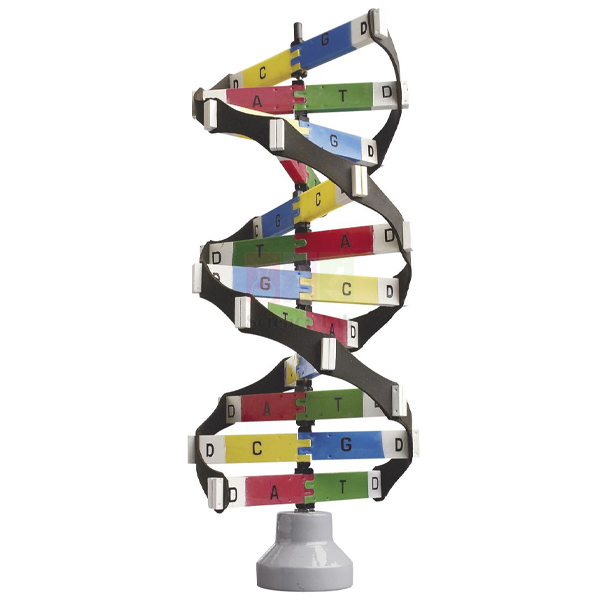
DNA Activity Model
DNA Activity Model (Product Code: SLE/Mo/01) is a build-it-yourself plastic double helix kit used to teach DNA structure, base pairing and replication in school and college biology. Students assemble colour-coded cytosine, adenine, guanine and thymine bases on phosphate strands around a centre rod representing hydrogen bonds, then display the model on a metal base that rotates. This DNA model kit for Indian classrooms is made by Jain Scientific Equipments Pvt Ltd (ScienceLab), an OEM manufacturer, at its own factory in Ambala, India.
Specifications
| Parameter | Detail |
|---|---|
| Model type | Three-dimensional double helix, assembled by students |
| Components | Cytosine, adenine, guanine and thymine bases; connecting phosphate strands; centre rod representing hydrogen bonds |
| Material | Durable plastic components |
| Base | Sturdy metal base for easy rotation and classroom display |
| Base pairing | Colour-coded parts with specially shaped ends for correct base-pair alignment |
| Replication demonstration | Can be unzipped to demonstrate DNA replication |
| Weight | 250 g approx. |
| Dimensions | 130 x 130 x 450 mm approx. |
| Product code | SLE/Mo/01 |
| Manufacturer | Jain Scientific Equipments Pvt Ltd (ScienceLab) — OEM |
| Country of origin | India (made in Ambala, Haryana) |
What Is the DNA Activity Model Used For?
Building the helix themselves helps students remember what a textbook diagram rarely conveys: adenine always pairs with thymine and cytosine with guanine, the two strands wind around a common axis, and the bases sit inside the helix like the rungs of a twisted ladder. Because the shaped ends of the colour-coded parts only align with the correct partner, mistakes show up straight away and students correct them as they build.
Once assembled, the model can be unzipped down the middle to show how each separated strand serves as a template for a new partner strand during replication. At roughly 130 x 130 x 450 mm on its metal base, it suits the teacher's desk for whole-class discussion and turns easily so everyone can follow the helix. Keeping the parts sorted by base type between lessons makes the next assembly much quicker.
OEM Manufacturer
ScienceLab is the trading name of Jain Scientific Equipments Private Limited, the OEM (original equipment manufacturer) of the DNA Activity Model, which it produces at its licensed factory at Saha, Ambala, Haryana. Schools, colleges, teacher-training institutes, dealers and importers in India and international markets buy it factory-direct, with quotations and repeat orders handled by the manufacturer. Ask us if you need replacement parts for models already in use. See our company profile for more.
Related Molecule Models
Models and kits that extend DNA and nucleic acid lessons:
- Molecular Model, RNA 12 Base — to contrast RNA with DNA
- Molecular Model Kit, Ten Layer DNA — a longer DNA build for group projects
- Mini DNA 22 layer base pair Molecular Model — a compact alternative model
- DNA extraction lab kit — a practical to pair with model work
See all models in the Molecule category.
Frequently Asked Questions
What parts are included in the DNA Activity Model?
The DNA Activity Model (SLE/Mo/01) includes colour-coded cytosine, adenine, guanine and thymine bases, connecting phosphate strands, a centre rod representing hydrogen bonds and a metal display base. Students assemble the plastic components into a three-dimensional double helix.
Can the DNA Activity Model show replication?
Yes. The DNA Activity Model can be unzipped between the base pairs to demonstrate DNA replication. Separating the two strands shows how each one carries the information needed to build a new complementary partner strand.
How big is the DNA Activity Model?
The assembled DNA Activity Model measures approximately 130 x 130 x 450 mm and weighs about 250 g. It is sized for classroom display on its metal base, which lets the helix be rotated so the whole class can see it.
How do students know the bases are paired correctly?
Parts of the DNA Activity Model are colour-coded and have specially shaped ends that ensure proper base-pair alignment. Students get immediate feedback while building, which reinforces the adenine-thymine and cytosine-guanine pairing rules.
Who manufactures the DNA Activity Model?
Jain Scientific Equipments Pvt Ltd (ScienceLab) manufactures the DNA Activity Model as the OEM at its licensed factory at Saha, Ambala, Haryana, India. Schools, colleges, dealers and importers in India and international markets can order it direct from the manufacturer.
What should a quotation request for the DNA model include?
A quotation request for the DNA Activity Model should give product code SLE/Mo/01, the number of models (for example one per student group), your delivery location and any other molecule models or DNA practical kits you want quoted with it.
Request a Quote
Quotations for the DNA Activity Model come direct from the manufacturer: send the quantity and delivery details through our contact page, or add it to the enquiry cart with other biology models.
Last updated: 24 September 2026
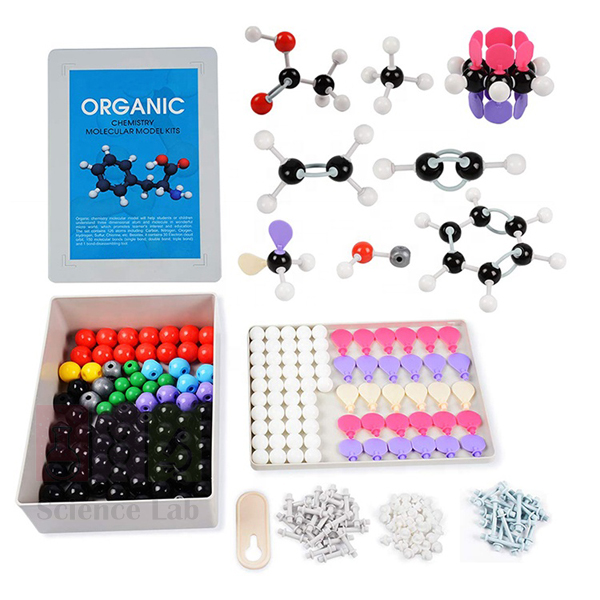
Organic Chemistry Molecular Models Kits
Organic Chemistry Molecular Models Kits (Product Code: SLE/Mo/02) is a ball-and-stick molecular model kit used to build organic molecules and electron-orbital models in school and college chemistry. It contains 126 atoms, including carbon, nitrogen, oxygen, hydrogen, sulfur and chlorine, 150 single, double and triple bonds, 30 electron cloud orbitals and a bond-disassemble tool. This molecular model kit for organic chemistry is made by Jain Scientific Equipments Pvt Ltd (ScienceLab), an OEM manufacturer, at its own factory in Ambala, India.
Specifications
| Parameter | Detail |
|---|---|
| Atoms | 126, including carbon, nitrogen, oxygen, hydrogen, sulfur, chlorine and others |
| Bonds | 150 molecular bonds: single, double and triple |
| Electron cloud orbitals | 30 |
| Tool | 1 bond-disassemble tool |
| Atom material | PP (polypropylene), glossy finish |
| Bond material | LDPE (low-density polyethylene), chosen for its bending property |
| Example builds | Benzene, ethylene and methane with 4-hole carbon and 1-hole hydrogen atoms; methane electron-orbital model with a 5-hole carbon and 1-hole hydrogen atoms |
| Product code | SLE/Mo/02 |
| Manufacturer | Jain Scientific Equipments Pvt Ltd (ScienceLab) — OEM |
| Country of origin | India (made in Ambala, Haryana) |
What Is the Organic Chemistry Molecular Model Kit Used For?
Structural formulas on paper hide the three-dimensional shapes that control how organic molecules behave. With this kit, students build methane to see the tetrahedral arrangement around carbon, ethylene to see the flat geometry of a double bond and benzene to see a planar six-membered ring, then compare single, double and triple bonds side by side. The flexible LDPE bonds make curved double and triple bonds and rings easier to form.
The 30 electron cloud orbitals take the lesson further: fitted to a 5-hole carbon with hydrogen atoms, they show the orbital picture of methane that lies behind the ball-and-stick view, a step many students find hard to imagine. Use the bond-disassemble tool to separate tight joints instead of pulling with fingers, and sort the atoms by element into a tray after each class so the kit stays complete.
OEM Manufacturer
Jain Scientific Equipments Private Limited, which trades as ScienceLab, is the OEM (original equipment manufacturer) of this organic chemistry model kit and manufactures it at its licensed factory at Saha, Ambala, Haryana. Chemistry departments, schools, coaching institutes, dealers and importers in India and international markets buy it direct from the manufacturer, and quotations for class sets come straight from the factory team. Ask us about replacement atoms or bonds for kits already in use. More is on our company profile page.
Related Molecule Models
Sets that complement organic structure and orbital teaching:
- Molecular And Orbital Model Set – Organic Structures — another organic and orbital set to compare
- Molecular Model Set – Benzene C6H6, Hybridized — a dedicated benzene orbital model
- Molecular Model Set – College, Organic, Student — a student set for college organic courses
- Atom Molecular Models Set — a general set for organic and inorganic molecules
See the full Molecule category for more model sets.
Frequently Asked Questions
What do the Organic Chemistry Molecular Models Kits contain?
The Organic Chemistry Molecular Models Kits (SLE/Mo/02) contain 126 atoms, including carbon, nitrogen, oxygen, hydrogen, sulfur and chlorine, plus 30 electron cloud orbitals, 150 single, double and triple bonds, and one bond-disassemble tool for taking models apart.
Which molecules can be built with this organic chemistry kit?
With the Organic Chemistry Molecular Models Kits, students can build molecules such as methane, ethylene and benzene using 4-hole carbon and 1-hole hydrogen atoms, as well as other organic structures containing nitrogen, oxygen, sulfur or chlorine atoms.
What are the electron cloud orbitals in the kit for?
The 30 electron cloud orbitals in the Organic Chemistry Molecular Models Kits let students build orbital models alongside ball-and-stick models. A methane electron-orbital model, for example, is built from a 5-hole carbon atom and 1-hole hydrogen atoms for advanced chemistry lessons.
What materials are the atoms and bonds made of?
Atoms in the Organic Chemistry Molecular Models Kits are made of PP (polypropylene) with a glossy finish, and the linking bonds are LDPE (low-density polyethylene), a flexible plastic chosen for its bending property when forming double bonds, triple bonds and rings.
Who manufactures the Organic Chemistry Molecular Models Kits?
Jain Scientific Equipments Pvt Ltd (ScienceLab) manufactures the Organic Chemistry Molecular Models Kits as the OEM at its licensed factory at Saha, Ambala, Haryana, India. Schools, colleges, dealers and importers in India and international markets can buy them direct from the manufacturer.
What should a quotation request for these kits include?
A quotation request for the Organic Chemistry Molecular Models Kits should give product code SLE/Mo/02, the number of kits (for example one per student pair), your delivery location and any other molecule model sets you want quoted together.
Request a Quote
Quotations for the Organic Chemistry Molecular Models Kits come direct from the manufacturer: send the number of kits and delivery details through our contact page, or add them to the enquiry cart with other chemistry teaching aids.
Last updated: 24 September 2026
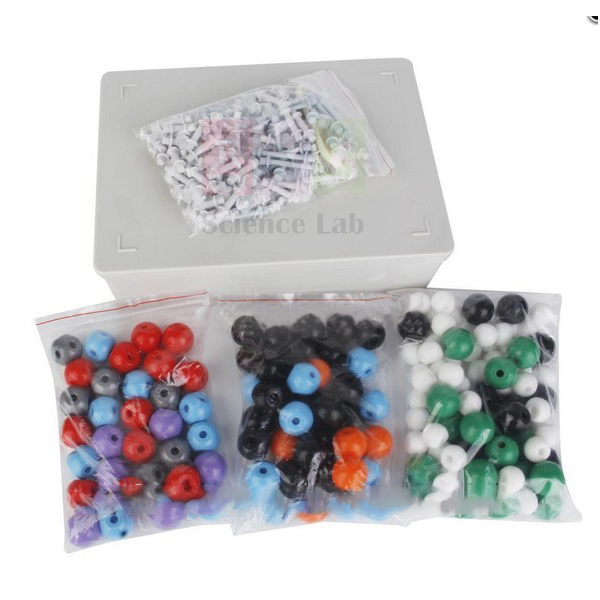
Atom Molecular Models Set
Atom Molecular Models Set (Product Code: SLE/Mo/03) is a ball-and-connector model set used to build molecular and crystal models of organic compounds in school and college chemistry. Its PP atoms in white, red, black, grey and light blue link with LDPE connectors in white, purple, grey and light blue, and the set is packed in an ABS box. This molecular model set for chemistry teaching in India is made by Jain Scientific Equipments Pvt Ltd (ScienceLab), an OEM manufacturer, at its own factory in Ambala, India.
Specifications
| Parameter | Detail |
|---|---|
| Atom material | PP (polypropylene) |
| Connector material | LDPE (low-density polyethylene) connecting keys |
| Box | ABS packing box |
| Atom colours | White, red, black, grey, light blue |
| Connector colours | White, purple, grey, light blue |
| Model types | Molecular models and crystal models |
| Compound families | Aliphatic and aromatic hydrocarbons, alcohols, aldehydes, ketones, carboxylic acids, esters, ethers, amines, amides, halogen compounds, sugars, fats, amino acids, alkaloids and most other organic families |
| Concepts | Stereoisomerism, conformational analysis, links between molecular structure and physical and chemical properties |
| Product code | SLE/Mo/03 |
| Manufacturer | Jain Scientific Equipments Pvt Ltd (ScienceLab) — OEM |
| Country of origin | India (made in Ambala, Haryana) |
What Is the Atom Molecular Models Set Used For?
Because the set covers nearly every family in an organic syllabus, one box can take a class from simple alkanes and alcohols through esters and amides to sugars, fats and amino acids. Building two molecules with the same formula but different arrangements makes isomerism concrete, and rotating a model about a single bond shows the staggered and eclipsed forms behind conformational analysis.
Relating a model's shape to real behaviour, such as why a branched alkane boils lower than its straight-chain isomer or why alcohols form hydrogen bonds, helps students connect structure with physical and chemical properties. As versatile chemistry lab equipment for schools and colleges, the set also builds crystal models, bridging organic work and solid-state chemistry. Agree the atom colour convention with students at the start of each unit, since colour codes differ between textbooks and kits.
OEM Manufacturer
ScienceLab is the trading name of Jain Scientific Equipments Private Limited, the OEM (original equipment manufacturer) of the Atom Molecular Models Set, which is produced at the company's licensed factory at Saha, Ambala, Haryana. The company is a registered MSME manufacturer (Udyam UDYAM-HR-01-0003714), and its export shipments are handled under Importer-Exporter Code AAECJ8618A (DGFT). Schools, colleges, dealers and importers in India and international markets receive quotations directly from the manufacturer; see our company profile.
Related Molecule Models
Other model sets for structure, stereochemistry and crystal lessons:
- Organic Chemistry Molecular Models Kits — adds electron cloud orbitals for orbital models
- Professional Chemistry Molecular Structure Model — for bond length, type and angle work
- Molecular Model Set with 76 Plastic Spheres — a ball-and-spoke set with storage case
- Set for Demonstration of Crystal Lattices — for dedicated crystal lattice teaching
- Molecular Model Set – College, Organic, Stereochemistry, Teacher — a teacher set for stereochemistry
Browse the Molecule category for the complete range.
Frequently Asked Questions
What is the Atom Molecular Models Set made of?
The Atom Molecular Models Set (SLE/Mo/03) has atoms made of PP (polypropylene), connecting keys made of LDPE (low-density polyethylene) and an ABS packing box. The plastic atoms and flexible connectors make models quick to assemble and take apart between lessons.
Which colours are the atoms and connectors?
Atoms in the Atom Molecular Models Set come in white, red, black, grey and light blue, and the connectors in white, purple, grey and light blue. Confirm with students which colour represents which element, as conventions differ between books.
Which compounds can be built with the Atom Molecular Models Set?
The Atom Molecular Models Set builds aliphatic and aromatic hydrocarbons, alcohols, aldehydes, ketones, carboxylic acids, esters, ethers, amines, amides, halogen compounds, sugars, fats, amino acids, alkaloids and representatives of most other organic families, as well as crystal models.
Can the Atom Molecular Models Set show isomerism?
Yes. The Atom Molecular Models Set is designed to bring stereoisomerism and conformational analysis to life. Students build isomers with the same molecular formula but different arrangements, and rotate models about single bonds to compare conformations.
How many pieces are in the Atom Molecular Models Set?
The number of atoms and connectors in the Atom Molecular Models Set is not stated in the current listing. Please ask us through the contact page for the piece count and packing details before ordering class quantities.
Who manufactures the Atom Molecular Models Set?
Jain Scientific Equipments Pvt Ltd (ScienceLab) manufactures the Atom Molecular Models Set as the OEM at its licensed factory at Saha, Ambala, Haryana, India. Schools, colleges, dealers and importers in India and international markets can buy it direct from the manufacturer.
Request a Quote
Quotations for the Atom Molecular Models Set come direct from the manufacturer: send the number of sets and delivery details through our contact page, or add it to the enquiry cart with other chemistry models.
Last updated: 24 September 2026
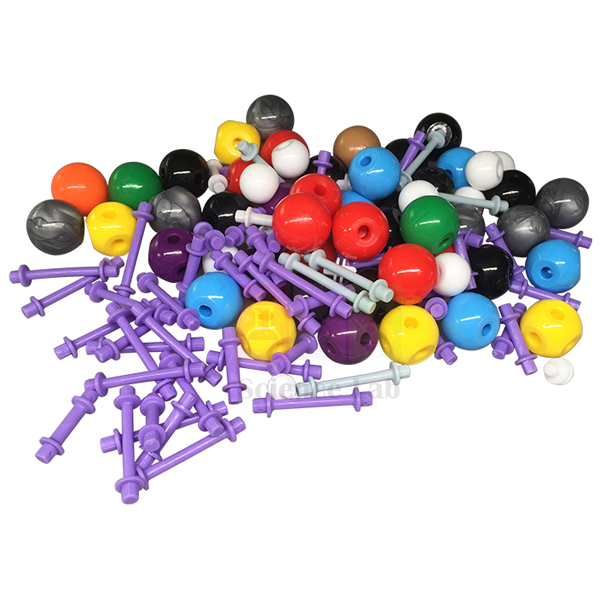
Professional Chemistry Molecular Structure Model
Professional Chemistry Molecular Structure Model (Product Code: SLE/Mo/04) is a ball-and-connector model set used to build the structures of inorganic and organic molecules from school to university chemistry. Its colourful plastic balls and connecting keys are proportioned to indicate bond length, bond type and bond angle, so students see realistic molecular geometry. This molecular model for chemistry classes in India is made by Jain Scientific Equipments Pvt Ltd (ScienceLab), an OEM manufacturer, at its own factory in Ambala, India.
Specifications
| Parameter | Detail |
|---|---|
| Components | Colourful plastic balls and connecting keys |
| Structural parameters shown | Bond length, bond type and bond angle |
| School-level structures | Inorganic and organic textbook molecules, such as alkanes, alkenes, alkynes, halides, alcohols, phenols, aldehydes, ketones and esters |
| University-level topics | Stereoisomerism, optical isomerism and the conversion between isomers |
| Example | Dichloroethylene (C2H2Cl2): all three isomers can be built at the same time |
| Product code | SLE/Mo/04 |
| Manufacturer | Jain Scientific Equipments Pvt Ltd (ScienceLab) — OEM |
| Country of origin | India (made in Ambala, Haryana) |
What Is the Molecular Structure Model Used For?
Because the balls and connectors are proportioned to reflect bond lengths and angles, models built with this set look like the molecules they represent rather than generic stick shapes. Students can see why a triple bond is shorter than a single bond, why ethyne is linear while ethene is flat, and how the angles around carbon change from one bonding arrangement to another.
Dichloroethylene shows the set's range well: students build all three isomers side by side and compare where the chlorine atoms sit, which makes the difference between structural and cis-trans isomerism obvious. At university level, the same parts build mirror-image molecules for optical isomerism and show how one isomer converts to another when bonds are broken and re-formed.
OEM Manufacturer
The Professional Chemistry Molecular Structure Model is manufactured by Jain Scientific Equipments Private Limited, which trades as ScienceLab and is the OEM (original equipment manufacturer), at its licensed factory at Saha, Ambala, Haryana. Universities, colleges, schools, dealers and importers in India and international markets buy it direct from the maker, so quotations and follow-up orders come from the manufacturer rather than a reseller. Ask us about spare balls or connectors for sets already in use. Read more on our company profile page.
Related Molecule Models
Sets and references for structure and isomerism lessons:
- Atom Molecular Models Set — for organic families and crystal models
- Organic Chemistry Molecular Models Kits — adds electron cloud orbitals
- Molecular Model Set – Inorganic/Organic Teacher — a teacher set for demonstrations
- Molecular Model Set – Complex Ions — for inorganic coordination structures
- Isomer — a classroom reference on isomers
See the complete Molecule category.
Frequently Asked Questions
What structural details does the Professional Chemistry Molecular Structure Model show?
The Professional Chemistry Molecular Structure Model (SLE/Mo/04) is designed to indicate bond length, bond type and bond angle, using plastic balls and connectors in appropriate proportion. Models therefore show realistic molecular geometry, not just which atoms are joined.
Which molecules can be built with this structure model?
The Professional Chemistry Molecular Structure Model builds the inorganic and organic molecules found in chemistry textbooks, including alkanes, alkenes, alkynes, halides, alcohols, phenols, aldehydes, ketones and esters, for school-level structural formula work.
Is the model suitable for university stereochemistry?
Yes. The Professional Chemistry Molecular Structure Model covers stereoisomerism, optical isomerism and the conversion between isomers, topics found in university teaching materials, in addition to middle and high school structural chemistry.
Can the model build all the dichloroethylene isomers?
Yes. With the Professional Chemistry Molecular Structure Model, the three isomers of dichloroethylene (C2H2Cl2) can be built at the same time, so students can compare 1,1-dichloroethylene with the cis and trans forms of 1,2-dichloroethylene side by side.
How many pieces does the Professional Chemistry Molecular Structure Model contain?
The piece count and packing of the Professional Chemistry Molecular Structure Model are not stated in the current listing. Please ask us through the contact page for these details before ordering, especially when planning sets for several student groups.
Who manufactures the Professional Chemistry Molecular Structure Model?
Jain Scientific Equipments Pvt Ltd (ScienceLab) manufactures the Professional Chemistry Molecular Structure Model as the OEM at its licensed factory at Saha, Ambala, Haryana, India. Institutions, dealers and importers in India and international markets can order it direct from the manufacturer.
Request a Quote
Quotations for the Professional Chemistry Molecular Structure Model come direct from the manufacturer: send the quantity and delivery details through our contact page, or add it to the enquiry cart with other molecule models.
Last updated: 24 September 2026
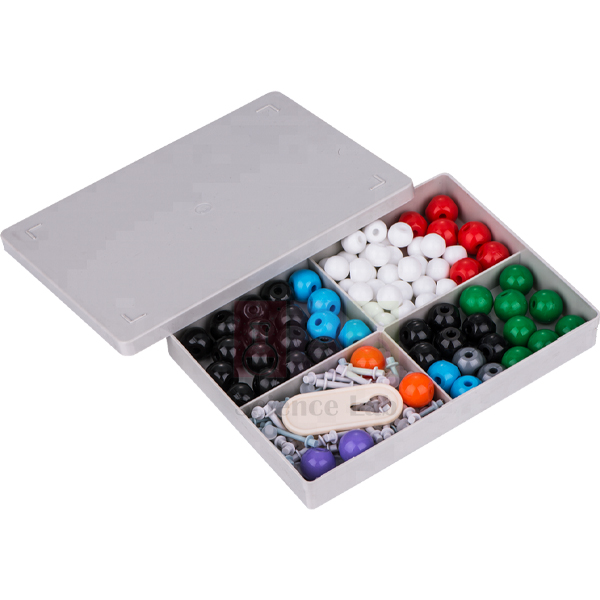
Molecular Model Set with 76 Plastic Spheres
Molecular Model Set with 76 Plastic Spheres (Product Code: SLE/Mo/05) is a ball-and-spoke model set used to build organic, inorganic and crystal structure models in school and college chemistry. It contains 76 plastic spheres, 23 mm in diameter except for 30 smaller 17 mm hydrogen models, with 102 plastic connecting rods in a durable storage case. This molecular model set for organic chemistry is made by Jain Scientific Equipments Pvt Ltd (ScienceLab), an OEM manufacturer, at its own factory in Ambala, India.
Specifications
| Parameter | Detail |
|---|---|
| Spheres | 76, plastic |
| Sphere size | 23 mm diameter; the 30 hydrogen models are 17 mm |
| Connecting rods | 102, plastic |
| Model style | Ball-and-spoke |
| Builds | Most organic molecules, crystal structure models and the usual inorganic molecular models |
| Storage | Durable storage case |
| Product code | SLE/Mo/05 |
| Manufacturer | Jain Scientific Equipments Pvt Ltd (ScienceLab) — OEM |
| Country of origin | India (made in Ambala, Haryana) |
What Is the 76-Sphere Molecular Model Set Used For?
Ball-and-spoke models keep the atoms apart on visible rods, which makes bond angles and three-dimensional shapes easy to read from any direction. With 30 hydrogen spheres and larger spheres for the other atoms, the set builds several hydrocarbons, alcohols, acids and other organic molecules at once, so a group can compare related compounds on the same bench. The smaller 17 mm hydrogens also show clearly how hydrogen atoms crowd around a carbon skeleton.
Beyond organic chemistry, the spheres and 102 rods can be arranged into repeating units to model crystal structures, and into familiar inorganic molecules such as water, ammonia and carbon dioxide. Count the spheres and rods back into the storage case at the end of each lesson; a set with a known count is quick to check for missing parts.
OEM Manufacturer
Jain Scientific Equipments Private Limited (CIN U29309HR2020PTC087597), which trades as ScienceLab, is the OEM (original equipment manufacturer) of this molecular model set. Production takes place at the company's licensed factory at 449, HSIIDC Industrial Area, Saha, Ambala (Factory Licence AMB-ONLINE-CHD-J-414). Schools, colleges, dealers and importers in India and international markets order the set factory-direct and receive quotations from the manufacturer itself; see our company profile for more.
Related Molecule Models
Other sets for molecular and crystal structure teaching:
- Atom Molecular Models Set — colour-coded atoms for organic families
- Professional Chemistry Molecular Structure Model — shows bond length, type and angle
- Molecular Model Set – Elementary Organic, 30 atom — a smaller introductory set
- Set for Demonstration of Crystal Lattices — for dedicated lattice demonstrations
- Molecular Models, Pre-Assembled, Iron, Zinc, and Copper — ready-built metal structure models
See every set in the Molecule category.
Frequently Asked Questions
How many parts are in the Molecular Model Set with 76 Plastic Spheres?
The Molecular Model Set with 76 Plastic Spheres (SLE/Mo/05) contains 76 plastic spheres and 102 plastic connecting rods, packed in a durable storage case. The spheres are 23 mm in diameter, except for the 30 hydrogen models, which are 17 mm.
Why are the hydrogen spheres smaller?
In the Molecular Model Set with 76 Plastic Spheres, the 30 hydrogen models are 17 mm while the other spheres are 23 mm. The smaller size reflects hydrogen's small atomic radius and makes hydrogens easy to pick out on a crowded organic model.
What can be built with the 76-sphere model set?
The Molecular Model Set with 76 Plastic Spheres builds models of most organic molecules, crystal structure models and the usual inorganic molecular models, so one set covers structural chemistry from introductory organic lessons to simple solid-state work.
What kind of model does this set make?
The Molecular Model Set with 76 Plastic Spheres is a ball-and-spoke set: spheres represent atoms and plastic rods represent bonds. This open style shows bond angles and molecular shape clearly, whereas space-filling models emphasise the overall size of a molecule.
Who manufactures the Molecular Model Set with 76 Plastic Spheres?
Jain Scientific Equipments Pvt Ltd (ScienceLab) manufactures the Molecular Model Set with 76 Plastic Spheres as the OEM at its licensed factory at Saha, Ambala, Haryana, India. Schools, colleges, dealers and importers in India and international markets can order it direct.
What should a quotation request for this model set include?
A quotation request for the Molecular Model Set with 76 Plastic Spheres should give product code SLE/Mo/05, the number of sets (for example one per student group), your delivery location and any other molecule models to be quoted together.
Request a Quote
Quotations for the Molecular Model Set with 76 Plastic Spheres come direct from the manufacturer: send the number of sets and delivery details through our contact page, or add it to the enquiry cart with other chemistry models.
Last updated: 24 September 2026
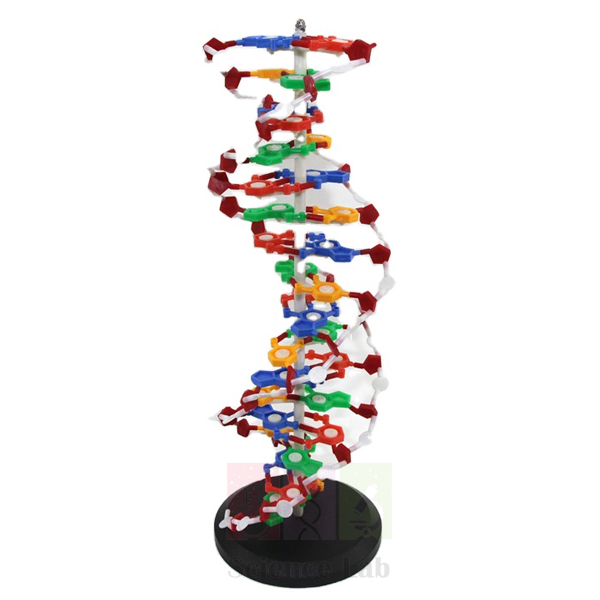
Medical DNA Model
Medical DNA Model (Product Code: SLE/Mo/06) is a PVC demonstration model used to show the structure of the DNA molecule in biology and medical-education classrooms. Measuring 23 × 22 × 68.5 cm, it is intended for teachers to show students how the DNA structure is put together, which makes it a practical biology teaching aid for schools and colleges in India. It is made by Jain Scientific Equipments Pvt Ltd (ScienceLab), an OEM manufacturer, at its own factory in Ambala, India.
Specifications
| Parameter | Detail |
|---|---|
| Model type | Teacher's demonstration model of DNA structure (listed as a DNA / protein structure model) |
| Material | PVC |
| Model size | 23 × 22 × 68.5 cm |
| Packing | 4 pieces per carton |
| Carton size | 46 × 45 × 64 cm |
| Gross weight (G.W., as listed with the packing details) | 10 kg |
| Product code | SLE/Mo/06 |
| Manufacturer | Jain Scientific Equipments Pvt Ltd (ScienceLab) — OEM |
| Country of origin | India (made in Ambala, Haryana) |
What Is the Medical DNA Model Used For?
DNA is a double helix: two sugar-phosphate backbones twist around each other, and pairs of nitrogenous bases form the rungs between them. On a flat textbook diagram the twist, the base pairing and the grooves along the helix are hard to picture, so a large model on the front bench lets the teacher point to each feature while the whole class follows.
Teachers use the Medical DNA Model when introducing the molecular basis of inheritance in senior-secondary biology, and when explaining replication and mutation in nursing, paramedical and medical foundation classes. Turning the model slowly shows how the two strands wind around a common axis. For care, wipe the PVC surface with a soft, slightly damp cloth and keep it away from solvents and direct heat.
What to Specify When Ordering
- Total quantity — the model is packed 4 pieces per carton, so larger orders are planned in cartons.
- Delivery address and route — each carton measures 46 × 45 × 64 cm, which helps with freight planning.
- Any student DNA kits you want quoted alongside the demonstration model.
OEM Manufacturer
ScienceLab is the trading name of Jain Scientific Equipments Private Limited, the OEM (original equipment manufacturer) of the Medical DNA Model. The model is produced at the company's own licensed factory at Saha, Ambala, Haryana, India, rather than bought in from a trader, and is dispatched factory-direct to schools, colleges, nursing and medical institutes, dealers and importers.
Because the carton packing and carton size are known in advance, freight for institutional orders can be worked out with the manufacturer before dispatch. Read more on the ScienceLab company profile.
Related Molecule Models
Follow the teacher's demonstration with hands-on DNA models and practical work:
- Mini DNA 22 layer base pair Molecular Model — a student kit for building a short double-helix segment after the demonstration.
- Molecular Model Kit, Ten Layer DNA — a self-build kit that lets groups assemble roughly one turn of the helix.
- Molecular Model, RNA 12 Base — for comparing single-stranded RNA with the double helix shown on this model.
- DNA extraction lab kit — lets students isolate real DNA once they understand its structure.
See every DNA and molecular model in the Molecule range.
Frequently Asked Questions
What is the Medical DNA Model made of?
The Medical DNA Model is made of PVC, a rigid plastic suited to a teaching model that is handled regularly in class. Clean it with a soft, slightly damp cloth and avoid solvents, which can mark or dull a plastic surface.
How big is the Medical DNA Model?
The Medical DNA Model measures 23 × 22 × 68.5 cm, a demonstration size meant for teachers showing the DNA structure to a class. It is packed 4 pieces per carton, and each carton measures 46 × 45 × 64 cm.
Who is the Medical DNA Model meant for?
The Medical DNA Model is meant for teachers and lecturers who need to show students how the DNA structure is built, in school biology, nursing, paramedical and medical foundation classes. Students can then practise with smaller self-build DNA kits from the same Molecule range.
Who manufactures the Medical DNA Model?
The Medical DNA Model is manufactured by Jain Scientific Equipments Pvt Ltd, trading as ScienceLab, as the OEM at its own licensed factory in Saha, Ambala, Haryana, India. Orders and quotations are handled directly by the manufacturer, not through a trading intermediary.
How should I order the Medical DNA Model for several classrooms?
The Medical DNA Model is packed 4 pieces per carton, so orders for several classrooms are simplest to plan in cartons. State the total quantity and delivery address when you enquire, and the quotation will show the cartons needed.
Can ScienceLab supply the Medical DNA Model for export?
Yes, Jain Scientific Equipments Pvt Ltd (ScienceLab) ships the Medical DNA Model to buyers in India and international markets. Share the quantity, destination country and preferred shipping terms through the contact page so export packing can be included in the quotation.
Request a Quote
To order the Medical DNA Model, send your quantity and delivery details through the contact page or add the model to the enquiry cart. Quotations come direct from the manufacturer in Ambala.
Last updated: 24 September 2026
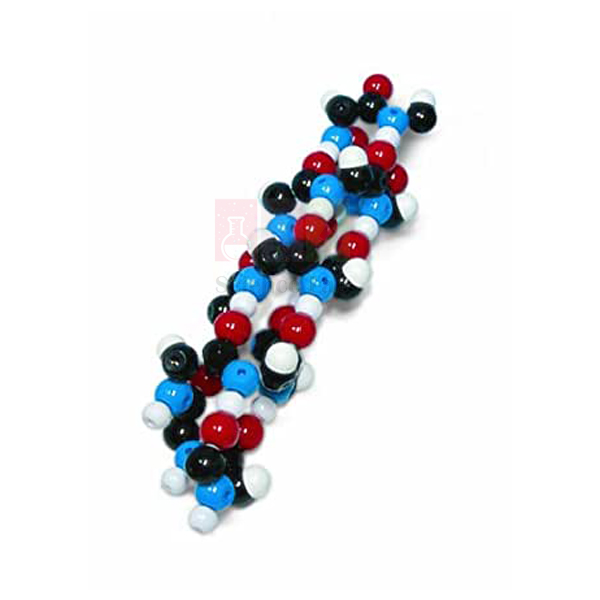
Alpha Helix Molecular Model Kit
Alpha Helix Molecular Model Kit (Product Code: SLE/Mo/07) is a self-build model kit used to construct the alpha helix, a coiled protein secondary structure, in biology and biochemistry classes. Its joining pieces hold the assembled coil firmly enough to be passed around the room, and the parts live in a durable case with compartments — a practical molecular model for chemistry and biology teaching in India. The kit is made by Jain Scientific Equipments Pvt Ltd (ScienceLab), an OEM manufacturer, at its own factory in Ambala, India.
Key Details
| Parameter | Detail |
|---|---|
| Model subject | Alpha helix (protein secondary structure) |
| Construction | Moulded parts with joining pieces designed for a firmly constructed model |
| Moulds and materials | Precision-engineered |
| Storage | Durable storage case with compartments to keep parts segregated |
| Part count and assembled size | Not stated in this listing — confirmed with your quotation |
| Product code | SLE/Mo/07 |
| Manufacturer | Jain Scientific Equipments Pvt Ltd (ScienceLab) — OEM |
| Country of origin | India (made in Ambala, Haryana) |
What Is the Alpha Helix Model Kit Used For?
In an alpha helix, the backbone of a polypeptide chain twists into a right-handed coil. Each backbone C=O group forms a hydrogen bond with the N–H group of the amino acid four positions further along, and the side chains point outwards from the coil. Ribbon diagrams in textbooks hide most of this detail, so building the helix by hand makes the pattern far easier to see.
Students usually assemble the coil in pairs or small groups, then trace where the hydrogen bonds sit and how the side chains project. Because the joins are firm, the finished helix can travel round the class for discussion, for example when comparing it with a flat beta sheet. After the lesson, sorting each piece back into its compartment keeps the kit complete for the next biochemistry group.
OEM Manufacturer
Jain Scientific Equipments Private Limited, which trades as ScienceLab, is the OEM (original equipment manufacturer) of the Alpha Helix Molecular Model Kit. The kits are produced at the company's own licensed factory at Saha, Ambala, Haryana, India, and sold factory-direct to schools, universities, dealers and importers.
If a storage case or individual parts need replacing after years of classroom use, ask us — the manufacturer deals with such requests itself. Company background is on the ScienceLab profile page.
Related Molecule Models
Other models and materials for a unit on proteins:
- Polypeptide Molecular Model Kit — builds the peptide-bonded chain that folds into a helix.
- Molecular Model Set, 20 Amino Acid Collection — for studying the side chains that project from the coil.
- Protein Model — a wider view of protein structure beyond a single helix.
- Biuret Reagent (Protein Test) — links the model to a practical test for proteins in food samples.
Browse more biomolecule kits in the Molecule category.
Frequently Asked Questions
What does the Alpha Helix Molecular Model Kit show?
The Alpha Helix Molecular Model Kit shows how a polypeptide chain coils into an alpha helix, one of the main secondary structures in proteins. The built model lets students trace the backbone and see where hydrogen bonds hold each turn of the coil in place.
Will the assembled alpha helix hold together when students handle it?
Yes, the Alpha Helix Molecular Model Kit uses joining pieces designed so the finished model stays firmly assembled. It can be passed from student to student during a lesson without falling apart, which suits group work and class discussion.
How are the parts of the alpha helix kit stored?
The Alpha Helix Molecular Model Kit comes in a durable storage case with compartments that keep different parts segregated. Sorting the pieces back into their compartments after each class makes it quick to check the kit is complete for the next group.
How many parts are in the Alpha Helix Molecular Model Kit?
The part count and assembled size of the Alpha Helix Molecular Model Kit are not given in this listing. Ask us through the contact page and the exact contents will be confirmed in your quotation before you order.
Who manufactures the Alpha Helix Molecular Model Kit?
The Alpha Helix Molecular Model Kit is manufactured by Jain Scientific Equipments Pvt Ltd (ScienceLab) as the OEM, at its own licensed factory in Saha, Ambala, India. Quotations, repeat orders and replacement-part requests are handled directly by the manufacturer.
Which courses is the Alpha Helix Molecular Model Kit suited to?
The Alpha Helix Molecular Model Kit suits senior-secondary biology, undergraduate biochemistry and life-science courses where protein structure is taught. It is most effective once students know how amino acids join through peptide bonds.
Request a Quote
For a quotation on the Alpha Helix Molecular Model Kit, tell us the number of kits you need through the contact page, or place it in the enquiry cart. You will hear back directly from the manufacturer.
Last updated: 24 September 2026
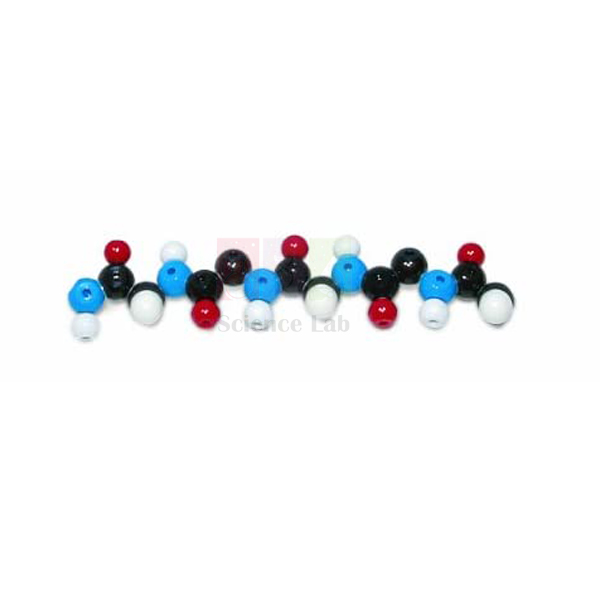
Polypeptide Molecular Model Kit
Polypeptide Molecular Model Kit (Product Code: SLE/Mo/08) is a self-assembly kit used to build and demonstrate the molecular structure of a polypeptide chain in biology and chemistry lessons. Designed for students, it contains five peptide units, 30 atom parts, 12 NV links and one tool, giving learners a hands-on way into protein chemistry. Jain Scientific Equipments Pvt Ltd (ScienceLab), an OEM manufacturer, makes this kit at its own factory in Ambala, India.
Specifications
| Parameter | Detail |
|---|---|
| Model type | Self-assembly molecular model |
| Peptide units | 5 |
| Atom parts | 30 |
| NV links | 12 |
| Tool | 1 |
| Intended users | Students |
| Product code | SLE/Mo/08 |
| Manufacturer | Jain Scientific Equipments Pvt Ltd (ScienceLab) — OEM |
| Country of origin | India (made in Ambala, Haryana) |
What Is the Polypeptide Model Kit Used For?
A polypeptide is a chain of amino acids joined by peptide bonds, each formed in a condensation reaction that releases water. The order of amino acids along the chain decides how it folds and therefore what the finished protein does. Building the chain unit by unit shows the repeating backbone and the peptide bond that links one unit to the next.
A typical lesson starts with students identifying a single peptide unit, then joining all five into a short chain with the links. Teachers can then ask how changing one unit might alter the shape and function of the molecule, which leads naturally into protein folding and enzymes. The single tool included in this biology model kit should stay with the parts so the next group has everything it needs.
What to Specify When Ordering
- Number of kits — each kit holds five peptide units for one self-assembly build.
- How many student groups will work at the same time.
- Any amino acid or alpha helix models you want quoted in the same order.
OEM Manufacturer
ScienceLab is the brand under which Jain Scientific Equipments Private Limited makes the Polypeptide Molecular Model Kit as its OEM (original equipment manufacturer). The kits are made at the company's own licensed factory at Saha, Ambala, Haryana, India, and go factory-direct to schools, colleges, dealers and importers.
The company is a registered MSME enterprise with manufacturing as its major activity (Udyam UDYAM-HR-01-0003714), and export orders are shipped under Importer-Exporter Code AAECJ8618A issued by DGFT. See the ScienceLab profile for company details.
Related Molecule Models
Pair the polypeptide kit with these models and reagents for a complete protein topic:
- Alpha Helix Molecular Model Kit — shows the coil that a longer polypeptide chain can fold into.
- Molecular Model Set, 7 Amino Acid Collection — individual amino acids to discuss before linking them into a chain.
- Protein Biosynthesis — explains how cells assemble polypeptides from genetic instructions.
- Biuret Reagent (Protein Test) — a practical test that responds to peptide bonds.
More kits for biochemistry teaching are listed under Molecule.
Frequently Asked Questions
What is included in the Polypeptide Molecular Model Kit?
The Polypeptide Molecular Model Kit includes five peptide units, 30 atom parts, 12 NV links and one tool. Together these parts let students self-assemble a short polypeptide chain and study how its units are joined.
Is the Polypeptide Molecular Model Kit pre-assembled?
No, the Polypeptide Molecular Model Kit is a self-assembly model: students put the peptide units, atom parts and links together themselves. Building the chain is part of the learning, because it shows how each unit connects to the next.
What topics can be taught with the polypeptide model?
The Polypeptide Molecular Model Kit supports lessons on peptide bonds, amino acid sequence and how the structure of a polypeptide relates to its function. It is a good lead-in to protein folding, enzymes and protein synthesis in biology and chemistry courses.
Who manufactures the Polypeptide Molecular Model Kit?
The Polypeptide Molecular Model Kit is manufactured by Jain Scientific Equipments Pvt Ltd (ScienceLab), the OEM, at its own licensed factory in Saha, Ambala, Haryana, India. Buyers receive quotations directly from the manufacturer rather than from a reseller.
How many Polypeptide Molecular Model Kits does a class need?
The number of Polypeptide Molecular Model Kits depends on group size, as each kit contains five peptide units for one build. Tell us your class size and number of groups through the contact page, and we will quote the matching quantity.
Can the Polypeptide Molecular Model Kit be supplied in bulk or for export?
Yes, the Polypeptide Molecular Model Kit can be quoted in bulk for schools, colleges and dealers in India and international markets. Share the quantity and destination on the contact page so packing and delivery are included in the quotation.
Request a Quote
Request a quotation for the Polypeptide Molecular Model Kit via the contact page or the enquiry cart. Quotations are issued directly by the manufacturer.
Last updated: 24 September 2026
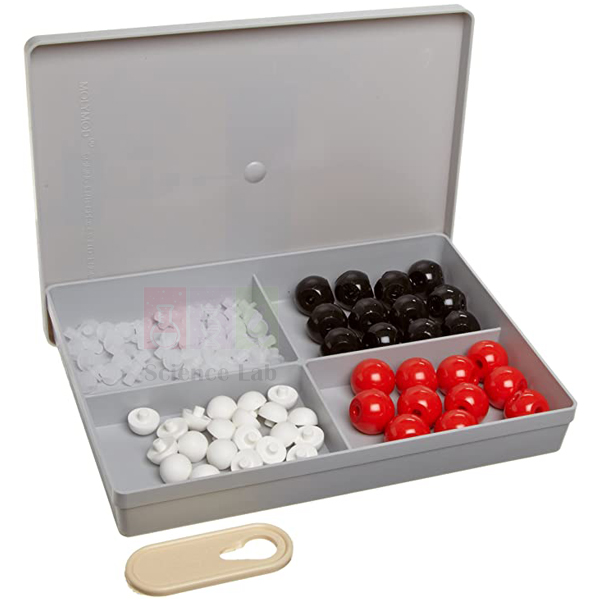
Sucrose Molecular Model
Sucrose Molecular Model (Product Code: SLE/Mo/09) is a self-assembly kit used to build a three-dimensional model of one sucrose molecule for chemistry and biology teaching. With 45 atom-parts and 46 NV links, this 3D science model kit lets students see how a glucose ring and a fructose ring join to form table sugar, making it a clear visual aid for carbohydrate lessons. This model is made by Jain Scientific Equipments Pvt Ltd (ScienceLab), an OEM manufacturer, at its own factory in Ambala, India.
Specifications
| Parameter | Detail |
|---|---|
| Model type | Self-assembly molecular model kit |
| Molecule | Sucrose — one molecule, shown in 3D |
| Atom parts | 45 |
| NV links | 46 |
| Tool | 1 |
| Product code | SLE/Mo/09 |
| Manufacturer | Jain Scientific Equipments Pvt Ltd (ScienceLab) — OEM |
| Country of origin | India (made in Ambala, Haryana) |
What Is the Sucrose Model Used For?
Sucrose is a disaccharide: one glucose unit and one fructose unit joined by a glycosidic bond, with a molecule of water removed when the bond forms. A sucrose molecule contains 45 atoms of carbon, hydrogen and oxygen, so the 45 atom-parts build one complete molecule, and the 46 links match the number of bonds that hold those atoms together.
Teachers use the model to show the condensation reaction that forms sucrose, its hydrolysis back into glucose and fructose, and why sucrose does not give a positive result in reducing-sugar tests: the glycosidic bond ties up the groups that would otherwise react. Building the two rings separately before joining them makes the structure easier to follow, and the tool supplied should be kept with the parts.
OEM Manufacturer
Jain Scientific Equipments Private Limited, known to customers as ScienceLab, is the OEM (original equipment manufacturer) of the Sucrose Molecular Model. It is made at the company's own licensed factory at Saha, Ambala, Haryana, India, and supplied direct to schools, colleges, teacher-training institutes, dealers and importers without a trading middleman.
The same manufacturer makes the glucose and fat kits in this range, so a set of carbohydrate and lipid models can be quoted together. Find out more on the ScienceLab profile.
Related Molecule Models
Useful companions for a carbohydrate lesson built around the sucrose model:
- Molecular Model Kit, Glucose — the monosaccharide that forms one half of sucrose.
- Sucrose — laboratory sucrose for the practical tests that follow the model work.
- Fehling A Solution — used with Fehling B in reducing-sugar tests that show how sucrose differs from glucose.
- Molecular Model Set, Biochemistry — for building a wider biochemistry teaching collection.
All molecular model kits are listed in the Molecule category.
Frequently Asked Questions
How many parts are in the Sucrose Molecular Model?
The Sucrose Molecular Model contains 45 atom-parts, 46 NV links and one tool. These parts assemble into one complete sucrose molecule, so each kit gives a group a full 3D model to study.
Does the Sucrose Molecular Model come assembled?
No, the Sucrose Molecular Model is a self-assembly kit. Students build the molecule from the atom-parts and links, which helps them understand exactly how the glucose and fructose rings are connected by the glycosidic bond.
Which lessons use the Sucrose Molecular Model?
The Sucrose Molecular Model is used in lessons on carbohydrates, disaccharides, glycosidic bonds and the hydrolysis of sugars. It also helps explain why sucrose behaves differently from glucose in reducing-sugar tests such as Benedict's or Fehling's.
Who manufactures the Sucrose Molecular Model?
The Sucrose Molecular Model is manufactured by Jain Scientific Equipments Pvt Ltd (ScienceLab) as the OEM, at its own licensed factory in Saha, Ambala, India. Enquiries and repeat orders go straight to the manufacturer.
Can I order the Sucrose Molecular Model with other sugar models?
Yes, the Sucrose Molecular Model can be quoted together with the glucose kit and other models from the Molecule range. List the models and quantities you need on the contact page to receive one combined quotation.
Is the Sucrose Molecular Model available for export?
Yes, Jain Scientific Equipments Pvt Ltd (ScienceLab) supplies the Sucrose Molecular Model to schools, colleges and distributors in India and international markets. Send your quantity and destination through the contact page for an export quotation.
Request a Quote
Ask for a quotation on the Sucrose Molecular Model through the contact page, or collect several models in the enquiry cart and send one enquiry. The manufacturer replies directly.
Last updated: 24 September 2026
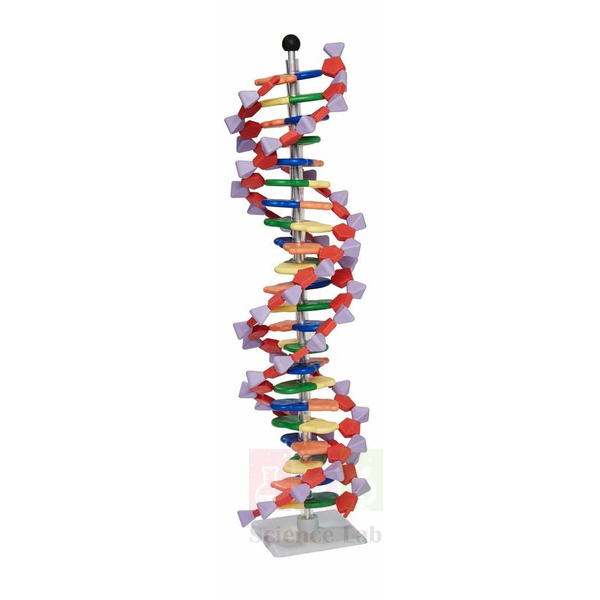
Mini DNA 22 layer base pair Molecular Model
Mini DNA 22 layer base pair Molecular Model (Product Code: SLE/Mo/10) is a compact DNA model kit used to give students an easy-to-understand introduction to the structure of the DNA double helix. Its 22 base-pair layers are built from abstract, colour-coded parts for the nitrogenous bases, pentagonal sugars and pyramidal phosphates, making it a handy DNA model kit for schools across India. It is produced by Jain Scientific Equipments Pvt Ltd (ScienceLab), an OEM manufacturer, at its own factory in Ambala, India.
Key Details
| Parameter | Detail |
|---|---|
| Model | Mini DNA molecular model kit (double helix) |
| Length of helix | 22 base-pair layers (as named) |
| Parts | Abstract-shaped, colour-coded parts |
| Components represented | Nitrogenous bases, pentagonal sugar and pyramidal phosphate |
| Assembled size and part count | Not stated in this listing — ask us |
| Product code | SLE/Mo/10 |
| Manufacturer | Jain Scientific Equipments Pvt Ltd (ScienceLab) — OEM |
| Country of origin | India (made in Ambala, Haryana) |
What Is the Mini DNA Model Used For?
The abstract shapes strip away atom-level detail so beginners can focus on the three building blocks of every nucleotide — sugar, phosphate and base — and on how bases pair across the helix. The pentagonal sugar pieces echo the five-membered deoxyribose ring, and the pyramidal phosphates link the sugars along each backbone.
With 22 layers, the finished model follows the helix through about two full turns, so students can see the twist repeat. Teachers use the colour-coding to check complementary pairing (adenine with thymine, guanine with cytosine), to point out that the two strands run in opposite directions, and to separate the strands when introducing replication. Writing the colour key on the board before building saves time.
OEM Manufacturer
The Mini DNA 22 layer base pair Molecular Model is made by Jain Scientific Equipments Private Limited, trading as ScienceLab, which is its OEM (original equipment manufacturer). Production takes place at the company's own licensed factory at Saha, Ambala, Haryana, India, and schools, colleges, dealers and importers buy direct from the factory.
Repeat orders for additional classrooms are handled by the manufacturer itself — ask us when you need more kits to add to those already in use. Read about the company on the ScienceLab profile.
Related Molecule Models
Other DNA models to build on this introduction:
- Molecular Model Kit, Ten Layer DNA — a shorter helix of about one turn for quick group builds.
- Molecular Model Kit, Two Layer DNA — a minimal segment for close study of base pairing.
- Medical DNA Model — a larger PVC model for the teacher's demonstration.
- Molecular Model, RNA 12 Base — for comparing DNA with a strand of RNA.
Explore the complete Molecule range for more DNA and biomolecule models.
Frequently Asked Questions
What does "22 layer base pair" mean for this model?
In the Mini DNA 22 layer base pair Molecular Model, each layer is one base pair spanning the two strands, so the finished double helix has 22 stacked base pairs. That length shows the helix twisting through about two full turns.
How are the DNA components shown in the Mini DNA model?
The Mini DNA 22 layer base pair Molecular Model uses abstract, colour-coded parts: nitrogenous bases, pentagonal sugar pieces and pyramidal phosphate pieces. The simplified shapes make the double helix easy to follow for students meeting DNA for the first time.
Is the Mini DNA model suitable for beginners?
Yes, the Mini DNA 22 layer base pair Molecular Model is intended as an easy-to-understand introduction to DNA structure. Its abstract parts avoid atom-by-atom detail, so secondary school students can concentrate on base pairing and the double-helix shape.
Who makes the Mini DNA 22 layer base pair Molecular Model?
Jain Scientific Equipments Pvt Ltd (ScienceLab) manufactures the Mini DNA 22 layer base pair Molecular Model as the OEM at its own licensed factory in Saha, Ambala, Haryana, India, and quotes buyers directly without a middleman.
What size is the assembled Mini DNA model?
The assembled dimensions and part count of the Mini DNA 22 layer base pair Molecular Model are not stated in this listing. Contact us through the contact page and the details will be confirmed in your quotation.
How does the Mini DNA model compare with the ten-layer DNA kit?
The Mini DNA 22 layer base pair Molecular Model builds a longer helix of 22 base pairs, while the Ten Layer DNA kit builds a shorter segment. Choose the 22-layer model when students need to see the helix repeat over more than one full turn.
Request a Quote
Send your required quantity of the Mini DNA 22 layer base pair Molecular Model through the contact page, or add it to the enquiry cart. The quotation comes straight from the manufacturer.
Last updated: 24 September 2026
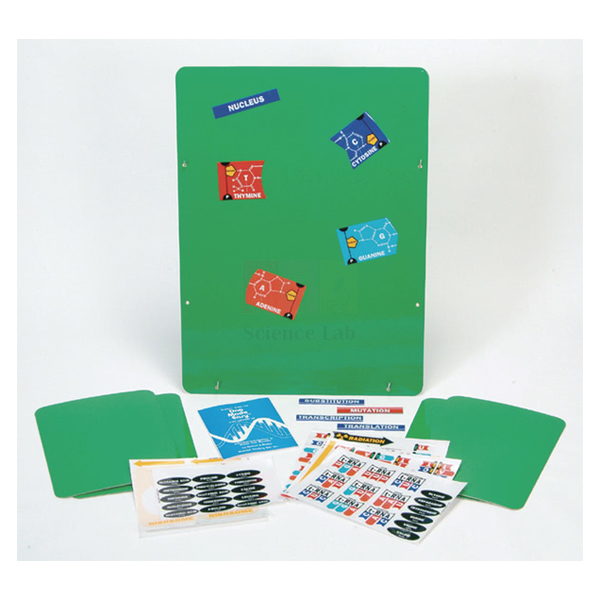
Model, DNA
Model, DNA (Product Code: SLE/Mo/11) is a DNA teaching model used to perform classroom demonstrations of DNA structure, gene duplication and mutation in biology lessons. Its listing describes seven demonstrations, including revealing the double strand, duplicating a gene and mutating normal blood into sickle-cell blood, so it fits well into a genetics and inheritance unit. Jain Scientific Equipments Pvt Ltd (ScienceLab), an OEM manufacturer, makes the model at its own factory in Ambala, India.
Key Details
| Parameter | Detail |
|---|---|
| Model type | DNA teaching model for classroom demonstrations |
| Number of demonstrations | 7 (as listed) |
| Example demonstration | Reveal a double strand of DNA and duplicate the gene |
| Example demonstration | Synthesize normal blood, then mutate it to produce sickle-cell blood |
| Full demonstration list, parts and size | Not stated in this listing — ask us |
| Product code | SLE/Mo/11 |
| Manufacturer | Jain Scientific Equipments Pvt Ltd (ScienceLab) — OEM |
| Country of origin | India (made in Ambala, Haryana) |
What Is the DNA Model Used For?
The Model, DNA turns processes that students normally meet only as diagrams into something they can watch. Opening up the double strand shows the two complementary sequences, and duplicating the gene demonstrates how each strand acts as a template for a new partner strand during replication.
The sickle-cell demonstration links a change in DNA to a visible trait: a single base change in the gene for haemoglobin alters the protein and gives red blood cells their sickle shape. Building the normal version first and then introducing the mutation lets students compare the two side by side. Running the replication demonstration before the mutation one, and asking students to predict each outcome, keeps the class engaged.
OEM Manufacturer
Jain Scientific Equipments Private Limited trades as ScienceLab and is the OEM (original equipment manufacturer) of the Model, DNA. The model is made at the company's own licensed factory at Saha, Ambala, Haryana, India, and supplied factory-direct to schools, colleges, dealers and importers.
Questions about setting up the demonstrations are answered by the maker itself rather than a reseller. Company details are on the ScienceLab profile page.
Related Molecule Models
Extend the demonstrations with these models and lab activities:
- Protein Biosynthesis — shows how a gene's code becomes a protein, the step between DNA and a trait.
- DNA extraction lab kit — a hands-on practical for isolating DNA.
- DNA Fingerprinting Electrophoresis Lab Activity — shows how differences in DNA are detected in the laboratory.
- Mini DNA 22 layer base pair Molecular Model — a colour-coded kit students can build themselves.
Find more DNA models in the Molecule category.
Frequently Asked Questions
What demonstrations can be done with the Model, DNA?
The Model, DNA supports seven classroom demonstrations according to its listing. Two examples are revealing the double strand of DNA and duplicating the gene, and synthesizing normal blood then mutating it to produce sickle-cell blood. Ask us for the full list.
How does the Model, DNA show sickle-cell disease?
The Model, DNA is used to build the sequence for normal blood and then introduce a mutation that produces sickle-cell blood. Students see how a small change in DNA can alter the protein it codes for and the resulting trait.
Which classes is the Model, DNA suited to?
The Model, DNA suits secondary and senior-secondary biology, where DNA structure, replication, mutation and inheritance are taught. Teachers can also use it in introductory college genetics as a quick visual before more detailed molecular work.
Who manufactures the Model, DNA?
The Model, DNA is manufactured by Jain Scientific Equipments Pvt Ltd (ScienceLab), the OEM, at its own licensed factory in Saha, Ambala, Haryana, India. Quotations and after-sales questions go directly to the manufacturer.
What parts and size does the Model, DNA have?
The parts list and dimensions of the Model, DNA are not given in this listing. Send your enquiry through the contact page and the manufacturer will confirm the contents and size in your quotation.
Can schools order the Model, DNA in quantity?
Yes, the Model, DNA can be quoted in quantity for schools, colleges, dealers and importers in India and international markets. State the number of models and the delivery location on the contact page to receive a quotation.
Request a Quote
To request a quotation for the Model, DNA, use the contact page or the enquiry cart. The quote is prepared by the manufacturer in Ambala.
Last updated: 24 September 2026
60.jpg)
Molecular Model Kit, Fat (Glyceryl Tristearate)
Molecular Model Kit, Fat (Glyceryl Tristearate) (Product Code: SLE/Mo/12) is a model-building kit used to construct glyceryl tristearate, a typical saturated fat, in biology, food-science and chemistry lessons. Its joining pieces keep the three fatty-acid chains firmly attached to the glycerol unit so the molecule can be passed round the class, and the parts are kept in a compartment case. The kit is produced by Jain Scientific Equipments Pvt Ltd (ScienceLab), an OEM manufacturer, at its own factory in Ambala, India.
Key Details
| Parameter | Detail |
|---|---|
| Molecule | Glyceryl tristearate (a fat / triglyceride) |
| Construction | Moulded parts with joining pieces designed for a firm assembled model |
| Manufacture | Precision-engineered moulds and materials |
| Storage | Durable storage case with compartments for segregating parts |
| Part count and size | Not stated in this listing — confirmed with your quotation |
| Product code | SLE/Mo/12 |
| Manufacturer | Jain Scientific Equipments Pvt Ltd (ScienceLab) — OEM |
| Country of origin | India (made in Ambala, Haryana) |
What Is the Fat Molecular Model Kit Used For?
Glyceryl tristearate, also called tristearin, forms when one glycerol molecule is joined by ester bonds to three stearic acid molecules, with water released at each link. Every chain is saturated, with no carbon–carbon double bonds, so the chains stay straight and pack closely together — the reason fats of this type are solid at room temperature.
In class, students can build the glycerol unit first, attach the three chains and then locate the ester links. The finished model supports discussions of fat digestion by lipase, soap-making by saponification and the difference between saturated and unsaturated fats, making it a useful molecular model for organic chemistry as well as nutrition. Placing it beside the stearic acid kit shows how one fatty acid becomes part of a fat.
OEM Manufacturer
The fat kit is manufactured by Jain Scientific Equipments Private Limited, which trades as ScienceLab and acts as the OEM (original equipment manufacturer). Each kit is made and assembled at the company's own licensed factory at Saha, Ambala, Haryana, India, rather than sourced from a trader.
Schools, food-science and nutrition departments, dealers and importers can buy direct from the factory. Learn more on the ScienceLab company profile.
Related Molecule Models
Build a complete lipid lesson with these items:
- Molecular Model Kit, Saturated Fat – Stearic Acid — the fatty acid that makes up each of the three chains.
- Sudan III {Animal Tissue} — a lipid stain used in practical tests that detect fats.
- Molecular Model Kit, Glucose — for contrasting a carbohydrate with a lipid.
- Molecular Model Set, Biochemistry — a broader set for biochemistry classes.
See all biomolecule and chemistry models in the Molecule range.
Frequently Asked Questions
What molecule does the fat molecular model kit build?
The Molecular Model Kit, Fat (Glyceryl Tristearate) builds glyceryl tristearate, a triglyceride made from one glycerol unit and three stearic acid chains. It is a standard example of a saturated fat in biology and chemistry teaching.
Will the assembled fat molecule stay together?
Yes, the Molecular Model Kit, Fat (Glyceryl Tristearate) has joining pieces designed so the assembled molecule stays firmly constructed. It can be handed around the class during a lesson without falling apart.
How is the glyceryl tristearate kit stored?
The Molecular Model Kit, Fat (Glyceryl Tristearate) comes in a durable storage case with compartments that keep the parts segregated. Returning each piece to its compartment after use makes the next build quicker and helps spot missing parts.
Who manufactures the Molecular Model Kit, Fat (Glyceryl Tristearate)?
The Molecular Model Kit, Fat (Glyceryl Tristearate) is manufactured by Jain Scientific Equipments Pvt Ltd (ScienceLab) as the OEM at its own licensed factory in Saha, Ambala, India, and is quoted direct by the manufacturer.
How many parts does the fat model kit contain?
The part count and assembled size of the Molecular Model Kit, Fat (Glyceryl Tristearate) are not listed here. Ask us through the contact page, and the full contents will be confirmed in your quotation before you place an order.
Which topics does the glyceryl tristearate model support?
The Molecular Model Kit, Fat (Glyceryl Tristearate) supports lessons on lipids, ester bonds, saturated versus unsaturated fats, fat digestion by lipase and saponification. It suits senior-secondary biology and chemistry, food science and nutrition courses.
Request a Quote
For availability and a quotation on the Molecular Model Kit, Fat (Glyceryl Tristearate), contact us through the contact page or add the kit to the enquiry cart. The manufacturer quotes you directly.
Last updated: 24 September 2026
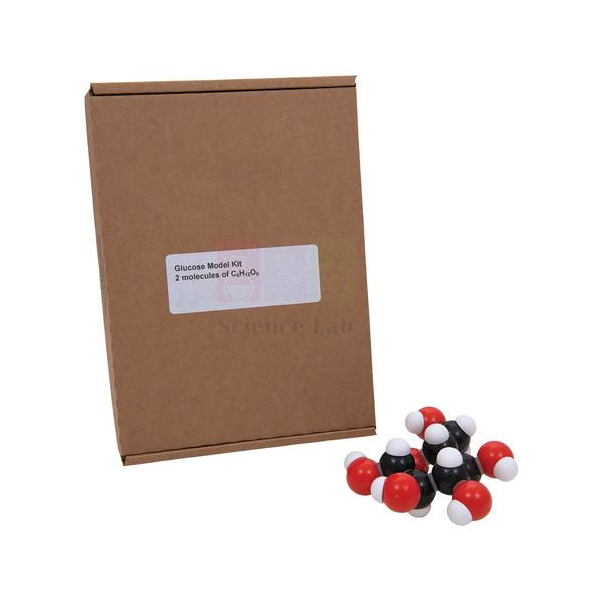
Molecular Model Kit, Glucose
Molecular Model Kit, Glucose (Product Code: SLE/Mo/13) is a model-building kit used to assemble the glucose molecule so students can study the structure of this simple sugar in biology and chemistry classes. Made from precision-engineered moulds, its parts join firmly and are stored in a durable compartment case, making it a dependable chemistry teaching kit for schools in India. Jain Scientific Equipments Pvt Ltd (ScienceLab), an OEM manufacturer, makes the glucose kit at its own factory in Ambala, India.
Key Details
| Parameter | Detail |
|---|---|
| Molecule | Glucose (a monosaccharide) |
| Construction | Moulded parts with joining pieces designed for a firm assembled model |
| Moulds and materials | Precision-engineered |
| Storage | Durable storage case with compartments |
| Part count and structural form | Not stated in this listing — ask us |
| Product code | SLE/Mo/13 |
| Manufacturer | Jain Scientific Equipments Pvt Ltd (ScienceLab) — OEM |
| Country of origin | India (made in Ambala, Haryana) |
What Is the Glucose Model Kit Used For?
Glucose, C6H12O6, is the sugar produced in photosynthesis and broken down in respiration to release energy. In solution it exists mostly as a six-membered ring, and its alpha and beta forms differ only in the position of one hydroxyl group — a small difference that separates starch from cellulose. A physical model makes these arrangements far easier to grasp than a formula on the board.
Students can count the atoms in the assembled model against the formula, then use it while balancing the photosynthesis and respiration equations. Two glucose models, or a glucose model beside the sucrose kit, help show how sugars join by condensation. Linking the model to a Benedict's test on real glucose connects structure to a practical result.
OEM Manufacturer
ScienceLab is the trading name of Jain Scientific Equipments Private Limited, the OEM (original equipment manufacturer) of the Molecular Model Kit, Glucose. The kit is made at the company's own licensed factory at Saha, Ambala, Haryana, India, and supplied factory-direct to schools, colleges, dealers and importers.
Institutional and tender buyers who need vendor registration details can use GSTIN 06AAECJ8618A1ZT and LEI 3358004HRD1JIVXKYX49. More about the company is on the ScienceLab profile.
Related Molecule Models
Items that turn the glucose model into a full carbohydrate practical:
- Sucrose Molecular Model — shows glucose bonded to fructose as a disaccharide.
- Benedicts Reagent (Test Of Glucose) — the classic practical test for reducing sugars.
- D-Glucose Powder Anhydrous — real glucose for the test-tube work that follows the model.
- Soluble Starch — a glucose polymer for iodine-test practicals.
More carbohydrate, lipid and protein models are in the Molecule category.
Frequently Asked Questions
What does the Molecular Model Kit, Glucose build?
The Molecular Model Kit, Glucose builds a model of the glucose molecule, the simple sugar made in photosynthesis and used in respiration. Students assemble it from moulded parts to see how the carbon, hydrogen and oxygen atoms are arranged.
Do the parts of the glucose kit fit together securely?
Yes, the Molecular Model Kit, Glucose uses joining pieces designed to keep the assembled model firmly constructed. The finished molecule can be passed around during a lesson without falling apart.
Does the glucose model show the ring or the chain form?
The listing for the Molecular Model Kit, Glucose does not state whether it builds the ring form, the open-chain form or both. Ask us through the contact page and the configuration will be confirmed with your quotation.
Who manufactures the Molecular Model Kit, Glucose?
The Molecular Model Kit, Glucose is manufactured by Jain Scientific Equipments Pvt Ltd (ScienceLab), the OEM, at its own licensed factory in Saha, Ambala, Haryana, India. Quotations come straight from the manufacturer.
How is the glucose kit stored between lessons?
The Molecular Model Kit, Glucose comes in a durable storage case with compartments that keep its parts segregated. After each lesson, sort the pieces back into their compartments so the kit stays complete and ready for the next class.
Can the glucose kit be ordered with sugar-test reagents?
Yes, the Molecular Model Kit, Glucose can be quoted together with reagents such as Benedict's solution and other items from our range. List everything you need on the contact page to receive one combined quotation.
Request a Quote
Get a quotation for the Molecular Model Kit, Glucose by writing to us via the contact page or by adding it to the enquiry cart. Quotes are issued directly by the manufacturer.
Last updated: 24 September 2026

Molecular Model Kit, Saturated Fat – Stearic Acid
Molecular Model Kit, Saturated Fat – Stearic Acid (Product Code: SLE/Mo/14) is a model-building kit used to assemble stearic acid, a saturated fatty acid, so students can see the long straight carbon chain typical of saturated fats. Its precision-moulded parts join firmly for handling and pack into a compartment case — a useful molecular model for organic chemistry and nutrition lessons. This kit comes from Jain Scientific Equipments Pvt Ltd (ScienceLab), an OEM manufacturer, which makes it at its own factory in Ambala, India.
Key Details
| Parameter | Detail |
|---|---|
| Molecule | Stearic acid (saturated fatty acid) |
| Joining pieces | Designed so the model stays firmly constructed when handed around |
| Production | Precision-engineered moulds and materials |
| Case | Durable storage case with compartments for segregating parts |
| Parts included | Not stated in this listing — ask us |
| Product code | SLE/Mo/14 |
| Manufacturer | Jain Scientific Equipments Pvt Ltd (ScienceLab) — OEM |
| Country of origin | India (made in Ambala, Haryana) |
What Is the Stearic Acid Model Kit Used For?
Stearic acid has a chain of 18 carbon atoms ending in a carboxylic acid group. Every carbon–carbon bond in the chain is single, which is what makes it saturated. The chain therefore stays straight in a zig-zag pattern, and neighbouring molecules can pack tightly — the reason fats rich in stearic acid are solid at room temperature.
Teachers use the kit to compare saturated and unsaturated fatty acids (drawing the kinked chain of an unsaturated acid on the board beside the straight model), to identify the carboxylic acid functional group and to explain how three fatty acids join glycerol to form a fat. Building two or three chains and laying them side by side is a quick way to show why straight chains pack closely.
OEM Manufacturer
Jain Scientific Equipments Private Limited, trading as ScienceLab, is the OEM (original equipment manufacturer) of this stearic acid kit. It is made at the company's own licensed factory at Saha, Ambala, Haryana, India, and supplied direct to schools, colleges, dealers and importers.
Spare parts or a replacement case for kits already in use can be requested from the manufacturer — ask us for what you need. Background on the company is on the ScienceLab profile.
Related Molecule Models
Related models and materials for teaching fatty acids and fats:
- Molecular Model Kit, Fat (Glyceryl Tristearate) — three stearic acid chains joined to glycerol as a complete fat.
- Sudan III {Animal Tissue} — a stain for practical tests that show where fats are present.
- Organic Chemistry Molecular Models Kits — for building other organic functional groups.
- Molecular Model Set – Elementary Organic, 30 atom — a starter set for simple organic molecules before long chains.
See all kits in the Molecule range.
Frequently Asked Questions
What is the stearic acid model used to show?
The Molecular Model Kit, Saturated Fat – Stearic Acid shows the structure of stearic acid, a saturated fatty acid with a long, straight carbon chain and a carboxylic acid group. It helps explain why saturated fats are solid at room temperature.
How does the stearic acid kit differ from the glyceryl tristearate kit?
The Molecular Model Kit, Saturated Fat – Stearic Acid builds a single fatty acid, while the glyceryl tristearate kit builds a complete fat with three stearic acid chains joined to glycerol. Using both shows how fats are assembled.
Are the stearic acid kit parts durable enough for student handling?
Yes, the Molecular Model Kit, Saturated Fat – Stearic Acid is produced from precision-engineered moulds and materials, and its joining pieces keep the model firm. Students can pass the finished molecule around during a lesson without it falling apart.
Who manufactures the stearic acid molecular model kit?
Jain Scientific Equipments Pvt Ltd (ScienceLab) manufactures the Molecular Model Kit, Saturated Fat – Stearic Acid as the OEM at its own licensed factory in Saha, Ambala, Haryana, India, and handles quotations directly.
What comes in the stearic acid kit case?
The Molecular Model Kit, Saturated Fat – Stearic Acid comes in a durable storage case with compartments for its parts. The exact part count is not stated in this listing, so ask us through the contact page to confirm the contents with your quotation.
Can the stearic acid kit be exported?
Yes, the Molecular Model Kit, Saturated Fat – Stearic Acid is available to schools, colleges and distributors in India and international markets. Send your quantity and destination through the contact page for a quotation.
Request a Quote
Send an enquiry for the Molecular Model Kit, Saturated Fat – Stearic Acid through the contact page, or use the enquiry cart to combine it with related kits. The manufacturer will reply with a quotation.
Last updated: 24 September 2026
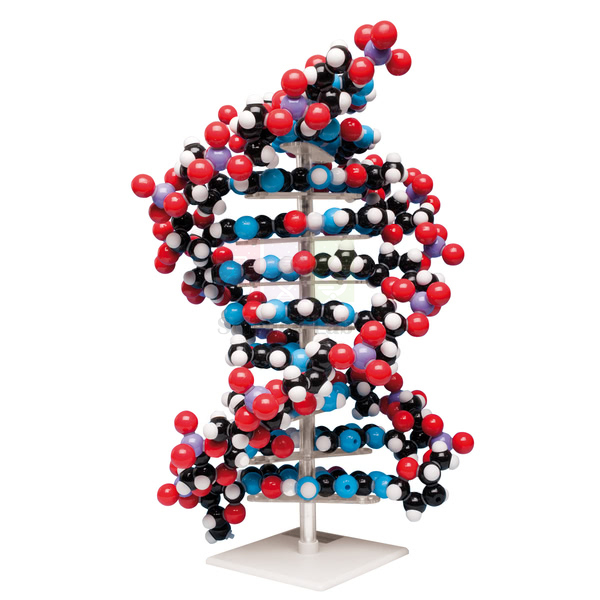
Molecular Model Kit, Ten Layer DNA
Molecular Model Kit, Ten Layer DNA (Product Code: SLE/Mo/15) is a model-building kit used to assemble a ten-layer section of the DNA double helix for biology and biotechnology teaching. Ten stacked base-pair layers take the model close to one full turn of the helix, while the precision-moulded parts join firmly and store neatly in a compartment case. It is manufactured by Jain Scientific Equipments Pvt Ltd (ScienceLab), an OEM manufacturer, at its own factory in Ambala, India.
Key Details
| Parameter | Detail |
|---|---|
| Model | Ten-layer DNA double helix |
| Joining pieces | Designed for a firmly constructed model that can be passed around |
| Moulds and materials | Precision-engineered |
| Storage | Durable case with compartments for segregating parts |
| Part count and assembled height | Not stated in this listing — ask us |
| Product code | SLE/Mo/15 |
| Manufacturer | Jain Scientific Equipments Pvt Ltd (ScienceLab) — OEM |
| Country of origin | India (made in Ambala, Haryana) |
What Is the Ten Layer DNA Model Used For?
The common form of DNA completes one turn of its helix roughly every ten base pairs, so a ten-layer model shows almost a complete twist. That is enough for students to see the two backbones winding around each other and the wider and narrower grooves that run along the molecule.
Groups can be given a short base sequence for one strand and asked to build the complementary strand, which tests their understanding of pairing rules. The model also demonstrates that the two strands run in opposite directions, and pulling the layers apart introduces replication. Noting the chosen sequence before building makes checking quick, and the firm joins let finished models circulate for peer review.
OEM Manufacturer
ScienceLab, the trading name of Jain Scientific Equipments Private Limited, is the OEM (original equipment manufacturer) of the Molecular Model Kit, Ten Layer DNA. The kit is made at the company's own licensed factory at Saha, Ambala, Haryana, India.
Schools, colleges, biotechnology departments, dealers and importers can buy it factory-direct, with quotations and repeat orders handled by the manufacturer. See the ScienceLab profile for company information.
Related Molecule Models
Other DNA teaching items that work alongside the ten-layer kit:
- Molecular Model Kit, Two Layer DNA — a minimal version for focusing on individual base pairs.
- Mini DNA 22 layer base pair Molecular Model — a longer helix that repeats over about two turns.
- Molecular Model, RNA 12 Base — for comparing a single RNA strand with the DNA double helix.
- DNA extraction lab kit — a practical for extracting DNA after the model lesson.
Browse more DNA and molecular models under Molecule.
Frequently Asked Questions
What does "ten layer" mean in this DNA kit?
In the Molecular Model Kit, Ten Layer DNA, each layer is one base-pair rung between the two strands, so the finished model has ten stacked base pairs. That is close to one complete turn of the DNA double helix.
Is the ten-layer DNA model sturdy?
Yes, the Molecular Model Kit, Ten Layer DNA uses joining pieces designed so the model stays firmly constructed. Once built, it can be passed around the class during a lesson without falling apart.
Which lessons suit the ten-layer DNA kit?
The Molecular Model Kit, Ten Layer DNA suits lessons on nucleotide structure, complementary base pairing, antiparallel strands and DNA replication. Its moderate length suits small-group builds where each group checks another group's sequence.
Who manufactures the Molecular Model Kit, Ten Layer DNA?
The Molecular Model Kit, Ten Layer DNA is manufactured by Jain Scientific Equipments Pvt Ltd (ScienceLab), the OEM, at its own licensed factory in Saha, Ambala, Haryana, India. Buyers deal directly with the manufacturer for quotations.
How many parts are in the ten-layer DNA kit?
The exact part count and assembled height of the Molecular Model Kit, Ten Layer DNA are not given in this listing. Ask us through the contact page and the contents will be confirmed in your quotation.
Should I choose the ten-layer kit or the longer Mini DNA model?
The Molecular Model Kit, Ten Layer DNA builds a shorter helix of about one turn, while the Mini DNA 22 layer base pair Molecular Model shows the helix repeating over about two turns. Choose according to how much of the helix students need to see.
Request a Quote
To order the Molecular Model Kit, Ten Layer DNA, send the number of kits you need through the contact page or add it to the enquiry cart. The manufacturer prepares your quotation.
Last updated: 24 September 2026
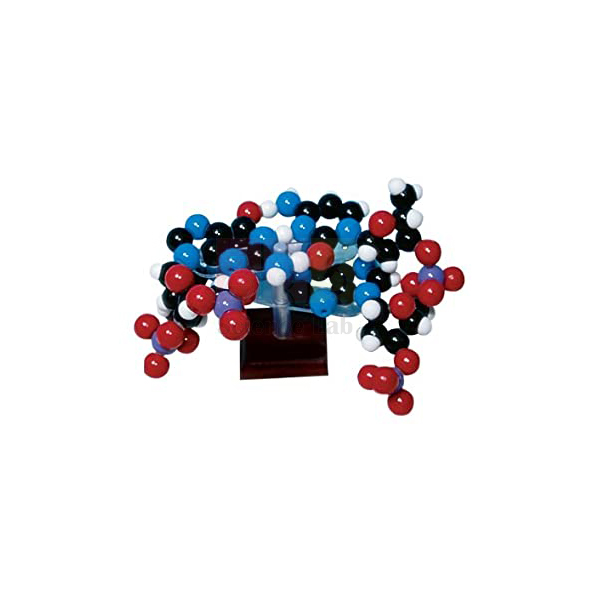
Molecular Model Kit, Two Layer DNA
Molecular Model Kit, Two Layer DNA (Product Code: SLE/Mo/16) is a small model-building kit used to assemble a two-layer section of DNA so students can study nucleotides and base pairing at close range. Because only two layers are built, attention stays on how the nucleotides pair across the two strands, which makes it an easy first DNA model kit for Indian classrooms. Jain Scientific Equipments Pvt Ltd (ScienceLab), an OEM manufacturer, produces this kit at its own factory in Ambala, India.
Key Details
| Parameter | Detail |
|---|---|
| Model | Two-layer DNA section |
| Assembly | Joining pieces designed so the model holds together when passed around |
| Moulds and materials | Precision-engineered |
| Storage | Durable storage case with compartments to keep parts apart |
| Part count and size | Not stated in this listing — confirmed with your quotation |
| Product code | SLE/Mo/16 |
| Manufacturer | Jain Scientific Equipments Pvt Ltd (ScienceLab) — OEM |
| Country of origin | India (made in Ambala, Haryana) |
What Is the Two Layer DNA Model Used For?
Each nucleotide in DNA is made of a phosphate group, a deoxyribose sugar and a nitrogenous base. Adenine pairs with thymine through two hydrogen bonds, and guanine pairs with cytosine through three. A two-layer model is the smallest segment that shows both a base pair across the strands and how one pair stacks on the next along the backbone.
Because the build is short, every student or pair can complete one in the opening minutes of an introductory lesson. Teachers can give different groups different base pairs to build, then compare results as a quick check of understanding before moving on to longer helix models. The compact size also makes the kit easy to use at a desk or during revision.
OEM Manufacturer
The Molecular Model Kit, Two Layer DNA is a ScienceLab product made by Jain Scientific Equipments Private Limited, its OEM (original equipment manufacturer). Production is carried out at the company's own licensed factory at Saha, Ambala, Haryana, India.
Whole-class quantities are quoted directly by the manufacturer to schools, colleges, dealers and importers. Visit the ScienceLab profile to learn more about the company.
Related Molecule Models
Continue from base pairing to the full double helix with these items:
- Molecular Model Kit, Ten Layer DNA — the next step, building about one full turn of the helix.
- Medical DNA Model — a large PVC model for the teacher's front-of-class demonstration.
- Model, DNA — for demonstrating gene duplication and mutation.
- DNA/Chromosome Staining Lab Activity — a lab activity that shows DNA inside cells.
The full Molecule range lists every DNA model kit.
Frequently Asked Questions
What does the Molecular Model Kit, Two Layer DNA show?
The Molecular Model Kit, Two Layer DNA shows a two-layer section of DNA, enough to see how bases pair across the two strands and how one pair stacks on the next. It focuses on nucleotide structure rather than the full helix.
Who is the two-layer DNA kit suited to?
The Molecular Model Kit, Two Layer DNA suits students meeting DNA structure for the first time in secondary biology. Its short build lets every student complete a model quickly before the class moves on to longer helix models.
Does the two-layer DNA model stay assembled when handled?
Yes, the Molecular Model Kit, Two Layer DNA uses joining pieces designed so the model is firmly constructed. It can be passed around the class during a lesson without falling apart.
Who manufactures the Molecular Model Kit, Two Layer DNA?
The Molecular Model Kit, Two Layer DNA is manufactured by Jain Scientific Equipments Pvt Ltd (ScienceLab) as the OEM at its own licensed factory in Saha, Ambala, Haryana, India. Class sets are quoted directly by the manufacturer.
What parts come with the two-layer DNA kit?
The part count of the Molecular Model Kit, Two Layer DNA is not stated in this listing, but the parts come in a durable storage case with compartments. Ask us through the contact page to confirm contents with your quotation.
Can the two-layer DNA kit be ordered as a class set?
Yes, the Molecular Model Kit, Two Layer DNA can be quoted as a class set for schools, colleges and dealers in India and international markets. Tell us the number of kits and the delivery location on the contact page.
Request a Quote
For a class-set quotation on the Molecular Model Kit, Two Layer DNA, use the contact page or add the kit to the enquiry cart. Quotes come direct from the manufacturer.
Last updated: 24 September 2026
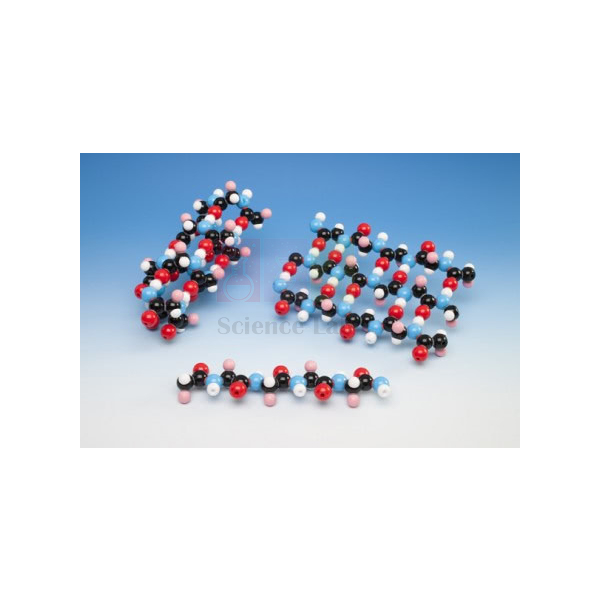
Molecular Model Set, 20 Amino Acid Collection
Molecular Model Set, 20 Amino Acid Collection (Product Code: SLE/Mo/17) is a molecular model set used to build amino acids, the building blocks of proteins, in biochemistry, biology and chemistry teaching. As the name indicates, it covers a collection of 20 amino acids, with precision-moulded parts that join firmly and a durable case with compartments to keep everything organised. The set is made by Jain Scientific Equipments Pvt Ltd (ScienceLab), an OEM manufacturer, at its own factory in Ambala, India.
Key Details
| Parameter | Detail |
|---|---|
| Collection | 20 amino acids (as named) |
| Listing reference | Amino Acid Collection Set 8 |
| Joining pieces | Designed so models stay firm when handed around the class |
| Moulds and materials | Precision-engineered |
| Storage | Durable storage case with compartments for segregating parts |
| Amino acids included and part count | Not listed here — confirmed with your quotation |
| Product code | SLE/Mo/17 |
| Manufacturer | Jain Scientific Equipments Pvt Ltd (ScienceLab) — OEM |
| Country of origin | India (made in Ambala, Haryana) |
What Is the 20 Amino Acid Model Set Used For?
Every amino acid has the same core: a central carbon atom bonded to an amino group, a carboxyl group, a hydrogen atom and a side chain, often called the R group. The side chain is what makes each amino acid different, deciding whether it is non-polar, polar, acidic or basic. With 20 models in one collection, a class can compare many side chains directly.
Teachers use the set to sort amino acids by side-chain property, to discuss why most amino acids exist in mirror-image forms, and to join two models to show how a peptide bond forms. Dividing the collection among groups, with each group presenting its amino acids, works well in biochemistry classes and makes a strong biology model kit for bulk orders across several sections.
OEM Manufacturer
Jain Scientific Equipments Private Limited (CIN U29309HR2020PTC087597) trades as ScienceLab and is the OEM (original equipment manufacturer) of the Molecular Model Set, 20 Amino Acid Collection. Production takes place at the company's licensed factory at 449, HSIIDC Industrial Area, Saha, Ambala, Haryana (Factory Licence AMB-ONLINE-CHD-J-414).
Sets are supplied factory-direct to schools, colleges, universities, dealers and importers. More details are on the ScienceLab profile.
Related Molecule Models
Models and reagents that follow on from amino acids:
- Molecular Model Set, 7 Amino Acid Collection — a smaller selection for introductory classes.
- Polypeptide Molecular Model Kit — for joining units into a polypeptide chain.
- Alpha Helix Molecular Model Kit — shows how a chain of amino acids coils into a helix.
- Biuret Reagent (Protein Test) — a practical test for proteins to round off the topic.
Find more biochemistry sets in the Molecule category.
Frequently Asked Questions
How many amino acids are in the 20 Amino Acid Collection?
As its name states, the Molecular Model Set, 20 Amino Acid Collection is a collection of 20 amino acid models. The listing does not name each amino acid, so ask us through the contact page for the full list with your quotation.
How is the 20 amino acid set different from the 7 amino acid set?
The Molecular Model Set, 20 Amino Acid Collection covers 20 amino acids, while the Molecular Model Set, 7 Amino Acid Collection is a smaller selection. Choose the larger set when students need to compare a wider range of side chains.
Are the amino acid models sturdy enough for group work?
Yes, the Molecular Model Set, 20 Amino Acid Collection has joining pieces designed so each model stays firmly constructed. Models can be handed from group to group during a lesson without falling apart.
How is the 20 amino acid set stored?
The Molecular Model Set, 20 Amino Acid Collection comes in a durable storage case with compartments to keep parts segregated. Returning parts to their compartments after class makes it easy to check the set is complete.
Who manufactures the Molecular Model Set, 20 Amino Acid Collection?
The Molecular Model Set, 20 Amino Acid Collection is manufactured by Jain Scientific Equipments Pvt Ltd (ScienceLab), the OEM, at its own licensed factory in Saha, Ambala, Haryana, India. Quotations come directly from the manufacturer.
Which courses use the 20 amino acid model set?
The Molecular Model Set, 20 Amino Acid Collection is used in senior-secondary biology and chemistry, undergraduate biochemistry, and nursing or pharmacy foundation courses where protein structure and amino acid properties are taught.
Request a Quote
Request a quotation for the Molecular Model Set, 20 Amino Acid Collection through the contact page or by adding it to the enquiry cart. The manufacturer replies with a quotation and terms.
Last updated: 24 September 2026
Molecular Model Set, 7 Amino Acid Collection
Molecular Model Set, 7 Amino Acid Collection (Product Code: SLE/Mo/18) is a compact molecular model set used to introduce the structure of amino acids in school and college biology and chemistry. With a collection of seven amino acids, it keeps an introductory lesson focused, and its precision-moulded parts join firmly and store in a compartment case. Jain Scientific Equipments Pvt Ltd (ScienceLab), an OEM manufacturer, makes the set at its own factory in Ambala, India.
Key Details
| Parameter | Detail |
|---|---|
| Collection | 7 amino acids (as named) |
| Listing reference | Amino Acid Collection Set 7 |
| Construction | Moulded parts with joining pieces designed for firmly constructed models |
| Moulds and materials | Precision-engineered |
| Storage | Durable storage case with compartments |
| Amino acids included and part count | Not listed here — ask us |
| Product code | SLE/Mo/18 |
| Manufacturer | Jain Scientific Equipments Pvt Ltd (ScienceLab) — OEM |
| Country of origin | India (made in Ambala, Haryana) |
What Is the 7 Amino Acid Model Set Used For?
A smaller selection lets a class concentrate on the backbone that all amino acids share — the amino group, the carboxyl group and the central carbon — before comparing a handful of different side chains. This suits a first lesson on proteins, where too many structures at once can overwhelm students.
Teachers can pair up models to demonstrate a condensation reaction forming a dipeptide, discuss how amino acids carry both acidic and basic groups, and ask students to predict which side chains would sit inside or outside a folded protein. Labelling each model with a small tag during the lesson helps students remember which is which.
OEM Manufacturer
ScienceLab is the name under which Jain Scientific Equipments Private Limited manufactures the Molecular Model Set, 7 Amino Acid Collection as the OEM (original equipment manufacturer). The set is produced at the company's own licensed factory at Saha, Ambala, Haryana, India.
Schools, colleges, dealers and importers order it directly from the manufacturer, which also answers questions about which amino acids the set contains. See the ScienceLab profile for more.
Related Molecule Models
Items that extend an introductory amino acid lesson:
- Molecular Model Set, 20 Amino Acid Collection — a larger collection for comparing more side chains.
- Polypeptide Molecular Model Kit — for linking units into a polypeptide chain.
- Protein Model — shows how amino acid chains fold into a protein.
- Molecular Model Set, Biochemistry — a broader set for general biochemistry.
Browse the Molecule range for more biomolecule models.
Frequently Asked Questions
Which amino acids are in the 7 Amino Acid Collection?
The listing for the Molecular Model Set, 7 Amino Acid Collection does not name the seven amino acids included. Ask us through the contact page and the list will be confirmed with your quotation so you can match it to your syllabus.
Is the 7 amino acid set enough for an introductory class?
Yes, the Molecular Model Set, 7 Amino Acid Collection is well suited to a first lesson on amino acids, as it shows the shared backbone and several side chains without overwhelming students. Larger courses may prefer the 20 amino acid set.
Will the amino acid models stay assembled?
Yes, the Molecular Model Set, 7 Amino Acid Collection has joining pieces designed so the models stay firmly constructed. They can be passed around the class during a lesson without falling apart.
Who manufactures the Molecular Model Set, 7 Amino Acid Collection?
The Molecular Model Set, 7 Amino Acid Collection is manufactured by Jain Scientific Equipments Pvt Ltd (ScienceLab) as the OEM at its own licensed factory in Saha, Ambala, Haryana, India, and quoted directly by the manufacturer.
How is the 7 amino acid set packed?
The Molecular Model Set, 7 Amino Acid Collection comes in a durable storage case with compartments for segregating its parts. This keeps the pieces organised between lessons and makes it easy to check that nothing is missing.
Can the 7 amino acid set be ordered for several classrooms?
Yes, the Molecular Model Set, 7 Amino Acid Collection can be quoted for several classrooms at once, for schools, colleges and dealers in India and international markets. Share the number of sets and the delivery location on the contact page.
Request a Quote
For a quotation on the Molecular Model Set, 7 Amino Acid Collection, write to us via the contact page or add the set to the enquiry cart. The manufacturer will respond directly.
Last updated: 24 September 2026
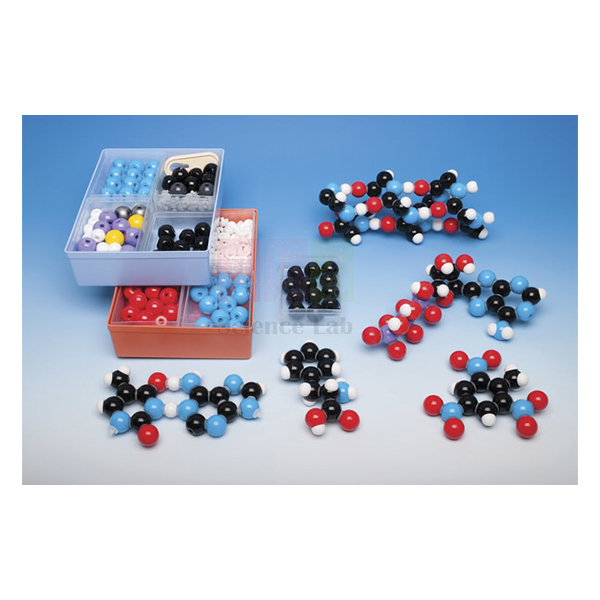
Molecular Model Set, Biochemistry
Molecular Model Set, Biochemistry (Product Code: SLE/Mo/19) is a molecular model set used to build the structures of biological molecules in biochemistry, biology and life-science lessons. Its parts come from precision-engineered moulds, lock together firmly for handling and are stored in a durable compartment case, making it a sound addition to school biology lab equipment in India. The set is produced by Jain Scientific Equipments Pvt Ltd (ScienceLab), an OEM manufacturer, at its own factory in Ambala, India.
Key Details
| Parameter | Detail |
|---|---|
| Set | Biochemistry molecular model set |
| Construction | Moulded parts with joining pieces designed for firmly constructed models |
| Moulds and materials | Precision-engineered |
| Storage | Durable storage case with compartments for segregating parts |
| Molecules covered and part count | Not listed here — confirmed with your quotation |
| Product code | SLE/Mo/19 |
| Manufacturer | Jain Scientific Equipments Pvt Ltd (ScienceLab) — OEM |
| Country of origin | India (made in Ambala, Haryana) |
What Is the Biochemistry Model Set Used For?
Biochemistry deals with the molecules of life — carbohydrates, lipids, proteins and nucleic acids — and much of it depends on shape: how an enzyme fits its substrate, how bases pair, how fatty acids pack. Building these structures by hand helps students connect a written formula to a three-dimensional molecule.
Because this listing does not say which molecules the set builds, teachers should confirm the contents against their syllabus before ordering. In class, models built from the set can be used for group presentations, for comparing functional groups across different biomolecules, and for revision before practical examinations. Firm joins mean finished models can be shared around the room safely.
OEM Manufacturer
Jain Scientific Equipments Private Limited, which trades as ScienceLab, manufactures the Molecular Model Set, Biochemistry as its OEM (original equipment manufacturer) at its own licensed factory at Saha, Ambala, Haryana, India. It sells factory-direct to schools, colleges, universities, dealers and importers.
The manufacturer can also advise which of its dedicated molecule kits would complement the set for your course — ask us. Read more on the ScienceLab profile.
Related Molecule Models
Dedicated kits for individual biomolecules, to use with or instead of the set:
- Molecular Model Kit, Glucose — a carbohydrate example.
- Molecular Model Kit, Fat (Glyceryl Tristearate) — a lipid example built as a complete triglyceride.
- Molecular Model Set, 20 Amino Acid Collection — the building blocks of proteins.
- Molecular Model Kit, Ten Layer DNA — a nucleic acid example as a short double helix.
The Molecule category lists all molecular model kits.
Frequently Asked Questions
Which molecules can be built with the Molecular Model Set, Biochemistry?
The listing for the Molecular Model Set, Biochemistry does not name the molecules it builds. Ask us through the contact page and the contents will be confirmed in your quotation, so you can check them against your biochemistry syllabus.
Are the biochemistry models sturdy?
Yes, the Molecular Model Set, Biochemistry uses joining pieces designed so assembled models stay firmly constructed. Finished models can be passed around during a lesson without falling apart, which suits group work and demonstrations.
How is the biochemistry set stored?
The Molecular Model Set, Biochemistry comes in a durable storage case with compartments that keep the parts segregated. Sorting parts back into their places after each class keeps the set complete and ready for the next lesson.
Who manufactures the Molecular Model Set, Biochemistry?
The Molecular Model Set, Biochemistry is manufactured by Jain Scientific Equipments Pvt Ltd (ScienceLab), the OEM, at its own licensed factory in Saha, Ambala, Haryana, India. Quotations are prepared directly by the manufacturer.
Should I buy the biochemistry set or individual molecule kits?
The Molecular Model Set, Biochemistry suits courses that want one general set, while individual kits such as glucose, glyceryl tristearate or ten-layer DNA cover one molecule each. Ask us to compare contents before deciding which option fits your course.
Which courses use the biochemistry model set?
The Molecular Model Set, Biochemistry is aimed at senior-secondary biology, undergraduate biochemistry and life-science courses, and at nursing, pharmacy or food-science programmes where the structure of biomolecules is part of the syllabus.
Request a Quote
Ask for a quotation on the Molecular Model Set, Biochemistry through the contact page, or add it to the enquiry cart with any individual kits you need. The manufacturer will quote directly.
Last updated: 24 September 2026
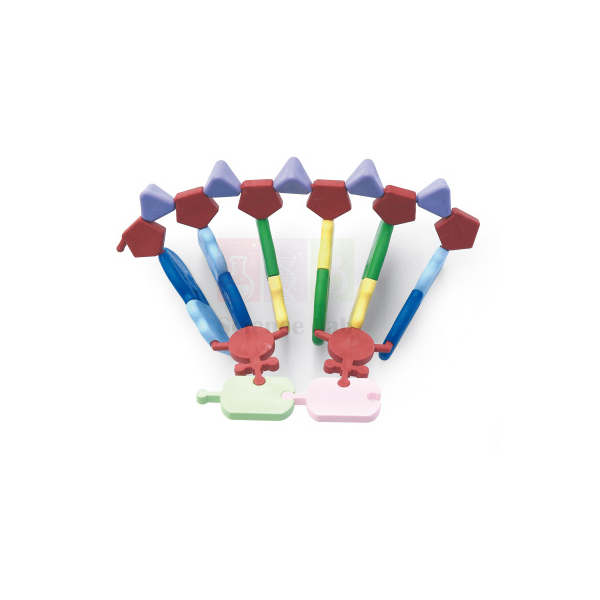
Molecular Model, RNA 12 Base
Molecular Model, RNA 12 Base (Product Code: SLE/Mo/20) is a molecular model kit used to build a 12-base section of RNA, the nucleic acid that carries genetic information from DNA to the protein-making machinery of the cell. It helps students compare RNA with DNA and understand codons, and its precision-moulded parts join firmly and store in a compartment case. Jain Scientific Equipments Pvt Ltd (ScienceLab), an OEM manufacturer, makes the RNA model at its own factory in Ambala, India.
Key Details
| Parameter | Detail |
|---|---|
| Model | RNA, 12 bases (as named) |
| Joining pieces | Designed for a firmly constructed model that can be passed around |
| Moulds and materials | Precision-engineered |
| Storage | Durable storage case with compartments for segregating parts |
| Part count and assembled size | Not stated in this listing — ask us |
| Product code | SLE/Mo/20 |
| Manufacturer | Jain Scientific Equipments Pvt Ltd (ScienceLab) — OEM |
| Country of origin | India (made in Ambala, Haryana) |
What Is the RNA Model Used For?
RNA differs from DNA in three ways that students need to learn: its sugar is ribose rather than deoxyribose, it uses the base uracil in place of thymine, and it is usually a single strand. A model built base by base makes these differences concrete, especially when placed beside a DNA model.
Twelve bases divide neatly into four codons of three bases each, so the model is well suited to reading a short message with a genetic code table and naming the amino acids it would specify. Teachers also use it to show transcription — building the RNA strand to complement a DNA template — before moving on to translation and protein synthesis.
OEM Manufacturer
The Molecular Model, RNA 12 Base is manufactured by Jain Scientific Equipments Private Limited, trading as ScienceLab, as the OEM (original equipment manufacturer). It is made at the company's own licensed factory at Saha, Ambala, Haryana, India, not sourced through a trader.
Schools, colleges, dealers and importers receive quotations directly from the manufacturer, which also handles repeat orders. The ScienceLab profile has more about the company.
Related Molecule Models
Items that connect the RNA model to DNA and protein synthesis:
- DNA-RNA Model — for side-by-side comparison of the two nucleic acids.
- Molecular Model Kit, Ten Layer DNA — a DNA helix to use as the template in transcription lessons.
- Protein Biosynthesis — follows the message from RNA to a finished protein.
- Molecular Model Set, 7 Amino Acid Collection — models of amino acids, the units that codons specify.
More nucleic acid models are listed in the Molecule range.
Frequently Asked Questions
What does "12 base" mean in the Molecular Model, RNA 12 Base?
The Molecular Model, RNA 12 Base builds an RNA section with 12 bases. That length divides into four three-base codons, which makes the model convenient for teaching how a genetic message is read and translated.
How is the RNA model different from the DNA model kits?
The Molecular Model, RNA 12 Base represents RNA, which uses ribose sugar and the base uracil and is usually single-stranded. The DNA kits in the Molecule range build double-stranded DNA, so using both highlights the differences between the two nucleic acids.
Will the RNA model hold together during class?
Yes, the Molecular Model, RNA 12 Base uses joining pieces designed so the model stays firmly constructed. The finished strand can be passed around the class during a lesson without falling apart.
Who manufactures the Molecular Model, RNA 12 Base?
The Molecular Model, RNA 12 Base is manufactured by Jain Scientific Equipments Pvt Ltd (ScienceLab) as the OEM at its own licensed factory in Saha, Ambala, Haryana, India. Enquiries are answered directly by the manufacturer.
What is in the RNA model case?
The Molecular Model, RNA 12 Base comes in a durable storage case with compartments to keep its parts segregated. The exact part count is not stated in this listing, so ask us through the contact page to confirm contents with your quotation.
Which topics does the RNA 12 base model support?
The Molecular Model, RNA 12 Base supports lessons on nucleic acid structure, transcription, codons and the genetic code, and the link between RNA and protein synthesis in senior-secondary and undergraduate biology.
Request a Quote
To request a quotation for the Molecular Model, RNA 12 Base, contact us via the contact page or add it to the enquiry cart. The manufacturer handles your enquiry directly.
Last updated: 24 September 2026

Molecular And Orbital Model Set – Organic Structures
Molecular And Orbital Model Set – Organic Structures (Product Code: SLE/Mo/21) is a chemistry teaching set used to build ethane, ethene, ethyne and benzene so students can compare single, double, triple and aromatic carbon bonding in the classroom. Teachers introducing hydrocarbons and hybridisation use it because its four structures move step by step from a saturated molecule to an aromatic ring. It is made by Jain Scientific Equipments Pvt Ltd (ScienceLab), an OEM manufacturer, at its own factory in Ambala, India, as a molecular model for organic chemistry lessons.
Key Details
| Parameter | Detail |
|---|---|
| Structures covered | Ethane, ethene, ethyne and benzene |
| Model type | Molecular and orbital models of organic structures |
| Topic | Hydrocarbon bonding in organic chemistry |
| Product code | SLE/Mo/21 |
| Manufacturer | Jain Scientific Equipments Pvt Ltd (ScienceLab) — OEM |
| Country of origin | India (made in Ambala, Haryana) |
What Is the Molecular and Orbital Model Set Used For?
Teachers use the set to show how carbon bonding changes across four key hydrocarbons. Ethane represents sp3 carbon with free rotation about a single bond; ethene introduces a flat sp2 carbon pair joined by a sigma and a pi bond; ethyne shows the linear sp arrangement with two pi bonds; and benzene completes the sequence with a ring of delocalised electrons. Placing orbital shapes beside the molecular structures helps students connect hybridisation theory with the geometry they can see.
A practical routine is to build the molecules in order and ask students to predict each shape before it is assembled, then compare their predictions with the finished model. The set works for demonstrations at the front of the class and for small-group revision before organic chemistry examinations, which makes it useful chemistry lab equipment for schools and colleges.
OEM Manufacturer
ScienceLab is the trading name of Jain Scientific Equipments Private Limited, which produces molecular model sets as an original equipment manufacturer (OEM). This organic structures set is made at the company's own licensed factory at Saha, Ambala, Haryana, so schools and distributors deal directly with the maker rather than a trading intermediary. Questions about replacement parts or repeat orders go to the same team that makes the set — just ask us. Read more on our company profile.
Related Molecule Products
These items extend lessons on hydrocarbon bonding and orbital theory:
- Molecular Model Set – Benzene C6H6, Hybridized — a dedicated benzene set for studying the aromatic ring in more depth.
- Orbital Model of Sp2 Hybridization — isolates the sp2 arrangement found in ethene and benzene.
- Atomic Orbital Model Px — shows a single p orbital before students look at how p orbitals overlap to form pi bonds.
- Molecular Model Set – Organic Student — lets students build further hydrocarbons themselves after the demonstration.
Browse the complete Molecule range for more molecular model sets.
Frequently Asked Questions
What structures does the Molecular And Orbital Model Set – Organic Structures cover?
The Molecular And Orbital Model Set – Organic Structures covers four hydrocarbons: ethane, ethene, ethyne and benzene. Together they take students from a single carbon–carbon bond through double and triple bonds to the aromatic benzene ring.
Which classes is the organic structures orbital model set suitable for?
The Molecular And Orbital Model Set – Organic Structures suits senior school and first-year college chemistry, where hybridisation, sigma and pi bonds and the structure of benzene are taught. Teachers can also use it for revision sessions before organic chemistry examinations.
Who manufactures the Molecular And Orbital Model Set – Organic Structures?
The Molecular And Orbital Model Set – Organic Structures is manufactured by Jain Scientific Equipments Pvt Ltd (ScienceLab) as the OEM at its own factory in Saha, Ambala, Haryana, India, and is sold factory-direct to schools, colleges, dealers and importers.
Does the listing give a parts count for the set?
The listing for the Molecular And Orbital Model Set – Organic Structures names the four structures it builds but does not publish a parts count. Please ask us through the contact page and we will confirm the current contents before you order.
How should the model parts be stored after class?
Store the Molecular And Orbital Model Set – Organic Structures dry and away from direct heat, and take the models apart before packing so parts are not left under strain. Counting pieces at the end of each lesson makes it easy to spot losses early.
What information is needed for a quotation?
For a quotation on the Molecular And Orbital Model Set – Organic Structures, send the product code SLE/Mo/21, the quantity, your institution name and the delivery city or country. Quotes come directly from the manufacturer through the contact page or enquiry cart.
Can the set be ordered in bulk for export?
Yes. The Molecular And Orbital Model Set – Organic Structures can be quoted in bulk for schools, tenders, dealers and importers in India and international markets; packing and shipping details are agreed with you at the quotation stage.
Request a Quote
To order the Molecular And Orbital Model Set – Organic Structures, send your requirement through the contact page or add it to the enquiry cart. Your quotation comes direct from the manufacturer, ScienceLab, Ambala.
Last updated: 24 September 2026

Molecular Model Set – Benzene C6H6, Hybridized
Molecular Model Set – Benzene C6H6, Hybridized (Product Code: SLE/Mo/22) is a benzene model set used to represent the hybridised bonding of the benzene ring in organic chemistry teaching. Teachers and students at all levels use it to turn the idea of a delocalised aromatic ring into something they can hold, and the kit arrives in a durable storage case with compartments that keep parts separated. It is made by Jain Scientific Equipments Pvt Ltd (ScienceLab), an OEM manufacturer, at its own factory in Ambala, India.
Key Details
| Parameter | Detail |
|---|---|
| Molecule | Benzene, C6H6 |
| Representation | Hybridized |
| Parts | Produced from precision-engineered moulds and materials |
| Joining pieces | Designed so assembled models stay firmly together when passed around during a lesson |
| Storage | Durable storage case with compartments for segregating parts |
| Suitable for | Students at all levels |
| Product code | SLE/Mo/22 |
| Manufacturer | Jain Scientific Equipments Pvt Ltd (ScienceLab) — OEM |
| Country of origin | India (made in Ambala, Haryana) |
What Is the Benzene Hybridized Model Set Used For?
In benzene, each of the six carbon atoms is sp2 hybridised: three hybrid orbitals form sigma bonds to two neighbouring carbons and one hydrogen, giving a flat hexagonal ring. The remaining p orbital on each carbon overlaps sideways with its neighbours, spreading six electrons evenly around the ring. A hybridized benzene model gives students a physical reference for this picture, which explains why all the carbon–carbon bonds in benzene have the same length.
Pass the assembled model around the class while you discuss resonance and aromatic stability; the joining pieces are designed to hold together during handling. Return the parts to their compartments after the lesson so the set is complete for the next group. For chemistry departments looking for a molecular model for chemistry teaching in India and abroad, it pairs naturally with the unhybridized version for a side-by-side comparison.
What to Specify When Ordering
- Whether you need this hybridized set, the Molecular Model Set – Benzene C6H6, Unhybridized, or both for comparison.
- The number of sets required for each laboratory or classroom.
- Your institution name and delivery city or country for the quotation.
OEM Manufacturer
Jain Scientific Equipments Private Limited trades as ScienceLab and is the original equipment manufacturer of this benzene model set. The set is produced and packed at the company's licensed factory in Saha, Ambala, Haryana, then dispatched factory-direct to schools, colleges, institutions, dealers and importers. Because you buy from the maker, questions about missing pieces or a repeat order are handled by the same people — ask us. See our company profile for background.
Related Molecule Products
Items that support a complete lesson on benzene and aromatic bonding:
- Molecular Model Set – Benzene C6H6, Unhybridized — represents benzene without hybridisation for a before-and-after comparison.
- Orbital Model of Sp2 Hybridization — focuses on the sp2 orbital arrangement that each benzene carbon adopts.
- Molecular And Orbital Model Set – Organic Structures — places benzene alongside ethane, ethene and ethyne.
- NCERT Molecular Model Kit — a general kit for building the other organic molecules in the same course.
More sets are listed in our Molecule category.
Frequently Asked Questions
What does "hybridized" mean for the Molecular Model Set – Benzene C6H6, Hybridized?
In the Molecular Model Set – Benzene C6H6, Hybridized, the benzene ring is represented in its hybridised form, reflecting the sp2 hybridisation of each carbon atom. It helps students link the flat hexagonal shape of benzene with its delocalised bonding.
How is it different from the unhybridized benzene set?
The Molecular Model Set – Benzene C6H6, Hybridized represents benzene after hybridisation, while the unhybridized set represents it without hybridisation. Many teachers order both so students can compare the two models side by side when studying aromatic bonding.
How is the benzene hybridized set packed?
The Molecular Model Set – Benzene C6H6, Hybridized comes in a durable storage case with compartments, so the parts stay sorted between lessons and missing pieces are easy to spot before the set is put away.
Will the model stay together when students handle it?
Yes. The joining pieces of the Molecular Model Set – Benzene C6H6, Hybridized are designed so assembled models are firmly constructed and can be passed around during a lesson without falling apart, which suits whole-class discussion.
Who manufactures the Molecular Model Set – Benzene C6H6, Hybridized?
Jain Scientific Equipments Pvt Ltd (ScienceLab) manufactures the Molecular Model Set – Benzene C6H6, Hybridized as the OEM at its own factory in Ambala, Haryana, India, and quotes it directly to buyers without a middleman.
What should I include in a quotation request?
For the Molecular Model Set – Benzene C6H6, Hybridized, include the product code SLE/Mo/22, the number of sets, whether you also need the unhybridized version, and your delivery city or country. Send it through the contact page.
Request a Quote
Ask for a quotation on the Molecular Model Set – Benzene C6H6, Hybridized through our contact page, or add it to the enquiry cart with any other models you need. Quotations are issued directly by the manufacturer.
Last updated: 24 September 2026

Molecular Model Set – Benzene C6H6, Unhybridized
Molecular Model Set – Benzene C6H6, Unhybridized (Product Code: SLE/Mo/23) is a chemistry model set used to represent the benzene molecule in its unhybridised form, giving students a starting point before hybridisation and delocalisation are introduced. It helps teachers make the molecular world concrete for learners at any level, and its joining pieces hold assembled models firmly while they are passed around a class. The set is manufactured by Jain Scientific Equipments Pvt Ltd (ScienceLab), an OEM manufacturer, at its own factory in Ambala, India.
Key Details
| Parameter | Detail |
|---|---|
| Molecule | Benzene, C6H6 |
| Representation | Unhybridized |
| Manufacture of parts | Precision-engineered moulds and materials |
| Case | Durable storage case with compartments for segregation of parts |
| Assembly | Joining pieces hold models firmly so they can be passed around during a lesson |
| Level | Usable by students at all levels |
| Product code | SLE/Mo/23 |
| Manufacturer | Jain Scientific Equipments Pvt Ltd (ScienceLab) — OEM |
| Country of origin | India (made in Ambala, Haryana) |
What Is the Unhybridized Benzene Model Used For?
Benzene is often the first molecule where simple drawings of alternating single and double bonds stop matching the evidence. An unhybridized model gives the teacher a picture of benzene before hybridisation is applied, so the argument can then be built step by step towards sp2 carbons and a delocalised ring. Students see why a structure with fixed alternating bonds was questioned and how orbital theory resolved it.
Keep the parts in the compartmented case and check them at the end of each session. Use the model on the bench during group discussion, then compare it with the hybridized version or a p orbital model to complete the topic. This makes the set a practical chemistry teaching kit for aromatic chemistry units in India and international markets.
What to Specify When Ordering
- The unhybridized set alone, or together with the Molecular Model Set – Benzene C6H6, Hybridized for comparison.
- How many sets you need for demonstration or group work.
- The delivery location, so the quotation can cover dispatch.
OEM Manufacturer
ScienceLab — the trading name of Jain Scientific Equipments Private Limited — is the OEM behind this set. It is made at the company's licensed factory in Saha, Ambala, Haryana, India, not bought in from a trader, which means quotations, technical questions and later repeat orders all come from the manufacturer itself. Schools, colleges, dealers and importers can order factory-direct. Visit our company profile to learn more.
Related Molecule Products
Pair the unhybridized benzene set with these teaching aids:
- Molecular Model Set – Benzene C6H6, Hybridized — shows the ring after hybridisation for side-by-side comparison.
- Atomic Orbital Model Pz — a single p orbital model for explaining the orbital each benzene carbon contributes to the ring.
- Orbital Model of Sp2 Hybridization — the next step in the lesson, once hybridisation is introduced.
- Molecular And Orbital Model Set – Organic Structures — builds benzene together with ethane, ethene and ethyne.
See all molecular model sets in the Molecule range.
Frequently Asked Questions
What does the Molecular Model Set – Benzene C6H6, Unhybridized represent?
The Molecular Model Set – Benzene C6H6, Unhybridized represents the benzene molecule without orbital hybridisation. It gives teachers a starting point for explaining how sp2 hybridisation and a delocalised ring of electrons account for the structure and stability of benzene.
Should I buy the unhybridized or hybridized benzene set?
Choose the Molecular Model Set – Benzene C6H6, Unhybridized if you want to begin from the unhybridised picture, and add the hybridized set if students should compare both. Many departments keep one of each for aromatic chemistry lessons.
Are the parts kept in a case?
Yes. The Molecular Model Set – Benzene C6H6, Unhybridized comes in a durable storage case with compartments that segregate the parts, which keeps pieces organised between classes and makes a quick completeness check easy.
Who manufactures the Molecular Model Set – Benzene C6H6, Unhybridized?
The Molecular Model Set – Benzene C6H6, Unhybridized is manufactured by Jain Scientific Equipments Pvt Ltd (ScienceLab), the OEM, at its own factory in Saha, Ambala, India; repeat orders and replacement-part questions go straight to the maker.
Is the unhybridized benzene model robust enough for students to handle?
The joining pieces of the Molecular Model Set – Benzene C6H6, Unhybridized are designed so the finished model is firmly constructed and can be passed from student to student during a lesson without falling apart.
Can schools order this set in quantity?
Yes. Schools, colleges, dealers and importers can request quantity quotations for the Molecular Model Set – Benzene C6H6, Unhybridized; send the product code SLE/Mo/23, the number of sets and your delivery location through the contact page.
Request a Quote
Send your enquiry for the Molecular Model Set – Benzene C6H6, Unhybridized using the contact page or the enquiry cart. ScienceLab replies with a quotation direct from the manufacturer.
Last updated: 24 September 2026

Molecular Model Set – College, Organic, Stereochemistry, Teacher
Molecular Model Set – College, Organic, Stereochemistry, Teacher (Product Code: SLE/Mo/24) is a teacher's demonstration set of 166 atoms used to model the three-dimensional shape of organic molecules in college stereochemistry lessons. Lecturers use it at the front of the class to show chirality, geometric isomers and conformations, and the large atom count allows both members of an isomer pair to be built side by side. It is made by Jain Scientific Equipments Pvt Ltd (ScienceLab), an OEM manufacturer, at its own factory in Ambala, India.
Specifications
| Parameter | Detail |
|---|---|
| Level | College |
| Subject | Organic chemistry — stereochemistry |
| Set type | Teacher set |
| Number of atoms | 166 |
| Product code | SLE/Mo/24 |
| Manufacturer | Jain Scientific Equipments Pvt Ltd (ScienceLab) — OEM |
| Country of origin | India (made in Ambala, Haryana) |
What Is the Organic Stereochemistry Teacher Set Used For?
Stereochemistry is hard to grasp from flat drawings, and a teacher set lets the lecturer build molecules whose atoms are arranged differently in space. Typical demonstrations include a pair of mirror-image molecules around a chiral carbon, the cis and trans forms of a disubstituted alkene, and the staggered and eclipsed conformations of ethane or the chair form of cyclohexane. With 166 atoms available, both structures being compared can stay assembled at the same time.
Ask students to try to superimpose the two mirror-image models; the failure makes the idea of non-superimposable enantiomers memorable. For university and college chemistry departments, this is a molecular model for organic chemistry teaching that supports lectures on optical activity, reaction mechanisms and conformational analysis.
What to Specify When Ordering
- The number of teacher sets (one per lecturer or demonstration room is usual).
- Whether you also need the matching Molecular Model Set – College, Organic, Student for practical groups.
- Your college name and the delivery city or country.
OEM Manufacturer
ScienceLab is the brand of Jain Scientific Equipments Private Limited, the original equipment manufacturer of this stereochemistry teacher set. The company makes it at its own licensed factory in Saha, Ambala, Haryana, India, and sells factory-direct to colleges, universities, dealers and importers. It is a registered MSME enterprise (Udyam UDYAM-HR-01-0003714), and its export orders are handled under Importer-Exporter Code AAECJ8618A issued by the DGFT. More about the company is on our company profile.
Related Molecule Products
Other items for college organic chemistry teaching:
- Molecular Model Set – College, Organic, Student — the student set, so practical groups can build the molecules demonstrated in the lecture.
- Molecular Model Set – Organic, Teacher — an alternative teacher set for general organic chemistry demonstrations.
- Classification of Organic Compounds — a reference for the functional groups discussed alongside the models.
- Organic Chemistry Kit — for the practical side of the same organic chemistry course.
Explore every set in the Molecule category.
Frequently Asked Questions
How many atoms are in the Molecular Model Set – College, Organic, Stereochemistry, Teacher?
The Molecular Model Set – College, Organic, Stereochemistry, Teacher contains 166 atoms, enough for a lecturer to assemble several organic molecules at once, such as both forms of an isomer pair, for side-by-side demonstration.
Which stereochemistry topics is the teacher set intended for?
The Molecular Model Set – College, Organic, Stereochemistry, Teacher is intended for topics such as chiral centres and enantiomers, cis and trans isomers, and conformations like staggered and eclipsed ethane, helping students see spatial arrangements that flat diagrams hide.
Is there a student version of this set?
Yes. ScienceLab also lists a College, Organic, Student set that pairs with the Molecular Model Set – College, Organic, Stereochemistry, Teacher, so practical groups can build the models demonstrated at the front of the class.
Who manufactures the Molecular Model Set – College, Organic, Stereochemistry, Teacher?
Jain Scientific Equipments Pvt Ltd (ScienceLab) manufactures the Molecular Model Set – College, Organic, Stereochemistry, Teacher as the OEM at its own factory in Ambala, Haryana, India, and quotes it directly to colleges and distributors.
Does the listing give a breakdown of atoms by element?
The listing for the Molecular Model Set – College, Organic, Stereochemistry, Teacher states the total of 166 atoms but not the split by element or the number of links. Ask us through the contact page for the current contents list.
What details do you need for a quotation?
To quote the Molecular Model Set – College, Organic, Stereochemistry, Teacher, we need the product code SLE/Mo/24, the quantity, whether student sets are also required, your institution name and the delivery city or country.
Request a Quote
Request a quotation for the Molecular Model Set – College, Organic, Stereochemistry, Teacher through the contact page, or place it in the enquiry cart together with any student sets. The quotation is issued by the manufacturer itself.
Last updated: 24 September 2026

Molecular Model Set – College, Organic, Student
Molecular Model Set – College, Organic, Student (Product Code: SLE/Mo/25) is a student modelling set of atom parts and links used to build organic molecules in college chemistry practicals and tutorials. Its atom parts are solid clouded plastic spheres with 1 to 6 holes set in the usual angular orientations, so students assemble realistic bond geometries. The set is produced by Jain Scientific Equipments Pvt Ltd (ScienceLab), an OEM manufacturer, at its own factory in Ambala, India.
Key Details
| Parameter | Detail |
|---|---|
| Level | College |
| Subject focus | Organic chemistry |
| Contents | A variety of atom parts and links for building a large number of possible structures |
| Atom parts | Solid clouded plastic spheres |
| Hole configurations | 1 to 6 holes in the usual angular orientations |
| Compatibility | Fully compatible with the other sets in the range |
| Product code | SLE/Mo/25 |
| Manufacturer | Jain Scientific Equipments Pvt Ltd (ScienceLab) — OEM |
| Country of origin | India (made in Ambala, Haryana) |
What Is the College Organic Student Model Set Used For?
The set gives each student or pair a hands-on way to build the organic structures met in lectures, such as alkanes, alkenes, alcohols, carboxylic acids and their isomers. Because atom parts come with different numbers of holes arranged at the usual bond angles, the geometry of a carbon with four bonds or an oxygen with two follows naturally from the part itself.
A good routine is to give students a formula, have them build it, and then draw the three-dimensional structure from the model. Since the range is fully compatible, parts from this set can be combined with a teacher set when a larger structure is needed. It works as a practical chemistry teaching kit for college organic courses in India and international markets.
What to Specify When Ordering
- The number of student sets, for example one per student or one per pair.
- Whether a teacher set such as the Molecular Model Set – College, Organic, Stereochemistry, Teacher is needed for demonstrations.
- The delivery city or country for the quotation.
OEM Manufacturer
Jain Scientific Equipments Private Limited, trading as ScienceLab, is the OEM for this student model set. Production takes place at the company's own licensed factory in Saha, Ambala, Haryana, so colleges and distributors buy from the manufacturer rather than through a reseller. If a class loses parts over a term, ask us about replacements; the maker handles those requests directly. Company background is on our company profile.
Related Molecule Products
Sets that work alongside the college organic student set:
- Molecular Model Set – College, Organic, Stereochemistry, Teacher — the lecturer's demonstration set for the same course.
- Molecular Model Set – Organic Student — an alternative organic student set with a listed parts count and link remover tool.
- Molecular Model Set, Biochemistry — for students moving on to biochemistry structures.
- New Improved Organic And Inorganic Molecular Set — a broader set covering organic and inorganic structures.
The full Molecule range lists every molecular model set we make.
Frequently Asked Questions
What are the atom parts of the Molecular Model Set – College, Organic, Student made of?
The atom parts of the Molecular Model Set – College, Organic, Student are solid clouded plastic spheres, made with 1 to 6 holes in the usual angular orientations so bond directions match real molecular geometry.
Is the college organic student set compatible with other sets?
Yes. All sets in the range are described as fully compatible, so parts of the Molecular Model Set – College, Organic, Student can be combined with other sets in the series when students need extra atoms or links.
How many parts are in the set?
The listing for the Molecular Model Set – College, Organic, Student describes a variety of atom parts and links but does not publish exact quantities. Please ask us via the contact page for the current contents before ordering class sets.
Who manufactures the Molecular Model Set – College, Organic, Student?
The Molecular Model Set – College, Organic, Student is manufactured by Jain Scientific Equipments Pvt Ltd (ScienceLab) as the OEM at its factory in Ambala, Haryana, India, and is sold factory-direct to colleges, dealers and importers.
How many student sets does a class need?
A common approach is one Molecular Model Set – College, Organic, Student per student or per pair, plus a teacher set for demonstrations. Tell us your batch size and we will quote the quantity you need.
How should the plastic parts be cleaned?
Wipe the parts of the Molecular Model Set – College, Organic, Student with a damp cloth and mild soap if needed, let them dry fully, and keep them away from solvents or heat that could damage the plastic spheres.
Request a Quote
For class quantities of the Molecular Model Set – College, Organic, Student, write to us through the contact page or use the enquiry cart. You will receive a quotation directly from ScienceLab as the manufacturer.
Last updated: 24 September 2026

Molecular Model Set – Complex Ions
Molecular Model Set – Complex Ions (Product Code: SLE/Mo/26) is a coordination-chemistry model set used to build metal complex ions and their ligands in advanced school and college inorganic chemistry. With 9 metal atom parts alongside 24 nitrogen, 28 carbon and 75 hydrogen atoms, it provides the building blocks for ligands such as ammonia and organic groups around a central metal. It is made by Jain Scientific Equipments Pvt Ltd (ScienceLab), an OEM manufacturer, at its own factory in Ambala, India.
Specifications
| Parameter | Detail |
|---|---|
| Metal atoms | 9 |
| Carbon atoms | 28 |
| Nitrogen atoms | 24 |
| Oxygen atoms | 10 |
| Halogen atoms | 6 |
| Hydrogen atoms | 75 |
| Short links (white) | 75 |
| Non-visible links | 85 |
| Product code | SLE/Mo/26 |
| Manufacturer | Jain Scientific Equipments Pvt Ltd (ScienceLab) — OEM |
| Country of origin | India (made in Ambala, Haryana) |
What Is the Complex Ions Model Set Used For?
Complex ions are easier to understand when students can see the ligands arranged around the central metal in three dimensions. Teachers use a set like this to compare octahedral, tetrahedral and square planar geometries, to show how ligands such as ammonia, water or chloride donate a lone pair to the metal, and to explain isomerism in coordination compounds.
Build one complex before class and let students construct a second with a different ligand or geometry, then discuss coordination number and the overall charge on the ion. The mix of short white links and non-visible links gives a choice in how bonds appear in the finished model. It is a useful addition to chemistry lab equipment for schools and colleges in India and abroad that teach transition metal chemistry.
What to Specify When Ordering
- The number of complex ions sets for demonstration or group work.
- Whether you also need a general set with lone pair paddles, such as the Molecular Model Set – Inorganic/Organic Student.
- Your delivery city or country.
OEM Manufacturer
ScienceLab is the trading name under which Jain Scientific Equipments Private Limited manufactures laboratory teaching aids, including this complex ions set, as an OEM. The set is produced at the company's licensed factory at Saha, Ambala, Haryana, and quoted directly by the manufacturer to schools, colleges, institutions, dealers and importers. Because each part type is counted in the listing, teachers can check a returned set quickly; ask us if any pieces need replacing. Visit our company profile for more.
Related Molecule Products
Useful companions for inorganic and coordination chemistry:
- Molecular Model Set – Inorganic/Organic Student — includes metal atoms and lone pair paddles for student practicals.
- Molecular Model Set – Inorganic/Organic Teacher — a larger teacher set for inorganic and organic demonstrations.
- New Improved Organic And Inorganic Molecular Set — a broader set covering both organic and inorganic structures.
- NCERT Molecular Model Kit — a general kit for the molecules met earlier in the school course.
Find more sets in our Molecule category.
Frequently Asked Questions
What is included in the Molecular Model Set – Complex Ions?
The Molecular Model Set – Complex Ions contains 9 metal, 28 carbon, 24 nitrogen, 10 oxygen, 6 halogen and 75 hydrogen atom parts, plus 75 short white links and 85 non-visible links for joining them.
What topics is the complex ions set designed for?
The Molecular Model Set – Complex Ions is designed for coordination chemistry: modelling a central metal ion surrounded by ligands, comparing complex geometries, and discussing coordination number, ligand types and isomerism in transition metal complexes.
What are non-visible links?
Non-visible links in the Molecular Model Set – Complex Ions are connectors that are hidden once the atoms are joined, so the parts appear to sit directly against each other. The set also includes 75 short white links for a visible ball-and-stick style.
Who manufactures the Molecular Model Set – Complex Ions?
Jain Scientific Equipments Pvt Ltd (ScienceLab) manufactures the Molecular Model Set – Complex Ions as the OEM at its own factory in Saha, Ambala, Haryana, India, and sends it factory-direct to schools, colleges and distributors.
Can the complex ions set be used with other molecular model sets?
The Molecular Model Set – Complex Ions can be paired in lessons with a general inorganic/organic set that includes lone pair paddles. Ask us through the contact page to confirm which ScienceLab sets share compatible parts before combining them.
How do I request a quotation?
To request a quotation for the Molecular Model Set – Complex Ions, send the product code SLE/Mo/26, the number of sets and your delivery location through the contact page or the enquiry cart; the quotation comes directly from ScienceLab as the manufacturer.
Request a Quote
Enquire about the Molecular Model Set – Complex Ions via the contact page or add it to your enquiry cart. We quote as the manufacturer, with no trader in between.
Last updated: 24 September 2026

Molecular Model Set – Elementary Organic, 30 atom
Molecular Model Set – Elementary Organic, 30 atom (Product Code: SLE/Mo/27) is a compact starter set used to build simple organic molecules in school chemistry classes. Its 30 atom parts (6 carbon, 14 hydrogen, 6 oxygen, 2 nitrogen and 2 halogen) come with 20 medium and 4 long flexible grey links and a teachers and students manual, which makes it a sensible first kit for individual learners. It is made by Jain Scientific Equipments Pvt Ltd (ScienceLab), an OEM manufacturer, at its own factory in Ambala, India.
Specifications
| Parameter | Detail |
|---|---|
| Total atoms | 30 |
| Hydrogen | 14 |
| Carbon | 6 |
| Oxygen | 6 |
| Nitrogen | 2 |
| Halogen | 2 |
| Medium links (grey) | 20 |
| Long flexible links (grey) | 4 |
| Manual | Teachers and students manual included |
| Product code | SLE/Mo/27 |
| Manufacturer | Jain Scientific Equipments Pvt Ltd (ScienceLab) — OEM |
| Country of origin | India (made in Ambala, Haryana) |
What Is the Elementary Organic 30 Atom Set Used For?
This set covers the first organic molecules students meet: methane and ethane, simple alcohols such as methanol and ethanol, and molecules containing a halogen or nitrogen atom, such as chloromethane or methylamine. The long flexible links can be bent to form a double bond, so students can also build ethene or methanal and compare them with the saturated molecules.
Because the parts count is small, the set suits individual students or home revision rather than whole-class demonstrations. Work through the included teachers and students manual, then challenge learners to draw structural formulas from their finished models. It is a handy science kit with manual for students in India and international markets who are beginning organic chemistry.
OEM Manufacturer
Jain Scientific Equipments Private Limited, which trades as ScienceLab, is the OEM of this 30 atom starter set. It is made at the company's licensed factory in Saha, Ambala, Haryana, India, and sent factory-direct to schools, tutors, institutions, dealers and importers. Buying from the manufacturer keeps quotations simple and means repeat orders for new classes are handled by the same team. Learn more on our company profile.
Related Molecule Products
Where to go next from the elementary organic set:
- Molecular Model Set – Introductory — a basic set with more atoms and dedicated hydrogen connectors.
- Molecular Model Set – Organic Student — the next step up for larger and more complex organic structures.
- Atom Models — for teaching atomic structure before students join atoms into molecules.
- Organic Chemistry Kit — practical organic chemistry work to accompany the modelling.
View the whole Molecule range for other sets.
Frequently Asked Questions
What does the Molecular Model Set – Elementary Organic, 30 atom contain?
The Molecular Model Set – Elementary Organic, 30 atom contains 14 hydrogen, 6 carbon, 6 oxygen, 2 nitrogen and 2 halogen atoms, 20 medium grey links, 4 long flexible grey links and a teachers and students manual.
Is a manual included with the elementary organic set?
Yes. A teachers and students manual is included with the Molecular Model Set – Elementary Organic, 30 atom, so learners can follow guided modelling activities and teachers have a reference for classroom use.
Which molecules can students build with it?
With the Molecular Model Set – Elementary Organic, 30 atom, students can build simple molecules such as methane, ethane, methanol, ethanol and chloromethane, and the long flexible links allow a double bond, as in ethene. Larger structures need a bigger set.
Who manufactures the Molecular Model Set – Elementary Organic, 30 atom?
The Molecular Model Set – Elementary Organic, 30 atom is manufactured by Jain Scientific Equipments Pvt Ltd (ScienceLab), the OEM, at its own factory in Ambala, Haryana, India, and is quoted directly to schools and distributors.
Is this set suitable for a teacher's demonstration?
The Molecular Model Set – Elementary Organic, 30 atom is better suited to individual students or pairs because it has 30 atom parts. For demonstrations to a full class, a larger teacher set from the Molecule range offers more parts.
Can schools order class quantities?
Yes. Schools and tender buyers can order the Molecular Model Set – Elementary Organic, 30 atom in class quantities; send the product code SLE/Mo/27, the number of sets and the delivery location through the contact page.
Request a Quote
Get a quotation for the Molecular Model Set – Elementary Organic, 30 atom by writing to us on the contact page or adding it to the enquiry cart. Quotes are prepared by ScienceLab as the manufacturer.
Last updated: 24 September 2026

Molecular Model Set – Inorganic/Organic Student
Molecular Model Set – Inorganic/Organic Student (Product Code: SLE/Mo/28) is a student model set used to build both inorganic and organic molecules in school and college chemistry. Alongside carbon, hydrogen and oxygen it includes 8 metal atoms, sulphur, phosphorus and halogens, plus 3 beige lone pair 2D paddles for showing non-bonding electron pairs. It is manufactured by Jain Scientific Equipments Pvt Ltd (ScienceLab), an OEM manufacturer, at its own factory in Ambala, India.
Specifications
| Parameter | Detail |
|---|---|
| Hydrogen | 14 |
| Carbon | 6 |
| Oxygen | 7 |
| Nitrogen | 3 |
| Sulphur | 2 |
| Phosphorus | 2 |
| Halogen | 6 |
| Metal | 8 |
| Brown parts | 4 |
| Lone pair 2D paddles | 3 (beige) |
| Medium links (grey) | 20 |
| Medium links (purple) | 5 |
| Long flexible links (grey) | 12 |
| Manual | Teachers and students manual included |
| Product code | SLE/Mo/28 |
| Manufacturer | Jain Scientific Equipments Pvt Ltd (ScienceLab) — OEM |
| Country of origin | India (made in Ambala, Haryana) |
What Is the Inorganic/Organic Student Set Used For?
The mix of main-group, metal and organic atoms makes this set useful across a whole chemistry course. Students can model shapes predicted by VSEPR theory, such as ammonia and water, where the lone pair paddles make non-bonding pairs visible, as well as simple metal compounds and everyday organic molecules.
The purple medium links provide a second link colour, which teachers can use to mark a different kind of bond from ordinary covalent bonds when discussing ionic or coordinate bonding. With the teachers and students manual included, the set works as a self-contained chemistry teaching kit for student practicals in India and international markets.
What to Specify When Ordering
- The number of student sets for your class or laboratory.
- Whether the matching Molecular Model Set – Inorganic/Organic Teacher is required for demonstrations.
- The delivery city or country, and any vendor registration forms you need completed.
OEM Manufacturer
This student set is manufactured by ScienceLab, the trading name of Jain Scientific Equipments Private Limited, as the original equipment manufacturer. It is made at the company's licensed factory in Saha, Ambala, Haryana, India, and sold factory-direct to schools, colleges, government and private institutions, dealers and importers. For institutional and tender buyers who need vendor registration details, the company's GSTIN is 06AAECJ8618A1ZT and its LEI is 3358004HRD1JIVXKYX49. See our company profile.
Related Molecule Products
Sets that complement the inorganic/organic student set:
- Molecular Model Set – Inorganic/Organic Teacher — the larger teacher version for front-of-class demonstrations.
- Molecular Model Set – Complex Ions — extends metal and ligand modelling into coordination chemistry.
- Molecular Model Set – College, Organic, Student — an organic-focused student set for college courses.
- New Improved Organic And Inorganic Molecular Set — an alternative combined organic and inorganic set.
Browse our Molecule category for the full range.
Frequently Asked Questions
What is in the Molecular Model Set – Inorganic/Organic Student?
The Molecular Model Set – Inorganic/Organic Student contains 14 hydrogen, 6 carbon, 7 oxygen, 3 nitrogen, 2 sulphur, 2 phosphorus, 6 halogen and 8 metal atoms, 4 brown parts and 3 beige lone pair paddles, plus 20 medium grey, 5 medium purple and 12 long flexible grey links.
What are lone pair 2D paddles?
Lone pair 2D paddles in the Molecular Model Set – Inorganic/Organic Student are flat pieces that represent non-bonding electron pairs, helping students see why molecules such as ammonia and water are not flat or linear.
Is a manual included with the student set?
Yes. The Molecular Model Set – Inorganic/Organic Student includes a teachers and students manual, which gives students guided activities and helps teachers plan modelling practicals across inorganic and organic topics.
Who manufactures the Molecular Model Set – Inorganic/Organic Student?
Jain Scientific Equipments Pvt Ltd (ScienceLab) manufactures the Molecular Model Set – Inorganic/Organic Student as the OEM at its own factory in Ambala, Haryana, India, and supplies it directly to schools, colleges and distributors.
Is there a teacher version of this set?
Yes. The Molecular Model Set – Inorganic/Organic Teacher is the companion to the Molecular Model Set – Inorganic/Organic Student and is designed for teacher demonstrations, so both can be ordered together for a complete classroom setup.
What does a quotation request need?
For a quotation on the Molecular Model Set – Inorganic/Organic Student, send the product code SLE/Mo/28, the number of student sets, any teacher sets required and the delivery location; vendor registration details can be shared with tender buyers.
Request a Quote
Send your requirement for the Molecular Model Set – Inorganic/Organic Student through the contact page or add it to the enquiry cart. Quotations come direct from the manufacturer in Ambala.
Last updated: 24 September 2026

Molecular Model Set – Inorganic/Organic Teacher
Molecular Model Set – Inorganic/Organic Teacher (Product Code: SLE/Mo/29) is a teacher's demonstration set used to model inorganic and organic structures in front of a chemistry class. It carries 14 metal, 22 oxygen, 20 carbon and 13 sulphur atoms, plus 18 lone pair 2D paddles in three colours, giving enough parts for oxoanions such as sulphate and phosphate as well as larger organic molecules. It is made by Jain Scientific Equipments Pvt Ltd (ScienceLab), an OEM manufacturer, at its own factory in Ambala, India.
Specifications
| Parameter | Detail |
|---|---|
| Hydrogen | 14 |
| Carbon | 20 |
| Oxygen | 22 |
| Nitrogen | 10 |
| Sulphur | 13 |
| Phosphorus | 7 |
| Halogen | 8 |
| Metal | 14 |
| Lone pair 2D paddles | 18 (6 purple, 6 beige, 6 pink) |
| Medium links (grey) | 38 |
| Medium links (purple) | 12 |
| Long flexible links (grey) | 36 |
| Manual | Teachers and students manual included |
| Product code | SLE/Mo/29 |
| Manufacturer | Jain Scientific Equipments Pvt Ltd (ScienceLab) — OEM |
| Country of origin | India (made in Ambala, Haryana) |
What Is the Inorganic/Organic Teacher Set Used For?
Teachers use this set to build models the whole class can see and to keep several structures assembled at once. The high oxygen, sulphur and phosphorus counts suit inorganic topics such as oxoanions and the shapes of sulphur and phosphorus compounds, while the carbon atoms and long flexible links cover organic chemistry.
The three colours of lone pair paddles let you mark lone pairs on different atoms, or on different molecules, during a discussion of molecular shape. Build the same molecule as your students' sets so they can compare their work against the teacher model. It is a sensible core item of chemistry lab equipment for schools and colleges in India and abroad.
What to Specify When Ordering
- The number of teacher sets, usually one per teacher or laboratory.
- How many matching Molecular Model Set – Inorganic/Organic Student sets you need for practical groups.
- Your delivery city or country.
OEM Manufacturer
Jain Scientific Equipments Private Limited (trading as ScienceLab) is the OEM for this teacher set and makes it at its own licensed factory in Saha, Ambala, Haryana, India. Schools and colleges ordering a teacher set together with student sets receive one quotation from the manufacturer, and follow-up questions about parts are answered by the same team. Distributors and importers can also buy factory-direct. Read our company profile for more about the company.
Related Molecule Products
Other sets that fit alongside the inorganic/organic teacher set:
- Molecular Model Set – Inorganic/Organic Student — the student companion set for practical groups.
- Molecular Model Set – Organic, Teacher — a teacher set focused on organic chemistry.
- Molecular Model Set – Complex Ions — for demonstrations of coordination chemistry and metal complexes.
- NCERT Molecular Model Kit — a general kit for school molecular modelling.
See every set in the Molecule range.
Frequently Asked Questions
How many atoms of each element are in the Molecular Model Set – Inorganic/Organic Teacher?
The Molecular Model Set – Inorganic/Organic Teacher contains 14 hydrogen, 20 carbon, 22 oxygen, 10 nitrogen, 13 sulphur, 7 phosphorus, 8 halogen and 14 metal atoms, together with 18 lone pair 2D paddles.
What links come with the teacher set?
The Molecular Model Set – Inorganic/Organic Teacher comes with 38 medium grey links, 12 medium purple links and 36 long flexible grey links, giving teachers enough connectors to keep several demonstration models assembled together.
Why are the lone pair paddles in three colours?
The Molecular Model Set – Inorganic/Organic Teacher has 18 lone pair paddles in three colours (6 purple, 6 beige and 6 pink), which can help teachers tell lone pairs on different atoms or molecules apart while explaining molecular shape.
Who manufactures the Molecular Model Set – Inorganic/Organic Teacher?
The Molecular Model Set – Inorganic/Organic Teacher is manufactured by Jain Scientific Equipments Pvt Ltd (ScienceLab), the OEM, at its own factory in Ambala, Haryana, India, and is quoted factory-direct to institutions and distributors.
Does the teacher set include teaching guidance?
Yes. A teachers and students manual is included with the Molecular Model Set – Inorganic/Organic Teacher, which helps staff plan demonstrations and link the teacher model to activities carried out with student sets.
Can I order teacher and student sets together?
Yes. You can order the Molecular Model Set – Inorganic/Organic Teacher with the matching student set in one enquiry; send both quantities and your delivery location through the contact page or the enquiry cart.
Request a Quote
To receive a quotation for the Molecular Model Set – Inorganic/Organic Teacher, use the contact page or the enquiry cart. As the manufacturer, ScienceLab quotes teacher and student sets together.
Last updated: 24 September 2026

Molecular Model Set – Introductory
Molecular Model Set – Introductory (Product Code: SLE/Mo/30) is a basic introductory model set designed to help students understand chemistry by building molecules with their own hands. It provides 12 carbon, 20 hydrogen, 7 oxygen, 2 nitrogen, 1 sulphur and 6 halogen atoms with 29 hydrogen connectors and a teachers and students manual, making it a hands-on science kit for students starting chemistry. It is manufactured by Jain Scientific Equipments Pvt Ltd (ScienceLab), an OEM manufacturer, at its own factory in Ambala, India.
Specifications
| Parameter | Detail |
|---|---|
| Purpose | Basic introductory set designed to help students understand chemistry |
| Carbon | 12 |
| Oxygen | 7 |
| Nitrogen | 2 |
| Sulphur | 1 |
| Halogen | 6 |
| Hydrogen | 20 |
| Short links (grey) | 33 |
| Long links (grey) | 12 |
| Hydrogen connectors | 29 |
| Manual | Teachers and students manual included |
| Product code | SLE/Mo/30 |
| Manufacturer | Jain Scientific Equipments Pvt Ltd (ScienceLab) — OEM |
| Country of origin | India (made in Ambala, Haryana) |
What Is the Introductory Molecular Model Set Used For?
The set is aimed at learners taking their first steps from symbols and formulas to real three-dimensional molecules. Students can build water, carbon dioxide, methane, ammonia and simple hydrocarbons, then move on to alcohols and halogen compounds as their confidence grows. Separate hydrogen connectors are included for joining the hydrogen atoms.
Start with the included teachers and students manual, and ask students to write the molecular formula of each model they build and check it against the atoms they used. The set also suits science clubs and revision sessions. For schools in India and international markets looking for an atom model kit that goes beyond single atoms, it gives each group enough parts to build and compare several small molecules.
OEM Manufacturer
ScienceLab, the trading name of Jain Scientific Equipments Private Limited, makes this introductory set as an OEM at the company's licensed factory in Saha, Ambala, Haryana. Schools, education departments, dealers and importers receive quotations straight from the factory rather than through an agent. If you later need additional hydrogen connectors or links for a class, ask us; the manufacturer handles those enquiries directly. Visit our company profile.
Related Molecule Products
Good companions for a first course in molecular modelling:
- Molecular Model Set – Elementary Organic, 30 atom — a smaller starter set focused on organic molecules.
- Molecular Model Set – Key Stage 3 Chemistry — for modelling chemical reactions and conservation of mass.
- Atom Models — for teaching atomic structure before molecules.
- Modern Periodic Table Laminated — a reference for element symbols while students build.
More sets are available in the Molecule category.
Frequently Asked Questions
What does the Molecular Model Set – Introductory contain?
The Molecular Model Set – Introductory contains 12 carbon, 7 oxygen, 2 nitrogen, 1 sulphur, 6 halogen and 20 hydrogen atoms, 33 short grey links, 12 long grey links, 29 hydrogen connectors and a teachers and students manual.
Who is the introductory set designed for?
The Molecular Model Set – Introductory is a basic set designed to help students understand chemistry, so it suits learners meeting atoms, molecules and chemical formulas for the first time, as well as science clubs and revision groups.
What are the hydrogen connectors for?
The Molecular Model Set – Introductory includes 29 hydrogen connectors for joining hydrogen atoms to the rest of a model, in addition to the 33 short and 12 long grey links provided for the other bonds.
Who manufactures the Molecular Model Set – Introductory?
The Molecular Model Set – Introductory is manufactured by Jain Scientific Equipments Pvt Ltd (ScienceLab) as the OEM at its own factory in Ambala, Haryana, India, and is sold factory-direct to schools and distributors.
Is a teacher's guide included?
Yes. The Molecular Model Set – Introductory comes with a teachers and students manual, giving teachers a reference for lessons and students a guide to building and understanding their first molecular models.
How can schools order the introductory set?
Schools can order the Molecular Model Set – Introductory by sending the product code SLE/Mo/30, the number of sets and the delivery location via the contact page, or by adding it to the enquiry cart.
Request a Quote
Place an enquiry for the Molecular Model Set – Introductory on the contact page or through the enquiry cart. Your quotation will come straight from ScienceLab's factory in Ambala.
Last updated: 24 September 2026

Molecular Model Set – Key Stage 3 Chemistry
Molecular Model Set – Key Stage 3 Chemistry (Product Code: SLE/Mo/31) is a molecular model kit designed for the Key Stage 3 Chemistry syllabus, used to model atoms, elements, compounds and chemical reactions in lower secondary science. It uses colour-coded parts and places its emphasis on showing conservation of mass, with reactions that range from neutralisation and rusting to combustion and thermal decomposition. It is made by Jain Scientific Equipments Pvt Ltd (ScienceLab), an OEM manufacturer, at its own factory in Ambala, India.
Key Details
| Parameter | Detail |
|---|---|
| Syllabus | Designed for use with the Key Stage 3 Chemistry syllabus |
| Concepts introduced | Atoms, elements, compounds, chemical symbols and molecular formulae |
| Representation | Colour-coded parts |
| Teaching emphasis | Modelling the conservation of mass during chemical reactions |
| Product code | SLE/Mo/31 |
| Manufacturer | Jain Scientific Equipments Pvt Ltd (ScienceLab) — OEM |
| Country of origin | India (made in Ambala, Haryana) |
The set can be used to model these reactions and examples:
- Displacement reactions of metals in salts
- Examples of common acids, bases and alkalis
- Extraction of metals by the reduction of metal oxides with carbon
- Neutralisation reactions of acids and alkalis
- Material examples of polymers, PVC and polyethylene
- The greenhouse effect through the production of CO2
- Reactions of acids with metals to produce a salt and hydrogen
- Reactions of acids and alkalis to produce a salt and water
- Reactions of acid rain on soil, metals and limestone
- The chemical reaction of respiration on glucose
- Oxidation by combustion of hydrocarbons
- Oxidation through the rusting of metals
- Thermal decomposition of metal carbonates
What Is the Key Stage 3 Chemistry Model Set Used For?
Lower secondary students often find word and symbol equations abstract. With this kit they build the reactant molecules, rearrange the same parts into products and count the atoms on each side, which shows that nothing is lost or created in a reaction. The same approach works for acid and alkali neutralisation, metal extraction with carbon and the combustion of hydrocarbons.
Link the models to everyday contexts in the syllabus: carbon dioxide and the greenhouse effect, acid rain on limestone and metals, and glucose in respiration. Pair the kit with worksheets so students record the balanced equation for each model they build. It makes a useful addition to school chemistry lab equipment for lower secondary classes.
What to Specify When Ordering
- The number of sets per class or laboratory.
- Whether you also want the MicroChem Worksheets, Key Stage 3, in binder for written follow-up work.
- Your delivery city or country.
OEM Manufacturer
Jain Scientific Equipments Private Limited, known by its trading name ScienceLab, is the original equipment manufacturer of this Key Stage 3 model set. It is produced at the company's licensed factory in Saha, Ambala, Haryana, India, and sold factory-direct to schools, academies, institutions, dealers and importers. Quotations, repeat orders and parts queries all go to the maker itself. Find out more about us on the company profile.
Related Molecule Products
Resources that support Key Stage 3 chemistry teaching:
- MicroChem Worksheets, Key Stage 3, in binder — written activities for the same key stage.
- Molecular Model Set – Introductory — a basic set for students new to molecular models.
- Environmental Chemistry: Acid Rain, Weathering & Erosion — practical work on the acid rain effects the set models.
- Modern Periodic Table Laminated — an element symbol reference for the classroom wall.
Discover other sets in our Molecule range.
Frequently Asked Questions
Which syllabus is the Molecular Model Set – Key Stage 3 Chemistry designed for?
The Molecular Model Set – Key Stage 3 Chemistry is designed to be used with the Key Stage 3 Chemistry syllabus, introducing atoms, elements, compounds, chemical symbols and molecular formulae through colour-coded parts.
What reactions can be modelled with the set?
The Molecular Model Set – Key Stage 3 Chemistry can model reactions including neutralisation, displacement of metals from salts, metal extraction using carbon, combustion of hydrocarbons, rusting, thermal decomposition of metal carbonates, respiration of glucose and the effects of acid rain.
How does the kit teach conservation of mass?
The Molecular Model Set – Key Stage 3 Chemistry lets students build reactants, rearrange the same parts into products and count atoms on both sides, showing that mass is conserved in a chemical reaction.
Can the set be used with other national curricula?
Yes. Although the Molecular Model Set – Key Stage 3 Chemistry follows the Key Stage 3 syllabus, its topics of acids and alkalis, metals, combustion and polymers are common to lower secondary chemistry courses in many curricula.
Who manufactures the Molecular Model Set – Key Stage 3 Chemistry?
The Molecular Model Set – Key Stage 3 Chemistry is manufactured by Jain Scientific Equipments Pvt Ltd (ScienceLab), the OEM, at its own factory in Saha, Ambala, Haryana, India, with quotations issued directly by the manufacturer.
Does the listing include a parts count?
The listing for the Molecular Model Set – Key Stage 3 Chemistry describes its topics and reactions but not the number of parts. Ask us through the contact page for the current contents list before ordering class sets.
Request a Quote
Request a quotation for the Molecular Model Set – Key Stage 3 Chemistry through the contact page or add it to the enquiry cart. ScienceLab quotes directly as the manufacturer of the set.
Last updated: 24 September 2026

Molecular Model Set – Organic Student
Molecular Model Set – Organic Student (Product Code: SLE/Mo/32) is a student organic chemistry model set used to build hydrocarbons, functional groups and isomers in school and college practicals. It combines 12 carbon and 20 hydrogen atoms with grey medium, grey long flexible and white short links, a short link remover tool for taking models apart, and a teachers and students manual. It is produced by Jain Scientific Equipments Pvt Ltd (ScienceLab), an OEM manufacturer, at its own factory in Ambala, India.
Specifications
| Parameter | Detail |
|---|---|
| Hydrogen | 20 |
| Carbon | 12 |
| Oxygen | 6 |
| Nitrogen | 4 |
| Sulphur | 2 |
| Phosphorus | 1 |
| Halogen | 4 |
| Metal | 1 |
| Medium links (grey) | 26 |
| Long flexible links (grey) | 12 |
| Short links (white) | 26 |
| Tool | 1 short link remover tool |
| Manual | Teachers and students manual included |
| Product code | SLE/Mo/32 |
| Manufacturer | Jain Scientific Equipments Pvt Ltd (ScienceLab) — OEM |
| Country of origin | India (made in Ambala, Haryana) |
What Is the Organic Student Model Set Used For?
With 12 carbon atoms, students can build straight-chain and branched alkanes, compare structural isomers such as butane and methylpropane, and add oxygen, nitrogen or halogen atoms to create alcohols, carboxylic acids, amines and haloalkanes. The long flexible links can be bent to form the double and triple bonds of alkenes and alkynes.
The short link remover tool helps students separate tightly fitted short links at the end of a practical, so parts go back into the set intact. Work through the teachers and students manual in sequence to progress from simple hydrocarbons to molecules with several functional groups. For schools and colleges looking for a molecular model for chemistry practicals, it offers a balanced mix of parts for one student or a pair.
What to Specify When Ordering
- The number of student sets for your class size.
- Whether the Molecular Model Set – Organic, Teacher is needed for demonstrations.
- Your delivery location and any vendor registration forms required.
OEM Manufacturer
ScienceLab is the trading name of Jain Scientific Equipments Private Limited (CIN U29309HR2020PTC087597), the OEM that makes this organic student set. The set is made at the company's licensed factory, 449, HSIIDC Industrial Area, Saha, Ambala, which operates under Factory Licence AMB-ONLINE-CHD-J-414, and it ships factory-direct to schools, colleges, dealers and importers. Repeat orders and questions about replacement links or tools are handled by the manufacturer, so just ask us. See our company profile.
Related Molecule Products
Items that pair well with the organic student set:
- Molecular Model Set – Organic, Teacher — the teacher's demonstration companion to this student set.
- Molecular Model Set – Elementary Organic, 30 atom — a smaller starter set for beginners.
- Molecular Model Set – College, Organic, Student — a college-level organic student set.
- Classification of Organic Compounds — a functional group reference to use while building.
Our Molecule category lists the complete range.
Frequently Asked Questions
What is included in the Molecular Model Set – Organic Student?
The Molecular Model Set – Organic Student includes 20 hydrogen, 12 carbon, 6 oxygen, 4 nitrogen, 2 sulphur, 1 phosphorus, 4 halogen and 1 metal atom, 26 medium grey, 12 long flexible grey and 26 short white links, a short link remover tool and a manual.
What is the short link remover tool for?
The short link remover tool in the Molecular Model Set – Organic Student helps students pull short links out of atom parts when taking models apart, making it easier to dismantle models without forcing the pieces at the end of a lesson.
Is the organic student set suitable for isomer work?
Yes. The 12 carbon and 20 hydrogen atoms in the Molecular Model Set – Organic Student are enough to build and compare both structural isomers of butane, and the flexible links allow cis and trans forms of an alkene.
Who manufactures the Molecular Model Set – Organic Student?
Jain Scientific Equipments Pvt Ltd (ScienceLab) manufactures the Molecular Model Set – Organic Student as the OEM at its own licensed factory in Saha, Ambala, Haryana, India, and sells it factory-direct to schools, colleges and distributors.
Is there a matching teacher set?
Yes. The Molecular Model Set – Organic, Teacher is the demonstration companion to the Molecular Model Set – Organic Student, so the teacher can build the same molecules at the front of the class that students assemble at their benches.
What information does a quotation need?
For the Molecular Model Set – Organic Student, send the product code SLE/Mo/32, the number of student sets, any teacher sets required and your delivery city or country; company registration details for vendor forms are available on request.
Request a Quote
Contact us about the Molecular Model Set – Organic Student through the contact page or add it to the enquiry cart. Quotations are prepared directly by ScienceLab as the manufacturer.
Last updated: 24 September 2026

Molecular Model Set – Organic, Teacher
Molecular Model Set – Organic, Teacher (Product Code: SLE/Mo/33) is a teacher's organic chemistry model set used to build large molecules and several demonstration structures at once in the chemistry classroom. Its 38 carbon and 40 hydrogen atoms, with 60 short white, 55 medium grey and 25 long flexible links, allow long chains, rings and aromatic structures to be modelled for the whole class. It is manufactured by Jain Scientific Equipments Pvt Ltd (ScienceLab), an OEM manufacturer, at its own factory in Ambala, India.
Specifications
| Parameter | Detail |
|---|---|
| Hydrogen | 40 |
| Carbon | 38 |
| Oxygen | 12 |
| Nitrogen | 4 |
| Sulphur | 2 |
| Phosphorus | 4 |
| Halogen | 8 |
| Metal | 3 |
| Lone pair 2D paddles | 18 (6 pink, 6 purple, 6 beige) |
| Medium links (grey) | 55 |
| Long flexible links (grey) | 25 |
| Short links (white) | 60 |
| Tool | 1 short link remover tool |
| Product code | SLE/Mo/33 |
| Manufacturer | Jain Scientific Equipments Pvt Ltd (ScienceLab) — OEM |
| Country of origin | India (made in Ambala, Haryana) |
What Is the Organic Teacher Model Set Used For?
A teacher set needs enough carbon to build the structures students find hardest to picture, such as long-chain fatty acids, cyclic compounds, aromatic rings and short polymer segments. With 38 carbon atoms, the teacher can also keep a reactant and its product assembled side by side while walking through a reaction mechanism.
The 18 lone pair paddles in three colours are useful for showing lone pairs on oxygen and nitrogen in alcohols, ethers and amines, which helps explain hydrogen bonding and basicity. Use the short link remover tool to dismantle tightly joined short links after the lesson. Schools placing a science kit bulk order in India or abroad can include this teacher set alongside class quantities of student sets.
OEM Manufacturer
This teacher set is made by Jain Scientific Equipments Private Limited, the company behind the ScienceLab name, acting as the original equipment manufacturer. It is produced at the company's licensed factory in Saha, Ambala, Haryana, India, and not sourced from a third party, so one manufacturer answers for its contents, quotations and follow-up orders. Institutions, dealers and importers can all buy factory-direct. Read our company profile.
Related Molecule Products
Sets that work well with the organic teacher set:
- Molecular Model Set – Organic Student — the student companion, so learners can build the molecules you demonstrate.
- Molecular Model Set – College, Organic, Stereochemistry, Teacher — a college teacher set focused on stereochemistry.
- Molecular Model Set – Inorganic/Organic Teacher — a teacher set with more inorganic atoms for mixed topics.
- Demonstration Kit for Molecular Models — another option for front-of-class molecular modelling.
Compare other sets in the Molecule range.
Frequently Asked Questions
What atoms does the Molecular Model Set – Organic, Teacher contain?
The Molecular Model Set – Organic, Teacher contains 40 hydrogen, 38 carbon, 12 oxygen, 4 nitrogen, 2 sulphur, 4 phosphorus, 8 halogen and 3 metal atoms, plus 18 lone pair 2D paddles in pink, purple and beige.
How many links come with the organic teacher set?
The Molecular Model Set – Organic, Teacher includes 55 medium grey links, 25 long flexible grey links and 60 short white links, along with 1 short link remover tool for dismantling models after demonstrations.
Why choose a teacher set rather than a student set?
With 38 carbon and 40 hydrogen atoms, the Molecular Model Set – Organic, Teacher lets a teacher build large molecules or keep several structures assembled at once for whole-class demonstrations, which a small student set cannot easily do.
Who manufactures the Molecular Model Set – Organic, Teacher?
The Molecular Model Set – Organic, Teacher is manufactured by Jain Scientific Equipments Pvt Ltd (ScienceLab), the OEM, at its own factory in Ambala, Haryana, India, and is supplied factory-direct to schools, colleges, dealers and importers.
Is a manual included with the teacher set?
The listing for the Molecular Model Set – Organic, Teacher does not mention a manual. If you need teaching notes with the set, ask us through the contact page and we will confirm what is included.
Can the teacher set be ordered with student sets?
Yes. The Molecular Model Set – Organic, Teacher can be quoted together with the Molecular Model Set – Organic Student; send both quantities and your delivery location through the enquiry cart or the contact page.
Request a Quote
For a quotation on the Molecular Model Set – Organic, Teacher, write to us via the contact page or add it to the enquiry cart. You will deal directly with the manufacturer.
Last updated: 24 September 2026

Molecular Model Set – Semi-Space Filling
Molecular Model Set – Semi-Space Filling (Product Code: SLE/Mo/34) is a semi-space filling model set used to build a wide range of biochemistry molecules, such as amino acids, sugars and nucleotides, in school and university biology and chemistry labs. With 66 carbon, 40 oxygen, 34 nitrogen and 105 hydrogen spheres, it shows molecules closer to their real proportions than open ball-and-stick models, making it a practical biology teaching aid. It is made by Jain Scientific Equipments Pvt Ltd (ScienceLab), an OEM manufacturer, at its own factory in Ambala, India.
Specifications
| Parameter | Detail |
|---|---|
| Model style | Semi-space filling |
| Application | A wide range of biochemistry molecular models |
| Carbon spheres | 66 |
| Nitrogen spheres | 34 |
| Oxygen spheres | 40 |
| Phosphorus spheres | 6 |
| Sulphur spheres | 2 |
| Metal spheres | 2 |
| Hydrogen spheres | 105 |
| Short links (white) | 100 |
| Non-visible links | 60 |
| Product code | SLE/Mo/34 |
| Manufacturer | Jain Scientific Equipments Pvt Ltd (ScienceLab) — OEM |
| Country of origin | India (made in Ambala, Haryana) |
What Is the Semi-Space Filling Model Set Used For?
Semi-space filling models sit between open ball-and-stick models and full space-filling models: the atoms sit closer together, giving a better sense of molecular size and shape while the bonds can still be traced. That suits biochemistry, where students need to see how amino acids join into peptides, how sugars form rings and how nucleotide units are built.
The phosphorus spheres allow phosphate groups in nucleotides and ATP, while the sulphur spheres cover the side chains of cysteine and methionine. Use the non-visible links for a compact look and the short white links where a visible bond helps the explanation. It is a useful teaching aid for biology and chemistry classrooms in India and international markets that cover biomolecules.
OEM Manufacturer
Jain Scientific Equipments Private Limited manufactures this semi-space filling set under its ScienceLab brand as an OEM. The set is made at the company's licensed factory at Saha, Ambala, Haryana, India, and dispatched factory-direct to universities, colleges, schools, dealers and importers. Biochemistry departments ordering several sets deal with the maker for quotations and for any additional parts later, so ask us about availability. Company details are on our company profile.
Related Molecule Products
Other models for biochemistry teaching:
- Molecular Model Set, Biochemistry — another set aimed at biochemistry structures.
- Molecular Model Set, 20 Amino Acid Collection — for studying the amino acid building blocks of proteins.
- Molecular Model Kit, Ten Layer DNA — for nucleic acid structure and base pairing.
- Molecular Model Kit, Glucose — for carbohydrate structure and ring formation.
See all sets in the Molecule category.
Frequently Asked Questions
What does semi-space filling mean for the Molecular Model Set – Semi-Space Filling?
In the Molecular Model Set – Semi-Space Filling, atoms are joined closer together than in open ball-and-stick models, giving a more realistic impression of molecular size and shape while the bonds between atoms remain easy to follow.
What spheres and links are included?
The Molecular Model Set – Semi-Space Filling includes 66 carbon, 34 nitrogen, 40 oxygen, 6 phosphorus, 2 sulphur, 2 metal and 105 hydrogen spheres, with 100 short white links and 60 non-visible links.
Which subjects is the semi-space filling set designed for?
The Molecular Model Set – Semi-Space Filling is designed for making a wide range of biochemistry molecular models, so it suits biochemistry, molecular biology and advanced chemistry courses that study amino acids, carbohydrates, lipids and nucleotides.
Who manufactures the Molecular Model Set – Semi-Space Filling?
Jain Scientific Equipments Pvt Ltd (ScienceLab) manufactures the Molecular Model Set – Semi-Space Filling as the OEM at its own factory in Ambala, Haryana, India, and quotes it directly to universities, colleges, schools and distributors.
Can several sets be combined for larger molecules?
For larger biomolecules, departments can order more than one Molecular Model Set – Semi-Space Filling. Ask us through the contact page to confirm how the parts combine for the structures you plan to build.
How should the set be stored between practicals?
Keep the Molecular Model Set – Semi-Space Filling dry and away from heat, dismantle models after use, and sort spheres and links by type so that a missing part is easy to notice before the next practical.
Request a Quote
Ask about the Molecular Model Set – Semi-Space Filling through the contact page or the enquiry cart. The quotation comes from ScienceLab as the manufacturer.
Last updated: 24 September 2026
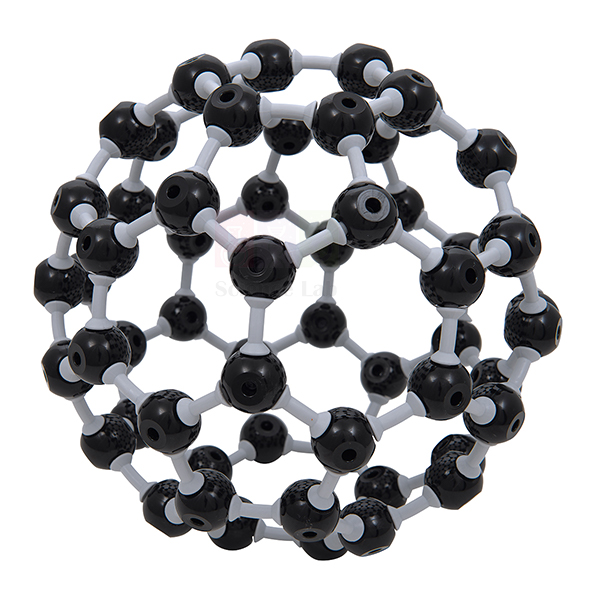
Molecular Model, Buckminsterfullerene
Molecular Model, Buckminsterfullerene (Product Code: SLE/Mo/35) is a 60 atom self-assembly kit used to build the C60 carbon cage and teach carbon allotropes in chemistry and materials science lessons. Students assemble it themselves, which makes the pattern of pentagons and hexagons in this football-shaped molecule easy to understand, so it works well as a 3D science model kit. It is made by Jain Scientific Equipments Pvt Ltd (ScienceLab), an OEM manufacturer, at its own factory in Ambala, India.
Specifications
| Parameter | Detail |
|---|---|
| Molecule | Buckminsterfullerene (C60) |
| Number of atoms | 60 |
| Format | Self-assembly kit |
| Product code | SLE/Mo/35 |
| Manufacturer | Jain Scientific Equipments Pvt Ltd (ScienceLab) — OEM |
| Country of origin | India (made in Ambala, Haryana) |
What Is the Buckminsterfullerene Model Used For?
Buckminsterfullerene is a form of pure carbon in which 60 atoms join into a hollow, closed cage of pentagonal and hexagonal rings. Building the model lets students compare it with diamond and graphite, discuss why each carbon bonds to three neighbours, and see how the discovery of fullerenes opened research into nanotubes and nanomaterials.
Because it is a self-assembly kit, construction itself becomes the activity: small groups can build the cage in a lesson and discover that every carbon sits where a pentagon meets two hexagons. The finished model can then be displayed in the chemistry room as a reference during later lessons on structure and bonding.
OEM Manufacturer
ScienceLab is the trading name of Jain Scientific Equipments Private Limited, the OEM that makes this Buckminsterfullerene kit at its licensed factory in Saha, Ambala, Haryana, India. Buying direct means schools, science centres, dealers and importers get quotations from the manufacturer itself rather than a reseller, and repeat orders for extra kits are handled by the same team. Find out more on our company profile.
Related Molecule Products
Models that connect with fullerene and carbon bonding lessons:
- Molecular Model Set – Benzene C6H6, Hybridized — the sp2 carbon ring behind the hexagons of the fullerene cage.
- Molecular And Orbital Model Set – Organic Structures — carbon bonding from single bonds to aromatic rings.
- Orbital Model of Sp2 Hybridization — the orbital arrangement adopted by each carbon in the cage.
- Professional Chemistry Molecular Structure Model — for building the other molecular structures in the course.
Explore the full Molecule range.
Frequently Asked Questions
How many atoms does the Molecular Model, Buckminsterfullerene have?
The Molecular Model, Buckminsterfullerene is a 60 atom self-assembly kit, matching the 60 carbon atoms of the C60 molecule, so the finished model represents the complete closed carbon cage.
Does the Buckminsterfullerene model come assembled?
No. The Molecular Model, Buckminsterfullerene is a self-assembly kit, so students or teachers build the carbon cage themselves, which turns the construction into a lesson on how pentagons and hexagons join to close the sphere.
Which topics does the model support?
The Molecular Model, Buckminsterfullerene supports lessons on carbon allotropes, covalent bonding, molecular structure and introductory nanoscience, helping students compare fullerene with diamond and graphite and discuss how the cage shape affects its properties.
Who manufactures the Molecular Model, Buckminsterfullerene?
Jain Scientific Equipments Pvt Ltd (ScienceLab) manufactures the Molecular Model, Buckminsterfullerene as the OEM at its own factory in Saha, Ambala, Haryana, India, and supplies it factory-direct to schools, colleges and distributors.
Can the model be kept on display after assembly?
Yes. Once assembled, the Molecular Model, Buckminsterfullerene can be kept on display in a chemistry laboratory or classroom as a reference for carbon allotropes; handle it gently and keep it away from heat and direct sunlight.
How do I get a quote?
To get a quote for the Molecular Model, Buckminsterfullerene, send the product code SLE/Mo/35, the quantity and your delivery location through the contact page or add the kit to the enquiry cart.
Request a Quote
Order enquiries for the Molecular Model, Buckminsterfullerene can be sent through the contact page or the enquiry cart. ScienceLab replies with a quotation as the manufacturer.
Last updated: 24 September 2026
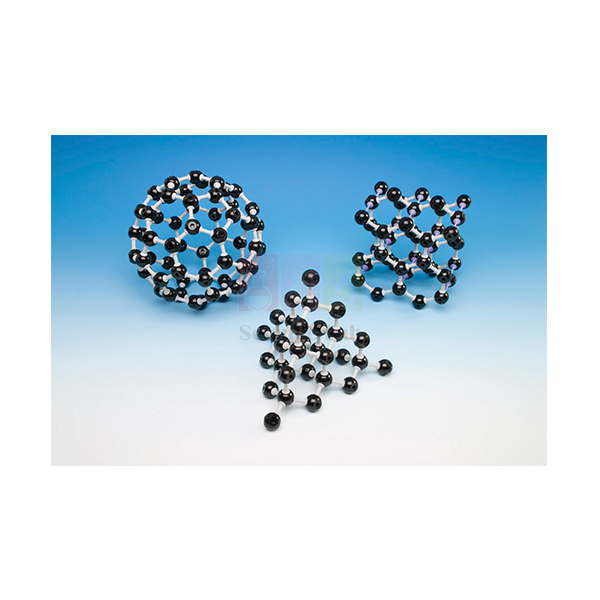
Molecular Model, Diamond
Molecular Model, Diamond (Product Code: SLE/Mo/36) is a self-assembly kit used to build the three-dimensional carbon network of diamond in school and college chemistry lessons. Teachers and students use it to see why diamond is so hard, and the kit provides 30 atoms for the build. It is made by Jain Scientific Equipments Pvt Ltd (ScienceLab), an OEM manufacturer, at its own factory in Ambala, India, as part of its molecular model chemistry range for India and international markets.
Specifications
| Parameter | Detail |
|---|---|
| Structure modelled | Diamond (a giant covalent form of carbon) |
| Kit type | Self-assembly kit |
| Number of atoms | 30 |
| Product code | SLE/Mo/36 |
| Manufacturer | Jain Scientific Equipments Pvt Ltd (ScienceLab) — OEM |
| Country of origin | India (made in Ambala, Haryana) |
What Is the Diamond Molecular Model Used For?
In diamond, every carbon atom is covalently bonded to four neighbours in a tetrahedral arrangement, and that pattern repeats in every direction to form one continuous network. Building the 30-atom model lets a class see that there are no weak planes for the structure to slide or split along. That is the structural reason for diamond's hardness, very high melting point and poor electrical conductivity. The kit suits lessons on allotropes, covalent bonding and the link between structure and properties.
A practical approach is to let small groups assemble the network step by step, counting the bonds on each atom as they go, and then place the finished model beside a graphite model for comparison. Keep all parts together after each lesson so the full set of 30 atoms is ready for the next class.
OEM Manufacturer
The Diamond Molecular Model is an original product of Jain Scientific Equipments Private Limited, which trades as ScienceLab. As the OEM, the company makes the kit at its own licensed factory at Saha, Ambala, Haryana, India, so schools, colleges, dealers and importers buy it factory-direct rather than through a trader. ScienceLab is the trading name of a registered MSME manufacturer (Udyam UDYAM-HR-01-0003714), and export shipments are handled under Importer-Exporter Code AAECJ8618A (DGFT).
Need replacement atoms or repeat kits for more benches later? Ask us, and your request goes straight to the manufacturer. Read more about the company on the ScienceLab company profile.
Related Molecular Models
These items help extend a lesson on carbon allotropes and crystal structures:
- Molecular Model, Graphite — the layered form of carbon to compare with diamond's rigid network.
- Molecular Model, Buckminsterfullerene — a third carbon allotrope, built as a closed cage molecule.
- Set for Demonstration of Crystal Lattices — for moving on from covalent networks to other lattice types.
- New Improved Organic And Inorganic Molecular Set — a general set for the other molecules in the same unit.
Browse the full Molecule category for more molecular and orbital models.
Frequently Asked Questions
What is included in the Molecular Model, Diamond kit?
The Molecular Model, Diamond is a self-assembly kit with 30 atoms for building the diamond carbon network. Students put it together themselves. For the full parts list and packing details of the current batch, contact ScienceLab before you order.
Does the diamond model come ready-built?
No. The Molecular Model, Diamond comes as a self-assembly kit, so students or the teacher build the 30-atom network themselves. Assembly is part of the learning, because each bond placed shows how carbon links tetrahedrally to its neighbours.
Which topics can the Diamond Molecular Model support?
The Molecular Model, Diamond supports lessons on carbon allotropes, covalent bonding, giant covalent structures and how structure explains properties such as hardness and a high melting point. It pairs well with a graphite model when comparing two forms of the same element.
Who manufactures the Molecular Model, Diamond?
The Molecular Model, Diamond is manufactured by Jain Scientific Equipments Pvt Ltd (ScienceLab) as the OEM, at its own licensed factory at Saha, Ambala, Haryana, India. Orders, repeat kits and spare-part requests are handled directly by the manufacturer.
Can ScienceLab supply the diamond model in class quantities or for export?
Yes. The Molecular Model, Diamond can be quoted in multiple kits for schools, colleges, dealers and importers in India and international markets. State the number of kits and the delivery destination so the quotation covers packing and shipping.
What should I include when requesting a quote for the diamond model?
For the Molecular Model, Diamond, include the product code SLE/Mo/36, the number of kits, any companion models such as graphite, and your delivery location. Send these through the contact page or add the item to the enquiry cart.
Request a Quote
To order the Molecular Model, Diamond, send your requirement through the contact page or add it to the enquiry cart. Quotations come directly from the manufacturer, ScienceLab, Ambala.
Last updated: 24 September 2026
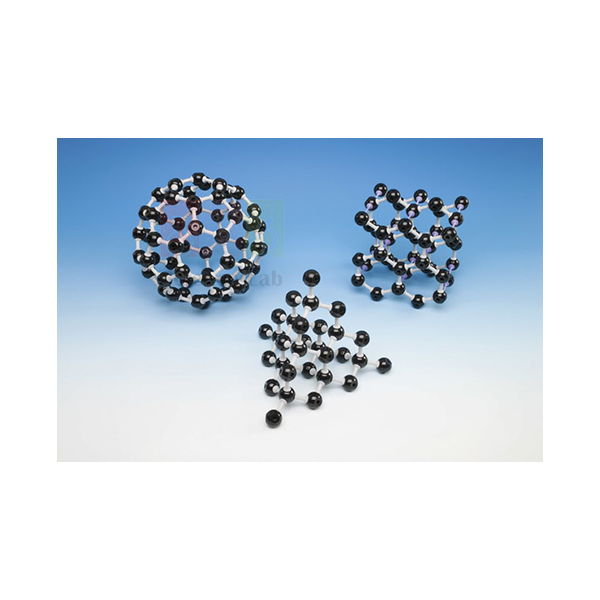
Molecular Model, Graphite
Molecular Model, Graphite (Product Code: SLE/Mo/37) is a self-assembly kit used to construct the layered structure of graphite for chemistry teaching in schools, colleges and laboratories. The kit provides 45 atoms, which students join into flat sheets of hexagonal carbon rings stacked one above another. It is produced by Jain Scientific Equipments Pvt Ltd (ScienceLab), an OEM manufacturer, at its own factory in Ambala, India, and fits naturally into a 3D science model kit collection for any chemistry department.
Specifications
| Parameter | Detail |
|---|---|
| Structure modelled | Graphite (layered form of carbon) |
| Kit type | Self-assembly kit |
| Number of atoms | 45 |
| Product code | SLE/Mo/37 |
| Manufacturer | Jain Scientific Equipments Pvt Ltd (ScienceLab) — OEM |
| Country of origin | India (made in Ambala, Haryana) |
What Is the Graphite Molecular Model Used For?
In graphite, each carbon atom bonds to three others within a flat sheet of hexagonal rings. The remaining outer electron of each atom is delocalised across the sheet, and neighbouring sheets are held together only by weak forces. Once the model is built, students can point to the gaps between layers and explain why graphite feels soft and slippery, why it works in pencils and as a dry lubricant, and why it conducts electricity along its layers.
A useful classroom routine is to build the sheets with the layer spacing clearly visible, then show how one layer could slide over the next. Senior classes can go further and connect the flat, three-bond geometry of each carbon to sp2 hybridisation. Placing the finished graphite model next to a diamond model turns one lesson into a clear comparison of two allotropes.
OEM Manufacturer
ScienceLab, the trading name of Jain Scientific Equipments Private Limited, produces the Graphite Molecular Model as original equipment at its licensed factory in Saha, Ambala, Haryana, India. Because you deal with the maker itself, quotations, repeat orders for extra kits and questions about parts are answered by the people who make the kit, with no trading intermediary in between. Learn more on the ScienceLab company profile.
Related Molecular Models
Teachers often combine the graphite kit with these models when covering carbon and hybridisation:
- Molecular Model, Diamond — the rigid tetrahedral network that contrasts with graphite's layers.
- Orbital Model of Sp2 Hybridization — explains the flat three-bond geometry of each carbon in a sheet.
- Molecular Model Set – Benzene C6H6, Hybridized — the same hexagonal ring shown as a single molecule.
- Molecular Model, Buckminsterfullerene — carbon rings curved into a closed cage.
See every model in the Molecule category.
Frequently Asked Questions
How many atoms does the Molecular Model, Graphite kit contain?
The Molecular Model, Graphite kit contains 45 atoms for self-assembly into the layered carbon structure. For the connector count and packing details of the current production batch, please ask ScienceLab through the contact page before ordering.
Why use a graphite model alongside a diamond model?
Using the Molecular Model, Graphite beside a diamond model shows two allotropes built from the same element but bonded differently. Students can then explain why graphite is soft and conducts electricity, while diamond is hard and does not.
Is the graphite model suitable for senior secondary and college classes?
Yes. The Molecular Model, Graphite supports school-level work on allotropes and giant structures, and college-level discussion of sp2 hybridisation and delocalised electrons. The teacher can decide how deep the explanation goes for each class.
Who manufactures the Molecular Model, Graphite?
Jain Scientific Equipments Pvt Ltd, trading as ScienceLab, is the OEM that makes the Molecular Model, Graphite at its own licensed factory in Saha, Ambala, India. Buyers deal with the manufacturer directly for quotations and repeat orders.
How should the graphite model be stored between lessons?
Keep all parts of the Molecular Model, Graphite together in a closed box, away from direct heat, and count the 45 atoms back in after each class. That way the kit stays complete for the next group of students.
How do I get a quotation for the graphite model?
For the Molecular Model, Graphite, send the product code SLE/Mo/37, the number of kits you need and your delivery address through the contact page or the enquiry cart. Schools, dealers and importers can all request quotes.
Request a Quote
Ready to order? Use the ScienceLab contact page or add the Molecular Model, Graphite to your enquiry cart, and the manufacturer will reply with a direct quotation.
Last updated: 24 September 2026
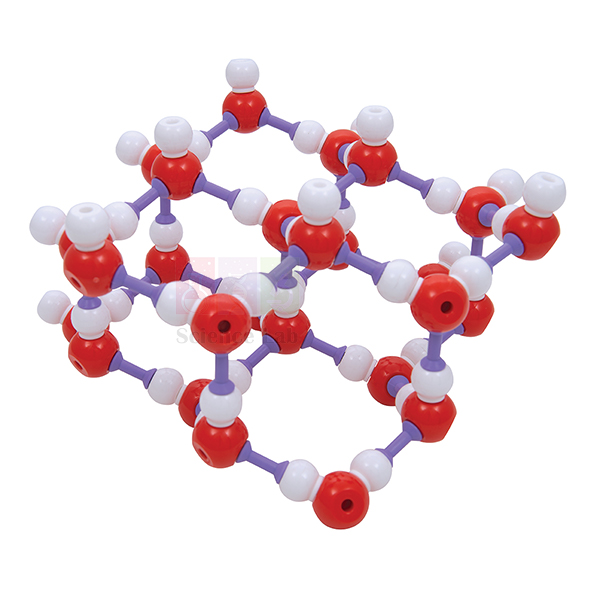
Molecular Model, Ice
Molecular Model, Ice (Product Code: SLE/Mo/38) is a self-assembly kit used to build the hydrogen-bonded crystal structure of ice for chemistry and physics teaching. Built from 26 water units, it lets students and teachers see the open arrangement of molecules that makes solid water less dense than liquid water. It is made by Jain Scientific Equipments Pvt Ltd (ScienceLab), an OEM manufacturer, at its own factory in Ambala, India, and works as a hands-on chemistry teaching kit for schools and colleges.
Specifications
| Parameter | Detail |
|---|---|
| Structure modelled | Ice (solid water, hydrogen-bonded lattice) |
| Kit type | Self-assembly kit |
| Building units | 26 water units |
| Product code | SLE/Mo/38 |
| Manufacturer | Jain Scientific Equipments Pvt Ltd (ScienceLab) — OEM |
| Country of origin | India (made in Ambala, Haryana) |
What Is the Ice Molecular Model Used For?
In ice, each water molecule is held to its neighbours by hydrogen bonds, which lock the molecules into an open, hexagonal pattern with a lot of empty space. Assembling the 26 water units shows students why ice floats, why water expands when it freezes and how hydrogen bonds between molecules differ from the covalent bonds inside each molecule.
The model also connects chemistry with physics and biology topics such as states of matter, density and the survival of pond life beneath a frozen surface. After building it, ask students to trace one water molecule and count the neighbours it is hydrogen-bonded to, then compare that open lattice with the closer packing of liquid water described in their textbook. It pairs well with a practical ice-melting experiment.
OEM Manufacturer
Jain Scientific Equipments Private Limited trades under the name ScienceLab and is the original equipment manufacturer of this ice structure kit. It is produced at the company's own licensed factory at Saha, Ambala, Haryana, India, and dispatched factory-direct to schools, colleges, institutions, dealers and importers. For extra kits in a later term, contact the manufacturer directly for a fresh quotation. Company background is on the ScienceLab profile page.
Related Molecular Models
These items fit the same lessons on water, bonding and states of matter:
- Ice Melting Kit — a practical on change of state that the ice model explains at particle level.
- Atom Molecular Models Set — for building a single water molecule and other simple molecules first.
- Molecular Model, Diamond — a tetrahedral network to compare with the open ice lattice.
- Set for Demonstration of Crystal Lattices — for extending the lesson to other crystal types.
More structures are listed in the Molecule category.
Frequently Asked Questions
How many water molecules are in the Molecular Model, Ice kit?
The Molecular Model, Ice kit is built from 26 water units, which students join into the hydrogen-bonded ice lattice. For details of the connectors and packing in the current batch, contact ScienceLab before placing an order.
What does the ice model teach about density?
The Molecular Model, Ice shows that hydrogen bonds hold water molecules in an open lattice with empty space between them. This explains why ice is less dense than liquid water, why it floats and why water expands as it freezes.
Is the ice model useful outside chemistry lessons?
Yes. The Molecular Model, Ice also supports physics lessons on states of matter and density, and biology discussions of how floating ice insulates the water beneath it so that aquatic life can survive cold weather.
Who makes the Molecular Model, Ice?
The Molecular Model, Ice is made by Jain Scientific Equipments Pvt Ltd (ScienceLab), the OEM, at its own licensed factory at Saha, Ambala, Haryana, India. Quotations and repeat orders come straight from the manufacturer.
Does the ice model arrive assembled?
No. The Molecular Model, Ice is a self-assembly kit, so students connect the 26 water units themselves. Building the lattice by hand is what makes the hydrogen-bond pattern easy to remember.
Can I order several ice model kits for a class or for export?
Yes. The Molecular Model, Ice can be quoted in class sets for schools, colleges, dealers and importers in India and international markets. Mention the quantity and the delivery destination when you send your enquiry.
Request a Quote
Send your requirement for the Molecular Model, Ice through the contact page, or add it to the enquiry cart with any other models you need. You will receive a quotation direct from the manufacturer.
Last updated: 24 September 2026
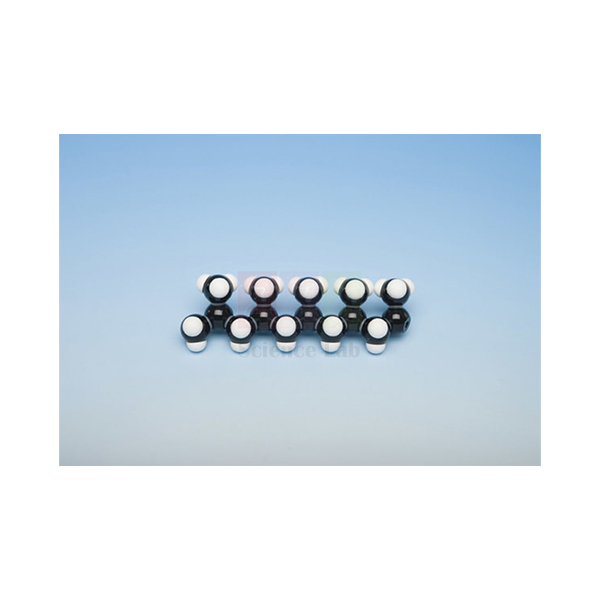
Molecular Model, Polypropylene
Molecular Model, Polypropylene (Product Code: SLE/Mo/39) is a self-assembly model used to show the chain structure of the polymer polypropylene in organic chemistry and materials lessons. It comes with instructions for self-assembly, so students can build the repeating units and see how a long addition polymer grows from small monomer molecules. It is made by Jain Scientific Equipments Pvt Ltd (ScienceLab), an OEM manufacturer, at its own factory in Ambala, India, and carries a molecular model organic chemistry collection forward into the topic of plastics.
Key Details
| Parameter | Detail |
|---|---|
| Structure modelled | Polypropylene (an addition polymer) |
| Model type | Self-assembly molecular model |
| Included | Instructions for self-assembly |
| Product code | SLE/Mo/39 |
| Manufacturer | Jain Scientific Equipments Pvt Ltd (ScienceLab) — OEM |
| Country of origin | India (made in Ambala, Haryana) |
What Is the Polypropylene Molecular Model Used For?
Polypropylene forms when many propene molecules join through their carbon–carbon double bonds, leaving a long saturated carbon backbone with a methyl group on every second carbon. Building the model makes that repeat unit visible, so students can identify the monomer, draw the repeat unit correctly and explain why the finished plastic is chemically unreactive.
With senior classes, the model can open a discussion of how the arrangement of methyl groups along the chain affects how closely neighbouring chains pack, and so influences stiffness and melting behaviour. Linking it to everyday laboratory items made of polypropylene, such as beakers and carboys, helps students connect molecular structure with the materials already on their bench.
OEM Manufacturer
This polymer model is made by ScienceLab, the brand of Jain Scientific Equipments Private Limited, which acts as the OEM and builds it at its own licensed factory at Saha, Ambala, Haryana, India. Schools, colleges and trade buyers purchase it straight from the manufacturer, and the same team answers questions about the assembly instructions or repeat orders. See the ScienceLab company profile for more about the business.
Related Molecular Models
Useful companions for a lesson on hydrocarbons, polymers and plastics:
- Organic Chemistry Molecular Models Kits — for building propene and other small monomers before the polymer.
- Molecular Model Kit, Saturated Fat – Stearic Acid — another long carbon chain to compare with the polymer backbone.
- Beaker, Polypropylene — an everyday lab vessel made from the polymer the model shows.
- Polypropylene Carboys — larger polypropylene containers students may see in the lab store.
Explore more structures in the Molecule category.
Frequently Asked Questions
What comes with the Molecular Model, Polypropylene?
The Molecular Model, Polypropylene comes with instructions for self-assembly, so students can build the polymer chain step by step. The number of atoms and the chain length are not listed here, so ask ScienceLab for the parts list of the current batch before ordering.
Which topics does the polypropylene model support?
The Molecular Model, Polypropylene supports lessons on addition polymerisation, monomers and repeat units, saturated hydrocarbons and the properties and uses of plastics. It suits school chemistry syllabuses as well as introductory college courses on polymers.
Can students assemble the polypropylene model on their own?
Yes, with light guidance. The Molecular Model, Polypropylene includes self-assembly instructions, so older students can build it in small groups. For younger classes, the teacher can first build one repeat unit as a demonstration.
Who manufactures the Molecular Model, Polypropylene?
The Molecular Model, Polypropylene is manufactured by Jain Scientific Equipments Pvt Ltd (ScienceLab), the OEM, at its own licensed factory in Saha, Ambala, Haryana, India. Enquiries and repeat orders go directly to the manufacturer.
How should the polymer model be looked after?
Store the Molecular Model, Polypropylene parts and instructions together in a closed box, away from heat and direct sunlight. Check that every piece is returned after each lesson so the full chain can be rebuilt next time.
What information does a quotation for this model need?
For the Molecular Model, Polypropylene, send the product code SLE/Mo/39, the number of models required, your delivery city and country, and any other models you want quoted from the same range.
Request a Quote
Request pricing for the Molecular Model, Polypropylene through the contact page or place it in the enquiry cart. The quotation is issued directly by ScienceLab as the manufacturer.
Last updated: 24 September 2026
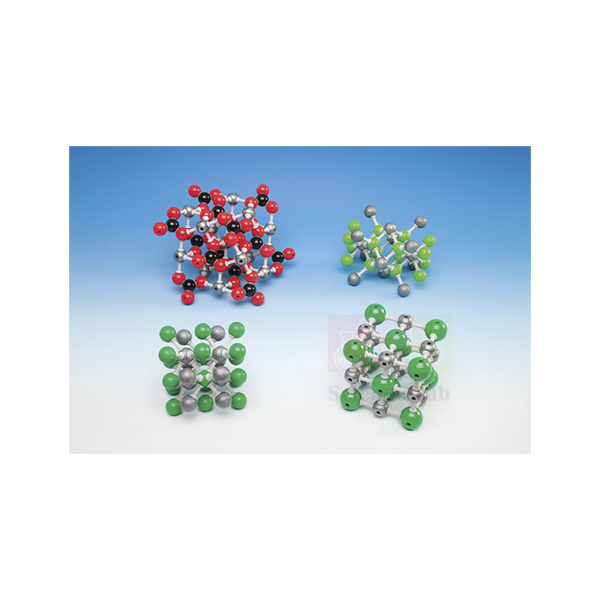
Molecular Model, Pre-assembled, Calcite
Molecular Model, Pre-assembled, Calcite (Product Code: SLE/Mo/40) is a ready-built crystal structure model used to show how calcium ions and carbonate groups are arranged in calcite, for chemistry and earth-science teaching. Because it arrives pre-assembled with firmly held joining pieces, teachers can pass it round the class during a lesson without it coming apart. It is made by Jain Scientific Equipments Pvt Ltd (ScienceLab), an OEM manufacturer, at its own factory in Ambala, India, as part of its school chemistry lab equipment range.
Specifications
| Parameter | Detail |
|---|---|
| Structure modelled | Calcite (calcium carbonate, CaCO3) |
| Format | Pre-assembled model |
| Production | Precision-engineered moulds and materials |
| Joining pieces | Designed to hold the model firmly so it can be handled during lessons |
| Storage | Durable storage case with compartments for segregating parts |
| Product code | SLE/Mo/40 |
| Manufacturer | Jain Scientific Equipments Pvt Ltd (ScienceLab) — OEM |
| Country of origin | India (made in Ambala, Haryana) |
What Is the Calcite Crystal Model Used For?
Calcite is the common crystalline form of calcium carbonate found in limestone, marble and chalk. The model shows calcium ions and flat carbonate groups repeating in a regular three-dimensional lattice, which helps students understand ionic bonding in a compound whose negative ion is itself a covalently bonded group.
Earth-science and geography classes can use it to connect the internal arrangement of ions with the way calcite crystals split along smooth cleavage faces, and with the familiar fizzing test for limestone in dilute acid. As the model is already built, lesson time goes on discussion rather than construction. Return it to its case after each class to protect the joints.
OEM Manufacturer
ScienceLab is the trading name of Jain Scientific Equipments Private Limited, the OEM that produces this pre-assembled calcite model at its own licensed factory at Saha, Ambala, Haryana, India. Buying factory-direct means institutions, dealers and importers deal with the maker itself for quotations, repeat orders and replacement parts. For vendor registration, the company's details are GSTIN 06AAECJ8618A1ZT and LEI 3358004HRD1JIVXKYX49. More background is on the ScienceLab company profile.
Related Molecular Models
Build a complete crystal-structures lesson with these pre-assembled and demonstration models:
- Molecular Model, Pre-assembled, Calcium Fluoride — a second calcium compound with a simpler ionic lattice.
- Molecular Model, Pre-assembled, Quartz — a silicate mineral structure to compare with calcite.
- Molecular Models, Pre-Assembled, Iron, Zinc, and Copper — metallic lattices for the bonding-types topic.
- Set for Demonstration of Crystal Lattices — a demonstration set covering further lattice types.
All molecular and crystal models are listed in the Molecule category.
Frequently Asked Questions
Does the Molecular Model, Pre-assembled, Calcite need to be built?
No. The Molecular Model, Pre-assembled, Calcite arrives already assembled, and its joining pieces are designed to keep the structure firm, so it can be handed round the class straight from its storage case.
How is the calcite model stored?
The Molecular Model, Pre-assembled, Calcite comes in a durable storage case with compartments for segregating parts. Returning the model to its case after each lesson protects the joints and keeps any loose pieces together.
What chemistry does the calcite model illustrate?
The Molecular Model, Pre-assembled, Calcite illustrates an ionic lattice built from calcium ions and carbonate groups. It supports lessons on bonding types, the structure of limestone, marble and chalk, and the reaction of carbonates with acids.
What are the dimensions of the calcite model?
The overall size and the number of ions shown in the Molecular Model, Pre-assembled, Calcite are not listed on this page. Contact ScienceLab with your requirement and we will confirm the dimensions and packing details before quoting.
Who manufactures the Molecular Model, Pre-assembled, Calcite?
The Molecular Model, Pre-assembled, Calcite is manufactured by Jain Scientific Equipments Pvt Ltd (ScienceLab) as the OEM, at its own licensed factory in Saha, Ambala, Haryana, India, and is supplied factory-direct to schools, colleges and trade buyers.
Can I order the calcite model together with other crystal models?
Yes. The Molecular Model, Pre-assembled, Calcite can be quoted alongside the calcium fluoride, quartz and metal lattice models. List each model and the quantity you need so one combined quotation covers the set.
Request a Quote
To buy the Molecular Model, Pre-assembled, Calcite, contact us through the contact page or add it to the enquiry cart. Your quotation comes directly from ScienceLab, the manufacturer.
Last updated: 24 September 2026
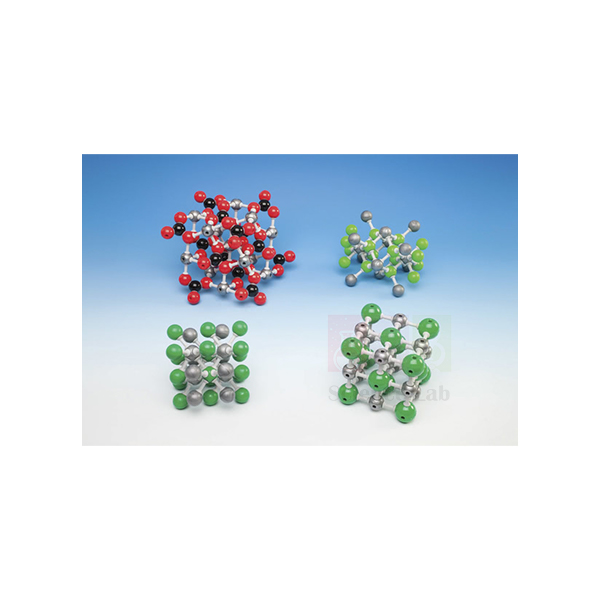
Molecular Model, Pre-assembled, Calcium Fluoride
Molecular Model, Pre-assembled, Calcium Fluoride (Product Code: SLE/Mo/41) is a ready-built ionic lattice model used to demonstrate the fluorite crystal structure of calcium fluoride (CaF2) in chemistry classrooms and lecture rooms. Produced from precision-engineered moulds and materials, it is sturdy enough to pass from student to student while the teacher explains how the ions are arranged. It is made by Jain Scientific Equipments Pvt Ltd (ScienceLab), an OEM and science apparatus manufacturer in India, at its own factory in Ambala.
Specifications
| Parameter | Detail |
|---|---|
| Structure modelled | Calcium fluoride (CaF2, fluorite structure) |
| Format | Pre-assembled model |
| Production | Precision-engineered moulds and materials |
| Joining pieces | Designed so the model stays firmly constructed when passed around |
| Storage | Durable storage case with compartments for segregation of parts |
| Product code | SLE/Mo/41 |
| Manufacturer | Jain Scientific Equipments Pvt Ltd (ScienceLab) — OEM |
| Country of origin | India (made in Ambala, Haryana) |
What Is the Calcium Fluoride Lattice Model Used For?
In calcium fluoride, each calcium ion is surrounded by eight fluoride ions and each fluoride ion by four calcium ions. This arrangement is what textbooks call the fluorite structure. The model lets students count those neighbours directly and see why the ratio of ions matches the formula CaF2.
It is especially useful for comparing ionic lattices, for example setting the fluorite arrangement beside the rock-salt structure of sodium chloride. It also helps explain why ionic solids have high melting points and are brittle. Turn the model slowly so the class can view it along different directions, and point out how the calcium ions form a cubic framework with the fluoride ions sitting in the gaps between them.
OEM Manufacturer
Jain Scientific Equipments Private Limited, known to customers as ScienceLab, is the original equipment manufacturer of this calcium fluoride lattice model. It is made at the company's own licensed factory in Saha, Ambala, Haryana, India. Schools, laboratories, distributors and importers are supplied factory-direct. If you have questions about fittings, parts or additional models, ask us and the manufacturer will answer directly. Read about the company on the ScienceLab profile page.
Related Molecular Models
Pair this lattice with the following models when teaching structure and bonding:
- Molecular Model, Pre-assembled, Calcite — another calcium compound, this time with a polyatomic anion.
- Molecular Model, Pre-assembled, Quartz — a covalent network solid that contrasts with an ionic lattice.
- Molecular Model Set – Complex Ions — carries the idea of coordination number into complex-ion chemistry.
- Set for Demonstration of Crystal Lattices — more lattice types for a full structures unit.
Find other models in the Molecule category.
Frequently Asked Questions
What structure does the Molecular Model, Pre-assembled, Calcium Fluoride show?
The Molecular Model, Pre-assembled, Calcium Fluoride shows the fluorite lattice of CaF2, in which each calcium ion is surrounded by eight fluoride ions and each fluoride ion by four calcium ions. It is the standard example of this ionic structure type.
Is the calcium fluoride model robust enough for students to handle?
Yes. The joining pieces of the Molecular Model, Pre-assembled, Calcium Fluoride are designed so the structure stays firmly constructed when it is passed around during a lesson. The model is produced from precision-engineered moulds and materials.
What storage comes with the calcium fluoride model?
The Molecular Model, Pre-assembled, Calcium Fluoride is kept in a durable storage case with compartments for segregation of parts, which protects the lattice between lessons and keeps any separate pieces in order.
How many ions or unit cells does the model show?
The number of ions, the unit cells shown and the overall dimensions of the Molecular Model, Pre-assembled, Calcium Fluoride are not stated on this page. Please contact ScienceLab and we will confirm these details before you order.
Who makes the Molecular Model, Pre-assembled, Calcium Fluoride?
Jain Scientific Equipments Pvt Ltd (ScienceLab) makes the Molecular Model, Pre-assembled, Calcium Fluoride as the OEM at its own licensed factory in Saha, Ambala, Haryana, India. Quotations and repeat orders are handled by the manufacturer itself.
Can the calcium fluoride model be supplied to buyers outside India?
Yes. The Molecular Model, Pre-assembled, Calcium Fluoride is offered to schools, colleges, dealers and importers in India and international markets. Include the quantity and destination in your enquiry so the quotation covers packing and freight.
Request a Quote
Ask for a price on the Molecular Model, Pre-assembled, Calcium Fluoride via the contact page, or collect it with other items in the enquiry cart. ScienceLab replies with a quotation direct from the manufacturer.
Last updated: 24 September 2026
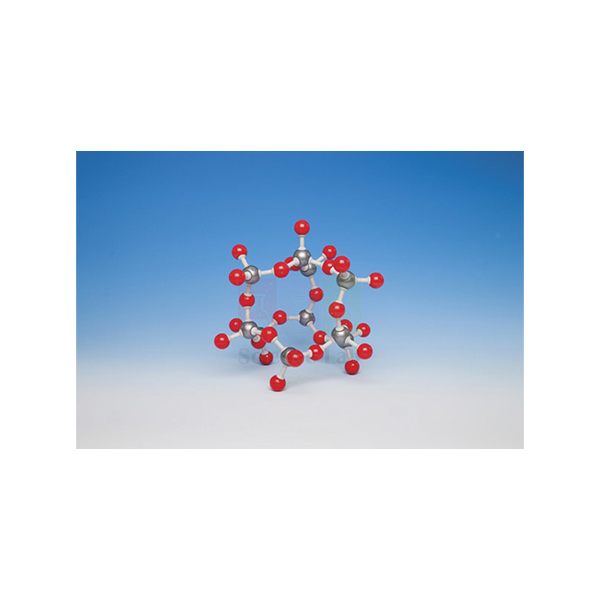
Molecular Model, Pre-assembled, Quartz
Molecular Model, Pre-assembled, Quartz (Product Code: SLE/Mo/42) is a ready-built structure model used to show the silicon–oxygen network of quartz (silicon dioxide, SiO2) in chemistry, geology and materials lessons. Its carefully designed joining pieces keep the network firmly together, so it holds up when handled by a whole class. It is made by Jain Scientific Equipments Pvt Ltd (ScienceLab), an OEM and school laboratory equipment manufacturer, at its own factory in Ambala, India.
Specifications
| Parameter | Detail |
|---|---|
| Structure modelled | Quartz (silicon dioxide, SiO2) |
| Format | Pre-assembled model |
| Production | Precision-engineered moulds and materials |
| Joining pieces | Carefully designed so the model does not fall apart when handled in class |
| Storage | Durable storage case with compartments that keep parts segregated |
| Product code | SLE/Mo/42 |
| Manufacturer | Jain Scientific Equipments Pvt Ltd (ScienceLab) — OEM |
| Country of origin | India (made in Ambala, Haryana) |
What Is the Quartz Structure Model Used For?
Quartz is a giant covalent structure. Every silicon atom is bonded to four oxygen atoms, and every oxygen atom bridges two silicon atoms, so linked tetrahedra extend throughout the crystal. The model helps students explain why quartz and sand are hard, melt only at very high temperatures and do not dissolve in water, and why the formula SiO2 describes a ratio rather than a separate molecule.
It pairs naturally with a diamond model, because both are covalent networks built from tetrahedral units, and with a calcite model to contrast a covalent mineral with an ionic one. Geography and earth-science teachers can bring it into lessons on rock-forming minerals, and physics teachers can use it when introducing glass and other silica-based materials.
OEM Manufacturer
The Quartz structure model is manufactured by ScienceLab, the trading name of Jain Scientific Equipments Private Limited. The company is the OEM and produces the model at its own licensed factory at Saha, Ambala, Haryana, India. Selling factory-direct means buyers receive a quotation from the maker rather than a reseller, and can return to the same source for repeat orders or spare parts. Visit the ScienceLab company profile to learn more.
Related Molecular Models
These models support the same unit on giant structures and minerals:
- Molecular Model, Diamond — another tetrahedral covalent network, built from one element only.
- Molecular Model, Pre-assembled, Calcite — an ionic mineral to contrast with covalent quartz.
- Molecular Model, Pre-assembled, Calcium Fluoride — a classic ionic lattice for the same comparison.
- Orbital Model of Sp3 Hybridization — explains the tetrahedral bonding around each silicon atom.
Browse further structures in the Molecule category.
Frequently Asked Questions
What does the Molecular Model, Pre-assembled, Quartz represent?
The Molecular Model, Pre-assembled, Quartz represents the silicon dioxide network, in which each silicon atom bonds to four oxygen atoms and each oxygen atom links two silicon atoms, forming tetrahedra joined in three dimensions.
Why compare the quartz model with a diamond model?
The Molecular Model, Pre-assembled, Quartz and a diamond model are both giant covalent networks based on tetrahedral bonding. Comparing them explains shared properties such as hardness and high melting point, and shows how a two-element network differs from a single-element one.
Will the quartz model stay together when students handle it?
Yes. The joining pieces of the Molecular Model, Pre-assembled, Quartz are carefully designed so the model is firmly constructed and can be passed around during a lesson. Keep it in its durable compartment case between classes.
What size is the quartz model?
The overall dimensions and the number of atoms shown in the Molecular Model, Pre-assembled, Quartz are not listed on this page. Contact ScienceLab and we will confirm the size and packing before sending a quotation.
Who manufactures the Molecular Model, Pre-assembled, Quartz?
The Molecular Model, Pre-assembled, Quartz is manufactured by Jain Scientific Equipments Pvt Ltd (ScienceLab), the OEM, at its own licensed factory in Saha, Ambala, Haryana, India. Buyers deal directly with the manufacturer.
How do I request a quotation for the quartz model?
Send the product code SLE/Mo/42 for the Molecular Model, Pre-assembled, Quartz, the quantity and your delivery location through the contact page or enquiry cart. Schools, dealers and importers in India and abroad are all welcome to enquire.
Request a Quote
Enquire about the Molecular Model, Pre-assembled, Quartz on the contact page or add it to your enquiry cart. ScienceLab quotes directly as the manufacturer.
Last updated: 24 September 2026
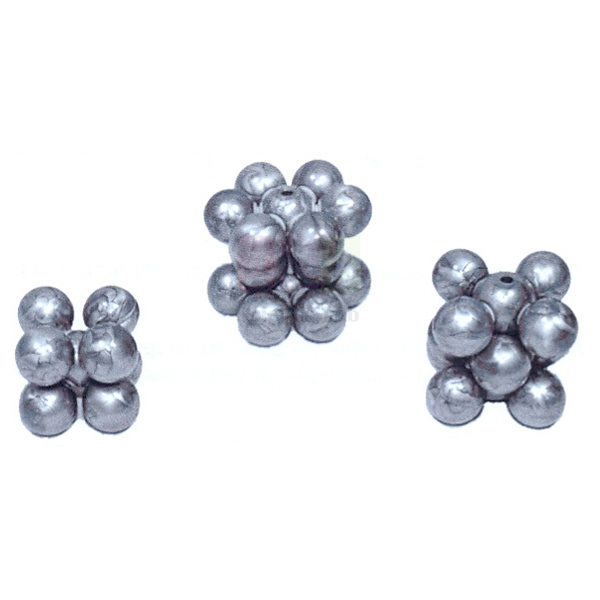
Molecular Models, Pre-Assembled, Iron, Zinc, and Copper
Molecular Models, Pre-Assembled, Iron, Zinc, and Copper (Product Code: SLE/Mo/43) is a set of ready-built metal structure models used to compare how atoms pack in three common metals, for chemistry, physics and materials-science teaching. Suitable for students at all levels, the models give the teacher a concrete, hand-held picture of metallic structure in place of a flat textbook diagram. They are made by Jain Scientific Equipments Pvt Ltd (ScienceLab), an OEM manufacturer of educational laboratory equipment in India, at its own factory in Ambala.
Specifications
| Parameter | Detail |
|---|---|
| Structures modelled | Iron, zinc and copper (metallic structures) |
| Format | Pre-assembled models |
| Suitable for | Students at all levels |
| Production | Precision-engineered moulds and materials |
| Joining pieces | Designed to keep the models firmly constructed during handling |
| Storage | Durable storage case with compartments for segregation of parts |
| Product code | SLE/Mo/43 |
| Manufacturer | Jain Scientific Equipments Pvt Ltd (ScienceLab) — OEM |
| Country of origin | India (made in Ambala, Haryana) |
What Are the Iron, Zinc and Copper Lattice Models Used For?
These three metals are often taught together because they show the main ways metal atoms pack. At room temperature iron adopts a body-centred cubic arrangement, copper a face-centred cubic (cubic close-packed) arrangement and zinc a hexagonal close-packed arrangement. Setting the models side by side lets students compare the number of nearest neighbours and how tightly the atoms fill space.
The models support lessons on metallic bonding and the delocalised electrons that make metals malleable, ductile and good conductors. In materials and engineering courses they help introduce alloys, for example brass made from copper and zinc and steel made from iron, and explain why metals such as copper can be drawn into wire. Return each model to its compartment in the storage case after use.
What to Specify When Ordering
- Whether you need all three metal models (iron, zinc and copper) or individual structures.
- The number of sets required per laboratory or classroom.
- Any companion pre-assembled models, such as calcite, calcium fluoride or quartz, to be quoted together.
- Your delivery city and country, so packing and freight can be included.
OEM Manufacturer
Jain Scientific Equipments Private Limited, which operates under the ScienceLab name, is the OEM behind these metal lattice models and makes them at its own licensed factory at Saha, Ambala, Haryana, India. Because orders go straight to the manufacturer, the same team can advise on combining these models with other crystal structures in one consignment, and on repeat supplies for additional classrooms. Company details are on the ScienceLab profile page.
Related Molecular Models
Use these alongside the metal models to cover all the main bonding types:
- Molecular Model, Pre-assembled, Calcite — an ionic mineral lattice to contrast with metallic bonding.
- Molecular Model, Pre-assembled, Calcium Fluoride — a second ionic structure with a cubic framework.
- Set for Demonstration of Crystal Lattices — further lattice types for a complete structures unit.
- Bar Compound Copper & Iron — a physics item that puts real copper and iron together in one bar.
See the complete range in the Molecule category.
Frequently Asked Questions
Which metals do the Molecular Models, Pre-Assembled, Iron, Zinc, and Copper cover?
The Molecular Models, Pre-Assembled, Iron, Zinc, and Copper cover the structures of iron, zinc and copper, supplied ready-built so students can compare how metal atoms pack. Ask us to confirm whether you need the three models together or individually.
What level of student are the metal lattice models suited to?
The Molecular Models, Pre-Assembled, Iron, Zinc, and Copper suit students at all levels, from school lessons on metallic bonding to college materials-science classes on crystal structures and atomic packing.
Are the metal models ready to use on delivery?
Yes. The Molecular Models, Pre-Assembled, Iron, Zinc, and Copper arrive assembled, with joining pieces designed to keep them firmly constructed. They are kept in a durable storage case with compartments for segregation of parts.
How many atoms or unit cells does each metal model show?
The atom count, unit cells shown and dimensions of the Molecular Models, Pre-Assembled, Iron, Zinc, and Copper are not listed on this page. Contact ScienceLab and we will confirm these details before you place an order.
Who manufactures the Molecular Models, Pre-Assembled, Iron, Zinc, and Copper?
Jain Scientific Equipments Pvt Ltd (ScienceLab) manufactures the Molecular Models, Pre-Assembled, Iron, Zinc, and Copper as the OEM, at its own licensed factory in Saha, Ambala, Haryana, India, and supplies them factory-direct.
Can the metal models be ordered with other crystal models?
Yes. The Molecular Models, Pre-Assembled, Iron, Zinc, and Copper can be quoted together with the calcite, calcium fluoride and quartz models. List each model and quantity in one enquiry to receive a single combined quotation.
Request a Quote
Send your enquiry for the Molecular Models, Pre-Assembled, Iron, Zinc, and Copper through the contact page or the enquiry cart. The quotation comes directly from ScienceLab as the manufacturer.
Last updated: 24 September 2026

Molyorbital Atomic Orbital Model Set – 14 Model
Molyorbital Atomic Orbital Model Set – 14 Model (Product Code: SLE/Mo/44) is a set of 14 orbital models used to show the three-dimensional shapes of atomic orbitals and how they combine in chemical bonding, for school, college and university chemistry teaching. It gives teachers a concrete way to present shapes that students usually meet only as drawings, and it is kept in a durable case with compartments for its parts. It is supplied by Jain Scientific Equipments Pvt Ltd (ScienceLab), Ambala, India, alongside its atom model kit range.
Specifications
| Parameter | Detail |
|---|---|
| Set contents | 14 models (as named) |
| Topic | Atomic orbitals and bonding |
| Suitable for | Students at all levels |
| Production | Precision-engineered moulds and materials |
| Joining pieces | Designed so the models stay firmly constructed when passed around |
| Storage | Durable storage case with compartments for segregation of parts |
| Product code | SLE/Mo/44 |
| Supplied by | Jain Scientific Equipments Pvt Ltd (ScienceLab), Ambala, India |
What Is the Atomic Orbital Model Set Used For?
Atomic orbitals have distinctive shapes, from the simple sphere of an s orbital to the paired lobes of a p orbital and the more complex forms of d orbitals, and they are hard to picture from a flat diagram. A physical orbital set lets students hold each shape, see how orbitals are oriented in space and follow how they overlap to form sigma and pi bonds or combine into hybrid orbitals.
In class, introduce one orbital shape at a time, then use the models to explain molecular geometry and the difference between single and multiple bonds. Because the joining pieces hold firmly, the models can be passed round during the lesson. The exact list of the 14 models is not given here, so ask us for the contents to check that they match your syllabus.
Supplier
ScienceLab, the trading name of Jain Scientific Equipments Private Limited, sources and supplies the Molyorbital Atomic Orbital Model Set to schools, colleges, universities, dealers and importers in India and international markets. The set can be included in one combined quotation with other chemistry models from our range. For vendor registration, the supplying company is Jain Scientific Equipments Private Limited (CIN U29309HR2020PTC087597, GSTIN 06AAECJ8618A1ZT). More about the company is on the ScienceLab profile page.
Related Molecular Models
These orbital and hybridisation items complement the 14-model set:
- Atomic Orbital Model Px — a single large p orbital for whole-class demonstration.
- Orbital Model of Sp3 Hybridization — shows how orbitals combine into the tetrahedral hybrid set.
- Molecular And Orbital Model Set – Organic Structures — links orbital shapes to real organic molecules.
- Hybrid Orbital Chart — a wall reference to use alongside the models.
- Dynamic Model for Atomic Orbital Demonstration — a demonstration model for introducing the topic.
Browse more in the Molecule category.
Frequently Asked Questions
How many models are in the Molyorbital Atomic Orbital Model Set – 14 Model?
The Molyorbital Atomic Orbital Model Set – 14 Model contains 14 models, as its name states. The list of orbital shapes included is not given on this page, so please ask ScienceLab for the contents before ordering.
What does the orbital model set help students understand?
The Molyorbital Atomic Orbital Model Set helps students understand the three-dimensional shapes of atomic orbitals and how orbitals overlap to form bonds and hybrid orbitals. It bridges the gap between energy-level diagrams and the shapes of real molecules.
Is the orbital set sturdy enough for classroom handling?
Yes. The Molyorbital Atomic Orbital Model Set is produced from precision-engineered moulds and materials, and its joining pieces are designed so the models stay firmly constructed when passed around during a lesson.
How is the orbital model set stored?
The Molyorbital Atomic Orbital Model Set comes in a durable storage case with compartments for segregation of parts. Returning each model to its compartment after class keeps the set complete and easy to check.
Who supplies the Molyorbital Atomic Orbital Model Set?
The Molyorbital Atomic Orbital Model Set is supplied by Jain Scientific Equipments Pvt Ltd (ScienceLab), Ambala, India, to institutions, dealers and importers in India and international markets. ScienceLab sources the set and handles quotations and dispatch.
Can the orbital set be quoted with other orbital models?
Yes. The Molyorbital Atomic Orbital Model Set can be quoted together with single orbital models, hybridisation models and orbital charts. List every item and quantity in one enquiry for a combined quotation.
Request a Quote
To request a price for the Molyorbital Atomic Orbital Model Set – 14 Model, use the contact page or add it to the enquiry cart together with any related items.
Last updated: 24 September 2026