- Physics Lab Equipment
- Chemistry Lab Equipment
- Biology Lab Equipment
- Anatomical Lab Equipment
- Learning
- Educational Lab Equipment
- Magnets
- Agriculture
- Astronomy
- Earth Science
- Geography Lab Equipment
- Safety Lab Coat
- Laboratory
- Meteorological
- Electricity & Magnetism
- Heat
- School Lab Equipment
- Lab Glassware
- Science Lab Equipment
- Tvet Lab Equipment
- Robotics Kits Supplier and Manufacturer for Schools India
- Math Lab Equipment Manufacturers and Exporters in Ambala
- STEM Kits Manufacturers and Supplier India
- Engineering Lab Equipment
- Hospital Lab Equipment
- Water, Sanitation & Hygiene Supplies
- Cold Chain, Solar & Communication Equipment
- Nutrition
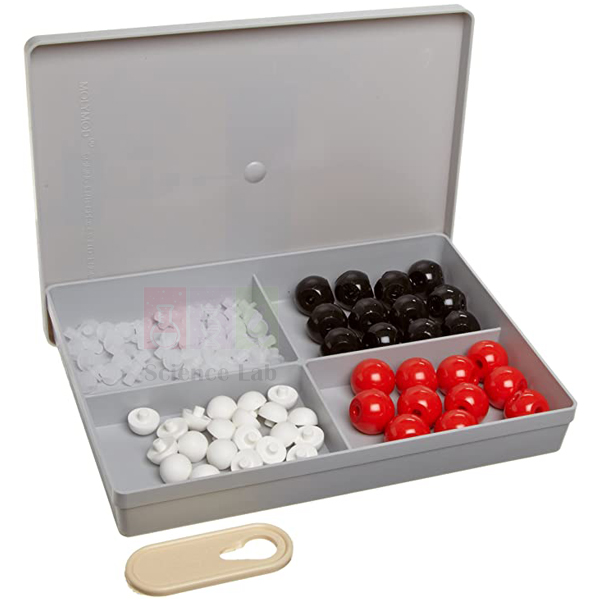
Sucrose Molecular Model
Sucrose Molecular Model (Product Code: SLE/Mo/09) is a self-assembly kit used to build a three-dimensional model of one sucrose molecule for chemistry and biology teaching. With 45 atom-parts and 46 NV links, this 3D science model kit lets students see how a glucose ring and a fructose ring join to form table sugar, making it a clear visual aid for carbohydrate lessons. This model is made by Jain Scientific Equipments Pvt Ltd (ScienceLab), an OEM manufacturer, at its own factory in Ambala, India.
Specifications
| Parameter | Detail |
|---|---|
| Model type | Self-assembly molecular model kit |
| Molecule | Sucrose — one molecule, shown in 3D |
| Atom parts | 45 |
| NV links | 46 |
| Tool | 1 |
| Product code | SLE/Mo/09 |
| Manufacturer | Jain Scientific Equipments Pvt Ltd (ScienceLab) — OEM |
| Country of origin | India (made in Ambala, Haryana) |
What Is the Sucrose Model Used For?
Sucrose is a disaccharide: one glucose unit and one fructose unit joined by a glycosidic bond, with a molecule of water removed when the bond forms. A sucrose molecule contains 45 atoms of carbon, hydrogen and oxygen, so the 45 atom-parts build one complete molecule, and the 46 links match the number of bonds that hold those atoms together.
Teachers use the model to show the condensation reaction that forms sucrose, its hydrolysis back into glucose and fructose, and why sucrose does not give a positive result in reducing-sugar tests: the glycosidic bond ties up the groups that would otherwise react. Building the two rings separately before joining them makes the structure easier to follow, and the tool supplied should be kept with the parts.
OEM Manufacturer
Jain Scientific Equipments Private Limited, known to customers as ScienceLab, is the OEM (original equipment manufacturer) of the Sucrose Molecular Model. It is made at the company's own licensed factory at Saha, Ambala, Haryana, India, and supplied direct to schools, colleges, teacher-training institutes, dealers and importers without a trading middleman.
The same manufacturer makes the glucose and fat kits in this range, so a set of carbohydrate and lipid models can be quoted together. Find out more on the ScienceLab profile.
Related Molecule Models
Useful companions for a carbohydrate lesson built around the sucrose model:
- Molecular Model Kit, Glucose — the monosaccharide that forms one half of sucrose.
- Sucrose — laboratory sucrose for the practical tests that follow the model work.
- Fehling A Solution — used with Fehling B in reducing-sugar tests that show how sucrose differs from glucose.
- Molecular Model Set, Biochemistry — for building a wider biochemistry teaching collection.
All molecular model kits are listed in the Molecule category.
Frequently Asked Questions
How many parts are in the Sucrose Molecular Model?
The Sucrose Molecular Model contains 45 atom-parts, 46 NV links and one tool. These parts assemble into one complete sucrose molecule, so each kit gives a group a full 3D model to study.
Does the Sucrose Molecular Model come assembled?
No, the Sucrose Molecular Model is a self-assembly kit. Students build the molecule from the atom-parts and links, which helps them understand exactly how the glucose and fructose rings are connected by the glycosidic bond.
Which lessons use the Sucrose Molecular Model?
The Sucrose Molecular Model is used in lessons on carbohydrates, disaccharides, glycosidic bonds and the hydrolysis of sugars. It also helps explain why sucrose behaves differently from glucose in reducing-sugar tests such as Benedict's or Fehling's.
Who manufactures the Sucrose Molecular Model?
The Sucrose Molecular Model is manufactured by Jain Scientific Equipments Pvt Ltd (ScienceLab) as the OEM, at its own licensed factory in Saha, Ambala, India. Enquiries and repeat orders go straight to the manufacturer.
Can I order the Sucrose Molecular Model with other sugar models?
Yes, the Sucrose Molecular Model can be quoted together with the glucose kit and other models from the Molecule range. List the models and quantities you need on the contact page to receive one combined quotation.
Is the Sucrose Molecular Model available for export?
Yes, Jain Scientific Equipments Pvt Ltd (ScienceLab) supplies the Sucrose Molecular Model to schools, colleges and distributors in India and international markets. Send your quantity and destination through the contact page for an export quotation.
Request a Quote
Ask for a quotation on the Sucrose Molecular Model through the contact page, or collect several models in the enquiry cart and send one enquiry. The manufacturer replies directly.
Last updated: 24 September 2026