- Physics Lab Equipment
- Chemistry Lab Equipment
- Biology Lab Equipment
- Anatomical Lab Equipment
- Learning
- Educational Lab Equipment
- Magnets
- Agriculture
- Astronomy
- Earth Science
- Geography Lab Equipment
- Safety Lab Coat
- Laboratory
- Meteorological
- Electricity & Magnetism
- Heat
- School Lab Equipment
- Lab Glassware
- Science Lab Equipment
- Tvet Lab Equipment
- Robotics Kits Supplier and Manufacturer for Schools India
- Math Lab Equipment Manufacturers and Exporters in Ambala
- STEM Kits Manufacturers and Supplier India
- Engineering Lab Equipment
- Hospital Lab Equipment
- Water, Sanitation & Hygiene Supplies
- Cold Chain, Solar & Communication Equipment
- Nutrition
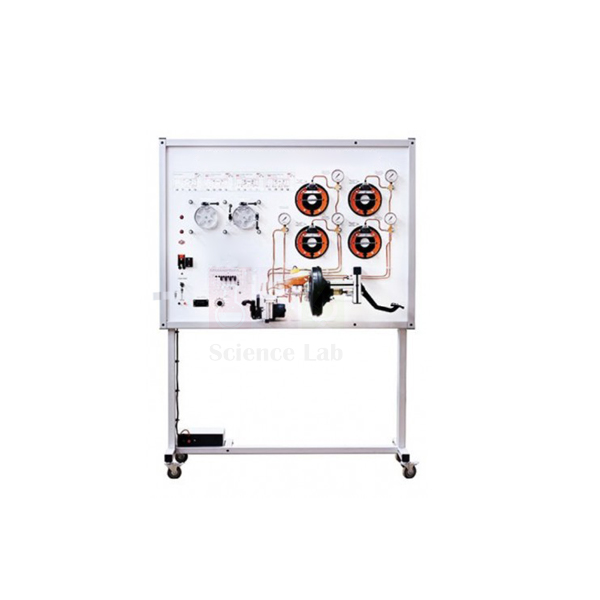
ABS Braking System Training Board Simulator
This training board teaches the layout and working of an anti-lock braking system in automotive workshops and engineering classrooms. ITI, diploma and degree instructors use it to show how ABS keeps the wheels from locking under hard braking, so the driver can still steer. Configurations vary, and the current specification sheet is supplied on request.
ABS training board details
| Parameter | Detail |
|---|---|
| Product type | Training board simulator |
| System covered | ABS (anti-lock braking system) |
| Intended use | Teaching and demonstration in automotive training |
| Courses | ITI, diploma and degree automotive courses |
| Technical specification | Dimensions, power supply and fitted components given with the current specification sheet |
| Product code | SLE/MCE/60 |
| Minimum order | 10 units |
| Dispatch | Usually within 7 to 10 working days |
| Manufacturer | ScienceLab (Jain Scientific Equipments Pvt Ltd), Ambala, India |
Teaching anti-lock braking step by step
From plain hydraulics to ABS. Begin on the working model of a hydraulic braking system to show the master cylinder, lines and wheel brakes. Then move to the ABS board and ask what anti-lock braking adds: a speed sensor at each wheel, an electronic control unit and a hydraulic modulator between master cylinder and wheels.
The control cycle. Walk through what happens when one wheel starts to lock. The control unit sees its speed falling too fast, the modulator holds pressure to that wheel, releases it, and builds it again as the wheel picks up. Students sketch wheel speed and brake pressure against time for one cycle.
Sensor checks. Where the board's specification includes wheel speed sensors, practise the workshop tests: coil resistance of a passive sensor with a digital multimeter, then its output on an oscilloscope dual trace as the tone ring turns. Note how the signal frequency rises with wheel speed.
Heavy vehicles. Close the topic on the trailer air brake training equipment and compare the hydraulic ABS layout with the air-brake circuits used on lorries and trailers.
Frequently Asked Questions About the ABS Braking System Training Board Simulator
Does ABS always make a vehicle stop in a shorter distance?
No. Its main job is to keep the wheels turning so the driver can steer while braking hard. On dry or wet roads it often shortens the stop, but on loose gravel or fresh snow a locked wheel can stop sooner. ABS also does not prevent every skid, for example in a corner taken too fast.
Why does the brake pedal pulse when ABS is working?
The modulator valves open and close many times a second to hold, drop and restore pressure at a wheel. Those pressure changes travel back through the brake fluid to the pedal. The pulsing is normal, and the driver should keep firm, steady pressure on the pedal rather than pumping it.
How does the system know a wheel is about to lock?
Each wheel speed sensor reports how fast its wheel turns. The control unit compares the wheels with each other and with the estimated vehicle speed. A wheel slowing far faster than the rest is close to locking, so the unit eases its pressure and keeps tyre slip close to the point of greatest grip.
What happens to the brakes if the ABS develops a fault?
The control unit switches the anti-lock function off and lights the ABS warning lamp. The ordinary hydraulic brakes still work, but the wheels can now lock under hard braking just as on a car without ABS. The fault should be traced before the vehicle goes back into normal use.
How do students check a wheel speed sensor in the workshop?
Start by reading fault codes with a scan tool to find which wheel is affected. Measure a passive sensor's coil resistance with a multimeter, then spin the wheel and check that its voltage rises with speed. Active sensors need their supply and are easier to read on an oscilloscope. Inspect the tone ring for dirt or damage too.
At what stage of a course is the ABS board used?
It usually follows lessons on conventional hydraulic brakes, once students know the master cylinder and wheel brakes. The board then links that hydraulics with vehicle electronics and fault diagnosis, so it fits ITI, diploma and degree automotive courses alike.
Brake and vehicle electronics trainers
- Working Model Of Hydraulic Braking System
- Trailer Air Brake Training Equipment
- Trailer Type Air Brake System Training Equipment
- Automotive Engine Fault Diagnosis Simulator Auto Fault
- Engine management system (MPI)
To request a quotation, send the product name, code and quantity through our contact page or add the item to your enquiry cart.
Last updated: 14 November 2026
