- Physics Lab Equipment
- Chemistry Lab Equipment
- Biology Lab Equipment
- Anatomical Lab Equipment
- Learning
- Educational Lab Equipment
- Magnets
- Agriculture
- Astronomy
- Earth Science
- Geography Lab Equipment
- Safety Lab Coat
- Laboratory
- Meteorological
- Electricity & Magnetism
- Heat
- School Lab Equipment
- Lab Glassware
- Science Lab Equipment
- Tvet Lab Equipment
- Robotics Kits Supplier and Manufacturer for Schools India
- Math Lab Equipment Manufacturers and Exporters in Ambala
- STEM Kits Manufacturers and Supplier India
- Engineering Lab Equipment
- Hospital Lab Equipment
- Water, Sanitation & Hygiene Supplies
- Cold Chain, Solar & Communication Equipment
- Nutrition
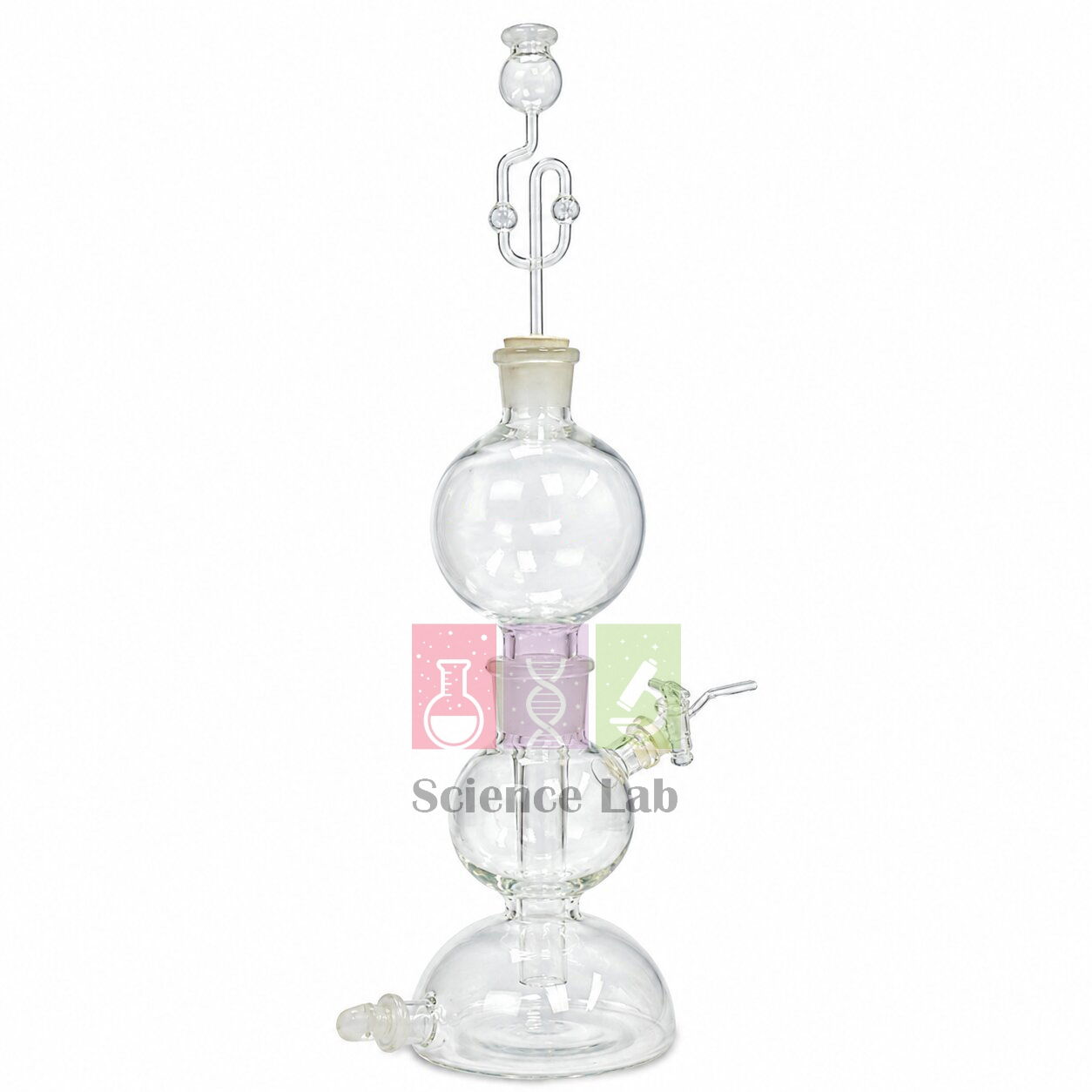
Kipps Apparatus
Kipps Apparatus (Product Code: 102/My-26) is a classic-type Kipp gas generator that produces gases such as carbon dioxide, hydrogen sulphide and hydrogen by the action of an acid, mainly hydrochloric acid, on a solid, without any heating. It lets a chemistry teacher or lab assistant draw gas on demand for a whole practical session and stop the reaction simply by closing the outlet. Schools and colleges setting up a Kipp generator in their India lab or abroad can source this 250 ml apparatus made by Jain Scientific Equipments Pvt Ltd (ScienceLab), Ambala, India.
Specifications
| Parameter | Detail |
|---|---|
| Type | Kipp’s apparatus, classic type |
| Construction | Two main parts: an upper glass pot ending in the shape of a funnel, and a lower part made of two joined glass flasks |
| Volume | 250 ml |
| Device height | 300 to 350 mm |
| Gases produced | Carbon dioxide (CO2), hydrogen sulphide (H2S), hydrogen (H2) and similar gases |
| Reagents used | An acid (mainly hydrochloric acid, HCl) acting on a solid such as granular calcium carbonate (CaCO3), iron sulphide (FeS) or granular zinc (Zn) |
| Heating | Not required |
Typical Use
The solid reagent is placed in the upper of the two joined flasks and acid is poured in through the funnel of the top pot, from where it fills the lowest flask and rises to meet the solid. Gas forms as soon as the two are in contact. When the outlet is closed, the gas pressure pushes the acid back down and away from the solid, so the reaction stops by itself; opening the outlet again restarts it. This makes the apparatus ideal for demonstrations such as preparing carbon dioxide from marble chips, hydrogen from zinc, or hydrogen sulphide for qualitative salt analysis.
The outlet is usually connected through rubber tubing to a delivery tube and gas jar, the standard gas collection apparatus in India’s school and college labs. Use granular or lump solids rather than powder so they stay in place, add acid slowly, and run hydrogen sulphide preparation only in a fume cupboard because the gas is toxic. Keep flames away when generating hydrogen. After the session, drain the spent acid safely, rinse all parts with water and let the glassware dry before storage.
Manufacturer
This generator is part of the chemistry apparatus range of Jain Scientific Equipments Private Limited, which operates as ScienceLab from Ambala, Haryana, and makes equipment for school, college and university laboratories. For background on the company, its facilities and its range, see the ScienceLab company profile.
Related Chemistry Lab Equipment
Pair the Kipps Apparatus with these items to generate, clean and collect gas in one set-up:
- Simple Kipps Appliances — a small-scale version that students can operate at their own bench.
- Gas Jar, Glass — collects the gas for tests on its properties.
- Delivery Tube — carries gas from the generator outlet to the collecting vessel.
- Gas Washing Bottle — washes or dries the gas before it is collected.
- Rubber Tubing — flexible connection between the outlet and the rest of the train.
The full Chemistry Lab Equipment category lists more gas preparation and glassware items.
Frequently Asked Questions
Which gases can this apparatus produce?
Gases formed by an acid reacting with a solid without heat, such as carbon dioxide from calcium carbonate, hydrogen from zinc and hydrogen sulphide from iron sulphide, usually with hydrochloric acid.
What is its size?
The apparatus has a volume of 250 ml and a height of 300 to 350 mm, which suits a demonstration bench or fume cupboard.
Does it need a burner or hot plate?
No. The reaction runs at room temperature, so no heating is needed.
Are the acid and solid reagents included?
This listing covers the glass apparatus. If you also need chemicals, list them in your enquiry on the contact page and we will advise.
Is it suitable for school students?
It is best run by a teacher or trained assistant as a demonstration. For hands-on student work, the smaller Simple Kipps Appliances uses much less material.
How should it be cleaned after use?
Drain the acid into a suitable waste container, remove leftover solid, rinse all parts thoroughly with water and let them dry before reassembly or storage.
Can you quote for several units or for export?
Yes. ScienceLab supplies institutions in India and international markets; include the number of units and the delivery location in your request.
Request a Quote
To order the Kipps Apparatus, contact us through the contact page or add it to the enquiry cart along with gas jars, tubing and other items.
Last updated: 24 September 2026