- Physics Lab Equipment
- Chemistry Lab Equipment
- Biology Lab Equipment
- Anatomical Lab Equipment
- Learning
- Educational Lab Equipment
- Magnets
- Agriculture
- Astronomy
- Earth Science
- Geography Lab Equipment
- Safety Lab Coat
- Laboratory
- Meteorological
- Electricity & Magnetism
- Heat
- School Lab Equipment
- Lab Glassware
- Science Lab Equipment
- Tvet Lab Equipment
- Robotics Kits Supplier and Manufacturer for Schools India
- Math Lab Equipment Manufacturers and Exporters in Ambala
- STEM Kits Manufacturers and Supplier India
- Engineering Lab Equipment
- Hospital Lab Equipment
- Water, Sanitation & Hygiene Supplies
- Cold Chain, Solar & Communication Equipment
- Nutrition
429.jpg)
Rack Double Rod (Student)
Rack Double Rod (Student) (Product Code: SLE/PP/05) is a two-rod wooden bead rack used to teach doubles, near doubles, halving and mental addition and subtraction up to 20 in early-years and lower primary maths. Each of its two rods holds 10 beads set out as 5 white and 5 red, so one number can be built directly above another for comparison. It is supplied by Jain Scientific Equipments Pvt Ltd (ScienceLab), Ambala, India, as a practical addition to mathematics lab kits in India and abroad.
Key Details
| Parameter | Detail |
|---|---|
| Rack | Double wooden rack, 10 beads on each rod |
| Bead structure | Alternating 5 white and 5 red beads on each rod |
| Marker | Rubber clip for locating numbers on the rack |
| Teacher support | Write-up with details of activities |
| Concepts | Doubles and near doubles (such as 6 and 6, 6 and 7); halving numbers such as 6, 8, 10 and 12; mental addition and subtraction up to 20 using the 5-5 structure; quantity sense and number sequence to 20; structuring numbers with the pattern of five; number combinations of 10 |
| Product code | SLE/PP/05 |
| Supplied by | Jain Scientific Equipments Pvt Ltd (ScienceLab), Ambala, India |
What Is the Double Rod Bead Rack Used For?
Two rods, one above the other, make doubling something a child can see. Pushing 6 beads across on the top rod and 6 on the bottom shows two white fives plus one red bead on each rod, so the total of 12 can be read without counting. For a near double such as 6 and 7, the child builds the double first and notices the single extra bead.
Halving works in reverse: show 10 or 12 beads and share them equally between the rods. For sums up to 20, fill the top rod to 10 and carry the rest onto the lower rod, so a calculation such as 9 and 4 becomes 10 and 3. The rubber clip keeps the beads in use apart from the rest, and number combinations of 10 can be practised on one rod while the other holds a second example.
What to Specify When Ordering
- Number of racks required (the description does not state how many children share one).
- Whether single-rod student racks are wanted as well.
- Delivery location, and any export or tender requirements.
Supplier
ScienceLab is the brand of Jain Scientific Equipments Private Limited, Ambala, Haryana, which supplies the Rack Double Rod (Student) to nurseries, primary schools, maths resource centres and dealers in India and international markets. School procurement teams that need vendor registration details can use CIN U29309HR2020PTC087597 and GSTIN 06AAECJ8618A1ZT. Visit the ScienceLab profile for company background.
Related Pre-Primary Learning Aids
Pair the double rack with these aids for doubles, halving and number-bond work:
- Rack Single Rod (Student) — one rod of beads for counting along a line.
- Abacus Upright — a counting frame for larger numbers and place value.
- Dice Set I — dice for generating small numbers to double.
- Matching Matching — dot cards for spotting doubles and patterns of five.
- Stacking Counters — counters for building doubles on the table.
All early-years number aids are listed in the Pre-Primary range.
Frequently Asked Questions
How are the beads arranged on the Rack Double Rod (Student)?
The Rack Double Rod (Student) is a double wooden rack with 10 beads on each rod, set out in alternating groups of 5 white and 5 red. Having two rods lets children build one number directly above another and compare them.
What is the Rack Double Rod (Student) mainly used for?
The Rack Double Rod (Student) is mainly used for doubles and near doubles such as 6 and 6 or 6 and 7, halving numbers such as 6, 8, 10 and 12, and mental addition and subtraction up to 20 using the 5-5 structure.
Does the Rack Double Rod (Student) come with teaching guidance?
Yes, the Rack Double Rod (Student) includes a write-up with details of activities, along with a rubber clip for locating numbers on the rack. The write-up helps teachers plan doubles, halving and number-combination lessons step by step.
What age group suits the Rack Double Rod (Student)?
The description of the Rack Double Rod (Student) does not state an age range. It sits in the Pre-Primary range and covers number work up to 20, so please ask us through the contact page if you need guidance for a particular class.
Who supplies the Rack Double Rod (Student)?
The Rack Double Rod (Student) is supplied by Jain Scientific Equipments Pvt Ltd (ScienceLab), Ambala, Haryana, India. It is offered to nurseries, primary schools and education programmes in India and international markets, and vendor registration details are available for procurement.
What should a quotation request for the Rack Double Rod (Student) include?
A quotation request for the Rack Double Rod (Student) should include the number of racks, whether single-rod racks are also needed, and the delivery location. Send these details on the contact page, noting any export or tender requirements.
Request a Quote
Request a quotation for the Rack Double Rod (Student) through the contact page, or list it in the enquiry cart together with single racks and dice.
Last updated: 24 September 2026
Tangram
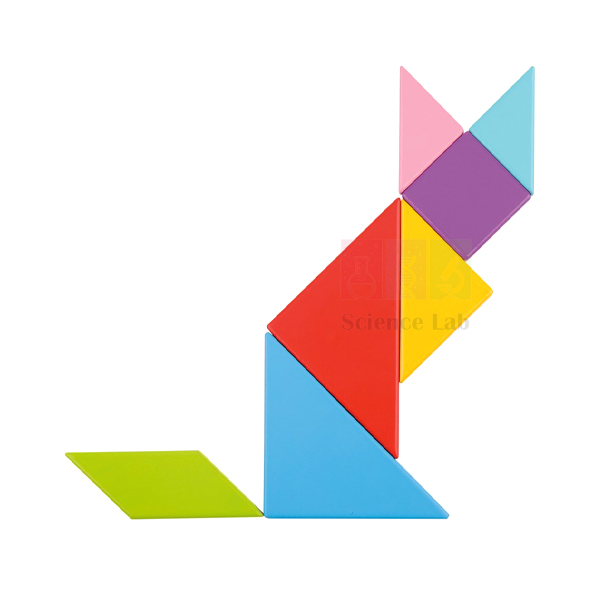
Tangram (Product Code: SLE/PP/06) is a seven-piece dissection puzzle used to develop shape sense and spatial reasoning in pre-primary and primary classrooms, and later to explore 2D shapes, areas and types of triangles. The set comes with a booklet of twin tangrams, convex shapes and picture designs grouped by subject, plus two introductory sheets for young children. It is supplied by Jain Scientific Equipments Pvt Ltd (ScienceLab), Ambala, India, for activity-based maths corners in India and abroad.
Key Details
| Parameter | Detail |
|---|---|
| Pieces | 7 tangram pieces |
| Booklet | Twin tangrams, convex shapes and usual pictures classified according to subject |
| Introductory material | Two sheets for introducing tangram to young children |
| Early concepts | Shape sense; spatial sense through puzzles with pre-existing designs |
| Later concepts | Exploring 2D shapes; relationships between the areas of different shapes; types of triangles |
| Product code | SLE/PP/06 |
| Supplied by | Jain Scientific Equipments Pvt Ltd (ScienceLab), Ambala, India |
What Is a Tangram Used For?
Young children start with the introductory sheets, laying each piece over a matching outline so that shape and position both have to agree. Once that is easy, they move to the booklet pictures, where only the silhouette is shown and pieces must be turned and flipped until they fit. This trial-and-adjust process is exactly how spatial sense develops at the pre-primary stage.
In later classes the same pieces become a geometry tool. Pupils find that smaller pieces can exactly cover a larger one, which shows relationships between areas without any formula, and they name and compare the triangles in the set. The convex-shape challenges and twin tangrams in the booklet stretch older learners, and tracing a finished design onto paper gives a record for the class display.
Supplier
Tangram sets are supplied by Jain Scientific Equipments Private Limited, the company behind the ScienceLab name, from Ambala, Haryana. Kindergartens, primary and middle schools, teacher-education institutes and dealers in India and international markets buy them for maths labs and activity corners, often with pattern blocks and geoboards. The ScienceLab profile gives further company information.
Related Pre-Primary Learning Aids
These shape and space aids follow on naturally from tangram work:
- 2D Shapes — flat shapes for naming and sorting.
- Brights Pattern Blocks — more shape puzzles and tiling designs.
- Geoboard — making shapes and exploring area with bands.
- Attribute Blocks Desk Set — sorting shapes by their attributes.
- Geometric Shapes Building Set — building shapes for later geometry lessons.
Explore the Pre-Primary range for other early-years learning aids.
Frequently Asked Questions
How many pieces are in the Tangram?
The Tangram has 7 pieces, the classic set of triangles in three sizes, a square and a parallelogram. Together they can be arranged into the shapes and pictures shown in the booklet that comes with the set.
What comes with the Tangram besides the pieces?
Besides its 7 pieces, the Tangram comes with a booklet showing twin tangrams, convex shapes and usual pictures classified by subject, plus two sheets designed to introduce tangram play to young children.
What age group can use the Tangram?
The Tangram description gives no fixed age range; it serves young children through its introductory sheets and older pupils through area and triangle work. Ask us through the contact page if you need advice for a particular class level.
How does the Tangram help with geometry?
The Tangram helps with geometry by letting pupils explore 2D shapes, compare the areas of different pieces and identify types of triangles. Fitting smaller pieces over larger ones shows area relationships without needing formulas.
Who supplies the Tangram?
The Tangram is supplied by Jain Scientific Equipments Pvt Ltd (ScienceLab), Ambala, Haryana, India. It is available to kindergartens, schools, teacher-training institutes and dealers in India and international markets, alone or with other shape aids.
Is the material of the Tangram pieces specified?
The material of the Tangram pieces is not stated in its description. Please ask us through the contact page, and the quotation will confirm the material along with the booklet and sheets included in the set.
Request a Quote
Send the number of Tangram sets you need through the contact page, or keep them in the enquiry cart with other shape aids to request one quote.
Last updated: 24 September 2026
Picture Dice With Sticker Sheet
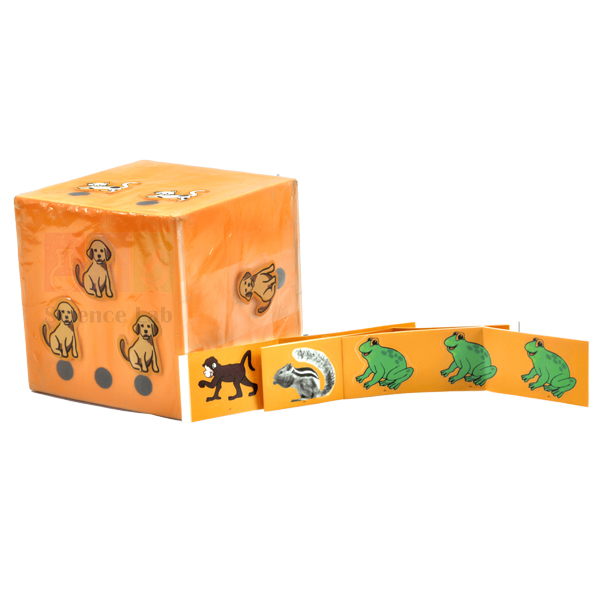
Picture Dice With Sticker Sheet (Product Code: SLE/PP/07) is a rubber starter dice with animal pictures used to introduce pre-nursery and nursery children to numbers up to 3. Instead of dots, it shows animals that young children enjoy, so counting the pictures feels like play, and an extra sheet of animal pictures comes with it. It is supplied by Jain Scientific Equipments Pvt Ltd (ScienceLab), Ambala, India, as a first number toy for pre-primary classes in India and abroad.
Key Details
| Parameter | Detail |
|---|---|
| Dice | Rubber dice with animal pictures |
| Extra material | Extra sheet of animal pictures |
| Number range | Numbers up to 3 |
| Intended learners | Pre-nursery and nursery children |
| Concepts | One-to-one correspondence; cardinality (quantity) of numbers; using counting words |
| Product code | SLE/PP/07 |
| Supplied by | Jain Scientific Equipments Pvt Ltd (ScienceLab), Ambala, India |
What Is the Picture Dice Used For?
Before children can work with numerals, they need to link one counting word to each object and understand that the last word they say tells how many there are. Rolling this dice and touching each animal while counting gives exactly that practice, within a small range that toddlers can manage. Animals hold their attention far better than abstract dots, which keeps early number talk meaningful.
Simple circle-time games work well: roll the dice, count the animals together, then collect the same number of blocks or clap that many times. The extra sheet of animal pictures can be used for naming and matching activities away from the dice. The rubber body keeps rolling noise down, which helps in a busy nursery room.
Supplier
Jain Scientific Equipments Private Limited, which operates as ScienceLab, supplies the Picture Dice With Sticker Sheet from Ambala, Haryana, to playschools, nurseries, anganwadi and early-childhood programmes, and dealers in India and international markets. Many buyers order it with the other pre-primary dice, which carry number work further. Company information is on the ScienceLab profile.
Related Pre-Primary Learning Aids
These dice and cards take children on from their first counting games:
- Dice Set I — the next step, adding numerals and zero.
- Dice Set II — larger numbers once children are ready.
- Number Ball — a numeral dice for later number games.
- Matching Matching — matching quantities with numeral and dot cards.
- Plastic Dice — standard dice for general classroom games.
Visit the Pre-Primary range for the full set of early-years aids.
Frequently Asked Questions
What numbers does the Picture Dice With Sticker Sheet cover?
The Picture Dice With Sticker Sheet covers numbers up to 3. It is designed as a starter dice, so children count small groups of animal pictures before moving on to dice with dots and numerals.
Who is the Picture Dice With Sticker Sheet for?
The Picture Dice With Sticker Sheet is meant for pre-nursery and nursery children. Using animals that young children are fascinated by helps them understand numbers meaningfully rather than simply reciting counting words.
What is included with the Picture Dice With Sticker Sheet?
The Picture Dice With Sticker Sheet includes a rubber dice with animal pictures and an extra sheet of animal pictures. Teachers can use the extra sheet for matching and naming activities alongside the dice.
Which early number skills does the Picture Dice With Sticker Sheet build?
The Picture Dice With Sticker Sheet builds one-to-one correspondence, cardinality (knowing that the last number said tells how many) and the use of counting words, all within the range of numbers up to 3.
Who supplies the Picture Dice With Sticker Sheet?
The Picture Dice With Sticker Sheet is supplied by Jain Scientific Equipments Pvt Ltd (ScienceLab), Ambala, Haryana, India. Playschools, nurseries and early-childhood programmes in India and international markets can order it on its own or with the other pre-primary dice.
How should I request a quote for the Picture Dice With Sticker Sheet?
To request a quote for the Picture Dice With Sticker Sheet, send the number of dice, the number of classrooms and your delivery location through the contact page. Include any other dice from the range for a single combined quotation.
Request a Quote
Order the Picture Dice With Sticker Sheet by sending your quantity on the contact page, or place it in the enquiry cart beside the other early-years dice.
Last updated: 24 September 2026
Animal Meiosis Plaque
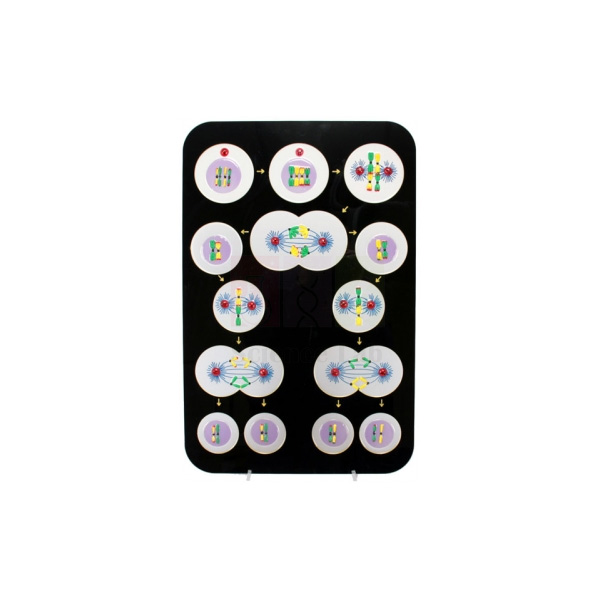
Animal Meiosis Plaque (Product Code: SLE/ECB/05) is a large teaching plaque used to explain reduction division (meiosis) of the animal cell in school and college biology classrooms. Teachers use its single 46 x 61 cm (approx.) display, with the key cards included, to show how the chromosome number is halved when gametes form. It is made by Jain Scientific Equipments Pvt Ltd (ScienceLab), an OEM manufacturer, at its own factory in Ambala, India, for schools that need a clear mitosis meiosis model in India.
Specifications
| Parameter | Detail |
|---|---|
| Type | Teaching plaque, animal cell meiosis |
| Process shown | Reduction division (meiosis) of the animal cell |
| Key cards | Included |
| Size | 46 x 61 cm (approx.) |
| Weight | 2 kg (approx.) |
| Product code | SLE/ECB/05 |
| Manufacturer | Jain Scientific Equipments Pvt Ltd (ScienceLab) — OEM |
| Country of origin | India (made in Ambala, Haryana) |
What Is the Animal Meiosis Plaque Used For?
Meiosis is one of the harder topics in secondary and first-year college biology, because students must follow chromosomes through two divisions and understand why the number is halved. The plaque lets the teacher trace that sequence in front of the class: homologous chromosomes pairing and separating, sister chromatids parting in the second division, and the resulting cells carrying half the original chromosome number. That foundation then supports later lessons on variation and inheritance.
Use the key cards first as a teaching aid and later as a quick check, asking students to name each feature before revealing the card. Keeping the plaque on display for the whole unit helps learners revisit the sequence when they study mitosis or work through prepared meiosis slides under the microscope.
OEM Manufacturer
Jain Scientific Equipments Private Limited, which trades as ScienceLab, is the OEM (original equipment manufacturer) of the Animal Meiosis Plaque and makes it at its own licensed factory at Saha, Ambala, Haryana, India. Because the plaque comes straight from the maker rather than through a trader, schools, colleges, dealers and importers deal with the same company for the quotation, repeat orders and any replacement key cards — just ask us. More about the company is on our company profile.
Related Cell Biology Equipments
Resources for teaching cell division from model to microscope:
- Animal Mitosis Models — a sequential set for comparing mitosis with meiosis.
- Meiosis Model — another format for presenting the same process.
- Microslide Meiosis — photomicrograph images for seeing meiosis in real cells.
- Mitosis & Meiosis Set, Microscope Slides — a combined slide set covering both divisions.
- Animal Cell Plaque — the matching plaque on animal cell structure.
View the full Cell Biology Equipments range.
Frequently Asked Questions
What does the Animal Meiosis Plaque illustrate?
The Animal Meiosis Plaque illustrates reduction division, or meiosis, of the animal cell — the division that halves the chromosome number when gametes form. It gives a whole class one large visual for following the process, with key cards for identifying what is shown.
Are key cards included with the Animal Meiosis Plaque?
Yes. Key cards are included with the Animal Meiosis Plaque so that teachers and students can identify the features shown. They serve as a labelling reference during the lesson and as a quick self-test afterwards, when students name each part before checking the card.
How large and heavy is the Animal Meiosis Plaque?
The Animal Meiosis Plaque measures approximately 46 x 61 cm and weighs approximately 2 kg. That is large enough for a class to follow from the front rows, while the light weight lets one teacher carry it between rooms.
Which individual stages does the Animal Meiosis Plaque show?
Our current product information for the Animal Meiosis Plaque does not list the individual stages shown. If your syllabus needs particular stages, please ask through our contact page and we will confirm the content before you order.
Who manufactures the Animal Meiosis Plaque?
The Animal Meiosis Plaque is manufactured by Jain Scientific Equipments Pvt Ltd (ScienceLab), the OEM, at its own licensed factory at Saha, Ambala, Haryana, India. Schools, colleges, dealers and importers receive both the plaque and their quotation directly from the manufacturer.
What should a quotation request for the Animal Meiosis Plaque include?
A quotation request for the Animal Meiosis Plaque should give product code SLE/ECB/05, the number of plaques, your delivery location in India or abroad, and any other cell biology models you want on the same order. Combined and bulk orders for several labs are welcome.
Request a Quote
Send the quantity and delivery location for the Animal Meiosis Plaque through our contact page, or add it to the enquiry cart with other cell division resources. Quotations come direct from the manufacturer.
Last updated: 24 September 2026
Dice Set I
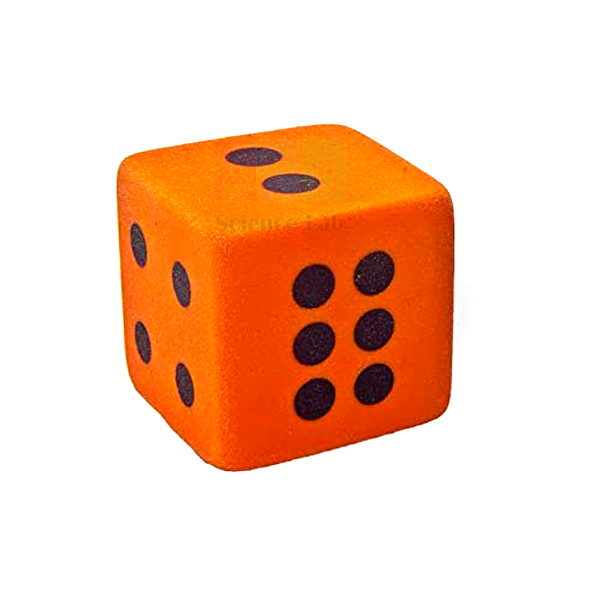
Dice Set I (Product Code: SLE/PP/08) is a pair of rubber number dice used to help young children move from counting dots to reading numerals, building number sense up to 5 and the meaning of zero. It contains a Combined Dice showing numerals 0 to 5 with dots and a Dice Domino showing 0 to 5 dots. It is supplied by Jain Scientific Equipments Pvt Ltd (ScienceLab), Ambala, India, as a hands-on early-maths resource for pre-primary sections in India and abroad.
Key Details
| Parameter | Detail |
|---|---|
| Set contents | 2 rubber dice |
| Combined Dice | Numerals 0 to 5 with dots |
| Dice Domino | 0 to 5 dots |
| Number range | Number sense up to 5, including zero |
| Concepts | Transition from iconic (dot) to numeral representation; counting words; one-to-one correspondence; introducing zero; recognising numerals up to 5; cardinality (quantity) |
| Product code | SLE/PP/08 |
| Supplied by | Jain Scientific Equipments Pvt Ltd (ScienceLab), Ambala, India |
What Is Dice Set I Used For?
The two dice form a bridge between pictures of quantity and written numbers. The Dice Domino shows dots only, so children count them or learn to recognise the domino pattern at a glance. The Combined Dice places each numeral beside its dots, so the child can see that the symbol and the quantity mean the same thing.
A simple game is to roll the Dice Domino, say the number, then turn the Combined Dice to find the matching numeral. In counting games where children take as many counters as the dice shows, a zero roll means taking nothing, which gives zero a real meaning. Once numerals up to 5 are read quickly, children are ready for dice with larger numbers.
Supplier
Dice Set I is supplied by Jain Scientific Equipments Private Limited, known as ScienceLab, from Ambala, Haryana, to nurseries, primary schools, early-learning programmes and distributors in India and international markets. Overseas and institutional buyers can record the company's Importer-Exporter Code AAECJ8618A, issued by the DGFT, and GSTIN 06AAECJ8618A1ZT in their supplier files. See the ScienceLab profile for more about the business.
Related Pre-Primary Learning Aids
These aids sit either side of Dice Set I in a child's number journey:
- Picture Dice With Sticker Sheet — the earlier starter dice with animal pictures.
- Dice Set II — extends the same work to larger numerals.
- Number Ball — a numeral dice for later counting games.
- Matching Matching — numeral and dot cards to match with dice rolls.
- Rack Double Rod (Student) — shows rolled numbers with beads.
The Pre-Primary range lists every early-years aid.
Frequently Asked Questions
What dice are included in Dice Set I?
Dice Set I includes 2 rubber dice: a Combined Dice showing numerals 0 to 5 with dots, and a Dice Domino showing 0 to 5 dots. Using them together links written numerals with the quantities they stand for.
Why does Dice Set I include zero?
Dice Set I includes zero so children meet the idea of none as a number from the start. Rolling a zero face in a counting game, and taking nothing, makes the meaning of zero concrete rather than abstract.
What number range does Dice Set I cover?
Dice Set I covers number sense up to 5, including zero. It supports counting words, one-to-one correspondence, cardinality and recognising numerals up to 5 before children progress to larger numbers.
How does Dice Set I help children move from dots to numerals?
Dice Set I helps children move from dots to numerals because the Dice Domino shows dots only, while the Combined Dice pairs each numeral with its dots. Comparing the two dice links the symbol with the quantity it represents.
Who supplies Dice Set I?
Dice Set I is supplied by Jain Scientific Equipments Pvt Ltd (ScienceLab), Ambala, Haryana, India, to nurseries, schools and early-learning programmes in India and international markets. Registration details for vendor or import records are available on request.
What should a Dice Set I quotation request include?
A Dice Set I quotation request should include the number of sets, the number of classrooms or groups using them and the delivery location. Add related dice or cards to the same enquiry on the contact page to receive one quote.
Request a Quote
Ask for a Dice Set I quotation on the contact page, or gather it with other number aids in the enquiry cart before sending.
Last updated: 24 September 2026
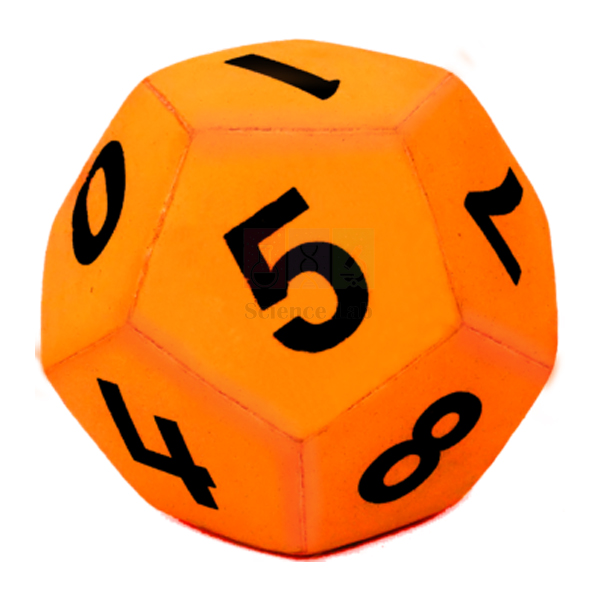
Number Ball
Number Ball (Product Code: SLE/PP/09) is a rubber-based dodecahedron dice marked with numerals 0 to 10, used for number recognition, counting games and quick mental addition and subtraction with children aged 5 to 7. Its many faces let it roll almost like a ball, and one Number Ball is suggested per class section for whole-group games. It is supplied by Jain Scientific Equipments Pvt Ltd (ScienceLab), Ambala, India, for pre-primary and early primary classrooms in India and international markets.
Key Details
| Parameter | Detail |
|---|---|
| Type | Rubber-based dodecahedron dice |
| Markings | Numerals 0 to 10 |
| Suggested quantity | 1 per class section |
| Age range | 5 to 7 years |
| Concepts | Recognising numerals up to 10; counting and quantity-sense games up to 10; automatising small-number addition and subtraction through games |
| Product code | SLE/PP/09 |
| Supplied by | Jain Scientific Equipments Pvt Ltd (ScienceLab), Ambala, India |
What Is the Number Ball Used For?
The Number Ball is built for circle time. A child rolls or gently tosses it, reads the numeral that lands on top, and the group claps, jumps or counts out that many objects. Because every numeral from 0 to 10 can come up, children practise recognising the whole range, including the idea that zero means none.
As confidence grows, the same ball drives mental arithmetic games: roll twice and add, say one more or one less than the roll, or name how many more make 10. Short, repeated rounds are what turn small-number facts into automatic recall. A tally chart of rolls on the board also gives an easy first look at data.
Supplier
The Number Ball is supplied by Jain Scientific Equipments Private Limited, whose trading name is ScienceLab, from Ambala, Haryana. Because one ball serves a whole section, schools usually order by section count, and education programmes and dealers in India and international markets can be quoted for larger roll-outs. Details of the company are on the ScienceLab profile.
Related Pre-Primary Learning Aids
These aids work alongside the Number Ball in number games:
- Dice Set II — a dodecahedron dice plus cube dice for small-group play.
- Dice Set I — earlier dice for numerals and dots up to 5.
- Number Card (101 cards) — numeral cards for ordering and matching.
- Rack Single Rod (Student) — a bead rack for showing rolled numbers.
- Transparent Dice — standard dice for other classroom games.
Browse the Pre-Primary range for further early-years aids.
Frequently Asked Questions
What numbers are on the Number Ball?
The Number Ball is a rubber-based dodecahedron dice marked with numerals 0 to 10. Including zero lets children practise recognising every numeral from none up to ten within the same game.
What age is the Number Ball for?
The Number Ball is stated for children aged 5 to 7 years. At this stage children are ready to read numerals up to 10 and begin automatising small additions and subtractions through repeated game play.
How many Number Balls does a school need?
One Number Ball is suggested per class section, because it is designed for whole-group games. Count the sections in your pre-primary and early primary classes to work out the quantity to order.
What games can be played with the Number Ball?
The Number Ball can be used for counting and quantity games up to 10, numeral recognition, and quick addition and subtraction games, such as rolling twice and adding, or saying one more and one less than the roll.
Who supplies the Number Ball?
The Number Ball is supplied by Jain Scientific Equipments Pvt Ltd (ScienceLab), Ambala, Haryana, India. It is offered to schools, early-learning programmes and dealers in India and international markets, with quotations by section, school or programme.
What details are needed to quote the Number Ball?
To quote the Number Ball, we need the number of class sections, any other pre-primary aids required and the delivery location. Send these through the contact page, mentioning whether the order is for export or a tender.
Request a Quote
Share your section count for the Number Ball on the contact page, or add it to the enquiry cart with dice and cards for one quotation.
Last updated: 24 September 2026
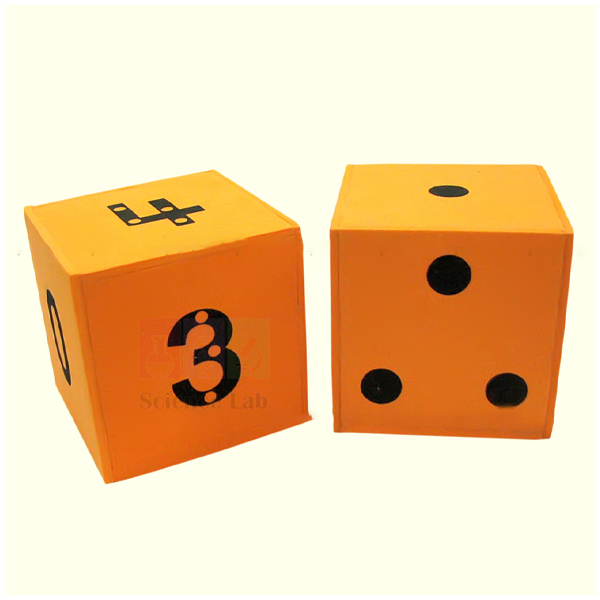
Dice Set II
Dice Set II (Product Code: SLE/PP/10) is a set of 3 rubber dice used for number recognition, counting and small-number addition and subtraction games up to 10 in pre-primary and early primary classes. It combines a dodecahedron dice with numerals up to 10, a cube dice mixing domino dots with numerals, and a cube dice with plain numerals 0 to 5. It is supplied by Jain Scientific Equipments Pvt Ltd (ScienceLab), Ambala, India, for small-group maths play in schools across India and abroad.
Key Details
| Parameter | Detail |
|---|---|
| Set contents | 3 rubber dice |
| Dodecahedron dice | Numerals up to 10 |
| Cube dice (first) | Combination of domino dots and numerals |
| Cube dice (second) | Plain numerals 0 to 5 |
| Number range | Up to 10, including zero |
| Concepts | Recognising numerals up to 10; cardinality (quantity); number sense to 10; counting; automatising small-number addition and subtraction; understanding zero |
| Product code | SLE/PP/10 |
| Supplied by | Jain Scientific Equipments Pvt Ltd (ScienceLab), Ambala, India |
What Is Dice Set II Used For?
Having three different dice in one set lets a teacher match the challenge to each child. The domino-and-numeral cube supports children who still check a numeral against its dots, the plain numeral cube asks them to read symbols alone, and the dodecahedron stretches the range up to 10. A small group can play the same game while each child uses the dice that suits their stage.
For early arithmetic, children roll two dice and add, or roll the dodecahedron and take away the number on a cube. When a zero comes up, they see that adding or subtracting it leaves the total unchanged, which makes zero meaningful. Quick, repeated rounds build the automatic recall of small-number facts that later calculation depends on.
Supplier
Jain Scientific Equipments Private Limited, trading as ScienceLab, supplies Dice Set II from Ambala, Haryana, to pre-primary sections, primary schools, learning centres and dealers in India and international markets. It is often quoted with Dice Set I and the Number Ball, so a school can cover number work from the first numerals onwards. Visit the ScienceLab profile to learn about the company.
Related Pre-Primary Learning Aids
These aids connect with Dice Set II in number games and lessons:
- Dice Set I — numeral and dot dice for an earlier stage.
- Number Ball — a single dodecahedron dice for whole-class games.
- Picture Dice With Sticker Sheet — the animal starter dice for the youngest children.
- Rack Double Rod (Student) — shows dice sums with beads.
- Integer Dice — for later integer work in middle school.
See the whole Pre-Primary range for other early-years aids.
Frequently Asked Questions
What dice come in Dice Set II?
Dice Set II comes with 3 rubber dice: one dodecahedron dice with numerals up to 10, one cube dice combining domino dots and numerals, and one cube dice with plain numerals 0 to 5.
How is Dice Set II different from Dice Set I?
Dice Set II extends number work up to 10 with a third dice, a dodecahedron, while Dice Set I stays within 0 to 5. Dice Set II also includes a plain numeral cube, so children read numerals without dot support.
What skills does Dice Set II develop?
Dice Set II develops recognising numerals up to 10, cardinality, number sense to 10, counting, understanding zero and automatising small-number addition and subtraction through game activities in small groups.
Why does Dice Set II include zero?
Dice Set II includes zero on its numeral dice so children learn that zero is a number meaning none. Adding or subtracting a zero roll in a game shows that the total stays the same.
Who supplies Dice Set II?
Dice Set II is supplied by Jain Scientific Equipments Pvt Ltd (ScienceLab), Ambala, Haryana, India. It is available to schools, early-learning centres and dealers in India and international markets, on its own or with the other pre-primary dice.
What should I send to get a quote for Dice Set II?
To get a quote for Dice Set II, send the number of sets, how many groups or classrooms will use them and the delivery location through the contact page. Mention other pre-primary items you need for a combined quotation.
Request a Quote
Request Dice Set II through the contact page, or add it to the enquiry cart with the rest of your pre-primary list for a single reply.
Last updated: 24 September 2026
67.jpg)
Finger Puppets (Set of 5)
Finger Puppets (Set of 5) (Product Code: SLE/PP/11) is a set of five animal puppets worn on the fingers, used for storytelling and pretend play in nursery, kindergarten and pre-primary classrooms. Teachers use it to draw children into language and expression activities, since each of the 5 puppets is a different animal character. It is supplied by Jain Scientific Equipments Pvt Ltd (ScienceLab), Ambala, India, as a simple addition to a preschool kit for early-years rooms.
Key Details
| Parameter | Detail |
|---|---|
| Set contents | 5 finger puppets, each a different animal |
| How it is used | Worn on the fingers by a teacher or child |
| Activity type | Storytelling and pretend play |
| Language focus | Language development and expression |
| Development areas | Social and cognitive development; creativity and imagination |
| Product code | SLE/PP/11 |
| Supplied by | Jain Scientific Equipments Pvt Ltd (ScienceLab), Ambala, India |
What Are Finger Puppets Used For?
During circle time, a teacher can slip one animal onto each finger and tell a short story, pausing so the children can name the animal or guess what it will say next. Children then take turns wearing the puppets to retell the story in their own words. Speaking through a character helps shy children join in, and it builds vocabulary, sentence formation and the confidence to talk in front of a group.
Pretend play with puppets also involves sharing, waiting for a turn and responding to someone else’s character, so the set supports social development as well as language. Small groups can act out a scene, invent a conversation between two animals, or role-play everyday routines and feelings. A practical tip: keep all five puppets together in a labelled pouch or box so the set stays complete between sessions.
Supplier
ScienceLab is the trading name of Jain Scientific Equipments Private Limited, based in Ambala, Haryana, India. The company supplies this finger puppet set, together with counting, matching and fine-motor aids from its early-years range, to nurseries, kindergartens, schools, dealers and importers in India and international markets. Buyers can place the puppets and other pre-primary items in one enquiry. Read more on the ScienceLab company profile.
Related Pre-Primary
These early-years items work well in the same play and language sessions:
- Picture Dice With Sticker Sheet — roll a picture to decide which animal starts the next story.
- Matching Matching — a matching game that follows on from naming the animal characters.
- Flexi Wire — children can twist simple flowers or animals to set the scene for a puppet show.
- Stringing Beads — a quiet fine-motor activity to rotate with puppet play at learning stations.
- Clay, Modelling, Assorted Color — lets children model extra characters for their stories.
See the complete Pre-Primary range for nursery and kindergarten learning aids.
Frequently Asked Questions
What is included in the Finger Puppets (Set of 5)?
The Finger Puppets (Set of 5) contains five finger puppets, each shaped as a different animal. They are worn on the fingers, so a teacher or child can use one puppet or several at once while telling a story or acting out a scene.
What age group are the Finger Puppets (Set of 5) meant for?
The Finger Puppets (Set of 5) belong to our Pre-Primary range of learning aids for nursery and kindergarten activities. A specific recommended age is not stated in the product details, so please ask us through the contact page if your school needs age guidance.
How do finger puppets help language development?
Finger puppets help language development by giving children a character to speak through during storytelling and pretend play. With the Finger Puppets (Set of 5), children name the animals, invent dialogue and retell stories, practising vocabulary and expression in a relaxed, playful way.
Can the Finger Puppets (Set of 5) be used for group activities?
Yes, the Finger Puppets (Set of 5) suit small-group play because five different animal characters can be shared among children. Taking turns, planning a scene together and answering another child’s puppet support social and cognitive development alongside creativity and imagination.
Who supplies the Finger Puppets (Set of 5)?
The Finger Puppets (Set of 5), product code SLE/PP/11, are supplied by Jain Scientific Equipments Pvt Ltd, which trades as ScienceLab from Ambala, Haryana, India. Orders from nurseries, schools, dealers and importers in India and international markets are handled directly by the company.
What should a quotation request for the Finger Puppets (Set of 5) include?
A quotation request for the Finger Puppets (Set of 5) should give the product code SLE/PP/11, the number of sets needed and the delivery location. Adding other Pre-Primary items to the same enquiry lets us quote the whole early-years order together.
Request a Quote
To ask for a price on the Finger Puppets (Set of 5), add the item to the enquiry cart or send your requirement through the contact page. Mention the number of sets and where they should be delivered, and we will reply with a complete quotation.
Last updated: 24 September 2026