- Physics Lab Equipment
- Chemistry Lab Equipment
- Biology Lab Equipment
- Anatomical Lab Equipment
- Learning
- Educational Lab Equipment
- Magnets
- Agriculture
- Astronomy
- Earth Science
- Geography Lab Equipment
- Safety Lab Coat
- Laboratory
- Meteorological
- Electricity & Magnetism
- Heat
- School Lab Equipment
- Lab Glassware
- Science Lab Equipment
- Tvet Lab Equipment
- Robotics Kits Supplier and Manufacturer for Schools India
- Math Lab Equipment Manufacturers and Exporters in Ambala
- STEM Kits Manufacturers and Supplier India
- Engineering Lab Equipment
- Hospital Lab Equipment
- Water, Sanitation & Hygiene Supplies
- Cold Chain, Solar & Communication Equipment
- Nutrition
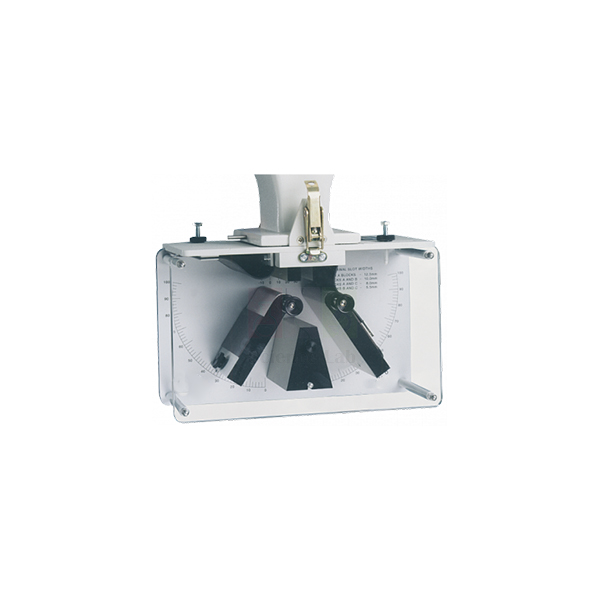
Effect And Jet Flow
Effect And Jet Flow is an air-flow experiment module that shows the Coanda effect. A jet of air leaves an aerodynamically shaped nozzle, attaches to a nearby wall and follows it. The wall can be rotated to bend the jet through large angles, and a second wall lets the jet switch from side to side like a fluidic flip-flop.
Effect And Jet Flow module details
| Parameter | Detail |
|---|---|
| Format | Experiment module, used with a separate air source such as an air flow bench |
| Jet source | Aerodynamically shaped nozzle |
| Attachment wall | Rotatable; shows the jet deflected through large angles |
| Second wall | Fits on the other side of the jet for flip-flop switching |
| Further investigations | Effect of sealing the walls; effect of adding a central splitter |
| Product code | SLE/EA/08 |
| Minimum order | 10 units |
| Dispatch | Usually within 7 to 10 working days |
| Manufacturer | ScienceLab (Jain Scientific Equipments Pvt Ltd), Ambala, India |
Practicals with the wall-attached jet
Break-away angle. Supply air from a base unit such as the Modular Air Flow Bench and hold the flow steady with its control valve. Turn the attachment wall away from the jet in small steps and note the angle at which the jet lets go. Then turn the wall back slowly and note where the jet clings again.
Seeing the jet. Feed smoke from the Flow Visualisation smoke set into the air stream so the class can watch the jet bend along the wall. Lead the waste smoke away from the bench through ducting to a window or extraction point.
Fluidic flip-flop. Fit the second wall on the far side of the jet. The jet locks onto one wall and stays there. Give it a brief disturbance and it jumps to the other wall, where it remains. Repeat with the walls sealed and with the central splitter in place, and record how each change alters attachment and switching.
Jet force for comparison. A water jet on the Impact of a Jet Apparatus shows the momentum side of jet flow. Running both practicals in one session helps students separate the push of a jet from its tendency to follow a surface.
Frequently Asked Questions About the Effect And Jet Flow
What makes the air jet cling to the wall?
The jet drags in surrounding air as it moves. Near the wall there is little room for fresh air to enter, so the pressure between the jet and the wall drops. The higher pressure on the open side then pushes the jet onto the wall, and it follows the surface.
Why does the jet reattach at a different wall angle from where it broke away?
Attachment shows hysteresis. Once attached, the low-pressure pocket beside the wall helps hold the jet on, so it stays until the wall is turned well away. After break-away that pocket is gone, and the wall must be brought closer before the jet clings again. Students record both angles for each flow setting.
How does the second wall turn the module into a flip-flop switch?
With a wall on each side, the jet can attach to either one and stays there. That gives two stable states, like a bistable switch in electronics. A short disturbance moves the jet to the other wall, where it locks on again. Fluidic logic elements work this way with no moving parts.
What difference does sealing the walls make?
Gaps at the wall edges let outside air leak into the low-pressure region beside the jet. That weakens the pressure difference that holds the jet on. With the walls sealed the pocket stays at low pressure, so the jet usually follows the wall further before it breaks away.
Where is the Coanda effect used outside the laboratory?
Industrial air amplifiers and air knives use a thin jet that follows a curved surface and drags surrounding air with it. Aircraft high-lift devices use the same tendency of flow to follow a surface, and fluidic switches use it for control without moving parts.
Other air-flow and jet experiments
- Modular Air Flow Bench
- Flow Visualisation
- Flow Visualisation Wind Tunnel
- Impact of a Jet Apparatus
- Subsonic Wind Tunnel
To request a quotation, send the product name, code and quantity through our contact page or add the item to your enquiry cart.
Last updated: 14 November 2026