- Physics Lab Equipment
- Chemistry Lab Equipment
- Biology Lab Equipment
- Anatomical Lab Equipment
- Learning
- Educational Lab Equipment
- Magnets
- Agriculture
- Astronomy
- Earth Science
- Geography Lab Equipment
- Safety Lab Coat
- Laboratory
- Meteorological
- Electricity & Magnetism
- Heat
- School Lab Equipment
- Lab Glassware
- Science Lab Equipment
- Tvet Lab Equipment
- Robotics Kits Supplier and Manufacturer for Schools India
- Math Lab Equipment Manufacturers and Exporters in Ambala
- STEM Kits Manufacturers and Supplier India
- Engineering Lab Equipment
- Hospital Lab Equipment
- Water, Sanitation & Hygiene Supplies
- Cold Chain, Solar & Communication Equipment
- Nutrition
Control & Process Engineering Trainers are feedback-control and process-control apparatus, such as ball-and-beam, coupled-tank, servo and speed-control rigs plus PLC and process trainers, that engineering students use to tune controllers on real physical systems. Jain Scientific Equipments Pvt Ltd (ScienceLab), Ambala is the OEM that manufactures these control and process trainers at its own licensed factory in Ambala for control-systems, instrumentation and process labs.
What Does the Control & Process Engineering Trainers Range Include?
| Topic | What it covers | Example products |
|---|---|---|
| Classic control plants | Unstable and interacting systems for feedback-control practicals | Ball and Beam Apparatus, Ball and Hoop Apparatus, Coupled Tanks Apparatus |
| Motion, speed and servo control | Position and speed loops on motors and drives | Servo Trainer, Engine Speed Control Apparatus, Coupled Drives Apparatus |
| Process control | Pressure, temperature and general process loops | Process Trainer, Pressure Process Training, Thermal Control Process Apparatus |
| PLC and automation | Programmable logic control of a process | PLC Process |
| Controller and interfacing | Controller and digital interface units listed with the range | Controller, Digital Interface |
Featured Control & Process Engineering Trainers
| Product | Product Code | Typical Use |
|---|---|---|
| Ball and Beam Apparatus | SLE/ETC/03 | Balancing an unstable system with feedback control |
| Ball and Hoop Apparatus | SLE/ETC/06 | Studying the oscillatory dynamics of a coupled system |
| Coupled Tanks Apparatus | SLE/ETC/02 | Liquid-level control of single and interacting tanks |
| Servo Trainer | SLE/ETC/07 | Position and speed control of a servo system |
| Coupled Drives Apparatus | SLE/ETC/05 | Speed and tension control across coupled drives |
| Thermal Control Process Apparatus | SLE/ETC/01 | Temperature control of a thermal process |
| PLC Process | SLE/EE/06 | Programming a PLC to run a process sequence |
| Pressure Process Training | SLE/EE/08 | Tuning a pressure control loop |
OEM Manufacturing & Supply
ScienceLab (Jain Scientific Equipments Private Limited) is the OEM for this range and manufactures it at its own licensed factory at 449, HSIIDC Industrial Area, Saha, Ambala, Haryana. Engineering colleges, polytechnics, instrumentation departments, dealers, tender buyers and importers in India and international markets are supplied factory-direct, with quotations straight from the manufacturer. Production runs under Factory Licence AMB-ONLINE-CHD-J-414, vendor registration uses GSTIN 06AAECJ8618A1ZT, and overseas orders ship under IEC AAECJ8618A.
Related Ranges
- Engineering Lab Equipment – the parent hub for all engineering sub-ranges.
- Power & Energy Systems Trainers – relays, distribution and converter trainers for the electrical power side of the lab.
- Theory of Machines – mechanical dynamics apparatus such as governors and vibration rigs, the mechanical counterpart to control plants.
- Automotive Training Equipment – fuel-injection and engine fault-diagnosis trainers where control meets automobile systems.
- Thermodynamics & Heat Transfer Lab Equipment – heat-exchanger and heat-transfer rigs that support process-engineering studies.
Frequently Asked Questions
What do the Control & Process Engineering Trainers include?
Control & Process Engineering Trainers include ball-and-beam, ball-and-hoop and coupled-tanks apparatus, a servo trainer, engine speed-control and coupled-drives apparatus, process, pressure-process and thermal-control trainers, a PLC process trainer, and controller and digital-interface units.
Which labs use control and process engineering trainers?
Control and process engineering trainers are used in control-systems, instrumentation and process-control labs of electrical, electronics, instrumentation, chemical and mechanical engineering departments at colleges and polytechnics.
Who manufactures ScienceLab control and process engineering trainers?
Jain Scientific Equipments Private Limited, trading as ScienceLab, manufactures its control and process engineering trainers at its licensed factory at 449, HSIIDC Industrial Area, Saha, Ambala, and supplies them directly to institutions and dealers.
Can a complete control systems lab be quoted in one go?
Yes. Control and process engineering trainers can be quoted as a complete lab: list the experiments or trainers you need, including any controller or interface units, and they are grouped into a single quotation.
What should a quotation request for control trainers include?
A quotation request for control and process engineering trainers should list product codes (for example SLE/ETC/03), quantities, the delivery destination and any tender reference, so the offer can be prepared accurately.
Request a Quote or Catalogue
For a quotation or catalogue of control and process trainers, send your requirement through the contact page or add products to the enquiry cart.
Last updated: 24 September 2026
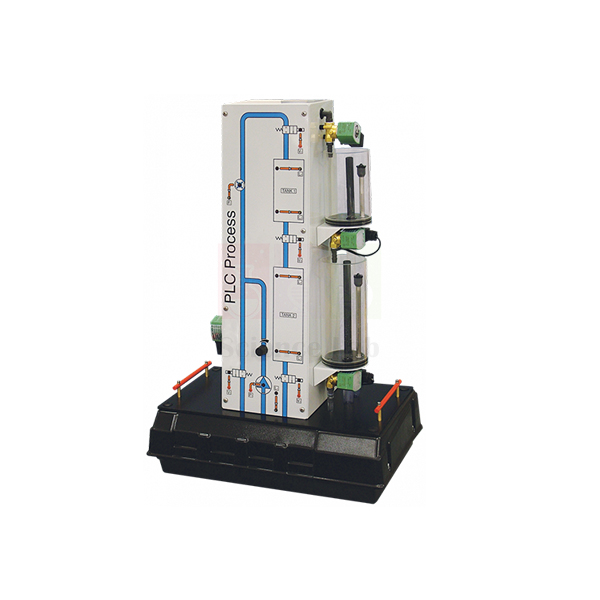
PLC Process
PLC Process (Product Code: SLE/EE/06) is a two-tank water-circulation rig used to practise programmable logic controller (PLC) sequencing and level control of a small process plant in engineering and technical-institute laboratories. Students wire its float switch, tank level sensors, pulsed flow sensor, solenoid valves and variable-speed pump into control exercises as water moves from a reservoir to an upper tank, down to a lower tank and back. It is made by Jain Scientific Equipments Pvt Ltd (ScienceLab), an OEM manufacturer, at its own factory in Ambala, India.
Key Details
| Parameter | Detail |
|---|---|
| Tanks | Two transparent tanks, mounted one above the other |
| Water path | Reservoir → upper tank → drains down to lower tank → back into the reservoir |
| Reservoir monitoring | Float switch monitoring the water level in the reservoir |
| Tank level sensing | Two level sensors in each tank, measuring maximum and minimum water levels |
| Flow sensing | In-line flow sensor with pulsed output; pulse frequency proportional to flow rate, number of pulses proportional to volume |
| Pump | Variable-speed pump transferring water from the reservoir into the upper tank; pump control is on/off, with a manual control to set the speed |
| Valves | Solenoid valves that can be individually opened or closed to control and redirect the movement of water |
| Product code | SLE/EE/06 |
| Manufacturer | Jain Scientific Equipments Pvt Ltd (ScienceLab) — OEM |
| Country of origin | India (made in Ambala, Haryana) |
What Is the PLC Process Rig Used For?
The rig gives students a real, visible plant to automate. A typical exercise starts with the float switch confirming there is water in the reservoir; the program then switches the pump on to fill the upper tank and uses that tank's maximum-level sensor to decide when to stop. Opening a solenoid valve lets the water drain to the lower tank, whose own pair of sensors tells the program when to return it to the reservoir.
Because the pump is switched on or off while its running speed is set by hand, learners can compare fill times at different speeds and use the pulse count from the flow sensor to totalise the volume moved. The rig suits ladder-logic courses, instrumentation practicals and final-year projects, and sits comfortably among other engineering lab equipment in India's polytechnics and engineering colleges.
OEM Manufacturer
Jain Scientific Equipments Private Limited, which trades as ScienceLab, is the OEM (original equipment manufacturer) of the PLC Process rig. The rig is built and assembled at the company's own licensed factory at Saha, Ambala, Haryana, India, so engineering colleges, training institutes, dealers and importers buy from the maker rather than from a trader.
For tender and vendor-registration paperwork, the company's GSTIN is 06AAECJ8618A1ZT and its LEI is 3358004HRD1JIVXKYX49. You can read more about the business on the ScienceLab company profile.
Related Control & Process Engineering Trainers
These trainers from the same range carry the level and flow work done on the PLC Process rig into continuous control of level, temperature and pressure.
- Coupled Tanks Apparatus — continuous liquid-level control of one or two tanks by varying pump speed
- Process Trainer — adds temperature, level and pressure loops around a stirred process vessel
- Pressure Process Training — pressure regulation with an industrial controller and pneumatic valve
- Thermal Control Process Apparatus — a thermal plant for comparing on/off switching with continuous control
Browse the full Control & Process Engineering Trainers category for more process-control and servo apparatus.
Frequently Asked Questions
What is included in the PLC Process rig?
The PLC Process rig comprises two transparent tanks mounted one above the other, a reservoir with a float switch, a variable-speed pump, individually switched solenoid valves, an in-line pulsed flow sensor and two level sensors on each tank. Ask us to confirm accessories for your order.
Does the PLC Process rig come with a PLC?
A programmable logic controller is not listed among the PLC Process rig's components, so treat the controller as a separate item. Tell us which PLC or I/O system you plan to use when you enquire, and we will confirm what can be supplied with the rig.
How does the flow sensor on the PLC Process rig report flow?
The PLC Process rig's in-line flow sensor gives a pulsed output: the pulse frequency is proportional to flow rate and the number of pulses is proportional to the volume passed, so a PLC counter input can totalise volume or work out flow.
Can the pump speed on the PLC Process rig be changed?
Yes, manually. On the PLC Process rig the pump itself is controlled on or off, while a manual control lets the user set its running speed, so students switch the pump from their program and adjust speed by hand to compare filling behaviour.
Who manufactures the PLC Process rig?
The PLC Process rig is manufactured by Jain Scientific Equipments Pvt Ltd (ScienceLab), the OEM, at its own licensed factory in Saha, Ambala, Haryana, India. Quotations, repeat orders and questions about spare parts for the tanks, sensors or valves are handled directly by the manufacturer.
Is the PLC Process rig available for export?
Yes. The PLC Process rig is supplied factory-direct to engineering colleges, training institutes, dealers and importers in India and international markets. For a quotation, send the quantity, delivery destination and any controller preference through our contact page.
Request a Quote
To request a quote for the PLC Process rig, send your requirement through the contact page or add it to the enquiry cart. Quotations come direct from the manufacturer, Jain Scientific Equipments Pvt Ltd (ScienceLab).
Last updated: 24 September 2026
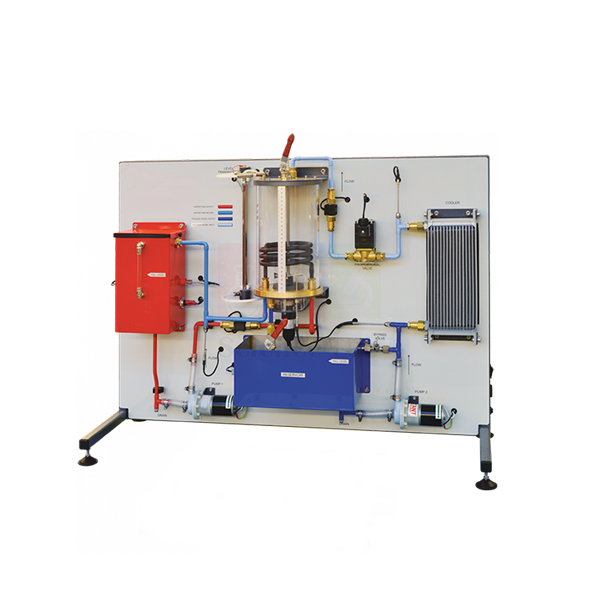
Process Trainer
Process Trainer (Product Code: SLE/EE/07) is a two-module teaching system used to build and study temperature, level and pressure control loops in engineering college and polytechnic laboratories. Its experiment module centres on a stirred process vessel linked by a heat exchanger to separate heating and cooling loops, while a control module with a mimic diagram gives students access to every connection. The trainer is produced by Jain Scientific Equipments Pvt Ltd (ScienceLab), an OEM manufacturer, at its own factory in Ambala, India.
Key Details
| Parameter | Detail |
|---|---|
| System layout | Experiment module plus a control module that links to it |
| Process vessel | Stirrer, temperature sensor, level and pressure sensors, heat exchanger and vent valve |
| Heating loop | Pump, heater tank and heater |
| Process and cooling loop | Pump, cooler, fan, valves and reservoir |
| Loop coupling | The two loops are linked by the heat exchanger in the process vessel |
| Connections | Sockets and a built-in computer interface on the experiment module |
| Control module | Clear mimic diagram with switches and controls; access to the connections of each part of the experiment module |
| Manual controls | Pump speed, cooler-fan speed, heater power and stirrer |
| Product code | SLE/EE/07 |
| Manufacturer | Jain Scientific Equipments Pvt Ltd (ScienceLab) — OEM |
| Country of origin | India (made in Ambala, Haryana) |
What Is the Process Trainer Used For?
The Process Trainer lets students see how a real process plant behaves before they automate it. Running the heating loop warms the vessel through the heat exchanger, the cooling loop removes heat through the cooler and fan, and the stirrer keeps the contents mixed so the temperature sensor reads a representative value. From the control module, learners first operate every actuator by hand and record how temperature, level and pressure respond.
With that open-loop data they can close loops through the sockets or the built-in computer interface and compare manual, on/off and PID-type strategies. The unit fits process-instrumentation, chemical-engineering and control-systems practicals, and is a practical choice of lab equipment for technical institutes that want several measured variables on one system.
OEM Manufacturer
ScienceLab is the trading name of Jain Scientific Equipments Private Limited, and the company is the original equipment manufacturer (OEM) of this Process Trainer. Both the experiment module and the control module are made at its own licensed factory in Saha, Ambala, Haryana, India. Colleges and distributors therefore deal with the maker itself when they need replacement parts or a matching unit for an extra bench — just ask us. Company background is on the ScienceLab profile page.
Related Control & Process Engineering Trainers
Other trainers in this range study single variables in more depth, which is useful when a lab wants to follow the Process Trainer with focused exercises.
- Thermal Control Process Apparatus — temperature control of a heated block using heater power, fan speed and a variable vane
- Coupled Tanks Apparatus — liquid-level and flow control with one or two tanks
- Pressure Process Training — accumulator pressure control with an industrial controller
- Controller — analogue controller blocks, including a three-term PID block, for building loops
See every item in the Control & Process Engineering Trainers category.
Frequently Asked Questions
What are the two modules of the Process Trainer?
The Process Trainer has an experiment module and a control module. The experiment module carries the process vessel, heating loop and cooling loop; the control module links to it, shows a mimic diagram and provides switches and controls for manual operation of each part.
Which variables can be measured on the Process Trainer?
The Process Trainer's process vessel includes a temperature sensor plus level and pressure sensors, so students can measure and control temperature, liquid level and pressure. A stirrer, heat exchanger and vent valve on the same vessel help create realistic process conditions.
Can the Process Trainer connect to a computer?
Yes. The Process Trainer's experiment module includes sockets and a built-in computer interface, so signals can be taken to a PC for monitoring and control. Tell us the software or data-acquisition setup you intend to use so we can confirm what suits your lab.
What can be adjusted manually on the Process Trainer?
From the Process Trainer's control module, users can manually set pump speed, cooler-fan speed, heater power and the stirrer. This manual mode is useful for open-loop tests before students design and tune automatic control strategies.
Who manufactures the Process Trainer?
Jain Scientific Equipments Pvt Ltd (ScienceLab) manufactures the Process Trainer as the OEM at its own licensed factory in Saha, Ambala, Haryana, India. Because both modules come from one maker, institutions, dealers and importers receive a single quotation straight from the manufacturer.
Is a calibration certificate available for the Process Trainer's sensors?
Calibration-certificate availability for the Process Trainer's temperature, level and pressure sensors should be discussed with us before ordering. Please state the requirement in your enquiry through our contact page so it can be addressed in the quotation.
Request a Quote
For a Process Trainer quotation, share your quantity and delivery location via the contact page, or place the item in the enquiry cart. Quotations come straight from the manufacturer, ScienceLab, for buyers in India and international markets.
Last updated: 24 September 2026
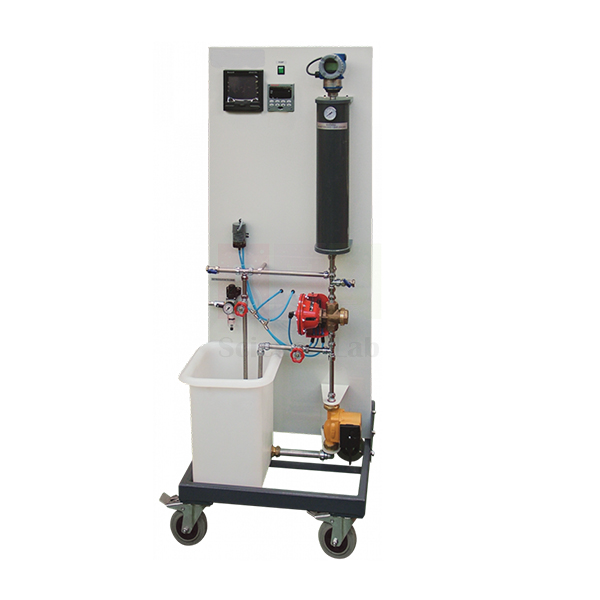
Pressure Process Training
Pressure Process Training (Product Code: SLE/EE/08) is a water-based pressure-control trainer used to teach closed-loop regulation with industrial-style instrumentation in engineering and instrumentation laboratories. Students set up an industrial controller with auto-tune that drives a pneumatic control valve through a current-to-pressure converter, while a gauge pressure transmitter feeds back the pressure in an accumulator. Jain Scientific Equipments Pvt Ltd (ScienceLab), an OEM manufacturer, builds the system at its own factory in Ambala, India.
Key Details
| Parameter | Detail |
|---|---|
| Reservoir | Holds the clean water used for experiments |
| Pump | Three-speed pump |
| Controller | Industrial controller with auto-tune |
| Final control element | Pneumatic control valve regulating the flow of water |
| Signal conversion | Current-to-pressure (I/P) converter |
| Process vessel | Pressure accumulator |
| Measurement | Gauge pressure transmitter measuring accumulator pressure and giving feedback to the controller |
| Recording | Two-channel chart recorder |
| Product code | SLE/EE/08 |
| Manufacturer | Jain Scientific Equipments Pvt Ltd (ScienceLab) — OEM |
| Country of origin | India (made in Ambala, Haryana) |
What Is the Pressure Process Trainer Used For?
Before an experiment, students fill the reservoir with clean water and prime the system. They then set the controller to regulate the flow of water through the pneumatic valve; as the valve opening changes, so does the pressure in the accumulator, which the pressure transmitter reports back to the controller to close the loop.
Because the trainer combines an industrial controller, an I/P converter and a pressure transmitter, it prepares learners for the loop-checking and tuning tasks they will meet on real plant. The two-channel chart recorder lets a class capture two signals together — for example setpoint and measured pressure — so manual tuning can be compared with the controller's auto-tune result. It is well suited to ITIs, polytechnics and colleges building up vocational training lab equipment for instrumentation courses.
OEM Manufacturer
Jain Scientific Equipments Private Limited (trading as ScienceLab) is the OEM for Pressure Process Training. The company assembles the complete trainer — reservoir, pump, valve, accumulator and instruments — at its own licensed factory in Saha, Ambala, Haryana, India. Buyers therefore receive their quotation, and any later request for replacement parts, from the manufacturer itself. More about the company is on the ScienceLab profile.
Related Control & Process Engineering Trainers
Pair Pressure Process Training with these trainers to cover the other common process variables.
- Process Trainer — temperature, level and pressure in one stirred-vessel system
- Coupled Tanks Apparatus — level and flow control driven by a variable-speed pump
- PLC Process — sequencing practice with solenoid valves, a float switch and level sensors
- Thermal Control Process Apparatus — temperature control with heater, fan and servo-driven vane
View the whole Control & Process Engineering Trainers range.
Frequently Asked Questions
What are the main parts of Pressure Process Training?
Pressure Process Training consists of a reservoir, a three-speed pump, an industrial controller with auto-tune, a pneumatic control valve, a pressure accumulator, a two-channel chart recorder, a current-to-pressure (I/P) converter and a gauge pressure transmitter.
How is pressure controlled in Pressure Process Training?
In Pressure Process Training, the controller regulates water flow through the pneumatic control valve, which alters the pressure in the accumulator. A gauge pressure transmitter measures that pressure and sends feedback to the controller, completing the control loop.
What do students do before running Pressure Process Training?
Before using Pressure Process Training, students fill the reservoir with clean water and prime the system. Once it is primed, they set the controller to regulate the flow of water and watch the accumulator pressure respond on the chart recorder.
Does Pressure Process Training need an air supply for the pneumatic valve?
Pressure Process Training uses a pneumatic control valve driven through an I/P converter, and pneumatic devices of this kind work from an air supply. The air requirement is not listed in the product details, so please confirm it with us before installation.
Who manufactures Pressure Process Training?
Pressure Process Training is manufactured by Jain Scientific Equipments Pvt Ltd (ScienceLab) as the OEM at its own licensed factory in Saha, Ambala, Haryana, India. The complete trainer is supplied factory-direct to institutions, dealers and importers.
What should a quotation request for Pressure Process Training include?
A quotation request for Pressure Process Training should state the number of units, the institution and delivery location, and any site details such as available utilities. Send it through our contact page and the manufacturer will reply directly.
Request a Quote
To price Pressure Process Training for your lab, contact us through the contact page or add the trainer to the enquiry cart. Your quotation comes directly from the manufacturer, Jain Scientific Equipments Pvt Ltd (ScienceLab).
Last updated: 24 September 2026
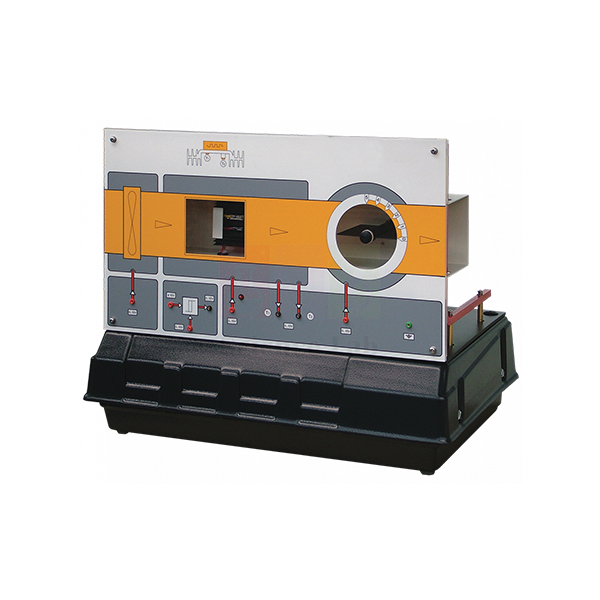
Thermal Control Process Apparatus
Thermal Control Process Apparatus (Product Code: SLE/ETC/01) is a temperature-control process plant used to teach how heater power, air flow and flow restriction combine to hold a process temperature in control engineering laboratories. It models a common industrial process such as an air-conditioning plant, with scaled-down time constants so experiments fit into a normal laboratory session. It is manufactured by Jain Scientific Equipments Pvt Ltd (ScienceLab), an OEM manufacturer, at its own factory in Ambala, India.
Key Details
| Parameter | Detail |
|---|---|
| Process modelled | A common industrial process, such as an air-conditioning plant, where a combination of adjustments controls temperature |
| Air path | Variable-speed fan forcing air through a duct |
| Process block | Electrically heated process block inside the duct |
| Temperature sensors | Two: one in direct thermal contact with the block; one mounted on an insulating spacer to introduce thermal inertia and variable time constants into the loop |
| Flow restriction | Servo-driven vane mounted after the fan and process block, creating a variable downstream restriction for advanced experiments |
| Control inputs | Electrical energy to the heater, air flow rate (fan speed) and vane rotation |
| Time constants | Scaled down for shorter laboratory time |
| Product code | SLE/ETC/01 |
| Manufacturer | Jain Scientific Equipments Pvt Ltd (ScienceLab) — OEM |
| Country of origin | India (made in Ambala, Haryana) |
What Is the Thermal Control Process Apparatus Used For?
The block settles at a steady temperature when heat gained from the electric heater balances heat lost by convection and conduction to the moving air. The control problem is to keep that process temperature within acceptable limits while conditions change, using heater power, fan speed and vane rotation singly or in combination.
Students can begin with single-loop heater control, then treat fan speed or vane position as a disturbance, and finally explore multi-input strategies. Comparing the two sensors shows clearly how measurement lag — added on purpose by the insulating spacer — makes a loop harder to tune. For universities and colleges sourcing engineering lab equipment, the apparatus turns slow thermal behaviour into experiments that can be completed within one practical.
OEM Manufacturer
The Thermal Control Process Apparatus is made by Jain Scientific Equipments Private Limited, the company behind the ScienceLab name, which is the OEM for this unit. Production takes place at its own licensed factory in Saha, Ambala, Haryana, India, and orders go out factory-direct to colleges, research groups, dealers and importers.
ScienceLab is a registered MSME (Udyam UDYAM-HR-01-0003714), and export consignments move under Importer-Exporter Code AAECJ8618A issued by the DGFT. See the ScienceLab company profile for more background.
Related Control & Process Engineering Trainers
These companion units follow the same control-engineering approach and let students compare thermal behaviour with fluid, mechanical and electronic systems.
- Process Trainer — heating and cooling loops around a stirred vessel for multi-variable process work
- Coupled Tanks Apparatus — liquid-level control with faster, clearly visible dynamics
- Controller — analogue blocks including phase lead and a three-term PID block
- Digital Interface — links analogue signals to a computer for monitoring and control
More apparatus is listed in the Control & Process Engineering Trainers category.
Frequently Asked Questions
What controls the temperature in the Thermal Control Process Apparatus?
Temperature in the Thermal Control Process Apparatus is controlled by regulating the electrical energy to the heater, varying the air flow rate from the variable-speed fan and rotating the servo-driven vane, used singly or in combination.
Why does the Thermal Control Process Apparatus have two temperature sensors?
The Thermal Control Process Apparatus uses two sensors so students can compare measurements. One sits in direct thermal contact with the block; the other is mounted on an insulating spacer, adding thermal inertia and variable time constants to the control loop.
Are experiments on the Thermal Control Process Apparatus slow?
No. Experiments on the Thermal Control Process Apparatus are kept short because the apparatus has scaled-down time constants for shorter laboratory time. Actual durations depend on the exercise and settings the instructor chooses.
What is the servo-driven vane on the Thermal Control Process Apparatus for?
The servo-driven vane on the Thermal Control Process Apparatus is mounted after the fan and the process block. It creates a variable downstream restriction to the air flow, which is used for more advanced control experiments.
Who manufactures the Thermal Control Process Apparatus?
Jain Scientific Equipments Pvt Ltd (ScienceLab) is the OEM manufacturer of the Thermal Control Process Apparatus, producing it at its own licensed factory in Saha, Ambala, Haryana, India. Repeat orders and spare-part questions for the apparatus are handled by the manufacturer directly.
Can the Thermal Control Process Apparatus be supplied outside India?
Yes. The Thermal Control Process Apparatus is supplied to institutions, dealers and importers in India and international markets. Share your quantity, destination and any documentation needs through our contact page to receive a quotation.
Request a Quote
Request a quotation for the Thermal Control Process Apparatus through the contact page, or add it to the enquiry cart together with any other trainers you need. Quotes are issued directly by the manufacturer, ScienceLab.
Last updated: 24 September 2026
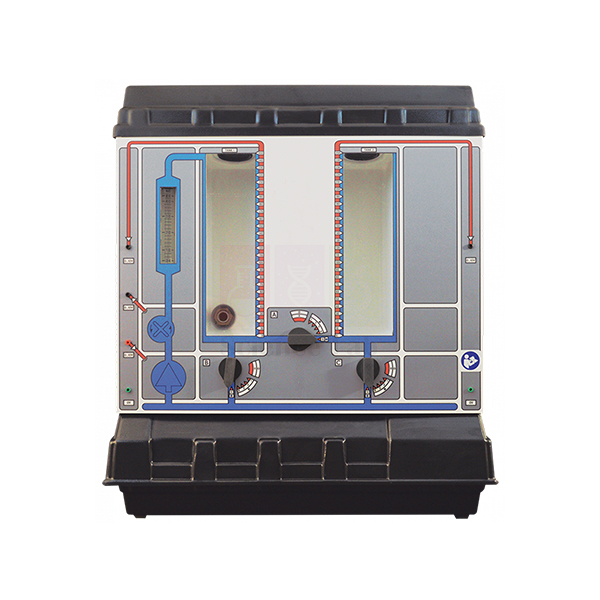
Coupled Tanks Apparatus
Coupled Tanks Apparatus (Product Code: SLE/ETC/02) is a liquid-level control trainer used to investigate basic and advanced control engineering principles with one or two interconnected tanks in university and college laboratories. A variable-speed pump fills the left-hand tank, a connecting valve brings in the second tank for two-tank work, and each tank has a level sensor plus a scale for checking its calibration. Jain Scientific Equipments Pvt Ltd (ScienceLab), an OEM manufacturer, makes it at its own factory in Ambala, India.
Key Details
| Parameter | Detail |
|---|---|
| Tanks | Two tanks; a valve connects the left-hand tank to the second tank when two-tank experiments are needed |
| Pump | Variable-speed pump forcing water into the left-hand tank |
| Level sensing | A level sensor on each tank, giving an output signal proportional to the water level |
| Level scales | Scale on each tank so students can check the level-sensor calibration |
| Flow measurement | Rotameter-type flow meter showing flow rate, plus an electronic flow meter measuring it |
| Topics covered | Static and dynamic systems; fluid transport and liquid-level control problems; suits other strategies such as fuzzy logic |
| Product code | SLE/ETC/02 |
| Manufacturer | Jain Scientific Equipments Pvt Ltd (ScienceLab) — OEM |
| Country of origin | India (made in Ambala, Haryana) |
What Is the Coupled Tanks Apparatus Used For?
The basic control problem is to regulate the liquid level in one of the tanks by varying the speed of the circulating pump. With the connecting valve closed, students work with a single tank — a simple first-order process — and later open the valve to couple the tanks, creating an interacting two-tank system that is noticeably harder to control.
Having both a rotameter and an electronic flow meter lets learners check the pump's delivery by eye while also measuring it electrically, and the tank scales let them confirm the level sensors before relying on them. Beyond PID practicals, the apparatus suits modelling, system identification and advanced approaches such as fuzzy logic, making it a flexible piece of lab equipment for technical institutes and universities.
OEM Manufacturer
Jain Scientific Equipments Private Limited trades as ScienceLab and is the original equipment manufacturer of the Coupled Tanks Apparatus. Each unit is produced at the company's own licensed factory at Saha, Ambala, Haryana, India, rather than bought in from a trader. Quotations for a single bench or a full laboratory set come from the factory itself. The ScienceLab profile has more about the company.
Related Control & Process Engineering Trainers
Students who have worked through level control on the Coupled Tanks Apparatus can move on to these related trainers.
- PLC Process — two-tank rig with solenoid valves and a float switch for sequencing practice
- Process Trainer — level, temperature and pressure in one process vessel
- Controller — analogue PID and phase-lead blocks for closing the level loop
- Digital Interface — computer monitoring and control of the tank signals
The complete range is in the Control & Process Engineering Trainers category.
Frequently Asked Questions
How many tanks does the Coupled Tanks Apparatus have?
The Coupled Tanks Apparatus has two tanks. The pump fills the left-hand tank, and a valve connects it to the second tank when needed, so the same unit covers both single-tank and two-tank experiments.
How is flow measured on the Coupled Tanks Apparatus?
The Coupled Tanks Apparatus measures flow in two ways: a rotameter-type flow meter shows the flow rate visually, and an electronic flow meter measures it for signal-based monitoring and control work.
How can students check the level sensors on the Coupled Tanks Apparatus?
Each tank on the Coupled Tanks Apparatus has a scale, so students can compare the visible water level with the level-sensor output, which is proportional to the water level, and confirm the sensor calibration before experiments.
Which control methods can be studied with the Coupled Tanks Apparatus?
The Coupled Tanks Apparatus supports study of static and dynamic systems, fluid transport and liquid-level control, from basic feedback loops to advanced strategies such as fuzzy logic. The core task is regulating tank level by varying pump speed.
Who manufactures the Coupled Tanks Apparatus?
The Coupled Tanks Apparatus is manufactured by Jain Scientific Equipments Pvt Ltd (ScienceLab), the OEM, at its licensed factory in Saha, Ambala, Haryana, India. Colleges that later add benches can order matching units from the same manufacturer.
What details are needed for a Coupled Tanks Apparatus quotation?
For a Coupled Tanks Apparatus quotation, tell us the number of units, the delivery location and whether you also want a controller or computer interface from the same range. Send the request via our contact page or the enquiry cart.
Request a Quote
Ask for a Coupled Tanks Apparatus quotation through the contact page or by adding it to the enquiry cart. The quote is prepared by the manufacturer, Jain Scientific Equipments Pvt Ltd (ScienceLab), for buyers in India and international markets.
Last updated: 24 September 2026
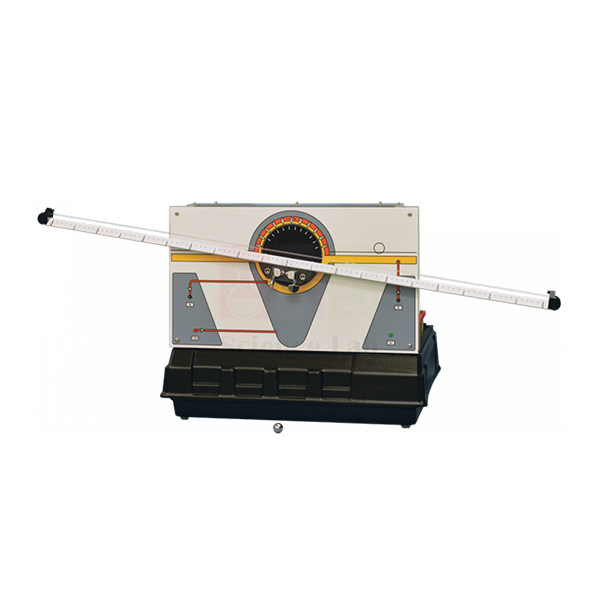
Ball and Beam Apparatus
Ball and Beam Apparatus (Product Code: SLE/ETC/03) is an unstable-system control trainer used to teach active feedback control of a naturally unstable double integrator in control engineering laboratories. A steel ball rolls on two parallel tensioned wires carried by a centre-pivoted beam, while a servo motor tilts the beam and sensors report beam angle and ball position. The apparatus comes from Jain Scientific Equipments Pvt Ltd (ScienceLab), an OEM manufacturer, and is made at its own factory in Ambala, India.
Key Details
| Parameter | Detail |
|---|---|
| Ball | Steel ball, free to roll on two parallel tensioned wires |
| Beam | Carries the wires and pivots at its centre |
| Actuator | Servo motor controlling the beam angle |
| Sensors | Measure the beam angle and the ball position |
| System type | Double integrator — naturally unstable |
| Control method | Active feedback control using phase-advance methods |
| Real-world analogy | A rocket or missile during launch, which needs active control to prevent it going unstable and toppling over |
| Product code | SLE/ETC/03 |
| Manufacturer | Jain Scientific Equipments Pvt Ltd (ScienceLab) — OEM |
| Country of origin | India (made in Ambala, Haryana) |
What Is the Ball and Beam Apparatus Used For?
The basic control problem is to vary the beam angle so the ball stays at, or moves to, a chosen position. Left alone, the ball simply rolls to one end — which is exactly why the apparatus is valuable: students must design a controller that actively stabilises the system rather than merely speeding up one that is already stable.
A common teaching sequence starts with an inner loop on beam angle through the servo motor, followed by an outer ball-position loop using phase-advance (lead) compensation. The comparison with launch-vehicle stability makes the theory memorable for aerospace, mechatronics and electrical students, and gives engineering lab equipment collections a very visible demonstration of instability.
OEM Manufacturer
ScienceLab is the brand under which Jain Scientific Equipments Private Limited sells its own laboratory equipment, and the company is the OEM for the Ball and Beam Apparatus. The unit is fabricated and assembled at its licensed factory in Saha, Ambala, Haryana, India. Because buyers deal with the manufacturer directly, questions about a replacement ball, wires or other spares can simply be put to us. Learn more on the company profile.
Related Control & Process Engineering Trainers
These trainers extend the stability and servo topics introduced by the Ball and Beam Apparatus.
- Ball and Hoop Apparatus — servo position control with a ball that behaves like a pendulum
- Servo Trainer — d.c. servo speed and position control with adjustable non-linear effects
- Controller — phase-lead, proportional, integral and PID blocks for building the stabilising loop
- Digital Interface — computer input/output for running digital controllers
Find all servo, process and control apparatus in the Control & Process Engineering Trainers category.
Frequently Asked Questions
Why is the Ball and Beam Apparatus unstable?
The Ball and Beam Apparatus is a double integrator: tilting the beam makes the ball accelerate, and its position keeps changing unless the angle is corrected. This makes it naturally unstable, so it needs active feedback control using phase-advance methods.
What sensors are fitted to the Ball and Beam Apparatus?
The Ball and Beam Apparatus has sensors that measure the beam angle and the ball position. A servo motor controls the beam angle, giving students both the measurements and the actuator needed to close a position-control loop.
What does the ball roll on in the Ball and Beam Apparatus?
In the Ball and Beam Apparatus, a steel ball rolls freely on two parallel tensioned wires. The wires sit on a beam that pivots at its centre, so changing the beam angle moves the ball along the wires.
What real systems does the Ball and Beam Apparatus represent?
The Ball and Beam Apparatus represents the control problems of unstable systems, for example a rocket or missile during launch, which needs active control to stop it going unstable and toppling over.
Who manufactures the Ball and Beam Apparatus?
Jain Scientific Equipments Pvt Ltd (ScienceLab) manufactures the Ball and Beam Apparatus as the OEM at its own licensed factory in Saha, Ambala, Haryana, India. Buying from the maker means a replacement ball or wire can be requested from the same source.
Can the Ball and Beam Apparatus be ordered for several lab benches?
Yes. The Ball and Beam Apparatus can be quoted as a single unit or for multiple benches, for buyers in India and international markets. Share the quantity and delivery location through our contact page so the manufacturer can prepare the quotation.
Request a Quote
To receive a price for the Ball and Beam Apparatus, use the contact page or add it to the enquiry cart. Your quotation is sent directly by the manufacturer, ScienceLab.
Last updated: 24 September 2026
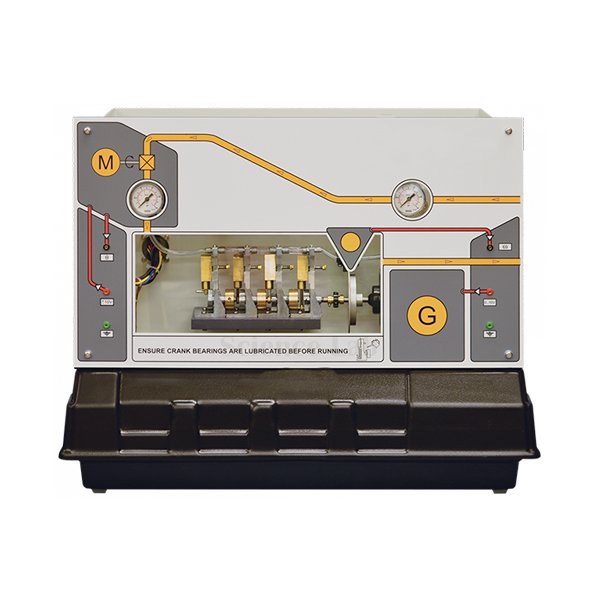
Engine Speed Control Apparatus
Engine Speed Control Apparatus (Product Code: SLE/ETC/04) is a speed-regulation trainer used to show the problems of controlling rotating machines, especially non-linear control systems, in engineering laboratories. It uses a scale-model engine driven by compressed air for safety, a motorised valve that sets engine speed, and a d.c. generator that loads the engine output. Jain Scientific Equipments Pvt Ltd (ScienceLab), an OEM manufacturer, produces it at its own factory in Ambala, India.
Key Details
| Parameter | Detail |
|---|---|
| Engine | Scale-model engine driven by compressed air, for safety |
| Compressed air | Not supplied — provided by the user's laboratory |
| Speed actuator | Motorised valve adjusted to regulate engine speed |
| Load | d.c. generator connected to the engine output |
| Basic control task | Regulate engine speed under load |
| Advanced experiments | Non-linearity compensation using dither signals; multiple loop and minor loop control; system modelling from step response information; P+I control and root locus methods |
| Product code | SLE/ETC/04 |
| Manufacturer | Jain Scientific Equipments Pvt Ltd (ScienceLab) — OEM |
| Country of origin | India (made in Ambala, Haryana) |
What Is the Engine Speed Control Apparatus Used For?
The basic purpose is to adjust the motorised valve so the engine holds a set speed while the d.c. generator loads it. Valves and air-driven engines seldom respond in a straight line, so students meet non-linear behaviour directly and learn why a controller tuned at one operating point may struggle at another.
Advanced sessions use dither signals to compensate for non-linearity, compare single-loop control with multiple-loop and minor-loop structures, build a model from step-response data and design P+I controllers with root-locus methods. Running the model engine on compressed air rather than fuel keeps the exercise safe for teaching, which makes it a practical addition to engineering lab equipment for mechanical, automotive and control courses.
OEM Manufacturer
Jain Scientific Equipments Private Limited — known to customers as ScienceLab — is the OEM for the Engine Speed Control Apparatus and builds it at its own licensed factory at Saha, Ambala, Haryana, India. Engineering colleges, training centres, dealers and importers order directly from the company that makes it, so quotations, repeat orders and spare-part questions are all handled at source. Visit the ScienceLab profile to learn more.
Related Control & Process Engineering Trainers
These trainers complement the speed-control work done on the Engine Speed Control Apparatus.
- Servo Trainer — d.c. servo speed and position control with generator loading
- Coupled Drives Apparatus — speed and tension control of two belt-coupled motors
- Controller — proportional, integral and PID blocks for P+I speed loops
- Digital Interface — passes step-response signals to a computer for system modelling
Browse the Control & Process Engineering Trainers category for the full range.
Frequently Asked Questions
Is compressed air supplied with the Engine Speed Control Apparatus?
No. The Engine Speed Control Apparatus runs its scale-model engine on compressed air for safety, but the compressed air is not supplied. Your laboratory needs its own air source; discuss the requirement with us when you enquire.
How is the engine loaded on the Engine Speed Control Apparatus?
A d.c. generator connects to the engine output of the Engine Speed Control Apparatus and loads the engine, so students can test how well their controller holds speed when the load changes.
Which advanced experiments can be run on the Engine Speed Control Apparatus?
Advanced experiments on the Engine Speed Control Apparatus include non-linearity compensation using dither signals, multiple-loop and minor-loop control, system modelling from step response information, and P+I control with root locus methods.
What sets the engine speed on the Engine Speed Control Apparatus?
Engine speed on the Engine Speed Control Apparatus is set by a motorised valve. Adjusting the valve changes the air reaching the scale-model engine, and the control task is to regulate speed while the generator applies load.
Who manufactures the Engine Speed Control Apparatus?
The Engine Speed Control Apparatus is manufactured by Jain Scientific Equipments Pvt Ltd (ScienceLab) as the OEM, at its own licensed factory in Saha, Ambala, Haryana, India, and is supplied factory-direct to institutions and trade buyers.
Is a calibration certificate available with the Engine Speed Control Apparatus?
Calibration-certificate availability for the Engine Speed Control Apparatus should be discussed with us at the enquiry stage. Mention the requirement in your request through our contact page so it can be addressed in the quotation.
Request a Quote
Send your Engine Speed Control Apparatus enquiry through the contact page or the enquiry cart, including your quantity and delivery location. Quotations are issued directly by the manufacturer, Jain Scientific Equipments Pvt Ltd (ScienceLab).
Last updated: 24 September 2026
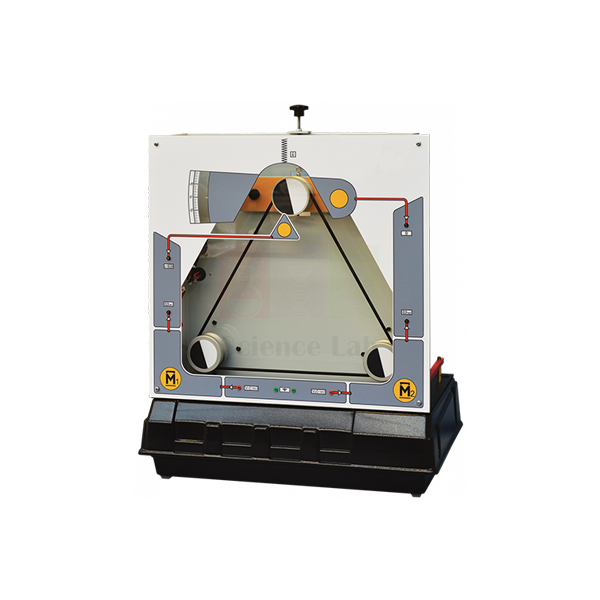
Coupled Drives Apparatus
Coupled Drives Apparatus (Product Code: SLE/ETC/05) is a multi-variable drive trainer used to study the control of speed and tension in belt-coupled drives in control and electrical engineering laboratories. Two electric motors are linked by a continuous flexible belt that also passes over a swinging arm, where a jockey wheel measures belt speed and tension. It is built by Jain Scientific Equipments Pvt Ltd (ScienceLab), an OEM manufacturer, at its own factory in Ambala, India.
Key Details
| Parameter | Detail |
|---|---|
| Motors | Two electric motors |
| Coupling | Continuous flexible belt |
| Measurement | Swinging arm with a jockey wheel measuring belt speed and tension |
| Manual adjustment | Manual control for the spring tension at the swinging arm |
| Basic control task | Vary the torque in the motors to regulate belt speed and tension |
| User guide topics | Speed and tension control; simultaneous control of velocity and tension; analysis of multi-variable control systems |
| Industrial examples | Magnetic tape drives, textile machines and paper mills |
| Product code | SLE/ETC/05 |
| Manufacturer | Jain Scientific Equipments Pvt Ltd (ScienceLab) — OEM |
| Country of origin | India (made in Ambala, Haryana) |
What Is the Coupled Drives Apparatus Used For?
In a coupled drive, changing either motor's torque affects belt speed and belt tension at the same time, so the two outputs interact. Students first control speed and tension separately, then attempt simultaneous control of velocity and tension, and discover why a multi-variable system needs a coordinated strategy rather than two independent loops.
Adjusting the spring tension at the swinging arm changes the plant, giving instructors a simple way to test how robust a controller is. The same problems occur in magnetic tape drives, textile machines and paper mills, which helps mechanical and electrical students connect theory to industry — a useful addition to any technical educational equipment list.
OEM Manufacturer
The Coupled Drives Apparatus is an OEM product of Jain Scientific Equipments Private Limited, which trades as ScienceLab. It is manufactured at the company's own licensed factory at Saha, Ambala, Haryana, India and dispatched from there to universities, colleges, dealers and importers. If you later need matching units or a replacement part such as a belt, ask us directly — you will be speaking with the maker. The ScienceLab company profile gives further background.
Related Control & Process Engineering Trainers
Drive and motion trainers from the same range that pair well with the Coupled Drives Apparatus:
- Servo Trainer — single-shaft d.c. servo speed and position control
- Engine Speed Control Apparatus — speed regulation of a loaded, non-linear machine
- Ball and Hoop Apparatus — servo position and velocity control with a moving ball
- Controller — analogue controller blocks for building speed and tension loops
All related apparatus is listed under Control & Process Engineering Trainers.
Frequently Asked Questions
What does the jockey wheel do on the Coupled Drives Apparatus?
On the Coupled Drives Apparatus, the belt passes over a swinging arm carrying a jockey wheel. The jockey wheel measures belt speed and tension, giving students the two outputs they must control at the same time.
How many motors does the Coupled Drives Apparatus have?
The Coupled Drives Apparatus has two electric motors coupled by a continuous flexible belt. Varying the torque in the motors regulates belt speed and tension, which is the basic control problem of the apparatus.
Can the belt tension on the Coupled Drives Apparatus be changed manually?
Yes. The Coupled Drives Apparatus has a manual control that adjusts the spring tension at the swinging arm, letting users change operating conditions and test how well their speed and tension controllers cope.
Which industries use drives like the Coupled Drives Apparatus?
Coupled drives like those modelled by the Coupled Drives Apparatus are used in magnetic tape drives, textile machines and paper mills, where material must move at a controlled speed while its tension is held within limits.
Who manufactures the Coupled Drives Apparatus?
Jain Scientific Equipments Pvt Ltd (ScienceLab) is the OEM manufacturer of the Coupled Drives Apparatus, producing it at its own licensed factory in Saha, Ambala, Haryana, India. Enquiries about a replacement belt or other parts go straight to the manufacturer.
Is there a user guide for the Coupled Drives Apparatus?
The Coupled Drives Apparatus description refers to a user guide covering speed and tension control, simultaneous control of velocity and tension, and analysis of multi-variable control systems. Confirm the documentation format you need when requesting a quotation.
Request a Quote
For a Coupled Drives Apparatus quotation, write to us via the contact page or add the item to the enquiry cart. The quote comes direct from the manufacturer, ScienceLab, for India and international markets.
Last updated: 24 September 2026
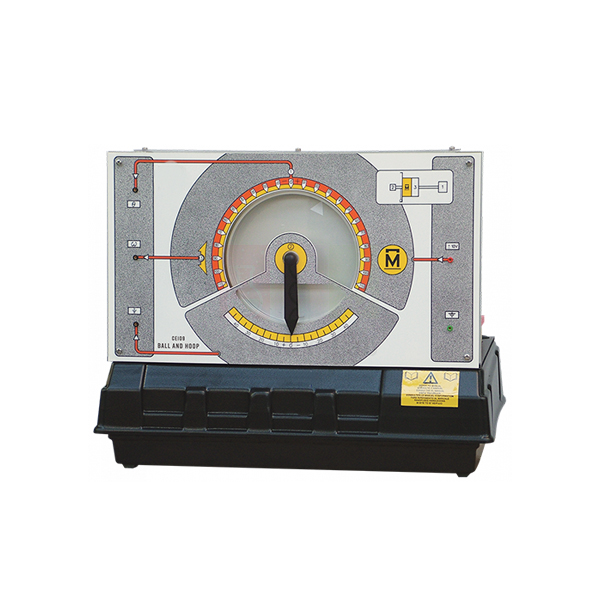
Ball and Hoop Apparatus
Ball and Hoop Apparatus (Product Code: SLE/ETC/06) is an electromechanical servo trainer used to demonstrate position and velocity control, and to model liquid-slop dynamics, in control engineering laboratories. A steel ball rolls inside a hoop that is free to rotate under servomotor control, while transducers output both the hoop position and the ball position. The trainer is manufactured by Jain Scientific Equipments Pvt Ltd (ScienceLab), an OEM manufacturer, at its own factory in Ambala, India.
Key Details
| Parameter | Detail |
|---|---|
| Moving parts | Steel ball that rolls inside a hoop |
| Actuator | Servomotor controlling the hoop, which is otherwise free to rotate |
| Transducers | Outputs for hoop position and ball position |
| Ball behaviour | With the hoop under angular position control, the ball moves like a cylindrical pendulum |
| Modelling use | Study of liquid slop dynamics |
| Application examples | Aircraft missile fuel storage, fuel tankers and industrial pumping systems |
| Product code | SLE/ETC/06 |
| Manufacturer | Jain Scientific Equipments Pvt Ltd (ScienceLab) — OEM |
| Country of origin | India (made in Ambala, Haryana) |
What Is the Ball and Hoop Apparatus Used For?
At its simplest, students close a servo loop on hoop position or speed and study the response. The richer exercises come from the ball: once the hoop is under angular position control, the ball swings like a cylindrical pendulum, adding an oscillating motion that the controller has to take into account.
That pendulum-like motion is a laboratory model of liquid slopping about in a moving container — the same issue designers face with aircraft and missile fuel storage, fuel tankers and industrial pumping systems. Students can try to move the hoop briskly while keeping the ball's swing small, a practical introduction to oscillation control for mechatronics and control courses that rely on engineering educational equipment.
OEM Manufacturer
Jain Scientific Equipments Private Limited, trading as ScienceLab, is the OEM that makes the Ball and Hoop Apparatus at its own licensed factory in Saha, Ambala, Haryana, India. Institutions and distributors buy it straight from the factory, and follow-up needs such as spare parts or additional units can be raised with the same team.
The company is registered as an MSME under Udyam number UDYAM-HR-01-0003714 and holds Importer-Exporter Code AAECJ8618A from the DGFT for its export shipments. Read more on the ScienceLab profile.
Related Control & Process Engineering Trainers
These trainers build on the servo skills practised with the Ball and Hoop Apparatus.
- Ball and Beam Apparatus — stabilising a naturally unstable ball-position system
- Servo Trainer — d.c. servo speed and position control with a clutched reduction gearbox
- Coupled Drives Apparatus — interacting speed and tension control of two motors
- Digital Interface — computer input/output for recording hoop and ball signals
Explore the Control & Process Engineering Trainers category for more.
Frequently Asked Questions
What does the Ball and Hoop Apparatus demonstrate?
The Ball and Hoop Apparatus demonstrates electromechanical servo systems for position and velocity control. Because the ball behaves like a cylindrical pendulum inside the rotating hoop, it also models liquid-slop dynamics for more advanced studies.
What signals does the Ball and Hoop Apparatus provide?
Transducers on the Ball and Hoop Apparatus give outputs of the hoop position and the ball position. Students use them to close the servo loop on the hoop and to observe or control the ball's pendulum-like motion.
What is liquid slop, and why model it with the Ball and Hoop Apparatus?
Liquid slop is the sloshing of liquid in a moving container. The Ball and Hoop Apparatus models it with a ball swinging inside a hoop, which is relevant to aircraft missile fuel storage, fuel tankers and industrial pumping systems.
What drives the hoop of the Ball and Hoop Apparatus?
The hoop of the Ball and Hoop Apparatus is free to rotate but is controlled by a servomotor. Students command the servomotor to set the hoop angle or speed and then watch how the steel ball responds.
Who manufactures the Ball and Hoop Apparatus?
The Ball and Hoop Apparatus is manufactured by Jain Scientific Equipments Pvt Ltd (ScienceLab), the OEM, at its own licensed factory in Saha, Ambala, Haryana, India. Dealers and importers order it factory-direct, with export handled under the company's own IEC.
What should a Ball and Hoop Apparatus quotation request include?
When requesting a Ball and Hoop Apparatus quotation, state the quantity, the delivery city or country, and whether you need a controller or computer interface from the same range. Use our contact page or the enquiry cart to send it.
Request a Quote
Request your Ball and Hoop Apparatus quote through the contact page, or save it to the enquiry cart while you choose related trainers. The manufacturer, Jain Scientific Equipments Pvt Ltd (ScienceLab), replies with the quotation directly.
Last updated: 24 September 2026
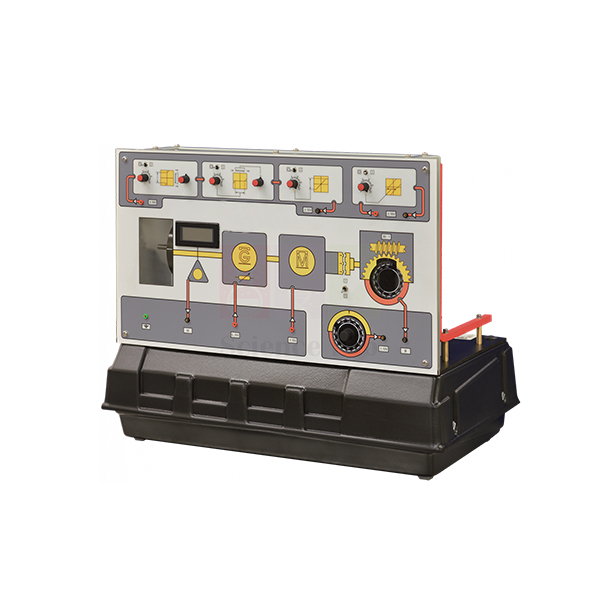
Servo Trainer
Servo Trainer (Product Code: SLE/ETC/07) is a d.c. servo control trainer used to teach position and speed control with typical industrial techniques in electrical and control engineering laboratories. A d.c. servomotor, d.c. generator and flywheel share one shaft, with an electric clutch that engages a 30:1 reduction gearbox for position work and a panel-mounted digital meter that shows speed. Jain Scientific Equipments Pvt Ltd (ScienceLab), an OEM manufacturer, makes it at its own factory in Ambala, India.
Specifications
| Parameter | Detail |
|---|---|
| Drive train | d.c. servomotor, d.c. generator and flywheel mounted on a common shaft |
| Control signal | Analogue, 0 to ±10 V, varying servomotor shaft speed in either direction |
| Speed measurement | Optical sensor, with speed shown on a panel-mounted digital meter |
| Loading | d.c. generator loads the servomotor statically or dynamically |
| Position control | Electric clutch connects or disconnects the shaft to a 30:1 reduction gearbox |
| Position setpoint | Manual control |
| Inertia adjustment | Two extra interchangeable inertia discs (flywheels) supplied |
| Non-linear effect circuits | Block-type circuits adding fully adjustable deadzone (deadband), anti-deadzone, hysteresis and saturation |
| Product code | SLE/ETC/07 |
| Manufacturer | Jain Scientific Equipments Pvt Ltd (ScienceLab) — OEM |
| Country of origin | India (made in Ambala, Haryana) |
What Is the Servo Trainer Used For?
Students usually begin with speed control, driving the servomotor with an analogue signal and reading speed from the optical sensor, then load the shaft with the d.c. generator to see how well a controller rejects disturbances. Engaging the clutch switches to position control through the reduction gearbox, with the manual control providing the position setpoint.
Swapping the interchangeable inertia discs changes the plant, so learners can observe the effect on response and stability. For advanced work, the included block circuits introduce adjustable deadzone, anti-deadzone, hysteresis and saturation — the non-linearities that make real servos misbehave — so classes can study and compensate for them. This breadth makes it a versatile piece of electronics lab equipment for polytechnics and engineering colleges.
OEM Manufacturer
ScienceLab is the trading name of Jain Scientific Equipments Private Limited, the OEM responsible for the Servo Trainer. The company manufactures it at its own licensed factory in Saha, Ambala, Haryana, India, so buyers receive quotations and technical answers from the source rather than from a reseller. Colleges adding more benches later can order matching units directly — ask us for current details. See the company profile for more.
Related Control & Process Engineering Trainers
Other trainers that share the Servo Trainer's focus on motion control:
- Coupled Drives Apparatus — speed and tension control with two belt-coupled motors
- Engine Speed Control Apparatus — speed regulation of a generator-loaded model engine
- Ball and Beam Apparatus — servo-driven stabilisation of an unstable system
- Controller — analogue PID, phase-lead and summing blocks for servo loops
See the complete Control & Process Engineering Trainers category.
Frequently Asked Questions
What control signal does the Servo Trainer use?
The Servo Trainer uses analogue control signals of 0 to ±10 V, which vary the servomotor shaft speed in either direction, so students can drive it from an analogue controller or a suitable interface.
How is speed measured on the Servo Trainer?
An optical sensor on the Servo Trainer measures shaft speed and shows it on a panel-mounted digital meter, so students can read the speed directly while they test their control settings.
What is the gearbox ratio on the Servo Trainer?
The Servo Trainer has a 30:1 reduction gearbox. An electric clutch connects or disconnects the shaft from the gearbox, letting users switch between speed-control studies and position-control studies on the same unit.
Can the inertia of the Servo Trainer be changed?
Yes. The Servo Trainer comes with two extra interchangeable inertia discs (flywheels) for adjusting shaft inertia, so students can compare how a controller performs with lighter and heavier rotating loads.
Which non-linear effects can be added on the Servo Trainer?
The Servo Trainer includes block-type circuits that add fully adjustable deadzone (deadband), anti-deadzone, hysteresis and saturation effects, allowing advanced experiments on how non-linearities affect servo position and speed control.
Who manufactures the Servo Trainer?
Jain Scientific Equipments Pvt Ltd (ScienceLab) manufactures the Servo Trainer as the OEM at its own licensed factory in Saha, Ambala, Haryana, India. Extra inertia discs or other spares can be requested from the manufacturer; ask us about availability.
Is a calibration certificate available for the Servo Trainer's speed meter?
Calibration-certificate availability for the Servo Trainer's panel-mounted digital speed meter should be discussed with us before ordering. Include the requirement in your enquiry through the contact page so it can be confirmed in writing.
Request a Quote
Get a Servo Trainer quotation by contacting us through the contact page or adding it to the enquiry cart. Quotes come directly from the manufacturer, ScienceLab, for institutions, dealers and importers in India and international markets.
Last updated: 24 September 2026
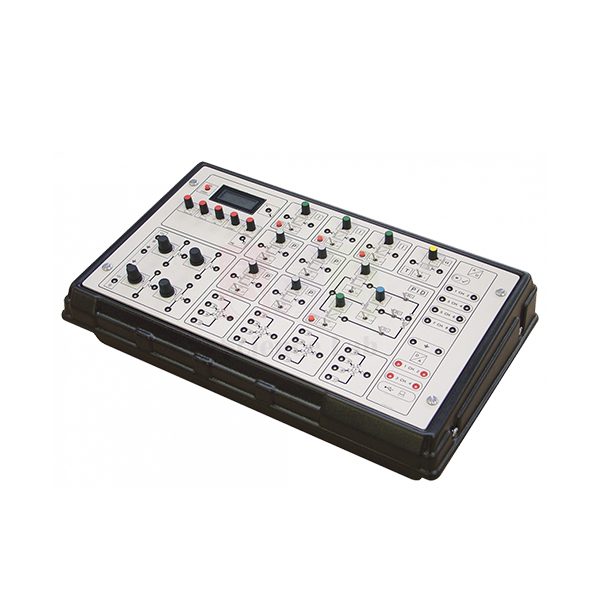
Controller
Controller (Product Code: SLE/ETC/08) is a compact analogue control unit used to assemble industrial-style control loops from patchable circuit blocks in control engineering laboratories. Its front panel carries summing junctions, phase lead, proportional and integral blocks, a complete three-term PID block, a function generator, a digital voltmeter and adjustable potentiometers, plus D/A and A/D interface connections. It is made by Jain Scientific Equipments Pvt Ltd (ScienceLab), an OEM manufacturer, at its own factory in Ambala, India.
Key Details
| Parameter | Detail |
|---|---|
| Construction | Compact unit with analogue electronic circuits connected in blocks |
| Purpose of the blocks | Mimic the important parts of industrial controllers |
| Front panel | Clear diagrams showing each block, each with its own set of connection sockets |
| Blocks | Summing junctions; phase lead; proportional and integral blocks; function generator and digital voltmeter; complete three-term PID (proportional, integral, derivative) block; fully adjustable potentiometers usable as setpoints or attenuators |
| Computer interface | D/A (digital to analogue) and A/D (analogue to digital) connections |
| Use | Blocks are connected in any way the user needs, then linked to the chosen products in the range |
| Product code | SLE/ETC/08 |
| Manufacturer | Jain Scientific Equipments Pvt Ltd (ScienceLab) — OEM |
| Country of origin | India (made in Ambala, Haryana) |
What Is the Controller Unit Used For?
Instead of a sealed box, students see each function of an industrial controller as a separate block and connect the blocks through their sockets to build the structure they want — from simple proportional control to full PID with a phase-lead stage. The function generator provides test signals, and the digital voltmeter lets them read signal and setpoint values directly.
Once built, the loop is connected to a plant from the range and tuned on real hardware. The D/A and A/D connections also let a computer take part, so the same unit supports comparisons between analogue and digital control. It is a natural companion when institutions assemble engineering lab equipment for control practicals.
OEM Manufacturer
The Controller is manufactured by Jain Scientific Equipments Private Limited, which does business as ScienceLab, as the original equipment manufacturer. Assembly takes place at its own licensed factory in Saha, Ambala, Haryana, India, and units are supplied factory-direct to institutions, dealers and importers.
Procurement teams completing vendor forms can use the company's GSTIN, 06AAECJ8618A1ZT, and its Legal Entity Identifier, 3358004HRD1JIVXKYX49. The ScienceLab profile has more company information.
Related Control & Process Engineering Trainers
The Controller connects to products in this range; these trainers give it a real plant to control.
- Servo Trainer — d.c. servo speed and position plant with non-linear effect circuits
- Coupled Tanks Apparatus — liquid-level plant for PID tuning practice
- Thermal Control Process Apparatus — temperature plant with adjustable measurement lag
- Digital Interface — interface-only alternative when the controller blocks are not needed
Browse every trainer in the Control & Process Engineering Trainers category.
Frequently Asked Questions
What blocks are on the Controller?
The Controller (SLE/ETC/08) includes summing junctions, phase lead, proportional and integral blocks, a function generator and digital voltmeter, a complete three-term PID block, and fully adjustable potentiometers that can act as setpoints or attenuators.
Does the Controller connect to a computer?
Yes. The Controller includes an interface with D/A (digital to analogue) and A/D (analogue to digital) connections, so a computer can exchange signals with the circuit blocks and with the apparatus connected to them.
Which apparatus can the Controller be used with?
The Controller is intended to connect to the user's chosen products in the same control engineering range, such as the servo, tank and process trainers. For equipment from other ranges, send us its signal details so compatibility can be checked.
What is the difference between the Controller and the Digital Interface?
The Controller contains analogue controller blocks plus a D/A and A/D interface, while the Digital Interface provides only the interface part. Choose the Controller when students should build analogue loops, and the Digital Interface when control runs entirely on a computer.
Who manufactures the Controller?
The Controller (SLE/ETC/08) is manufactured by Jain Scientific Equipments Pvt Ltd (ScienceLab), the OEM, at its own licensed factory in Saha, Ambala, Haryana, India. Buyers equipping several benches can order matching units, with quotations handled by the manufacturer.
Is a calibration certificate available for the Controller's digital voltmeter?
Calibration-certificate availability for the digital voltmeter in the Controller should be discussed with us before ordering. Mention it in your enquiry via the contact page so the requirement is reviewed and answered in the quotation.
Request a Quote
Ask for a Controller quotation through the contact page or add it to the enquiry cart along with the trainers it will drive. The manufacturer, Jain Scientific Equipments Pvt Ltd (ScienceLab), sends the quote directly.
Last updated: 24 September 2026
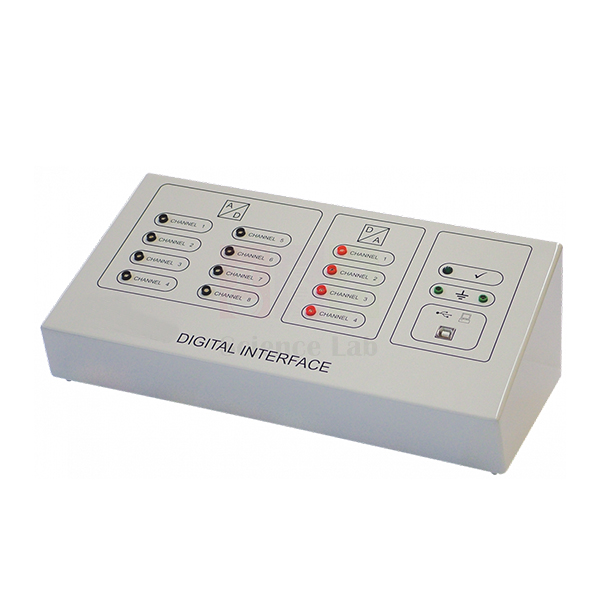
Digital Interface
Digital Interface (Product Code: SLE/ETC/09) is a computer interface unit used to connect laboratory control apparatus to a PC for signal monitoring and computer-based control in engineering laboratories. It converts analogue signals from equipment into digital form for the computer, and turns the computer's digital outputs back into analogue control signals, handling up to eight inputs and four outputs. It is manufactured by Jain Scientific Equipments Pvt Ltd (ScienceLab), an OEM manufacturer, at its own factory in Ambala, India.
Specifications
| Parameter | Detail |
|---|---|
| Inputs | Monitors up to eight input signals (analogue inputs converted to digital signals for a computer) |
| Outputs | Controls up to four output signals (digital signals from a computer converted to analogue) |
| Compatibility | For use with most products in the Control Engineering range; also works with other compatible laboratory equipment |
| Role | Alternative to the Controller when the user only needs the interface part |
| Product code | SLE/ETC/09 |
| Manufacturer | Jain Scientific Equipments Pvt Ltd (ScienceLab) — OEM |
| Country of origin | India (made in Ambala, Haryana) |
What Is the Digital Interface Used For?
Many control courses now implement controllers in software. The Digital Interface makes that possible on physical hardware: sensor signals from an apparatus are digitised for the computer, the control algorithm runs on the PC, and the resulting outputs are converted back into analogue signals that drive pumps, heaters or motors.
With eight inputs, several measurements — for example two tank levels plus a flow reading — can be monitored at once, while four outputs cover experiments with more than one actuator. Choosing the Digital Interface instead of the Controller suits labs that already have their own analogue controllers, or that want benches centred purely on computer control, and it slots easily into existing engineering lab equipment in India and abroad.
OEM Manufacturer
Jain Scientific Equipments Private Limited, the company behind the ScienceLab brand, is the OEM of the Digital Interface and produces it at its own licensed factory in Saha, Ambala, Haryana, India. Because the maker supplies it directly, institutions can ask the same team about matching it to existing apparatus, adding units for more benches or obtaining replacement parts. The ScienceLab profile explains more about the company.
Related Control & Process Engineering Trainers
Apparatus from this range that the Digital Interface can work with, plus its analogue alternative:
- Controller — analogue controller blocks together with a D/A and A/D interface
- Coupled Tanks Apparatus — level and flow signals for computer-based level control
- Servo Trainer — speed and position signals for digital servo control
- Ball and Beam Apparatus — beam-angle and ball-position signals for digital stabilisation
The full range is in the Control & Process Engineering Trainers category.
Frequently Asked Questions
How many channels does the Digital Interface have?
The Digital Interface lets the user monitor up to eight input signals and control up to four output signals, converting between the analogue signals of the apparatus and the digital signals of a computer.
What equipment works with the Digital Interface?
The Digital Interface is for use with most products in the Control Engineering range and will also work with other compatible laboratory equipment. Share the signal details of any other apparatus with us so compatibility can be confirmed before you order.
Should I choose the Digital Interface or the Controller?
Choose the Digital Interface when you only need the interface part, because it is designed as an alternative to the Controller for exactly that case. Pick the Controller if students also need analogue blocks such as PID and phase lead.
What does the Digital Interface convert?
The Digital Interface converts analogue inputs from laboratory equipment into digital signals for a computer, and converts digital signals from the computer into analogue signals that control other equipment.
Who manufactures the Digital Interface?
Jain Scientific Equipments Pvt Ltd (ScienceLab) is the OEM manufacturer of the Digital Interface, which is made at its own licensed factory in Saha, Ambala, Haryana, India. Additional interfaces for extra benches can be quoted by the same manufacturer.
Is software supplied with the Digital Interface?
Software is not listed in the Digital Interface product details. Tell us which computer platform and control software your lab uses when you enquire, and the manufacturer will confirm what can be offered with the unit.
Request a Quote
To obtain a Digital Interface quotation, contact us via the contact page or place it in the enquiry cart. Quotations come straight from the manufacturer, ScienceLab, for India and international markets.
Last updated: 24 September 2026