- Physics Lab Equipment
- Chemistry Lab Equipment
- Biology Lab Equipment
- Anatomical Lab Equipment
- Learning
- Educational Lab Equipment
- Magnets
- Agriculture
- Astronomy
- Earth Science
- Geography Lab Equipment
- Safety Lab Coat
- Laboratory
- Meteorological
- Electricity & Magnetism
- Heat
- School Lab Equipment
- Lab Glassware
- Science Lab Equipment
- Tvet Lab Equipment
- Robotics Kits Supplier and Manufacturer for Schools India
- Math Lab Equipment Manufacturers and Exporters in Ambala
- STEM Kits Manufacturers and Supplier India
- Engineering Lab Equipment
- Hospital Lab Equipment
- Water, Sanitation & Hygiene Supplies
- Cold Chain, Solar & Communication Equipment
- Nutrition
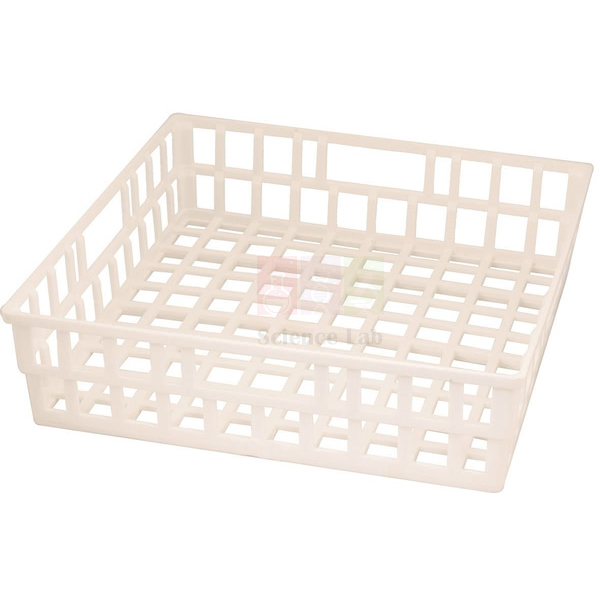
Draining Basket
This white polypropylene draining basket, 400 × 400 × 100 mm, is used for draining, holding and carrying washed labware in wash-up areas and prep rooms. The polypropylene is chemical resistant and can be autoclaved. Its shallow square shape keeps beakers, flasks and cylinders within easy reach, and the white base shows up leftover residue and chipped rims.
Polypropylene draining basket specifications
| Parameter | Detail |
|---|---|
| Material | Polypropylene, autoclavable |
| Chemical resistance | Chemical resistant |
| Colour | White |
| Shape | Square |
| Dimensions | 400 × 400 × 100 mm |
| Product code | SLE/LA/07 |
| Minimum order | 10 units |
| Dispatch | Usually within 7 to 10 working days |
| Manufacturer | ScienceLab (Jain Scientific Equipments Pvt Ltd), Ambala, India |
Wash-up routines with the draining basket
End-of-practical wash-up. Students scrub glass beakers and measuring cylinders with a beaker brush, rinse them in distilled water and stand them mouth down in the basket. Once drained, beakers can go to a drying oven, while measuring cylinders air dry on a draining rack.
Checking the wash. Before the basket is emptied, a technician lifts each item against the white base and looks for a broken water film, a residue ring or a chipped rim. Anything that fails goes back to the sink, and chipped glass is set aside.
Keeping two streams apart. Mark one set of baskets for washed items and another for items waiting to be decontaminated. Items in the second set are sterilised before washing, and that basket is then autoclaved or disinfected before it goes back into use.
Frequently Asked Questions About the Draining Basket
Can the draining basket be autoclaved?
Yes. It is made of autoclavable polypropylene. The plastic softens a little while hot, so do not stack heavy items on it during a cycle, and let it cool before loading glass. Check first that your chamber is larger than the 400 × 400 mm footprint.
How long does a polypropylene basket last with repeated autoclaving?
It takes many cycles, but heat slowly ages the plastic. Look for cracks at the corners, warping, a chalky surface or brittleness when flexed. Retire a basket that shows any of these, because a cracked corner can give way under a load of wet glass.
How can I tell whether glassware in the basket is really clean?
Watch how the last rinse drains. On clean glass, water runs off as an even, unbroken film. Droplets or beads that cling to the wall show grease or residue left behind, so wash that item again before it is used.
Should washed glassware be wiped dry before it goes in the basket?
No. Paper towels and cloths leave fibres on the glass. Stand items mouth down so the water runs out, let them drain in the basket and then air dry them on a rack or in an oven.
Which chemicals does the polypropylene stand up to?
Polypropylene resists most dilute acids, alkalis, salt solutions and alcohols at room temperature, which covers routine rinsing and disinfecting. Strong oxidising acids and chlorinated or aromatic solvents can attack it, so rinse such residues off the glassware before it goes in the basket.
How should the basket itself be cleaned?
Wash it with warm water and a laboratory detergent, rinse it well and let it dry. Use a soft brush or sponge, since scouring pads scratch polypropylene and the scratches hold dirt. Autoclave or disinfect it after it has held contaminated items.
Racks and baskets for washing and drying labware
- Draining Rack
- Containers for Draining Dishes
- Polyprop Test Tube Basket
- Autoclave Basket
- Drying Rack Glass & Plastic Ware
To request a quotation, send the product name, code and quantity through our contact page or add the item to your enquiry cart.
Last updated: 15 November 2026
