- Physics Lab Equipment
- Chemistry Lab Equipment
- Biology Lab Equipment
- Anatomical Lab Equipment
- Learning
- Educational Lab Equipment
- Magnets
- Agriculture
- Astronomy
- Earth Science
- Geography Lab Equipment
- Safety Lab Coat
- Laboratory
- Meteorological
- Electricity & Magnetism
- Heat
- School Lab Equipment
- Lab Glassware
- Science Lab Equipment
- Tvet Lab Equipment
- Robotics Kits Supplier and Manufacturer for Schools India
- Math Lab Equipment Manufacturers and Exporters in Ambala
- STEM Kits Manufacturers and Supplier India
- Engineering Lab Equipment
- Hospital Lab Equipment
- Water, Sanitation & Hygiene Supplies
- Cold Chain, Solar & Communication Equipment
- Nutrition
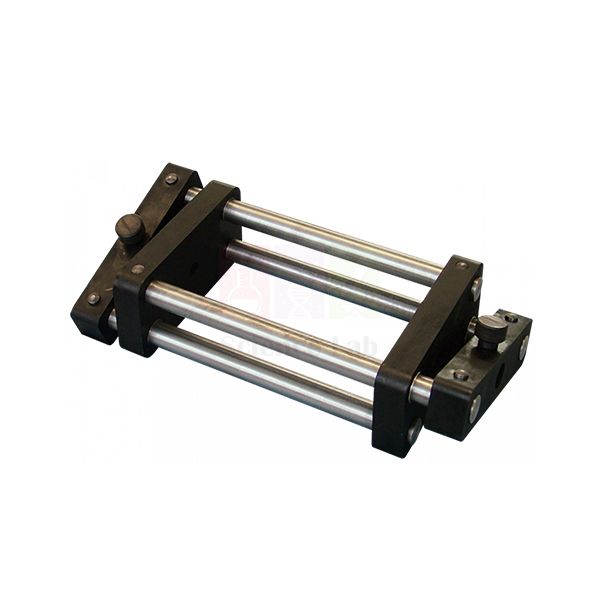
Compression Cage
Compression Cage (Product Code: SLE/ETP/18) is a testing-machine ancillary used to adapt the Bench Top Tensile Testing Machine for experiments that need a compressive load, in materials testing laboratories. It measures 100 mm square by 130 mm high, fits into the machine's tensile test area, and is an essential ancillary to the Brinell Hardness Test Set. It is made by Jain Scientific Equipments Pvt Ltd (ScienceLab), an OEM and technical educational equipment manufacturer, at its own factory in Ambala, India.
Specifications
| Parameter | Detail |
|---|---|
| Size | 100 mm square and 130 mm high |
| Function | Adapts the testing machine for experiments that need a compressive load |
| Fits | Tensile test area of the Bench Top Tensile Testing Machine |
| Used with | Essential ancillary to the Brinell Hardness Test Set |
| Product code | SLE/ETP/18 |
| Manufacturer | Jain Scientific Equipments Pvt Ltd (ScienceLab) — OEM |
| Country of origin | India (made in Ambala, Haryana) |
What Is the Compression Cage Used For?
A tensile machine is built to pull, but many useful experiments need a push. A compression cage solves this by turning the pulling action of the machine into a squeezing action on whatever is placed inside the cage. That lets one bench-top machine cover both tension and compression work, which makes good use of bench space in a teaching lab.
Its main role is Brinell hardness testing, where the indenter must be pressed into a specimen with a known load, but the same principle applies to other compressive-load experiments set up on the machine. Seat the cage squarely in the tensile test area, centre the specimen inside it, and apply load slowly so students can watch the machine's load reading rise.
What to Specify When Ordering
- Whether your laboratory already has the Bench Top Tensile Testing Machine, whose tensile test area the cage fits.
- Whether you also need the Brinell indenter and magnifier for hardness testing.
- The number of cages, usually one per testing machine.
OEM Manufacturer
Jain Scientific Equipments Private Limited, trading as ScienceLab, manufactures the Compression Cage as its OEM (original equipment manufacturer) alongside the Bench Top Tensile Testing Machine it fits. It is made at the company's own licensed factory at Saha, Ambala, Haryana, and supplied factory-direct to colleges, institutes, dealers and importers. Because machine and ancillary come from the same maker, fitting questions go straight to the people who build both. More on the ScienceLab profile.
Related Materials Testing and Properties Equipment
The machine and accessories used with the Compression Cage:
- Bench Top Tensile Testing Machine — the machine whose tensile test area the cage fits.
- Brinell Indenter — hardened steel ball indenter with graticule magnifier for Brinell hardness tests.
- Speciman — long-style tensile specimen for the tension side of the same machine.
- Coil Spring — another compression experiment, measuring the rate of a heavy-duty spring.
All related apparatus is listed under Materials Testing and Properties.
Frequently Asked Questions
What size is the Compression Cage?
The Compression Cage is 100 mm square and 130 mm high. This compact size lets it fit into the tensile test area of the Bench Top Tensile Testing Machine without changing the machine itself.
Which machine does the Compression Cage fit?
The Compression Cage fits into the tensile test area of the Bench Top Tensile Testing Machine. If you have a different testing machine, send us its details and we will discuss whether the cage can be used with it.
Why is the Compression Cage needed for Brinell tests?
The Compression Cage is an essential ancillary to the Brinell Hardness Test Set because a Brinell test needs a compressive load to press the ball into the specimen, while the machine's tensile area on its own only pulls.
How does a Compression Cage work?
A Compression Cage converts the pulling movement of a tensile machine into compression on the item placed inside it. The Compression Cage therefore adds compressive-load experiments to a machine designed for tensile tests.
Who manufactures the Compression Cage?
The Compression Cage is manufactured by Jain Scientific Equipments Pvt Ltd (ScienceLab), the OEM, at its own licensed factory in Ambala, Haryana, India, the same maker as the Bench Top Tensile Testing Machine it fits.
What should a Compression Cage quotation request include?
A Compression Cage quotation request should give the product code SLE/ETP/18, the quantity, whether you have the Bench Top Tensile Testing Machine, and the delivery destination. Send it through our contact page or the enquiry cart.
Request a Quote
Request your Compression Cage quotation directly from the manufacturer through the contact page, or add it to the enquiry cart together with the testing machine. We supply India and international markets.
Last updated: 24 September 2026