- Physics Lab Equipment
- Chemistry Lab Equipment
- Biology Lab Equipment
- Anatomical Lab Equipment
- Learning
- Educational Lab Equipment
- Magnets
- Agriculture
- Astronomy
- Earth Science
- Geography Lab Equipment
- Safety Lab Coat
- Laboratory
- Meteorological
- Electricity & Magnetism
- Heat
- School Lab Equipment
- Lab Glassware
- Science Lab Equipment
- Tvet Lab Equipment
- Robotics Kits Supplier and Manufacturer for Schools India
- Math Lab Equipment Manufacturers and Exporters in Ambala
- STEM Kits Manufacturers and Supplier India
- Engineering Lab Equipment
- Hospital Lab Equipment
- Water, Sanitation & Hygiene Supplies
- Cold Chain, Solar & Communication Equipment
- Nutrition
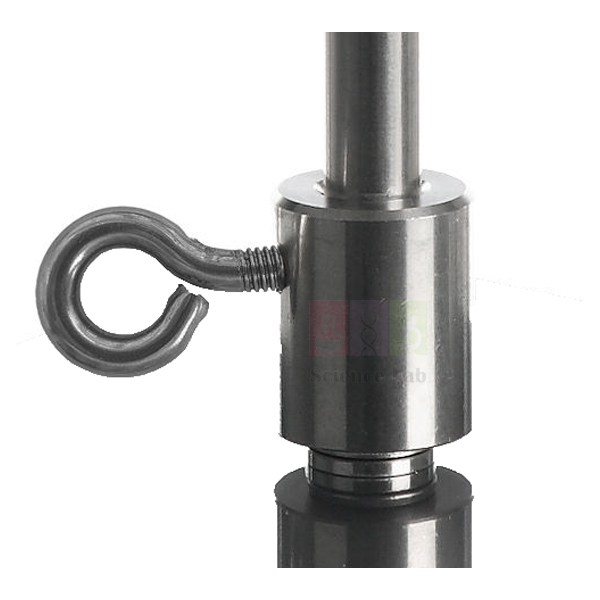
Sockets For Rods Without Thread
Sockets For Rods Without Thread (Product Code: SLE/LR/07) are socket fittings used to seat plain, unthreaded support rods so they stay firmly in place in laboratory stand and frame set-ups in schools, colleges and research labs. Lab technicians can order them in either of two materials, green-coated steel or 18/10 stainless steel, to suit the working conditions. They are made by Jain Scientific Equipments Pvt Ltd (ScienceLab), an OEM manufacturer, at its own factory in Ambala, India, as part of its lab equipment range from Ambala.
Key Details
| Parameter | Detail |
|---|---|
| Type | Socket for rods without thread (unthreaded rods) |
| Material option 1 | Steel, green coated |
| Material option 2 | 18/10 stainless steel |
| Product code | SLE/LR/07 |
| Manufacturer | Jain Scientific Equipments Pvt Ltd (ScienceLab) — OEM |
| Country of origin | India (made in Ambala, Haryana) |
What Are Sockets for Rods Without Thread Used For?
A plain rod has no thread to screw into a base, so it needs a socket to give it a fixed seat. With a socket in place, a technician can stand a support rod up for a practical, hang bossheads and clamps on it, and lift it out again afterwards so the bench is clear for the next class. This makes unthreaded rods quick to set up and swap between experiments.
Pick the green-coated steel version for general teaching rooms, where a coated finish is enough and the colour makes the fitting easy to spot. Choose 18/10 stainless steel, an alloy of about 18% chromium and 10% nickel, for wet areas, water-bath work or benches that are cleaned often, where a coating could wear. For a retort stand lab in India that mixes both, many buyers keep stainless sockets near sinks and coated ones elsewhere.
What to Specify When Ordering
- The material: green-coated steel or 18/10 stainless steel.
- The diameter of the rods you will use, so we can confirm the socket suits them.
- The number of sockets required.
- Whether matching unthreaded rods should be quoted with them.
OEM Manufacturer
These sockets are produced by Jain Scientific Equipments Private Limited, the company behind the ScienceLab name, acting as the OEM (original equipment manufacturer) at its own licensed factory at Saha, Ambala, Haryana, India. Small fittings like this are bought factory-direct by schools, colleges, laboratory dealers and importers, with no trading middleman in between.
If you are replacing worn sockets or adding more to an existing set, ask us and the manufacturer will quote for the same pattern. Read more on the ScienceLab profile page.
Related Stand Bases, Rods and Rings
Rods and supports that are used together with rod sockets:
- Rods For Stand Bases — unthreaded 18/10 stainless rods in several lengths.
- Stand bases 18/10 Stainless Steel — a free-standing base when no fixed socket position is available.
- Foot For Rods, Stainless Steel 18/10 — a stainless foot with anti-slip rubber for a single rod.
- Table Clamp For Rods — holds a rod at the edge of a bench top.
Browse the full Stand Bases, Rods and Rings range.
Frequently Asked Questions
What materials are the Sockets For Rods Without Thread made in?
Sockets For Rods Without Thread are available in two materials: green-coated steel and 18/10 stainless steel. Both do the same job of seating an unthreaded rod; the choice depends on how wet or heavily cleaned the working area is.
Which rod diameter do these sockets take?
The rod diameter for the Sockets For Rods Without Thread is not stated in our listing. Tell us the diameter of the rods you use through the contact page, and the manufacturer will confirm a matching socket before you order.
Should I choose coated steel or stainless steel sockets?
Choose the 18/10 stainless steel Sockets For Rods Without Thread for wet areas, water baths or frequent cleaning. The green-coated steel version suits dry, general teaching benches and is easy to identify by its colour.
Who manufactures the Sockets For Rods Without Thread?
Jain Scientific Equipments Pvt Ltd (ScienceLab) manufactures the Sockets For Rods Without Thread as the OEM at its own licensed factory at Saha, Ambala, Haryana, India. Quotations, replacements and repeat orders are handled by the manufacturer itself.
Can the sockets be ordered together with rods?
Yes. Sockets For Rods Without Thread can be quoted together with unthreaded rods from our Rods For Stand Bases range. Tell us the rod length and diameter you want so both items appear on one quotation.
What does a quotation for these sockets need?
A quotation for Sockets For Rods Without Thread needs the material (green-coated steel or 18/10 stainless steel), the quantity, the rod diameter they must fit and the delivery location in India or abroad.
Request a Quote
Ask for a price on the contact page or place the item in the enquiry cart; your quotation comes directly from the manufacturer.
Last updated: 24 September 2026