- Physics Lab Equipment
- Chemistry Lab Equipment
- Biology Lab Equipment
- Anatomical Lab Equipment
- Learning
- Educational Lab Equipment
- Magnets
- Agriculture
- Astronomy
- Earth Science
- Geography Lab Equipment
- Safety Lab Coat
- Laboratory
- Meteorological
- Electricity & Magnetism
- Heat
- School Lab Equipment
- Lab Glassware
- Science Lab Equipment
- Tvet Lab Equipment
- Robotics Kits Supplier and Manufacturer for Schools India
- Math Lab Equipment Manufacturers and Exporters in Ambala
- STEM Kits Manufacturers and Supplier India
- Engineering Lab Equipment
- Hospital Lab Equipment
- Water, Sanitation & Hygiene Supplies
- Cold Chain, Solar & Communication Equipment
- Nutrition
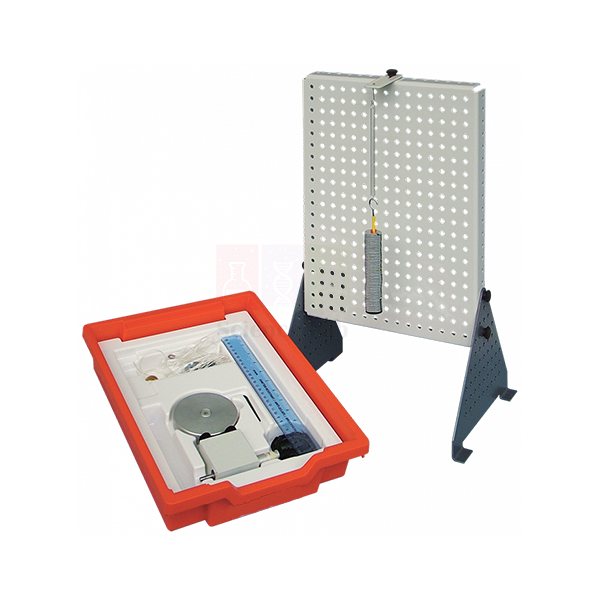
Potential And Energy Kit
Potential And Energy Kit (Product Code: SLE/ETP/25) is an engineering science kit containing a pendulum, a spring and a flywheel, used to study potential and kinetic energy and the transfer of energy from one form to another in school and college labs. Students and lecturers mount its parts on the Work Panel, and the kit introduces terms such as moment of inertia and elastic potential energy. It is produced by Jain Scientific Equipments Pvt Ltd (ScienceLab), an OEM manufacturer, at its own factory in Ambala, India.
Key Details
| Parameter | Detail |
|---|---|
| Kit parts | A pendulum, a spring and a flywheel |
| Topics | Difference between potential and kinetic energy; transfer of energy from one form to another |
| Engineering terms introduced | Moment of inertia, elastic potential energy |
| Mounting | Parts fit to the Engineering Science Work Panel |
| Range | Part of a series of kits that allows many experiments using different arrangements of their parts |
| Product code | SLE/ETP/25 |
| Manufacturer | Jain Scientific Equipments Pvt Ltd (ScienceLab) — OEM |
| Country of origin | India (made in Ambala, Haryana) |
What Is the Potential And Energy Kit Used For?
Each part isolates one kind of energy store. Raising the pendulum bob gives it gravitational potential energy that turns into kinetic energy at the bottom of the swing and back again; stretching or compressing the spring stores elastic potential energy that is released as motion; and the spinning flywheel shows that a rotating body carries kinetic energy whose size depends on its moment of inertia.
Working through the three parts in one session lets students compare how energy is stored and passed on, which is the core idea behind a flywheel experiment or a moment of inertia kit in any mechanics syllabus. Fix the Work Panel firmly to the bench before starting, keep fingers and loose sleeves clear of the flywheel while it spins, and repeat each observation so the class can discuss losses to friction.
OEM Manufacturer
Jain Scientific Equipments Private Limited, which trades as ScienceLab, builds the Potential And Energy Kit as the original equipment manufacturer at its own licensed factory in Saha, Ambala, Haryana, India. Schools and colleges therefore deal with the company that makes the kit, and dealers and importers are supplied factory-direct rather than through a trading intermediary. If a spring or another part needs replacing later, ask us and the request goes straight to the maker. The ScienceLab profile has more about the company.
Related Laboratory Equipment
Pair the kit with its mounting panel and with other engineering science kits that extend the same mechanics course.
- Engineering Science Work Panel — the perforated metal panel the kit parts are fitted to.
- Gear Trains Kit — spur, bevel and worm gears for gear ratio and efficiency work.
- Moments Kit — turning-effect experiments that complement energy topics.
- Hook's Law And Spring Rate — takes the spring idea further into load and extension measurements.
- Set Of 5 trays And Lids — matching trays for storing kit parts between classes.
More engineering teaching apparatus is listed under Materials Testing and Properties.
Frequently Asked Questions
What parts come in the Potential And Energy Kit?
The Potential And Energy Kit contains a pendulum, a spring and a flywheel. Students test each part to see the difference between potential and kinetic energy and to follow how energy transfers from one form to another.
Does the Potential And Energy Kit need the Engineering Science Work Panel?
Yes, the Potential And Energy Kit is designed so that students, teachers or lecturers fit its parts to the Work Panel. If your lab does not already have a panel, include the Engineering Science Work Panel in the same enquiry.
Which engineering terms does the Potential And Energy Kit introduce?
The Potential And Energy Kit introduces moment of inertia and elastic potential energy, alongside the basic contrast between potential and kinetic energy. These terms prepare students for later work on flywheels, springs and energy storage in machines.
Can the kit parts be rearranged for other experiments?
Yes. The Potential And Energy Kit belongs to a versatile series of kits that allows many experiments using different arrangements of their parts, so a lecturer can adapt set-ups to the engineering science topic being taught.
Who manufactures the Potential And Energy Kit?
The Potential And Energy Kit is manufactured by Jain Scientific Equipments Pvt Ltd (ScienceLab), the OEM, at its own licensed factory in Saha, Ambala, Haryana, India, and is supplied directly to institutions, dealers and importers.
How should the Potential And Energy Kit be handled safely?
Mount the Potential And Energy Kit on a firmly fixed panel, keep hands clear of the spinning flywheel, and avoid over-stretching the spring. Store the parts dry in a tray after each practical so they stay ready for the next class.
How can I get a quotation for the Potential And Energy Kit?
Send the number of Potential And Energy Kits, whether you need Work Panels too, and your delivery address in India or international markets through the contact page. The quotation is issued directly by the manufacturer.
Request a Quote
Ask for pricing on the Potential And Energy Kit through the contact page or place it in the enquiry cart. You receive the quote directly from the manufacturer in Ambala.
Last updated: 24 September 2026