- Physics Lab Equipment
- Chemistry Lab Equipment
- Biology Lab Equipment
- Anatomical Lab Equipment
- Learning
- Educational Lab Equipment
- Magnets
- Agriculture
- Astronomy
- Earth Science
- Geography Lab Equipment
- Safety Lab Coat
- Laboratory
- Meteorological
- Electricity & Magnetism
- Heat
- School Lab Equipment
- Lab Glassware
- Science Lab Equipment
- Tvet Lab Equipment
- Robotics Kits Supplier and Manufacturer for Schools India
- Math Lab Equipment Manufacturers and Exporters in Ambala
- STEM Kits Manufacturers and Supplier India
- Engineering Lab Equipment
- Hospital Lab Equipment
- Water, Sanitation & Hygiene Supplies
- Cold Chain, Solar & Communication Equipment
- Nutrition
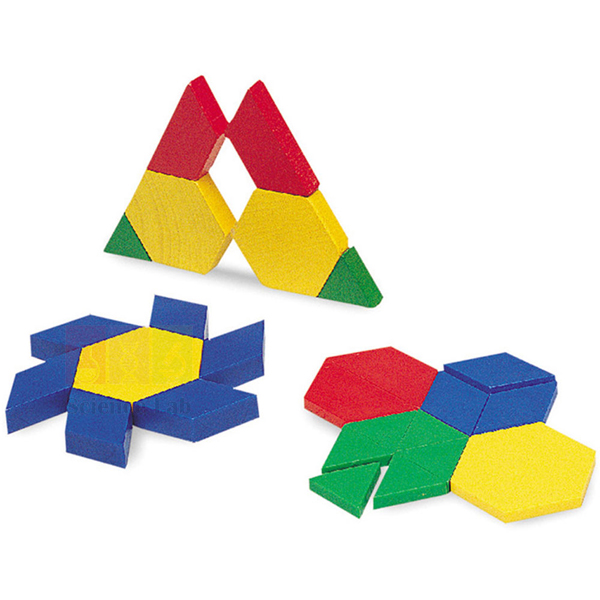
Plastic Pattern Blocks
Plastic Pattern Blocks (Product Code: SLE/MAT/39) is a set of 100 plastic pattern blocks used to analyse, compare and compose 2-D shapes in primary maths lessons. The blocks come in 6 shapes and 6 colours, and the largest shape measures 2 in wide. The set is made by Jain Scientific Equipments Pvt Ltd (ScienceLab), an OEM manufacturer of mathematics lab equipment, at its own factory in Ambala, India.
Specifications
| Parameter | Detail |
|---|---|
| Number of blocks | 100 |
| Shapes and colours | 6 shapes, 6 colours |
| Largest shape | 2 in wide |
| Material | Plastic |
| Topics | Symmetry, area measurement, analysing, comparing and composing 2-D shapes |
| Product code | SLE/MAT/39 |
| Manufacturer | Jain Scientific Equipments Pvt Ltd (ScienceLab) — OEM |
| Country of origin | India (made in Ambala, Haryana) |
What Are Plastic Pattern Blocks Used For?
Pupils place blocks edge to edge to copy and extend patterns, build designs with a line of symmetry, and find how many smaller blocks cover a larger one, which introduces area measurement without formulas. Comparing shapes by their sides and angles, then combining them into new figures, develops the reasoning behind analysing and composing 2-D shapes.
A set of 100 suits a small group or a teacher-led demonstration table, and schools running whole-class lessons can order several sets. Plastic blocks can be washed in mild soapy water and dried before storage, which helps when they are shared across classes. That makes them a practical piece of school laboratory equipment for primary maths rooms.
OEM Manufacturer
Jain Scientific Equipments Private Limited, known by its trading name ScienceLab, is the OEM (original equipment manufacturer) of these Plastic Pattern Blocks. They are made at the company's own licensed factory at Saha, Ambala, Haryana, India, and supplied factory-direct to schools, institutions, dealers and importers. Extra blocks and repeat orders are arranged with the manufacturer itself, so just ask us when your class needs more. Visit the ScienceLab company profile for more.
Related Maths Lab Equipment
These shape resources work well with pattern blocks in the same lessons:
- Brights Pattern Blocks — a larger 250-piece set in neon colours
- 10 Isometric Grid Pattern Geoboard — for outlining pattern block shapes on pins
- Attribute Blocks — for sorting and classifying shapes
- 2D Shapes — for naming and comparing flat shapes
Browse all Maths Lab Equipment.
Frequently Asked Questions
How many blocks are in the Plastic Pattern Blocks set?
The Plastic Pattern Blocks set contains 100 plastic blocks in 6 shapes and 6 colours. This quantity suits a small group or a demonstration table; for whole-class use, schools can order several sets and share them between tables.
How big are Plastic Pattern Blocks?
In the Plastic Pattern Blocks set, the largest shape measures 2 inches wide. Sizes of the smaller shapes and the block thickness are not listed, so please ask through the contact page if you need exact dimensions for a tender or worksheet.
What can students learn with Plastic Pattern Blocks?
Plastic Pattern Blocks help students explore symmetry and area measurement and learn to analyse, compare and compose 2-D shapes. Building patterns, covering larger shapes with smaller ones and describing their designs develops geometric vocabulary and reasoning.
Who manufactures Plastic Pattern Blocks?
Plastic Pattern Blocks are manufactured by Jain Scientific Equipments Pvt Ltd (ScienceLab), the OEM, at its own licensed factory in Saha, Ambala, Haryana, India. Buyers get quotations, additional blocks and repeat orders directly from the manufacturer on request.
How are Plastic Pattern Blocks different from Brights Pattern Blocks?
Plastic Pattern Blocks are a 100-block set in 6 shapes and colours, with the largest shape 2 inches wide. Brights Pattern Blocks are a separate, larger set in neon colours, so compare both listings and choose by class size and colour preference.
Can Plastic Pattern Blocks be supplied in bulk or for export?
Yes. Plastic Pattern Blocks can be quoted in multiple sets for schools, dealers and importers in India and international markets. Include product code SLE/MAT/39, the number of sets and the delivery location in your enquiry.
Request a Quote
Ask for a quotation on Plastic Pattern Blocks through the contact page, or add them to the enquiry cart with other items for your maths room. Prices come straight from the manufacturer in Ambala.
Last updated: 24 September 2026
