- Physics Lab Equipment
- Chemistry Lab Equipment
- Biology Lab Equipment
- Anatomical Lab Equipment
- Learning
- Educational Lab Equipment
- Magnets
- Agriculture
- Astronomy
- Earth Science
- Geography Lab Equipment
- Safety Lab Coat
- Laboratory
- Meteorological
- Electricity & Magnetism
- Heat
- School Lab Equipment
- Lab Glassware
- Science Lab Equipment
- Tvet Lab Equipment
- Robotics Kits Supplier and Manufacturer for Schools India
- Math Lab Equipment Manufacturers and Exporters in Ambala
- STEM Kits Manufacturers and Supplier India
- Engineering Lab Equipment
- Hospital Lab Equipment
- Water, Sanitation & Hygiene Supplies
- Cold Chain, Solar & Communication Equipment
- Nutrition
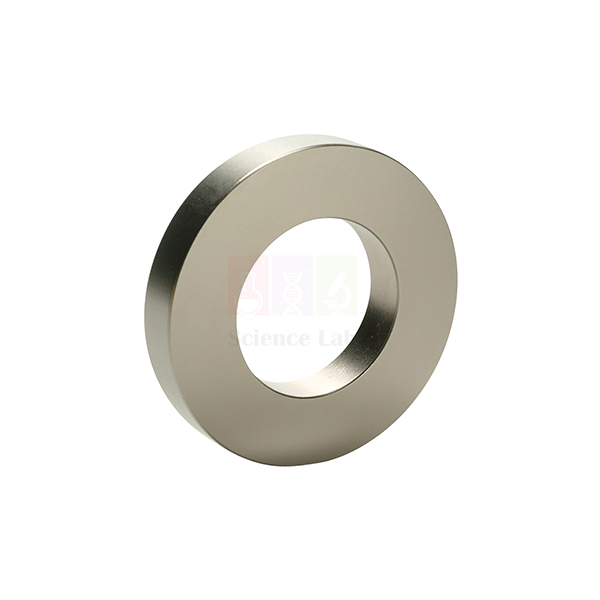
Neodymium Magnets
Neodymium Magnets (Product Code: SLE/MG/05) are rare-earth permanent magnets used to demonstrate very strong magnetic forces in school, college and university physics labs. Made of neodymium, iron and boron, they are many times stronger than ordinary magnets and more durable than ceramic magnets, which makes them useful where a small magnet must do a big job. They are supplied by Jain Scientific Equipments Pvt Ltd (ScienceLab), Ambala, India, a physics instruments supplier in India for educational buyers.
Key Details
| Parameter | Detail |
|---|---|
| Magnet type | Rare-earth permanent magnet |
| Composition | Neodymium (Nd), iron (Fe) and boron (B) |
| Strength | Many times the strength of ordinary magnets |
| Durability | More durable than ceramic magnets |
| Shape and size | Not listed; confirm with us before ordering |
| Product code | SLE/MG/05 |
| Supplied by | Jain Scientific Equipments Pvt Ltd (ScienceLab), Ambala, India |
What Are Neodymium Magnets Used For?
In teaching labs, neodymium magnets make effects visible that weaker magnets barely show. A typical sequence is to let one fall through a copper or aluminium tube and watch eddy currents slow it down, to show that magnetic force acts through a book or a thin sheet of wood, or to compare how far away each type of magnet can still move a paper clip. They are also handy for building simple motors and generators and for holding worksheets on steel boards.
Their strength calls for care. Two neodymium magnets can snap together hard enough to pinch skin or chip the magnets, so slide them apart rather than pulling. Keep them away from phones, bank cards, computers and anyone with an implanted medical device, and store them separated with a spacer.
Supplier
Neodymium Magnets are supplied by Jain Scientific Equipments Private Limited, which trades under the name ScienceLab from Ambala, Haryana, India. The company sources these rare-earth magnets for schools, colleges, laboratories and dealers, and can combine them with other magnetism items on one quotation.
If you need a particular shape, size or quantity, tell us and we will confirm what can be supplied. Background on the company is on our company profile.
Related Magnets
Other items for strong-magnet demonstrations:
- Neodymium Wand — neodymium button magnets set in acrylic wands for safer pupil handling.
- Magnetic Attraction — apparatus for measuring attraction between neodymium magnets against separation.
- Magnetic Repulsion — for investigating the repulsive force between two neodymium magnets.
- Plastic-Covered Ceramic Magnets, Pair — ceramic magnets for comparing strength with neodymium.
More teaching magnets are listed in the Magnets category.
Frequently Asked Questions
What are Neodymium Magnets made of?
Neodymium Magnets (SLE/MG/05) are made of neodymium (Nd), iron (Fe) and boron (B). This rare-earth composition gives them many times the strength of ordinary magnets, which is why they are used for strong-force classroom demonstrations.
How do neodymium magnets compare with ceramic magnets?
Neodymium Magnets are much stronger than ordinary ceramic magnets and are also more durable than ceramic magnets. Students can see the difference quickly by comparing how many paper clips each type holds or from how far each attracts a steel object.
What shapes and sizes of Neodymium Magnets are available?
The shape and size of the Neodymium Magnets (SLE/MG/05) are not listed on this page. Tell us the experiment or the dimensions you have in mind through our contact page, and we will confirm what can be supplied.
Are neodymium magnets safe for students to handle?
Neodymium Magnets can be handled by students under teacher supervision, with sensible care. Their strong pull can pinch fingers or chip the magnets if two snap together, so students should slide them apart, keep them away from electronics and store them separated.
Who supplies the Neodymium Magnets?
Neodymium Magnets (SLE/MG/05) are supplied by Jain Scientific Equipments Pvt Ltd (ScienceLab), Ambala, Haryana, India, to schools, colleges, laboratories and dealers in India and international markets.
Can Neodymium Magnets be supplied in bulk or for export?
Yes, Neodymium Magnets can be quoted in class-set and bulk quantities for schools and dealers, and for export shipments. Include the size or shape, quantity and delivery location in your enquiry so the quotation is accurate.
Request a Quote
To request a quotation for Neodymium Magnets, send your requirement through the contact page or add them to the enquiry cart with any other lab items you need.
Last updated: 24 September 2026