- Physics Lab Equipment
- Chemistry Lab Equipment
- Biology Lab Equipment
- Anatomical Lab Equipment
- Learning
- Educational Lab Equipment
- Magnets
- Agriculture
- Astronomy
- Earth Science
- Geography Lab Equipment
- Safety Lab Coat
- Laboratory
- Meteorological
- Electricity & Magnetism
- Heat
- School Lab Equipment
- Lab Glassware
- Science Lab Equipment
- Tvet Lab Equipment
- Robotics Kits Supplier and Manufacturer for Schools India
- Math Lab Equipment Manufacturers and Exporters in Ambala
- STEM Kits Manufacturers and Supplier India
- Engineering Lab Equipment
- Hospital Lab Equipment
- Water, Sanitation & Hygiene Supplies
- Cold Chain, Solar & Communication Equipment
- Nutrition
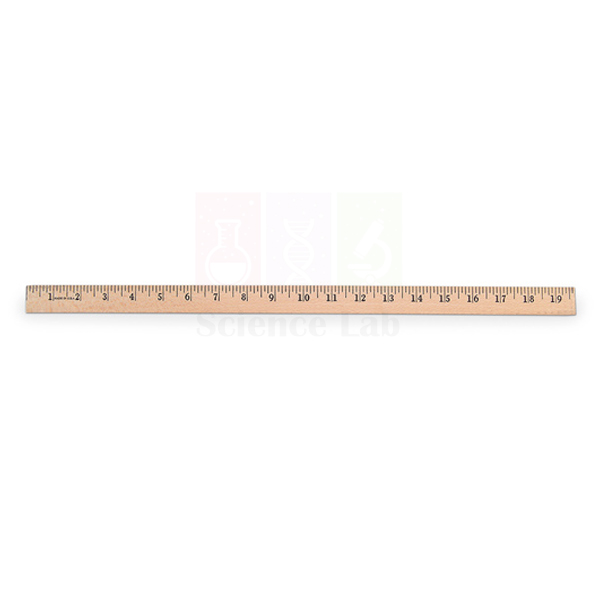
Metersticks
Metersticks (Product Code: SLE/ME/27) are hardwood measuring sticks used to measure lengths up to a metre in school physics, mathematics and general science laboratories. Each stick has a clear lacquer finish, metric graduations in decimetres, centimetres and millimetres on both edges of one face, and an inch scale in eighths on the other face; they are available with plain ends or metal ends. They are made by Jain Scientific Equipments Pvt Ltd (ScienceLab), an OEM manufacturer, at its own factory in Ambala, India.
Specifications
| Parameter | Detail |
|---|---|
| Material | Hardwood |
| Finish | Clear lacquer |
| Metric face | Both edges graduated in decimetres, centimetres and millimetres |
| Imperial face | One edge graduated in inches and eighths |
| Width x thickness | 1 in wide x 5/16 in thick |
| End options | Plain ends or metal ends |
| Product code | SLE/ME/27 |
| Manufacturer | Jain Scientific Equipments Pvt Ltd (ScienceLab) — OEM |
| Country of origin | India (made in Ambala, Haryana) |
What Are Metersticks Used For?
A meterstick is the everyday length standard of a science room. Students use it to set the length of a simple pendulum, measure the height of a ramp or inclined plane, record the extension of a spring in a Hooke's law experiment and mark lens and screen positions on an improvised optical bench. In maths lessons it is a staple of mathematics lab equipment, used to measure desks, doorways and the classroom itself and to compare estimates with real values.
Metal ends help protect the ends of the stick from chipping when it is stood on the floor or dropped, which keeps the starting point reliable over years of use; plain ends suit lighter handling and butting two sticks end to end. For accurate readings, stand the stick on its edge so the graduations touch the object, and read at eye level.
What to Specify When Ordering
- End type: plain ends or metal ends.
- Quantity per class, lab group or school.
- Whether the inch-and-eighths edge is useful to your students or a metric-only stick would suit better.
- Other length-measuring items for the same order, such as tapes or trundle wheels for longer distances.
OEM Manufacturer
Jain Scientific Equipments Private Limited, trading as ScienceLab, makes these metersticks at its own licensed factory at Saha, Ambala, Haryana, and is the OEM rather than a reseller. Schools, colleges, dealers and importers therefore buy factory-direct, with the end type confirmed with the maker at the quotation stage. Follow-on batches for new classrooms are handled by the manufacturer itself. Learn more on the ScienceLab company profile.
Related Measuring Equipment
Length-measuring tools that complement a meterstick:
- Meter Stick, White — a metric-only alternative with a 0.5 cm scale on the reverse.
- Folding Meter Stick — folds away for carrying and storage.
- Half Meter Scale — a shorter scale for bench work.
- Trundle Wheel — measures long distances outdoors.
- Windup Meter Tapes — for field measurements of many metres.
More options are listed in the Measuring category.
Frequently Asked Questions
What graduations are on the Metersticks?
The Metersticks (SLE/ME/27) are graduated in decimetres, centimetres and millimetres along both edges of one face, and in inches and eighths along one edge of the other face, so students can work in metric units and still compare with imperial measurements.
What is the difference between plain-end and metal-end Metersticks?
Metersticks are available with plain ends or metal ends. Metal ends help protect the stick's ends from knocks and wear during frequent use, while plain ends suit lighter classroom handling. State your choice when requesting a quotation.
What are the Metersticks made of?
The Metersticks are made of hardwood with a clear lacquer finish. The cross-section is 1 in wide and 5/16 in thick, which keeps each stick rigid enough to lay flat or stand on edge while readings are taken.
How should Metersticks be stored?
Store Metersticks flat or hanging vertically in a dry place, away from damp floors and heaters, so the hardwood stays straight. Wipe them with a dry or slightly damp cloth; soaking can raise the grain and damage the lacquer finish.
Who manufactures the Metersticks?
Metersticks are manufactured by Jain Scientific Equipments Pvt Ltd (ScienceLab), the OEM, at its own factory at Saha, Ambala, Haryana, India. The company supplies them direct to schools, colleges, dealers and importers in India and international markets.
Is a calibration certificate available for the Metersticks?
A calibration certificate is not listed for the Metersticks. If your school or institution needs one for a tender or an audit, raise it through the contact page before ordering so the requirement can be discussed.
Request a Quote
Metersticks are quoted directly by the manufacturer. Tell us the quantity and end type through the contact page, or add them to the enquiry cart with other items.
Last updated: 24 September 2026