- Physics Lab Equipment
- Chemistry Lab Equipment
- Biology Lab Equipment
- Anatomical Lab Equipment
- Learning
- Educational Lab Equipment
- Magnets
- Agriculture
- Astronomy
- Earth Science
- Geography Lab Equipment
- Safety Lab Coat
- Laboratory
- Meteorological
- Electricity & Magnetism
- Heat
- School Lab Equipment
- Lab Glassware
- Science Lab Equipment
- Tvet Lab Equipment
- Robotics Kits Supplier and Manufacturer for Schools India
- Math Lab Equipment Manufacturers and Exporters in Ambala
- STEM Kits Manufacturers and Supplier India
- Engineering Lab Equipment
- Hospital Lab Equipment
- Water, Sanitation & Hygiene Supplies
- Cold Chain, Solar & Communication Equipment
- Nutrition
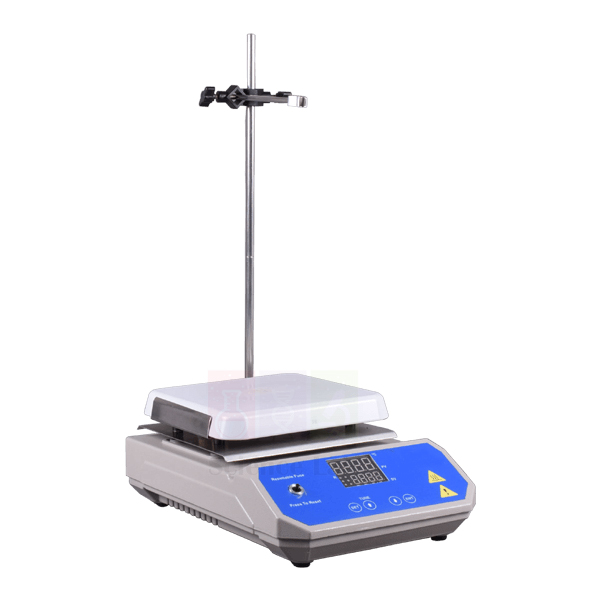
Laboratory Advanced Ceramic Hot Plate
Laboratory Advanced Ceramic Hot Plate (Product Code: SLE/LHP/04) is a PID-controlled heater with a glass ceramic top plate that resists strong acids and bases, set on a die-cast aluminium body finished with an anti-corrosion coating. It is intended for labs where spills of corrosive reagents are likely and where the set temperature has to be reached quickly and held closely, with a maximum of 380°C from a 1 kW rating. Research groups, university chemistry departments and testing labs looking for analytical lab instruments India suppliers can build it into sample preparation work. It is made by Jain Scientific Equipments Pvt Ltd (ScienceLab), Ambala.
Specifications
| Parameter | Detail |
|---|---|
| Top plate | Glass ceramic, resistant to strong acids and bases |
| Body | Die-cast aluminium with anti-corrosion coating |
| Temperature control | PID temperature technology |
| Maximum temperature | 380°C |
| Input rating | 110V AC / 60 Hz or 220V AC / 50 Hz |
| Rating | 1 kW |
Typical Use
Acid digestion before metal analysis, heating alkaline cleaning solutions, evaporating solvent extracts and warming reaction mixtures are all jobs where a metal plate would corrode or stain over time. The glass ceramic surface stands up to these reagents and wipes clean, while PID control adjusts power continuously so the plate approaches the set point without large overshoot — useful when a method specifies a temperature and the result depends on holding it.
This hot plate fits well into lab equipment for research India institutions run for method development and routine QC. Good practice: heat vessels whose bases are flat and clean, avoid sliding heavy glassware across the top, never pour cold liquid onto a hot ceramic surface, and keep the body dry so its anti-corrosion finish stays intact.
Manufacturer
Jain Scientific Equipments Private Limited operates from Ambala in Haryana and sells its instruments under the ScienceLab name to laboratories, colleges and research institutions. Details of the company are available on our company profile.
Related Laboratory Equipment
Items that complement a ceramic-top hot plate in the same workflow:
- Advanced Ceramic Hot Plate Magnetic Stirrer — choose this when samples must be stirred while heated.
- Glass-Ceramic Heating Plate — another glass-ceramic heating option to compare.
- Tall Form Beaker — taller walls reduce splashing during digestion and boiling.
- Thermometer, Infra Red, Hand Held — for a quick non-contact check of surface or vessel temperature.
- Laboratory Digital Rectangular Hot Plate — a larger PID-controlled cast iron plate for several vessels.
See all heaters in our Hot Plates category.
Frequently Asked Questions
Why choose a glass ceramic top over cast iron?
Glass ceramic offers chemical resistance against strong acids and bases and is easy to wipe clean, which makes it better suited to corrosive work. Cast iron plates are sturdier against knocks, so choose according to your reagents and handling.
What is the maximum temperature and power?
The maximum temperature is 380°C and the rating is 1 kW.
Which mains supplies are supported?
Input ratings of 110V AC / 60 Hz and 220V AC / 50 Hz are listed. Tell us which one you need when you enquire so the correct version is supplied.
What does PID control do for me?
It regulates the heating process so the set temperature is reached quickly and held with better accuracy than a simple on-off switch. For the display and set-point details of the current model, please ask us.
How should the ceramic top be cleaned?
Allow the plate to cool, then wipe with a soft cloth and mild detergent. Avoid abrasive pads and sharp scrapers, which can scratch the surface.
Is calibration documentation available?
Please discuss calibration certificate availability with us through the contact page before placing your order.
Do you export this hot plate?
Yes, we supply laboratories in India and international markets. Include the voltage, quantity and destination in your enquiry and our quotation will state warranty terms.
Request a Quote
Request a price for the Laboratory Advanced Ceramic Hot Plate through the contact page, or add it to the enquiry cart along with beakers and accessories.
Last updated: 24 September 2026